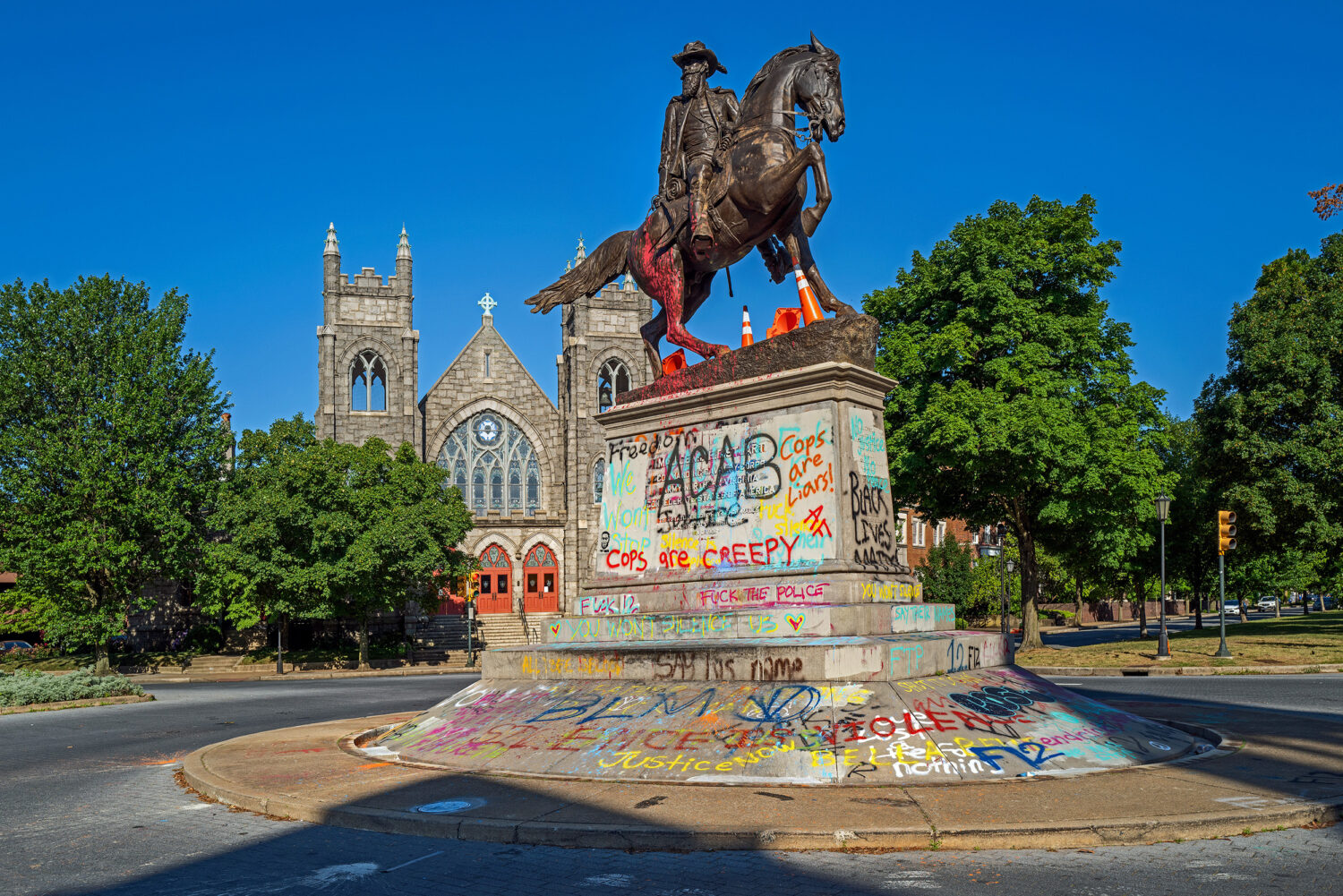
When I photographed the J.E.B. Stuart statue in Richmond during the aftermath of the Black Lives Matter protests, I was aware of its relationship to Kehinde Wiley’s Rumors of War, an equestrian statue featuring a young Black man mounted on a horse that stands on the grounds of the Virginia Museum of Fine Arts. Wiley, acknowledging the menacing power of sculptor Frederick Moynihan’s depiction of the Confederate general, created a work intended to appropriate and transform the meaning of the original.
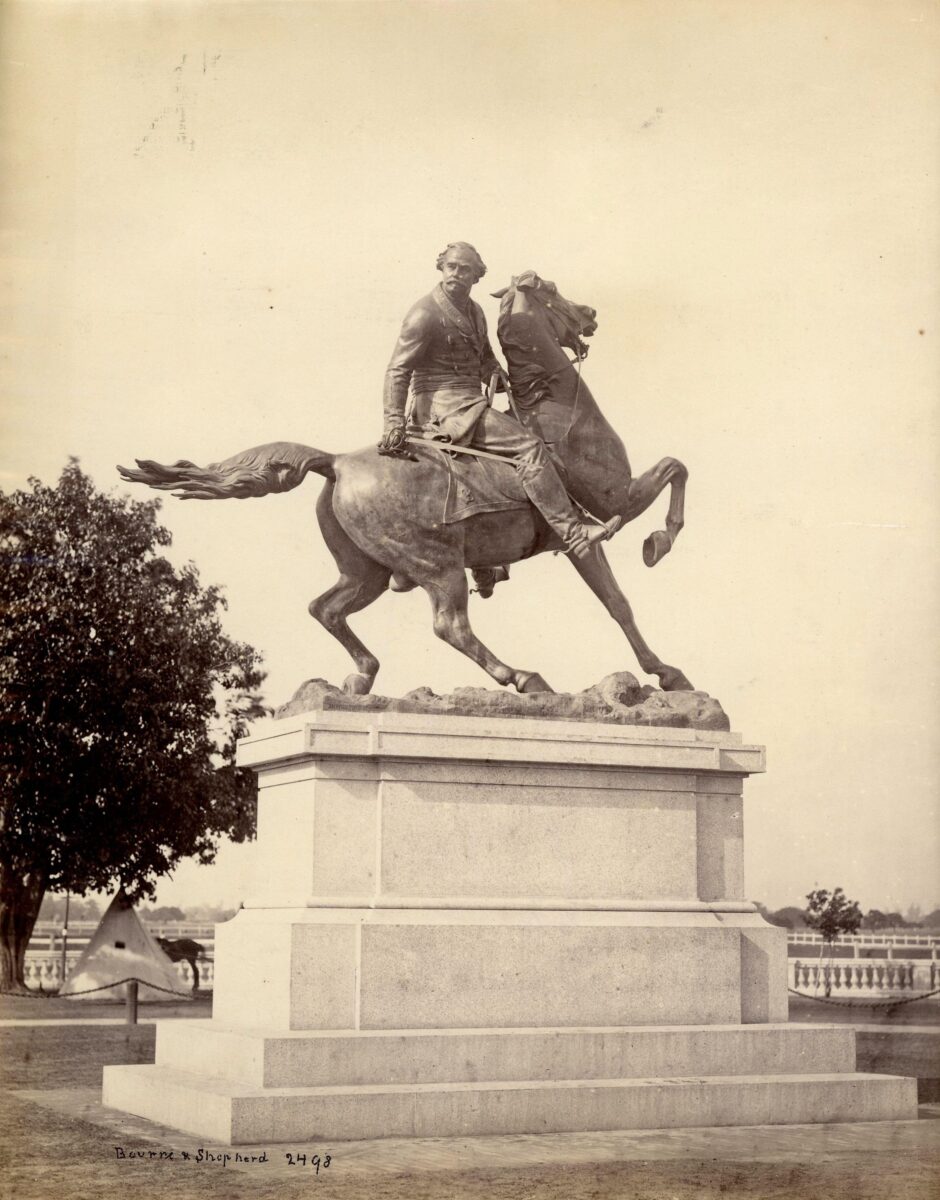
What I did not know at the time was that Moynihan, a New York sculptor who was born in England, based his J.E.B. Stuart statue on an earlier equestrian monument of Sir James Outram, a revered British war hero associated with the Indian Rebellion of 1857 and the Anglo-Persian War, among other exploits. Moynihan studied under John Henry Foley, the sculptor of the Outram statue, which today stands in the gardens of the Victoria Memorial in Kolkata, the massive structure originally built to honor Queen Victoria, Empress of India.
Statues of heroes mounted on horseback are hardly unique in history, and Foley’s sculpture may even have been inspired by a Leonardo da Vinci drawing from the fifteenth century. But in this case, we have three directly connected equestrian statues, one following another: the first honoring a hero of British colonialism, the second glorifying a general of the Confederate States of America, and the third ennobling a prototypical African American youth — with a topknot and Nike sneakers — astride a similar rearing horse.
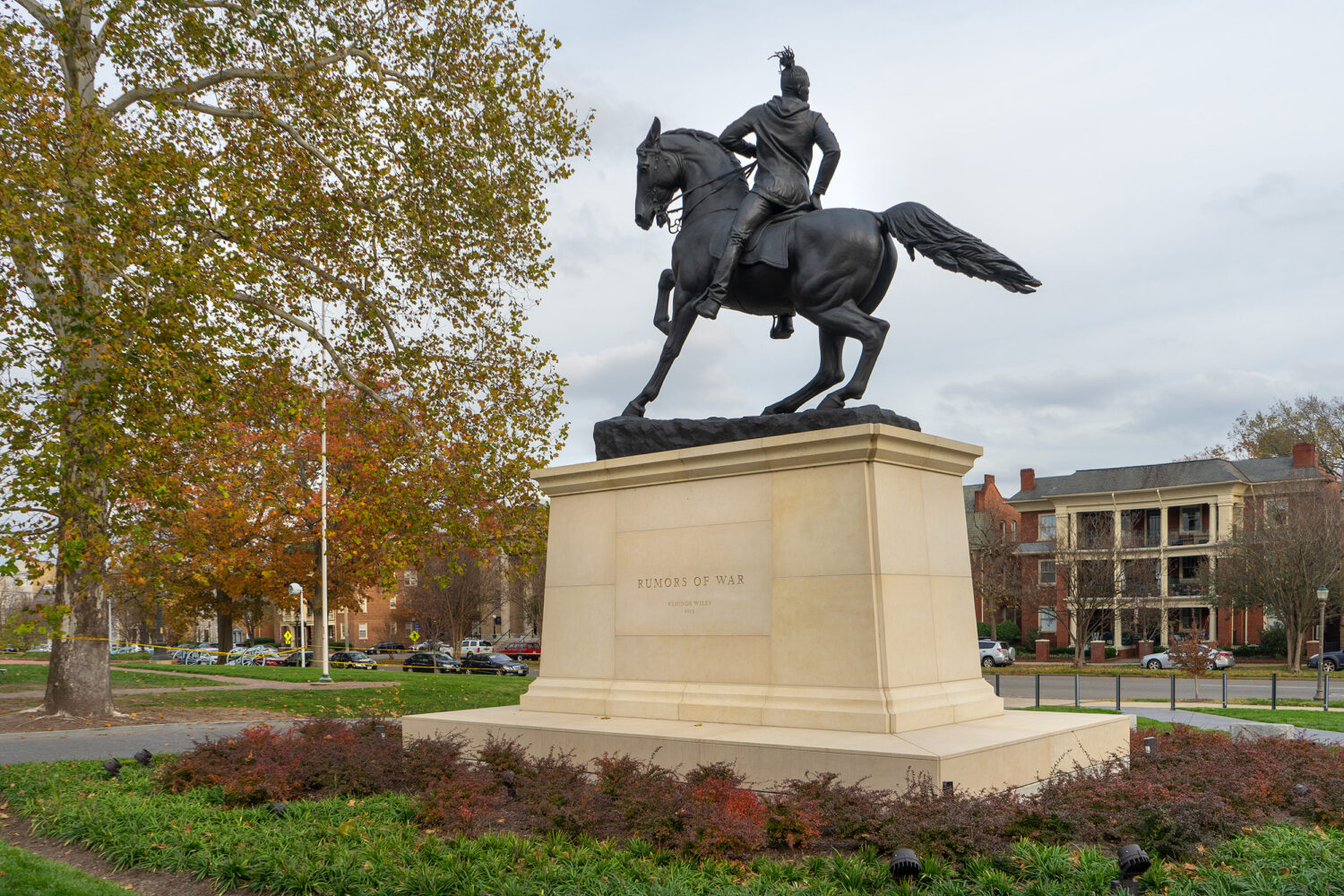
The Outram statue remains in India. The Stuart monument has been removed from Monument Avenue in Richmond and sits somewhere, secretly, in storage. Wiley’s youth stands proudly alone, isolated now from its immediate J.E.B. Stuart predecessor. The sweep of history expressed by this triumvirate is remarkable.