Architectural Photography Portfolio


ALL PHOTOS © BRIAN ROSE • USE ONLY WITH PERMISSION

PictureNY.org


view somepage


It has been three years since I began my blog simply called Journal. There are any number of reasons to undertake such an obligation, but one of the most useful is to focus one's attention to the job at hand, in my case making photographs, thinking about photographs, and considering the world around me as a maker and collector of images–and sometimes songs. A large part of this blog has dealt with Amsterdam and New York, the two cities I've lived in over the years. And Berlin, the city at the heart of my largest project, The Lost Border, which documented the former Iron Curtain.

Please feel free to browse my Journal from the window above, or click the link below for a new window. Links from before January 2007 will work better by opening the blog from here:

http://www.brianrose.com/blog/.


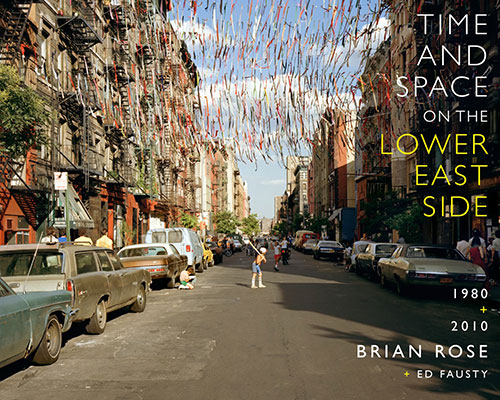
East 4th Street, 1980


Delancy Street, 2007

Time and Space on the Lower East Side

In 1980 I photographed the Lower East Side of Manhattan with fellow photographer Ed Fausty. This was my first project after graduating from Cooper Union. I am now re-photographing the neighborthood some 30 years later. The changes to this quintessential American immigrant neighborhood are stunning--though its grittiness and vibrancy remains--it is now, perhaps, less a separate enclave and more a piece of the whole fabric of Manhattan.


Go To Berlin: In From the Cold


In 1985 I began traveling along the Iron Curtain, the fences and walls of the East/West border that lay across Central Europe splitting Germany in two and tracing the western edges of Czechoslovakia, Hungary, and Yugoslavia. It felt permanent at the time, the division of the world between Soviet and American spheres of influence, though even a casual reading of the long history of this region would have suggested otherwise. As an American born in 1954 I had grown up with the Cold War and its zero sum logic. It defined my world-view, neatly symmetrical, them and us, with a nuclear trip wire in between.

Using a 4x5 view camera, I focused on this scarred, but often beautiful landscape marked by fences, walls, and guard towers. In 1989 I photographed the opening of the Berlin Wall, and returned several times during the '90s, and most recently in 2004, to document the rebuilding of the now unified city. The result is a project spanning 19 years of history--a unique document--available here on the web, and now as a book from Princeton Architectural Press.

Go to the Lost Border


The Bronx 1984

New York primeval
1982-1992

My photographs of the natural landscape of New York City were completed over a ten year period in three parts commissioned by several organizations. Despite the cobbling together of funding and multiple sponsorship, I have always considered this work among my most personal.

Moving away from the man-made structures of the urban landscape, which I had become accustomed to photographing, I found pictures in the brambles, marshes, and forested tracts of the city park system. This work informed and influenced the way I photographed the Iron Curtain landscape, a project begun during the same period of time. After being exhibited in various venues, the negatives and prints have remained mostly unseen in my archive.

Rather than present a geographical tour of New York's natural park areas, I have put together several series of images that follow loose thematic or formal threads through the woods and thickets, as it were. The way through can be open or barred, soft or thorny, patterned or a random profusion. It is often a tough unpicturesque nature that prevails--if it had a personality--disdainful of well ordered vistas and the idealized sublime. For a number of years in the 1980s it was my secret garden hidden in the heart of New York.

Click here or photo above.


The Bowery, 2006


On the Bowery 2003-2008

When I began rephotographing the Lower East Side a few years ago, I often started each day of shooting walking along the Bowery, which lay a few doors away from my apartment on Stanton Street. The Bowery was/is the last frontier of lower Manhattan--once a seemingly immutable presence as America's most down and out skid row--it is swiftly being altered by the same forces transforming the Lower East Side.

The photograph above shows the corner of Bleecker Street and the Bowery on a warm summer evening, a small gaggle of people hang around the entrance of CBGB. The club would close a short time later.


A crystalline box attached to the brick administration building of Queensborough Community College, the Holocaust Center includes exhibition space, library, and seminar rooms.

Edward Rothstein of the New York Times: The $5.5 million building, which was dedicated in a public ceremony this week, is clad in glass, steel and the distinctive sand-colored limestone quarried near Jerusalem. And inside its new permanent exhibition space is bathed in daylight from the windows and translucent walls, creating a deliberate contrast to the dark subject of mass murder.

I photographed the building at two different times for TEK Architects--when it was still empty--a pure glass and steel enclosure--and after the exhibition was mounted. Full New York Times article here.


12.04.09

Archive:
01.09.06 03.27.06 01.11.07


vigil
NY songs since 9/11
from the greenwich village songwriter's exchange

[click above for the vigil website]
get it now at Amazon.com !!

Interview
Report from The Czech Republic
Report from Washington, D.C.

Since 1978 I have taken part in the Greenwich Village songwriters' exchange, which is led by Jack Hardy, and still meets in his tiny apartment on Houston Street.

Some of America's finest songwriters have passed through Jack's living room on their way to noteworthy careers, or often to relative obscurity thanks to the indifference of the recording industry.

Vigil is an album of songs dealing with September 11th written by New Yorkers. It is produced by Suzanne Vega, who got her start as a member of the songwriters' exchange. My song is called "The Skyline."


wtc
Photos of the World Trade Center

New Orleans — a song in response to tragedy and dereliction of duty

Picture a man floating above it all, almost dreamily out of touch, then puffing himself up to take charge--far, far, too late--unable to ameliorate or accept responsibility for the twin disasters of Iraq and New Orleans.

I've put lyrics and a quickly recorded sound file on my website:

Commander-in-Chief of New Orleans

If you think this song is worth recommending, please feel free to alert others to the link, or send out the lyrics and mp3 file.
Go here to the main music page.