JOURNAL • BRIAN ROSE

Atlanta/Baseball

by admin on 07/15/2015, no comments

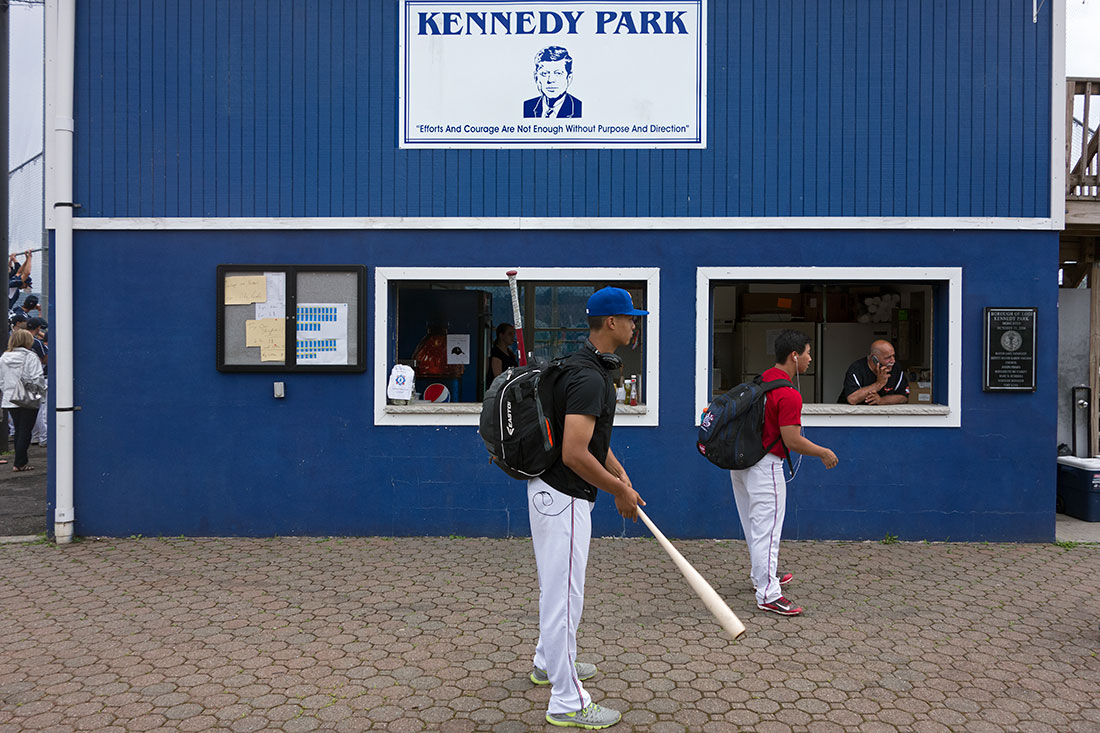
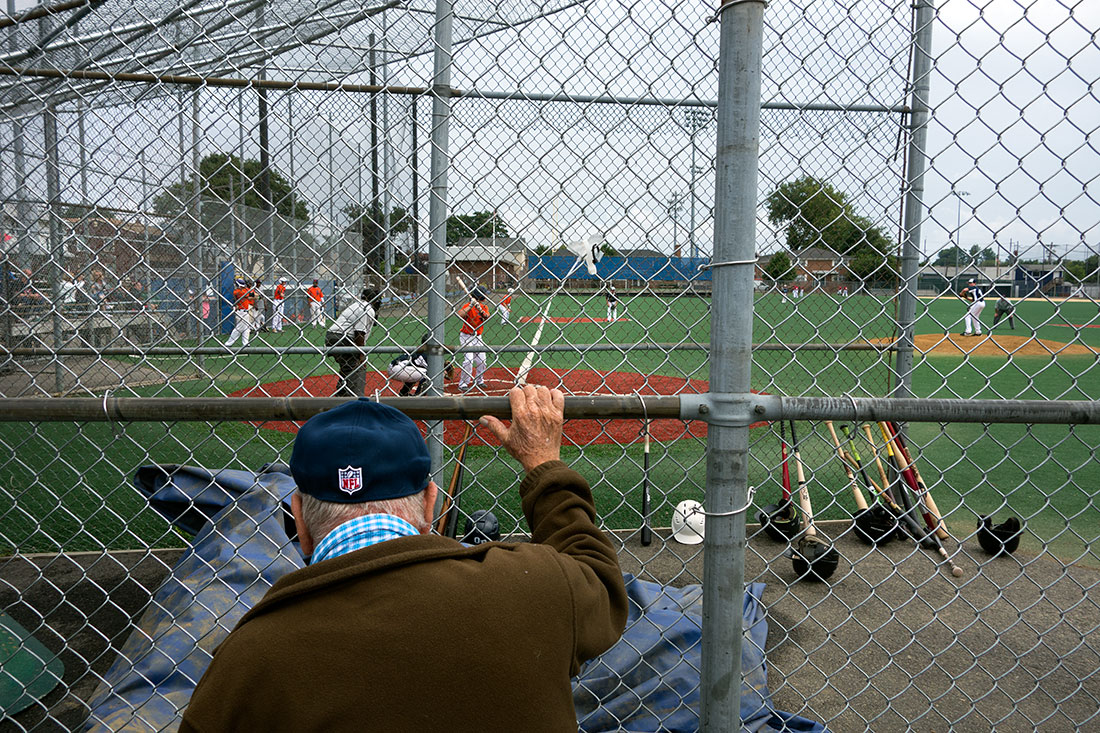
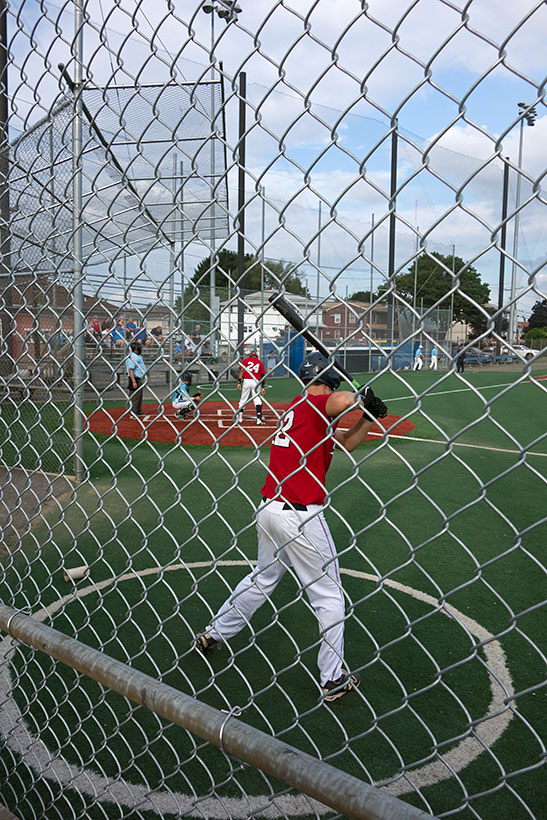
batsandballs
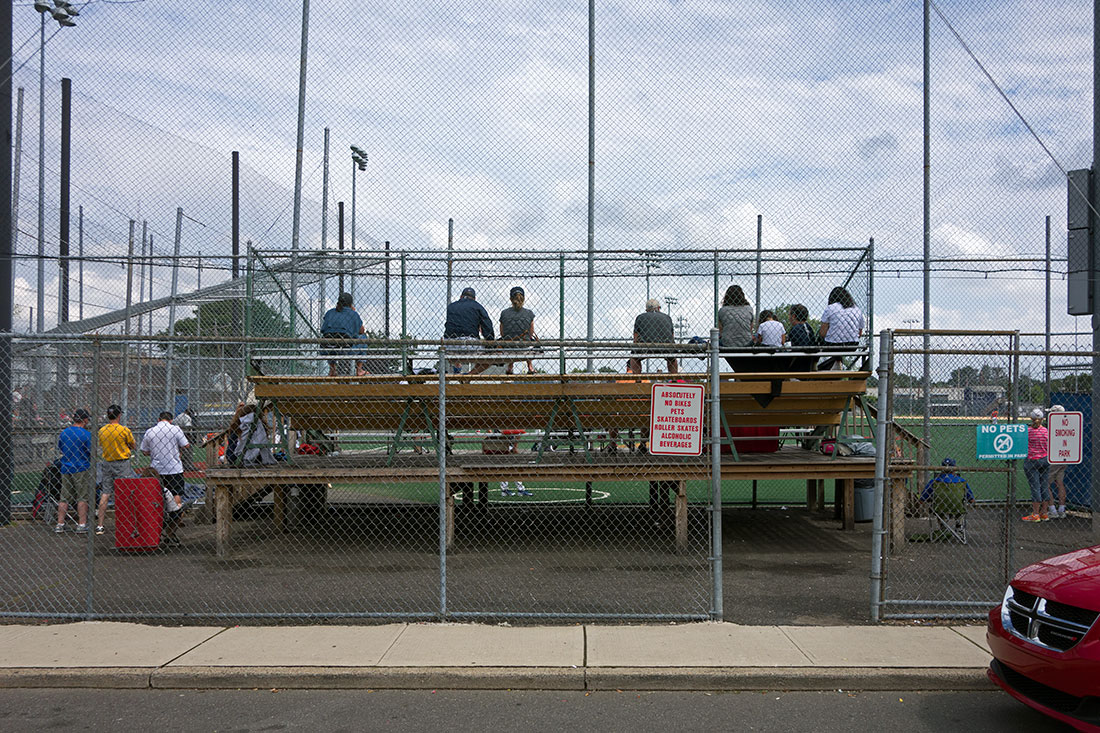
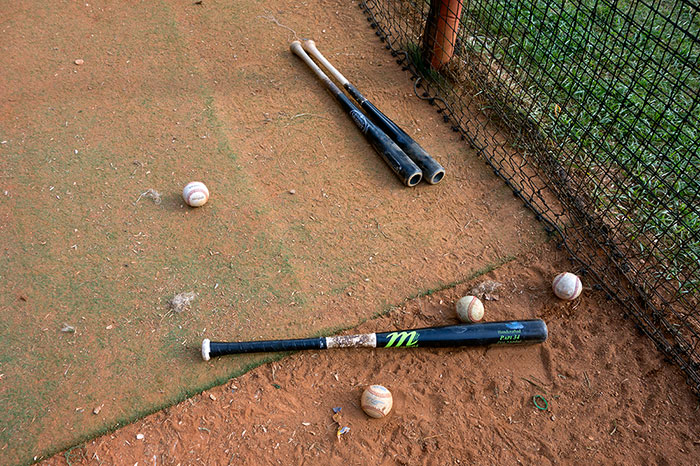
Bats and balls — © Brian Rose

More than 300 teams (with parents) have descended upon the Atlanta area for one of the major baseball travel team events of the year. The Gothams, my son’s team, alas, will not advance to the playoffs, but has performed well at times against some of the best teams in the country.

Atlanta/Two Aspects

by admin on 07/13/2015, no comments

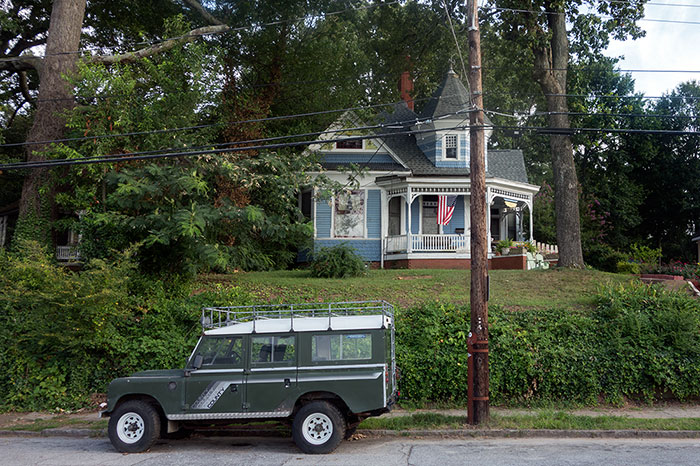
My son and I are in Atlanta for a baseball tournament. Many of the best travel teams for 16 and under have gathered here for what is billed as the national championship. We’ve done okay, but will definitely not be winning the tournament.

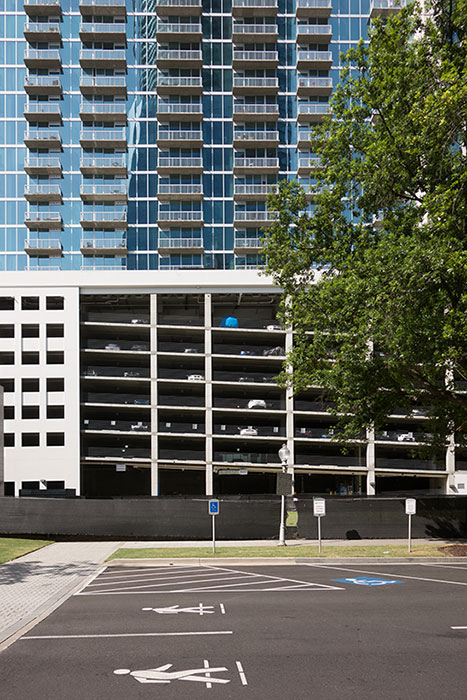
I’ve never been to Atlanta before, though I have family roots in the area (see my recent post about the Confederate Flag). As a New Yorker, it is difficult to comprehend cities like this that are so dependent on the car for just about everything. The traffic is daunting, the summer heat punishing, but people are friendly, and as one gets around and sees things, it becomes a more comprehensible, even livable place.

Here are two aspects of Atlanta — anecdotal — but representative of the extreme contrasts evident throughout.

buckheadgarage
Buckhead, Atlanta — © Brian Rose

grantpark_victorian
Grant Park, Atlanta — © Brian Rose

New York/Stars and Bars

by admin on 06/25/2015, no comments

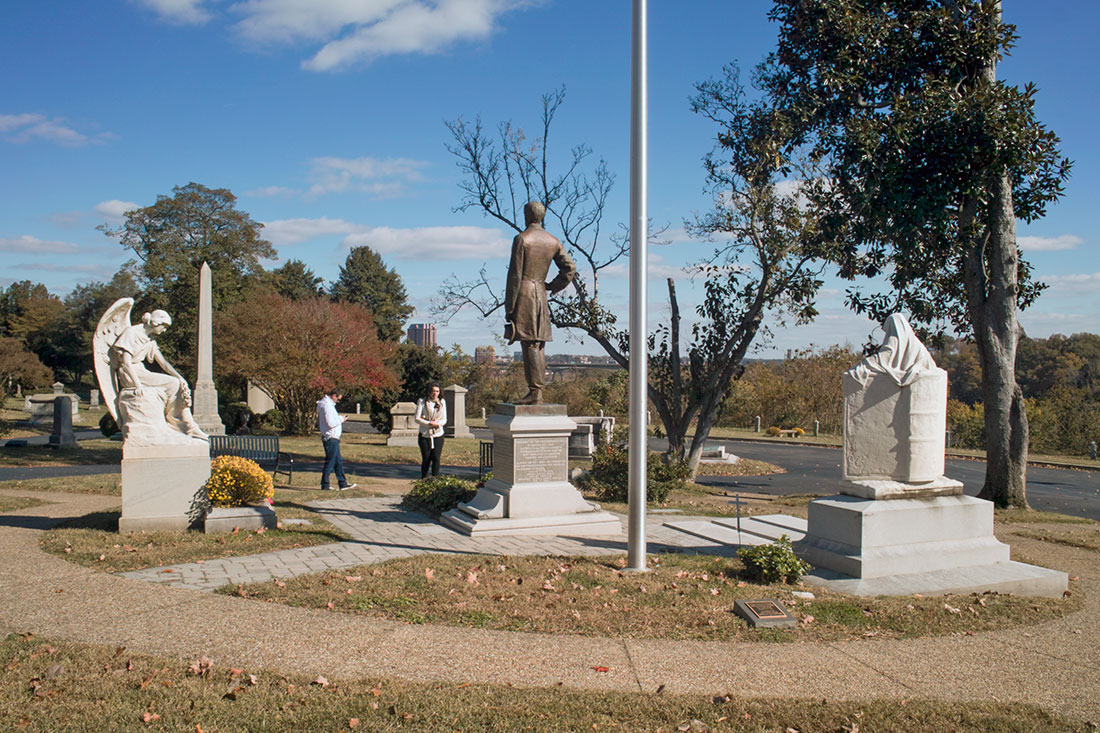
jeffersondavis
Jefferson Davis grave, Hollywood Cemetery, Richmond, Virginia — © Brian Rose

I grew up in Williamsburg, Virginia, the one time colonial capital, and now restored town. It’s a place steeped in history, a place that played an important role in the founding of the United States, and I lived just a few miles away from Jamestown, the first permanent English settlement in North America. My ancestors can be traced back to the south side of the James River, and at least one Rose came aboard one of the first ships to Jamestown. Not far away is Yorktown, where the last major battle of the Revolutionary War took place, and it appears that my great, great, great — I’m not sure how many great — grandfather fought and died in that war.

On my mother’s side of the family, I have equally deep American roots. The Berryhills emigrated from Scotland to North Carolina, and some of them headed south to Georgia, marrying into the Creek Indian tribe, which was driven west in the “Trail of Tears.” Despite this Native American heritage, my Berryhill line was clearly white, though my sister and I used to joke when we were kids, that we had slightly asiatic features. That was long before we had any idea that there might be a reason.

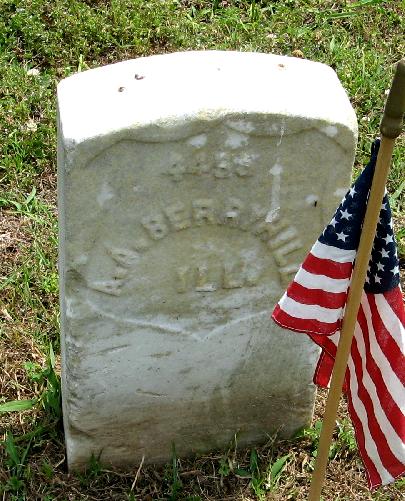
Some time before the Trail of Tears, my family traveled from Georgia to Mississippi and settled in the area around Jackson, named for President Andrew Jackson, who, ironically, is responsible for vanquishing the Creek Indians from their homeland. My ancestor Alexander Berryhill was a corporal in the Confederate Army and died in the battle of Vicksburg. His grandson eventually made his way to Richmond, Virginia, and finally to Portsmouth, Virginia, where I was born.

6037014_118204695696
Berryhill marker, Vicksburg, Mississippi

Growing up in Virginia the symbols of the old South were ubiquitous, and I was accustomed to seeing the Confederate flag displayed, sometimes in official settings, but more often in an ad hoc fashion, as a statement I usually associated with red neck no-nothingism, or a solidarity with suspect southern values, one of which was racism. On the other hand, I knew a number of people who participated in Civil War battle reenactments in which the flag was integral, and although it isn’t my kind of thing, I’ve always understood the way in which both sides in the “War Between the States” were given equal respect. That was what I grew up with correct or not — that Robert E. Lee surrendered with honor at Appomattox — that the South may have been wrong, but it is our heritage, and is part of the history of who we are as a nation today.

So, I am a descendant of families that came to Jamestown, fought and died in the Revolution, married into the Creek Indians, and fought and died in the Civil War. My father once told me that my grandfather was a Republican, which was the party of Lincoln in the old South, and he said that he woke one night to the spectacle of a cross being burned in the front yard. I left the South to make my home in the Yankee city of New York, and lived for 15 years in Amsterdam, among the people who founded that city, New Amsterdam..

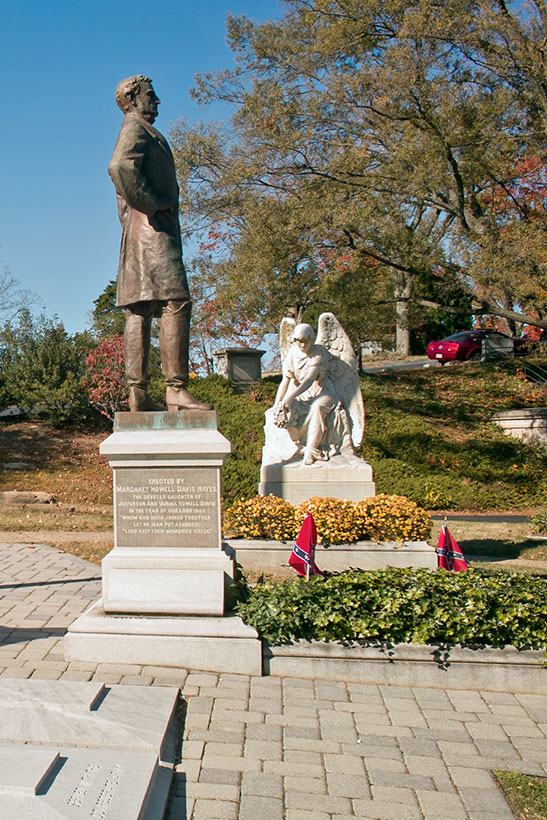
jeffdavis
Jefferson Davis and Confederate flags, Hollywood Cemetery, Richmond, Virginia
© Brian Rose

Recently, I returned to Richmond for a funeral in Hollywood Cemetery, the gravesite of Jefferson Davis, the former president of the Confederacy, and the burial ground for 18,000 Confederate soldiers. There were visitors to Davis’s monument, tourists, or perhaps, those who venerated what he represented — I don’t know. And there were Confederate flags. Seeing the flags sent a chill through me on that already cold November day. The Stars and Bars as historical object is one thing, but when flown, (with a calculated impunity) is something else.

Let us remember those who died, right or wrong, in the Civil War. Let us show respect for that history as we seek to learn from it. But it is long past time for the Confederate Flag to fly over any capital in any state, and it is time to acknowledge, finally, that what is a symbol of heritage to some, is clearly a symbol of hatred to others. And as such, should be relegated to museums and text books once and for all.

New York/TSA

by admin on 06/21/2015, no comments

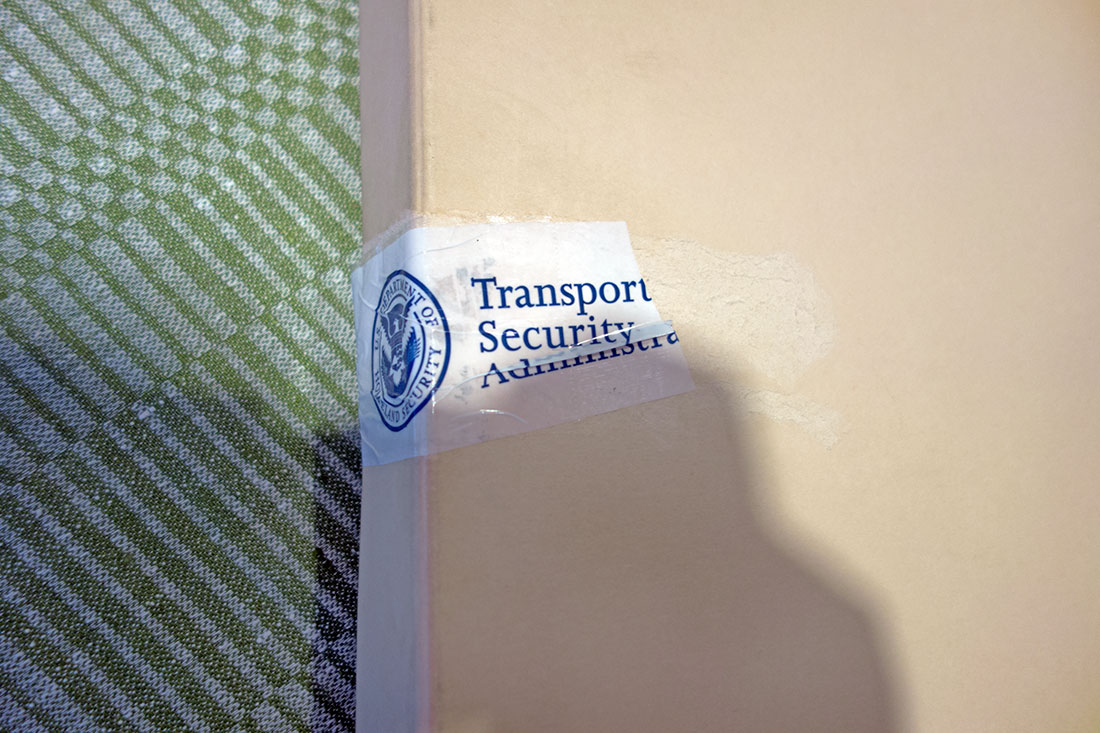
tsa_tape
On the floor of the Newport News/Williamsburg Airport — © Brian Rose

I recently traveled to Virginia for a family visit, and I brought along some of my work to show a former high school classmate, who is an avid photo collector. But it seems that he was not the only one eager to check out my portfolio. At least the TSA was kind enough to retape the box of prints. I hope they enjoyed the photographs.

New York/Co-op City

by admin on 05/23/2015, no comments

coopcity
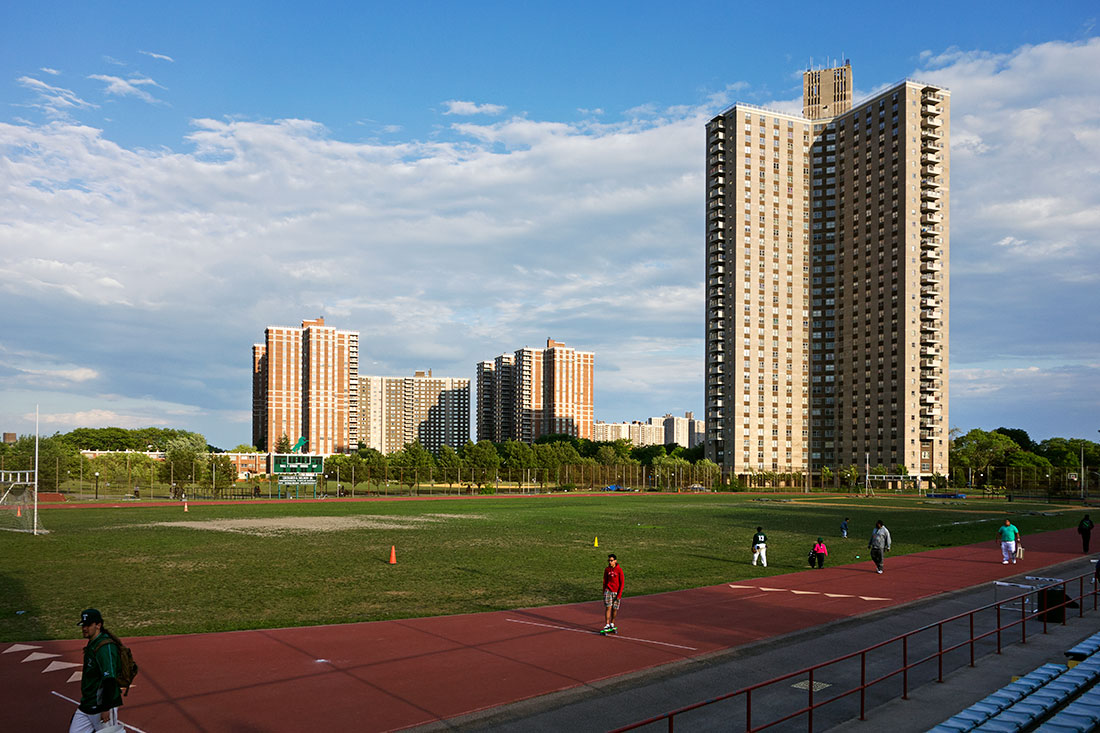
Co-op City behind Harry Truman high school  in the Bronx — © Brian Rose

In many ways it’s a forbidding place, Co-op City behind Harry Truman high school in the Bronx. Tall housing blocks sprouting from nondescript parkland. The school is an architectural horror from the 1960s, and the housing towers are not much better. Co-op City may be home to tens of thousands, but to me it all feels cold and dehumanizing.

Nevertheless, as my son’s baseball game came to a close, a freshening breeze swept away the day’s clammy humidity, the sun broke through, and this place — so desolated much of the time — took on a certain presence — call it beauty, perhaps — in the fading sunlight as coaches and players drifted off the field.

New York/Letter to Attorney General

by admin on 05/08/2015, no comments

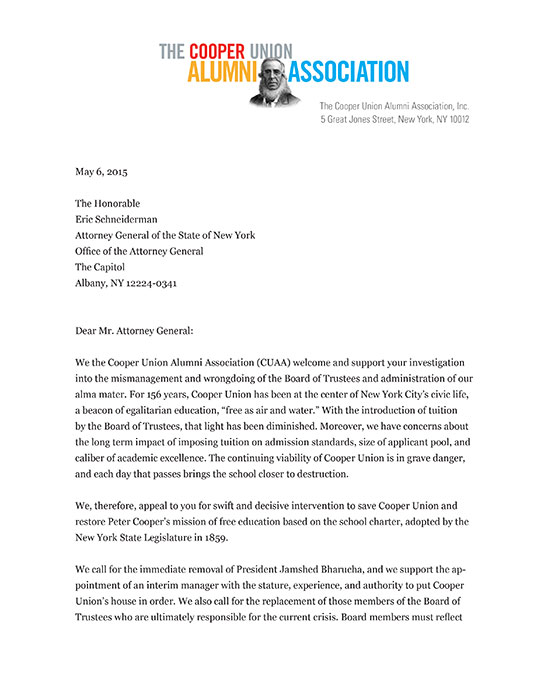
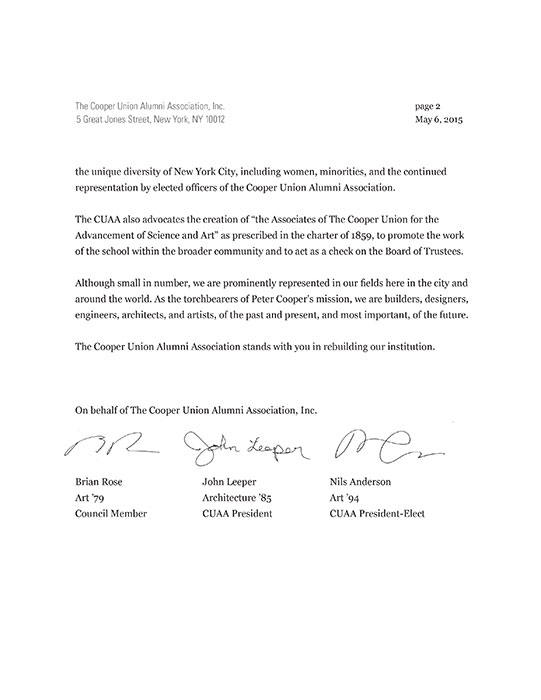
Following up on my recent post about the situation at Cooper Union, I drafted a letter to New York State Attorney General Eric Schneiderman on behalf of the Cooper Union Alumni Association expressing our support for his ongoing investigation of the college’s board of trustees and administration. Additionally, the letter makes an appeal for the AG to intervene to save the school. It calls for the removal of the current president and the replacement of certain members of the board of trustees. and it calls for a return to tuition free education, the cornerstone of Peter Cooper’s mission as stated in the charter of 1859..

The proposed letter was first presented on the Save Cooper Union Facebook page, and was then submitted to the Cooper Union Alumni Council, which made various improvements to the original. After extensive discussion, the council voted overwhelmingly in favor of sending the letter to the Attorney General. We now await his action.

The final text is below. An easier to read version is also available here.

CUAA-to-AG-Schneiderman01
CUAA-to-AG-Schneiderman02

New York/Whitney Museum

by admin on 05/03/2015, no comments

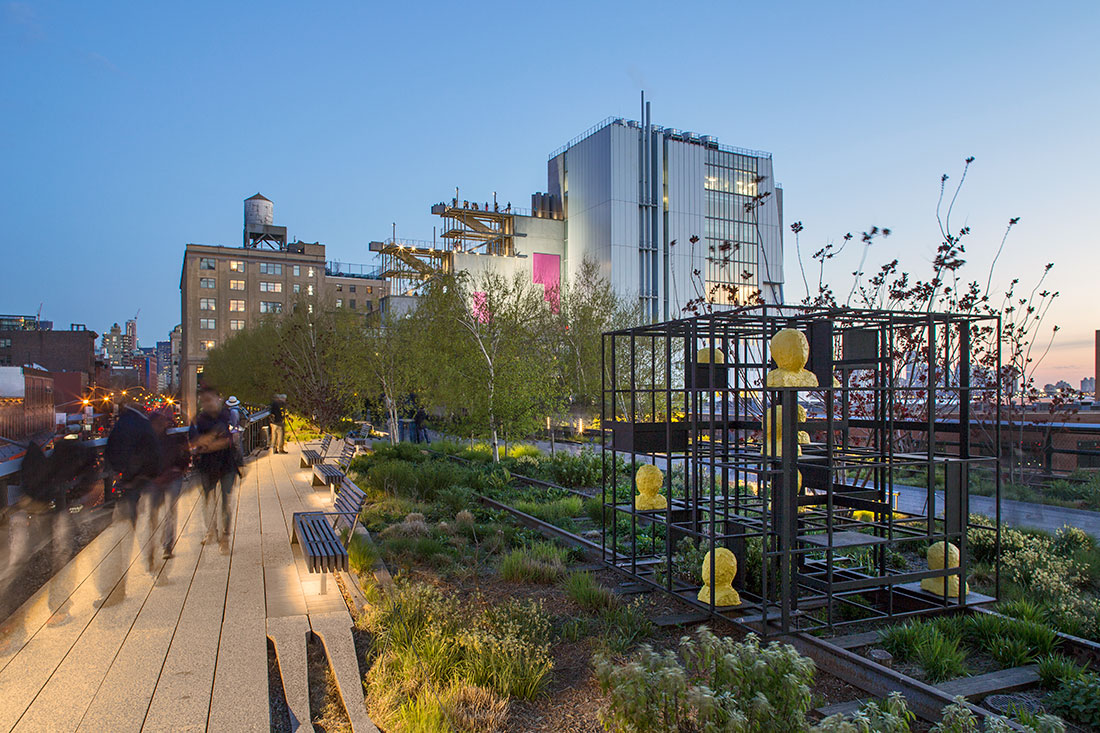
whitney
The Whitney Museum from the High Line — © Brian Rose

Yesterday on the High Line, a beautiful evening. The Whitney Museum, just opened, an odd jumble of forms and outcroppings, industrial, metallic, not quite elegant, but a strong presence from this angle.

Cooper Union/Zero Hour

by admin on 04/25/2015, 2 comments

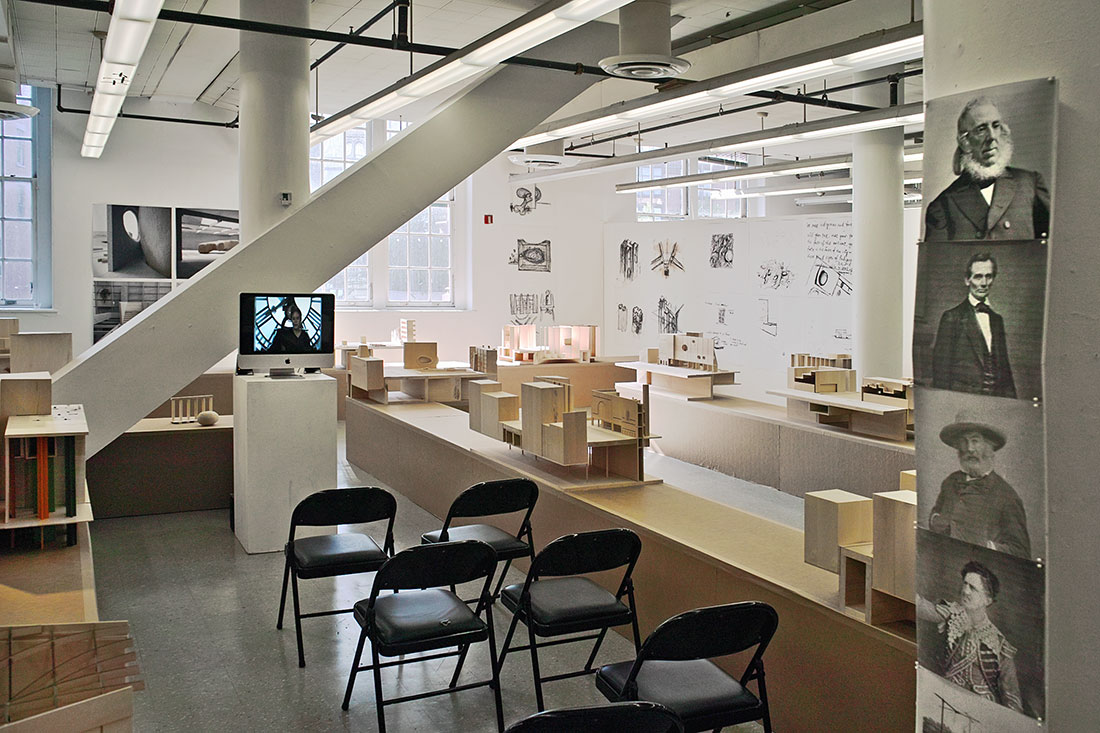
studentshow
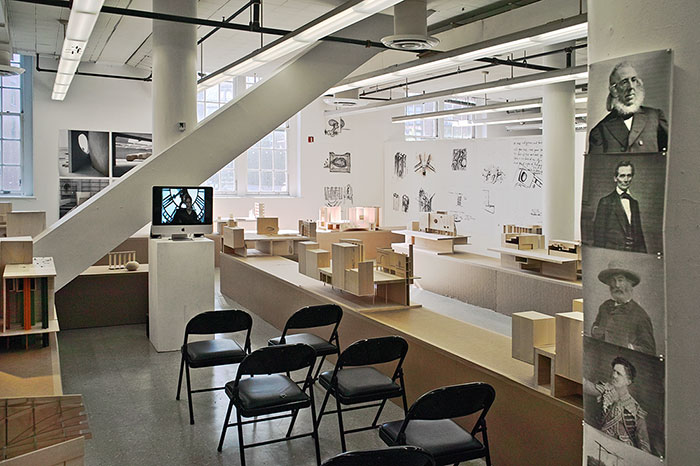
Recent student show in the architecture school — © Brian Rose
Portraits at right: Peter Cooper, Abraham Lincoln, Walt Whitman, Junius Brutus Booth (celebrated actor and father of John Wilkes Booth)

It is zero hour at Cooper Union.

Peter Cooper’s mission discarded:
Just two years ago, chairman of the board of trustees, Mark Epstein, announced that Cooper would cease being tuition free — for the first time in the school’s 156 year history — and Jamshed Bharucha, the recently installed president, was tasked with the “reinvention” of the school. The financial crisis that led to the imposition of tuition was caused by mismanagement, incompetency, and possible criminality, on the part of the board and the administration. The construction of the New Academic Building, among many other miscalculations, saddled the school with staggering debt. When questioned about the financial condition of the school, chairman of the board Epstein, showing stunningly poor leadership, blamed the alumni for not giving enough.

Students occupied the president’s office for weeks, only leaving when it was agreed that a working group would examine the school’s finances and propose a way to avoid tuition. The working group proposed a budget that called for sacrifice from everyone, and included greatly reducing Cooper’s bloated administrative costs. That proposal was rejected by the board of trustees, who seemingly did not understand the ramifications of their decision.

Death spiral:
The Cooper Union community, students, faculty, alumni, and others, remained steadfastly opposed to the reinvention of the school, which, aside from tuition, involved creating new revenue generating programs. A carefully researched lawsuit, enumerating past abuses, and accusing the board of violating the charter of the school, was brought to trial with a decision from the judge still pending. The alumni association was marginalized by President Bharucha, kicked out of its office on campus, denied access to its electronic mailing list, and for a time, not permitted to meet on campus.

The imposition of tuition immediately affected the school’s ability to attract the quality of students who had applied in the past. Admissions numbers plummeted. Prospective students began choosing other colleges over Cooper, some offering better financial incentives, and many offering far better amenities — factors that were not part of the equation before.

The administration and board lurched from one bad decision to another, at one point hiring the firm of Bo Dietl, a right wing blowhard, to take over the security of the campus, which included body guards for the increasingly paranoid president. Recently, the administration announced that it would begin charging for academic credits above a certain threshold — essentially a stealth increase in tuition. Confronted with protest, they withdrew the plan.

The Attorney General steps in:
Due to the lawsuit and the continued pressure put on by the Cooper community, the New York State Attorney General Eric Scheiderman began an investigation of Cooper Union, now teetering perilously on the brink. Members of the board of trustees began leaking misinformation to the press — most prominently, Daniel Libeskind and Francois de Menil — and the Murdoch-owned Wall Street Journal, in the process, further lowered its journalistic standards. In recent days, President Bharucha and his chief academic officer, Teresa Dahlberg have vanished from campus, and we now wait breathlessly for the next shoe to drop.
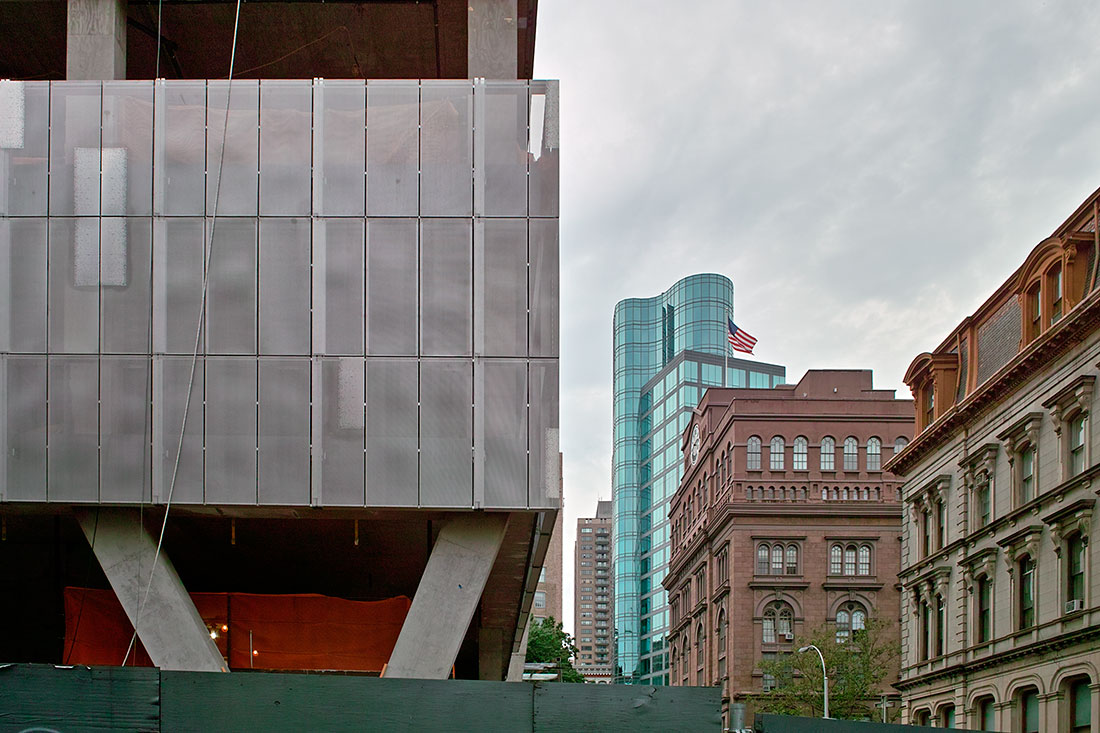
nabconstruction
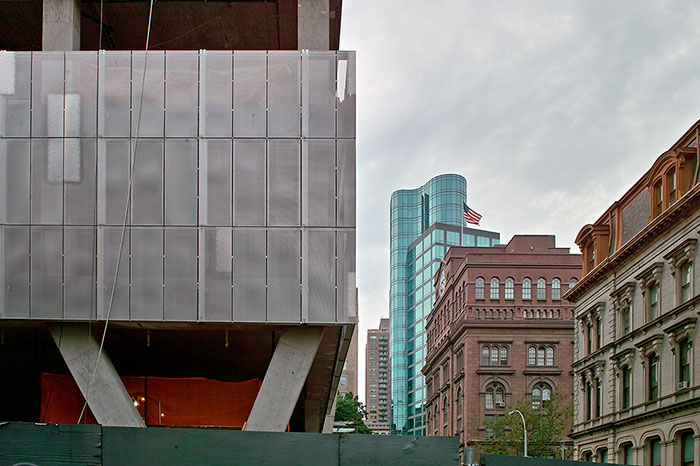
New Academic Building under construction and Foundation Building — © Brian Rose

What is at stake:
Thomas Jefferson wrote the epitaph for his gravestone with several brief phrases:

Author of the Declaration of American Independence
of the Statute of Virginia for religious freedom
& Father of the University of Virginia

Jefferson regarded the creation of his university one of his greatest achievements. It was, as he called it, an “academical village,” a place set apart where students and teachers would come together in the free pursuit of knowledge. Peter Cooper, a self-made inventor and entrepreneur, founded Cooper Union as his legacy, the gift of free education to the working class, the men and women who, in many cases, lived in the teaming slum neighborhood adjacent to the Foundation Building on the Bowery and the square now named after him. Unlike Jefferson’s rural village in the foothills of the Blue Ridge Mountains, Cooper’s institute was set in the heart of urban New York City.

Over the years, as the United States prospered and New York became one of the great cities of the world, Cooper Union became a more rarefied place, a free school open to all, but accepting only the highest qualified. Over the years, it has produced a notable share of the outstanding designers, builders, engineers, and artists in the city’s history.

The value of free:
Kevin Slavin, Cooper alumnus and MIT professor, has written eloquently about what free means in an educational context, a concept that those of us who attended Cooper Union understand intimately. Slavin writes:

“We went not because of the financial value of free — that is, zero tuition — but rather, because of the academic value of free. Free for everyone meant that the students who were there were beholden to nothing (nothing!) except their passion, talent, hard work, and brilliance. This unique, very particular sensibility — that, more than any other thing they could build, hire or install — this was the experience of the institution.”

Rebecca Mead writes in the New Yorker about Cooper “that It also grants a student the freedom to go in whatever direction her or his intellectual inclinations lead, without regard to the ultimate economic utility of the course of study. That learning should not necessarily be linked to future earning power is an ideal increasingly under siege in institutions of higher learning. Simply by embodying and demonstrating an alternative paradigm, Cooper Union benefitted even those who were not members of its student body.”
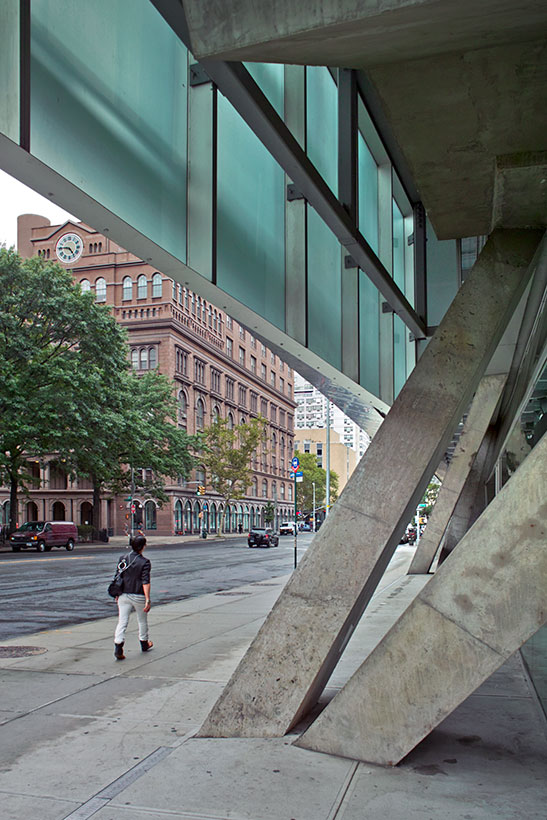
cooperbuttresses
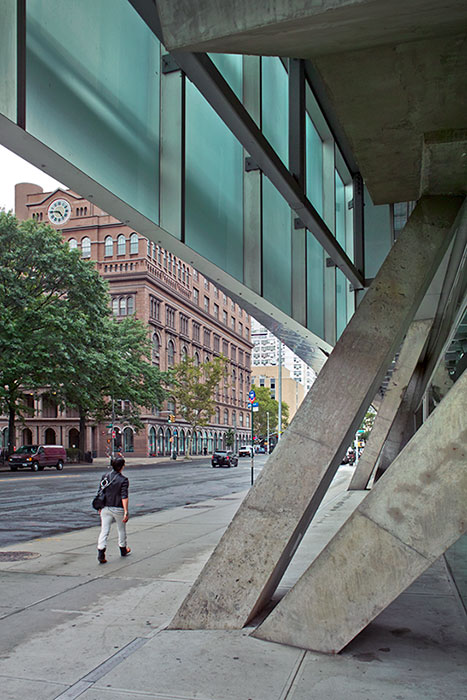
New Academic Building (foreground) and Foundation Buildiing — © Brian Rose

The end or a new beginning
Cooper Union’s future now hangs in the balance. The school’s current financial condition is grave and some doubt that it can survive as a tuition free institution, even were it to regroup and follow the working group’s plan. But it’s clear to me that it cannot survive with tuition. Cooper Union has no meaning, no purpose, beyond Peter Cooper’s vision of a school ” free as air and water.” It cannot compete with the juggernauts of American education, the Ivies, the well-endowed technical schools and art schools. Cooper’s survival depends on remaining what it was, free.

I am convinced, as of this writing, that an intervention by the Attorney General is the only way the school can be saved. It will require a reorganization of the school, a reaffirmation of the charter and founding ideals, and it will require some kind of grand bargain that will relieve the financial burden of debt that years of mismanagement have wrought. If that grand bargain cannot be reached — in this moment of New York City financial ascendency — I fear that Peter Cooper’s great educational gift will be squandered and his legacy forever dishonored.
 

New York/Paradise

by admin on 04/13/2015, no comments

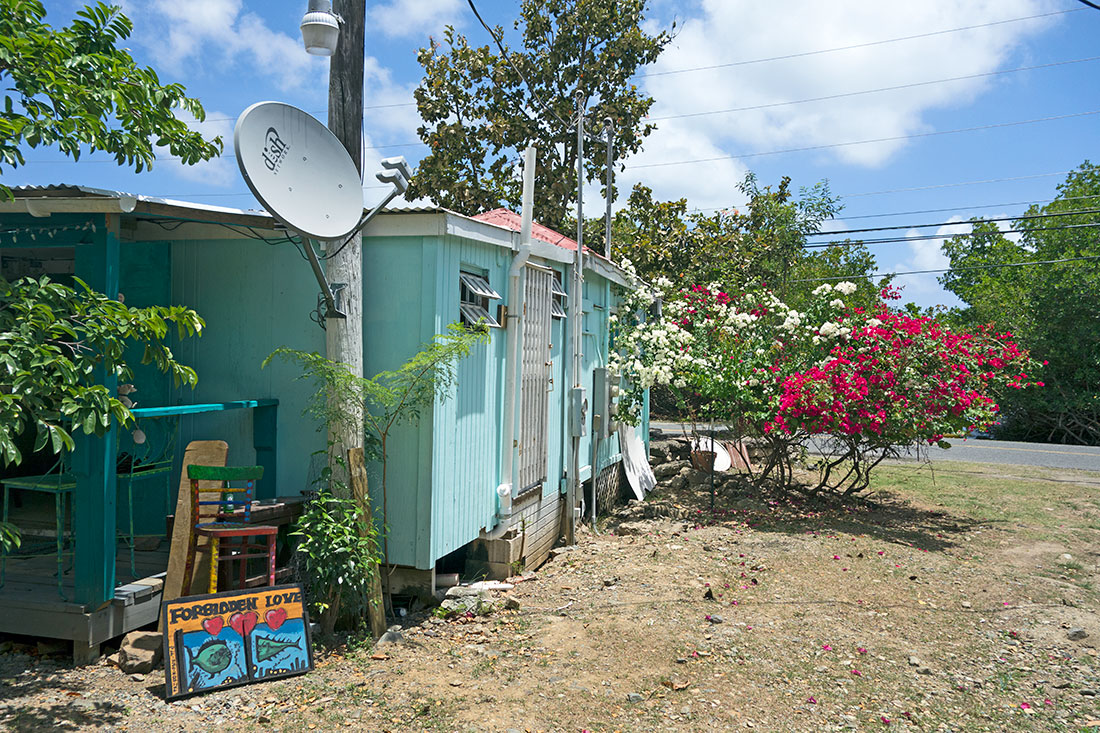
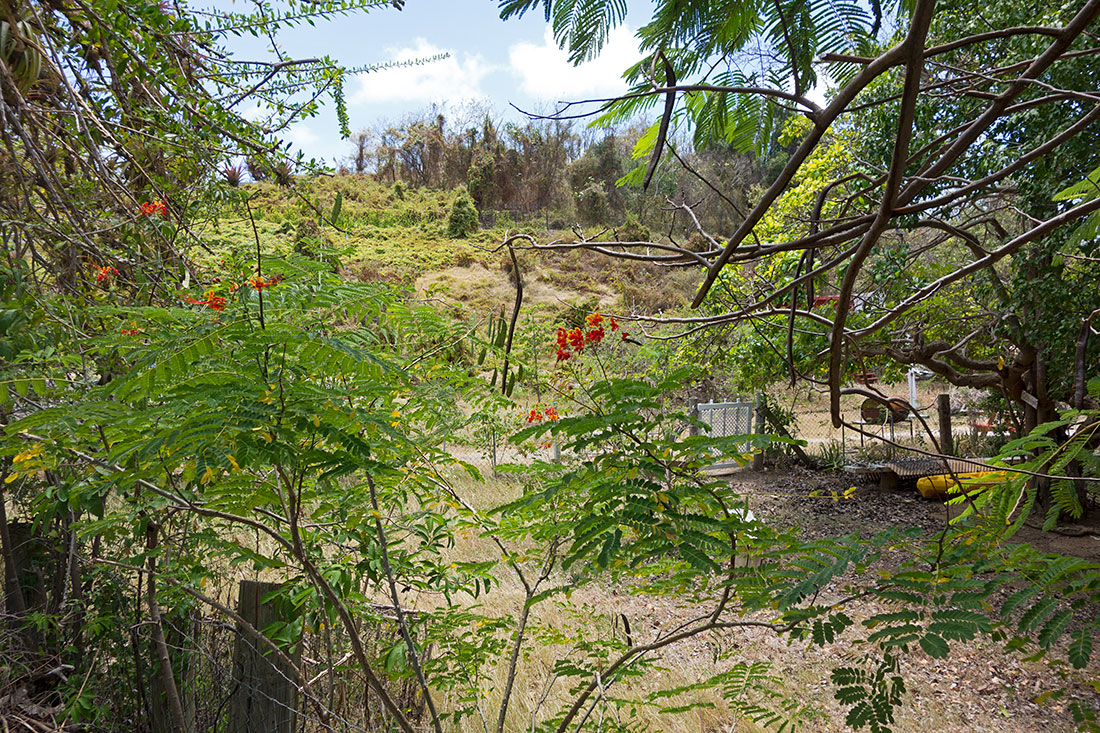
Back from a week from the island of St. John in the U.S. Virgin Islands. We stayed in a so-called eco-tent overlooking Salt Pond Bay in the southeastern tip of the island. It was a reasonably comfortable structure, but we shared it at various times with a mouse, a lizard, a spider, a walking stick, biting bugs, and marauding birds. Under the hut, which sat on wooden stilts, hundreds of hermit crabs scrabbled about, their shells a constant crackling sound. Nature can be loud.

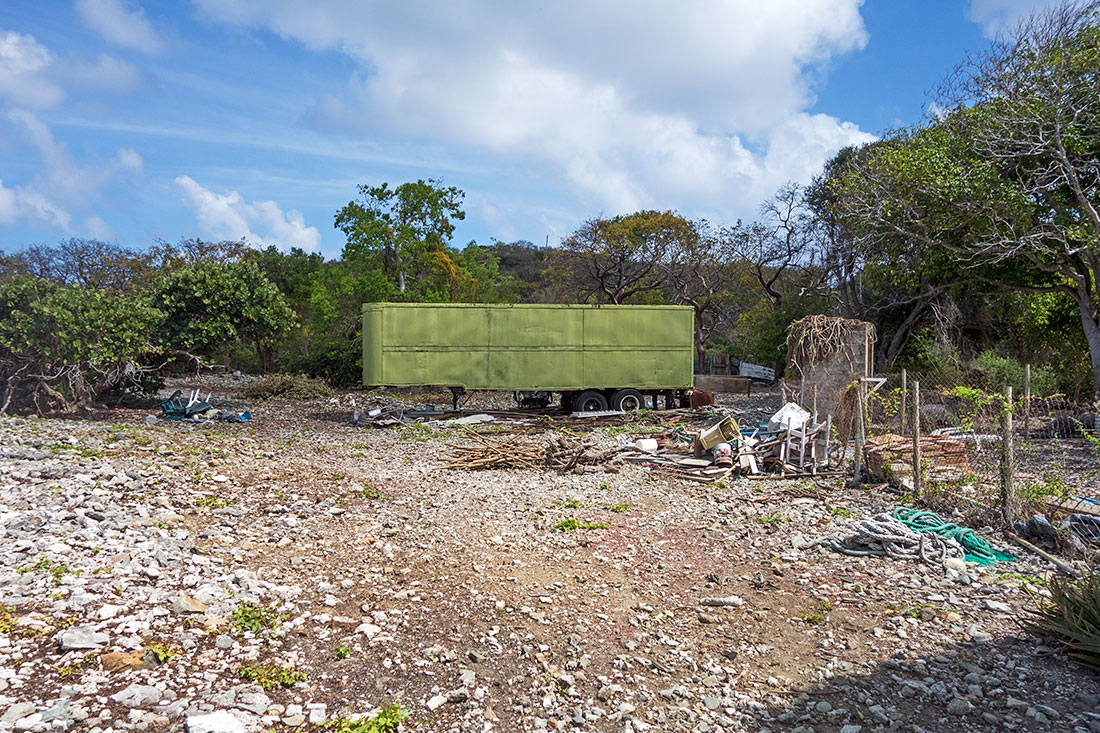
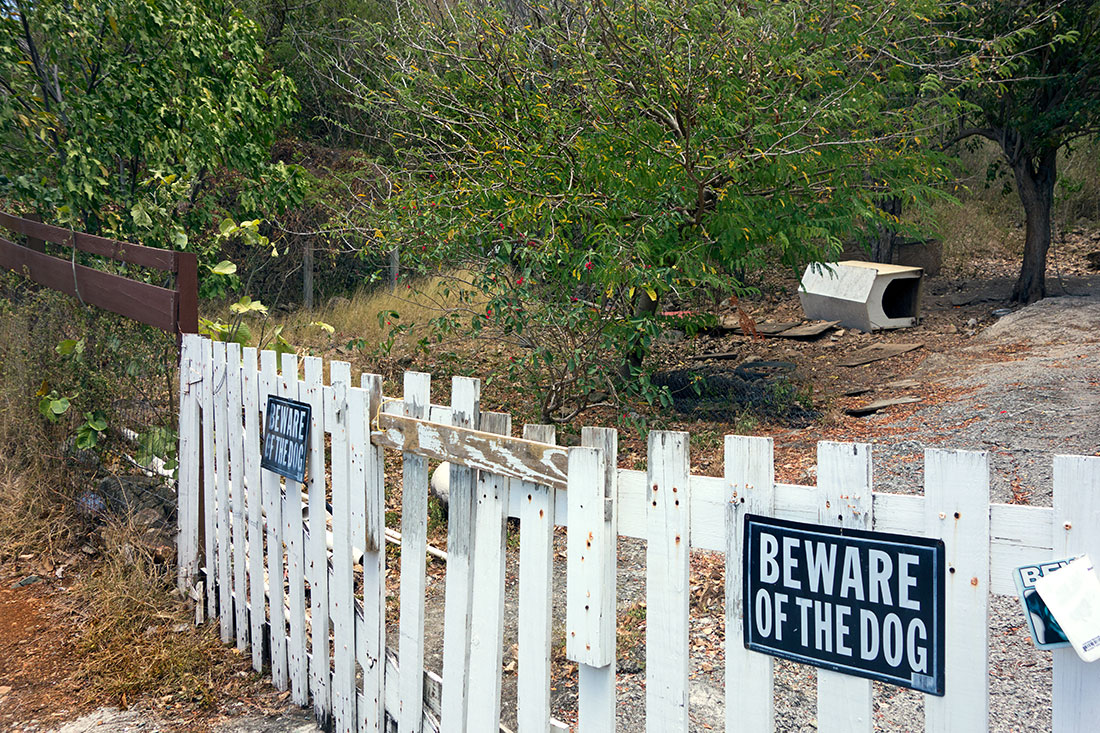
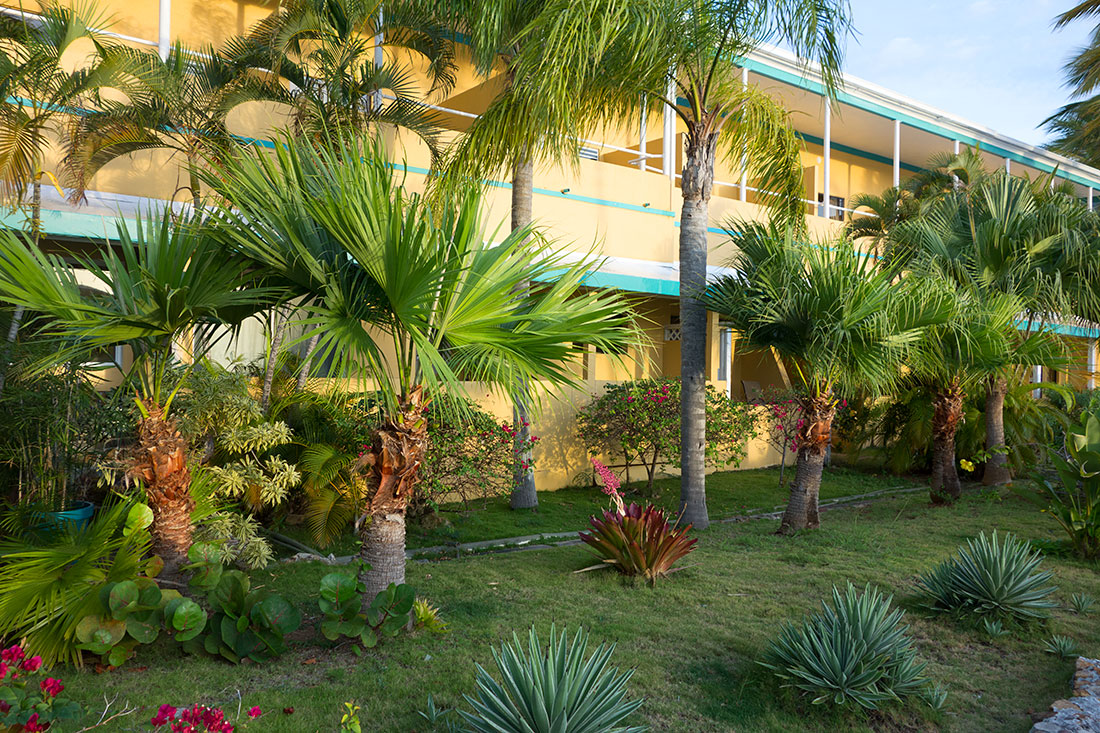
We were staying at the Concordia Eco-Resort, and traveled around the island to different beaches and snorkeling spots. I didn’t take many photographs, but snapped a few when we made pitstops between locations. As beautiful as St. John and nearby St. Thomas are — and there are many resorts and large houses — the majority of the population appears quite poor and lives in rather chaotic little compounds of makeshift buildings with chickens and, sometimes, goats running freely.

Paradise it is, but rough around the edges.

paradise001
St. John — © Brian Rose

paradise004
St. John — © Brian Rose

paradise005
St. John — © Brian Rose

paradise006
St. John — © Brian Rose

paradise003
St. Thomas — © Brian Rose


New York/East 4th Street

by admin on 04/04/2015, no comments

rose_harsley
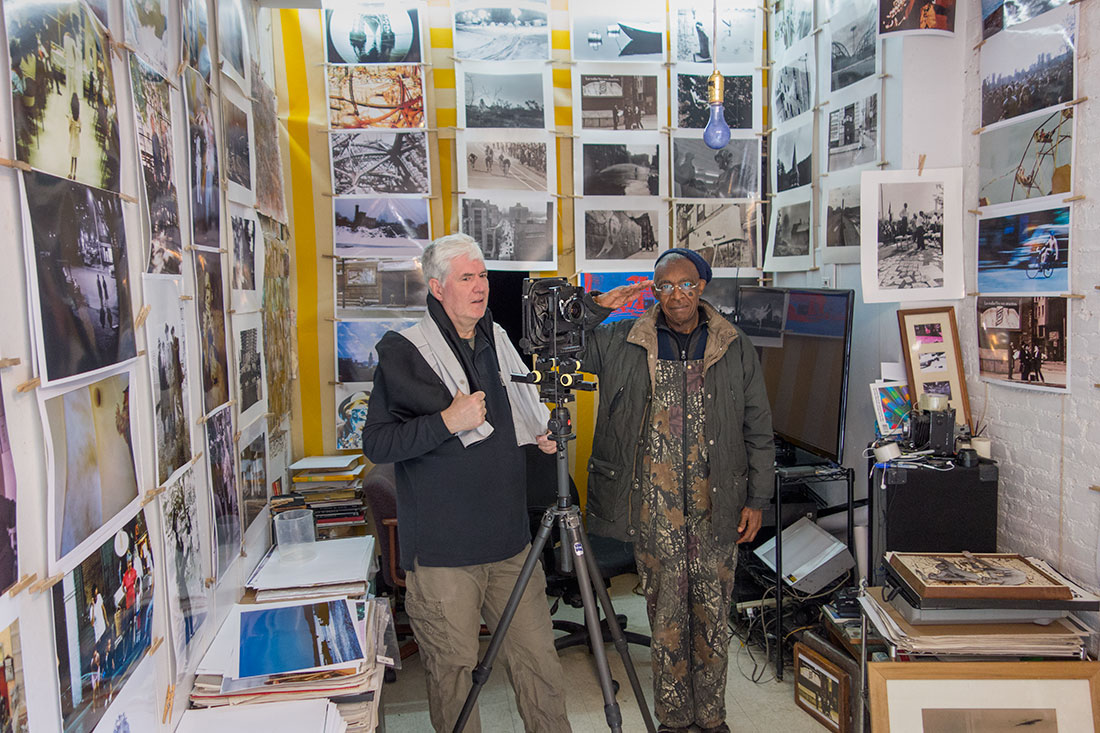
Brian Rose and Alex Harsley — © Brendan Rose

A few days ago I went to Alex Harsley’s East 4th Street Photo Gallery to document his amazing space, a couple hundred square feet chock-a-block with prints running up and down the walls, even on the ceiling, attached to cords with clothespins. I brought along my son Brendan, who is 16 and needed to do a school photography assignment that involved making photos containing other photos.

Yes, that’s a 4×5 view camera, and yes, I’m wearing my dark cloth superhero cape as Alex salutes. I was there for 3 or 4 hours taking pictures — very slow going in such a tight space. I used my monorail camera so that I could use a wider lens. Most of the view camera images I’m doing these days are made with a field camera, a boxier, more compact camera with fewer movements, and a stiffer bellows, making it difficult to put a 65mm lens on it. But lightweight and portable. The camera above was previously my workhorse architectural camera. Few architectural photographers use view cameras any more, settling for the ease of digital SLRs, despite their limitations. Clients don’t know or care at this point. If you care, however, it’s an Arca Swiss camera with a Schneider 65mm lens on a Gitzo tripod and a Manfrotto ball head.

However, when I want highly detailed images to possibly print large, the view camera is still the way to go. I scan the negative at high resolution and make prints — like my last two exhibitions — up to 4×5 feet. The MIT mural shown in my earlier post was made from one of those 500 Mb scans. Anyway, I hope to have some images of Alex’s gallery to show in the near future.

I’ll be on vacation for a week to a place with limited internet and cell phone service, so don’t expect any posts till I return. Outta here.

New York/Love Saves the Day

by admin on 03/27/2015, one comment

lovesavesday
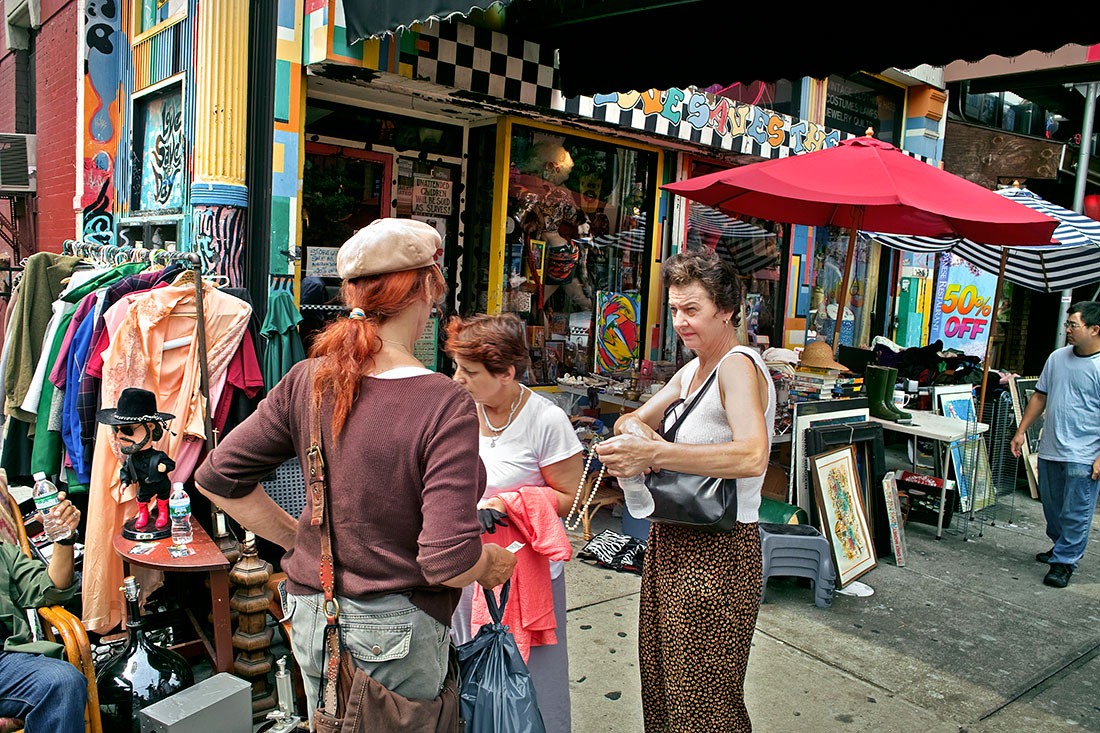
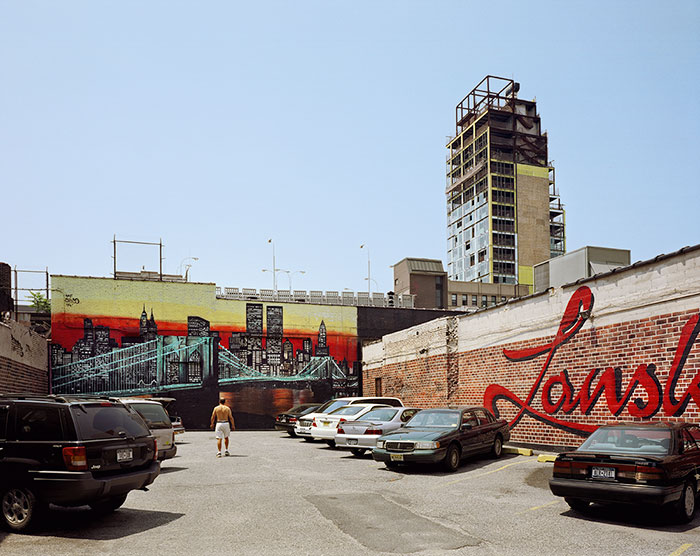
Love Saves the Day, Second Avenue and East 7th Street — © Brian Rose

Here in the East Village we are in shock over the explosion and fire that have leveled three historic tenement buildings on Second Avenue at East 7th Street. At present, there are missing people and numerous injured.
This is the downtown of the East Village, the heart of the culture and subculture that makes this place special, from high to low, the Beats, the Hippies, the Punks, and all who have chosen, or who have been chosen, to live in this crazy part of the world.

From 1966 to 2008 there was Love Saves the Day, a vintage clothing and bric-a-brac shop in the building now a heap of rubble. Above is a picture I took passing by not long before the shop closed.
Love Saves the Day.

http://www.nytimes.com/2008/12/25/nyregion/25love.html

New York/MIT Museum Interview

by admin on 03/24/2015, no comments

MITportrait
In front of Delancey Street photo, MIT Museum

The exhibition I am a part of at the MIT Museum (Photographing Places: The photographers of Places Journal, 1987-2009) includes interviews with the various photographers, which can be listened to through headphones at audio stations in the gallery. The interviews are broken up into short thematic bites.

My interview was done live over the internet with some editing done later. It’s fairly spontaneous commentary about my thinking and way of working. When I refer to “my book,” I’m talking about Time and Space on the Lower East Side, which is now sold out. And when I refer to “Cervin,” i’m talking about Cervin Robinson who was a consulting editor to the original Places magazine — an architectural photographer — and author of Architecture Transformed: A History of the Photography of Buildings from 1839 to the Present.

Here are the clips:
 
The Lower East Side project:

[sc_embed_player_template1 fileurl=”http://www.brianrose.com/journal/2015/Rose_project.mp3″]
 
Photographing place:

[sc_embed_player_template1 fileurl=”http://www.brianrose.com/journal/2015/Rose_place.mp3″]
 
The view camera:

[sc_embed_player_template1 fileurl=”http://www.brianrose.com/journal/2015/Rose_camera.mp3″]
 
Photographing New York City:

[sc_embed_player_template1 fileurl=”http://www.brianrose.com/journal/2015/Rose_photographingNYC.mp3″]


delancey__1980
Delancey Street 1980 — © Brian Rose/Edward Fausty

[sc_embed_player_template1 fileurl=”http://www.brianrose.com/journal/2015/Rose_selection1_Delancey.mp3″]
 

houston_1980
Houston Street 1980 — © Brian Rose/Edward Fausty

[sc_embed_player_template1 fileurl=”http://www.brianrose.com/journal/2015/Rose_selection_Houston1980.mp3″]
 

houston_2003
Houston Street 2003 — © Brian Rose

[sc_embed_player_template1 fileurl=”http://www.brianrose.com/journal/2015/Rose_selection_Houston2003.mp3″]
 

norfolk_2003
Norfolk Street 2003 — © Brian Rose

[sc_embed_player_template1 fileurl=”http://www.brianrose.com/journal/2015/Rose_selection_Norfolk.mp3″]


New York/WTC

by admin on 03/13/2015, no comments

1wtc003
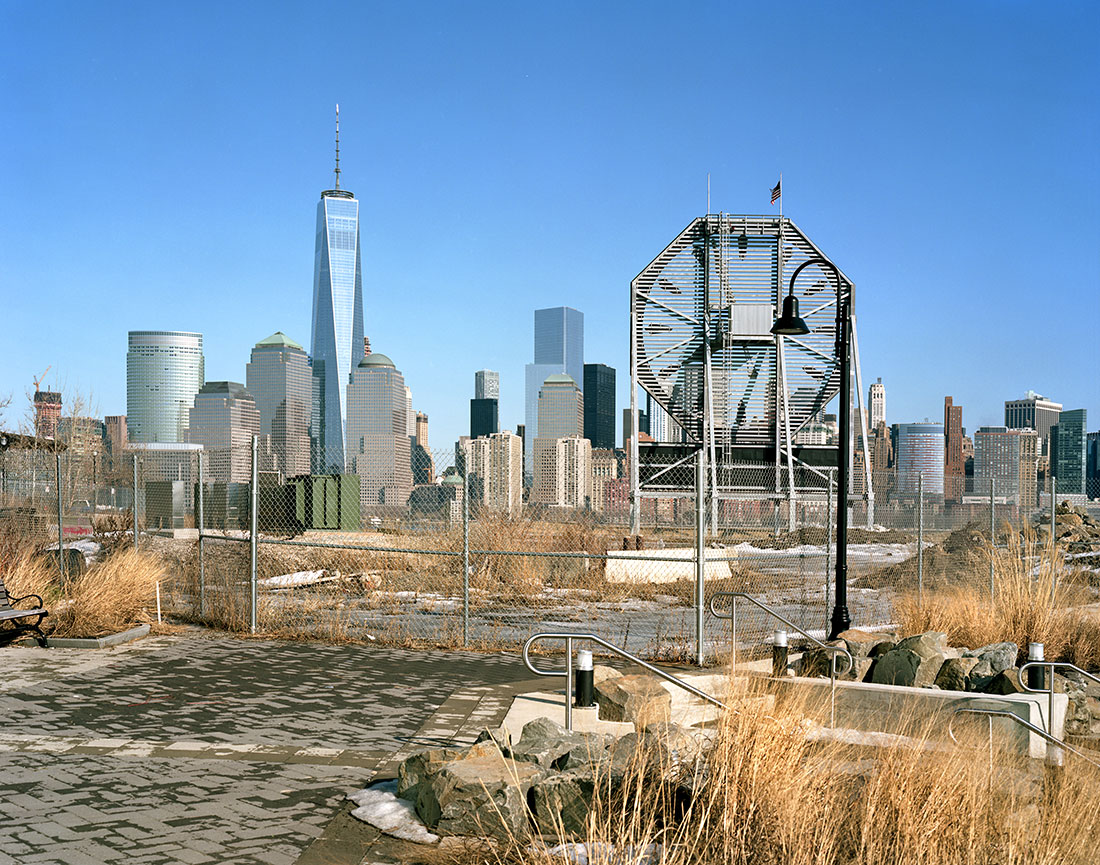
Behind the Colgate clock, Jersey City, New Jersey (4×5 film) — © Brian Rose

As some of you know, I’ve been working on a book about the World Trade Center for some time. Just before the 10th anniversary of 9/11, I came to the realization that I had in my archive a remarkable series of pictures — made at different times in different formats — that focused on the Twin Towers as a presence ( and absence) on the New York skyline. It was too late to produce a book in conjunction with the anniversary, but I began putting together a dummy based on what I had. And at the same time I continued to make photographs that showed the emergence of the new Trade Center, specifically One WTC, now completed, which stands as tall as the former Twin Towers.
1wtc006
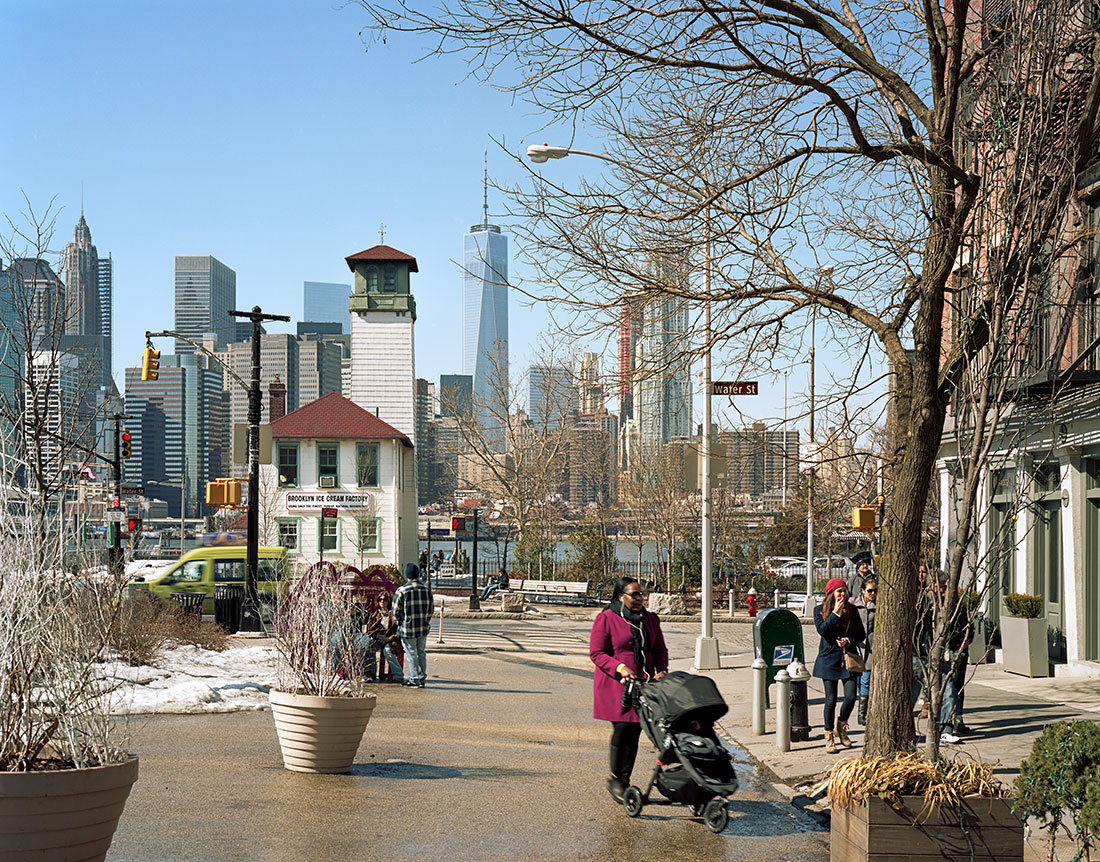
Old Fulton Street, Brooklyn (4×5 film) — © Brian Rose

None of my Twin Towers photographs were ever primarily about the buildings themselves, but rather they were urban landscapes that included the towers as architectural signposts. As the new tower of One WTC rose to fill the hole in the sky left by the destruction of 9/11, I chose to treat it the same way, as part of something, as opposed to an object all by itself. Nevertheless, I did not feel that I had one singular image (or a few) that adequately described the new tower as a prominent architectural expression.

So, when the weather broke earlier in the week, soaring into the 50s, I dashed out with my 4×5 view camera and spent a day stalking One WTC from various vantage points in Manhattan, Brooklyn, and Jersey City. Three days later, I’m still a bit sore from the exertion, but it was a great day, and I’m pleased with what I came up with.

There remain many unanswered questions about One WTC. Does it command the skyline as powerfully as the Twin Towers did? Does the design make the kind of iconic statement that many wanted from it? What does it mean to people across the political spectrum — some still insist on calling it “Freedom Tower.” And was it necessary to build it at all? My book will not settle any controversies about the new building, but ending the narrative with several strong images of the tower seemed a necessity in bringing the story around full circle.

1wtc011
Fulton Street (4×5 film) — © Brian Rose

There was a time during the 20th century when the skyline of lower Manhattan had an almost romantic storybook aspect. It was defined by a number of thin towers with spires like the neo-gothic Woolworth Building from 1913 and later, the Art Deco styled Cities Service Building. The first significant disruption to the stalagmite look of lower Manhattan was the Chase Manhattan Bank building, a modernist slab uncomfortably inserted among its svelte neighbors. The building itself, arguably, is one of the best early modernist office towers in Manhattan, but it began a trend of ever bulkier boxes that eventually obscured many of Manhattan’s most iconic skyscrapers.

Nevertheless, when the Twin Towers went up in 1974 they dominated the skyline in almost every direction. When I did my pictures of lower Manhattan in the early 80s they were ubiquitous, poking up and between other buildings, visible from a million different vantage points. It helped, of course, that there were two of them, and the vertical pin striping of the skin — the vulnerable exo-skeletons of the towers — seemed always to lead the eye upward.

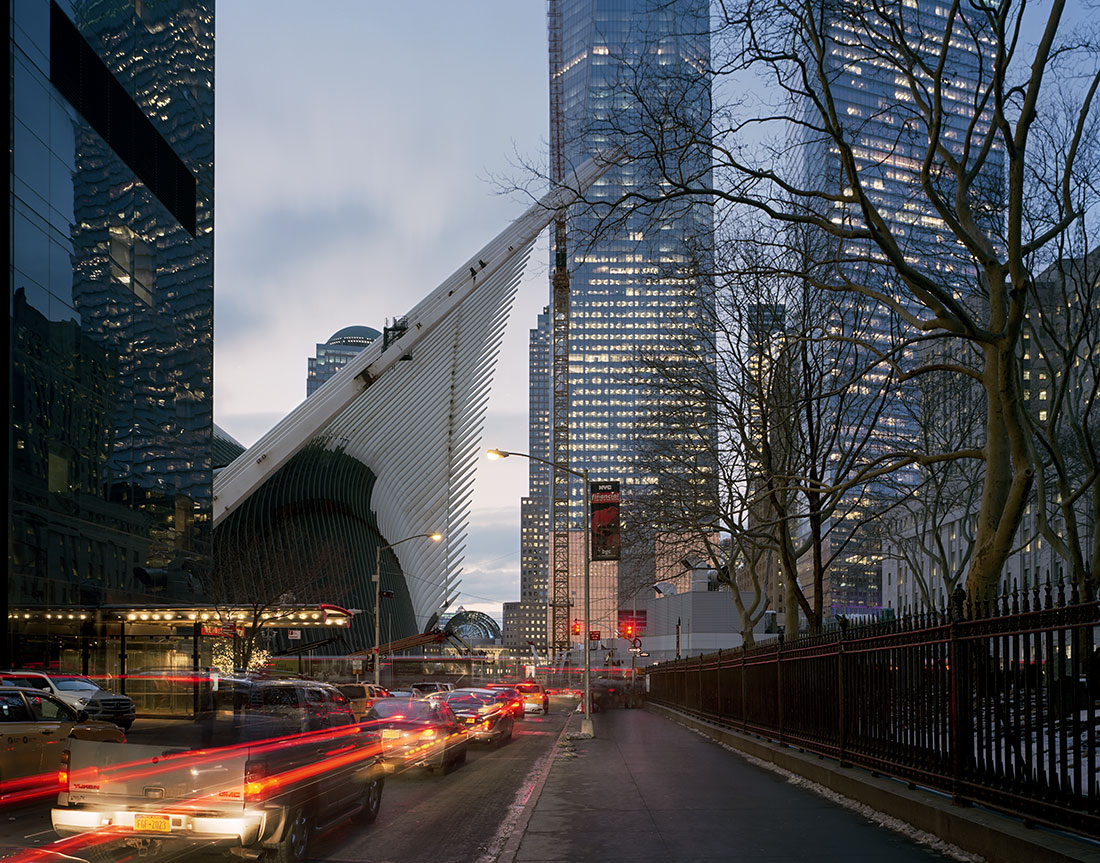
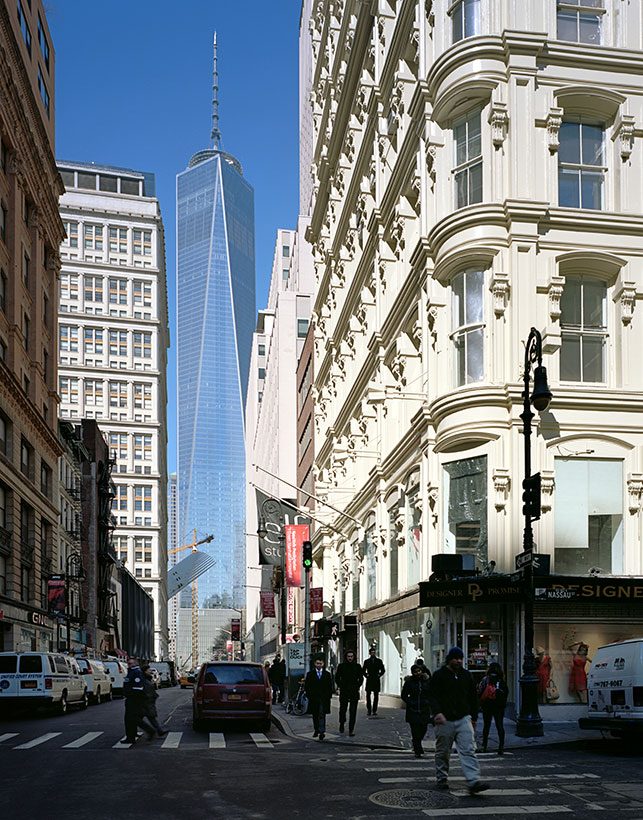
One World Trade Center, despite its height, seems lost in the crowd much of the time. And while the Twin Towers often visually lined up with the erratic street grid of downtown Manhattan, the new tower seems rarely to do so. One exception, is Fulton Street where I photographed it juxtaposed with a richly articulated cast iron building from more than a hundred years ago. And as before with the Twin Towers, One WTC appears at its most commanding from across the Hudson in New Jersey.

1wtc014
Fulton Street (4×5 film) — © Brian Rose

The rebuilding of the World Trade Center is ongoing, and construction will dominate the area for years. But several WTC towers have been completed, and Santiago Calatrava’s winged transportation center is getting closer to taking flight. The memorial fountains and the 9/11 Museum, most of which is underground, will not be a part of my narrative, which is focused on the skyline of New York, its mythic nature, and its more workaday reality as seen from the ground — on the street — the democratic commons of New York.

1wtc017
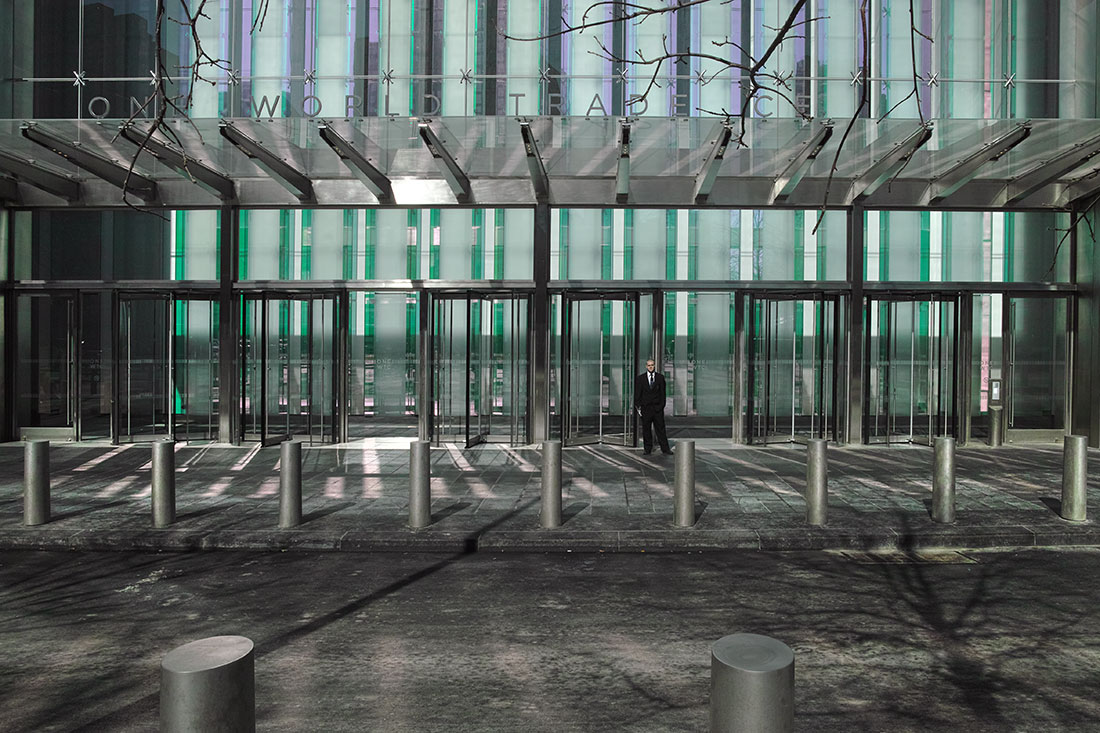
One WTC entrance — © Brian Rose

There is no doubt, however, in the post-9/11 political climate, that the democratic commons is under assault. The Trade Center site crawls with police officers and other agents of what is now painfully called Homeland Security. And various private security guards hover about at the ready to correct the wayward tourist or local who finds him or herself caught in the blurring confusion between public and private property. These zones of ambiguity are multiplying around the city, not just at the World Trade Center.

The photograph above shows the entrance to One World Trade Center, a strangely beautiful, but chilling place — the glinting sunlight reflected onto the street, the regimented rows of steel bollards, the striping of the colored glass behind the revolving doors, the solitary black-suited sentinel awaiting anyone brave enough to step forward with the idea of entering this silent fortress.