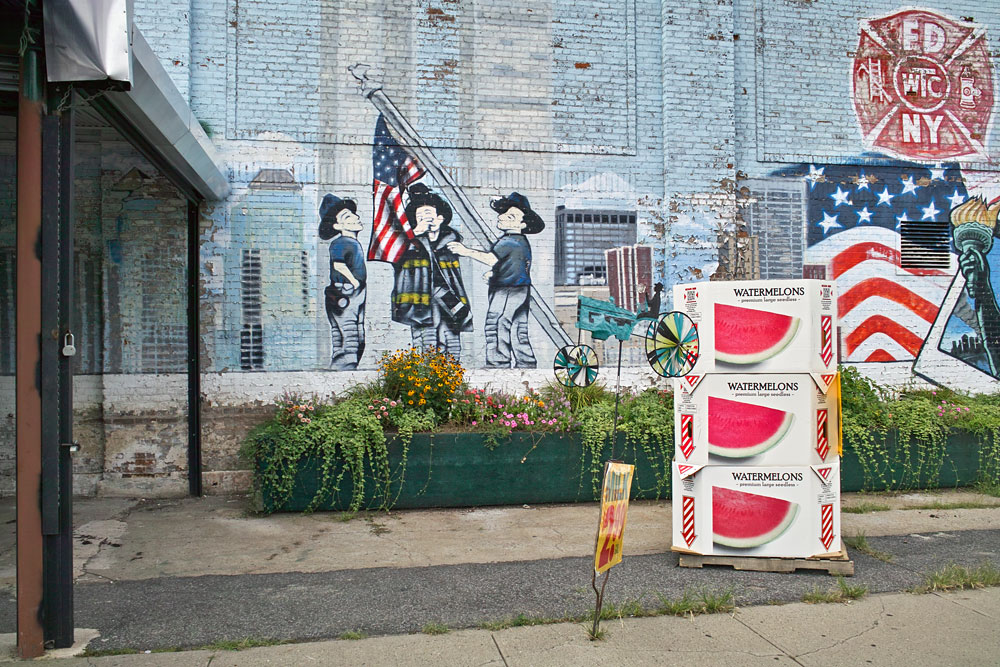
Richmond Terrace, Staten Island — © Brian Rose
This I have to come back to with my view camera. The group of figures is based on a much seen photograph, and the signage is from an adjacent farmer’s market.
Richmond Terrace, Staten Island — © Brian Rose
This I have to come back to with my view camera. The group of figures is based on a much seen photograph, and the signage is from an adjacent farmer’s market.
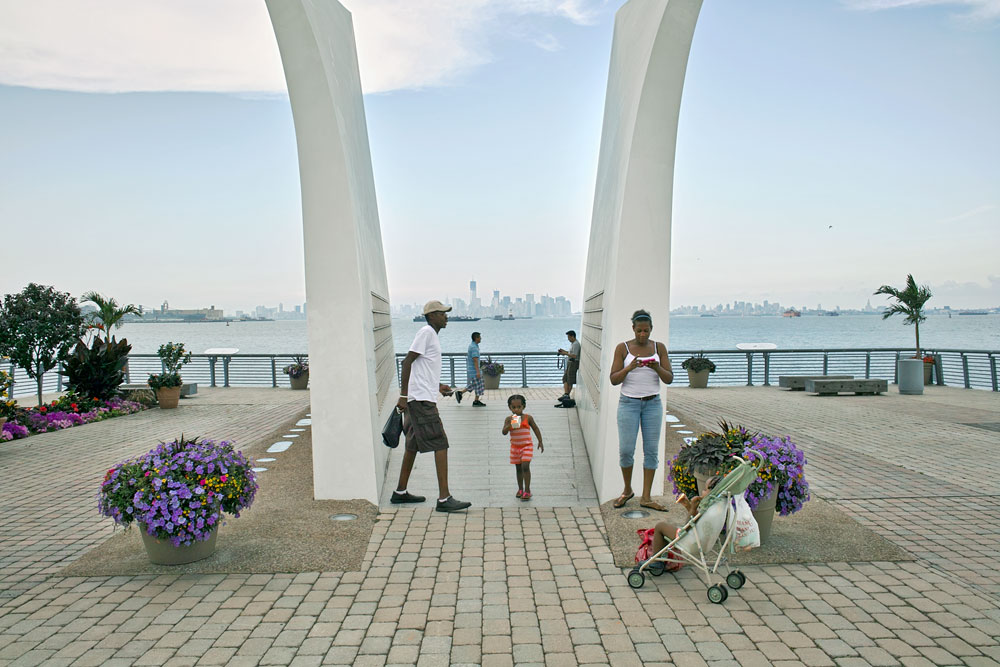
9/11 Memorial on Staten Island — © Brian Rose
My wife and headed down to Staten Island Saturday afternoon to take part in the latest installment of stillspotting nyc, a series of art projects dealing with the urban environment sponsored by the Guggenheim Museum. This one, called Telettrofono, was an audio walking tour of the St. George neighborhood of Staten Island. It told the story of Antonio Meucci and his wife Esterre who came to Staten Island from Italy. Meucci, an inventor, who also worked in the theater, developed a precursor to the telephone, a telettrofono, some years before Alexander Graham Bell patented his ultimately successful invention.
I didn’t know what to expect when we arrived on the Staten Island Ferry. The weather was threatening as a storm cell slid by to the northwest. We were given iPod Nano’s and a map and sent out along the harbor promenade to begin our walk. The audio accompaniment was created by sound artist Justin Bennett and poet Mathea Harvey and blended the factual and imaginative into a mesmerizing aural experience. It has been described by others as like being in a movie.
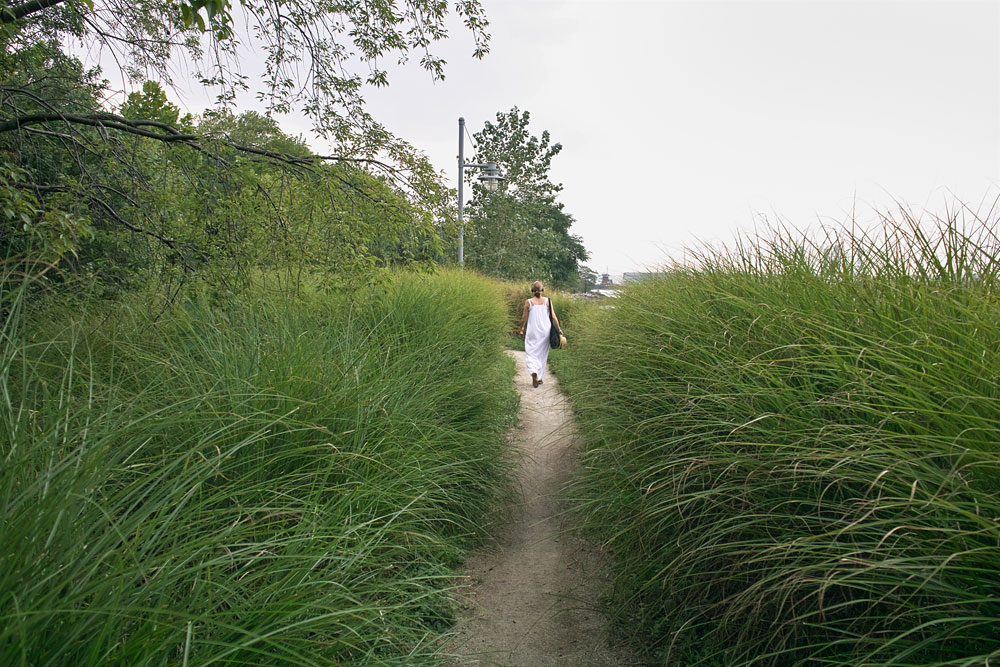
Along the waterfront of Staten Island — © Brian Rose
I hadn’t planned to take photographs of the walk in a comprehensive way–I figured I’d snap a few pictures here and there. But as we stepped out onto the promenade and walked by the 9/11 memorial nearby, I was struck by the strange, preternatural light and warm breeze caused by the passing storm. The atmosphere felt almost tropical and the comical potted palms near the memorial added to the effect. I began taking photographs, the soundscape and voices of Telettrofono in my ear.
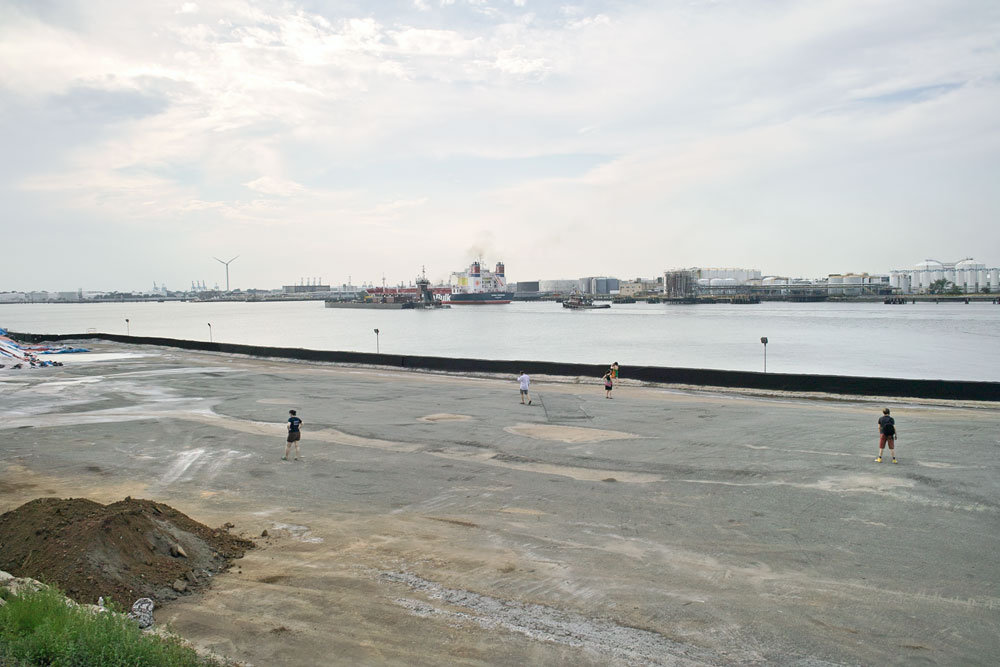
Staten Island waterfront — © Brian Rose
There were others participating in the walk as well, though not so many as to be distracting. We passed through an industrial area, now used for salt storage, directly by the main shipping channel leading to the port of Elizabeth. We then headed uphill past a farmer’s market, some rundown apartment buildings and housing projects, and then into a neighborhood of large early 20th century houses, many of significant architectural character.
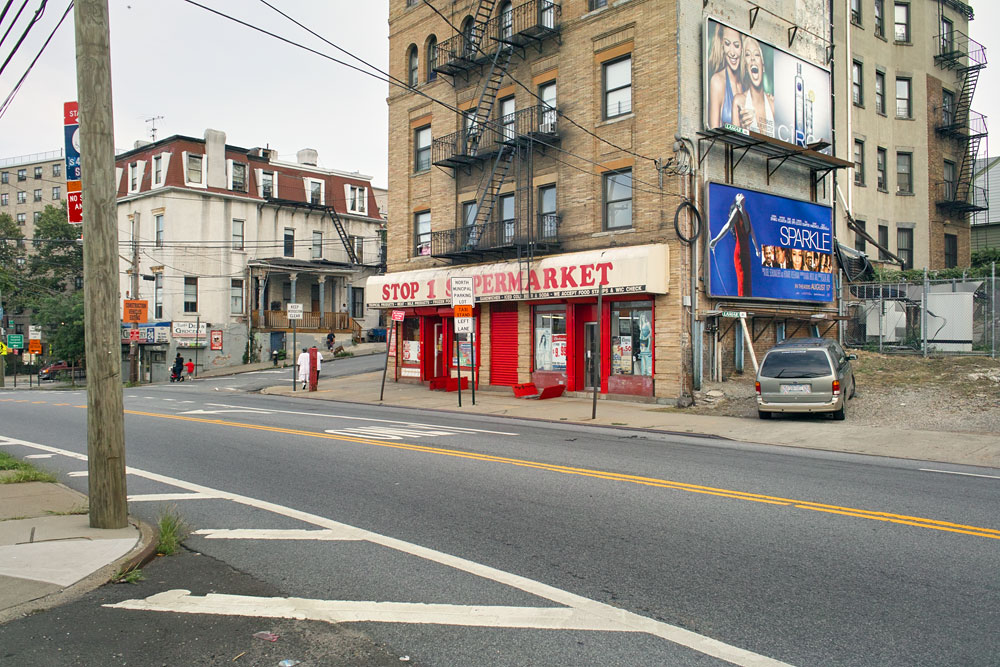
Richmond Terrace, Staten Island — © Brian Rose
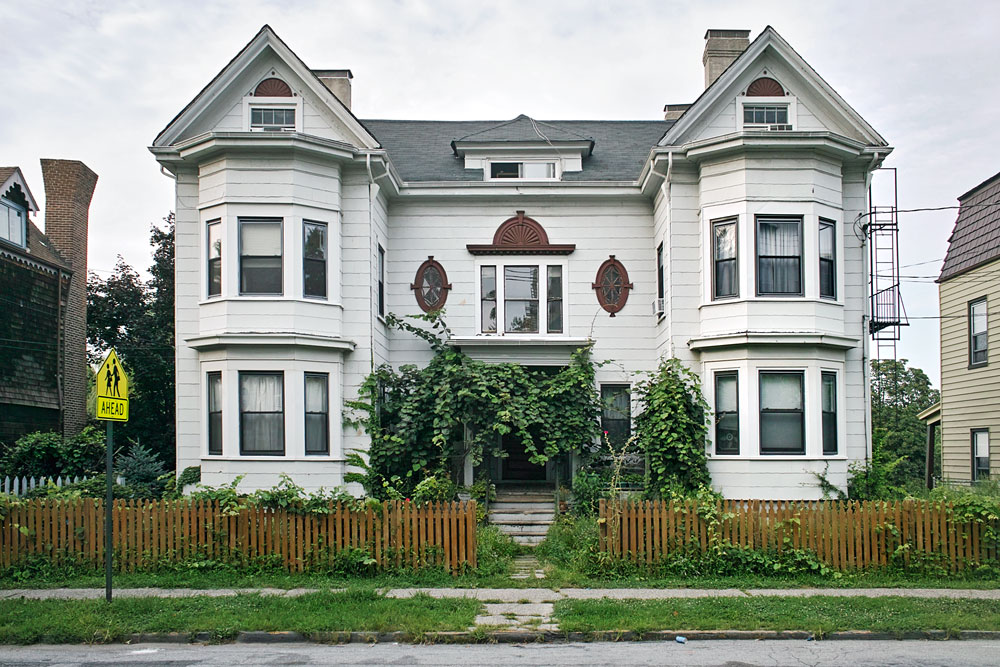
St. Mark’s Place, Staten Island — © Brian Rose
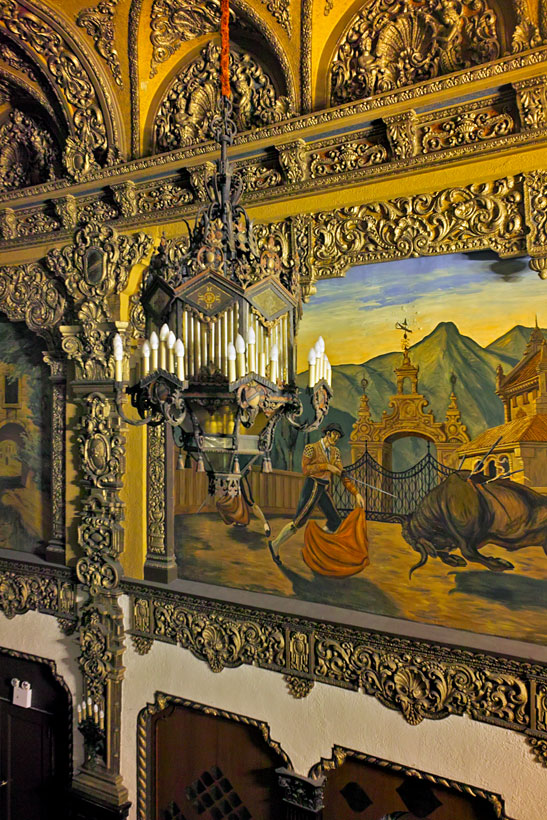
The St. George Theatre, Staten Island — © Brian Rose
We then descended the hill toward the ferry terminal and entered the St. George Theatre, an elaborately baroque, shabby interior, and sat in the balcony as the story of the Meucci’s came to a close and the voice in our ear said “curtain.” From there we walked back to the ferry terminal, returned out iPods and headed back to Manhattan on the ferry. In the end I took over 30 photographs during the walk.
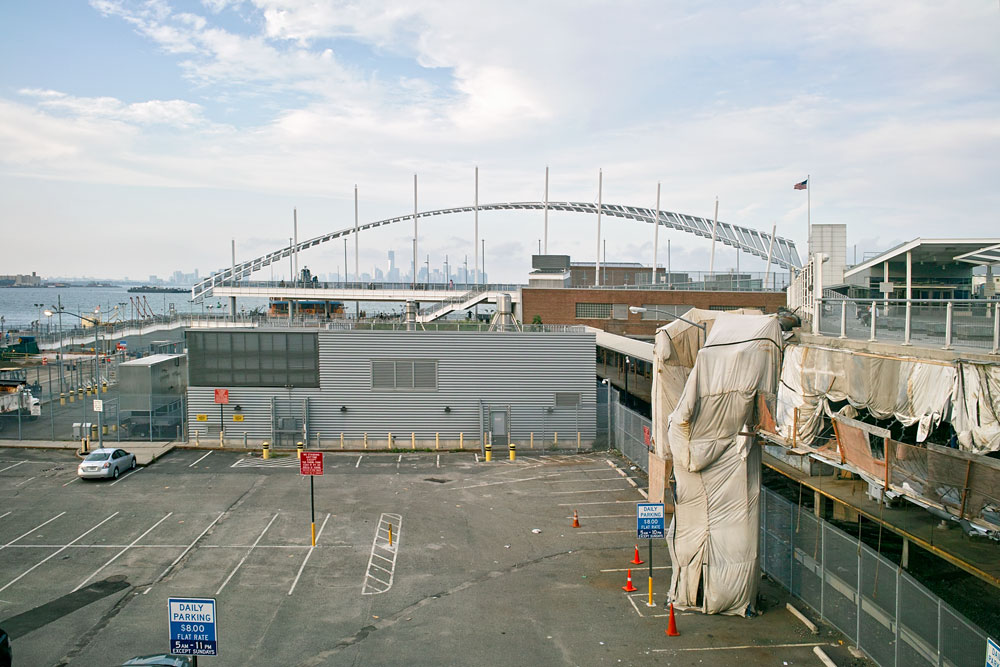
St. George ferry terminal, Staten Island — © BrianRose
Many of the photographs in this blog have been made during walks, sometimes of short duration, other times over several hours. It has become part of my modus operandi as a photographer. Sometimes I regret not having a higher resolution camera, or my view camera, with me. But the reality is that many of these short bursts of photography are only possible because I can carry a digital camera in the pocket of my cargo pants.
After looking through the photographs I took in Staten Island I decided to make the whole walk available on my website. It was inspired by what I was experiencing aurally, but it’s also a perfect example of the kind of thing I do as a photographer, a visual reconnaissance –to borrow from my Lower East Side book title–of time and space.
The full walk can be seen here.
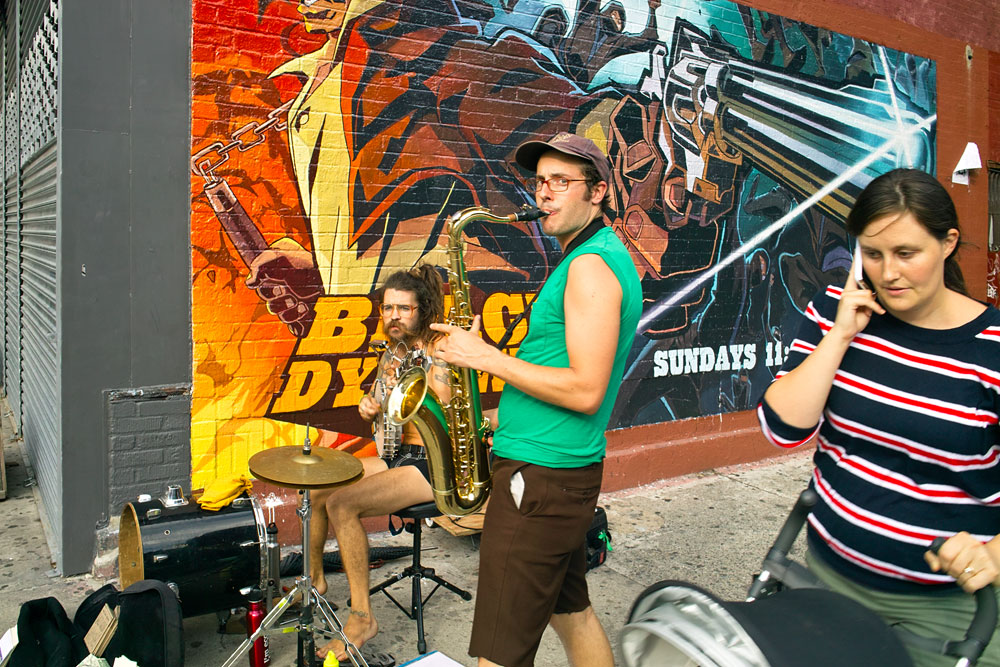
North 6th and Bedford Avenue, Williamsburg — © Brian Rose
Without comment.
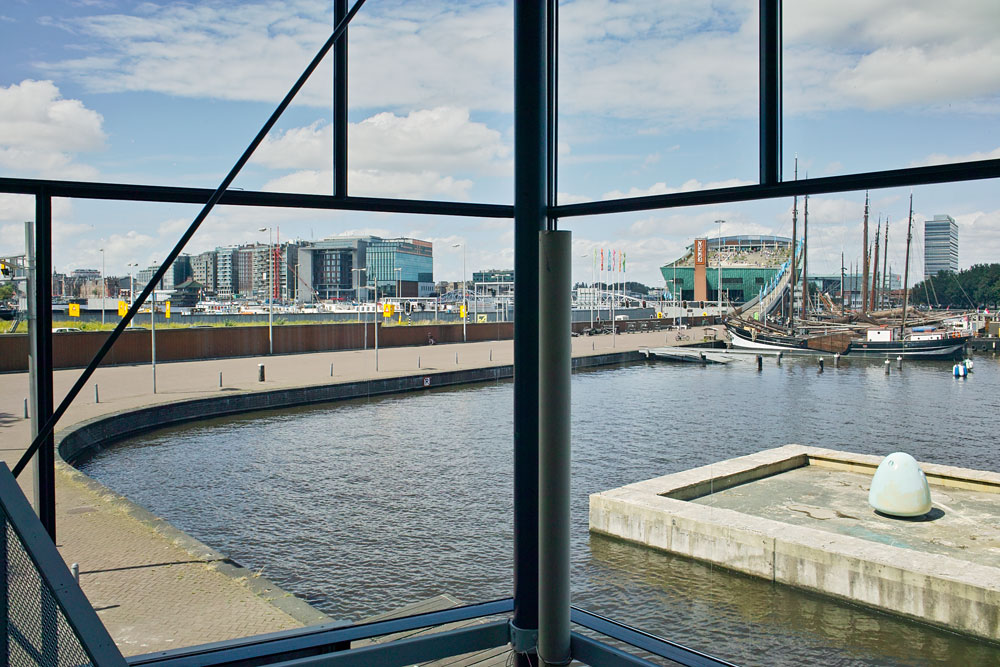
Amsterdam waterfront — © Brian Rose
The last photographs from my recent trip to Amsterdam. These were taken along the waterfront of the city on the Ij, once an inlet of the Zuider Zee, now an inland waterway connecting to the North Sea and the Rhein River. Although little new construction is underway in Amsterdam because of the economic crisis in Europe, there are major projects that are completed or near completion along the Ij. Above one can see Nemo, the science museum, designed by Renzo Piano, on the right. And to the left the new library/hotel/office complex adjacent to Central Station, partially finished. This picture was taken inside Arcam, the Amsterdam architecture center. I did not use my view camera on this walk–all were made with my point and shoot digital.
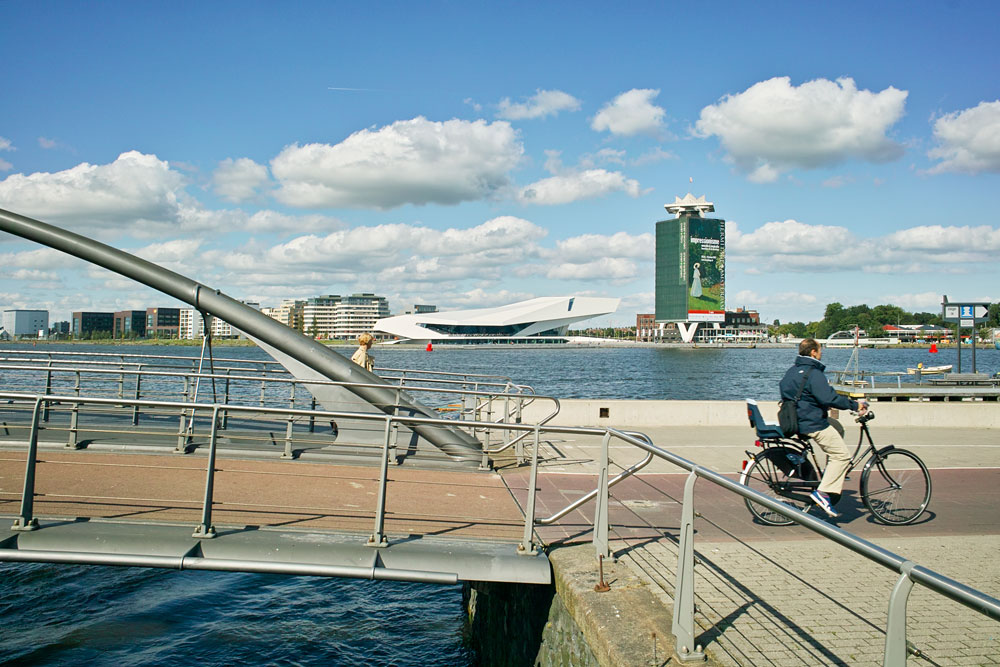
Eye film museum and Shell Building — © Brian Rose
Across the Ij (pronounced eye, more or less) is Eye, the new film museum of Amsterdam. It is designed by the Austrian firm Delugan Meissl Associated Architects and does a wonderful architectural tango with the Shell Tower from 1966. The latter building is currently empty and for sale.
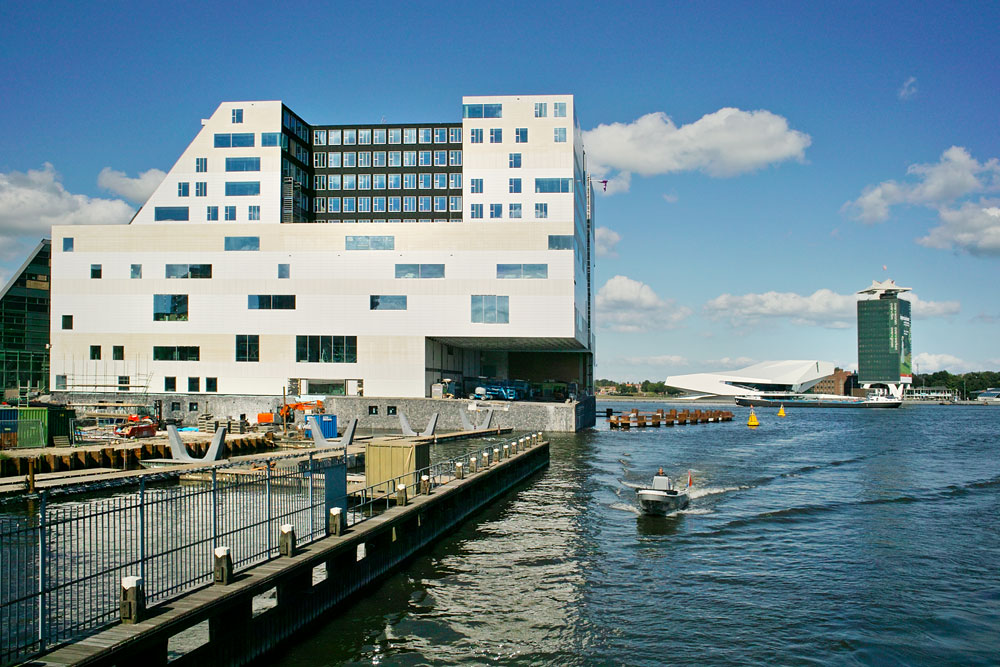
Ijdok complex and film museum — © Brian Rose
Nearing completion is the Ijdok, a multi-purpose complex including courts, hotel, offices and residences perched on a pier on the water. click here to see computer generated renderings of this fascinating ensemble of buildings.
Westerdoksdijk — © Brian Rose
Westerdokseiland — © Brian Rose
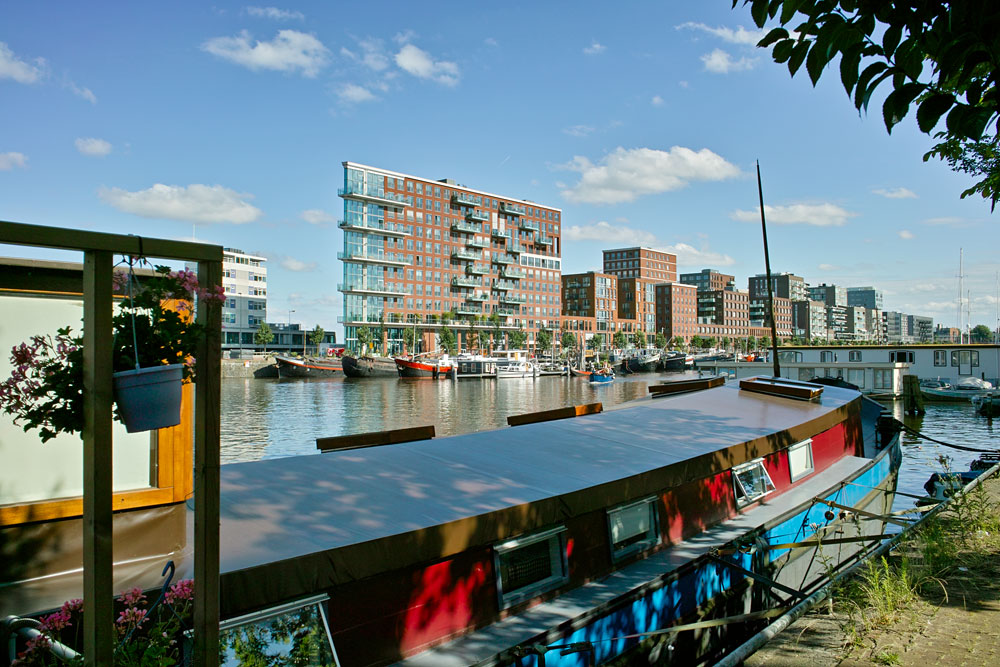
A narrow strip of land that previously served as a rail siding for the nearby Central Station is now a handsome row of apartment buildings with inner courtyards and pedestrian promenade along the water. This new neighborhood lies within a few steps of the old canal district of central Amsterdam.
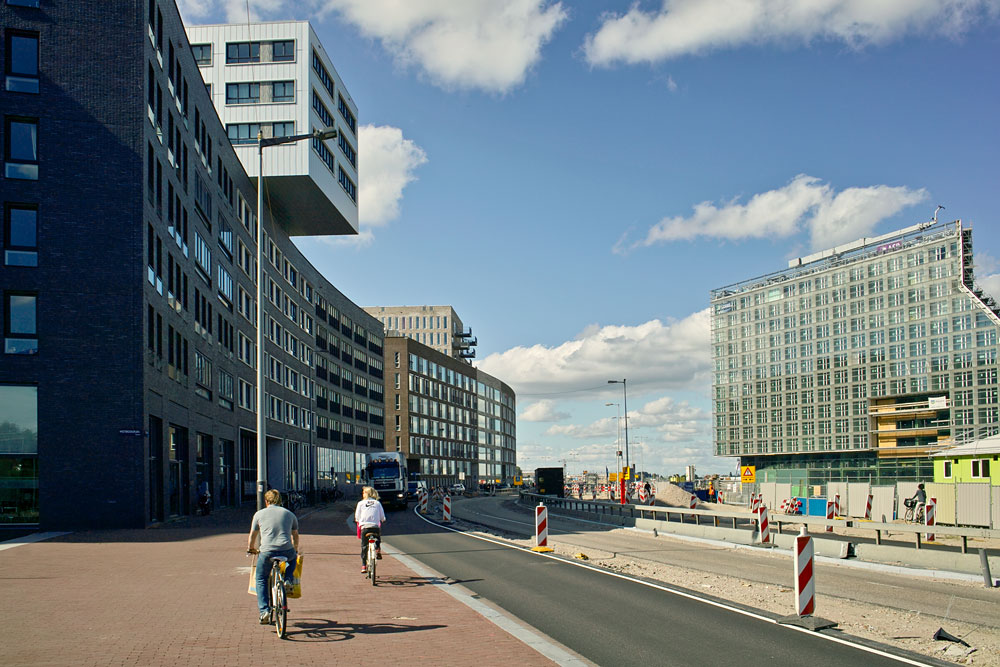
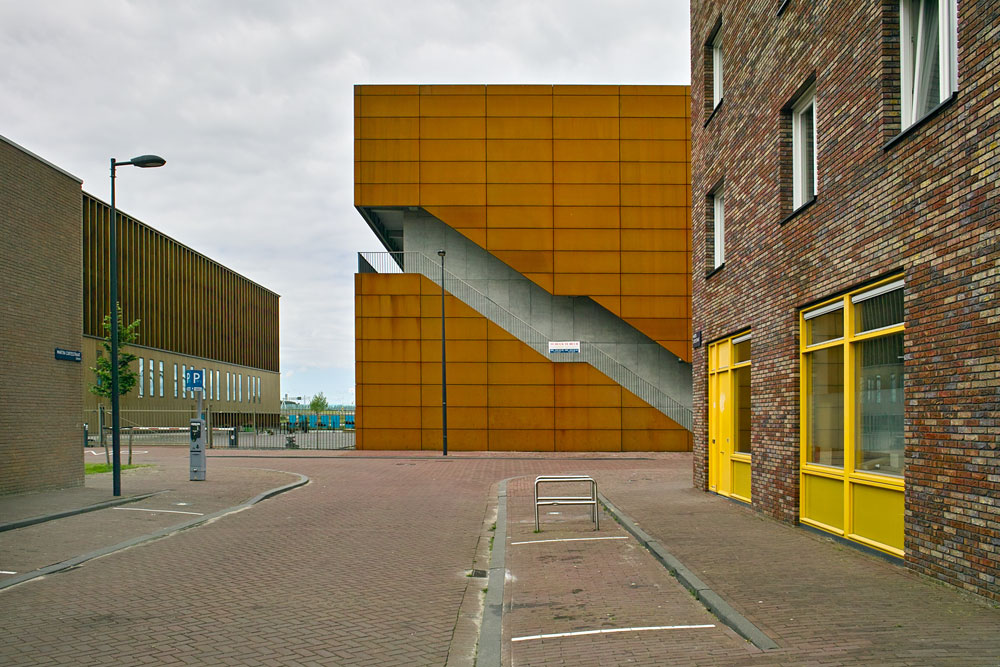
On my last day in Amsterdam the weather improved and I was able to get out with the view camera. I picked up where I left off five years ago in Ijburg on the edge of the city. The view then was of mostly empty landfill–it is now densely built. But it still feels detached to me from the rest of the city, and during the day, somnolent, empty. I took one photograph of a residential street that leads to a row of commercial office buildings, and then crossed over a bridge to the Diemerzeedijk, a historic dike that once protected Amsterdam from the vicissitudes of the Zuider Zee. The area has been used as an industrial dumping ground and remains polluted, though now contained. It is being developed as parkland.
© Brian Rose
© Brian Rose
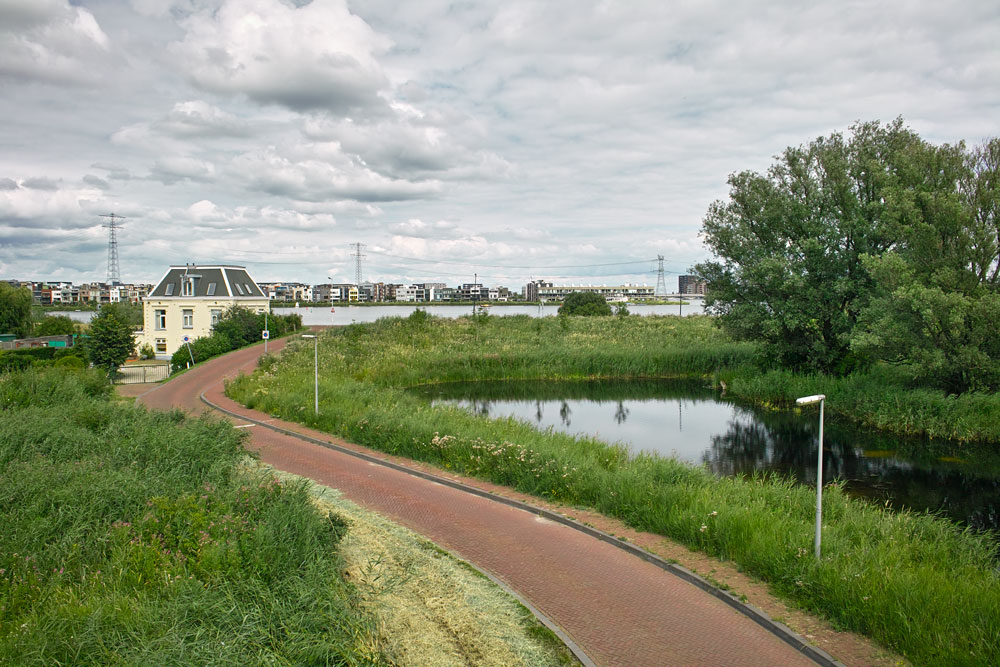
© Brian Rose
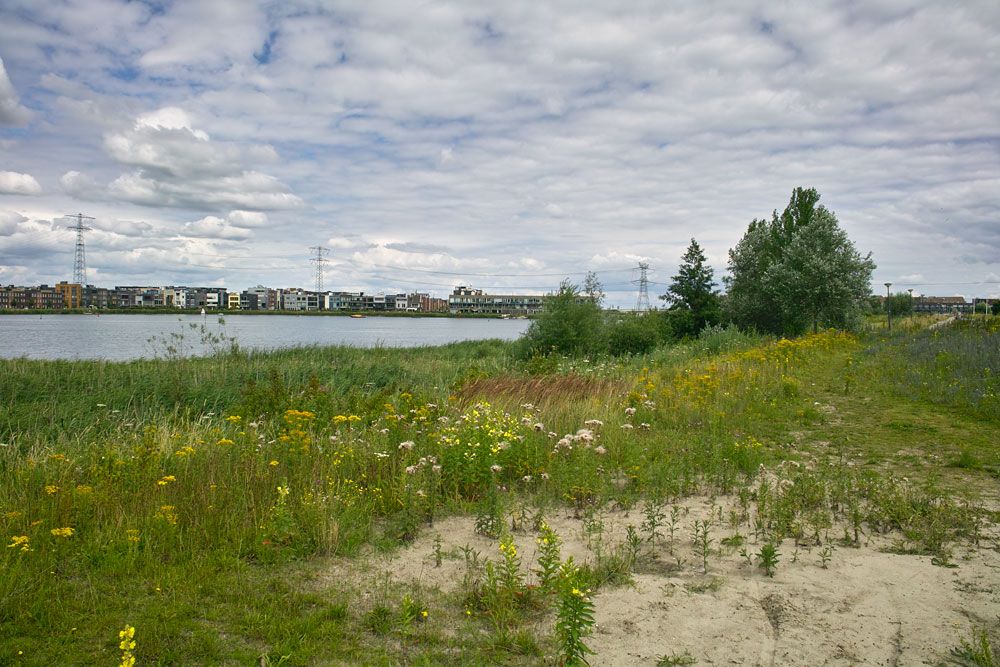
© Brian Rose
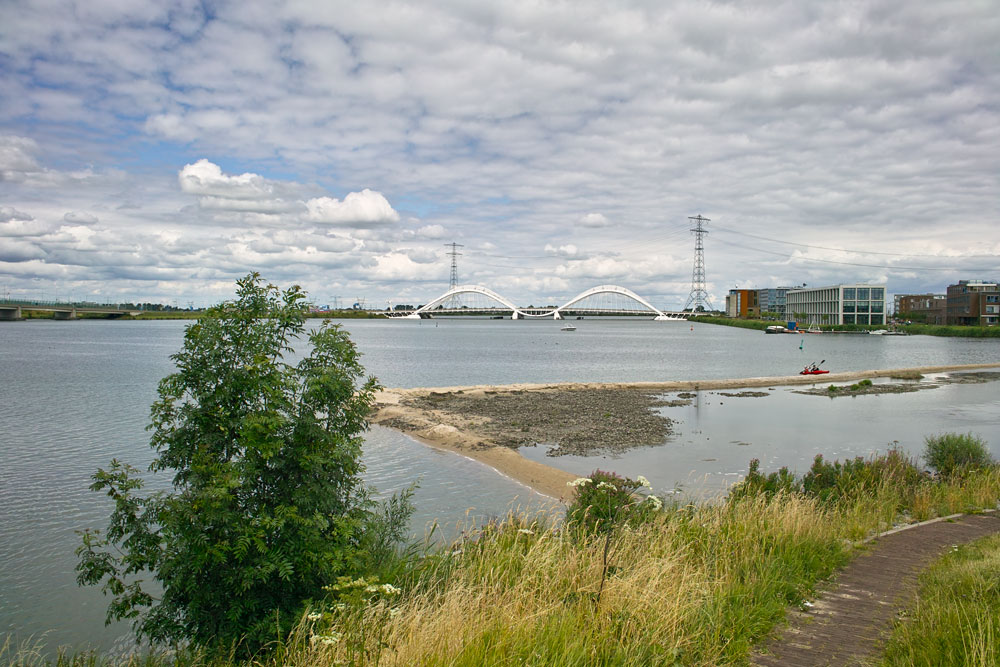
In the distance one sees the Enneüs Heerma Bridge designed by Nicholas Grimshaw, and following a bicycle path one crosses a busy shipping canal on a spectacular bridge, the Nesciobrug, designed by Jim Eyre. A long looping causeway leads to the bridge allowing for a gradual incline. The Amsterdam Ring highway stands a short distance away with its billboards.
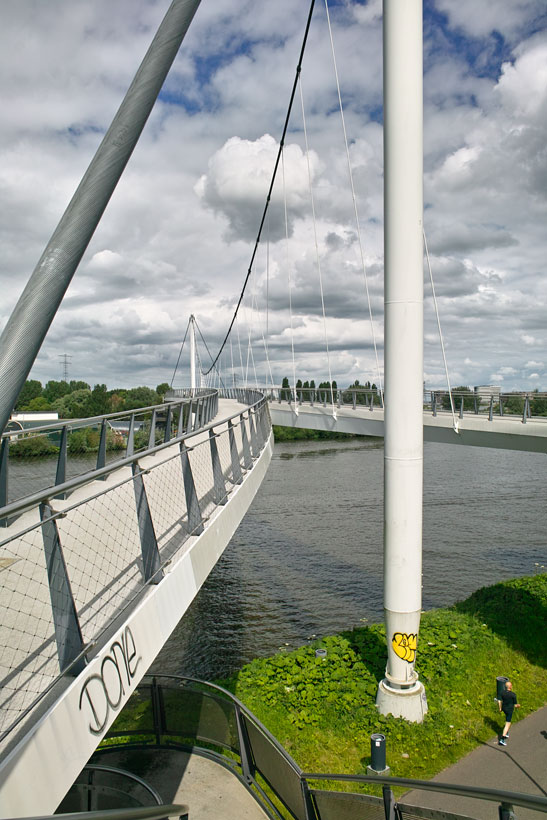
© Brian Rose
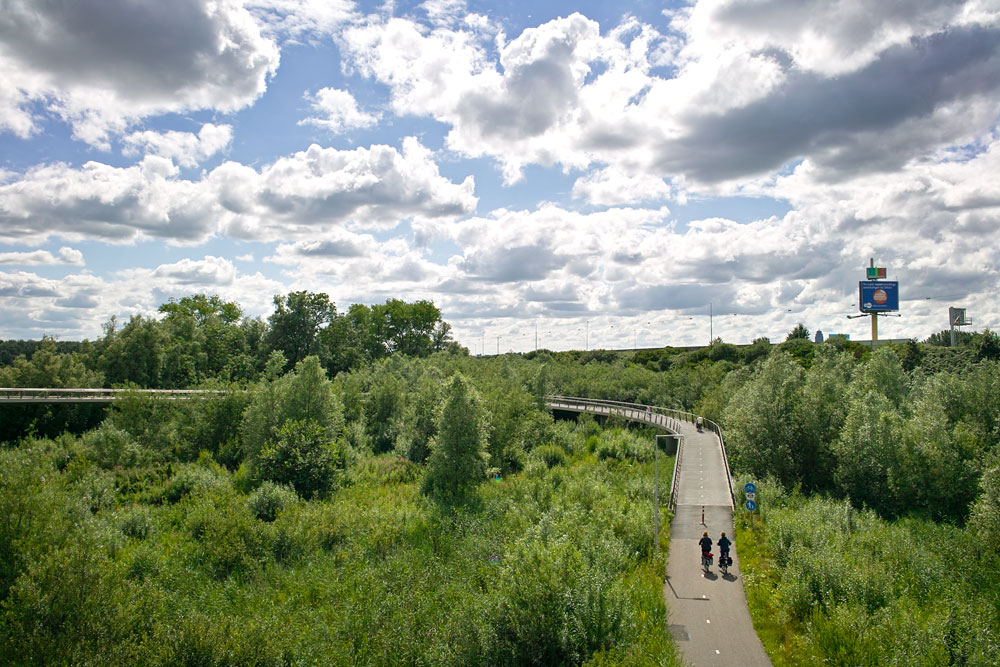
© Brian Rose
All of these photographs were made with the 4×5 view camera as well as my pocket digital. The sun shone in and out through a broken deck of clouds, a striking phenomenon all afternoon. I feel both alienated and at home in these transitional areas of the city–places that are neither here nor there. It’s how I felt in general during the 15 years I lived in the Netherlands traveling back and forth to New York. I was an untethered agent caught between continents and cultures. Although I am now ensconced in New York City, I easily slide back to that state of uncertainty, in which the world appears new and strange. Even in my hometown.
Just arrived back in New York after 10 days in the Netherlands. Two quick visual anecdotes from Amsterdam.
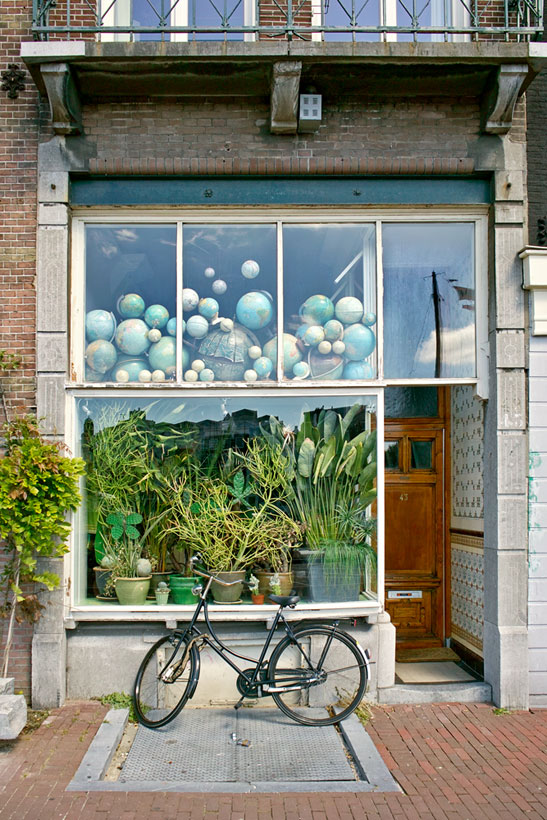
Amstel, near the Blauwbrug, Amsterdam — © Brian Rose
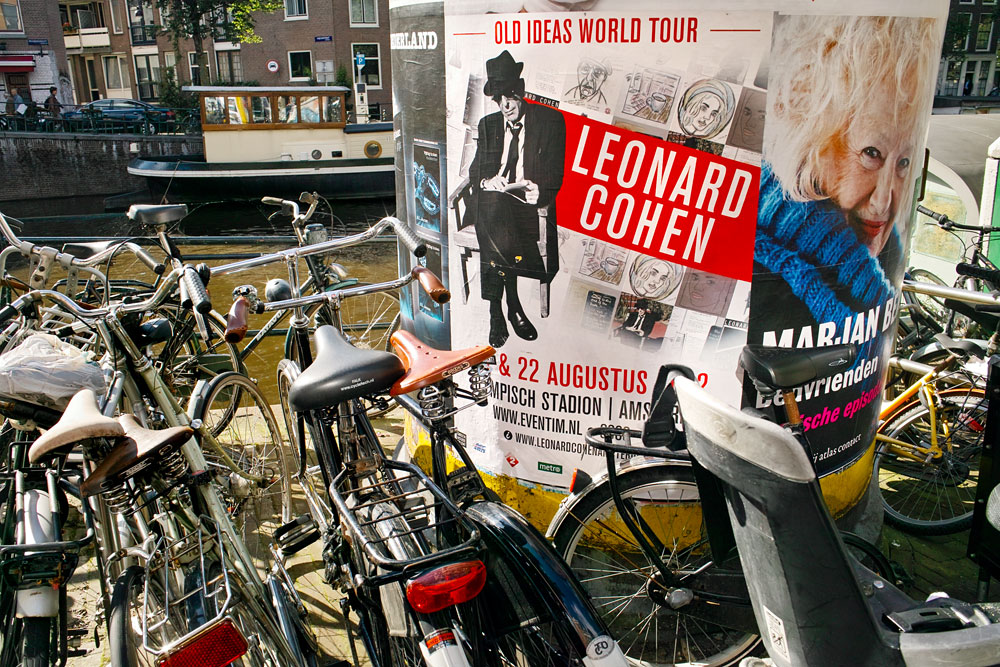
Prinsengracht, Amsterdam — © Brian Rose
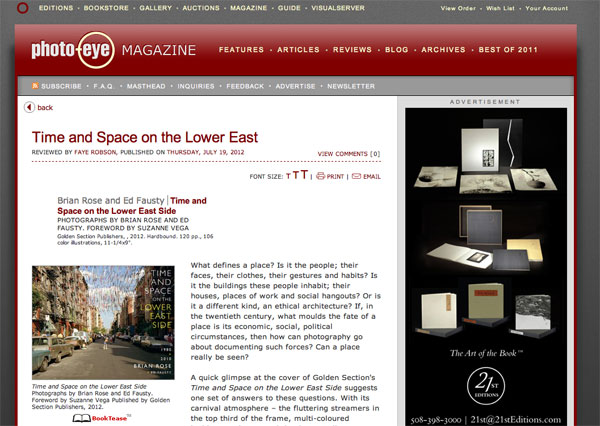
Review in Photo-Eye Magazine
After four days on the island of Texel on the coast of the Netherlands, I am now in Amsterdam. Day before yesterday we had a book party for my Dutch friends and Kickstarter backers. It took place in a beautiful house in the canal district near the Rijksmuseum, and we had at least 30 guests. The atmosphere was warm and convivial. Yesterday, we got a late start, but were able to enjoy some sterling weather (finally), and walked around the center of the city. I stopped in Architectura and Natura, one of my favorite bookstores in Amsterdam, and I am hoping to have Time and Space for sale there soon.
The review I have been waiting for just came in from Photo-Eye written by Faye Robson. Here are a few quotes:
With its carnival atmosphere – the fluttering streamers in the top third of the frame, multi-coloured buildings and cars, and the dynamically positioned boy who swings a baseball bat right into the centre of the image – the image seems to suggest a clarity of vision to match the clarity of composition.
Layering and multiplicity are watchwords for this collection; from the texts that pepper the book – ranging in subject and tone from the macro-historical to the anecdotal (the General Slocum disaster) – to the views across streets and round corners that lay bare the city grid, both its thriving and desolate spaces.
Despite its title, the book cannot even be read in a straightforwardly chronological manner. The photographs are divided fairly evenly between those taken in 1980, in collaboration with Ed Fausty, and images made in 2010 by Rose alone. However, the structure of the book thwarts attempts to compare and contrast the two sets of images either formally or with respect to the neighbourhood they document.
That Rose decided to use a view camera for this project reveals a great deal about his approach – these clear, sharp, detailed images present more visual information than the eye can take in. They are a view across time and space, beyond the merely human perspective. This complex and handsomely-presented project is a portrait, or map, of a place, which challenges our assumptions about urban street photography.
This is an in depth review–the first one to really dig into what the book is about, and I am very pleased with it. Read the whole thing here.
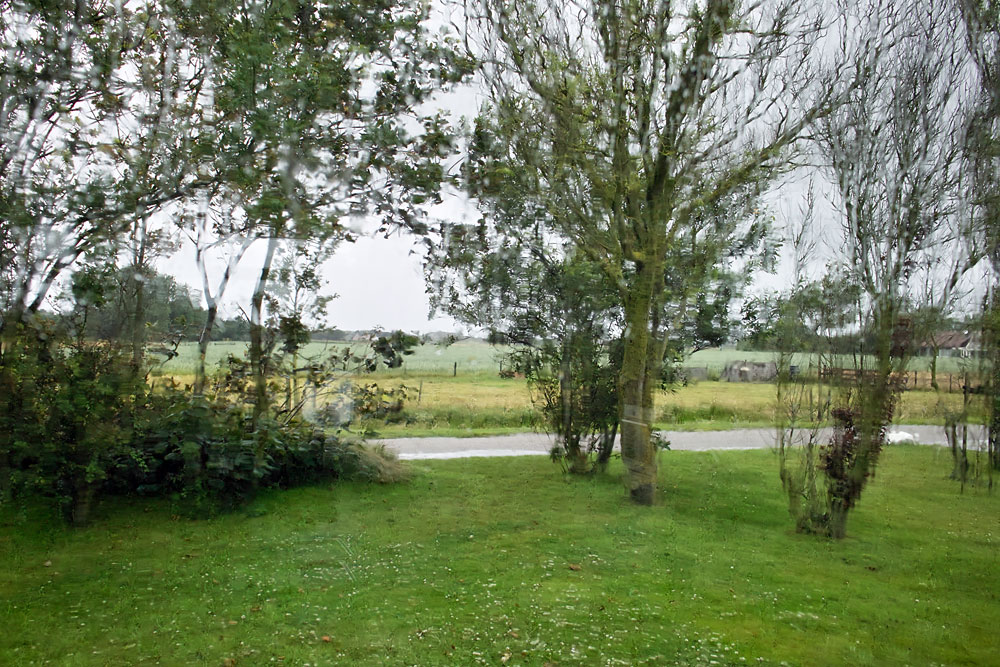
Texel, The Netherlands – © Brian Rose
Uh oh. After a couple of decent days, the weather has deteriorated. This is the watery view out of the picture window of our house in Den Hoorn at the south end of Texel on the North Sea coast. Tomorrow we head for Amsterdam.
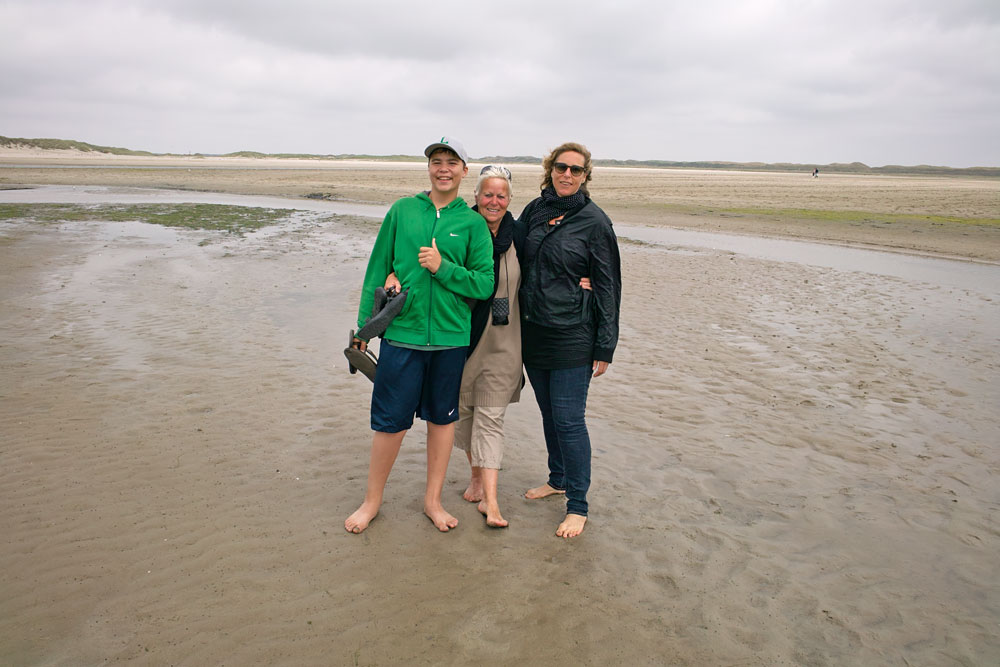
The Slufter, Texel, The Netherlands – © Brian Rose
Yesterday, we drove around the island revisiting the campsite where my wife’s family used to go for summer vacation. It’s now little houses with lots of amenities instead of tents. Nearby is the Slufter, a tidal inlet among the dunes. We walked through it about a half mile to the sea. Depending on the time of year, tide, and weather, it can be mostly dry or mostly covered by water. Only a small stream flowed through at the time of our walk.
That’s Brendan my 13 year old son on the left, An, my mother in law in the middle, and Renee, my wife on the right.
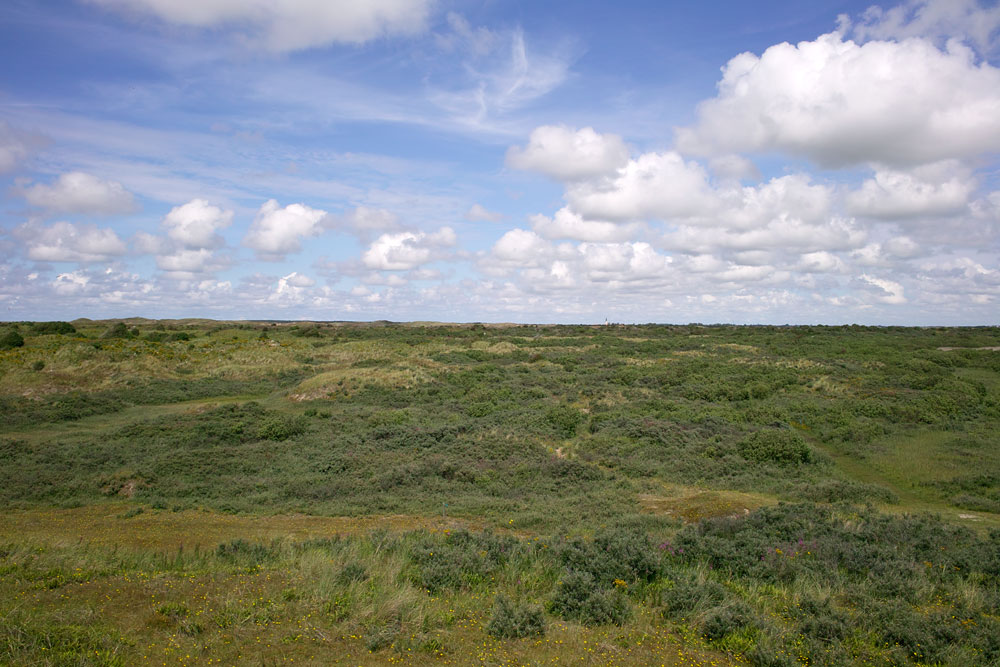
Texel – © Brian Rose
Despite a less than stellar forecast, the weather stayed beautiful all day, and I took my 4×5 camera for a four hour trek through the dunes that stand between the North Sea and the polder on the inland side of Texel. Left alone, the island would be a narrow arc of shifting sand rather than egg-shaped as it is now. At least 2/3 of the island is artificial land.
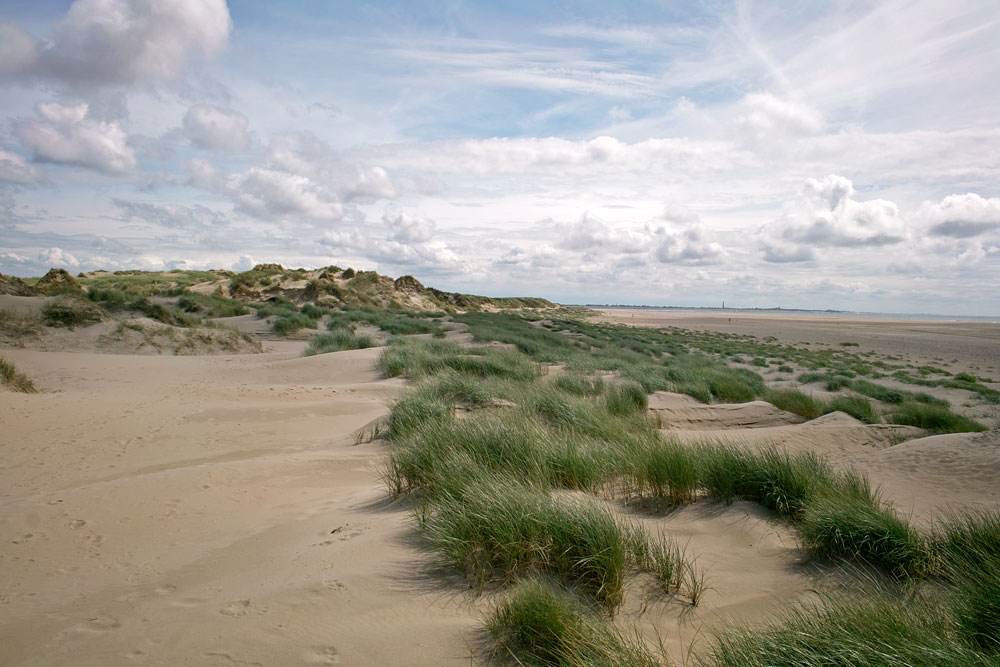
Texel – © Brian Rose
The pictures here were made with my pocket camera, but all were based on compositions set up with the view camera. Sometimes, I actually place my point-and-shoot on top of the 4×5 camera to take as close to the same view as possible. The walk was a 6 mile loop on grassy trails and sand, and I did most of it barefoot. It got a little tough slogging through deep sand with my photo equipment, but mostly this was an easy, pleasurable, walk. Had the weather been less favorable, the whole experience would have been radically different.
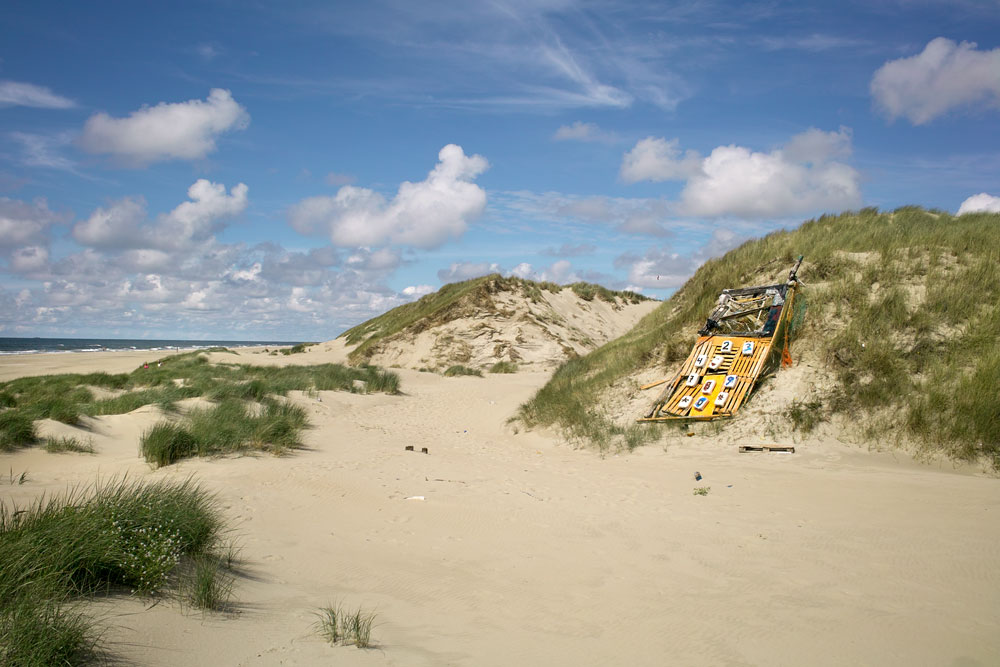
Texel – © Brian Rose
An odd object that looked like giant shipwrecked calculator with numbers and symbols was leaning against a dune. A few nude sunbathers were lying in the swales of sand just out of view.
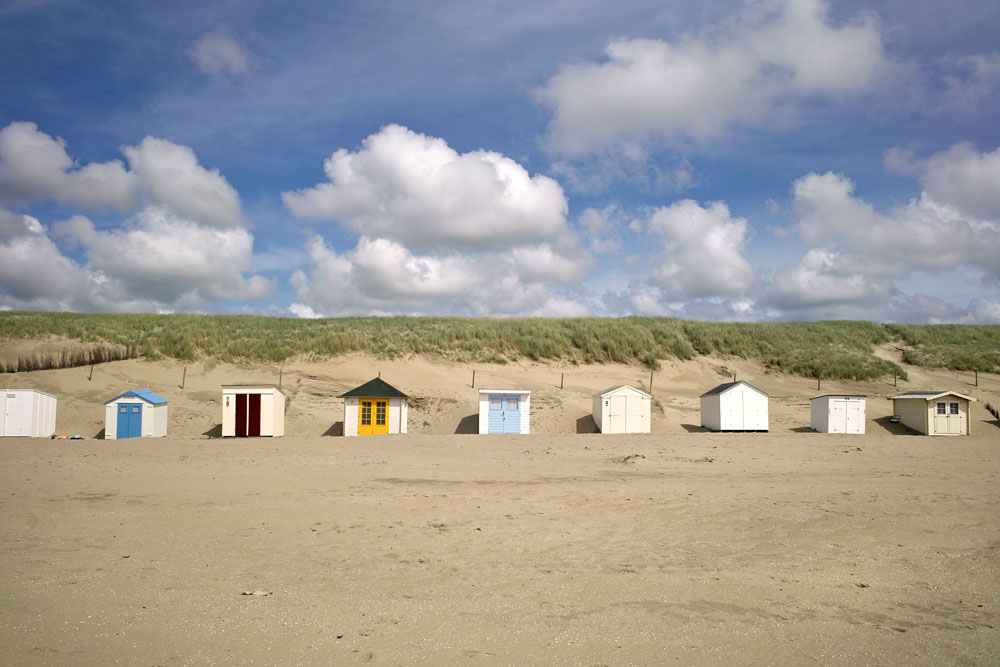
Texel – © Brian Rose
A little further along near a parking lot and snack bar there are storage huts that are owned or are rented by frequent users of the beach.
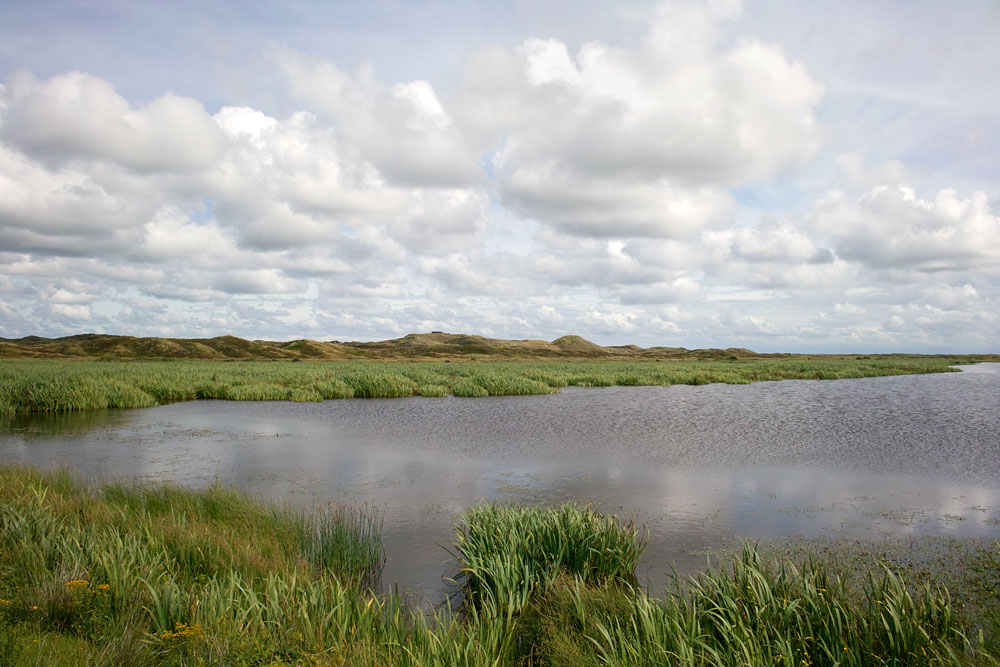
Texel – © Brian Rose
On the road back to the village of Den Hoorn where I am staying.
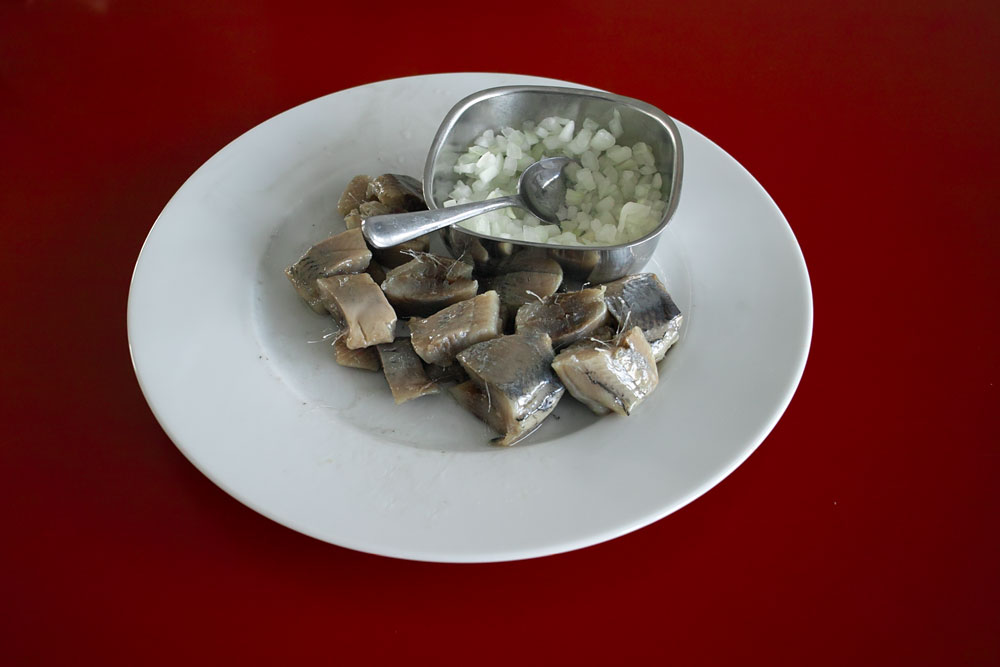
Texel – © Brian Rose
Back at the house at the end of my walk I was offered a plate of new herring, cut into small bite size pieces served with diced raw onions. The Dutch are not known for their haute cuisine, but it doesn’t get any better than this.
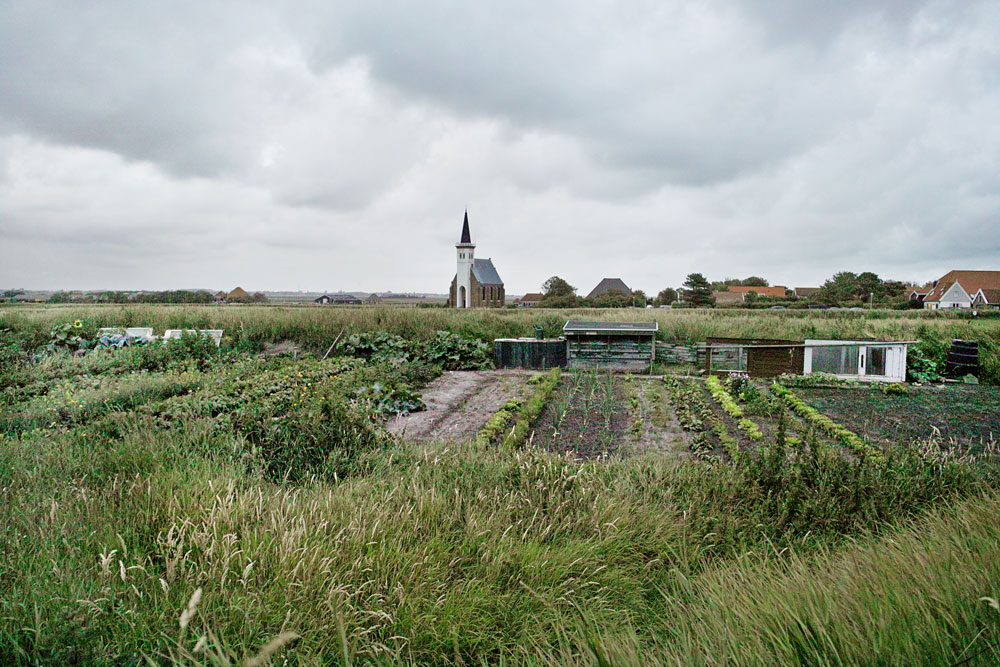
Den Hoorn, The Netherlands – © Brian Rose
It’s been five years since I was last in the Netherlands. I lived in Amsterdam for almost 15 years, traveling back and forth to New York as needed for work. We’re on vacation visiting my wife’s parents on the island of Texel on the North Sea coast. The weather is, as is common here, wisselvallig, or changeable. It rained heavily between the airport and Texel, then the sun came out for several hours, and we were able to eat dinner in the garden. We then took a walk through the surrounding countryside and the clouds once again rolled in.
We’ll be here for five days and then in Amsterdam. The photo above was taken near our house with my digital blog camera. But I have brought my view camera and may get out in the dunes nearby if the weather holds out. And then possibly add to my series on Amsterdam’s periphery.
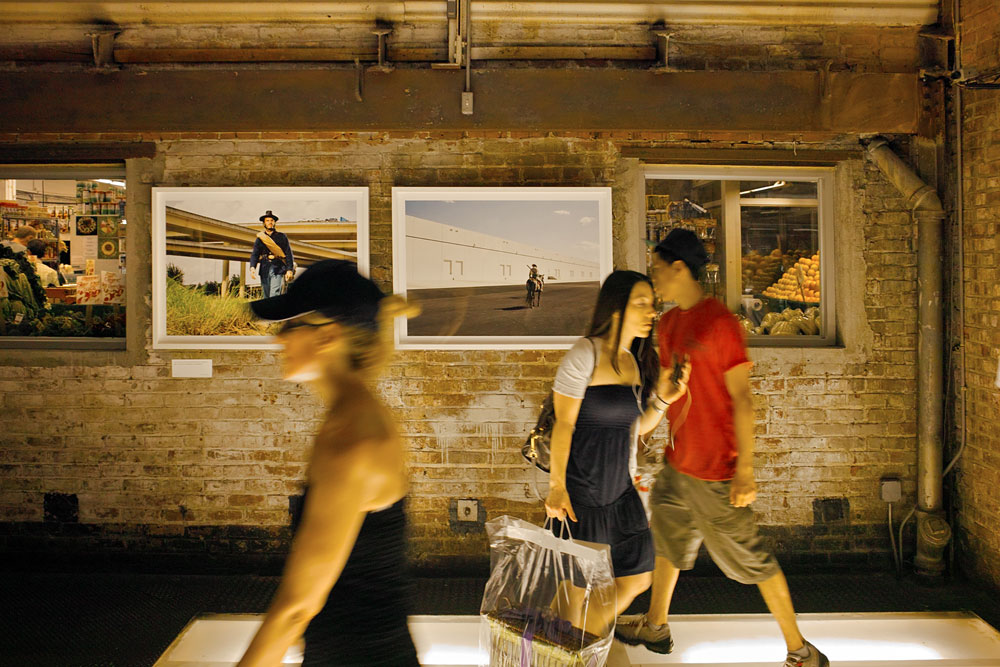
Chelsea Market – © Brian Rose
Walking through the Chelsea Market the other day I enjoyed seeing Gregg Segal’s show Enactments, images of Civil War re-enactors and people who work as super hero characters. The images are a wry look at American culture–I particularly like the Civil War images, in which authentically uniformed soldiers seem lost in time, lost in suburbia. The Chelsea Market often has photo exhibitions, usually of middling quality, and it is a challenging environment for any sort of contemplative art. But Segal’s photos work here in the crowded hubbub with the market setting adding another layer of odd juxtapositions. Although the images are highly staged scenes–not normally my thing–photographic artifice in this case connects aptly with the staged activities of the characters in the photographs. See more Gregg Segal photos here.
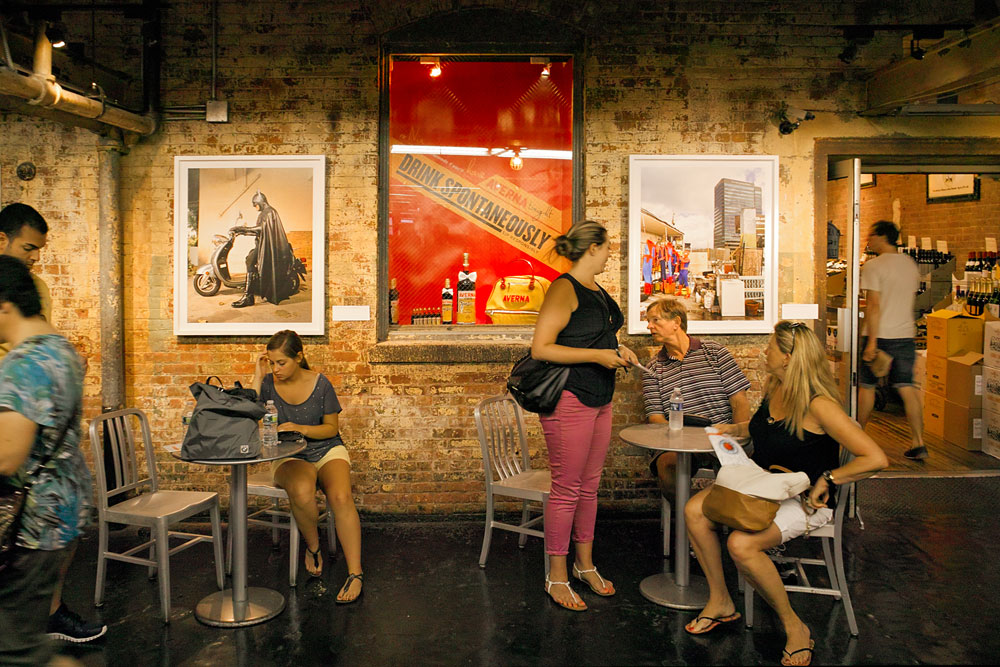
Chelsea Market – © Brian Rose
The Chelsea Market these days is overrun by tourists. There have always been plenty of them, but now it seems, whole busloads of foreigners are milling about, blocking the way, not buying anything. I’ve also noticed that a number of retail spaces are now occupied by boutiques diluting the focus on food that has makes this a great place and the primary reason for its success. Is the Chelsea Market reaching a tipping point? Is it losing its focus as other food markets pop up around the city providing alternatives for New Yorkers?
***
I’m heading off for Amsterdam this evening, the first time I’ve been back in a number of years. I’ll be celebrating the publishing of Time and Space on the Lower East Side with some of my Dutch Kickstarter backers and friends next Thursday. Anyone who would like to join in please email me for details.
My interview with the Daily Beast about Time and Space on the Lower East Side.
It’s been an interesting process acting as distributor and promoter of the book. I’ve enjoyed meeting people and talking about the book, but the legwork not so much. My assistant Chris Gallagher and I have managed to get the book in most of the bookstores in Manhattan as well as several in Brooklyn. We’re gradually spreading the net further–still working on more PR, and hopefully, a couple of more substantial reviews. Overall, I’m pretty happy with how things have gone so far.

Link to the Daily Beast interview is here.
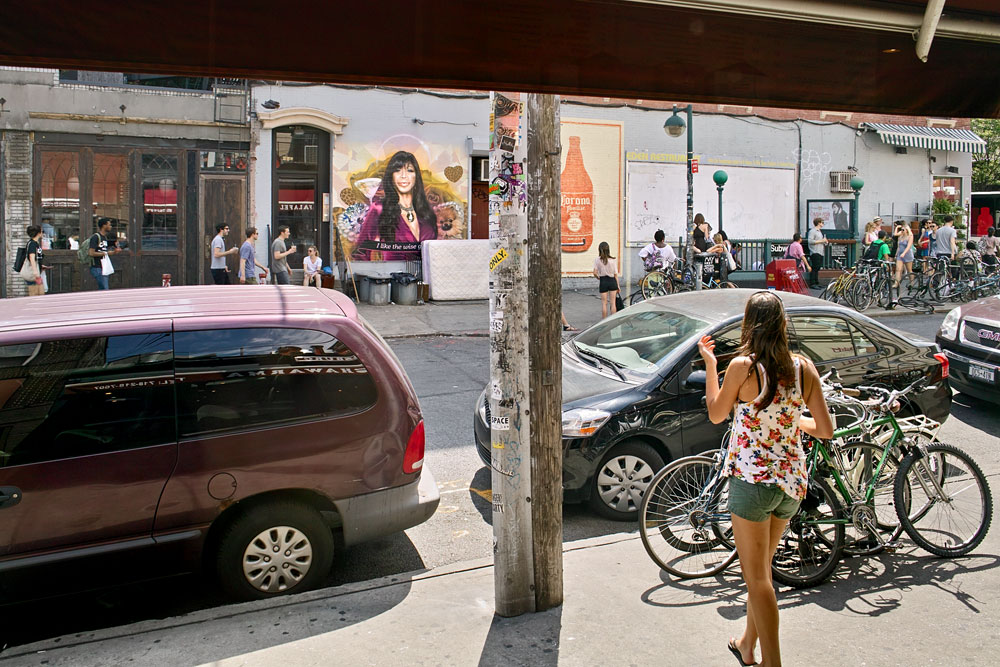
N7th Street, Williamsburg, Brooklyn — © Brian Rose
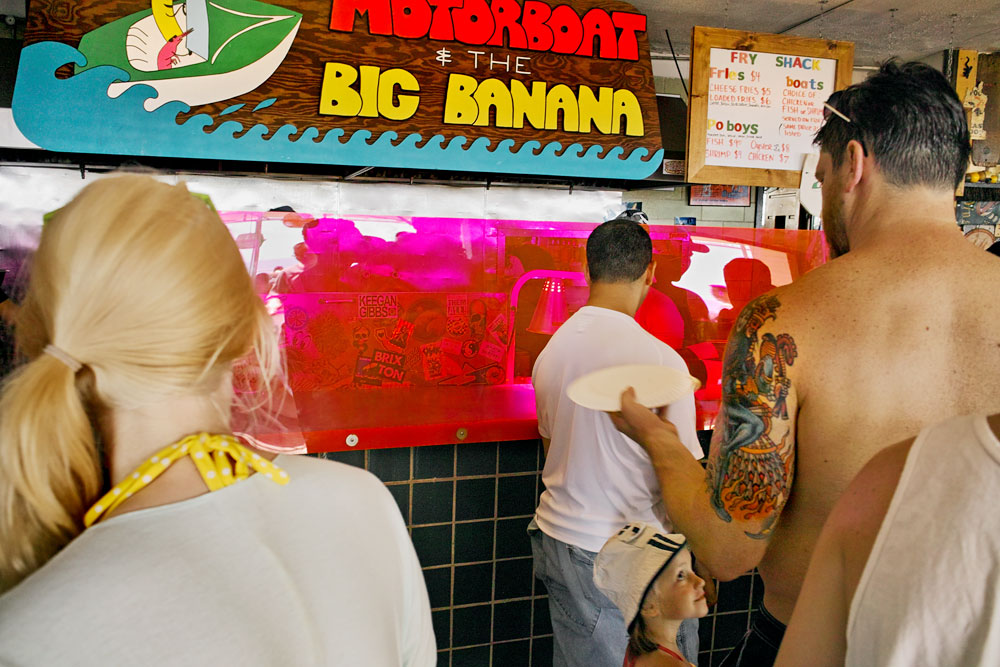
Rockaway Beach, Queens — © Brian Rose
New York sizzles.
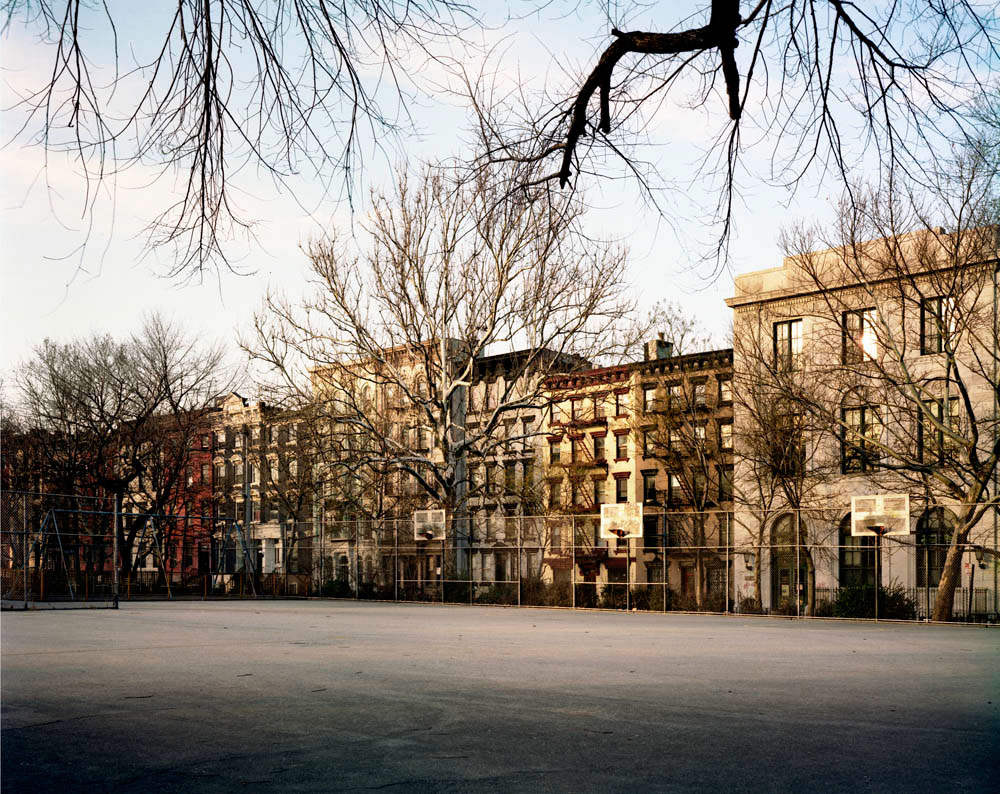
Tompkins Square Park basketball courts in 1980 (4×5) from Time and Space on the Lower East Side
© Brian Rose/Ed Fausty
Throughout the 80s and the early 90s I was regular at the pick-up basketball games on the courts near Avenue B and 10th Street in Tompkins Square Park. I played quite a bit on West 4th Street as well, the small cage-like court that still draws crowds of spectators today, but games there were hard to get into, and they often seemed more about the show than the game. The quality of play at Tompkins was pretty good in those years–lots of ex-high school stars and a few college castoffs. A couple of guys played pro in Europe for a while, and the NYU varsity team would sometimes show up together and challenge the neighborhood locals.
Games were typically played to 20 baskets, and you had to win by two with the winners staying on the court. Lots of close games would go on for an hour or more, so there was a heavy incentive to win, and as a result, games were played with great intensity. There’s still good street ball on the Lower East Side, but it has moved to Sarah D. Roosevelt Park, and the old courts in Tompkins are barely used.

Pat Cummings, former Knick center
One day in the early 90s, the Knick power forward Pat Cummings came down and joined one of our games. I’m not sure if he was retired from basketball at that point, or between teams. But he was still in shape, a solid 6’9″ body. Fortunately, one of our bigger guys was there that day, heavy set, but relatively agile at 6’7″. He and Cummings battled away under the basket, neither one backing down, or bailing out by taking long jumpers. Cummings was on my team, and though it was a competitive game, it definitely helped to have an NBA starter on my side. I remember playing really well, the recipient of several sharp passes from Cummings, and I was surprised by how well this notoriously slow-footed player moved up and down the court. I think we played two games and won both. Even though we were a bunch of playground wannabes he played with us without the least condescension.
I read sadly the other day that Pat Cummings died at 55–just a few years younger than I. Probably a heart attack or something equally sudden. He lived in the Village. I don’t know what he had been up to since retiring from the game, but my thoughts immediately went back to that afternoon in Tompkins Square Park. Here is Peter Vescey’s column in the Post.
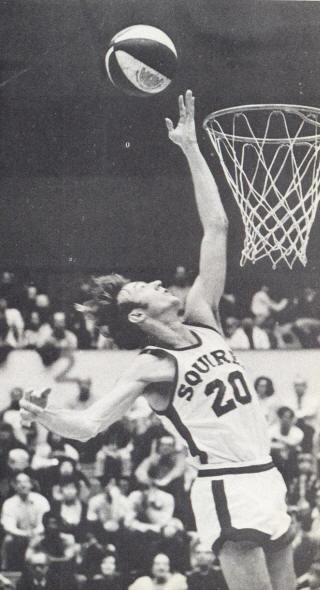
Mike Barrett of the ABA Virginia Squires
Years earlier when I was 17, I had another opportunity to play with a professional basketball player, also memorable, but not a happy story. I was attending a summer basketball camp at a community college in Newport News, Virginia, and was thrilled to hear that my hero Mike Barrett of the Virginia Squires of the now defunct American Basketball Association, was making an appearance at the camp. Barrett was the slender shooting guard–about my height–on a terrific team that for a fleeting moment included Hall of Famers Rick Barry, George Gervin, and Julius Erving.
It was the last day of camp and the counselors and better high schoolers were playing a pick-up half court game. Mike Barrett took part and played on my team. I didn’t see exactly what happened, but suddenly Barrett stopped play clutching his hand. The game ended there, and a few days later it came out in the press that Barrett had broken his wrist and would likely miss a good part of the upcoming season. I was devastated. The injury, as I recall, did not heal easily, and Barrett did not play again for the Squires. He was later traded to San Diego where his career ended early in the season, apparently from another injury. In researching for this post, I discovered that Barrett died last year of cancer at age 67. All reports are that he was terrific guy.
Charleston Gazette article here.
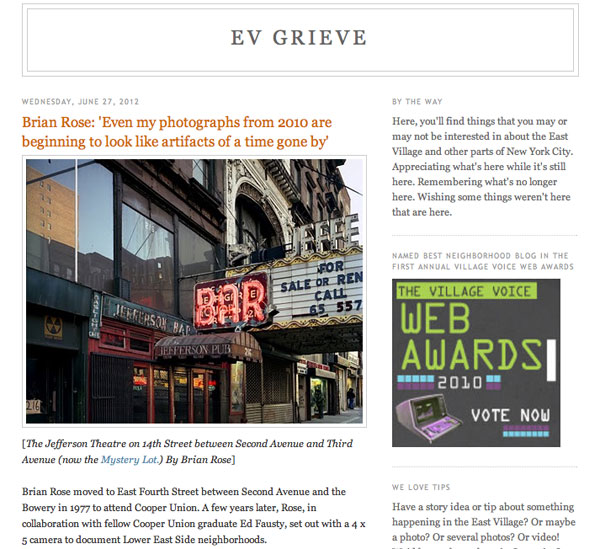
EV Grieve, the popular East Village based blog, has run an interview with me. It includes my thoughts about photographing the Lower East Side as well as my take on the neighborhood today.
From the interview:
People don’t understand that in 1980 the LES was hanging on by a thread, every night the sirens wailed as one more building was torched, one more life was snuffed out by drugs or murder. Yes, we saw ourselves as heroic artists scratching out songs and paintings against a backdrop of urban apocalypse — you can see it in the pictures — but that time is gone forever, for better or worse. As I write in “Time and Space,” the future is rushing in, reoccupying the old tenements, and transforming a place known more for the slow resonance of its history. Even my photographs from 2010 are beginning to look like artifacts of a time gone by.
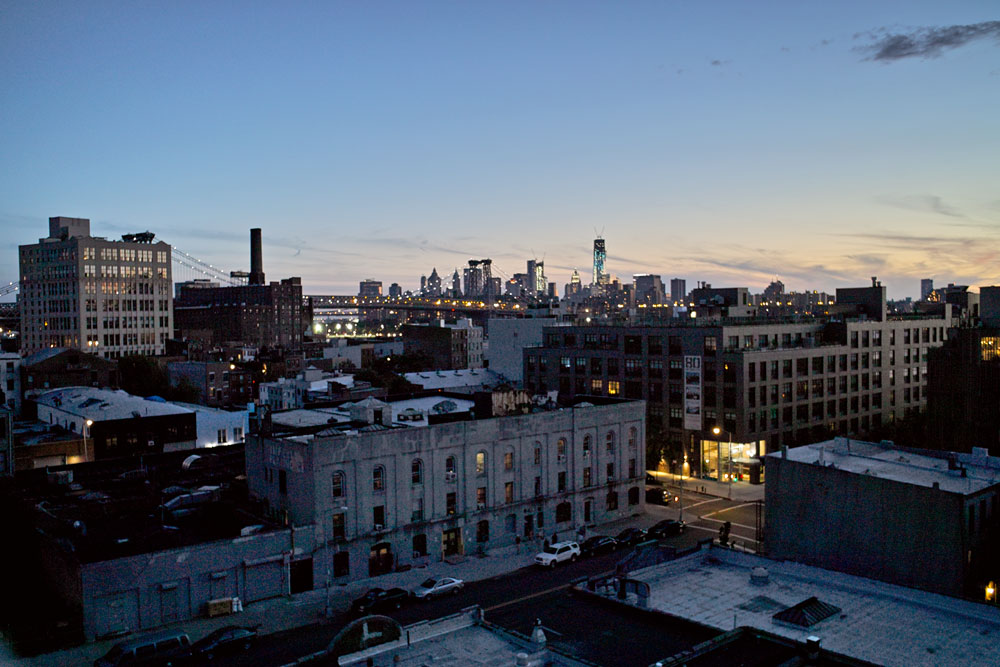
Williamsburg, Brooklyn — © Brian Rose
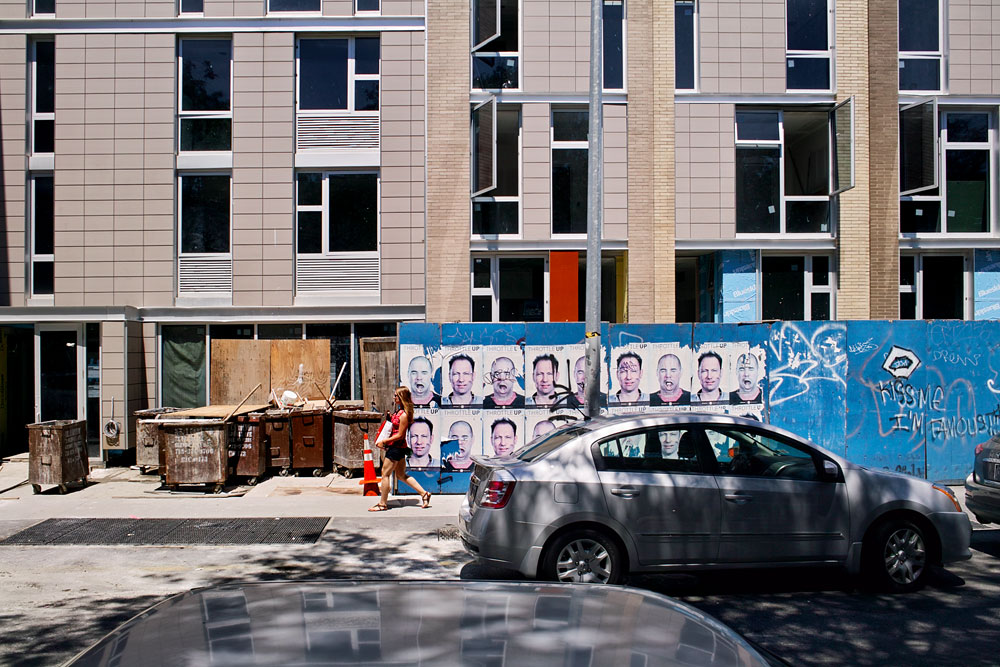
Williamsburg, Brooklyn — © Brian Rose
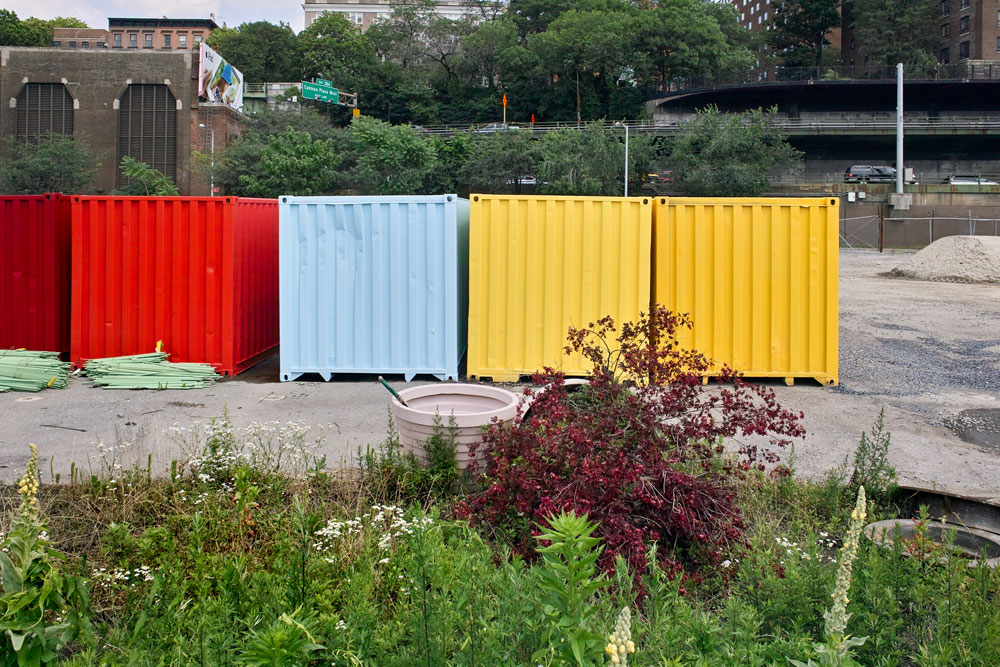
Brooklyn Bridge Park — © Brian Rose
Photoville, a photo fair/expo located in a not yet finished section of Brooklyn Bridge Park is comprised of two main parts–printed images on vinyl running along a chain link fence, and a cluster of shipping containers that act as galleries. The containers in the photo above aren’t actually part of Photoville, but are nearby.
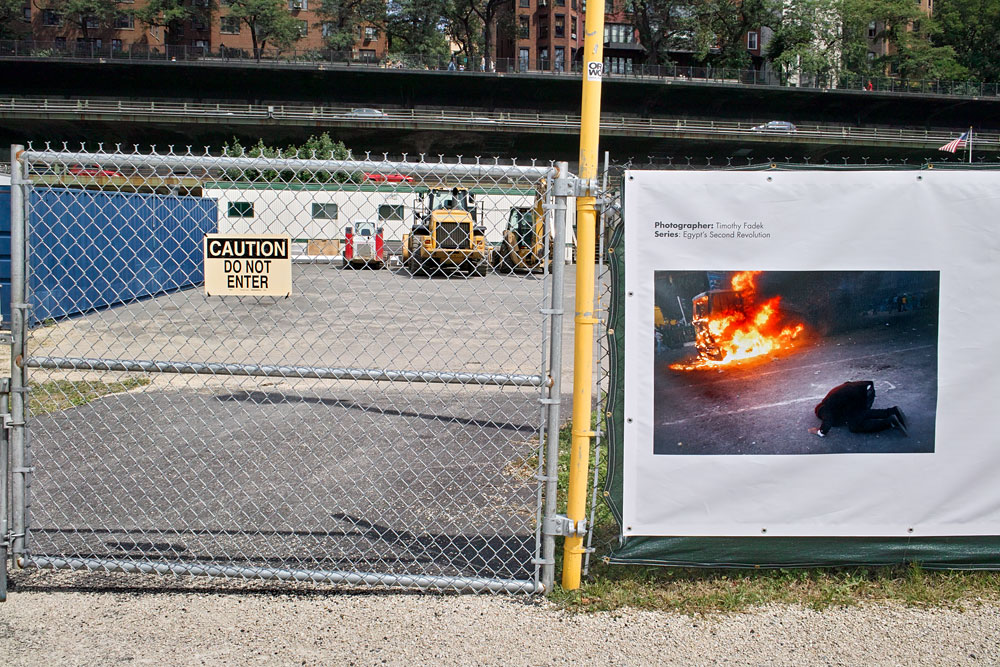
Photoville fence, photo by Timoth Fadek — © Brian Rose
The fence works well, facing west and getting full afternoon light. Many of the photographs chosen by a jury were excellent, and I was happy to see that each photographer was given a chance to show a series of images. The containers, however, were dark and uninviting in the extremely bright and warm sunshine. Even though it was relatively pleasant summer afternoon, the little village of containers and tents fairly baked under the sun.
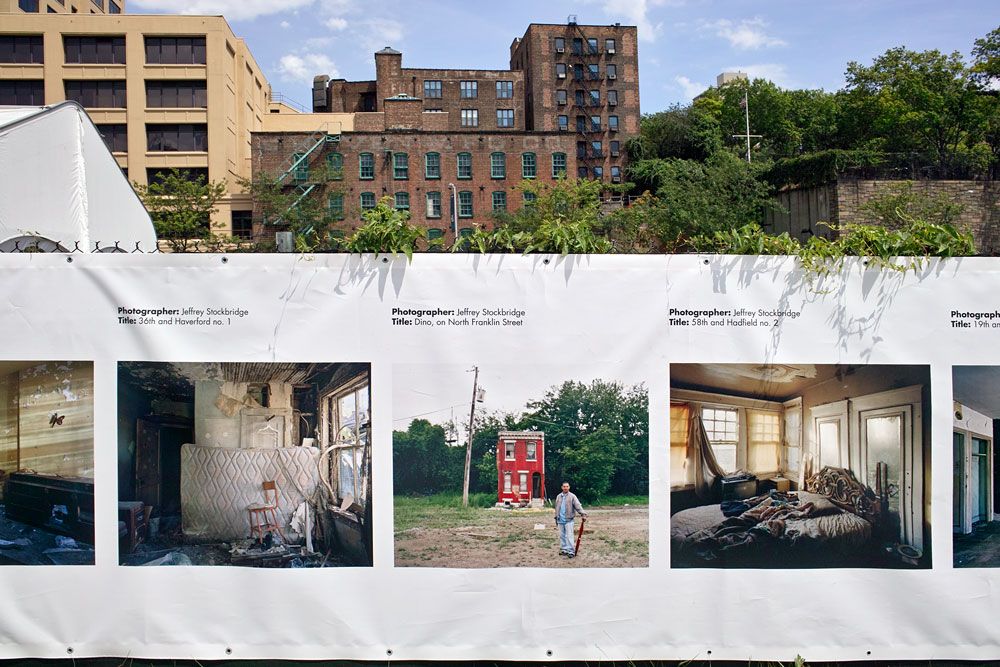
Photoville fence, photos by Jeffrey Stockbridge — © Brian Rose
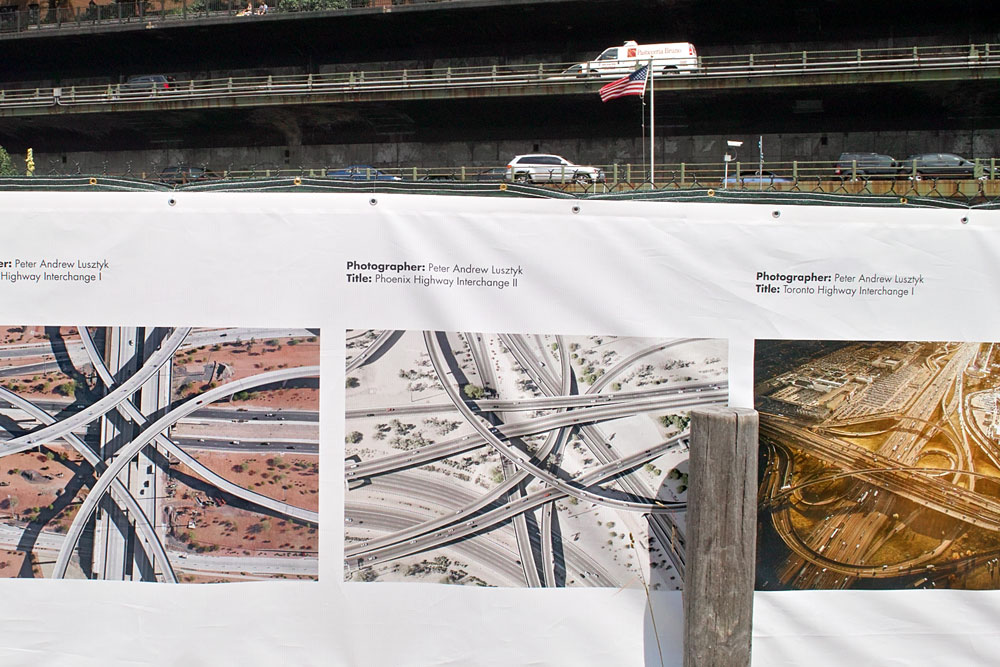
Photoville fence, photos by Peter Andrew Lusztyk — © Brian Rose
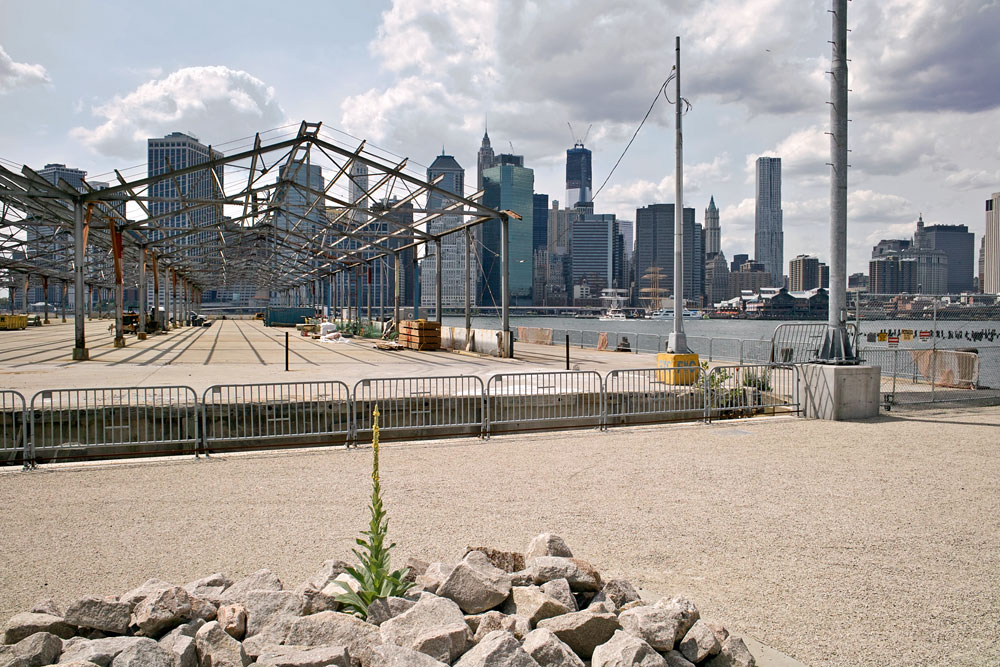
Brooklyn Bridge Park — © Brian Rose
I could imagine an entire exhibition done with photographs printed on vinyl in different sizes mounted on lengths of chain link fencing. Something with a bit more visual dynamic given the visual drama just opposite, seen in the image above.
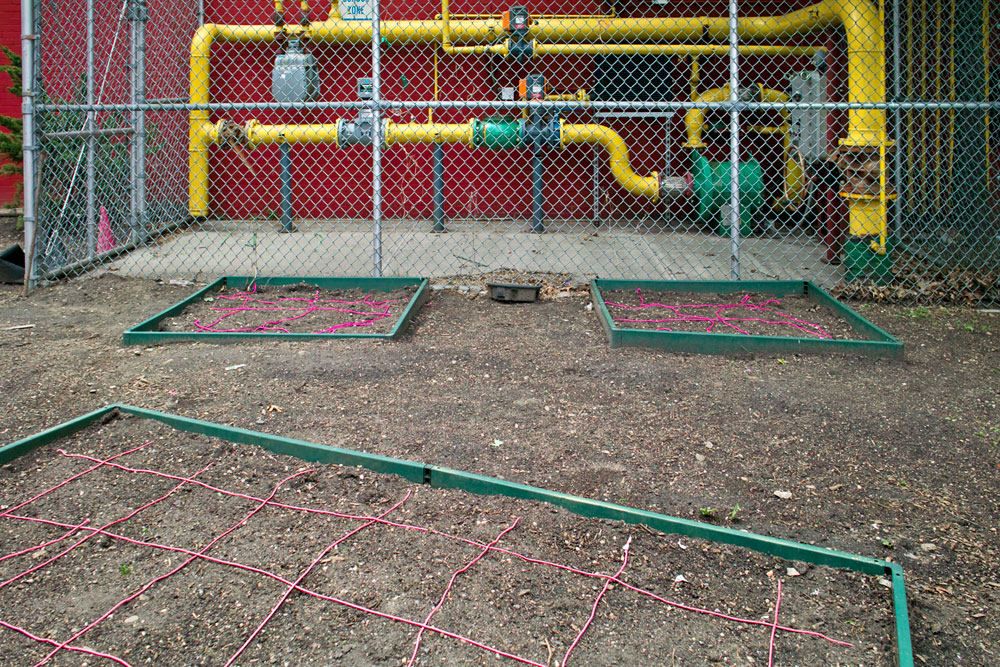
Ninth Avenue — © Brian Rose
Magenta grids. Green boxes. Yellow pipes.
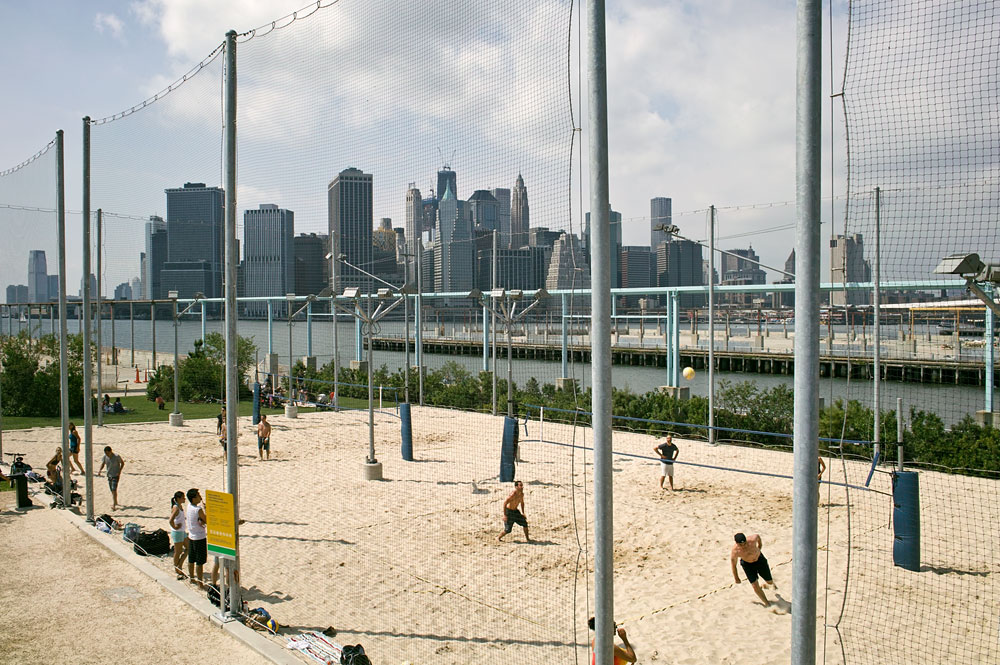
Brooklyn Bridge Park — © Brian Rose
Without comment.