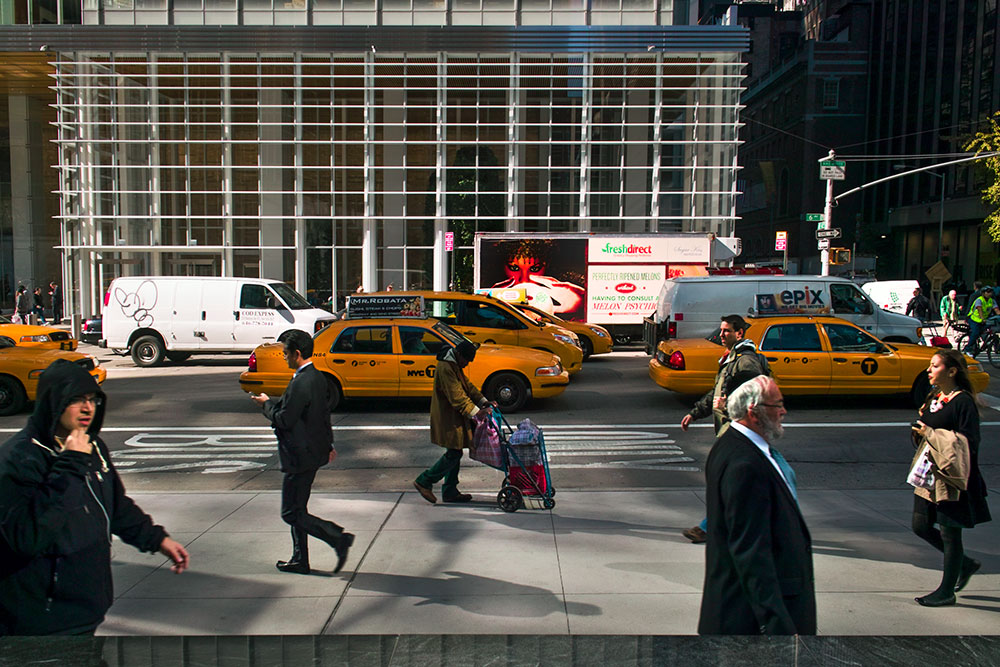
Sixth Avenue and 43rd Street — © Brian Rose
Coming out from teaching my class at ICP in Midtown.
Sixth Avenue and 43rd Street — © Brian Rose
Coming out from teaching my class at ICP in Midtown.
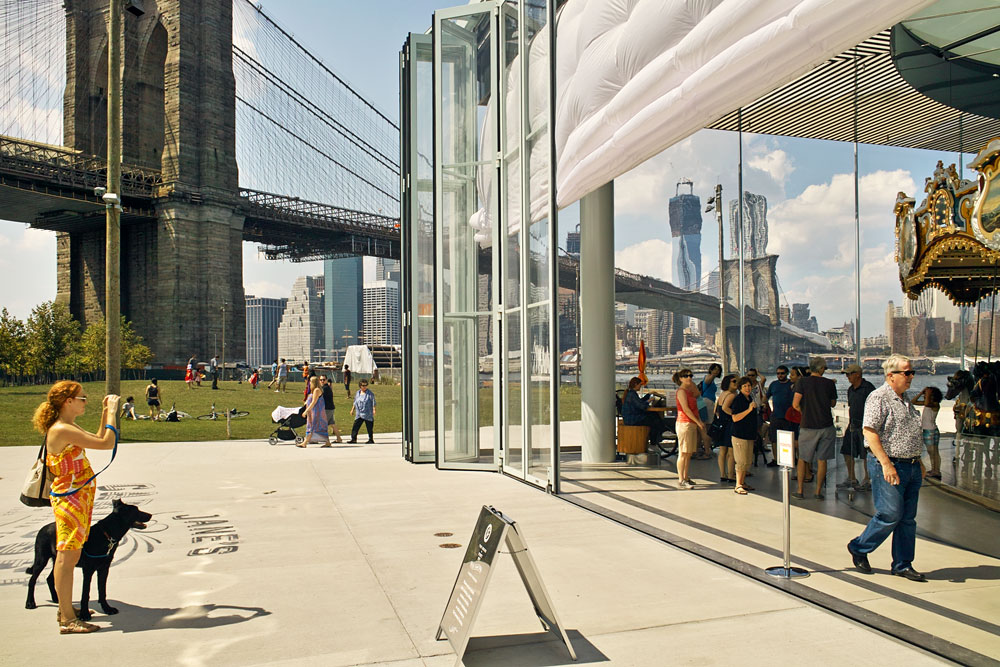
Jane’s Carrousel, Brooklyn Bridge Park — © Brian Rose
Without comment.
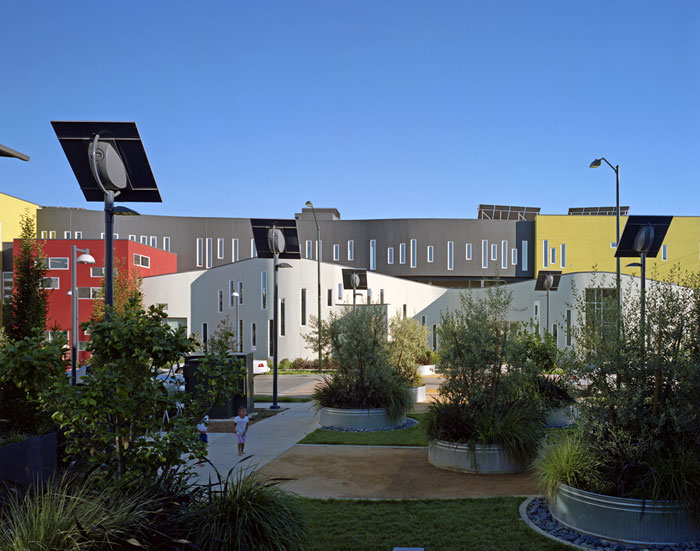
Tassafaronga Village, David Baker + Partners, Oakland, California — © Brian Rose
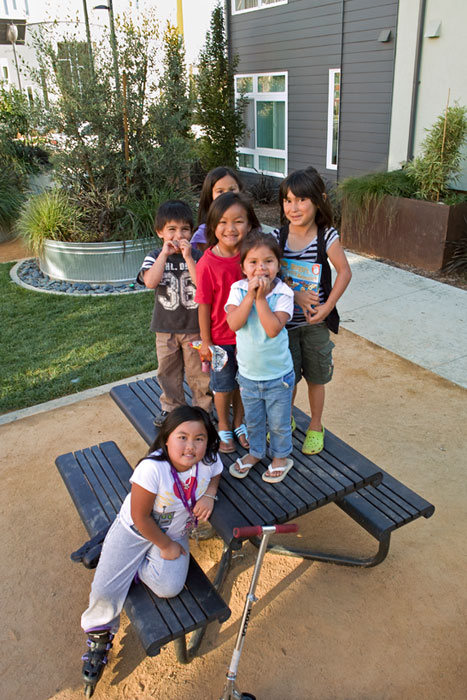
In today’s New York Times, architecture critic Michael Kimmelman reviews two mixed income housing projects in the San Francisco Bay Area designed by the architect David Baker. Although Baker’s work has been published in various professional magazines, his profile outside of the Bay Area has remained relatively low. Low, in spite of the fact that Baker has achieved something few others have even tried–to bring sophisticated design to the task of providing housing for low and middle income people.
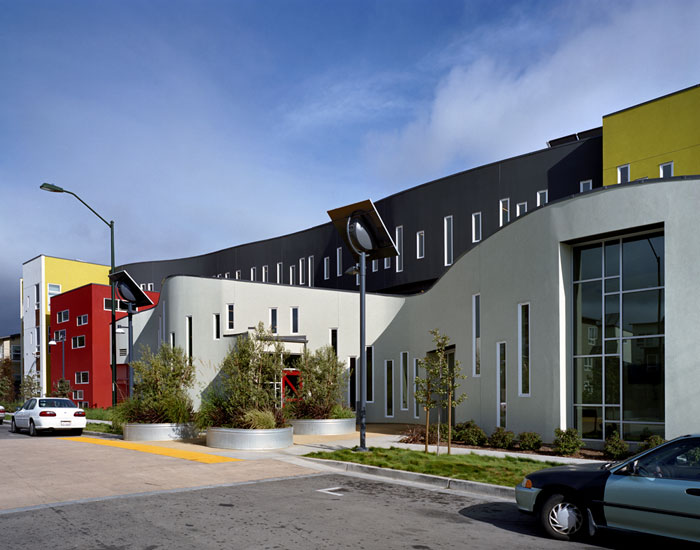
© Brian Rose
Tassafaronga Village in Oakland, California is a large complex of mostly new buildings that replace a troubled housing project set in the middle of neighborhood of small houses, factories, and stacks and stacks of rail containers. It’s a tough area, lying in the shadow of Oakland Colosseum where the Athletics and Raiders play, and crime is high.

© Brian Rose
© Brian Rose
© Brian Rose
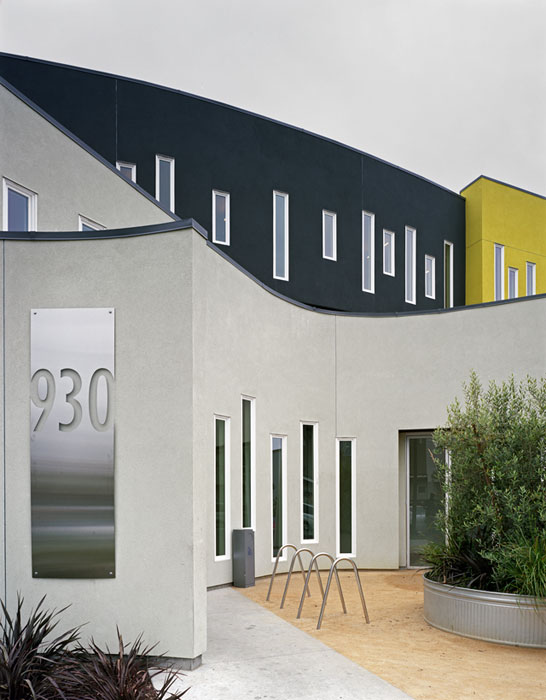
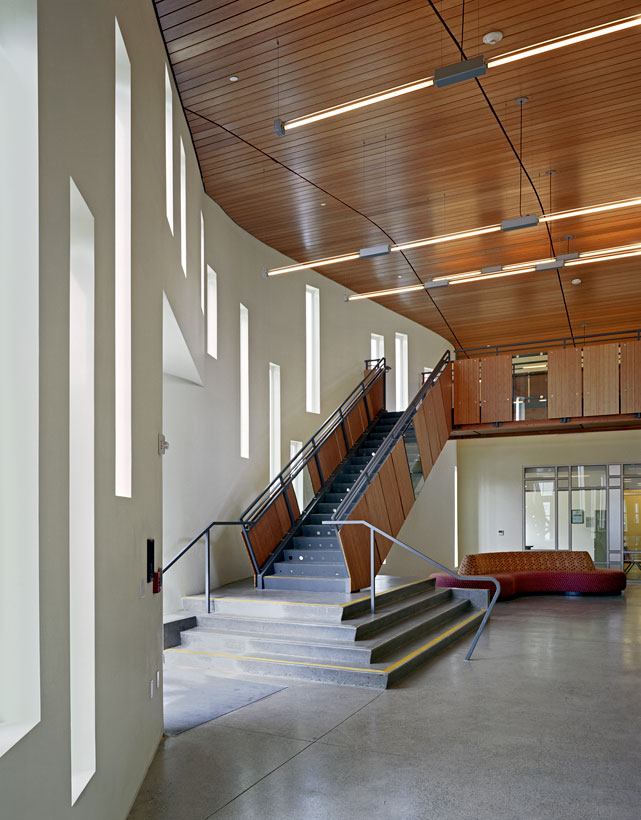
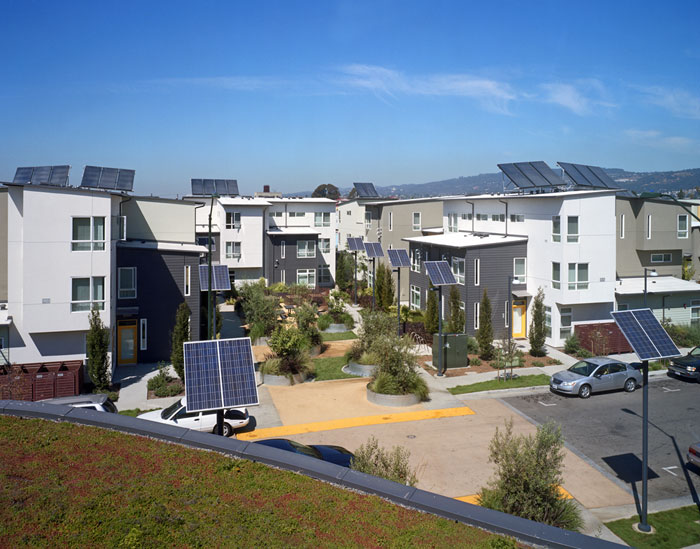
There are several aspects to the project. One is a single building situated behind the undulating facade that you see above. It contains low income apartments grouped around a courtyard. Entry is through a spacious lobby, seen above. Some of the street side apartments have individual doorways.
© Brian Rose
© Brian Rose
© Brian Rose
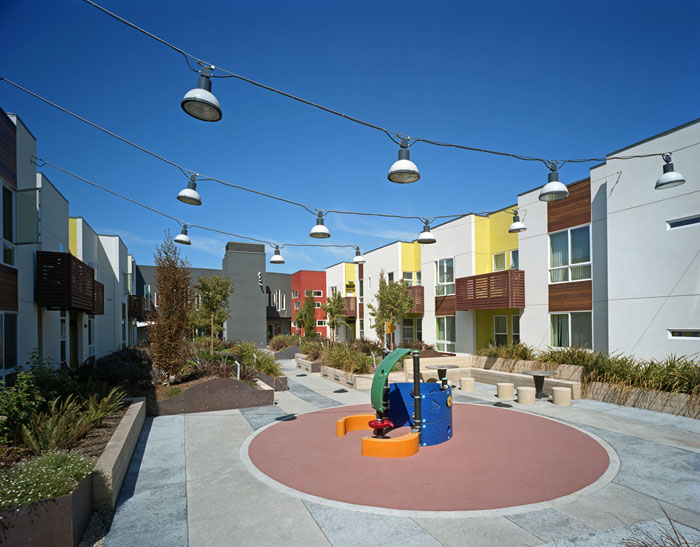
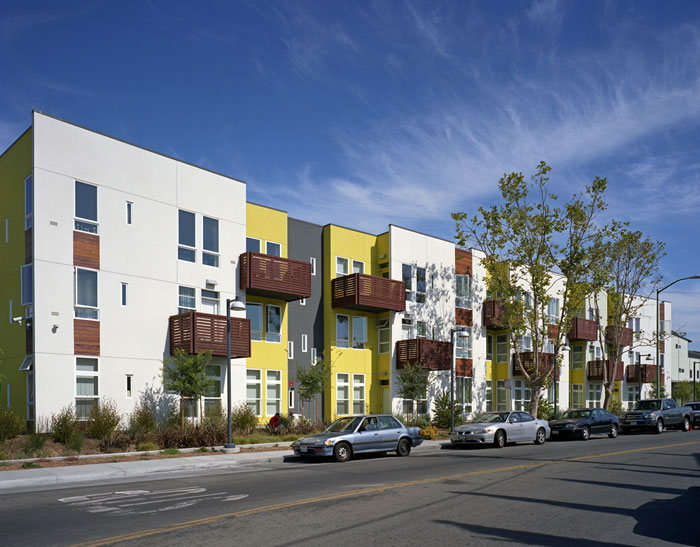
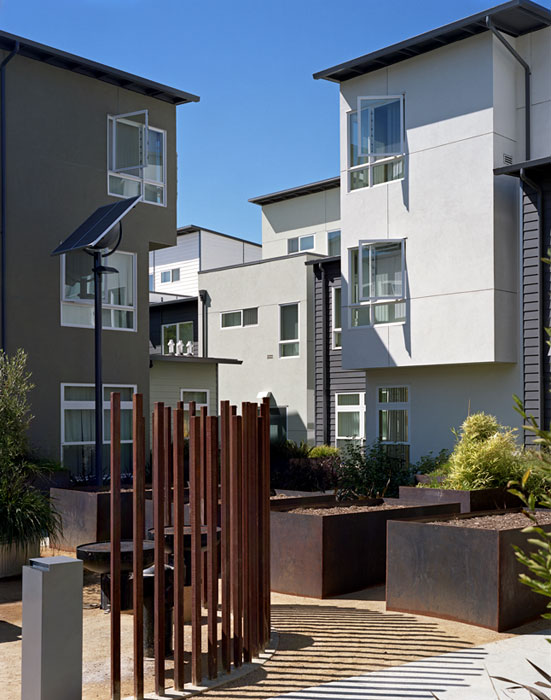
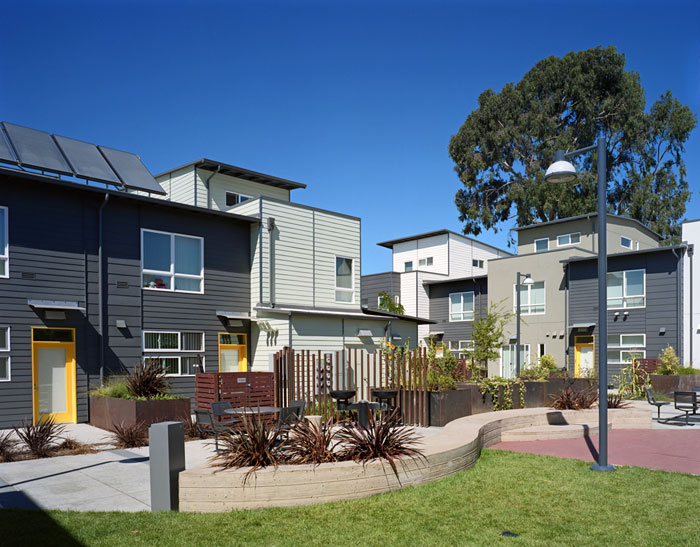
Throughout the project there are solar panels mounted on masts, and in the shot above, a green roof can just be seen in the foreground. Other parts of Tassfaronga Village include townhouses facing streets with courtyards and walkways within and between the groupings of houses. Large galvanized steel farm troughs are used as planters.
© Brian Rose
© Brian Rose

© Brian Rose
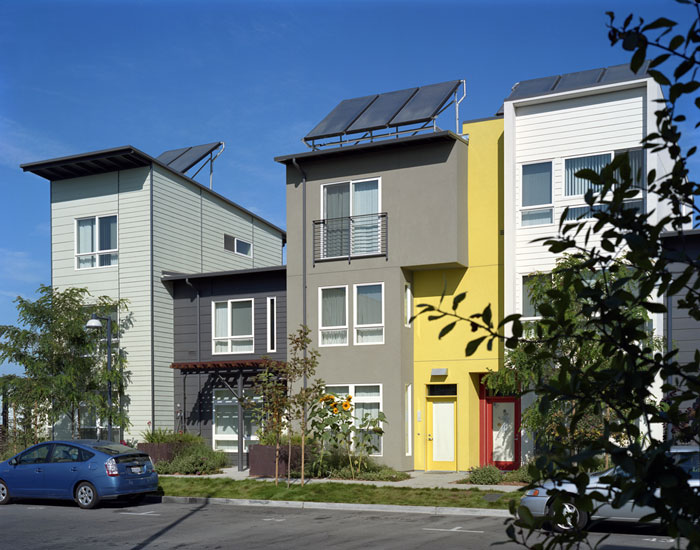
While the houses do not attempt to mimic historic styles, they do evoke characteristics of Bay Area architecture, with bright yellows and reds punctuating the generally white, gray, and muted green palette.
© Brian Rose
There is limited parking on the street in the complex, but a bus loop connects to the nearby BART subway system.
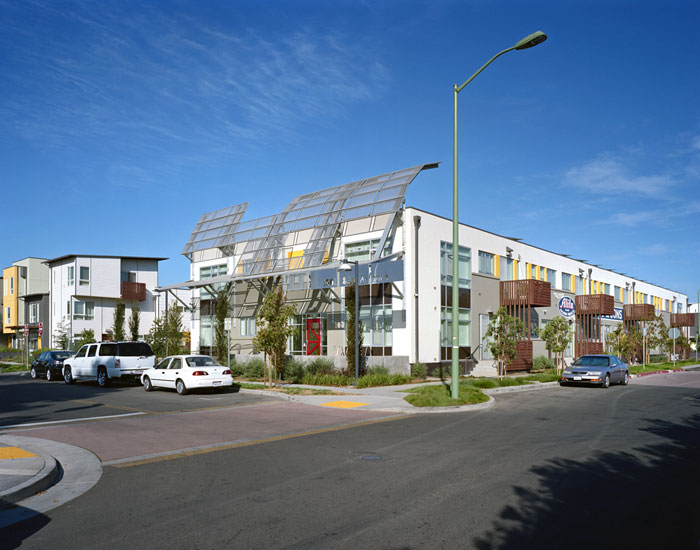
© Brian Rose
An existing building–a former pasta factory–is integrated into the complex. Seen above, a sloping metallic mesh screens the windows along the south facing end of the building. The red door is a signature element found somewhere in almost of all of David Baker’s projects.
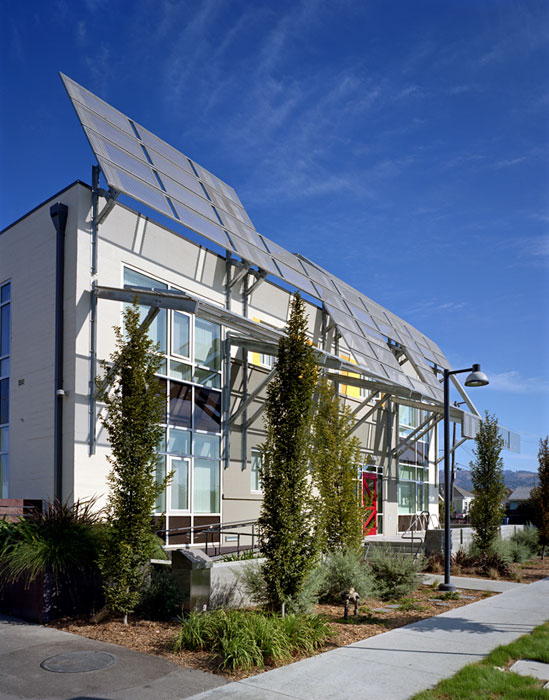
© Brian Rose
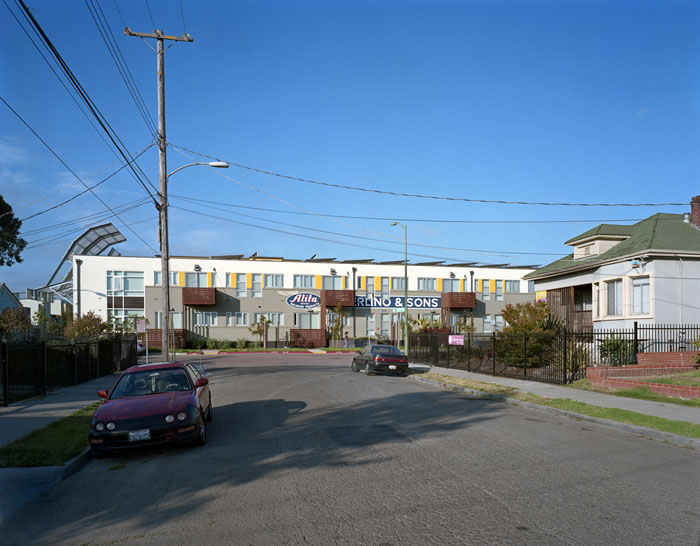
© Brian Rose
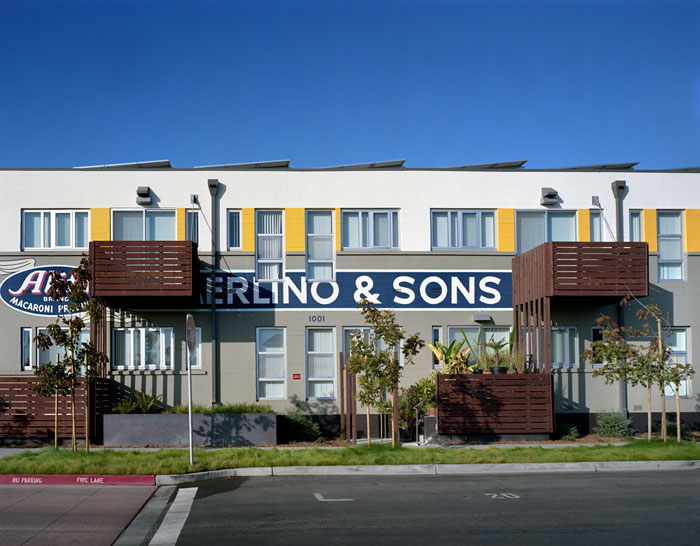
© Brian Rose
© Brian Rose
The question asked, and perhaps answered, in Kimmelman’s positive Times piece, is whether good design can enhance quality of life and even dampen social ills. It would appear so with Baker’s projects–for a number of reasons. One important one, is that there is always an active engagement with the street and with public spaces. The interior courtyards, playgrounds, and gardens encourage use, and can be easily watched over by surrounding windows. Baker does not plop down alien looking, monolithic blocks into the fabric of existing neighborhoods. His buildings look like they belong. However, his eclectic architectural vocabulary, which is as likely to quote European influences as American, is bracing and new.
Baker has rewritten the rules for subsidized housing in the San Francisco Bay Area. Working with knowledgeable developers, he has helped transform whole neighborhoods of San Francisco and Oakland, and he has demonstrated repeatedly that low income housing can be integrated into the urban landscape. Every day I walk out of my building here in New York and am confronted by the dispiriting brick wall and windows of a subsidized housing project, typical of what is done in this city and around the country. Tassafaronga Village, and other David Baker projects, shows another way forward.
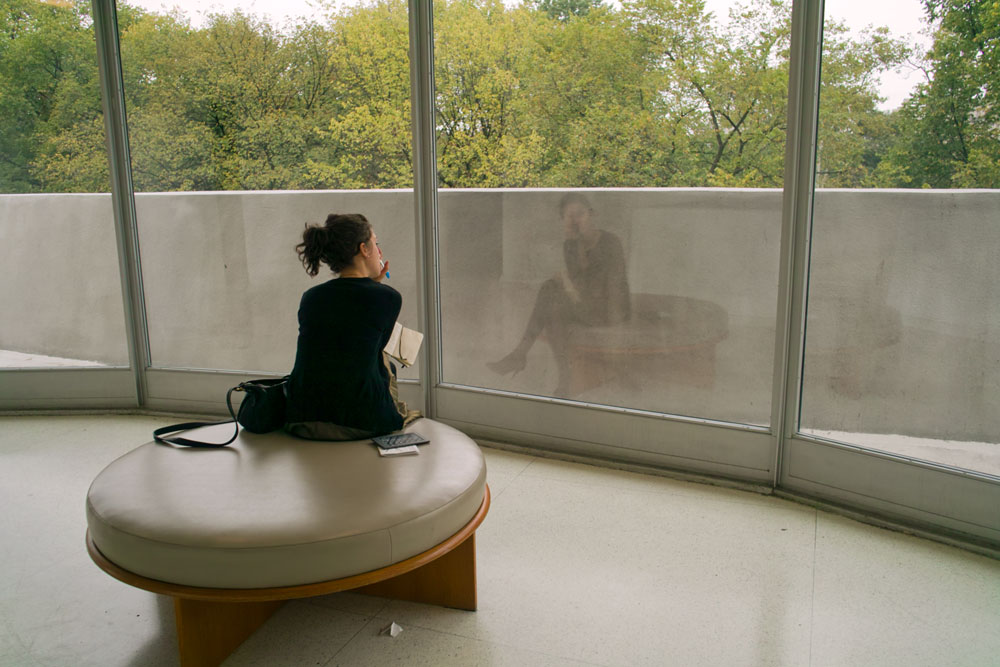
Guggenheim Museum lounge — © Brian Rose
A few thoughts on the Rineke Dijkstra retrospective that closes today at the Guggenheim. I’ve seen enough, or rather, I’ve seen too much. I’m not sure whose fault this is: the art market, the art media, or our cultural obsession with celebrity. At some point the person and their work becomes objectified to such an extent that whatever originality there was, whatever spark of discovery was once seized upon, now seems static and neutered.
Part of the problem for me may be the inherently totemic nature of Dijktra’s portraits along with the serial nature of much of her work. They are a bit like the Bechers’ images of building types in their frontal, decontextualized isolation of the subject. Like the Bechers work, however brilliant, I yearn to be set free. To return to the world with all its messiness, it’s complexity, it’s overlapping chaotic craziness, a world to be navigated through, a world comprised of multiple view-points.
I was happy to see Dijkstra’s video piece made in two techno clubs in the 1990s. I hadn’t seen it before, which helped, and I like the slightly less hermetic representation of the infinitely awkward young people thrust before the camera. They are human specimens, momentarily plucked from their environment, still squirming, alive. Am I comfortable with this kind of biology experiment? No. But comfort is, perhaps, beside the point, whether we’re talking about Arbus, Mapplethorpe, Ruff, Dijkstra, or a host of other photographers.
But I can’t look at Dijkstra any more. Maybe it’s my fault, and I will get over it. There was a time I couldn’t listen to Bob Dylan any more, but that passed. Do I care any longer that her portraits look like Botticelli or Dutch masters? No. Everyone from Sherman to Goldin to Wall seem to be obsessed with making photography look more like art–real art–than the recalcitrant stepchild photography has always been. There’s something tiresome going on here, no matter how talented these artist/photographers are.
So, I’ve seen the Dijkstra (mid-career) retrospective–she’s only 53 with lots more to do I’m sure–and have the book. But I’ll be taking a break from this work for a while.
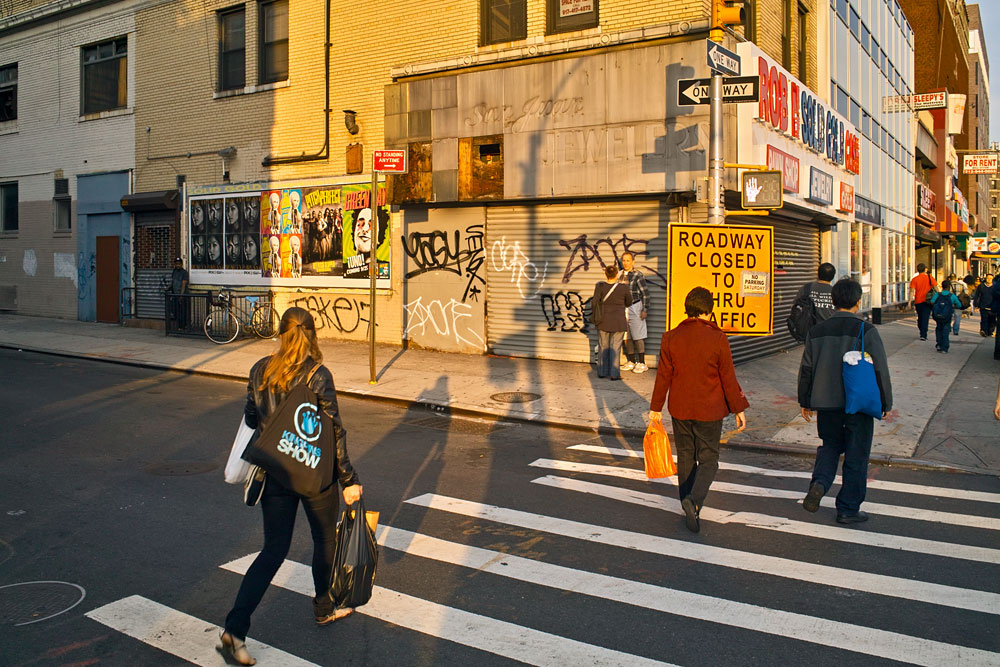
Delancey and Norfolk Streets — © Brian Rose
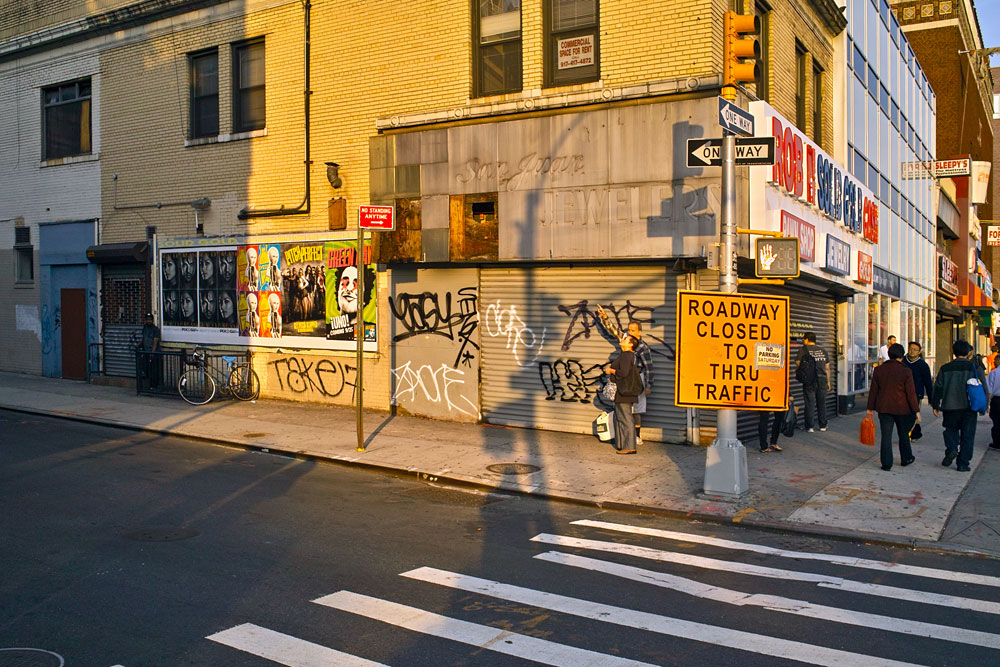
Delancey and Norfolk Streets — © Brian Rose
A few seconds apart.
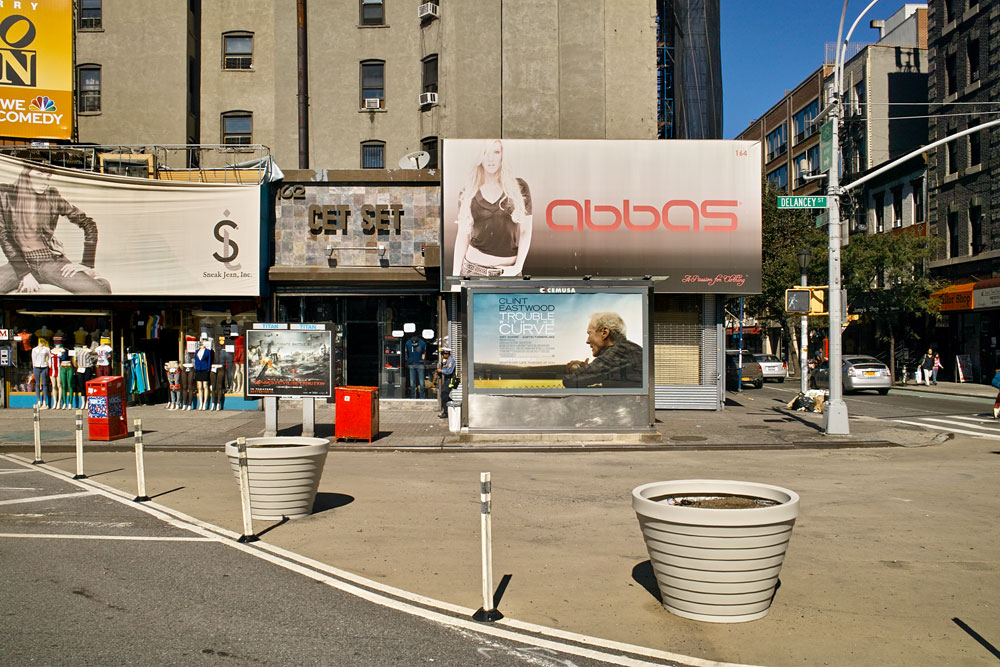
Delancey and Clinton Street — © Brian Rose
On Saturday I went to the NY Art Book Fair at PS 1 in Queens. All kinds of art publishers from big to small, serious to silly, or both simultaneously. The museum was jammed with people, the galleries uncomfortably hot–how can this many people be interested in arcane and esoteric artists’ books? And where does all the money come from, since obviously, very few can actually make money on books of this sort. I don’t know whether to be encouraged or depressed about the whole thing.
I introduced myself at a number of photography publisher’s tables, showed my book around, felt like an outsider more than a participant in this book publishing mania. Watched people’s jaws drop when I told them I had sold more than 500 books since releasing Time and Space on the Lower East Side at the end of May. With no distribution. Nevertheless, few people I talked to were familiar with my book despite its getting a fair amount of publicity. The photography crowd is still not clued in, and I obviously have a lot of work to do.
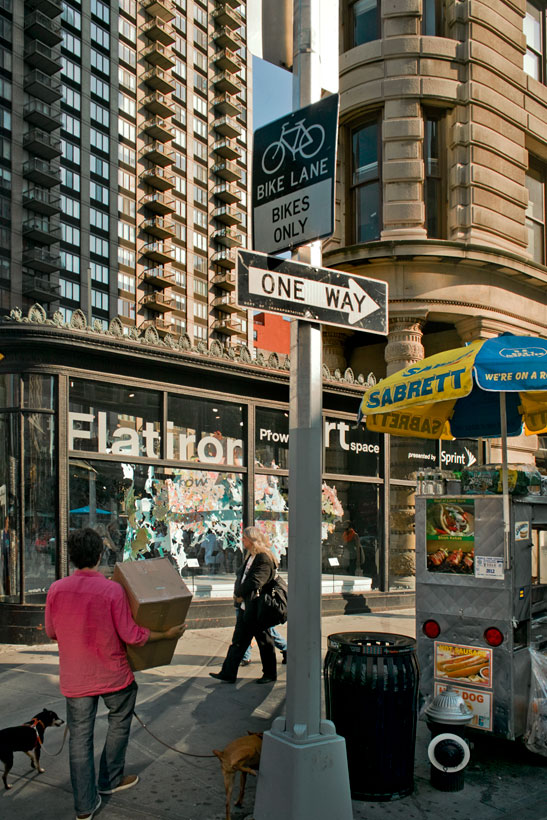
23rd Street and Fifth Avenue — © Brian Rose
Would like to see an exhibition of photographs of the Flatiron Building.
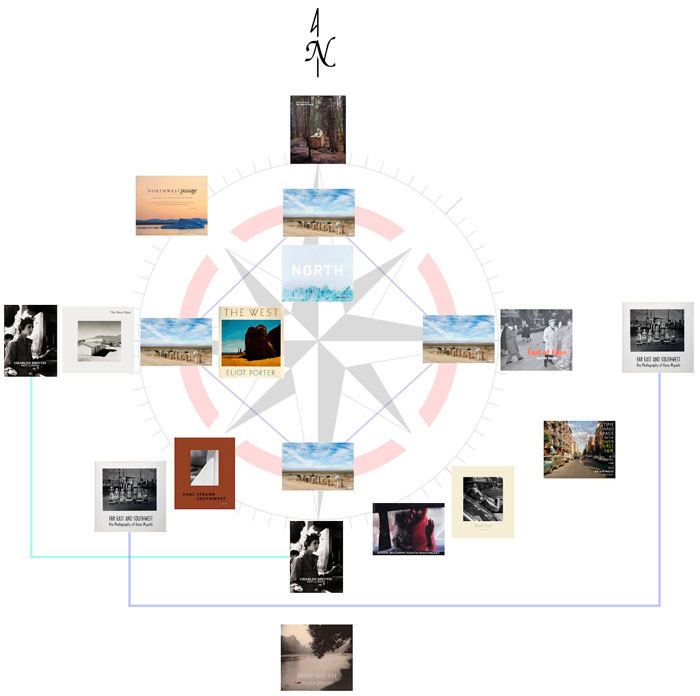
I’m not sure what the meaning of it is, but Blake Andrews in his blog B has created a compass graphic locating a bunch of books that have geographical titles. I am pleased to find Time and Space on the Lower East Side over on the right. Lower east, of course.
It strikes me, as I go about marketing my book, that there are actually very few current art photography books that deal with New York City. A couple of book buyers have mentioned it. Another buyer rejected my book saying it was too New York specific. An attitude that somehow assumes New York to be a narrow subject not relevant to his region–Texas. The reality is that Time and Space is doing well with non-New Yorkers and foreigners. Moreover, the Lower East Side is the great immigrant neighborhood of American history, and today, it continues to be a bellwether of where we are going in New York and beyond.
There are undoubtedly many photographers doing interesting book-worthy work here in New York. The fact that this work is not finding its way into finished books available to the general public speaks to the present lack of options for photographers. There are only a handful of publishers located here in the city that could bring out this kind of content, and none are stepping up to the plate. On the one hand, there are more photographs being made than ever–frighteningly more than ever–and more photo books are being made as well. There’s a lot of action on Blurb and other self-publishing platforms, and there are lots of art books being made, few of which involve the kind of budgets that highly polished photo books require. Meanwhile, a relatively small number of well-known photographers continue to publish regularly. I don’t know whether to be encouraged or discouraged.
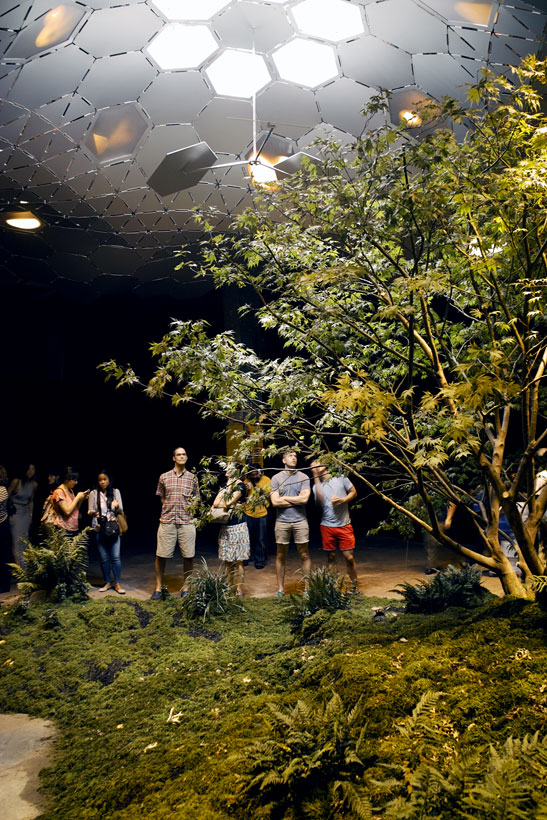
The Lowline exhibition
Underneath the street at the foot of the Williamsburg bridge is an abandoned underground trolley storage facility. Until recently, few knew about this hidden space.
From the New York Times:
James Ramsey and Dan Barasch, come to the project with prestigious résumés (Yale and NASA in Mr. Ramsey’s case, Cornell and Google for Mr. Barasch). They want to convert the space into a subterranean park, using fiber-optic technology to channel in natural light — enough light, in fact, to allow photosynthesis to occur and, as a result, for plants to thrive.
The proposal is called the Lowline, named to echo the High Line, the elevated park built on the old rail viaduct slicing through Manhattan’s westside. Ramsey and Barasch and a host of other supporters and collaborators have put together an exhibition in a disused market building adjacent to the trolley site. In it they have built a prototype of the sun collectors and created a mini landscape comprised of a tree, ferns, and moss. I had been somewhat skeptical of the concept until seeing the exhibit–I imagined the lighting being indirect and dim. But the actual impression is of a shaft of sunlight penetrating the darkness. An array of these collectors would produce an underground world brightly illuminated by daylight.
There are a lot of reasons for the Lowline to fail–the fact that the Metropolitan Transit Authority owns the space and wants to maximize the value of this otherwise dead space. The cost of building and maintaining such an elaborate piece of infrastructure. The bureaucratic red tape inherent in any New York City project, no matter how straight forward–and this would be anything but straight forward.
On the other hand, more than 10,000 people have passed through the Low Line exhibition in two weekends, an extraordinary number. The project has clearly seized the imagination of the city and beyond.
While visiting the exhibit yesterday I met briefly with Margaret Chin, Lower East Side city councilwoman, who is supporting the project, and then spoke with Dan Barasch. He was familiar with my book Time and Space on the Lower East Side, and I suggested that there might be a way I could support their project through my photography. I would love to be involved in some way.
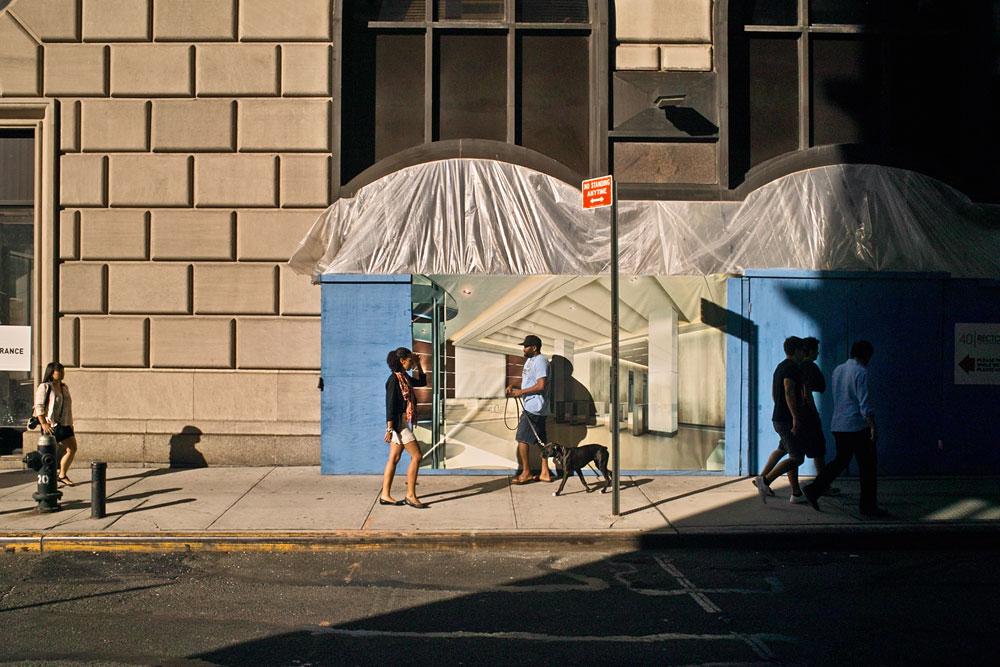
Rector Street — © Brian Rose
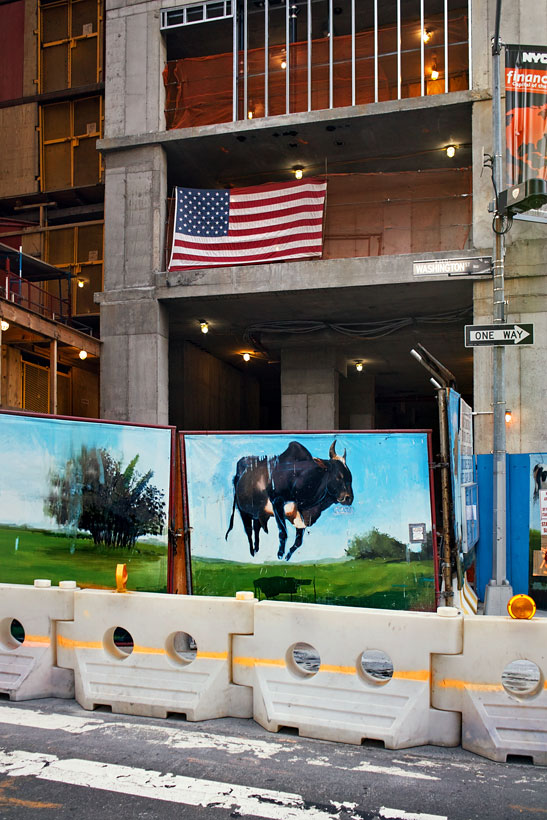
Rector and Greenwich Streets — © Brian Rose
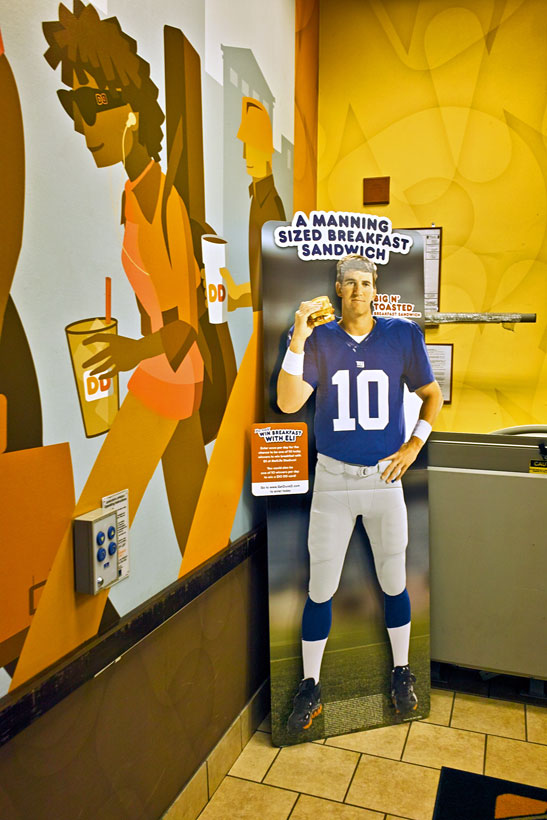
Rector Street — © Brian Rose
Without comment.
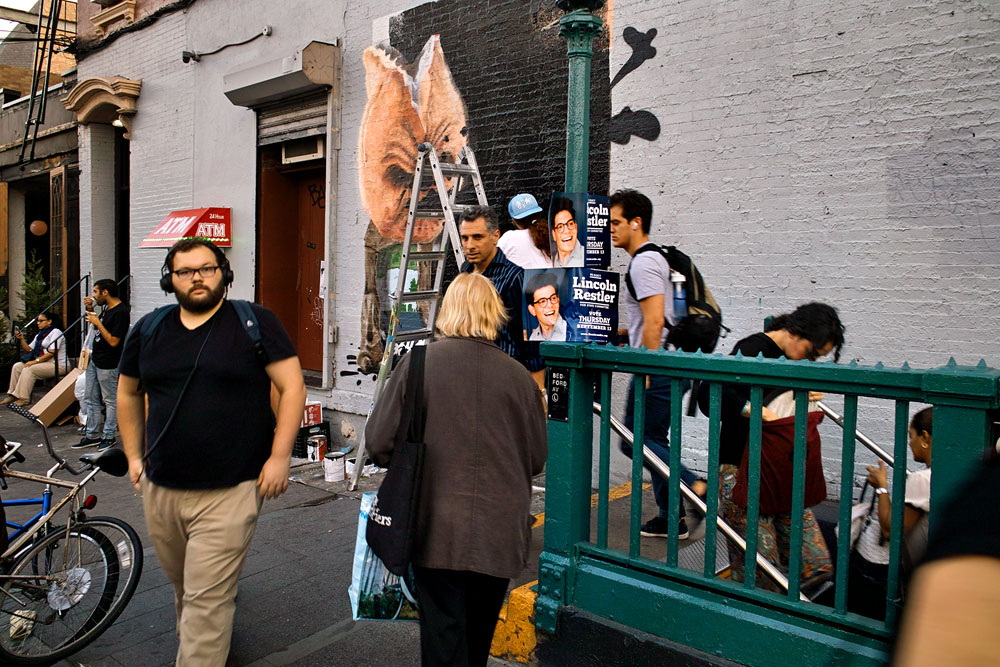
N7th Street, Williamsburg, Brooklyn — © Brian Rose
Without comment.
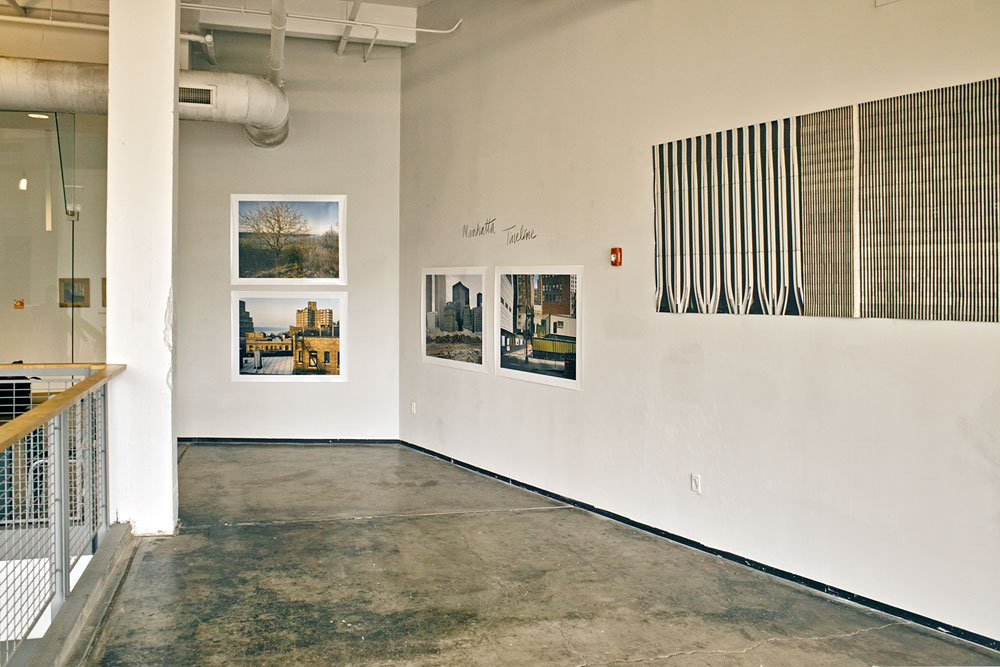
Manhatta Timeline, ArtSpace Buffalo — © Brian Rose
I am presently exhibiting work at ArtSpace Buffalo, a non-profit gallery, along with paintings and drawings by J. Tim Raymond and Robert Harding. Tim, who is the organizer of the show, lives in Buffalo, and Bob Harding is a painter from New York City. The gallery is in an old factory buildings converted into artists lofts, and because of its immense size, I opted to show large pieces. The photographs are 40×50 inches and the mural, WTC, which I previously mounted on a sidewalk shed on East 4th Street in the East Village, is 4×28 feet.
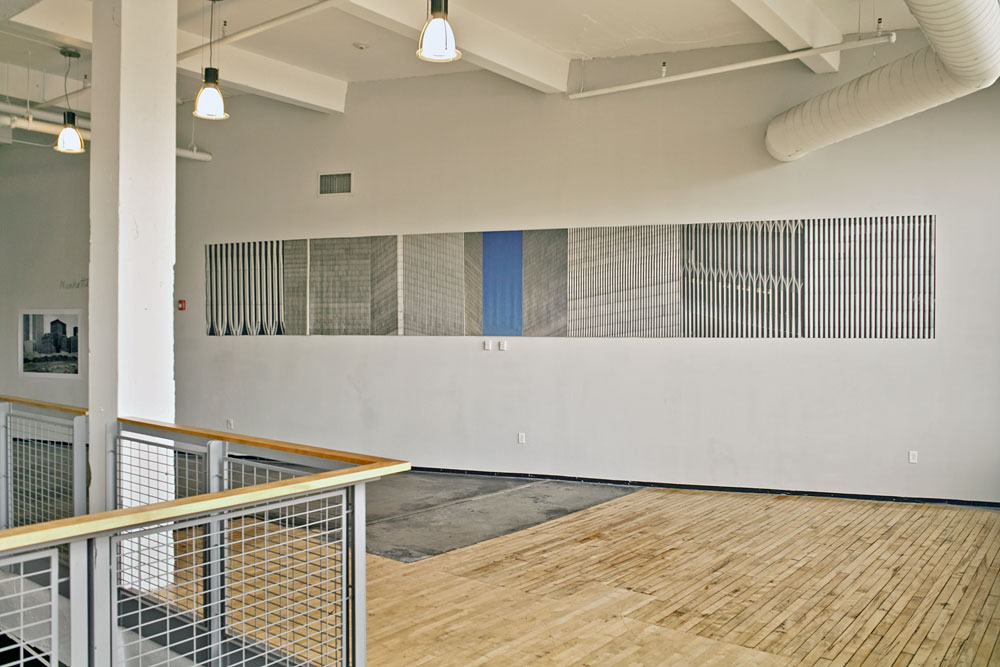
Manhatta Timeline, ArtSpace Buffalo — © Brian Rose
The title of my part of the exhibition is Manhatta Timeline and takes its name from the short film made by Charles Sheeler and Paul Strand in 1921 featuring images of New York City. The name is derived from the original Indian name for the island, Mannahatta, and the film includes quotes from the Walt Whitman poem of the same name. Timeline refers to the sequence of four images that begin at the north end of Manhattan in Inwood Park with the Hudson River and Palisades in the background. The sequence then moves down the Hudson to the World Trade Center in the 1980s, and concludes with a multi-layered urban scene from 2012 that includes a sign with the names of those killed on 9/11. The montage of WTC closeups is itself a visual yardstick with a searing strip of blue sky in the middle.
…I see that the word of my city is that word from of old,
Because I see that word nested in nests of water-bays, superb,
Rich, hemm’d thick all around with sailships and steamships, an
island sixteen miles long, solid-founded,
Numberless crowded streets, high growths of iron, slender, strong,
light, splendidly uprising toward clear skies…
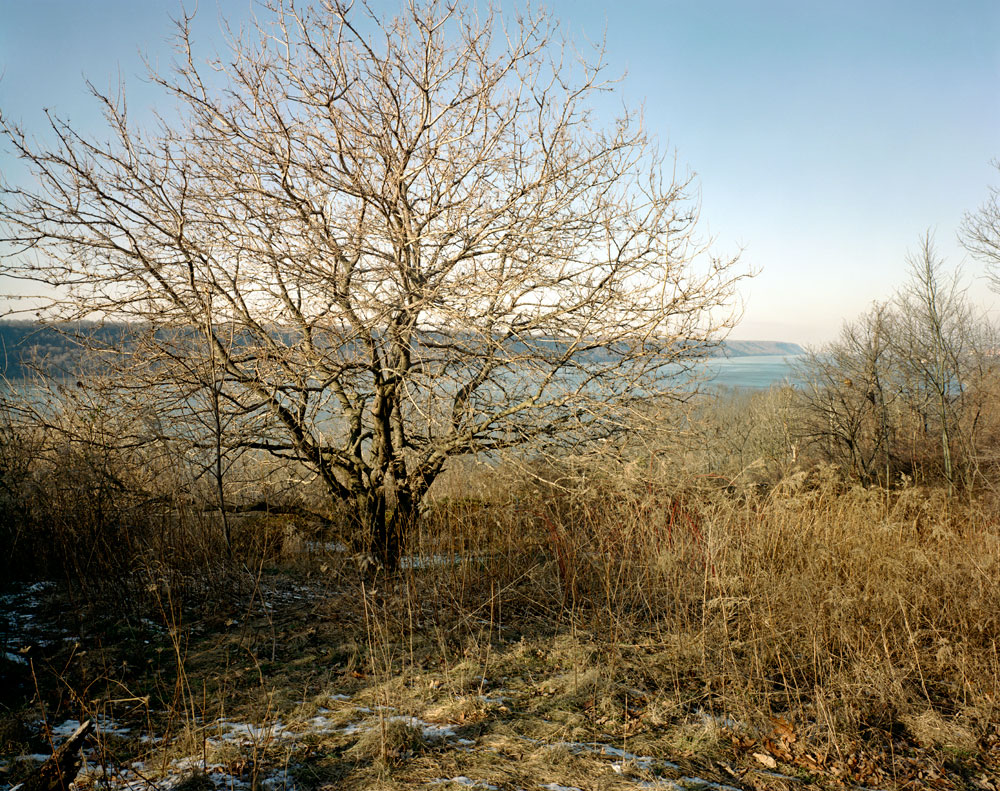
Inwood Park (4×5 film) — © Brian Rose
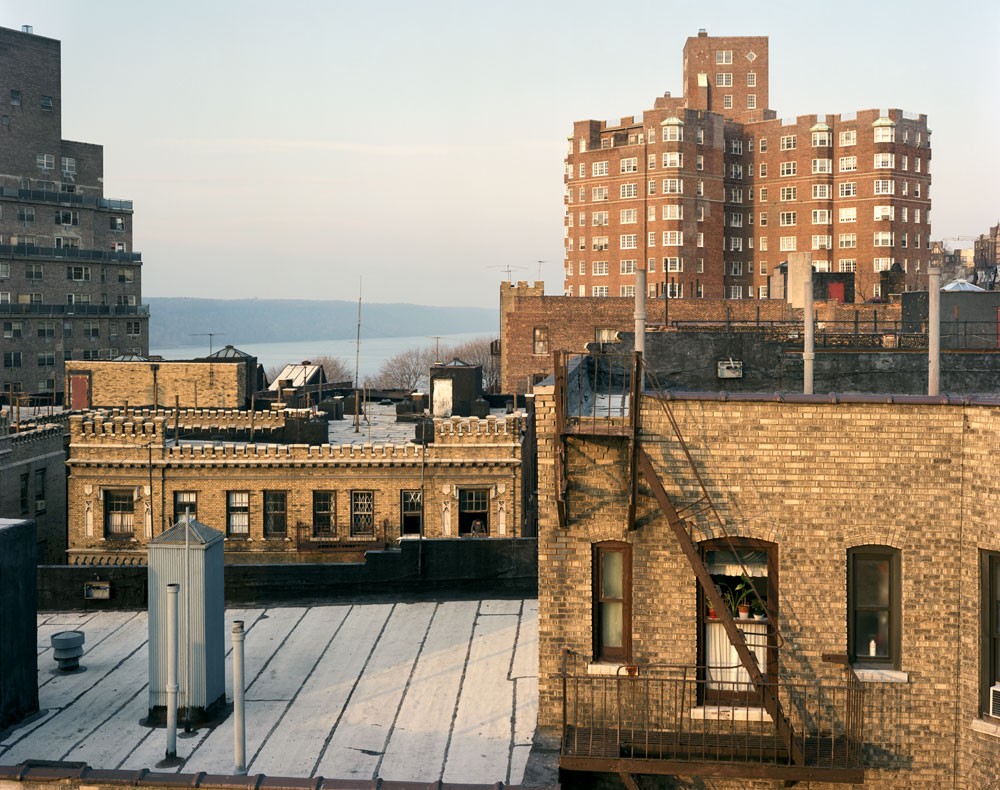
Hudson Heights (4×5 film) — © Brian Rose
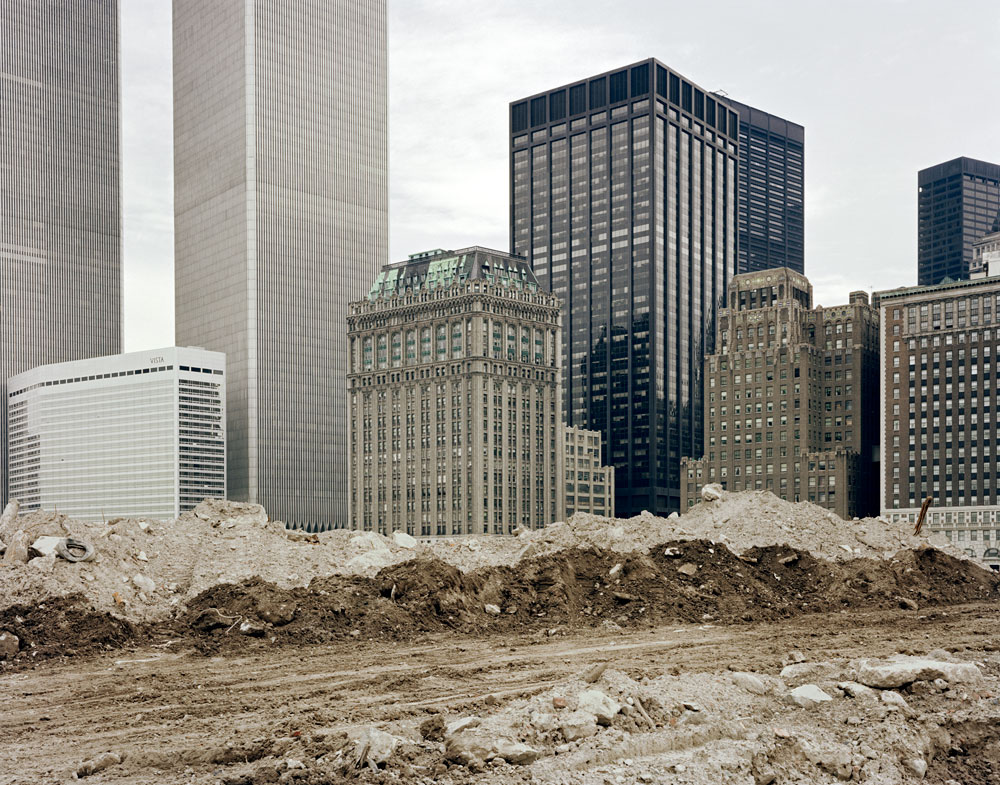
World Trade Center (4×5 film) — © Brian Rose
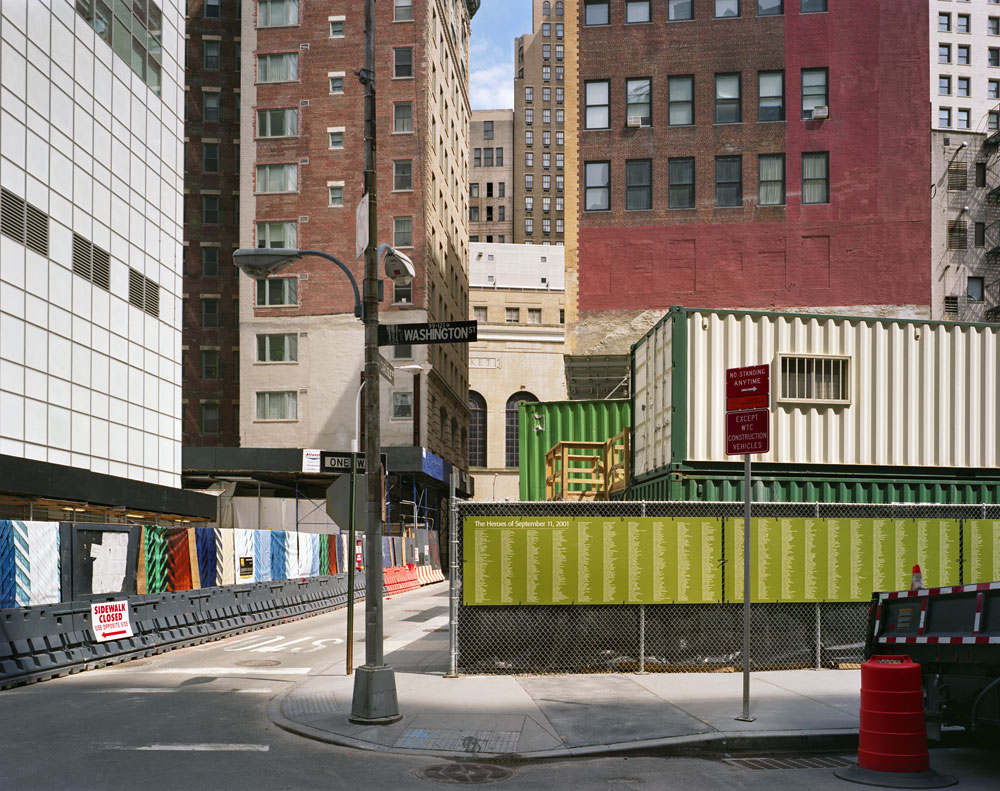
Washington Street (4×5 film) — © Brian Rose
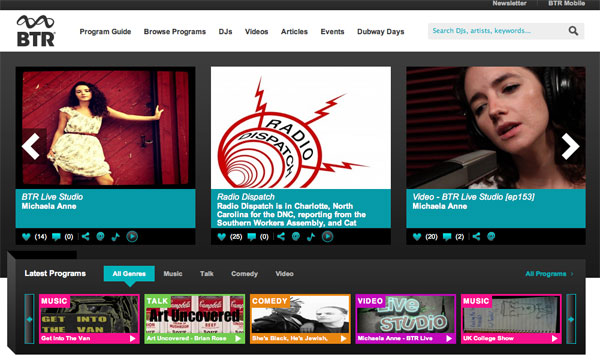
It’s not often that I get to showcase my photography and music together. This is an interview on BreakThru Radio about my book Time and Space on the Lower East Side. Thomas Seely, the DJ, typically mixes indie rock songs with his interviews with visual artists. He does the same in my case, but also plays my song Tenement Stairs, which was written back in 1980 when I first photographed the neighborhood. I originally recorded the song for the Fast Folk Musical Magazine, but this is a newer recording.
I really love how the whole thing turned out. It’s internet radio, so you can listen at your leisure.
BreakThru Radio interview
Brian Rose’s new book of photographs, Time and Space on the Lower East Side, is all about how we experience change, or lack of it, in the urban environment. The book is a collection of large format color photographs taken on the streets of New York City’s Lower East Side in the years 1980 and 2010. Over those 30 years the Lower East Side has gone from being a symbol of urban blight and decay to a poster-child for urban renewal and gentrification. But, Brian’s book is not a collection of side-by-side comparisons contrasting two different eras of the neighborhood, like the books in which a picture from one location is juxtaposed with a picture taken from the same spot many years later. Instead, the photographs in Time and Space on the Lower East Side reveal the year in which they were taken through small details like a pedestrian’s bellbottoms, the design of a parked car, or the typography on a billboard. That is, if the photos reveal their age at all. More often than not you can’t really tell what year any given picture was taken in without a thorough examination.
This is what makes Brian’s book so unique: it looks at what stays the same in a city as much as it does the things that are gentrified, torn down or rebuilt. It forces us to move past simplistic story-lines about a neighborhood’s transformation and look more carefully at the urban landscapes we move through every day. This approach provides a rare opportunity to see one of the world’s most over-photographed cities in a new way.
Recently I visited Brian at his studio on the Lower East Side. We talked about the neighborhood’s apocalyptic feel in the 1980s, why he returned to the Lower East Side in 2010 to photographs, and how for him, sometimes doing nothing is the best way to make a photograph.
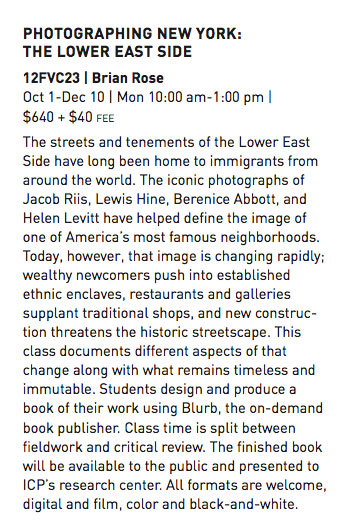
The above paragraph is from the ICP school catalog for this fall. Anyone interested in taking the class, Photographing New York: The Lower East Side, please follow this link. The last time I taught this class, we made a terrific book , which is viewable on the Blurb website here.
We begin the class by walking through the Lower East Side together, talking about its history, geography, and we discuss the changes that have overtaken the neighborhood in recent years. Throughout the semester I show the work of prominent photographers who have made images of the LES. From there, each student picks a theme or subject to photograph, and the next 4 or 5 weeks are spent making pictures. After that, the process of creating a book begins. We arrive at a conceptual framework, develop a layout, and work up the images in Photoshop or Lightroom. The final session is a book presentation and party. The whole class is only ten weeks, so a lot has to get done in a very compressed time period. Last year, it was a nail biting experience for me–would we get it all done in time? But the final product was completed on schedule, and I have to say, it was all quite exhilarating.
If you want to learn a lot about photography, the Lower East Side, bookmaking, and, perhaps, something about yourself, join in the fun and sign up.
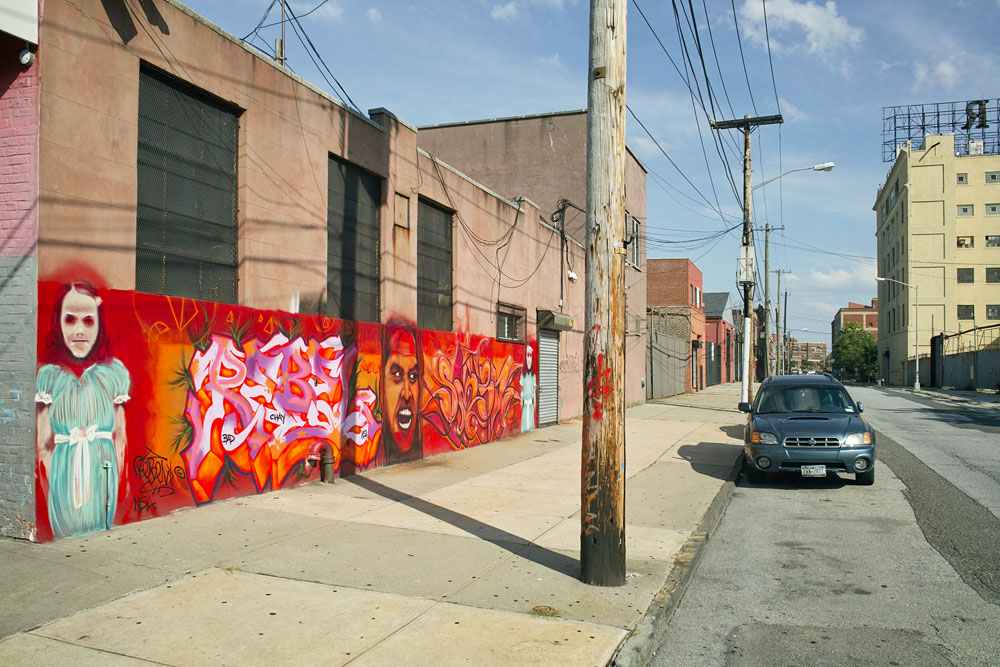
Red Hook, Brooklyn — © Brian Rose
Back in the city. Summer winding down. “Here’s Johnny.”
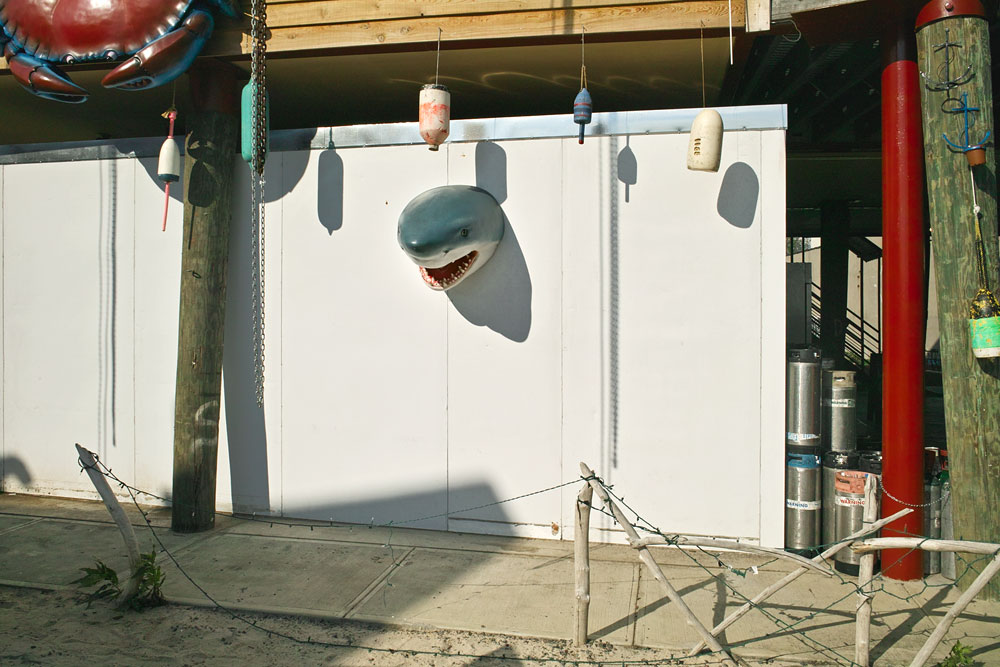
Red Hook, Brooklyn — © Brian Rose
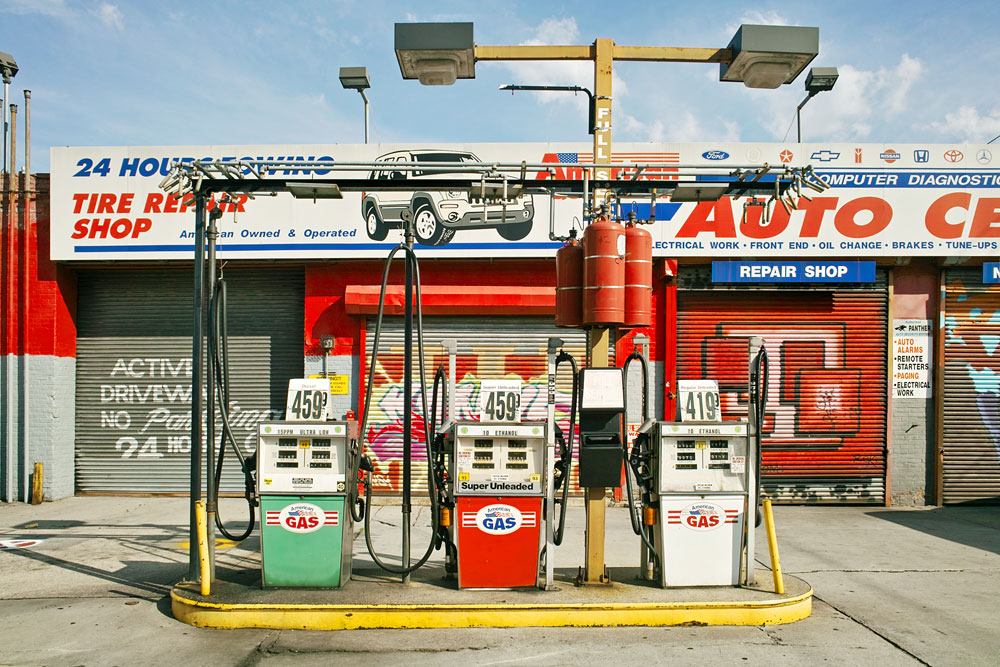
Red Hook, Brooklyn — © Brian Rose
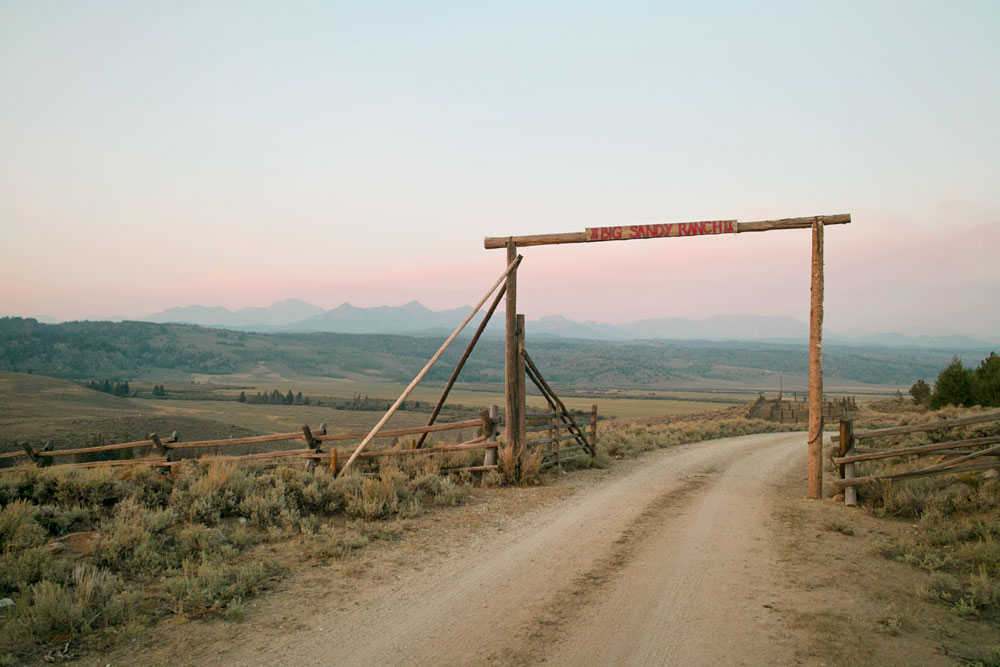
Big Sandy Ranch gate — © Brian Rose
We arrived just before dark to the Big Sandy Ranch in the desolate Mars-like landscape of Wyoming on the western slope of the Wind River Range. Fires burning far to the west produced a haze that reddened as the sun went down. The ranch is located at the confluence of three creeks coming out of the mountains making it a favorable spot for grazing cattle or sheep, although at almost 8,000 feet, snowed-in for much of the year.
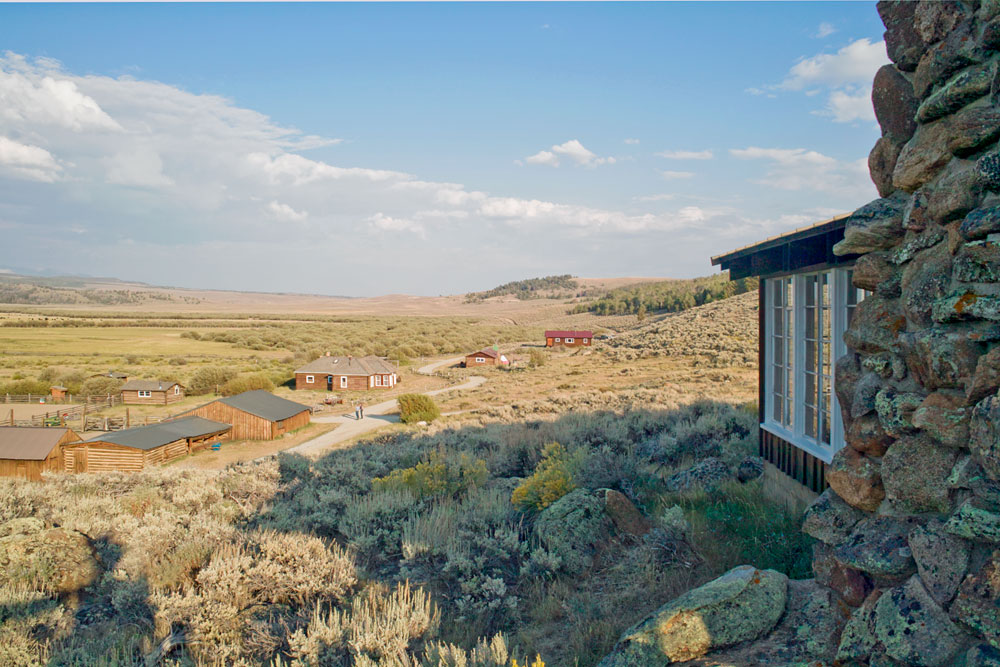
Big Sandy Ranch — © Brian Rose
The history of the ranch is microcosm of American western history. First occupied by the Shoshone Indians, then explored by the mountain men and beaver trappers, then a way station on the Oregon Trail, it saw thousands of wagon trains heading for California and Oregon. The original trail ran a short distance away over the South Pass, a gradual incline over the Continental Divide, and the spur of the trail running through the ranch, called the Lander Cutoff, was created as a more expeditious route to the west.
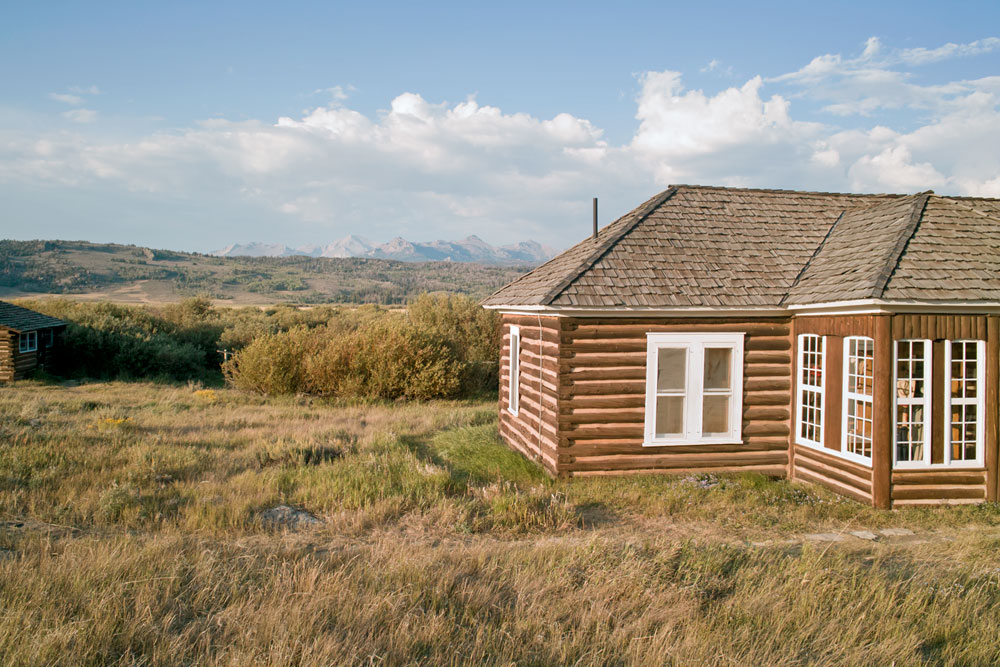
Big Sandy Ranch — © Brian Rose
Very little has changed on the ranch since the days of the Oregon Trail. Some of the structures are original, others have been modified or added to. A Native-American made teepee stands next to the so-called “Lincoln Cabin.” Sam Leckie was the first owner, and operated the Sheepherder’s Delight, a saloon that was the scene of numerous murders, most notoriously his own, leaving the place to his pregnant wife and several children.
Orrin Moore, in the employ of Posten brothers, had trouble with Mr. Leckie in the store and was ordered out and fired at several times. He proceeded to his wagon, secured his Winchester, and returning fired at Leckie who was standing in the door, hitting him between the eyes, and literally tearing off the top of his head.
The motto on a sign at the saloon read:
LIVE WHILE YOU LIVE, FOR YOU’LL BE A LONG TIME DEAD
“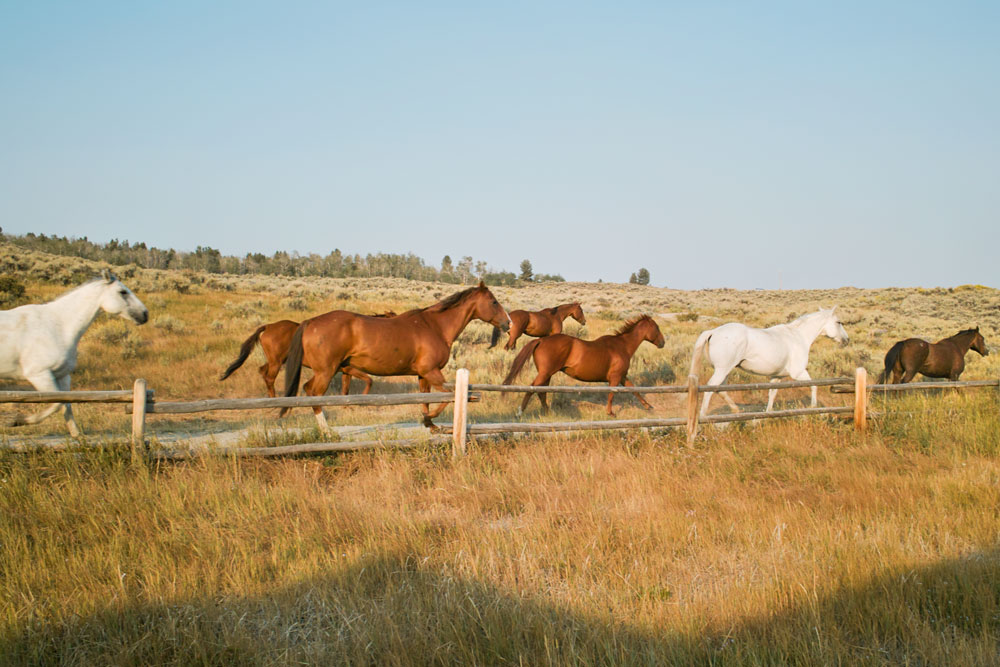
For decades the property was operated as a dude ranch with guests staying in the various cabins. Eventually, the Flanigan family bought the ranch, named it the Big Sandy, for the largest of the nearby creeks, and continue to maintain the historic nature of the structures and landscape. A full accounting of the history of the ranch can be found here
They were in the Rocky Mountains, by God, with no lawmen to tell them what to do, no tax men to charge them for doing it, & no preachers or high-falutin’ women to tell them that a man’s pleasure wasn’t right.
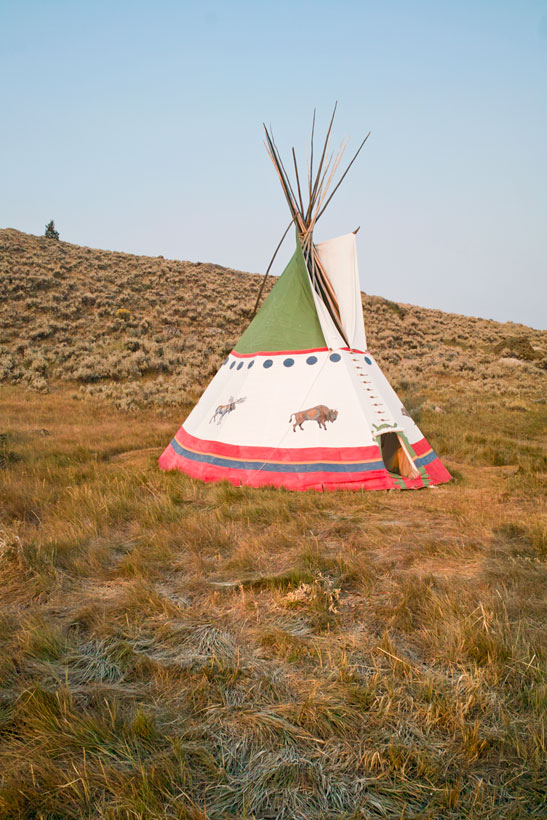
Big Sandy Ranch teepee — © Brian Rose
It was the homeland of the Shoshone Indians and provided summer camps for the Bannock, Crow, Gros Ventre and Blackfoot. Sheepeaters lived high in the mountains. Indians ranged over every part of what is now Sublette County from the edge of the high glaciers to the desert. They hunted to survive. It was then as it is today, one of the greatest wildlife habitats ever known.
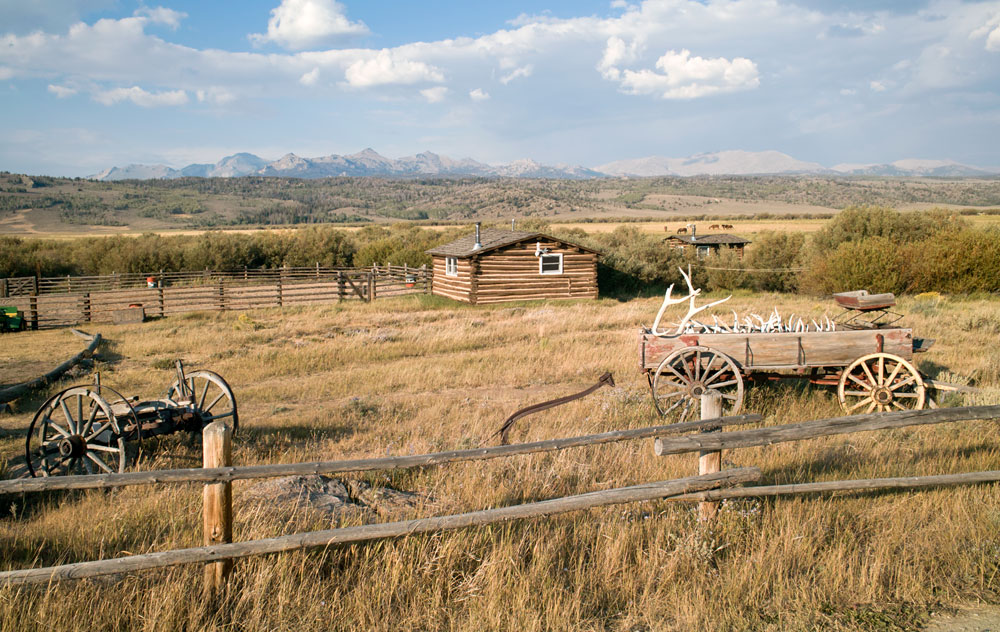
The Big Sandy Ranch — © Brian Rose
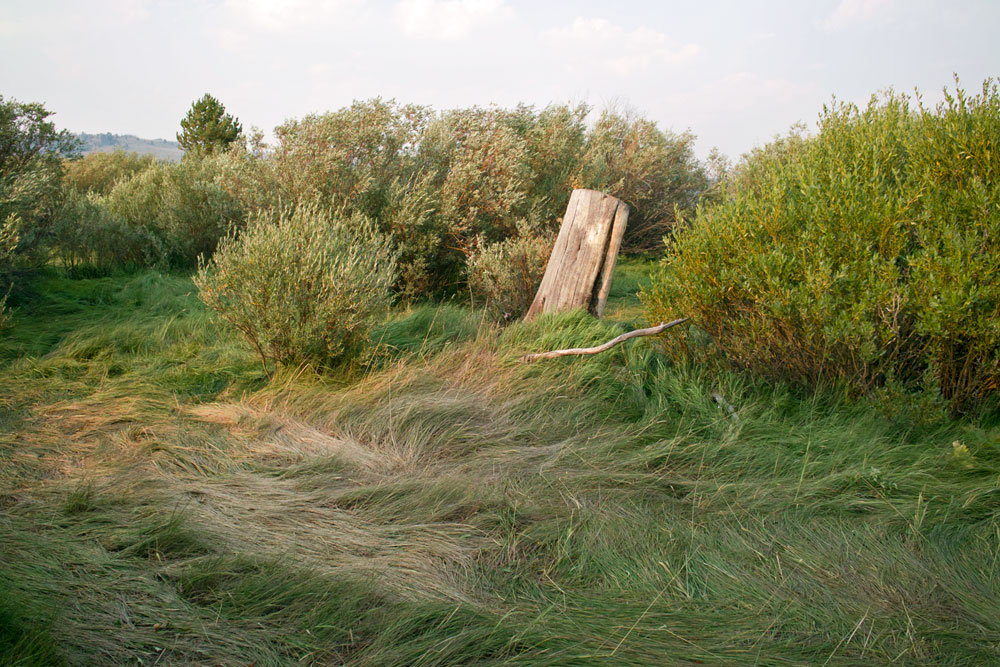
The Big Sandy Ranch — © Brian Rose
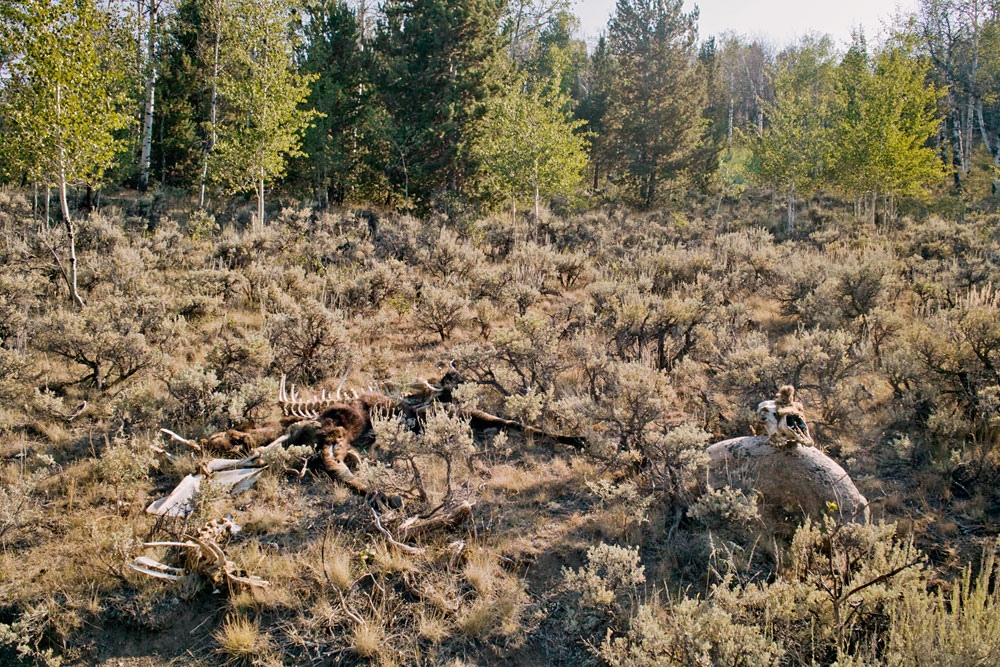
Dead moose cow on the Oregon Trail — © Brian Rose
The pictures above were made with a digital point-and-shoot, but some of them I also did with my 4×5 view camera–to be processed later. I stayed at the ranch and surrounding area for a week. Made a few stops at points along the Oregon Trail, and drove up to the Grand Tetons and Yellowstone National Park. I also visited friends at another ranch only 20 miles from the Big Sandy. I met a number of wonderful people at the ranch, and am grateful to my dear friend Brigid Flanigan for inviting me to enjoy this special place with her family.
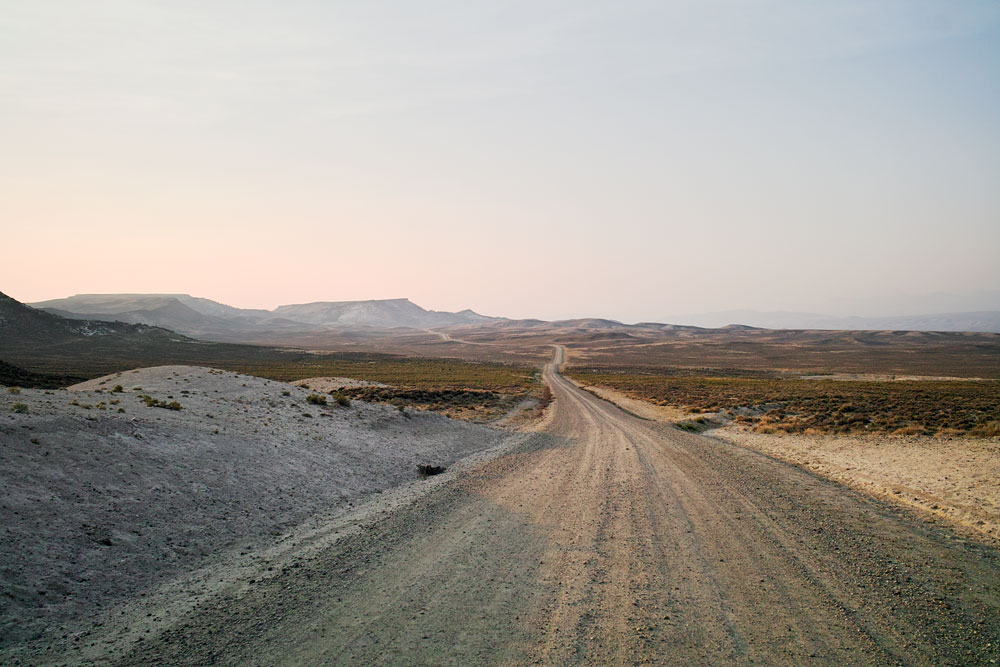
Somewhere in Wyoming — © Brian Rose
I haven’t posted anything for about a week because I’ve been here (see above). No internet, almost no phone, no paved roads, only a couple of hours of electricity a day. Despite that I managed to keep my camera battery charged as well as take a few photographs with my 4×5 camera, which, of course, does not require charging anything.
I’m back in New York, and will post some more photos shortly.
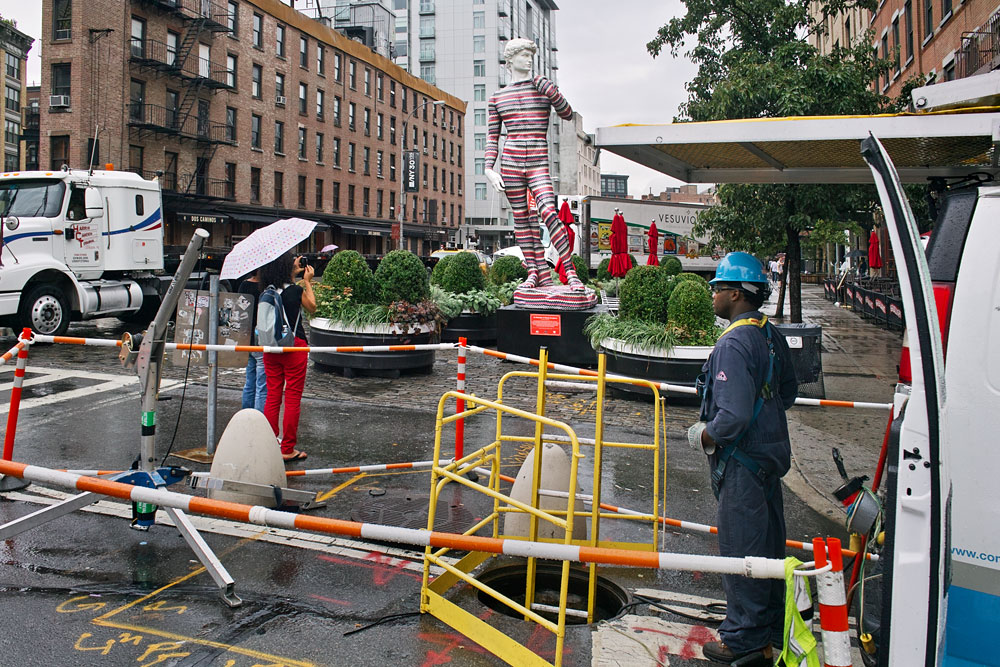
Meatpacking District David (Eladio de Mora (dEmo) and Luca Missoni) — © Brian Rose
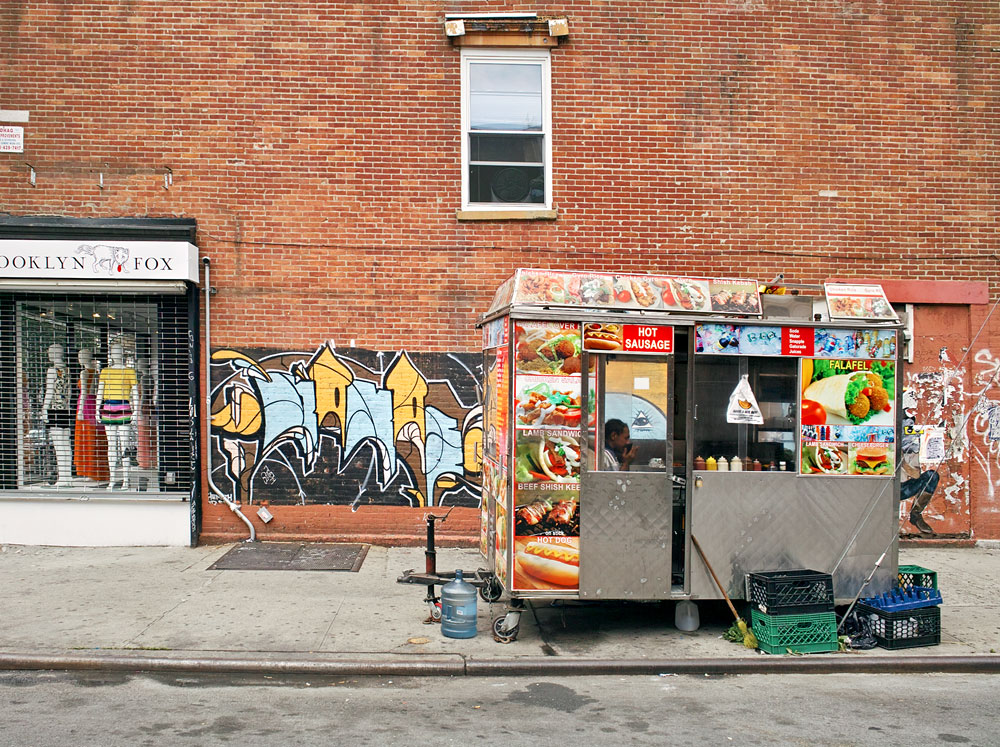
N6th Street, Williamsburg — © Brian Rose
Intersections of art and commerce.