Category: Photographers/Photography

  • New York/True Stories

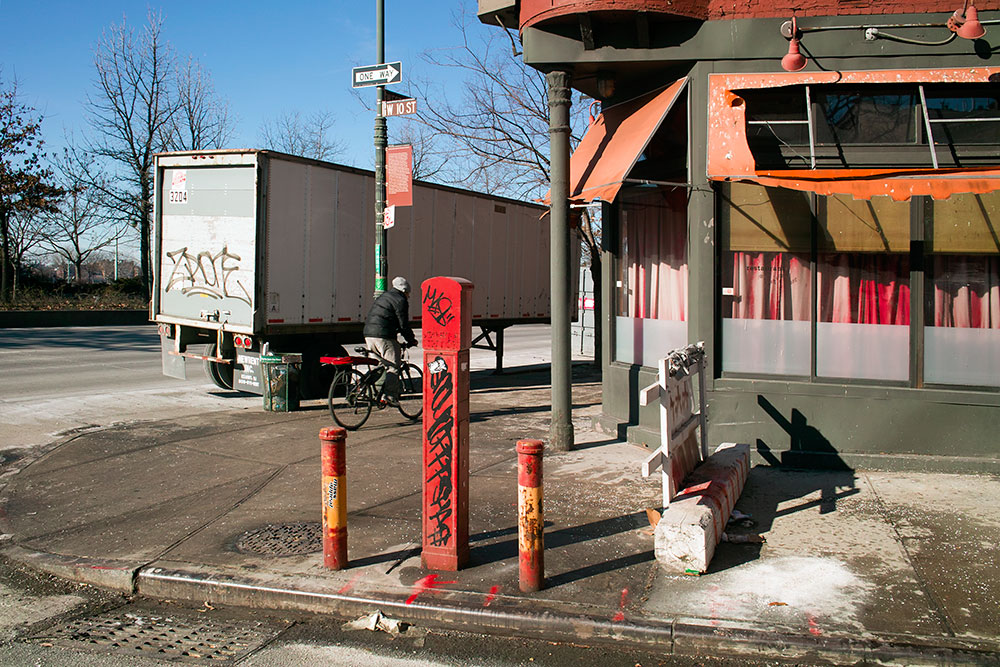
    tatteredawning

    West Street (West Side Highway) and West 10th Street, Greenwich Village — © Brian Rose
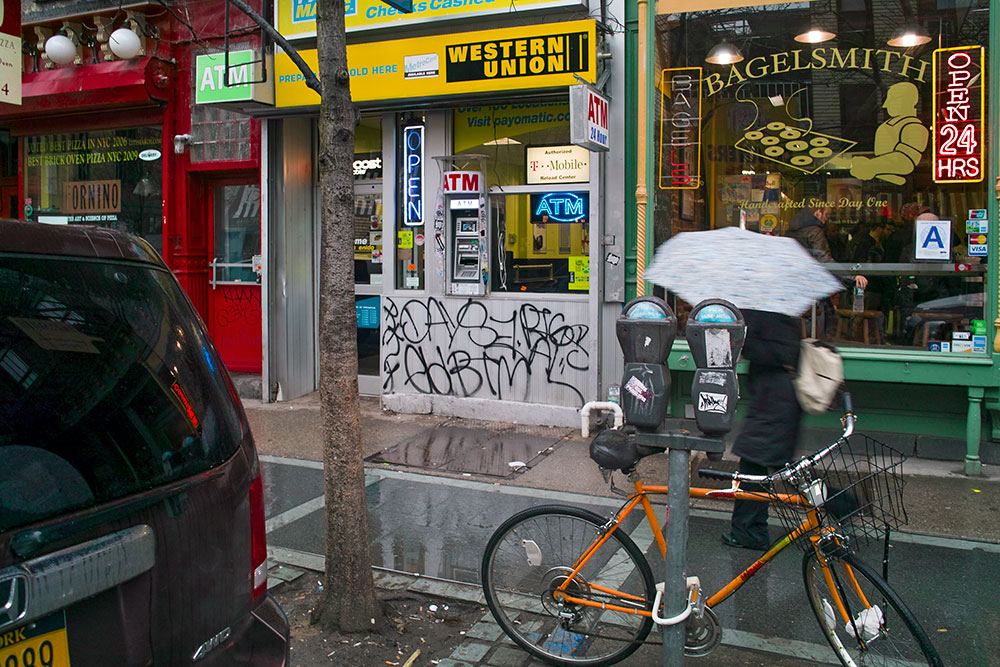
     

    westernunion

    Bedford Avenue, Williamsburg, Brooklyn — © Brian Rose

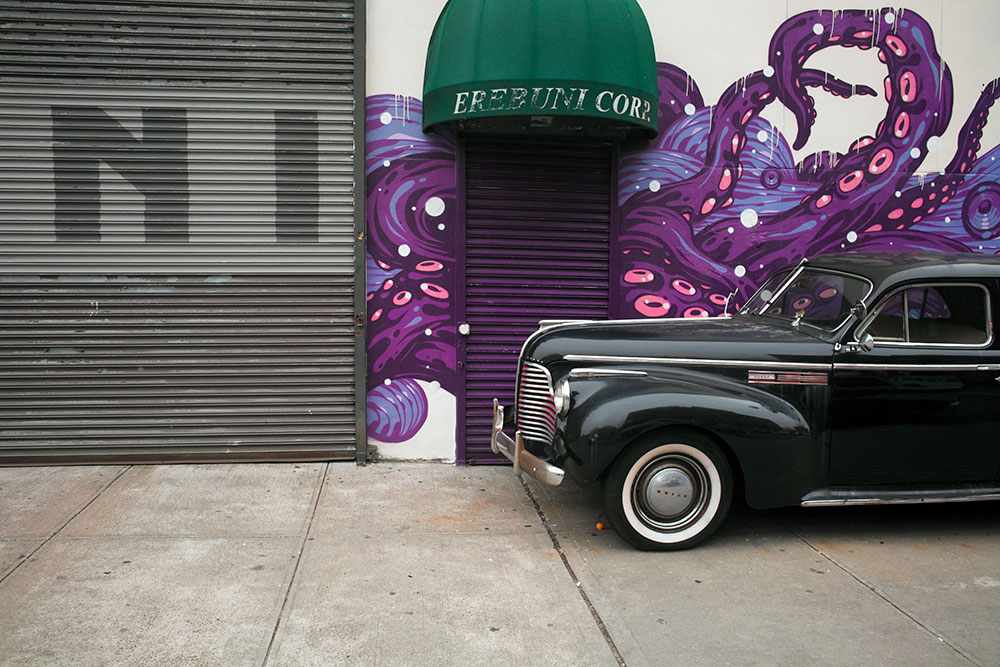
    Two random photographs walking around town. A few thoughts about movies and photographs.

    There are three movies up for Best Picture in the Academy Awards this weekend that have created a swirl of controversy about truth and the telling of stories based on real events. Lincoln by Steven Spielberg will likely walk away with a ton of awards, especially for the masterful performances of Daniel Day Lewis, Sally Field, and Tommy Lee Jones. For me, I was most impressed with the staging,  the pre-electric gloom of the interiors, and the overall fidelity to detail in costuming and decor. The movie felt authentic.

    Throughout the first 2/3 of the movie I was enthralled and believed that Spielberg had finally reined in the populist pandering that infects pretty much everything he touches. But the final scenes leading to the passing of the 13th amendment  featuring buffoonish characters cajoling votes out of fencing sitting congressmen, the comically raucous debate in the House of Representatives, and the overtly telegraphed dramatization of the final vote left me deflated, though I still clung to the earlier positive glow. Since seeing the movie, I found out why these last scenes, the voting segment in particular, rang false. The depiction of this well-documented event was manipulated for dramatic purposes.

    From Maureen Dowd in the Times:

    And then there’s the kerfuffle over “Lincoln,” which had three historical advisers but still managed to make some historical bloopers. Joe Courtney, a Democratic congressman from Connecticut, recently wrote to Steven Spielberg to complain that “Lincoln” falsely showed two of Connecticut’s House members voting “Nay” against the 13th Amendment for the abolition of slavery.

    “They were trying to be meticulously accurate even down to recording the ticking of Abraham Lincoln’s actual pocket watch,” Courtney told me. “So why get a climactic scene so off base?” 

    The screenwriter Tony Kushner defends the changes this way:

    …it is completely acceptable to “manipulate a small detail in the service of a greater historical truth. History doesn’t always organize itself according to the rules of drama. It’s ridiculous. It’s like saying that Lincoln didn’t have green socks, he had blue socks.”

    The problem is, this easy willingness to distort the facts betrays the thinking that went into the whole enterprise. Small details matter. Maybe not the socks, but the actual votes of congressmen, yes. As Mies van der Rohe, the creator of sublime modernist buildings once noted, “The devil is in the details.”

    The other two movies in the discussion are Zero Dark Thirty, which tells the story of the raid on Osama Bin Laden’s compound, and Argo, the story of the escape of six American diplomats from revolutionary Iran in 1980. Both movies make the pretense of  portraying actual events exactly as shown on the screen. In Zero Dark Thirty CIA agents use torture to obtain critical information–it did not happen–and the diplomats in Argo make a wild skin-of-the-teeth getaway in the Tehran airport–it did not happen.

    The argument in all three cases is that artistic license allows for embellishment, dramatic manipulation, and even making things out of whole cloth. As Manholo Dargis and A. O. Scott write at the conclusion of their tortured article in the Times:

    Given some of the stories that politicians themselves have peddled to the public, including the existence of weapons of mass destruction in Iraq, such concern is understandable. It can often seem as if everyone is making stuff up all the time and in such a climate of suspicion and well-earned skepticism — punctuated by “gotcha” moments of scandal and embarrassment — movies are hardly immune.

    But invention remains one of the prerogatives of art and it is, after all, the job of writers, directors and actors to invent counterfeit realities. It is unfair to blame filmmakers if we sometimes confuse the real world with its representations. The truth is that we love movies partly because of their lies, beautiful and not. It’s journalists and politicians who owe us the truth.  

    Sorry guys, but this is not how everyone operates as an artist. What I do as a photographer, for instance, is not a “counterfeit reality.” It may not be reality itself–certainly not–but it is a reflection of reality, one that I take great care in preserving even as I make the critical decisions about where to stand, what to show or not, or how to sequence images. The fact that politicians are routinely lying about things like WMD, that teachers are claiming that creationism shares the same legitimacy as science, that right wingers pretend that President Obama is a Kenyan, that paranoid leftists blame the World Trade Center destruction on a U.S. government conspiracy, is exactly the point. We are a society playing fast and loose with the facts, and artists are as culpable as anyone else.

    There are lines that need to be drawn and redrawn, despite constantly shifting ground. It is one thing to interpret historic events, to fill in the blanks between things that are known, to speculate on what might have happened when the facts are sketchy. It is another to willfully ignore the tangible, the provable, to fail to see the infrastructure of history and respect the body of knowledge that supports society. It was said that the Bush administration “fixed the facts around the policy” with regard to the war in Iraq. Artists do the same all the time without, of course, the life or death ramifications. Spielberg and Kushner had a climactic scene to their movie, the vote on the 13th amendment. They determined what dramatic sequence of events worked best “artistically,” and then fixed the facts around the policy.

    I know it’s just movies, but I take this stuff seriously.


  • New York/Exhibition

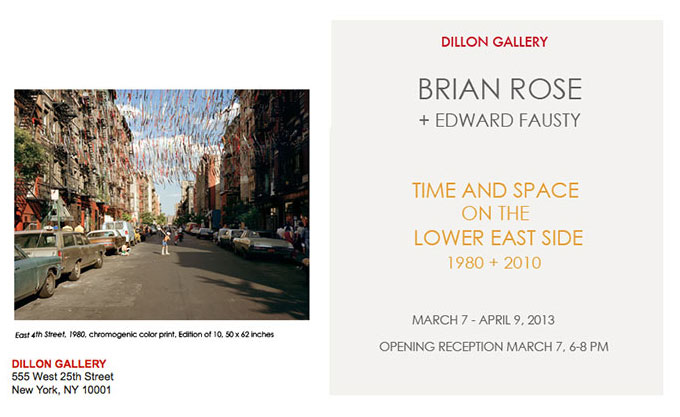
    Time and Space on the Lower East Side will be exhibited at Dillon Gallery from March 7 to April 9. Dillon is on West 25th Street in the gallery district of Chelsea on the same block as Pace Gallery and the Tesla electric car showroom. Like most of the galleries in Chelsea, it was originally in Soho. Although they are known mostly for paintings–and even an artist who works in scents–the owner Valerie Dillon was open to considering photography, and decided a few months ago to take me on as one of her artists.

    The gallery is quite large, easily accessible on the ground floor, and will provide plenty of  wall space to present my Lower East Side pictures at a scale that is impressive, but appropriate for view camera images. There will be 26 images all together, and twelve will be printed 4×5 feet, enough images to present an overview of the whole project with the focus slightly skewed toward the 1980 images made with Edward Fausty, which may have the most sales potential.

    The opening is March 7 from 6 to 8pm, and everyone is invited.

    dillon_graphic


  • New York/East Village/Lower East Side

    churchyardsnow

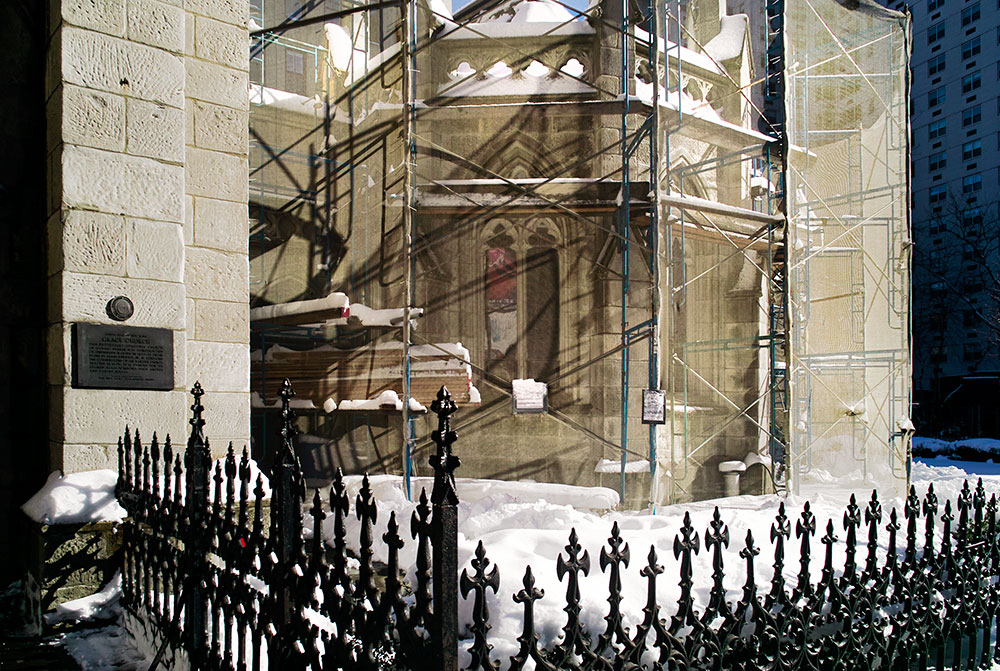
    Broadway and East 9th Street — © Brian Rose


    churchplayground

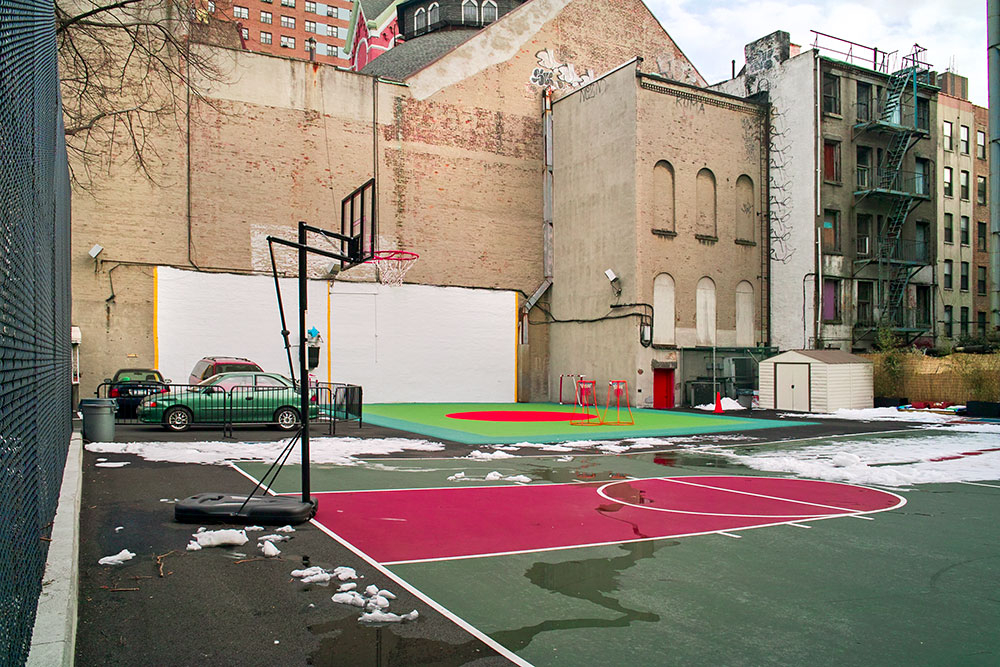
    Ridge Street — © Brian Rose

    A few random pictures and random thoughts. As my Lower East Side show approaches I wonder how (or if) the work will be put in context with the photography being made back in the late 70s, and the way in which I connect the work to the present. One of the important points I have tried to make in the book is that the past and present are intertwined, and not neatly separated into before and after as is the usual practice. That said, the photographs I did with Edward Fausty were made as color photography was just beginning to enter the mainstream of art photography. The way we used color and the view camera to describe the streets and architecture of the LES at a particular moment in history had not been done before–at least to my knowledge–and has only been done rarely since. I think of recent work by Robert Polidori in Havana or Andrew Moore in Detroit as examples of the latter. But in 1979 I was thinking about the steady gaze of Atget and Evans with the view camera, and the kinetic energy of Frank and Friedlander  with the 35mm.

    There’s a book coming out soon called Color Rush by Katherine A. Bussard and Lisa Hostetler that tells the story of color photography from its inception to the early ’80s. The website blurb says: The book begins with the 1907 unveiling of autochrome, the first commercially available color process, and continues up through the 1981 landmark survey show and book The New Color Photography, which hailed the widespread acceptance of color photography in contemporary art.

    Alas, my LES work will not be included. It was shown in 1981 in a large exhibition, reviewed in the Times, but then went underground not to be seen again until now with Time and Space on the Lower East Side. I’m not going to go into the reasons why that happened–for the moment–but what I feel good about is that the re-emergence of this work is not primarily a nostalgia trip back to the ruins of the past. It is presented as a fresh portrayal of a place, one that challenges easy assumptions about how to look at the past and how to look at photographs of different eras juxtaposed as they are in Time and Space.

    Joerg Colberg on his blog Conscientious recently reviewed the reissue of the book American Prospects by Joel Sternfeld. He states: As a photographer, Sternfeld has certainly had enormous influence on a whole generation of American photographers. For example, it is not hard to see Alec Soth’s Sleeping By The Mississippi follow some of the traces laid out in Sternfeld’s travels and book. The American large-format photography craze might be on the way out now, though – just like its German (Düsseldorf) counterpart it simply appears to have run its course. 

    I guess there was a craze at some point, but I hate to see things discussed in this off-hand way, that a certain popular style has just run its course, and we can now move on. I’m picking on Joerg here, a thoughtful writer about photography who was writing a positive review of Sternfeld’s book, but for me, my work has little to do with any kind of craze or particular attachment to the influence of contemporary photographers. It has been a long hard slog stretching over decades.

    Critics, curators, and the art market are, of course, fond of defining movements and putting things into convenient boxes. A photographer does something innovative, which is then shown in the galleries, the critics jump, and then the art students follow en masse. This is an obvious scenario, but it goes on and on. At any rate, I am proud to be one of the early adopters of color photography dedicated to a descriptive exploration of the landscape. And as I continue to extend my long term projects and begin new ones, I will not accept the notion that looking at the visually tangible world with a critical eye has lost its relevance to contemporary art and culture.

    If you stand right fronting and face to face to a fact, you will see the sun glimmer on both its surfaces, as if it were a cimeter, and feel its sweet edge dividing you through the heart and marrow, and so you will happily conclude your mortal career. Be it life or death, we crave only reality. If we are really dying, let us hear the rattle in our throats and feel cold in the extremities; if we are alive, let us go about our business.
    –Henry David Thoreau, Walden


  • New York/Prints

    compareprints

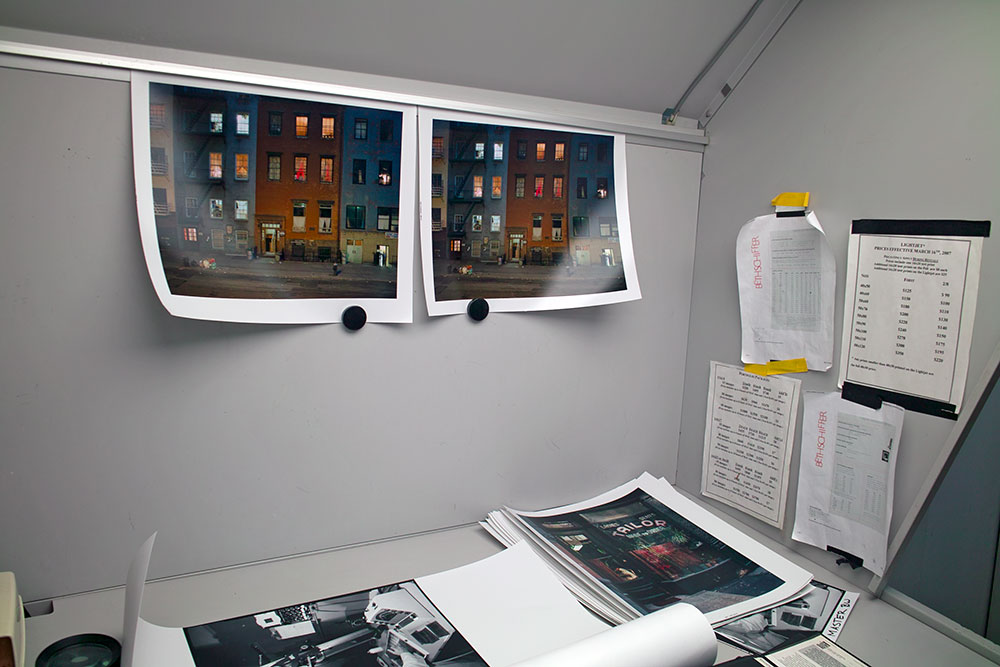
    Comparing two tests before making a 50×62 inch print — © Brian Rose

    I have completed printing for my upcoming show at Dillon Gallery in New York City. The opening is March 7, and I’ll be posting a formal invitation soon. Yesterday I spent about eight hours in the lab shepherding my digital files through the process of printing them on paper. Although many photographers now use inkjet printers, I still find the look and feel of c-prints preferable for my work. The beauty of older analog color prints was the naturalistic color and slight softness in rendering light and detail. So much of what you see these days in galleries and museums is over saturated, over contrasty, and over sharpened–brittle. Photoshop is the most wondrous of programs, but it is also a Pandora’s box, and no matter what kind of print you make, digital c or inkjet, the temptation is always there to do too much.

    Most of my project work–fine art photography–I continue to use 4×5 film. There may come a day when I switch over to digital, but we’re not quite there yet. In this case, with the Lower East Side work, it is especially nice to place images next to each other taken 30 years apart all made on essentially the same material. The big difference now is that I scan everything, both old and new, and do all the color correcting in Photoshop. Analog projection printing was generally limited to making global corrections, like adding or subtracting yellow from the mix. One worked step by step gradually finding a color balance that felt natural, had a sense of depth, that felt clean, unmasked. Many negatives, however, presented challenges and I was never wholly satisfied with the results. Photoshop provides tremendous control of every aspect of the image, and I’m not talking about the kind of manipulation that everyone is familiar with. I’m talking about the ability to make subtle, carefully modulated changes that enhance the overall quality of the image. Once you’ve become proficient in Photoshop, there’s little nostalgia for the old analog method.


    houstonprint

    One of the recent images from Times and Space on the Lower East Side coming off the machine — © Brian Rose

    In the case of the images I did with Ed Fausty in 1980, it isn’t possible to make decent analog prints, even if I wanted to. The different layers in the film emulsion have faded or shifted, and the color balance has been has been permanently thrown off. I tried making analog prints from the old negatives some years ago, but gave up after a few hours of futility. Digital has essentially saved these images. It can be a lot of work–hours, even days–coaxing the color out of the old negatives. The results, however, are often amazing–prints that are far better than the original prints.

    Nowadays you are not really making the image in the darkroom as before. Most of the work is done in Photoshop, and lab is the final step. Typically, I bring my digital files on a flash drive, copy them onto the server at the lab, look at the images on their setup to see if looks much different than my studio computer. Usually, the difference is minimal, and one or two sets of small test prints are all that is needed before going to the full size prints. In this case, I am making 50×62 and 20×25 inch prints.


    orchardprint

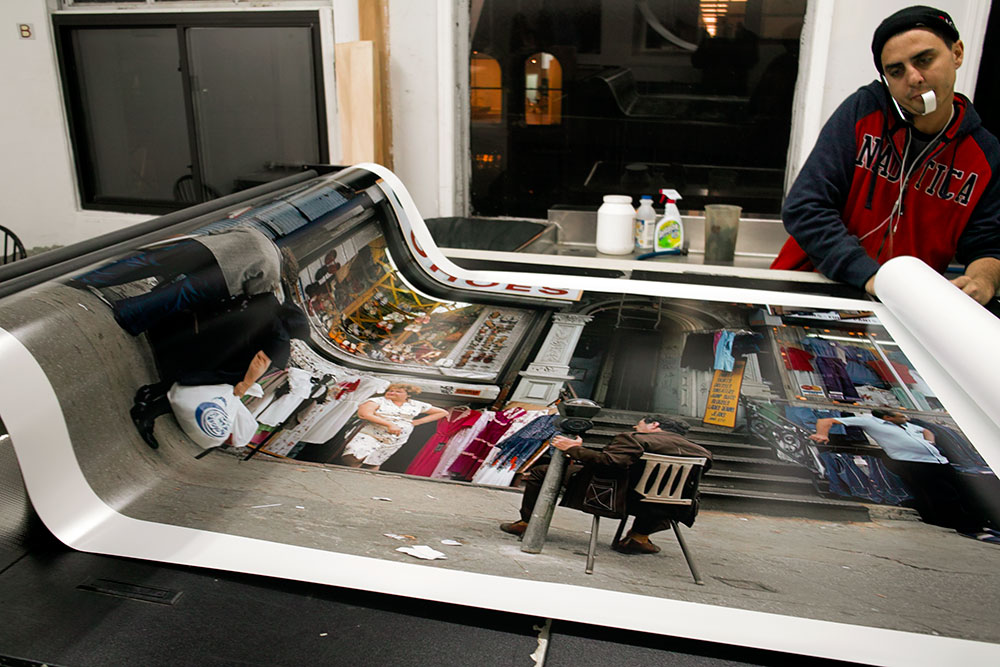
    Orchard Street in 1980 coming off the machine at Beth Schiffer Labs in lower Manhattan — © Brian Rose

    There will be 25 prints in the show at Dillon, about half of them in the size seen above. Not having printed this large before, it was pretty awesome seeing the images roll off of machine. There is a tendency these days to print too large–mostly for market reasons rather than aesthetic–but these images were made in 4×5 for the monumentality that the format brought to the subject. It was one of my goals when undertaking the Lower East Side Project, to describe, amplify, and preserve for all time the streets and architecture of the place. Printing this size achieves that original goal. Ed and I made several large prints–30×40 inches–in 1981 when we exhibited the work at the Henry Street Settlement. It was incredibly impressive then to see color prints of that size. It’s more routine now. But I think these images will impress nevertheless.


  • New York/West Village

    goingonhere

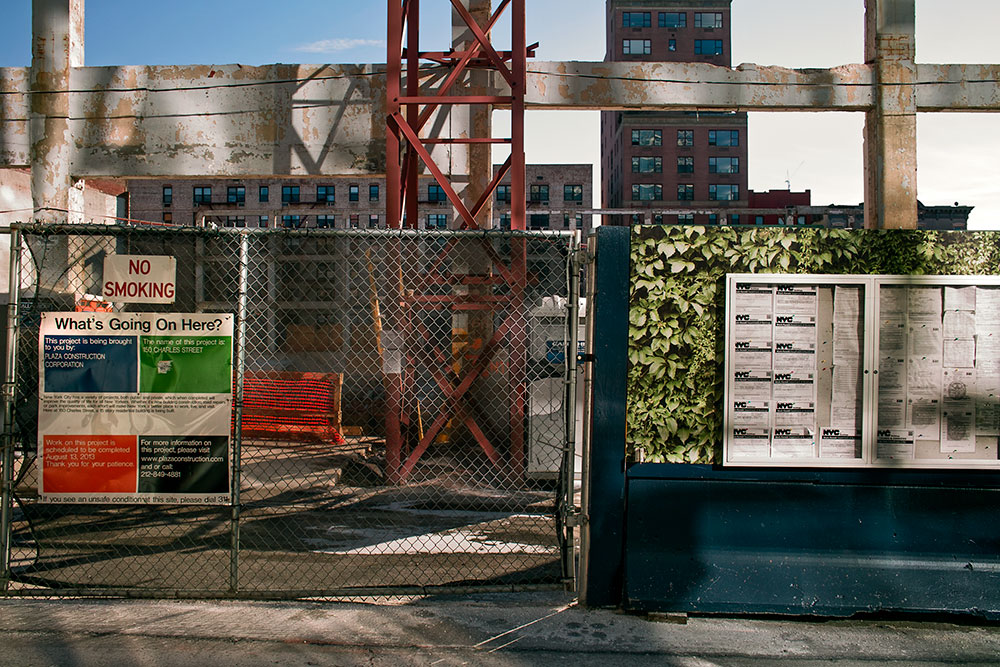
    Charles Street — © Brian Rose

    Without comment.


  • New York/Jack Hardy

    kennys

    Joe Henderson, Jeff Hardy, Jack Hardy, and Howie Wyeth, late ’70s — © Brian Rose

    I’ve written before about Jack Hardy, my songwriter friend, who died almost two years ago. I recently attended a memorial service for his father, Gordon Hardy.

    An earlier post here. And jackhardy.com here.

    Jack cultivated the role of the self-taught itinerant folk singer living hand-to-mouth even as he proudly told the story of the Studebaker family—his mother’s side–in the song Wheelbarrow Johnny. What is less known is the importance of his father, former dean of students at Juilliard, and president of the Aspen Music Festival. Jack grew up in a household steeped in classical music. One photograph displayed at the reception showed Gordon Hardy and the composer Aaron Copland. That’s the world Jack came from.

    Shortly after Jack passed away I wrote a fairly long chronicle of the early days of the songwriters exchange, the arrival of Suzanne Vega on the scene, and the creation of the Fast Folk magazine. It was intended for the Jack Hardy tribute album organized by Mark Dann, which is still not widely available, and I doubt that many have read it. The death of Jack’s father spurred me to reread the piece, and I’ve decided to post it here on my blog. Some of the story may be familiar to those who knew Jack well, other parts new, even surprising.

    Please forgive the many names left out, and other oversights. It’s a personal recounting, not a comprehensive history.

    Travelers Passing Through: Boulevardiers and Fast Folk


  • New York/West Village

    smells

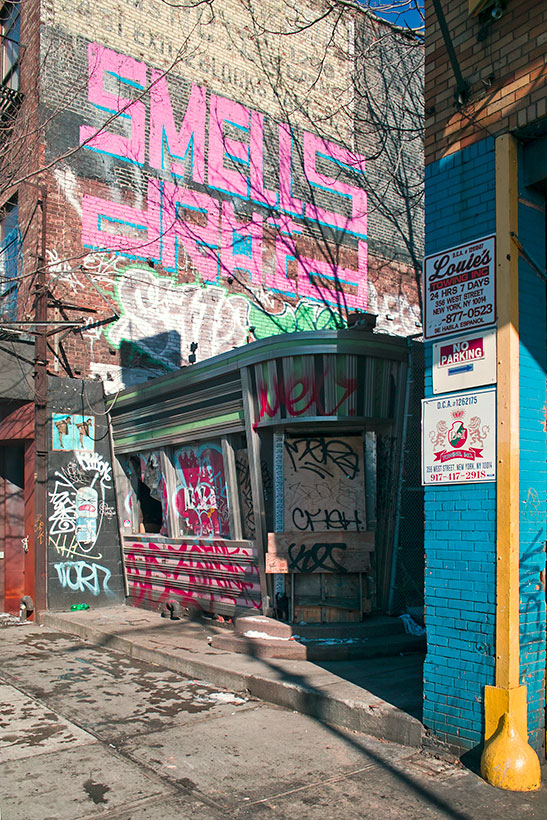
    West Street – © Brian Rose

    Even on the gold coast of the West Village with some of the most expensive real estate in the world, there are, amazingly, still scenes like this one.


  • New York/West Village

    noatm

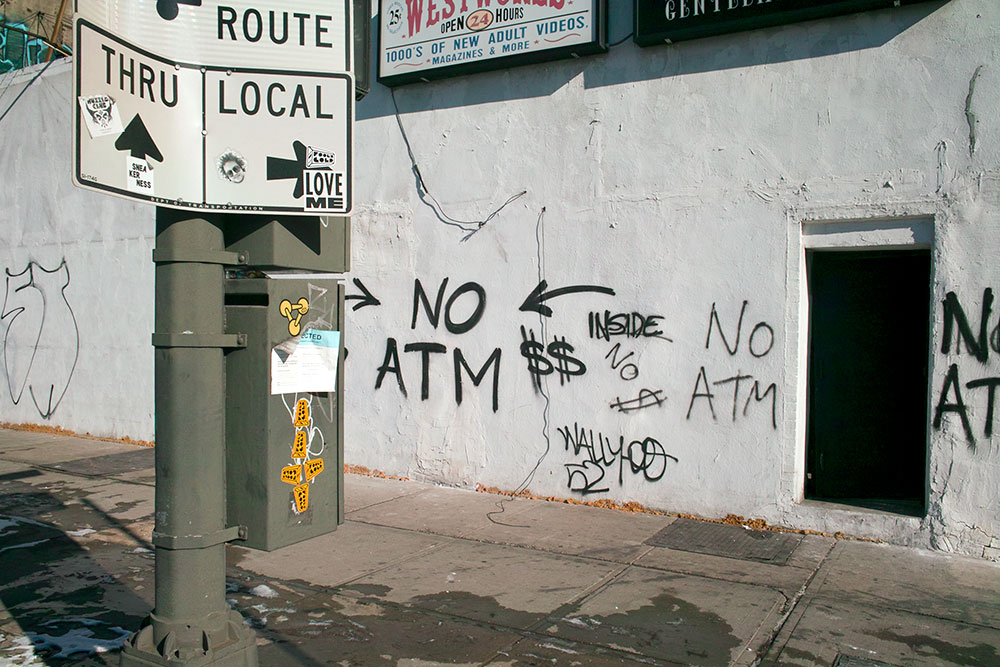
    West Street — © Brian Rose

    Without comment.


  • New York/Noho

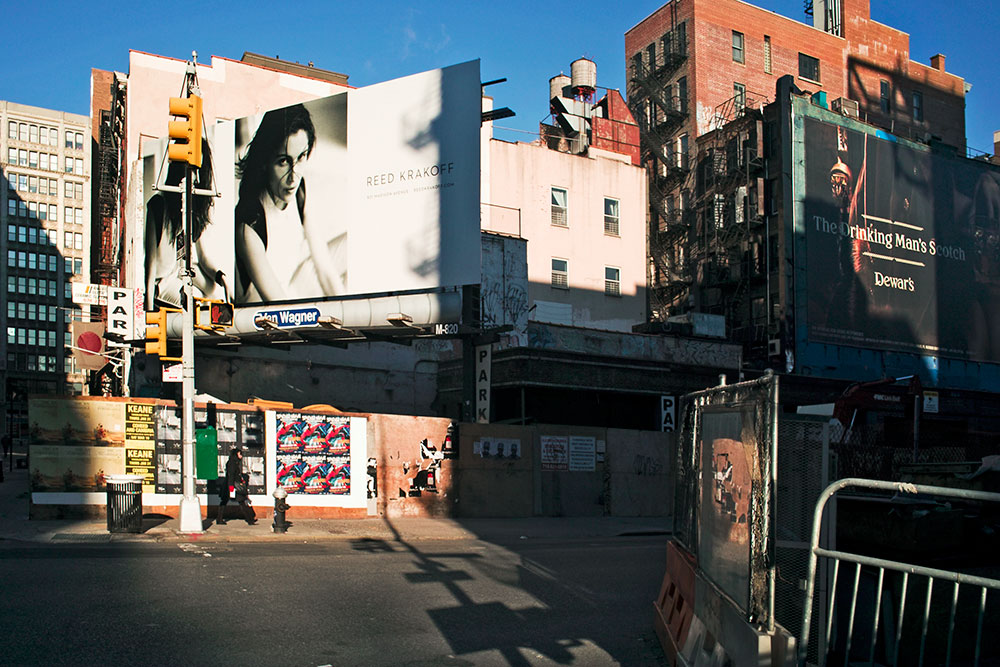
    reedkrakoff


    Very cold in New York City.


  • New York/Lower East Side

    gamechange01


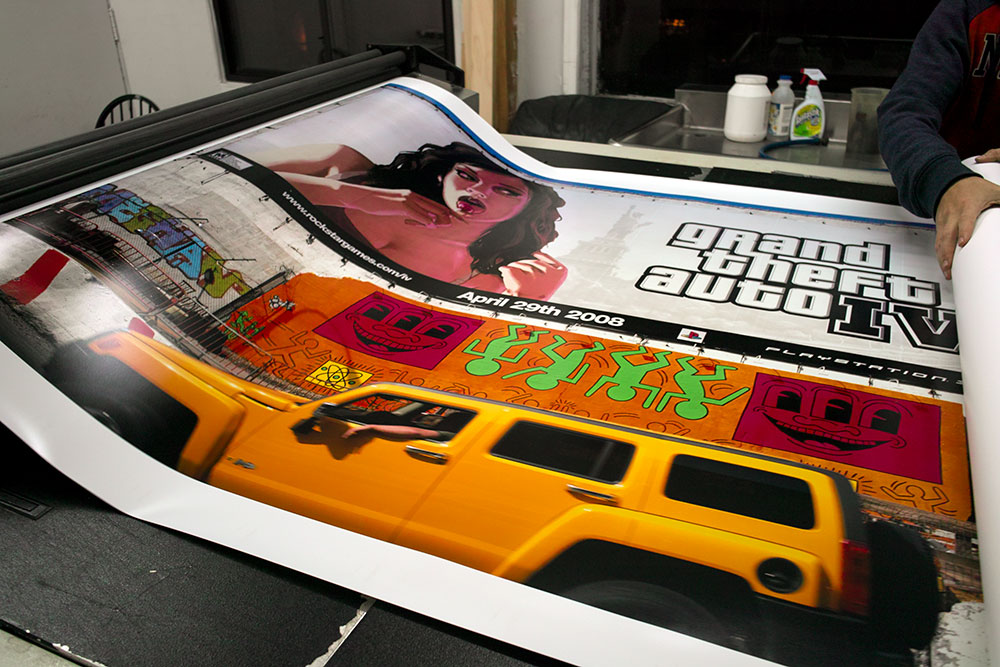
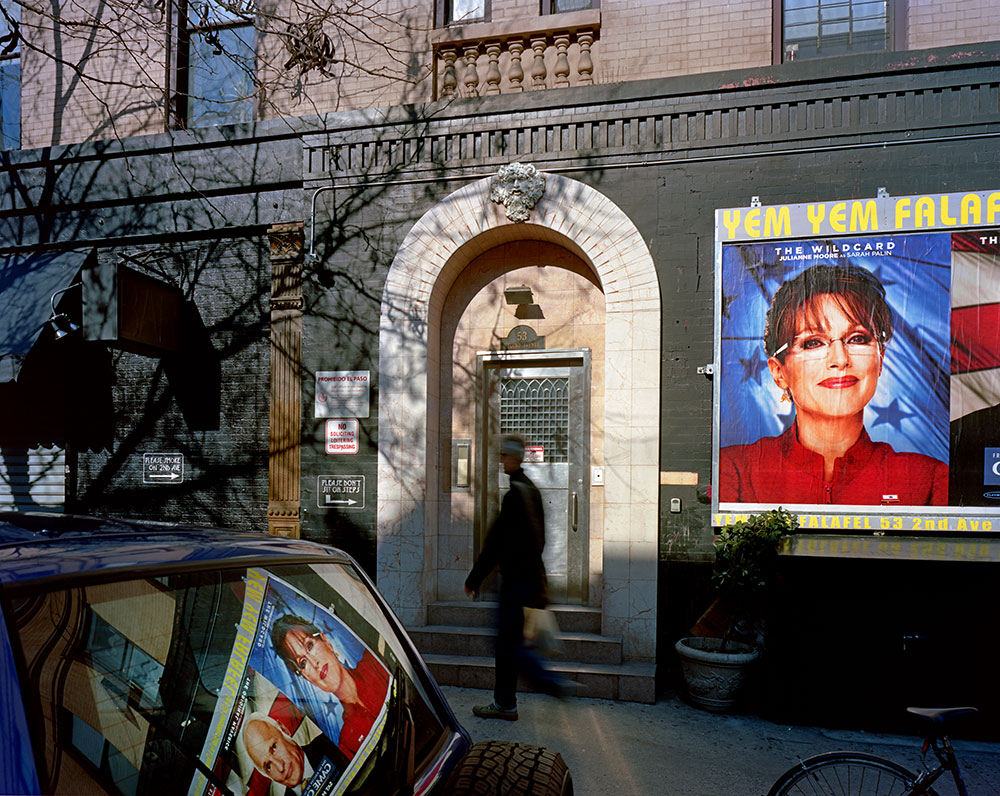
    East 3rd Street — © Brian Rose

    Inauguration day (and Martin Luther King day) 2013. Just a scary reminder of what could have been had things turned out differently four years ago. The poster above, of course, is Julianne Moore as Sarah Palin, the former vice presidential candidate, now sliding, it would seem, into general dissipation in the mid-winter gloom of Alaska.

    I posted a similar picture last year taken with my digital camera. This is a scan of a 4×5 negative.


  • New York/WTC

    skate

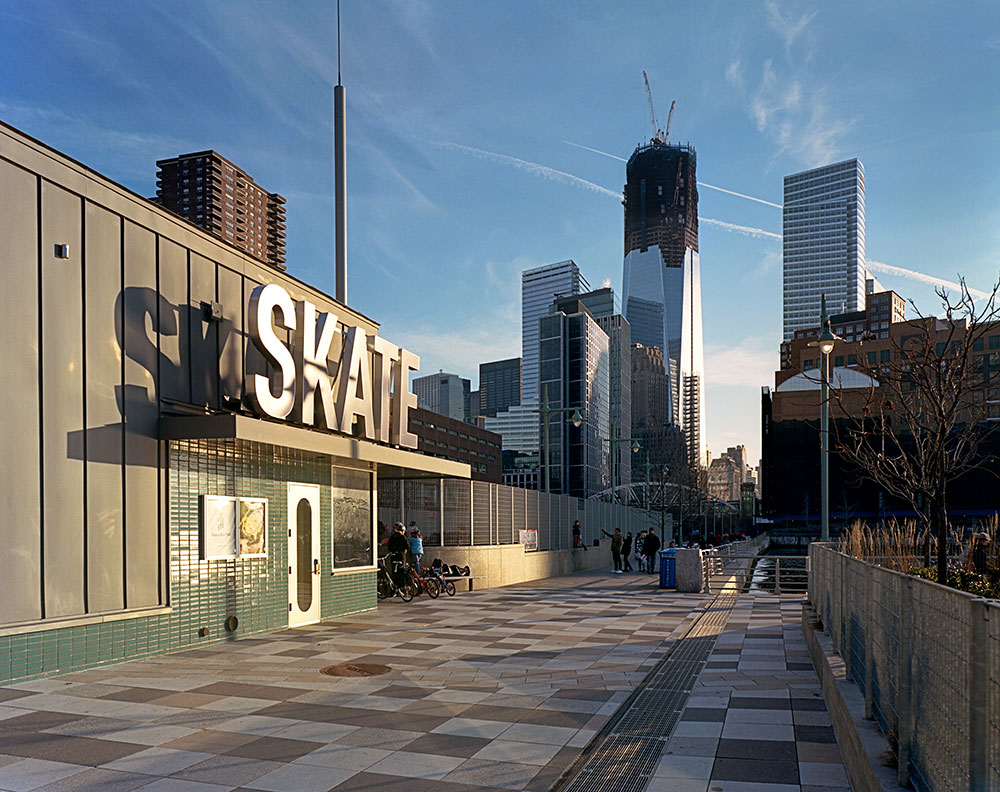
    Hudson River Greenway — © Brian Rose

    This is an image made a number of months ago with the 4×5 camera that I’ve just gotten around to scanning. WTC 1 had reached it’s full height–even now the glass is not all the way to the top.


  • New York/Frank Christian

    frank_christian_album

    Adding to a post from a few days ago:

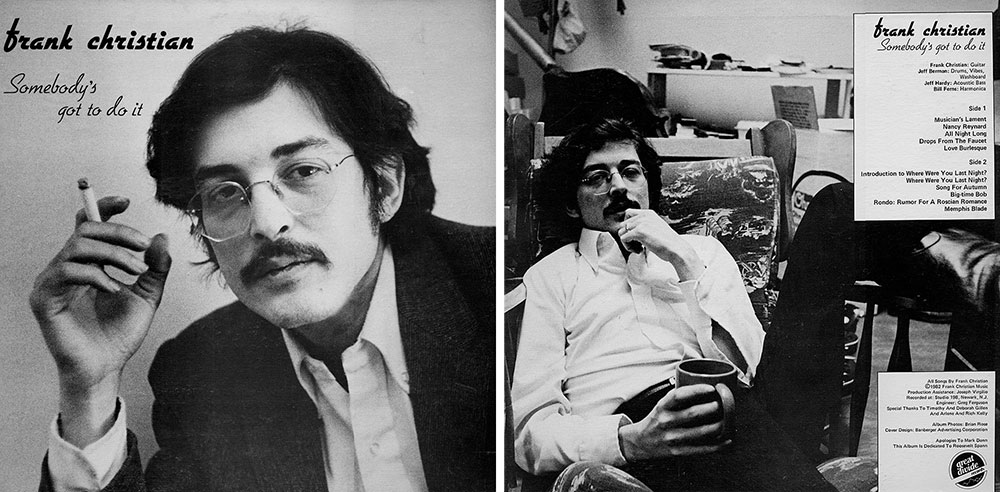
    In 1982 I was asked by Frank Christian to take photographs for his forthcoming album “Somebody’s got to do it.” I went to Frank’s skylighted studio apartment on the top floor of a Greenwich Village townhouse, and we sat around chatting, drinking coffee, snapping pictures. The two images used for the cover were from that session–back when albums were 12×12 inch LPs.

    I didn’t do a lot of photos of musicians in those days–largely because I wanted to be one of the songwriters, not just a witness to the scene. In retrospect I wish I had taken more pictures. I did, however, do a number of album covers for songwriter friends, and sadly, most of them–Frank, Richard Meyer, Tom Intondi, and Jack Hardy have died, way too soon.

    Not many people made their own albums in those days, and Frank took his cue from Jack Hardy who was recording and releasing his own. That’s Jack’s Great Divide label on the lower right. Not a real company, but a certain imprimatur, nevertheless. I think that’s where the title comes from, somebody’s got to do it, and Frank would say it ironically with a sly grin.


  • New York/Upcoming Show

    blouin


    A very nice piece written by Eric Walstedt about my upcoming show at the Dillon Gallery. Eric, the director of the gallery, lived on the Lower East Side in 1980 when I began photographing the neighborhood with Ed Fausty.

    The exhibition will feature about 25 images from Time and Space on the Lower East Side with half of them printed five feet across. The images, which were made with a 4×5 view camera, are stunning at that size. The show will open on March 7, so save the date. More details soon.


  • New York/Williamsburg

    octocar

    Williamsburg, Brooklyn — © Brian Rose

    Without comment.


  • New York/2013!

    brooklynbridge1980

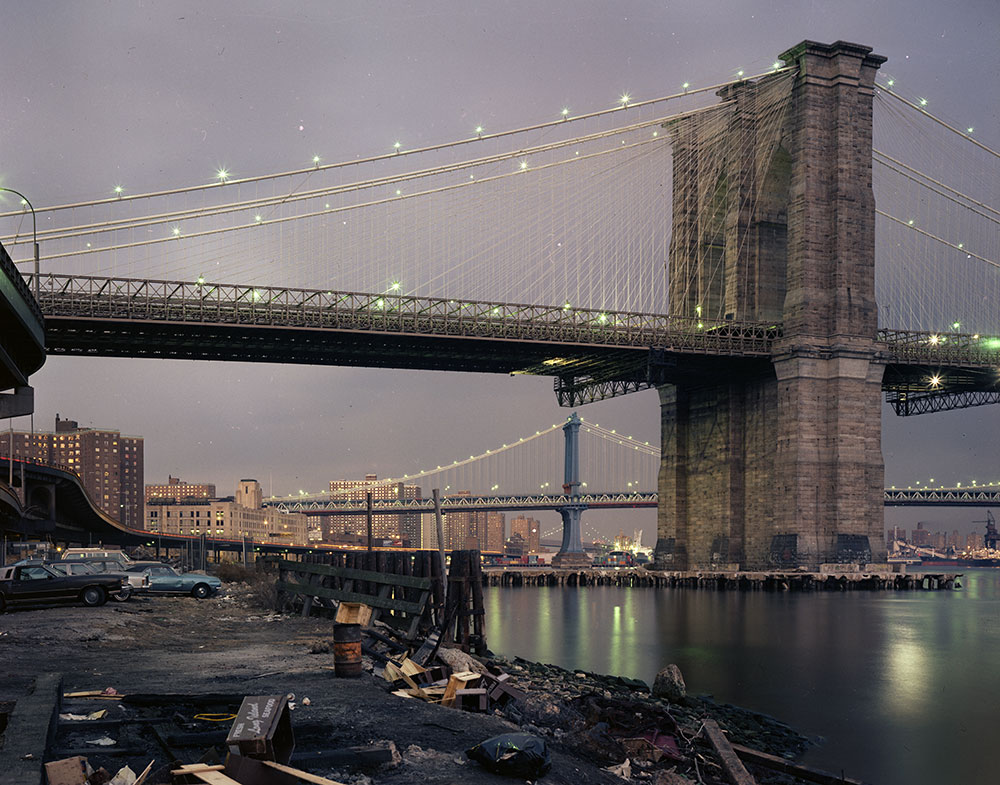
    Brooklyn Bridge 1980 — © Brian Rose/Edward Fausty

    Time and Space on the Lower East Side came out near the end of May 2012. Deciding to do the book with a small independent publisher–after several rejections by established companies–was a big step. Raising money via Kickstarter was also a major undertaking, but in the end it not only helped financially, but created a core constituency for the book. Above all, I am thankful to Bill Diodato, who created Golden Section Publishers to do books like mine that, otherwise, might not find a way out into the world. Let’s face it, getting one’s work before the public is an essential part of being an artist. And in that regard I have not always been successful.

    My songwriter friend Jack Hardy, used to criticize, if not belittle, those who strove for a larger audience or worked to build commercial standing–he would say that the work was all that mattered, and everything else would take care of itself. Or not, as I have discovered after years of doing what amounts to a lot of work. Part of the problem was that I never had enough money to shift the starting line forward, which is how many people seemingly got off the blocks early.  I’ve had to work slowly, deliberately, sometimes in smaller bites, building projects that by accretion became almost epic in scale like the Lower East Side project or my photographs of the Berlin Wall and the Iron Curtain. Ultimately, maybe Jack was right. The work is the thing. I just had to get out and get the ball rolling.

    So, I’m not here to complain as we enter 2013. Time and Space has been a success. There are now fewer than 500 books left of the 1,100 printed. I’m already beginning to plan a follow-up, a book about the World Trade Center with pictures from 1978 to the present. And I’m pleased to announce that Time and Space on the Lower East Side will be given a major exhibition at the Dillon Gallery located in the Chelsea art district of New York.  The opening is set for March 7, more details to follow soon.

    Happy New Year!


  • New York/Frank Christian

    frankchristiancover

    Frank Christian, Somebody’s got to do it — cover photo © Brian Rose

    Frank Christian, songwriter and guitarist died on December 24, 2012. One of the mainstays of the Greenwich Village folk scene, Frank was the epitome of  cool sophistication and wit. I made this photograph for his first album back in the 1980s. The back cover shows him in his apartment in the Village, and I’ll get that up once I have a chance to scan it.

    With Jack Hardy and Frank gone, two of the leading figures of the music scene I was immersed in have left us much too young. Frank was 60. He will be sorely missed by all of us.


  • New York/Long Island City

    ion

    Long Island City — © Brian Rose


    citiwide

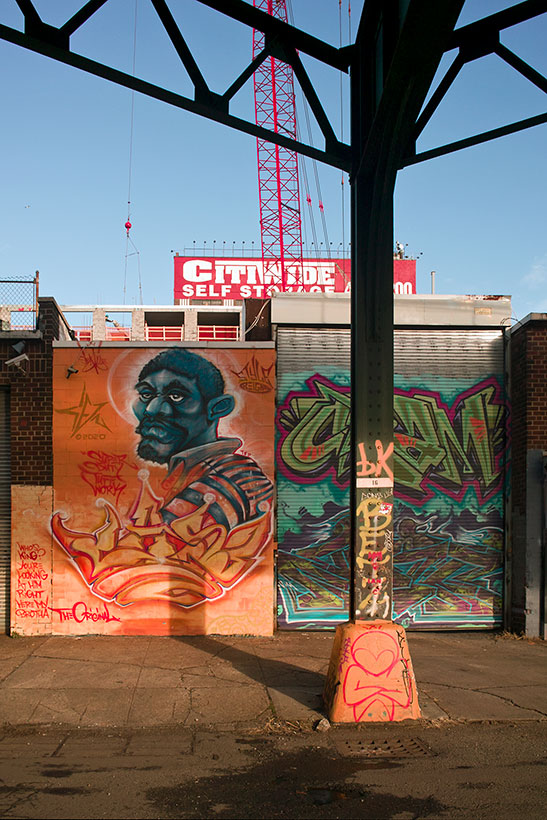
    Long Island City — © Brian Rose

    Without comment.

  • New York/Around Town

    seeyas

    Union Square subway platform — © Brian Rose

    My cat’s paws, or rather foot gloves, on the move around town during the holidays.