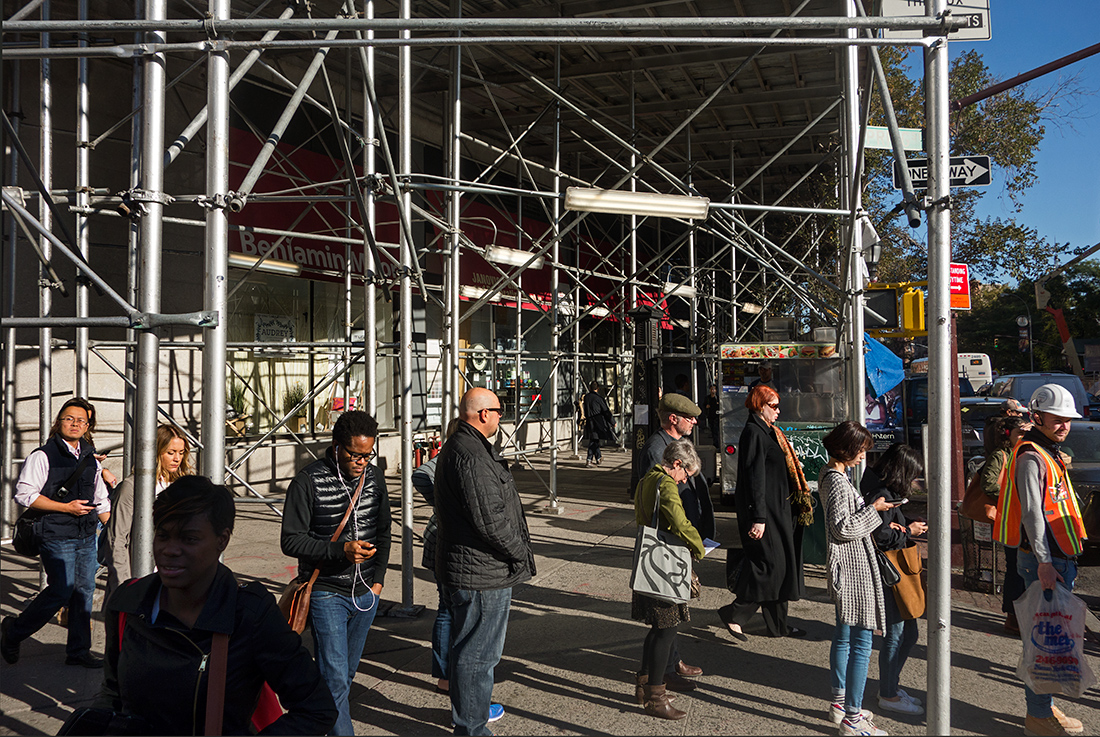
Sixth Avenue (Avenue of the Americas) and Spring Street — © Brian Rose
Early morning, autumn sun — moving through a lattice of light and steel.
Sixth Avenue (Avenue of the Americas) and Spring Street — © Brian Rose
Early morning, autumn sun — moving through a lattice of light and steel.

Suzanne Vega, 1980 — © Brian Rose
Tom’s Diner again…and again…and again. Suzanne Vega’s a capella song poem set in an Upper West Side diner is back on the charts. Brittany Spears, if you can believe it, is the latest pop star to cover it — or smother it — whatever.
Here’s the song (you’ve been warned):
And believe it or not — yours truly — is forever connected to this song.
Suzanne: I have a photographer friend, Brian Rose, who has taken pictures of the Lower East Side of Manhattan and the Berlin Wall. He told me once long ago that he felt as though he saw the world through a pane of glass. This struck me as romantic and alienated, and I wanted to write a song from this viewpoint.
I still see the world through a pane of glass, though I’m not sure how alienated I feel these days. But I remain committed to observation, the fleeting moment, reflections, glances exchanged, the meaning derived from things, places, people passing by, the “art of facts,” if you will. Just like Suzanne’s wonderful little song.
Here’s the way is was done originally:
Here’s some recent media about the history of Tom’s Diner:
Bustle
Mental Floss
Stereo Gum
Hilla Becher died on Saturday at the age of 81. Her husband and partner Bernd died some years ago at age 75. A few years ago I posted the image below and the following short comment. There’s a lot you can say about the Bechers, but fewer words probably better suit their methodology.
September 9, 2011
The Museum of Modern Art
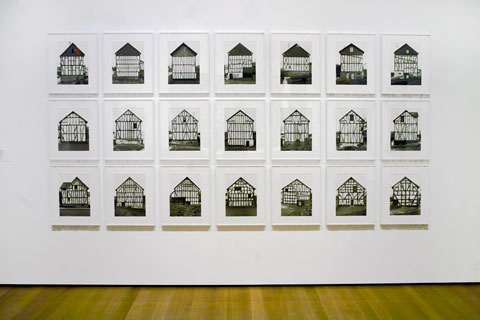
Framework Houses by Bernd and Hilla Becher — © Brian Rose
I’ve written in the past that it sometimes seems that the Bechers are overexposed. You can’t go anywhere without seeing their images, often in large grids, like the Fachwerk facades above. But let’s face it, this is brilliant work, especially this grouping. Their approach transcends genres. It is rigorous and seemingly impersonal, but in the end, suffused with pathos for human endeavor.
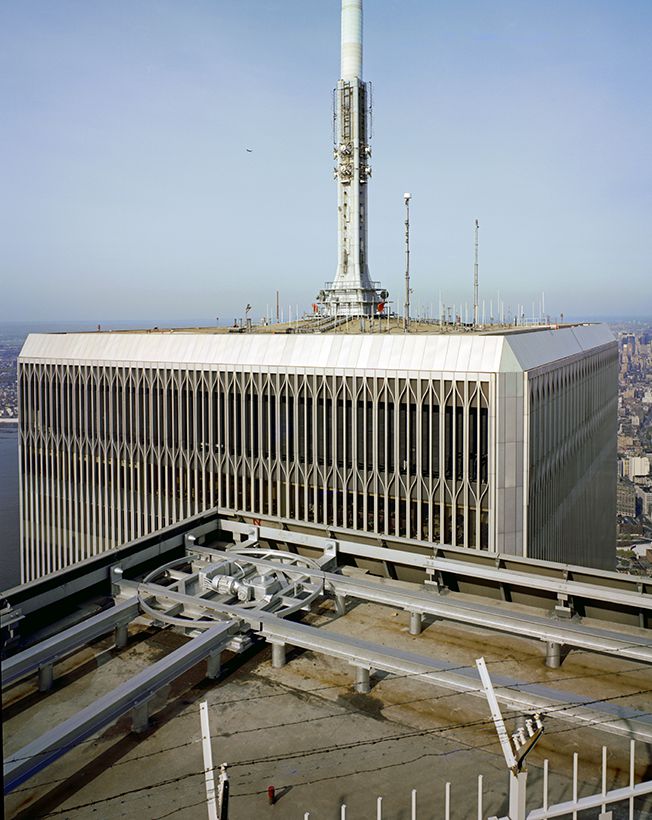
WTC 2 Observation Deck, 1981 — © Brian Rose/Edward Fausty
The Walk, a new movie by filmmaker Robert Zemeckis tells the story of Philippe Petit, the French street performer, who clandestinely strung a cable between the Twin Towers – still under construction in 1974 — and proceeded to tightrope back and forth 110 stories above lower Manhattan. Thousands craned their necks upward in amazement as Petit walked the wire for 45 minutes. I haven’t yet seen the movie, a 3D extravaganza, but it is getting good reviews for its vertigo-inducing special effects. It’s a Hollywood version of Petit’s feat – or performance art – not to be confused with the brilliant documentary “Man on Wire, directed by James Marsh.
Petit was arrested at the end of his escapade, but with public sentiment in his favor, charges against him were dropped in exchange for a performance in Central Park. His breathtaking walk between the Twin Towers has become part of the folklore of New York, made all the more poignant by the horror of 9/11 a decade ago.
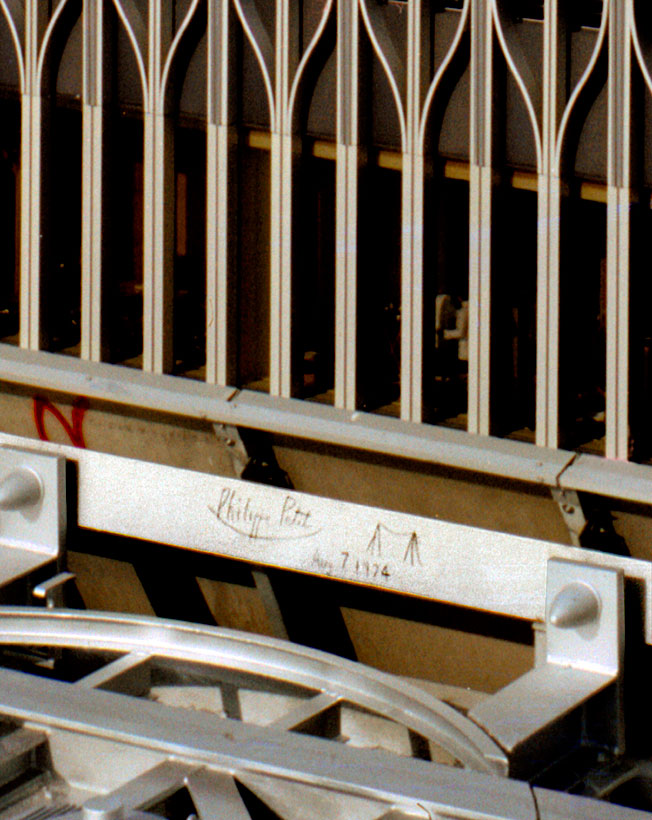
Philippe Petit signature and pictograph — © Brian Rose/Edward Fausty
Shortly after the destruction of the Trade Center, I sifted through my archive looking for photographs of the Twin Towers made over the years. One of the pictures I came across was taken from the observation deck on Tower 2 in the early ‘80s. I did a high-resolution scan of the 4×5 negative and discovered something unseen in my prints of the image, Philippe Petit’s signature and tightrope icon scratched into a steal beam. Petit’s performance masterpiece, it turns out, was signed by the artist.
As far as I know, it is the only photograph showing that long-lost signature.
Update:
I just saw the movie — it actually closes with Petit signing his name and drawing the little tightrope image as seen above. I have to admit to being surprised. It had to be based on my photograph. It’s true that someone from Zemeckis’ production staff contacted me a year ago about using one of my photographs in the film — but not the one with the signature. I expected it to be buried somewhere in the film, and in fact, it wasn’t used at all. Not to worry, I was paid decently. In the end, however, my accidental documentation of Petit’s signature plays a prominent role in the movie. I didn’t expect that.
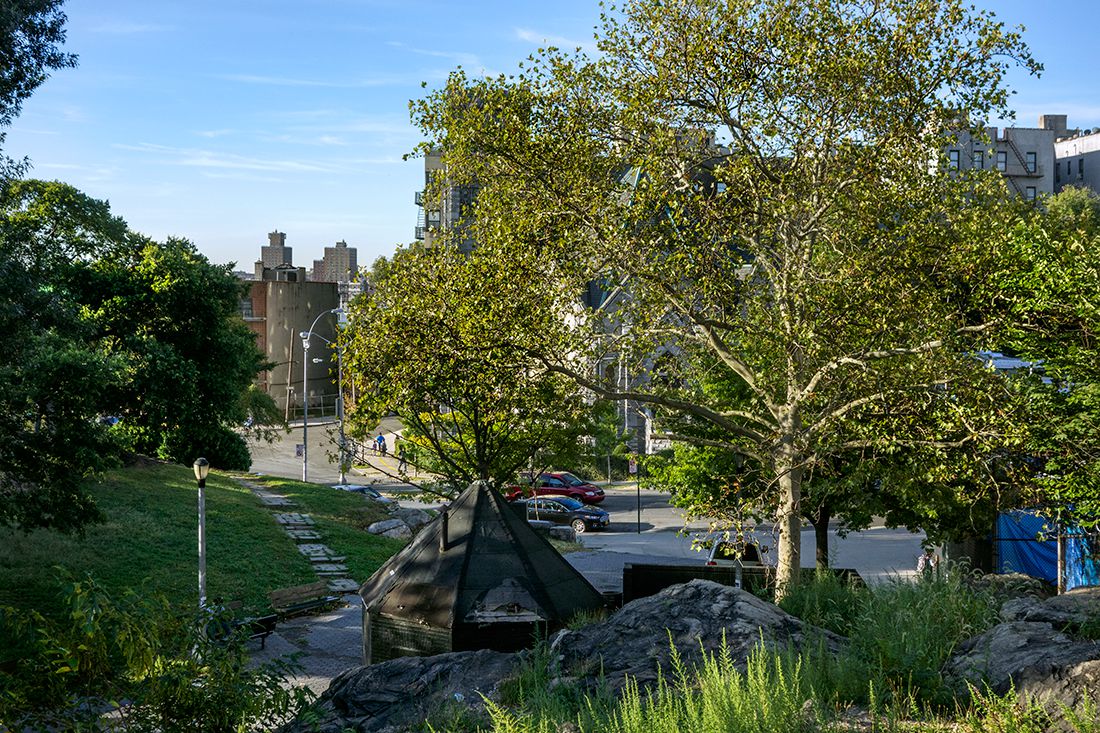
Echo Park, the Bronx — © Brian Rose
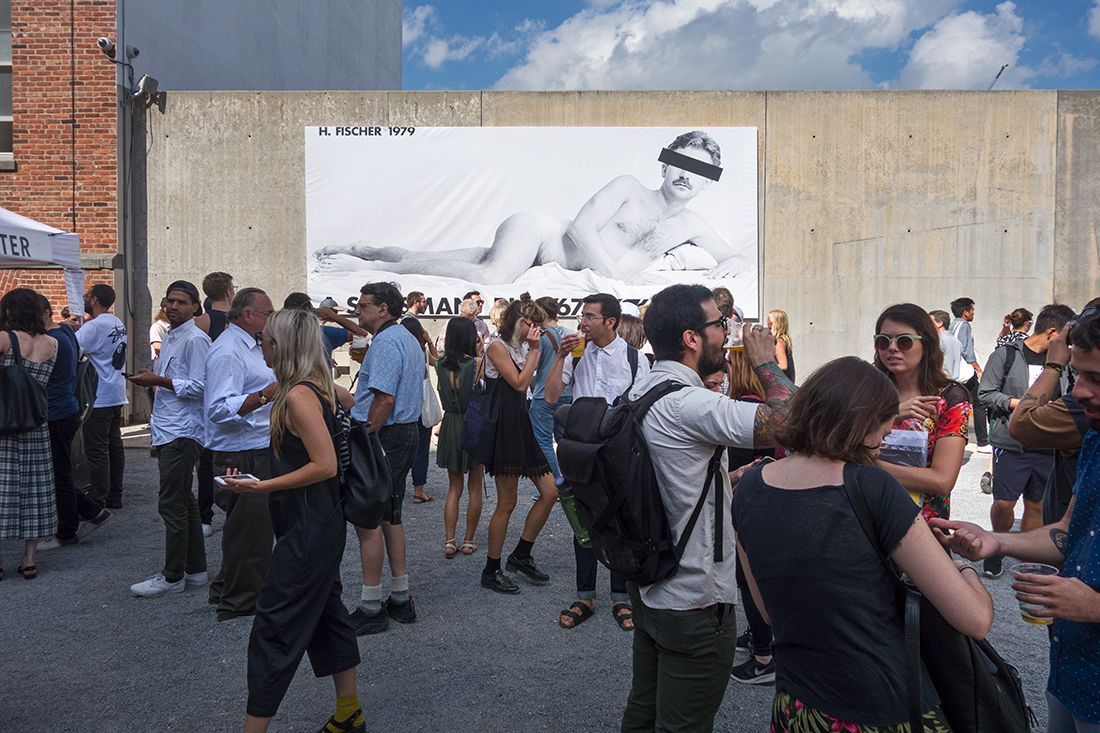
New York Art Book Fair, MoMA PS1 — © Brian Rose
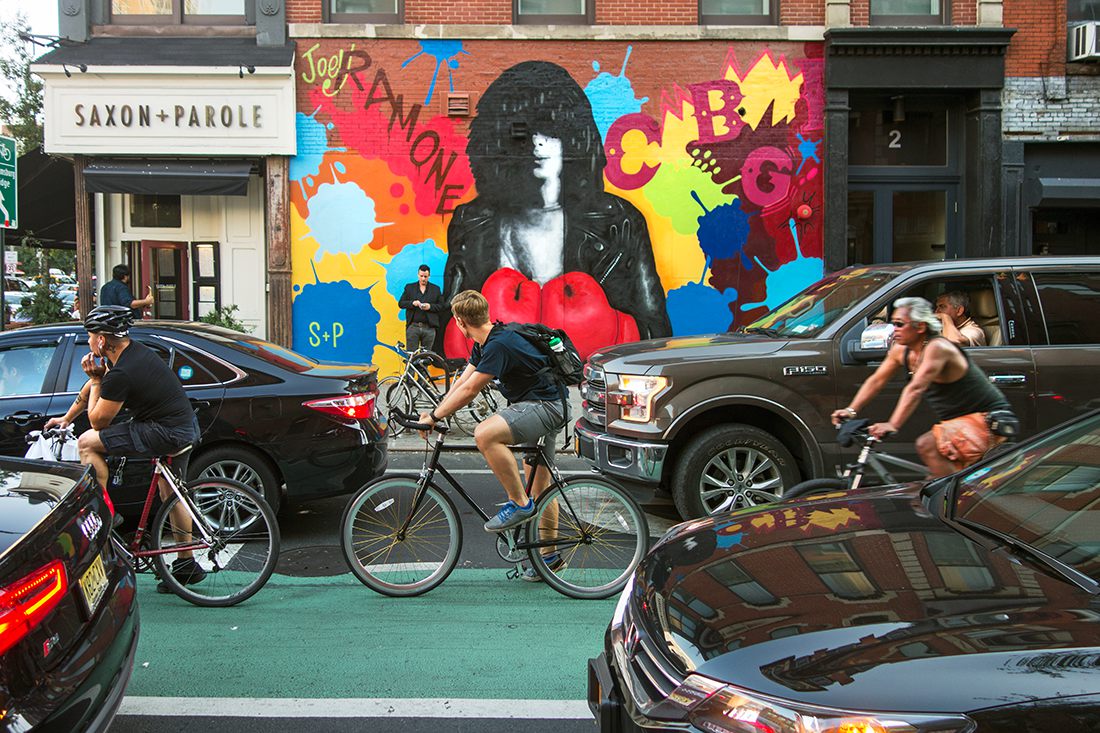
Joey Ramone/CBGB mural, Bleecker and Bowery, by Solus x Crash — © Brian Rose
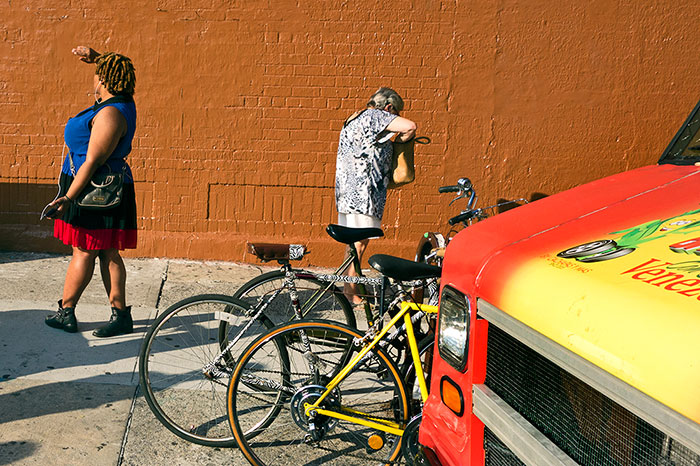
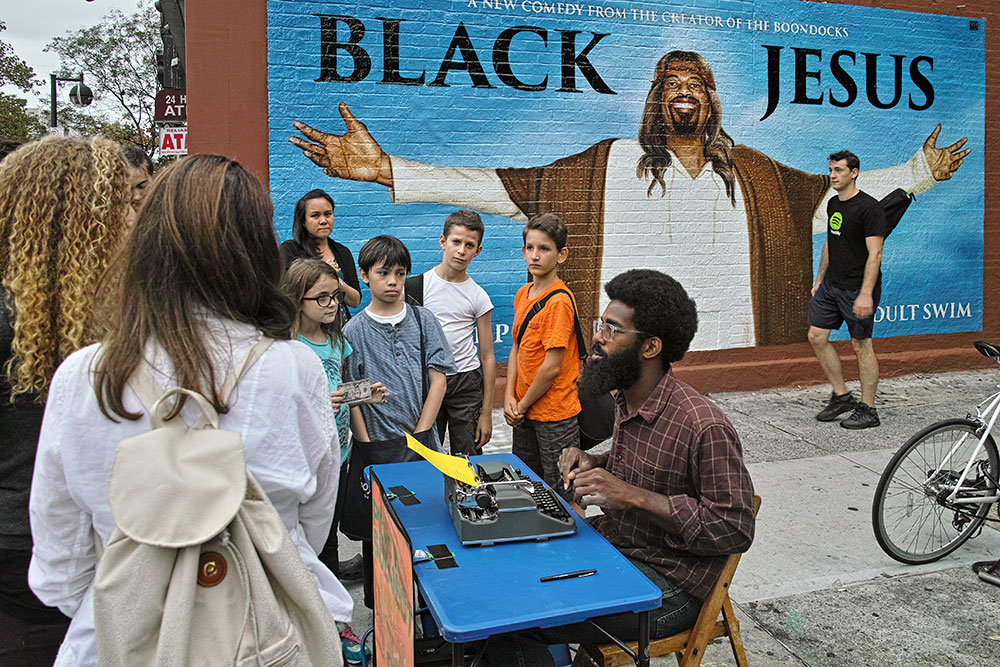
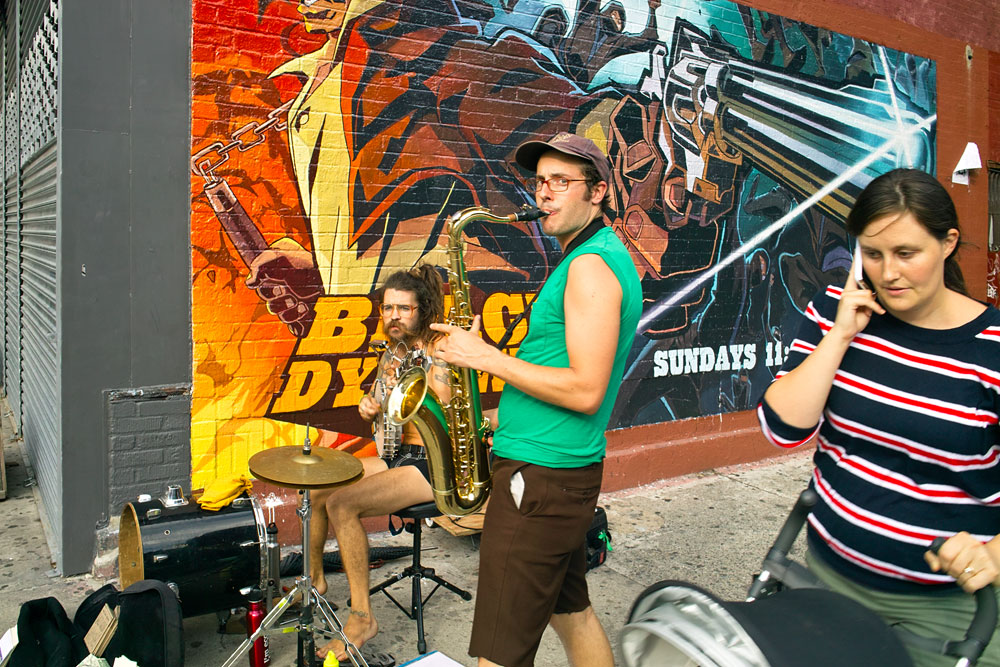
Random images from the past few days.
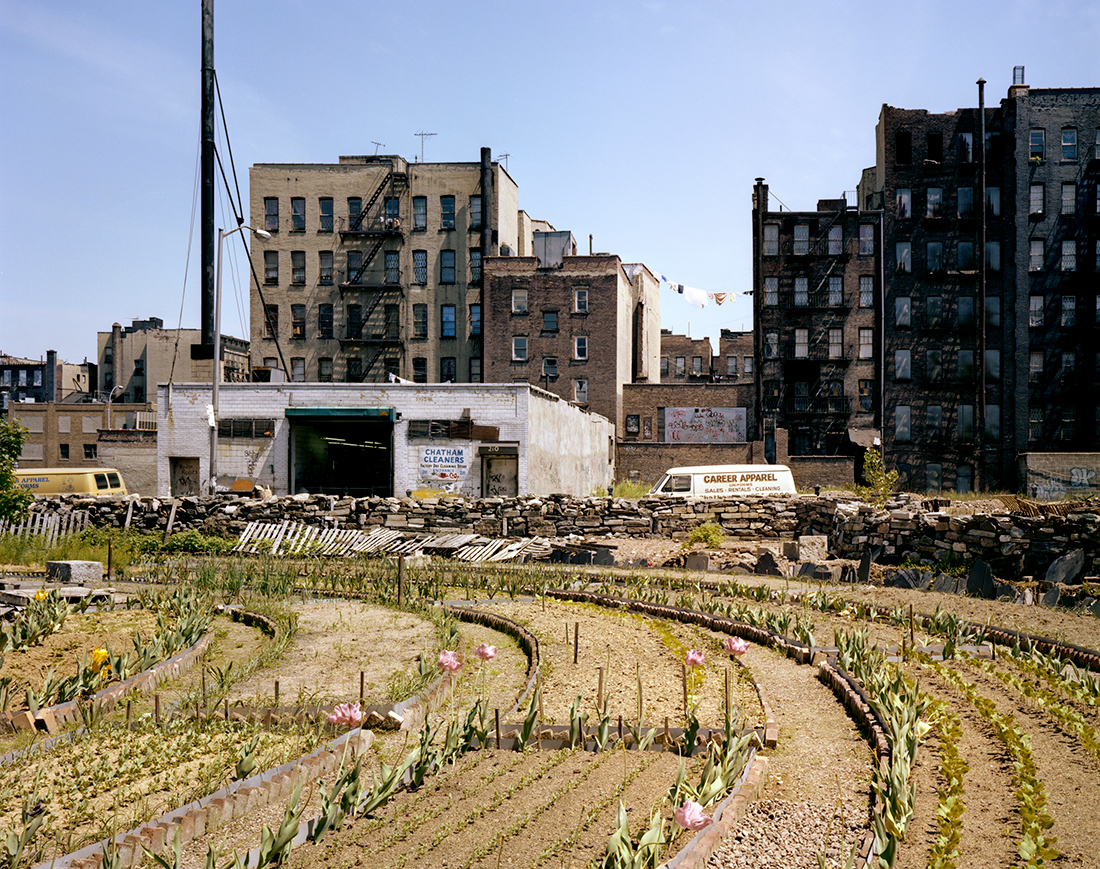
The Garden of Eden on Eldridge Street, 1980 — © Brian Rose/Edward Fausty
I knew about Adam Purple back when I photographed the Lower East Side in 1980. He was impossible to miss riding around on his bicycle dressed in tie-dyed purple. I made the photograph above of his famous Garden of Eden, which consisted of concentric rings planted with flowers and vegetables.
Purple was an eccentric character, to say the least, and from what I could tell, a man of rather severe temperament. So I steered clear. But that was a superficial judgement for sure. We all thought his garden was amazing, carved into the rubble of one of the many vacant lots of the Lower East Side, one of the many individual and group efforts to reclaim land that had been abandoned by property owners.
Later, in the 80s, Purple’s creation became caught up in a range war like the cattlemen and the sheepherders out west. The housing activists wanted low income housing, and the garden activists wanted community gardens and green spaces. Adam Purple was a single minded gardener and an artist — and he wasn’t interested in building bridges with other political elements of the community. That was the downfall of the Garden of Eden, though I don’t blame him for it. He was who he was.
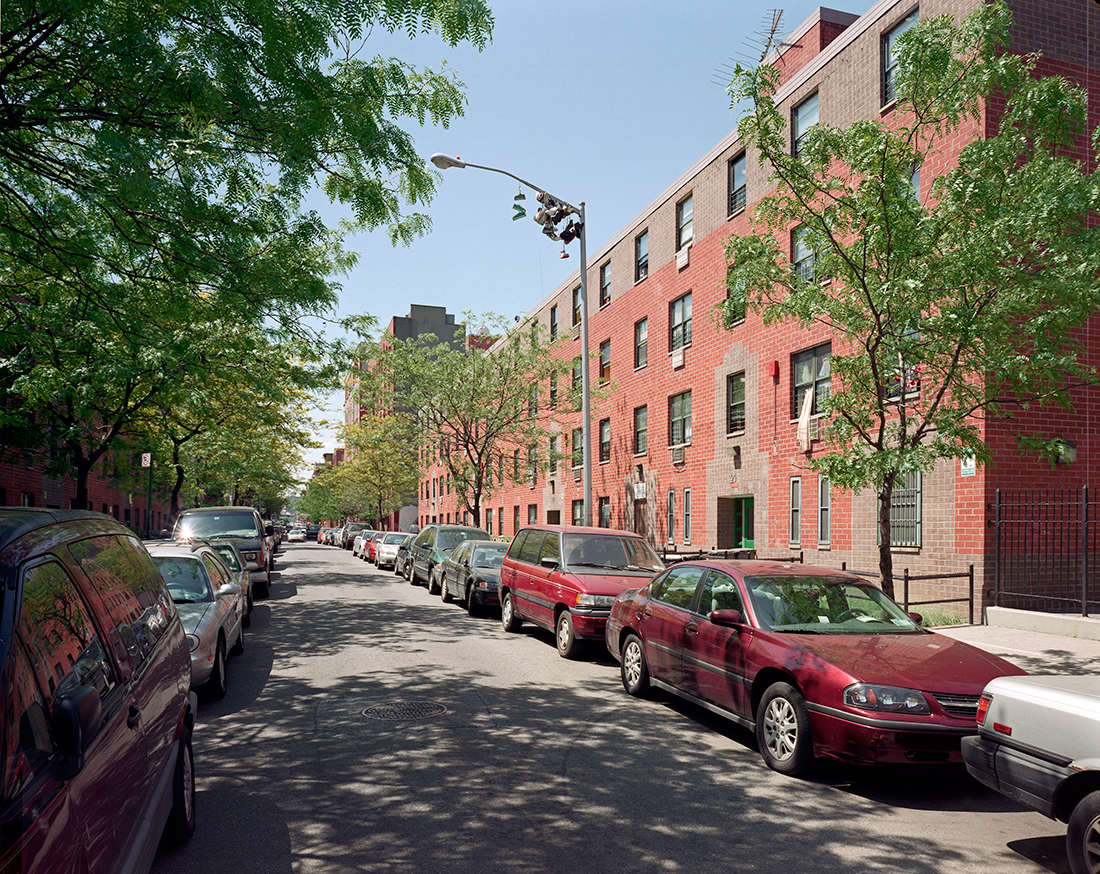
Eldridge Street 2010 — © Brian Rose
Above is what got built on Adam Purple’s Garden of Eden. It isn’t lovely. It is low income housing providing shelter for dozens of families. There are no shops built along the street to provide opportunity for small businesses and to bring life to the neighborhood, and there is barely any architecture to speak of. But the apartments are decent and affordable, and the area is safe and convenient to everything.
Imagine, if you will, a different scenario in which a sensitively designed complex of affordable housing was created embracing the Garden of Eden at its center. It could have been glorious. But it would have taken vision, something the housing activists and the city planners lacked. And I’m not sure that Adam Purple with his fierce independence would have gone along anyway. After vanishing for many years, Adam Purple was seen again on his bicycle around town, carrying cans and the like for recycling. He died on his bike on the Williamsburg Bridge.
Therefore the LORD God sent him forth from the garden of Eden, to till the ground from whence he was taken.
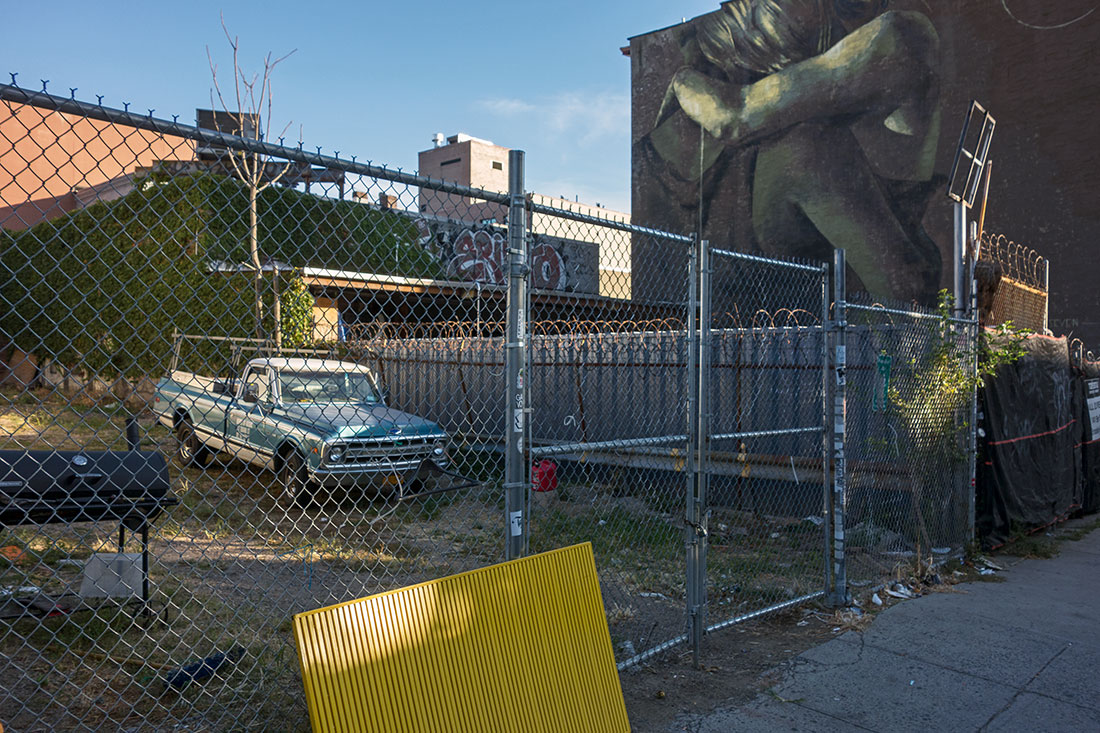
Berry Street — © Brian Rose
Without comment.
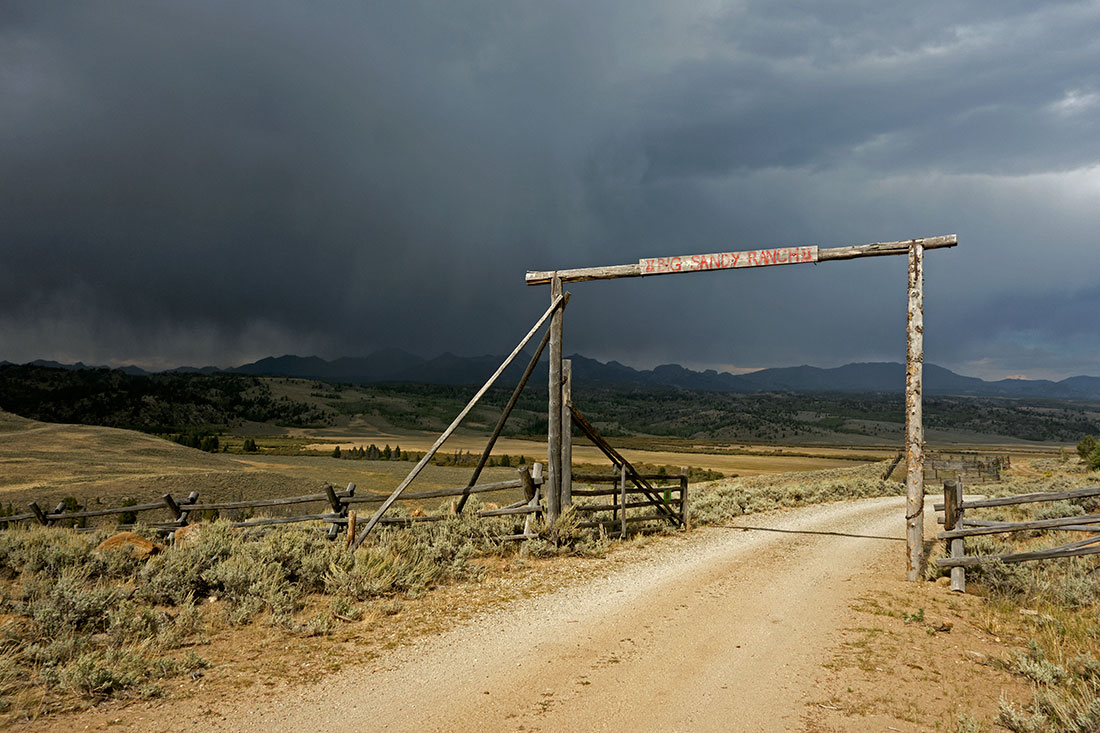
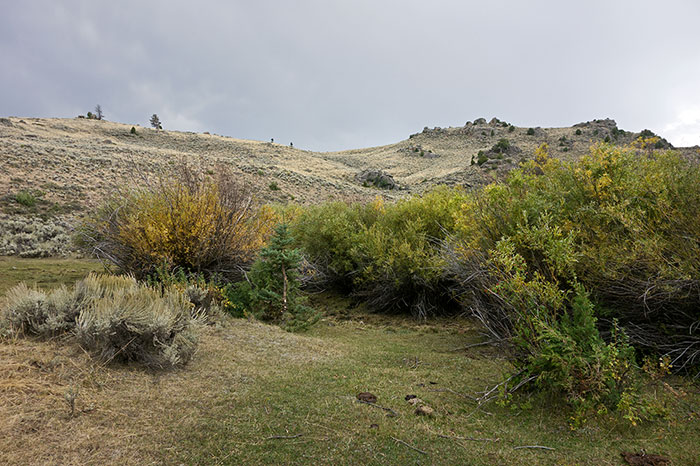
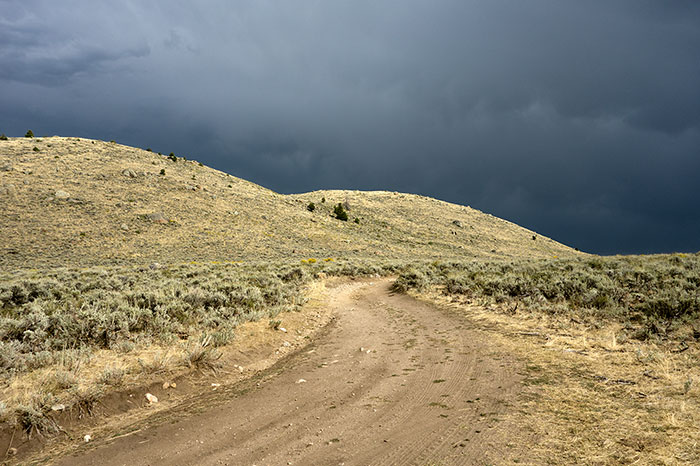
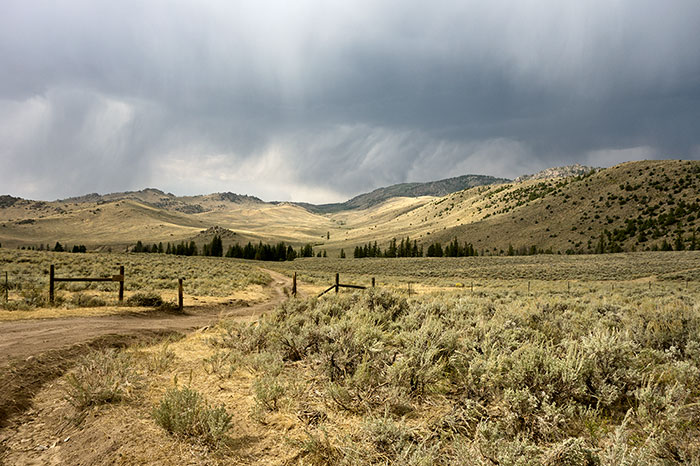
A series of photographs made in a 45 minute time period along the Big Sandy River in Wyoming. A small storm skirted the area. There were a few rumbles of thunder, but relatively little rain. As the storm passed by, the sun shone through against a dark backdrop of sky. Returning to the Big Sandy ranch, where I was staying, the storm crossed the Wind River Range of the Rockies in the distance.
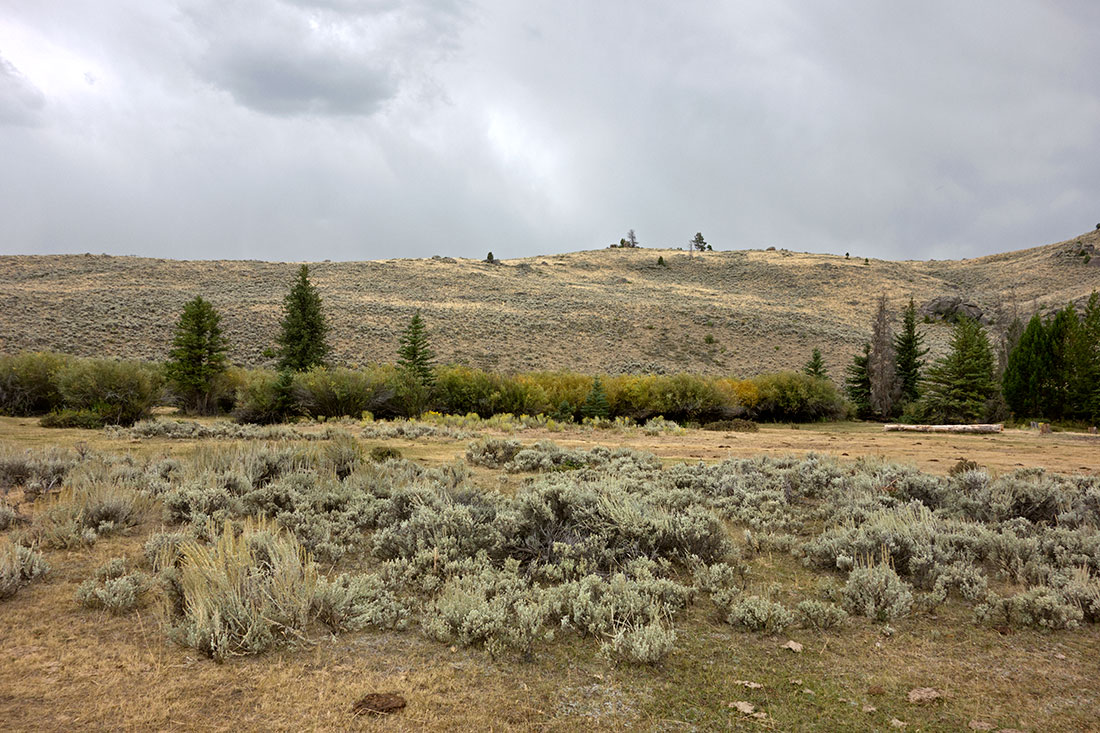
Along the Big Sandy River, Wyoming — © Brian Rose
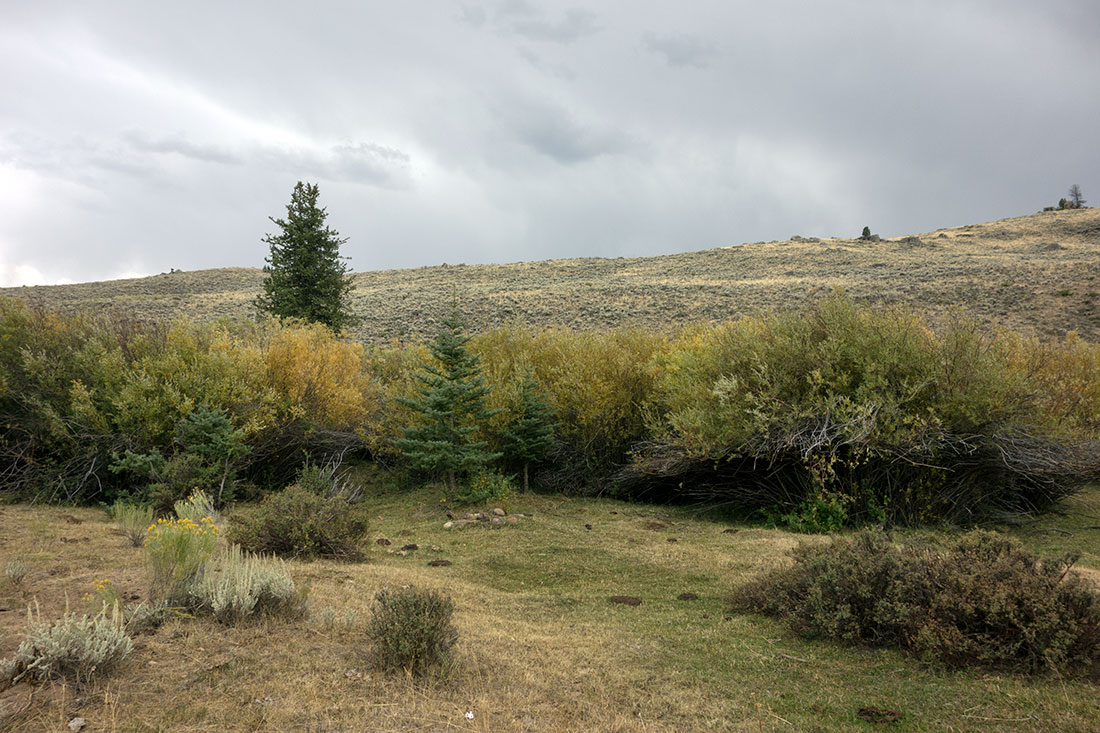
Along the Big Sandy River, Wyoming — © Brian Rose
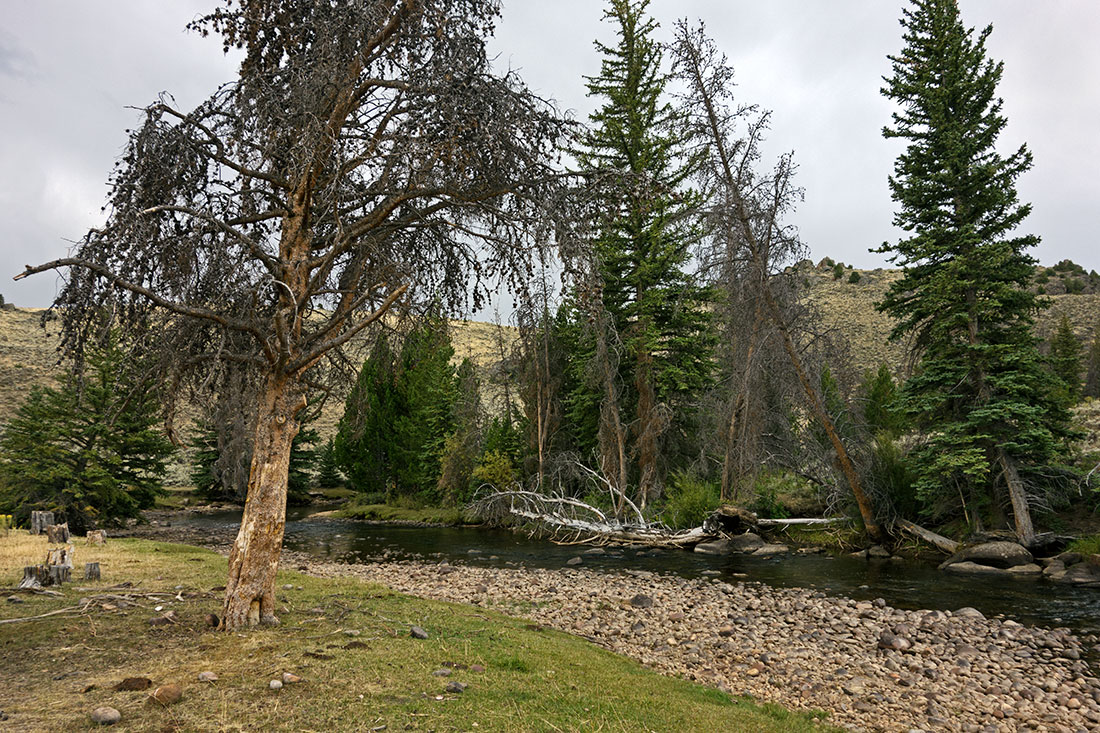
Along the Big Sandy River, Wyoming — © Brian Rose
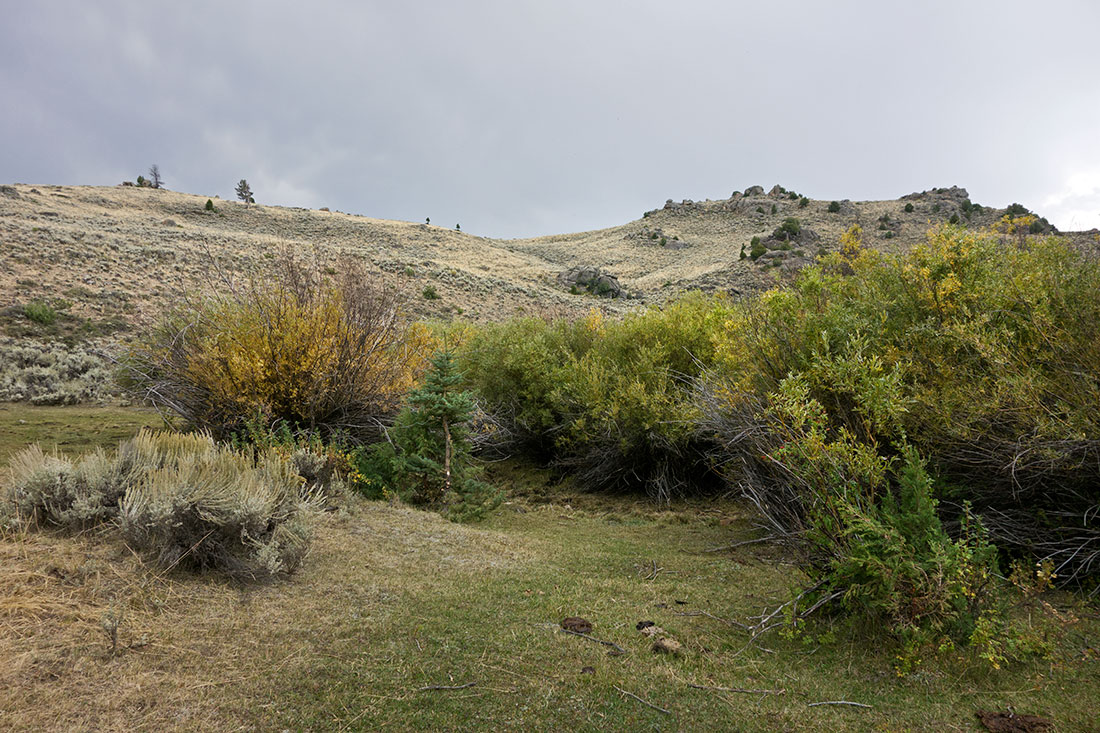
Along the Big Sandy River, Wyoming — © Brian Rose
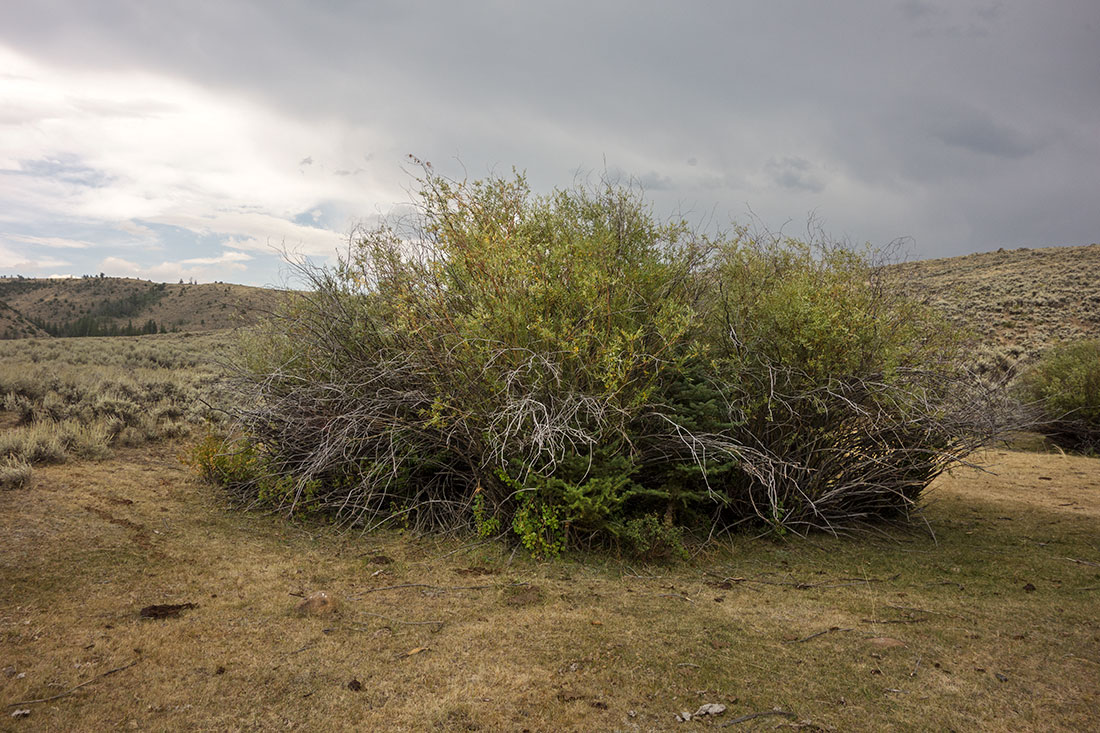
Along the Big Sandy River, Wyoming — © Brian Rose
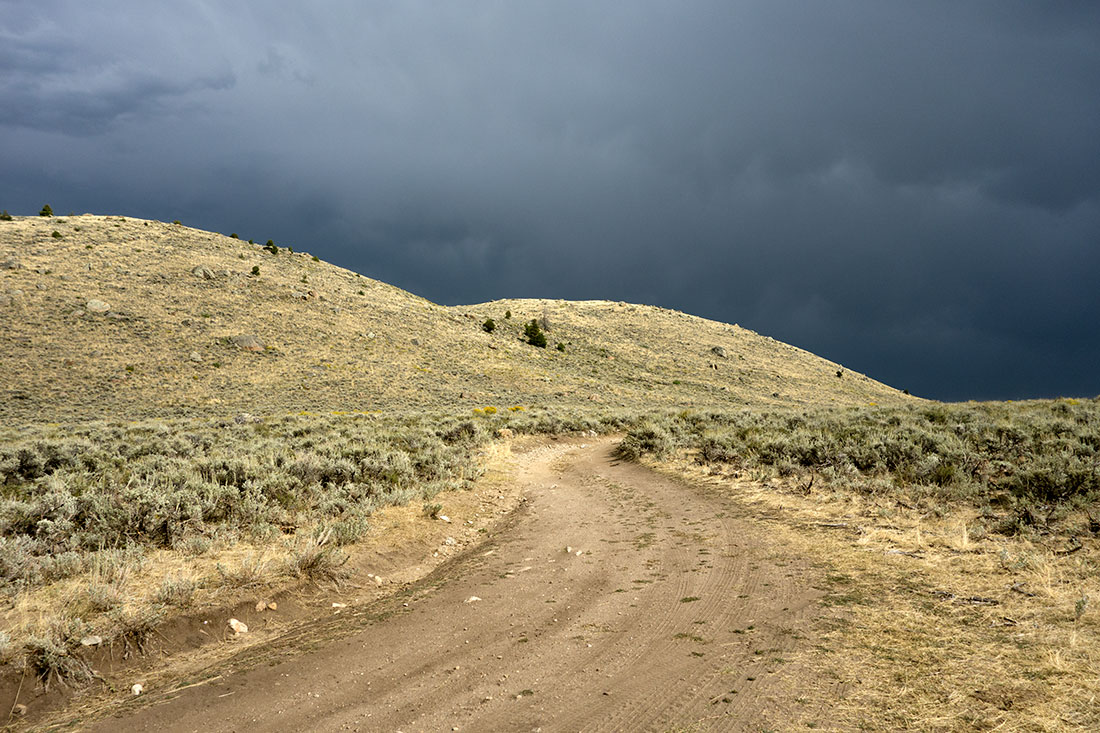
Along the Big Sandy River, Wyoming — © Brian Rose
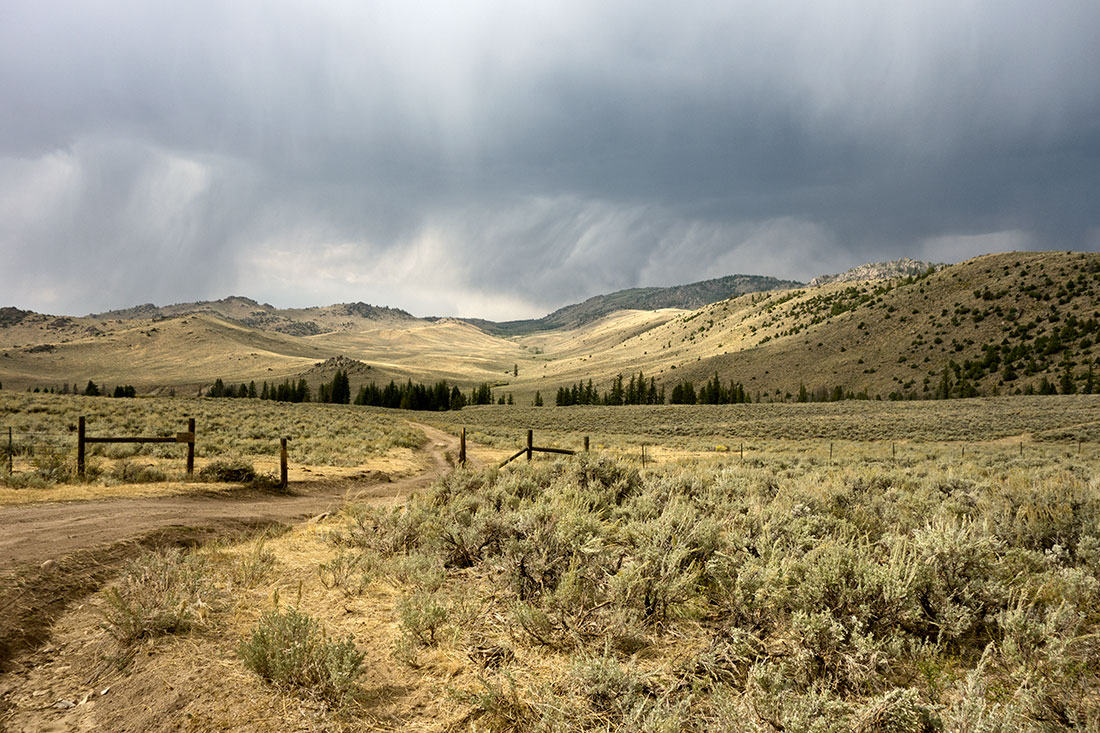
Along the Big Sandy River, Wyoming — © Brian Rose
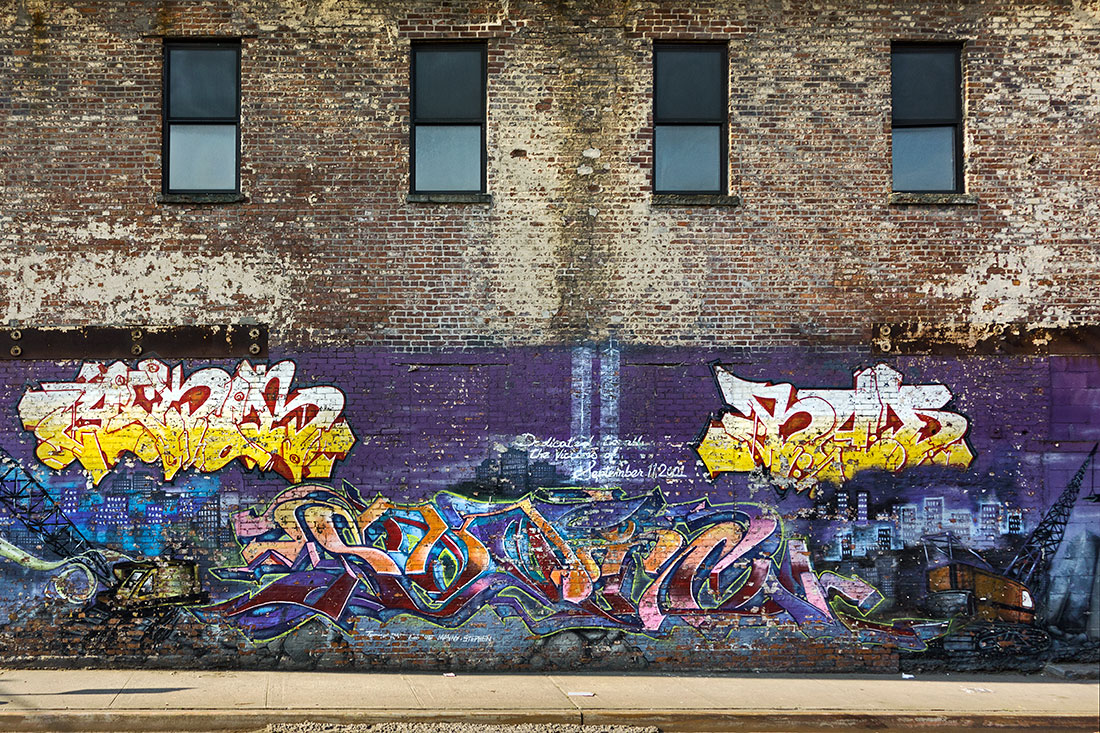
Borden Avenue, Queens — © Brian Rose (digital camera)
Several months ago I spotted a 9/11 mural in an obscure location underneath the Long Island Expressway in Queens. I was driving back from one of my son’s baseball tournaments on Long Island. It took me a while to get back there — in fact, re-finding it was a difficult. But thanks to Google maps I was able to track down the spot.
Using an app on my phone called Helios, I was able to determine exactly what time the light would be best on the mural. So, I went out early in the morning with my view camera, and walked about 15 minutes from the closest station on the #7 line in Long Island City. I couldn’t quite make out the signature at the base of the mural, painted on the side of an auto body shop in this gritty industrial part of Queens. Trucks thundered by as I set up my 4×5 camera under the elevated LIE. (The image above was taken with my digital camera.)
Although I have been calling my World Trade Center book project complete for some time, this seemed like a worthwhile addition to the series. A ghostlike rendering of the Twin Towers surrounded by calligraphic tags. The inscription says: “Dedicated to all the victims of September 11, 2001.” There are, or were, many such murals around the city, but they are gradually fading away.
It’s time to get this book published.
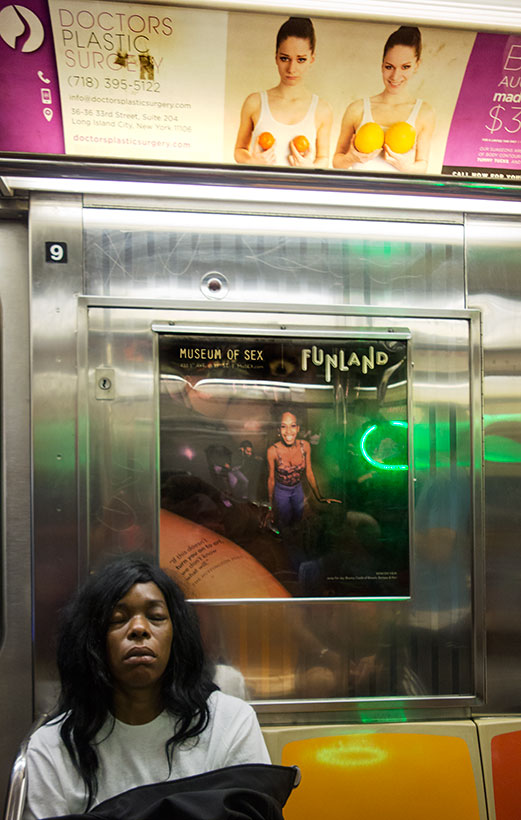
Somewhere in Queens — © Brian Rose
Funland New York City.
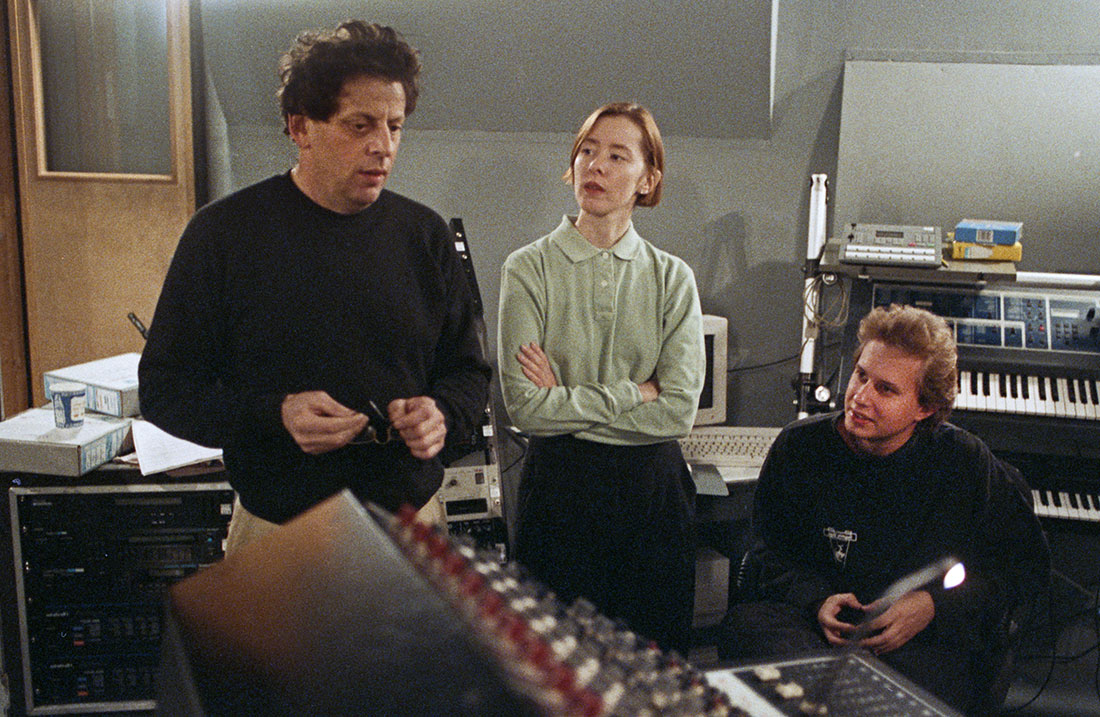
Philip Glass, Suzanne Vega, and Anton Sanko, 1989 — © Brian Rose
I heard recently from a friend looking for a photograph I had taken years ago during a recording session with Suzanne Vega. So, I dug back into my archive, found the film, and began scanning the negatives. I remember that it was difficult lighting, and I didn’t want to use flash in the studio. So, it’s grainy film pushed in processing to get a little more speed out of it.
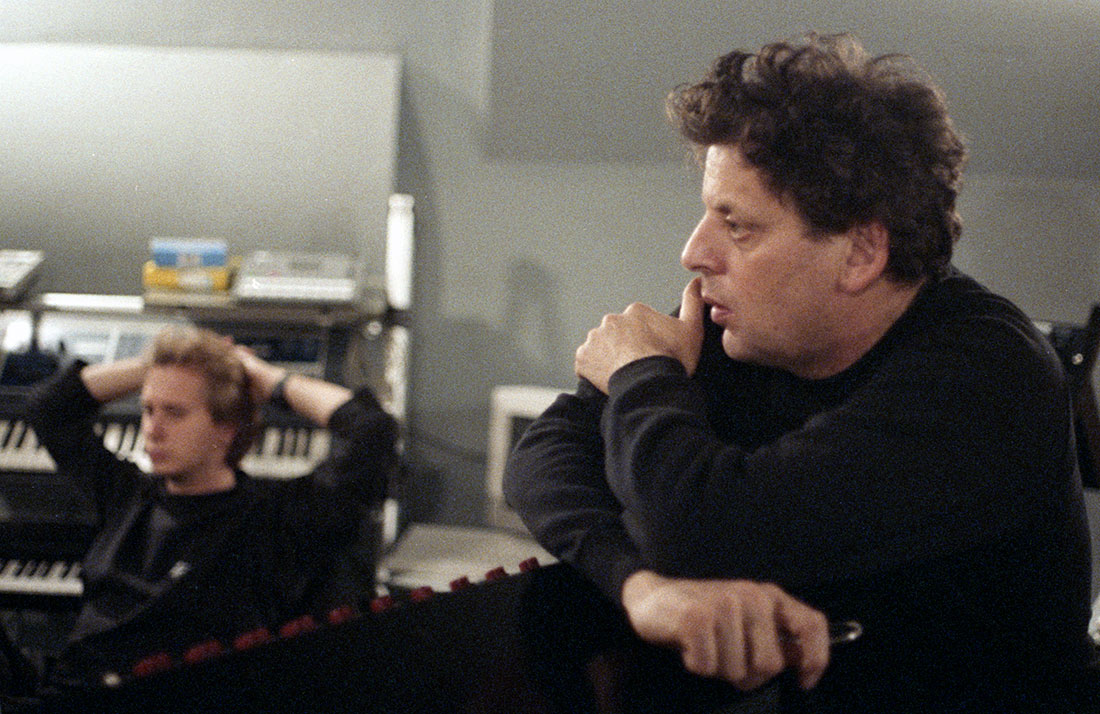
Anton Sanko and Philip Glass, 1989 — © Brian Rose
It was the end of 1989, and she was working on her third album, which would be called “Days of Open Hand.” One of the songs, “50/50 Chance,” included a string arrangement by Philip Glass. Present in the studio were Glass, Vega, producer Anton Sanko, and a string quartet.
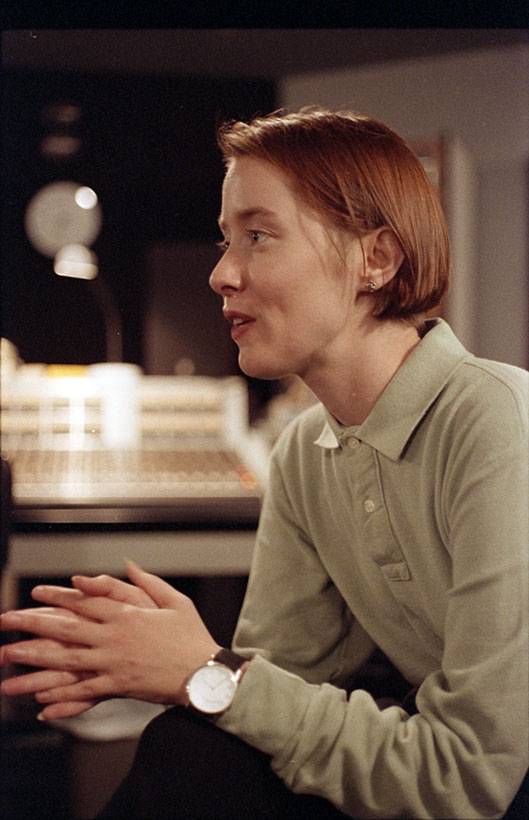
Suzanne Vega, 1989 — © Brian Rose
Stephen Holden of the New York Times later wrote:
This song about an attempted suicide, a pop-minimalist answer to a Sylvia Plath poem, has a simple, lovely string arrangement by Philip Glass that underscores the sparseness of Ms. Vega’s language. It also sets off the emotional flatness of her vibratoless singing, which maintains a deadpan objectivity even in the words ”I love you.”
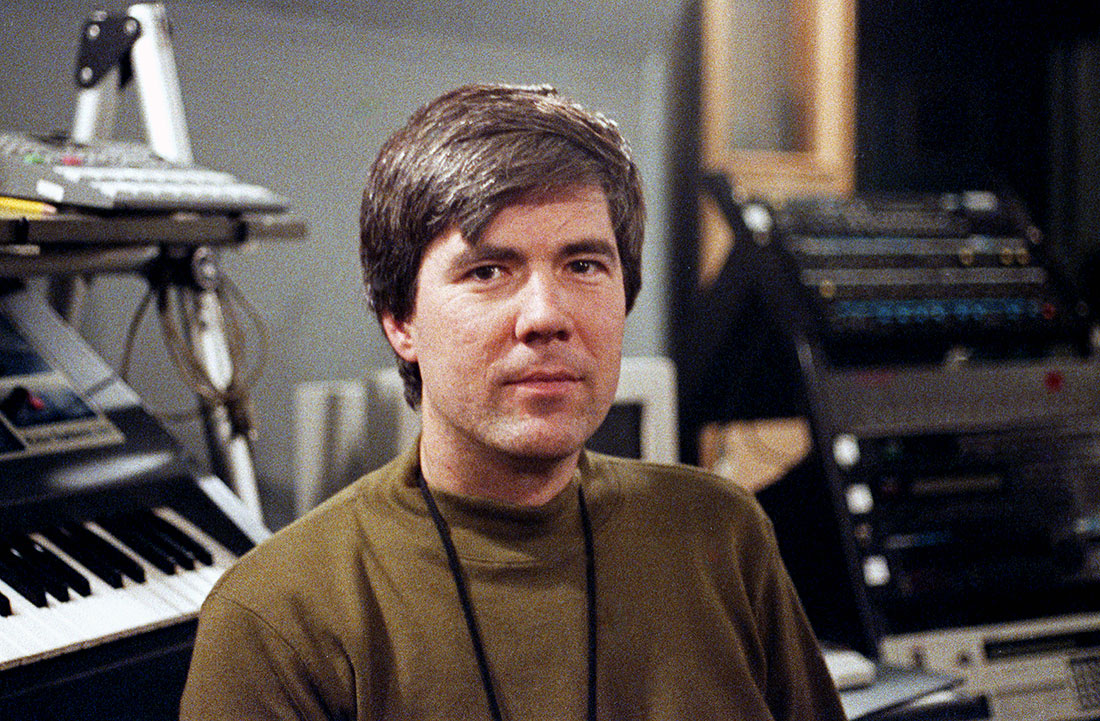
Brian Rose, 1989 — © Suzanne Vega
At one point I handed the camera to Suzanne, and she took the photo above. Here is the finished song from the album:
https://youtu.be/wDEkh2M-jt0
I’m a little slow keeping up with things — one day in Atlanta, the next in New York, two days later in Amsterdam. So, let me finish my Atlanta trip with a few pictures and observations.
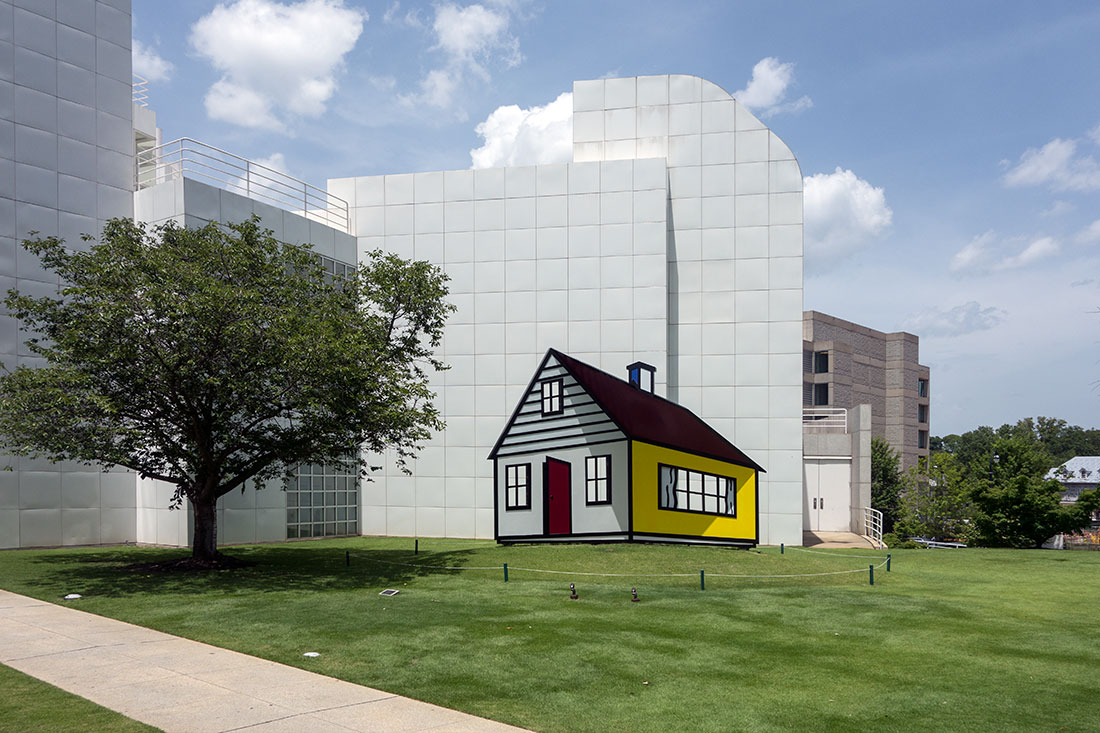
High Museum with Roy Lichtenstein’s “House” — © Brian Rose
While the rest of my son’s baseball team hung out in the pool of their hotel, my son Brendan and I took the Marta train to the High Museum in Atlanta. It’s a wonderful museum with brilliant architecture by Richard Meier. The permanent collection is excellent for a regional museum, and the Alex Katz exhibition of the artist’s less appreciated landscape work, was revelatory.
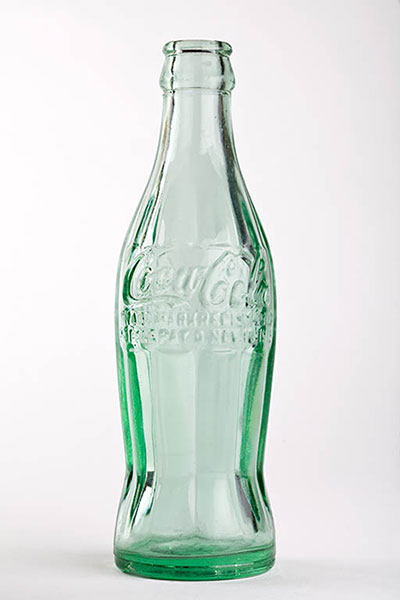
1915 Coca-Cola bottle
Atlanta, being the home of the Coca-Cola corporation, the Coke logo is ubiquitous, and the High Museum had mounted a large exhibition celebrating the 100th anniversary of the iconic Coke bottle. The show included different artists’ takes on the bottle, but also many who incorporated the actual bottle into their work. There was a whole gallery of images by well-known photographers, particularly those attuned to the vernacular, like Walker Evans and southerner William Christenberry. At the center of the show was a gallery of Andy Warhol works all featuring the Coke bottle. I was especially interested (and amused) by several short films featuring former Velvet Underground musicians Lou Reed and Nico taking swigs from Coke bottles.
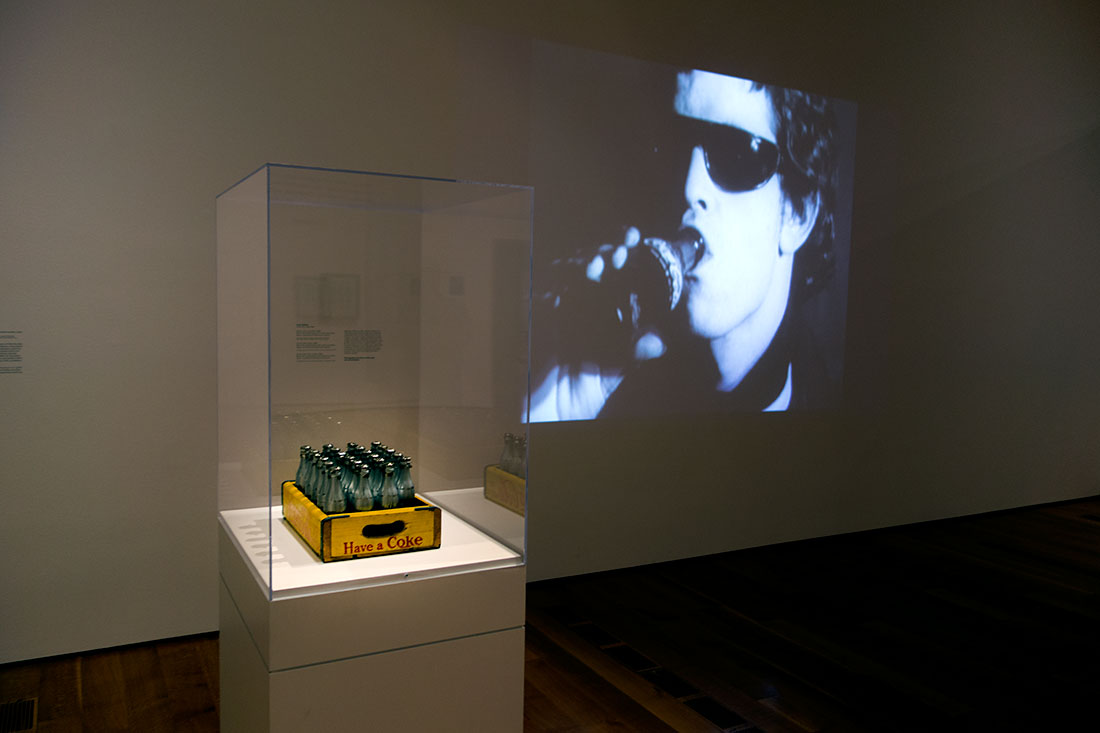
Andy Warhol film and bottles — © Brian Rose
A few days later we visited Cartersville to the northwest of the city, a small town that survived the Civil War mostly intact. We were there looking for a place to eat after one of my son’s tournament baseball games, and despite the preponderance of Chick-fil-A’s and other fast food chains in the suburbs of Atlanta, we did very well all week at local restaurants. Special kudos to Gumbeaux in Douglasville, Georgia, which offered Cajun food that was both delicious and cheap.
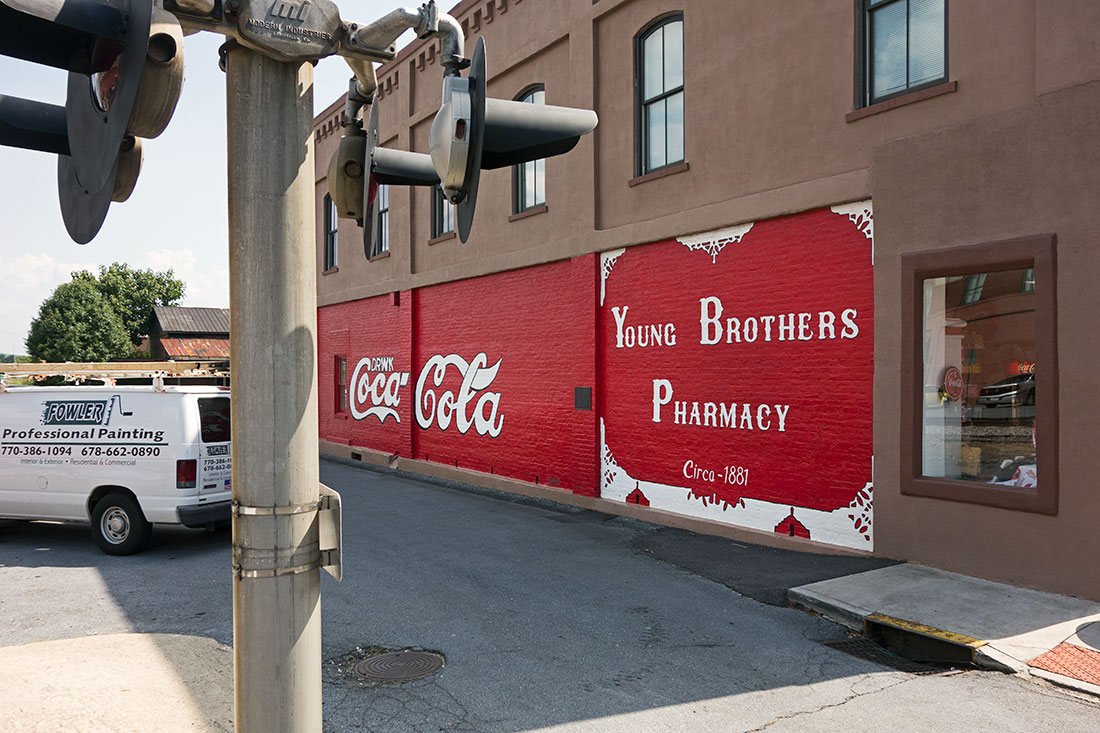
First Coca-Cola wall sign from 1894, Cartersville, Georgia — © Brian Rose
In Cartersville we found a wall painted with a retro-looking Coca-Cola logo that turned out to be the first such mural — painted back in 1894 — of course, restored over the years. We also saw Confederate flags, another historic logo, in the suburbs of Atlanta, usually flying from the backs of pick-up trucks. It had only been a few weeks since the Confederate Battle Flag was removed from the South Carolina capital grounds a few hours away in Columbia, and the issue remains raw. My guess is that most white Georgians feel ambiguous about the flag, and while some may regret its new pariah status, they are also not eager to align themselves with the guys parading it around on pick-up trucks in the parking lot of the Cartersville Walmart, which happened a short time before our visit.
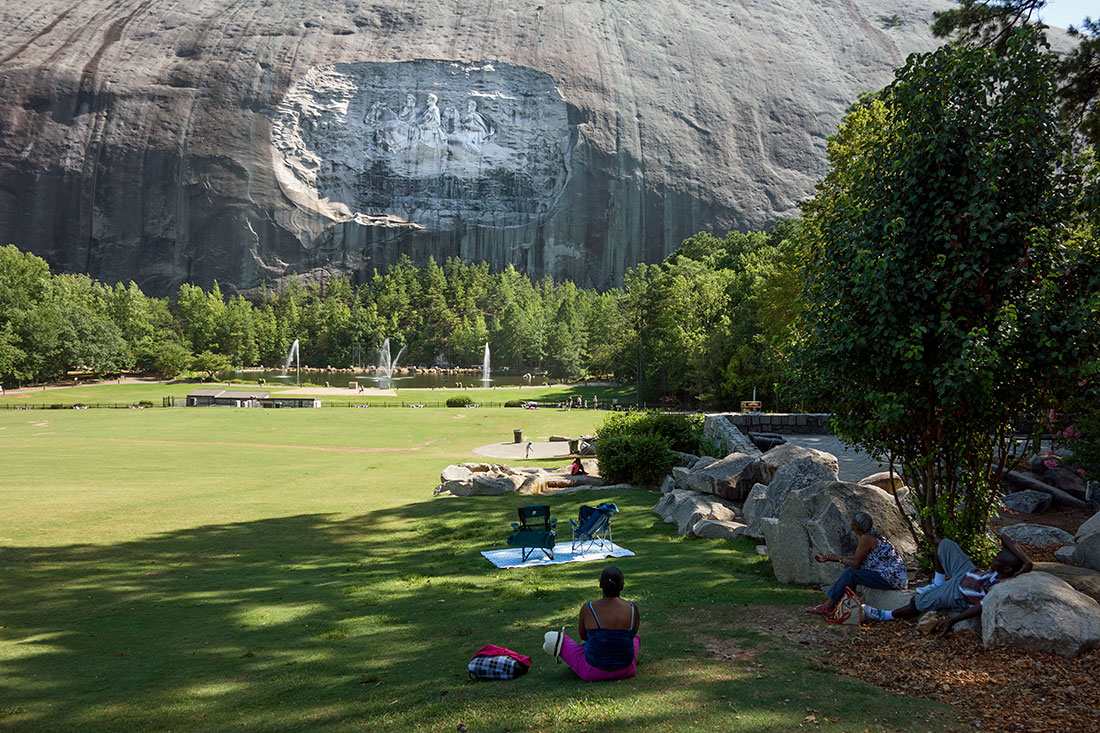
Stone Mountain, Georgia — © Brian Rose
Atlanta is a sophisticated city with a large black population, and to my eyes, one of the most integrated places I’ve experienced. So, the brazen flaunting of racist symbols — like the Confederate Flag — was hard for me to make sense of. On the last day of our visit, Brendan and I drove out to Stone Mountain to see the giant bas-relief sculptures of Confederate heroes carved into the sheer granite wall of the mountain. We listened to an audio description of the carving, which referred to Robert E. Lee as one of South’s most beloved leaders. Like the city of Atlanta itself, there were African Americans everywhere, visitors as well as employees, I recalled Martin Luther King Jr.’s words “let freedom ring from the Stone Mountain of Georgia!” and once again it was all difficult for me to compute
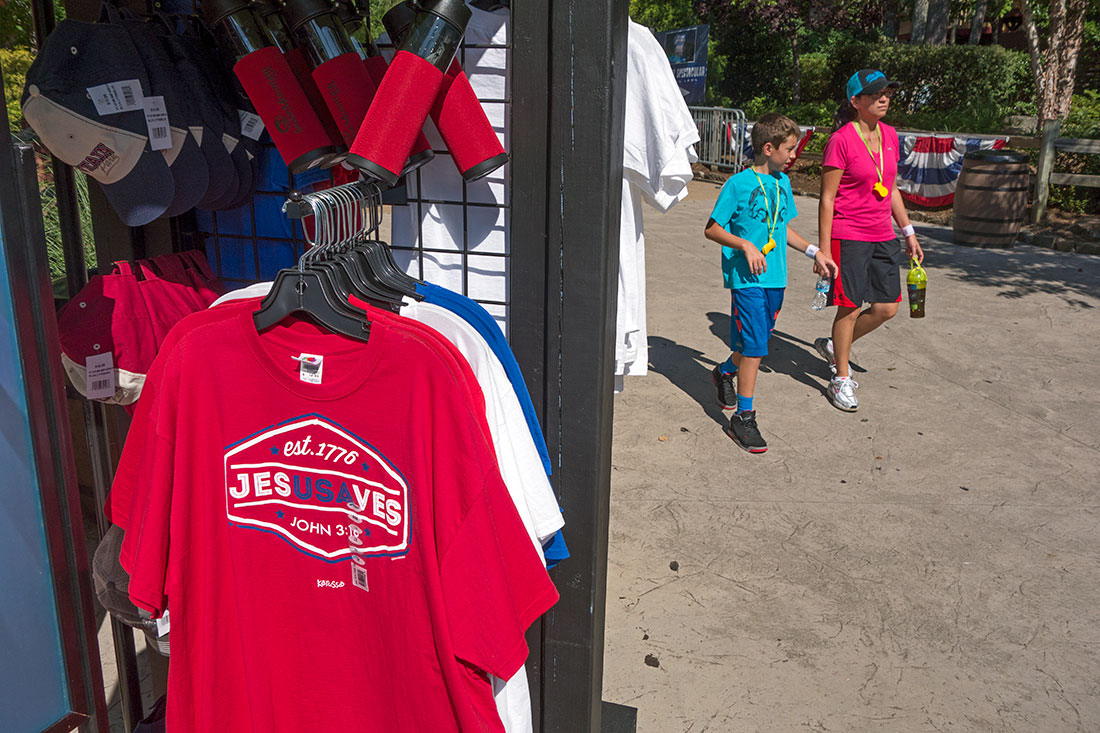 .Stone Mountain, Georgia — © Brian Rose
Finally, as we were leaving the commercialized them park at the base of the mountain, I snapped a picture of a kiosk selling religious t-shirts and knick knacks. On one of the t-shirts were printed the words: JESUSAVES. And above it: “est. 1776.” Anecdotal evidence of the common conflation of a particular brand of Christianity with the founding of America itself, it’s not unlike the way in which Coca-Cola as a brand, and a logo, has become synonymous with U.S. and its values.
And so ends our visit to Atlanta.
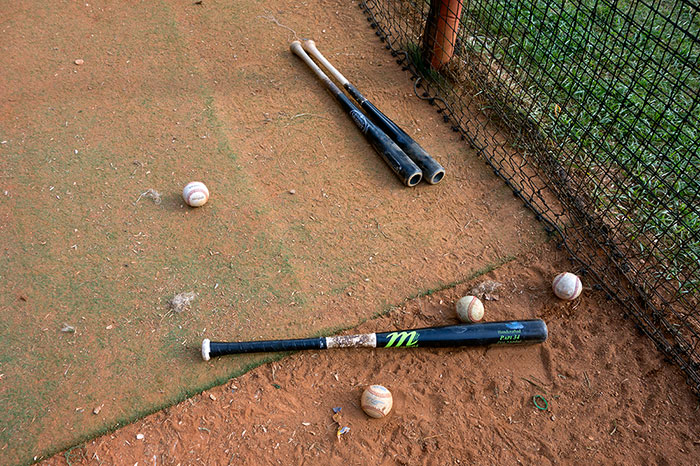
More than 300 teams (with parents) have descended upon the Atlanta area for one of the major baseball travel team events of the year. The Gothams, my son’s team, alas, will not advance to the playoffs, but has performed well at times against some of the best teams in the country.
My son and I are in Atlanta for a baseball tournament. Many of the best travel teams for 16 and under have gathered here for what is billed as the national championship. We’ve done okay, but will definitely not be winning the tournament.
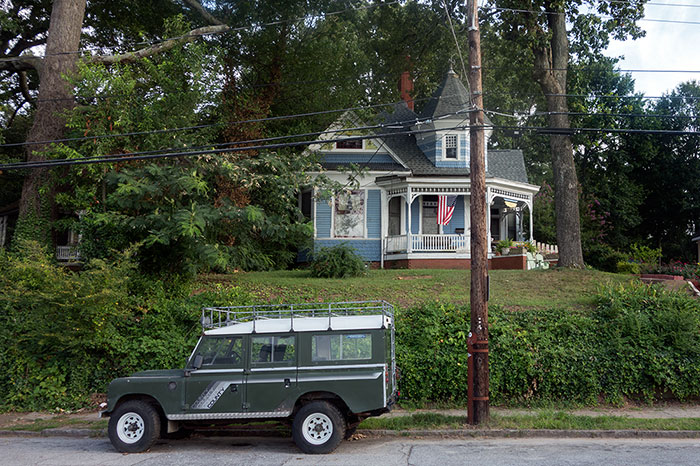
I’ve never been to Atlanta before, though I have family roots in the area (see my recent post about the Confederate Flag). As a New Yorker, it is difficult to comprehend cities like this that are so dependent on the car for just about everything. The traffic is daunting, the summer heat punishing, but people are friendly, and as one gets around and sees things, it becomes a more comprehensible, even livable place.
Here are two aspects of Atlanta — anecdotal — but representative of the extreme contrasts evident throughout.
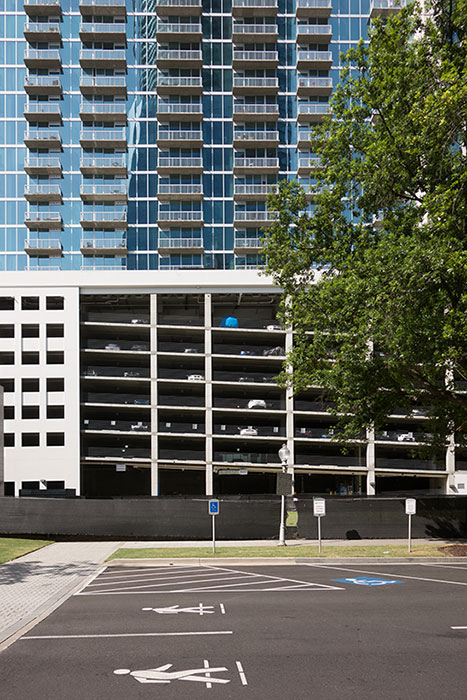
Buckhead, Atlanta — © Brian Rose
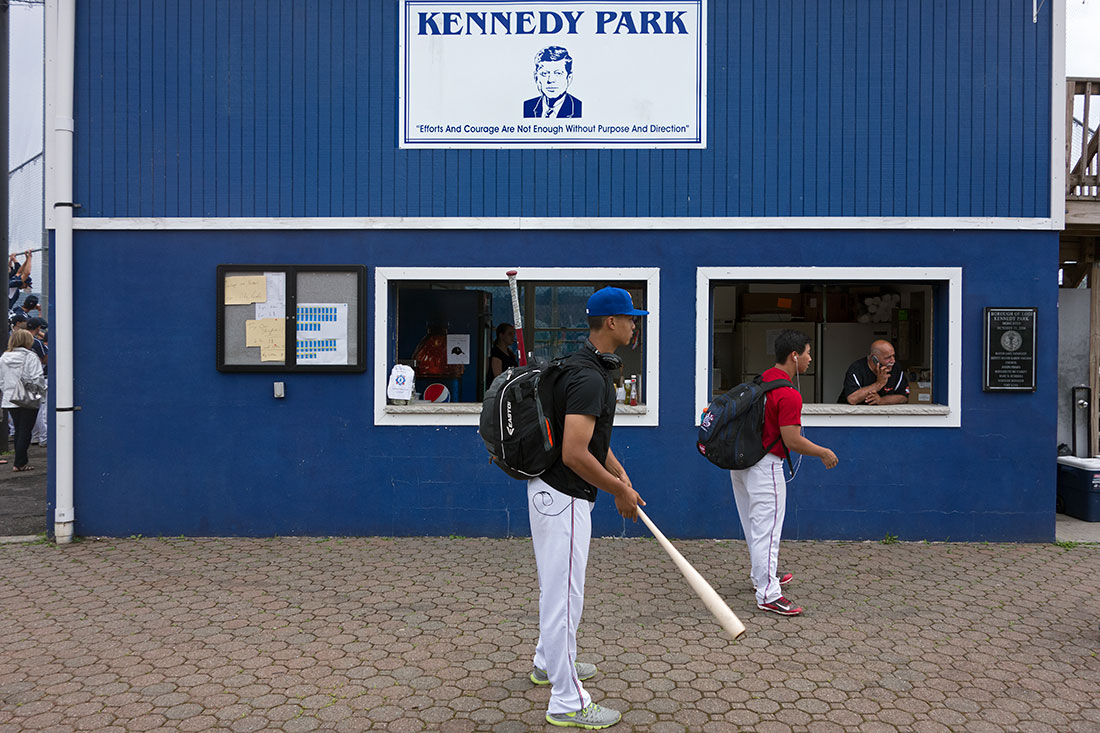
Lodi, New Jersey — © Brian Rose
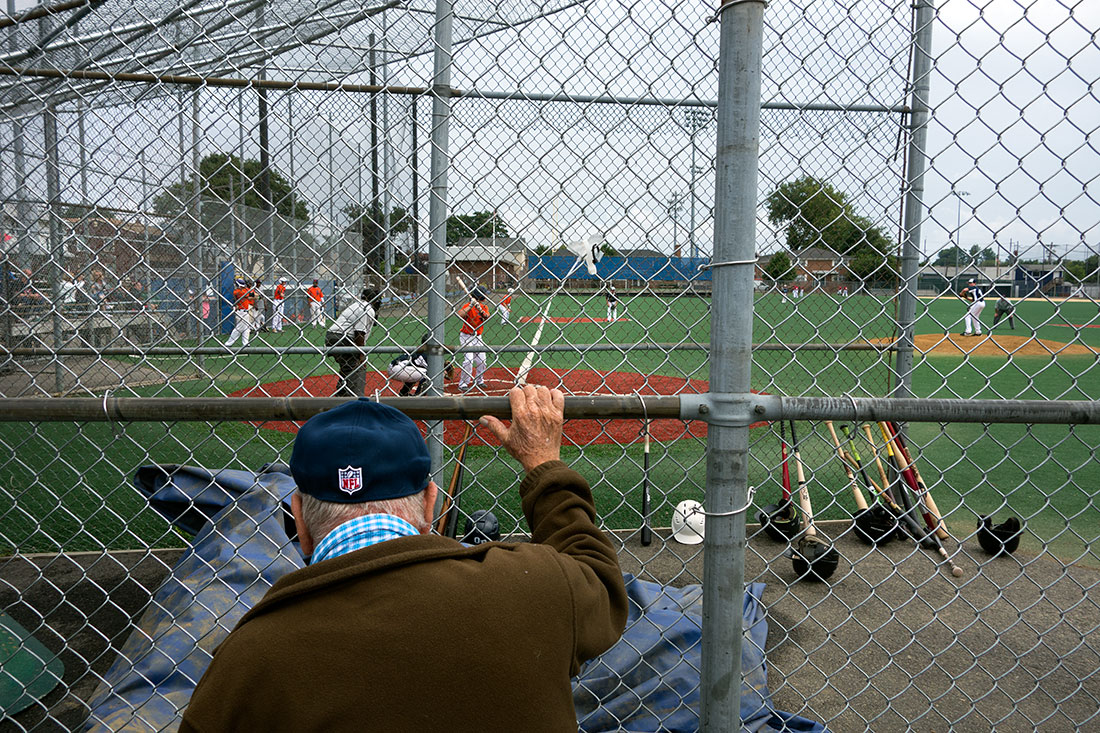
Lodi, New Jersey — © Brian Rose
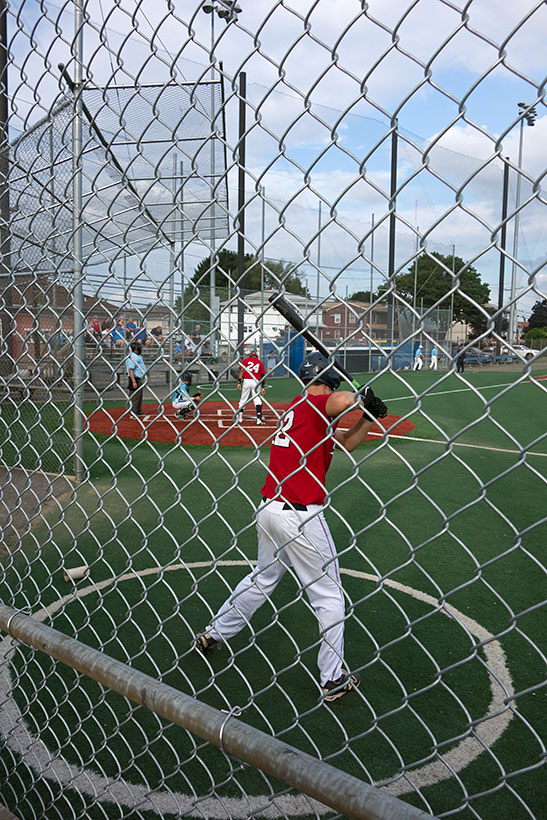
Lodi, New Jersey — © Brian Rose
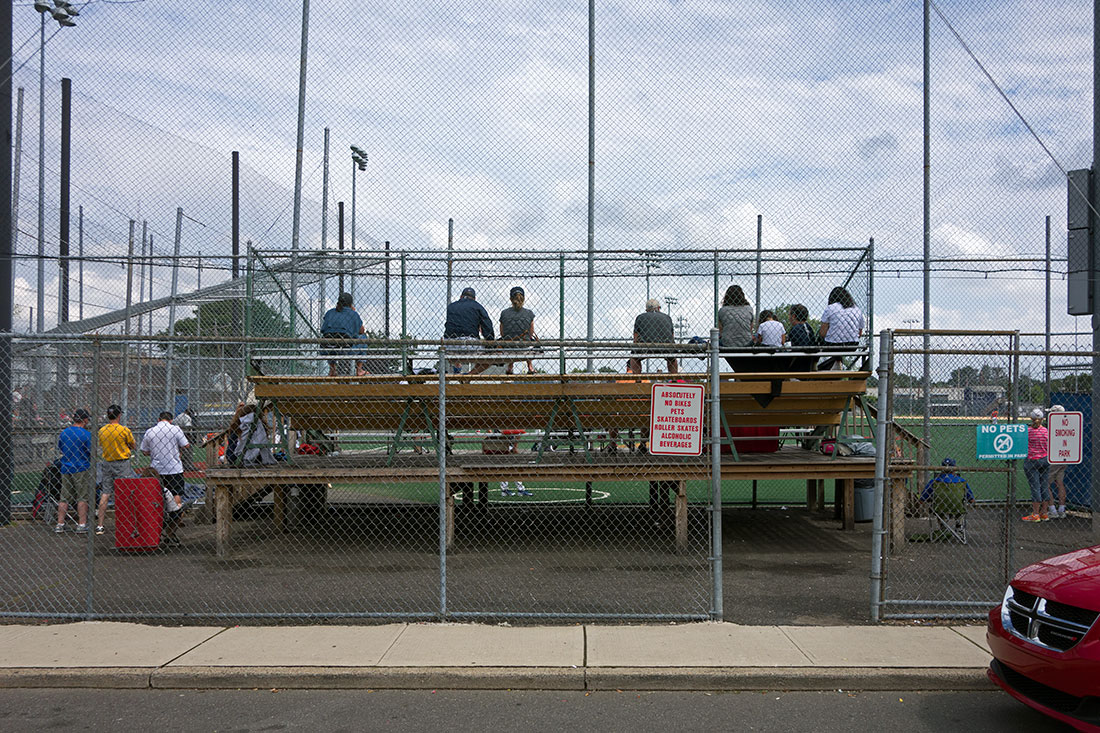
Lodi, New Jersey — © Brian Rose
4th of July, Kennedy Park, Lodi, New Jersey.
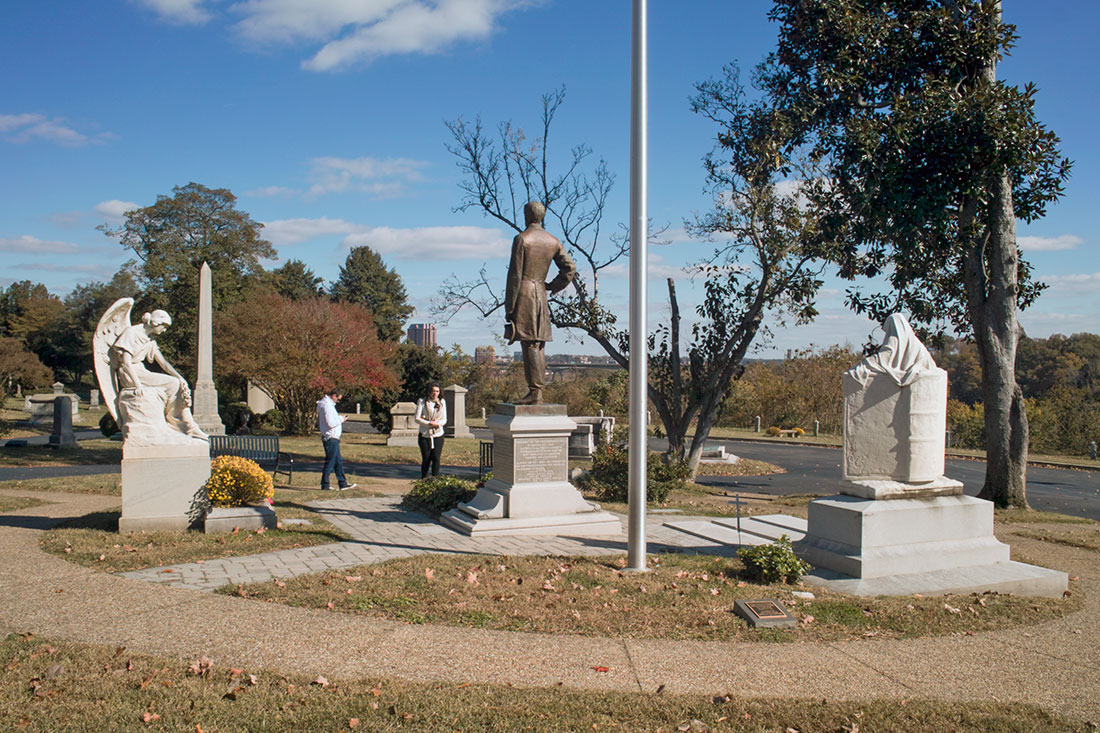
Jefferson Davis grave, Hollywood Cemetery, Richmond, Virginia — © Brian Rose
I grew up in Williamsburg, Virginia, the one time colonial capital, and now restored town. It’s a place steeped in history, a place that played an important role in the founding of the United States, and I lived just a few miles away from Jamestown, the first permanent English settlement in North America. My ancestors can be traced back to the south side of the James River, and at least one Rose came aboard one of the first ships to Jamestown. Not far away is Yorktown, where the last major battle of the Revolutionary War took place, and it appears that my great, great, great — I’m not sure how many great — grandfather fought and died in that war.
On my mother’s side of the family, I have equally deep American roots. The Berryhills emigrated from Scotland to North Carolina, and some of them headed south to Georgia, marrying into the Creek Indian tribe, which was driven west in the “Trail of Tears.” Despite this Native American heritage, my Berryhill line was clearly white, though my sister and I used to joke when we were kids, that we had slightly asiatic features. That was long before we had any idea that there might be a reason.
Some time before the Trail of Tears, my family traveled from Georgia to Mississippi and settled in the area around Jackson, named for President Andrew Jackson, who, ironically, is responsible for vanquishing the Creek Indians from their homeland. My ancestor Alexander Berryhill was a corporal in the Confederate Army and died in the battle of Vicksburg. His grandson eventually made his way to Richmond, Virginia, and finally to Portsmouth, Virginia, where I was born.
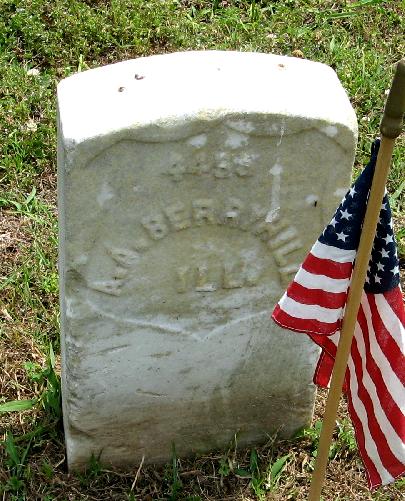
Berryhill marker, Vicksburg, Mississippi
Growing up in Virginia the symbols of the old South were ubiquitous, and I was accustomed to seeing the Confederate flag displayed, sometimes in official settings, but more often in an ad hoc fashion, as a statement I usually associated with red neck no-nothingism, or a solidarity with suspect southern values, one of which was racism. On the other hand, I knew a number of people who participated in Civil War battle reenactments in which the flag was integral, and although it isn’t my kind of thing, I’ve always understood the way in which both sides in the “War Between the States” were given equal respect. That was what I grew up with correct or not — that Robert E. Lee surrendered with honor at Appomattox — that the South may have been wrong, but it is our heritage, and is part of the history of who we are as a nation today.
So, I am a descendant of families that came to Jamestown, fought and died in the Revolution, married into the Creek Indians, and fought and died in the Civil War. My father once told me that my grandfather was a Republican, which was the party of Lincoln in the old South, and he said that he woke one night to the spectacle of a cross being burned in the front yard. I left the South to make my home in the Yankee city of New York, and lived for 15 years in Amsterdam, among the people who founded that city, New Amsterdam..
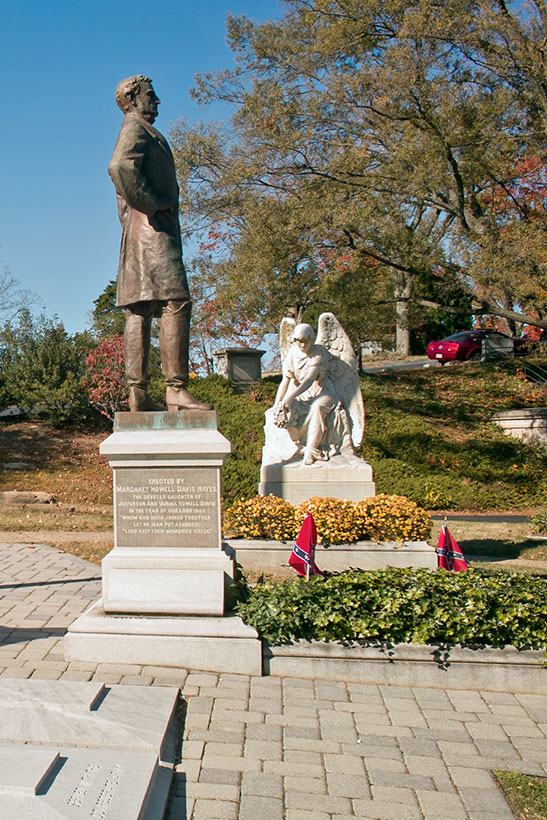
Jefferson Davis and Confederate flags, Hollywood Cemetery, Richmond, Virginia
© Brian Rose
Recently, I returned to Richmond for a funeral in Hollywood Cemetery, the gravesite of Jefferson Davis, the former president of the Confederacy, and the burial ground for 18,000 Confederate soldiers. There were visitors to Davis’s monument, tourists, or perhaps, those who venerated what he represented — I don’t know. And there were Confederate flags. Seeing the flags sent a chill through me on that already cold November day. The Stars and Bars as historical object is one thing, but when flown, (with a calculated impunity) is something else.
Let us remember those who died, right or wrong, in the Civil War. Let us show respect for that history as we seek to learn from it. But it is long past time for the Confederate Flag to fly over any capital in any state, and it is time to acknowledge, finally, that what is a symbol of heritage to some, is clearly a symbol of hatred to others. And as such, should be relegated to museums and text books once and for all.