Author: admin

  • New York/Atlantic City

    Now available on Amazon and in selected bookshops.

    I haven’t said much about this to my friends, but in the middle of producing my book, Atlantic City, I was struggling more and more with seeing what I was doing. I visited an ophthalmologist, and was told I had cataracts that were fairly advanced. I had the surgery right away and had multi-focal lenses implanted.

    The results were stunning. My book arrived from the printer, and I could not believe what I was seeing. The colors were more vivid, the details sharper. And yet the book I had created in relative dimness was beautifully balanced, the colors true. My doctor said I had compensated. Now, as I hold my finished book, the world is brand new, and the future brighter.

  • New York/Kevin Roche


    UN Plaza Hotel, 1984 — © Brian Rose

    Architect Kevin Roche died on Friday at 96. I photographed several of his buildings including the Metropolitan’s Temple of Dendur. For me, the most interesting project was the UN Plaza Hotel with its precisely juxtaposed towers. The lobby interior was, perhaps, over the top, but it certainly embodies the time period, 1984, when New York was just beginning to emerge from near financial ruin.


    UN Plaza Hotel, 1984 — © Brian Rose


    UN Plaza Hotel, 1984 — © Brian Rose

    The interiors of UN Plaza were officially landmarked two years ago, which was something of a breakthrough for preservationists who believe that recognition and protected status should extend to postmodern buildings along with mid-century modernism. I’m not sure that I especially like the glitzy mirrors of Roche’s hotel lobby, but I do not quarrel with the Landmark Commission’s decision. It would be a great loss to allow postmodernism, with all its hits and misses, to be erased from the cultural landscape.


    Ford Foundation and UN Plaza, 1984 — © Brian Rose

    The image above shows the Ford Foundation Building — arguably Roche’s finest building — with the UN Plaza. Difficult to get them both in, and probably not my best picture, but I remember going to a lot of trouble to get that vantage point.


  • New York/Atlantic City


    Pacific Avenue, Atlantic City — © Brian Rose

    I drove down to Atlantic City to meet up with Bill Sprouse of the online news outlet Route 40. We walked around key locations and revisited some of the spots I photographed for my book.


    Pacific Avenue, Atlantic City — Photo by William Sprouse

    On Pacific Avenue behind Boardwalk Hall and next to Delilah’s Den, I walked into my original photograph. Everything felt and looked the same — the overcast sky, the slight chill in the air. But something was amiss. It was Bill who pointed out that the “Free Parking” sign had been vandalized, or removed, in any case.

  • New York/Westside


    W
    est 35th Street, 1985 — © Brian Rose

    When I did my Meatpacking District photographs in 1985, I also walked up the westside through Chelsea, ending up in the 30s, the area now known as Hudson Yards. It was desolate in those days like many areas of Manhattan. In the picture above, only the tall buildings in the rear including the New Yorker hotel and the Empire State Building, remain standing.


    39th Street and 10th Avenue, 1985 — © Brian Rose


    From West 37th Street looking north, 1985 — © Brian Rose

    West 36th Street and 11th Avenue — © Brian Rose

    I didn’t include these pictures in my book, Metamorphosis, about the Meatpacking District, because I wanted a more focused book. I still think it was the right decision. But as I scanned this material, I realized that I had taken more photographs in Chelsea and the west side of Midtown than I thought. I’ve ben saying that the Meatpacking photographs were taken over a two or three day period in 1985, but looking at the number of images I have, and the various skies and weather conditions, I probably was out shooting 4 or 5 days, maybe more.


    34th Street and 11th Avenue, 2019 — © Brian Rose

    This is what the area looks like now. You come out of the new 7 train station into a maze of construction fencing, barriers, food carts, an inflated union rat with red eyes, and, all around, glass skyscrapers on the rise.

  • New York/Atlantic City

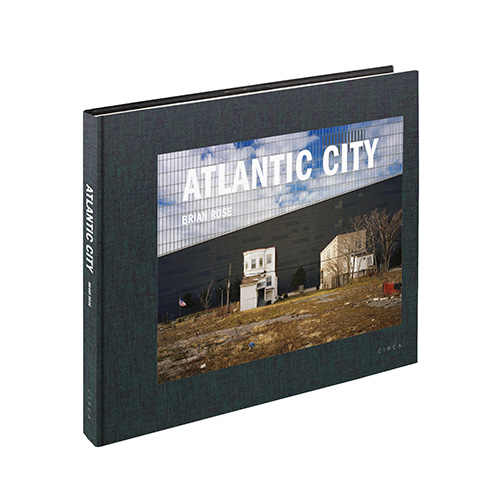
    I received my first copy of Atlantic City from the publisher today. It is absolutely beautiful. A spare but powerful presentation of photographs and text. Kickstarter backers and pre-orders will get books as soon as I have them. You can still pre-order for a limited time at a discount. Official publishing date is March 1. Stay tuned!


  • New York/Chelsea 1985

    West 20th and 10th Avenue 1985 (4×5 film) — © Brian Rose

    When I made my photographs of the Meatpacking District in 1985, I also walked up into Chelsea. I didn’t include those pictures in Metamorphosis, Meatpacking District 1985 + 2013, because I wanted a tighter, more focused, book. I scanned everything, however, but am just getting around to color correcting and posting those images on Instagram and here on my blog.


    West 21st. Street and 10th Avenue, 1985 (4×5 film) — © Brian Rose

    Like the Meatpacking District, the area had greatly declined from it heyday as New York’s docklands. Both passenger and freight shipping once lined the Hudson River along the westside of Manhattan. Trains serviced the warehouse buildings and markets — some freight cars coming by barge across the river — others on the High Line, the elevated rail viaduct that threads its way between and even through the buildings. Prior to that, tracks ran directly down 10th Avenue — the avenue of death it was called — because so many people were killed by the trains.


    London Terrace, 10th Avenue and 23rd Street, 1985 (4×5 film) — © Brian Rose


    23rd and 11th Avenue, 1985 (4×5) — © Brian Rose


    West 28th Street between 11th and 12th Avenues, 1985 (4×5 film) — © Brian Rose


    10th Avenue and West 23rd Street, 1985 (4×5 film) — © Brian Rose

    I made these photographs over several days in January and February 1985. It was time of transition for me, looking beyond Manhattan, which had been my photographic habitat for almost ten years. That summer I began photographing the Iron Curtain border — I went twice in 1985 — and that work became my primary focus for several years. After the wall came down, I have continued to follow developments in Berlin, returning every four or five years. So, 1985 was a busy year for me.


    West 36th Street, New York, 1985 (4×5 film) — © Brian Rose


    West 29th Street and 10th Avenue, 1985 (4×5 film) — © Brian Rose


  • New York/Amsterdam


    I
     Amsterdam sign before removal — © Brian Rose

    I used to live in Amsterdam back in 2004 when the city put up the “I Amsterdam” sign as part of a campaign to promote tourism. I hated it — being the highbrow urbanite that I am — but over the years it became an icon of the city, and even though I bemoaned the selfie taking riff raff — not sophisticated like me — I came to accept it begrudgingly. It was very, very, popular.

    The city council of Amsterdam in a stunning act of cultural vandalism has removed the sign.

    In a statement, reported by The Telegraph, (Councilwoman) Roosma said: “The message of ‘I amsterdam’ is that we are all individuals in the city. We want to show something different: diversity, tolerance, solidarity.”

    “This slogan reduces the city to a background in a marketing story,” she added. “Amsterdammers want to regain their grip on the city.”

    Let’s cut to the chase. This is exactly the opposite meaning of the sign. Anyone could stand up in front of those giant letters and say “I am Amsterdam.” I am a citizen of the world, I am white, black, yellow, it makes do difference, I am a local, I am a tourist, I am Amsterdam. We are Amsterdam, a cosmopolitan city that beckons to people of all races and creeds from around the globe.

    Removing the sign is a pathetic attempt to return to a cozier past when Amsterdam could be enjoyed by its own (mostly white) citizens. Never mind the polyglot Amsterdam of the Golden Age. Never mind the 100,000 Jews who once lived in Amsterdam and were wiped off the face of the earth. Yes, let’s purge the city of outsiders, unless they are the right kind.

    If that’s what people want, I am not Amsterdam.

  • New York/December 21


    The Berlin Wall, December 1989 — © Brian Rose

  • Verona, Italy


    Renee Schoonbeek, Verona, Italy — © Brian Rose

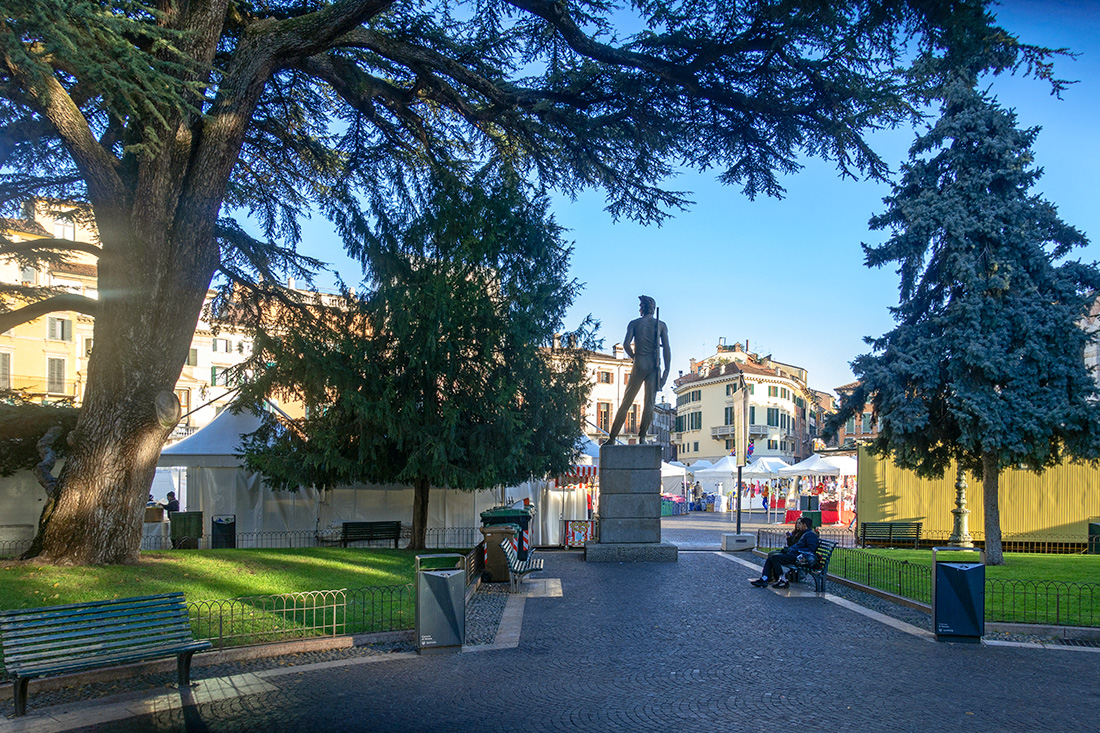
    Renee and I traveled to Verona, Italy to be on press for the printing of my book Atlantic City. We spent a day walking around the city, a beautifully preserved architectural wonder.

    On the second day we met up with David Jenkins of Circa Press and took a taxi to an industrial area on the outskirts of town. EBS is a world renowned printer of photo books, and it was a privilege to work with such skilled technicians.


    EBS, Verona, Italy

    Jonathan Bortolazzi of EBS, me, and David Jenkins of Circa Press looking at images just off the press.


    EBS, Verona, Italy — © Brian Rose

    Three giant presses ran almost continuously while I was there.


    EBS, Verona, italy — © Brian Rose

    A sheet with eight images and approval signature. The book has now been printed and the binding will be completed by mid-January.


    Piazza Bra — © Brian Rose

  • New York/Alex Harsley


    Alex Harsley — © Brian Rose

    Alex Harsley, master photographer and oracle of 4th Street. I’ve known Alex since the late 1970s when I moved to the building next to his storefront gallery. Alex’s work spans multiple decades and multiple genres — photojournalism, street photography, portraiture, manipulated images, video. His pictures run up and down the walls of his tiny space at 67 East 4th Street, a crazy quilt installation of endless fascination and discovery. Stop in and chat with Alex. You won’t get this at any establishment museum — you have to seek it out yourself.


    Alex Harsley photographs, portrait of Jean-Michel Basquiat at left — © Brian Rose


    Alex Harsley photograph — © Brian Rose

    Scanning the walls of Alex’s gallery, I came across an image I hadn’t seen before of a group of men in front of a storefront somewhere in New York. It reads like a still from an unknown film noir movie shot on the streets of Spanish Harlem. Back when men regularly wore hats, jackets, and leather shoes. One can only speculate the relationships between the figures standing or walking through, the glances this way and that. The man is the foreground is particularly vivid with the patterned jacket, buttoned up white shirt, and mustache over pursed lips.


    1679 Madison Avenue near 111th Street

    I figured out where Alex’s photograph was taken — 1679 Madison Avenue near 111th Street on the east side of Manhattan. It’s the only building still standing on the block. In the 1950s when the picture was made. there was a thriving Latino community, but it eventually all came apart, like so many places in New York. A bland housing project now looms in the background.

    This is but one of dozens of photographs on the walls Alex Harsley’s gallery.


    Alex Harsley — © Brian Rose


  • New York/Atlantic City

    Pre-order Atlantic City here.

  • New York/Toronto


    Toronto — © Brian Rose

    A short stay in Toronto, I walked around downtown and then wandered along the waterfront and out to a rather desolate area to the east. The weather was damp and chilly, but I had a great time.


    Toronto — © Brian Rose


    Toronto — © Brian Rose


    Toronto — © Brian Rose


    Toronto — © Brian Rose


    Toronto — © Brian Rose

  • New York/Proofs

    Atlantic City is getting closer and closer to being published. Just got the proofs from the printer, and everything is looking great. The books will be printed in late November in Verona, Italy.

    Atlantic City will be released early in the new year. It is a book about Trumpian dystopia — casino capitalism — money laundering — disturbansim — architectural gimcrackery — global warming — salt water taffy — and a city both malignant and magnificent.

  • New York/ICP


    New ICP exhibition space — © Brian Rose

    Last week I took part in a tour of the new International Center of Photography on the Lower East Side of Manhattan. The tour was led by executive director Mark Lubell, and three of my ICP students joined the group of about 15. The building is essentially complete as a shell, but it will take about a year to do interior construction.

    The gallery spaces are dramatic and spacious, and will provide the flexibility to do all kinds of exhibitions from intimate to grand scale. The building will include a book store, cafe, library, and — actually in an adjoining structure — the ICP school. The new ICP is part of the Essex Crossing development and sits opposite The Market Line, a marketplace featuring food and culture, which will be a destination in itself.


    Mark Lubell, ICP executive director — © Brian Rose


    ICP school space — © Brian Rose


    ICP rooftop event space — © Brian Rose

    The new ICP will also include a large event space and rooftop terrace, which will be used to generate income for the institution. The whole complex is spectacular, and is very much a game changer for ICP, and, potentially, will elevate the centrality of photography — its history and ongoing development — in New York City.

    ICPs public may need some coaxing to find their way to the Lower East Side, but there is a subway station across the street, and, at least psychologically, a closer connection to Brooklyn and a city that is increasingly multi-centered. The Lower East Side with its immigrant past has itself been integral to the history of photography, and many of its most important figures — Jacob Riis, Lewis Hine, Berenice Abbott, Helen Levitt, Weegee, Nan Goldin, to name just a few — have worked or lived here. It seems fitting that the International Center of Photography should make this its new home.


  • New York/Portrait


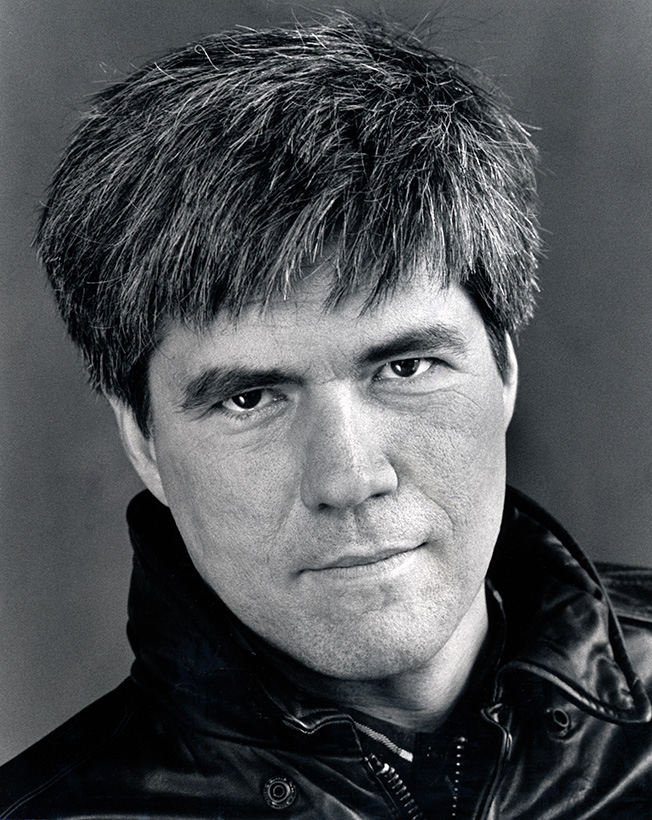
    Brian Rose portrait — photo by Marion Ettlinger

    Around 1992, I was recording songs for a possible album — Suzanne Vega was producing. We needed a portrait for PR. I wanted something strong, without artifice, something like a picture I had seen of one of my writer heroes Raymond Carver. So, we went to the source, the great Marion Ettlinger. I went to her studio downtown. No lights, no props, black and white film, salt and pepper hair.

  • New York/Atlantic City

    Atlantic City is complete. The pictures are sequenced, the quotes and comments finalized, and the essay by Paul Goldberger written.

    Trump, for all intents and purposes, milked Atlantic City, and left it even poorer and more troubled than he had found it. The dream that casino gambling would turn Atlantic City into Las Vegas was never realistic in the first place, of course, and so it cannot be said that it was destroyed entirely by Donald Trump. But Trump saw a city down on its luck and did all he could to exploit it, and to take more out of it than he put into it.

    The city is now as bleak as ever, as Brian Rose’s magnificent photographs show us. Indeed, it is bleakness that is the constant theme of these images, a sense of emptiness and an utter lack of urbanity.

    — Paul Goldberger

    Everything now goes to the printer, and we should have books in January or February. You can pre-order Atlantic City now, and these sales directly offset the cost of producing the book. So, please consider purchasing.

    Pre-order Atlantic City

    Circa Press


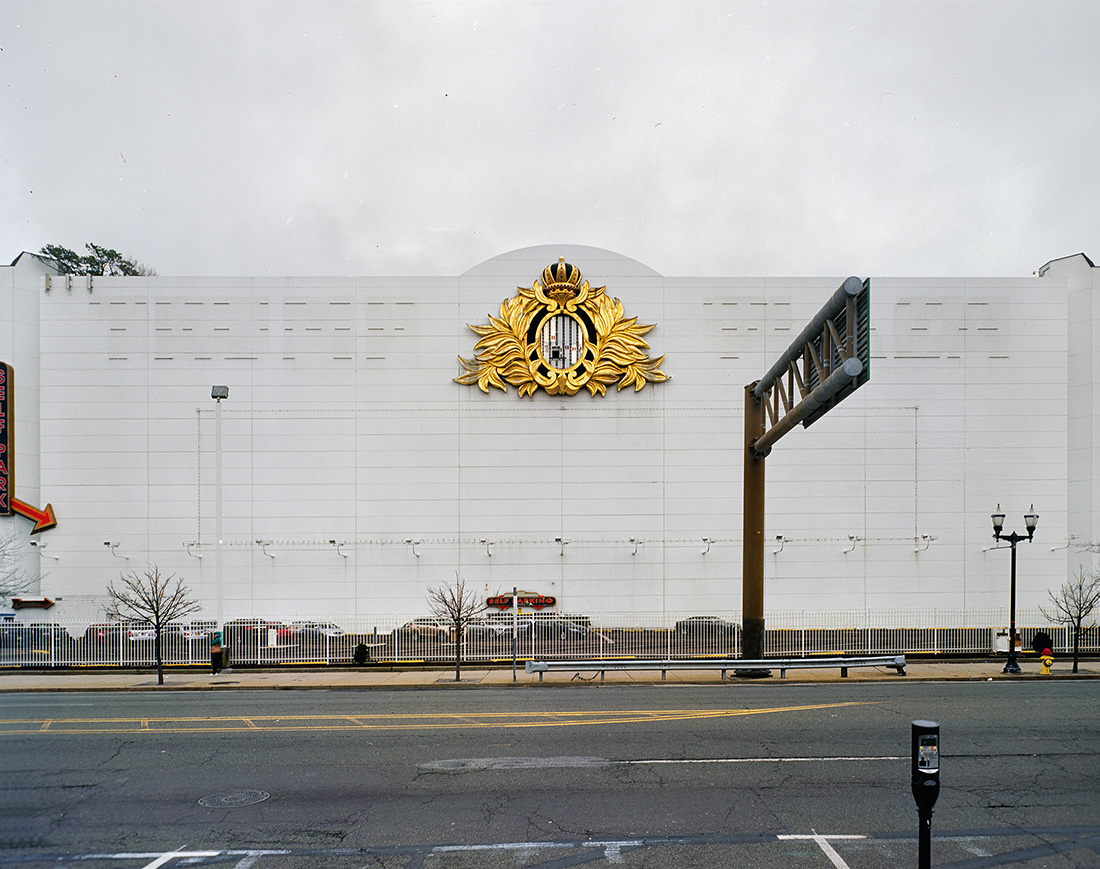
    Former Trump Plaza Casino — © Brian Rose

  • New York/Venturi

    Thoughts on hearing of the death of Robert Venturi.

    When I think about my early influences as a young photographer, I always return to the fact that I was an urban design major at the University of Virginia in the early ‘70s. I left the field to go to art school, but my path as a photographer has always circled back to that original interest – a fascination with the built environment.

    Planners and architects want order, by and large, and great buildings often stand apart from the riff raff of the visual turmoil of the city. I was torn between the ideas of order and chaos in photography. I wanted both. I wanted formally rigorous photographs, but I also wanted to include the random detritus of urban life. I struggled with this dichotomy at first, but eventually came to celebrate it.

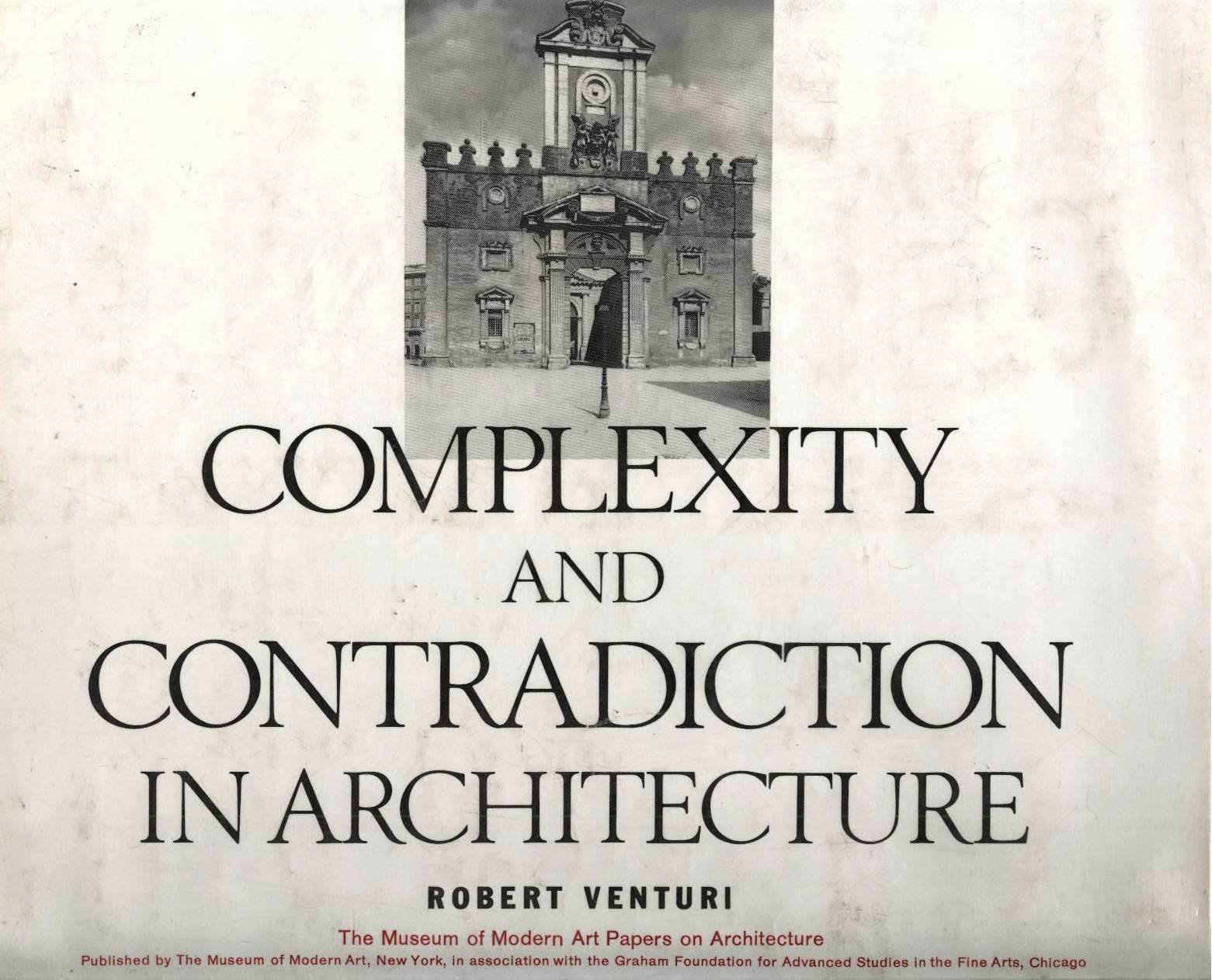
    At some point during the ‘70s I came across Complexity and Contradiction in Architectureby Robert Venturi, and subsequently, Learning from Las Vegas by Venturi and Denise Scott Brown. Complexity and Contradiction called for a more inclusive way of looking at architecture, and Learning from Las Vegas expanded on the idea that vernacular architecture was a legitimate expression of the world we lived in, and should be embraced, not denigrated.

    It was an easy jump for me to apply these ideas to photography, and I was certainly not the only photographer inspired by Venturi and Scott Brown’s writing. Although I loved the elegantly minimalist work of artists like Donald Judd and Agnes Martin, I found that the more reductive photographs became, the less they interested me — the less they seemed to utilize the descriptive power of the medium. As Venturi wrote: “I am for messy vitality over obvious unity. I include the non sequitur and proclaim the duality.”
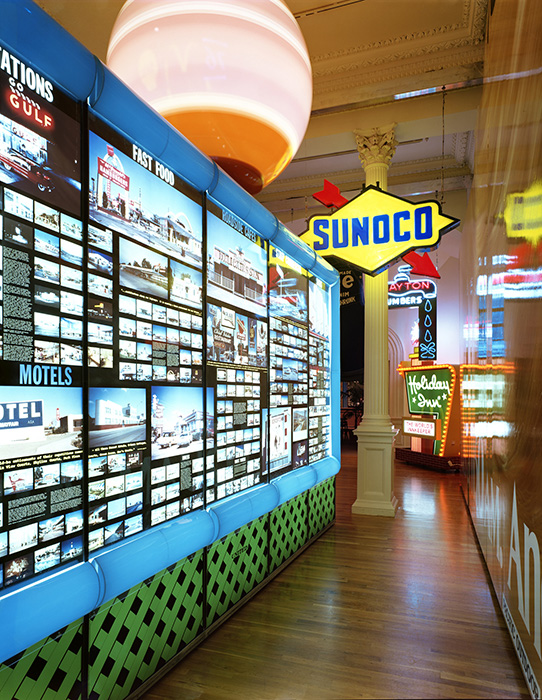

    Signs of Life: Symbols in the American City

    In 1975 Venturi commission Stephen Shore to make photographs for an upcoming exhibition at the Renwick Gallery in Washginton, D.C. called Signs of Life: Symbols in the American City. It was a match made in heaven: Shore’s omnivorous eye and Venturi/Scott Brown’s inclusive architectural philosophy. Shore said later, “I traveled from Los Angeles to New York and photographed along the way, keeping in mind a list of different kinds of architecture that Scott Brown and Venturi had given me.”
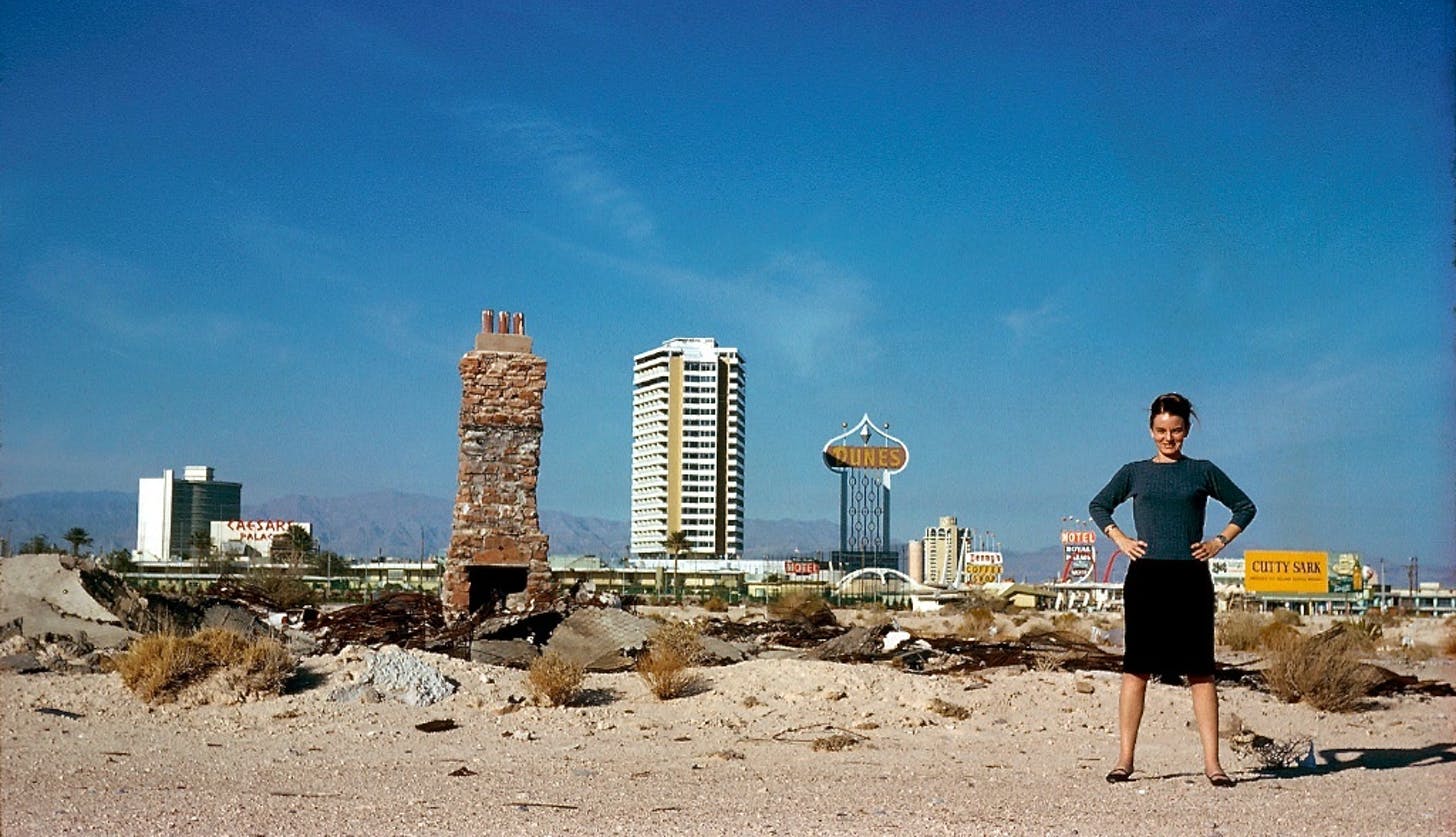

    Denise Scott Brown

    In 1975 I was in Baltimore studying photography, and although I was unaware of the show at the Renwick, I did discover the work of Stephen Shore along with the color photographs of William Eggleston and Joel Meyerowitz. They are each very different artists, but all share an interest in giving expression to the commonplace – the world as we find it.

    Aaron Betsky, the architectural critic, recently wrote:
    Toward the end of Complexity and Contradiction, Venturi quoted art historian August Heckscher when he said that he wanted a “unity which ‘maintains, but only just maintains, a control over the clashing elements which compose it. Chaos is very near; its nearness, but its avoidance, gives … force.’ ” He then ends the book with a call for us to look at the “everyday landscape, vulgar and disdained,” to inspire “architecture as an urbanistic whole.”

    Photography has been connected to architecture and the urban landscape from the very beginning – from Niépce’s first fleeting image of buildings outside his window – to Atget, Abbott, and Evans. Robert Venturi and Denise Scott Brown’s ideas about landscape and architecture have inspired, directly or indirectly, a whole generation of photographers. We have all absorbed their method of keen, but non-judgmental, observation, whether we’ve thought about it or not. We take it for granted, a fact that illustrates the depth and breadth of what Venturi called his “gentle manifesto.”

  • New York/Meatpacking District

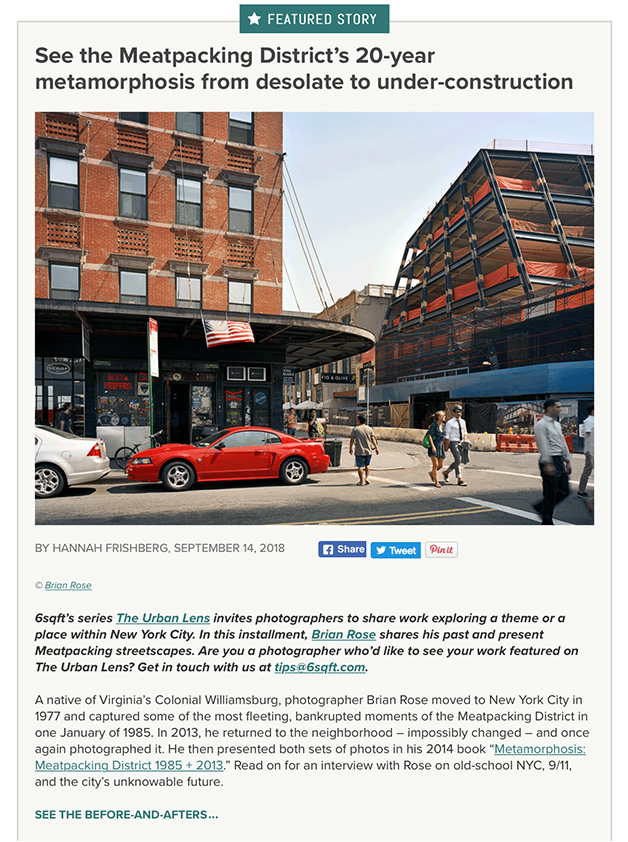
    An interview I did with Hannah Frishberg of 6sqft, a website about New York City urbanism, real estate, and architecture. It focuses on Metamorphosis, my book about the Meatpacking District, includes comments about my Lower East Side and World Trade Center work, and touches on my recent photographs of Atlantic City.

    For those of you who missed my Kickstarter campaign, I am taking pre-orders for Atlantic City. Please consider buying now, not just to save a little money, but because it helps directly in defraying production costs.

    Atlantic City is very close to completion, and I”m really excited about how it is turning out. I’ve often used personal commentary in support of my pictures, but this time I bring in carefully selected external quotes. Text has been used, of course, in other photo books, Atlantic City extends the concept in a way that I haven’t seen before.