Author: admin

  • New York/Lower East Side


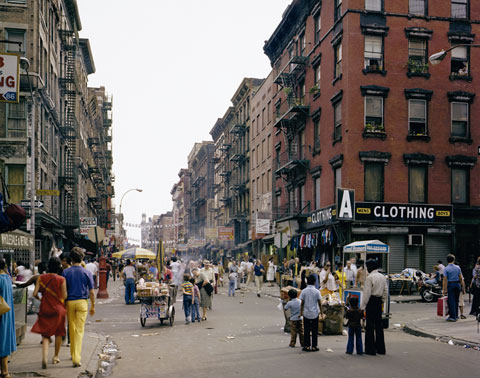
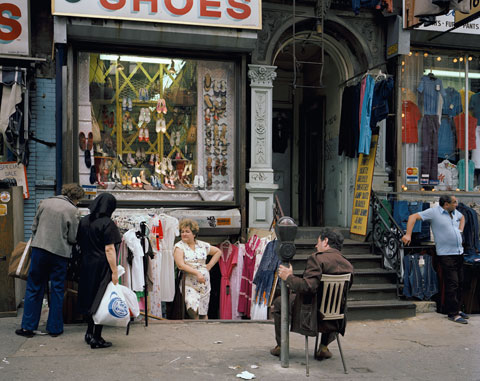
    Orchard Street, 1980 (4×5 film) — © Brian Rose/Ed Fausty

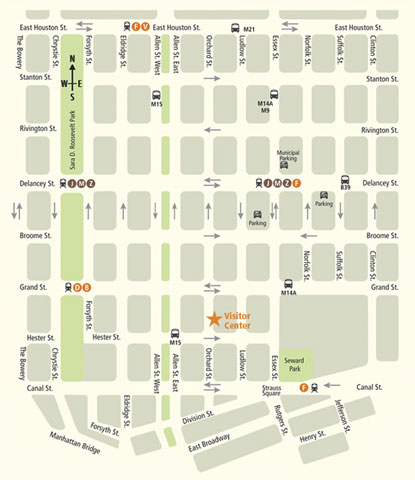
    My exhibition at the Lower East Side Visitor Center begins this evening–reception from 6 to 8pm. Art galleries throughout the Lower East Side will be open until 9pm. Maps and guides are available at the Visitor Center. Please feel free to stop by and say hello. The show will have 14 images primarily of the area below the East Village, an equal number between 1980 and recent photographs. The show will run through Thursday April 21.

    54 Orchard St. (between Hester and Grand)
    New York, NY 10002
    212-226-9010


  • New York/Lower East Side


    Orchard Street, 1980 (4×5 film) — © Brian Rose/Ed Fausty

    My exhibition at the Lower East Side Visitor Center begins tomorrow evening–reception from 6 to 8pm. Art galleries throughout the Lower East Side will be open until 9pm. Maps and guides are available at the Visitor Center. Please feel free to stop by and say hello. The show will have 14 images primarily of the area below the East Village, an equal number between 1980 and recent photographs. The show will run through Thursday April 21.

    54 Orchard St. (between Hester and Grand)
    New York, NY 10002
    212-226-9010

  • New York/Jack Hardy


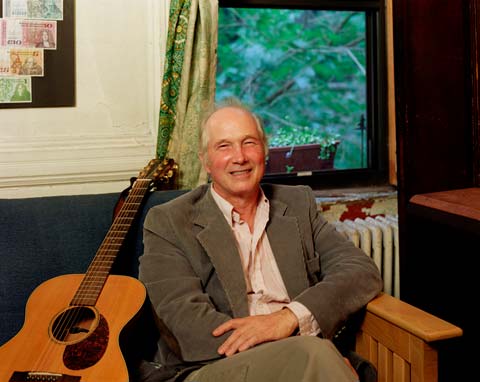
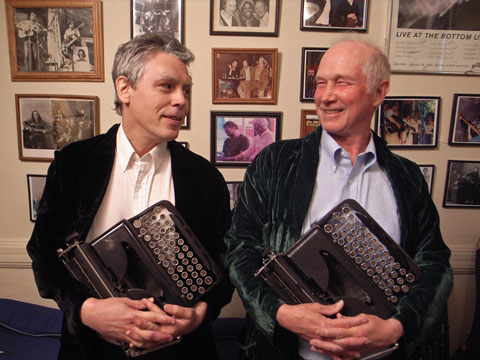
    Jack Hardy in his apartment on Houston Street (4×5 film) — © Brian Rose

    Jack Hardy, the extraordinary song craftsman, and one of my most cherished friends died last night of cancer. New York Times obituary here.

    From The Boulevardiers by Suzanne Vega:
    (I am the tall lover of the city, Jack the quick and fair.)

    He loves the city with the bricks and broken bottles
    and the pretty little flowers as they grow against the wall.
    He is dark, he is tall, he is the tallest one of all of us.
    You are bright and quick and fair
    and seems that you have lost some hair
    but this is all right.
    This is OK. We do not mind.
    We write and fight and sing
    and this is fine.


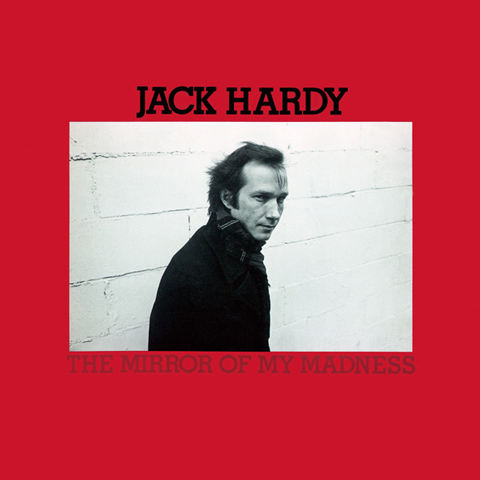
    This is the cover of one of Jack’s earliest albums. I did the photograph. It was originally a blank LP  sleeve, and we called it the White Album. At some point a record company picked it up and a proper cover was made. I don’t remember the location of the photograph, but it was undoubtedly somewhere in Greenwich Village, or very possibly near my apartment in the East Village.

    When I met Jack in 1977 he was a charismatic figure full of a sense of personal destiny. The picture above expresses some of that ambitious confidence–and an image carefully cultivated. Later, the trajectory of his career leveled off, but his songwriting skills did not. If anything, they grew and deepened over the years.


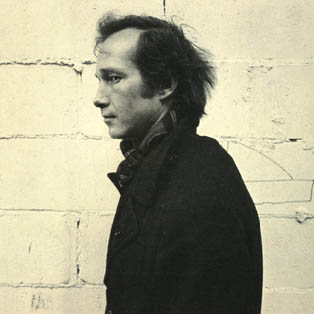
    Jack Hardy — © Brian Rose

    This photo found on the internet is from the same session as the one above. I do not seem to have the negatives, although I haven’t finished looking. I may have some prints. I am guessing that I gave the negatives to Jack shortly after they were made, and they may be in his archive. Nothing was digital in those days, of course.

    UPDATE:

    Arrived somewhat late to an impromptu memorial concert at Banjo Jim’s, a small club in the East Village. I sang The Skyline, my song about 9/11, which was partly a response to Jack Hardy losing his brother in one of the Twin Towers. I did it  a capella, less than perfectly, but I give myself some credit for bravery. Several people did wonderful versions of Jack’s songs, and we ended with Go Tell the Savior led by David Massengill with one of the verses sung beautifully by Jim Allen. I hear that a bigger, more formal memorial is being planned.

    MORE PHOTOS:


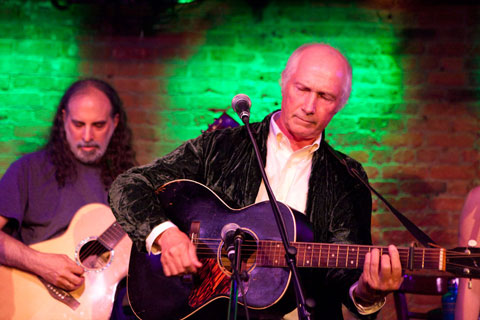
    The Folk Brothers, David Massengill and Jack Hardy, 2010 — © Brian Rose


    Folk City 50th anniversary, Mark Dann and Jack Hardy, 2010 — © Brian Rose


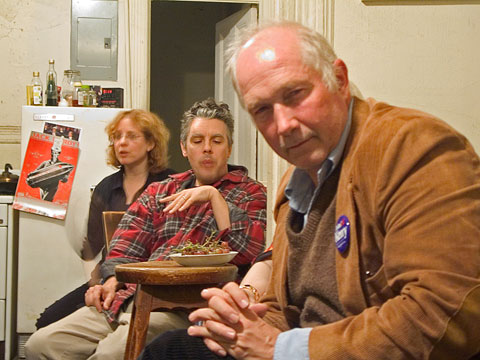
    Jack Hardy and David Massengill, Houston Street apartment — © Brian Rose


  • New York/Andrew Moore


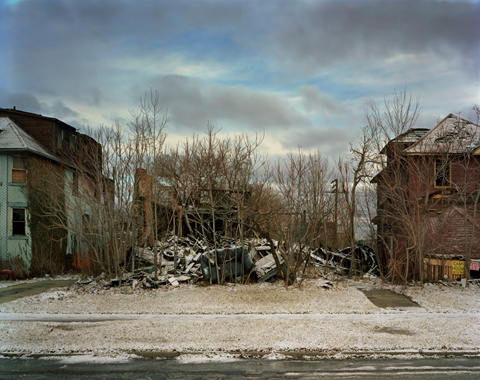
    Couch in Trees by Andrew Moore

    I went to a slide talk by Andrew Moore at the Mid-Manhattan library last night. I’ll be doing a talk there myself on March 29–see my homepage for information. Moore is around my age, also an early practitioner of color, and normally uses a view camera. Moore’s latest work deals with Detroit, principally what has happened to this once great industrial powerhouse, now a symbol of American decline.

    Many of Moore’s photographs describe the ruins of Detroit. Much has been written recently about “ruin porn” and photographic exploitation, and Moore’s work is frequently pointed to–either positively or negatively. I am not prepared to comment at length on the subject, at least for the moment, but I will say that Moore came across last night as open and sympathetic. There was some push back from several people who have roots in Detroit and who feel that Moore’s work does not treat the place altogether fairly. But in general I felt it was a useful and respectful conversation all around.

    Here is an article about the subject.

    I will be addressing some of the same concerns when I do my presentation in two weeks. I expect that some people will appreciate my evenhanded approach to photographing the Lower East Side, while others may feel that it doesn’t engage the politics of gentrification directly enough. I, too, have photographed ruins–as well as new construction. Sometimes it is hard to tell the two apart, which is one of the points I want to make.


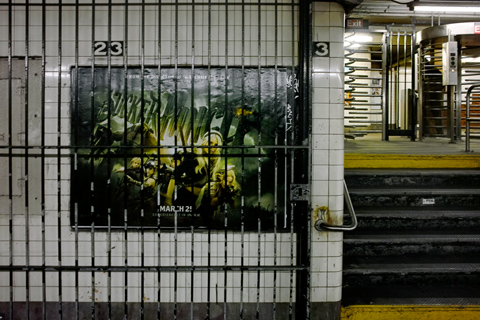
    23rd Street subway station — © Brian Rose

    Sucker Punch.


  • New York/Uniquity


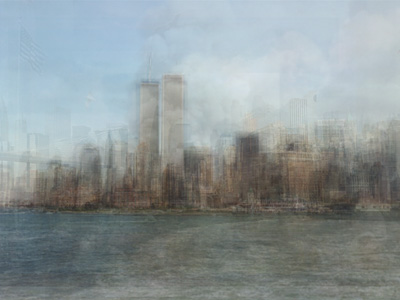
    Lower Manhattan by Corinne Vionnet

    Photographic plagiarism is an almost meaningless concept. I don’t mean the stealing of copyrighted images, which is generally a well-defined legal matter, but the idea that particular images of places and things are proprietary, that repeating the same view, or imitating another photographer’s compositional approach, constitutes an infringement of someone’s unique vision. It is possible to point disapprovingly at photographers who deliberately copy the work of others. You can call them unoriginal, even unethical. But it is a slippery slope to go down because the reality is that the visual world is fair game.

    Corinne Vionnet’s images of popular tourist sites around the world demonstrates this well. She combines hundreds of photos available from Flickr and other photo sharing services taken from similar perspectives creating ghostly mimetics–pictures of pictures–expressing collective visual iconography.

    Vionnet:

    The images made by tourists are picture imitations. They demonstrate the desire to produce a photograph of an image that already exists, one like those we have already seen. It is in fact a style of manipulating the viewer. Why do we always take the same picture, if not to interact with what already exists? The photograph proves our presence. And to be true, the picture will be perfectly consistent with the pictures in our collective memory.
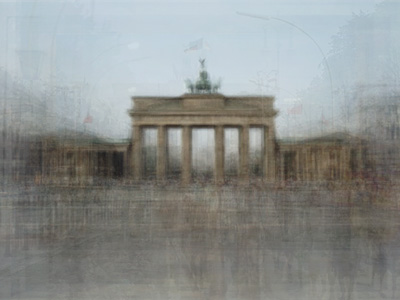

    The Brandenburg Gate by Corinne Vionnet

    I use the two image above because they include icons that have figured prominently in my own work. Although I strive for images that go beyond visual cliches, I have never entirely avoided the obvious or the commonplace. The urban landscape we live in–even the natural landscape–is to a great extent prepackaged,  designed, and pre-consumed. I consciously work with and against these structural constants, both physical and those imprinted on our brains. The pictures below could easily work into Corinne Vionnet’s Brandenburg Gate compilation.
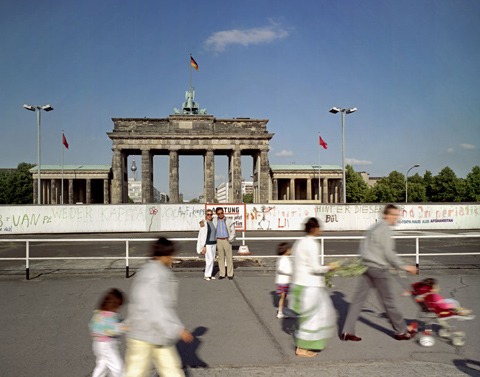

    The Brandenburg Gate, 1985 (4×5 film) — © Brian Rose
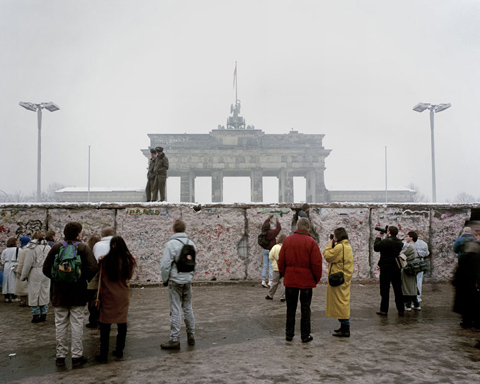

    The Brandenburg Gate, 1989 (4×5 film) — © Brian Rose
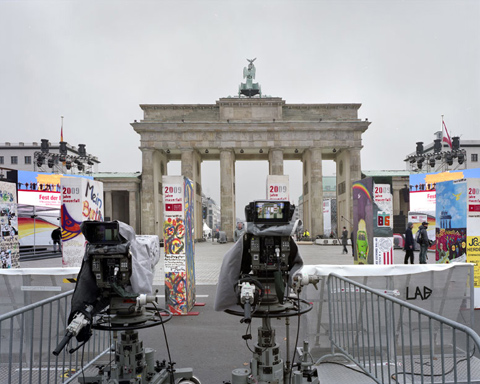

    The Brandenburg Gate (4×5 film) –© Brian Rose

    All three of my Brandenburg Gate pictures are locked into the axial and symmetrical nature of the space and architecture, but they are all on some level meta-images, images about images, a step removed from representation of the icon itself.

    As much as I feel that I own the subject of the Berlin Wall, and to a much lesser extent Berlin itself, there have been lots of other photographers who have covered the same terrain, sometimes coming up with startlingly similar images. I have known and admired John Gossage’s work since I was a student. His book The Pond has recently been re-released. I did not know, however, until a short time ago that he also photographed the Berlin Wall back in the 80s around the same time I was there. Here are two of our photographs taken from similar vantage points:
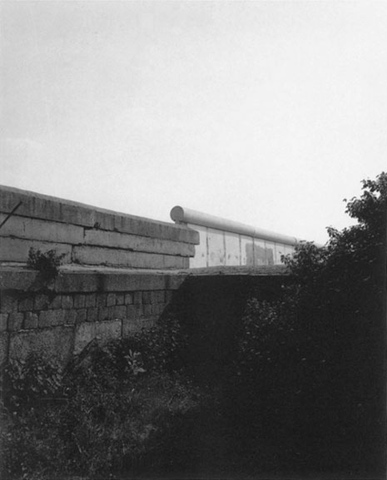

    The Berlin Wall by John Gossage
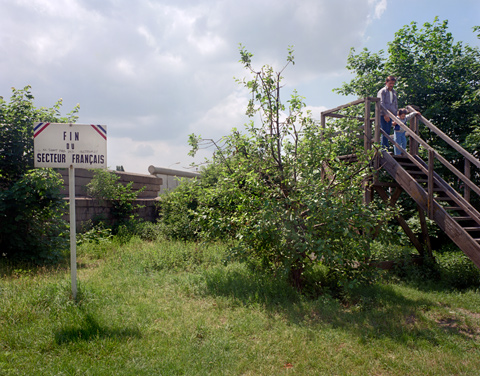

    The Berlin Wall (4×5 film) — © Brian Rose

    Another photographer I greatly admire is Thomas Struth, who has photographed streetscapes and architectural subjects all over the world including Berlin. Just after the Wall came down he and I, unknowingly, both photographed along Bernauerstrasse where a wide swath of former no man’s land sliced through rows of buildings in the neighborhood Prenzlauerberg. Here are two pictures:
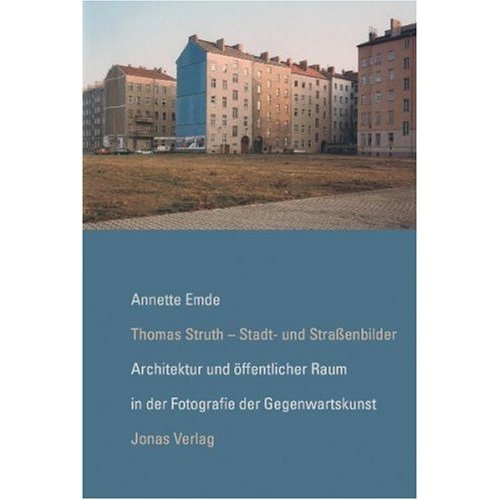

    Photograph by Thomas Struth
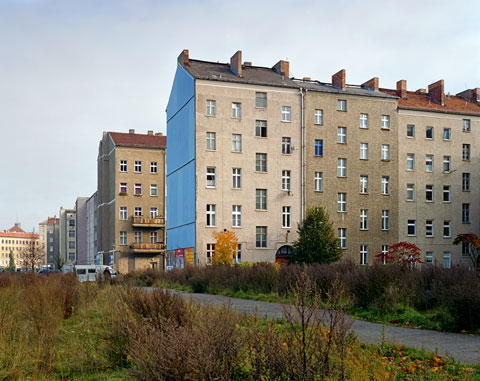

    Bernauerstrasse (4×5 film) — © Brian Rose

    The world is awash in images. Legions of photographers, professional and amateur, have fanned out across the globe to document seemingly every scrap of land and every crumbling ruin no matter how banal. For me, it is occasionally deflating, thinking about this glut of imagery. But I have been doing this for a long time, doggedly following my nose where it leads, ignoring the trends and the crowds. Sometime, when I set up my view camera, people point their cameras over my shoulder, or even stand right in front of me and take a picture of what they think I am photographing.

    What to make of all these similar images of the same subjects? For one thing, they are rarely identical. A millimeter this way or that can make all the difference. The transient quality of light and atmosphere. The passing stray cat, the discarded soda can, the random interplay of people moving through the scene. All these variables give the image its uniqueness. But what’s equally important, I think, is not the individual photograph, but the gradual accretion of images made over an extended period of time by a particular photographer.

    I think it’s inevitable that photographer’s paths will cross and images occasionally overlap. You can’t copyright a view, and there are a lot of 1/125ths of a second to go around. Imitators will be seen for what they are. But don’t try to steal one of my images of the Brandenburg Gate. If you don’t want to pay for the rights, you can always go to Berlin, find where I stood, and get your own Brandenburg Gate.


  • New York/14th Street


    14th and First Avenue — © Brian Rose


    13th and First Avenue — © Brian Rose

    Two images made a minute apart.

  • New York/Soho


    Spring Street subway station — © Brian Rose

    Without comment.

  • New York/Gimcrackery


    Photograph by Olivio Barbieri

    Innovation is difficult to achieve in photography, particularly if one remains rooted in the descriptive side of the medium. There has never been a requirement, of course, that one stick to what is sometimes called “straight photography.” And from the get go, photographers have used the medium to create alternate realities–staged or transformed.

    As is easy to tell from my work, I am partial to reality based photography, and I eschew what I see as passing technological fads that come during or after the fact of exposing an image on film or a digital sensor. Sure, we can get into semantic philosophical discussions about what reality is, or to paraphrase former president Bill Clinton, on the meaning of what is is. Be that as it may, I’d like to propose two trendy “innovations” for the nearest trash bin.


    Photograph by Miklos Gaal

    Selective focus tilt/shift photography. Olivio Barbieri did it first–or at least made a career of it first–and then there’s Miklos Gaal. And now there are legions of followers using either expensive tilt/shift lenses, like those used in architectural photography, or Photoshop to achieve similar results. The world looks toy-like, miniature. In all the pictures, all the time.


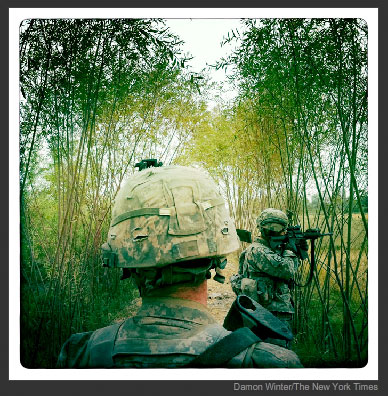
    Photograph by Damon Winter from Lens Blog, the New York Times

    Lens, the New York Times photo journalism blog brings to our attention a new effect. It’s the Hipstomatic app for use with cell phone cameras. It makes everything greenish, washed out in the middle, and contrasty. Damon Winter used it in making photographs of soldiers in Afghanistan, and he makes a very compelling case for the notion that he is telling stories with the camera, which allows for interpretive latitude. Others argue that it undermines the truth telling of photo journalism.

    I have no problem with Winter’s perspective on story telling–I have grown skeptical of the highly selective “truthiness” of much photo journalism, and I applaud the efforts of photographers like Tim Hetherington to push the boundaries. In any case, my problem with effects like the Hipstomatic app is that they are so nakedly obvious. And as such I find it near impossible to see beyond the effects to what may be larger intended meanings.


    JR, photographs on the Israeli West Bank barrier

    The Times Magazine just did a multi-page article on JR, the “photograffeur,” who uses photography as street art. He photographs people in their communities and then blows up the images to huge size and pastes them to walls, buildings, even on the roofs of whole shanty towns–in the latter case visible only from the air. He gives faces and voices to people who are often unseen, unheard. This is photographic performance documented, integrated into the physical places where the images originate. This is brave stuff. Innovative. Not always legal. Using technology. Sometimes walking a thin line between empowerment and exploitation. But using the power of images and media in a new way. Without gimmicks.

  • New York/Lower East Side

    E1st Street — © Brian Rose

    Bicycles.

  • New York/Lower East Side


    E1st Street — © Brian Rose


    Stanton Street — © Brian Rose

    Walking around the neighborhood.

  • New York/WTC Book

    WTC  book cover — © Brian Rose

    WTC is now available for purchase. Call it a soft opening, I will be sending out books to key editors and individuals, and will endeavor to gradually get the word out. I will certainly do an announcement at my Lower East Side slide talk on March 29. Scroll down for information about that. I’ll be doing reminders as the date approaches.

    The book is available in two sizes, 8×10 and 11×13. The large book is really beautiful. It is made with heavier paper, a bit glossier coating, hard cover only.  It is $125.  If you can afford it, get this one. The small book is available in either soft or hard cover at $45 or $57.

    All my books are now available in the sidebar to the right or from my  books page here.

  • New York/NEA Survey Grants


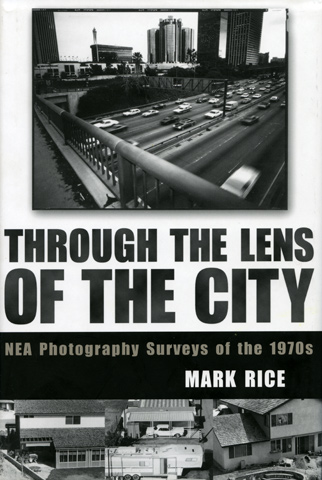
    Book cover with images by Bill Owens and Joe Deal

    Final comments on Mark’s Rice’s Lens of the City, NEA Photography Survey of the 70s. I was a participant in one of these surveys in 1981. Scroll down for other posts.

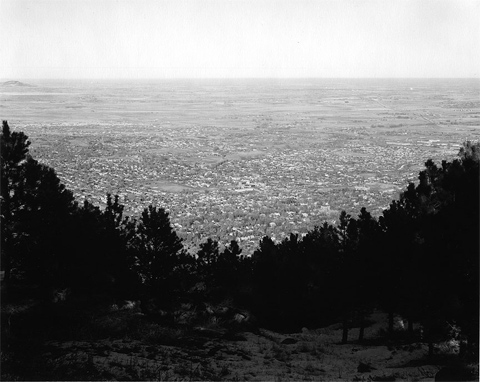
    Much of the book is spent exploring the art/documentary dichotomy, which was highly controversial during the years that the NEA funded survey project between 1976 and 1981. Many of the commissioned photographers operated in a traditional documentary manner–a  sort of long form of photo journalism. But others, the ones we are most likely to know about today, were working under different precepts. These photographers, Robert Adams, Joe Deal, Frank Gohlke, among others, created images that were factual but neutral, allusive rather than didactic–and it was understood that photographic truth was by its nature contingent.


    Photograph by Robert Adams

    Many critics and viewers were unsatisfied with photography that did not “tell,” but rather suggested, or simply raised an eyebrow. It would seem that the result of all the projects funded by the NEA was an unfocused, discursive view of the American urban scene. Certainly, the project I was involved with–photographing the Lower Manhattan in 1981–was a curious mixed bag of photographic styles and approaches. Ed Fausty and I, working together and later alone, were the youngest of our group, and we were working in color with a view camera while the rest were shooting in black and white with small cameras. I don’t remember the other photographers’ work except for Larry Fink who photographed the hurly-burly atmosphere on the floor of the stock exchange.


    Photograph by Lee Friedlander


    Photograph by Joel Meyerowitz

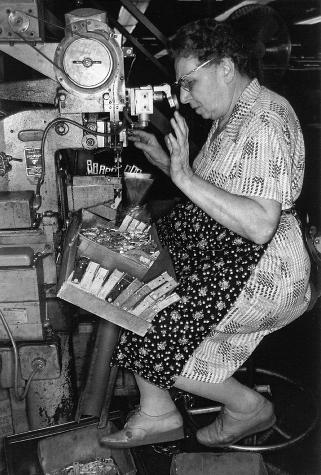
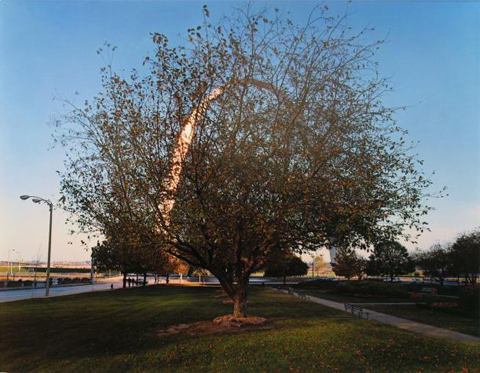
    The NEA projects may have been uneven in quality, but individual photographers often did exemplary, even groundbreaking, work. Several of the projects funded the work of single photographers with noteworthy results. Joel Meyerowitz’s St. Louis and the Arch and Lee Friedlander’s Factory Valleys were among the finest explorations of the urban landscape of their era. Friedlander’s project extended beyond place by incorporating images of people and the machines they operated. These are some of his strongest photographs–formally arresting, as always, but simultaneously expressive of the human condition.

    In the end, the NEA survey grants were killed not so much by disagreement about what constituted art vs. documentary photography, but by the ascendancy of conservative politics. It did not matter that the survey grants were administered by local institutions and communities, nor did it matter that the grants were required to find matching funding from private sources. The survey grants ended with Ronald Reagan’s election, and in a few years, the individual artists’ grants would also be eliminated.  We have had a neutered and ineffectual National Endowment for the Arts ever since.

    Government funding of the arts will always be problematic, but when art is left primarily to the galleries whose interests tend toward protecting relatively small stables of brand names, the result is brutally Darwinian. Meanwhile, the schools keep churning out MFA grads, and a cottage industry built on webzines, blogs, contests and portfolio reviews picks up the slack, sometimes receiving funding from the NEA and private benefactors. But where is the support for individual artists? When I think of the burst of work done during the few years of the NEA survey grants–made for a minuscule fraction of the NEA’s budget of around $150 million in 1980–well, it’s obvious that our priorities are a tad skewed.

    I don’t recall exactly how much money I got to do my photographs of Lower Manhattan. Maybe $2,500. At the time I was 27 years old, and it seemed like a fortune.

  • New York/Lower East Side


    Sol Moscot Opticians, Orchard Street — © Brian Rose

    Without comment.

  • New York/Lower East Side

    This is still a ways off, so this is an early alert.  I’m planning to step through the book, reading short text pieces, and sharing observations and anecdotes. I will have a limited number of books for sale, and plan to use the occasion to announce my new WTC book. I will, of course, be available for questions afterwards, and look forward to meeting people. Hope to see you there!

    This may be the first Blurb book presentation at the New York Public Library. A commentary of sorts on the state of photo book publishing.

    Don’t worry, I’ll be posting reminders as the date approaches.

  • New York/Cooper Square


    Cooper Square (4×5 film) — © Brian Rose

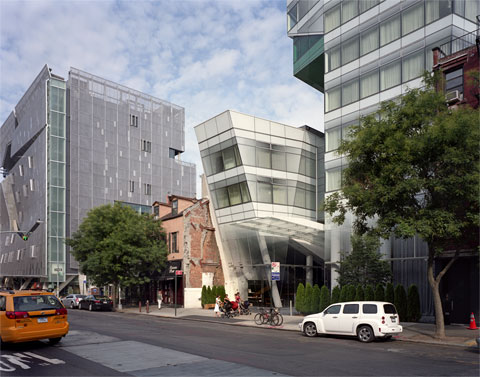
    The small federal-style building at center dating from the early 19th century may not stand much longer. It is now surrounded by scaffolding, and demolition of the roof has begun. The city has just issued a stop work order, but my guess is that it will only postpone the inevitable. The preservation groups seeking to save the character of the Bowery–this is the northern extension of the Bowery–are admirable, but rather late as you can see by the architectural context. Here is the latest news.


    Cooper Square — © Brian Rose

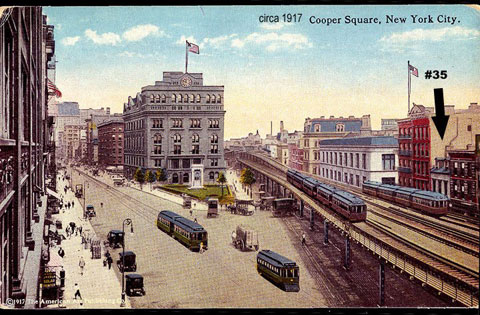
    Presumably, the vacant lot at the corner of Third Avenue and E6th Street would be joined with the land under 35 Cooper Square to create a larger site for development.


    Cooper Square in 1917

    Even in 1917 few of the federal period buildings remained in this part of town.

  • New York/NEA Survey Grants


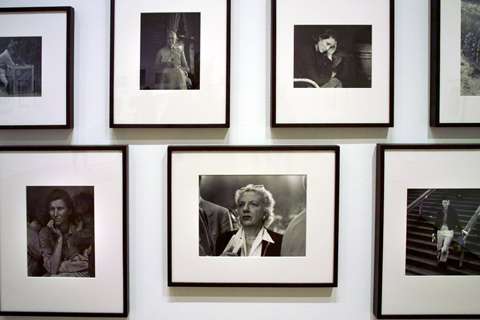
    Dorothea Lange photographs, the Museum of Modern Art — © Brian Rose

    I’ve been reading Through the Lens of the City, NEA Photography Surveys of the 1970s by Mark Rice. A few comments mid-stream.

    The NEA survey grants were an outgrowth of a proposal championed by Walter Mondale to commemorate the U.S. bicentennial by commissioning photographers to create a visual documentation of America along the lines of the work done by the FSA in the 1930s. That initiative died of politics, but the National Endowment for the Arts picked up the ball themselves and established the survey program that ran for several years.

    In all of this, there were lots of arguments about what kind of documentary photography was desired. The work done by Walker Evans and Dorothea Lange–and many others–were recognized as the paradigm, but perhaps for the wrong reasons, or as the result of misunderstandings. Lange produced iconic images that sought to ennoble the poor farmers she photographed. And Evans was attracted to the humble vernacular structures of the south. His intellectual clarity transcended the nostalgic nature of the subject matter, and his evenhanded visual discipline provided a way to show places, things, and people which would otherwise remain invisible. Both Lange and Evans–as different from each other as they were–defined a new hybrid kind of photography that was both document and art.

    The America the FSA photographers presented was a narrow view of society, intentionally of course, as part of the mandate of the Farm Security Administration. What the bicentennial project envisioned was something more ambitious, but nevertheless rooted in the FSA style of documentation, and preferably directed by someone with the strong vision of the FSA’s Roy Stryker. When the NEA took over the idea, they set up a more diverse and geographically dispersed structure. Hence there were survey projects scattered all over the United States, and unlike the rural based FSA photography, most were focused on urban areas.


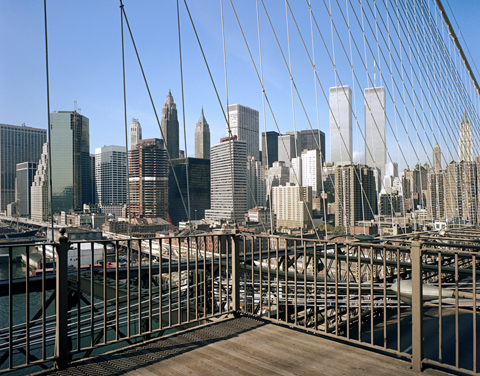
    From the Brooklyn Bridge, 1981 (4×5 film) — © Brian Rose/Ed Fausty

    By the time I was asked to participate in the Lower Manhattan project, the survey program had just about run its course. I had just completed photographing the Lower East Side with collaborator Ed Fausty, so naturally I–we–jumped at the chance to extend the project further. I don’t think we ever had a sense of what the bigger context was, that this was one of dozens of similar survey projects in other communities. In the end, ours was a failed project. There was no book or catalog, only an exhibition in Federal Hall on Wall Street that was not critically reviewed. As far as I know none of the work was placed in an archive for future research or perusal.

    The work Ed and I did together or separately ended it up in boxes. It’s clear, however, in putting together the series of images for WTC, my book about the World Trade Center, that we were onto something.

  • New York/Wall Street


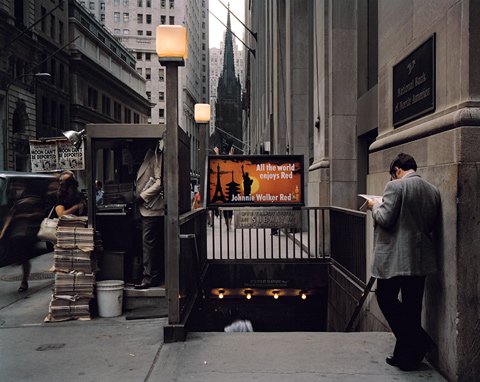
    Wall Street, 1981 (4×5 film) — © Brian Rose

    Although I’ve been posting photographs of the World Trade Center made in 1981, I also did lots of photographs of Lower Manhattan that did not include the constantly looming Twin Towers. And not all were sweeping views of the skyline like so many of the images in my WTC book. The picture above was made one evening on Wall Street, the spire of Trinity Church in the background echoed nicely by the icons on the Johnny Walker billboard. “Moon Can’t Be Deported” refers to Sun Myung Moon of the Unification Church who was in trouble because of tax fraud.

    In the midst of the current drama in Egypt there was an article in the Times this morning about a possible merger between the Frankfurt exchange and the New York Stock Exchange. In practical terms such a merger would only highlight the increasingly international nature of finance. When I took the photograph above, trading was mostly done directly on the floor of the nearby stock exchange. But symbolically, this could be a big deal–a perceived loss of prestige–and it will be interesting to see how it plays out politically.

    I am still reading Lens of the City, which tells the history of the documentary survey grants made by the National Endowment for the Arts in the late 70s and early 80s. My Lower Manhattan pictures were funded by one of those NEA grants. Comments and thoughts to come soon.

    Showed my work to Robert Mann the gallery owner–someone I’ve stayed in touch with over the years. He likes my work a lot, and will keep me in mind as things go along. Meanwhile, I keep schlepping my portfolio around.

  • New York/MoMA


    Museum of Modern Art — © Brian Rose

    Robert Mapplethorpe, Laurie Anderson, General Idea, and random museum visitor.