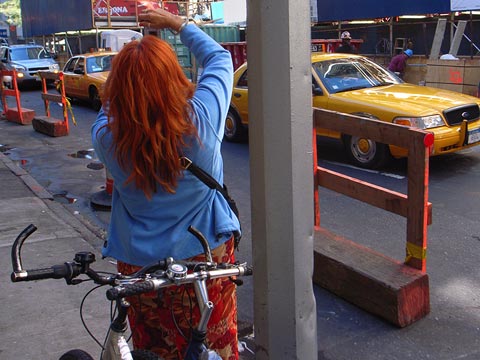
Midtown, somewhere in the 50s
Without comment.
by admin on 11/09/2007, no comments
Midtown, somewhere in the 50s
Without comment.
by admin on 11/06/2007, no comments
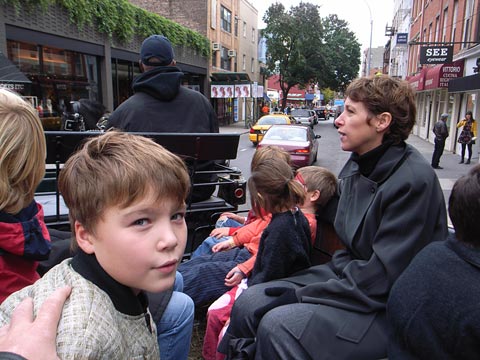
Brendan and Renée taking a hayride
Saturday was Fall Festival at Brendan’s school–a seasonal fund raising event coming right after Halloween, which is an all day extravaganza at school followed by trick or treating and the Village Halloween parade. It’s fun, but all a bit over the top for me.
As part of the festival, we took a hayride through the streets of the West Village. If you squint a bit, and pretend the cars aren’t there, it could be 150 years ago.
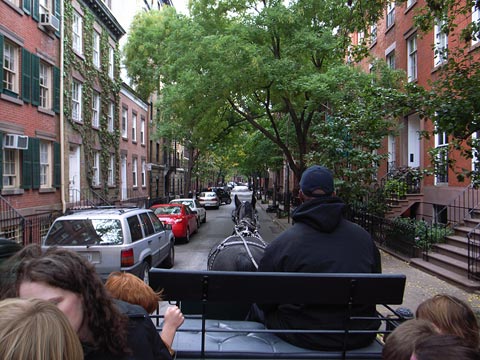
Barrow Street
Meanwhile back in Washington:
WASHINGTON (CNN) — The Department of Homeland Security will investigate a Halloween costume party hosted by a top immigration official and attended by a man dressed in a striped prison outfit, dreadlocks and darkened skin make-up, a costume some say is offensive, the department’s secretary said. Julie Myers, head of Immigration and Customs Enforcement and host of the fundraising party, was on a three-judge panel that originally praised the prisoner costume for “originality.”
by admin on 11/03/2007, no comments
Take what may be called “the” typical tenement house district, the triangle or rather trapezium, bounded by Fourteenth Street, the Bowery and the East River. This district comprises the even numbered Assembly Districts from the Fourth to the Sixteenth, inclusive, and the population of it is just short of half a million, 480,626. It is thus in itself the second city in the State of New York.
It is perhaps the most crowded district in the world. Part of it certainly carry congestion to the utmost limits. The normal habitation is the “double decker” tenement, four families to the floor, five floors high, often six, sometimes, by dint of a high stoop and a basement for shops, seven. And this population in a large measure and particularly in hot weather lives on the sidewalks. There are squares where it is hard to make one’s way, for the absolute pressure of the crowds of sitters and standers.
-New York Times, July 21, 1901
On Friday I did a three hour Lower East Side walk. Moving slowly, I covered a relatively small area, but took about a dozen photos with the view camera. The first spot I got to was of a vacant lot I photographed in 1980 with a mural of a baseball game on an adjacent wall. The painting had faded, but was still visible. A few days ago I noticed that the wall was in the process of being torn down. When I arrived yesterday, it was mostly gone, and a fence obscured the view, though I did a shot of it anyway.
Around the corner on Pitt Street, I photographed a large Catholic church and tenements next door. It was a crisp fall day, and the light was beautiful. I moved on down Pitt Street toward the Williamsburg Bridge and did a couple more photographs on the same side of the street.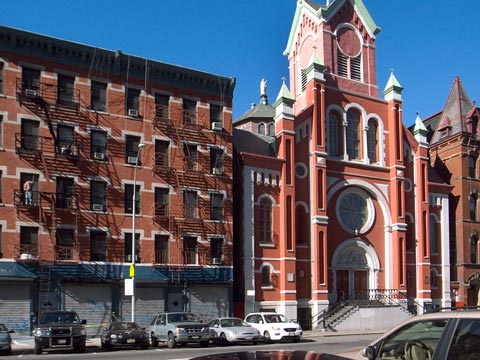
Our Lady of Sorrows church, Pitt Street
The church, Our Lady of Sorrows, was apparently once called St. Aloysius and had a largely German congregation according to the 1901 New York Times column quoted above:
There is a remarkable church, remarkable for the spaciousness and gorgeousness of its interior in such a region, St. Aloysius in Pitt Street, attached to the Capuchin monastery at Pitt and Stanton. How many readers of this paper know that there is such an institution in New York as a monastery of barefooted Capuchin friars?
This church holds its services in German, and it is a curious testimony to the changing conditions of its neighborhood that the authorities report that its congregation has sadly fallen off of late years by reason of the migration of its parishioners.
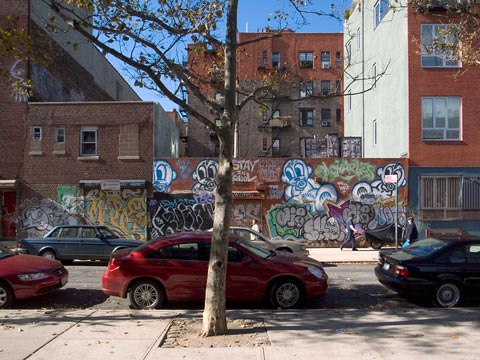
Attorney Street
I turned the corner at Delancey Street and walked west, turning again into Attorney Street. I mad two photographs in the street including one with a graffitied wall by Andre Charles with his street logo “Brandon,” a baby with a pacifier in its mouth. Charles’ stuff is pretty good, and on his website he writes:
But through out the year’s I was painting walls, doing night clubs, running with the lady’s, which is all part of being a famous urban super star artist from the hood. I really didn’t understand what I was really doing or what was going on around me. All I know is when I look at T.V., pictures in art books of other artist. I wanted to be famous just like them. So I went out to do what I’ve seen as a young entrepreneur black boy from the SOUTH BRONX running after my dreams.
He goes on to thank God for his gift, which, despite the modesty/bravado is significant. All the graffiti writers, including Charles, ramble on about Keith Haring, who I remember seeing at work in the subway, and Basquiat, the painter who spun out of control and died of a drug overdose in his studio, a block from where I lived at the time. A Basquiat website states:
Basquiat.com is a tribute to Jean-Michel Basquiat (1960-1988), an artist who came to personify the art scene of the 80s, with its merging of youth culture, money, hype, excess, and self-destruction.
Okay. I guess that sums up the 80s. Some of us missed out on the money, hype, excess and self-destruction, but at least we’re still here making art.
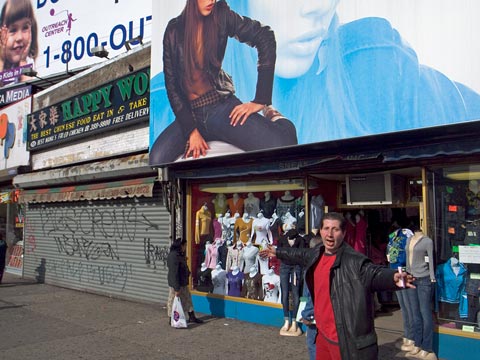
Delancey Street
Back out on Delancey Street I did a photograph of the window of a fast food restaurant, and then planted my tripod in front of a row of shops that I’ve photographed before. Delancey is a ragged concourse of discount shops that cater to the Latino population of the neighborhood and beyond. It’s long been a shopping destination. Million dollar apartments are now sprinkled in among the discounts and cheap chains, a dissonance nearly impossible to express in photographs except by means of crude juxtaposition, which I try to avoid.
As I began doing a series of pictures of the storefront of a clothing shop with a wonderful array of signage above, the owner/manager came out and we chatted about the changes in the neighborhood. He’d been around since the early 70s. He told me that the shuttered shop to the left and several others in the row are coming down to make way for another condo project. We agreed, however, that, whatever happens, there will always be people who need discount. As I fiddled with the view camera a crazy/drugged man veered in front of me. So, I snapped.
by admin on 11/01/2007, no comments
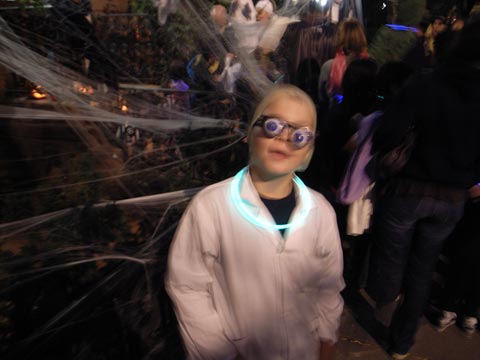
Mad Scientist on West 22nd Street.
Brendan joined the throngs of kids and parents to trick or treat in Chelsea. We tried catching a glimpse of the big Halloween parade, but couldn’t get near it. Watched a bit of it on TV at home.
by admin on 10/31/2007, no comments
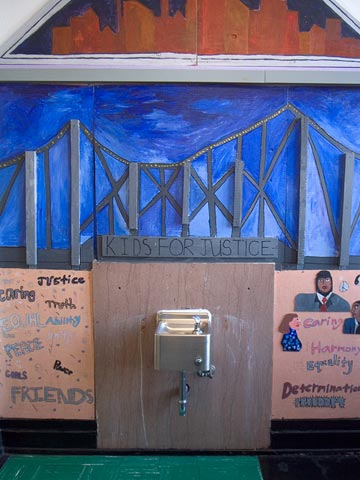
Drinking fountain in PS 3, Hudson Street, Greenwich Village
PS 3, the public elementary school in the West Village where my son Brendan goes. It manages to retain its unique, progressive, environment within the larger New York City school universe. It’s a great place, and Brendan, coming from overseas last January, has bloomed in its academic and creative atmosphere.
by admin on 10/28/2007, no comments
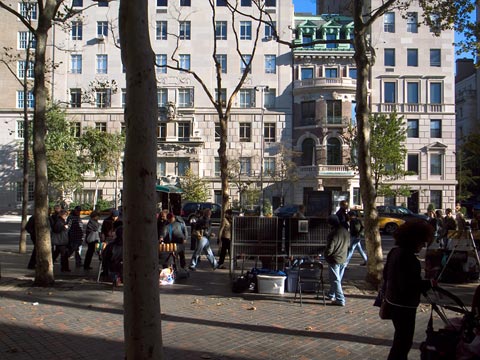
Fifth Avenue across from the Metropolitan Museum of Art
Finally completed photography of 60+ buildings all over Manhattan, and a few in Queens and Brooklyn. The last shot was a re-do (because of construction) of 995 Fifth Avenue, formerly known as the Stanhope Hotel. It’s across the street from the Metropolitan Museum where dozens of vendors sell art that will never be seen in the museum–generally, for good reason. Nevertheless, it makes for a classic New York tableau. The weather was crisp, clear, 60 degrees.
by admin on 10/27/2007, no comments
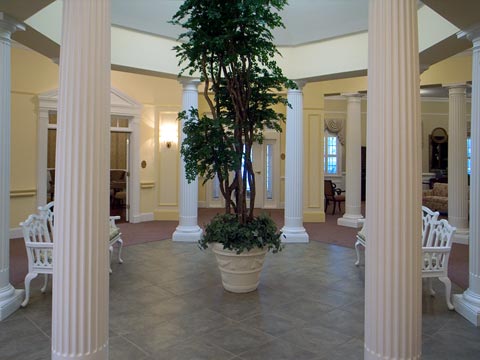
Spring Arbor assisted living, Williamsburg, Virginia
From Williamsburg, Brooklyn to Williamsburg, Virginia. Spring Arbor, assisted living apartments, where my 86 year old father just moved. I went down for a couple of days to get him situated. It was a necessary move, and I am happy with the care offered and the overall kindness of the staff.
But will baby boomers be satisfied with places called Spring Arbor or Shady Grove? Do we all end up in pouffed, faux palaces? Cheesy replicas of colonial mansions that never existed in colonial times? Most of these places are developed by large companies that, presumably, have studied the demographics, and have come to the conclusion that ye olde traditional is what will make the most money.
Is it possible, however, that there are niche markets based on alternative aesthetic models? What about a woody lodge-like environment? An urban village grouped around an internal main street? A modern media-centered complex? And so on.
by admin on 10/25/2007, no comments
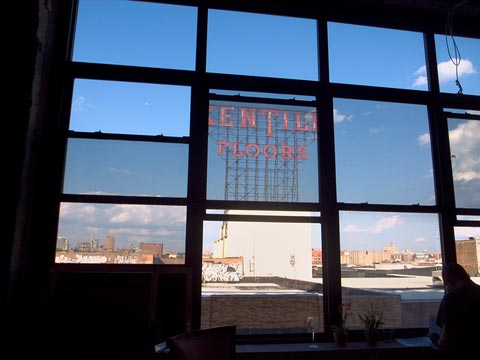
Gowanus, Brooklyn
On Saturday I went to the area around the Gowanus Canal in Brooklyn, a neglected industrial corridor between the leafy residential neighborhoods of Carroll Gardens and Park Slope. As is typical in New York, artists have infiltrated the loft buildings and warehouses, either renting studios or living semi-legally as long as they can get away with it.
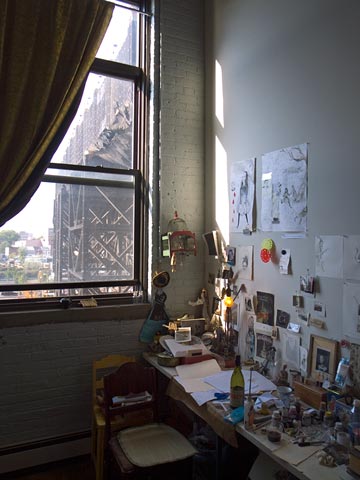
Artist’s studio beneath the elevated subway
I was there for the Annual Gowanus Artists Studio Tour (A.G.A.S.T.), and specifically to visit Hilary Lorenz, an artist I have known and admired for a number of years. Here’s one of her recent pieces:

White Water Washed • Hilary Lorenz
30″ x 22″ Intaglio and archival digital print 2006
It is astonishing how many artists there are in New York despite the constant struggle for affordable work space. There were about 150 showing their work for the tour, highly talented individuals working mostly under the radar, that is, not represented by the major commercial galleries in the city.
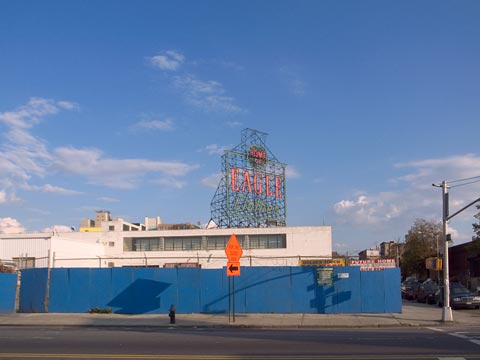
Third Avenue
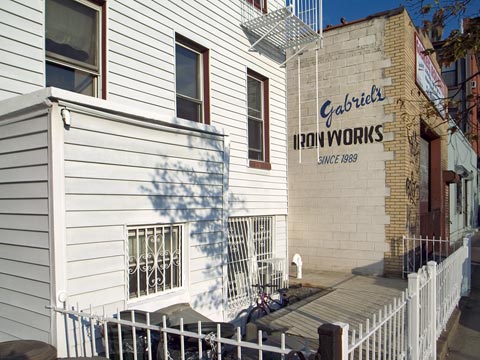
9th Street
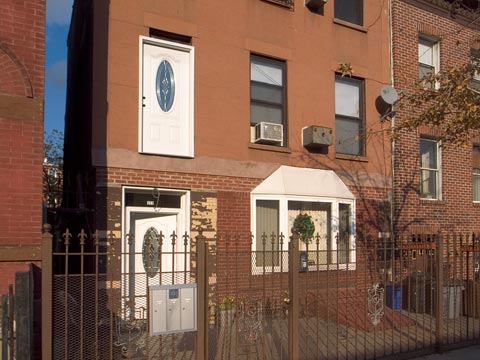
9th Street
The Gowanus Canal area is definitely on the radar of the real estate developers, however, and its days as a gritty urban gray zone may be numbered. For the moment, it remains in suspended animation–a hodgepodge of industrial buildings, row houses, vacant lots, a taxi depot, a new tourist hotel, an Islamic school, a Macintosh repair shop, artists’ studios, a Lowes Home Improvement store, and so on. Along Fourth Avenue, out of scale, architecturally uninspiring condo projects mark the lower reaches of Park Slope.
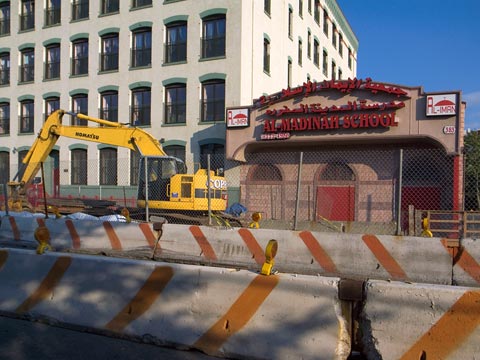
Third Avenue
by admin on 10/21/2007, no comments
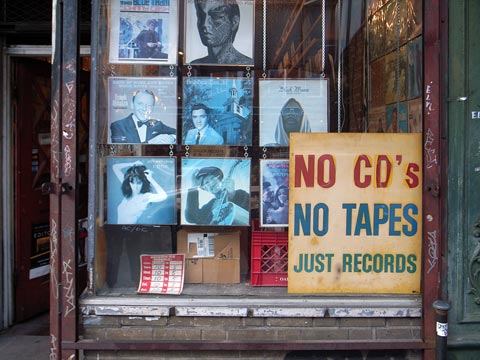
Carmine Street, Greenwich Village
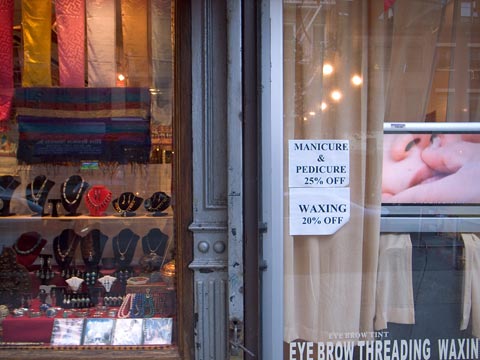
Carmine Street, Greenwich Village
Two storefronts I passed by earlier today.
by admin on 10/20/2007, no comments
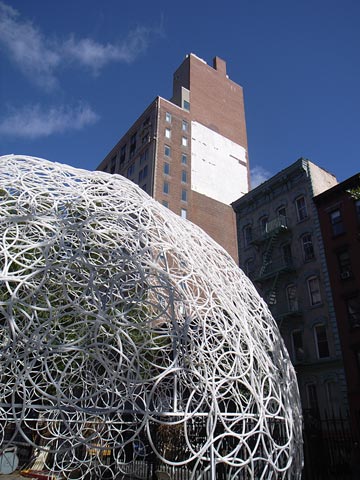 The Ring Dome • Minsuk Cho • Petrosino Park
Adjacent to the Storefront for Art and Architecture
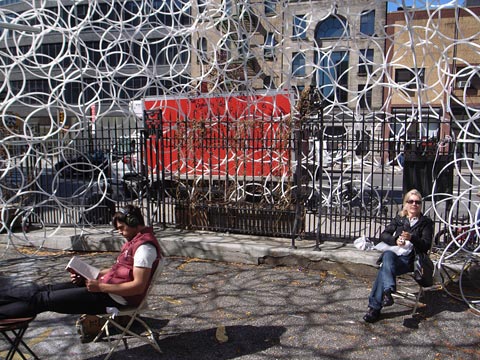
The Ring Dome
I haven’t been following the doings at the Storefront for Art and Architecture. It’s their 25th anniversary. But I walk by quite often, and it’s hard to miss the Ring Dome installation on the scruffy little park between Lafayette and Centre Streets called Petrosino Park.
The dome is a little Buckminster Fuller-ish, but these are circles not triangles, and the issue doesn’t seem to be about structural integrity, rather about delicacy, as if an alien bubble landed in the middle of traffic. You can go in the dome, sit in the sun, and feel enveloped and open to the sky at the same time. The pattern above is projected beneath your feet. At certain angles the dome becomes dense like a ball of string, but most often it appears light and diaphanous. It’s art, it’s fun, it’s a ball.
by admin on 10/19/2007, one comment
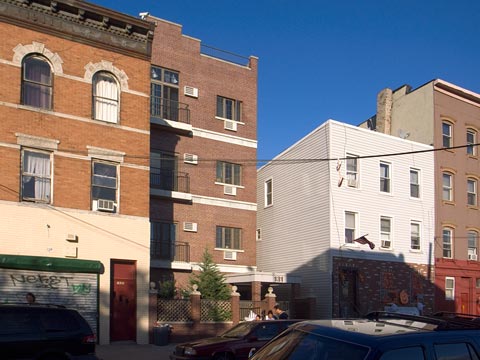
Williamsburg, Brooklyn
I am swamped with scanning and color correcting the images from my recent jobs. I do it myself for a couple reasons. I have always done my own color printing, and want the control over the final product that is only possible if you do things yourself. That goes for both analog and digital images. I also can make money on the scans, which, assuming I have the time, is better off in my pocket than in the lab’s.
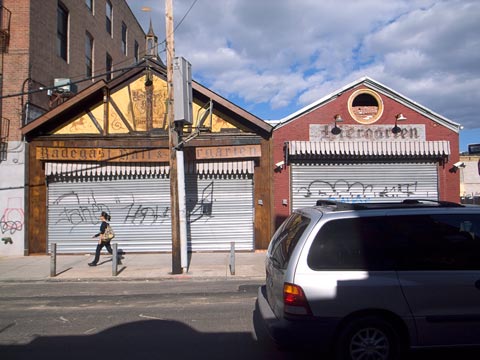
Williamsburg, Brooklyn
On Saturday we went over to Williamsburg, Brooklyn to look at apartments. Our lease is ending in December, and we have to do something, either rent or buy. The real estate market in New York is insane. Renting a 2 bedroom apartment in Manhattan costs thousands a month. Those safely ensconced in rent controlled or stabilized apartments stay put. There’s no way they can move. Newcomers and those kicked out into the open market are paying double and triple what others are paying. Or moving far out in the boroughs. Or leaving town.
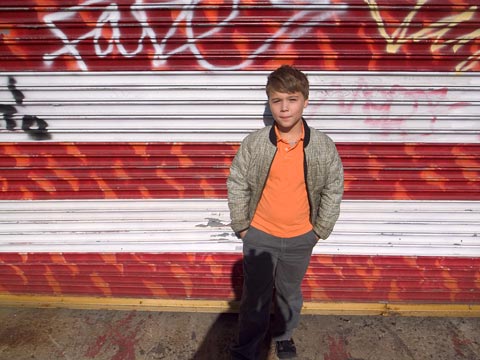
Williamsburg, Brooklyn • Brendan house hunting
Rather than throw our money away at a rental, we’ve decided to buy. After extensive research of the market, neighborhoods, transportation, etc.–all the factors one has to take into consideration–we’ve taken initial steps toward buying a loft in a new construction building in Williamsburg just across the East River from Manhattan. The L train is notoriously crowded, but so are many of the subway lines in New York. Despite everything, the city continues to boom. Crime is still going down. Prices are going up. And people are still coming.
by admin on 10/17/2007, no comments
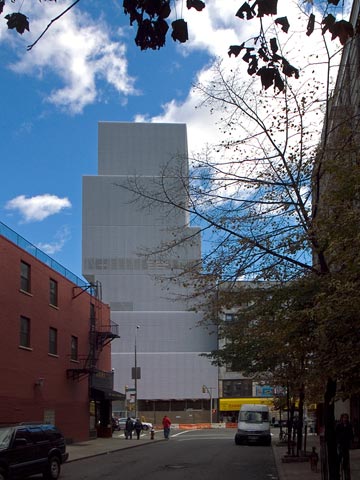
The New Museum on the Bowery at Prince Street
Almost finished. Should open in November.
by admin on 10/14/2007, no comments
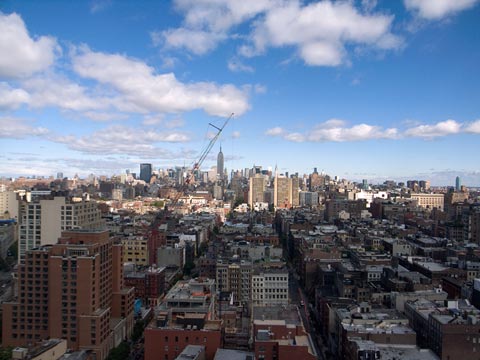
Looking north across Soho
Back in New York.
by admin on 10/12/2007, no comments
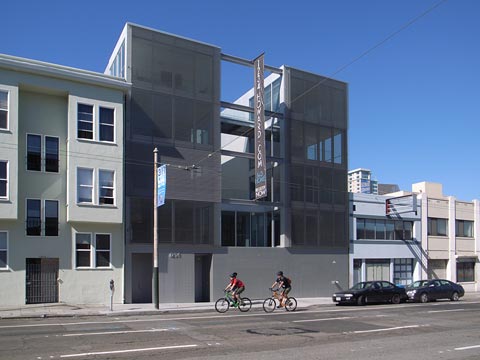
1234 Howard Street • Stanley Saitowitz, architect
Back in New York, I just want to point to two urban infill projects in the Bay Area that I took quick snapshots of. While I was photographing David Baker’s 8th and Howard project I came across the building above. I wasn’t sure who the architect was, but found it interesting, and took a picture. Looking it up later, I see that it’s by Stanley Saitowitz, a prominent Bay Area architect. He’s, perhaps, best known for the Yerba Buena Lofts on Folsom Street. Like Baker, much of his work is in the South of Market area of San Francisco.
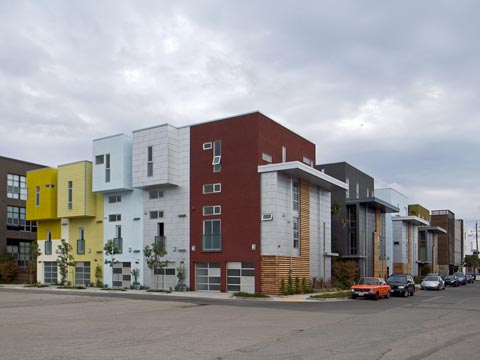
Blue Star Corner • Emeryville, California • David Baker, architect
On my way to the airport I stopped by Emeryville to see another David Baker project. It’s 20 townhouses built around the block from an earlier loft complex that I photographed. The project is in a hodgepodge area of warehouses, big box stores, shopping malls, and highways. Down the street is Pixar, the animation studio, which hides behind a screen of fencing and lush landscaping.
Baker’s houses face onto landscaped courtyards–he calls it mews housing–and each unit has a garage. Baker and the developer based the townhouse concept on similar housing in the Eastern Docklands of Amsterdam. The idea is to establish, or re-establish, dense urban structure in places like Emeryville. The small unit footprints, and varying facade treatments produce a richer, less monolithic appearance.
Saitowitz and Baker have very different approaches to the urban environment, but both, in my opinion, lead the way in reinventing the city in the 21st century.
by admin on 10/09/2007, no comments
Last night I went to a lecture by David Baker (who I am doing photos for) at the California College of Art, which has an architecture program. Lots of students, of course, as well as people from David’s office in attendance. I got mentioned a couple of times because a number of my photos were shown in the presentation. I realized during the lecture that a majority of the projects shown were located only a short distance from the school itself.
David’s talk emphasized his concerns about environmentally friendly urban development–which is critical to his work–but I’d like to hear more about the formal aspects of the design itself, something I have been very involved with as the photographer of his projects. But the work speaks for itself I suppose.
A couple of San Francisco non sequiturs before leaving town:
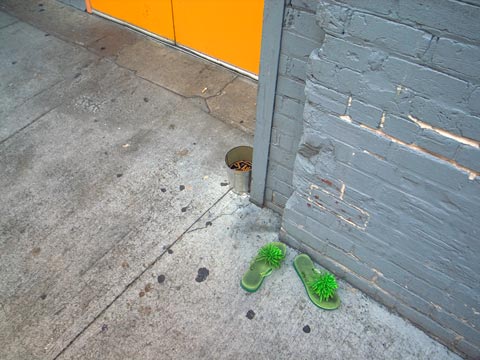
Rausch Street, SOMA
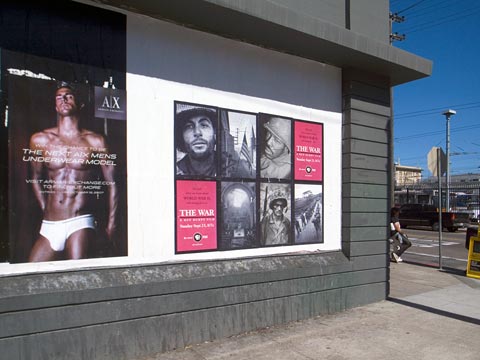
Mariposa and Bryant Streets
by admin on 10/08/2007, no comments
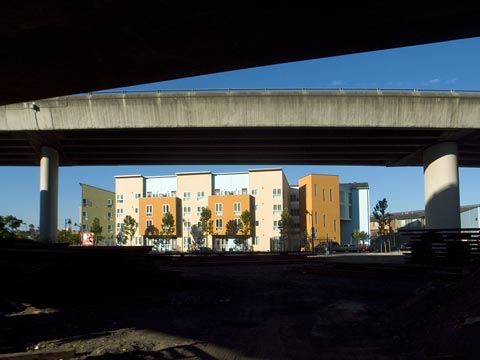
Crescent Cove
I finished photographing Crescent Cove on Saturday. Here’s a view from beneath the highway access ramps adjacent to the project. I still have a few loose ends to finish on other previously photographed David Baker projects. Tonight David is giving a lecture at the California College of Art, and I’m hoping to go.
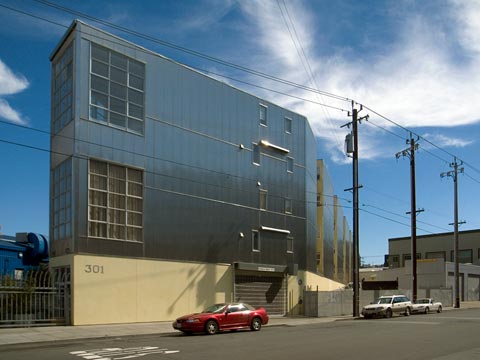
Lofts on 16th Street and Rhode Island
I have a rather distorted view of San Francisco–not very hilly, industrial, and lots of modern architecture. That’s because most of what I’ve been photographing over the years has been in the area below Market Street and south into the waterfront area known as China Basin and Dogpatch. The steep hills, cable cars, Victorian houses, and stunning views of the Golden Gate Bridge are found in other parts of town.
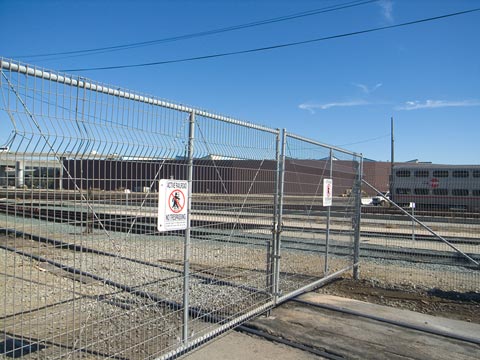
Caltrain yard with rear wall of Crescent Cove
On this trip I’ve been working in an area now called Mission Bay, which is just below the Giants ballpark and adjacent to the vast docklands of China Basin. Across the Caltrain tracks is an area at the base of Potrero Hill where you can see the blank back wall of Crescent Cove. In this area as are a number of new loft buildings like the one above.
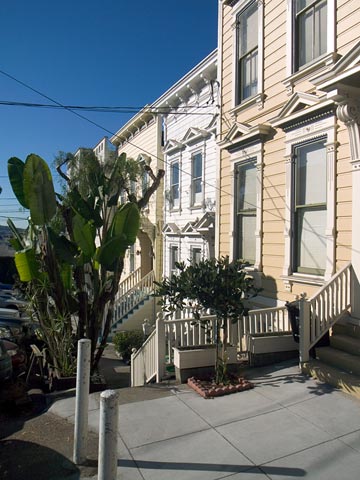
Dogpatch from my table at Piccino cafe
Dogpatch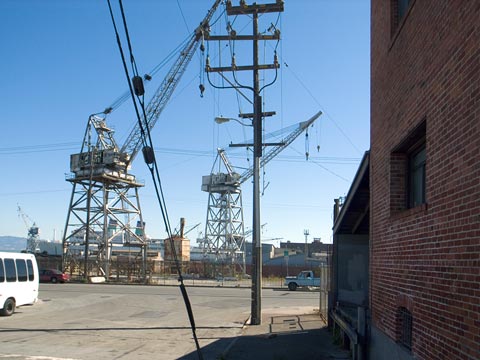
Dogpatch
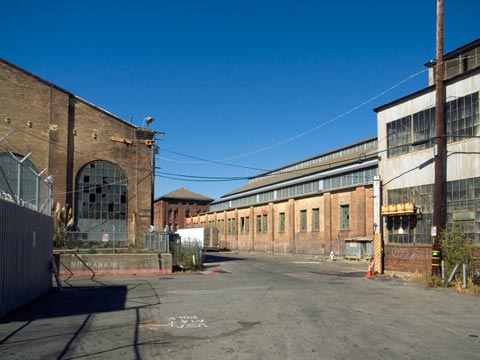
Dogpatch
On Sunday I went with my sister to a cafe in Dogpatch called Piccino. It’s a tiny place in a block with Victorian houses, and down the hill the San Francisco Hell’s Angels. We sat outside and I had the finest latte I’ve ever had made with locally roasted Blue Bottle coffee. From there we walked around the docklands of the neighborhood filled with derelict cranes, massive factory buildings, and junk yards. There’s still work going on in the area–both industrial and high tech–but on Sunday it was quite desolate.
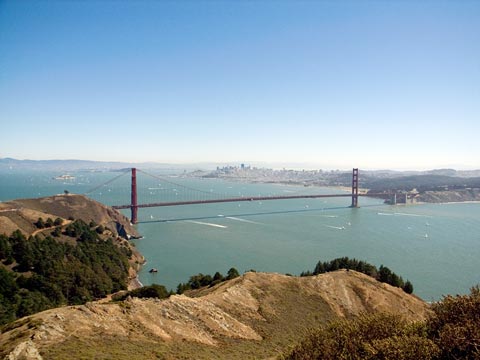
Golden Gate Bridge/San Francisco
I do know about the scenic other San Francisco, however. Here it is from a distance.
by admin on 10/06/2007, no comments
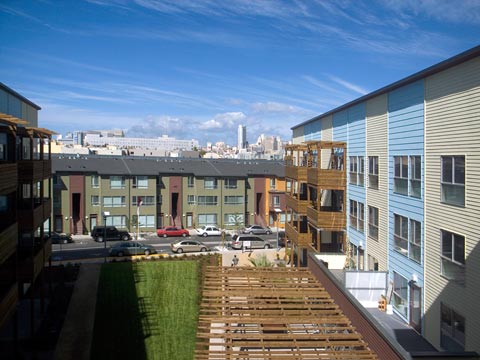
Crescent Cove
I’m photographing a housing complex called Crescent Cove tucked in between the freeway and a commuter rail line. The crescent is a curved street in which townhouses face inward away from the railroad tracks. The shot above is from the fourth floor of the front apartment building looking toward the townhouses. In the distance is a bit of the San Francisco skyline. I’m out shooting again today. Weather is perfect.
by admin on 10/05/2007, one comment
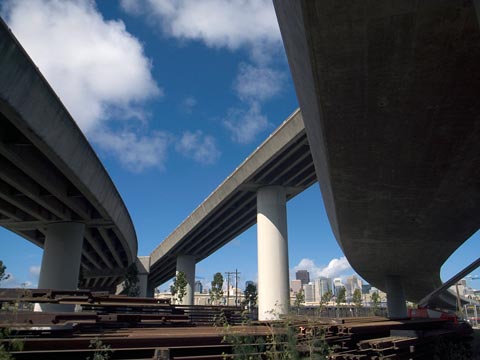
Under I280 in San Francisco
Arrived in San Francisco Wednesday evening. I’m here taking pictures for David Baker, an architect best known for residential projects that engage in complex visual dialogue with the existing urban fabric. This one is a particularly difficult site shoehorned in between railroad tracks and freeway flyovers. The picture above was taken under the highway next to the project.
The weather has been beautiful. Yesterday, the Blue Angels streaked overhead repeatedly in formation. As a New Yorker, however, I’m not sure that I will ever find the sight of low flying jets reassuring.