Category: Photographers/Photography

  • Amsterdam/Groningen


    Ricoh GR Digital

    For the past few months I have been using the camera above, a wonderful pocket-sized digital camera. Despite my ongoing allegiance to the 4×5 view camera, I have been smitten with this baby camera with wide angle lens, and optical viewfinder (not shown in photo). I’ve been using it for this journal and taking it with me when going out with the view camera. It is a near perfect camera, but it has a few flaws, and one bit me the other day. The lens is retractable, which makes the camera completely flat when not in use. But when the lens is extended, it is not as solid as a lens with a fixed mount. While fiddling with it, the camera slipped off my desk and landed extended lens first. The lens mechanism jammed and would not budge. So, my current infatuation is off to the repair shop leaving me bereft and cameraless. I’ll be posting view camera pictures that I am working on in the meantime.

    Tomorrow, I am headed to a small town near Groningen in the north of Holland for a family weekend outing. Next Thursday I will be traveling to Berlin with my view camera–and the Ricoh digital if it comes back from the shop in time.

  • Amsterdam/Borders


    The Iron Curtain, 1987 (4×5 film)

    As many of you already know, I recently published The Lost Border, the Landscape of the Iron Curtain, and most of the pictures from the book are also available on the Lost Border website. It is a project I began in 1985 when walls and fences traversed Europe dividing East and West. Subsequently, the Berlin Wall opened in 1989, Communism fell, and Germany reunified. The healing is incomplete, but it is ongoing, and in response to that I have continued to photograph the rebuilding of Berlin up to the present.

    Today, the U.S. Senate voted to extend the barrier along the Mexican border an additional 500 miles. I do not pretend to have a solution to the illegal immigration problem, but I do know first hand the ugliness of walls, and that ultimately they fail to deter those who seek freedom. I also believe that such barriers become the recognizable face of countries–East Germany then, Israel and the U.S. today. These images are inevitably hard, if not brutal. It does not matter whether the walls are intended to keep people in or out. They are a futile response to conflicts that remain tragically unresolved. The construction of more walls and fences along the Mexican border is a sign of defeat.

  • Amsterdam/Ayaan Hirsi Ali

    PARIS, May 15 — The Dutch government on Monday abruptly threatened to revoke the citizenship of one of the country’s most prominent members of Parliament, Ayaan Hirsi Ali, a Somali-born woman who arrived as a refugee 14 years ago.
    –New York Times

    I have never cared for Hirsi Ali’s politics, which I’ve found polarizing and self-aggrandizing. However, this is a political assasination virtually as despicable as the actual assasinations of Theo van Gogh and Pim Fortuyn. I am stunned.


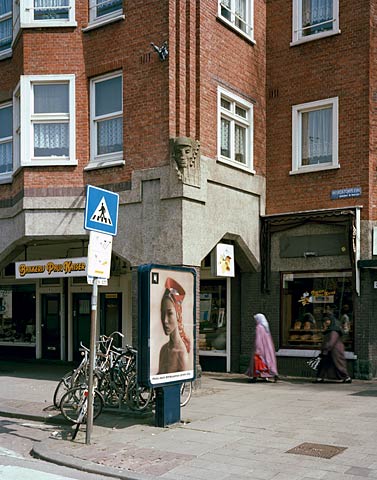
    Amsterdam, Mercatorplein (4×5 film)

  • Amsterdam/Texel

    The weather remains unusually warm and pleasant here in the Netherlands. I am mostly working on the scans I did in New York, which will be printed for my New York/Amsterdam/Berlin portfolio. On Sunday we picked up Brendan, my son, from the island of Texel, on the North Sea coast. He was there visiting with his grandparents who have a house on the island.

    Texel is the largest of the barrier islands along the northwest coast of Holland. Were it not for the dikes, it would consist primarily of a ridge of dunes. But there is a substantial hinterland behind the dunes with much farming, a few towns, and scattered vacation houses and camp grounds. The landscape is beautiful both in the dunes and on the flatland, and there are picturesque older farmhouses. But generally, the architecture is bland with lots of cheap brick and concrete. Despite the relative remoteness of the island–you can only get there by ferry–it is primarily a destination of middle class Dutch and German tourists, and to me, it lacks character. I’m sure the Dutch would argue with that.


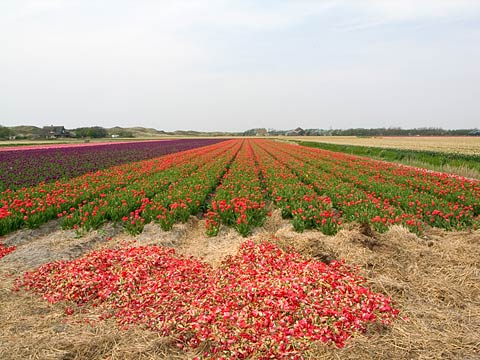
    Texel, on the coast of the Netherlands

  • Amsterdam


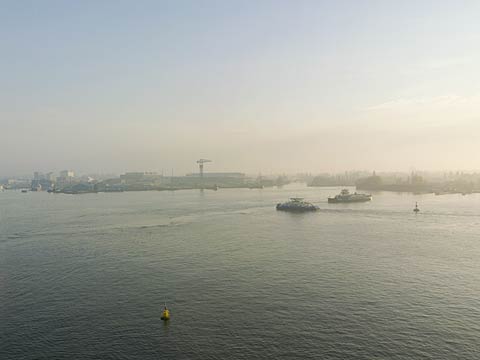
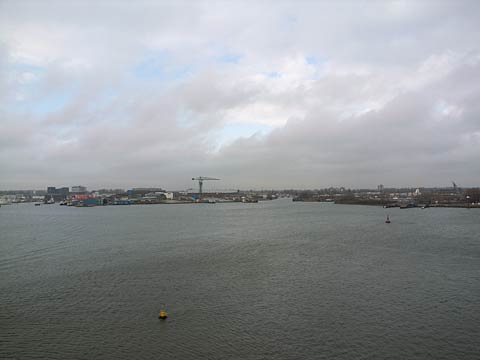
    Amsterdam, hazy morning

    Back in Amsterdam, the weather was cold and wet for several days. But that has dramatically changed, and my studio is bathed in bright sunlight. The temperature is up near 70 degrees. Even though I place black foam board around my computer, it is difficult with so much light to work on images until later in the day–the evening is better.

    Yesterday, I came home with my son Brendan, and a large group of Austrian architecture students were gawking at our famous building designed by the Dutch architecture firm MVRDV. Their teacher begged to let them see the interior, so I escorted them up to our apartment, and took them out to the large public balcony on the north end of the building. Although these were students on a field trip, it is common to see smaller groups of visitors engaged in the increasingly popular activity of architectural tourism.

  • New York/Blue

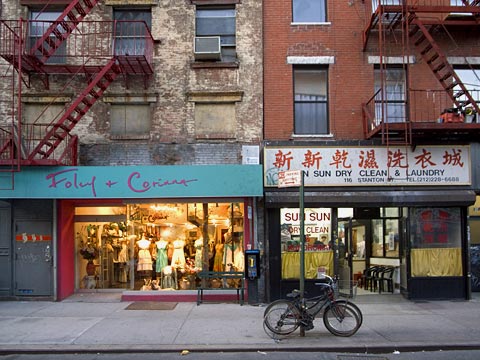
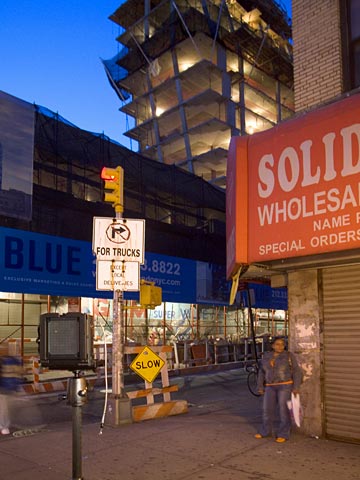
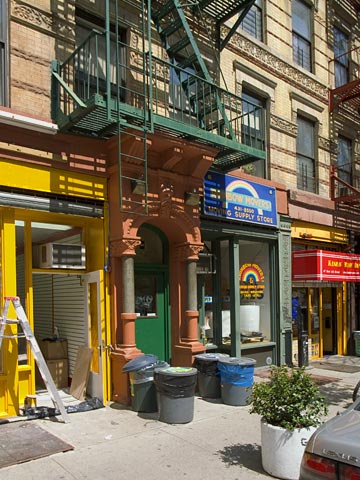
    I’ve felt for a while that I needed to do more dusk and night photographs of the Lower East Side. The shop windows become more transparent as the sun goes down, and the street life changes as residents and tourists flock to the bars, restaurants, and clubs. Last night I went out at about 6, and did four photographs as the light faded. The first was of a nondescript new building–basic brick box with windows–at Stanton and Ludlow. On the left was a clothing shop, and to the right, a felt rope designating the queue for a club. It was early, so there were no standees. A bit further down on Stanton I photographed another clothing store, this time juxtaposed against a Chinese laundry.


    Stanton Street

    I then walked down Clinton Street, which is a mishmosh of nail salons, convenience stores, fast food, and serious restaurants. Difficult to convey the diversity in photographs. I took a picture at the corner of Clinton and Delancey, a fast food restaurant on the left and the Williamsburg Bridge entrance on the right. As usual, when dealing with busy sidewalks, I found a spot up against a lamppost–any kind of street furniture will do– that people already have to maneuver around. This gives me a small piece of sidewalk I can stakeout with my camera and tripod.


    Blue

    At Norfolk and Delancey I made a photograph beneath Blue, the new apartment building designed by Bernard Tschumi, famed Swiss architect and former dean of the Columbia architecture school. No other building better epitomizes the changes occuring to the Lower East Side, or to New York for that matter. High style modern architecture meets the tenements and gritty streets of the city’s most important immigrant neighborhood. When Blue is finished later this year, my project will be complete.

  • New York/3rd Avenue

    Another beautiful day, patchy clouds, 70 degrees. I decided to give some attention to the thus far neglected Third Avenue border of what I am defining as the Lower East Side. Old timers still think of it as part of the LES, but newcomers are likely to know it only as the East Village. Whatever the case, I began by walking uptown to East 4th Street where the Bowery turns into Third Avenue. I took a few pictures on 4th Street just to the east of the avenue, the block I lived on when I first moved to New York in 1977. At that time, the block was considerably more rundown, although the buildings were fully occupied, unlike the desolate area east of Avenue A. Extensive renovation has since taken place, and the storefronts have been rented out to an interesting hodepodge of small businesses.


    East 4th Street

    Walking up Third Avenue I noticed that demolition was taking place on several old buildings between 5th and 6th Streets, a new residential tower the likely replacement. I stepped into Cooper Square Park and made a picture looking toward that block, and then another shot looking further north with the Cooper Union Foundation Building rising up on the left. The low rise Cooper Union building across 3rd Avenue is scheduled to be replaced by taller glass structure by Thom Mayne of the LA architecture firm Morphosis.

    At St. Mark’s Place with its cacophanous jumble of cheap shops and restaurants I did a photograph from within the fenced outdoor seating of Starbucks, one of three such coffeeshops in the same number of blocks. An employee informed me that photography was not allowed, but I had already gotten my shot, as well as a frappacino. The tables were full of people enjoying the warm afternoon, dozens of people streamed by on St. Mark’s, and I leave it to the observer whether to interpret the scene as idyllic urban street life, or as further evidence of the cultural decline of the neighborhood.

    Back in 1980 the stretch of Third Avenue between St. Mark’s Place and 14th Street was a distinctly uninviting area with a series of parking lots known for harboring prostitutes and drug dealers. Today, the parking lots have been filled with NYU dormitories, and at least two new apartment buildings appear in the offing. I walked down Stuyvesant Street with its distinguished row of early 19th century houses, and made a photograph of one facade draped with wisteria, the spire of St. Mark’s Church in the background. I then entered the churchyard of St. Mark’s and took a couple of photographs that included the columns and statues at the church entrance.


    East 13th Street

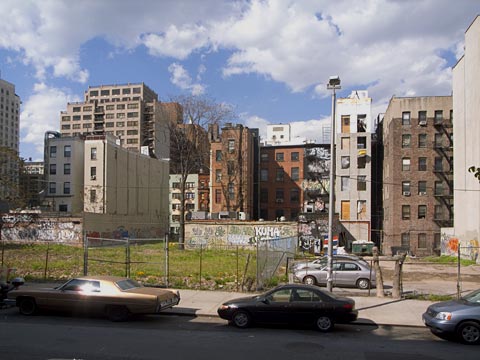
    Walking back to Third Avenue, I made a right on 13th Street and stood opposite a large vacant lot with two construction trailers nearby. No signs indicated the apparent future development of the site. I climbed the stairs of a tenement, and did a wide shot of the lot with the buildings of 14th Street rising up beyond. From there I trudged up to the lab on 20th Street and dropped off my film.

  • New York/Chinatown

    After several mostly wet days, and lots of work on the computer, I returned to shooting on the Lower East Side. I took the subway down to City Hall, and walked along the approaches to the Brooklyn Bridge, the southern boundary of my project. At Front Street I noticed Photographic Gallery, ducked in briefly, and saw a show called “Unembedded,” photographs taken in Iraq by photojournalists who were not part of an official embed with U.S. forces. These are the kind of pictures rarely seen in American media both in their graphic depiction of the violence and in their attention to the lives of Iraqi people. I must confess to being jaded by the ubiquitous clichés of photojournalism. This group of photographs, while well-seen, does not avoid the familiar visual devices. On the other hand, these are courageous photographers who are trying to communicate the reality of the war, and I commend them for the effort.

    Just down the street from the gallery I photographed the Brooklyn Bridge from an angle I recall vaguely shooting 25 years ago. Below the on/off ramps looking up to the stone tower on the Manhattan side. From there I walked out to the landscaped esplanade beneath the bridge, which did not exist in 1980. The immediate neighborhood is the former Fulton Fish Market now decamped to the Bronx. It’s another example of the gradual loss of rough and ready work from the island of Manhattan.


    Smith Houses and Brooklyn Bridge ramps

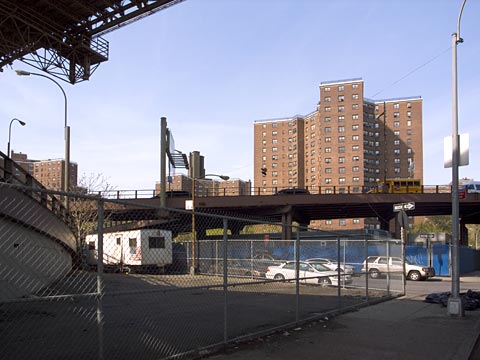
    I did another photograph looking up through the bridge ramps toward the Alfred E. Smith houses, one of the chain of vast urban renewal projects lining the East River. These once forbidding forests of towers have become far less intimidating in today’s New York. In this case, the buildings looked reasonably maintained, and the grounds had been freshly re-landscaped. I then walked uptown toward Chinatown where I would spend the rest of the afternoon.


    Forsythe Street

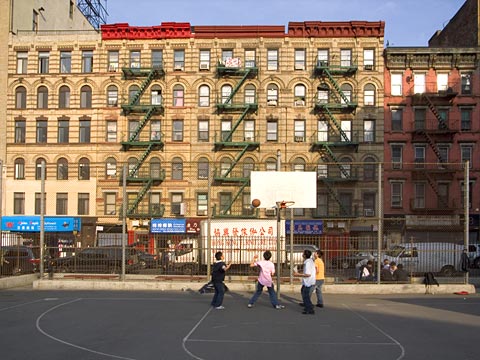
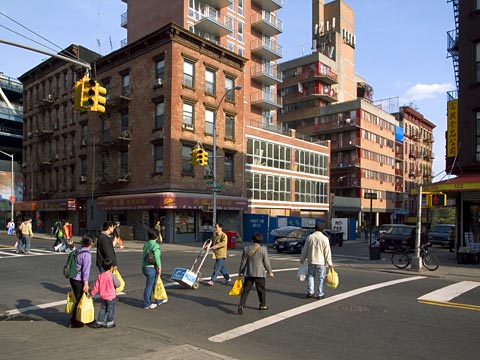
    Chinatown is a major subject all on its own, but in 1980 it seemed somewhat peripheral to the rest of the Lower East Side, so I didn’t focus on it. In the intervening years it has greatly expanded north and east taking in the old Jewish enclave along Eldridge and Forsythe on up to Delancey Street. As I recall, Chinatown once seemed an exclusively pre-modern expression of Chinese culture. But now, a cadre of hip young Asians mixes with the older generations. In the playgrounds, basketball has become a popular Asian sport, no doubt inspired by the success of Yao Ming of the Houston Rockets.


    Madison Street

    I did several photographs along Madison Street next to the Al Smith Houses and then moved north under the Manhattan Bridge. One particular ensemble of buildings was striking with strangely juxtaposed architectural types spanning almost 150 years. There is, of course, a whole world of photographs that could be taken within and about Chinese culture in New York. What is of interest to me is the way in which, over the decades, different ethnic groups have recycled the same streetscapes, the same buildings, adding and subtracting structures, each leaving its stamp before moving on.

  • New York/Lab

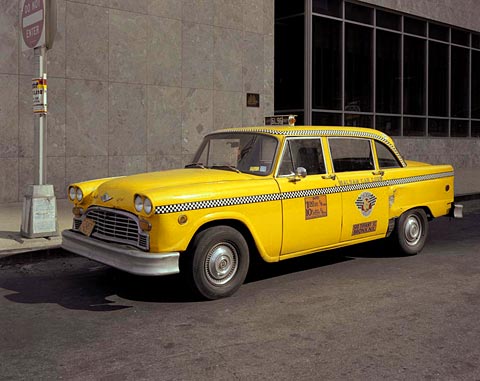
    The last few days have been life in photo hell sifting through hundreds of negatives from the past 25 years, taking them to the lab to scan on a high quality Imacon scanner. I’m putting together three sets of work: New York, Amsterdam, Berlin. There have been few overlooked pearls discovered, but it’s a good exercise going through everything and re-evaluating. There was one discovery, however. A photograph of a Checker Cab in all its glory. Those of a certain age will remember these capacious cars, which could seat five in the back seat with the use of fold down jump seats. I can remember waiting for Checkers–there were lots of them–when transporting boxes or bags, or when going out with a group of friends. New York desperately needs a somewhat smaller replacement for these workhorses.


    Checker Cab, World Trade Center, early/mid ’80s (4×5 film)

    I can’t remember making the photograph of the Checker cab. But I knew it was downtown, and the marble wall behind the car was undoubtedly from the World Trade Center. A small sign on the wall says “Tall Ships Bar.” I looked it up on the Internet, and found that it was in the Vista Hotel–later Marriott–WTC 3. All gone now.

    I like the photograh because of the way the light spotlights the car against the neutral background. There was nothing to do but set the camera up in the right spot and shoot. No fancy business. Just get it on film. It’s a car that had already seen some wear and tear. The front license plate is wired to the grill, there are a number of dents, the rear bumper is askew, but basically, the car is in great shape for the New York streets.

  • New York/LES

    Got out early this morning to catch the morning sun. It is a fact of life for those photographing buildings in New York that north facing facades only get a brief wash of sunlight each day, none at all in the winter. Manhattan is not precisely oriented north/south, but it’s close enough.


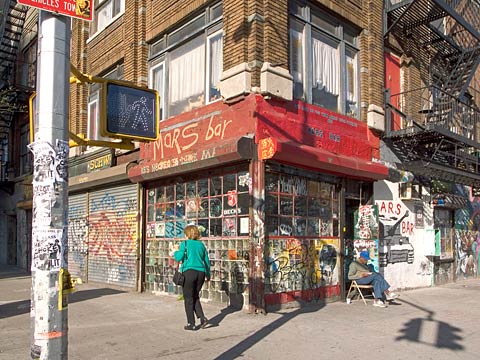
    Mars Bar

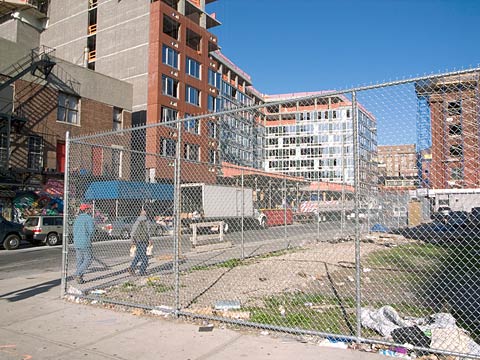
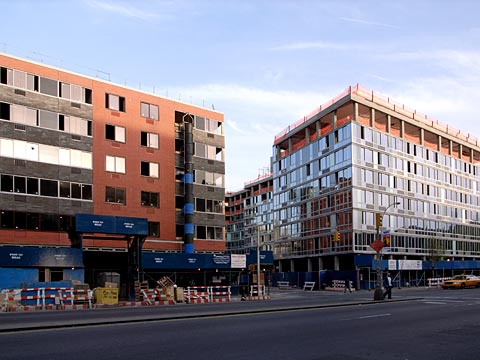
    My destination was not far from homebase. I set up my camera at East 1st and Second Avenue looking toward the new Avalon Bay apartment building on Houston Street with an Exxon station (see earlier post) on the left. Across Second Avenue is the Mars Bar, an uproariously grafittied neighborhood institution. One wonders how long it will survive the relentless upmarket trend of the immediate area. And then just across East 1st Street I photographed more new Avalon Bay apartments under construction seen through a chainlink fence. Three shots, two hours, one street corner.


    The glory of chainlink

    After breakfast I spent about four hours going through my negatives working on a selection to scan and print. For another four hours I scanned negatives at My Own Color Lab on their Imacon scanner. After an hour or so struggling with the software I struck on a formula that worked well, and was able to get a lot of work done. More scanning to come on Friday.

  • New York/Desk


    Photoshop

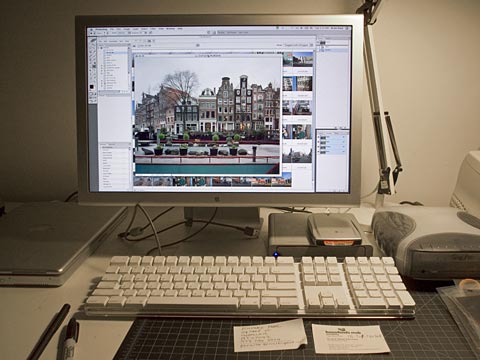
    Working on my portfolio, a selection of images of New York, Amsterdam, and Berlin to be printed 20×24 inches or larger. Although I’ll be scanning the negatives on a high end Imacon scanner, I’m doing quick scans and reviewing images, using my desktop scanner and Photoshop.

  • New York/LES


    New construction on Houston and Bowery

    Today, Easter Sunday, I returned to the streets of the Lower East Side. I began walking uptown past Houston and East 1st Street where massive construction is transforming the area. I stopped on East 2nd Street where I photographed a community garden and a new tower rising behind on the Bowery. From there I headed up the Bowery to E7th Street and began walking east. A large crowd of people dressed in their Easter finery each holding willow branches stood in front of the Ukrainian church directly across the street from McSorley’s Ale House. I made two images and moved further along E7th Street.

    Back in 1980 when I first began photographing the Lower East Side I made a number of pictures along E7th Street. Some of the things I photographed then have vanished, but much remains relatively unchanged. At Avenue A I entered Tompkins Square Park and took a number of pictures, one of a gnarled tree trunk standing in front of St. Brigid’s Church on Avenue B on the East side of the park. Spring had finally arrived in New York, the weather was relatively warm, and flowers were in bloom. The park was filled with people. Back in 1980, Tompkins Square Park was a somewhat forbidding place. Things continued to deteriorate in the park and the surrounding area throughout the ’80s with homeless encampments and open drug use. In 1988, a serious riot, and a number of skirmishes with the police, led to the closing of the park. A major renovation followed, which allowed the park to be returned to the people of the neighborhood. During the ’80s and ’90s I played a lot of basketball in the park with a bunch of pretty serious guys: high school stars, ex-college players, a few who played professionally in Europe. One day I even had a former New York Knick on my team.

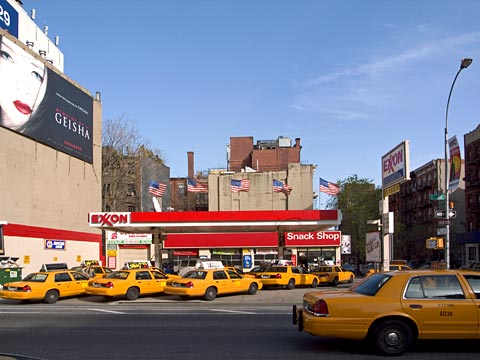
    Walking further along E7th Street I reached the block between Avenues C and D where my wife Renée was staying when we first met. The block was one of the few in Alphabet City that was not a scene of abandonment and devastation. But even here, a few new buildings were under construction on previously vacant lots. At Avenue C and Houston I photographed a gas station, one of a dwindling number in Manhattan, with a new apartment building with sales banner looming up in the background. Over on Second Avenue I passed by an Exxon station, American flags flapping, jammed with yellow cabs waiting to fill up before going off shift.


    Second Avenue and East 1st Street

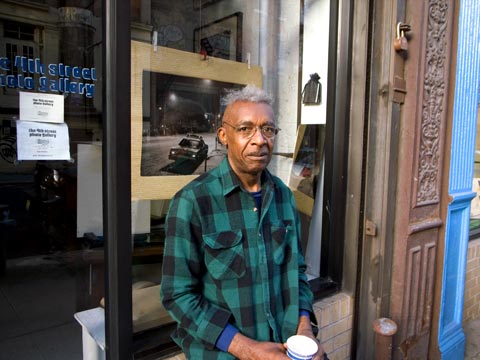
    Eventually, I walked over to East 4th Street between Second and Third Avenues, the block I lived on for many years beginning in 1977 when I first arrived in New York. I dropped in on Alex Harsley, a photographer and proprietor of a small photo gallery where I showed some of my Lost Border project a couple of years ago. Alex often hangs his own work on the walls of the gallery, usually unframed, black and white prints that chronicle the street life and history of New York over the past 40 years. As an African American, Alex has documented Black cultural life in New York, and his photographs are important historically as well as aesthetically. Visiting Alex is always enjoyable as he is rarely lost for words. And though his sometimes rambling dissertations on life and art can be hard to pin down, they are, nevertheless, always compelling.


    Alex Harsley in front of the 4th Street Photo Gallery

  • Amsterdam/New York


    Amsterdam, raw and windy

    On my way to New York once again.

  • Barcelona/Amsterdam


    Barceloneta

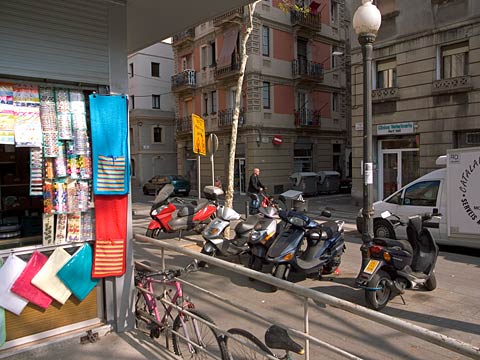
    My first visit to Barcelona, I was suitably impressed with the vitality and beauty of the city, both in its old and new aspects. Traveling with my wife and son, I stayed at the Casa Camper, a boutique hotel located conveniently between the Ramblas–the famous boulevard through the old city–and the modern museum designed by Richard Meier. The hotel, operated by the shoe brand Camper, served as a comfortable home base with excellent breakfasts,
    round the clock snack bar/lounge, and friendly staff. We were only in Barcelona two days, which is too little time for any city, but we spent our time well, walking and looking.

    On the first day we walked down the Ramblas, through the seaside neighborhood of Barceloneta, and back through the Barri Gotic where we ducked into old churches and covered markets including the newly completed Santa Caterina Market by the late architect Enric Miralles. The colorful undulating tiled roof echoes the designs of Gaudi, Barcelona’s famed architectural master. Dinner was at Comerç 24, a tapas restaurant featuring cutting edge Catalan cooking.

    The second day was devoted largely to seeing the work of Gaudi. Closest to our hotel was the Casa Batlló, which to my eye is Gaudi’s most recognizably art nouveau building. Many of his other projects push beyond the organic forms of art nouveau into the surreal and fantastical, and can only be described as uniquely Gaudi. A short walk up the street is the Casa Mila, an apartment building of surpassing urbanity and beauty, a miracle of architecture and craft. The facade of the Casa Mila is more refined and simplified than the Casa Batlló and expresses the fully realized structural inegrity of the building. The tour of the Casa Mila takes one through the entry courtyards, up to an apartment beautifully outfitted with period furniture, into an exhibition of Gaudi’s work in the attic, and finally up to the roof with its strange anthropomorphic sentinels.
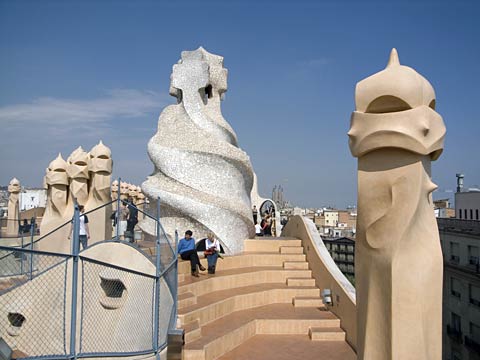

    Case Mila

    To the east we walked to Gaudi’s last work and focus of his Catholic faith, the unfinished cathedral, Sagrada Familia. The towers of the church have become Barcelona’s most notable icon, and for the first time in our visit to the city we encountered hordes of tourists emerging from double decker buses. The construction of the east facade was overseen by Gaudi before his death in 1926, but most of the newer postwar construction is an unfortunate bastardized interpretation of the Gaudi style. In the interior of the cathedral immense tree-like columns stand among a forest of scaffolding. The building will not be finished for decades, and one wonders whether it would not be better left as a ruin. The east facade with its depiction of the nativity is amazing to gaze upon, but overall the cathedral is monstrous and overbearing. Is this the culmination of Gaudi’s spiritual quest?
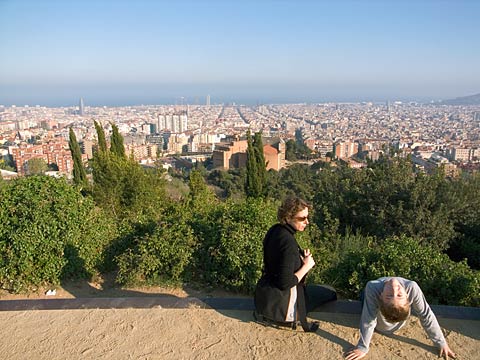

    Park Güell, Renée and Brendan

    From there we took the subway to the Park Güell rising up above the city. Like the cathedral down below, the park was overrun with tourists, Americans to be sure, but mostly young Europeans. They sprawled out on Gaudi’s endless mosaic bench, so many people that there was scarcely room for our party of three to find a place. Unlike the heaviness of the Sagrada Familia, Park Güell is Gaudi at his most fantastical and whimsical. We climbed the hill for a panoramic view of the city with the new Agbar Tower by Jean Nouvel poking up to the left of the Sagrada Familia. From there we joined the weary throng straggling down the hill to the tour bus stop or subway. We managed to snag a free taxi and retreated to our hotel. We returned to Amsterdam the following morning.

  • Amsterdam/Barcelona


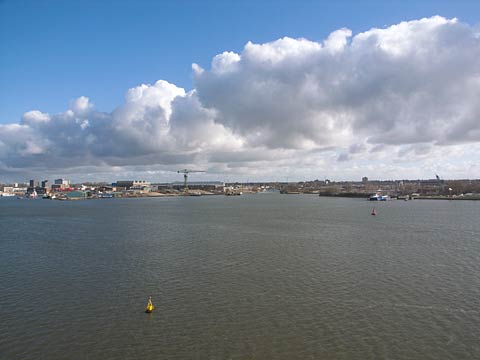
    Amsterdam

    After several days in Amsterdam spent mostly working on my website, an enterprise that requires a fair amount of tending and feeding, I am heading off to Barcelona for a few days with my family. I have never been there–nor anywhere in Spain–and am looking forward to it.

  • Amsterdam/New York


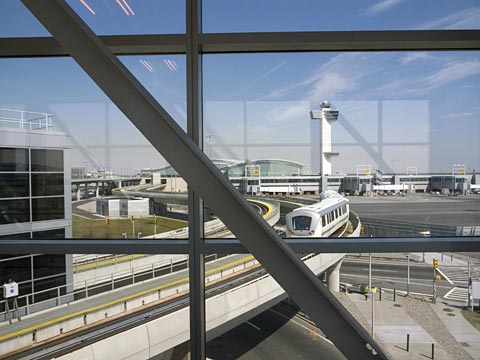
    JFK Airport

    Back to New York for a brief trip to deal with unfinished business. Finished. Back to Amsterdam. Such is the life.

  • Amsterdam/NDSM Shipyard


    NDSM Shipyard

    Over the years I’ve made many photographs of Amsterdam, but few of them show the beautiful historic center of the city. On the one hand, the old center of Amsterdam is the focus of the city still thick with shops, small businesses and museums, along with tourists. On the other hand, it is the least vital part of the city in that it is largely a cityscape frozen in time, small in scale, expensive, and less adaptable to either the pursuits of corporate big business or the individual enterprise of artists. So, I have tended to concentrate on more far-flung locales, from the immigrant neighborhoods in the west of the city to the office ghettos bordering the A10 ring highway. These areas have none of the charm of the central canal belt, but on the periphery of the city, they exhibit the raw edges of modern Dutch society.

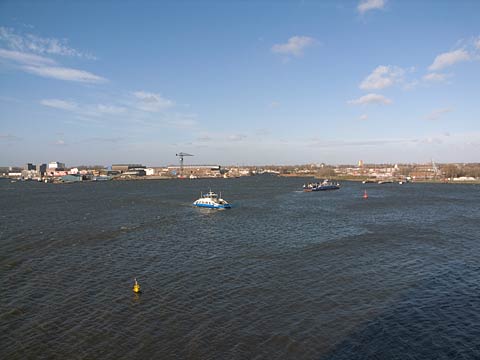
    Today I walked to the ferry dock behind Central Station and took the boat to the NDSM shipyard, once a bustling industrial complex, now a hodge podge of artists and artisans occupying the cavernous halls where ships were built and repaired. It is at once desolate and busy with virtually every part of its decrepit infrastructure put to some use. It is, alas, all destined to be transformed into a high tech center for new media, though its primary structures will be preserved and some of the artists will have space to continue their work.

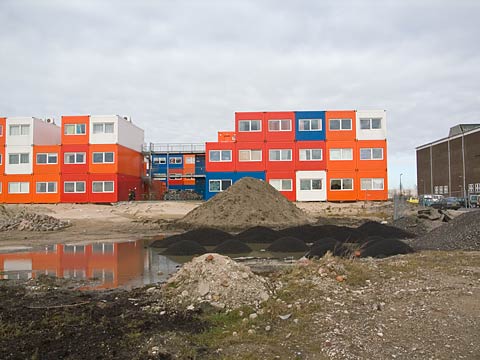
    The specific goal of my visit today was to photograph a colorful colony of stacked containers just beyond the ferry dock on the north side of the Ij, Amsterdam’s principle waterway. The ferry makes the trip briskly in about 10 minutes passing my apartment building, designed by the architects MVRDV, which intentionally evokes the image of stacked shipping containers.


    Student Housing

    Unlike American universities where dormatories are provided to house students, Dutch schools rarely offer living accomodations. Because the housing market in Amsterdam is so tight, students are increasingly unble to find suitable places to live. So, temporary pre-fab housing has been created in various places to serve swelling enrollment to the University of Amsterdam and other local institutions.

    The container village adjacent to the NDSM grounds is a strange sight. Built on the rubble of the former industrial terrain, corrugated steel boxes are stacked three stories high with perforated metal stairs and bridges providing circulation. The only interiors are the dorm rooms themselves. The wind and damp flows freely through the complex, a futuristic dystopia, or perhaps, an expression of extreme cool.

  • New York/Amsterdam


    Sunny, but windy, in Amsterdam

    Left NY with unfinished business on the ground. Got bumped up to business class, which made the trip less arduous, but it looks like I’m heading back to New York for a very short stay to take care of things. Cashing in some frequent flyer miles to make the trip. Will hang around Amsterdam for a couple of days.