Category: Photographers/Photography

  • New York/Kickstarter Campaign

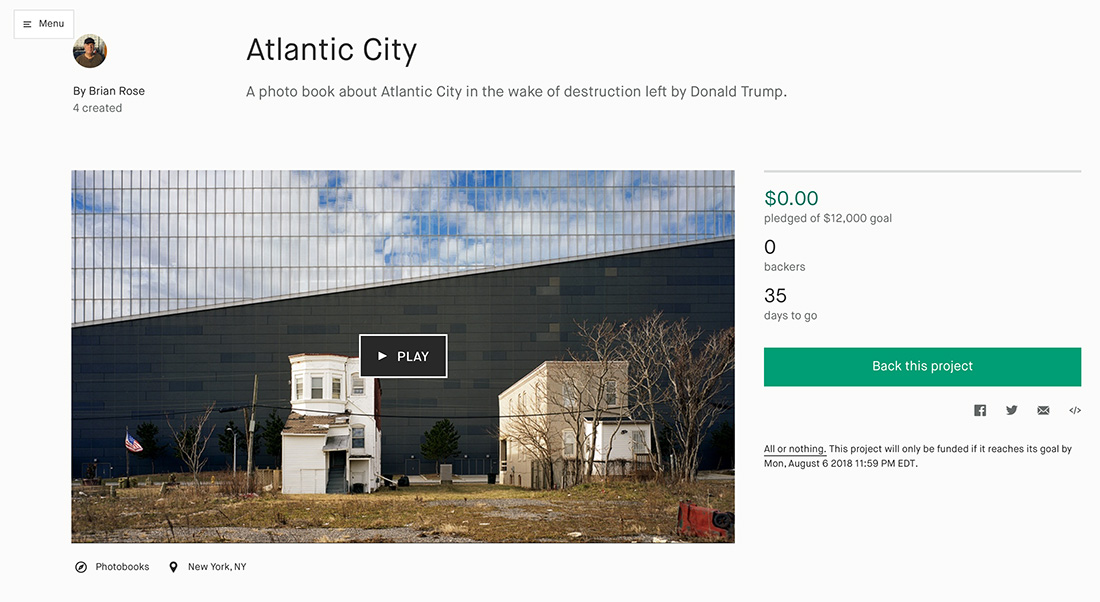
    My Kickstarter campaign to support Atlantic City has been launched! 

    ATLANTIC CITY — A PHOTO BOOK PROJECT

    When Donald Trump was elected in November 2016, I knew immediately that I needed to do something as an artist and photographer. My work has always focused on the urban/social landscape, but I’ve generally avoided politics. Trump’s election, however, signaled a grave emergency, a threat to democracy and the freedom we take for granted as Americans.

    Within days after the election, I drove down to Atlantic City on a hunch that this place, the epitome of Trumpian dystopia, would serve as a metaphor for the overall state of affairs in the United States.

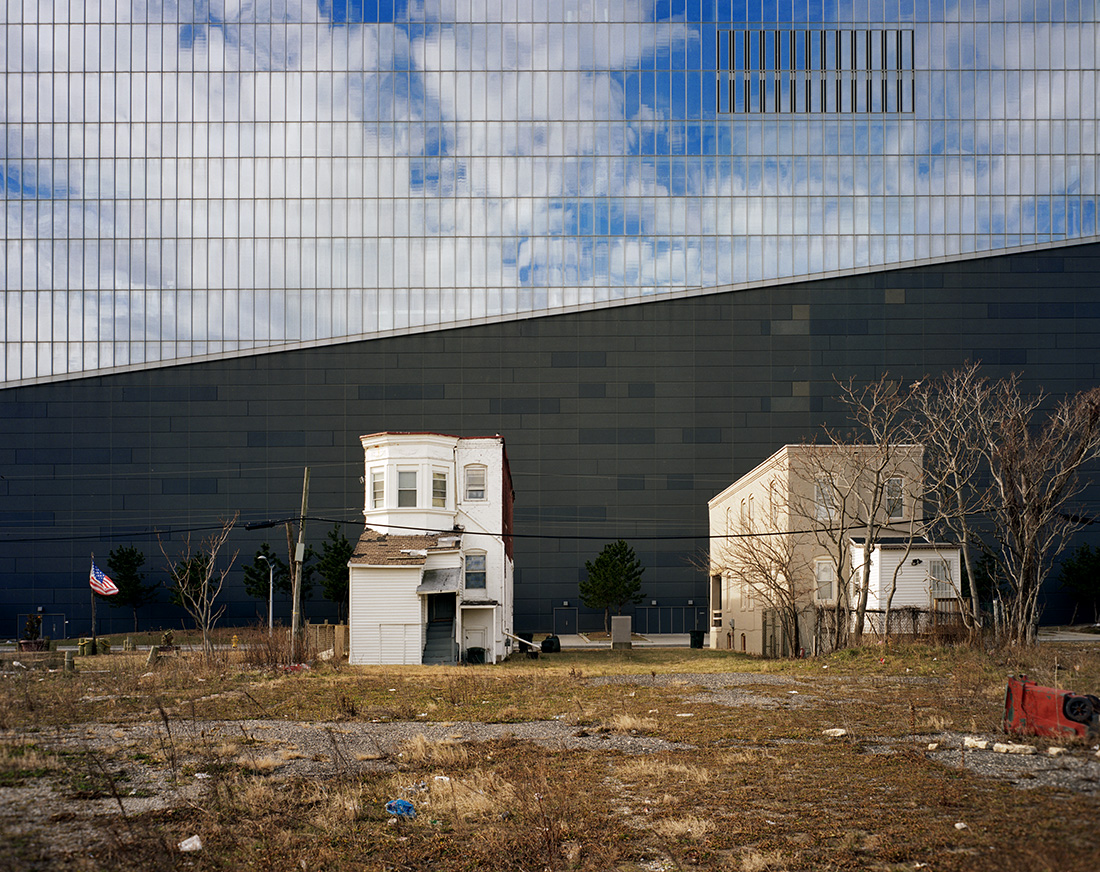
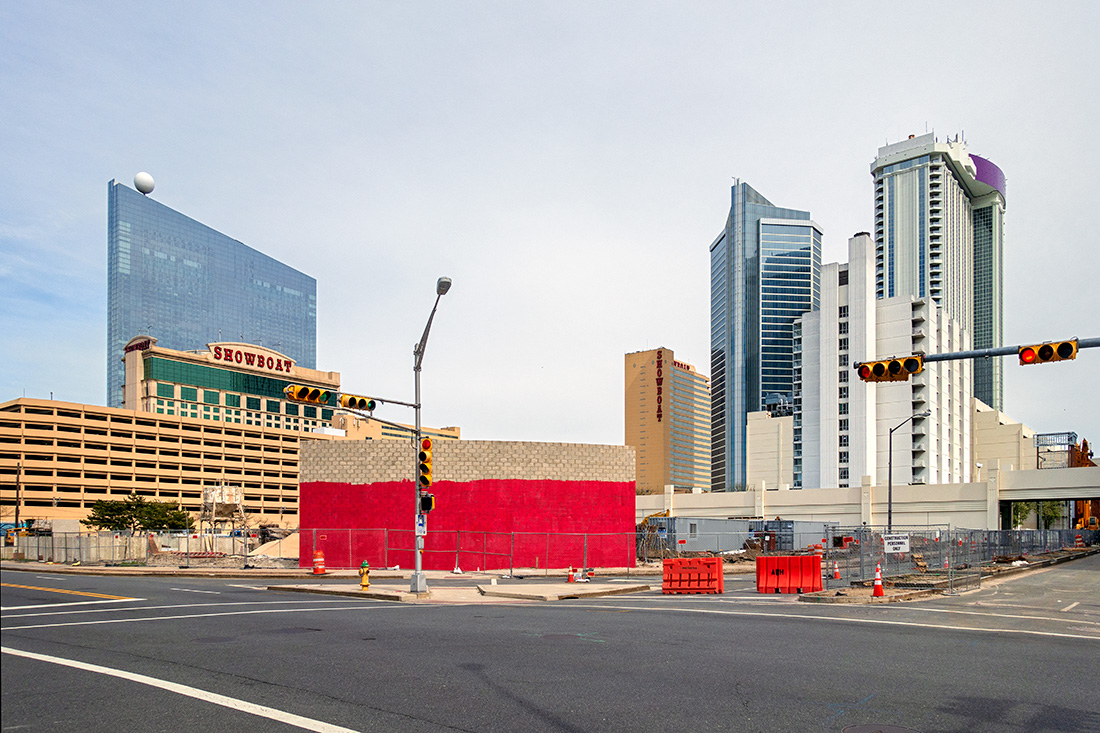
    I started by photographing Trump’s failed casinos, and then moved to the ravaged neighborhoods adjacent to these architectural behemoths, these internalized money machines. Rather than saving a faded Atlantic City, they have sucked the life blood out of its veins and enriched grifters like Donald Trump.

    ATLANTIC CITY — CIRCA PRESS

    I am fortunate to be working with Circa Press, a distinguished publisher of books on architecture and culture. And I am especially honored that Paul Goldberger, the Pulitzer Prize winning critic, is writing the introduction.

    Books like this are expensive to produce, and I need your help in covering some of the production costs. Your pledge to my Kickstarter campaign will make this book a reality, and you’ll be rewarded by receiving a signed copy of Atlantic City, or one of the other awards offered.

    This book won’t bring down Donald Trump, but it might help. It’s time for artists to step up — for all of us to step up.  Make your voice heard by supporting Atlantic City.

    — Brian Rose
    Support Atlantic City!

  • New York/Midtown


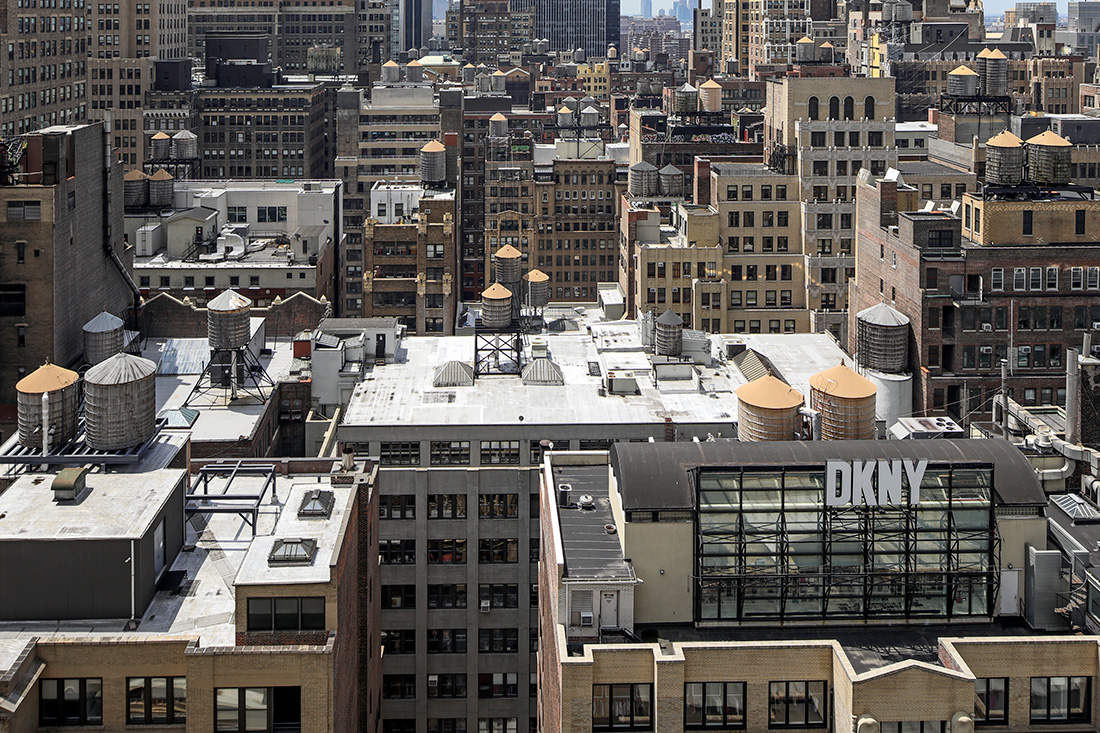
    From West 40th Street between 7th and 8th Avenues — © Brian Rose
    New York used to look like this — and still does. The Garment District. It’s hard to see in a web-sized jpeg, but there are about 50 water towers in this shot.

  • New York/Atlantic City

    We drove down to Atlantic City today to work on the video for my soon to be launched Kickstarter campaign to raise money for my upcoming book. It was a little damp, a little foggy, with few people on the beach. Even the boardwalk was relatively sparse for a summer day.

    I worked from a script as I’ve done in the past, but while setting up one of the shots, I went off script and just started talking. I’m calling this my Trumpian Dystopia speech. Enjoy!

  • New York/Atlantic City


    Circa Press catalogue pages — click to enlarge

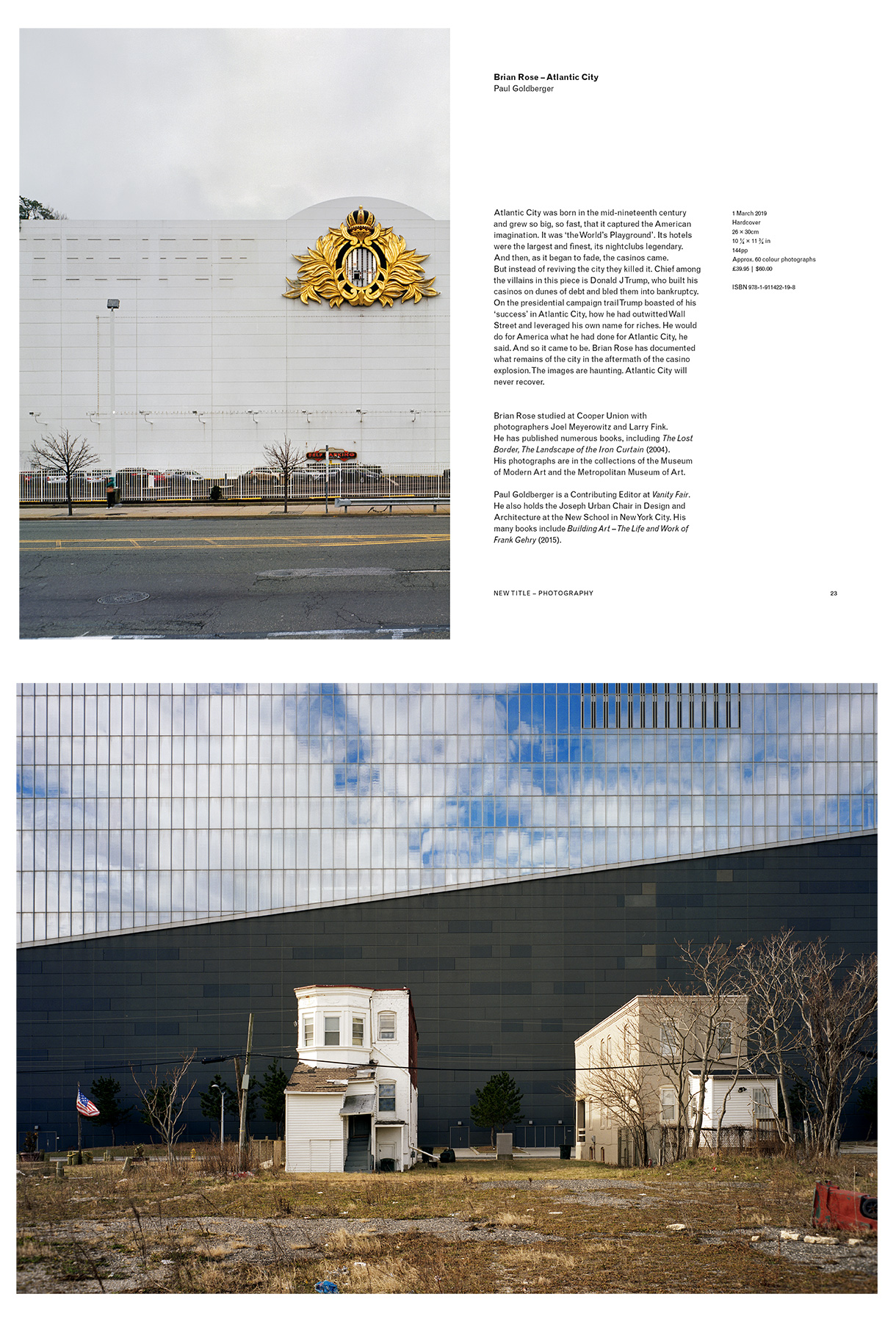
    Catalogue page for Atlantic City which will be published by Circa Press, a London based publisher of exceptional books about art and design. Circa was founded by David Jenkins, the former chief editor of Phaidon, and the introduction for Atlantic City is being written by Paul Goldberger, Pulitzer Prize winning critic for the New York Times and The New Yorker.

    I’m going to Atlantic City tomorrow to shoot my Kickstarter video. The weather is looking stormy. There’s a campaign afoot promoting an Atlantic City comeback  — but it’s a sham. The former Trump Taj Mahal has morphed into the Hard Rock Casino and the Revel is reopening as Ocean Resort Casino. As before, the jobs will go primarily to suburban commuters, and I would not bet on the success of two new casinos in an already shaky market. Hard Rock has the best chance because of its already established brand and ability to book top entertainment. Meanwhile out on Pacific and Atlantic Avenues, little will change for the drifters and homeless.

  • New York/Atlantic City

    Major announcement!

    I am pleased to report that my photographs of Atlantic City have found a publisher, Circa Press, of London, and that the book will be released early in 2019. The project is well underway and we are working on the design of the book now. This will be my fourth book in eight years.

    The introduction for Atlantic City will be written by the esteemed architecture critic Paul Goldberger. Here is his blurb for the book:

    Atlantic City was born in the mid-nineteenth century and grew and grew. It grew so big, so fast, that it captured the American imagination. It was ‘the World’s Playground’. Its hotels were the largest and finest, its nightclubs legendary, its boardwalk an endless promenade. And then, as it began to fade, the casinos came. And instead of reviving the city they killed it. Chief among the villains in this piece is Donald J Trump, who built his casinos on dunes of debt and bled them into bankruptcy. On the presidentialcampaign trail Trump boasted of his ‘success’ in Atlantic City, how he had outwitted Wall Street and leveraged his own name for riches.He would do for America what he had done for Atlantic City, he said. And so it came to be. Brian Rose has documented what remains of the city in the aftermath of the casino explosion. The images are haunting. Atlantic City will never recover.

    Some of the production costs will need to be defrayed, so I will be initiating a Kickstarter campaign later this summer. Stay tuned for more information.

  • New York/RFK Funeral Train

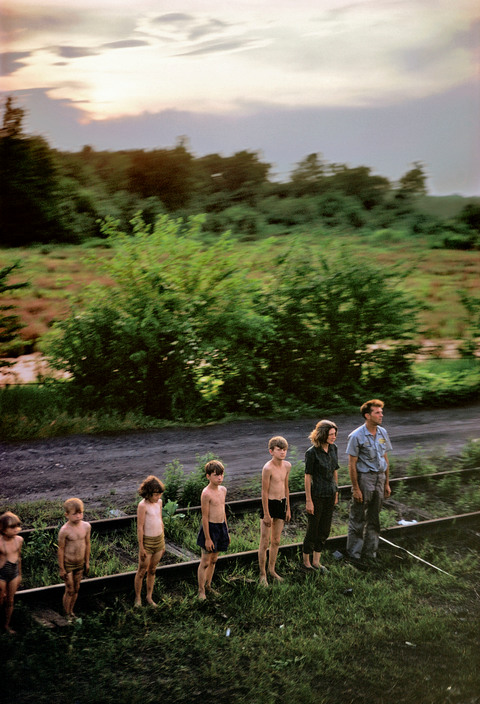
    Paul Fusco, USA. Harmans, MD. 1968. Robert KENNEDY funeral train.

    Paul Fusco’s photographs made from the RFK funeral train are a remarkable portrait of America in 1968, one of the most tempestuous years in modern American history. There were assassinations, riots, and the war in Vietnam. For a few hours in June, people stood silently, reverently, to pay their respects as the cortege train rolled by.

    I watched on TV. I was 14 years old in 1968, and my hopes for the future felt crushed. Fifty years later, we are in another moment of national crisis no less serious, though without the violence of ’68. The comparative normality of the present makes it all the more insidious as Trump and the Republican party chip away the foundation of our shared values piece by piece. It is a slow motion death — and we stand transfixed as the cortege train of democracy rolls by.

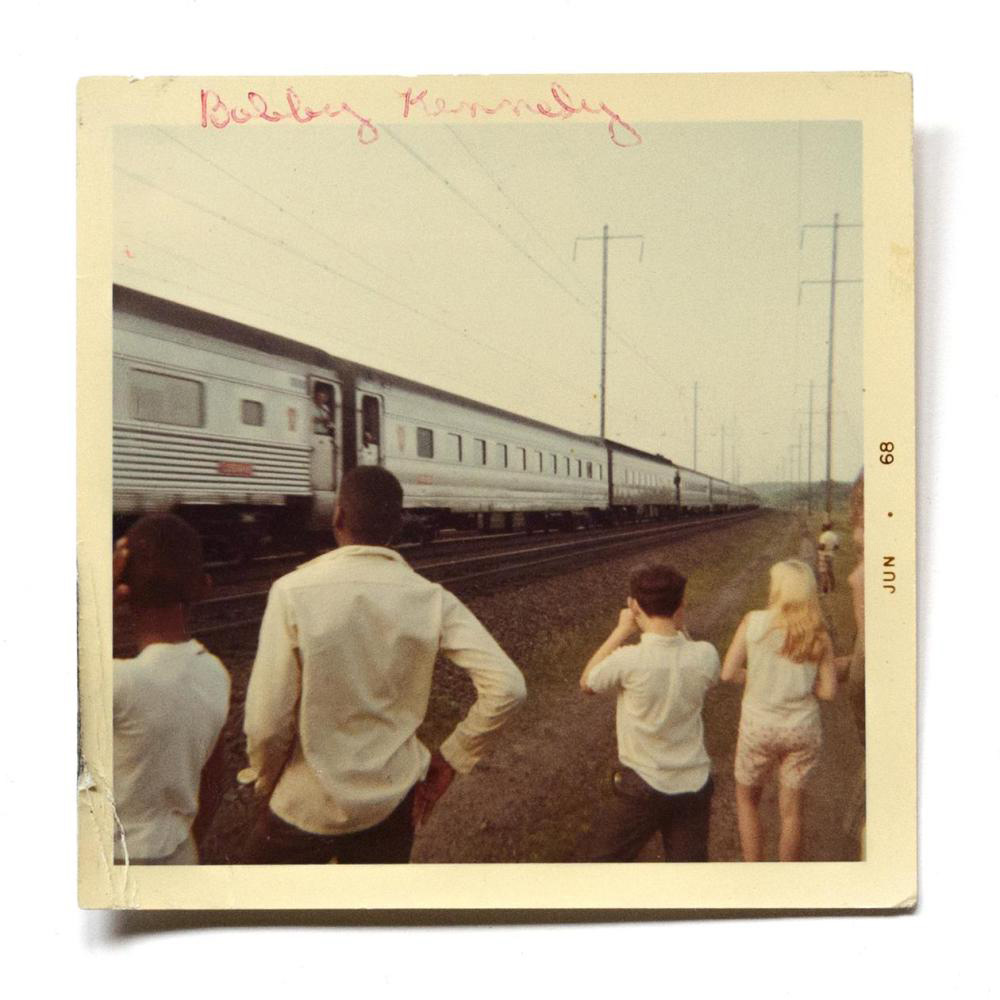
    A Dutch artist, Rein Jelle Terpstra, revisited Paul Fusco’s photographs by tracking down some of the people who witnessed the RFK train in 1968. He recorded their recollections and collected their snapshots and super 8 movies. It’s a great idea, but the execution is thin, a multi-screen repetition of a handful of faded still images and flickering film of the train in motion. The original Fusco images remain powerful and iconic.

    We need more from artists, curators, and publishers — now.

    “No reason to get excited,” the thief, he kindly spoke
    “There are many here among us who feel that life is but a joke
    But you and I, we’ve been through that, and this is not our fate
    So let us not talk falsely now, the hour is getting late”

    — Bob Dylan


  • New York/Canada


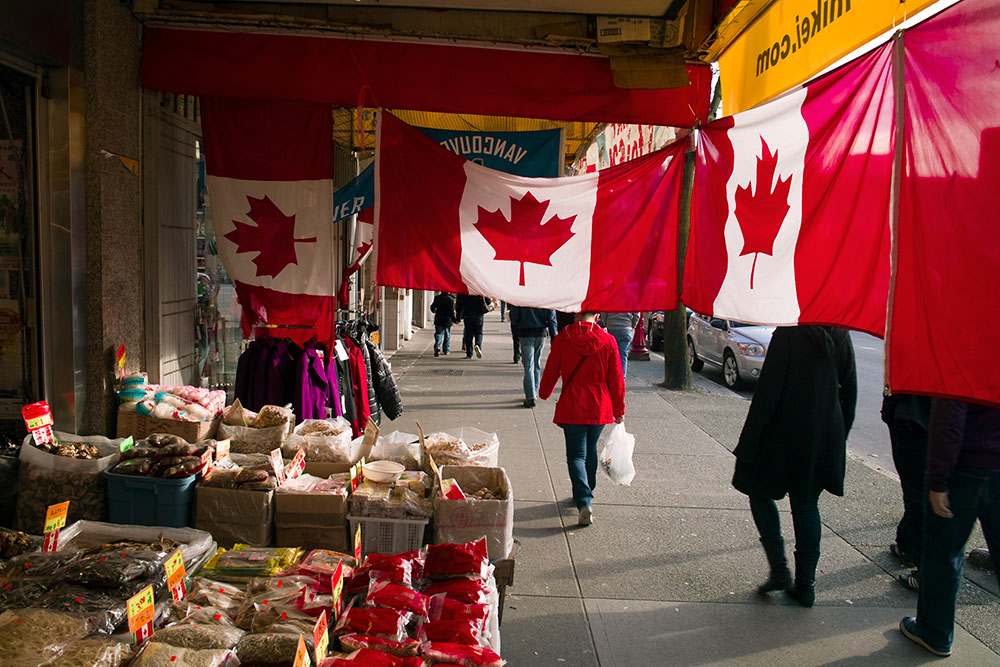
    Vancouver — © Brian Rose

    Long live Canada!

  • New York/East Village


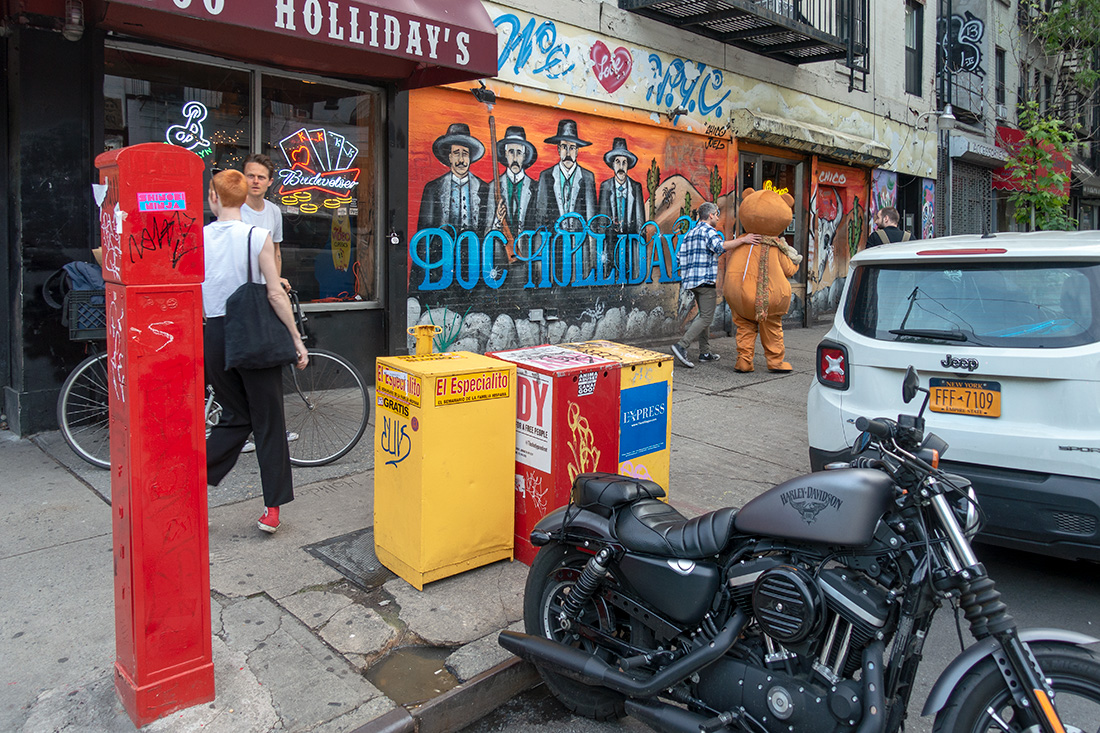
    Avenue A and East 9th Street — © Brian Rose

    Street as theater.


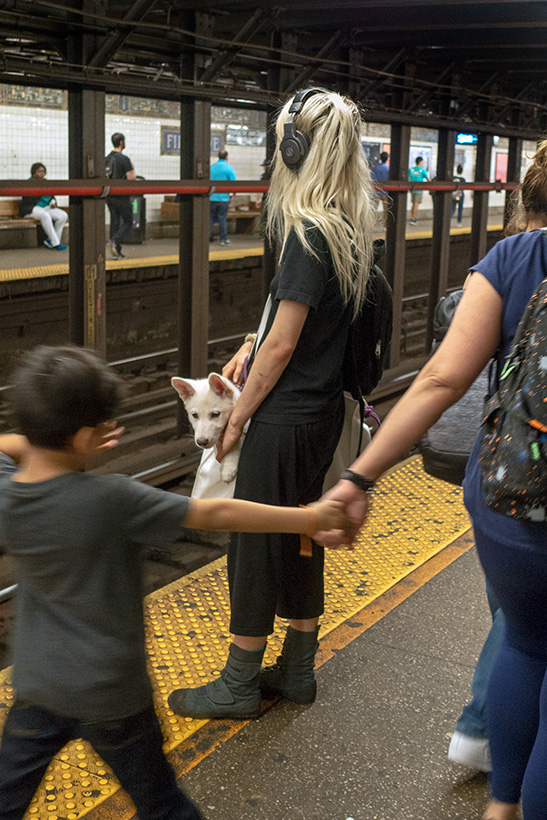
    First Avenue subway station — © Brian Rose

    Dog in a bag.

  • New York/Glass House


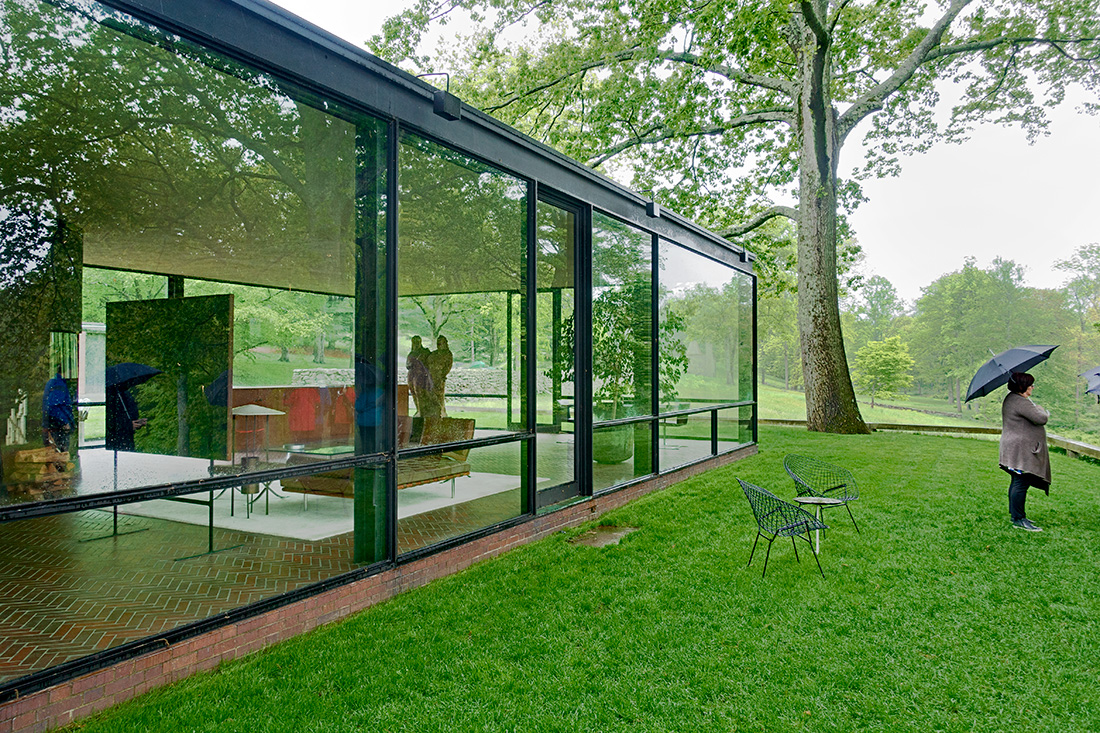
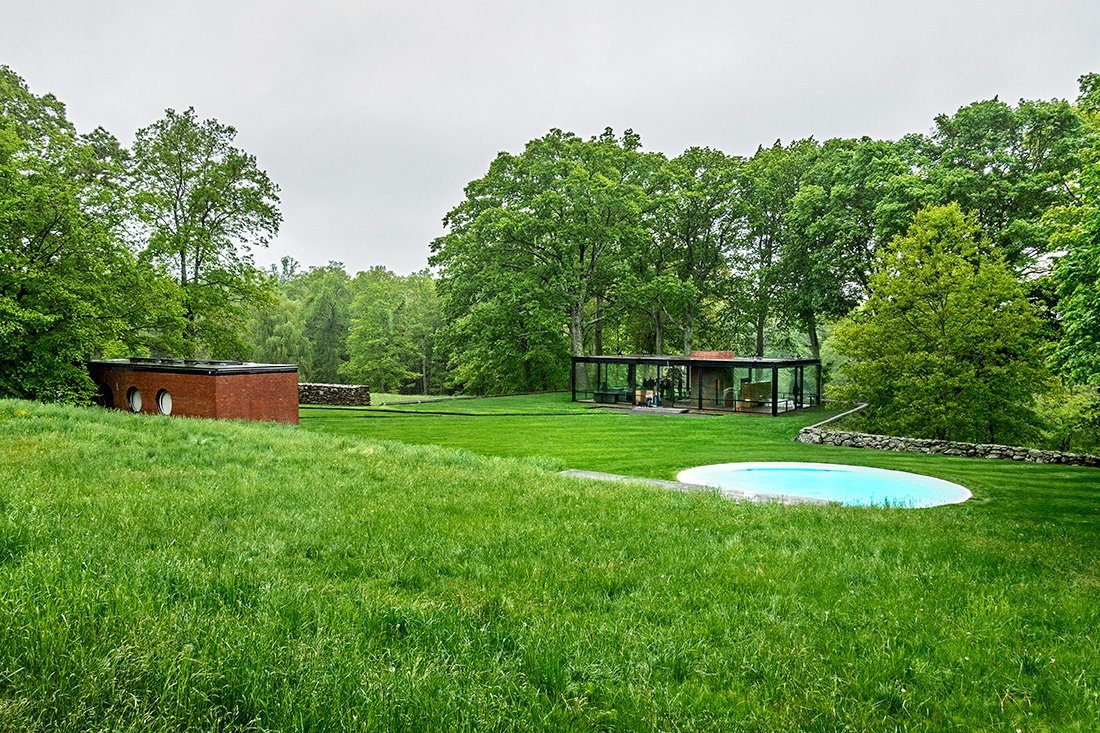
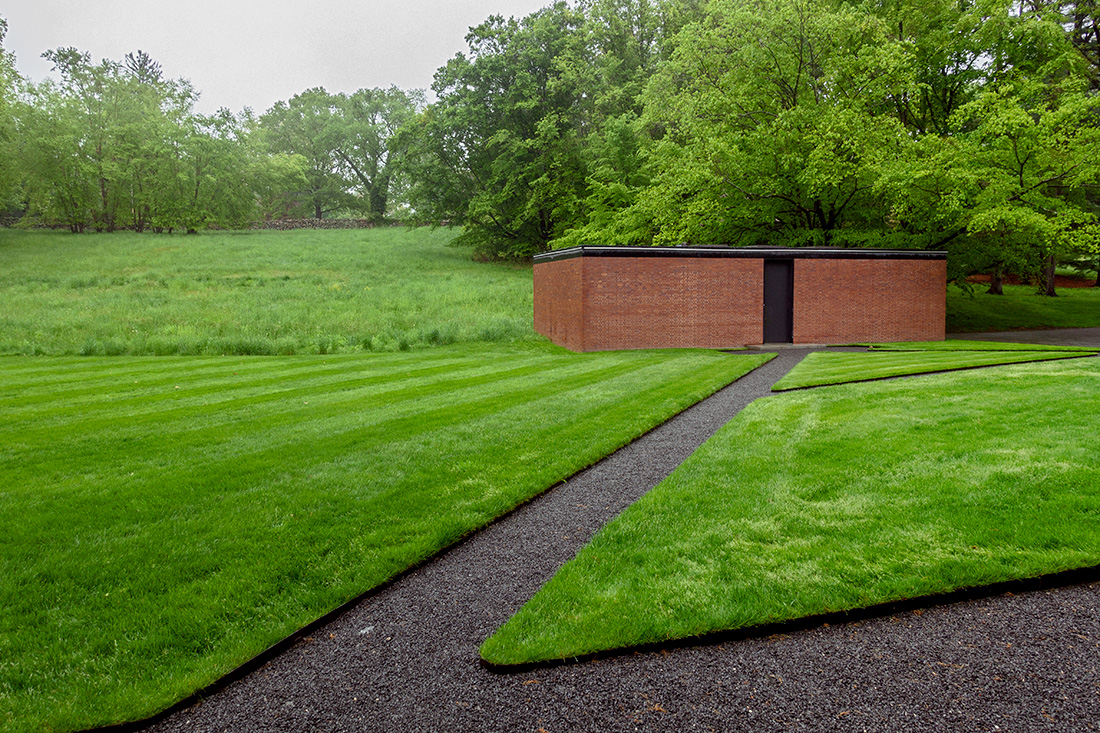
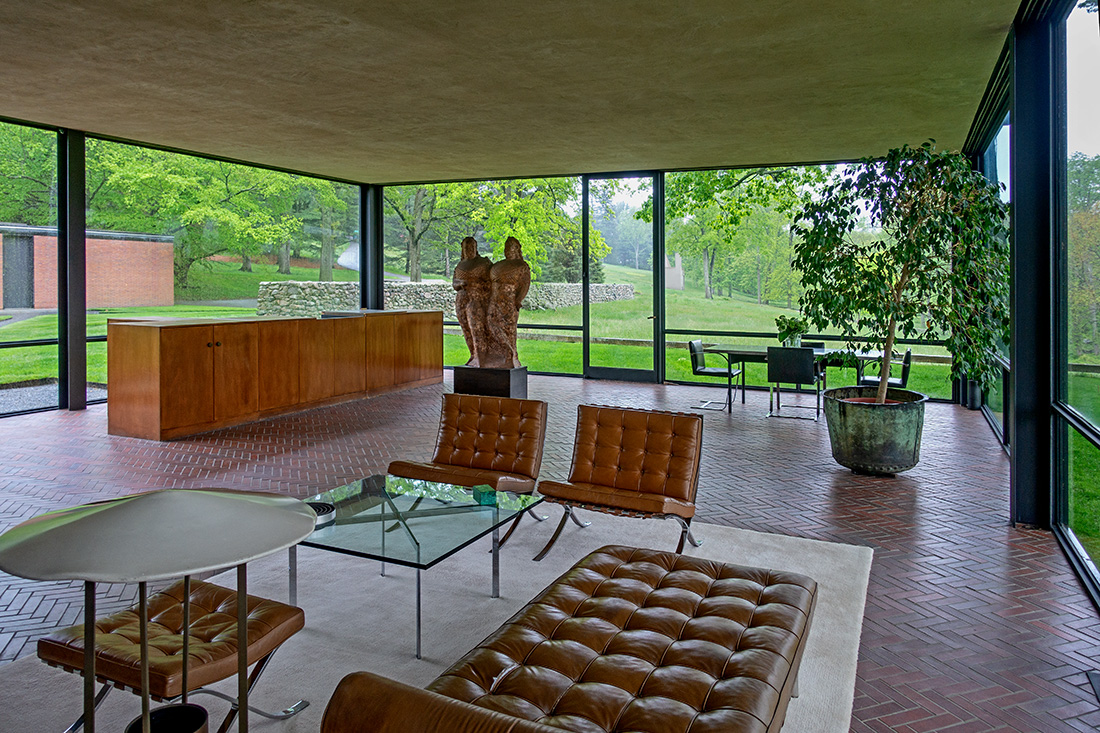
    The Glass House, New Canaan, Connecticut — © Brian Rose

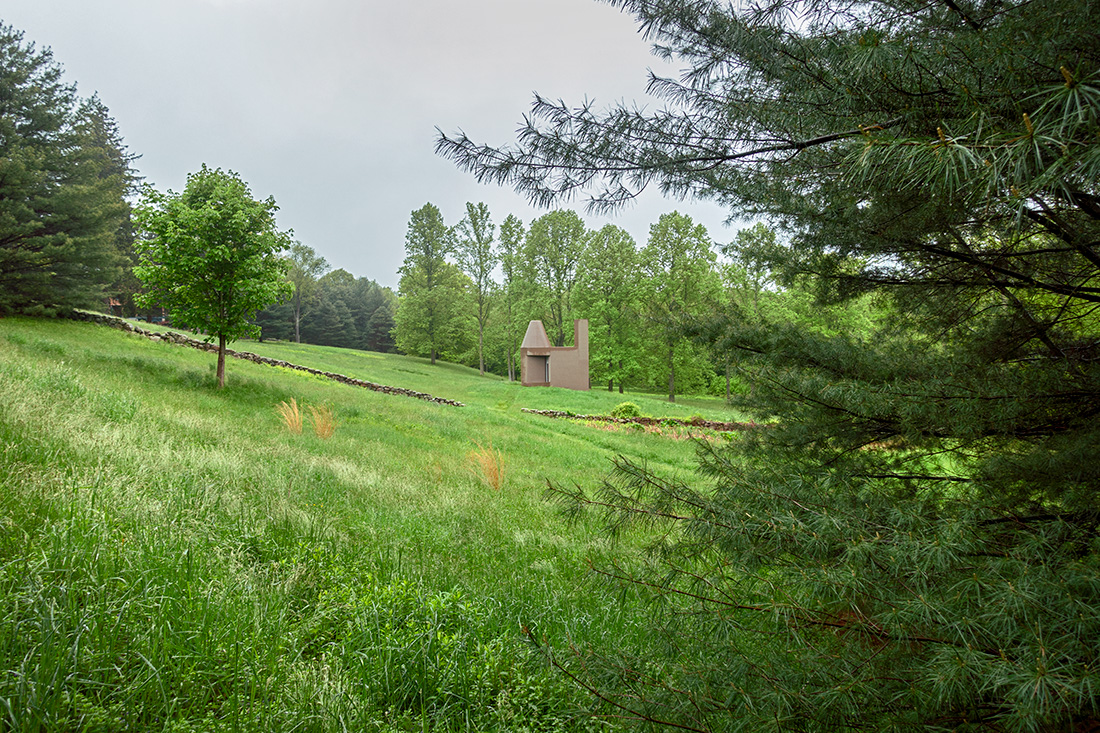
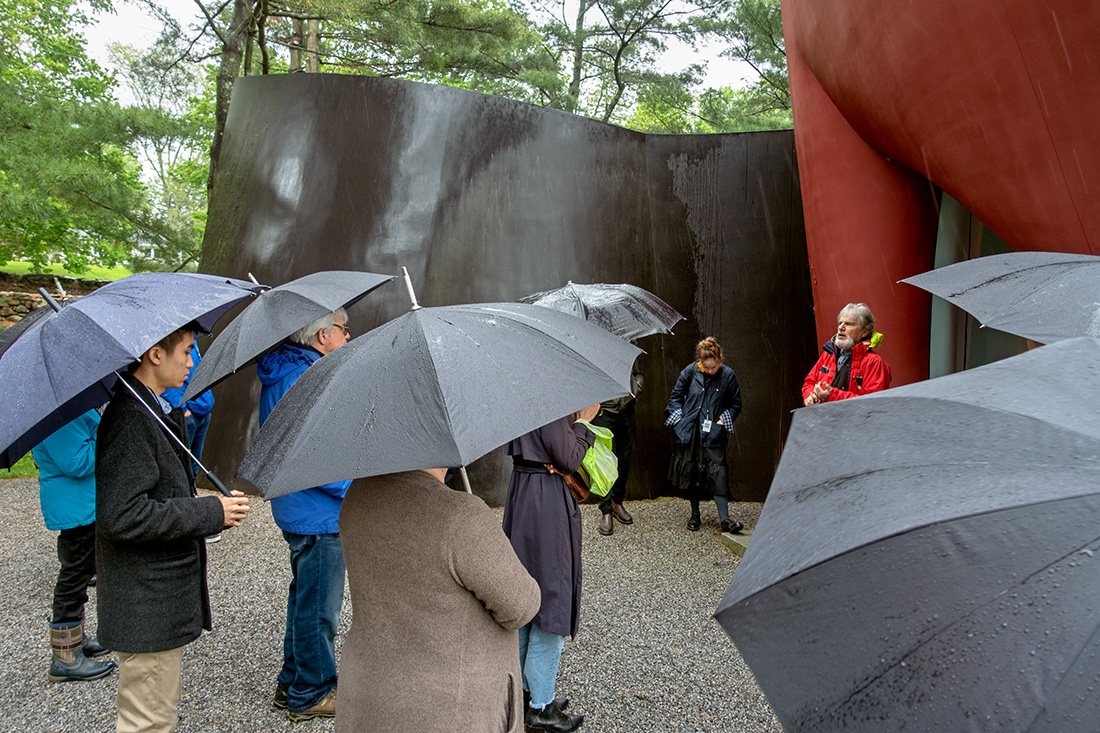
    Yesterday, I toured the Philip Johnson Glass House with Cooper Union alumni. It rained the entire time we were there, but the atmosphere was beautiful, drenched in the vibrant green of early Spring. In the various structures on the estate, one can trace Johnson’s chameleon-like career, morphing from one architectural style to another.


    The Glass House, New Canaan, Connecticut — © Brian Rose

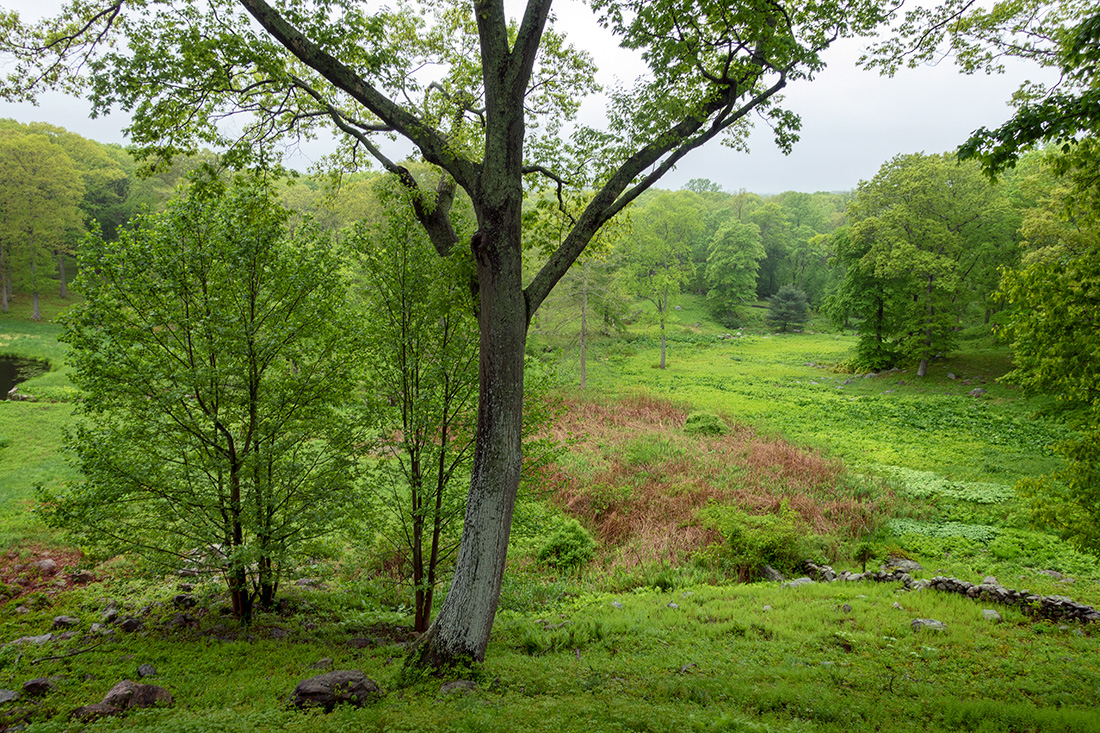
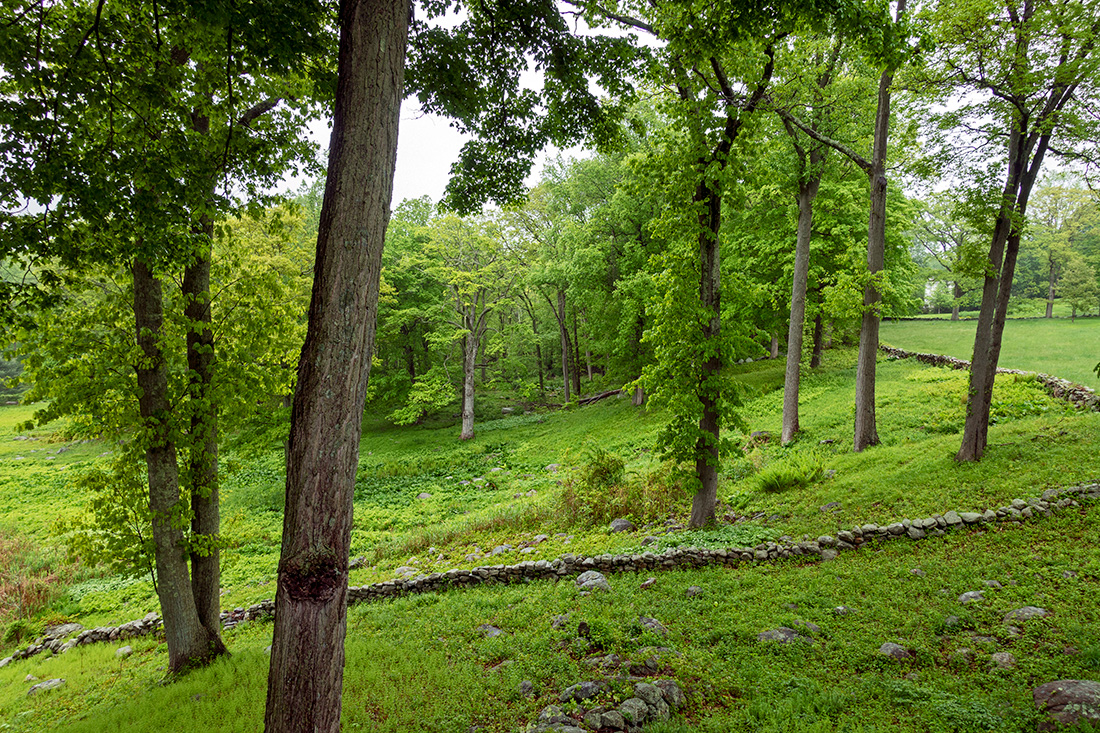
    The Glass House itself, of course, is Johnson’s homage to Mies van der Rohe — which I have seen photographs of many times. What was most surprising to me was the landscape surrounding it. How the house sits on a plateau overlooking carefully orchestrated views, perhaps reminiscent of Olmsted’s urban pastorales, Central Park or Prospect Park.


    Glass House grounds — © Brian Rose


    Glass House grounds — © Brian Rose


    Sculpture Gallery — © Brian Rose


    Brick House — © Brian Rose

    No doubt intended by Johnson, the Glass House is not simply “the house,” but the integration of the structures with the landscape. Inside and outside are blurred, and each of the separate buildings, or follies, have different purposes or play different symbolic roles.


    Glass House — © Brian Rose


    Studio — © Brian Rose


    Da Monsta with tour group — © Brian Rose

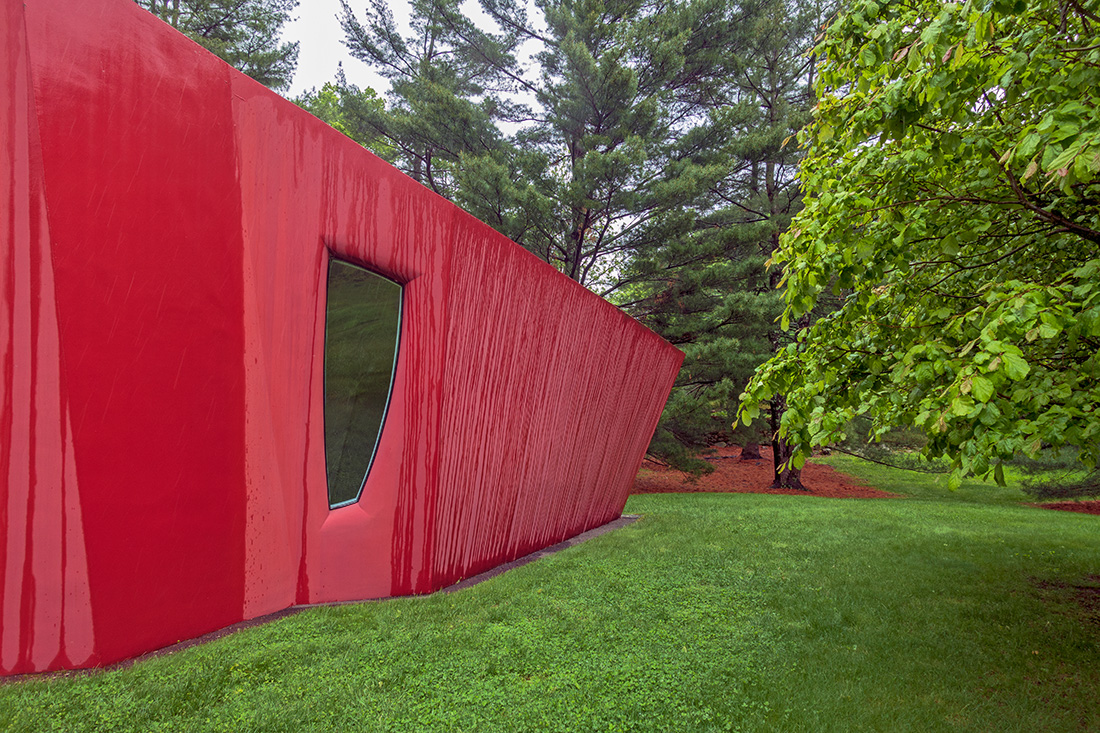
    We ended the tour at Da Monsta, Johnson’s last structure on the site. It is expressive of the non-rectilinear design of architects like Frank Gehry and Daniel Libeskind — deconstructivism — and Johnson, as always, followed others, and championed their work. That is his greatest legacy. He used his money, charm, and intelligence to elevate the place of modern architecture in our culture.


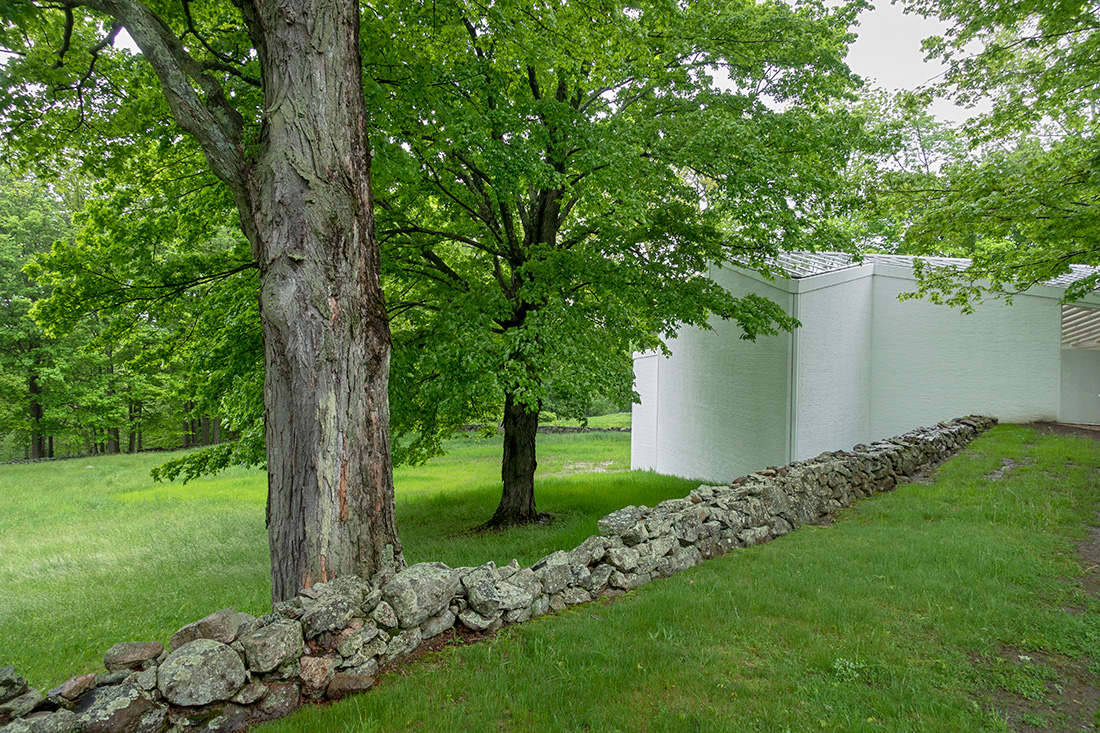
    Da Monsta — © Brian Rose


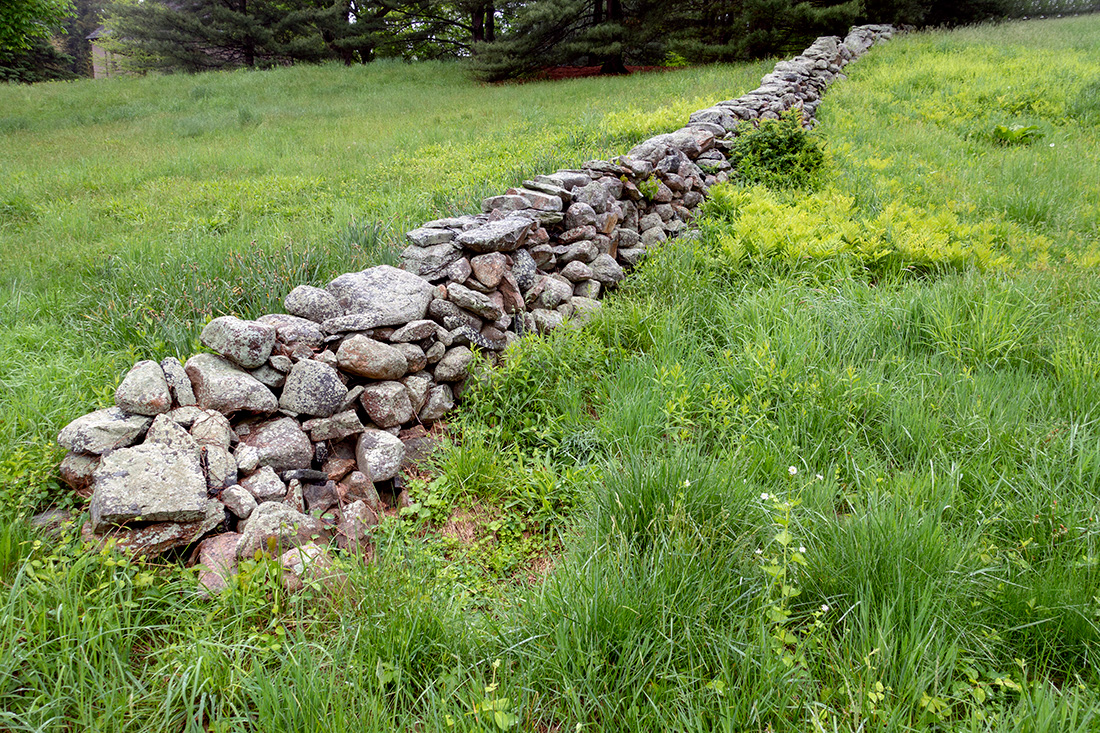
    Brick wall — © Brian Rose

  • New York/Atlantic City


    Pacific Avenue, Atlantic City — © Brian Rose

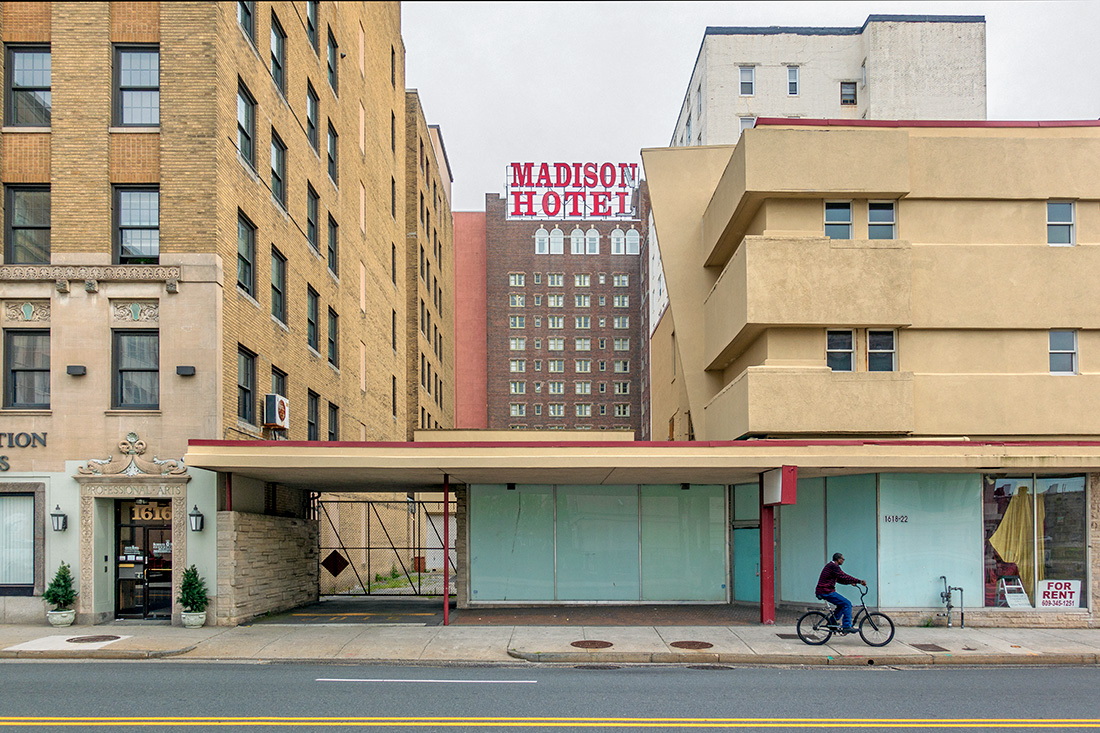
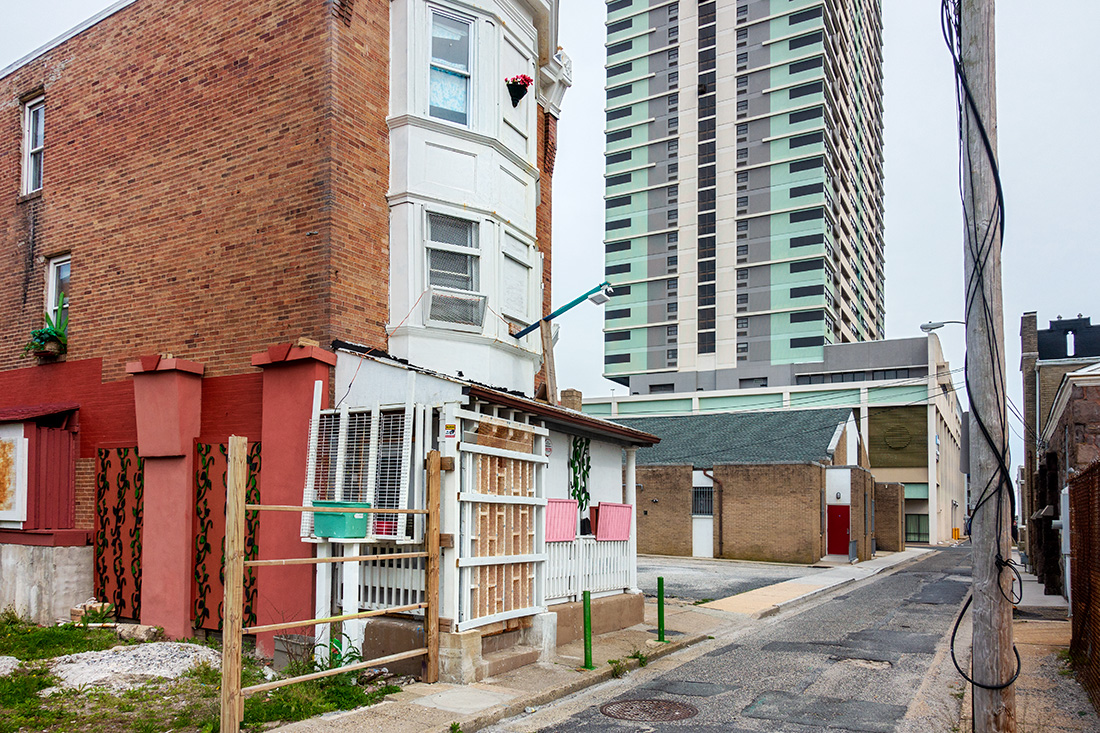
    A little piece of pre-casino Atlantic City on Pacific Avenue. I found myself talking to an older man coming out of a convenience store. I told him what I was doing — about how I was photographing the city and the legacy of failure left by Donald Trump. He said Trump didn’t pay his bills and thousands of people lost their jobs.

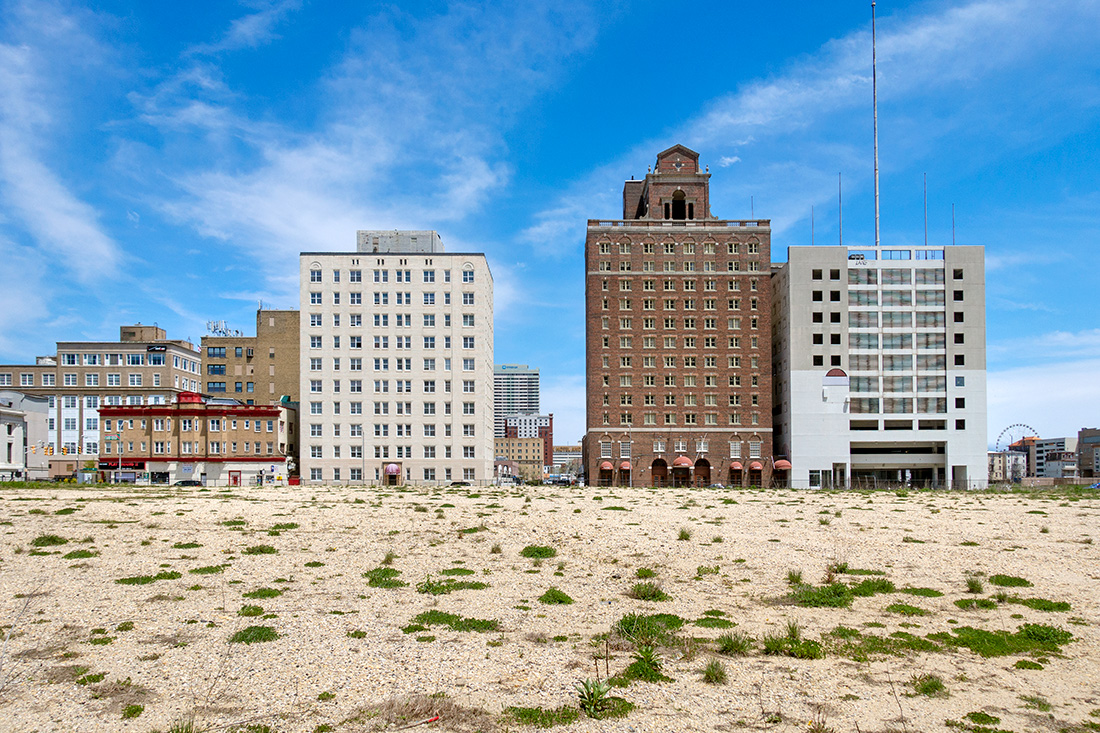
    He said that he used to deliver sandwiches to Frank. Frank? Frank Sinatra. He used to stay at the Sands — just to the right of the picture above — he’d usually order 25 or so sandwiches for all his pals. The Sands Casino Hotel was bought up by Carl Icahn, Trump’s business friend, and in 2007, having been milked to death, it was imploded in a grand fireworks display. It’s a vacant lot today.

  • New York/Atlantic City


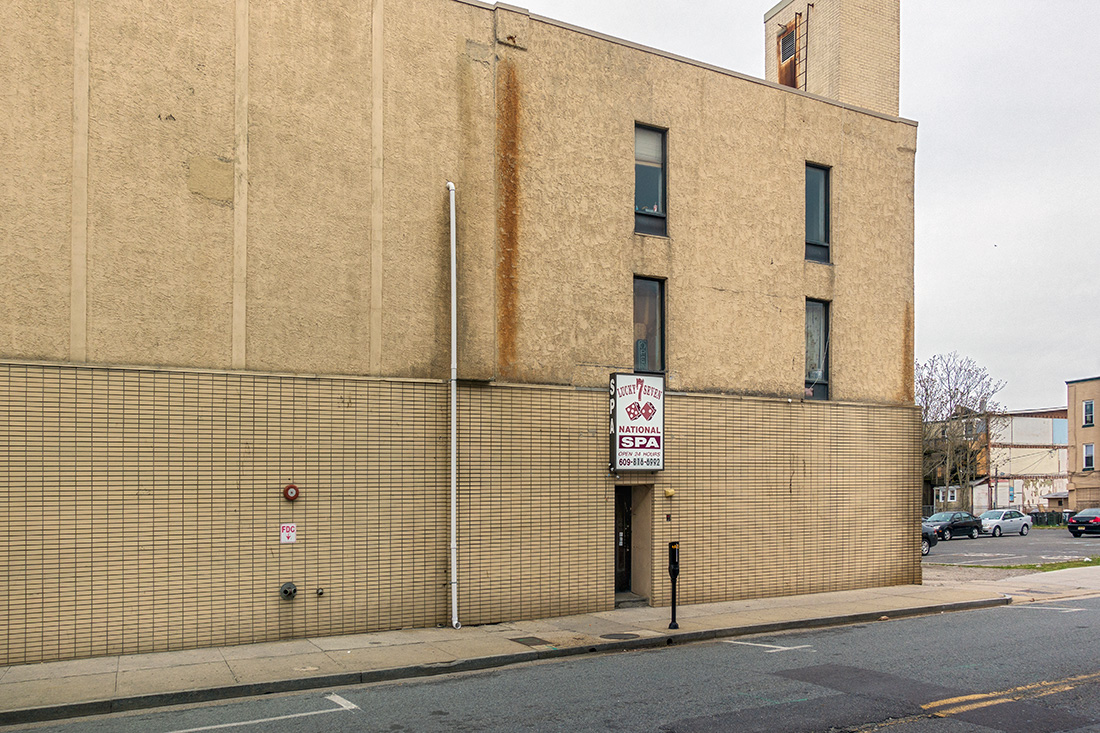
    Kentucky Avenue, Atlantic City — © Brian Rose

    Lucky Seven National Spa. Open 24 Hours.

  • New York/Atlantic City


    Showboat Hotel — © Brian Rose

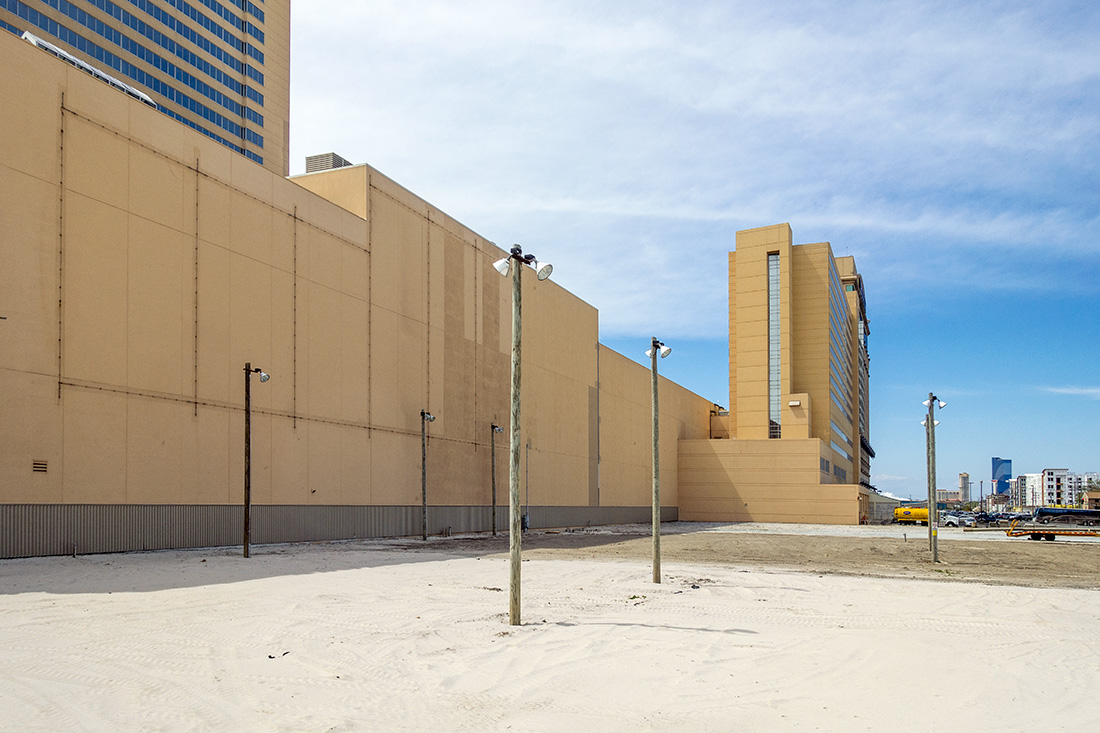
    Standing on the boardwalk looking inland — if you leave things vacant long enough in Atlantic City it will revert back to the sandbar that it naturally is. I assume that this block long party wall was meant to abut another casino hotel. But this being Atlantic City, windowless casino walls become virtually permanent features of the urban landscape.

    Showboat and its casino closed in 2014 along with several other AC casinos, but has since reopened as a giant plain vanilla hotel. Obviously, it can’t make money. These things have to be write-offs awaiting possible rebirth as rebranded casinos. What else is there? Perhaps, money laundering machines, which is almost certainly true of the former Trump casinos.

    Meanwhile, the sand drifts.

  • New York/Atlantic City


    Pacific Avenue, Atlantic City — © Brian Rose

    The Trump Taj Mahal (seen at right) has been stripped of its faux Indian/Arabian/Russian motifs, and new owner Hard Rock is in the process of installing its characteristic rock/guitar/burgers theme. Hard Rock, which was founded in in 1971 in London by a couple of Americans is now owned by the Seminole Indian Tribe and is headquartered in Orlando, Florida. Trump, of course, parlayed his casino bankruptcies and reality TV show into a gig as president of the United States. It all makes sense in Atlantic City.

  • New York/Atlantic City


    Atlantic City — © Brian Rose

    Pauline’s Prairie

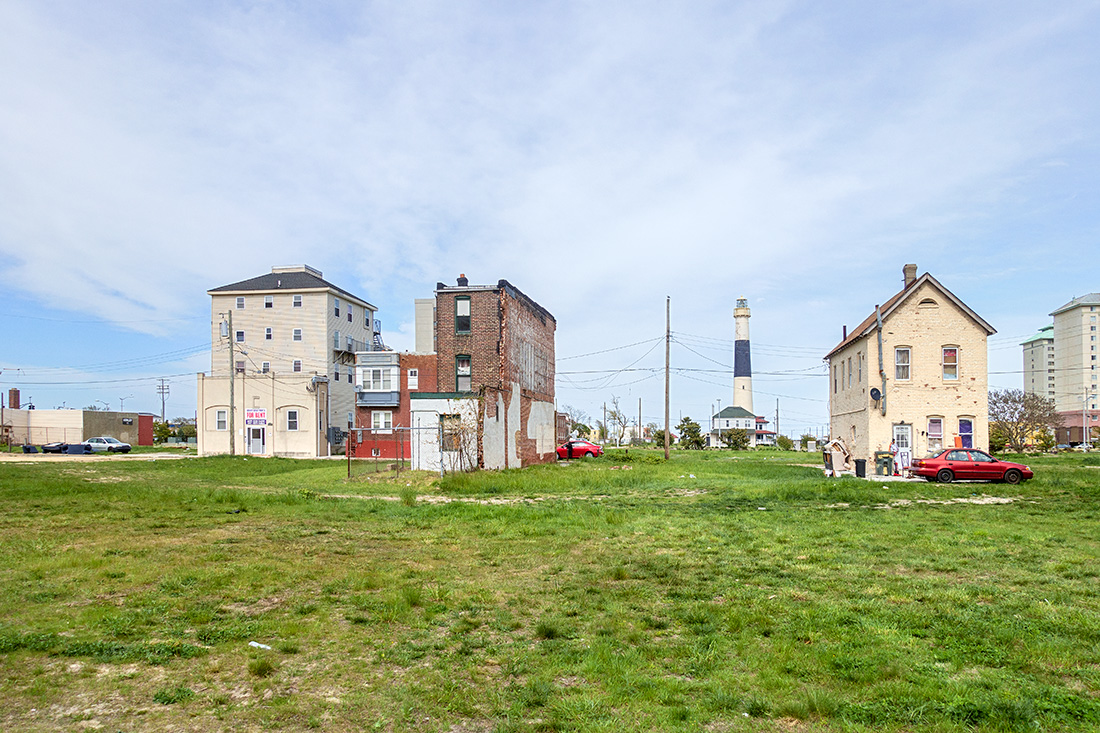
    During the mid to late 1960s, Atlantic City’s housing czar, Pauline Hill, dismantled an entire neighborhood to make way for commercial development.

    Eighty acres in the city’s South Inlet section were razed. Forty-five-hundred people were displaced.

    But development, in large part at least, never came. In the ensuing decades, the South Inlet remained a scattering of mostly low-rise housing pocked by barren lots.

    — Press of Atlantic City

  • New York/Atlantic City


    Former Trump Taj Mahal — © Brian Rose

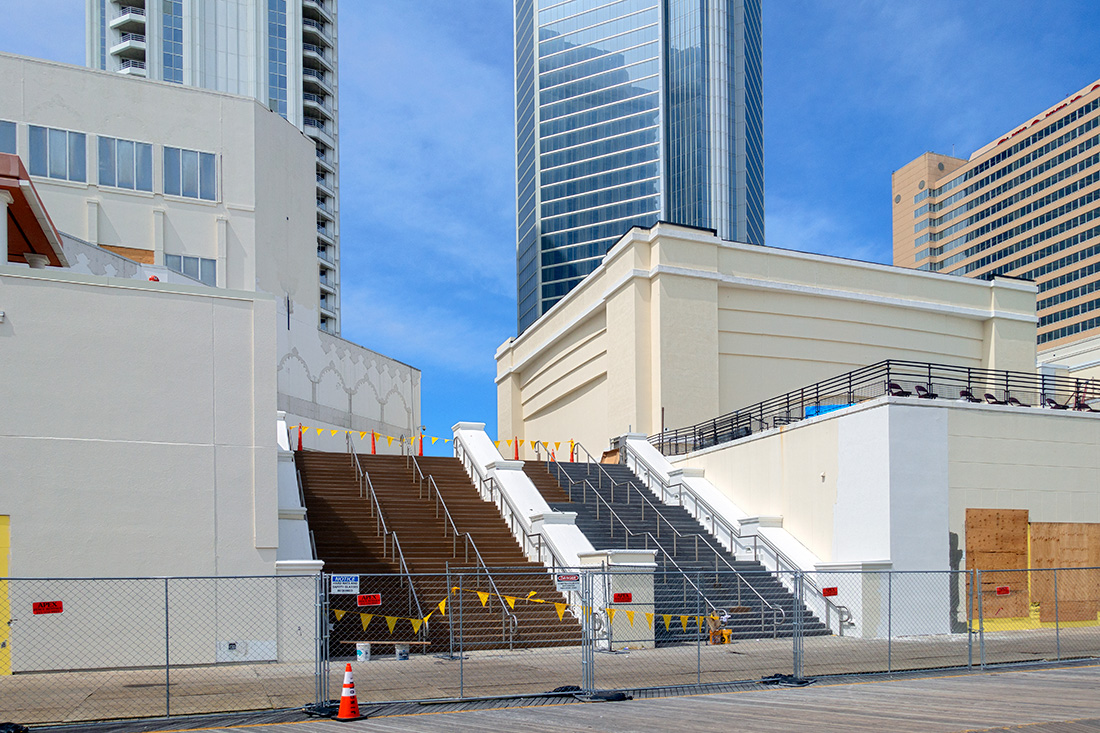
    The grand staircase to the Trumpian realm — now stripped of its onion domes and minarets. Atlantic City continues to bank on casinos as the way out of urban blight and crime. It hasn’t worked so far.

    Donald Trump wrote “The Art Of The Deal,” but it was Florida’s Seminole Indians who made a truly amazing deal to buy the opulent casino built by the man who is now president of the United States.

    The Trump Taj Mahal, the Atlantic City, N.J., casino that the real estate mogul built for $1.2 billion in 1990, went for 4 cents on the dollar when it was sold in March. Documents filed with the Securities and Exchange Commission on Tuesday revealed the price billionaire Carl Icahn got from Hard Rock International for the shuttered casino: $50 million.

    — The Los Angeles Times/AP

  • New York/Atlantic City


    Atlantic City — © Brian Rose

    An MRI of America.

  • New York/Atlantic City


    Atlantic City — © Brian Rose

    Back in Atlantic City…

  • New York/Grand Central Terminal


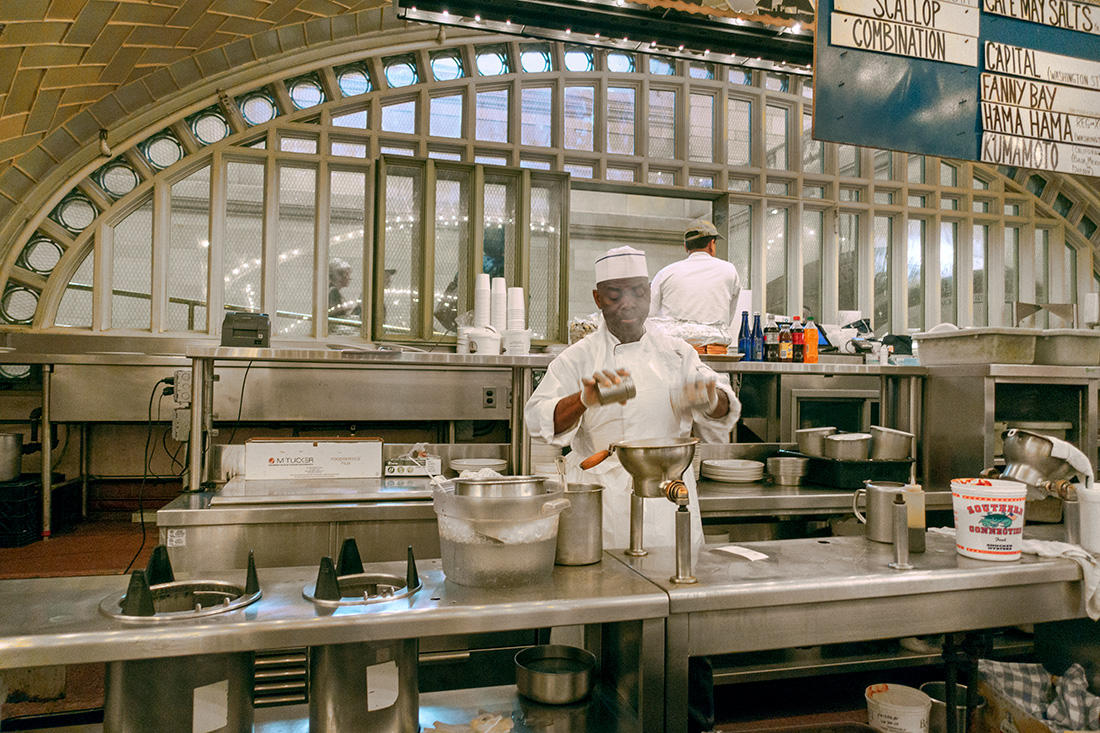
    The Oyster Bar, Grand Central Terminal — © Brian Rose

    There is no more essential New York experience than having an oyster stew or pan roast in the Oyster Bar in Grand Central. If you sit at the counter along the north wall you can watch your stew prepared in front of you. It all happens in 3 or 4 minutes — a half dozen Blue Point oysters are quickly cooked in clam broth in a steam heated pan, half-and-half is added, along with dashes of Worcestershire, hot chili sauce, and a sprinkle of paprika. The pan is then tilted, the stew goes into a bowl, and it arrives piping hot a few seconds later. It doesn’t get any better than this.

    I once sat next to Peter Seeger at the counter in the Oyster Bar — he was alone — but I didn’t say a word.


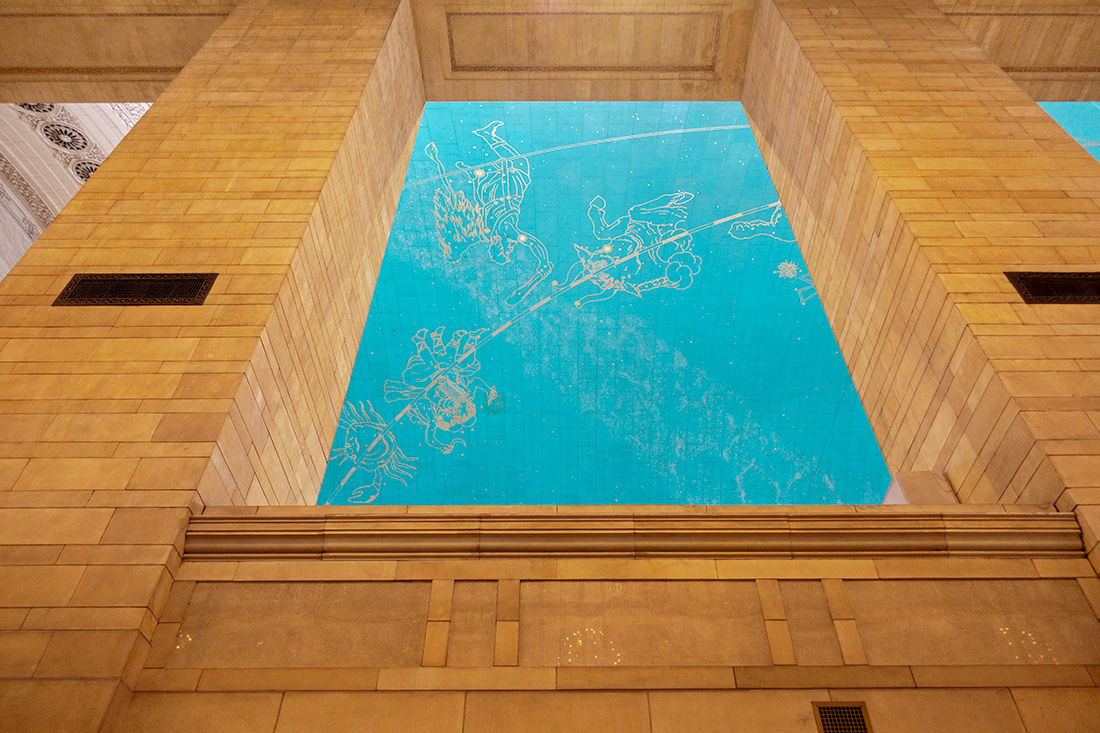
    Grand Central Terminal — © Brian Rose

    After an oyster stew, one must pay homage to Grand Central Terminal itself, one of the greatest interiors in the world. Look up and see the Zodiac. Be filled with wonder.
    .