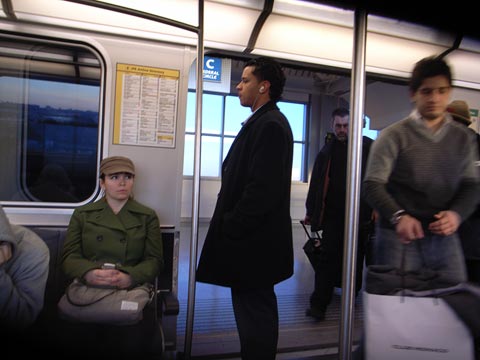
Airtrain, JFK Airport
Life in transition. I’m back after several weeks of making the move from Amsterdam to New York. We are still eating on a cardboard box, but have generally made a successful landing in a beautiful apartment in the West Village near the Hudson River. For me, it’s less of a momentous move than for my wife Renée and son Brendan. After all, I’ve been commuting back and forth between Amsterdam and NYC for a long time. For all of us it’s an opportunity for a fresh start with new career and life opportunities. And I should now be able to pursue my art projects and architectural photography without the constant interruptions and dislocations of the past 10 years. I also hope to renew my ties with the New York songwriting scene that I used to be an active part of. So, stay tuned for lots more reports here and about town in 2007.
Category: Photographers/Photography
-
Amsterdam/New York
-
Amsterdam
Back in Amsterdam. Busy packing and taking care of a million things to make our move to New York. As most of you know I’ve been commuting back and forth for a number of years. That will finally come to an end in January. In the meantime, journal posts may be somewhat sparser than usual.
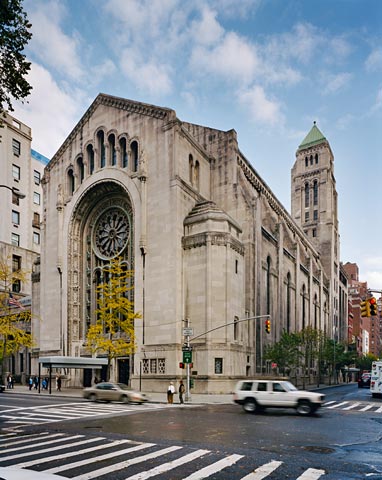
Temple Emanu-El, New YorkI’ve uploaded a web page of my Temple Emanu-El photos.
-
New York/Rodger Kingston
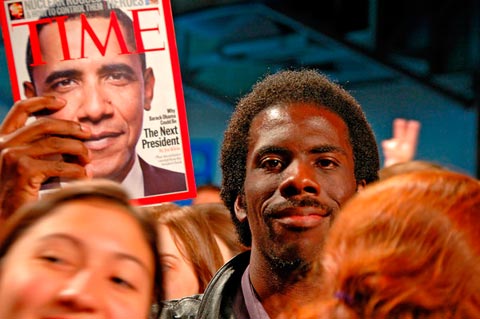
Photo by Rodger KingstonI met Rodger not too long ago–a terrific photographer and Walker Evans scholar. Recently he volunteered his eye and digital camera to the Deval Patrick gubernatorial campaign in Massachusetts. Rodger photographed various public events, covering the speakers and notables like Barak Obama admirably, but his best moments were when he turned his camera away from the podium and interacted with the crowd. I say interacted because Rodger was both documenter and participant in the unfolding drama of the campaign, which culminated in Patrick’s victory. Go here.
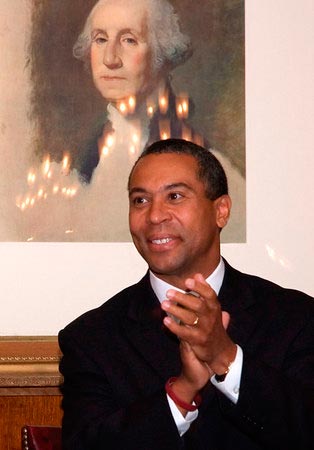
Deval Patrick, photo by Rodger Kingston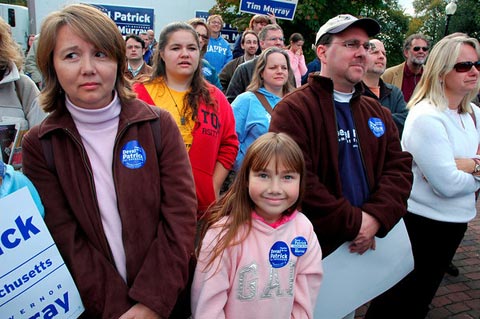
Photo by Rodger Kingston -
New York/Midtown
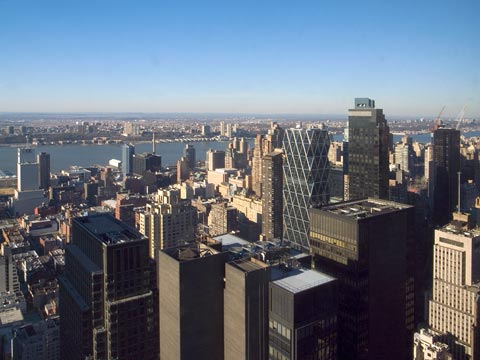
Midtown ManhattanI spent two days on the 50th and 51st floors of a Midtown office building photographing the executive suite of a large international bank. Great views on all sides. Looking northwest, and standing amid a forest of mostly mediocre skyscrapers, is Norman Foster’s newly completed Hearst Tower. It’s the one with the diagonal bracing. For more information and photos go here.
-
New York/Apartment Hunt
I haven’t posted much lately because I’ve been hoofing it all over lower Manhattan looking for an apartment for my family. It’s been an incredibly frustrating experience. It’s not just that prices are high–that was a given–but that there’s so little available for rent at any price. One loft in Tribeca that I loved was snatched from under me by someone with a blazing checkbook. I’ve been using several brokers, a New York necessary evil, who have been very nice and have tried to find me a suitable place. So far, they, and I, have failed. But earlier today I applied, without a broker, for a loft in a building in the West Village near PS 3, a school that would be great for my son Brendan.
Hopefully, I will snag this one.Walking back to my East Side apartment I passed by Moss, a terrific design store on Houston Street.

Moss on Houston Street -
New York/Photo Galleries
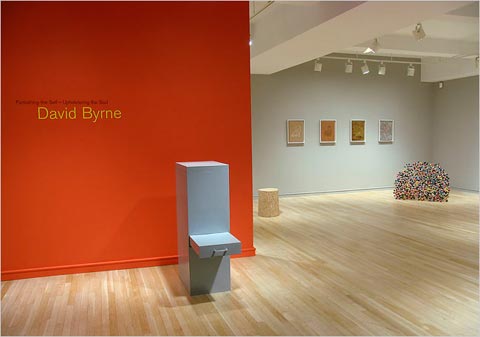
David Byrne not exhibiting photographs at Pace/MacGill, New York TimesI don’t know quite what to make of today’s New York Times article about photography galleries. Philip Gefter alerts us that traditional photo galleries are now occasionally showing other media. He writes:
It may not be a revolution, but it is a significant change in the gallery landscape. These are the places that helped to establish photography’s viability as an art form as well as to create a business model. Having proven their point, they are now at liberty to experiment.
When I came to New York in the late ’70s, photography was relegated to a group of galleries that exclusively exhibited photographic prints. The most prominent at the time was Light Gallery, which did much to elevate the status of photograhy in the art world. John Szarkowski at the Museum of Modern Art did even more by showing photographs in the context of the canon of 20th century art. MoMA’s photo galleries may have been separate, as they are now, but the prominent inclusion of photography in the museum signalled the arrival of the medium under the big top. Even so, the promiment art galleries in New York mostly showed photographs by artists known for other things. Warhol and Hockney are two obvious examples. I remember well when Jan Groover was exhibited at a mainstream art gallery on West Broadway back when the scene was still centered in Soho. This was a big deal to me because I saw her work as intrinsically photographic–4×5 still lifes of kitchen utensils–printed on conventional photo paper. She had broken through the photo/art Iron Curtain.
Eventually photography became an equal player, though as a print medium there are different market forces at work. The galleries–and the photographers–have tried to enhance the value of photographs by making them bigger or by creating work that pushes the envelope of what is thought of as conventional photography. Think Cindy Sherman or Andreas Gursky. But I think one of main reasons for the continued existence of separate photography galleries is that they cater to a different set of collectors. Nowadays there’s some overlap among the collectors, hence some overlap in the galleries as well. Will the boundaries blur further? Maybe, maybe not. Does it matter?
Anyway,the phenomenon is worth noting, I suppose, but I’d rather have read a perceptive article about Esko Mannikko’s exhibit at Yancey Ricardson. A photo of the gallery illustrates the NYT article and is captioned as photographs with a nonphotographic look. Mmm. And, by the way, the Times misspelled his name.
-
New York/Bowery/Delancey
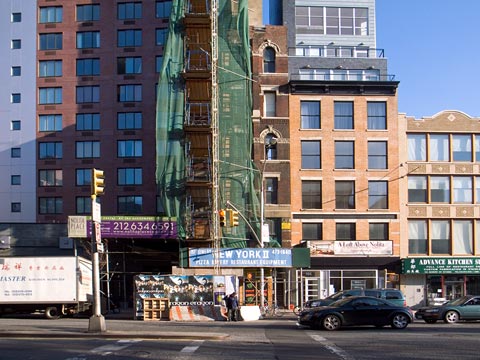
What follows are four very intense views made along the Bowery and Delancey Street. It will be interesting to see how these come out in 4×5.
The Bowery and Spring Street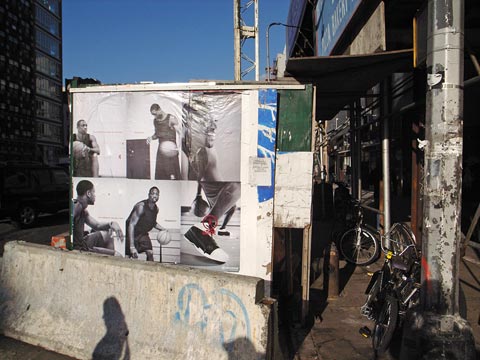
Dwyane Wade poster on the Bowery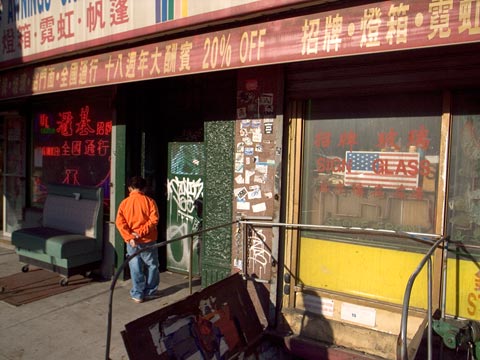
Delancey Street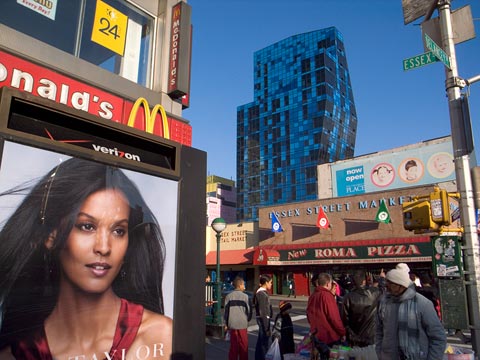
Essex and Delancey Street, Blue Condominium, Bernard Tschumi, architect -
New York/Bowery
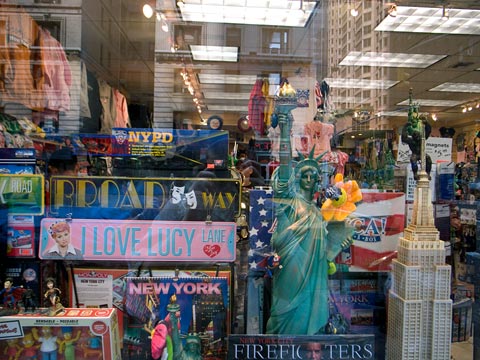
The BoweryWalking down the Bowery one comes across all kinds of stuff displayed on the streets. Between Houston and Delancey it’s the restaurant supply business with stainless steel cooking equipment being cleaned on the sidewalk, bulky pizza ovens and refrigerator units hoisted by forklifts on and off trucks. Chairs and bar stools are stacked in front of storefronts, and even decorating bric-a-brac is available. The way things are going, however, this raw working Bowery is doomed.
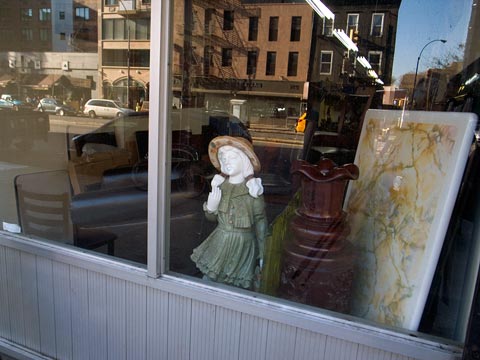
The BoweryAs usual, I am working with the 4×5 view camera, and these images were made with a small digital camera to preview what I’m doing and encourage a somewhat different way of looking at things.
-
New York/LES
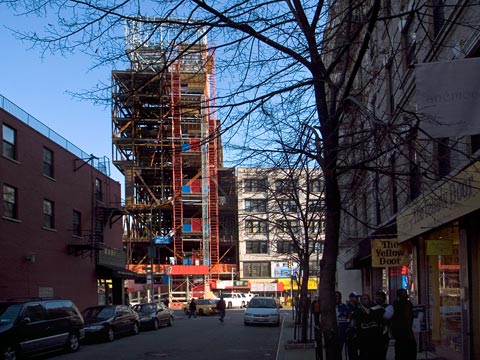
The New Museum under construction on the BoweryBack in New York after a less than smooth re-entry. I forgot my keys and cell phone, and by a miracle was able to get my assistant Chris to meet me at my apartment with his set of extra keys. The weather has been beautiful since arriving, and I got out with my camera for another walk through the Lower East Side. I began close by on the Bowery. More pictures to come…
-
Amsterdam/New York
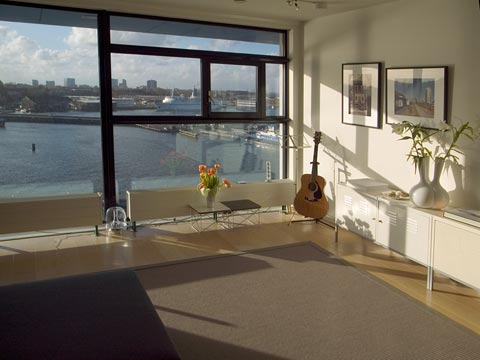
Our apartment in AmsterdamThere are a number of things I will miss leaving Amsterdam, but none more than this apartment in the building called the Silodam, which was designed by the Dutch architects MVRDV. It sits on an earthen pier, also called the Silodam, projecting out into the Amsterdam harbor.
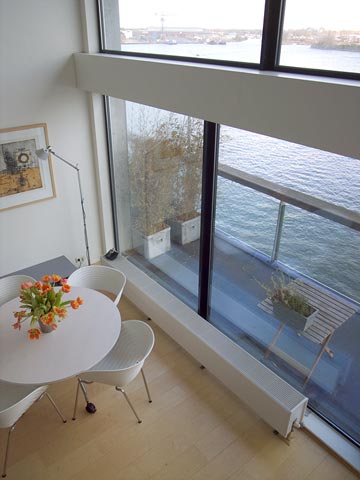
Double height office/studioPictures of the building here.
-
Amsterdam/Sunrise
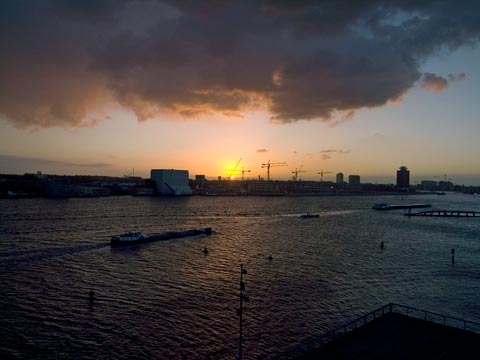
The Ij (Amsterdam harbor) at sunriseRobert Altman, the filmmaker died today. Ever since I began seriously pursuing photography I’ve been greatly influenced by movies–perhaps just as much as by still photography–and Altman is one of the American directors I’ve most admired. I can’t remember what movie of his I saw first. It could have been M*A*S*H or McCabe and Mrs. Miller. The latter featured the songs of Leonard Cohen, another artist who I greatly admire. It was Nashville, however, that really captivated me stylistically with characters moving in and out of frame, overlapping dialogue, and crisscrossing storylines. Later on, I was terribly enamored of Shortcuts, his adaptation of Raymond Carver short stories, a seemingly impossible task. Like Nashville it weaves together stories that are otherwise seemingly disconnected. Although my photography is not so much about people’s narratives, Altman’s landscape of random juxtapositons is the same one I wander across with my camera.
-
Amsterdam/Sinterklaas
If all goes according to plan we will be leaving the Netherlands in a month and a half. Since 1993 I have been flying back and forth between Amsterdam and New York, all the while trying to maintain both a fine art and professional architectural photography career. It has not been easy.
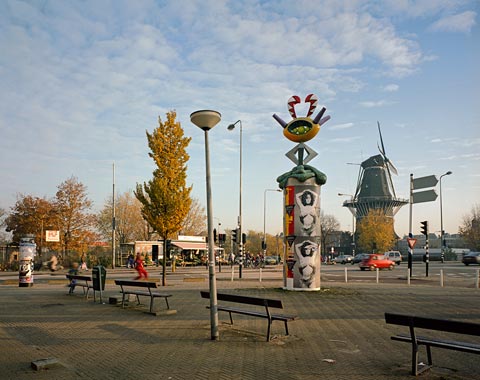
Amsterdam (4×5 film)In the beginning the Netherlands offered a fresh start, a new relationship, and a chance to broaden my horizons. As a transplanted New Yorker, however, I found my new home baffling, contradictory, and most definitely not the progressive land of tolerance so widely touted around the world. To explain this conclusion requires going through a litany of complaints, mostly trivial, but cumulatively overwhelming. I won’t do that now.
It’s getting late in November and the days are growing short, the sun is low in the sky when it does show itself in this mostly dreary climate. It’s almost time for Sinterklaas to arrive on his steamboat from Spain accompanied by his Black Petes. The Dutch cling tenaciously to the iconography of Sinterklaas: the severe bearded man dressed in Catholic bishop’s attire, the black-faced afro-wigged Petes cavorting about. It’s a children’s thing, but it is promoted with what seems an almost manic enthusiasm by adults. To outsiders
interloperslike me who cannot get past the racist imagery of Black Pete, the whole business is repellent–and in bad taste. It is cultural heritage as kitsch–not a uniquely Dutch phenomenon, of course–but especially egregious.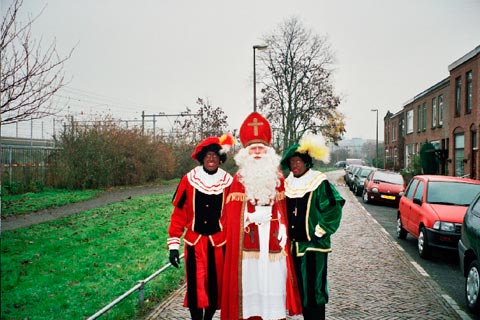
Sinterklaas and Black Petes (not my photograph) -
Amsterdam/NYC Ticker Tape Aftermath
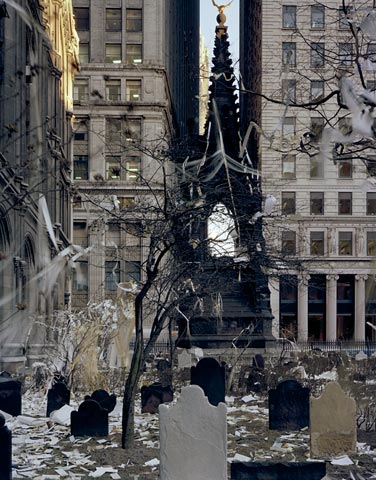
Trinity Church Yard, 1981 (4×5 film)I’m in Amsterdam, but my thoughts these days are across the Atlantic.
On January 25, 1981, 52 Americans who had been held hostage in Iran for 444 days returned to the United States. New York City Mayor Edward Koch invited them all to a ticker-tape parade in Manhattan, offering them free hotel rooms and airfare for two. On January 30, approximately two million New Yorkers turned out to welcome them home. Twenty-three former hostages took part in the parade. They traveled in open cars up Broadway from Battery Park to City Hall, where Koch welcomed them and presented them with the keys to the city and the City Council’s Proud City Award. The Sanitation Department estimated that 971 tons of paper were thrown.
–Cynthia Blair, Newsday
-
Amsterdam/Spymaster
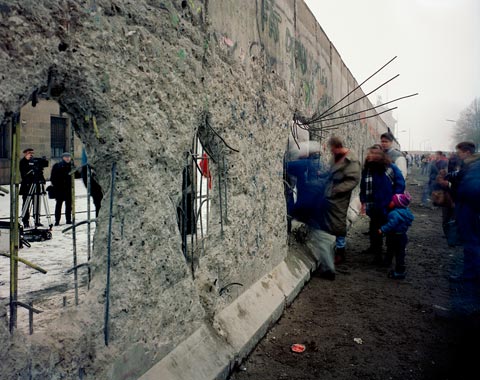
Berlin, 1989 (4×5 film)I read this morning in the New York Times that former East German spymaster Markus Wolf died yesterday, 17 years to the day of the fall of the Berlin Wall. Wolf epitomized the romantic image of the Cold War spy, especially as portrayed in John Le Carré’s novels. While the Cold War was commonly seen as an epic battle between good and evil, Wolf occupied the shadowy realm of moral ambiguity. He and his counterparts in the West played a game, albeit a dangerous one, of spy vs. spy. Huge bureaucracies on both sides of the Iron Curtain jockeyed for advantage using shreds of information–the fact and fiction culled from wiretaps, satellite photographs, and undercover agents.
It is important today to remember that despite all the detail of information gathered and analyzed, the CIA and other intelligence agencies failed to foresee the end of the Cold War before it all unraveled in 1989 with the opening of the Wall and the subsequent collapse of the Soviet Union. The spies got it wrong then, just as they got it wrong recently in the runup to the war in Iraq. In the end, the intricacies of the game tend to obscure clear facts on the ground, and the prism of politics distorts and corrupts.
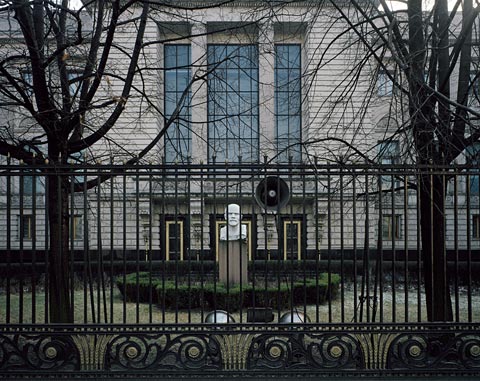
Lenin bust at the Soviet embassy, Berlin, 1990 (4×5 film)
When I photographed the landscape of the Iron Curtain back in the ’80s I sensed that the Cold War was reaching its denouement, though I had no idea that it would end so quickly. Over the course of a lifetime one has moments of prescience that are often not acted upon and go wasted. This was one time I seized the moment and stayed with it as history unfolded.My photographs of the Iron Curtain can be found here. (website)
A song I wrote about spies at the end of the Cold War can be listened to here. (mp3)
And another about the fall of the Soviet Union is here. (mp3) -
Amsterdam/US Election Day After
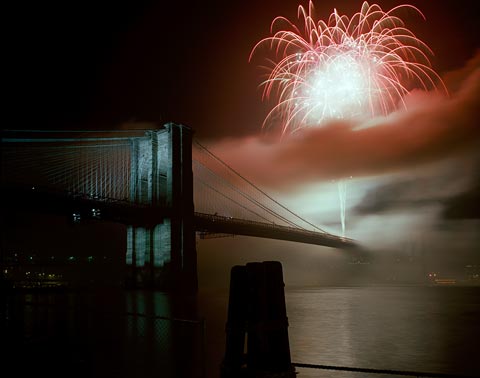
Brooklyn Bridge, 1983 (4×5 film)We hold these truths to be self-evident, that all men are created equal, that they are endowed by their Creator with certain unalienable Rights, that among these are Life, Liberty and the pursuit of Happiness. — That to secure these rights, Governments are instituted among Men, deriving their just powers from the consent of the governed, — That whenever any Form of Government becomes destructive of these ends, it is the Right of the People to alter or to abolish it, and to institute new Government, laying its foundation on such principles and organizing its powers in such form, as to them shall seem most likely to effect their Safety and Happiness.
Declaration of Independence, 1776
-
Amsterdam/US Election Day
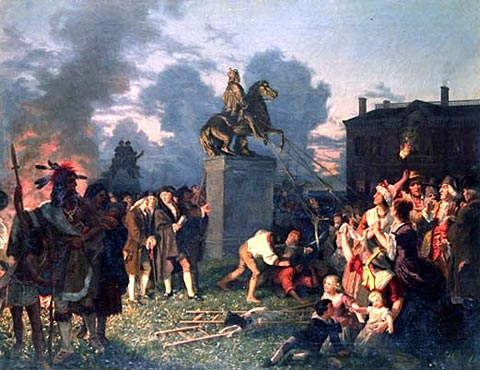
Pulling down statue of King George III, New York City, July 9, 1776I posted this on the 4th of July earlier this year. Here it is again.
The following song is loosely based on the Declaration of Indpendence. Lines taken or adapted from the original text are highlighted. The recording was done straight to computer without any benefits of a recording studio. But the quality should be listenable to most ears. Please feel free to share the lyrics and sound file.
declaration
in the course of human events
these truths betray a liar
red rockets glare our flag still there
over baghdad nights afirethe tyrant king usurps the throne
lets slip the dogs of war
terror thrown a useless bone
to settle obsolete scorespull the statue down
watch it tip fall and shatter
break his phony crown
and his cronies tumble afterlet facts be submitted to a candid world
the chaos of shock and awe
a long train of abuses
he refuses his assent to lawsa shadow state perpetual war
mercenary corporations
complete the works of death
tyranny and desolationpull the statue down
watch it tip fall and shatter
break his phony crown
and his cronies tumble aftertramped on dragged through
a prison of earthly delights
strip searched and naked
certain unalienable rightsmorning light frozen height
the blinding gates of hell
declare the causes which impel
the day the towers fellpull the statue down
watch it tip fall and shatter
break his phony crown
and his cronies tumble afterthrow the gauntlet down
our lives our sacred honor© Brian Rose
-
Amsterdam
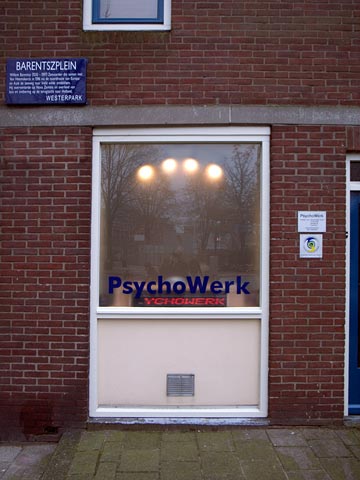
Barentszplein near our apartmentIt’s been gloomy here the past few days, and despite finally shaking my jetlag I remain listless and unmotivated. I walked my son to school this morning, and I passed the store window above. Mmm…
Nah. I just have to make it through to Wednesday when, hopefully, my home country will begin the long road back to sanity.
-
New York/Amsterdam
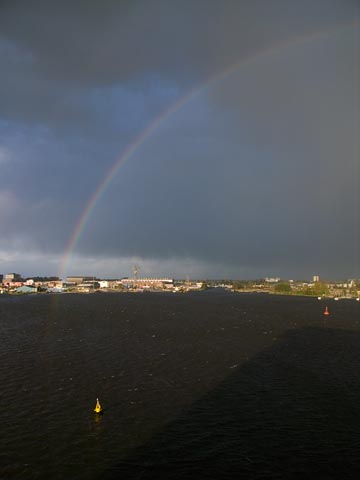
The IjFlew back to Amsterdam after a productive two and half weeks in New York. The apartment here, the view–unfortunately the Netherlands has not offered much work or spiritual sustenance for me–and soon we may be moving to New York full time. Since I’ve been back the weather has been tempestuous with wind, rain, and hail. The skyscape of Holland. That’s what I have from the balcony of our apartment.