Category: Photographers/Photography

  • New York/New York Times Building


    New York Times Building (4×5 film)

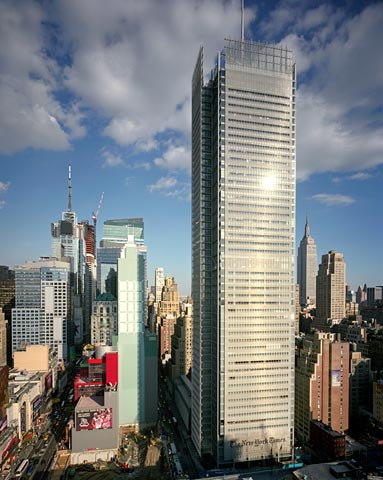
    I know this is the third time I’ve posted a similar picture of the New York Times building by Renzo Piano, but this is the 4×5 version.

    How it was done–for those interested in such things. I had access to an office window in the McGraw-Hill building on 42nd Street, which provides an unobstructed view of the NYT building over the roof of the Port Authority bus terminal. For the moment, the NYT sits relatively open. But to the left you can see foundation work proceeding for another skyscraper at the corner of 42nd Street and 8th Avenue. The Port Authority, itself, plans on building a tower above the bus terminal. So, in a few years, this view will be drastically changed, if not obliterated.

    The McGraw-Hill, one of the glories of the Deco era (Raymond Hood, architect), still has operable windows, a rarity these days. The first image here on my journal was taken with a digital camera through the glass, which was ok, but I really wanted to come back and shoot with the view camera with the window open. Unfortunately, the windows are set so that they open only a couple of feet above a wide sill. Getting the 4×5 camera into that opening would be difficult, but I figured I could do it.

    Upside down view camera

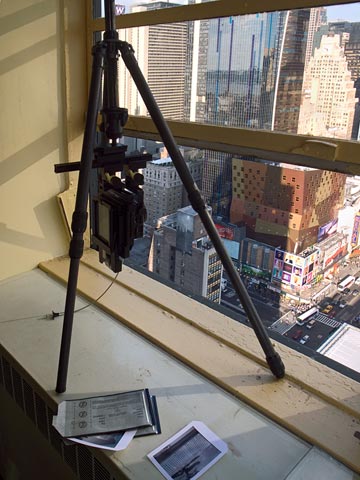
    I got to my window on a beautiful late afternoon and began setting up the camera. Because of the tripod center post, I couldn’t mount the view camera low enough for a clear view through the window. I was using a rather wide lens, so it was necessary to be as close to the opening of the window as possible. After fussing with the equipment for a while, I remembered something I’d done years ago, which was to flip the camera to the underside of the tripod and shoot through the legs. That’s what I did, as you can see above. The camera, for those curious, is an ArcaSwiss Discovery with a small front element and lens board. A Schneider 65mm Super Angulon lens for this shot.

    I am still using 4×5 film, and then scanning to digital files. I am also still using Polaroid film to preview what I’m doing, although when shooting out in the field, I use this alarmingly expensive film sparingly. Is it worth it continuing to shoot film? I think so–for now. Today, I go to the darkroom to make 4×5 foot prints of the Civil War/Brooklyn project from high resolution scans of 4×5 film.
  • New York/Times Square


    Times Square

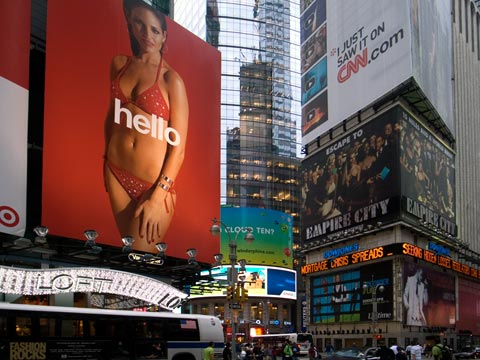
    Mortgage crisis spreads…

  • New York/Brooklyn

    I have finally finished shooting for the Civil War project, which I’ve written about previously. The last images were not of generals or memorials to the dead, but pictures of Abraham Lincoln and Henry Ward Beecher, two of the most important people in American history.


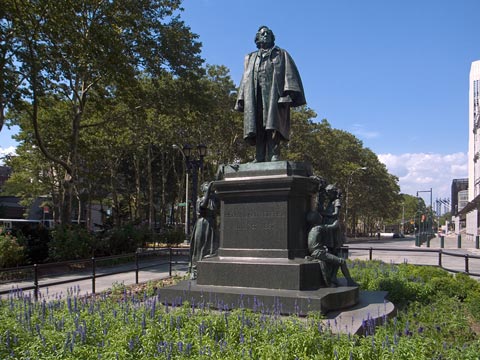
    Henry Ward Beecher, Columbus Park, downtown Brooklyn
    sculptor: John Quincy Adams Ward (1830–1910)

    Beecher, obviously, is the lesser known of the two, but he was a preacher of enormous influence who used the pulpit to loudly advocate the abolition of slavery and the right to vote for women. His sister Harriet Beecher Stowe was the author of Uncle Tom’s Cabin, the best selling novel of the 19th century, a book that had a tremendous impact on public opinion leading up to the Civil War. There is a recent Beecher biography–which I have not yet read–by Debby Applegate called The Most Famous Man in America. Here is a review in the New York Times.


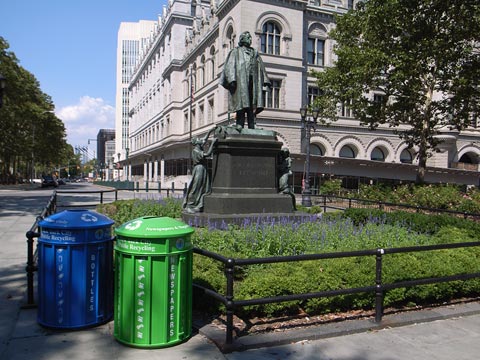
    Henry Ward Beecher and recycling containers

    The statue of Beecher is imposing, two children on one side, an African American woman on the other. It benefits from an important location in Columbus Park adjacent to the courts and Brooklyn’s Borough Hall. Were Beecher alive today he might well be in favor of recycling, but the two containers standing beneath him are, perhaps, in the wrong place.


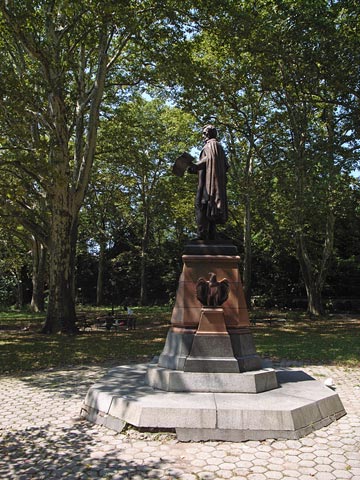
    Abraham Lincoln, Concert Grove in Prospect Park
    sculptor: Henry Kirke Brown (1814–1886)

    Much less fortunate is the location of Abraham Lincoln in Prospect Park. The statue was originally in Grand Army Plaza, but it was moved when the ceremonial arch was constructed.
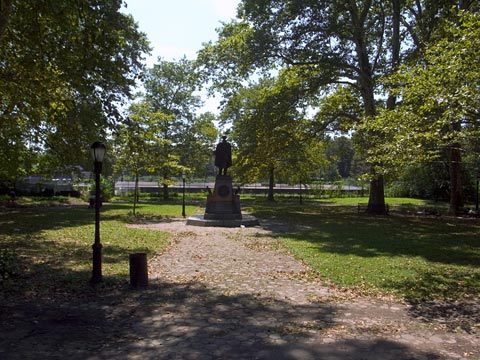
    Lincoln can be found–with some difficulty–in Concert Grove, which has a number of significant busts of composers. Unfortunately, however, this part of the park has been marred by the addition of a skating rink and a nearby parking lot. Lincoln stands majestically holding a copy of the Emancipation Proclamation overlooking the rundown ice rink, abandoned during the summer.


    Abraham Lincoln

    Abe deserves better than this.

    I understand that there are plans to relocate the rink to the parking lot, and then restore the view of the lake. Perhaps, then, Lincoln will be properly honored.

    From the Gowanus Lounge, a Brooklyn blog:

    The current rink, which is more than 40 years old, has has long been a thorn in the side of Prospect Park purists. Created during the reign of Robert Moses, the rink replaced what had been Music Island, a small island with a stage facing the audiences in the park’s Concert Grove. Its construction altered what is said to have been one of the park’s most beautiful vistas.

  • New York/McGraw-Hill Building


    McGraw-Hill Building

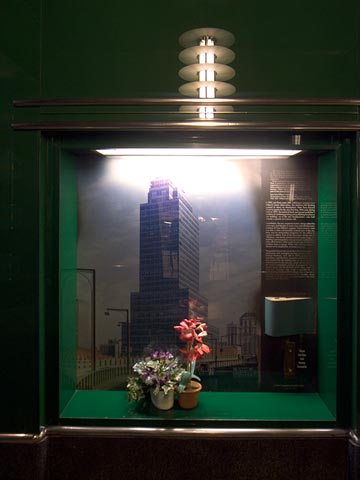
    One of he great art deco buildings in New York, designed by Raymond Hood. The lobby has retro-modern fluorescent lighting fixtures. Not very pleasant light, but very cool in a Jetson’s sort of way. The building is reasonably maintained, but not in the manner of Rockefeller Center or other top Manhattan office towers. It’s rather intense on 42nd next to the Port Authority bus terminal and Times Square, but the area is quite cleaned up nowadays. The Port Authority has plans for a tower above the bus terminal, which will very likely overwhelm the McGraw-Hill. The photo shows one of the display cases in the lobby.

  • New York/Green-Wood Cemetery

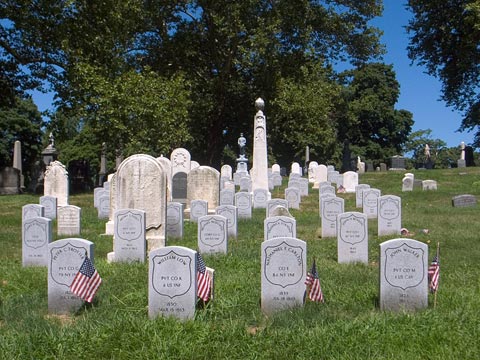
    Soldiers’ Lot

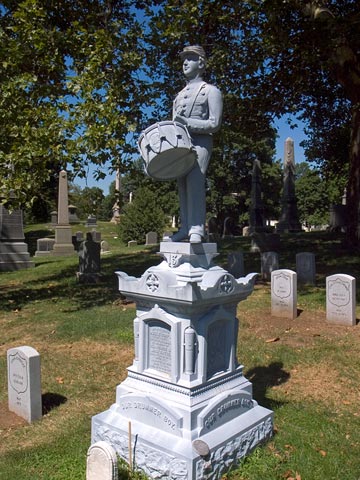
    I have been photographing Civil War monuments around Brooklyn and in Green-Wood Cemetery for an upcoming exhibition at the Brooklyn Public Library. On Saturday I focused on several areas of the cemetery with special attention to the field of Civil War gravestones at the feet of Our Drummer Boy, a small sculpture of 12 year old Clarence MacKenzie who was Brooklyn’s first fatality of the war. He was killed accidentally in camp by a stray bullet.


    Our Drummer Boy

    It’s interesting to compare this sculpture to the 9/11 fireman a couple of posts earlier. Both attempt to dignify their subjects, but succumb to kitsch. Nevertheless, they are arresting images of youthful innocence cut down by powerful outside forces. As one surveys the hill of stones, it’s Our Drummer Boy who stands out lending a face to a war of horrific slaughter.


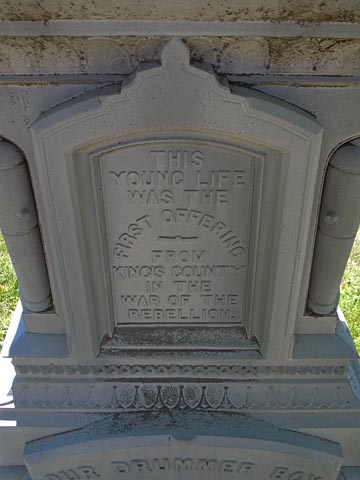
    Our Drummer Boy inscription

    On the back of the plinth is the inscription: This young life was the first offering from King’s County in the war of the rebellion.

    I did quite a few photographs with the view camera of Our Drummer Boy and the surrounding Civil War stones, none exactly like the pictures above which were made with my digital camera. It was a rare and beautiful August day–crisp and clear, temperature in the ’70s.

  • New York/New York Times Building


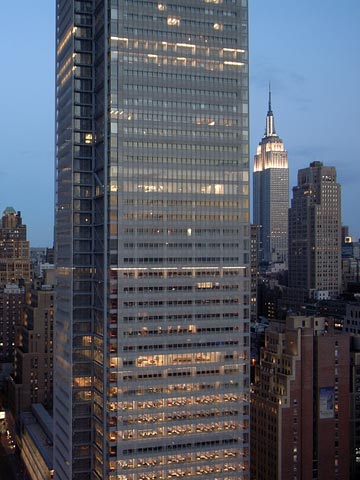
    The New York Times Building and the Empire State Building

    I’ve been very busy the past few days finishing up photographing Civil War monuments around Brooklyn and in Green-Wood Cemetery. I’ll update things in a day or two.

    For the moment, here’s a new picture–same window vantage point as before–of the New York Times Building on 8th Avenue near Times Square. I did a series of photographs with the view camera. But this image was done with my digital camera.

  • New York/Houston Street


    Houston Street and 7th Avenue, summer in New York

    Went to see No End in Sight, a documentary about the Iraq war, at Film Forum on Houston Street. Most interesting to me is that Colin Powell’s deputy, Richard Armitage, is talking. Will Powell ever speak out and attempt to salvage his reputation? Or soldier on into oblivion?

  • New York/Green-Wood Cemetery


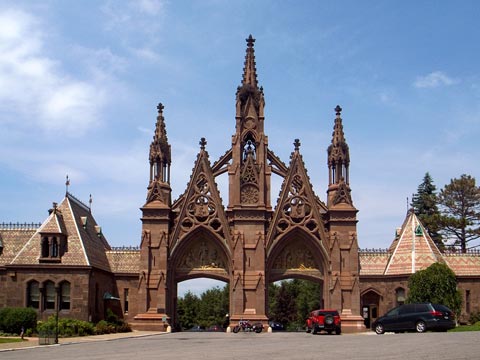
    Main Gate, Green-Wood Cemetery (Richard Upjohn, architect)

    Today, I continued working on a series of photographs of Civil War monuments in Brooklyn–specifically Green-Wood Cemetery. There are a number of memorials here of celebrated generals, but also many of the unsung who died on the battlefield. There are many other famous New Yorkers buried here as well. As I was setting up a shot of the Civil War Soldiers’ Monument, I looked down and saw, at my feet, the grave of Leonard Bernstein, the conductor and composer.

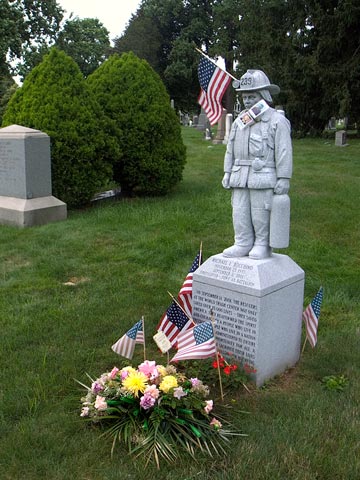
    Clouds moved in during the afternoon, and as I was packing up my camera I spotted a diminutive stone fireman surrounded by flags and flowers. The first line of the inscription read: On September 11, 2001, the rescuers at the World Trade Center not only saved over 25,000 lives – they saved America.


    Green-Wood Cemetery

    The fireman was depicted almost as a doll-like figure despite the detailed uniform and equipment. Less a hero, more a huggable object. It’s a curious need, to fetishize these heroes of 9/11 who were doing their jobs. Who acted as heroes as they did every day when confronted by burning buildings or other dangers. I was struck, however, by the face of the real firefighter in the laminated photos hung around the statue’s neck, his vitality a rebuke to the awkward carving and grandiose prose etched in stone.

  • New York/Lafayette Street


    Lafayette Street

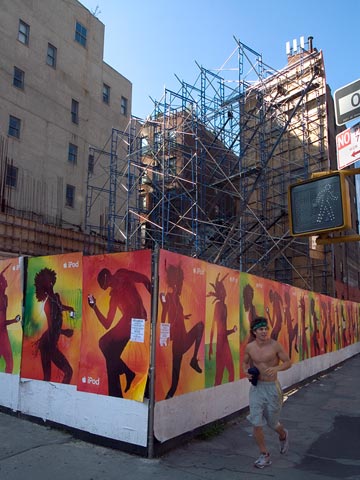
    The summer sizzles. Apple has taken over the block on Lafayette between Great Jones and Bond Streets. The odd narrow lots go back a hundred years when New York’s first subway was cut through this dense neighborhood.

  • New York/One Chase Manhattan Plaza


    One Chase Manhattan Plaza

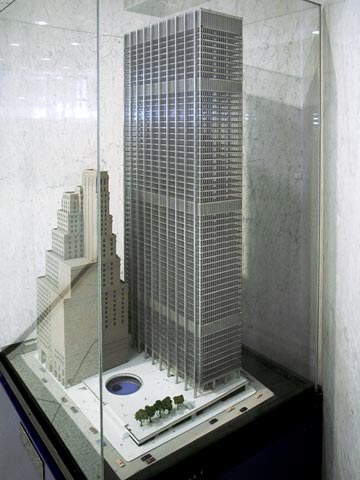
    I scouted a future photo shoot on a high floor of the Chase Manhattan Bank building (JPMorgan Chase), one of the first glass and steel buildings to go up in Lower Manhattan. The building, designed in large part by Gordon Bunshaft of Skidmore Owings Merrill (SOM), was something of a knockoff of Mies van der Rohe’s Seagram building in Midtown. It even mimicked Mies’ decorative i-beams affixed to the curtain wall. At the time it was begun–1957–the downtown skyline was a pyramidal collection of thin, spired, towers. Chase Manhattan’s broad slab disturbed that harmonious composition.

    I have to say, however, that Chase Manhattan today stands out as one of the most elegant of the International Style buildings. It is well maintained by JPMorgan Chase and it’s silvery skin looks almost new. The raised plaza remains well used by passersby, and people stop constantly beneath the Dubuffet sculpture or look down into the circular Noguchi garden. What fails so often in other projects works here. The juxtaposition of the various elements of sculpture, garden, plaza, and tower form an abstract, but coherent, grouping. Most of SOMs tower/plaza buildings, such as those along Sixth Avenue, stand alone with too much space around them, giving them a supremely aloof air. The banal exterior articulation of the buildings doesn’t help either. Chase Manhattan benefits from its tightly spaced setting, a modernist glass box ringed by deco and neo-gothic spires.

    As I was leaving the building from a freight elevator on the lower level, I came across the original architect’s model of the building. It’s not in a location many are likely to see. I snapped a couple pictures, and was promptly chewed out by a guard. No pictures! But here it is above. A beautiful and important object of architectural history.

  • New York/Bay Ridge


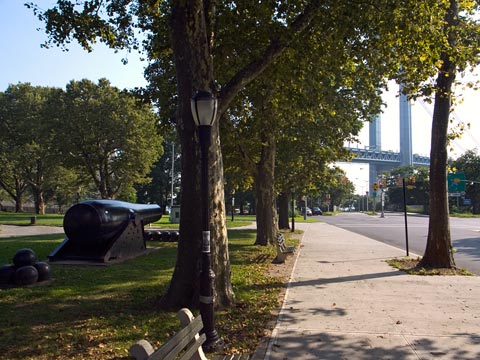
    Rodman Gun and Verrazano Narrows Bridge, Bay Ridge, Brooklyn

    Continuing work on a series of photographs of Civil War monuments and statues I took the R train to the end of the line. This is Bay Ridge, Brooklyn, a prosperous part of the city I’d never visited before. At the foot of 4th Avenue is John Paul Jones park adjacent to Fort Hamilton, a historic army base. In the park is a surviving Rodman Gun, a massive cast iron cannon used to defend New York Harbor.


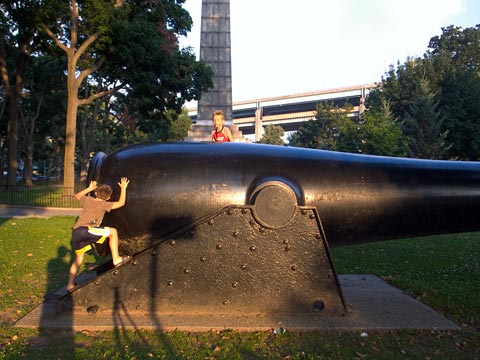
    Rodman Gun

    I was there for for almost two hours waiting for a stubborn ridge of clouds to slip by, and then had less than a half hour to catch the last slanting sunlight. I did a couple of pictures with the Verrazano Bridge in the background, a couple closeups of the cannon and cannonballs. A few dog walkers strolled by. Lots of bicyclists and joggers cruised by. A group of beer drinking homeless occupied a bench nearby. Some kids arrived and began climbing the cannon, but I had already packed up my 4×5 camera. I snapped a few shots with my digital camera. The whole excursion to Bay Ridge took more than five hours.

  • New York/Bergman and Antonioni


    The Bowery

    Ingmar Bergman and Michelangelo Antonioni both died today, two of the great filmmakers of the modern era. While Bergman, perhaps, looms larger in the public consciousness, it was Antonioni who was most inspiring to me as a photographer. There was Blowup, of course, about a photographer (David Hemmings) who shoots fashion, but also pursues his own photographic muse in the London street. The photographer blows up a series of pictures in which he thinks he sees a murder committed. The bigger the prints get the more the grain breaks apart, and reality gives way. Blowup was very much of the ’60s, and I saw it–probably–about 1972.

    Although I was greatly attracted to the counter cultural aspects of Blowup and Zabriskie Point, I was most influenced by Antonioni’s visual approach to the landscape, the way the frame held its gaze then moved as figures perambulated in and out and through. Films like L’Avventura, The Red Desert, and The Passenger best exemplified this primacy of the camera frame. I still remember sitting in the theater and being stunned by the long final shot in The Passenger, one of the most astonishing achievements in film history.

  • New York/Bus


    Somewhere in Brooklyn

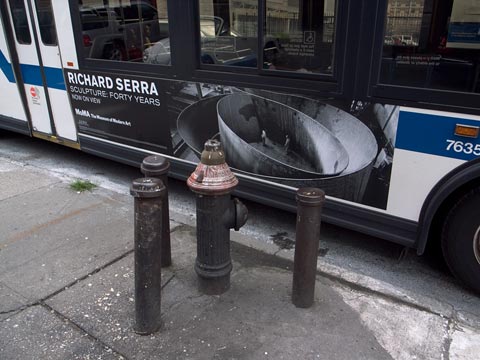
    Street sculpture.

  • New York/Photo Permits

    The city of New York has proposed requiring permits for photography and film making in the street.

    The Mayor’s Office of Theater, Film, and Broadcasting, which coordinates film and television production and issues permits around the five boroughs, is considering rules that could potentially severely restrict the ability of even amateur photographers and filmmakers to operate in New York City. The NY Times reports that the city’s tentative rules include requiring any group of two or more people who want to use a camera in a single public location for more than a half hour (including setup and breakdown time) to get a city permit and $1 million in liability insurance. The regulation would also apply to any group of five or more people who would be using a tripod for more than ten minutes, including setup and breakdown time.

    -(Excerpted from the Gothamist)


    Film by Jem Cohen

    Jem Cohen, an independent filmmaker, whom I’ve met, writes the following:

    Unfortunately, we believe we must see the proposed regulations not only as a blow against New York as a city that welcomes and inspires art-making (and historical documentation), but as part of a continuum of broader attacks against civil liberties and free expression.

    I couldn’t agree more. An organization called Picture New York – without pictures of New York is leading the opposition against the city’s proposal. If you want to know more, or would like to help, please sign the petition on the site.

    PictureNY.org

    As a photographer who has, to a great extent, built a career on photographing the streets and parks of New York, I feel it is my responsibility to speak out on this issue. Those of us who express ourselves using a camera are the eyes of the city. Whether we operate as commercial artists, fine artists, documentarists, bloggers, or journalists, we present the image of the city to the world. Our efforts should be encouraged, not suppressed.


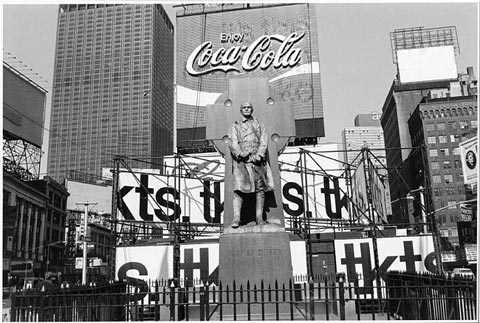
    Father Duffy Square (Times Square), Lee Friedlander

    Imagine New York without Walker Evans, Berenice Abbot, Robert Frank, Helen Levitt, Lee Friedlander, Garry Winogrand, Ezra Stoller, Diane Arbus, Joel Meyerowitz, Cindy Sherman, Len Jenshel, Jan Staller, Joel Sternfeld, Philip Lorca DiCorcia, and on and on. These are artists who have freely wielded their still cameras in this city. A similar list of filmmakers could as easily be compiled.


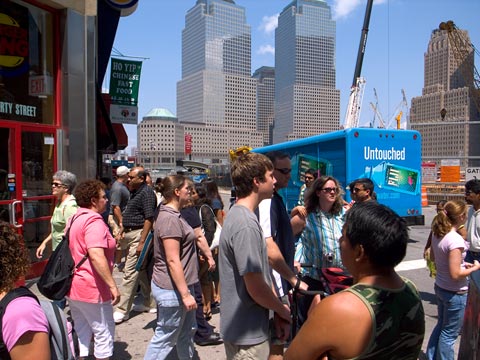
    Ground Zero – 2007

    Photography = free speech.

  • New York/Hobo


    Houston and Bowery

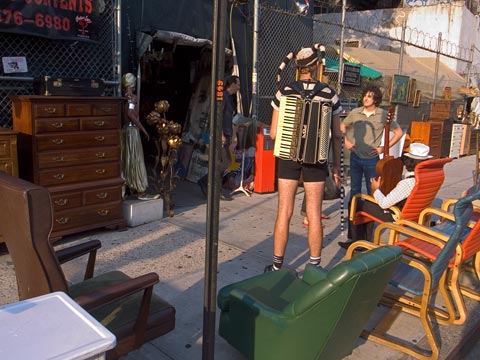
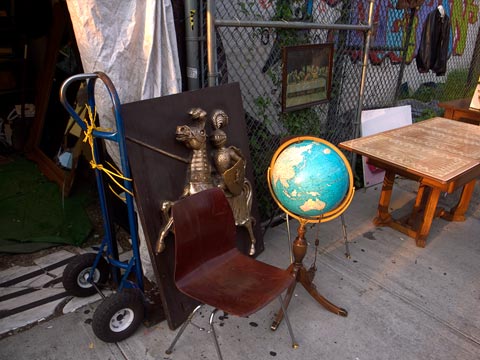
    Billy’s Antiques is a piece of craziness that holds on despite the gentrification around it. I’m sure that part of its longevity is the fact that this junk/curio/antique tent occupies a slender margin of land along Houston Street, not really wide enough for a building. Across the Bowery at Houston Street, Daniel Boulud is planning his latest culinary venture in the Big Apple. This one, to be called DBGB (Daniel Boulud Good Burger), is a few doors from the former punk club CBGB (Country BlueGrass Blues). Get it?


    Houston and Bowery

    As the world turns here in Hobo (Houston Bowery).

  • New York/LES


    Third Avenue/Cooper Square and East 7th Street (4×5 film)

    I finally finished photographing 39 buildings all around town for a real estate client. Whew.

    After completing the last shot I walked down Third Avenue to Cooper Square where new construction is transforming the landscape. In the foreground, a construction fence surrounds the site of Cooper Union’s new academic building, and in the rear a mega tower looms over the neighborhood. It’s a hotel designed by Studio Carlos Zapata, which did the modern addition to Chicago’s Soldier Field. Whatever the appropriateness of the tower, it promises to be an expressive presence. There’s some pretty risky looking cantilevering going on in the reinforced concrete skeleton. I assume they know what they’re doing.

    I set my 4×5 camera up on Third Avenue looking south with eastern sunlight raking across the scene. I did several shots with different arrangements of people and vehicles. I knew what I wanted from having walked by this corner a couple of times in the past few weeks.

  • New York/Prince Street


    Stanton Street, just off the Bowery

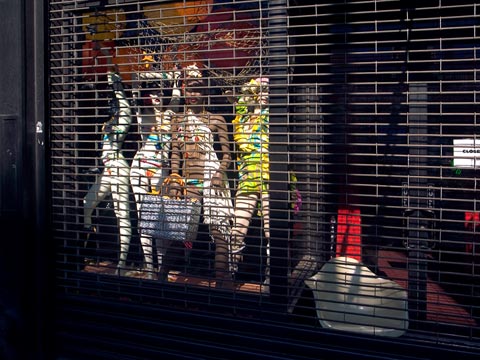
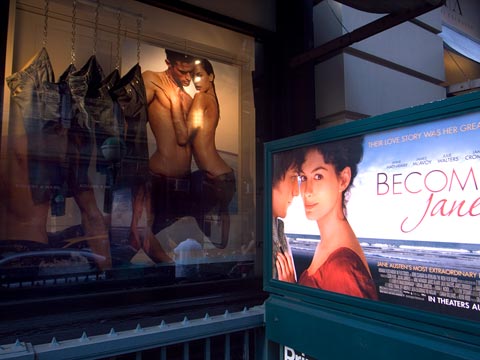
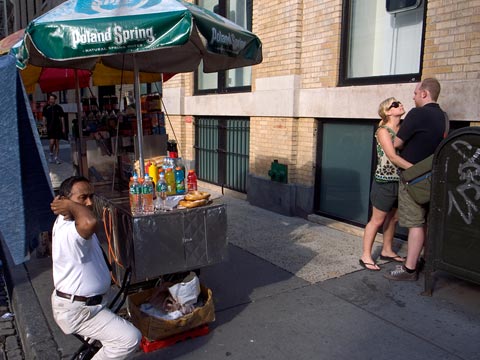
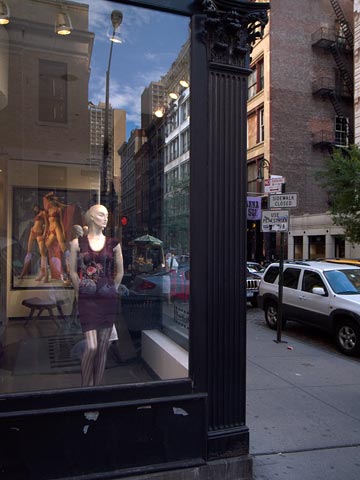
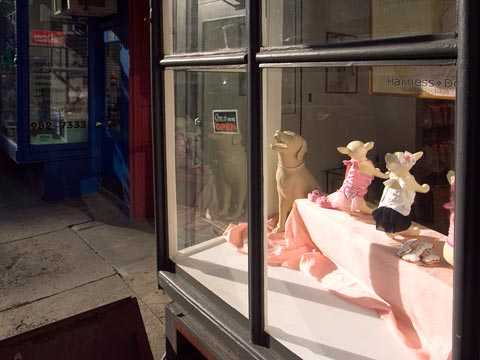
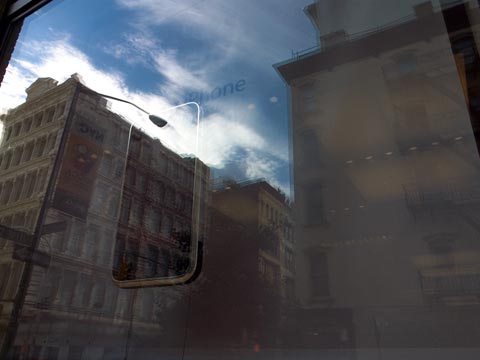
    I often walk across town on Prince Street through Nolita (northern Little Italy) and Soho. It’s a familiar environment, one that I generally take for granted. But when I slow down a bit, and look into the flow of people, the blur of signage, the play of light and shadow, I find a world in which the self-conscious display of advertising and architecture echoes the real flesh and blood humanity moving through it. Men and women clutch at each other. Spoken words are not so much communication as non sequiturs, repeated slogans. Objects of desire–faces, bodies, clothing, electronics–float reflected, spotlit, behind glass.


    Cafe Habana, Prince Street


    Prince and Broadway


    Prince and Wooster


    Prince and Wooster


    Prince Street


    iPhone, Prince and Wooster

  • New York/New Museum


    The New Museum on the Bowery

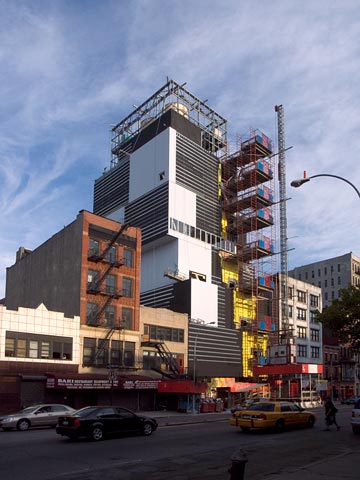
    The new New Museum is beginning to take shape. It’s on the Bowery just around the corner from my apartment on Stanton Street, and I pass it nearly every day. The architects are Kazuyo Sejima and Ryue Nishizawa of SANAA. They do terrific stuff. Like it or not (think metal boxes with few windows), this will be one of the most noteworthy buildings constructed in new York in the last few decades. I’ll be back with more pictures as things progress.