Category: Photographers/Photography

  • New York/Taxi


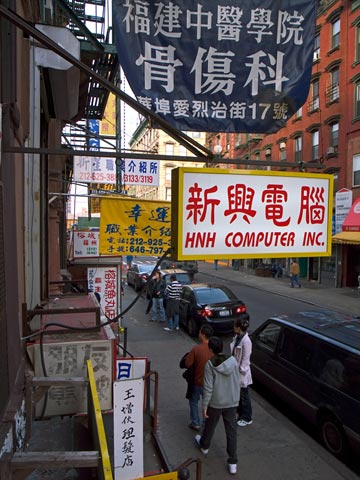
    From the taxi window on he way to Penn Station

    Headed to Virginia for several days–began what I hope will be a new project, photographing megachurches and the landscapes around them. I decided to begin in the Hampton Roads area of Virginia because it is the home of Pat Robertson’s Christian Broadcasting Network (700 Club) and Regent College. While not a megachurch, the campus is a major center of power in the evangelical movement.

    Pictures coming up.

    It was also an opportunity to look in on my father who is in an assisted living facility in Williamsburg, Virginia.

  • New York/Coney Island


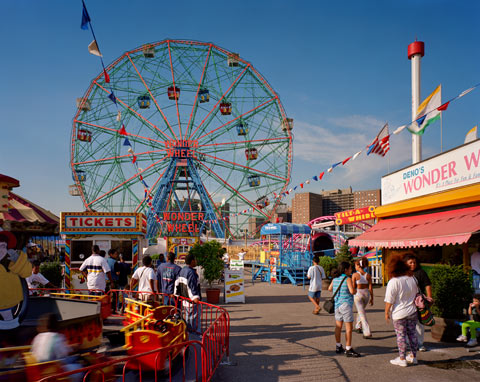
    Wonder Wheel, Coney Island (4×5 film)

    The sublimely tawdry Astroland and Deno’s Wonder Wheel will, apparently, live for one more season. What happens next is uncertain. One thing for sure, three landmarked structures will remain–the Parachute Jump, the Cyclone roller coaster, and the Wonder Wheel.

    Rummaging through my archive I found the picture above. Had to be early 1990s. I can’t tell much from the clothing. I was shooting a few Brooklyn icons for a client. Somewhere in my boxes, I believe, there is a 20×24 print of this image.

  • New York/Amster Yard


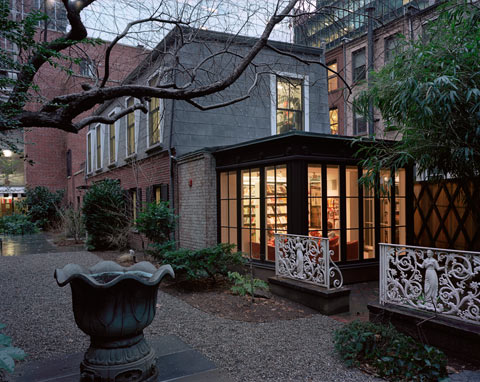
    Amster Yard/Instituto Cervantes (4×5 film)
    East 49th Street between Second and Third Avenues

    Been busy the last few days shooting for the Instituto Cervantes, the Spanish cultural institute, which occupies a group of small buildings that surround the Amster Yard. The Amster Yard is a rare thing in New York, a courtyard/garden tucked into the middle of a block, open to the public.

    New York Times article about the restoration of the space.

    Apparently, the work entailed the complete rebuilding of several structures around the garden rather than actual restoration. In the Netherlands, where I livd part time for 15 years, I saw a completely different attitude about restoration of historic buildings than in New York. It was common for historic structures to be meticulously rebuilt from the ground up, sometimes at the cost of the patina of age. On the other hand, in New York, there is a tendency to sentimentalize the past–perhaps because it disappears so quickly–although there is now a willingness to accomodate the immediate juxtapostion of new and old.

    In any case, the Amster Yard, along with the activities of the Instituto Cervantes, is a welcome oasis open to the public on East 49th Street between 2nd and 3rd Avenues.

  • New York/Around Town


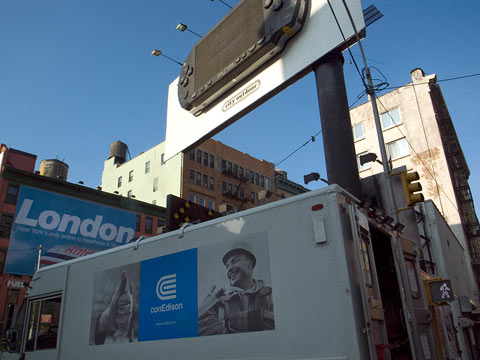
    Houston/Lafayette Street


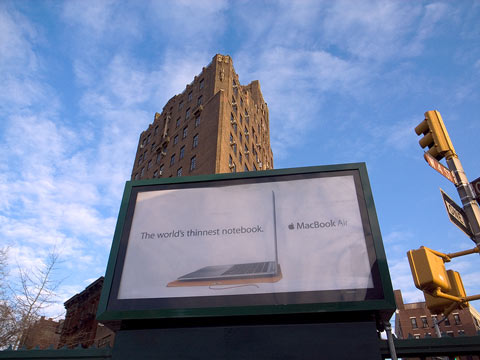
    Sheridan Square/Seventh Avenue

    Looking up.

  • New York/New Museum


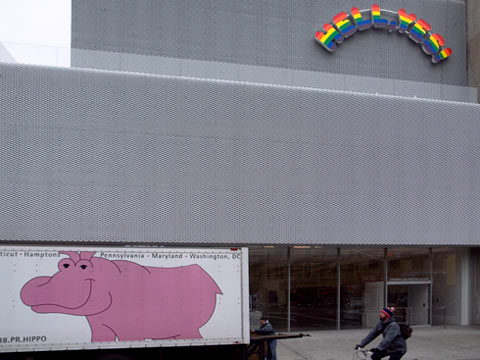
    The New Museum

    Without comment.

  • New York/The Bowery


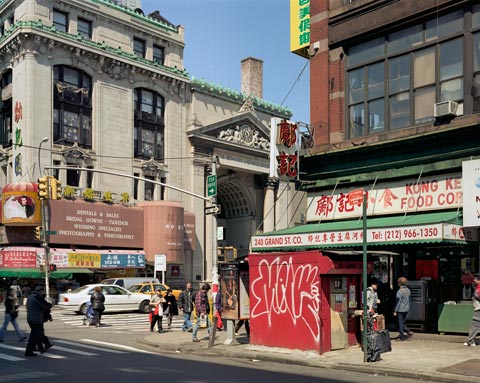
    The Bowery and Grand Street (4×5 film)

    The Bowery, which is the western boundary of the Lower East Side, has gotten a lot of attention since the recent opening of the New Museum. It’s the last frontier of lower Manhattan, already greatly transformed, though Chinatown continues to resist change.


    The Bowery and East Fifth Street (4×5 film)


    Houston and Bowery (4×5 film)

    Going through my LES negatives I realized that I had enough images of the Bowery to make it a project within a project. So, I’ve done up some new web pages. No text or anything as this point. I’m not sure what I want to say. I haven’t yet linked to my main site. Anyway, take a look.

    http://www.brianrose.com/bowery/bowery.htm

  • New York/At the Met


    Depth of Field: Modern Photography at the Metropolitan
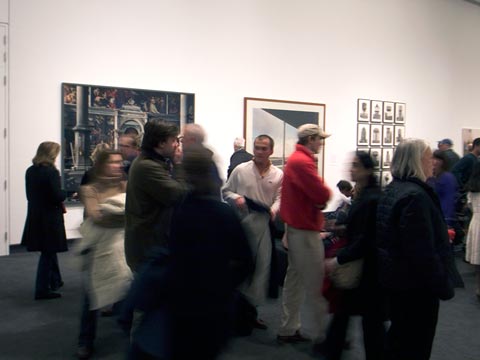
    Lots of milling about and reading explanatory labels.

    I went to the Metropolitan Museum yesterday to check out two photography exhibits that have been up for a while. The most prominent of the two–at least in terms of publicity and location–is Depth of Field: Modern Photography at the Metropolitan, which occupies a new gallery dedicated to contemporary photography. As is usual of group shows, it is primarily about photography, as opposed to a show of photography. Above all, it is a curators show, a staking out of turf, a doctoral thesis, if you will, that the rest of us, perhaps, shouldn’t have to be subjected to.
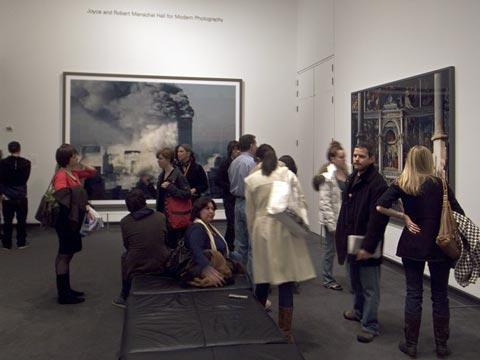

    Pixellated World Trade Center image by Thomas Ruff

    The exhibition introductory text lays out the tired–for me anyway–premise that the past 40 years have been chiefly about experimentation, the breaking down of boundaries, and the blurring of “the line between reality and the imagination.” And naturally, that digitalization has rendered analog photography almost obsolete. The lineup of artists/photographers offered as evidence of all this is largely comprised of the same names one encounters over and over in commercial galleries and other museums. (Bechers, Sherman, Ruff, Struth, Gursky, Dijkstra, etc.)

    There are also a number of artists included who only use photography tangentially like Dennis Oppenheim and Gordon Matta-Clark, which is obviously supposed to make a point about photography’s extended reach into conceptual, performance, and installation art. Not a particularly novel idea. I appreciate, more, how Adam Fuss’s large photogram evokes the most basic elements of photography, light and shadow.

    Granted there are some nice images in the show–though few that I haven’t seen elsewhere–and many of the photographers deserve the attention they’ve gotten, but… I guess I’m exhausted of having “the old new” shoved down my throat, and I’m yearning for a fresher perspective on where we are, or might be going.
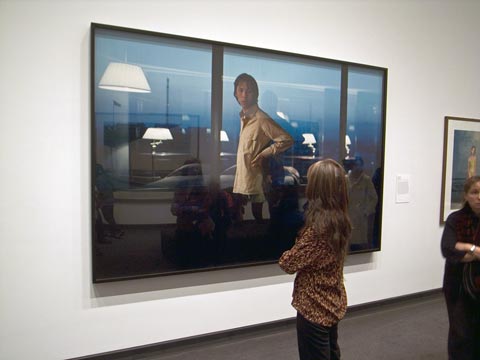

    Untitled, Sharon Lockhart
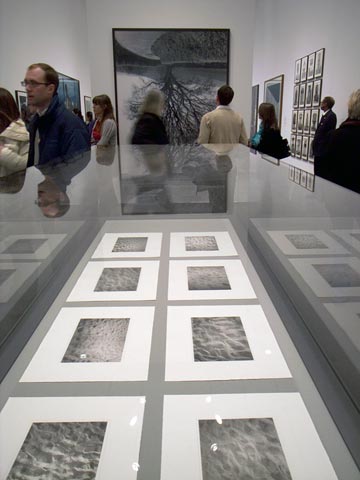

    Rodney Graham’s upside down tree seen right side up in the display case reflection.

    Intro text:

    The hallucinatory clarity of Rodney Graham’s upside-down tree, Sharon Lockhart’s reflection-filled hotel room, and Uta Barth’s luminous river view are all, nevertheless, rooted in an exploration of analog photography’s unique technical and material underpinnings, pushed to the point of a bedazzled transcendence.

    Okay. Maybe. Analog is all right as long as it’s transcendent. I left the gallery and began looking for the Lee Friedlander exhibition that I knew was nearby. I saw that the main photo/print galleries were closed for a show change, so I wandered out into the European sculpture gallery filed with Rodins and the like, and still I couldn’t find Friedlander. Finally, I came across a little sign pointing toward a doorway with the word “Photographs” printed on it. Ah, this must be the place.
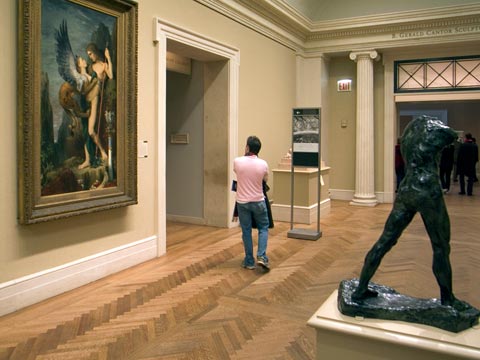

    Friedlander must be around here somwhere.

    Inside was Lee Friedlander: A Ramble in Olmsted Parks, the result of many years of his project photographing the landscapes of Frederick Law Olmsted. Let me say right up front, as someone who has spent a lot of time photographing in Central Park and Prospect Park–both Olmsted masterpieces–that Friedlander’s photographs have little to do with Olmsted or the particular design aspects of these landscapes. These pictures are visual journeys into the strange and unfamiliar, or to borrow from John MacPhee, into “suspect terrain.”
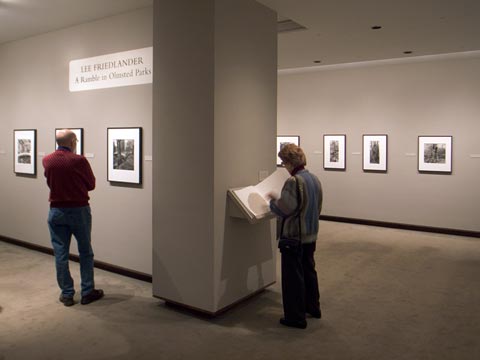

    Sparsely visited “hidden” gallery.

    As is well known, Friedlander’s early work dealt with the social landscape, street photography, and the bric-a-brac of pop culture all around us. He was in love with advertising signs, crazy juxtapositions, objects near and far, reflections, the great jumble of stuff in the world all held together by a spider’s web of compositional tension. Sometimes his work encompassed social criticism as in his pictures of factory workers, a disturbing series of photographs of humanity at the mercy of machinery and the drudgery of manual labor.

    Later, when Friedlander turned to the natural landscape, albeit man-made landscape, he began to explore the idea of making photographs emptied of the cultural touchstones integral to his earlier work. These pictures rather than losing their power probe deeply into the visual wilderness of pure imagery. Friedlander consciously sought out this wilderness in the semi-civilized landscape of Olmsted. I know from my own experience that Olmsted’s landscapes, while natural in appearance, are highly ordered compositions with carefully framed vistas and hierarchical progressions through space. Friedlander is not really interested in these aspects of Olmsted. He uses Olmsted’s order for his own purposes.
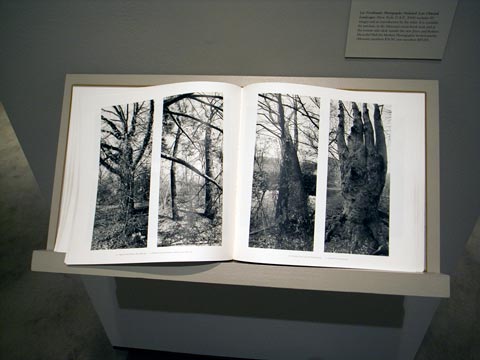

    Friedlander trees.

    These photographs, as I read them, push the act of making pictures into uncharted territory, both terrible and beautiful. Trees loom as anthropomorphic beings throwing apples at Dorothy on the Yellow Brick Road. Shadows splay over layer upon layer of bare branches obscuring any way of escape. A complex rippling and dappling of sunlight projected onto leaves and stones obliterates recognition. Throughout these pictures Friedlander utilizes the compositional devices of his older work, but even though the moves are familiar, I find myself led into a disorienting world, shimmering with light, where boulders and trees are made ephemeral, and Olmsted’s ordered space is shattered.

    Call it “bedazzled transcendence.”

  • New York/The Strand


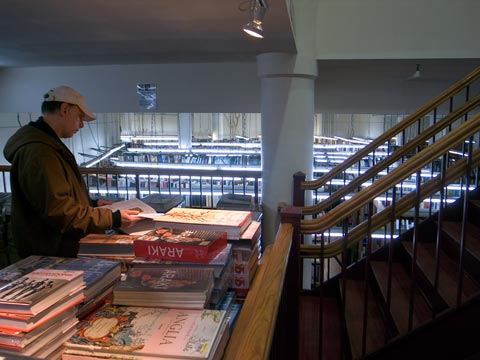
    Strand Bookstore, 12th Street and Broadway

    The one and only.

  • New York/Litchfield, Connecticut


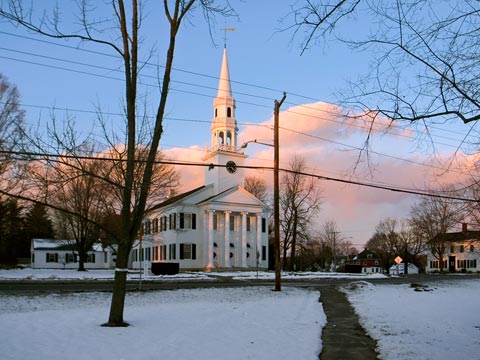
    Litchfield, Connecticut

    While on a family ski jaunt to the Berkshires we stopped in Litchfield, Connecticut for dinner, and I walked across the town green to photograph the church above. It was 9 degrees fahrenheit so I didn’t spend a lot of time on this.

    I’ve long been interested in beginning a new project with the working title of the New Religious Landscape. It would primarily focus on the phenonmenon of megachurches and the surrounding environment. New England churches serve as a reference point–classical, unadorned, dignified statements usually found in the center of villages–that point to attitudes about community, architecture and planning, and the place of religion in society.

    This church in Litchfield is actually a 1929 reconstruction of the original, which was built a hundred years before. The earlier building was replaced when religious fashion changed later in the 19th century. It was only well into the 20th century when public taste began to value colonial and neo-colonial architecture that the original design was returned to its former prominence in the center of town.

  • New York/Lower Manhattan


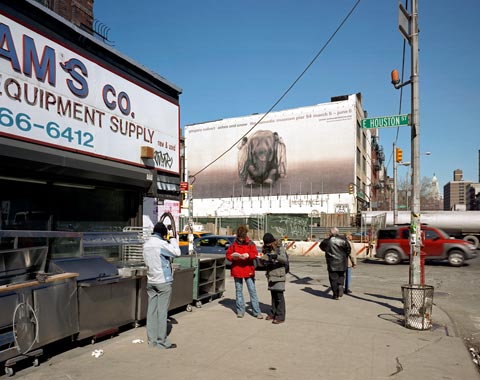
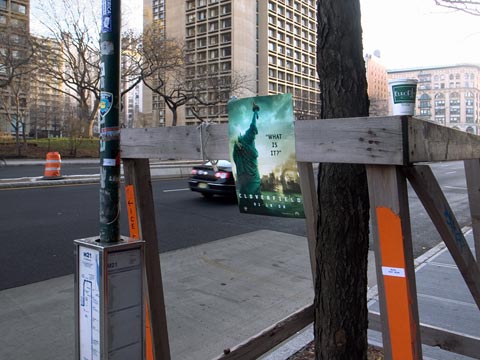
    Houston Street

    All over town there are posters for the movie Cloverfield depicting a ruined lower Manhattan. For those of living downtown (or anywhere?) the images are chilling reminders of what happened in 2001. Is making a movie like this shameless exploitation? Yes. Should one avoid seeing it? Yes.

  • New York/Grand Central


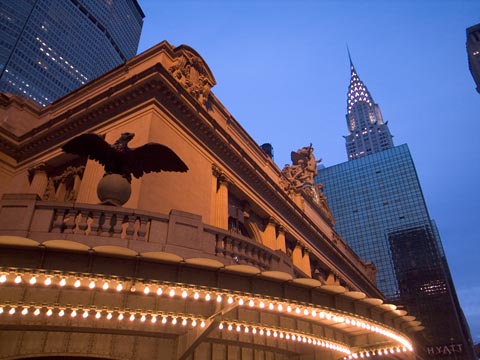
    Grand Central Terminal and the Chrysler Building

    Without comment.

  • New York/Bowery


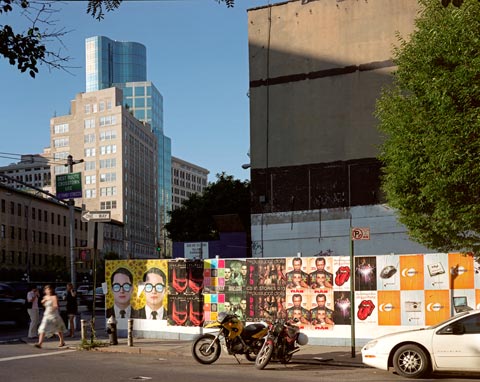
    East 1st Street/Bowery/Houston Street

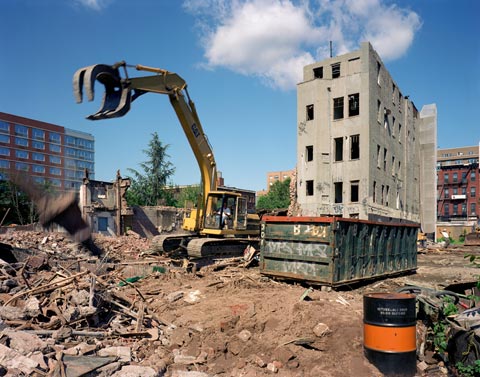
    I’m working on a series of pictures of the Bowery taken over the past few years as an adjunct to my Lower East Side project. The picture above was taken during the demolition of the AvalonBay development site bounded by the East 1st Street, The Bowery, and Houston Street.

    The single building standing is 295 Bowery, infamous as the location of McGurk’s Suicide Hall, where a number of prostitutes were said to have ended their lives by swallowing acid. That was in the late 1890s long before the street had reached its most desolate nadir as skid row. The history of the building is nicely told by Rob Hill on his website.

    In its last days, artists, most notably feminist author and artist Kate Millet lived there. She and others were relocated to make way for approximately 600 apartments built on both sides of Houston Street–very expensive rentals–with 20 percent of the units reserved for low income residents. Newcomers to the neighborhood are mostly unaware that the redevelopment of this site was part of a deal made with the community to rehabilitate and preserve another 600 units of low cost tenement housing on several adjacent blocks.

  • New York/Lower East Side


    The Bowery Mission and New Museum

    Yesterday, the temperature soared into the 60s, so I took the opportunity to do more Lower East Side pictures. I left my apartment/office on Stanton Street and began walking down the Bowery stopping to do a photograph of the Bowery Mission adjacent to the New Museum. There are few facilities ministering to the homeless and addicted left in the neighborhood, but this is one of the oldest, and it continues to provide meals and other services even as the flophouses and bars have vanished.


    The Bowery and Hester Street

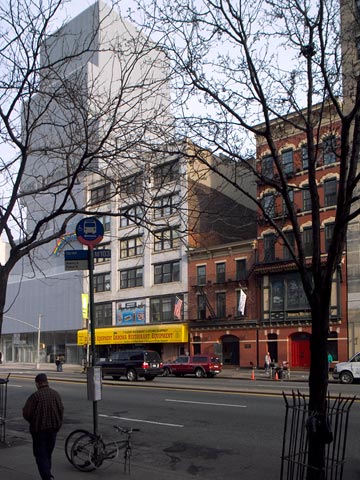
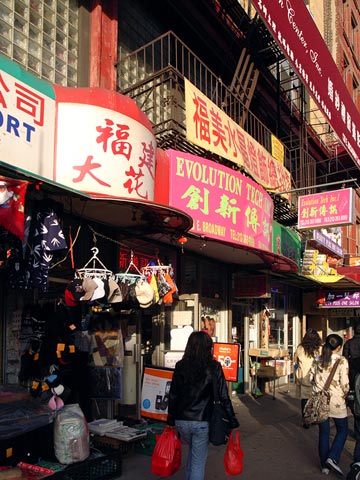
    I walked through the lighting district to the south of Delancey/Kenmare Street. There used to be many such unofficial markets in Manhattan–the flower district in the West 20s, the radio district obliterated by the World Trade Center, the restaurant supply area of the Bowery hanging by a thread–but gradually they’ve been dispersed at a loss to the diversity of the city. At Grand Street, the Bowery has been subsumed into the ever expanding Chinatown, which has grown north and east further into the Lower East Side. On the corner of Hester a large site has been cleared for new construction, a tacky glass tower pictured on a sign on the construction fence. I did a series of shots here with the 4×5 camera.


    Eldridge Street Synogogue

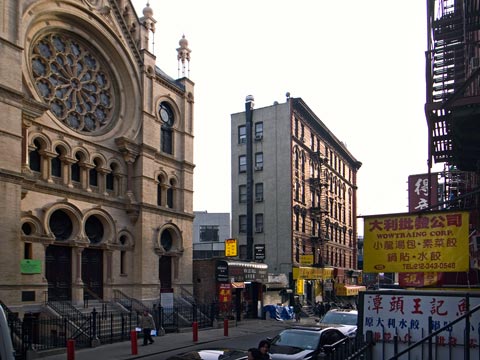
    I then walked east on Hester and then downtown on Eldridge to the Eldridge Street Synogogue that I visited a few weeks ago. The late 19th century structure has been restored and functions now in part as a museum. It is surrounded by the visual cacophany of Chinatown, a scene I’ve been trying, with mixed success, to get into a photograph. Today, I tried again, timing my arrival for the low winter sun raking just above the nearby Manhattan Bridge. I got up on a rather high stoop of a tenement opposite the synagogue and did two wide views of the synogogue showing adjacent buildings. I also did a photograph looking north through layers of signs with Chinese lettering.


    Eldridge Street

    A tourist came by holding a Time Out guide gazing up at the building. As we chatted, it struck me how much this scene was an echo of the old Lower East Side when people jammed the streets and sidewalks, commerce of every description was carried out in the open, and when there was a density of sights, noises and smells that filled the senses.


    East Broadway and Pike Street

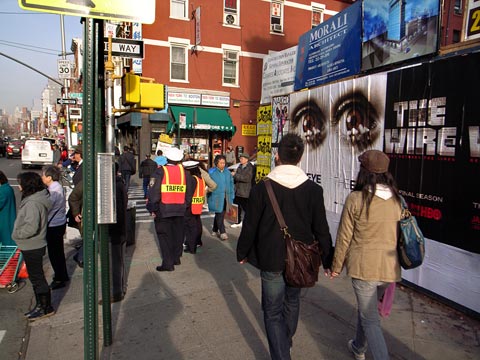
    I walked around several blocks in this area photographing various storefronts as the light began to fade.
    At Canal and Eldridge a large 19th century building was being demolished–another development site.

    The project continues. Today I sent out 200 postcards to galleries, museums, and individuals. Book? Exhibit? Website for now.

  • New York/I’m Not There


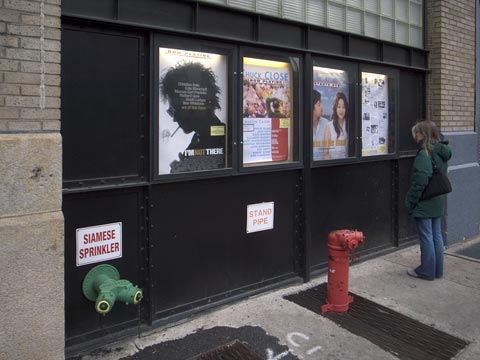
    Film Forum, Houston Street

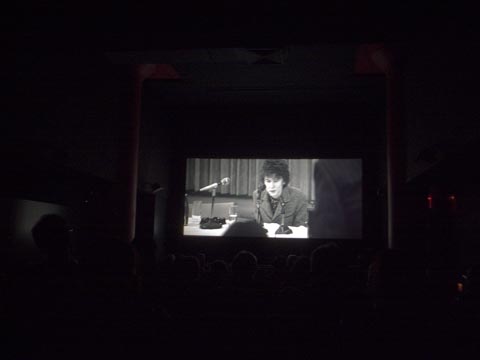
    On Saturday I finally got to see I’m Not There, the non-documentary film circumscribing the figure of Bob Dylan by Todd Haynes. It’s a stunning movie, one that explores the myths, clichés, and even lies that form the persona of the man born as Robert Zimmerman. Six actors play different aspects, or different periods, of Dylan’s life, including an 11 year old black boy as Dylan’s Woody Guthrie doppelgänger, and Cate Blanchett as the acerbic Don’t Look Back Dylan.


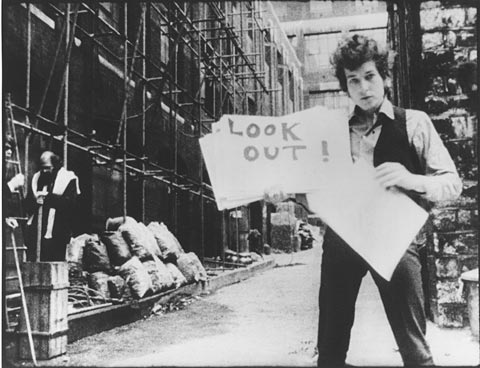
    Don’t Look Back, Allen Ginsburg in background

    The latter, of course, refers to the ground breaking direct cinema film by D.A. Pennebaker (who was a teacher of mine at Cooper Union). Pennebaker’s masterpiece, while presumably a fly on the wall peek at Dylan on the road, probably furthers the mythology of Bob Dylan more than any other film. It’s a knowing collaboration between two ambitious artists, each with a profound understanding of the power of the camera to document and manipulate.


    Cate Blanchett on screen in Film Forum

    All of the six visions of Dylan are effective, but Cate Blanchett’s performance as the wild-haired skinny-legged black and white Dylan of the mid-sixties is amazing and has to be seen to be believed. Her sly smiling gaze at the camera as the film ends, is brilliant—Dylan, as the ultimate joker, however much he may have been victimized by celebrity, the press, and the insatiable blood lust of his fans. There’s lots of humor in I’m Not There, despite the art film gravity—Dylan and the mop-topped Beatles rolling down a hill, and Allen Ginsburg (another great joker) riding alongside Dylan’s limo. The obvious reference is to the wonderful Beatles mock documentary A Hard Day’s Night, while Ginsburg, way back then, made a cameo appearance in Don’t Look Back.

    Although Haynes is dealing with an American icon through and through, I’m Not There is a film suffused with the spirit of the French New Wave, particularly Jean Luc Godard’s Masculin Feminin another film that veers between a verité style and a deconstruction of the conceits of cinematic storytelling. There are also Felliniesque moments with costumes and freaks, and the outlaw segment with Richard Gere is all McCabe & Mrs. Miller, the early Robert Altman film. The references go on and on, and the the bones of the film will undoubtedly be picked clean by film buffs and Dylanologists.


    Walking through Soho after the film. Numerous scenes in the film
    were set in the streets near Film Forum in Greenwich Village.

    The one persona, however, that’s not there in I’m Not There, is the latest incarnation of Bob Dylan, the grizzled veteran whose last few albums have plumbed the depths of American music with songs as strange and enigmatic as those from his Basement Tapes era. The story is not over as Dylan writes—songs and memoirs—and continues to tour and tour as if there’s nothing else left to do. It may not be Woody Guthrie’s hobo boxcar that Dylan rides from town to town, but its a long train curling into the night, nevertheless.

  • New York/New Year


    Happy New Year!

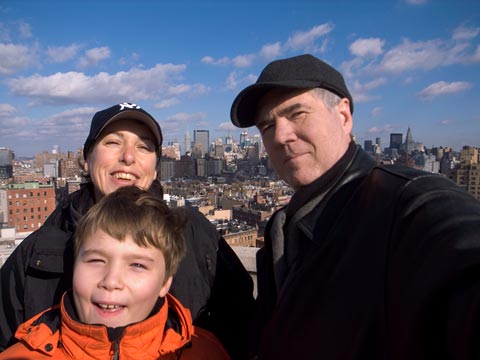
    My family has survived its first year together in New York. For the past 15 years I’ve been traveling back and forth between here and Amsterdam, but for my wife and son, this was a new, and potentially challenging experience. Brendan has thrived at PS 3, the elementary school in the West Village, and Renée has worked a half year for Community Board 4, one of the citizen advisory bodies involved in the official decision making process for the city. CB 4 covers Hell’s Kitchen (west Midtown) and Chelsea where many important urban projects are in the works–the Highline, the west side rail yards, and the rebuilding of Penn Station to name a few.

    We look forward to new adventures this year, photographic and otherwise, and I plan to keep this blog going through it all. Thanks to all who have been following it.

  • New York/New Museum


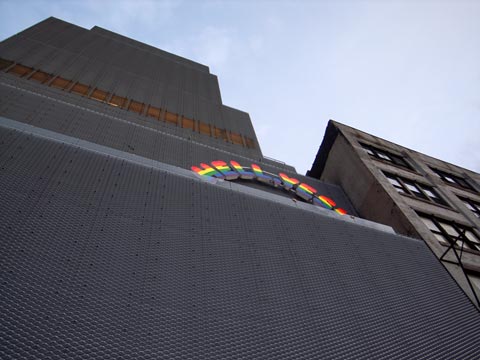
    The Museum (Hell Yes! – Ugo Rondinone)

    The installation encapsulates the philosophy of openness, fearlessness, and optimism that surrounds the New Museum’s reemergence in the contemporary art community, as well as its history as the home of socially committed contemporary art. — The New Museum website

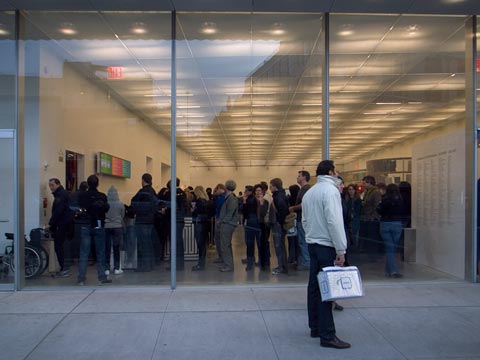
    I finally got to the New Museum the other day braving the holiday crowd that has pressed into this out of whack wedding cake of a building since it opened a month ago. I’ve already written about the exterior architecture, which fits admirably into the polyglot of the Bowery. If there’s ever a place where anything goes, this is it.

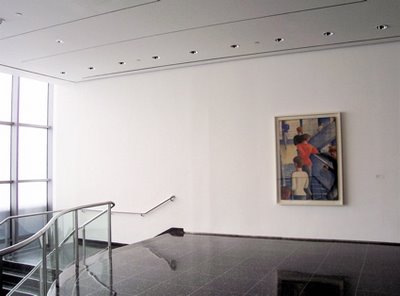
    Inside, the building is less arresting, somewhat sober, a series of white containers for art. The offset setbacks of the exterior allow for unobtrusive skylights, which supplement fluorescent tube lighting. I’ve never cared for this kind of “European lighting”–you see it lots of galleries over there–but it works fine for the sculptural pieces in the opening exhibition “Unmonumental.” For most wall art I prefer spots.


    The New Museum
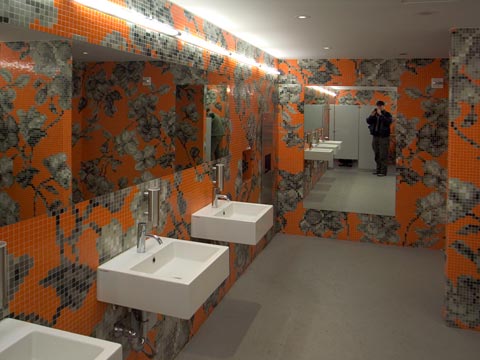
    No photography in the galleries, so we’ll settle for a restroom view.

    The New Museum has none of the luxe quality of the Museum of Modern Art, and I have no problem with that. The architects’ make only a few signature gestures, most notably the narrow stairs linking three floors of galleries. It’s just wide enough for two people to pass going up and down, and it reminded me how the old Modern once featured a human scale staircase as an important element of circulation. (I think it’s still there, actually, lost in the hustle and bustle and endless escalators.)


    Museum of Modern Art, photo via CitySpecific

    I was pleasantly surprised to see a rather accessible and generous opening exhibition at the New Museum. Surprised, because so much art these days is coded for the smug acknowledgment of the select few or panders to the titillation of the semi-sophisticated. Unmonumental is the apt title of the exhibit, which can be loosely described as assemblage art, three-dimensional constructions often made from disposable bric-a-brac. It’s a sculpture show.


    The New Museum holiday crowd

    I won’t go into the specific pieces–not as long as picture taking is forbidden in the galleries–but I found much of it freshly energetic, clever without being off putting, and just a lot of fun to rummage through. There were too many people in the museum for a leisurely visit, and we’ll see if the crowds continue after the first of the year.


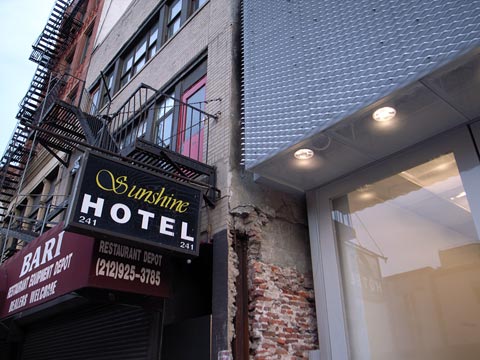
    The Sunshine Hotel adjacent the New Museum
    One of the last Bowery flophouses

    I went when I did because they were screening a documentary about the Bowery, where the museum is located, and which forms the western periphery of my Lower East Side project. The film presented the history of the street from its days as the road to Peter Stuyvesant’s farm to a last stop skid row. Except for a few hangers on in places like the Sunshine Hotel, there are no more Bowery bums.

  • New York/Hudson Street


    Hudson Street

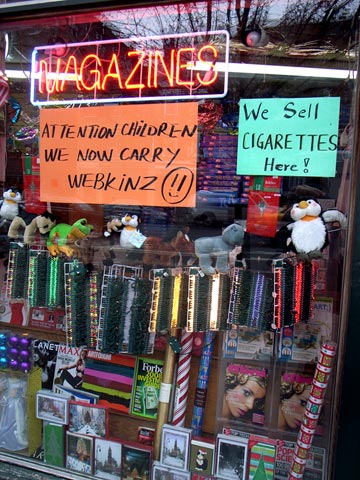
    Webkinz–and cigarettes.

  • New York/LES


    East 1st Street, The Bowery and Second Avenue, 1980 (4×5 film)

    In the post below I ranted a little about the supposed death of photography (Is Photography Dead/Newsweek) caused, in part, by Photoshop, a program so amazing that one no longer needs the temporal world to make images. Anyway, back in 1980 when photography was, presumably, still alive I began making pictures of the Lower East Side in collaboration with Ed Fausty using a 4×5 view camera. You can click on the link at the top right to see the whole thing.

    We were doing the project by the skin of our teeth financially, and rarely checked exposures with expensive Polaroids. So, some of the negatives are a little thin (underexposed), making them difficult to print. And some of them were not developed properly, and have problematic color shifts. The picture above was one of those, both thin and color shifted. Add to that the degradation of the film over the years, due to the instability of the materials from of that era, and you have a near impossible situation.

    But thanks to Photoshop it is possible to coax the color back and largely correct the color imbalances–bring dead pictures back to life, as it were. It’s not a pushbutton process, however, takes a lot of time, and requires a good deal of experience with the many different ways to select areas, colors, and densities. The end result, in this case, is an image never printed before, that comes alive in the present.

    The Lower East Side project spans 28 years of time, and is about looking back, reinterpreting, and looking again in the present. In that sense the work is not primarily about static visual documents, but rather a process that takes into account the actions of time and change. Understanding the notion, that images of the “real world” are constantly acted upon by the shifting sands of culture, opinion, and history, is critical to working with these factoids called photographs. Nevertheless, one does not necessarily give up on the enterprise of “taking pictures” because their veracity can be questioned.

    Peter Plagens in his Newsweek article refers at one point to “photography’s tango with the truth.” I think that’s an apt description, and it encapsulates the power of photography not its weakness. As a photographer I may play the part of Joe Friday in search of hard evidence. “Just the facts, ma’am.” But it’s the tango with the truth that holds our interest and keeps the game alive.