Category: Photographers/Photography
-
New York/Chelsea Morning
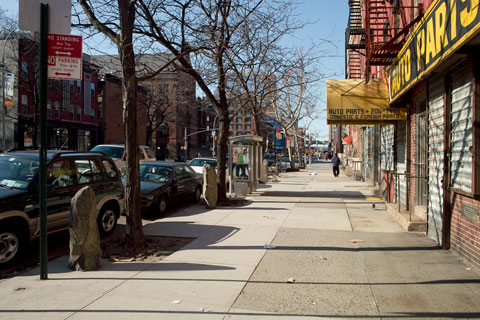
Tenth Avenue — © Brian RoseThe past few Sunday mornings I’ve been taking my son Brendan to Little League baseball practice at park near the Hudson River in Chelsea. Today was a washout, but on previous days I’ve wandered around the Chelsea gallery district–utterly devoid of people.
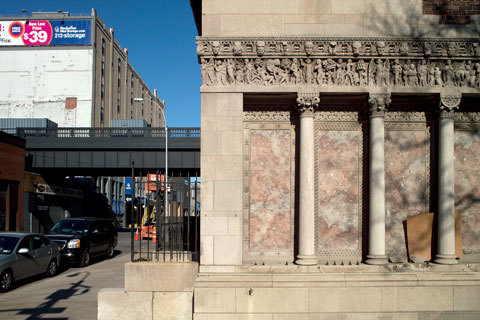
Tenth Avenue and W21st Street — © Brian Rose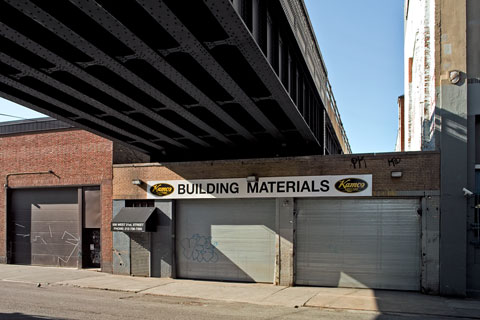
Under the High Line, W21st Street — © Brian RoseThe High Line passes through this area, an infrastructural relic being converted to an elevated park promenade.
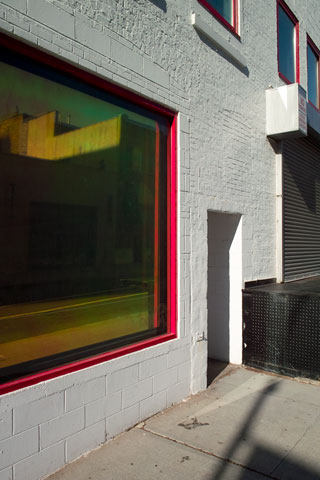
W22nd Street — © Brian Rose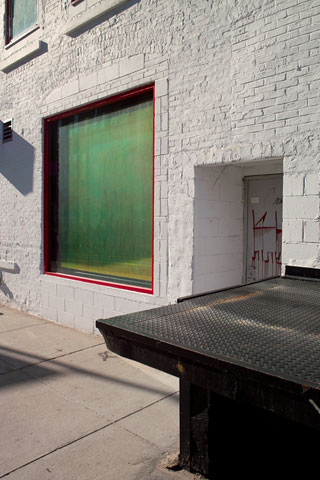
W22nd Street — © Brian Rose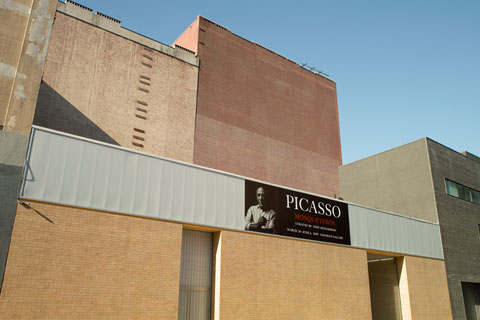
W21st Street — © Brian Rose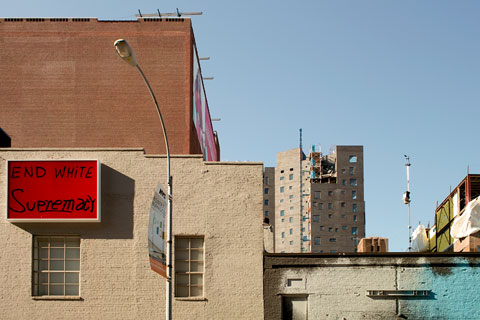
W21st Street — © Brian Rose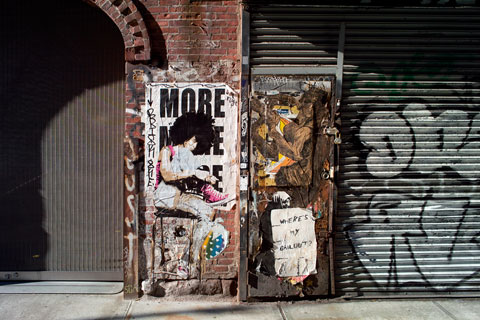
W22nd Street — © Brian RoseMore more more. Where’s my bailout?
-
New York/Surveillance
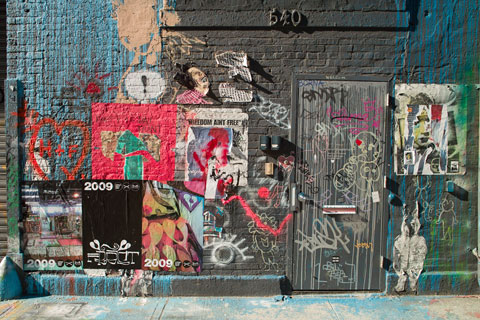
“Freedom Ain’t Free” — © Brian RoseDespite the sea change at the top with Obama being elected in November, there remains at all levels of government an unhealthy–and often unconstitutional–disregard for civil liberties and the people’s right to know. Exhibit “a” being the recent fly-over incident in New York when one of the two Air Force One 747s accompanied by fighter jets buzzed lower Manhattan for a photo-op.
The problem wasn’t the fly-over itself–though wasteful and unnecessary in the extreme–but the decision of the federal government to withhold information about the maneuver from the public. No one, apparently, in a responsible position federally or locally considered that a large plane flying at low altitude over Ground Zero just might rattle a few nerves. Or set off widespread panic. For government promo photographs.
Meanwhile, this morning, the lede in an article in the Times:
A growing number of big-city police departments and other law enforcement agencies across the country are embracing a new system to report suspicious activities that officials say could uncover terrorism plots but that civil liberties groups contend might violate individual rights.
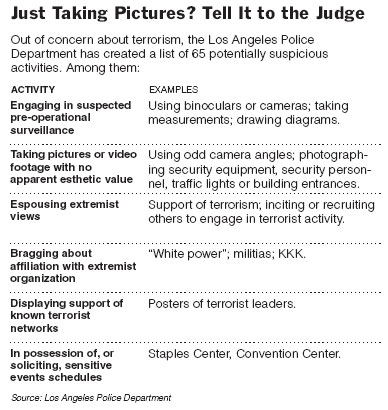
Copyright 2009 The New York Times CompanyThe article goes on to describe how photographers–even art students and their professors–have been harrased by the police for having the audacity to photograph things like power lines and other components of public infrastructure. The article includes the box above, which lists a few of what the LAPD considers potentially suspicious activities.
Two of the activities relate to photography: Engaging in suspected pre-operational surveillance and taking pictures or video footage with no apparent esthetic value. Using odd camera angles, photographing security equipment, security personnel, traffic lights or building entrances.
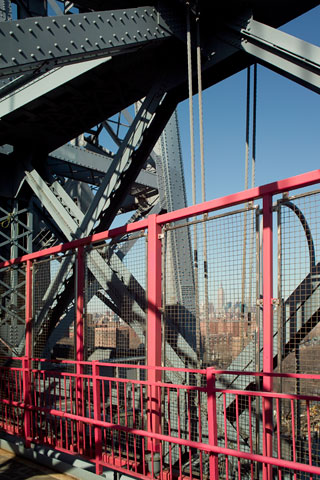
The Williamsburg Bridge (potentially suspicious activity)
© Brian RoseAs a photographer engaged in a seemingly random search for visual significance in the built environment I can think of no better description for what I do than “pre-operational surveillance… with no apparent esthetic value.” Guilty as charged.
-
New York/LES
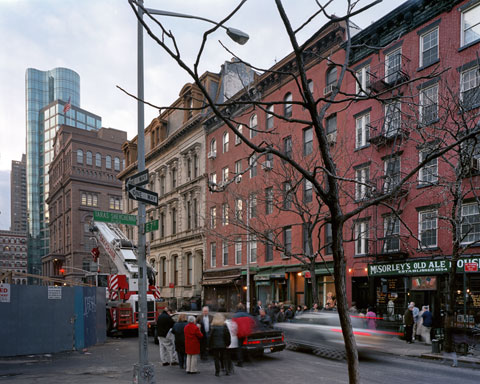
E7th Street/McSorley’s — © Brian Rose (4×5 film)Here is the view camera version of the image of McSorley’s Ale House posted earlier. Line of out-of-towners waiting to get in, a limo idling, Cooper Union construction crane, and CU’s Foundation Building itself beyond. The greenish tower is the Gwathmey Siegel condominium on Astor Place.
-
New York/LES
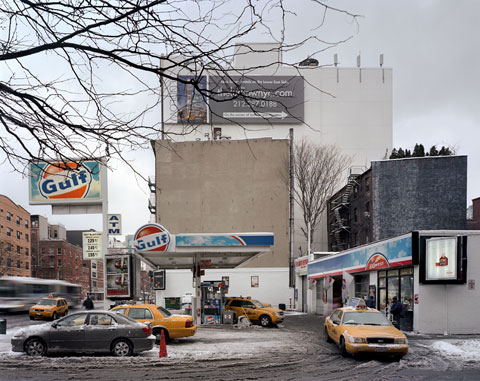
E2nd and Second Avenue — © Brian Rose (4×5 film)A photo from February that I just got around to scanning. Part of my ongoing Lower East Side project. Taken in the snow, late in the day. Pretty sharp negative considering the weather.
-
New York/Red Bank, New Jersey
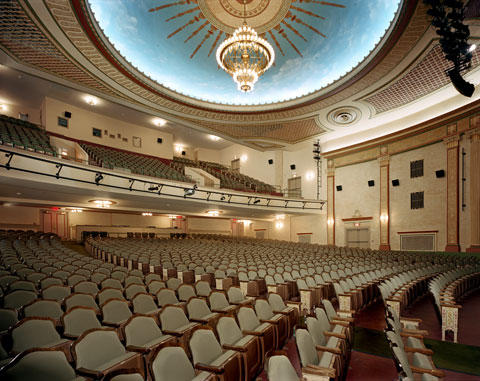
The Count Basie Theater, Red Bank, New Jersey — © Brian RoseWhat I’ve been working on recently.
-
New York/Red Bank, New Jersey
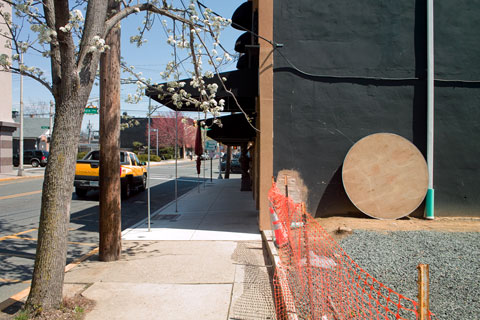
Red Bank, New Jersey — © Brian RoseI did a photoshoot in Red Bank yesterday, a beautiful old theater recently restored by FMG of Princeton. Red Bank is a lovely small city, but I’m afraid my visual non sequiturs taken on the fly don’t do it justice.
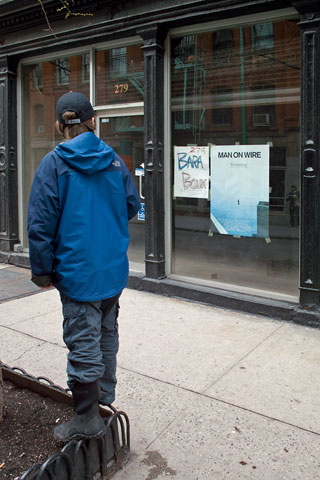
New York — © Brian RoseAnother non sequitur back in New York.
-
Red Bank, New Jersey
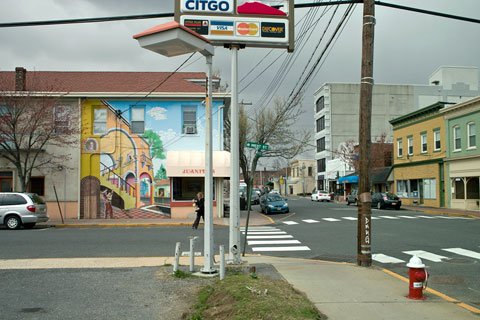
Red Bank, New Jersey — © Brian RoseI’m photographing a historic theater in Red Bank, New Jersey later this week. These pictures are from my scouting trip down there.
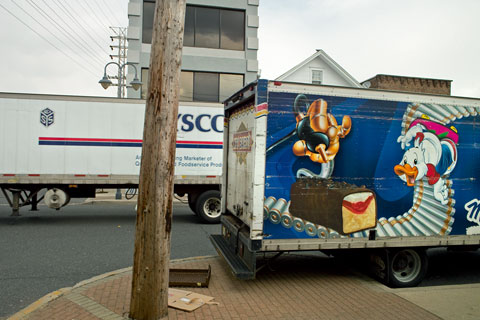
Red Bank, New Jersey — © Brian Rose -
New York/Midtown
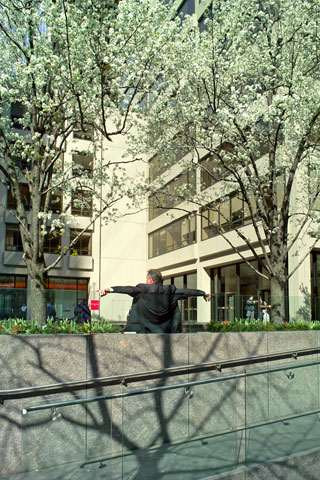
© Brian RoseWithout comment.
-
New York/Cervin Robinson
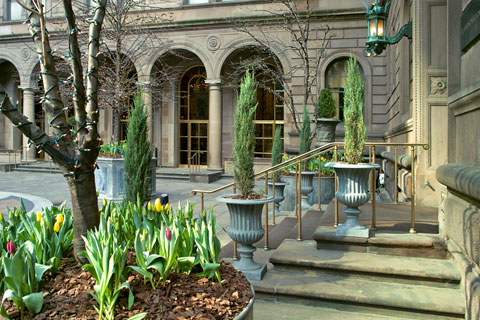
Villard Houses — © Brian RoseA few weeks ago I went to Cervin Robinson’s opening at the Urban Center Gallery. It was a crowded affair, and not a good moment to look at the photographs. So, yesterday I returned to the exhibit, By Way of Broadway, and spent some time with the pictures.
The gallery consists of two large rooms of the former Villard Houses, which now are home to the Municipal Arts Society and the Urban Center bookstore. The Palace Hotel uses part of the original buildings as well, and its bland tower looms over the entry courtyard seen above. How that happened is a story in itself.
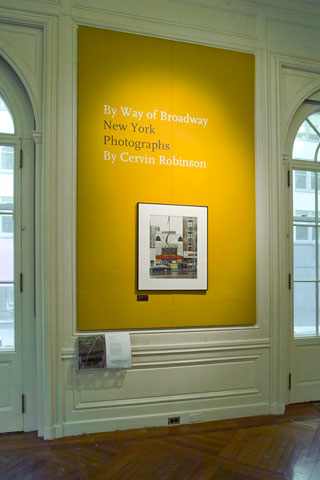
Cervin Robinson at the Urban Center Gallery — © Brian RoseDespite the use of the rooms as a gallery, their historic appearance has been preserved. But that means that any exhibition mounted has to contend with wainscotting and other architectural details. It’s beautiful, but not always the most flexible space, much like the old ICP galleries, which were housed in a historic mansion on East 94th Street.
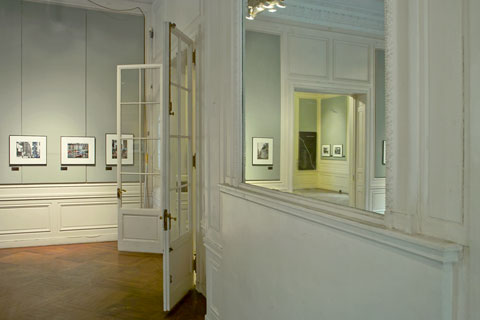
Urban Center Gallery — © Brian RoseOn one wall of the gallery (pictured above), a fireplace has been covered, and a large mirror stands above it. Casement doors connect the gallery to the main lobby. It’s a gracious and dignified space, and works pretty well for Cervin Robinson’s equally well-mannered photographs.
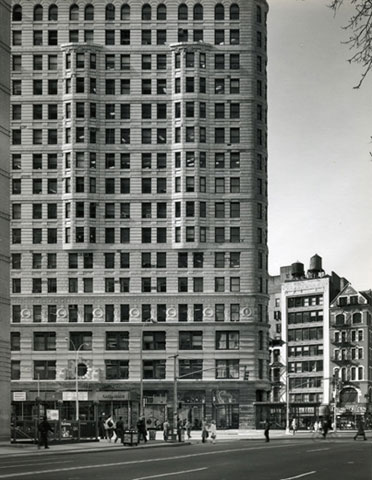
Cervin Robinson, the Flatiron BuildingRobinson is one of a handful of photographers who defined what is understood today as architectural photography. He is in the company of the late Ezra Stoller, and Julius Shulman, who is still with us in his nineties. Dutch photographer Jan Versnel–not well known in the United States–was another of this select club. Together, they not only helped establish the profession of architectural photography, they also made the images that form our collective awareness and recognition of important works of architecture.
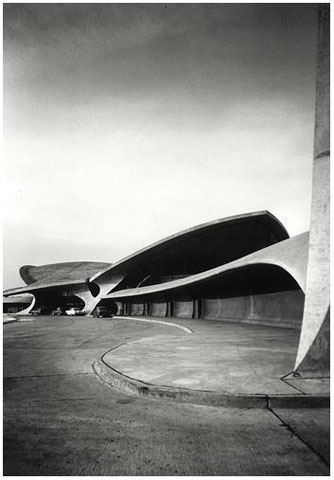
TWA Terminal — photo by Ezra StollerWhen we think of Saarinen’s TWA terminal, we see it through the pictures that Stoller made of that swooping structure. When we think of the Case Study houses of Southern California we see them through the photographs of Julius Shulman. And when we think of the innovations of Louis Sullivan, or remember the much mourned Pennsylvania Station by McKim Mead and White , we do so with the help of images made by Cervin Robinson.
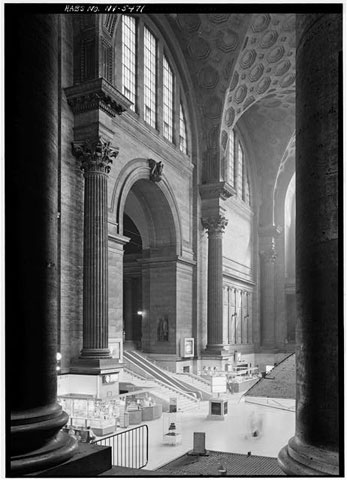
Pennsylvania Station — photo by Cervin RobinsonThe show at the Urban Center, however, is not about Robinson’s commissioned work or extensive book projects. This series of images focuses on Broadway, Manhattan’s slightly meandering street that runs from tip to tip of the island. It’s one of America’s principle thoroughfares–Wall Street lies perpendicular to it, Times Square is formed by its vector across Seventh Avenue, and it brushes the corner of Central Park at Columbus Circle. Further uptown it slices past Lincoln Center, bisects the campus of Columbia University, crosses 125th Street in Harlem, eventually leaving Manhattan and continuing up through the Bronx and further upstate as route 9.
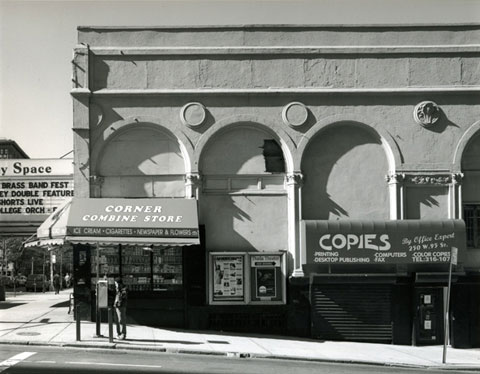
Broadway — Cervin RobinsonRobinson’s photography can be difficult to write about because there is so little artifice in it. One of the things architectural photographers learn is that they have an obligation to the building they are documenting–that their own style or signature as a photographer must take a backseat to allowing the architectural object to come through. Robinson brings this same self-effacing approach to his personal work in the streets of New York.

Broadway — Cervin RobinsonHere the object is more diverse, multifaceted, but Robinson finds in the jumble of the city points of attention, organizing elements in an otherwise chaotic scene, and always, the beauty of structures both grand and humble. In the years he has been photographing Broadway, many of those structures have disappeared, preserved only by his view camera. And Robinson returns dignity to lost art deco gems, obscured by signs, robbed of their original functions.
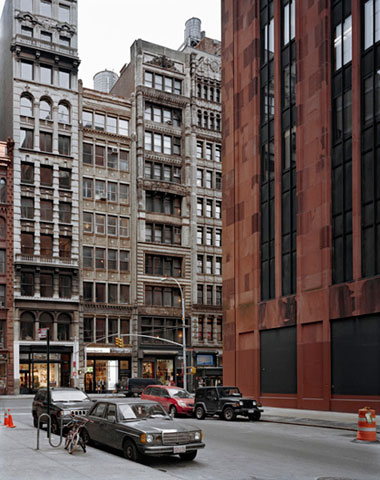
Broadway — Cervin RobinsonRobinson does this without a note of lachrymosity, though we may weep for the things he reveals. Above all, however, Robinson celebrates the richness of the architectural heritage of the city–and although he remains even handed in his attention to the cityscape new and old, his eye lingers on the crafted masonry facades of pre-war New York. But despite Robinson’s objective acuity, it is his street–he lives on Broadway–and in the end By Way of Broadway is a personal project, the linear path of a life devoted to describing the city, the nature of place, and the ennobling power of architecture.
The entire exhibition can be viewed here.
-
New York/Midtown
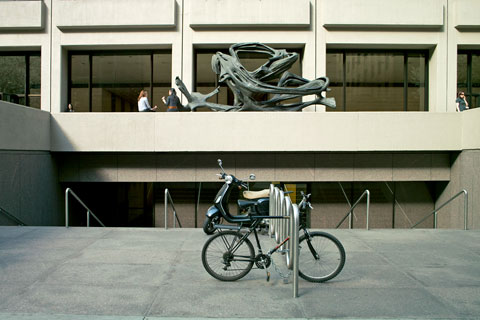
E51st Street — © Brian RoseWithout comment.
-
New York/Into the Sunset
Into the Sunset at MoMA begins with one of Richard Prince’s cowboy appropriations, which is meant as a signal that this exhibition about photography and the west is meant to challenge conventional assumptions. I’ve visited the show twice, which is chock-a-block with famous images by famous photographers, but feel oddly ambivalent about it all.
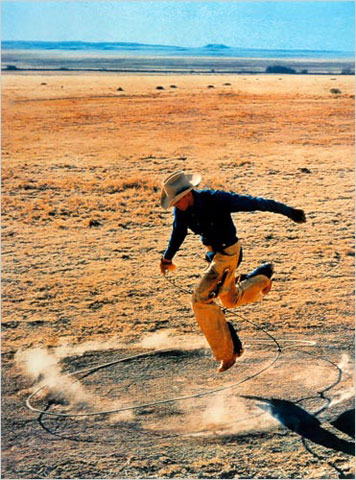
Richard Prince (original by Jim Krantz)For me, Richard Prince is old (10 gallon) hat, the art equivalent of AIG credit default swaps and other toxic paper. The system needs to be purged, the debt retired. There’s too much about “Into the Sunset” that calls up familiar critical tropes and cliches. It’s all true that early photographers romanticized the west, that Manifest Destiny was evil, that the landscape has been scarred by sprawl and pollution, that the history of the west has been full of charlatans, drifters, losers, religious zealots, pornographers, etc., and that we still cling to heroic images of cowboys used to sell everything from cigarettes to 4×4 trucks.
I guess I want a different narrative–but if that’s not possible, at least a different take on the narrative. One that sneaks up on me a little, gets me to think about things less rectangularly than the bed of that 4×4 truck. I think I’m looking for an exhibition that gets beyond the flat files of MoMA’s photography department. I’m not sure what that exhibition would look like, or who the photographers would be. Probably some of the photographers in the exhibit, and probably a whole lot not there. More photography, fewer curatorial checked boxes.
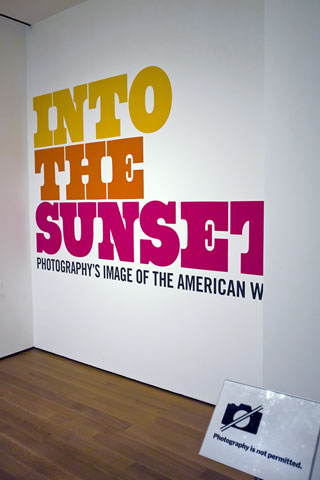
Museum of Modern Art — © Brian Rose
At the entrance to the exhibit right in front of Richard Prince’s “plagiarized” cowboy–a photograph of another photograph–there is a “photography is not permitted” sign. Time to saddle up and get out of Dodge. -
New York/Pickup Basketball
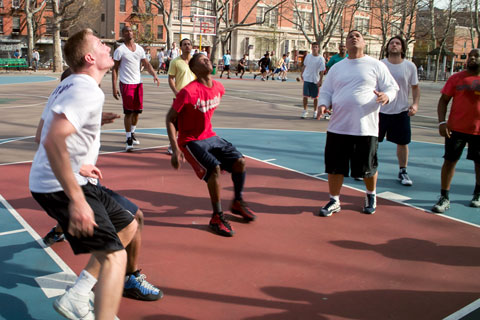
© Brian Rose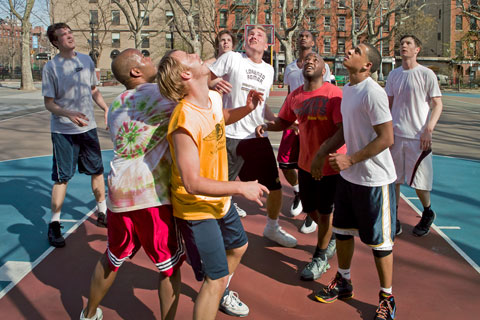
© Brian RoseThis time I went out with the view camera, and shot about 10 sheets of film. I want the detail of the 4×5. Ideally, I’d get a high megapixel digital camera–bigger than any of the dslrs–but they are expensive even to rent. These pics are from my Sigma DP1.
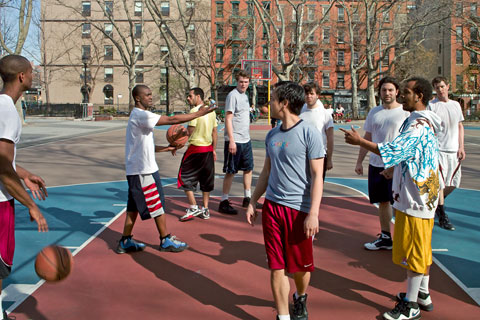
© Brian RoseBetween games.
-
New York/Helen Levitt
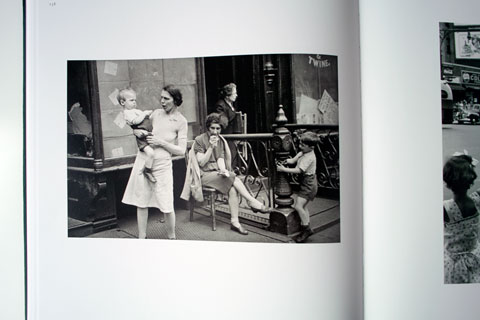
From the book Helen Levitt published by powerHouse BooksA lot has been written in the past week since Helen Levitt passed away at the age of 95. I have just a few comments and an anecdote.
Helen Levitt was the quintessential street photographer. Her work was lyrical, joyful, even as she focused on New York’s poorest neighborhoods. Her streets were filled with people and activity–above all children who grew up outdoors in the city–no longer the case today. Her work exhibited both affection for picture making and for humanity seen without sentimentality or condescension. And while she sought candid moments in the street, her subjects, while momentarily exposed, were not unduly robbed of dignity.
When I began photographing the Lower East Side in 1980, I was well aware of Helen Levitt, and knew that she had often prowled the streets of the neighborhood. One day, while walking somewhere in the vicinity of Orchard Street, or perhaps Ludlow, I saw a small, older woman in a mousy gray raincoat taking pictures. She wore a hat. She moved slowly, but cat-like. She carried a Leica. It was Helen Levitt.
-
New York/Houston Street
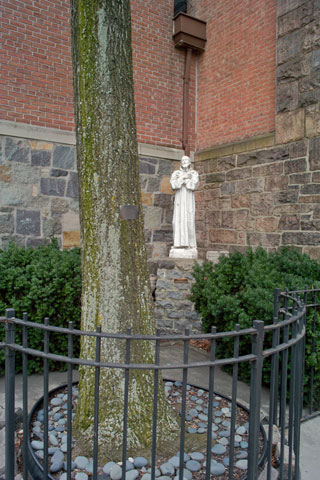
Houston Street — © Brian Rose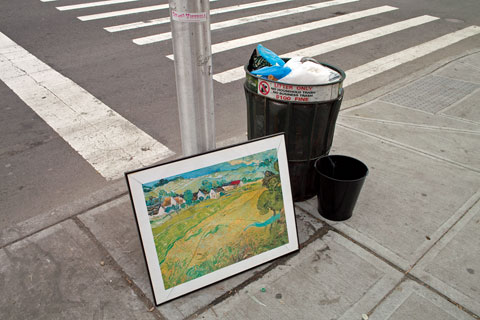
Houston Street — © Brian RoseTwo photos made within 30 seconds of each other.
-
New York/Phillip-Lorca diCorcia
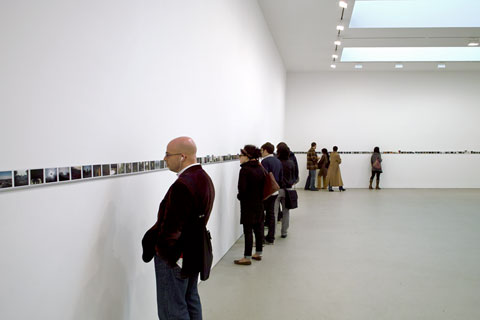
Phillip-Lorca diCorcia at David Zwirner GalleryI first met Phillip-Lorca diCorcia years ago at My Own Color Lab, a rental lab where a lot of art photographers were making their own prints. I liked what he was doing, but only saw his work in bits and pieces, and didn’t realize until later that his career was beginning to take off.
Although I’ve had mixed feelings about the recent spate of staged or semi-staged photography, I’ve always appreciated diCorcia’s hybrid approach–working in the street or landscape, but introducing a theatrical element like lighting or posing of individuals in situ. Sometimes his subjects are isolated, other times engaged with the photographer.
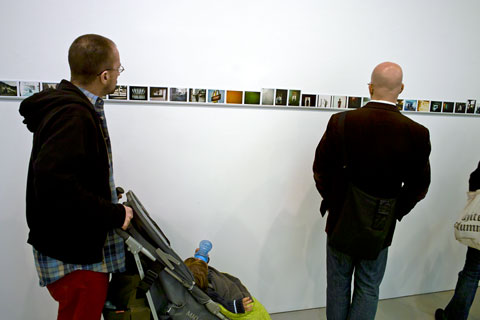
Phillip-Lorca diCorcia at David Zwirner GalleryDiCorcia’s recent show–Thousand–at David Zwirner Gallery represents 25 years of his work–outtakes, snapshots, tests–some from his various projects, others of family, friends, travel, everyday life. For all that time, diCorcia made medium format size Polaroids, which are placed along a small shelf wrapping around the gallery walls.
It’s the first time I needed reading glasses to see a photo exhibit, and I found myself moving continuously left to right, ocassionally pausing to look at a particular image, then resuming my sideways movement.
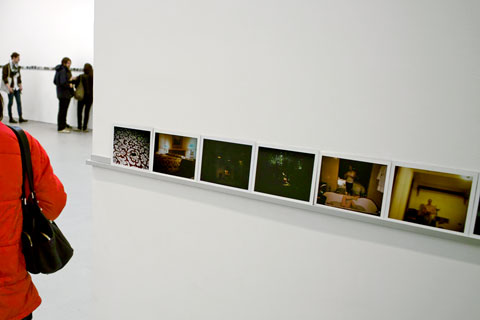
Phillip-Lorca diCorcia at David Zwirner GalleryThe images vary from icons of diCorcia’s work to throw-away snapshots and blurry bits of color and light. Seeing all 1,000 images, as I did, is hypnotic, even a little dizzying and disorienting. But I found the process of taking in so many tiny images quite compelling–a life’s work laid out end to end, though not chronologically. Individual images jump out jewel-like and precise. Passages, like music, emerge out of the linearity, blurriness and sharpness alternate. Familiar faces repeat, including diCorcia’s own.
-
New York/Pickup Basketball
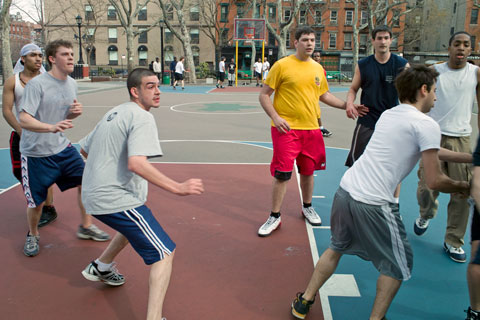
© Brian Rose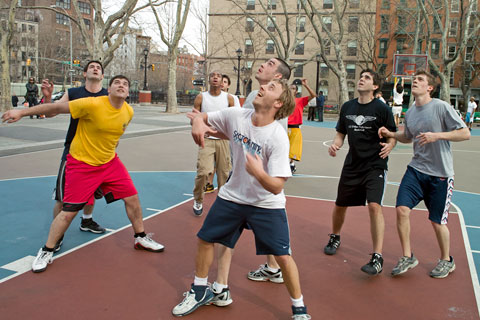
© Brian Rose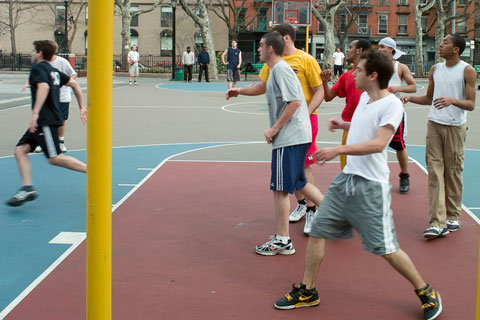
© Brian Rose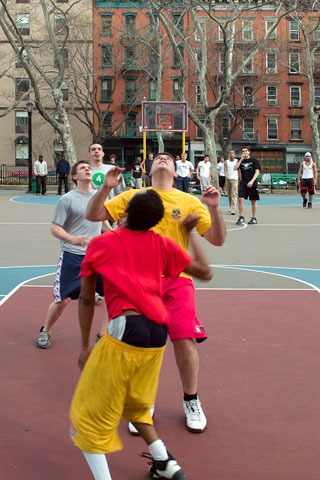
© Brian RoseSarah D. Roosevelt Park on the Lower East Side.
-
New York/AIPAD
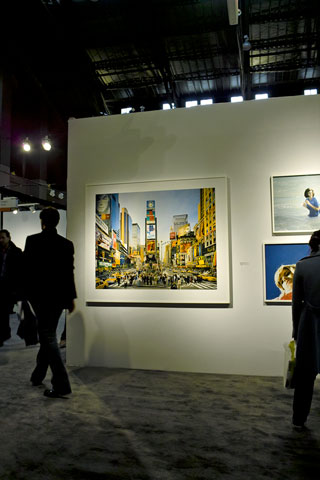
Andrew Moore at AIPADWent to AIPAD (Association of International Photography Art Dealers) show at the cavernous Armory at 67th and Park Avenue with friends Art Presson and Eve Kessler.
Hard to come to any conclusions about the direction of photography from the multifarious offering on display. There was plenty of contemporary photography, but old masters reigned. The scuttlebutt is that super-sized prints are out–so yesterday, pre-recession.
The Andrew Moore picture, above, used for the show’s poster advertising hung adjacent some tables where we had lunch. An arresting image–a wide angle view of Times Square in all its intensity–I was bemused by the extreme saturation, especially in the yellows, and the hyper sharpening applied overall. The Pandora’s box of Photoshop. In contrast, was a beautifully rendered recent print from Joel Meyerowitz’s Cape Light series. It had all the lushness one would want, but retained a softer, more naturalistic quality.