
Oakland, California — © Brian Rose
Without comment.
Oakland, California — © Brian Rose
Without comment.

Oakland, California — © Brian Rose
Near one of the projects I am photographing.

Ironhorse at Central Station, Oakland, California — © Brian Rose
I’ve been working every day since arriving in San Francisco, squeezing as much shooting in as possible before the weather deteriorates. I’ve had mostly sunny dry conditions, though there have been a few stray showers. The shot above was taken just after a brief downpour early in the morning.
The projects I am shooting are mostly affordable housing–except for a market rate loft building–and all of them exhibit the high quality of subsidized housing in the Bay Area. David Baker, the architect I am working for, is a large part of the story. He has brought design excellence and a sense of urbanism that one rarely sees in such housing. Certainly not in New York City.

Tassafaronga Village, Oakland, California — © Brian Rose

Paseo Senter, San Jose, California — © Brian Rose

Former Oakland train station — © Brian Rose
One of the housing complexes I’m photographing is located in West Oakland adjacent to the former train station. It’s been abandoned for years. This was the terminus of many of the great transcontinental trains like the Zephyr. Amtrak still runs a train of that name, but it’s just another generic Amtrak service. The new housing is the first phase of an urban renewal plan that will encompass the station, which will be preserved and adapted for some undefined use. As much as I like the new development, it seems a bit alien to the gritty surrounding neighborhood.

Kids playing in a housing project — © Brian Rose
I’m photographing several projects across the Bay in Oakland. This one is low income housing–the kids came out to play while I was shooting the courtyard.

West Oakland — © Brian Rose
The area nearby is gritty, but interesting. Small gingerbready houses, heavy industry, entrepreneurs and artists, and blocks of abandoned and underused land.

Mandela Parkway — © Brian Rose
At one point while making pictures, two of the meanest looking pit pulls I’ve ever seen came wandering through the housing complex. They were wearing spiked collars, and seemed to have gotten loose, maybe from a nearby yard. They came directly toward me, and I froze in my tracks. They loped on by without incident, but for the next hour or so, they kept reappearing. One time I fled up some stairs. It was unnerving.

David Baker housing project — © Brian Rose
Just a quick post. I’m in San Francisco shooting a number of projects for architect David Baker. The photo above is a scouting shot. I’m off to Oakland now to look at another housing complex. For the moment, the weather is beautiful.

AIPAD photography show — © Brian Rose
I went to the AIPAD show at the Armory with Eve Kessler and Art Presson, good friends who have a wonderful collection of photographs. It’s fun seeing what the galleries are putting forward, though not always particularly illuminating. New technology showcased by a few galleries in which still and moving images were combined was mostly embarrassing–especially in the company of classic 20th century black and white photography. Color images by Robert Voit–centrally placed cellphone towers disguised as trees–and distantly held landscapes by Sze Tsung Leong–consistent horizon line–continue the Becher inspired, gallery-friendly, trend of typologies. I like their images, but but find the approach self-limiting.
The image above by Will McBride jumped out at me because of its kinship to my own Berlin work. It’s John F. Kennedy in an open car with Willy Brandt and Konrad Adenauer in front of the recently walled off Brandenburg Gate. That photo was made in 1963. Here are two images of the Brandenburg Gate from 1989 and 2009.

The Brandenburg Gate a short time after the opening of the Berlin Wall (4×5 film)
— © Brian Rose

The Brandenburg Gate on the occasion of the 2oth anniversary of the fall of the Wall (4×5 film)
— © Brian Rose
http://www.brianrose.com/lostborder.htm
http://www.brianrose.com/infromthecold.htm
Oh, and just a little perspective on the healthcare legislation that passed Congress last night. The Dutch newspaper De Volkskrant in the subheading of its lead story states: “America took a historical step toward a European tinted healthcare system.” It may seem a radical step to some in the U.S.–but to much of the world, it’s seen as a belated catching up.

Houston and Lafayette Street — © Brian Rose

Williamsburg Bridge — © Brian Rose
Two faces.
***
I receive an email newsletter about Amtrak from a cousin who believes fervently in open market solutions to what ails American rail transport. Although I don’t generally agree with his take on things–knowledgeable as he is on the subject–his newsletter often provides interesting inside information.
Earlier this month there was a “town hall” meeting in Chicago hosted by the top brass of Amtrak in which several topics were discussed, one of them being Amtrak Photography and Videography Guidelines. I recall reading somewhere that rail buffs have sometimes been hassled by Amtrak police for taking photographs in and around stations and other facilities.
It seems, according to the newsletter, that Amtrak is trying to strike some kind of reasonable balance concerning photography–they would like to be notified in advance if one is planning on taking pictures beyond casual travel photography. The newsletter states: “Given the proven use of photography by terrorists in preparation for attacks on infrastructure, it is not unreasonable to have a few, simple, reasonable rules.”
This statement, which I assume echoes something said by the chief of Amtrak police, is an example of the very slippery slope we continue to cascade down as a society. All photographers are suspect because one might be a terrorist on a scouting mission. Inevitably, the most serious photographers with expensive equipment get singled out–God forbid the use of a tripod. Never mind that would be terrorists have no need of tripods, view cameras, or gigantic zoom lenses. They can easily get by with cell phones or invisible spy cameras. They can even walk around using the unaided eye to check things out.
There may be legitimate reasons to limit photography in public and semi-public places like train stations. Commercial photo shoots and film productions are potentially disruptive. But ordinary picture taking–documenting the world we move around in–should be encouraged, not considered subversive.
I’ve been working on my Berlin photographs since my trip there in December, which coincided with the 20th anniversary of the fall of the Wall. I have integrated those pictures into the series, and have decided to put it all up on the web. Here is the title web page:
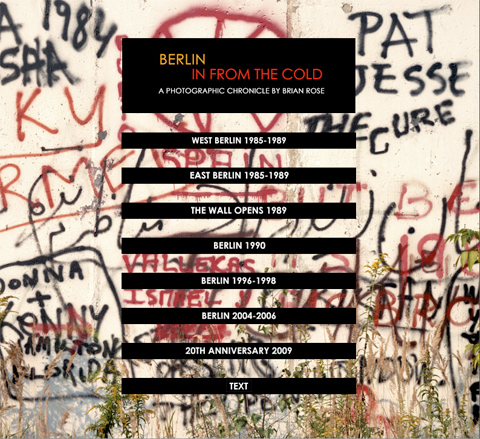
The website is more or less done, although the photos are not clickable for larger images yet. Nor have I linked the site to my homepage. But here is a sneak preview. Or click on the image above. UPDATE: images now clickable.
I have also updated my Blurb book proposal, which has been changed to a smaller size–8×10–and currently available for purchase as I cast about for a publisher or exhibition opportunity. The 8×10 version of the book is much more affordable, and is available in soft and hardcover. If it ever gets published it will likely end up altered in some way. So this is my unedited presentation of the photographs. Since I did the book without a graphic designer, I kept the layout simple. Feel free to preview the book below. Click on full screen to see it properly.
This website and book represent a huge effort on my part done over a long span of time–1985 to 2009. About 14 trips all together. About 1/3 of the pictures were included in the Lost Border book, but the rest have never been published or exhibited. It only became clear to me that I had a separate story focused on Berlin after I had completed the Lost Border.
I’m off to San Francisco in a few days to photograph some buildings for architect David Baker. I’ll be blogging from the Bay Area, one of my favorite places.
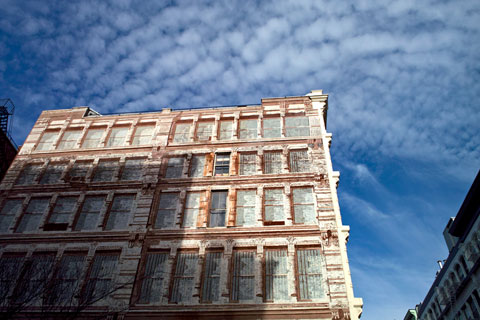
Prince and Greene Streets — © Brian Rose
My morning walk across Lower Manhattan, sometimes Houston Street, sometimes Prince. This is the Richard Haas mural going all the way back to 1975 when Soho was still factories and artists’ lofts. I’m not sure of its current status–but it’s clearly in need of restoration. It’s a bit kitschy, but that’s always been something Haas flirts with.
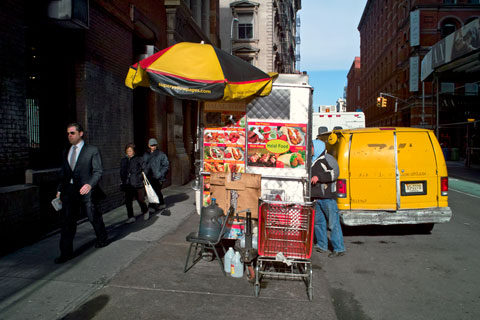
Prince Street and Broadway — © Brian Rose
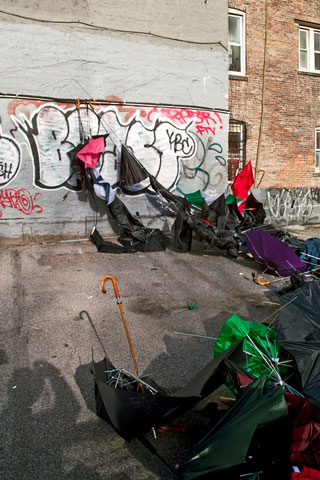
Prince and Mulberry Street — © Brian Rose
The recent northeaster left a lot of damage in the area, trees down, flooding. But this appears to be an umbrella disaster. An accumulation of broken umbrellas blown into a vacant lot. Or rather placed there. I once thought of photographing broken umbrellas and juxtaposing them with pictures of an elephant graveyard in the manner of Peter Beard–but wisely didn’t do it.
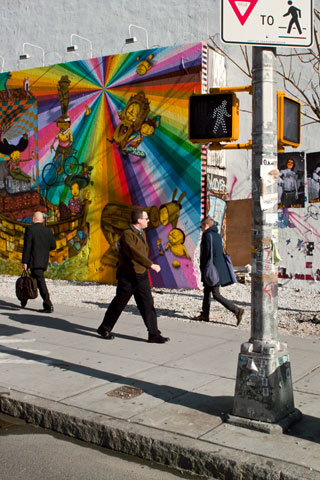
Houston and the Bowery — © Brian Rose
Walking figures. We’ve been here before. You can see a similar view taken with the view camera from my Lower East Side series.
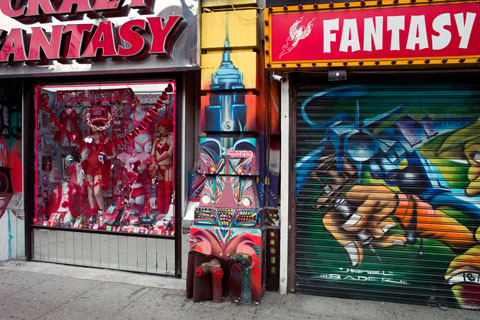
Sixth Avenue and E3rd Street — © Brian Rose
Without comment.
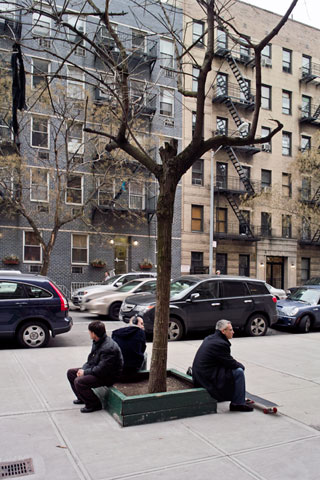
W21st Street — © Brian Rose
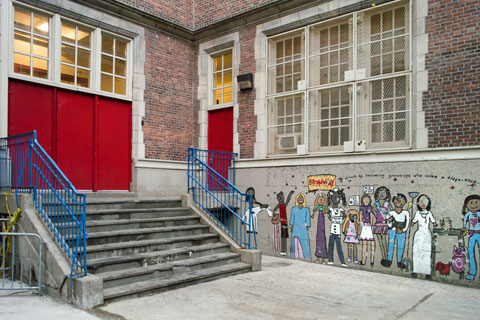
W21st Street — © Brian Rose
Waiting with other anxious parents in front of Clinton Middle School for my son who was taking an entrance test. Nothing else to do but take pictures.
Story about the Kahn’s Trenton bath house with my photographs in The Architect’s Newspaper here.
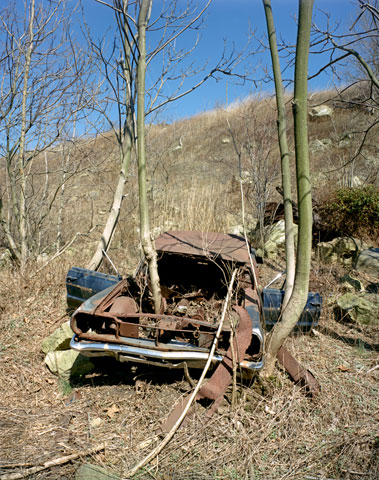
Staten Island (4×5 film) — © Brian Rose
wood s lot, a very classy blog focused on images and literature.
New York primeval, natural park areas of the city from my website.
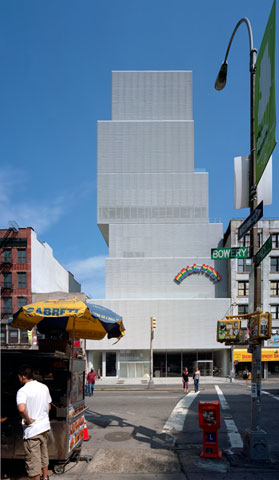
The New Museum — © Brian Rose
Hell Yes!–or–Don’t Worry Be Happy
I have to agree with Fred Bernstein in the Architects Newspaper Blog about the New Museum and its garish Hell Yes! — a multi-hued text piece by Ugo Rondinone. To Bernstein, hanging the kitschy lettering on the shimmering scrim of SANAA’s facade is “like wearing a campaign button on a wedding veil.” My studio is around the corner from the museum, and the Hell Yes! has become a daily irritant. There are worse public sculptures in the city, but none that I can think of that so insistently imprint themselves on one’s brain.
SANAA’s design manages to be both elegant and playful, and the off kilter box effect abstractly mimics the hodgepodge of buildings of the Bowery, evoking, perhaps, the boxes and steel refrigerator units and other restaurant appliances being manhandled on and off of trucks on the street nearby. The architectural joke, however, is good natured and feels right. But Rondinone’s goofball element spoils the slightly tipsy balance. While the passing artist proletariat, glancing up at the museum tower, grumbles under their breaths, Hell No!
The current show, Skin Fruit, curated by Jeff Koons from the collection of New Museum board member Dakis Joannou certainly does nothing to dissipate the grumbling. Peter Schejldahl of the New Yorker commenting on the incestuous nature of the exhibition in a narrated slideshow says:
What makes the occasion a real lightening rod to my mind is a growing populist resentment of the impunity of wealth in the recent era symbolized by the art market. Younger generations coming up can no longer count on the promise of ascension to the starry feeding trough of the market as it has pertained until the current recession. Full article here.
I have enjoyed a number of the exhibitions at the New Museum, and was pleased to see the retrospective of David Goldblatt there, as well as photographs by William Christenberry in an earlier show. But the collusion between commercial galleries, collectors, and museum curators has gotten completely out of hand, and this exhibition takes the cake–or to flog the metaphor–declaims, Let them eat cake!
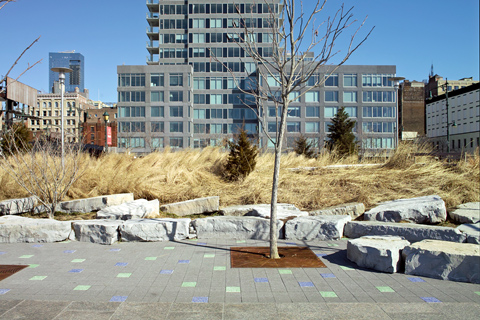
Hudson River Park — © Brian Rose
A beautiful day in New York. It got up above 50F degrees. After dropping my son off at a middle school test/interview–even public schools are selective in New York–I walked several miles along the Hudson. Just took a few pictures.
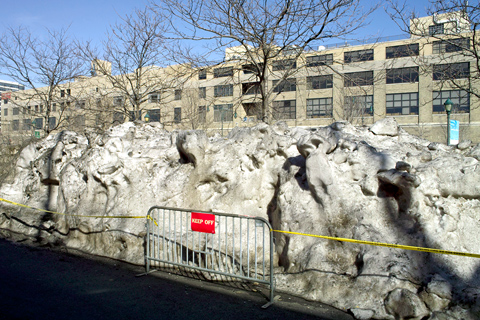
Hudson River Park — © Brian Rose
Still a lot of snow piled up in places, but it’s going fast. The parks police placed yellow tape around this snow mountain and posted a sign. Keep off.
There’s been a lot of discussion recently about Photoshop manipulation of images. It is a never ending debate–what is allowable, appropriate, ethical, etc. As a photographer whose work is mostly rooted in the visually tangible world, I avoid altering images, and I crop minimally. It is an unstated, but understood, agreement with myself and with my viewers. But at the same time I am well aware of the tenuous hold on reality that any photograph has. For me, that dichotomy between the real and the unreal is integral to what makes photography compelling. Veracity is another issue. It may be dependent on adherence to certain norms, but it is not, in the end, always as clear cut as people think, or wish it to be.
The latest issue, involves the disqualification of a winner in the World Press Photo contest, an annual event held in Amsterdam, which showcases the best of photojournalism. The controversy involves the Ukrainian photographer Stepan Rudik who won third prize in sports features for his pictures of “street fighting.” Because of past questions about the honesty of digital images, this year photographers were required to furnish the RAW files–digital negatives–downloaded directly from cameras. These could then be compared with the final submitted images. The basic rules being that traditional darkroom manipulation is allowed (cropping, dodging and burning), but not digital cloning or removing unwanted distractions.
Here’s the silliness we end up with:
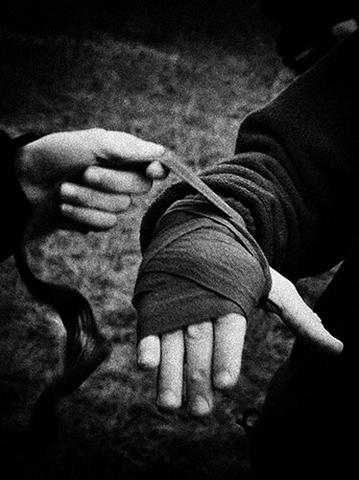
Rudik’s winning submission
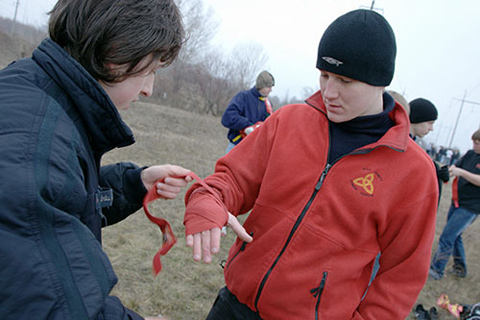
Rudik’s original uncropped, unconverted RAW image
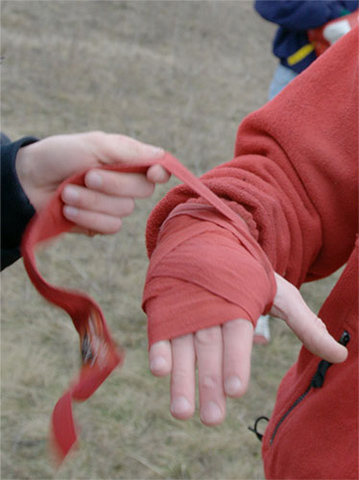
Rudik’s cropped image with no other changes
What disqualified Rudik was not the cropping, not the converting to black and white, not the digitally introduced grain, not the heavy burning of the margins of the image. The photo was disqualified because a bit of extraneous detail–someone’s foot–seen between the fighter’s thumb and forefinger was cloned out.
I’m not going to defend Rudik who should have known better, or should have consulted the rules more carefully. Contests like World Press Photo, however, routinely reward photographs for calculated affect, false sentiment, misleading context, you name it. To their credit, they seek to honor those who, in many cases, risk their lives to report on conflicts around the globe, but so often end up promoting aesthetic cliches over less mediated documents, and in doing so, create the the problem that led to Stepan Rudik’s disqualification.
Full story and discussion here.
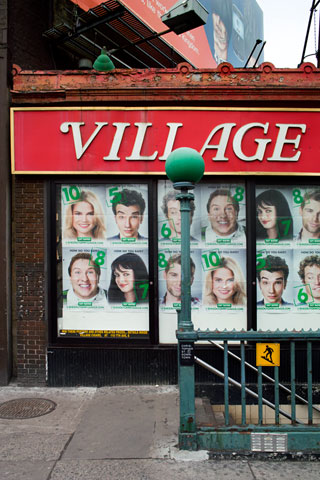
Seventh Avenue and Christopher Street — © Brian Rose
Without comment.
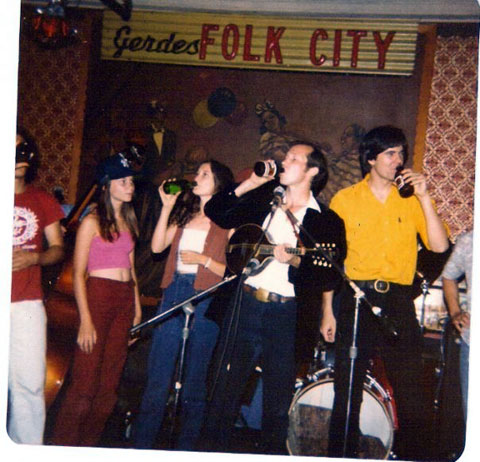
Jack hardy (with Mandolin) and Brian Rose (yellow shirt) on stage at Folk City, the legendary folk club (late ’70s)
Jack Hardy, the songwriter, came over to my studio today to have me scan some old snapshots–some had me in them. I’ve known Jack since 1977 when I arrived in New York. I was an early participate in the songwriters exchange that Jack started and still hosts in his apartment on Houston Street. The photo above was taken while performing Jack’s “Drinking Song.”
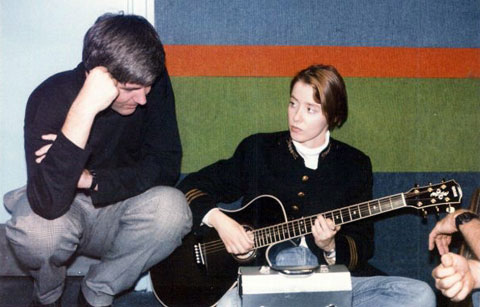
Brian Rose and Suzanne Vega (early ’80s) — photo by Theodore Lee
There were so few pictures taken of us in those days, so one can’t really complain about the quality. I was a reluctant photographer when hanging out with my songwriter friends, not wanting to be the designated picture taker at every event. In retrospect, I should have done more. Recently, I was asked for a photograph of me and Suzanne Vega–somehow I didn’t have a single one. Well here’s one.