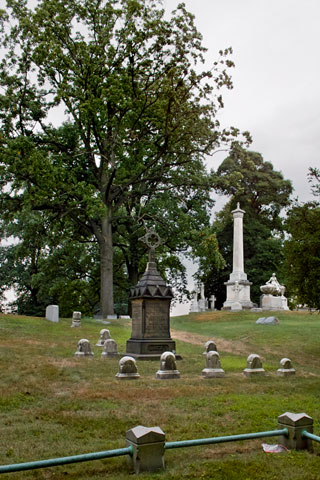
Green-Wood Cemetery — © Brian Rose
Last week I was In Green-Wood cemetery.
Green-Wood Cemetery — © Brian Rose
Last week I was In Green-Wood cemetery.
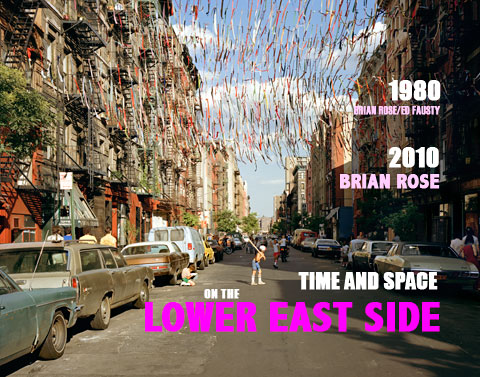
Since uploading my book to Blurb last week, I’ve gotten some welcome publicity for Time and Space on the Lower East Side. Here are some blogs that have taken note:
EV Grieve, 1st post
EV Grieve, 2nd post
City Room, the New York Times
Time and Space on the Lower East Side is a project begun in 1980 when Ed Fausty and I–both recent Cooper Union grads–photographed the neighborhood with a 4×5 view camera. After the work was exhibited at the Henry Street Settlement in New York and in Nancy, France, the photographs have remained in my archive unseen until now.
In the aftermath of 9/11 I began thinking of a way to address what had happened to the city. I finally concluded that the best way for me to respond was to return to where I had started, the Lower East Side. Major changes were sweeping the city post 9/11, the great irony being that the result of such a destructive act was a flood of money and people into New York, especially Manhattan. The Lower East Side in the past century had mostly escaped the flow of wealth from one part of Manhattan to another. It remained a mostly poor, immigrant, neighborhood tucked beneath the bridges and the skyscrapers of Wall Street. It would not escape this time. Larger historical and economic forces intervened, and the invisible boundary between the Lower East Side and the rest of the city was breached.
I restarted my project first by attempting to print the 1980 photographs, and I quickly discovered that the color film had deteriorated making it nearly impossible to make a satisfactory print. I then experimented with scanning the 4×5 negatives–pushing and pulling the color this way and that–and eventually found that it was possible to recover the original color, and in some cases get more out of the negatives than in the earlier analog prints.
In 2005 I began re-photographing the neighborhood, retracing my steps with the view camera, this time working alone. I decided from the beginning that I did not want to do a simple before/after look at things. Although it’s always interesting to compare such images, it is an extremely limited concept of seeing and evaluating the passage of time. I wanted to rediscover the place with fresh eyes, with the perspective of time, change, and history. The result, still being added to, is a set of photographs that looks backward and forward, that posits the idea that places are not simply “then and now,” but exist in a continuum of decay and rebirth.
By 2010 I had made hundreds of new photographs of the Lower East Side. My first attempt at a book proposal went nowhere. The publisher of my earlier book The Lost Border was not able to take it on, and another well-known New York photo book publisher expressed disappointment that it was not a before/after book. Should have known. So, I decided to create my own book, float it out there, and see what kind of interest there was. The hope is, that a publisher will take an interest, and that a museum or gallery will do an exhibition.
In the meantime, the book is available to page through on Blurb’s website. I’ve priced the book very low, considering that it is a limited edition, one book at a time printing. Please buy if you can, or leave a comment on the Blurb site. Your support and encouragement is appreciated.
The book can be seen here or by clicking on the image above.
I’ve been walking mornings between Williamsburg and the Lower East Side.
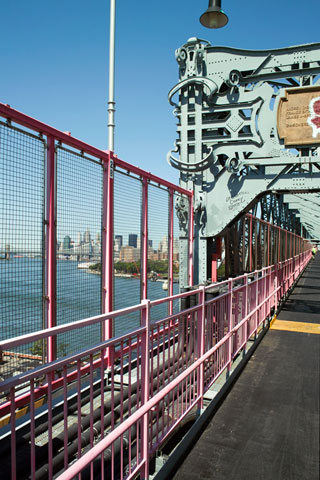
Williamsburg Bridge — © Brian Rose
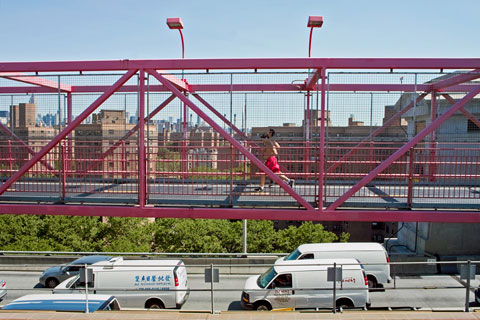
Williamsburg Bridge — © Brian Rose
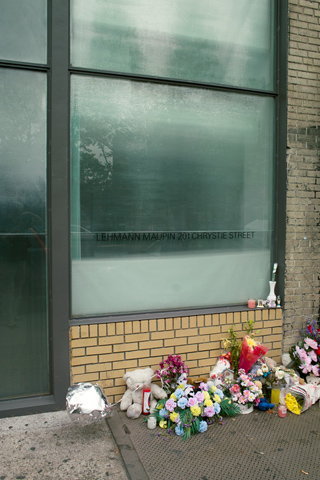
The Shrine, 2000 by Robert Buck — © Brian Rose
I visited four or five of the LES galleries participating in Lush Life, a multi-gallery exhibition based on the chapters of Richard Prices crime novel. Although the book is first and foremost a story built on dialogue and character, over the length of the novel, it evokes a vivid sense of place, a sense of this particular moment in the history of the Lower East Side. In Lush Life, the exhibition, each gallery takes on a chapter of the novel, and the curators selected pieces relating to the content of each particular chapter. Go here for a comprehensive review in the New York Times.
Navigating Lower East Side galleries can be pretty daunting because so much of the art seems the expression of an insular art community with its own disconnected language. Lush Life, however, is expansive and generous in its messages, possibly because the work is tethered to tangible themes and narrative. I liked a lot of what I saw, but was especially taken by the pieces shown in Invisible-Exports on Orchard Street based on Chapter Three: First Bird (A Few Butterflies). It’s nice to see real painting in Karen Heagle’s image of vultures picking through garbage. And I found Dana Levy’s video of live white doves fluttering about a museum gallery of stuffed birds quite mesmerizing.
A few of the galleries were closed on Saturday–the day after the New York Times review appeared–and I saw a number of disappointed people peering into the darkened windows. Lehman-Maupin was closed, but one of its pieces was on display on the sidewalk out front, a shrine of flowers, stuffed animals, candles, and the like, which was a fairly literal reference to the street memorial in Lush Life, the book. I preferred Christoph Draeger’s ghost bikes at Invisible-Exports, back-lit photographs of the white bikes seen around the neighborhood marking fatal bicycle accidents.
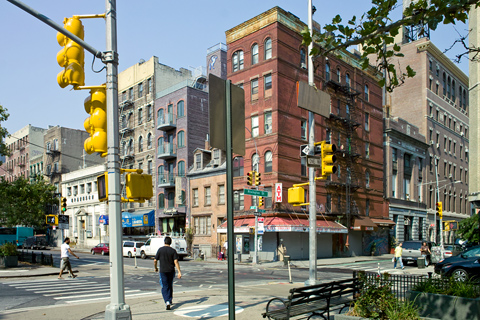
Rivington and Allen Street — © Brian Rose
An interesting review in Friday’s Times about a multi-gallery group show based on the chapters of Richard’s Price’s book Lush Life, a crime novel set in the Lower East Side. Nine galleries and nine book chapters. Hope to take a look at some of the exhibits later today.
Holland Cotter of the Times feels that the Price pulls his punches with “anodyne doses of redemption” that undercut “whatever moral complexity the story might have had.” I’m not sure about that, but I do think that Lush Life is a splendidly vivid depiction of the present day Lower East Side. So much written about the neighborhood is seeped in nostalgia, and contemporary commentators often slip into elegiac despair when talking about the Lower East Side that was. Price writes about the place as it is.
Cotter concludes his review nicely by saying that even if you haven’t read the book, the show “will still get you walking the streets of a neighborhood that is, with continuing transformation, both a threat and a promise, a morality tale in itself.”
I am still working on finding a outlet for this project–both exhibition and publisher. In the meantime, I have put together this book using Blurb. Click above for a preview. Let me know what you think. Both my Blurb books–Berlin: In from the Cold, and this one–are available for a limited time. They are highly collectible and affordably priced.
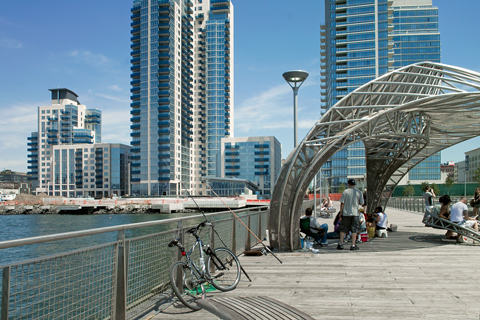
Williamsburg, Brooklyn — © Brian Rose
Miami on the East River.
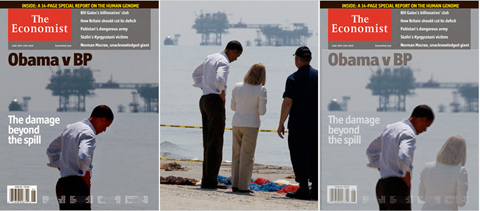
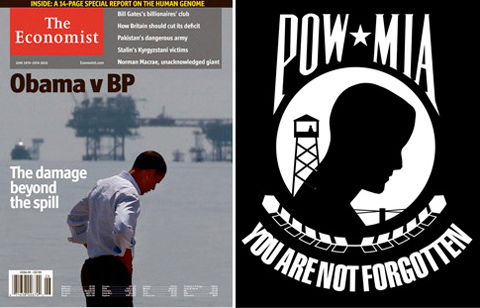
Left: Economist cover with doctored photo.
Center: Undoctored photo (Larry Downing/Reuters).
Right: Undoctored photo superimposed on cover.
Once again, another Photoshop nightmare. The Economist cropped and cloned a perfectly good image in order to achieve dramatic effect for their cover story on Obama and the BP oil spill. In a way it’s no big deal–no harm no foul–you might say. But…
Once again, a predetermined editorial narrative drives the ethical train wreck. It’s not a photograph–a slice of messy reality–it’s an illustration used to convey a point of view. That’s the crux of the problem. Not which pixels were cloned, or what extraneous details were cropped out. It’s the notion that photographs are not in themselves enough. They are too raw, too vague, too allusive. Too real.
Maybe this is what the editors were suggesting.
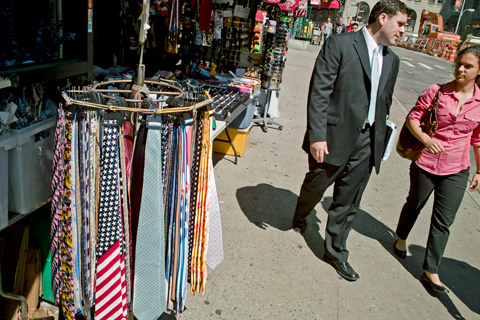
Fulton Street — © Brian Rose
Wearing my flag tie on the 4th.
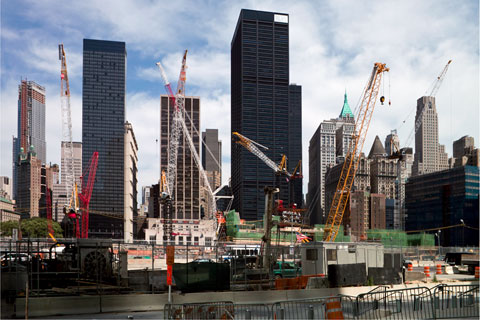
Ground Zero construction — © Brian Rose
The weather broke yesterday after days of temps in the 90s, so I decided to go down to the World Trade Center site for another round of photographs. This is my fourth or fifth visit with the view camera. The biggest difficulty for me is that there are few vantage points available for making photographs with a camera on a tripod. A small army of security guards working for various property owners and institutions enforces the one firm rule governing photography on “private” property–no tripods. Private is in quotations because there are so many areas that are ambiguous public/private realms with no signs or the signs that are there clearly state that the public is welcome. The public may be welcome. A hundred people could be simultaneously taking snapshots, but put a tripod down and you’re kicked out. It’s gotten so ridiculous that I usually just work quickly, get a shot or two off, and then leave once the nearest rent-a-cop springs into action. God help us if something really serious were to happen–these guys are useless.
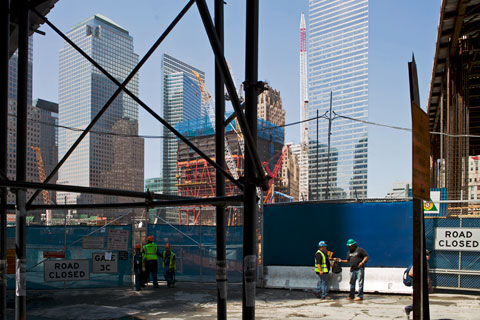
Liberty and Greenwich Sreet — © Brian Rose
Construction is in full swing across the site with 1 World Trade Center up 20 or more floors, and Tower 4 is also well above ground. The Calatrava designed transportation center is still mostly below grade, and the memorial waterfalls are not visible unless you go to a higher viewing level.
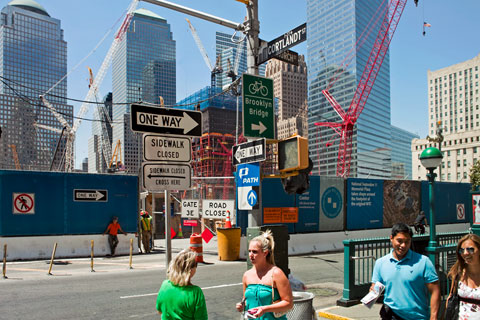
Cortlandt and Church Street — © Brian Rose
Tourist wander aimlessly about dodging construction equipment, navigating sidewalks to nowhere, reading a forest of contradictory signage, all the while attempting to see and understand what is going on.
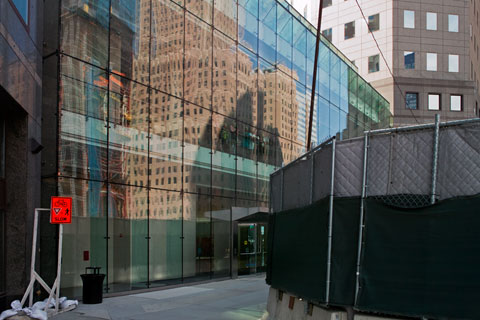
The Winter Garden, World Financial Center — © Brian Rose
The best place to see the whole site, though still not high enough, is from behind the glass wall at the top of the stairs in the Winter Garden of the World Financial Center. I did a photograph of tourists looking out from the Winter Garden–just managed get off one 4×5 image before being ordered to vamoose.
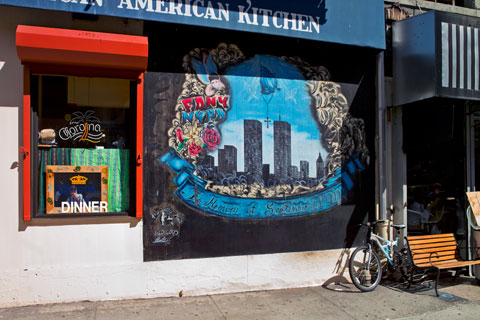
West Broadway and Warren Street — © Brian Rose
An unofficial Twin Towers memorial just to the north of ground zero. I was all packed up by the time I reached this spot, so I only shot it with my digital camera. But I will come back with the 4×5 in the future. Despite the difficulties of working around the WTC, I am getting good stuff. The idea is to come back from time to time, slowing building a series of photographs that documents the rebuilding and captures some of the craziness of the ground zero atmosphere. I have no doubt that when the memorial is completed there will be a ban on tripods, and I will be one of the last view camera photographers left.
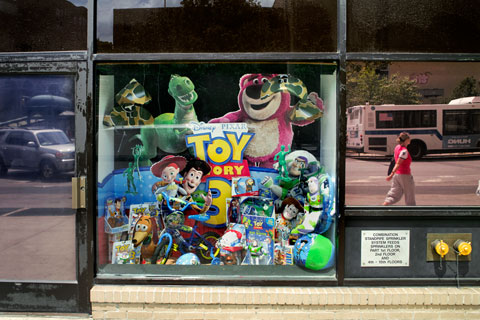
Astor Place — © Brian Rose
Without comment.
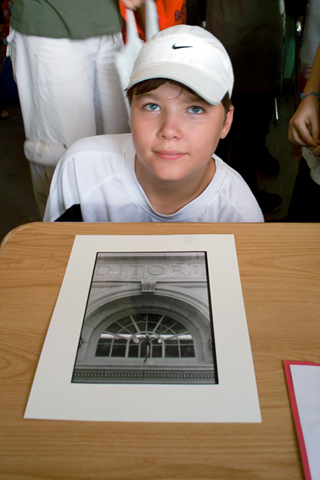
Brendan and photo at PS 3 — © Brian Rose
My son Brendan has just completed elementary school at PS 3 in the West Village, and we’re pleased that he will be attending the NYC Lab School in the fall. Our experience at PS 3 has been extraordinary, beginning with second grade when we arrived in New York from the Netherlands. Special thanks to Otis Kriegel, Bendan’s 5th grade teacher, one of a string of exceptional teachers we’ve had at PS 3.
One of the last projects Brendan did in Otis’s class was to take a photograph with black and white film, and then make a print in the darkroom. Although it isn’t necessary these days to work with film, one’s understanding of the nature of photography and its history is deepened by experiencing the whole process of shooting, developing, and printing. The magical moment an image appears in a tray of developer can’t quite be duplicated in digital photography, though digital has plenty of other kinds of magic to offer.
A few days ago I went to Brendan’s class photo show. Each student displayed a black and white 8×10 and a short description of what went into making his or her picture. Brendan, who has accompanied me on several photo shoots when working with the view camera, brought an architectural photographer’s eye to his choice of imagery. He photographed the arch above one of the doors to PS 3, perfectly composed, lines absolutely straight, despite being hand held.
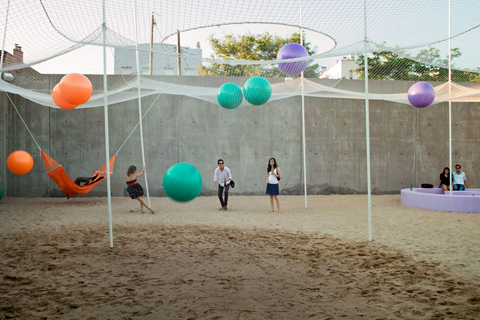
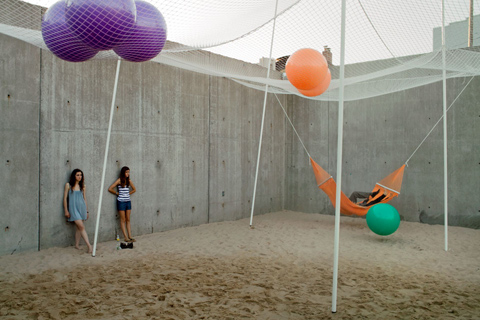
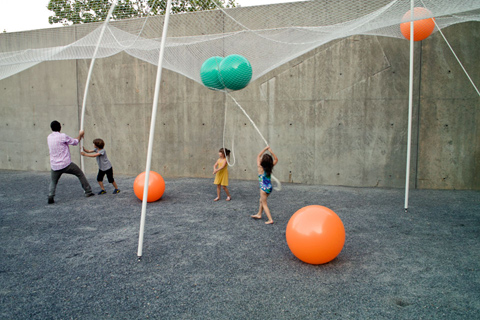
Pole Dance, PS 1 — © Brian Rose
Went to the opening at PS 1 in Long Island City of Pole Dance, by Florian Idenburg and Jin Liu, SO – IL (Solid Objectives – Idenburg Liu) winner of the 2010 MoMA Young Architects Program.
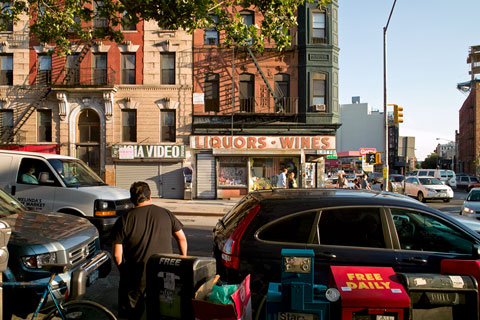
Metropolitan Avenue, Williamsburg, Brooklyn — © Brian Rose
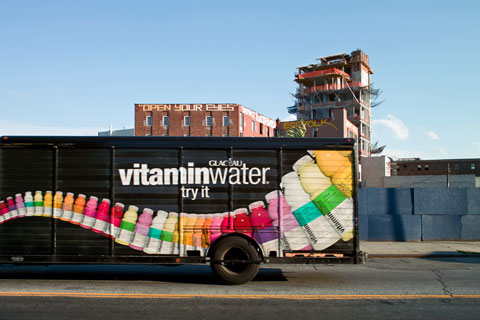
Metropolitan Avenue, Williamsburg, Brooklyn — © Brian Rose
Without comment.
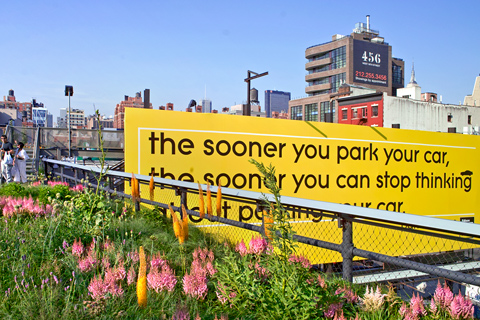
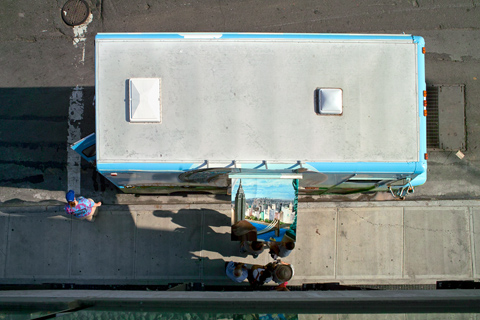
From the High Line — © Brian Rose
Without comment.
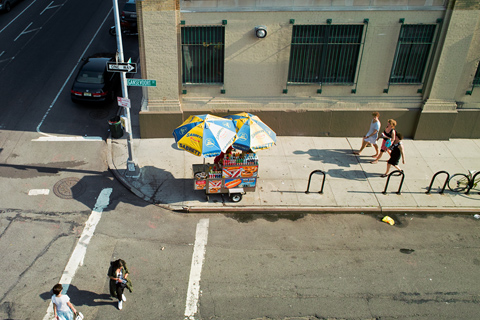
From the High Line — © Brian Rose
From the High Line — © Brian Rose
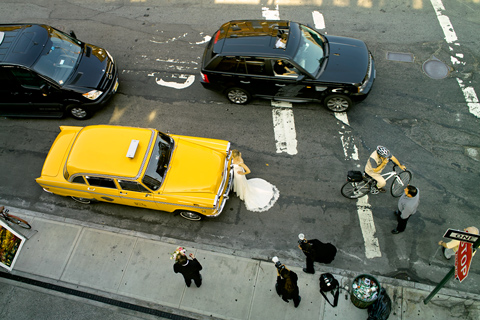
From the High Line — © Brian Rose
Without comment.
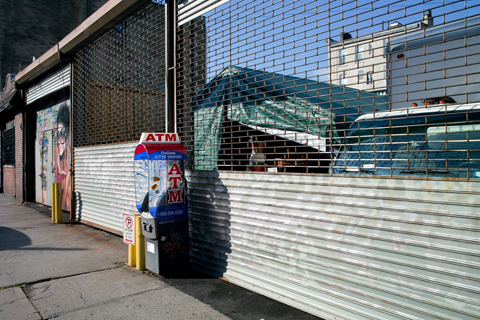
N3rd Street, Williamsburg, Brooklyn — © Brian Rose
Early morning in Williamsburg. Dropped off my son at school in the West Village. Last week before summer vacation. Email from Berlinsche Galerie. Polite, complimentary letter, but in short, not interested in my work. Picked up portfolio from MoMA, which is interested in my work, and met with curator. Talked about galleries and other career opportunities. Lugged portfolio case with 100 prints downtown via subway. Worked on design of Lower East Side book, which I might enter in the Blurb book contest. Honorable mention last year. Exchanged emails with education head at FOAM, the Amsterdam photography museum. She’s in New York. May meet tomorrow. No architecture client work on the horizon. Getting worried. Went home for dinner. Reading Grapes of Wrath to my son. Have seen the movie, but never read the book until now. Brilliant.
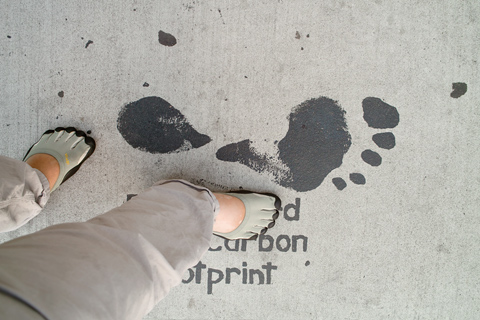
Feet on the street in New York — © Brian Rose
It’s been about five years since I discovered that my creaky knees–the result of years of playground basketball–felt better when I went without shoes–at least at home. Eventually, I came across thin soled shoes without arch support or cushioning, that were designed to allow for natural barefoot-like movement with a little protection. These were fairly conventional looking shoes unlike the foot gloves, Vibram FiveFingers, that have since become my standard gear (when not barefoot) for everything–walking, running, even lugging around my view camera equipment.
The knee pain is long gone, and I have acquired a lighter step, and much stronger, durable, feet and ankles. I’ve become so used to feeling the ground underfoot, that going back to padded shoes would be like robbing myself of a basic element of sensory perception.
So, where’s the scientific proof for all this? There are a number of recent studies that support the concept of barefoot running and walking, but, persuasive or not, I am going mostly by instinct and my own experience. For me, it’s been a game changer.
You Walk Wrong (New York Magazine)