Category: Photographers/Photography

  • New York/Trenton

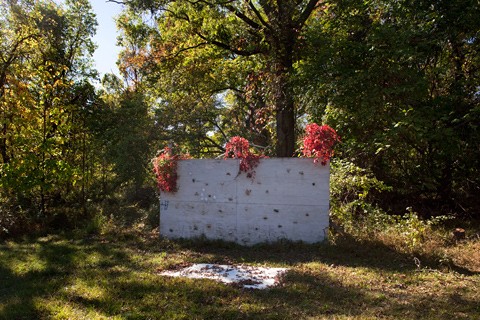
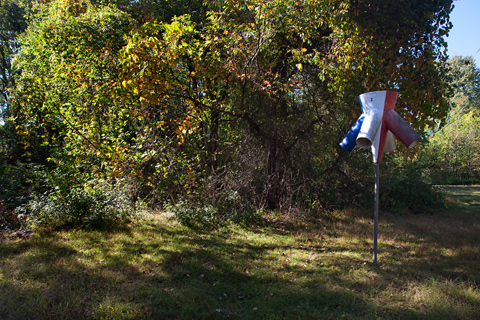
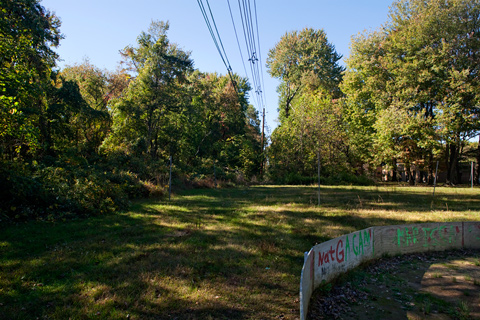
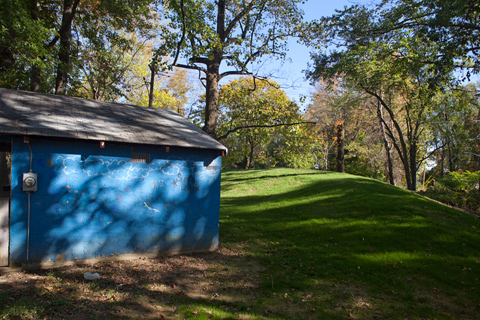
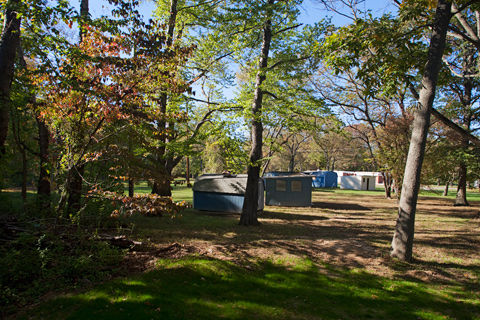
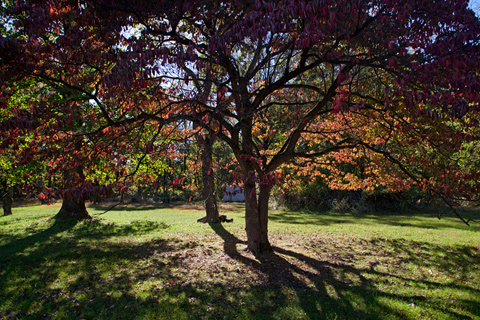
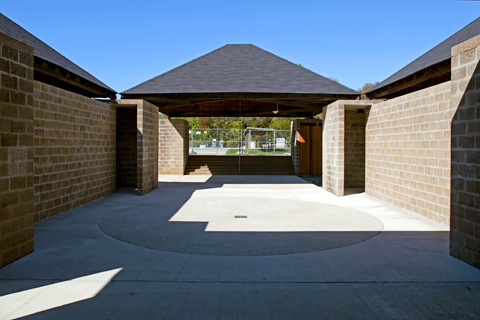
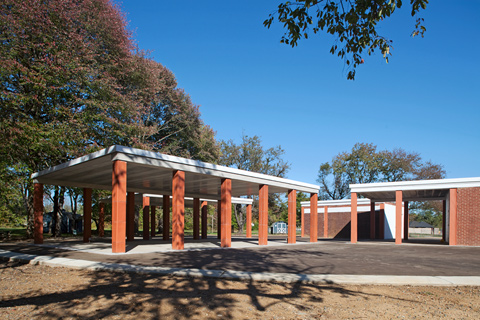
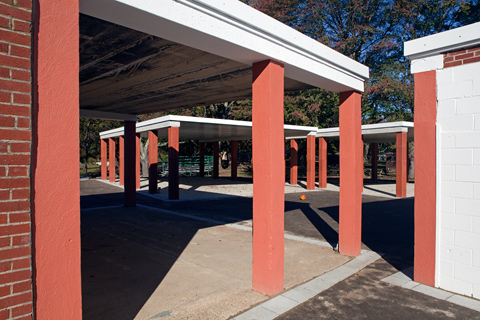
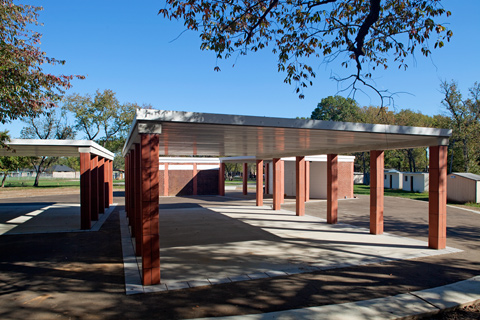
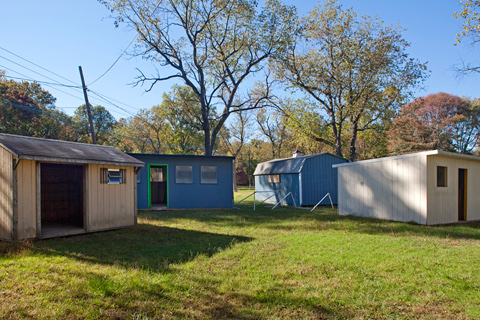
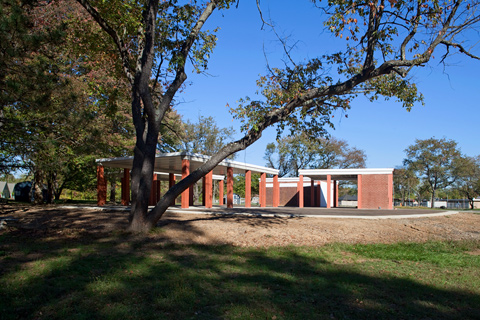
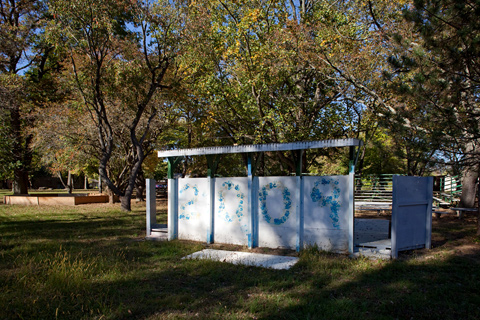
    A photographic impromptu done while documenting the Louis Kahn bath house and day camp pavilions. The series starts with a view of the pavilions and then takes in the grove of trees, sheds, and various objects that dot this nondescript, but oddly compelling landscape.


    © Brian Rose

    © Brian Rose

    © Brian Rose

    © Brian Rose

    © Brian Rose

    © Brian Rose

    © Brian Rose

    © Brian Rose

  • New York/Greenwich Village


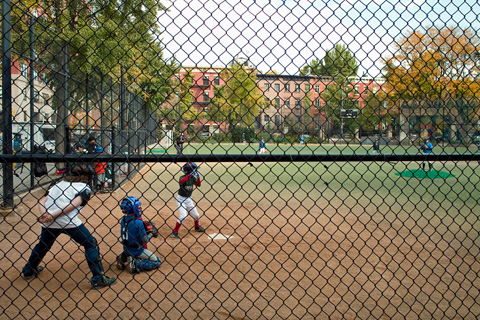
    Fall little league in J.J. Walker Park — © Brian Rose

    The liberal marxist San Franciso Giants beat the right wing brownshirt Texas Rangers last night in the World Series. Such is the state of our politics on this election day. Somehow, I think we are all going to come out of this election as losers.

  • New York/Trenton, Kahn Bath House


    Louis Kahn Bath House, Trenton, New Jersey — © Brian Rose

    As I suggested in an earlier post about the Kahn bath house, there is more to the project than the cinderblock changing rooms that most people are familiar with. The photo above shows the central courtyard of the bath house with floating pyramidal roofs resting on hollow piers, which act as separate spaces–as baffles for access to the changing rooms, and as storage and mechanical spaces. The complex is rigidly symmetrical. Four square rooms and a square central court with a circle inscribed in the pavement.

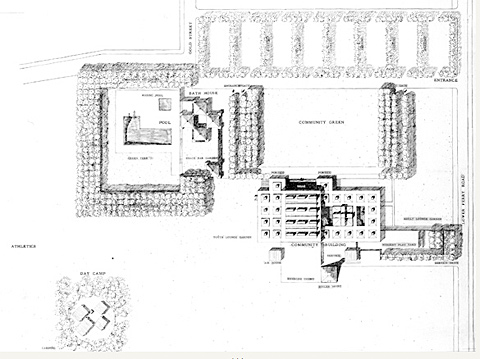
    Kahn was originally hired to create a campus for the Jewish Community Center, which was to include a pool/bath house, a community building, and a day camp for outdoor activities. Only parts of it were carried out. In the plan above you can see the bath house and pool in the upper left. At the lower left is a collection of small pavilions that comprised the day camp. These were built, and despite falling into disrepair, survived to be restored as part of the overall project headed by FMG Architects of Princeton.

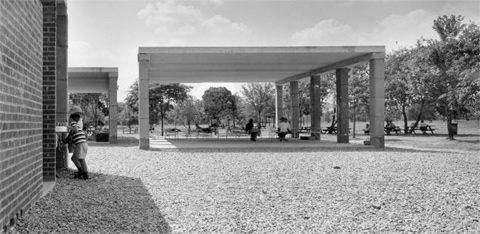
    Here is a historic view of the pavilions in use. The columns were made of terracotta pipe material filled with concrete. My understanding is that the outer material soon cracked and was stripped off leaving the bare concrete pillars. When I photographed the bath house last February the day camp pavilions were in ruins.


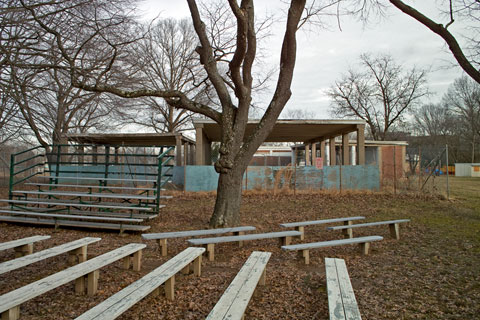
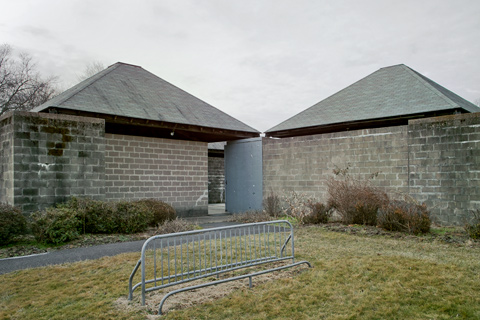
    Kahn day camp pavilions, February 2010 © Brian Rose


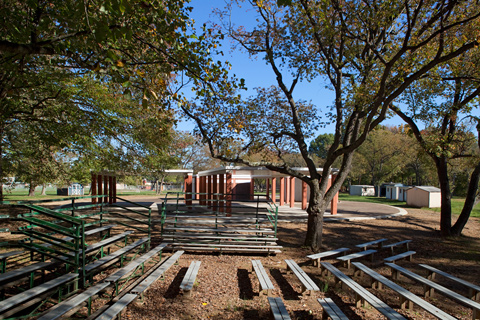
    Kahn day camp pavilions, October 2010 © Brian Rose

    The day camp stands perhaps 100 yards from the bath house, and the four rectangular pavilions are arranged asymmetrically inside an earthen circle. The pavilions were meant as open air and indoor space in which various activities could take place. Today, there is an amphitheater adjacent, and a collection of small sheds or play houses. The terracotta columns have been recreated.


    Kahn day camp pavilions, October 2010 © Brian Rose

    The pavilions while made from utilitarian materials with a very prosaic recreational purpose, evoke an ancient temple complex set  in a clearing, raised slightly on a plinth. Moving through and around the pavilions provides a constantly changing series of spacial and visual relationships.

    Around the pavilions, the day camp has built a collection of small huts, which I imagine are club houses, or play houses for kids. Their toy-like presence echoes and contrasts with Kahn’s serious temples of play nearby.

    The Louis Kahn bath house, now restored, consists of two groupings of buildings–the pool complex and the day camp–juxtaposed across an open field. In these two extremely modest constructions, Kahn, early in his career, experimented with the architectural elements that would serve as the basis for his most ambitious work. For the first time in many years, these two pieces of Kahn’s unfinished site plan can be viewed together, in relation to one another.

  • New York/Lower East Side


    Grand Street — © Brian Rose

    Without comment.

  • New York/Two Images

    I mentioned a few months ago that I was expecting the Museum of Modern Art to acquire two of my photographs. It is now official. The acquisition committee approved the purchase. This is not the first time I have sold prints to the museum. They have previously acquired images from my Lost Border/Iron Curtain series. But, I am pleased that they have now added more recent work from Berlin and Amsterdam.
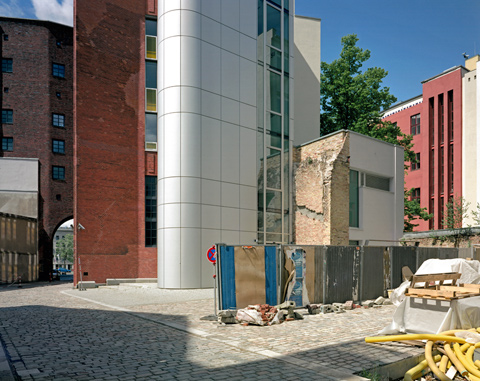

    Mauerstrasse, Berlin (4×5 film) — © Brian Rose
    From the series Berlin: In from the Cold

    Since the Wall came down I have been returning to Berlin every couple years looking at developments in the former border zone, and venturing beyond to places and themes that resonate with my earlier work. Berlin, while having undergone two waves of rebuilding–first after World War II, and then after the Cold War–remains a city of scars, of vacant land and rough edges, in which history is laid bare.

    In the photograph above, the layering of eras, architectural styles, materials and objects, conspire in an almost bewildering jumble. The location is but a few steps away from Checkpoint Charlie and the trace of the former Berlin Wall. As I was walking around the area, I discovered an opening to an inner courtyard–a Hinterhof, common in Berlin–and came across this scene.

    There are any number of ways I approach things as a photographer. Sometimes, the subject–a building or object–demands to be respected as is, as opposed to being integrated into a willful composition. It is the composition. One of the things I’ve learned from my experience as an architectural photographer is that sometimes–often, perhaps–one has to remain subservient to the subject. And as an artist/photographer I realize that it is not necessary, nor is it advantageous,  to attempt to reinvent the medium each time I set up my camera and release the shutter.

    There are also times when the subject is illusive. It may be contained in the inchoate envelope of a space, or found in the interstices of a barely recognized structure. For me, the spacial world is always a multidimensional reality, not simply a compositional layering of one thing upon another. I see things rather as a matrix, a situation comprised of any number of anecdotal or accidental relationships. The photograph above is that kind of image. In simpler terms, it’s about how all that stuff hangs together visually–about nothing–and about something essential that defines, in this case, Berlin.
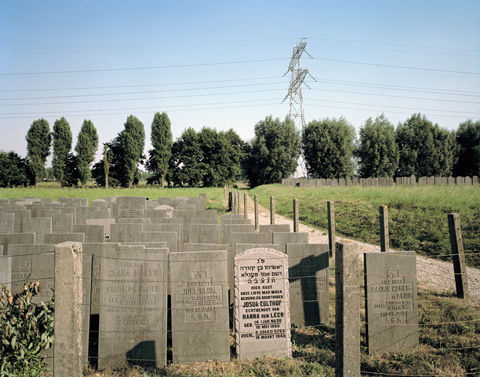

    Jewish Cemetery, Amsterdam (4×5 film) — © Brian Rose

    For 15 years, while living in Amsterdam, I photographed the changing periphery of the city and its less determined edges. I call the series Amsterdam on Edge, which expresses not just the physical location of the photographs, but the psychological condition of a society deeply unsure of its identity and its future in a  multicultural Europe.

    In exploring the outskirts of the city, I often took trams to their end points, or drove to obscure areas along the freeways. One unexpected discovery was a Jewish cemetery bisected by a train viaduct and hemmed in by a freeway and high-tension power lines. Many of the gravestones were marked Westerbork, the name of the camp that served as a way station en route to Auschwitz and other Nazi camps. Nearly 90,000 Jews, more than 10 percent of the population of Amsterdam at that time, were killed.
  • New York/Greenwich Village


    Washington Square Park — © Brian Rose

    Without comment.

  • New York/East River Park


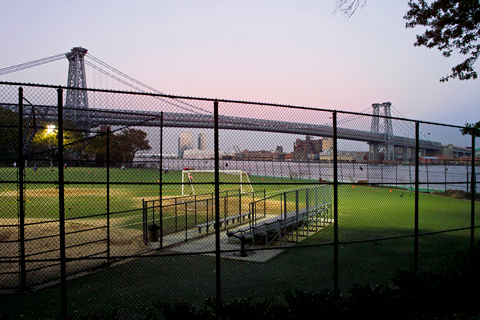
    Williamsburg Bridge and East River Park — © Brian Rose

    I went to East River Park to my son’s soccer game yesterday evening. 107 years ago when the Williamsburg Bridge was opened, this area, just to the south–called Corlears Hook–was comprised of docks, factories, and tenement housing. 19th century Corlears Hook had an unsavory reputation due to its thieves and prostitutes–hence the term “hookers.”

    Today, the docks have been replaced by parkland, and towering housing projects dominate the area.

  • New York/Joe Miller of Alaska

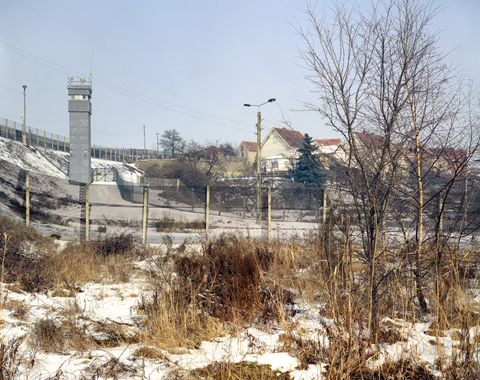
    The first thing that has to be done is secure the border. . . East Germany was very, very able to reduce the flow. Now, obviously, other things were involved. We have the capacity to, as a great nation, secure the border. If East Germany could, we could.
    — Joe Miller, Republican candidate for U.S. Senate, Alaska

    Heinersdorf, Germany on the Iron Curtain border, 1987 (4×5 film) — © Brian Rose

    Just in case anyone is confused. The Iron Curtain split towns, divided families, and crushed lives. It was the nuclear trip wire between east and west, the real and symbolic expression of the authoritarian ideology of the Soviet Union and its proxy states. It was designed not to keep people out, but to keep people in.

  • New York/Kahn Bath House


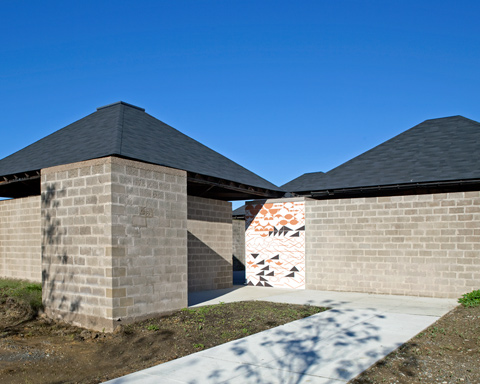
    Louis Kahn bath house, Trenton, New Jersey — © Brian Rose

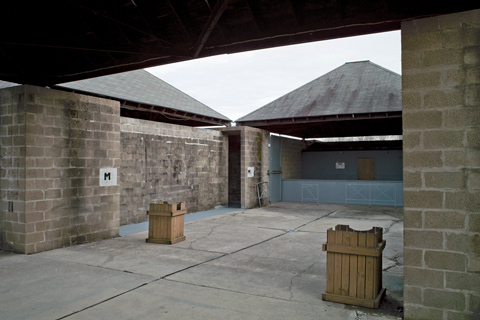
    Here are a couple of before/after photographs of the Louis Kahn bath house in Trenton. The older pictures were made on a cloudy day in February 2010 while being shown around by Michael Mills of FMG Architects, the firm heading up the restoration of the bath house.

    One of Kahn’s earliest commissions, this small project–changing rooms and showers for the adjacent swimming pool–served as an opportunity for Kahn to try out ideas that were later incorporated into his major projects. The bath house, originally built in 1955 for a Jewish community center, had fallen into disrepair, and eventually came into the hands of the local county government.

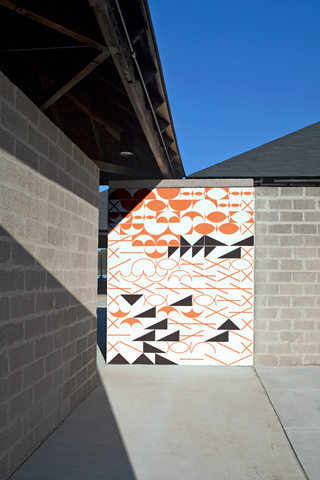
    The entrance to the bath house was through an unobtrusive opening marked by a mural of Kahn’s design. It, too, had deteriorated and was painted over. The mural has been repainted based on Kahn’s drawings, a splash of color and decoration in an otherwise austere structure.


    Kahn mural and bath house entrance — © Brian Rose


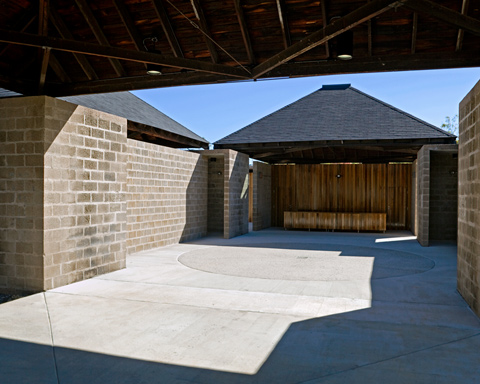
    Louis Kahn bath house, Trenton, New Jersey — © Brian Rose

    Most of the original structure has been retained in the restoration. The cinder block wall to the left had to be replaced, but the pyramidal wood roofs were in excellent condition and needed little work. The circular shape at center echoes the complex’s original pebble garden, which was later paved over. Michael Mills speculates that Kahn may have had some kind of water feature in mind for the circle, perhaps a fountain for rinsing one’s feet. Whatever the case, a circle inside a square is typical of Louis Kahn architecture, and returning it to the center of the bath house–even as a wheelchair accessible flat surface–is an important move.

  • New York/Trenton


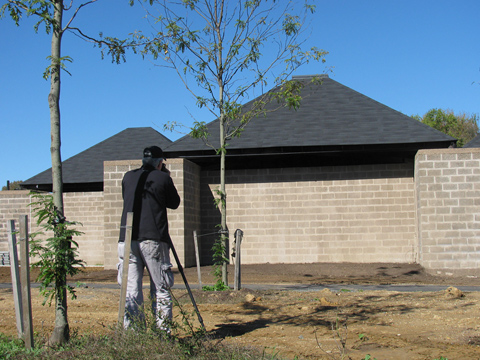
    Photographing the Louis Kahn bath house in Trenton, New Jersey
    Photo by Meredith Bzdak

    Wednesday I photographed the newly restored Kahn bath house in Trenton. The building itself is done, but the landscaping is far from finished. So, this will be an interim set of pictures–there are magazines anxious to do stories about the restoration–to be completed in the Spring.

    I will be putting up photos shortly of both the exterior and interior of the project. Many of the interior pictures–this is actually an open air structure with walls–are fully finished. As I was shooting, the landscapers were cleaning up some of the weedy raggedness around the building, and it was amazing how much better the structure looked when set off cleanly.

    But there is more to the story of the Kahn bath house than the bath house itself, which I will get into in a later post. A separate ensemble of structures that was part of the original site plan had fallen into ruin has also been restored. Stay tuned.

  • New York/Governor’s Island


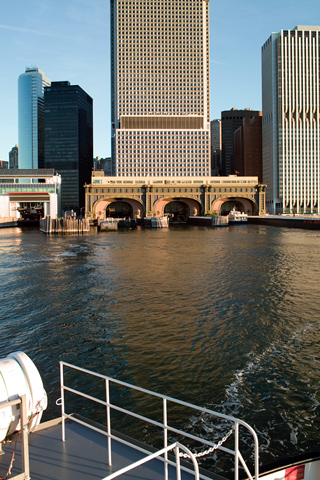
    Lower Manhattan from the ferry to Governor’s Island
    © Brian Rose

    Read my full account of the 1st Annual New York City Barefoot Run.

  • New York/Governor’s Island


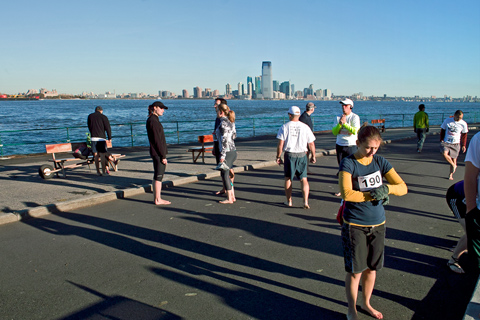
    Governor’s Island — © Brian Rose

    On Governor’s Island before the 1st Annual NYC Barefoot Run. Stunning October weather, and hundreds of runners. About half barefoot, the others in various kinds of minimalist “barefoot shoes.”

  • New York/Greenwich Village/Nolita


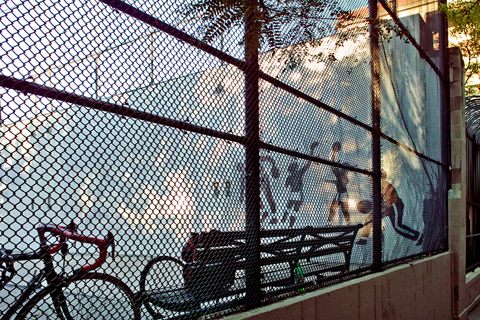
    J. J. Walker Park, Clarkson Street — © Brian Rose


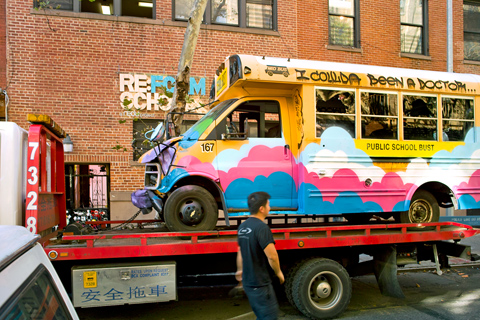
    Mott Street — © Brian Rose

    I have no idea what was going on here.

  • New York/Infrastructure


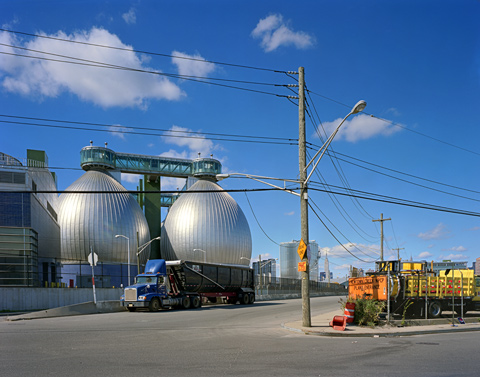
    Newtown Creek Wastewater Treatment Plant (digester eggs) (4×5 film) — © Brian Rose

    The existence of New York is based on its extraordinary infrastructure both natural and man-made. The building of the Erie Canal opened up the west, and connected New York to limitless sources of prosperity. The building of New York’s water system with its reservoirs and aqueducts provided clean water to the city, and current expansion and replacement of that system guarantees the future viability of the city. The subway system, even Robert Moses’ hated arterial highway system, provide critical mobility, and current expansion projects under Second Avenue and the extension of the 7 line on the west side of Manhattan are examples of a continuing commitment to enhance that mobility.

    Getting rid of the waste of an enormous metropolis has also required huge infrastructural investments–even visionary thinking. The Newtown Creek Wastewater Treatment Plant, above, is an example of that thinking with cutting edge technology and stunning architecture. New York Harbor with its rivers and estuaries remains one of the greatest assets of the city. But New York would not have prospered without the building of the Brooklyn, Williamsburg, Manhattan, and Queensborough Bridges, among others, to the east. Nor would it have thrived without being connected to the west, to the rest of the country through the Hudson River tunnels, both highway and rail, and the George Washington Bridge.

    Yes we can.

    The building of these projects all required extraordinary vision and political will. Along the way there was wasted money, corruption, construction flaws, and a plethora of other evils. But in the end, the public’s money paid for an infrastructure that makes New York one of the greatest cities in the world.

    No we can’t.

    Yesterday, the governor of New Jersey, Chris Christie, broke faith with the vision that created that greatness–the greatness not just of New York, but of the United States. His decision to cancel the state of New Jersey’s participation in the building of a second rail tunnel beneath the Hudson River, an enormously important project which would double the capacity to move commuters and travelers to and from the city, is depressingly short sighted and is indicative of so much that is wrong with the U.S. At precisely the time when reinvestment in the infrastructure of the nation is desperately needed to keep up with Europe, Japan, and the rapidly expanding economies of Asia, Christie says no, we can’t afford to go forward.

    The governor may be thinking of his presidential future–I killed that financial rathole of a project–or maybe he is a true believer in small government with its attendant lower expectations. Whatever the case, this is Christie’s “bridge to nowhere,” or rather, his tunnel to historical ignominy–and hopefully, oblivion.

  • New York/h2hotel, Healdsburg, California


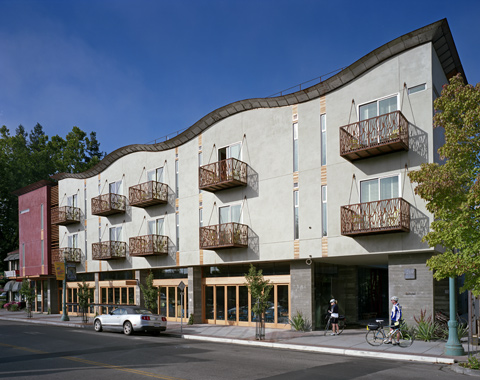
    h2hotel, Healdsburg, California — © Brian Rose
    (mouseover the image for evening view)

    Photographs like the one above (day and night versions) are fairly straightforward to make, but there is nothing wrong with such simple compositions. Architectural photography is first and foremost about the buildings, not necessarily the photographer’s vision. I believe the latter comes through, but it is often only discernible by looking at the photographer’s overall body of work.

    That said, a straightforward shot like the one above can get pretty complicated. The hotel I was shooting faced east, meaning the main facade was sunlit only in the morning. Locals in Healdsburg told me that the mornings had been foggy for days, the mist not lifting till noon, which would be too late. I needed some luck. Sure enough the next morning was pretty much socked in, but I set up my camera with my assistant, and we waited. As you can see, I got lucky. I even got a couple of bicyclists in front who were heading out for a ride.

    The photograph has one car in it–a Mustang parked there since the day before–but during the couple of hours we were out in front of the hotel, numerous cars and trucks attempted to park or make deliveries. My assistant had to run across the street repeatedly to negotiate with the drivers. In small town California, dealing with people is pretty easy. In New York City, fuggedaboutit.

    The evening shot was much more dynamic. The street was busy and the bar and restaurant were opened to the sidewalk and full of people. I set up my camera at least a half hour before “magic hour.” It’s considerably less than an hour. As the moment approached, a waiter from the restaurant came across and informed me that two of the patrons sitting at a table directly on the sidewalk did not want to be photographed. A potential deal breaker.

    Fortunately, the architect and hotel owner were present and also sitting in the restaurant. I asked them to intercede and gave them a 4×5 instant print to show the diners how insignificant they were in the composition. Problem solved. Later, I spread the day’s prints out on the bar for the architect to look at and discuss, and take home. A lost practice when shooting digital.

  • New York/Tom’s Diner

    Received a DVD in the mail the other day with the video embedded below. It’s about Tom’s Diner, the song by Suzanne Vega, and an unlikely hit. The video was done for Norwegian TV, but the interviews with Suzanne, Lenny Kaye, and others are all in English, so it’s easy to follow. I make several appearances talking about the song. There’s even a snippet of my song Burn Burn Burn, and some of my photos are in there as well.

    Vega from the New York Times:

    I have a photographer friend, Brian Rose, who has taken pictures of the Lower East Side of Manhattan and the Berlin Wall. He told me once long ago that he felt as though he saw the world through a pane of glass. This struck me as romantic and alienated, and I wanted to write a song from this viewpoint.

    Photographs of Suzanne Vega and Jack Hardy

  • San Francisco/New York


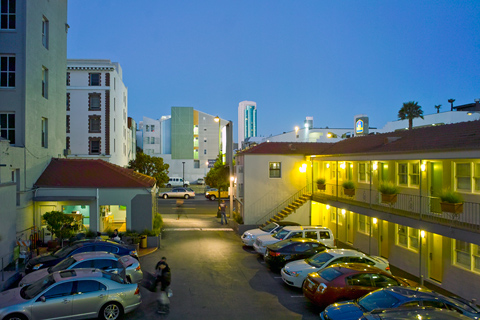
    The Good Hotel — © Brian Rose

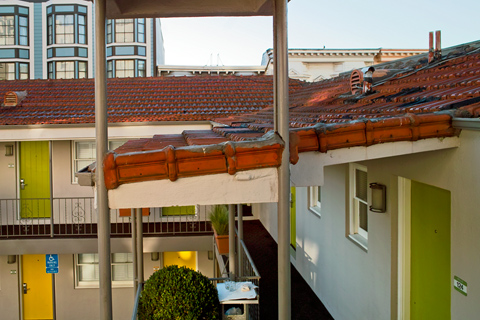
    Back in San Francisco I checked in to the Good Hotel on 7th Street. There are three hotels grouped together here–under the same ownership–each with its own theme. The Good Hotel is half motel, half vertical hotel, decorated for a youthful hipster crowd. The Americania, across the street, evokes a Route 66 motel of yesteryear, and the Carriage Inn is old pre-earthquake San Francisco. The Good Hotel  is described as “the first hotel with a conscience.” They have recycled carpets and gave me free parking for driving a hybrid, and when I went to bed, the word “goodnight” was projected above me on the ceiling. I felt good about myself–even a little smug.


    The Good Hotel — © Brian Rose

    These 7th Street hotels are great for me because they are located in the part of town easily accessible to the projects I am photographing. But for the average tourist, this is a decidedly dicey part of town. The seediness of the Civic Center and the Tenderloin spills over into this area. Soma–South of Market–is actually a vibrant neighborhood, but it’s often gritty and requires a certain degree of local knowledge to fully appreciate.


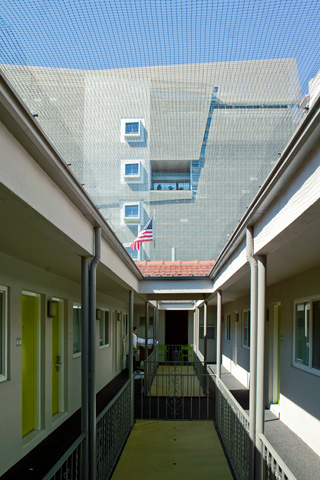
    The Good Hotel — © Brian Rose

    My room was located on what the desk referred to as the courtyard–see above. It’s a narrow airshaft with walkways leading to rooms and netting to keep out the pigeons. There’s a great view, if strange and incongruous, of the Federal Building, designed by Thom Mayne of Morphosis towering above. I don’t know if it’s good–in the fuzzy Good Hotel sense–but it is real.

    Here’s a quote from Jack London, who I wrote about a few days ago while staying in Oakland:

    I cannot help remembering a remark of De Casseres. It was over the wine in Mouquin’s. Said he: “The profoundest instinct in man is to war against the truth; that is, against the Real. He shuns facts from his infancy. His life is a perpetual evasion. Miracle, chimera and to-morrow keep him alive. He lives on fiction and myth. It is the Lie that makes him free. Animals alone are given the privilege of lifting the veil of Isis; men dare not. The animal, awake, has no fictional escape from the Real because he has no imagination. Man, awake, is compelled to seek a perpetual escape into Hope, Belief, Fable, Art, God, Socialism, Immortality, Alcohol, Love. From Medusa-Truth he makes an appeal to Maya-Lie.

    —Jack London, The Mutiny of the Elsinore

    I’m back in New York with lots of post production work to do. And jury duty, which could present a problem.

  • Oakland/Tassafaronga Village


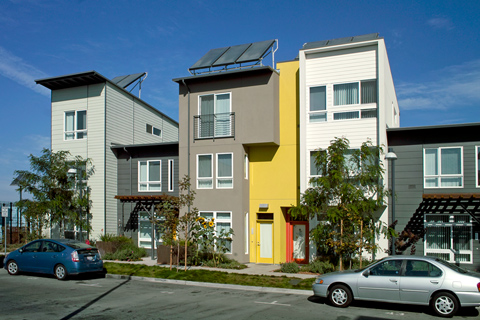
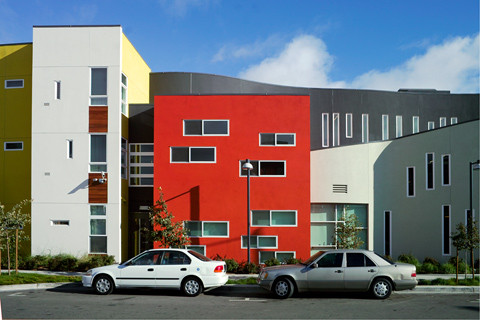
    Tassafaronga Village — © Brian Rose

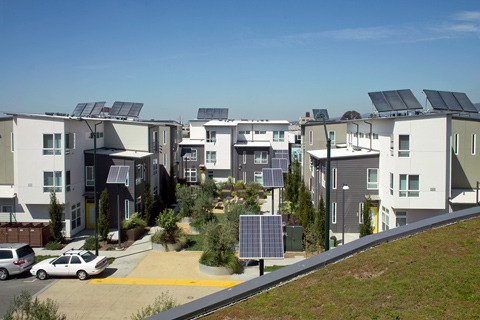
    A major priority in returning quickly to the Bay Area was to photograph Tassafaronga Village in Oakland for David Baker + Partners. It is a mixed income development in a difficult area of Oakland. My understanding is that the new village of apartments and townhouses replaces barracks-like public housing blocks. Some housing activists, apparently, objected to the razing of the old housing as well as the money spent on quality design.


    Tassafaronga Village town houses — © Brian Rose

    In my view, good design is critical to rebuilding urban neighborhoods–providing a fresh start in places where crime and poverty have become endemic. Design is more than about superficial aesthetics. It extends to creating places (and homes) that have the potential to reshape lives and produce sustainable, more vital, communities. Tassafaronga Village may be one of the best such examples in the country.


    Tassafaronga village — © Brian Rose

    John King for the San Francisco Chronicle: Again and again, his (architect David Baker) buildings are imbued with an adventurous urbanism attuned to larger social and environmental concerns – traits that should be commonplace, but instead are all too rare.

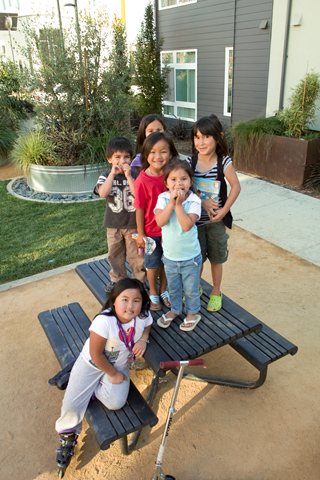
    Tassafaronga kids — © Brian Rose

    As I set up one of my last shots of Tassafaronga, I was surrounded by kids playing in a courtyard between some of the townhouses. I stood on a picnic table for a better vantage point of one of the buildings, and a bunch of the kids stood on the table opposite me gawking at my strange camera. “What are you doing, Mister?” I said I was waiting for the sun, and a bit later when I told them I had an 11 year old son back home, one of them explained to me the difference in spelling between “son” and “sun.”