Category: Photographers/Photography

  • New York/Kodak


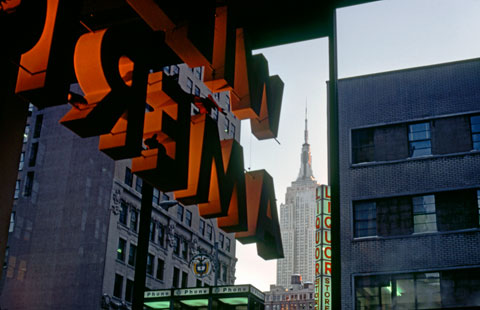
    Kodak Gallery at 43rd Street and the Avenue of the Americas, 1978, (current location of ICP) — © Brian Rose

    When I first began shooting color in the mid-70s, making prints was difficult. You couldn’t easily set up a home darkroom–color enlargers were expensive, and the chemicals were finicky compared to black and white. So, for several years I just shot slide film, mostly Kodachrome, which could be projected on a screen or looked at through a hand-held viewer. In my first color classes at Cooper Union taught by Joel Meyerowitz, all our discussions and critiques involved images that were projected. Meyerowitz, at that time, was exhibiting his work as dye transfer prints made directly from Kodachromes. They were beautiful, archival, required a custom lab, and were very expensive.

    At some point I began teaching myself how to print color using an enlarger newly installed at school. There was no printing class. The chemicals were poured into a drum, which rotated on a mechanical base, and I could do prints up to 11×14 inches. To make prints from Kodachromes, I first had 4×5 internegatives made, with the end product being a so-called C print. The printing process was slow and labor intensive, and the results were sometimes less than perfect. But I made 25 prints one semester, and had an exhibition in the hall of the photo department. I also began shooting  and printing from 35mm negative film, though I still liked working with the generous size of 4×5 internegatives. Looking back, that probably influenced my decision to shoot with the 4×5 view camera in doing the Lower East Side project with Ed Fausty. I liked printing from big sheets of film.

    The one constant in all of this–film, paper, and chemistry–was Kodak. I had yellow boxes everywhere in my apartment until a few years later when green Fuji boxes began to infiltrate. I still have yellow Kodak boxes of film in my refrigerator and dozens of print boxes on the shelves in my studio. Although 90% of what I do now is digital, I will never entirely escape the yellow boxes.

    Yesterday, not unexpectedly, Kodak filed for bankruptcy. Fujifilm continues on, a nimbler, smarter company, making some of the coolest digital cameras around. However, Kodak remains the only producer of negative sheet film, and although Chapter 11 does not mean it’s over for the company, my guess is that it will rapidly shrink, and eventually spin off  different operations as separate companies. Where that leaves those of us still shooting film is anybody’s guess.

    The photograph above was made in 1978 with my first camera, a 35mm Nikkormat, on Kodachrome. The Empire State Building was seen from below street level in the former Kodak gallery at 43rd Street and Sixth Avenue. The International Center of Photography now occupies that space. Kodak may soon exit the scene for good, but photography lives on, with or without yellow boxes.

  • New York/Midtown


    34th Street and Eighth Avenue — © Brian Rose

    Without comment.


  • New York/New York

    No to SOPA! Protect artists’ rights, not corporate interests.

  • New York/The Bowery


    The Bowery and Great Jones Street (4×5 film) — © Brian Rose

    While reading the New Yorker I came across a quote attributed to late choreographer Merce Cunningham.  From Joan Acocela’s article:

    …stories or even themes put the spectator in the position of someone standing on a street corner waiting for a friend who is late: you can’t see the cars or the buildings or the sky , he said, because “everything and everyone is not the person you await.”

    Likewise with photographs. If you latch too much onto familiar visual narratives, other meanings, other connections, will not be made. This is true both for the image maker and the viewer.


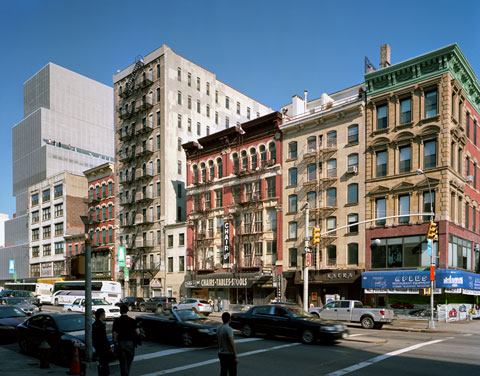
    The Bowery and Rivington Street (4×5 film) — © Brian Rose

    With that caution in mind, here are six recent images of the Bowery made with the 4×5 view camera. I did them in conjunction with a class I was teaching at ICP, and as part of  my ongoing project to photograph the Bowery. The block above includes the New Museum on the left, the Bowery Mission and the Salvation Army building, the tall one in the middle. The latter are vestiges of the Bowery’s skid row past, though they and a couple other organizations still provide services for a more scattered homeless/street population. The gentrification of the Bowery, however, is proceeding rapidly.


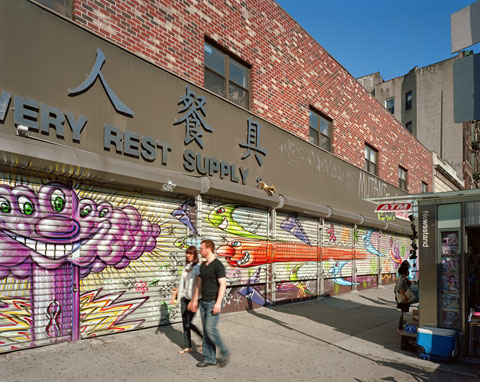
    The Bowery and Delancey Street (4×5 film) — © Brian Rose

    Some of the roll-down window gates were recently decorated by artists. This one is by the notable graffiti artist Kenny Scharf.


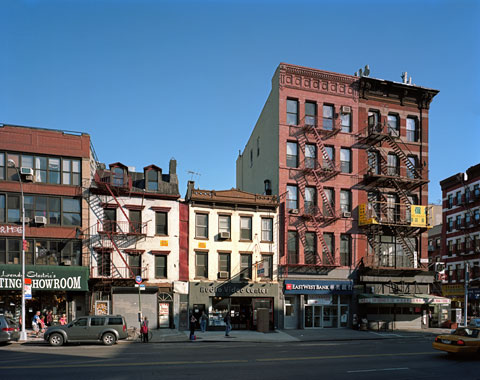
    The Bowery and Grand Street (4×5 film) — © Brian Rose

    The townhouse at left is from 1817 and is one of the few protected landmark buildings in New York to have its status rescinded. The owner wants to demolish and construct an office building. From the Villager:

    (City Councilwoman) Chin noted that she has supported many landmark designations on the Bowery. “But in this instance, I have to look at the bigger picture and find a balance. There is an opportunity to help the community recover from [the World Trade Center attack], which it hasn’t done. I just hope that the advocates will see my point of view on this and that we will have the opportunity to continue to work to preserve the historic character of the Bowery. But on this building we will have to differ.” Chin said.

    The reality, of course, is that the Bowery and lower Manhattan is a boomtown.


    The Bowery and Grand Street (4×5 film) — © Brian Rose

    It is true that the Bowery exhibits a ragtag collection of buildings from many different time periods. It does not present a unified urban landscape in the way that historic rows of townhouses dominate parts of Greenwich Village, or blocks of cast iron loft buildings define the streets of Soho. Nevertheless, there is much architecture worth saving, though sometimes one might have to peel away some of the layers to get to it.


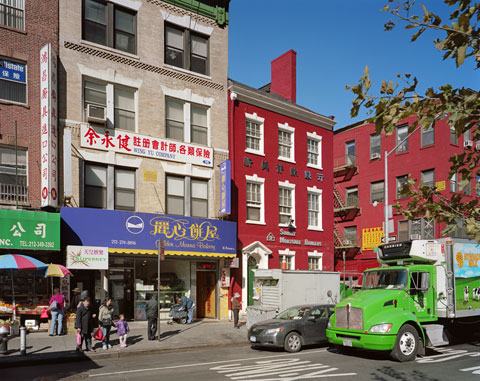
    The Bowery and Pell Street (4×5 film) — © Brian Rose

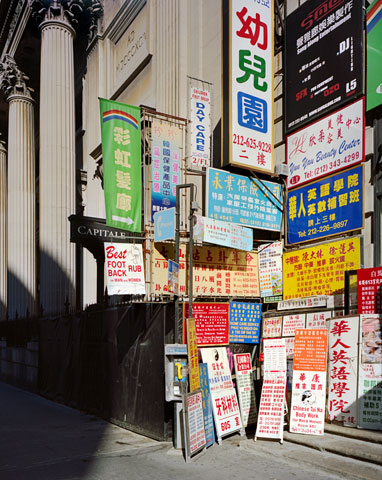
    Another similar sized townhouse from 1785–the Edward Mooney house–a well-maintained landmark containing a Chinatown bank.


  • New York/The Bowery


    The Bowery and E1st Street — © Brian Rose

    Without comment.


  • New York/Lower East Side

    ArtUp on ABC News, Channel 7

    From last week:

    Nice to see some publicity for FAB’s ArtUp program, which involves using construction scaffolds, containers, and other kinds of spaces and surfaces for public art. My WTC mural on the sidewalk shed on East 4th Street between the Bowery and Second Avenue is shown twice in the video, although I’m not mentioned by name. It will be up until January 27, so you still have a couple of weeks to see it.

  • New York/Lower East Side

    Some updates on Time and Space on the Lower East Side. We are looking at a mid- to late March release of the book depending on how long it takes for the shipment from the printer in Germany to arrive by sea freight and to clear customs. I expect to have a small number of books sent to me before that, which I can then start using for promotional purposes. I am working on venues for a slide talk and  book launch party, probably separate dates in March. I will post confirmed dates as soon as I have them.

    The Blurb version of Time and Space will only exist for a couple more days. Once it’s down, it’s gone forever. So, if you’ve been thinking of purchasing one of these, this is your last chance. Up till now, I’ve made the entire book browsable using Blurb’s preview feature. But that will go, too. I may create a web presentation of the overall project as a resource, but the book will only be viewable as a 12 page sample.

    Time and Space is now available for pre-orders  here, or clock on the image above.


  • New York/Lower East Side


    Second Avenue — © Brian Rose

    Entrance above to Marble Cemetery, Second Avenue between East 2nd and East 3rd Streets.


    Second Avenue — © Brian Rose

    Best coffee in New York. Didn’t try it.


  • New York/Lower East Side

    Yesterday I saw the first set of proofs from the printer for my upcoming book Time and Space on the Lower East Side–they look amazing. The color is spot on with no loss of vibrancy. Having looked at lots of photo books and done my own color prints for some 30 years, I have to say I’ve rarely seen printing this good.

    My publisher Bill Diodato and I went over each image individually and picked out about 20 for minor adjustments in density (light/dark). We’ll look at one more set of proofs and then go to the final printing.

    The images above show the finished cover design with yellow and magenta accenting added on the front, back, and spine. The limited edition slipcovers will have the same magenta and yellow.

    We also received a blank dummy from the printer to get a feel for the size, materials and workmanship. The sewn binding was beautifully done and the pages lie very flat. Holding the dummy also confirmed my sense that 9×12 inches is a good size for these images. It is spacious enough to provide plenty of detail, but not too large for comfortably holding in one’s lap.

    At this point we are on schedule for an early March arrival of the books, but I may not have a hard date until we approve the second round of proofs. I should have more updates soon. Stay tuned!

  • New York/WTC


    1 World Trade Center — © Brian Rose

    I went down to the area around the WTC yesterday–January 1, 2012. Above is the view of 1 WTC, still not topped out, from Broadway and Ann Street. St. Paul’s church is to the left of the tower. 1 WTC is now around 90 stories with 14 to go. It still appears somewhat stubby for such a tall building, but I think it will look slimmer once the triangular facets extend all the way to their apexes. A large spire will go on top of the flat roof, which will greatly exceed the height of the previous Twin Towers.


    Church Street — © Brian Rose

    Nearby on Church Street  I took a photograph looking toward the WTC site, 4 WTC can be seen rising in the rear. An ad for the upcoming movie about 9/11–Extremely Loud Incredibly Close–can be seen at left in the subway entrance. Both photographs were shot in 4×5 negative, but the images here were made with the digital camera I use for my blog.

    Two relevant stories worth noting. The 9/11 museum and the Port Authority are feuding about money, and it appears that the opening of the museum will be substantially delayed–now more than 10 years after 9/11. Article here. A muslim police cadet, Mohammad Salman Hamdani, killed on 9/11, who was initially suspected of being involved in the attack, but later exonerated and honored as a hero for his actions, has had his name relegated to an obscure part of the 9/11 memorial reserved “for those who had only a loose connection, or none, to the World Trade Center.” Article here.

  • New York/The High Line

    We walked the High LIne on Christmas Day with relatives visiting from out of town. It was a relatively mild day with sun and clouds, the low slanting light of late December. The plantings on the High Line at this time of year are mostly brown with bits of color here and there, holly bushes and the like. As wonderful as the design of the elevated viaduct is, what interests me the most are the views of the city from it–the unique possibility of looking straight down cross streets, across the rooftops of warehouses and the hodgepodge of buildings in west Chelsea. This was once an industrial and distribution area serving the Hudson River docks. Today, it is the art gallery center of New York, and new apartment buildings have gone up throughout the neighborhood. The old warehouses are mostly occupied by businesses in the creative fields, and a media company occupies the striking Frank Gehry building located on the West Side Highway.

    This is my Christmas walk up the High Line with two photographs made at ground level–a rendering of the future Hudson Yards development and a peek into the empty sun flecked Apple store back down on 14th Street with a bevy of strangely glowing screens.


    The First $100,000 I Ever Made by John Baldessari — © Brian Rose


    © Brian Rose


    London Terrace apartments in the background — © Brian Rose


    IAC/Frank Gehry on left, 100 11th by Jean Nouvel at center — © Brian Rose


    Hotel Americano  by Enrique Norten at left, Starrett Lehigh building at rear — © Brian Rose


    © Brian Rose


    © Brian Rose


    © Brian Rose


    Rendering of future Hudson Yards development — © Brian Rose


    Apple store, 14th Street — © Brian Rose

  • New York/Williamsburg


    Bedford and N7th Street, Williamsburg, Brooklyn — © Brian Rose

    It’s all one big holiday mash-up this year. Christmas: December 25, Hanukkah: December 20-28, Kwanzaa: December 26-January 1.

    A veritable Roman-style Saturnalia.


  • New York/Midtown

    West 43rd Street — © Brian Rose

    Without comment.


  • New York/Lower East Side

    Morning walk…


    Essex Street — © Brian Rose


    Allen Street — © Brian Rose


    Allen Street — © Brian Rose


    Stanton Street/Sarah D. Roosevelt Park — © Brian Rose


  • New York/Vaclav Havel


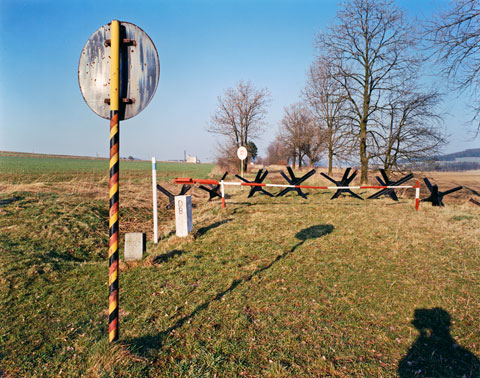
    Czech/Austrian border 1987 (4×5 film) — © Brian Rose

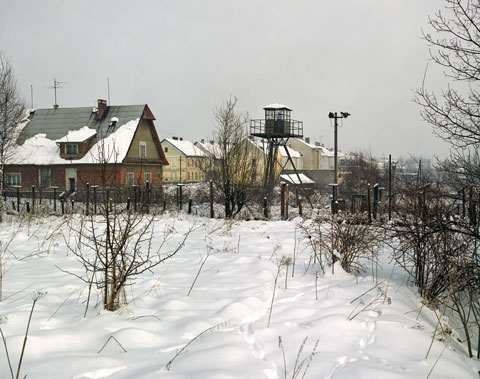
    It is with great sadness that I note the passing of Vaclav Havel, playwright, political dissident, and former president of Czechoslovakia and the Czech Republic. When I traveled the Iron Curtain in 1985 and 1987, Havel and others who resisted the communist/Soviet hegemony of eastern Europe, was always in my thoughts. I skirted the Cold War border from the relative luxury of my rental car while Havel languished in prison or house arrest smuggling out statements and manifestos.

    One such fundamental experience, that which I called “antipolitical politics,” is possible and can be effective, even though by its very nature it cannot calculate its effect beforehand. That effect, to be sure, is of a wholly different nature from what the West considers political success. It is hidden, indirect, long-term, and hard to measure; often it exists only in the invisible realm of social consciousness, conscience, and subconsciousness, and it can be almost impossible to determine what value it assumed therein and to what extent, if any, it contributes to shaping social development. It is, however, becoming evident-and I think that is an experience of an essential and universal importance-that a single, seemingly powerless person who dares to cry out the word of truth and to stand behind it with all his person and all his life, ready to pay a high price, has, surprisingly, greater power, though formally disfranchised, than do thousands of anonymous voters.


    Czech/German border 1985 (4×5 film) — © Brian Rose

    It is becoming evident that even in today’s world, and especially on this exposed rampart where the wind blows most sharply, it is possible to oppose personal experience and the natural world to the “innocent” power and to unmask its guilt, as the author of The Gulag Archipelago has done. It is becoming evident that truth and morality can provide a new starting point for politics and can, even today, have an undeniable political power. The warning voice of a single brave scientist, besieged somewhere in the provinces and terrorized by a goaded community, can be heard over continents and addresses the conscience of the mighty of this world more clearly than entire brigades of hired propagandists can, though speaking to themselves. It is becoming evident that wholly personal categories like good and evil still have their unambiguous content and, under certain circumstances, are capable of shaking the seemingly unshakable power with all its army of soldiers, policemen, and bureaucrats. It is becoming evident that politics by no means need remain the affair of professionals and that one simple electrician with his heart in the right place, honoring something that transcends him and free of fear, can influence the history of his nation.

    Yes, “antipolitical politics” is possible. Politics “from below:’ Politics of man, not of the apparatus. Politics growing from the heart, not from a thesis. It is not an accident that this hopeful experience has to be lived just here, on this grim battlement. Under the “rule of everydayness” we have to descend to the very bottom of a well before we can see the stars. 

    — Vaclav Havel


    Suzanne Vega performs for Vaclav Havel — © Brian Rose

    Some years later I found myself in Prague. It was 1990, one year after the Velvet Revolution and the fall of the Berlin Wall. I was meeting up with Suzanne Vega who was playing there and in East Berlin–incandescent performances both of them, fed by the still uncontaminated spirit of liberation in the air. I wrote here about them in my journal. I remember walking from the train station to the central square of Prague behind a group of teenagers singing the dut dut duts from Suzanne’s song Tom’s Diner. Again, years later, I met up with Suzanne in Olomouc in what was now the Czech Republic as she performed Tom’s Diner for Vaclav Havel over a video linkup. Havel was a fan, as he was of the old Velvet Underground and Lou Reed.

    Here is, perhaps, the finest tribute to Havel on the 20th years of the Velvet Revolution in Prague on 17 November 2009:

  • New York/Lower East Side


    Stanton Street — © Brian Rose


    Stanton Street — © Brian Rose

    Without comment.


  • New York/Lower East Side

    I just completed teaching a class at ICP (International Center of Photography) called Photographing New York: The Lower East Side. It was a class based on photographing the neighborhood and then assembling a book of our work.

    I knew this would be a challenging class in that we were doing everything–shooting, editing, selecting, and designing–all in a ten week timeframe. The students were of diverse backgrounds from all over the world, and had varying degrees of experience, from near beginners to some whose work was nuanced and sophisticated. But the idea was to present each at his or her best and to create a coherent, “real book” that we would all be proud of.

    My teaching assistant Ed Cheng and I both participated in the book–Ed contributed images of Eldridge Street where he had grown up, and I took my view camera out on the Bowery adding to an ongoing collection of pictures of the rapidly gentrifying former skid row. Although I have no doubt that a class based entirely on photographing the Lower East Side with a critique at the end would result in good images, the knowledge that our photographs would all go into a publicly accessible book, in my opinion, elevated the conversation.

    The students did a great job, many of them with little experience in making photos within tightly focused thematic or conceptual parameters, as well as working against a serious deadline. I think the results seen in the book speak for themselves.

    I have been asked to teach the class again in the spring semester. So, anyone interested, keep an eye on the ICP class catalogue for further information (ICP School). I’ll post something here as well.

  • New York/Midtown


    34th Street — © Brian Rose

    Tis the season.