Category: Photographers/Photography

  • New York/Alex Harsley

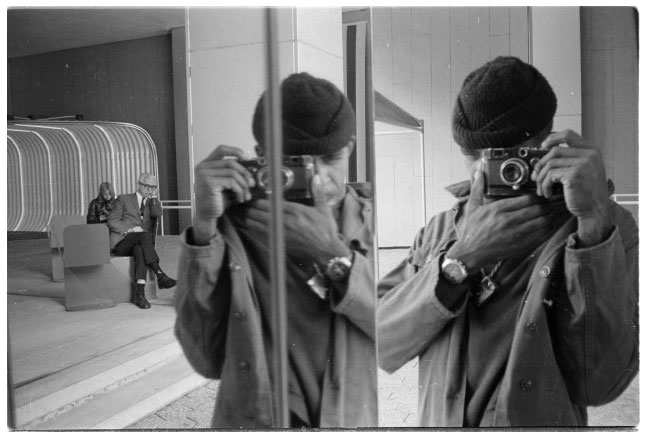
    Alex Harsley, self-portrait

    I’ve written about Alex Harsley several times in this blog, a woefully overlooked photographer and icon of East 4th Street, where he maintains a gallery on the block pictured on the cover of Time and Space on the Lower East Side. Alex currently has a show up at the June Kelly gallery on Mercer Street, and a few days ago Holland Cotter gave it a review in the New York Times.

    The exhibition at June Kelly surveys a half-century of Mr. Harsley’s own estimable art. Born in South Carolina in 1938 and a New York resident since childhood, he has made the city a primary subject of his classical brand of “street photography,” from shots of life in Harlem in the 1950s to velvety black-and-white images of downtown, late at night and silent, under snow in the 1990s.
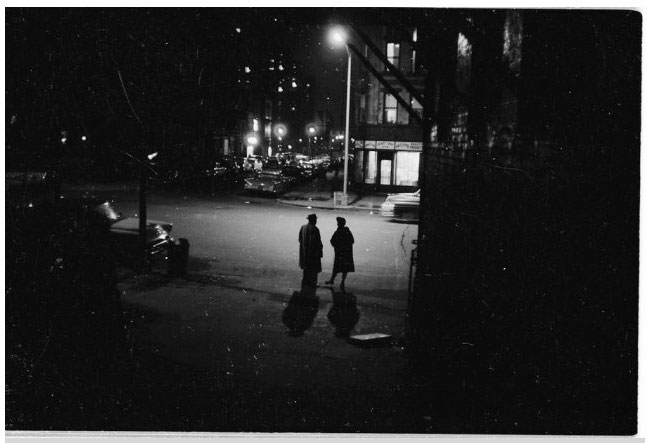
     The gallery exhibition presents Harsley’s work as a 50 year retrospective, and while it does cover that period of time, it does not in any way offer a definitive overview of his life’s work. There are a number of reasons for why that is a difficult task to accomplish, which I will get to in a moment. Unfortunately, the show feels thin. It seems a grab bag  of notable images rather than a carefully selected  survey suggesting the depth of Harsley’s long career. Moreover, the print quality is all over the place, and the presentation is sloppy, the cheap metal  frames not meeting at the corners.
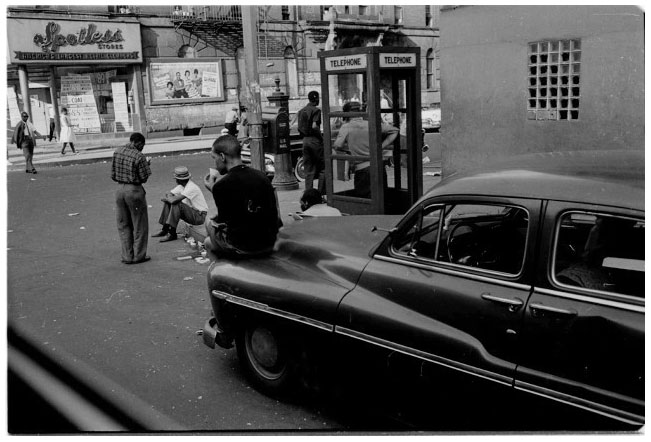
    For many years, the best way to see Harsley’s work is to go to his gallery on East 4th Street where he hangs his work salon-style all over the walls, the unframed prints clothes pinned on string, and Alex himself present to answer questions, comment, or ramble on about the state of the world. If you stay long enough, he’ll coax you into the back room of his tiny tenement gallery where he works on his videos. I haven’t figured out what I think of these, yet, but this is what Alex has focused on over the past decade.

    The Barnes Collection was recently transplanted from its original mansion setting on the edge of Philadelphia to a modern museum building on the Benjamin Franklin Parkway, the rooms of Barnes’s crazily inspired world recreated precisely in the new more accessible location. As I walked through the Harsley exhibit at the June Kelly gallery with each picture presented in a line with generous space between, I missed the unruly interior of Alex’s salon back on 4th Street, and almost wished they had done a Barnes here, and moved the whole thing including Alex into the gallery.
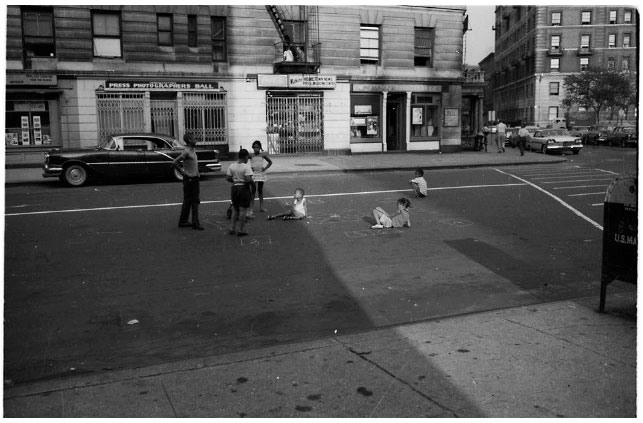
    That said, however, I think it’s high time that Alex Harsley’s photography be presented in a way that allows individual images to be appreciated, for the various threads of his work to be explored, and for him to assume his rightful place as an important contemporary photographer, and historically, one of the most important African American photographers. Holland Cotter in his New York Times review calls for “an institutional career survey” and writes further, “And surely the time has come to put a history of that career between the covers of a book.”
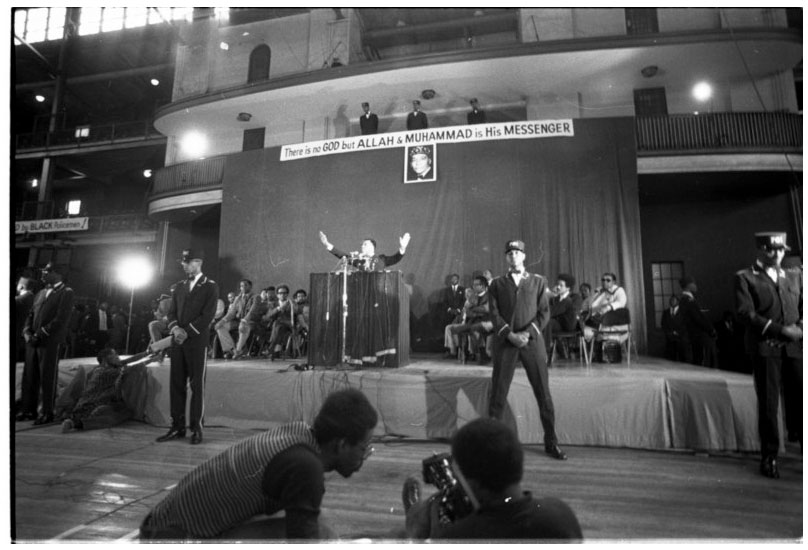
    Malcolm X
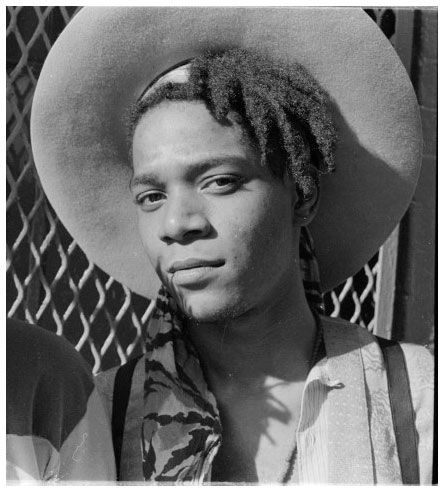
    Jean-Michel Basquiat
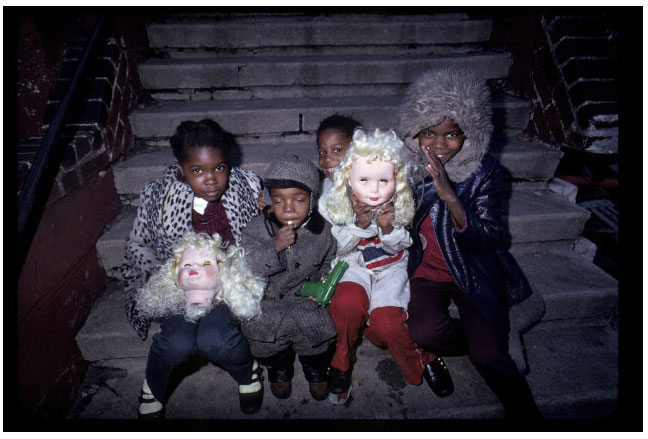
    A rare color image

    Part of the problem, surely, is that Harsley has made himself an outsider–sometimes willfully. But to a great extent it’s simply because he has never moved among the right circles of people, pushed the right buttons, never sought out the recognition that most others naturally chase after. His archive is, from what I can tell, a mess. There are undoubtedly thousands of negatives, and perhaps, dozens of great images never seen, never printed. I have no idea whether Alex would trust the work of sifting through his life’s work to a skilled researcher or curator, but I believe it needs to be done.

    I cringed the other day seeing celebrity pictures of “A Life in Pictures, the Gordon Parks Centennial Gala” at the Museum of Modern Art. Parks, who died in 2006, is hailed as one of the great Black photographers of the 20th century. He worked for Life magazine, was a fashion photographer, documented the civil right movement, and made notable portraits of famous individuals. His work expresses the concept of photography as an instrument of social justice and projects images of human dignity and nobility. For me, however, Park’s images are often clichés of the type, as much about a certain accepted style as substance. He undoubtedly has his place in the history of magazine photography, but…

    From Vogue magazine:

    On the ground floor of the Museum of Modern Art in New York, at a gala celebrating the 100th anniversary of legendary African-American photographer, writer, and director Gordon Parks’s birthday, and honoring Alicia Keys, Annie Leibovitz, and HBO copresident, Richard Plepler, well-heeled guests mingled over cocktails and a series of silent-auction photographs while publicists yelled out the names of the A-list guests as they approached the red carpet. “Josh Groban‘s coming,” a girl hollered over the din, causing more than a few heads to turn toward the flurry of flashbulbs. “Josh Groban!” Despite the excitement, luminaries were not in short supply at the dinner, which boasted tables packed with names like Sarah Jessica Parker, cochair Karl Lagerfeld, Thelma Golden, and John Legend. The annual event, which raised $750,000 for The Gordon Parks Foundation, was kicked off by the evening’s host, Anderson Cooper, who recounted the life of Parks, who was born—one of fifteen children—in Kansas and rose in New York City, through hard work, to the top of his chosen field, becoming known for his photography for Life, Vogue, and many others, for directing films like Shaft, and for his humanitarian efforts. By the looks of the room, filled to capacity with his admirers and his photographs, it is a legacy well worth celebrating.
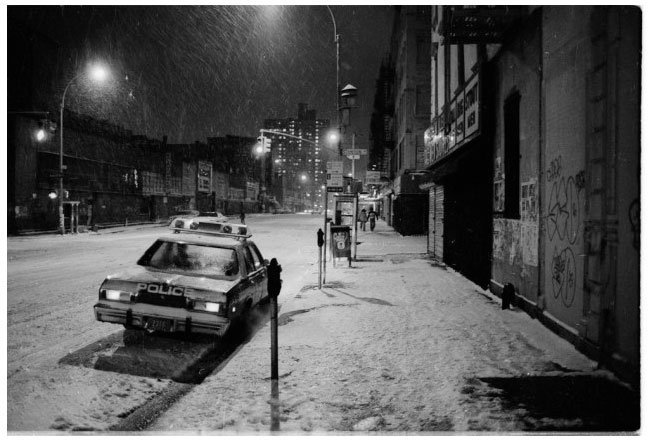
    The photographic world of Alex Harsley intersects with that of Gordon Parks, but it a world portrayed in a drastically different way. He, too, photographed images that deal with racism, poverty, and even celebrity. But his images rarely strike that “family of man” chord that Parks played so well. In the image above, one of many Harsley nocturnal scenes, we are in the city, possibly the Lower East Side. The street is deserted, bedecked in steadily falling snow. A police car idles, lights on. A couple of individuals approach in the distance. There is no conventional meaning here. It is a moment of hushed solitude, of uneasy anticipation, composed without artifice, presented without statement. Only clarity of vision.
    .
  • New York/Recent Press


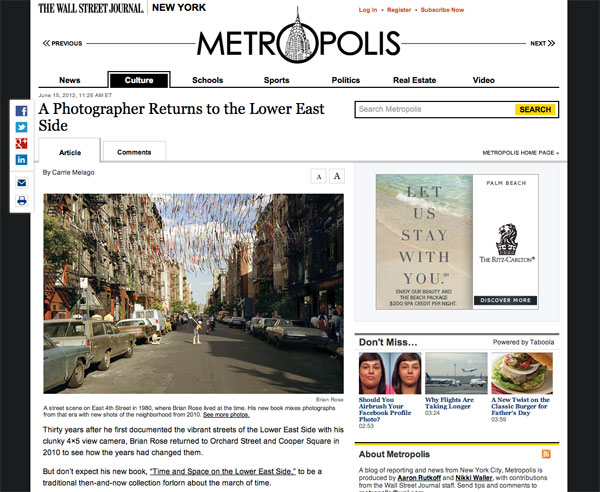
    I’ve been gett a lot of press since releasing Time and Space on the Lower East Side a few weeks ago. A number of blogs have posted articles or galleries, but this is the first article from what is referred to (sometimes disparagingly) as the mainstream media. It’s a nice article, available online, as well as getting generous space in the Saturday print edition of the paper.


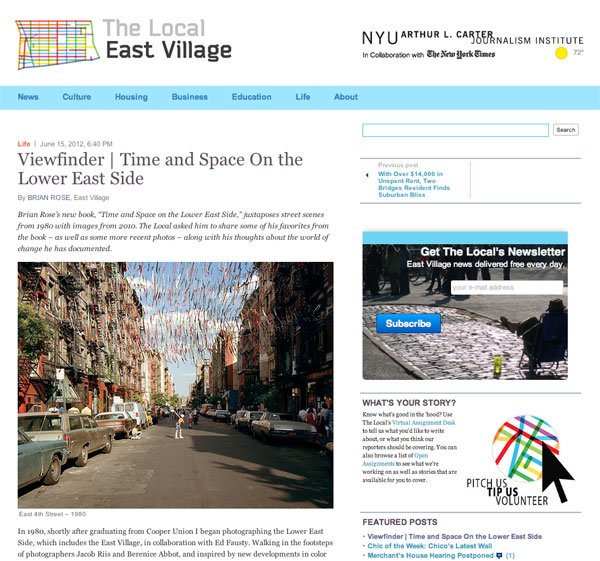
    The Local: East Village is a blog affiliated with the New York Times and NYU’s journalism school. They did a story last year about my World Trade Center mural on East 4th Street. This presentation is a particularly good integration of text and photos.

  • New York/Cooper Square

    Cooper Square — © Brian Rose

    Cooper Square (4×5 film) — © Brian Rose

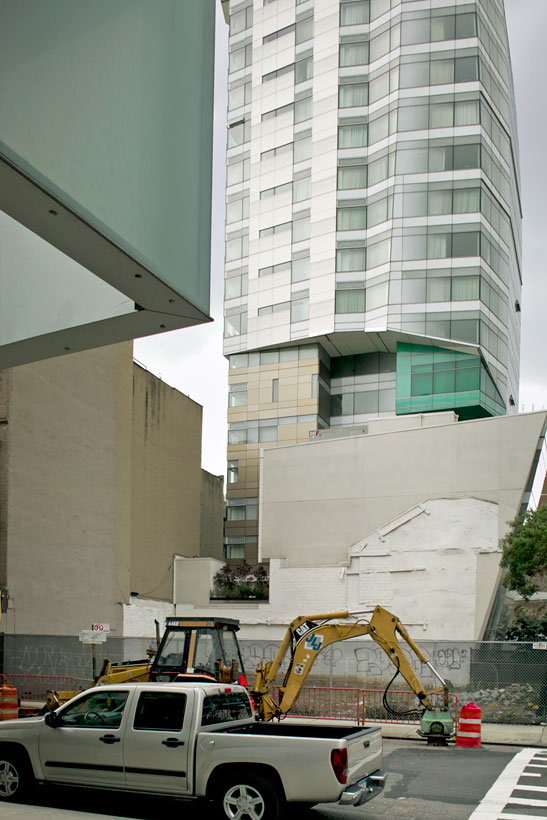
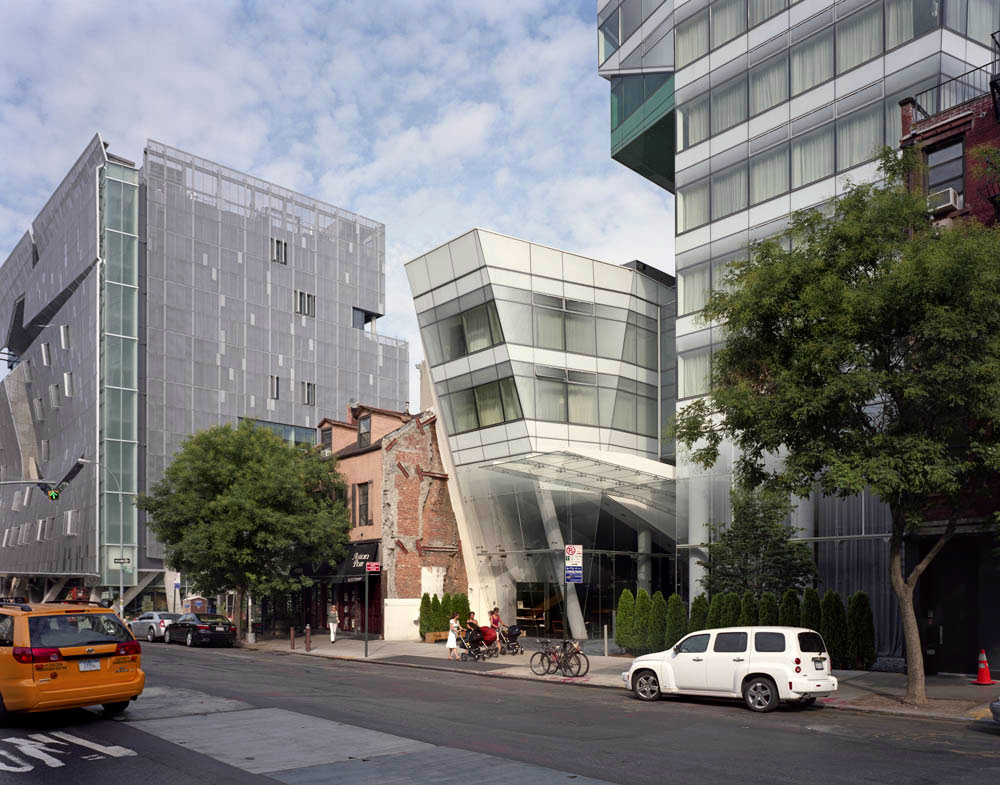
    Even the most recent images from Time and Space on the Lower East Side are rapidly becoming historic views.


  • New York/Time and Space Reviews

    A roundup of recent reviews or articles about Time and Space on the Lower East Side:

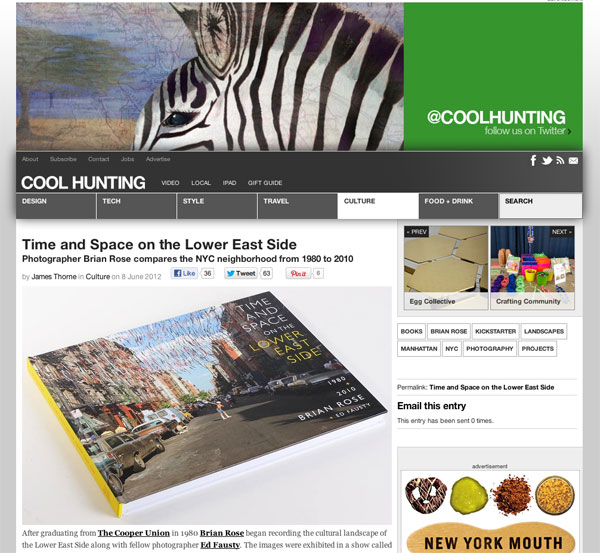
    Cool Hunting, June 8, 2012 


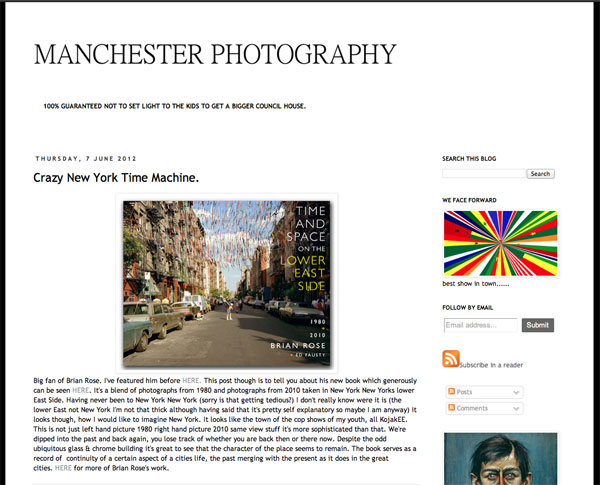
    Manchester Photography, June 7, 2012


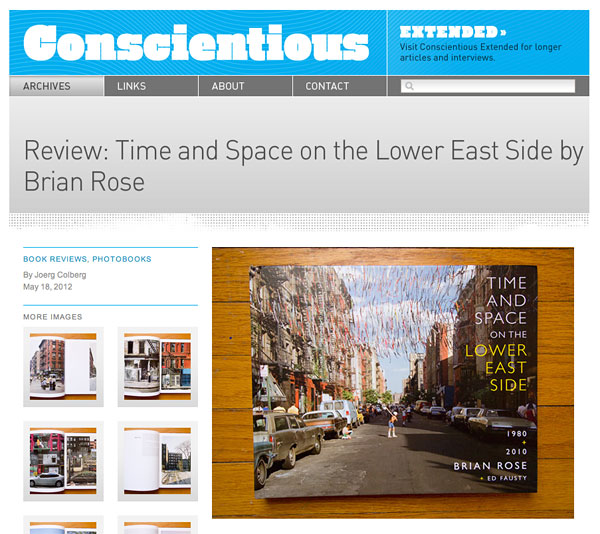
    Conscientious, May 18, 2012


  • New York/The Bowery

    The Bowery — © Brian Rose

    Without comment.

  • New York/Broadway

    Broadway and 14th Street — © Brian Rose

    Without comment.

  • New York/Brooklyn Museum

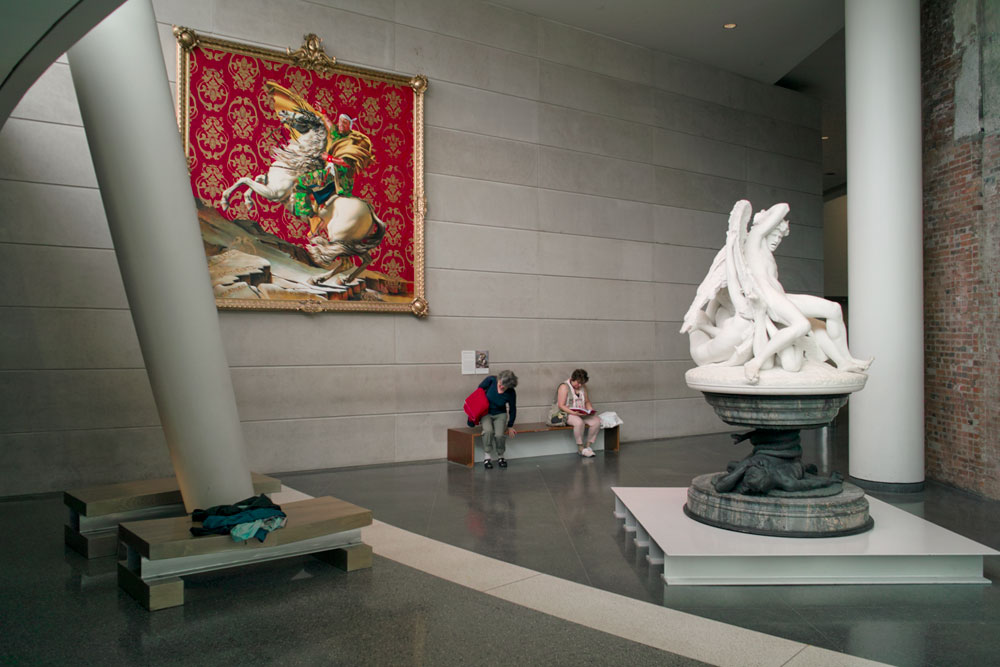
    The Brooklyn Museum

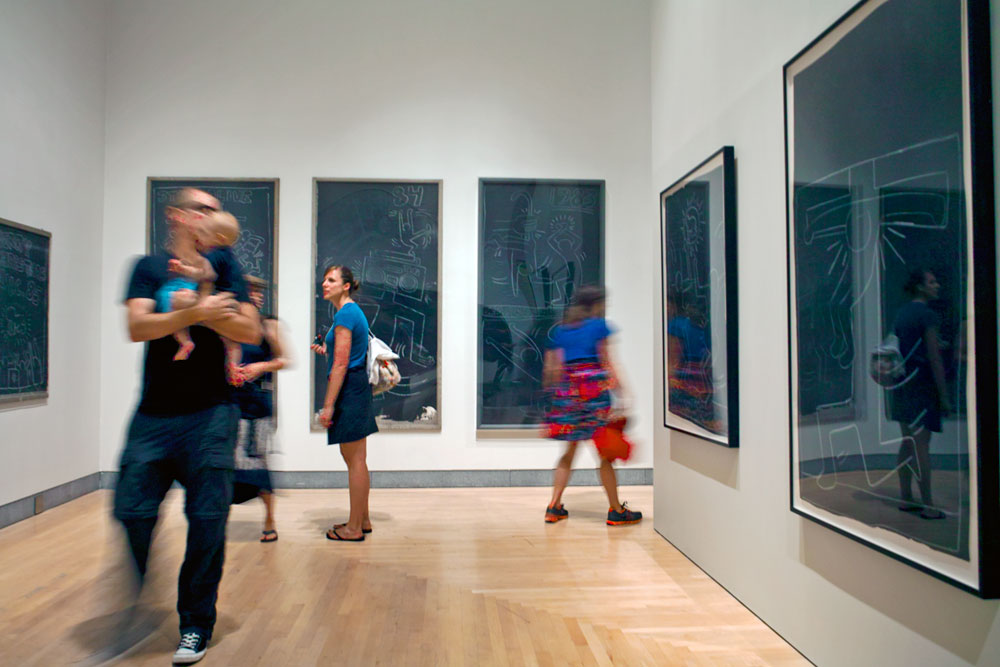
    In the lobby of the Brooklyn Museum on my way to the Keith Haring exhibition.

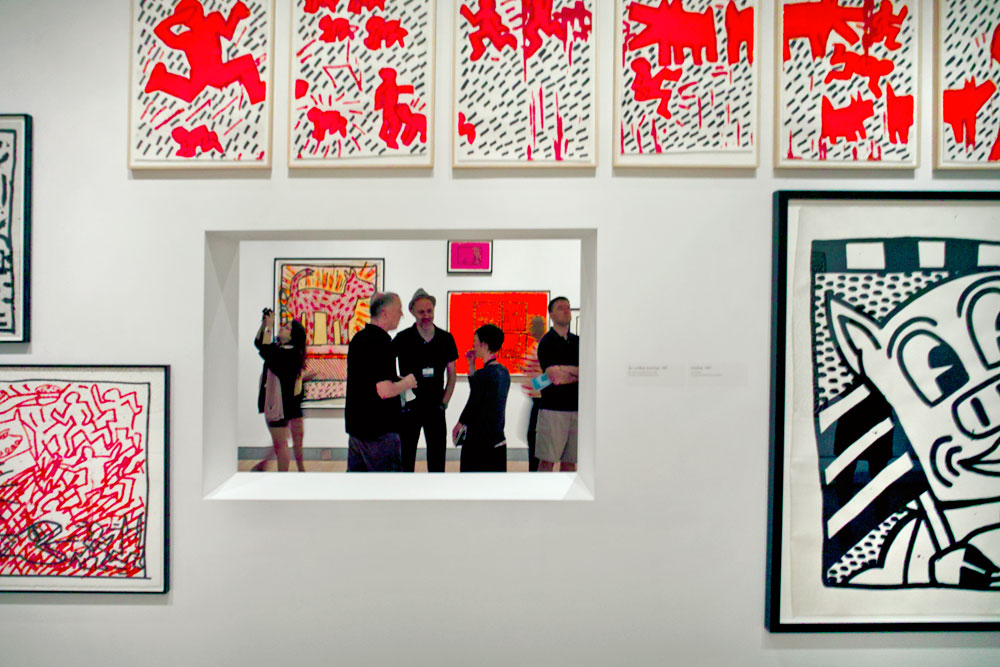
    Keith Haring 1978-1982, the Brooklyn Museum — © Brian Rose

    As well known as Haring is–certainly everyone has seen his highly graphic images even if only in a commercial context–but until now there hasn’t been a more serious assessment of his work. There’s always a danger when the established art world takes on a street artist by putting the work into a conventional gallery context. Haring was best seen in situ–in the wild. But that was 30 years ago, around the same time I was taking my early photographs of the Lower East Side. Since then, we have mostly experienced Haring on t-shirts and tote bags.

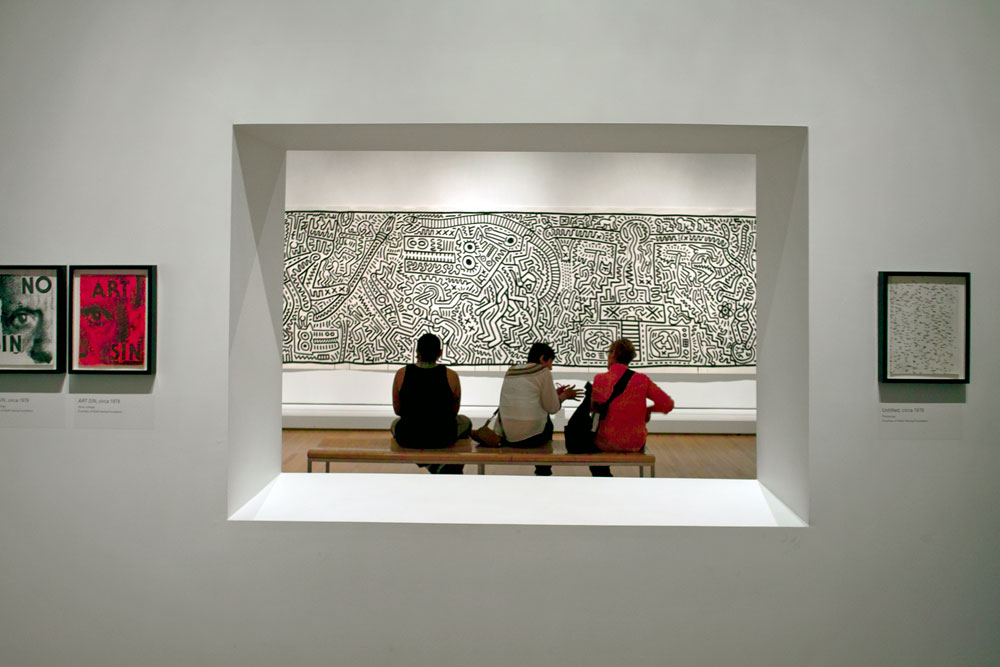
    Keith Haring 1978-1982, the Brooklyn Museum — © Brian Rose

     This exhibition does two things–it documents through photographs, slides, and video how Haring worked and interacted with the art and music scene of the time, and it presents his work in the broader context of late 20th century art. Although he reused the same graphic elements frequently, this exhibit shows Haring to be a far more complex artist than previously assumed. He was just getting started when he was cut down by AIDS in 1989.

    Keith Haring 1978-1982, the Brooklyn Museum — © Brian Rose

    For me, however, Haring’s was at his best at his simplest and most spontaneous–the white chalk drawings on black paper that he did throughout the New York subway system. Back then, when ads were replaced, black paper with a toothy matte surface temporarily filled the billboard frames on the subway platforms providing an enticing canvas for Haring. I saw him once in the Bleecker Street station of the #6 train (the old IRT) sketching alone, moving rapidly from one black frame to another.

    It’s not ideal putting them behind reflective plexi in the museum–though I’m sure they are fragile and have to protected. I don’t know how many actually survived, but you can see images of dozens of them– 35mm slide documents of the originals–in an adjacent gallery.

    I always liked Haring’s imagery, but tended to dismiss it as commercial fluff, though I understood its relationship to earlier Pop Art. He was both commercial and an artist of substance. This exhibit helps set the record straight.


  • New York/Little Italy

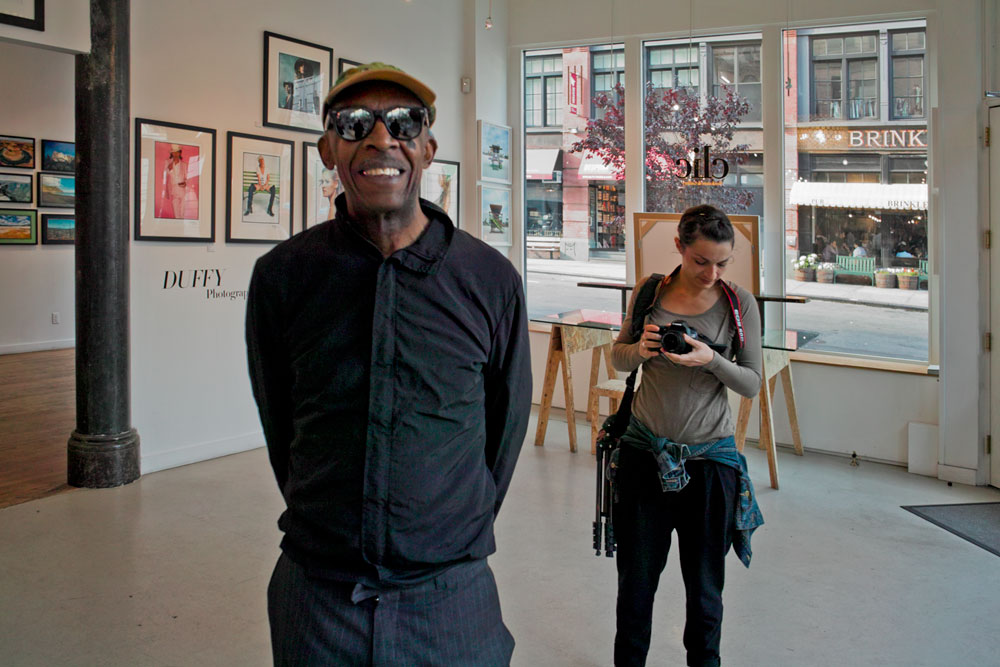
    Alex Harsley, Clic Bookstore and Gallery — © Brian Rose

    I only took one photo during the book launch for Time and Space on the Lower East Side, and that one at the very beginning. The rest of the time I was occupied. Alex Harsley of the 4th Street Photo Gallery was an early arrival, and behind him is Alexandra Uzik–not sure how she ended up there–who took some pictures for her blog.

    After the crush last week mailing out over a hundred books–mostly to my Kickstarter backers–and doing all the legwork to prepare for the book launch, I am happily relaxing this Memorial Day weekend.

  • New York/Lower East Side

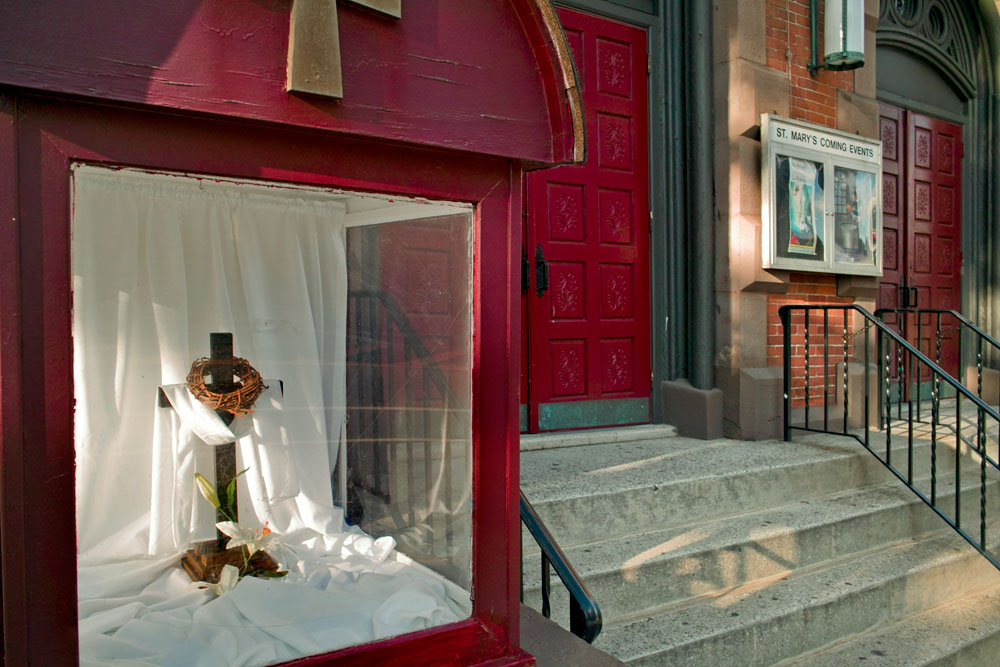
    St. Mary’s Church, Grand Street — © Brian Rose

    Wednesday’s book launch was a big success. Over 100 people came to Clic Bookstore and Gallery–some old friends, my publisher Bill Diodato, and lots of people I was meeting for the first time–even a few of the ubiquitous moochers who took advantage of the beautiful catering provided by Downtown Kitchen. My 13 year old son arrived from a school baseball game wearing his uniform, a nice touch. My mother-in-law, An, from Amsterdam had flown in and was doing the town, staying in the new and hyper-chic Wythe Hotel in Williamsburg.

    Most of the week was spent mailing out books to my Kickstarter backers and to those who had pre-ordered books from my website–more than a 100 books. My assistant Chris Gallagher and I made numerous trips back and forth to the post office, the mini-storage where the books are kept, and my studio on Stanton Street just off the Bowery. I am happy to announce that all of the Kickstarter books are now in the mail. We also began delivering books to stores around Manhattan.

    A partial list of stores where Time and Space on the Lower East Side can be bought:

    St. Mark’s Bookshop, Strand Bookstore, McNally Jackson, Dashwood Books, the New Museum, ICP, NYU Bookstore, the Museum of the City of New York, and the powerHouse Arena in Brooklyn. Although I do best when books are ordered on my website, it would be nice to see people support their local bookstores. We are extremely fortunate here in New York to have such a large number of wonderful shops.

    And that’s where this largely DIY publishing venture now stands. I need to sell 1,000 books to break even. I am doing everything I can to publicize Time and Space, but much depends on word of mouth. I believe that Time and Space is a classic photo book, and one of the few like it focused on New York City. Your support is greatly appreciated.

  • New York/Lower East Side

    Ludlow Street — © Brian Rose

    Without comment.

  • New York/Time and Space Review

    Review in Conscientious

    From Joerg Colberg’s review in his highly respected blog Conscientious:

    Anyway, what you can take away from Time and Space on the Lower East Side is that its maker really loves the city and, of course, that he is a very good photographer. The images all were done with a large-format camera, so they offer a carefully constructed frame that might or might not be filled with a lot of life and details. It’s not necessarily a New York I’ve seen too often in photographs, and I really enjoy looking at the combination of cityscapes, street scenes, and details. Various of the spreads pair the same or very similar setting thirty years apart – things have changed, and they haven’t.

    Maybe all that talk about money really is just surface, and underneath, New York – or at least Manhattan’s Lower East Side – simply is what it has always been: A pretty great, unique place.

    Read the whole thing here.

  • New York/Midtown

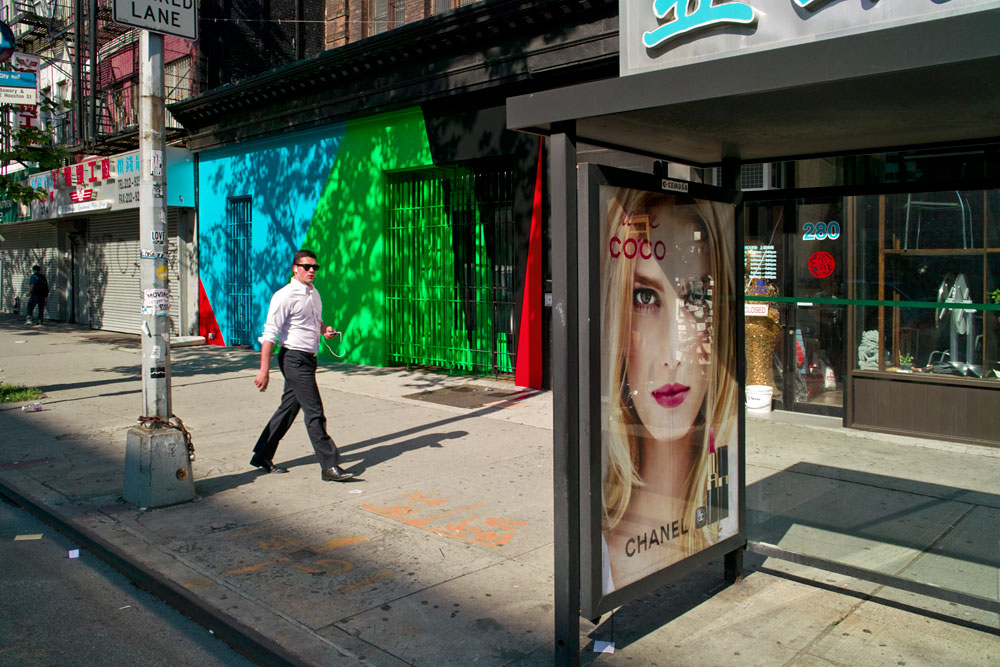
    West 29th Street — © Brian Rose

    Without comment.

  • New York/Lower East Side

    I am pleased to report that the complete shipment of Time and Space on the Lower East Side has arrived in New York. I will begin sending books out to my Kickstarter backers next week as well as pre-orders. The book will officially be on sale on May 23rd and can be bought on my website or from various stores in Manhattan. That’s where we’re starting anyway. I will be celebrating the launch of the book on May 23rd from 6 to 8pm at the Clic Bookstore and Gallery at Centre and Broome Streets in Little Italy. Hope to see you there!

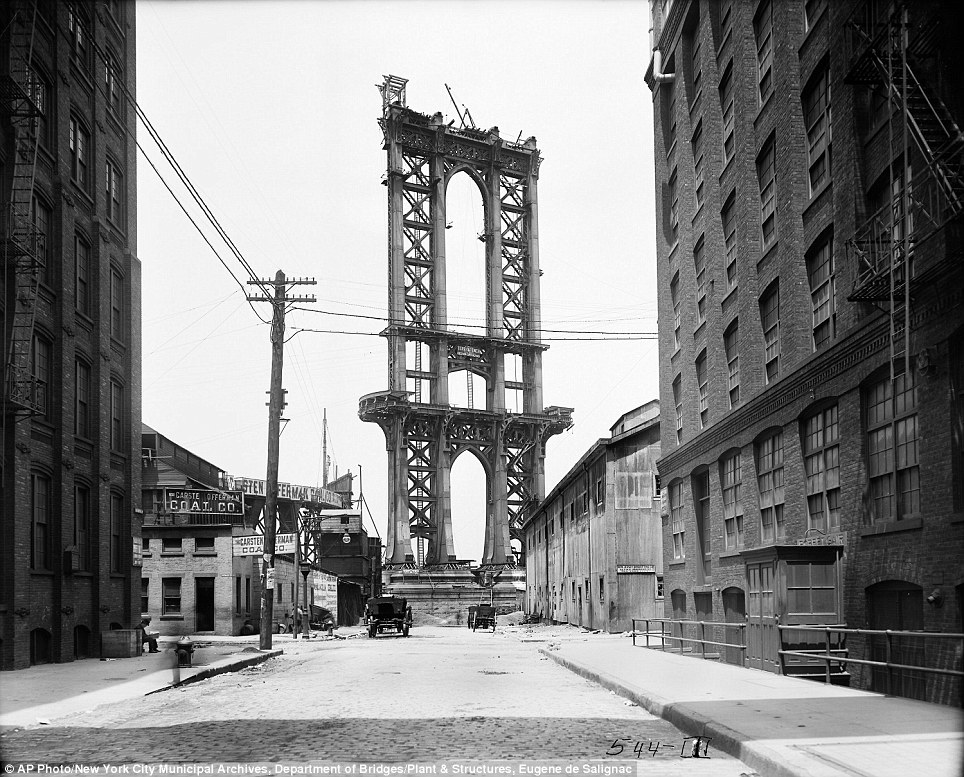
    The Manhattan Bridge, 1908 — photography by Eugene de Salignac

    The city of New York recently made its huge archive of photographs available online. I’ve spent a little time browsing through the pictures, which include the most mundane tax photos along with quite stirring images like the one above. For several weeks the website was down–I think due to high traffic–but it seems to be up and running now. It’s a great resource, theoretically, but it has an awkward interface and is hard to navigate. Sadly, a majority of the images can only be viewed at very low resolution. You can order high resolution files or have prints made. Municipal Archives website here.

    The image above was taken from a more detailed image provided to the media. It shows the Manhattan Bridge under construction in 1908. The image is one of 20,000 images taken by Eugene de Salignac, a city employee, unknown until a few years ago. Since then, there has been an exhibition of his work at the Museum of the City of New York, and a book by Aperture.

    From the New Yorker:

    De Salignac, it turned out, had worked for the Department of Bridges (later the Department of Plant and Structures) from 1903 to 1934. Vast reaches of infrastructure were laid down in those years, and his job was to provide a record: he shot the construction of the Manhattan and Queensboro Bridges and the Municipal Building; subway tunnels, trolley lines, and ferries.

    There’s a terrific portfolio of de Salignac’s images and others from the city archive in The Atlantic here.

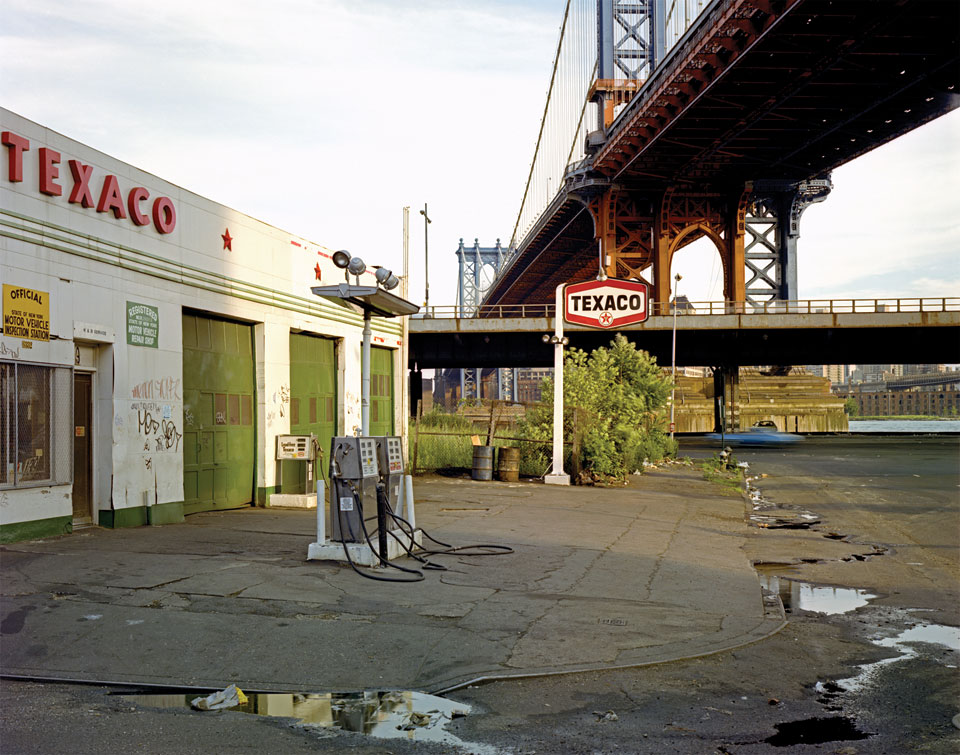
    Pike’s Slip and the Manhattan Bridge, 1980 — © Brian Rose/Ed Fausty

    When Ed Fausty and I did our photographs of the Lower East Side we were unaware of de Salignac, but we, nevertheless, found ourselves standing in almost the same spot–72 years later–as he did when photographing the Manhattan Bridge. Both are view camera images, but the latter exhibits a somewhat different way of looking at the city. The bridge is no longer a central and heroic symbol of progress, however imposing, as it soars over a desolate street corner in 1980. The bridge and the service station have nearly equal weight, structural elements intersect and slash across the frame, as the late afternoon sun spotlights the Texaco star.


  • New York/Midtown

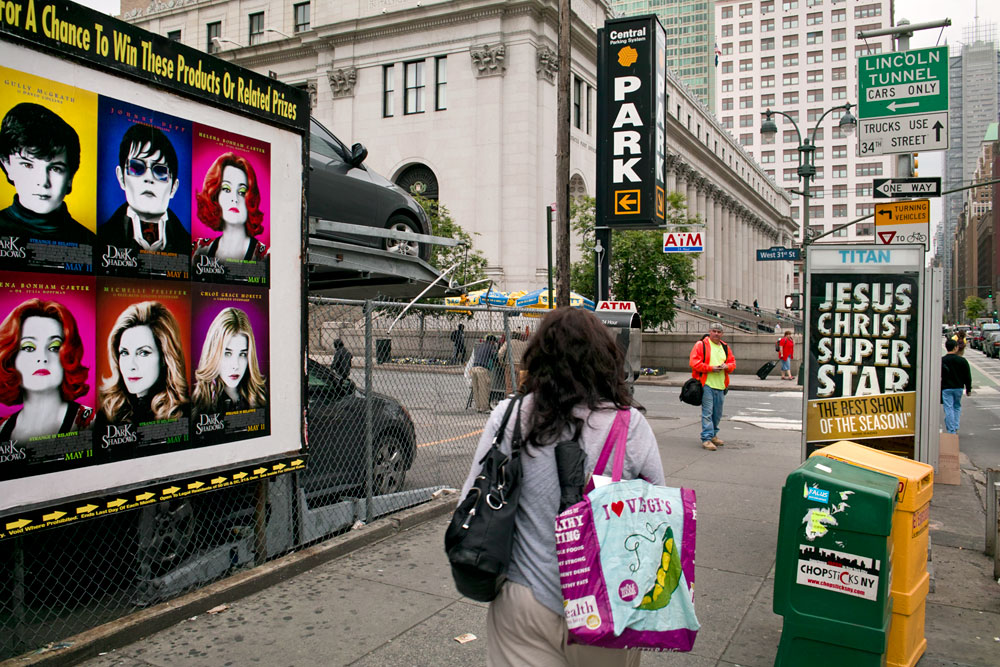
    Main Post Office building at West 31st Street and  8th Avenue — © Brian Rose

    Without comment.

  • New York/Times Square

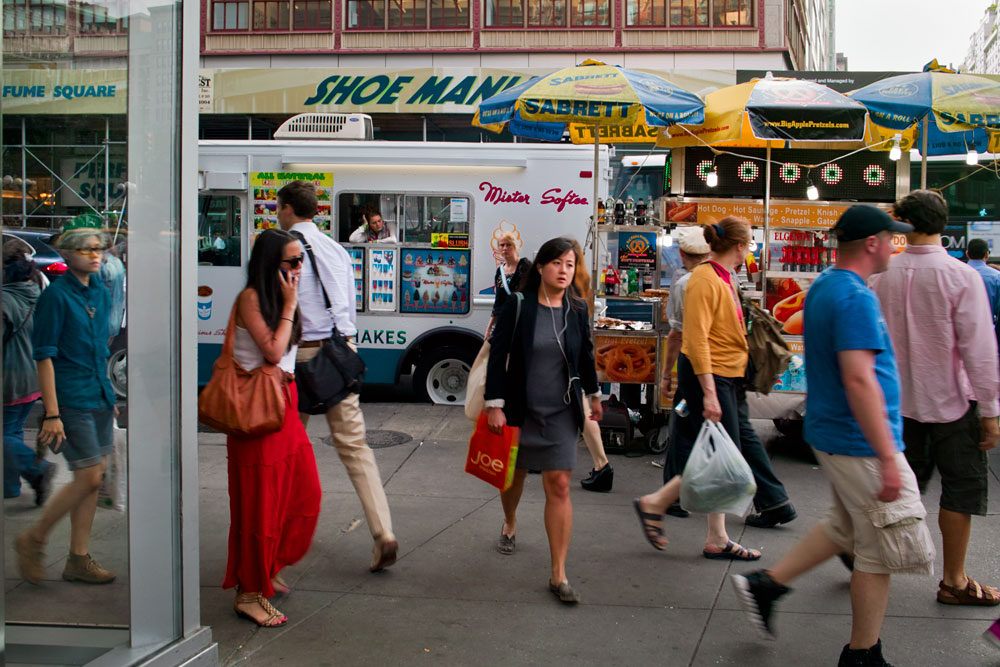
    42nd Street near Times Square — © Brian Rose

    Times Square is not the tawdry danger zone of the past–a delicious feast for the eyes, a hellish tourist trap–42nd Street a ghoulish gantlet of porn for commuters rushing to the Port Authority bus terminal, an underworld of prostitutes, teenage runaways, pickpockets, and do-gooder preachers leaching off the whole bloody mess. Ah, those were the days.

    The tourists remain, more pastel present than ever, discovering their own faux New York. The nostalgia whiners are correct–the present is never as cool, never as rich and creamy as the past–but they too easily miss the buzz of the present. If you’re going to be a photographer–one who bears witness to this time–you can’t wallow in the gauzy, yellowy instagrammatic  glow of the past. You’ve got to be here, now.

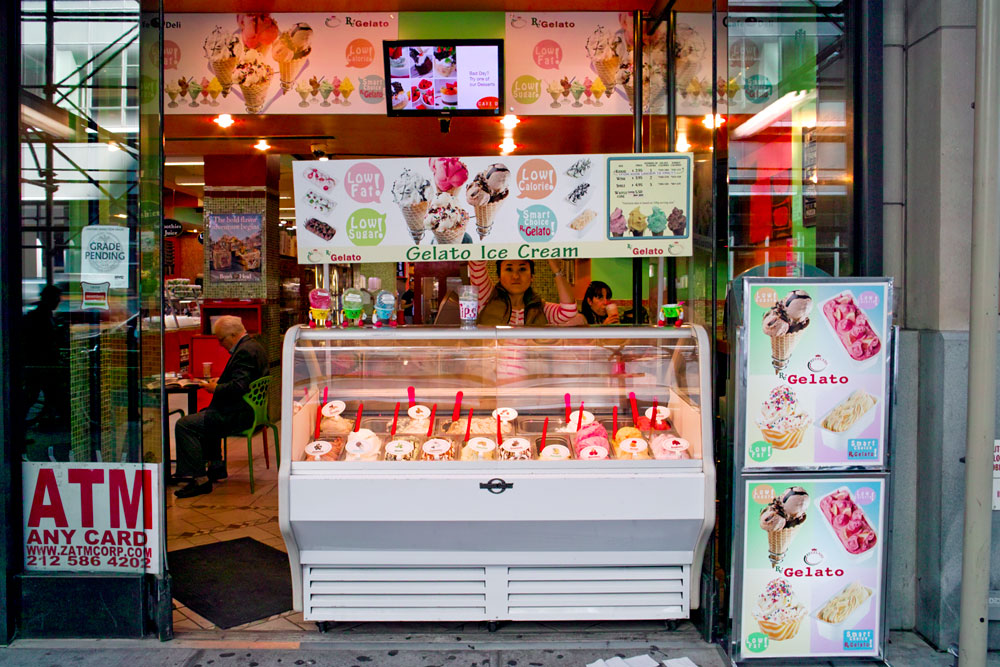
    Enjoy. Have a gelato.

  • New York/Lower East Side

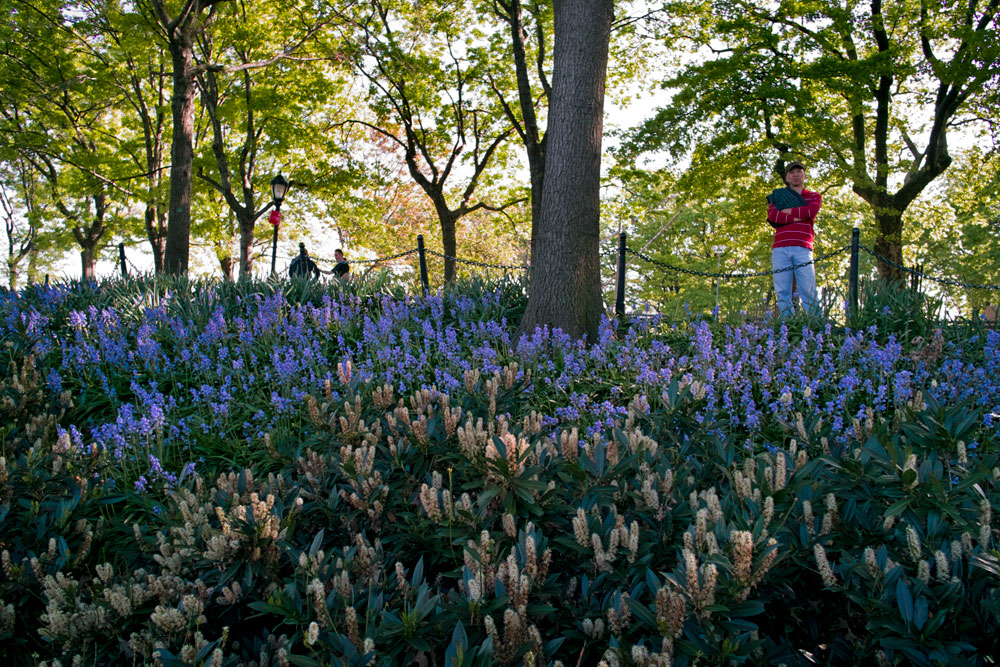
    East River Park — © Brian Rose

    Yesterday, I heard that my books are in the port of New York and are in the process of clearing customs. The books should be in my storage space in the next few days. I’ll be sending books first to my Kickstarter backers, and then begin distributing to local stores. The slipcovers are coming separately, so there may be a delay in getting the limited editions out. Time and Space will also be available online on my website and at photo-eye. Launch party coming up on May 23rd. See below for details:

    Time and Space on the Lower East Side
    Book Launch Party

    Wednesday, May 23 • 6:00-8:00 PM
    Clic Bookstore and Gallery, 255 Centre Street (at Broome)
    212-966-2766
    •••
    Books will be available for purchase and signing.
    •••
    Please join us in celebrating the publication of this unique and beautiful book.

    Time and Space Web Page

    Clic Website

    •••

  • New York/Williamsburg

    N3rd Street, Williamsburg, Brooklyn — © Brian Rose

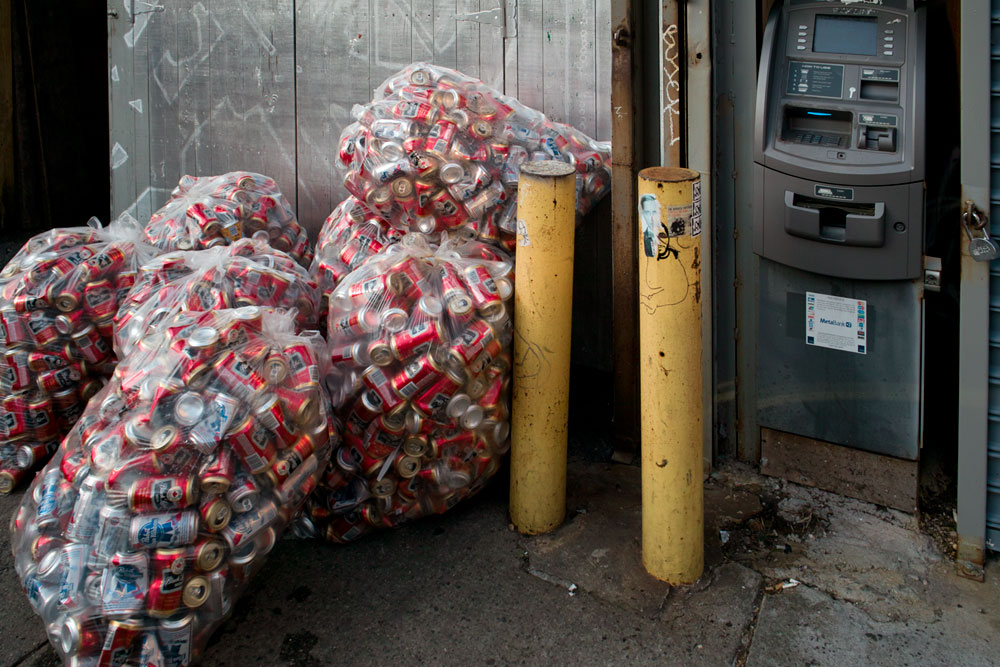
    Bags of PBR (Pabst Blue Ribbon) and Carling Black Label, cheap hipster beers, after another Wlliamsburg weekend.