Category: Photographers/Photography

  • New York/Meatpacking District


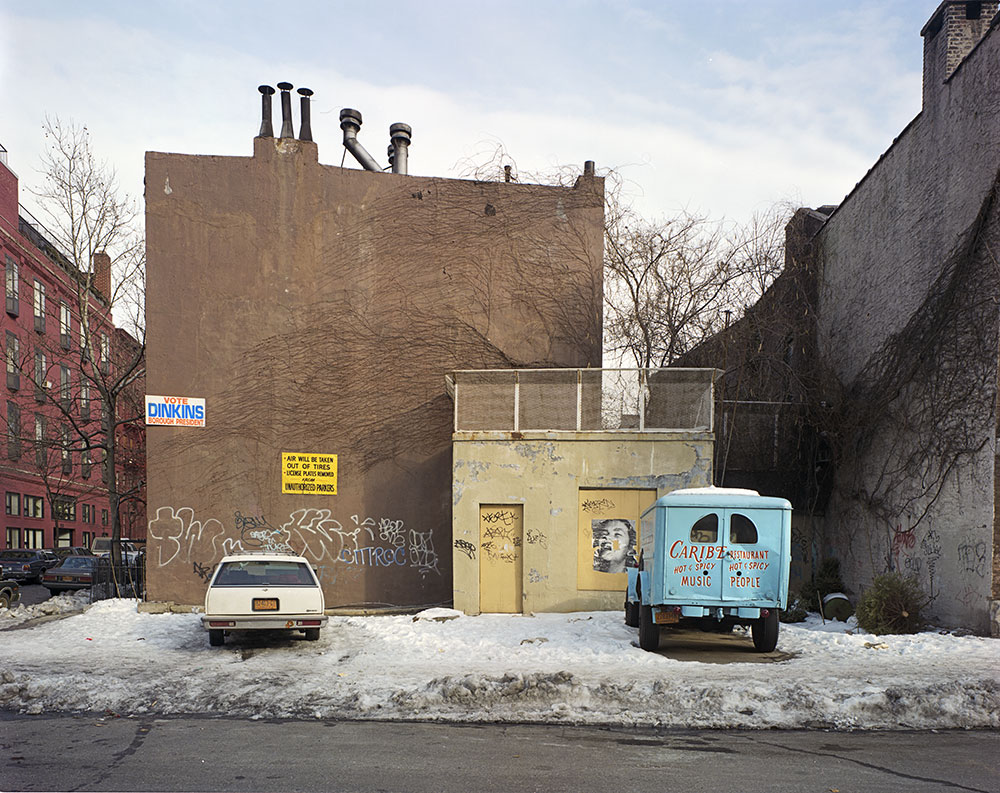
    Washington Street — © Brian Rose

    It was the winter of 1985, and I was casting about for something new to photograph. I had completed projects on the Lower East Side and Central Park, and later that summer I would begin shooting the Iron Curtain and the Berlin Wall, a project that would continue to occupy me up to the present. For reasons I cannot recall, I walked over to the west side with my camera and spent several days photographing the meatpacking district. I began from the West Village, the scene above relatively unchanged today. The yellow and black sign warning illegal parkers that the air will be let out of their tires remains attached to the wall of the building almost 28 years later. In 1985, David Dinkins was running for Borough President–he would later become mayor.
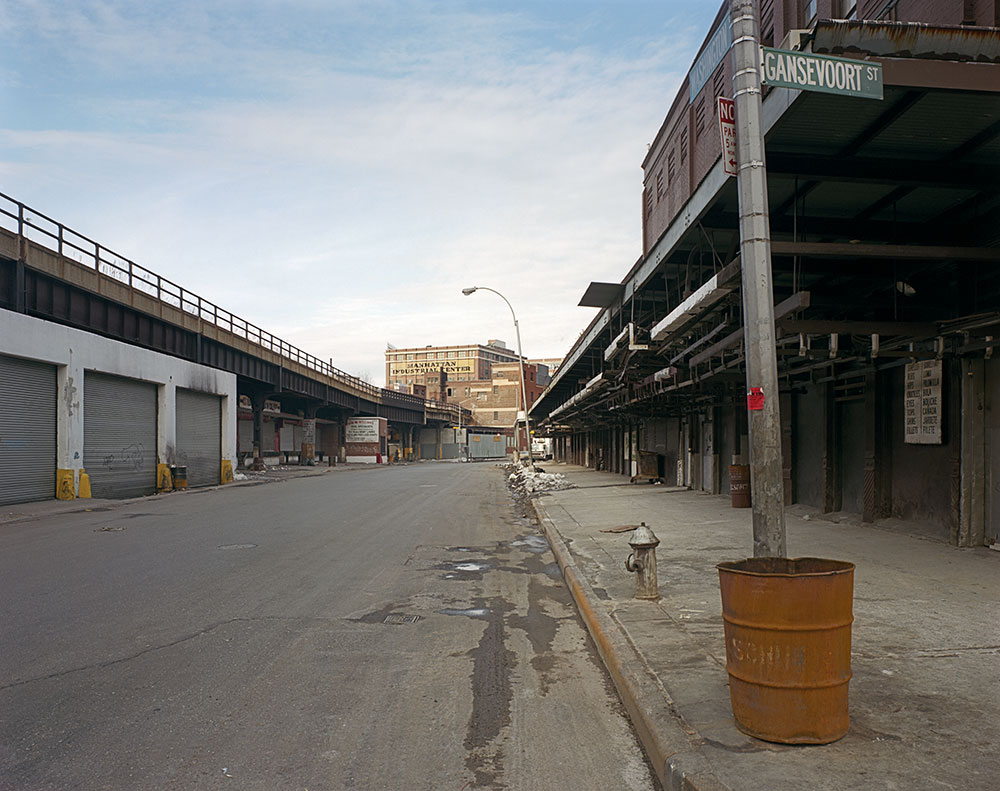
     

    Washington and Gansevoort Street — © Brian Rose

    In the morning the meat packing district was a vast open air scene of carnage. Sides of beef were hung from hooks that slid along overhead conveyors. Men in bloodied white coveralls grappled with the carcasses. By mid morning the hubbub of the city’s meat market subsided and the cobblestone streets took on a look of abandonment, astonishing in the heart of such a great metropolis. As evening approached another kind of meat market took over–this one human trade–as prostitutes prowled the empty streets, many of them transvestites, overly tall females tottering about on high heels, while men in black leather  sought the anonymous doors of sex clubs.
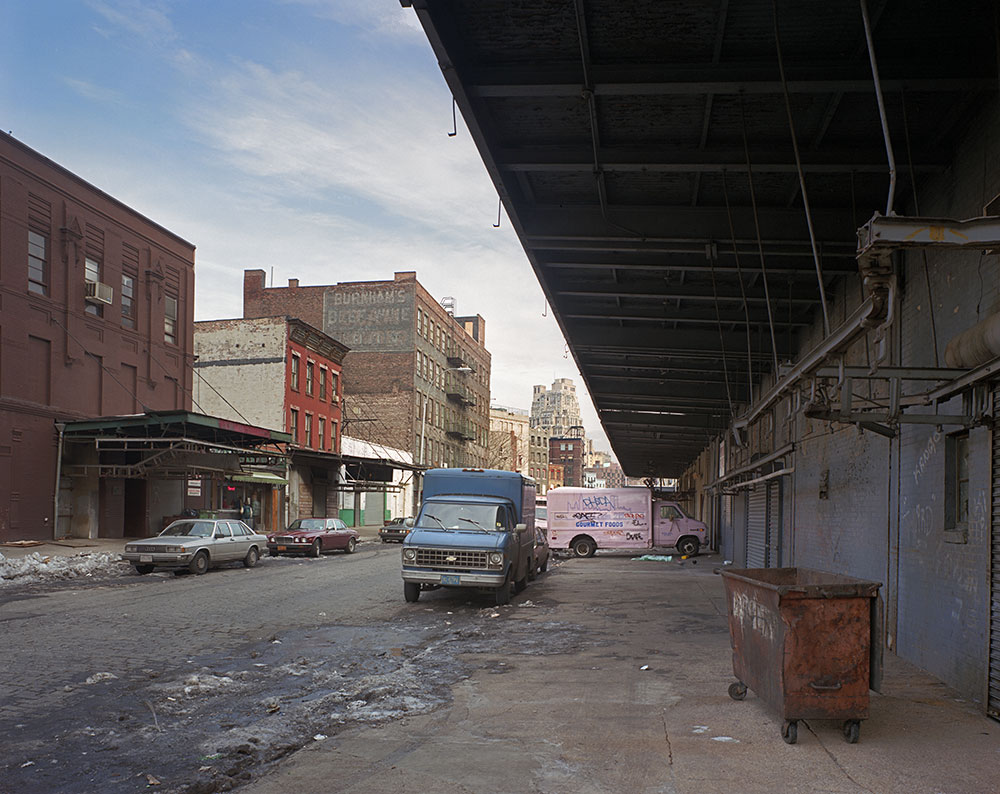
     

    Gansevoort Street — © Brian Rose

    In 1985 a restaurant called Florent opened on Gansevoort Street. For years it was a late night destination for the downtown social set, gay and straight alike. It was hard to find, and took a certain fortitude to navigate the urban hell/paradise surrounding it. It was not expensive, but for me, blowing all my money on 4×5 film, on a whole other plane of existence. You can see it on the left, the glowing neon florent in the window. A website with the  sign still glows on the Internet here. A recent article about the former owner Florent Morellet is here.
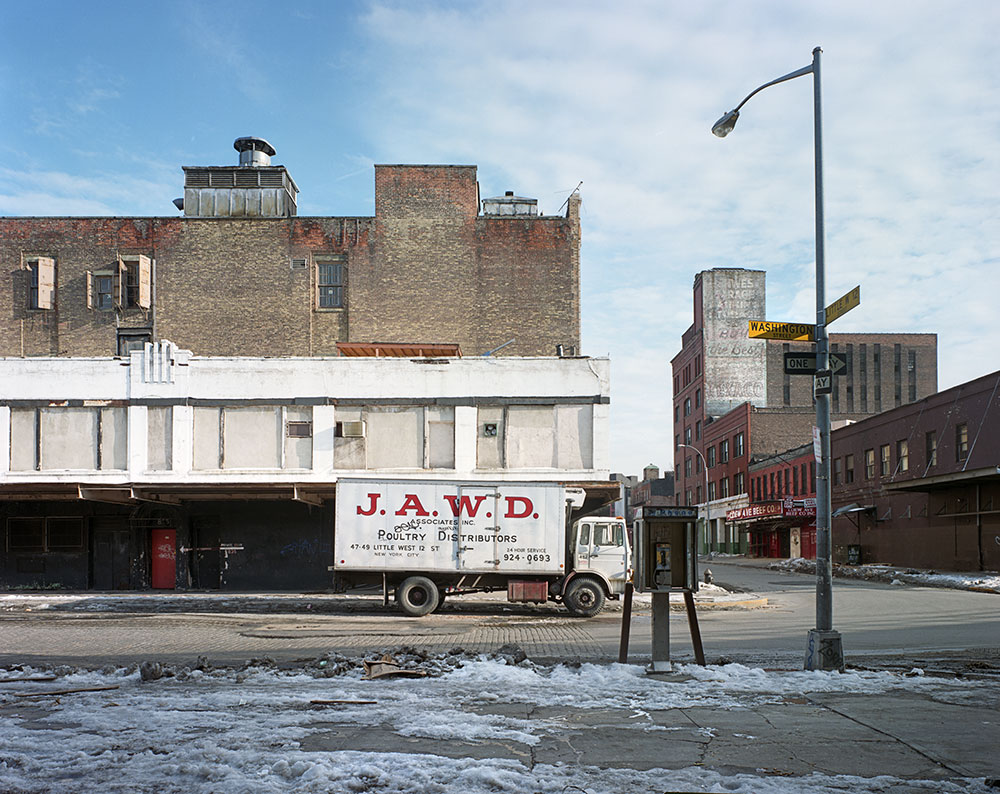
     

    Washington and Little West 12th Street — © Brian Rose

    If you look up some of the business names, you see that many still exist, like J.A.W.D. above, operating out of the Hunt’s Point market in the Bronx. That’s where most of the distribution of meat, fish, and produce is handled for New York in modern refrigerated facilities. The red door to the left of the truck was the entrance to the Mineshaft, probably the most infamous of the men’s sex clubs that dotted the meatpacking district. It was closed later in the fall of 1985 at the height of the AIDS crisis.
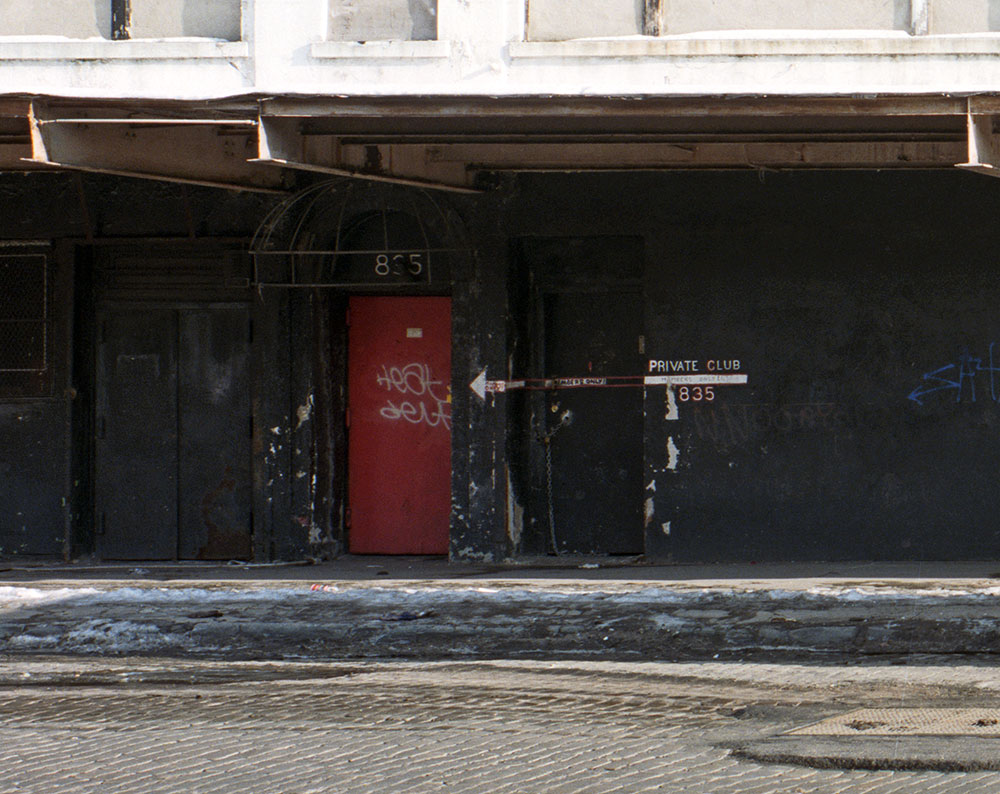
     

    mineshaft

    Washington Street — © Brian Rose

    The entrance to the Mineshaft in the winter of 1985.
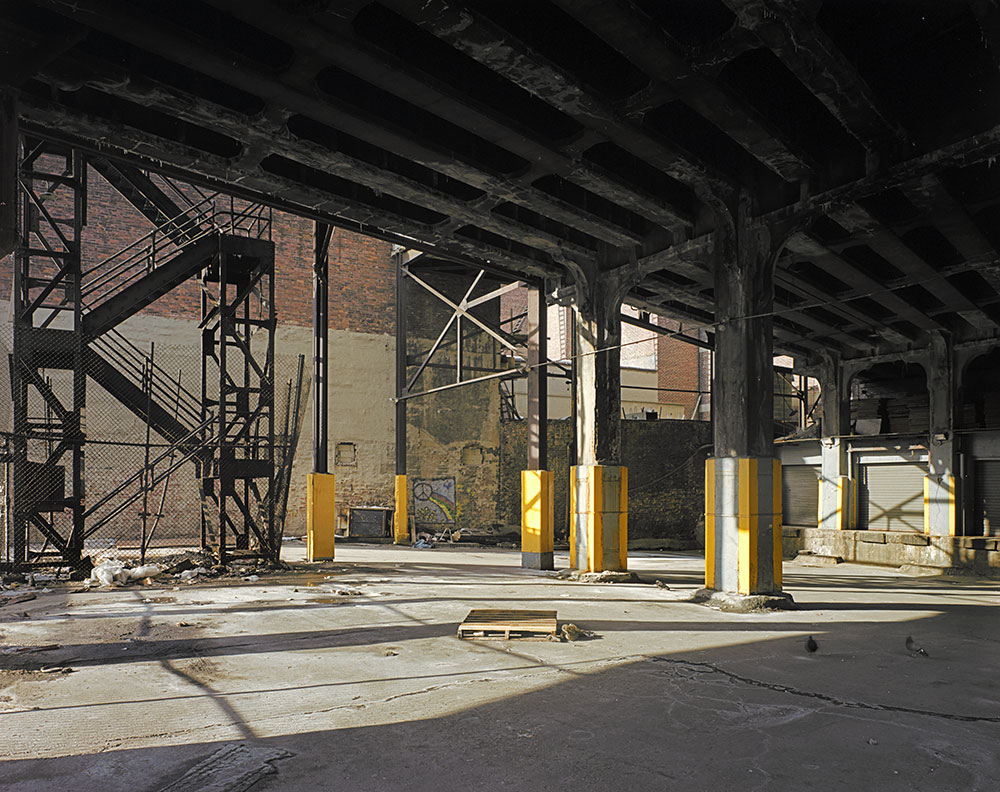
     

    Little West 12th Street — © Brian Rose

    In 1985 the high line was a nameless unused rail viaduct that ran down the west side of Manhattan all the way into the West Village. It cast ominous shadows over streets and vacant lots. The elevated rail line once served the docks and factories lining the Hudson River. It replaced the tracks that ran down the middle of Tenth Avenue–Death Avenue it was called back then. The picture above was taken where the beer garden of the Standard Hotel now is.
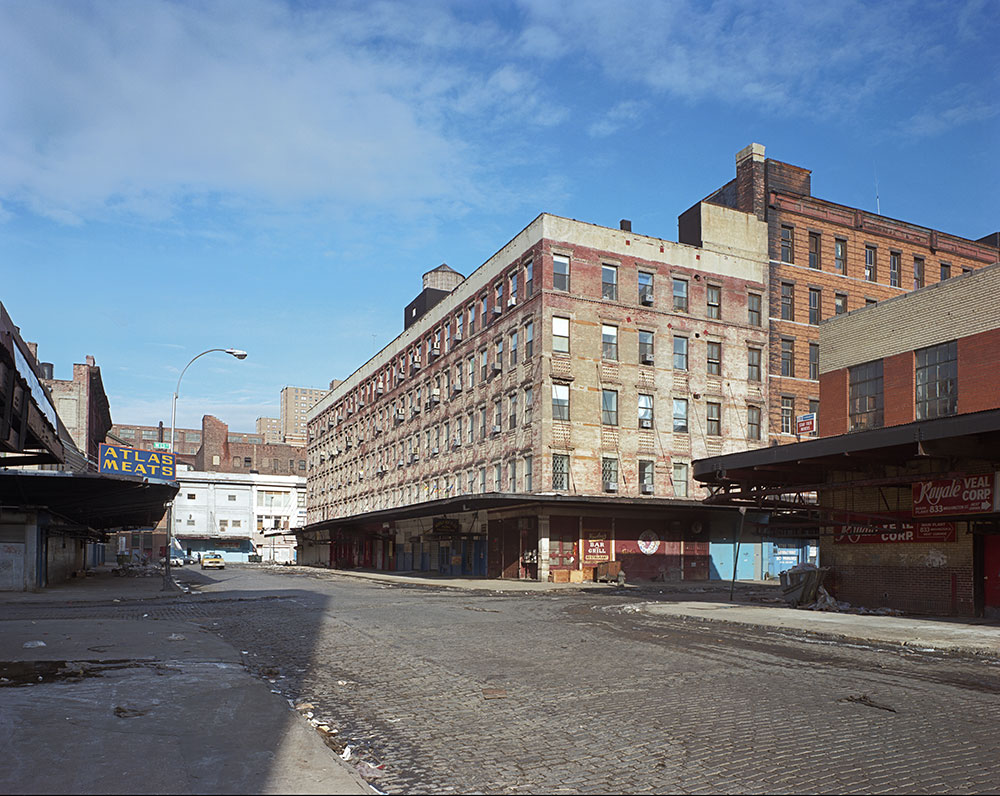
     

    Washington and West 13 Street — © Brian Rose

    The desolation of the meatpacking district by day was profound, but many parts of lower Manhattan were also quite empty. Things were changing, however, and the Soho gallery scene was already well established, and Tribeca was beginning to take off. Nevertheless, in the winter of 1985, the meatpacking district slumbered undisturbed through the daylight hours.
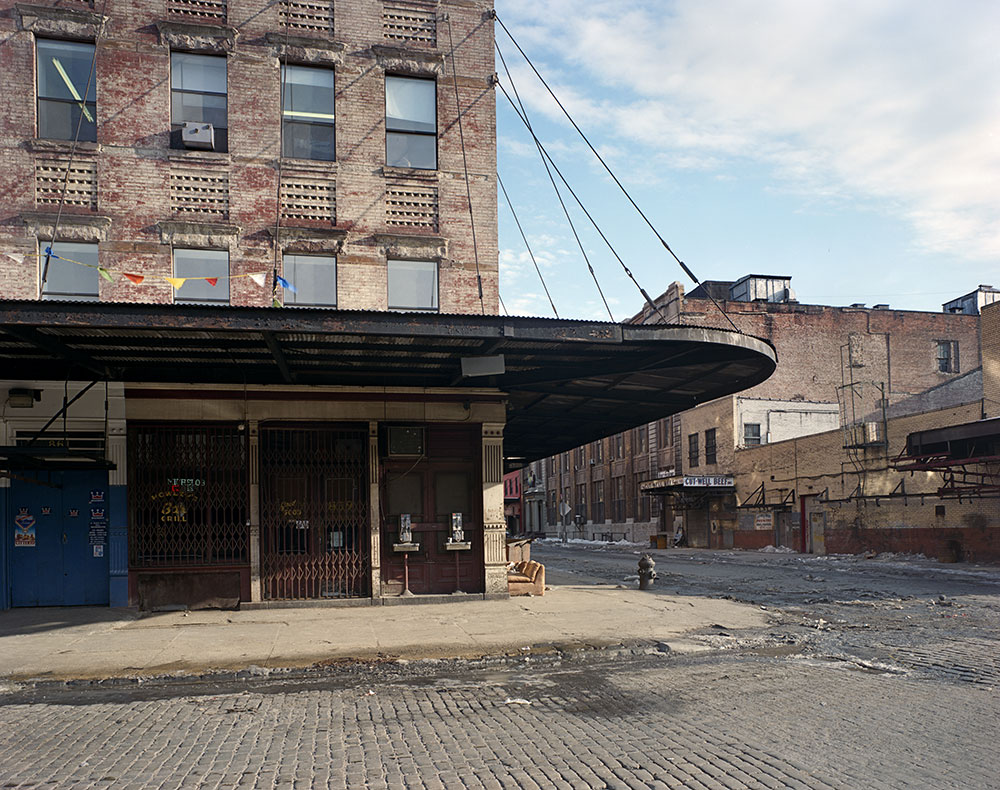
     

    Washington and West 13th Street — © Brian Rose

    Just as in the loft neighborhoods further downtown, there were artists living and working above the meat market below. A telltale sign were the gas heating units that looked similar to window air conditioners. If you didn’t have much money you only ran these for part of the day, and I remember visiting some pretty cold lofts in those days. The other thing that made the meatpacking district less attractive for living was the stench of the meat businesses–it permeated everything.


    West 14th, Hudson, and Ninth Avenue — © Brian Rose
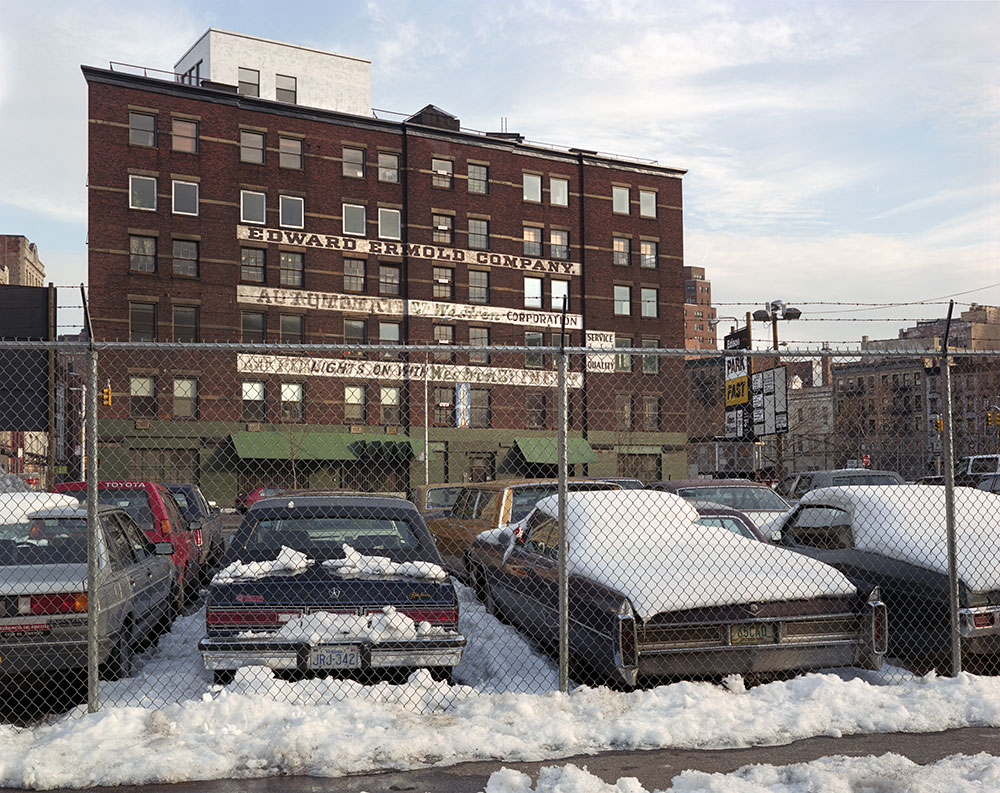
     

    Ninth Avenue — © Brian Rose

    The parking lot above is the present location of the Hotel Gansevoort.
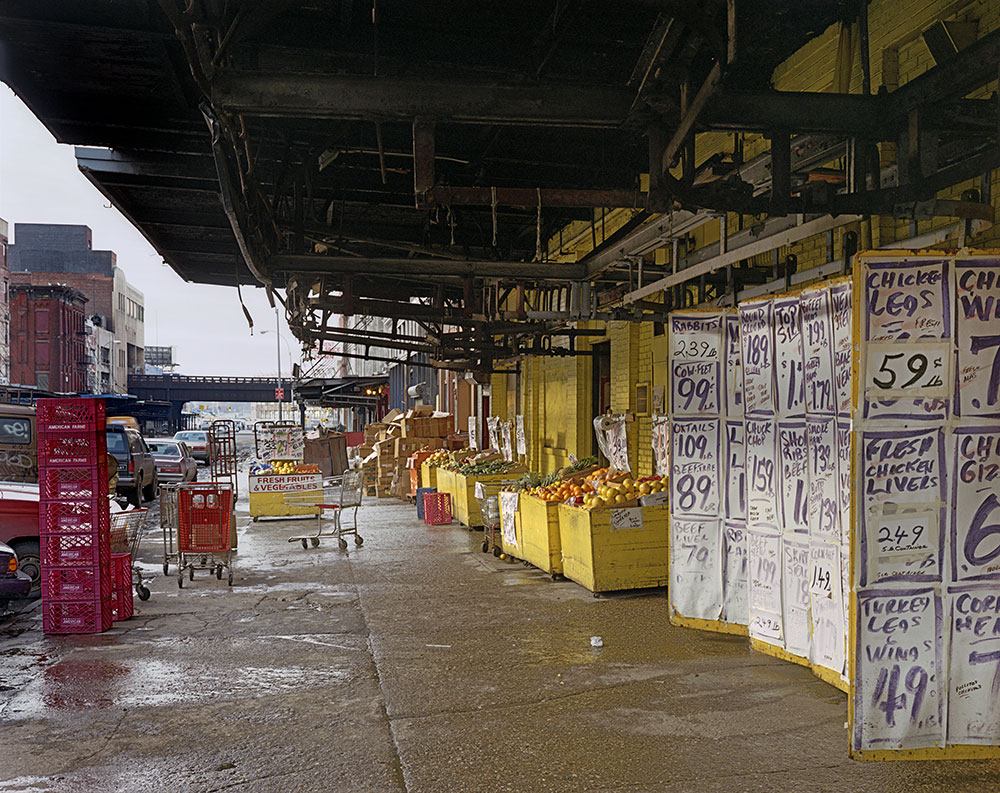
     

    West 14th Street — © Brian Rose

    The “apple” store on 14th Street.
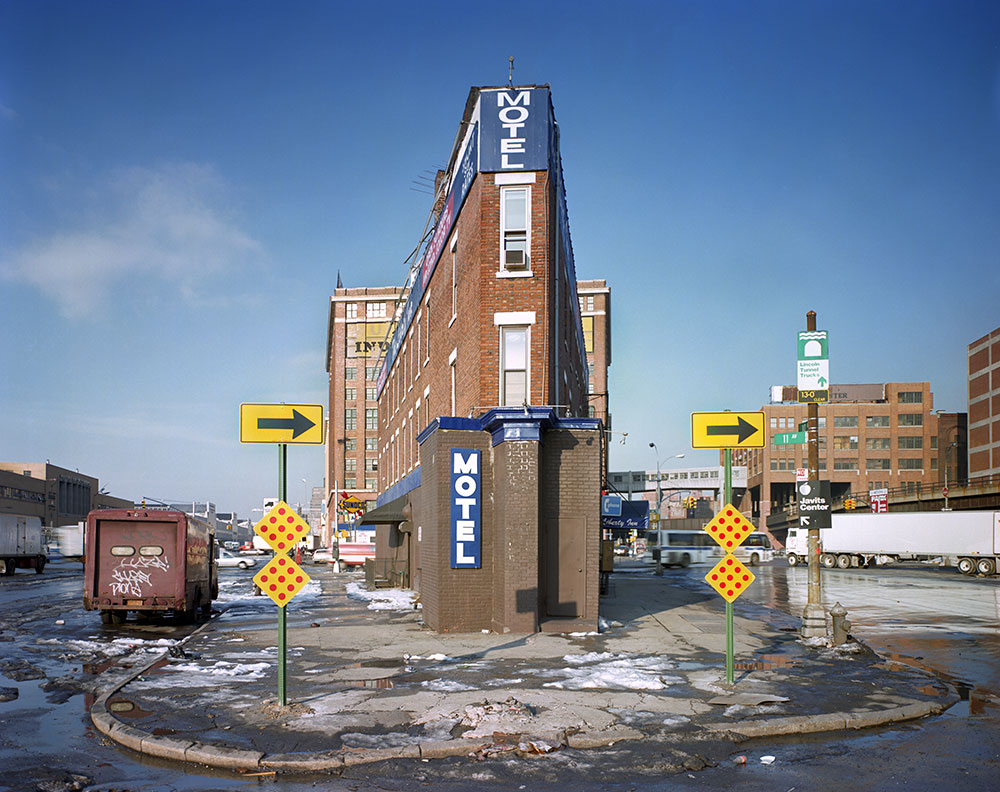
     

    West Street and Tenth Avenue — © Brian Rose

    The Liberty Inn shared its odd shaped building with the Anvil, another of the neighborhoods sex clubs. The Anvil is long gone, but the Liberty lives on as a rent-by-the hour hotel.
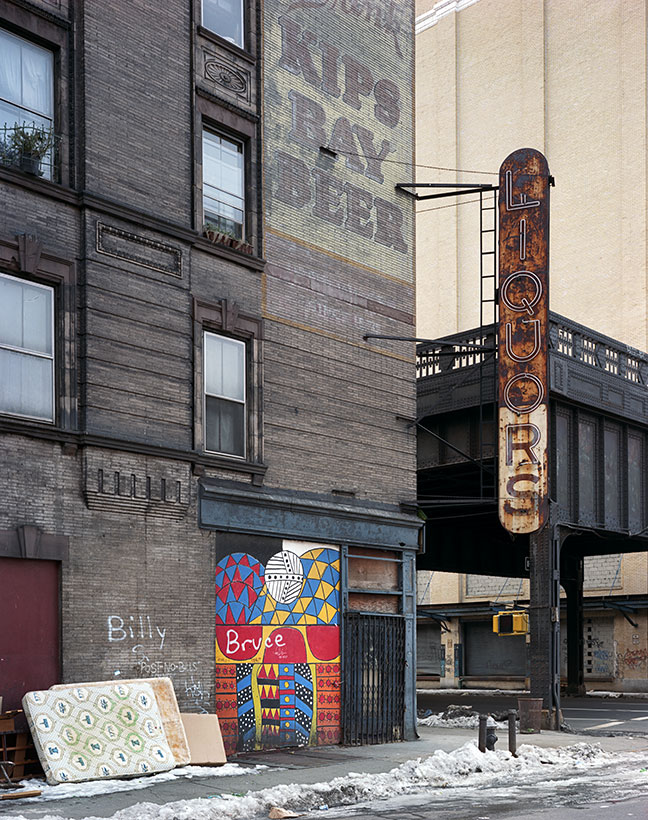
     

    Tenth Avenue and West 17th Street — © Brian Rose

    So much has changed in the meatpacking district and the adjoining gallery area of Chelsea that I hesitate saying anything at all. What was once urban desolation is now the epicenter of fashion and art in the western hemisphere. The High Line is no longer a rusting hulk, but… I’ll let you fill in the blank. I love it–it’s a perfect conjuncture of preservation and contemporary architecture. I hate it–it’s too crowded much of the time to be enjoyed. But what can you do? This is New York. You cannot live here if you cannot abide change.

    Even as the money sloshes through the streets of the meatpacking district, we are reminded of our fragile hold on this island as the waters of Hurricane Sandy flooded the couture shops and art galleries along the Hudson. Our ultimate fate may yet be determined by the melting ice of Greenland.


  • New York/Hell’s Kitchen

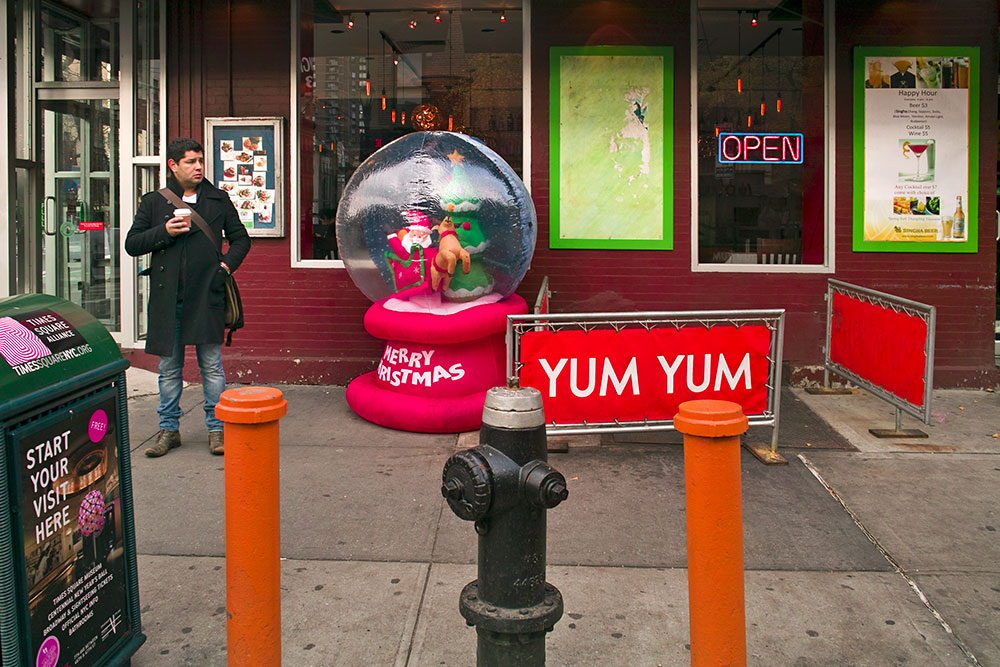
    West 46t Street — © Brian Rose

    Once again , the Christmas spirit in New York.

  • New York/Art Miami

    Art Miami installation, the Dillon Gallery

    Three of my Lower East Side photographs from 1980 (made with Ed Fausty) are being exhibited at Art Miami, one of the big art fairs presently going on in the Miami area. I am being represented by the Dillon Gallery, a New York, Chelsea gallery. I just heard that we sold a print of East 4th Street, the image on the left, above. It’s hard to tell from the snapshot, but the prints are approximately 50×62 inches, and look really terrific at that size. Very pleased, and hoping this leads to more good things.


  • New York/Lower East Side

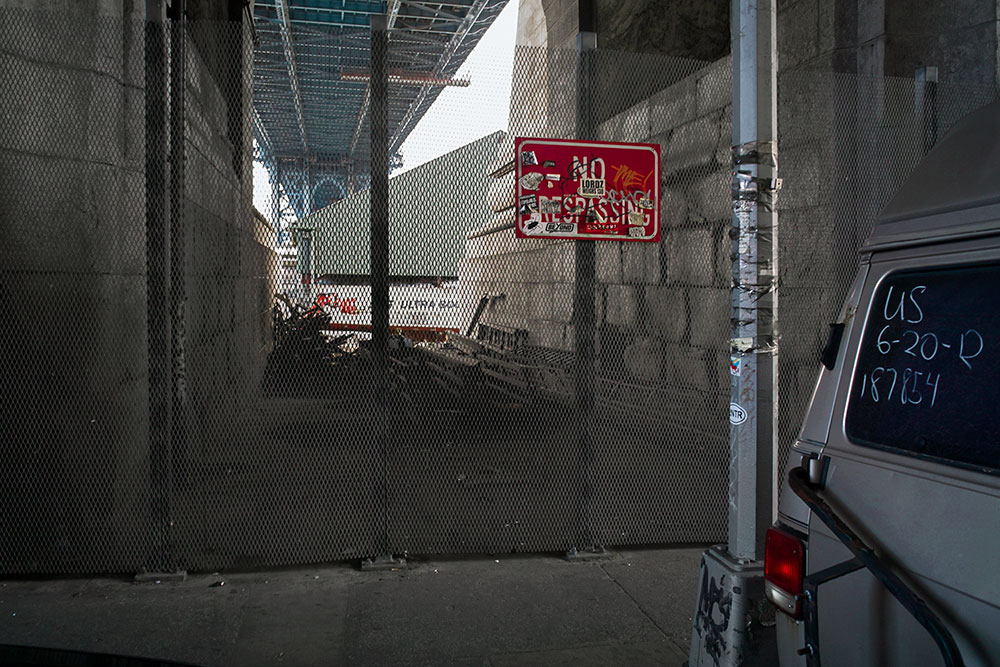
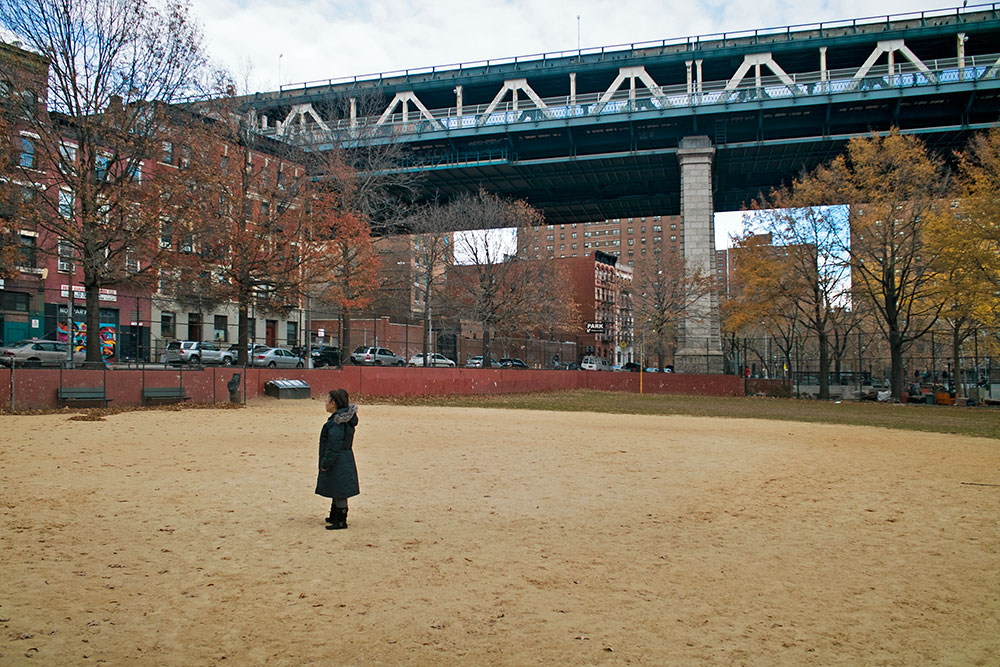
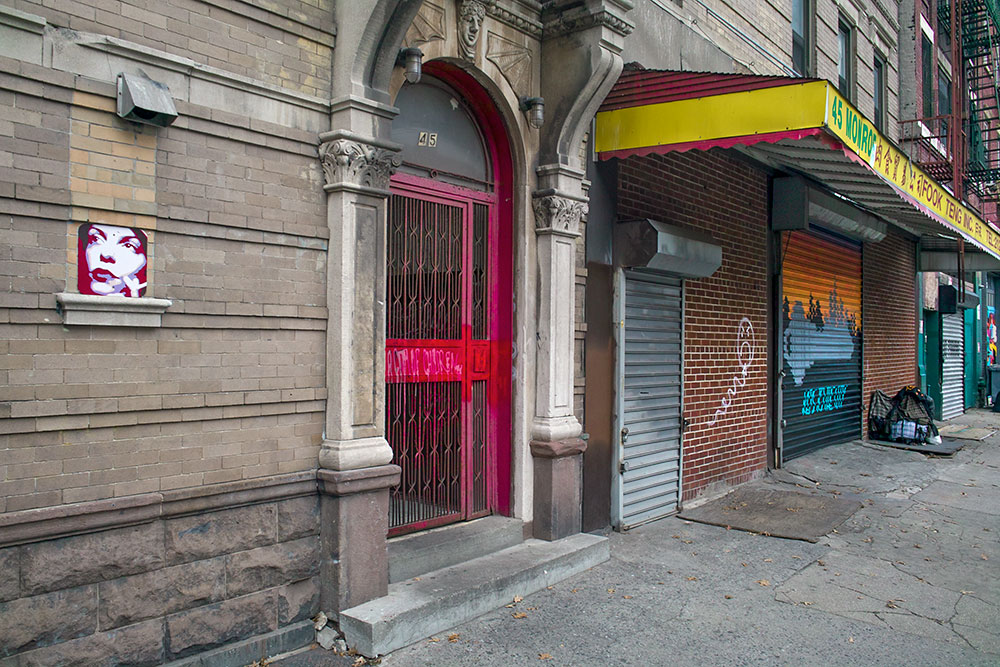
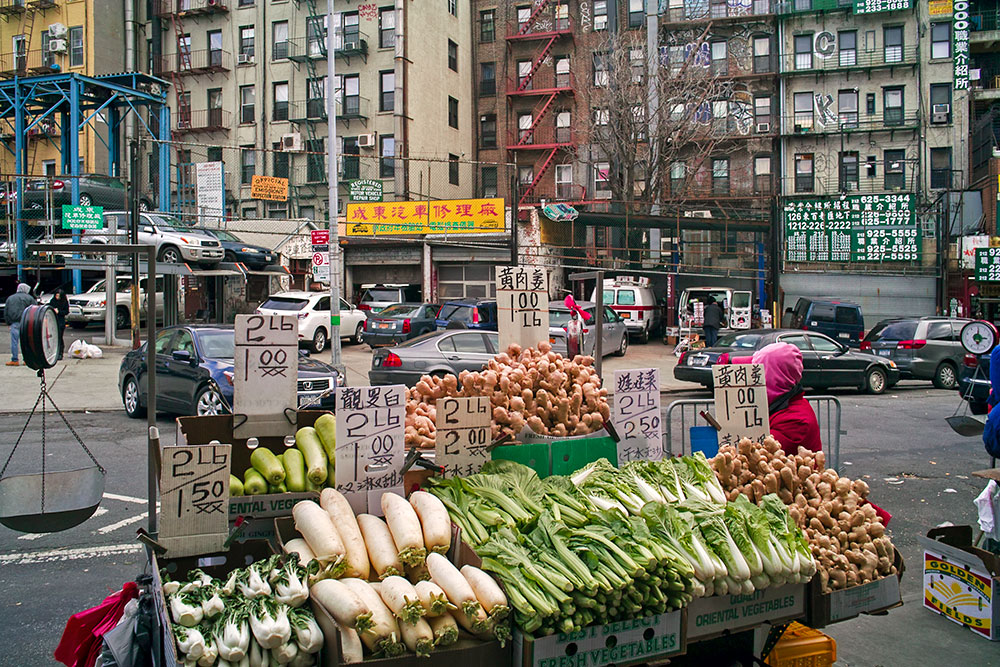
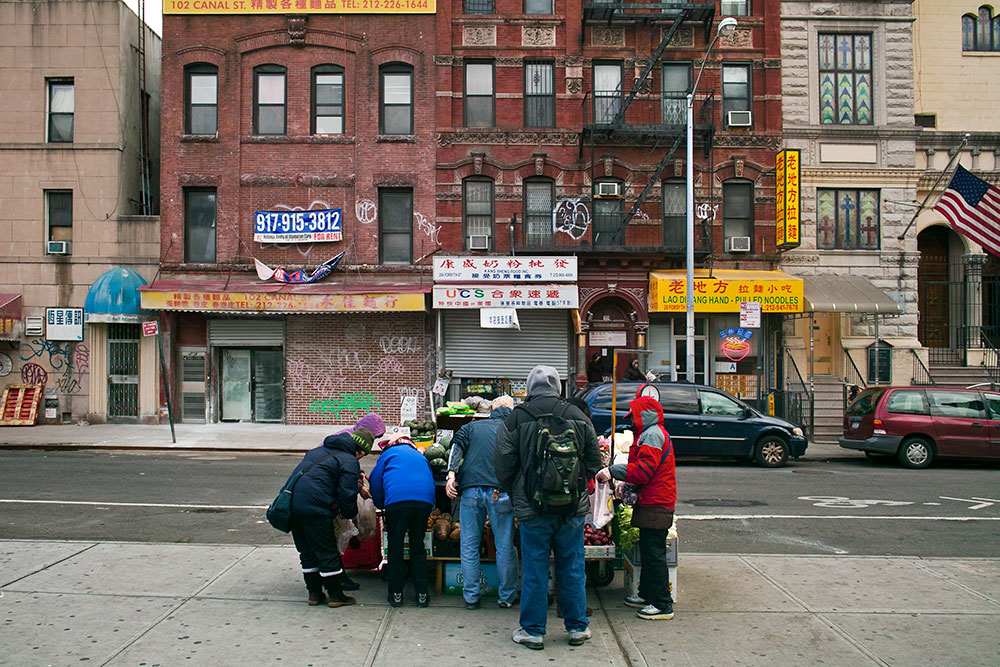
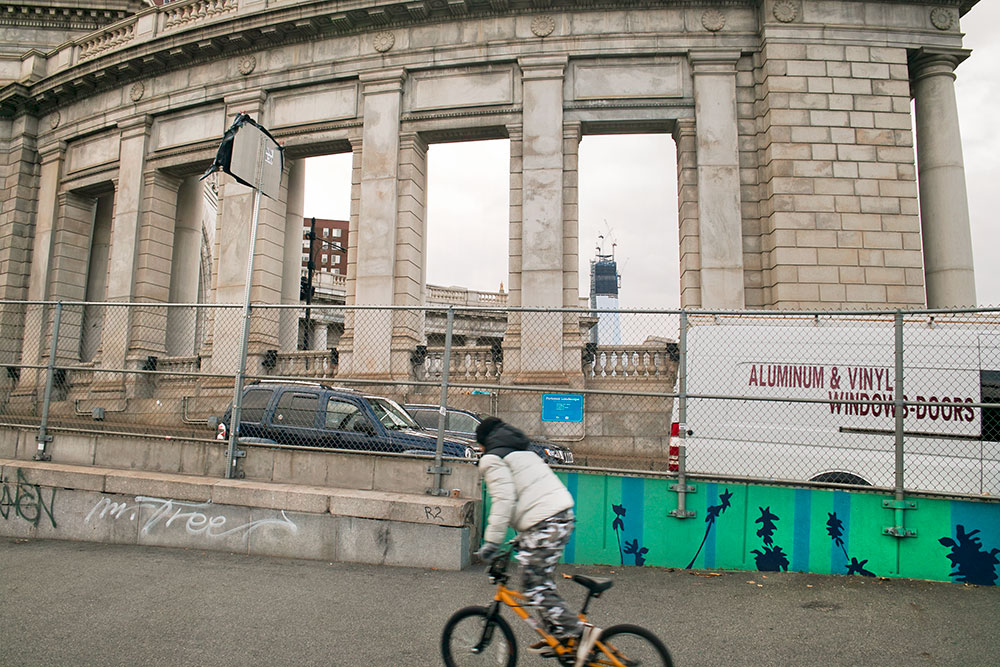
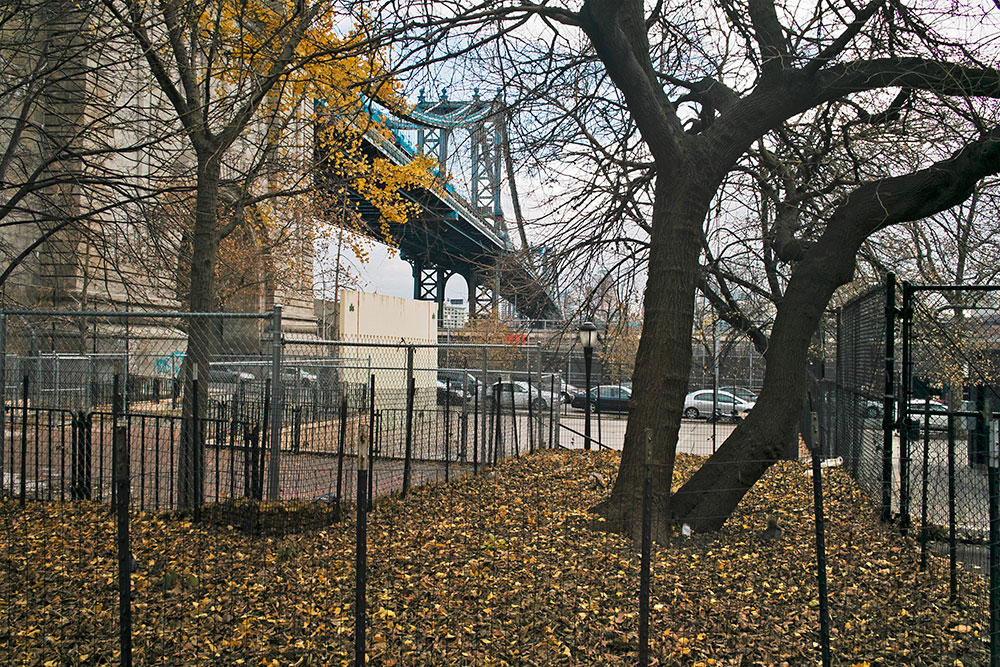
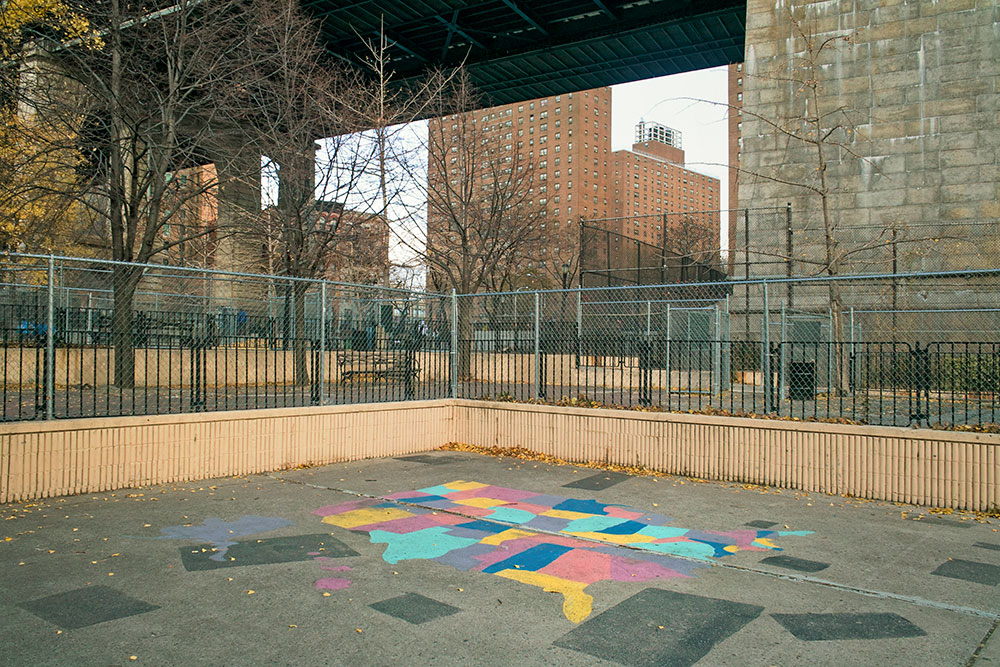
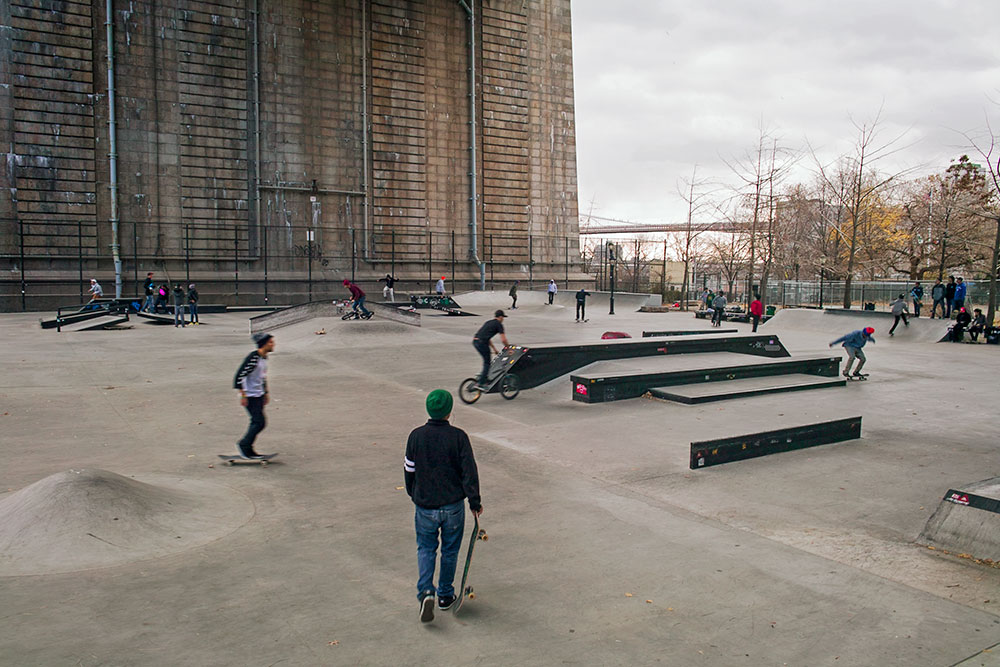
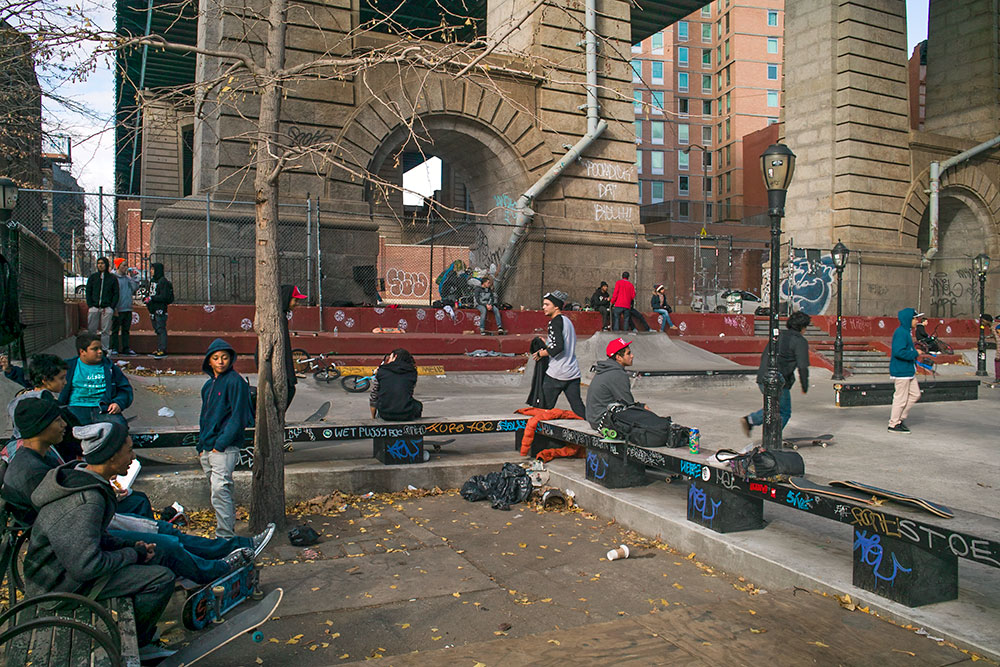
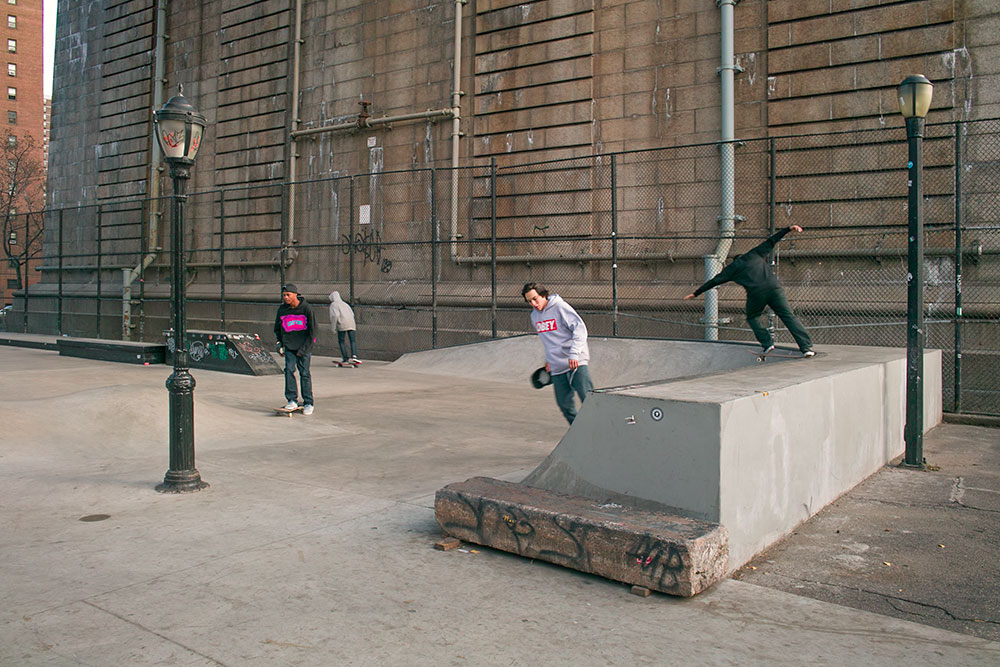
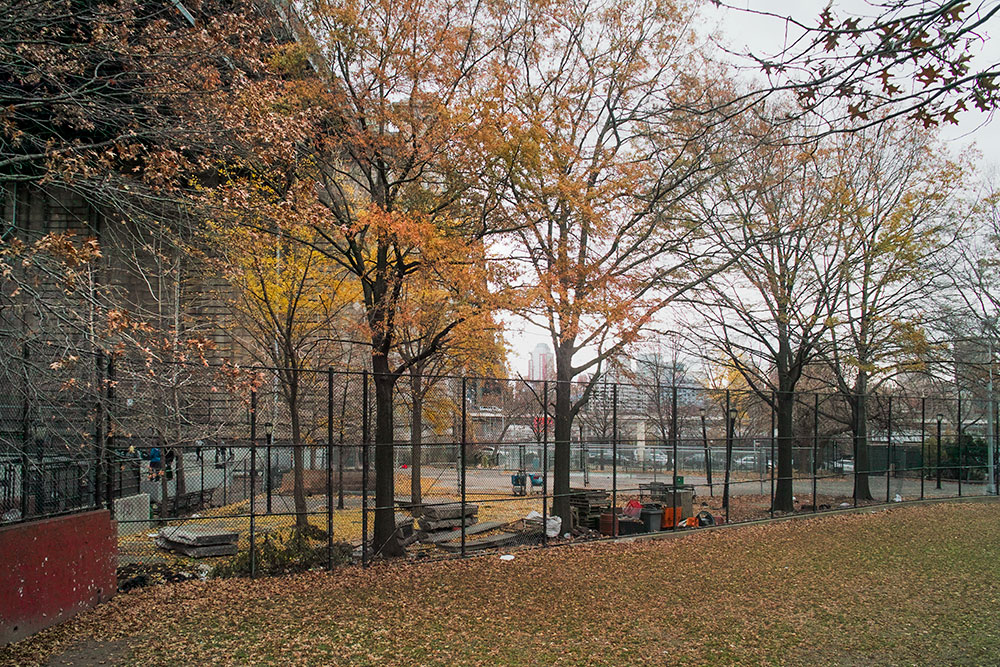
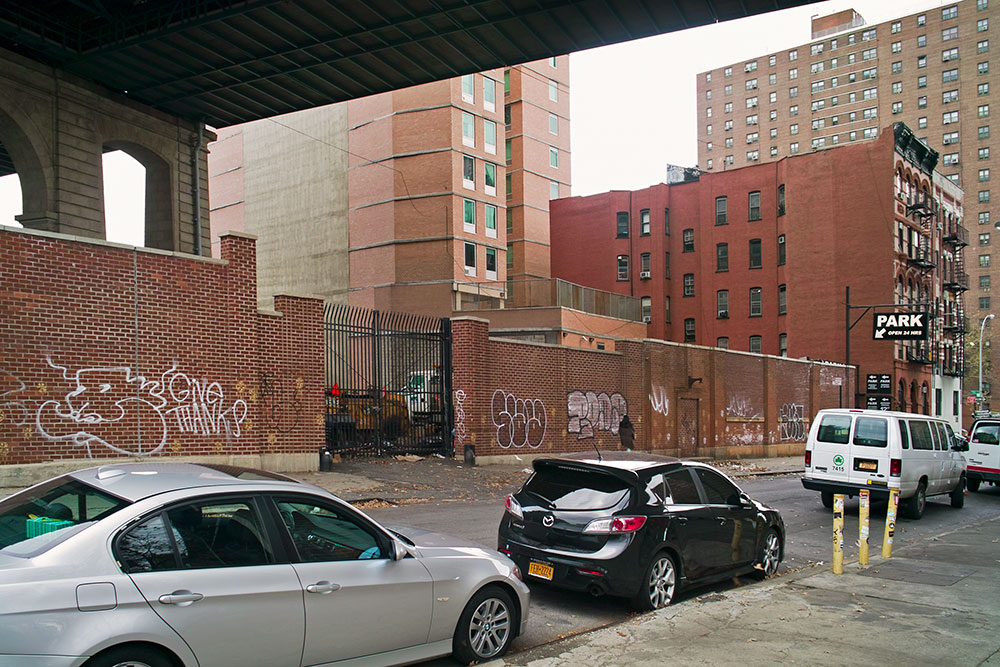
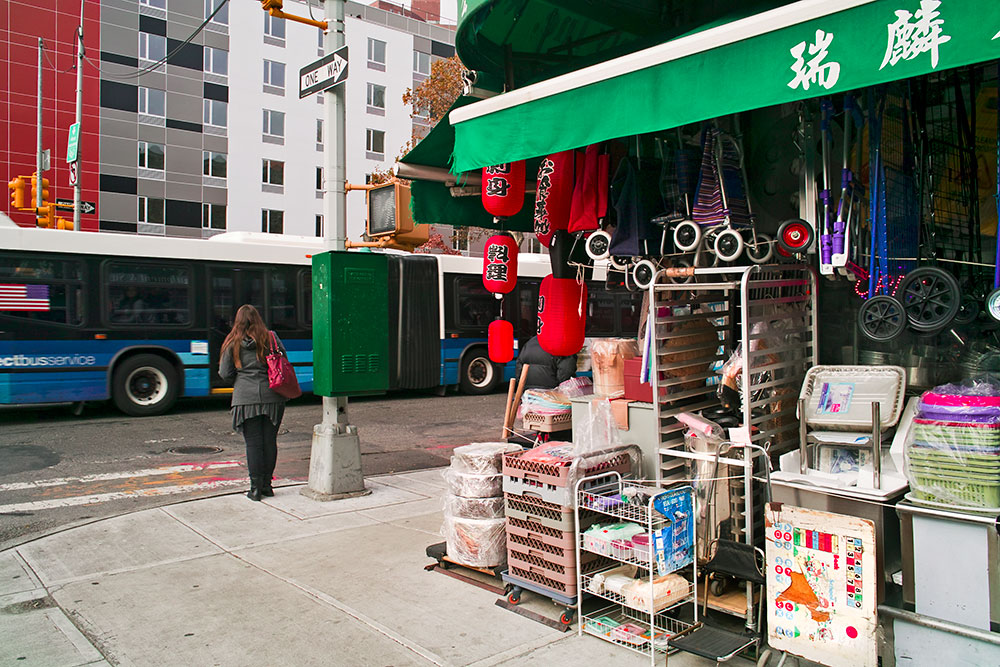
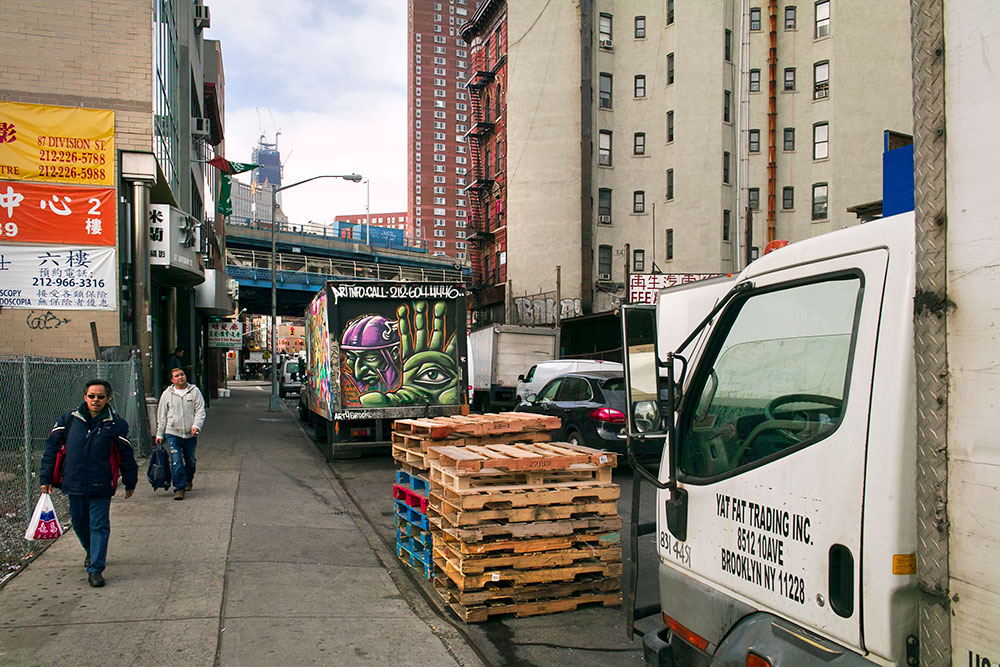
    Continuing my series of pictures taken under and nearby the Manhattan Bridge. Made in conjunction with my ICP class, Photographing New York: the Lower East Side.


    Cherry Street, under the Manhattan Bridge — © Brian Rose


    Monroe Street — © Brian Rose


    Monroe Street — © Brian Rose


    Forsyth Street – © Brian Rose


    Forsyth Street — © Brian Rose


    Canal Street, approach to the Manhattan Bridge — © Brian Rose

  • New York/Lower East Side

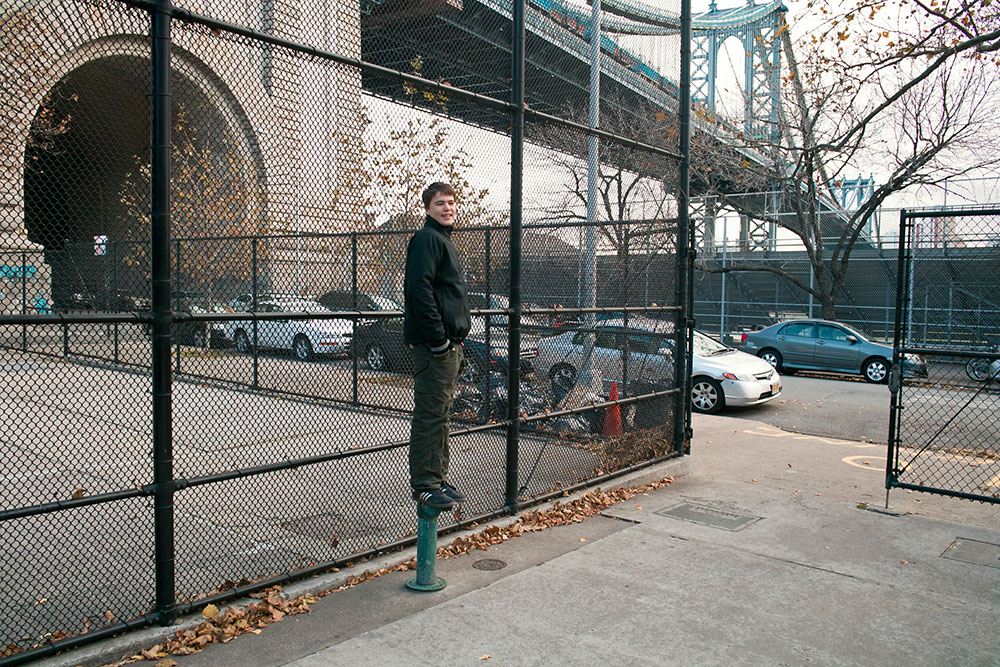
    Brendan, my 14 year old son, at the Manhattan Bridge — © Brian Rose

    Last week my ICP class went to the area around the Manhattan Bridge on the Lower East Side. We were working off an iconic photograph by Berenice Abbott of Pike Slip looking toward one of the bridge towers. At the time her photograph was made, tenements crowded around the massive stone architecture and steel engineering that began near the Bowery and soared over the city before spanning the East River. The bridge continues to exert a dominant presence in the urban landscape, though most of the tenements have been torn down, replaced by housing projects, parks and ball fields. However, a part of Chinatown still borders the bridge with its hustle and bustle, and colorfully cluttered shopping malls have been constructed beneath the supports of the bridge. At Monroe Street, a there is an elaborate skatepark  hemmed between the massive stone piers of the bridge. It is a spectacular setting, a mecca for skateboarders and bmx’ers.

    Yesterday, I took my 14 year old son with me for a photo walk around the bridge.


    Manhattan Bridge — © Brian Rose


    Under the Manhattan Bridge — © Brian Rose


    Skatepark under the Manhattan Bridge — © Brian Rose


    Skatepark under the Manhattan Bridge — © Brian Rose


    Skatepark under the Manhattan Bridge — © Brian Rose


    Park adjacent the Manhattan Bridge — © Brian Rose


    Under the Manhattan Bridge — © Brian Rose


  • New York/Van Alen Books

    Excerpts of my slide talk and discussion at Van Alen Books with Sean Corcoran, photo curator of the Museum of the City of New York.

  • New York/Lower East Side

    Pike Slip and  Henry Street — © Brian Rose

    Without comment.


  • New York/Lower East Side

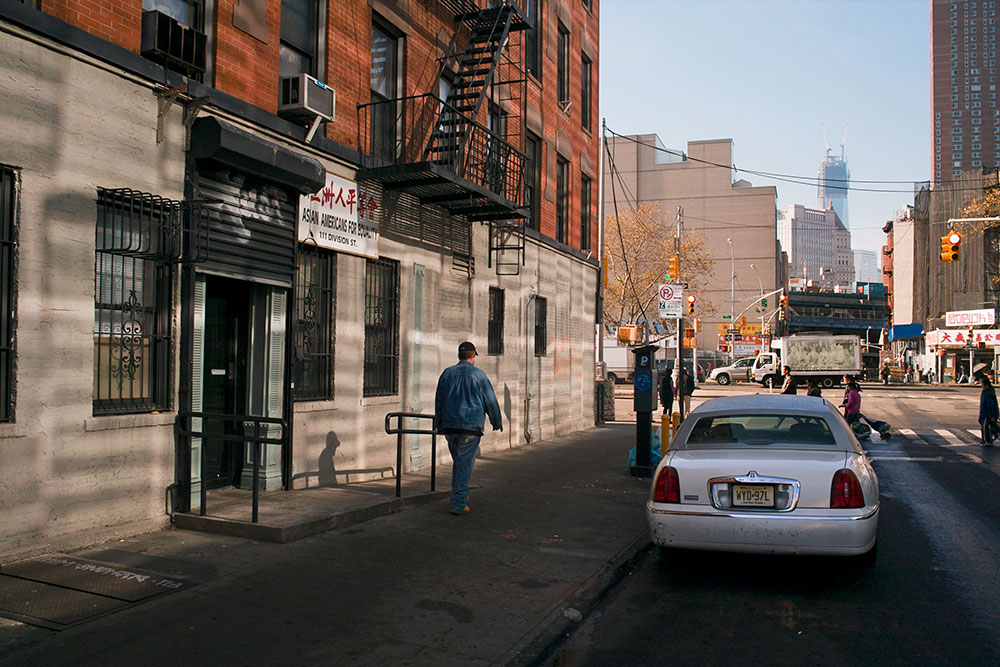
    Division Street — © Brian Rose

    Chinatown, Manhattan Bridge, One World Trade Center in the background.
     

  • New York/Lower East Side

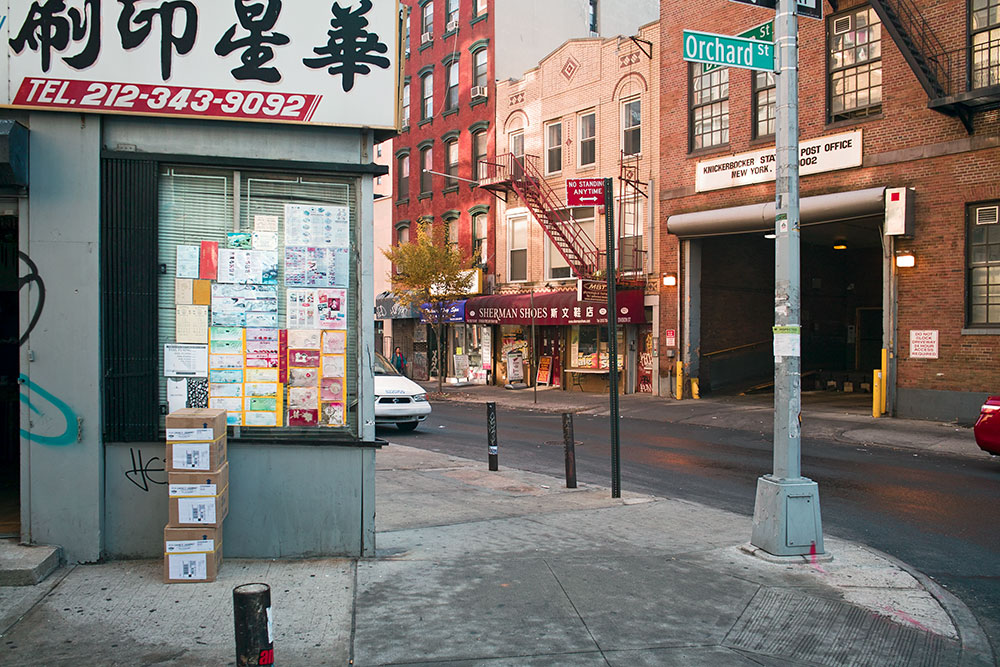
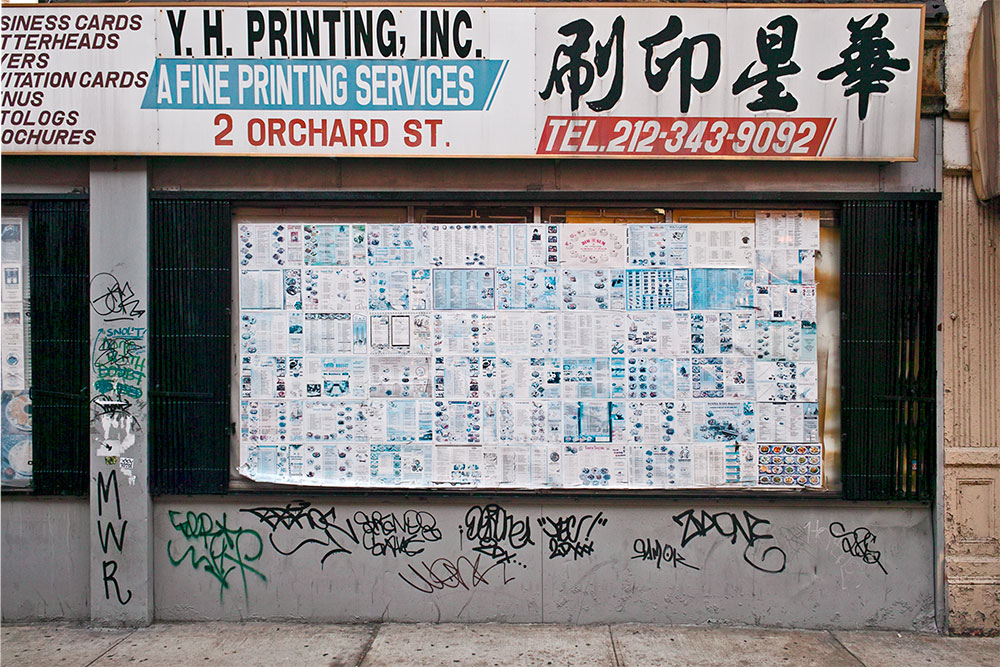
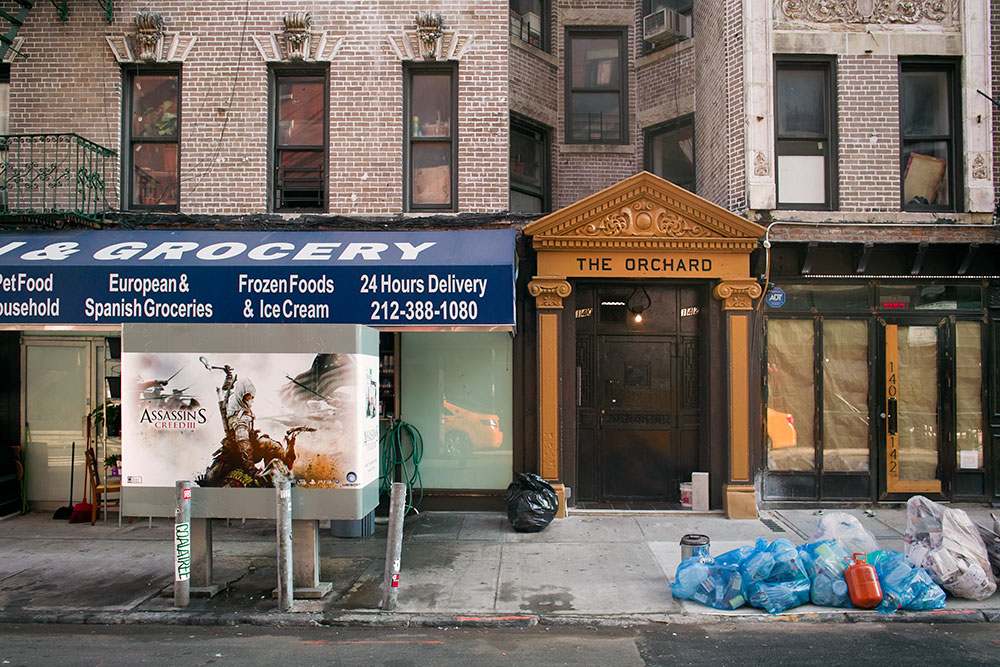
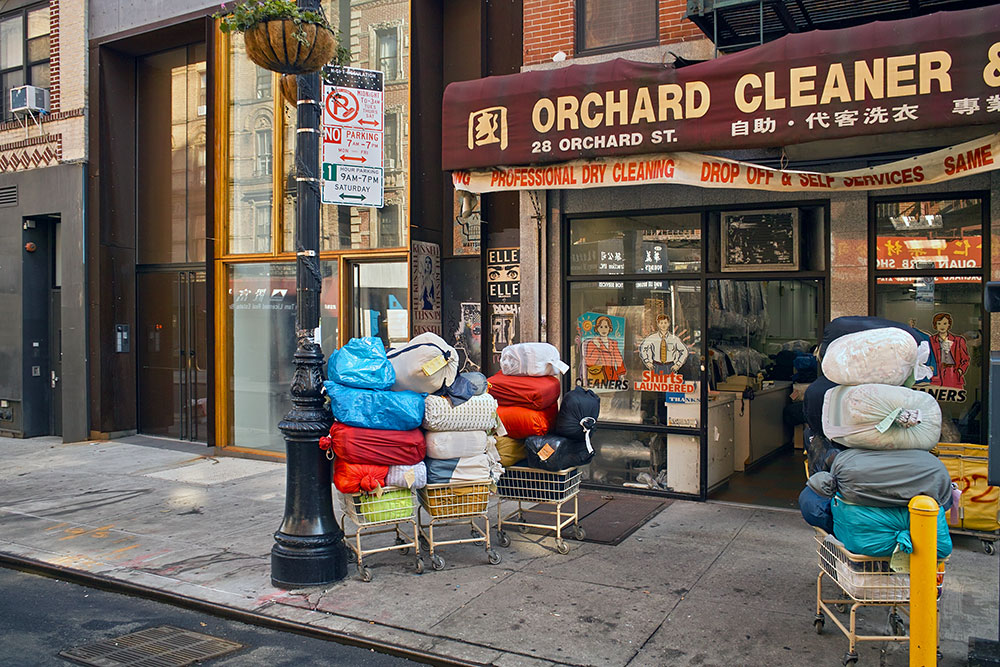
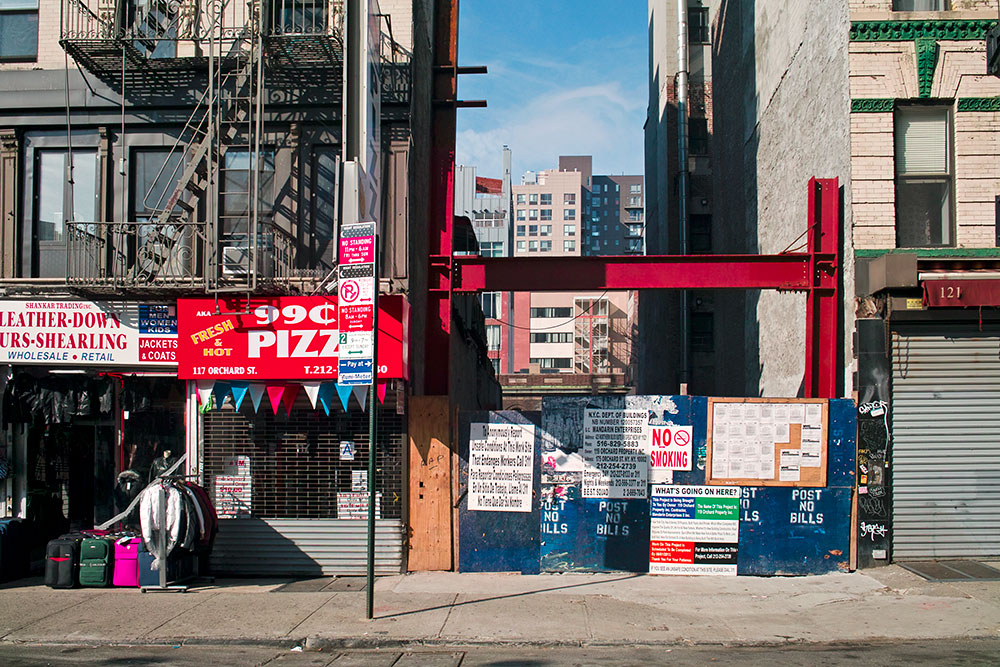
    More small camera photographs of Orchard Street made while accompanying my photo class from ICP. Pick a place as historically and visually rich as this and the possibilities are limitless.

    See my other photos posted previously.


    Orchard and Delancey Street — © Brian Rose


    Orchard Street — © Brian Rose


    Orchard  and Division Street — © Brian Rose


    Grand and Orchard Street — © Brian Rose


    Orchard and Division Street — © Brian Rose


    Division and Orchard Street — © Brian Rose


    Division and Orchard Street — © Brian Rose


    Orchard Street — © Brian Rose


  • New York/Lower East Side

    I went with my ICP class, Photographing New York, the Lower East Side, down to Orchard Street for a group shooting expedition. One of the goals of the class is to produce a book of our photographs using Blurb, the online book service. Normally, there are ten sessions, but thanks to Hurricane Sandy, the time frame has become rather compressed. So, rather than waiting for each student’s individual projects to take shape, I decided that we would work together on two specific LES locations, over a two week period.
    On Monday we spent three hours shooting Orchard Street from end to end–Houston Street down to Division Street. Orchard remains the Lower East Side’s most iconic street, it’s 19th century architecture relatively intact, and it is the location of the Tenement Museum. The day was sunny and very warm for this time of year–in the 60s. I shot pictures along with the class using my pocket digital camera. Here are some of my photos:


    Orchard Street — © Brian Rose


    Rivington at Orchard Street — © Brian Rose


    Orchard Street — © Brian Rose


    Orchard Street — © Brian Rose


    Orchard Street — © Brian Rose


    Orchard and Division Street — © Brian Rose

    Additional photos here. 

  • New York/Lower East Side

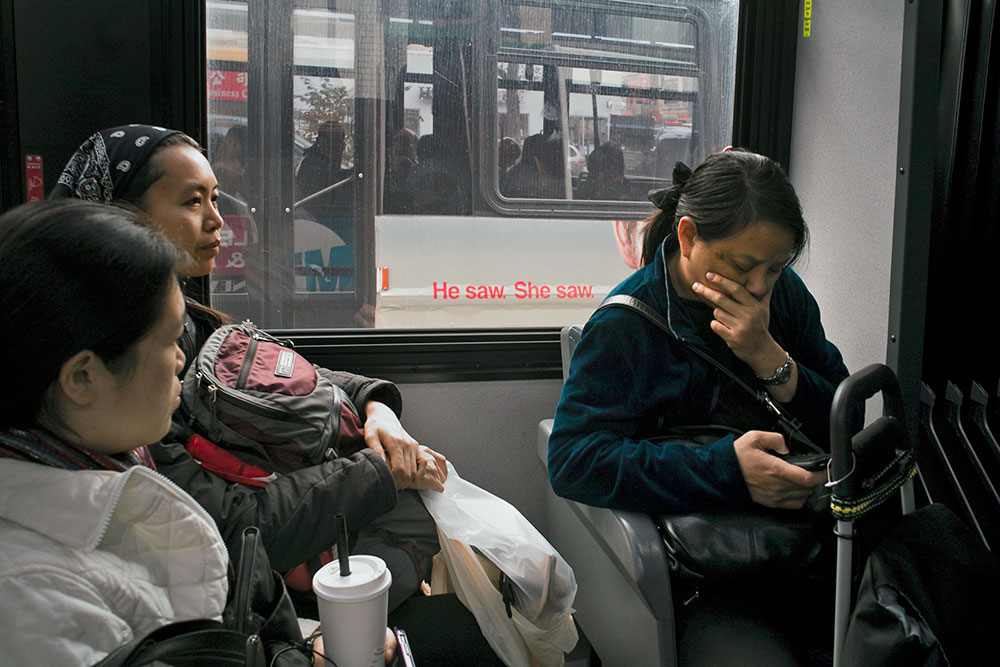
    On the bus, the Lower East Side — © Brian Rose

    The event at Van Alen Books went well on Friday evening. A small crowd, but a very cool place, where the tiered levels normally used to display books, turns into seating space. I did a slide presentation of Time and Space on the Lower East Side and then engaged in conversation with Sean Corcoran, photography curator of the Museum of the City of New York.  I’d like to thank the folks at Van Alen  for having me, and Sean for his participation.


  • New York/Van Alen Books

    TIME AND SPACE ON THE LOWER EAST SIDE
    BY BRIAN ROSE

    A Slide Presentation and Book Signing

    Join photographer Brian Rose and Sean Corcoran, Museum of the City of New York Curator of Prints and Photographs, for a conversation on photography, place, time, and change.

    FRIDAY, NOVEMBER 9, 7PM

    VAN ALEN BOOKS
    NYC’S ARCHITECTURE AND DESIGN BOOKSTORE

    30 W. 22ND STREET, GROUND FL, NEW YORK, NY

    …these clear, sharp, detailed images present more visual information than the eye can take in. They are a view across time and space, beyond the merely human perspective. This complex and handsomely-presented project is a portrait, or map, of a place, which challenges our assumptions about urban street photography. -Photo Eye Magazine

    Time and Space Website
    Van Alen Books


  • New York/Richmond, Virginia


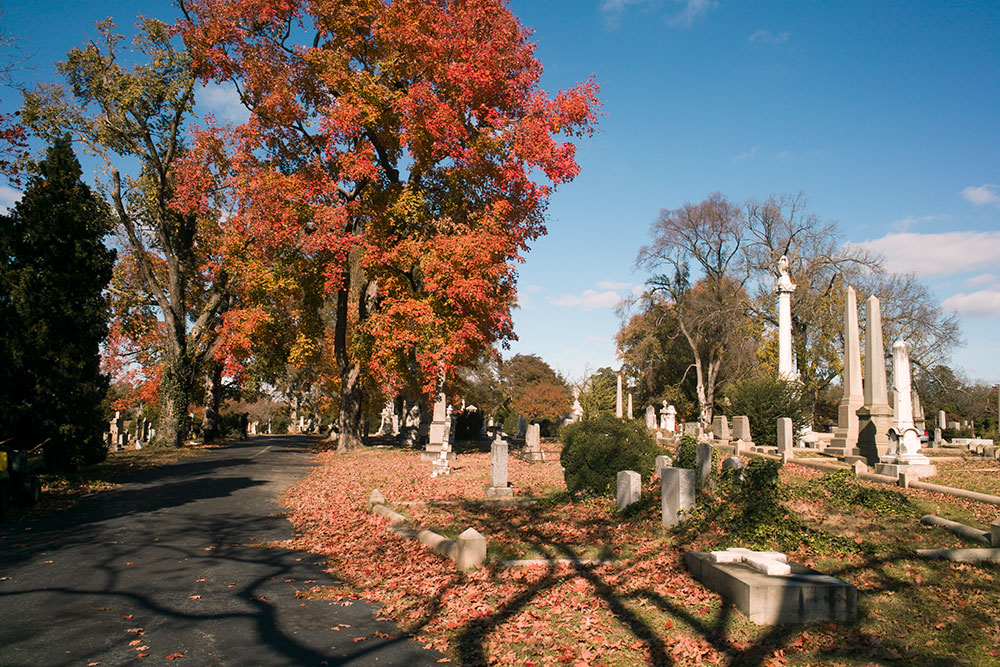
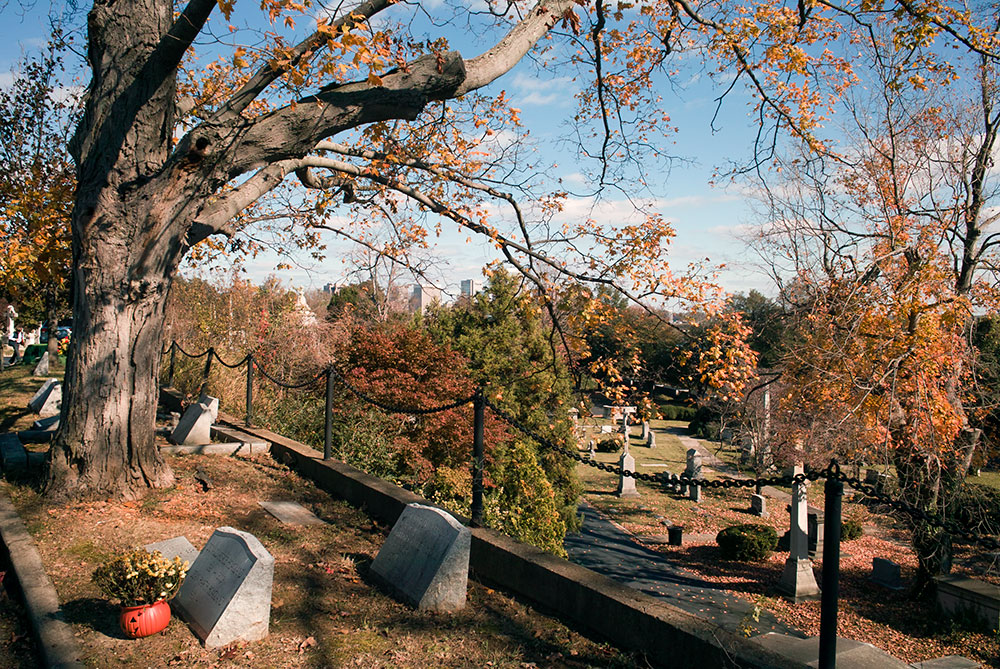
    Hollywood Cemetery, Richmond, Virginia — © Brian Rose

    I made a quick escape from post-Sandy New York to get to a burial service in Richmond, Virginia for my aunt and uncle–my aunt died recently–and their ashes were buried together according to their wishes. It was difficult getting out of New York in the aftermath of the storm, but I was able to book a flight to Washington, D.C., and then drive to Richmond.

    The burial was in Hollywood Cemetery, a historic, dramatically gothic landscape of rolling hills, perched on a bluff overlooking the James River. It was a crisp fall day, the trees in full color.


    Hollywood Cemetery, Richmond, Virginia — © Brian Rose


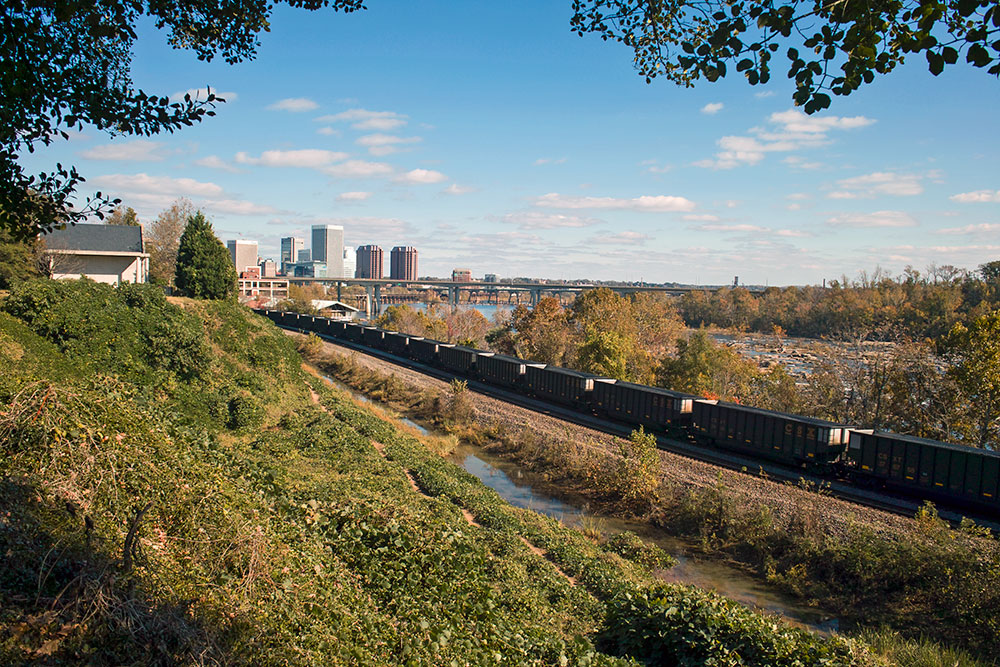
    Richmond skyline and the James River — © Brian Rose

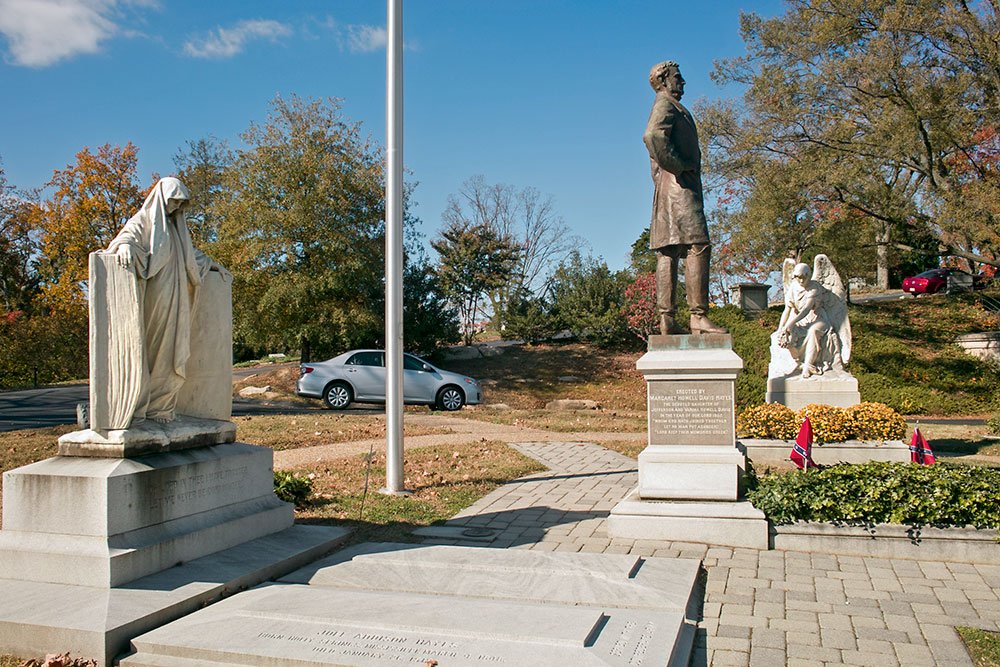
    I arrived at the burial service just as it was about to begin, and hastily parked my car down the hill away from the small knot of family and friends assembled by the grave site. After the service I retrieved my car, which was standing next to an odd grouping of statues decorated with several confederate flags, and realized to my surprise that this was the grave of Jefferson Davis, the one time president of the Confederacy.


    Grave of Jefferson Davis, president of the Confederacy — © Brian Rose

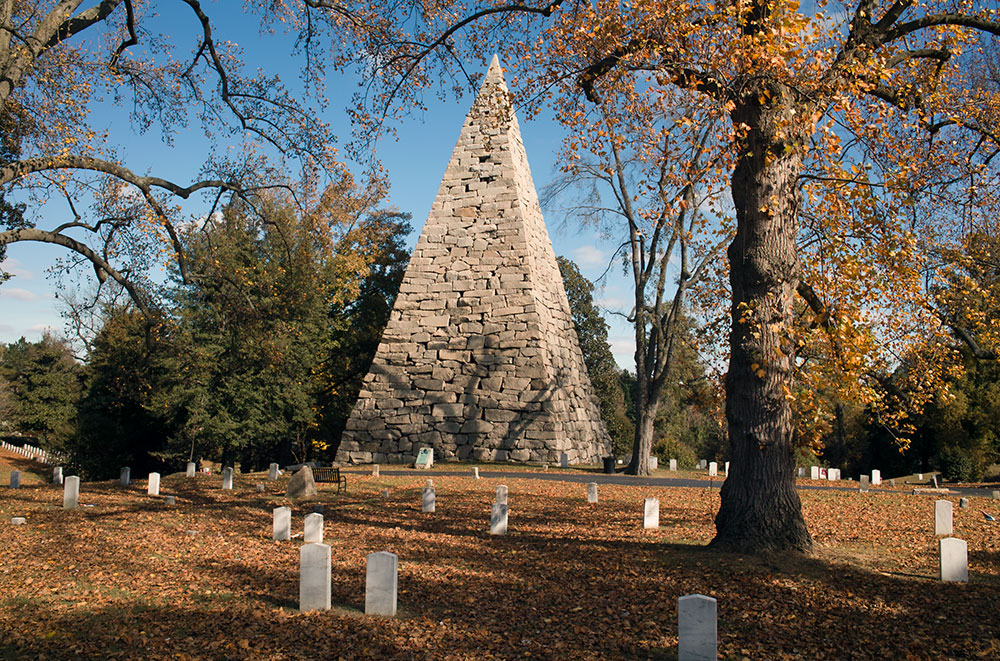
    As I drove out of the cemetery I came across a huge stone pyramid built in memory of the Civil War dead. There were more confederate flags scattered about the stones, and as much as I understand the complex historic symbolism of the flag, the sight still gives me a chill. I find it hard to separate the flag from its connection to slavery and the lingering presence of racism in society–and the atmosphere around the current presidential election only sharpens that awareness.


    Monument dedicated to Civil War dead — © Brian Rose

    I express these reservations in light of my own family history, some of which I’ve only discovered in recent weeks. My mother’s side of the family traces its roots to Mississippi, and my great great great grandfather was killed at the battle of Vicksburg. For all I know, there is a stone marker for him down there, like one of these in Hollywood Cemetery.

    Update: I checked. There is a marker in Vicksburg for my ancestor.


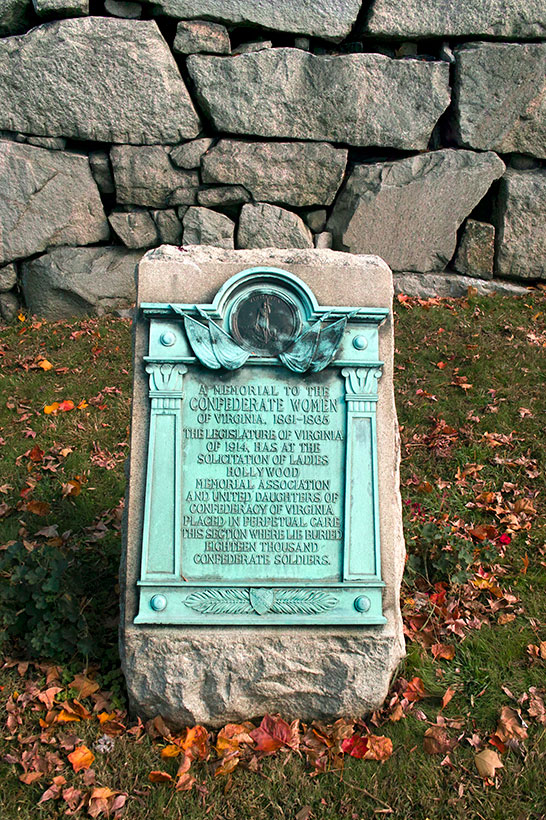
    Hollywood Cemetery plaque — © Brian Rose

    The plaque above, placed next to the pyramid reads:

    A MEMORIAL TO THE
    CONFEDERATE WOMEN
    OF VIRGINIA, 1861-1865
    THE LEGISLATURE OF VIRGINIA
    OF 1914, HAS AT THE
    SOLICITATION OF LADIES
    HOLLYWOOD
    MEMORIAL ASSOCIATION
    AND DAUGHTERS OF
    CONFEDERACY OF VIRGINIA
    PLACED IN PERPETUAL CARE
    THIS SECTION WHERE LIE BURIED
    EIGHTEEN THOUSAND
    CONFEDERATE SOLDIERS

  • New York/The Bronx

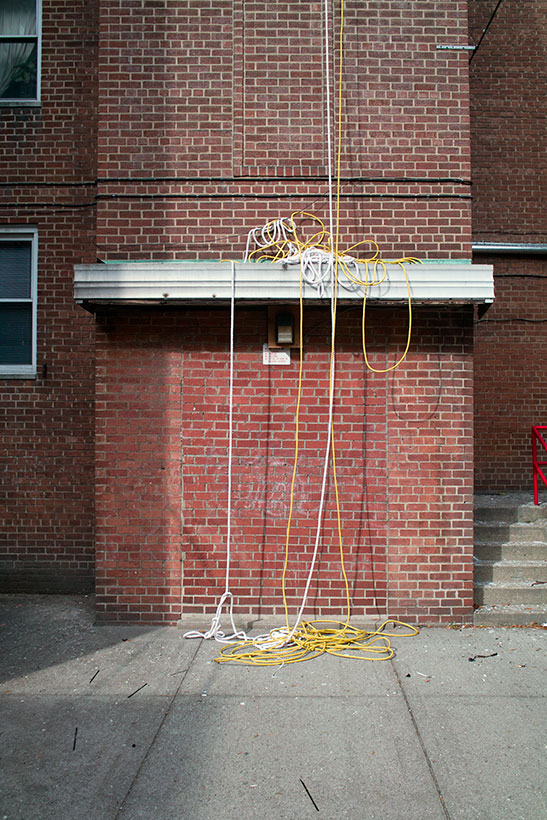
    Perry Avenue, The Bronx — © Brian Rose

    Visual non sequitur.


  • New York/Post-Sandy

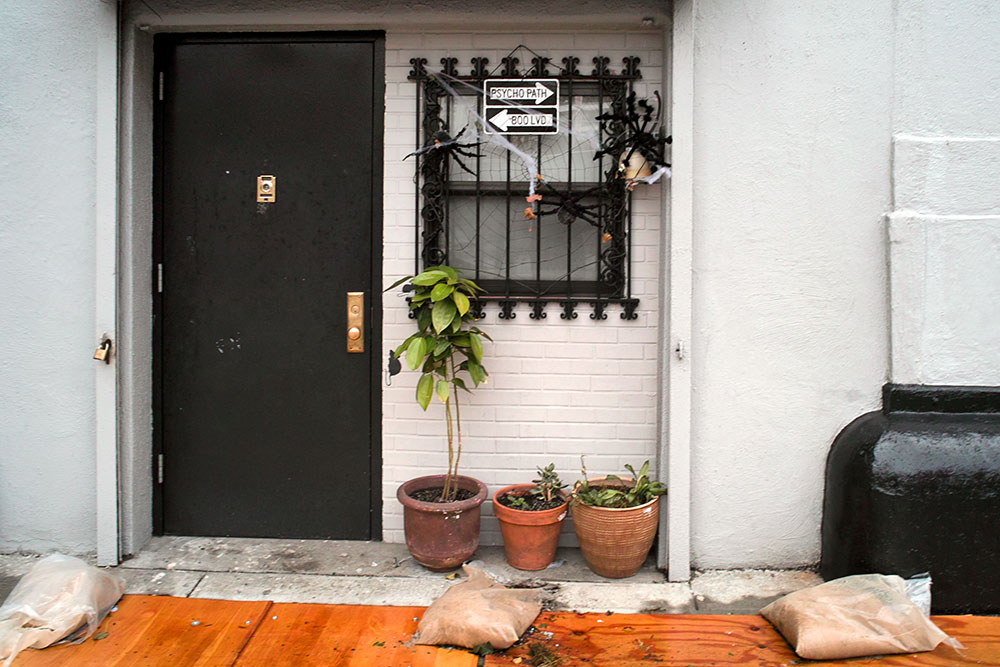
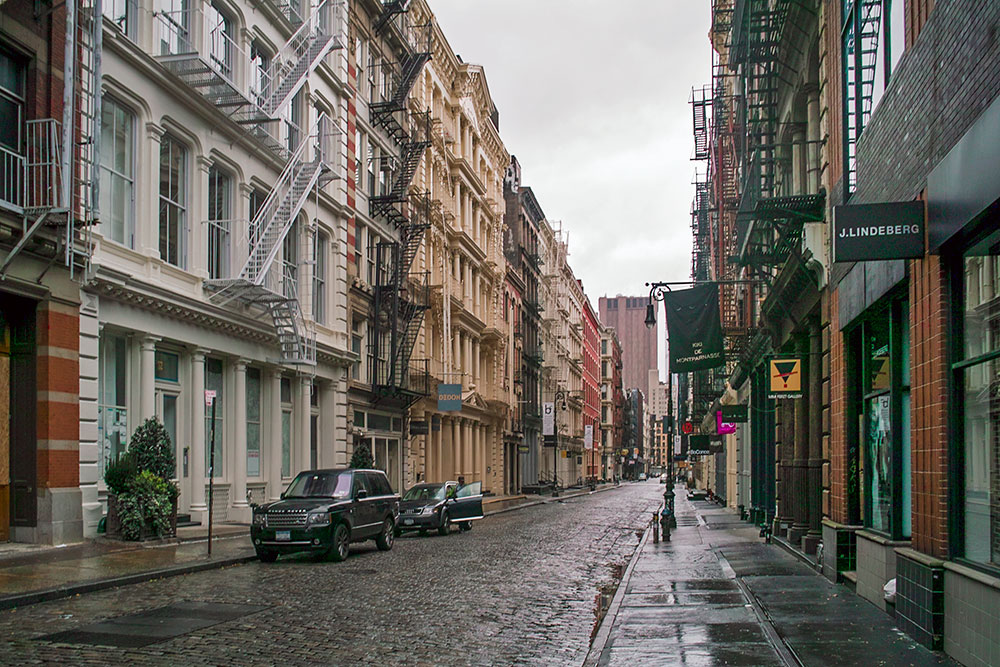
    Grand Street, Soho — © Brian Rose

    There’s hope in sight with ConEd’s Twitter statement that power should be back on in lower Manhattan Friday or Saturday. Although Halloween was essentially cancelled, things were still pretty spooky in the zombie zone between “Psycho path and Boo lvd ( see above).”  Stoplights are not working, which means that pedestrians and cars are playing a potentially lethal game of chicken. Food is scarce, and downtowners wander in search of a charge for their phones. On the one hand it’s mostly about temporary inconveniences–on the other hand there are numerous elderly and disabled people stuck in high rises. As I understand it, volunteers are going door-to-door checking on people, bringing water and other supplies. Meanwhile, uptown, everything is open and people are shopping.

    And a pet peeve: I hate, hate, hate, seeing all the artsy faux film instagram pictures of hurricane damage.

  • New York/Aftermath

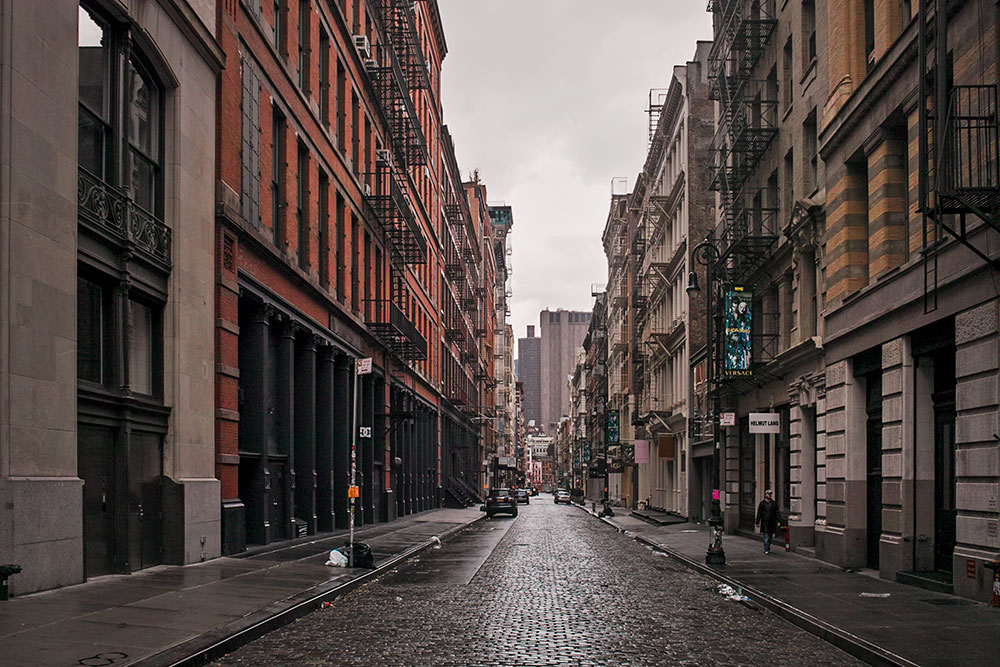
    Soho after Hurricane Sandy — © Brian Rose

    The thing that isn’t adequately coming out in the media is that unless power is restored to lower Manhattan soon, there will be humanitarian ramifications to deal with. There are no stores or restaurants open downtown below 25th Street. No supermarkets–only a few bodegas and/or delis, which do not have working refrigeration or the ability to replenish stock. The subways are not running. The streets are utterly dark at night, and elevators are not working.

    For young, healthy individuals, this is all just a major inconvenience. Above 25th, the city is bustling. But for thousands of elderly, less mobile people, the situation is undoubtedly getting dire.


  • New York/Soho

    Soho after Hurricane Sandy — © Brian Rose

    The hurricane seemed rather benign at first, the winds not too ferocious, but eventually the water began to rise in New York Harbor. As a result, all of lower Manhattan is without power, the streets are largely empty, and with few cars on the streets, an eerie quiet has descended. My studio on Stanton Street just off the Bowery is completely dark inside, and you need a flashlight to get up the stairs. The water has receded in most places, but the entire subway system is shut down, stores and restaurants are closed, as are most office buildings, and ATMs do not operate. At the moment, things are manageable, but if the power remains off for another day, things are likely to get pretty dicey. We spent a few hours walking around this afternoon, crossing the Williamsburg Bridge to Manhattan on foot. I am posting this from Williamsburg, which thankfully, did not lose power during the storm.


  • New York/Van Alen Slide Talk

    TIME AND SPACE ON THE LOWER EAST SIDE
    BY BRIAN ROSE

    A Slide Presentation and Book Signing

    Join photographer Brian Rose and Sean Corcoran, Museum of the City of New York Curator of Prints and Photographs, for a conversation on photography, place, time, and change.

    FRIDAY, NOVEMBER 9, 7PM

    VAN ALEN BOOKS
    NYC’S ARCHITECTURE AND DESIGN BOOKSTORE

    30 W. 22ND STREET, GROUND FL, NEW YORK, NY

    …these clear, sharp, detailed images present more visual information than the eye can take in. They are a view across time and space, beyond the merely human perspective. This complex and handsomely-presented project is a portrait, or map, of a place, which challenges our assumptions about urban street photography. -Photo Eye Magazine

    Time and Space Website
    Van Alen Books