Category: Photographers/Photography

  • New York/Slide Talk

    Sponsored by the Greenwich Village Society for Historic Preservation. A slide talk and presentation of my book (shipment arriving any day now). I will, at the very least, have a copy or two at the event. Be sure to reserve seats. These GVSHP programs fill up quickly.

    web-logo-thumbnail
    GVSHP website

    Metamorphosis
    Photos of Gansevoort Market / Meatpacking District by Brian Rose

    Wednesday, July 9
    6:30 – 8:00 P.M.
    Free; reservations required
    Washington Square Institute
    41 East 11th Street, near University Place

    meatpack

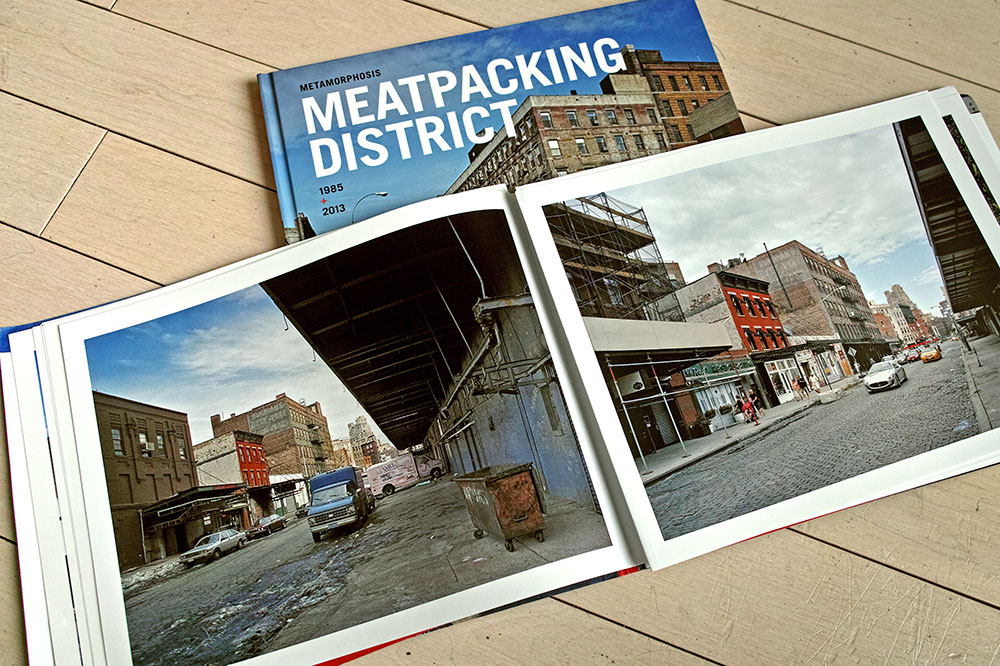
    In the winter of 1985 Brian Rose spent several days wandering the streets of the Meatpacking District with his 4×5 view camera. It was different city then; edgier and less peopled. While the Meatpacking District bustled in the early morning hours as the city’s primary meat market, it slumbered, almost abandoned, during the day. He never printed those photographs of the Meatpacking District, and went on to other projects. But last year he retrieved the box of negatives from his archive and began scanning. He was stunned to rediscover these images, made with little artifice, unforced in their clarity. It was like looking at New York as a stage set while the actors were away taking a break.

    In the summer and fall of last year he re-photographed the Meatpacking District, repeating many of the earlier images and making a number of new ones. The result is this new book, Metamorphosis, that shows the profound transformation of the neighborhood. Books will be available for purchase and signing.

    To register, please call (212) 475-9585 or email.
    GVSHP website

    web-logo-thumbnail


  • New York/Brooklyn Panorama

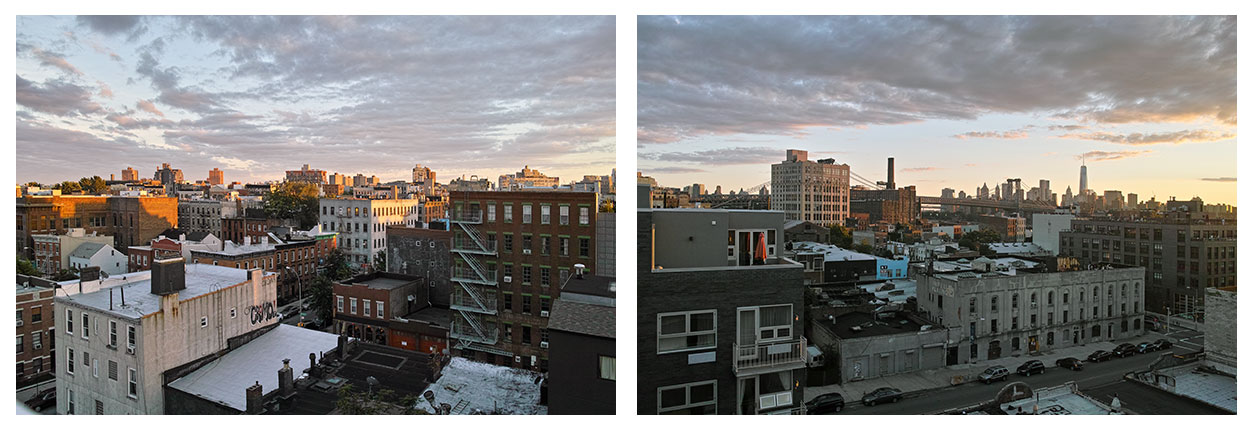
    july4panoramaBrooklyn Panorama, July 4, 2014 — © Brian Rose

    Before the fireworks on July 4th. Rain and clouds dissipated as a front passed through leaving clear skies and chilly (for the season) temperatures. To the right is One World Trade Center, the Williamsburg Bridge and the chimney of the Domino Sugar Refinery.


  • New York/4th of July

    bridge
    T
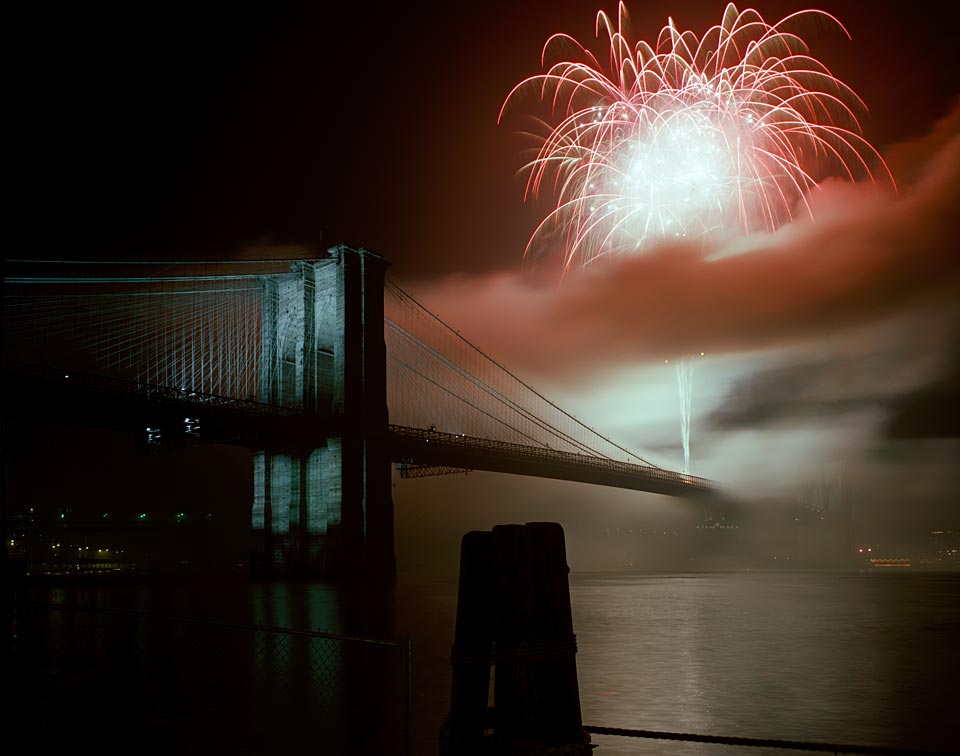
    he Brooklyn Bridge, 100th anniversary, 1983 (4×5 film) — © Brian Rose

    Happy Independence Day!

    After a number of years, the fireworks return to the East River. The above photo is a reprise of one of my “best hits.” A picture taken in 1983 on the occasion of the 100th anniversary of the Brooklyn Bridge. Thanks to a connection to the developer of the South Street Seaport, I had a spot among the rocks and sand at the edge of the river. There were a few other photographers around, but I was the only one crazy enough to shoot with a 4×5 view camera. And unlike the others, I used a wide angle lens to take in the entire scene.

    Fortunately, it was not too windy, and I tried about a dozen wildly varied exposures. Because of the calm, smoke hung low in the air, and the second tower of the bridge is barely visible in my photograph. Remarkably, the negative is razor sharp without the slightest camera shake. It makes a great large print.

    In photographing New York, one is frequently confronted with world famous icons — the bridges, skyscrapers, monuments. It’s all been done. But rather than worry about it, I just treat everything equally, seen as any pedestrian might see it. The trick sometimes is not about framing the extraordinary thing, but rather treating the extraordinary as a normal and unprivileged part of the landscape.

    And then add fireworks!


  • New York/Basketball

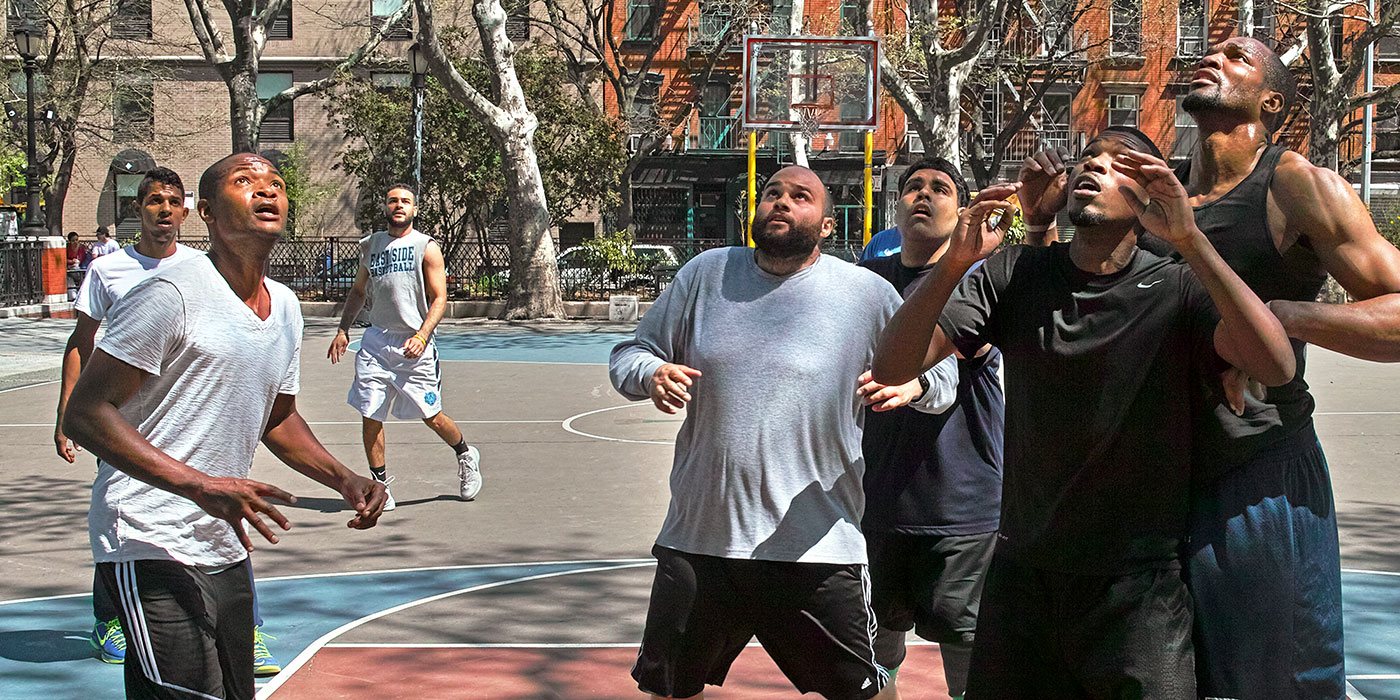
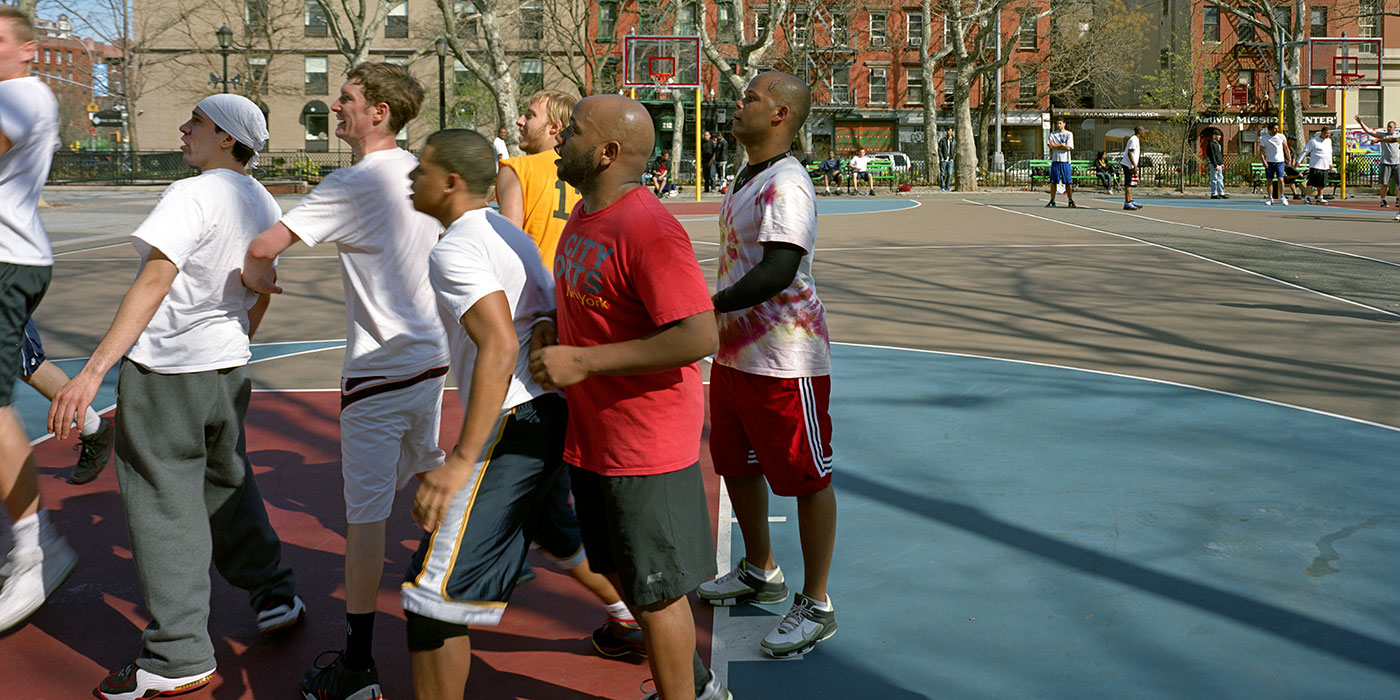
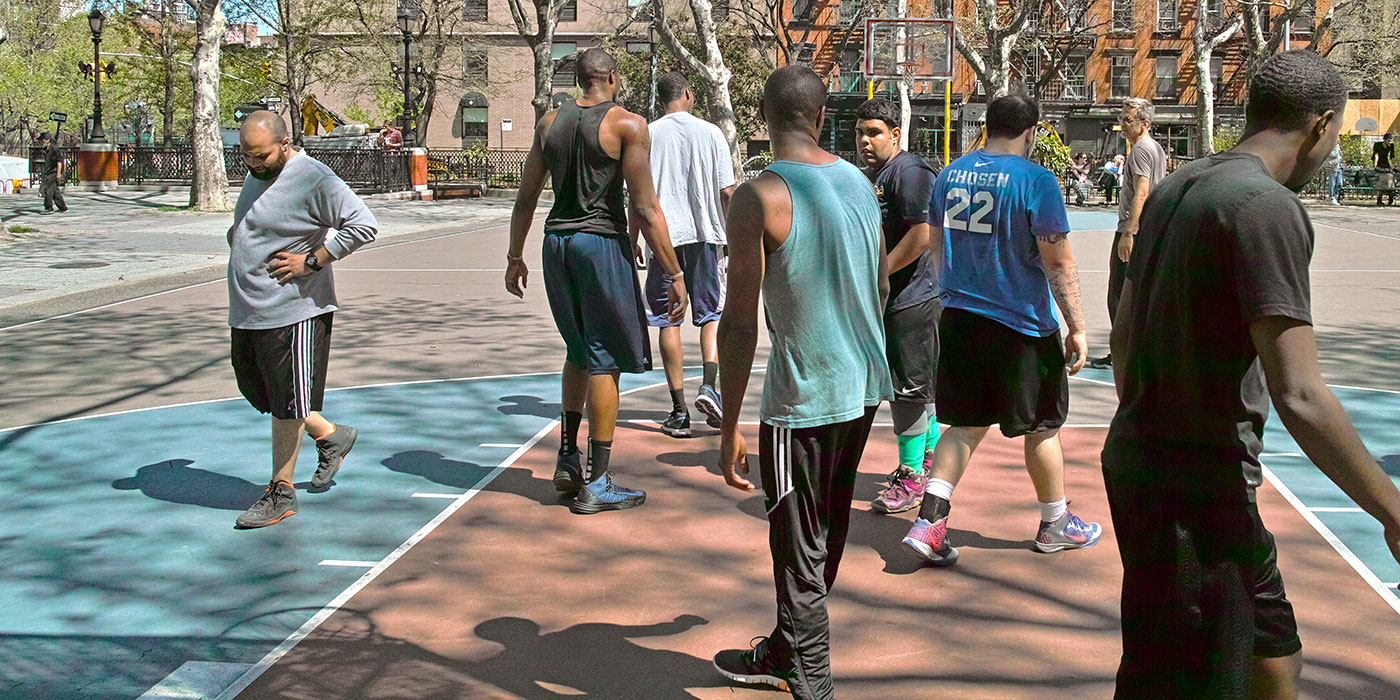
    My contribution to the book done by my ICP class, Photographing New York: the Lower East Side. Three images of street basketball in Sarah D. Roosevelt Park. This is a world I know well having spent years playing on New York City courts. My knees are shot now, but I still get out there now and then. And I work with my 15 year old son, Brendan.

    There are moments of peak action, bodies in perfect equipoise, the kind of thing you might see in Sports Illustrated — even on the playground. But I’m more interested in the faces transfixed by the ball somewhere out of the frame. The various shapes and sizes of the players — tall and lean, short and dumpy. The transient moments, the downtime, the shuffling for position between plays, the walk off at the end of the game.

    rooseveltpark16_700

    rooseveltpark03_700

    rooseveltpark08_700
    Sarah Roosevelt Park, the Lower East Side — © Brian Rose


  • New York/ICP Class

    Above is a preview of the book done by with my ICP class, Photographing New York, the Lower East Side. Each student selected some aspect of the neighborhood to photograph, and we then put the work together as a book using Blurb, the online print on demand service.

    It’s a pretty cool book, done in just eight weeks time. And it’s a wonderful teaching process — although a bit stressful — in that it demands working in a focused purposeful way on a tight schedule. This is the third time I’ve taught this class, the third book, and each one is different. Each class has it own dynamic, and its own collection of personalities. Some of the photographers are relatively experienced and have a good grasp of things creatively and technically. Others are still struggling to find their way.

    The challenge is to get everyone working individually and collaboratively with the goal of creating something potentially lasting — a document of place and time — and a tangible object that is publicly available. Working together like this elevates the discussion, asks each student to consider larger issues,  and locates their work in the context of the important photographers who have made the Lower East Side their subject.

    I’ll be offering the class again in the fall.

  • New York/The Book!

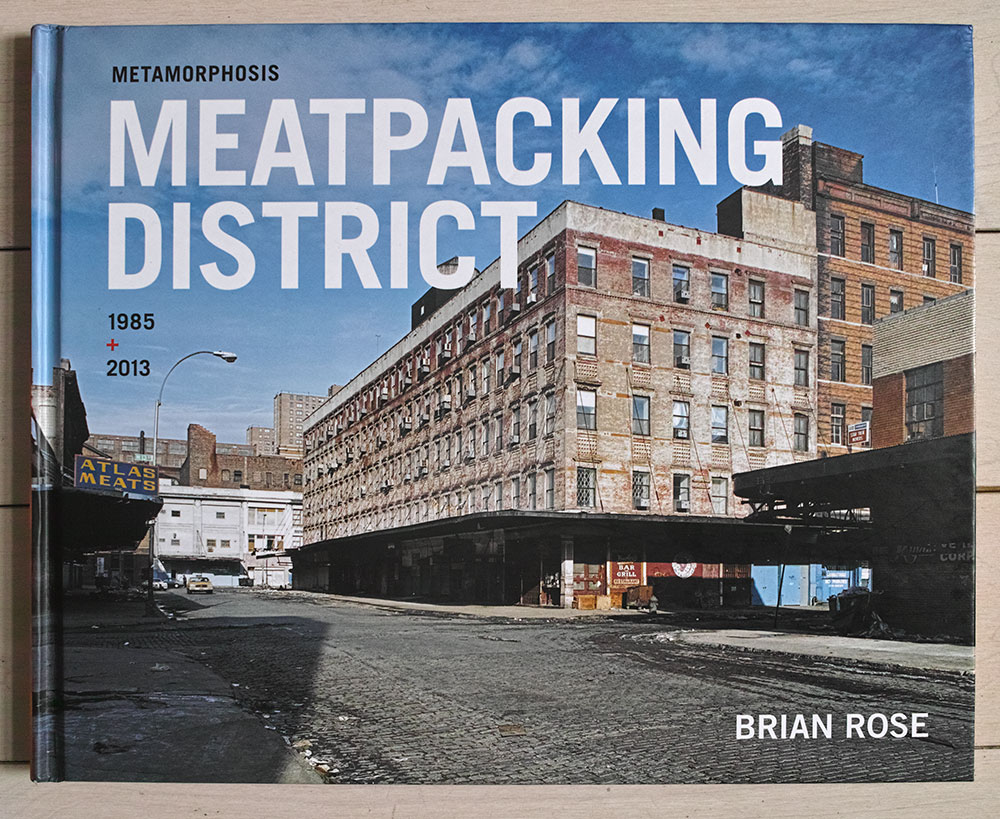
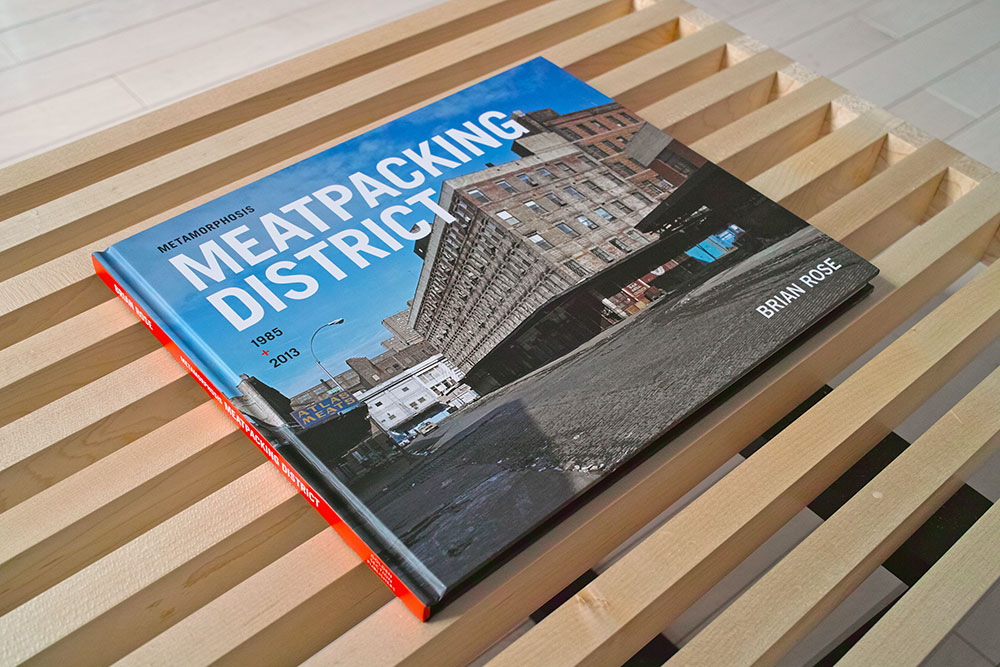
    metamorphosis_coverFinished book cover — © Brian Rose

    Have just received two copies of the completed book sent by FedEx from the printer in Hong Kong. The rest of the books are en route by ship, on schedule for an early July delivery. All I can say is that the book looks stunning. If you’d like to pre-order go here.

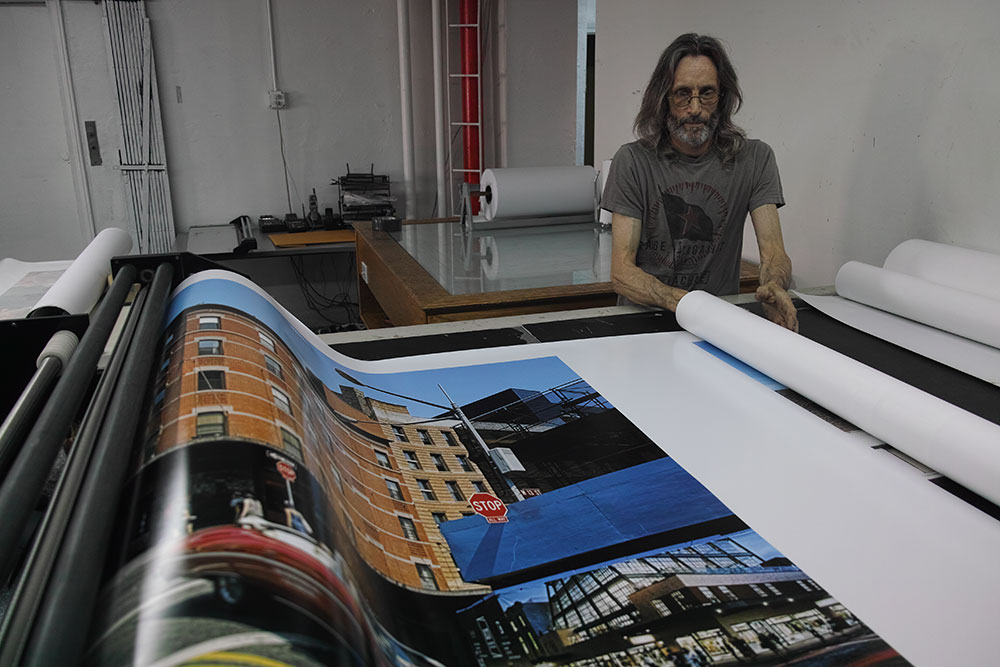
    On Friday I was in the lab printing for my upcoming exhibition.

    metamorphosis_printSteve, the technician at Beth Schiffer Creative Darkroom, rolling prints as they come off the machine.
    © Brian Rose

    The book launch and exhibition opening will be July 15th at Dillon Gallery on W25th Street in Chelsea, just a few blocks north of the Meatpacking District. There will be 12 images in the show, each printed at 4×5 feet. An invitation will be sent out later.

    This is all pretty exciting!


  • New York/Williamsburg

    dominobridge
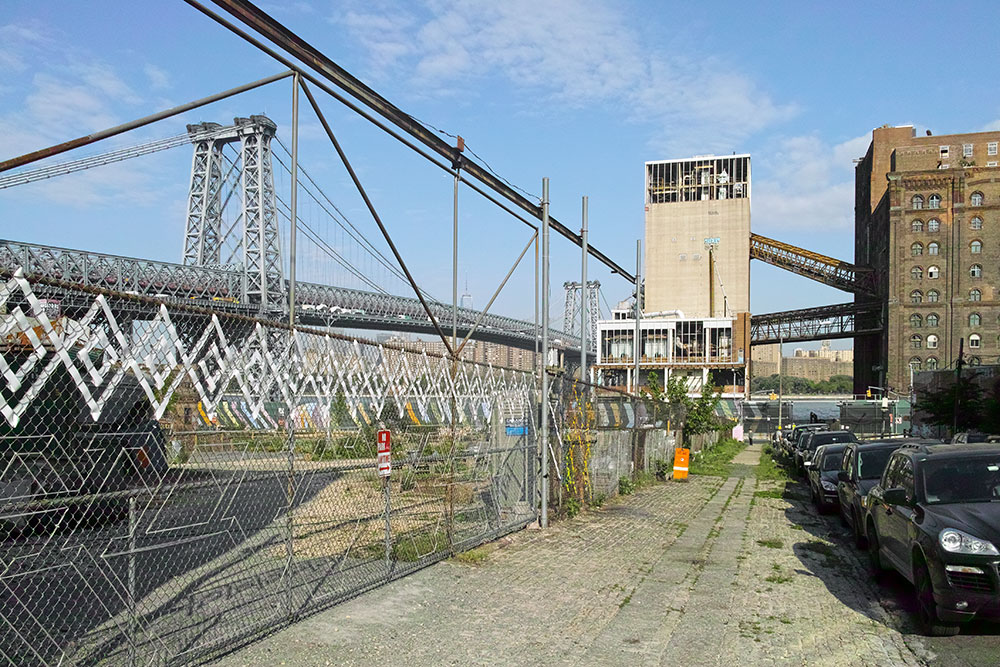
    The Williamsburg Bridge and the Domino Sugar Factory — © Brian Rose

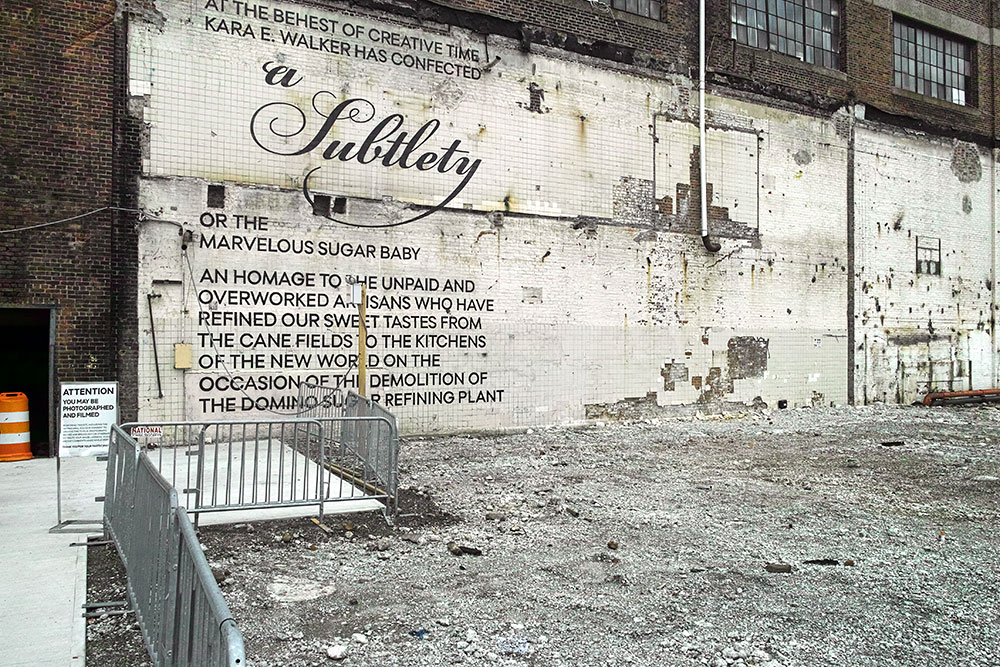
    After visiting the Kara Walker installation in the Domino Sugar in Williamsburg, Brooklyn, I decided to go back with my view camera and do a few photographs of the factory and the surrounding area. The picture above was taken with my digital camera placed on top of the view camera — so it’s roughly the same composition. Much of the sugar plant will be demolished to make way for a large housing development. The large brick structure at right, however, will be retained as an architectural landmark. While I was there, a crew was already at work, and I could see men climbing through the former conveyors angled between two of the structures.

    It was early in the morning when I took the photograph, and few people were around except for dog walkers. There’s a sort of dialogue going on here between the chain link fencing with interwoven diamonds and the criss-crossing steel of the bridge. The top of One World Trade Center can be seen poking up at center left. This view will be dramatically different in a few years.


  • New York/Kara Walker

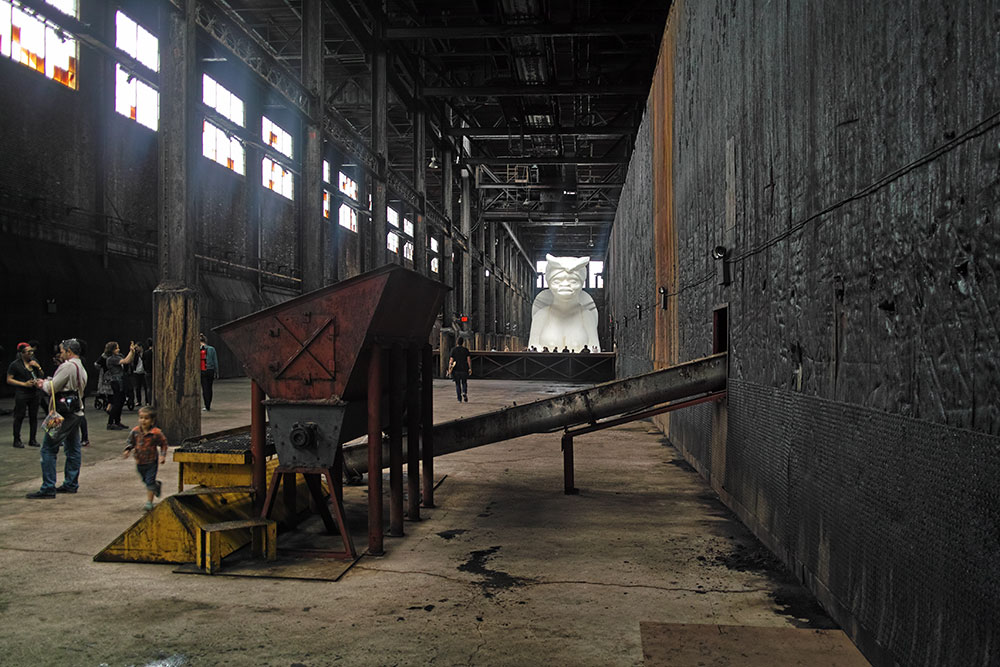
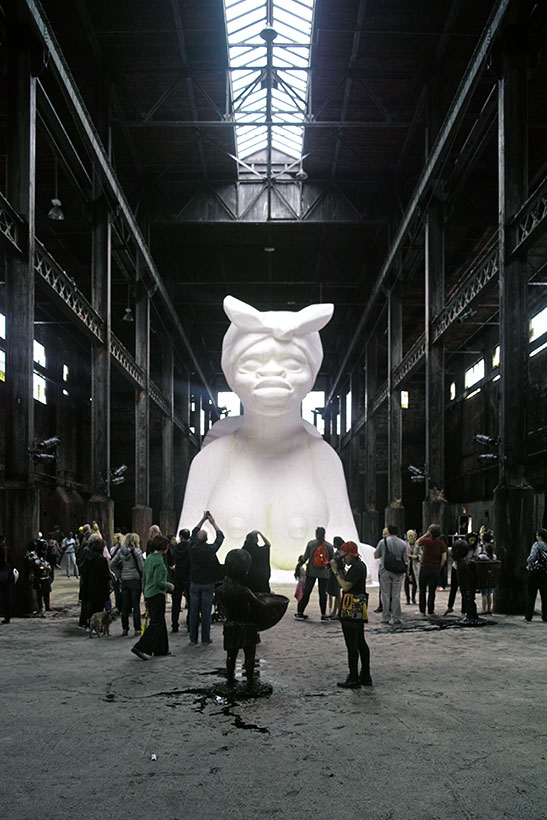
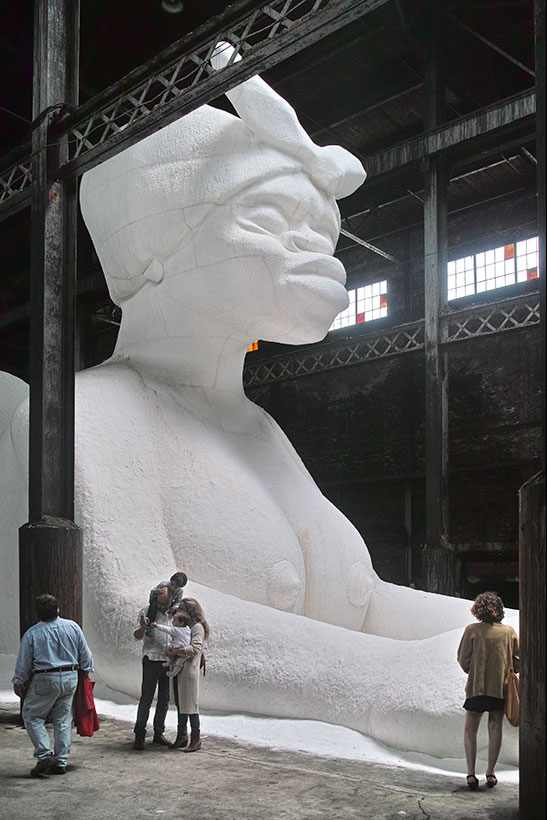
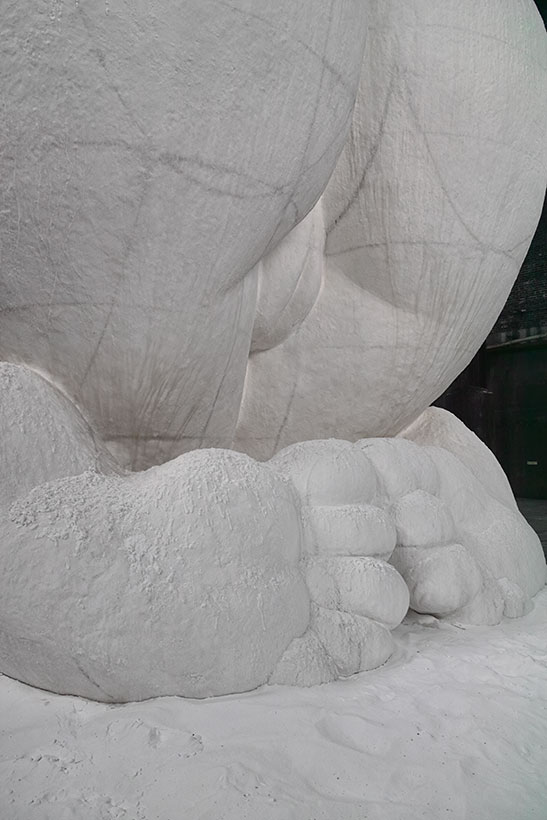
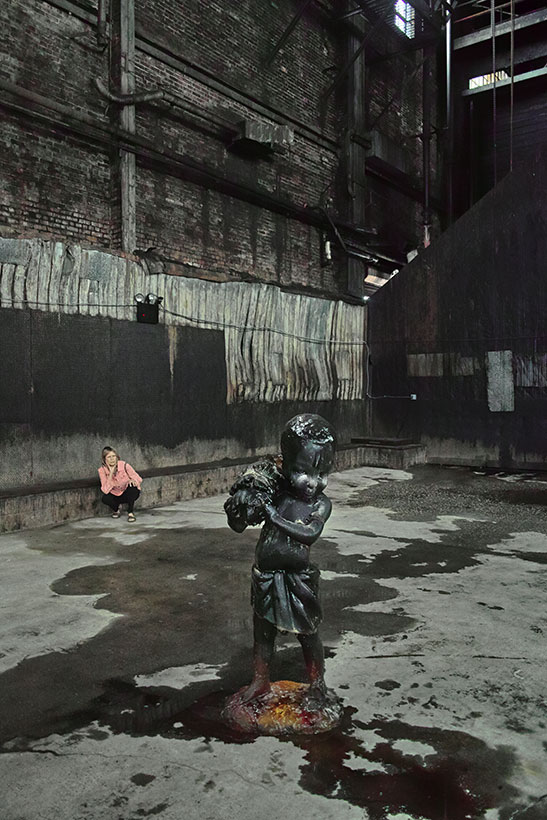
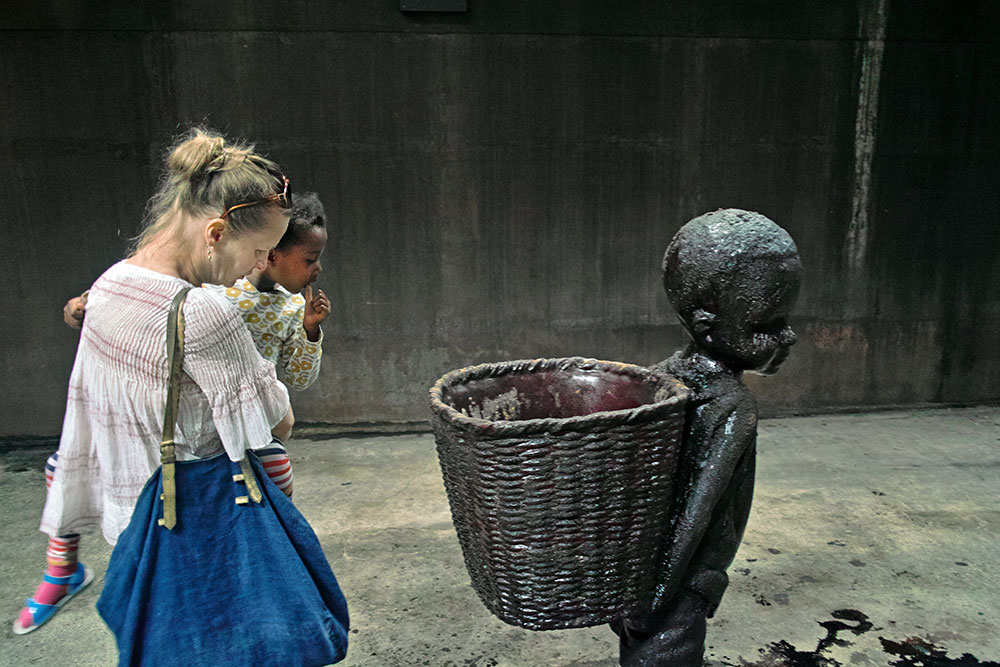
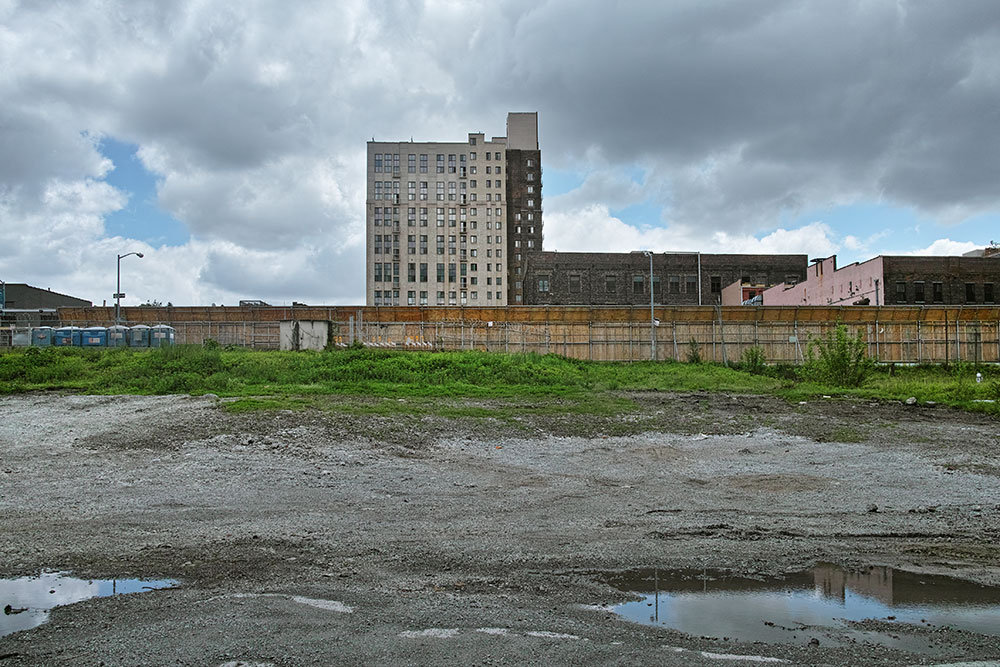
    Kara Walker at the Domino Sugar factory in Williamsburg, Brooklyn. Powerful. Unsettling. Do not miss. Website here.

    subtlety
    © Brian Rose

    domino
    © Brian Rose

    sphinx
    © Brian Rose

    mammy
    © Brian Rose

    tush
    © Brian Rose

    urchin
    © Brian Rose

    basket
    © Brian Rose

    williamsburg_sky
    © Brian Rose

  • New York/Final Proofs

    f+gMetamorphosis F&Gs — © Brian Rose

    This is the last step. Up till now I’ve been looking at digital proofs, which give a rough idea of color and density. Yesterday, we received the F&Gs, folded and gathered signatures off the actual press. They look spectacular!

    The books are now on the press being printed, and I expect to get several copies FedExed to me from Hong Kong in the next week or so. The rest of the books will come the slow way by ship and will arrive at the beginning of July.

    It’s been a remarkable experience doing this book. Rediscovering the negatives made in 1985. Scanning them. Showing the images around. Rephotographing the neighborhood. Sequencing the photos and designing the book. And then, getting it printed. All in less than a year and a half. Whew!


  • New York/911 Museum

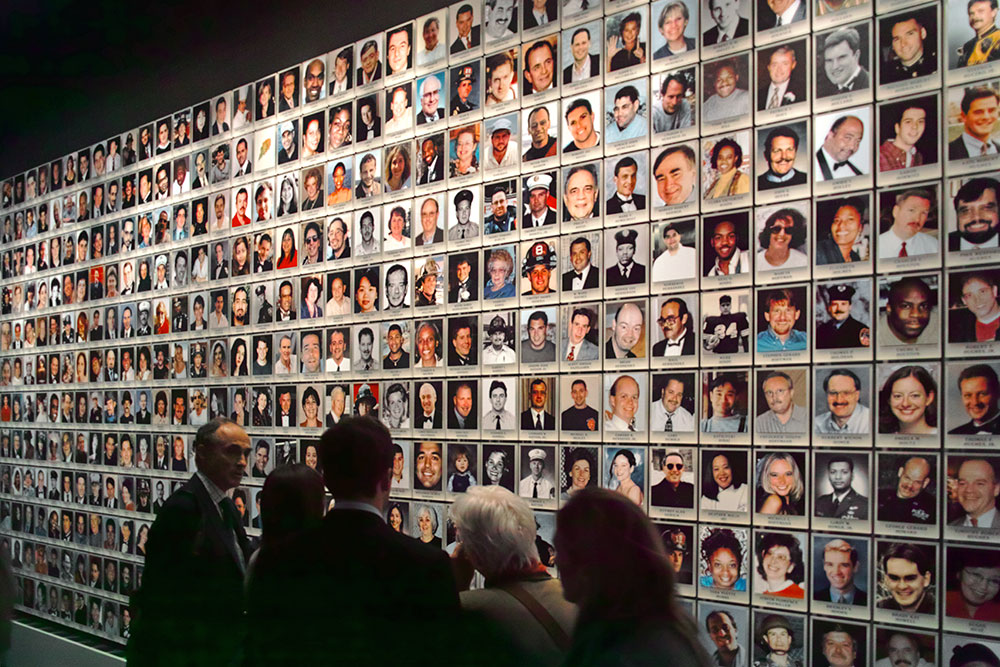
    911faces911 Museum memorial wall — © Brian Rose

    I visited the 911 Memorial Museum on Monday as an invited guest — the museum is interested in acquiring some of my photographs of the World Trade Center taken over the years. I am working on a book based on those images. A book that I hope will serve as an antidote to the poisoned politics surrounding the subject of 911 — and a book that will speak, in particular, to New Yorkers.

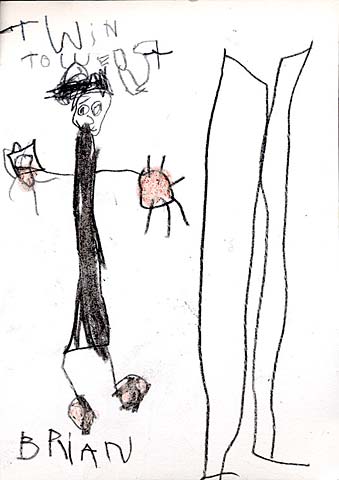
    twin-towers-brendan

    I went with my 15 year old son Brendan and my wife Renee. He was three back then, and does not remember the event with any specificity, though a year later, he gave me a Father’s Day gift of a drawing of the Twin Towers and with me and my camera. It’s my most cherished keepsake.

    I was happy to see that the fencing around the memorial fountains and plaza had been partially removed, and it’s now possible to walk freely in and out. It will become even more accessible once the construction of One World Trade and the transportation center is completed. The museum is entered through a modestly scaled building on the plaza, and then one descends below ground.

    It was a somber crowd. Lots of people in suits, and others in jackets and caps with NYPD or FDNY insignia. As much as I wanted my son to see the museum, I had misgivings about going myself. But I knew this was a special opportunity to see it before the hordes of tourists arrived.

    911column
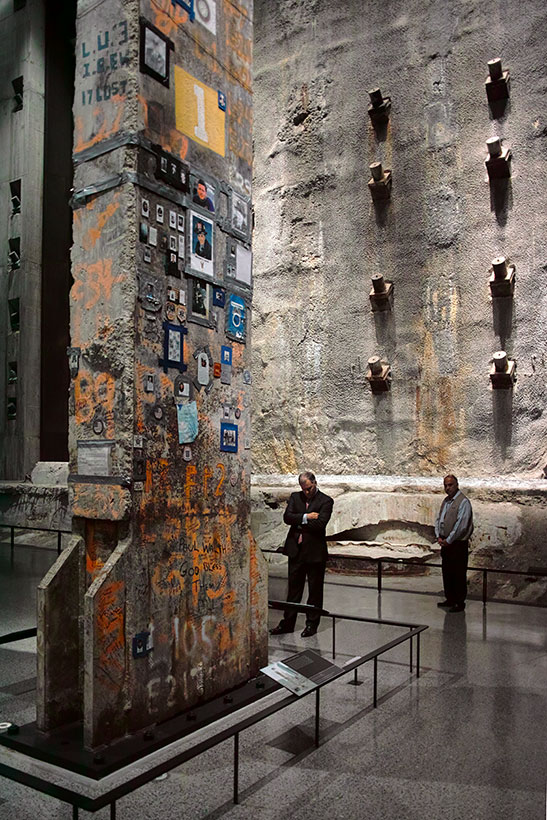
    911 Museum — © Brian Rose

    I expected the visit to be an emotional experience, but I was strangely unmoved. The main space with the exposed slurry wall of the original WTC foundations is impressive and well done. It has grandeur and posses an elegiac atmosphere. But the hall containing photographs of the victims made me uncomfortable. The colorful, mostly smiling faces, of the deceased seemed almost lurid to me. And immediately adjacent was a multi-media presentation about the rebuilding of the WTC site with faux inspiring music and gratuitous optimism.

    The main exhibition located directly underneath one of the tower footprints is meticulously done, and it’s hard to find fault with the attention to detail and comprehensiveness. But as I began winding my way through the images and artifacts, I quickly tired, overwhelmed by the barrage of information presented. Maybe it will be useful to future generations when the event itself becomes distant and abstract. But to one who lived through it, I do not want or need this. I found myself sitting on a bench beneath a gigantic video screen showing the collapse of one of the towers running on a loop over and over. I had to get out of there.

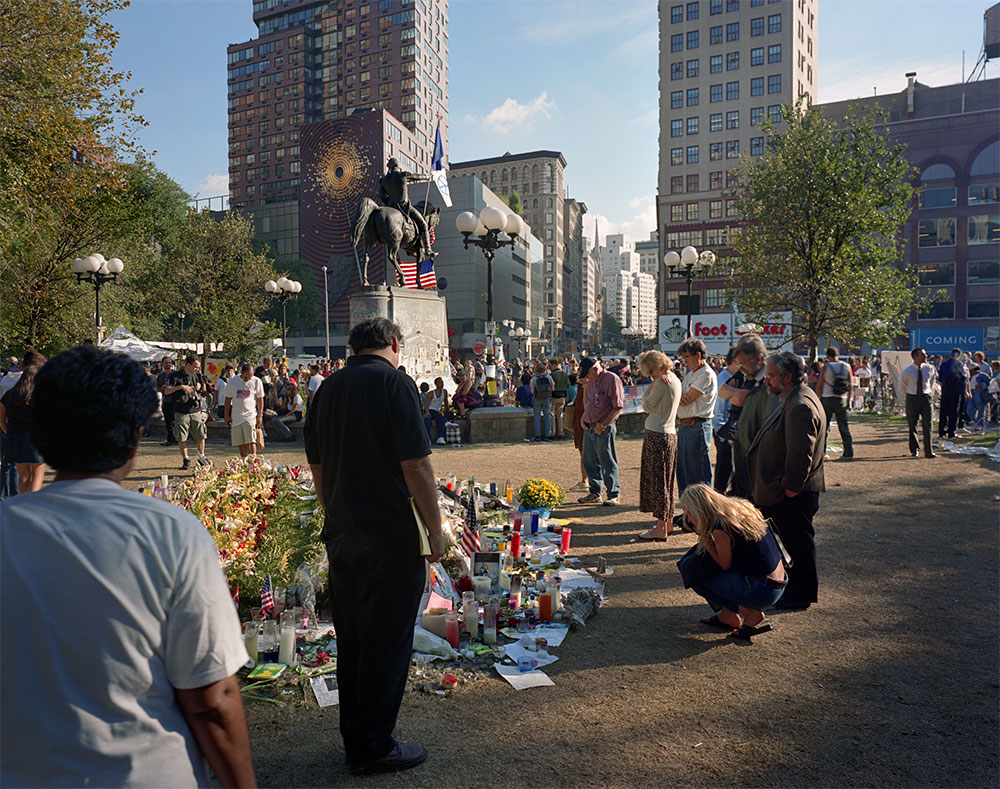
    unionsquare2001_lgUnion Square Park impromptu memorial, September 2001 — © Brian Rose

    The biggest problem with the 911 Memorial Museum is that it tries to be both — memorial and museum. They are not compatible purposes, and it was a mistake to merge them. The gift shop would not be a problem were it serving only a museum. But it seems wrong because it sits in the middle of what is also a memorial — one that even houses the remains of unidentified 911 victims. Were it only a museum, the $24 admission charge would be high for many people, like MoMA or the Metropolitan, annoying, but acceptable I suppose. As a memorial, however, the admission charge is disrespectful to us all, even if the victim’s families and rescuers get in free. Sadly, I do not think many New Yorkers will visit.


  • New York/Meatpacking District

    perrier_article

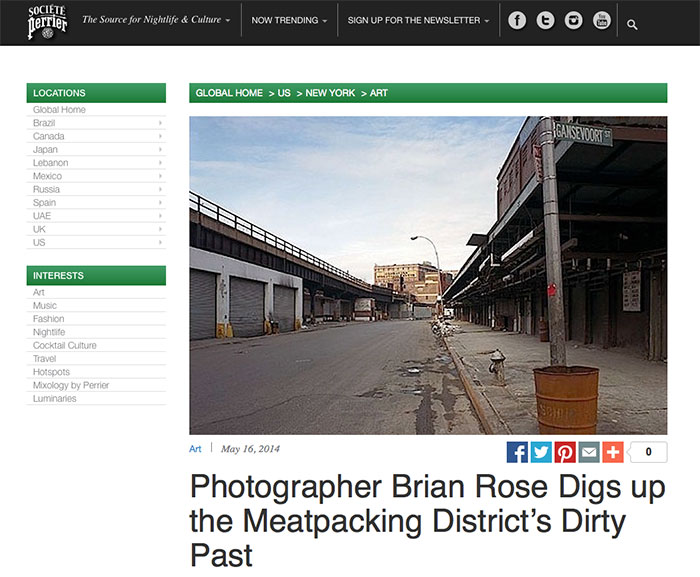
    An article in Société Perrier about my upcoming book Metamorphosis: Meatpacking District 1985 + 2013. Written by Jim Allen who is branching out a bit from his usual music beat. 

    I approved the final proof of the cover last Tuesday, and expect to have books in a few weeks. Unfortunately, it will be a small shipment sent by air. The rest of the books will travel by boat from Hong Kong, and will take a number of weeks. So, we’re still looking at July for the release of the book.


  • New York/Tenth Avenue

    10thavenuefreezeoutTenth Avenue and 34th Street — © Brian Rose

    When the change was made uptown
    And the Big Man joined the band
    From the coastline to the city
    All the little pretties raise their hands
    I’m gonna sit back right easy and laugh
    When Scooter and the Big Man bust this city in half
    With a Tenth Avenue freeze-out, Tenth Avenue freeze-out
    Tenth Avenue freeze-out…

    — Bruce Springsteen


  • New York/Metamorphosis

    metamorphosis_dummyMetamorphosis: Meatpacking District 1985 + 2013 book dummy

    We’re getting closer and closer to a finished book. What you see above is actually a dummy with a printed cover and blank pages inside. There are issues we are working out concerning the lamination of the cover and the color saturation of the image, but in general, it looks great. We will get one more mock-up to look at, and then go to the final printing.

    I’ll be updating again at the next stage. Still on schedule for July!


  • New York/Finding Vivian Maier

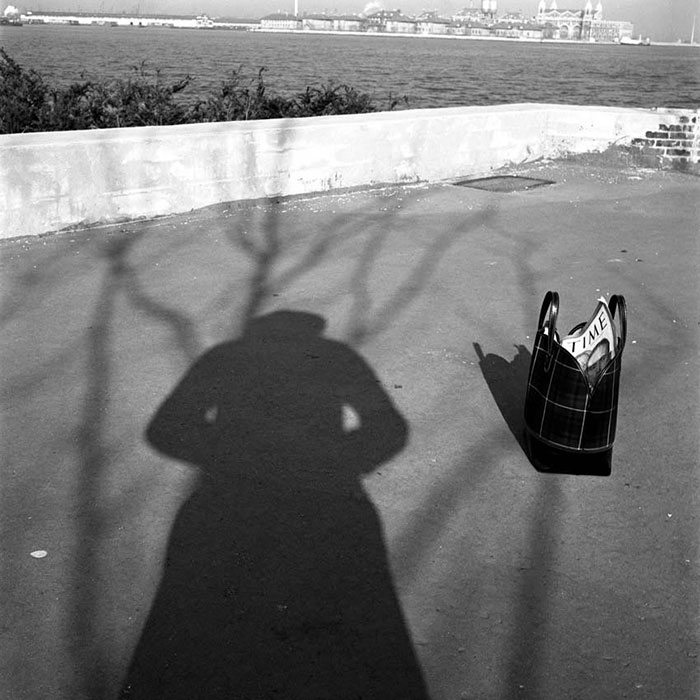
    maier_libertyPhotograph by Vivian Maier — From Liberty Island looking toward Ellis Island

    I saw the documentary “Finding Vivian Maier” the other day at the IFC theater on Sixth Avenue. It’s reminiscent of “Searching for Sugarman,” the film about the singer-songwriter Rodriguez, who made a couple of commercially unsuccessful albums in the 1960s and then essentially vanished — vanished at least everywhere except South Africa where his music was circulated like samizdat during the struggle against apartheid. In both films, the central artist is a mystery, known only through the discovery, or rediscovery, of his or her work.

    Finding Vivian Maier tells the story of how John Maloof became the custodian of her negatives, and how he assiduously sought to find out who she was and what her motives were as a photographer. As is well known at this point, Maier made her photographs in isolation, never showed them to anyone, and died completely unknown aside from the various families she worked for as a nanny over many decades. Although the film does show a number of her images, and photographers Mary Ellen Mark and Joel Meyerowitz speak eloquently about the quality of her work, most of the movie focuses on interviews with her “families.” Even Phil Donohue, the Chicago based talk show host, was a Maier client early in his career. All were aware of her photographic obsession — her dangling Rolleiflex — which is not a snap shooter’s camera, but none ever saw her pictures, or for that matter, showed an interest in seeing them.

    Various questions are posed in the film. Why didn’t she make any attempt at getting her work seen? Was she satisfied simply making pictures for herself? Would she have approved of the attention her work is now getting? To most of us, it is all hard to fathom, and the mysterious nature of Vivian Maier only adds to the almost cultish attraction to her and her work.

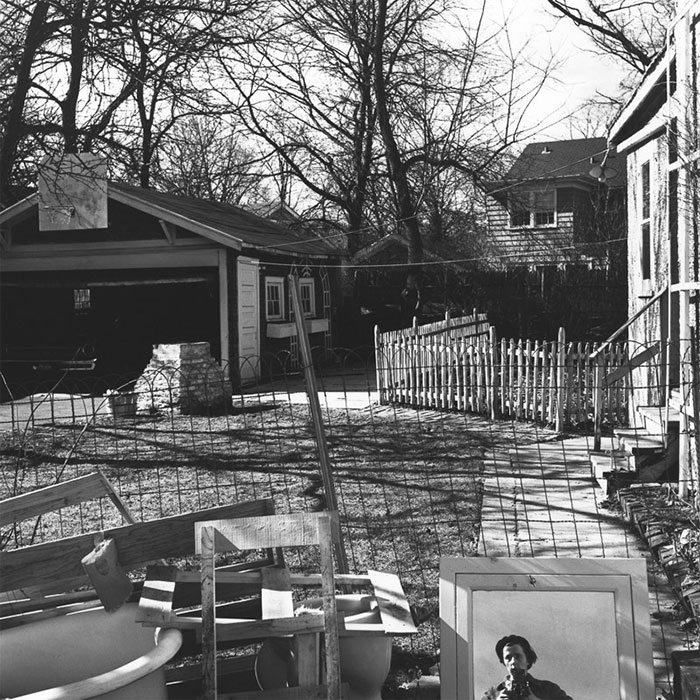
    maier_yardUntitled by Vivian Maier

    Looking at her photographs, it is striking how many self-portraits she did, and how carefully staged they were. There is even now a book of them. She was clearly a self-aware individual on a serious mission. She collected newspapers and magazines and photographed the headlines. She visited museums. She referred to herself as a spy. But despite this engagement with the world around her, she remained essentially separate, an observer. There was a solipsistic nature to her photographic endeavor, not unlike Diane Arbus, whose images were as much about her interior psyche as the outside world.

    As a photographer, I am familiar with the territory — the sense of solitude that comes with being the observer. The internal dialogue that sometimes acts as surrogate for social interraction. I’ve taken thousands and thousands of pictures, and relatively few have been seen or exhibited. There have been long dry spells with little attention, but I’ve continued to work doggedly. It is easy for me to understand Maier’s commitment to her work.

    But of course, that’s where the comparison ends. I have a family. I work for clients. I teach. I publish books. The point I’m trying to make, however, is that her strangeness as a person — and she was an extreme eccentric — and became more so late in her life, should not be allowed to distort our appreciation of her visual intelligence, nor should it  be used to explain away her apparent lack of ambition. To my eye, she was as ambitious as they come as a photographer. And I have no doubt had someone discovered her work before her death, that she would have been fine with museum and gallery exhibitions of it. She just didn’t seek it.

    The truth is that once the pictures have been made — the electricity of those split second moments passed — the prints on the wall feel oddly distant, almost like the work of someone else. You’re grateful for the kudos, and the money, if you’re so fortunate. For Vivian Maier, living in her relatively self-contained world, talking to herself, repeatedly documenting her presence in the street — saying I was there — that was enough. Like Fred Herzog, the Vancouver based photographer, who I wrote about recently, you do the work regardless of the outcome. Vivian Maier knew she was good. It was her secret, her validation. That’s all we need to know.


  • New York/Prince Street

    prince_elizabeth

    prince_window

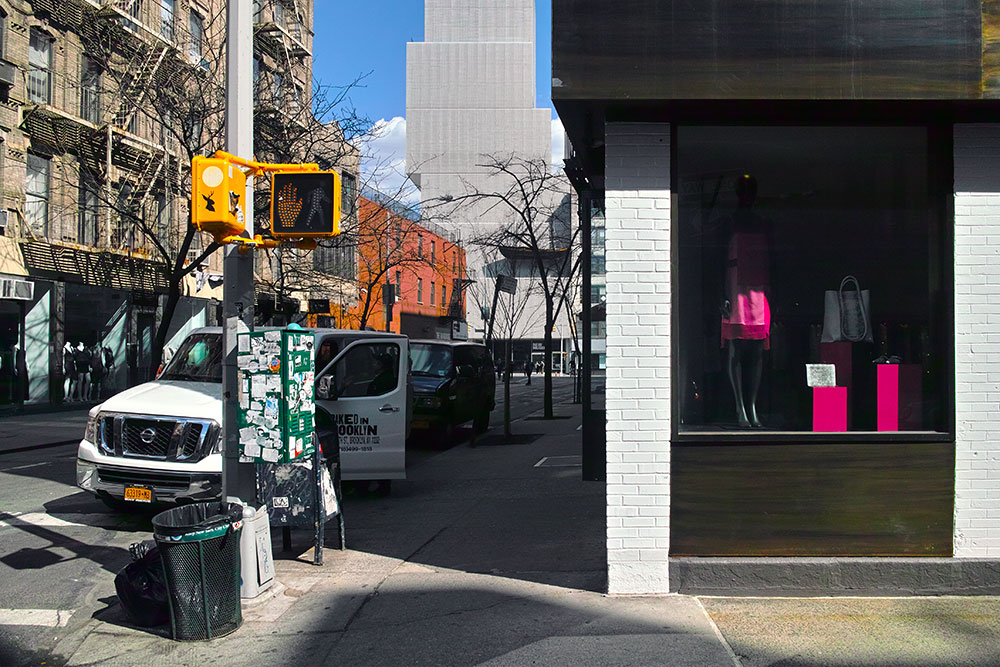
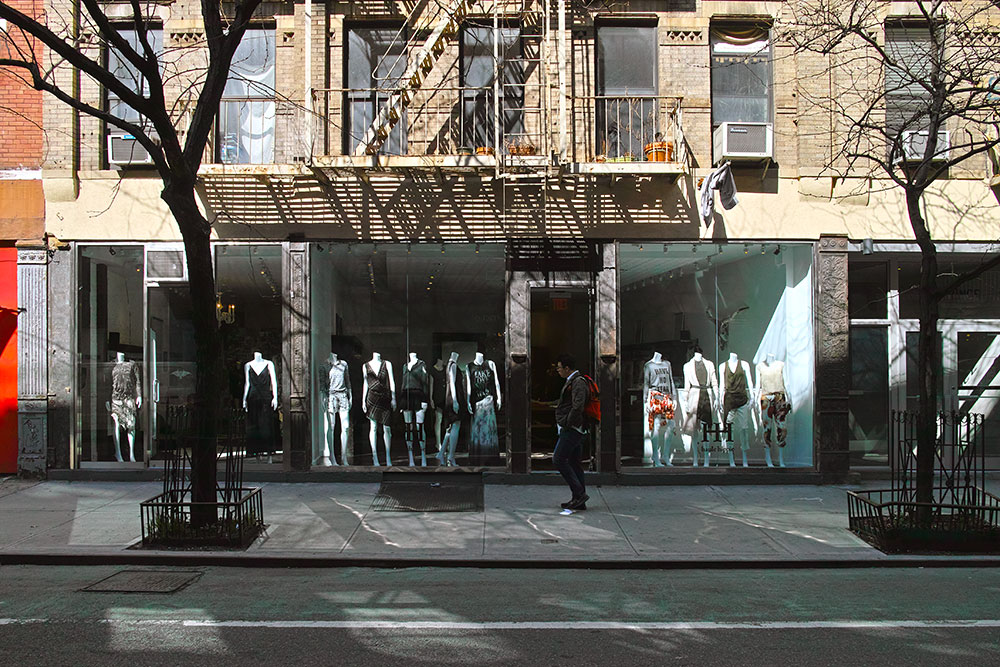
    prince_bariPrince Street between Elizabeth and the Bowery — © Brian Rose

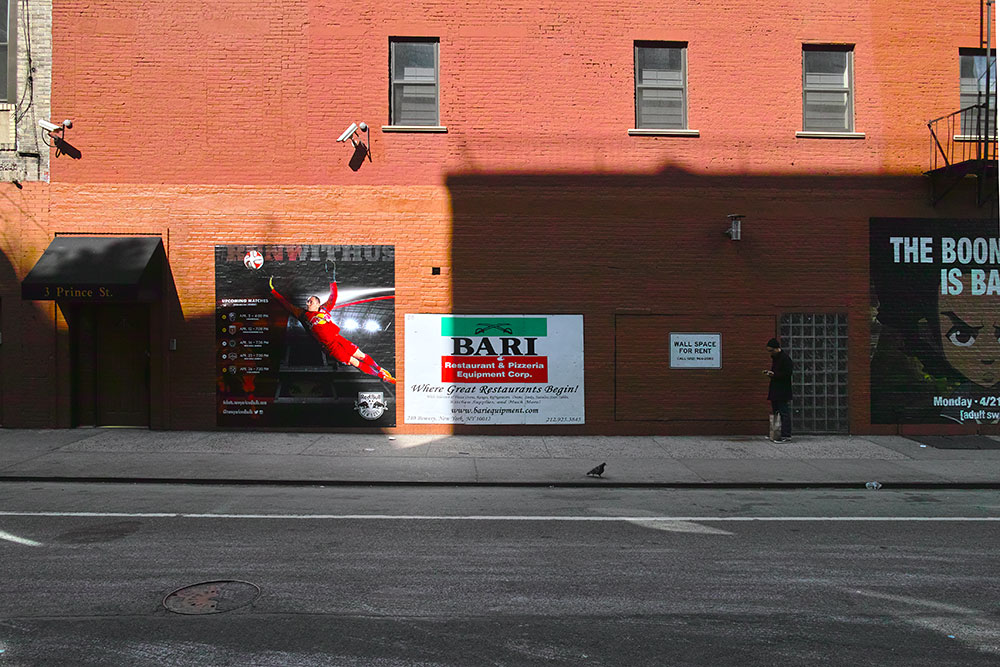
    New York minute. Three picture sequence.


  • New York/Clayton Patterson

    patterson

    Clayton Patterson, the documentarian of the Lower East Side, whose raw videos of the Tompkins Square Park riots of 1988, brought him to prominence, has decided to quit New York for the Austrian spa town of Bad Ischl. Okay…

    A few choice quotes from the article in the New York Times:

    “There’s nothing left for me here,” said Mr. Patterson, who, at 65, is still a physical presence, with his biker’s beard, Santa Claus belly and mouth of gold teeth. “The energy is gone. My community is gone. I’m getting out. But the sad fact is: I didn’t really leave the Lower East Side. It left me.”

    Maybe for Detroit? For Berlin? For deep into Brooklyn — maybe even the Bronx? It’s true that things have changed in Lower Manhattan, profoundly changed. There was a period of time that began in the ’70s and gradually tapered in the ’80s, when the LES was cheap and edgy (and scary), a place where an underground scene could flourish. These moments are always fleeting, and at some point you realize as an artist that you have work to do that is independent of the scene that nourished you. If your work is about the scene, then follow it wherever it goes.

     “What Clayton is telling us is that his world is gone and that he’s going too,” said Alan Kaufman, a writer and a friend of Mr. Patterson’s. “This ought to send up a red flag for someone. It’s remarkable, really. It’s kind of like Atget quitting Paris.”

    Kind of like, I guess. Atget, whose work documenting the changing face of Paris, is indeed synonymous with that city. But what has always connected me to his work is not so much Paris itself, but the eye of Atget, his visual intelligence, and the expression of beauty as he found it.

    To Daniel Levin, who directed “Captured,” a 2008 documentary about Mr. Patterson and his work, the plan to leave New York was further evidence of the city’s cultural decline. “Sadly, ironically, New York is displacing the people that made it what it was,” Mr. Levin said. “The entire city has become a playground for money, wealth and sterilized housing, and that’s not what’s traditionally made it interesting.”

    People tend to think of Manhattan as New York. And historically, Manhattan was an all inclusive place with slums and mansions, industry and offices, white collar and blue collar side-by-side, the entry point for foreign immigrants and young strivers alike. In the past two decades, Manhattan has shed a good deal of that diversity and become more homogenous. While many urban centers in the United States declined, Manhattan absorbed more and more people and money. But New York, “the entire city,” remains as diverse as ever. Except for certain enclaves, perhaps, the other boroughs are not exactly “a playground for money, wealth and sterilized housing.”

    Tell the hundreds of thousands of people schlepping every day on overcrowded subways to get to work that the city is a playground. And who are these newcomers who have swelled the city to the highest population in its history? Are these the 1% who occupy the “sterilized housing.” There is something wrong with the way we are talking about this city and what is actually happening to it.

    ***

    I wish Clayton Patterson well in his move to Austria. There is a time to leave, and a time to find more comfort in life. I’ve written in the past about Patterson’s work here. It’s not so much about individual pictures, but ensemble, as installation. I really liked the last exhibit I saw of his work. He’ll be missed around here.


  • New York/Kickstarter Success

    finalgoal

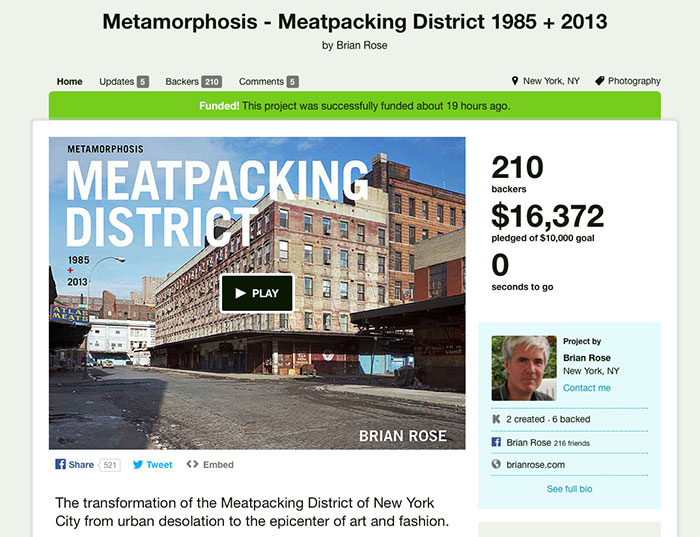
    The Kickstarter campaign for my Meatpacking book is now over with 163% of my goal reached. Now we can take that posh vacation in the Caribbean that we’ve been dreaming about all through this — barely over — snowy winter in New York.

    No, no, no. Just a joke. The money raised only pays for part of the production of the book. We’re still stuck here in this, so far, shivery spring, as baseball season begins, with lots of work to do to make this book a success.

    The good news is that over 250 books have been sold out of a first printing of 1,000. And the book hasn’t yet shipped from Hong Kong. That’s a spectacular start. My 210 Kickstarter backers came from all over the world — in fact, 25% of them were from outside of the United States. It proves what I’ve been saying all along, that books like this about New York City have a potential reach far beyond the sometimes parochial view of things here in this little burg.

    There are a lot of people to thank for helping make this Kickstarter campaign successful, particularly Jeremiah Moss, who wrote the foreword to the book, and got things rolling with a terrific post on his blog Vanishing New York. A number of other blogs picked up on the story including Bowery Boogie, Curbed, Untapped New York, Reciprocity-Failure, and the Swiss news/entertainment site Watson.

    I’ll be providing details later, but mark your calendars. Exhibition opening and book launch, July 15th, Dillon Gallery, West 25th Street in Chelsea, just a few blocks north of the Meatpacking District.


  • New York/Curbed

    curbed03-31

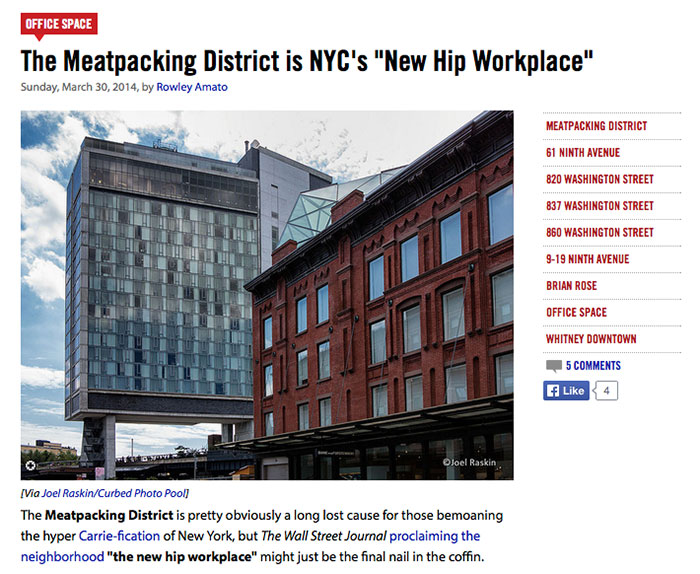
    At the bottom of the article:

    … there are still a few more days left to donate to Brian Rose’s Kickstarter campaign. He’s raising money to fund his book of fantastic Meatpacking District photos from 1985 and 2013. Good old Jeremiah over at Jeremiah’s Vanishing New York wrote the preface.