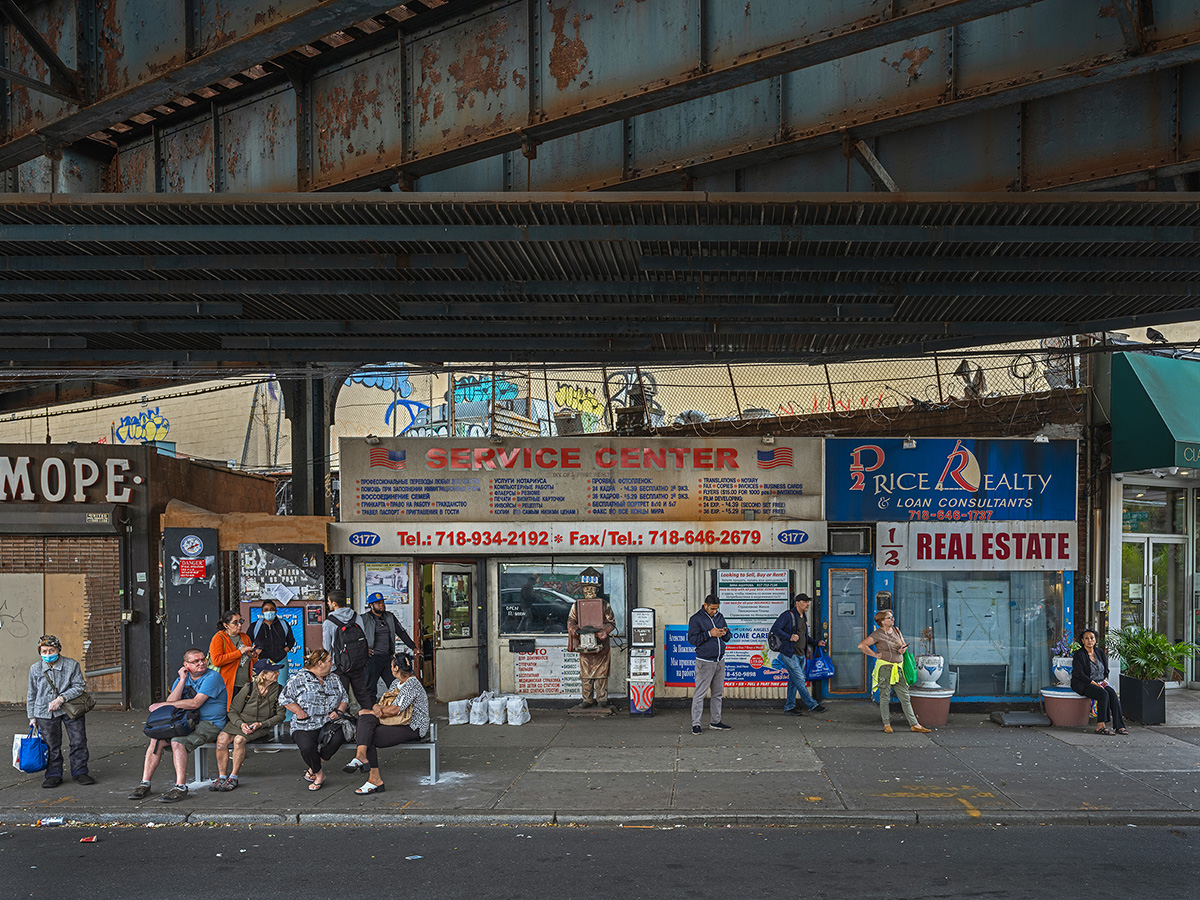
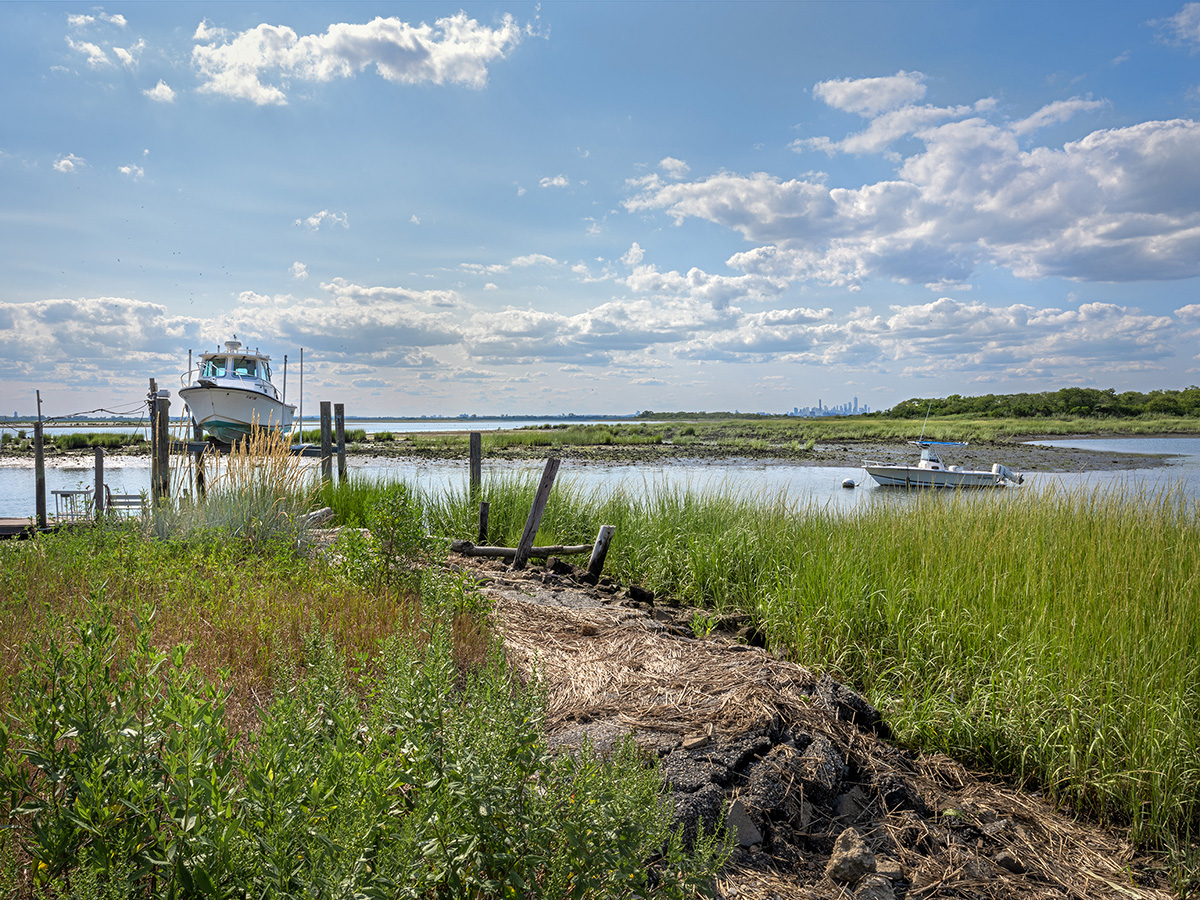
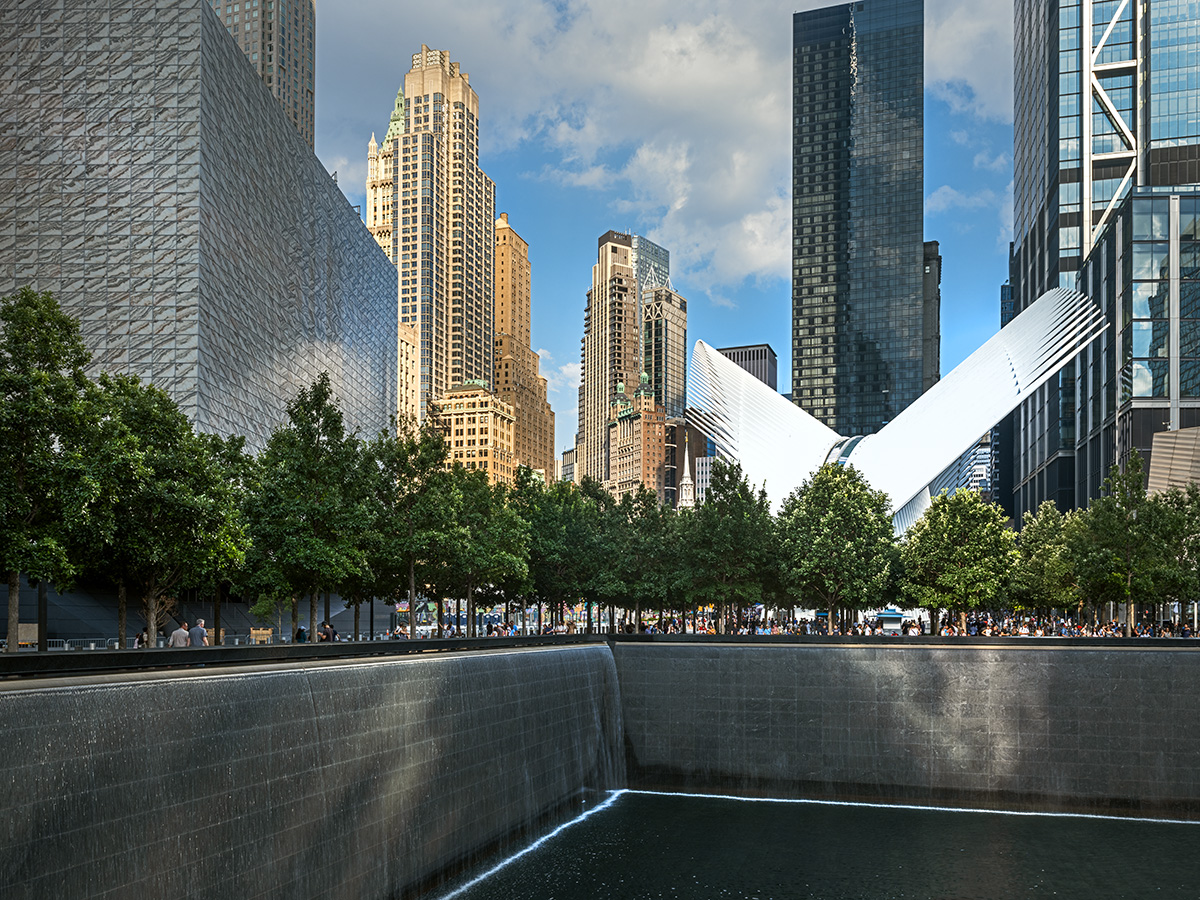
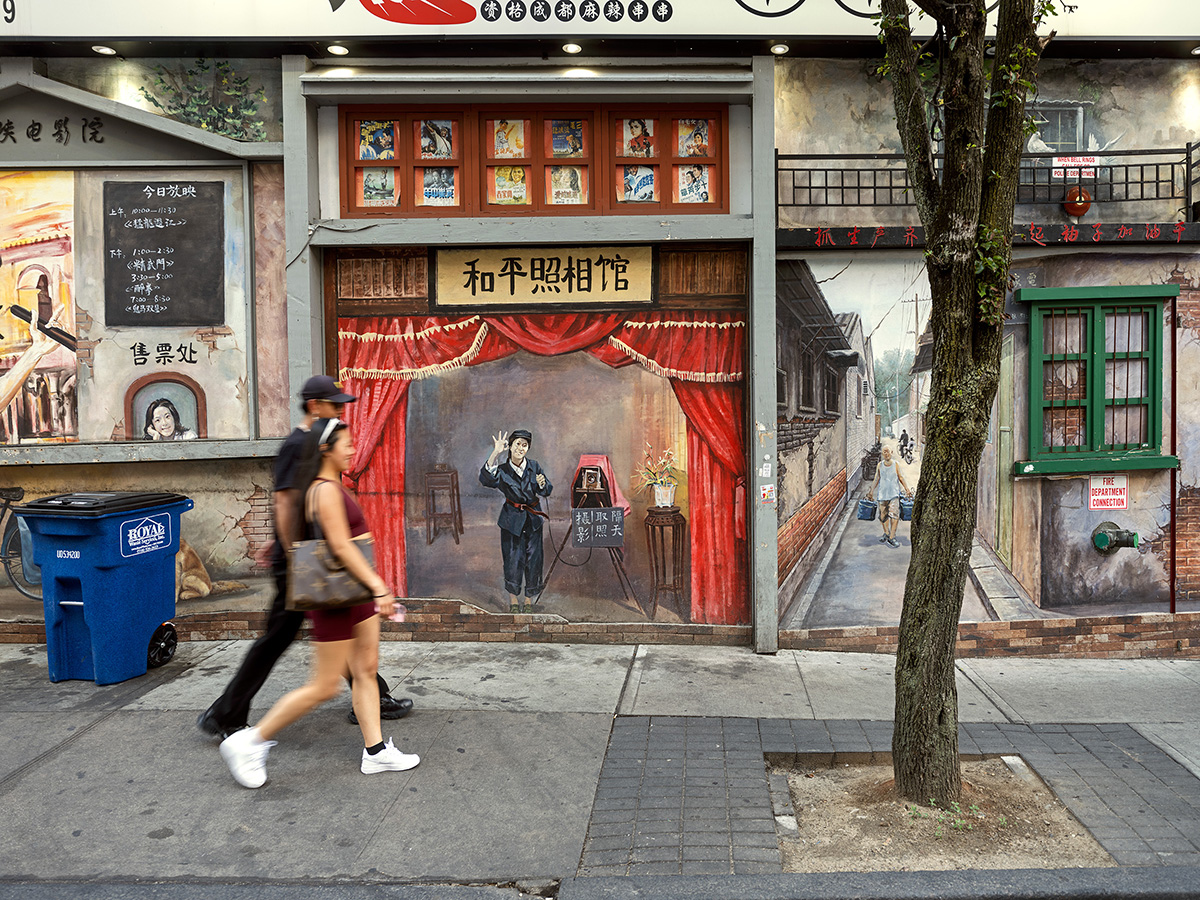
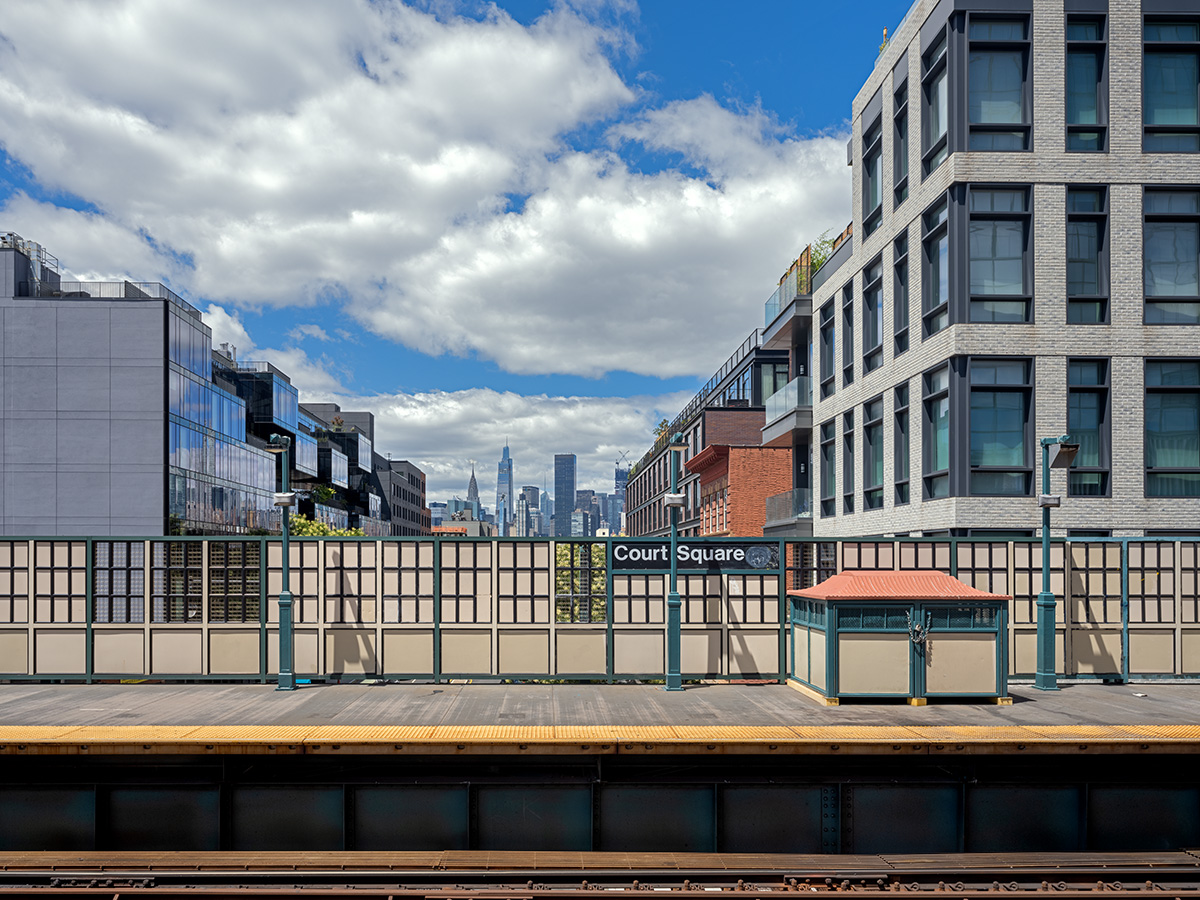
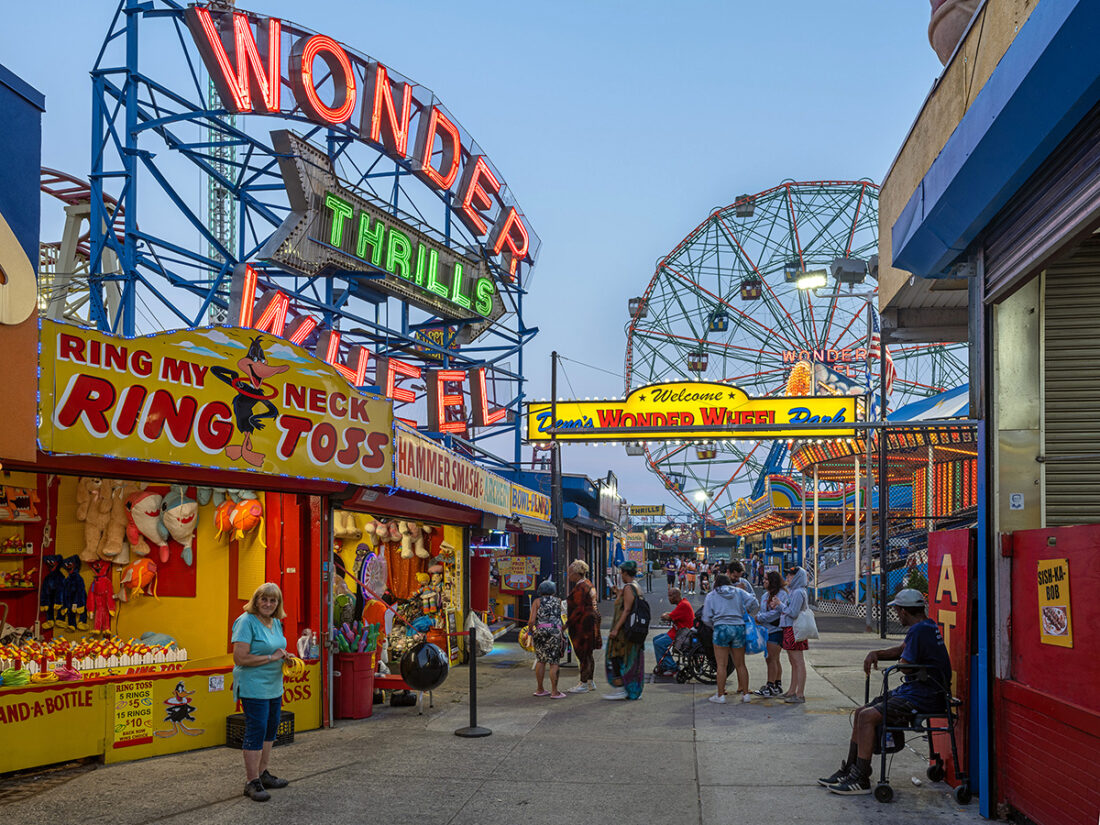
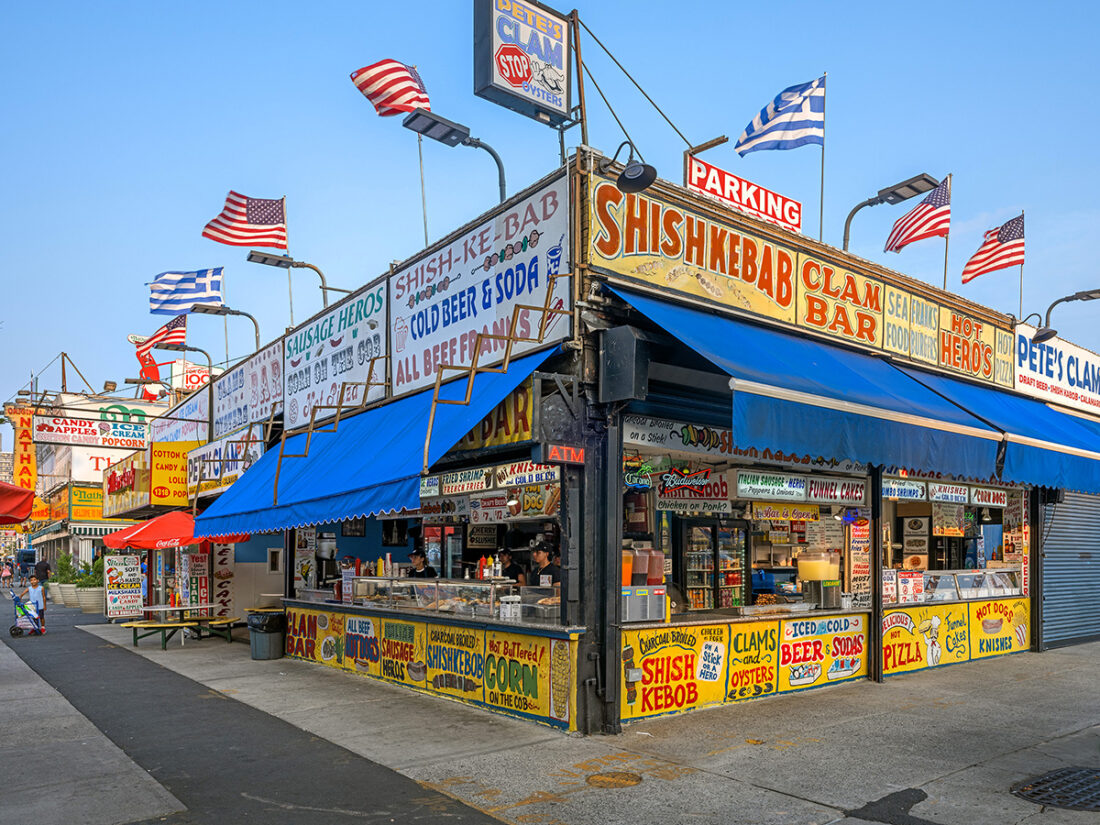
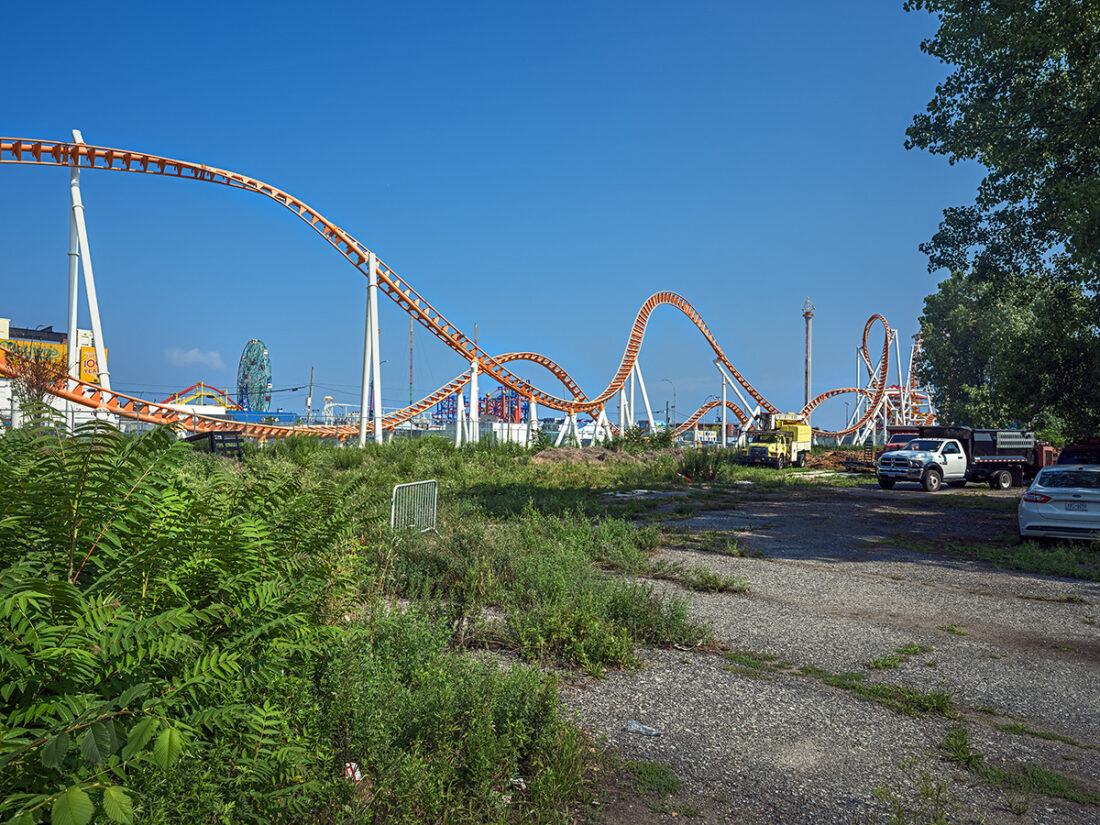
The tentative title of my current project is “Last Stop” – as in “Last Stop on this train. Everyone, please leave the train.” I am photographing the neighborhoods around the ends of each subway line in New York. I am not the first who has done this, apparently, but I have no doubt that I can bring an original approach to the subject, one based on years of photographing New York.
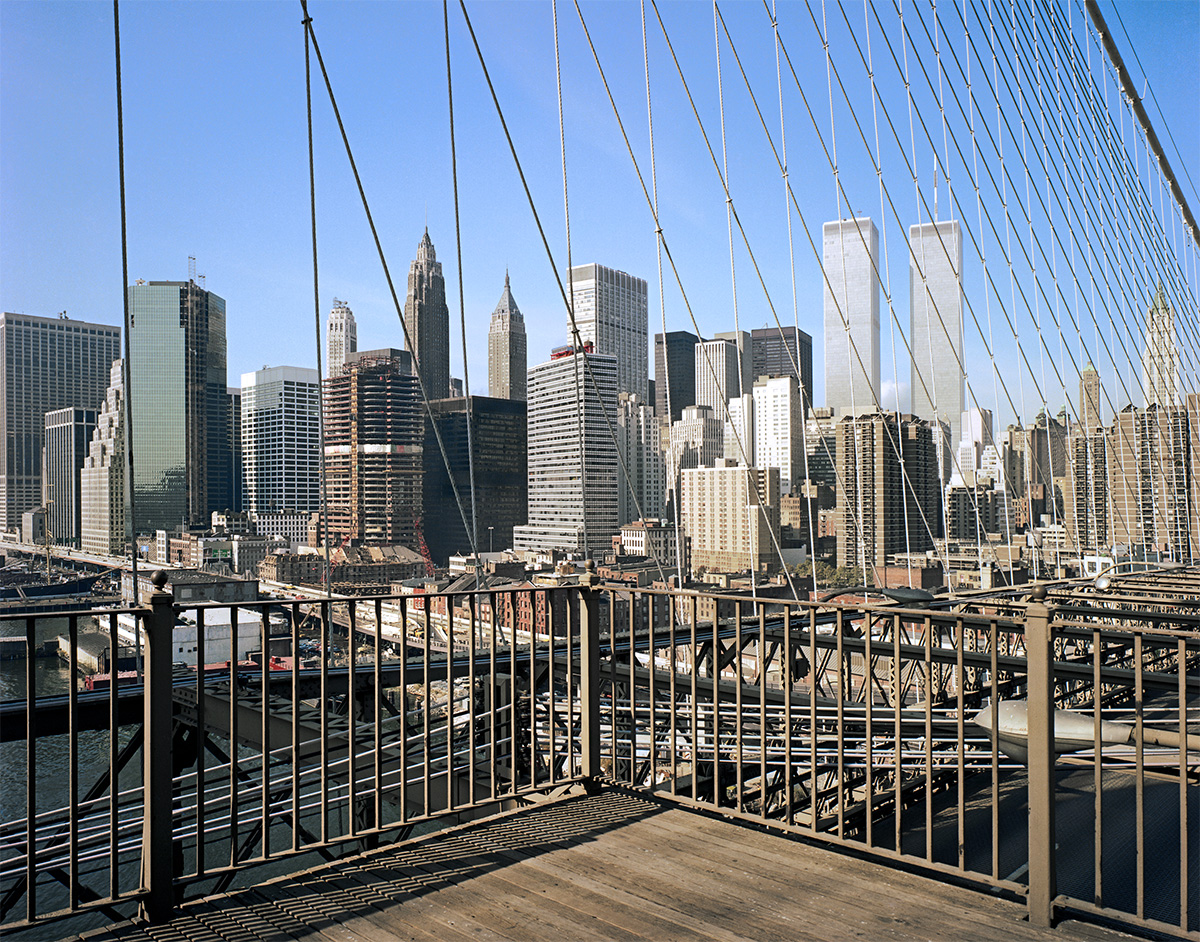
Many of the subway lines terminate far from Manhattan, while some actually end right in the heart of Downtown and Midtown Manhattan. The E train, for instance, ends at the World Trade Center and is accessible from the Oculus, the wing-like train hall designed by Santiago Calatrava. The A train goes to the island of Broad Channel in Jamaica Bay where one can take a spur to Rockaway Beach. The city feels remote – just visible against the sky – but we are very much within the boundaries of this vast city of 9 million souls.
There are multiple reasons for engaging in this project, but the strongest for me is a desire to portray New York City as a highly diverse, multi-centered metropolis, one that has expanded and grown far beyond Manhattan and the well-known neighborhoods of Brooklyn. Manhattan, while still a dynamic place, has become relatively more homogenous and more expensive, with little manufacturing and few of the distinct market districts like the historic Fulton Fish Market and Meatpacking District that once defined the fabric of city. Those areas are now entertainment and shopping destinations. Like most of the major cities of the world, New York City has become a tourist mecca and a staging platform for international brands.
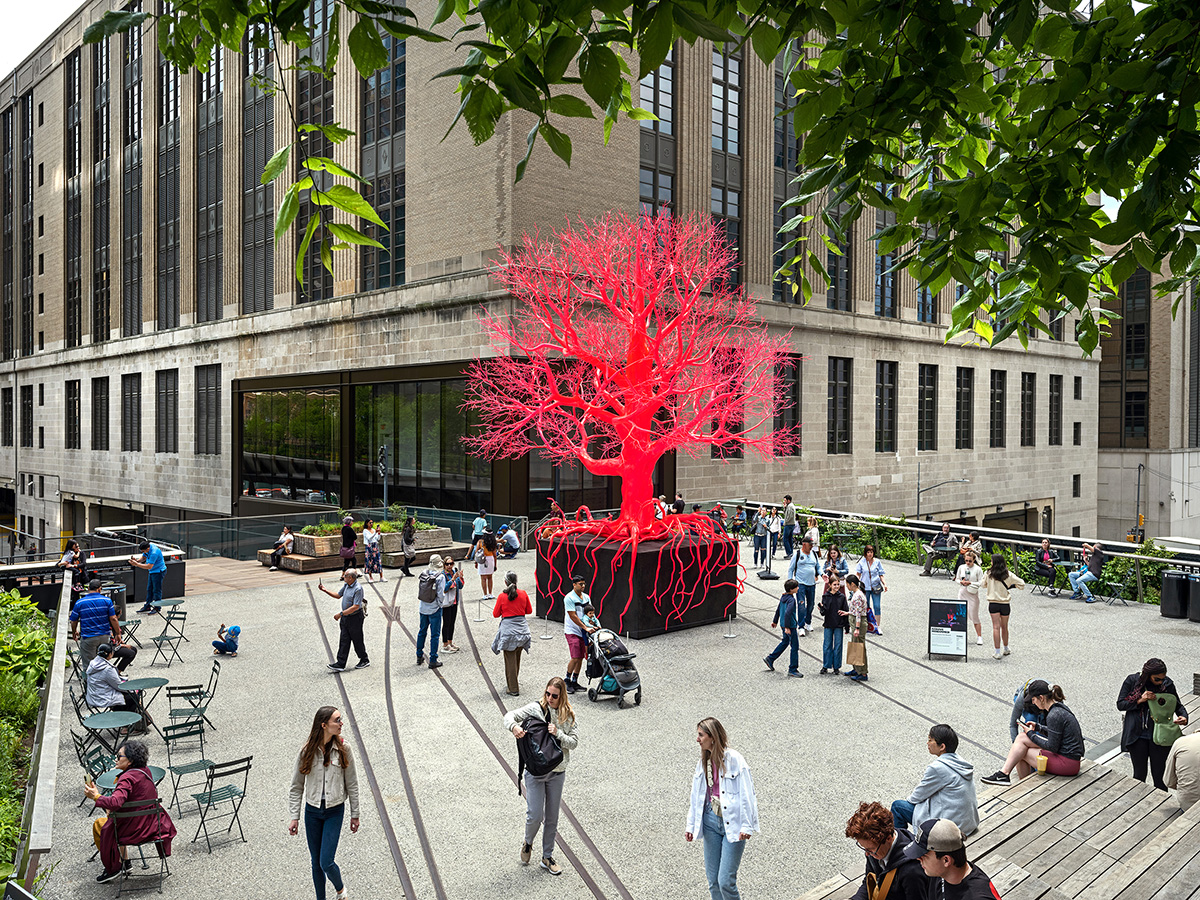
Old Tree by Pamela Rosenkranz, alien, yet a symbol of nature in the heart of the urban landscape. Its branches evoke the arteries of the body – it pulses. Magenta/red, the opposite color of green, an emphatic visual punctuation mark surrounded by the vestiges of industrial New York now supplanted by the glass towers of Hudson Yards and the information economy. In the foreground, an odd collection of disks lie on the ground. There are several pristine, new forklifts, and three young women sit on the tailgate of a pickup truck. A portable restroom trailer has doors for male, female, and male/female. What is going on here?
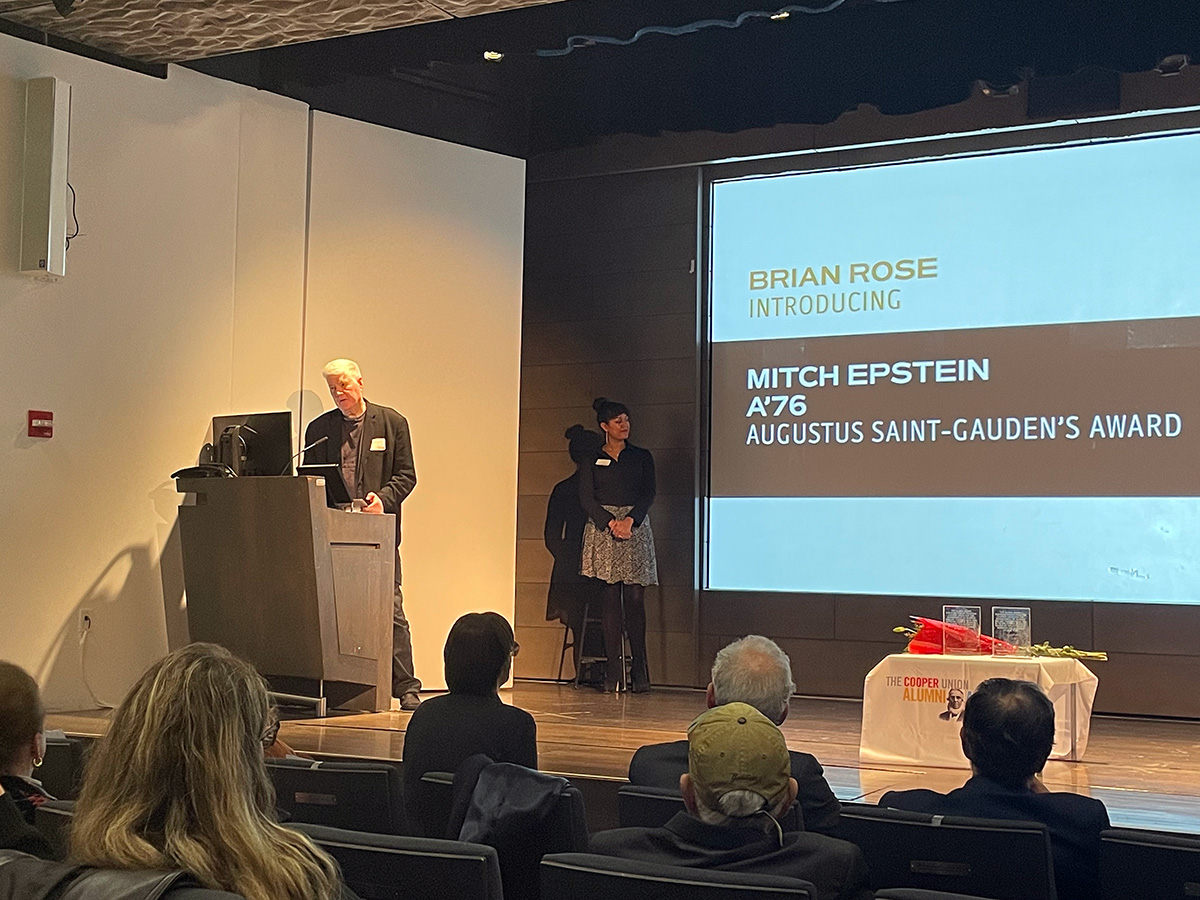
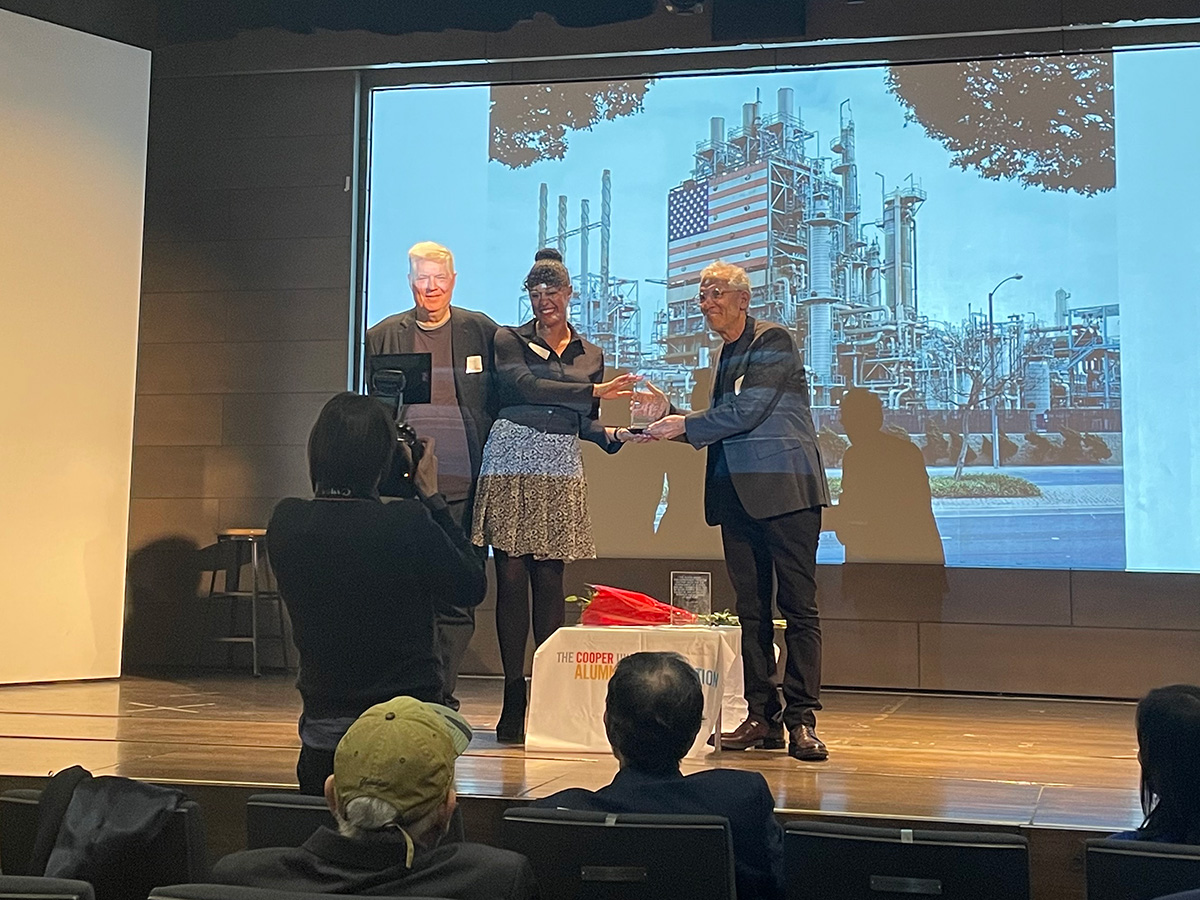
I had the distinct honor last night to introduce Mitch Epstein as the recipient of the August Saint-Gaudens Award, which is given each year to a living Cooper Union school of art alum. The award ceremony was held in the Rose Auditorium (no relation, but somehow appropriate), in the new academic building on Third Avenue and Cooper Square.
Despite only graduating three years apart, this was the first time I had met Mitch. I have closely followed his career, however, and was thrilled to have the opportunity to talk about his work. My introductory remarks follow:
My name is Brian Rose from the Art class of ‘79. It is my pleasure to introduce the recipient of the 2023 Augustus Saint-Gaudens Award. Each year this award is given to a living alum of the School of Art for outstanding professional achievement and contribution in the arts. Tonight I am honored to introduce Mitch Epstein, Art class of 1976.
Mitch and I came out of a photography program that produced a number of influential art photographers and professionals. While at Cooper, Mitch studied with Gary Winogrand, Todd Papageorge, and Joel Meyerowitz, one of the pioneers of color photography.
He went on to a career of astonishing depth and breadth encompassing both still photography and film. He has produced 17 books, and his work has been collected by major museums around the world. Although he has made any number of iconic individual images, I know Mitch’s work especially well through his projects.
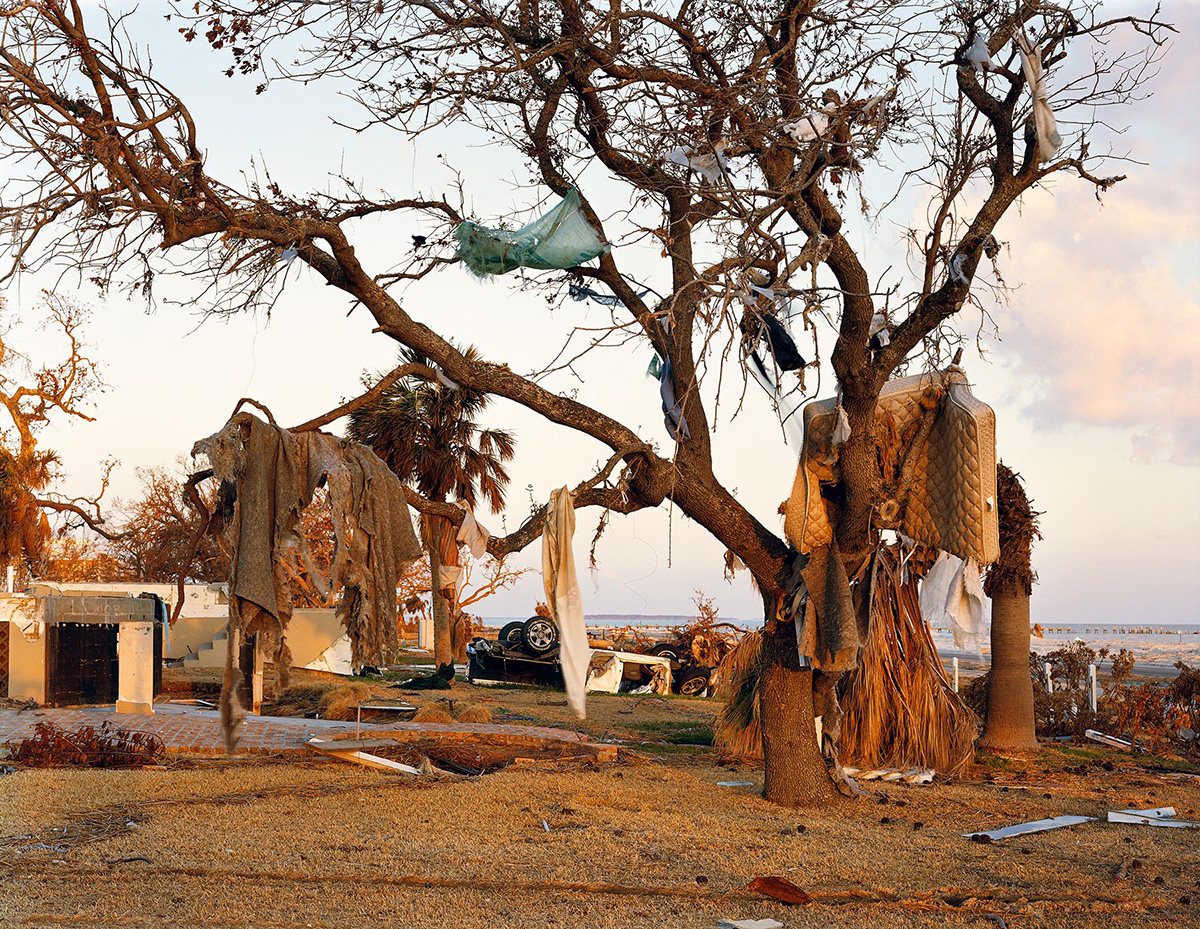
Biloxi, Mississippi – Mitch Epstein 2005
One such project, American Power, started out as an assignment to document a dying town in Ohio, its residents being bought out by an electric company that sought to expand its operation. That assignment led to an exploration of American society in relation to the production of energy and its impact on the landscape. I think, in particular, of a picture made in the aftermath of Hurricane Katrina, a superstorm portending more such extreme weather due to global warming. The image is heartbreaking, yet exquisite in its delicacy.
Family Business is more than a photography project. It incorporates stills, film, and interviews and tells the story of the demise of Mitch’s father’s business in the fading industrial city of Holyoke, Massachusetts. The project addresses the wrenching changes occurring in blue collar communities across the country, but it is also a look into Mitch’s own identity. In the short film “Dad,” Mitch’s father struggles to deal with tenants in the aftermath of a fire in a building he owns. In a confrontation with his property manager, he repeats the phrase, “I’ve been doing this for 59 years.” In Family Business, Mitch is not offering easy solace or platitudes, but he is insisting, to echo Arthur Miller, “he’s a human being, and a terrible thing is happening to him. So attention must be paid.”
Mitch Epstein receiving the August Saint-Gaudens Award from Ciera Lowe
These are but two projects of many. Mitch’s career and life have taken him to India, Vietnam, Europe, and all across the United States, but some of my favorite photographs of Mitch’s have been made right here in New York City where he lives. In recent years he has turned to making black and white images of rocks, clouds, and trees. Elemental things, hard and soft, tactile and ephemeral, like life itself.
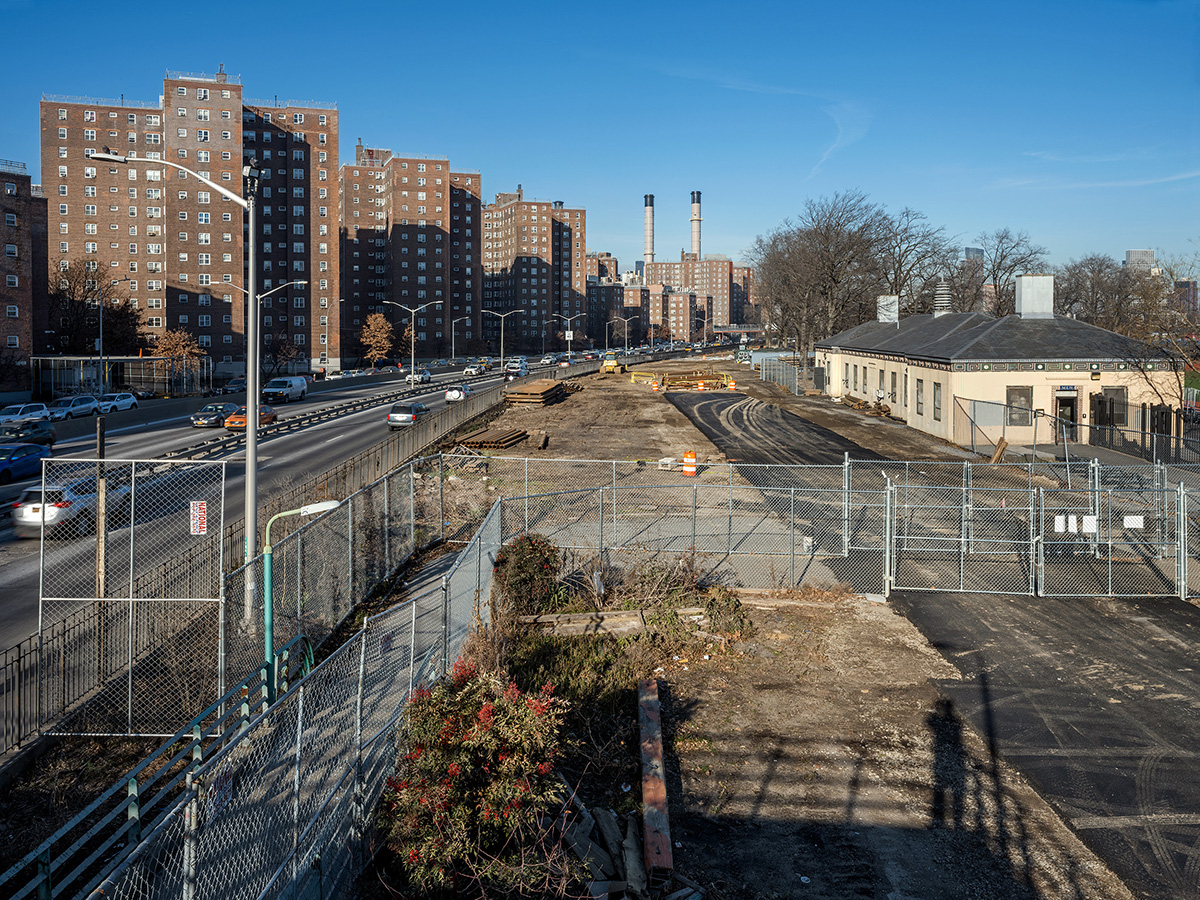
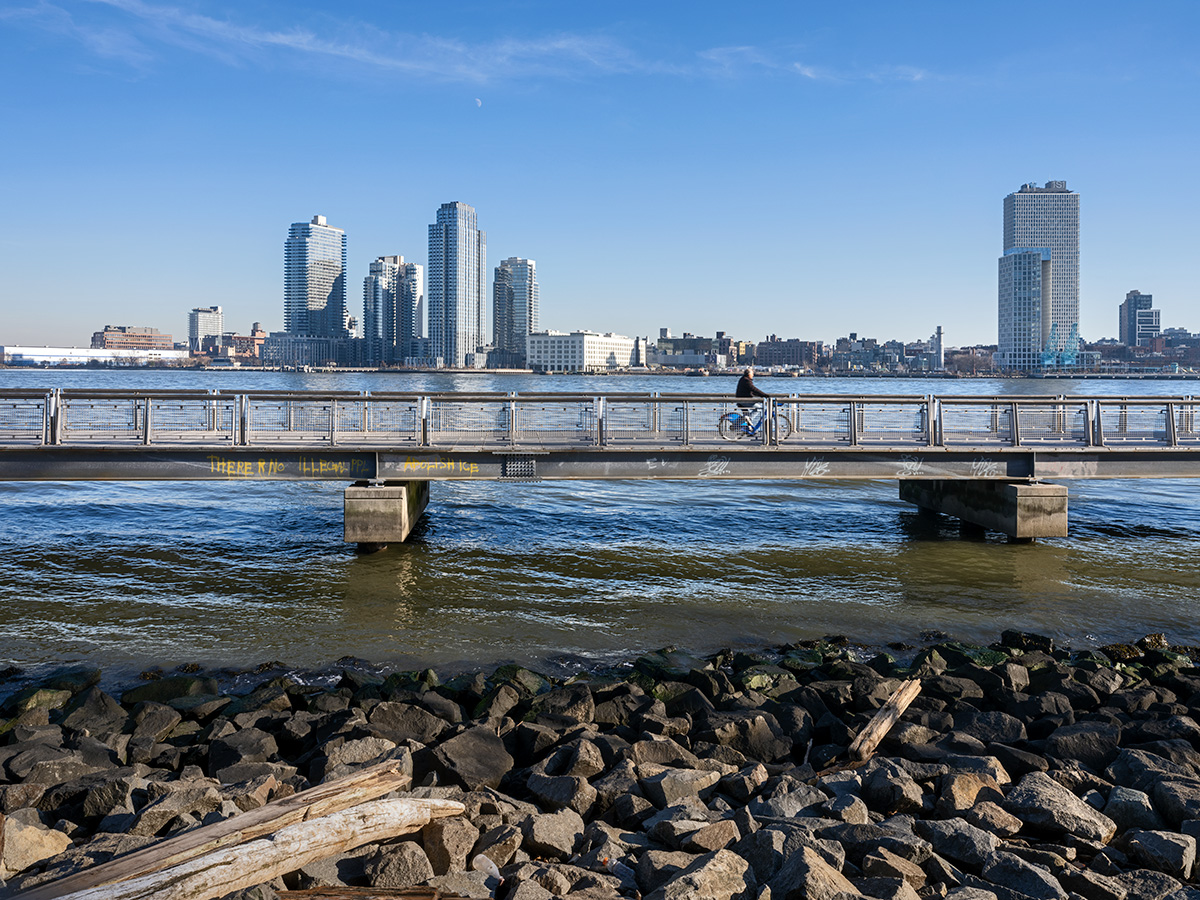
The shoreline of the Lower East Side was once an irregular geography of creeks and inlets and marshland. That natural landscape was transformed into a sawtoothed row of docks with adjacent warehouses, factories, power plants, and tenement housing. Then Robert Moses, master planner, tore it all down and extended Manhattan onto landfill in the East River. Housing projects replaced the tenements, and a highway was constructed between them and a strip of parkland along the river.
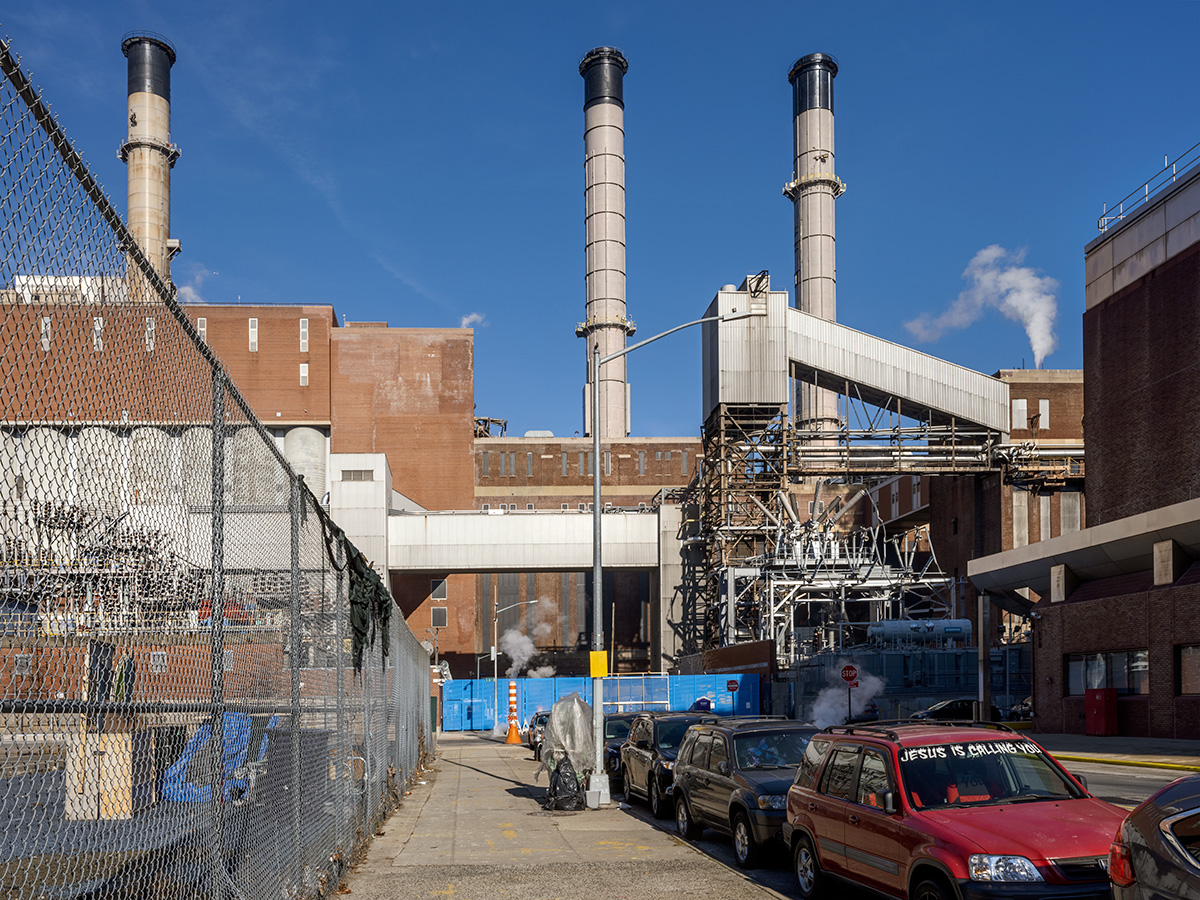
And then came Hurricane Sandy pushing water into New York Harbor and flooding this part of the Lower East Side. The water reached a transformer of the massive Con Edison powerplant, a vestige of the old industrial landscape of Manhattan, and an electrical arc took out the plant, plunging much of Lower Manhattan into darkness.
The city is now rebuilding East River Park, raising its profile against the ever-rising sea level caused by global warming. I took this picture from a pedestrian walkway bridging the FDR Drive, my shadow-self portrait at the lower right.
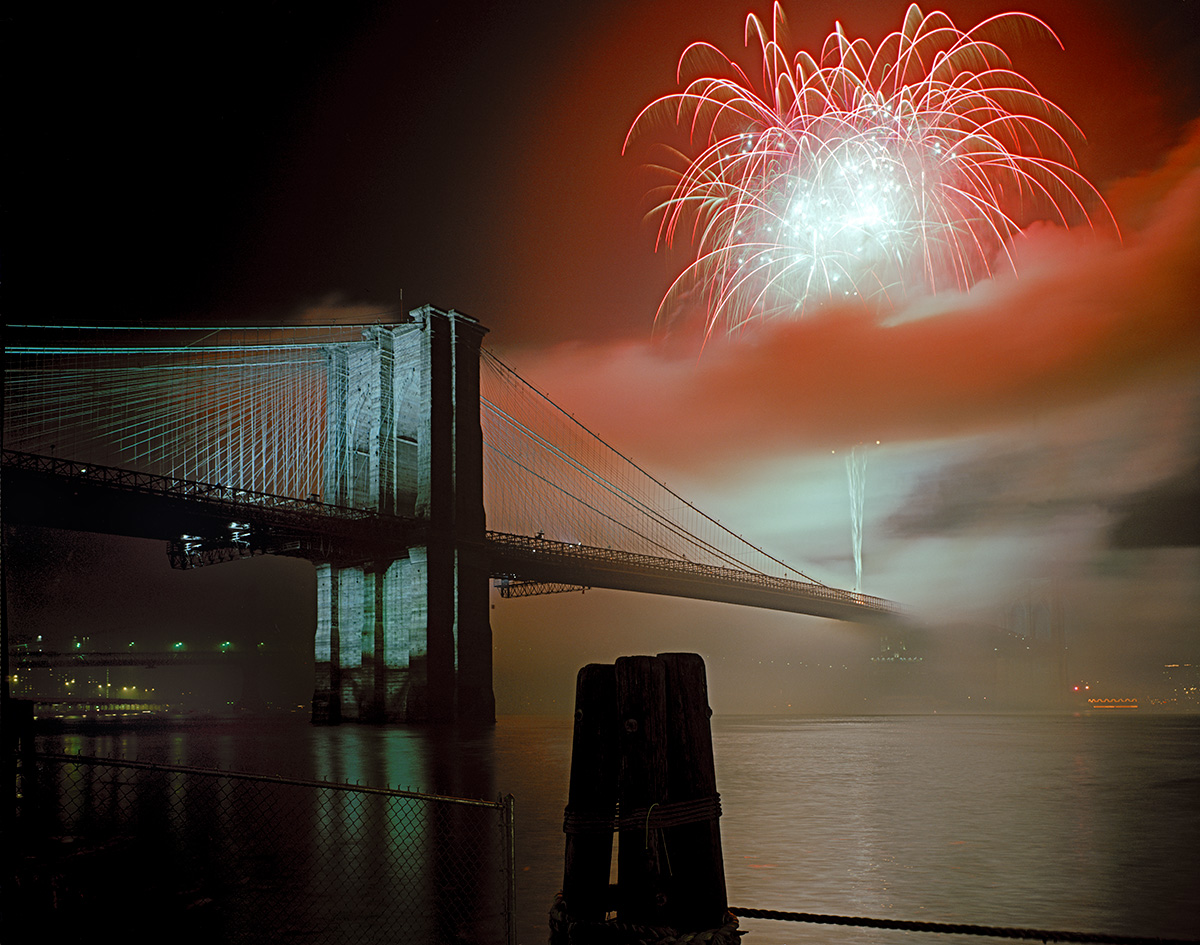
Looking forward by looking back to May 24, 1983, the 100th anniversary of the Brooklyn Bridge. After photographing the Lower East Side, I was only then attempting to get started as a professional photographer. The Rouse Company, the developer of the South Street Seaport, hired me to document some of their ongoing construction work, which led to my first published assignment.
Because of my relationship with Rouse, I was able to secure a prime spot to photograph the fireworks show for the centennial celebration. There were dozens of other photographers perched along the decaying waterfront with their SLRs, motor drives, and telephoto lenses. I was down on a sandy strip of beach – the tide must have been out – with my 4×5 field camera and wide-angle lens, juggling with film holders in the approaching darkness.
I had no idea how to go about photographing fireworks. I was just winging it. Knowing I only had about ten sheets of film to work with, I opened up the lens all the way, making sure I was focused on infinity, and tried a series of time exposures. One second, 2 seconds, 8 seconds, 15 seconds. About half of them were washed out and unusable, but I nailed it on the image above, a single projectile fired from a barge below the bridge, bursting into a perfect shower of fire.
My contact at the Rouse Company put me in touch with the editor of the AIA Journal, Donald Canty, who asked if I could show him my portfolio. No websites in those days – I had to go to his office. The magazine was headquartered in Washington, D.C., so I took a train down and met with Canty not far from the White House, as I recall.
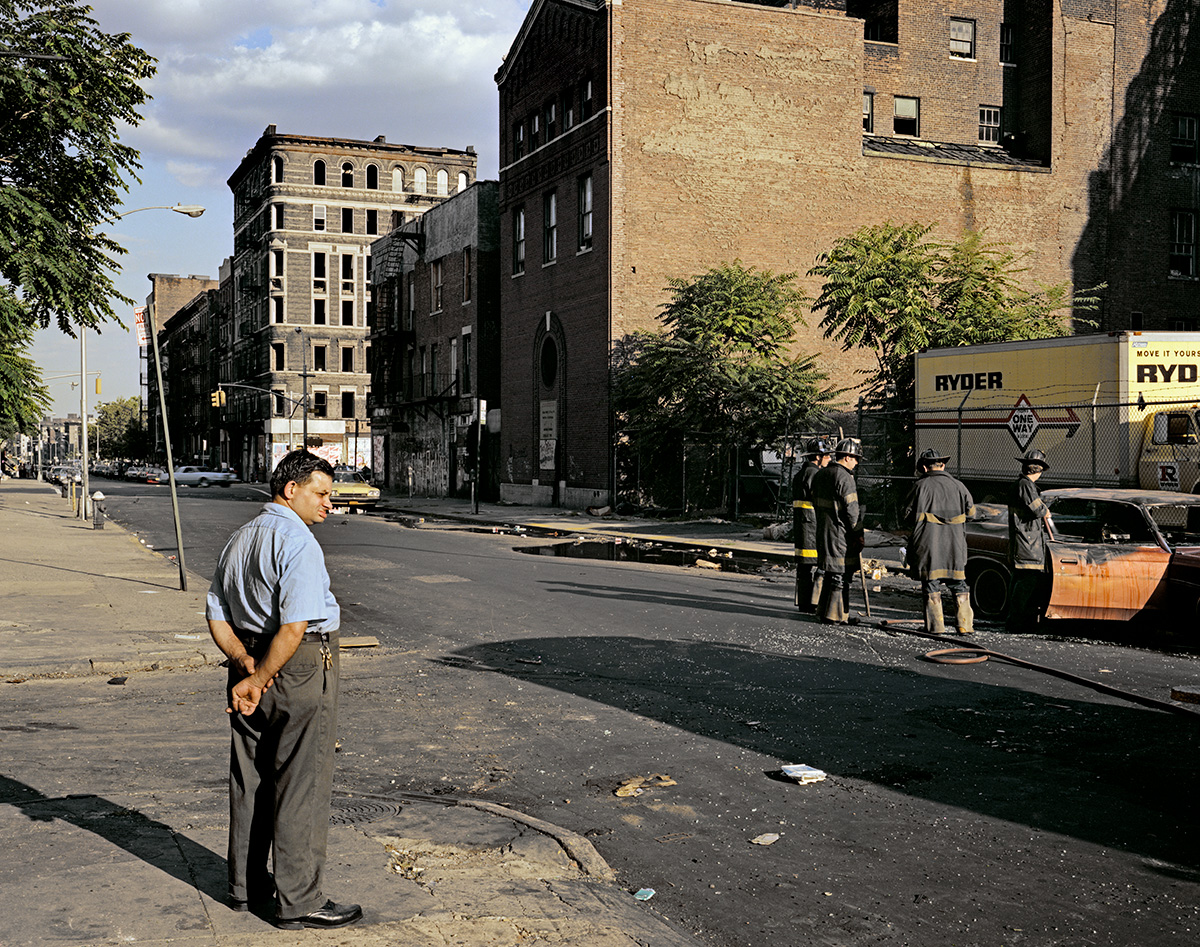
The magazine was looking for a photographer to shoot the Seaport. The problem, however, was that I had no portfolio other than my pictures of the Lower East Side, which were not seamless images of sleek new buildings, but gritty documents of the streets and architecture of a neighborhood and a city caught at the cusp between decline and rebirth. The images, made in color with a view camera, depicted reality in stark and vivid detail, unlike the grainy black and whites usually associated with the Lower East Side. Don Canty looked at the 11×14 prints I had brought with me, which included my Brooklyn Bridge fireworks picture, and he told me right then and there that he would hire me.
He ran the bridge image as a double-page spread in the magazine a few months later, and I went on to do numerous assignments for Canty in the 1980s.
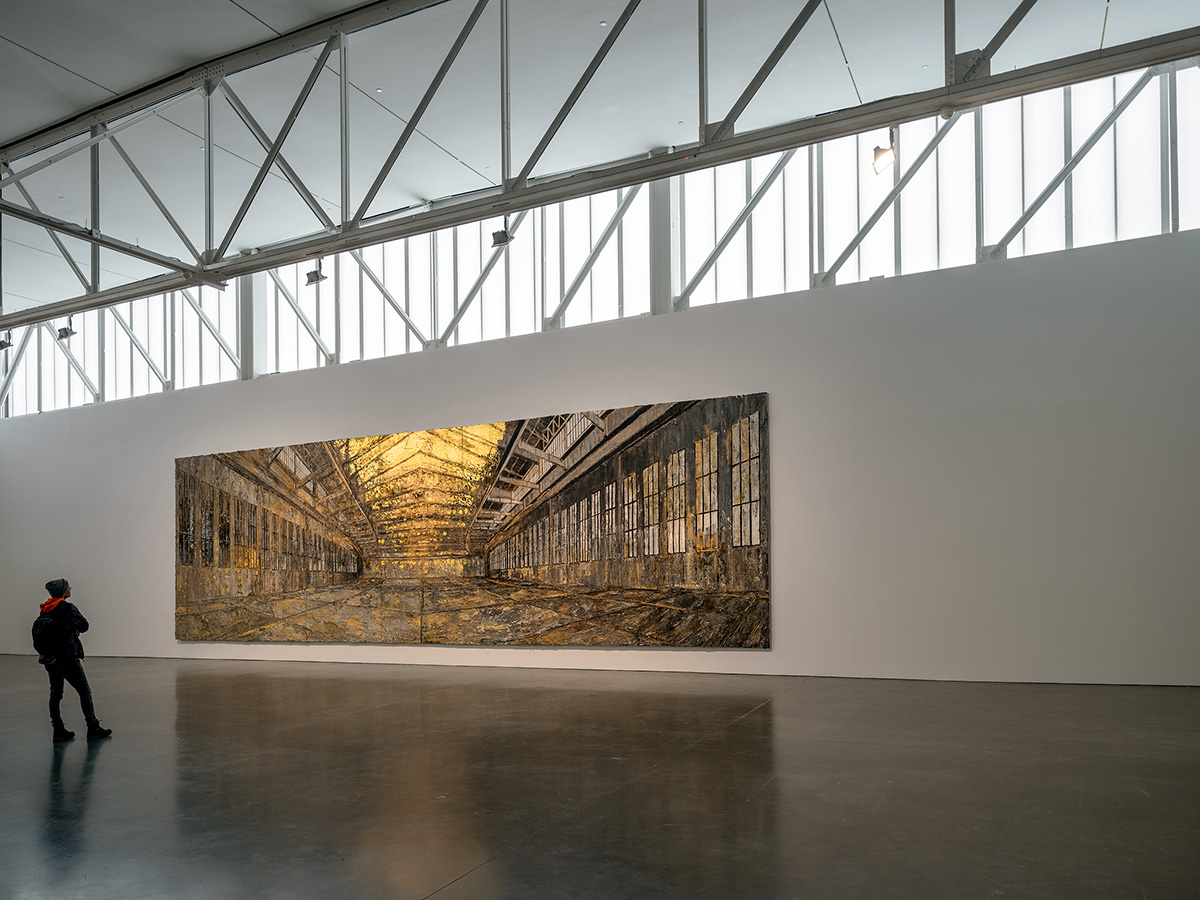
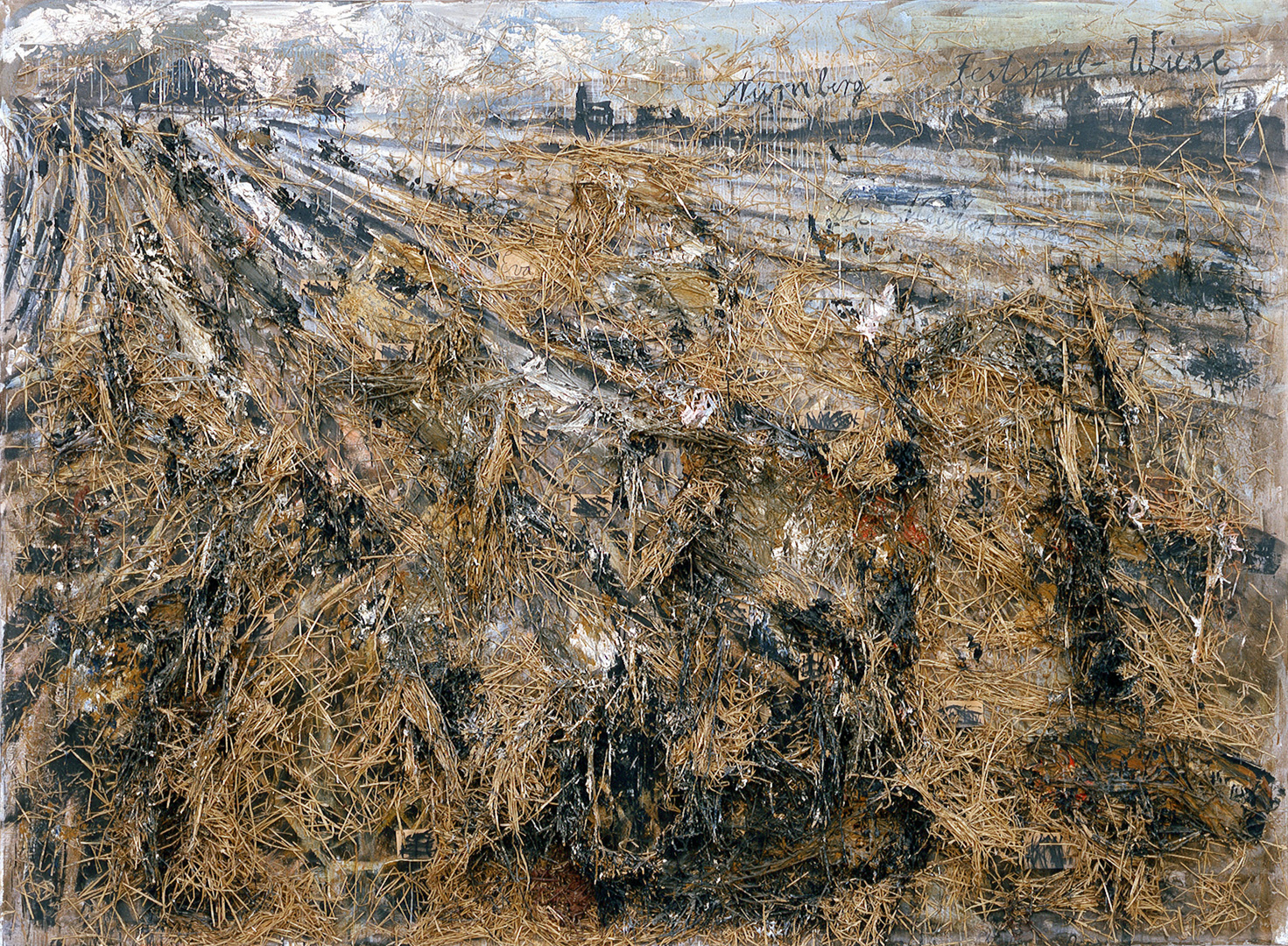
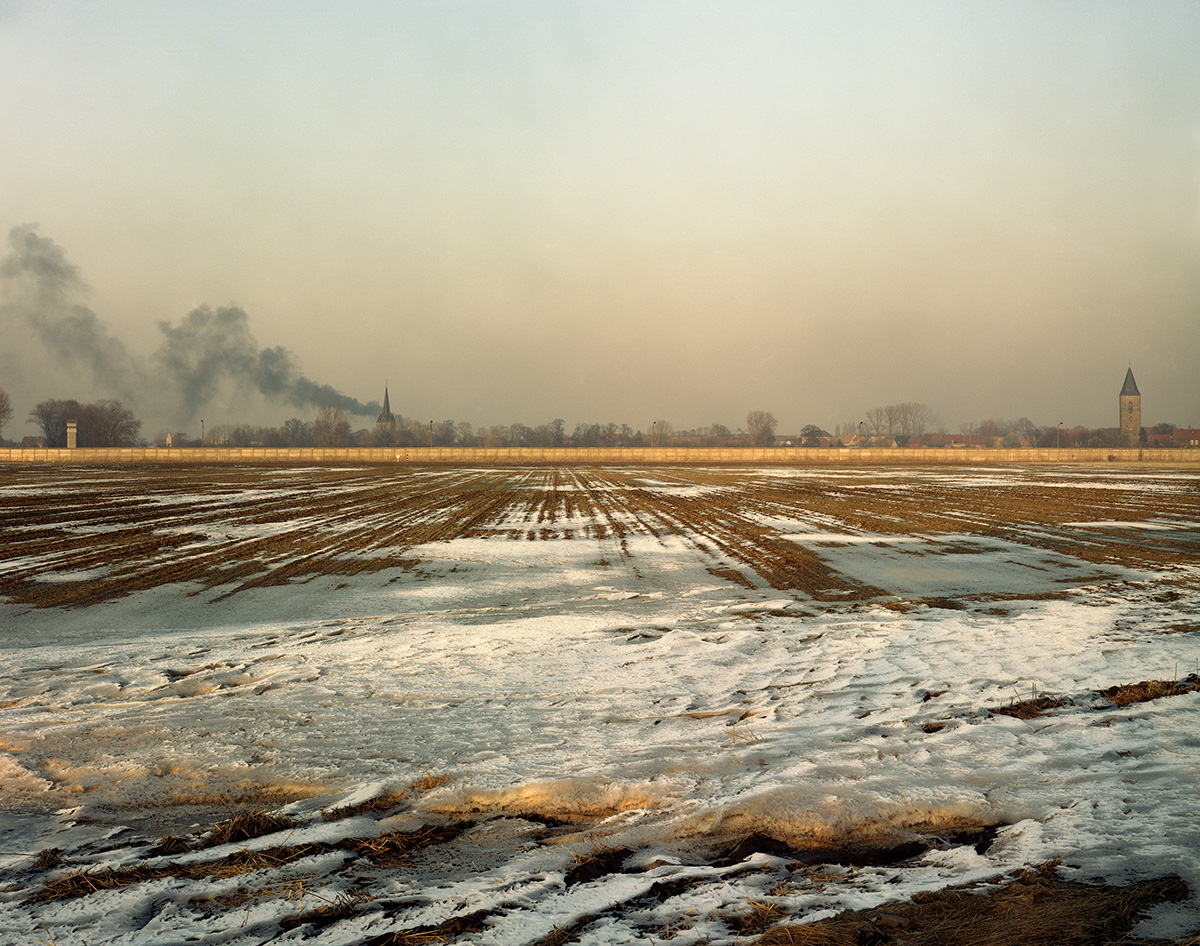
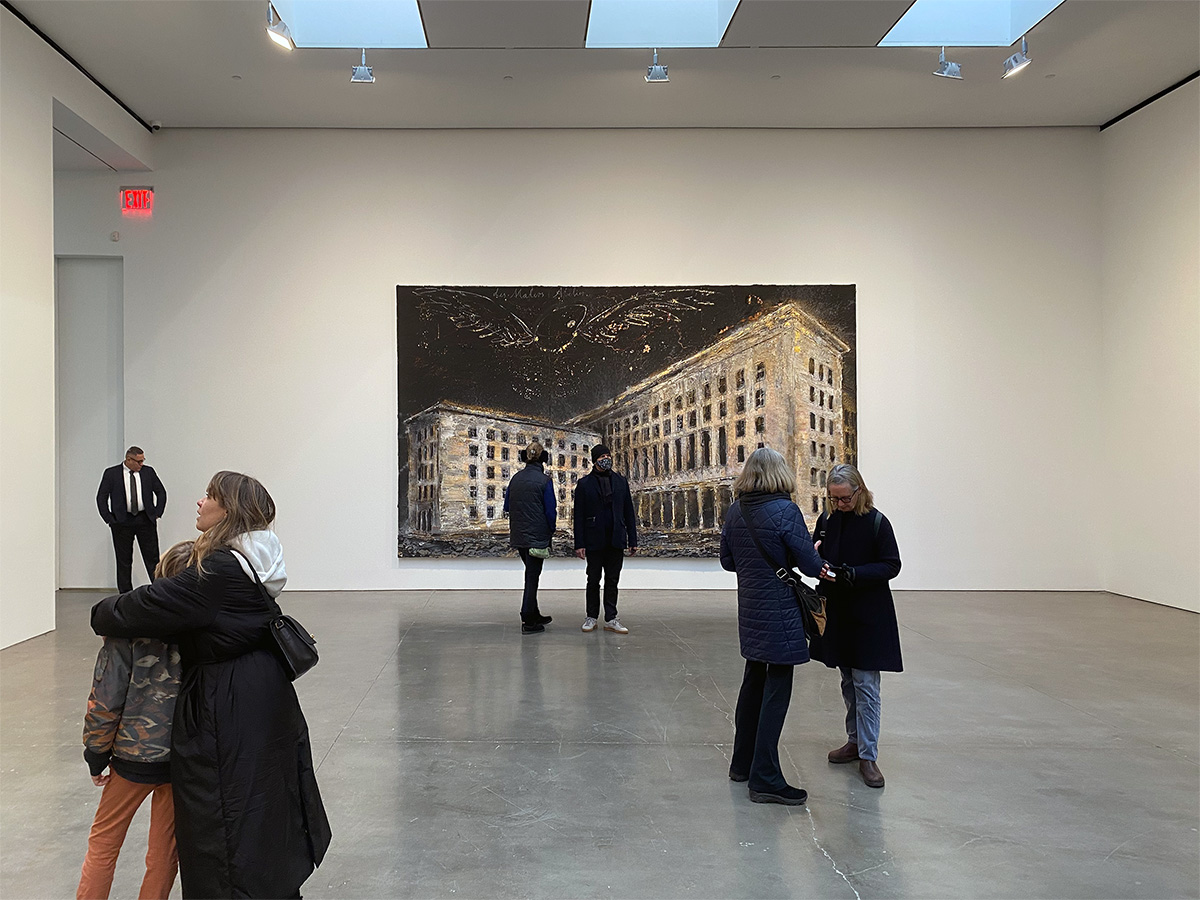
I just saw the Anselm Kiefer exhibition at Gagosian on West 24th Street in Chelsea, and I used the opportunity to bring my camera and add to my ongoing project photographing the High Line and its surroundings. Kiefer has long figured into my way of thinking about landscape and architecture. I became aware of his work in the 1980s, and his straw paintings, in particular, were on my mind as I began photographing the landscape of the Iron Curtain.
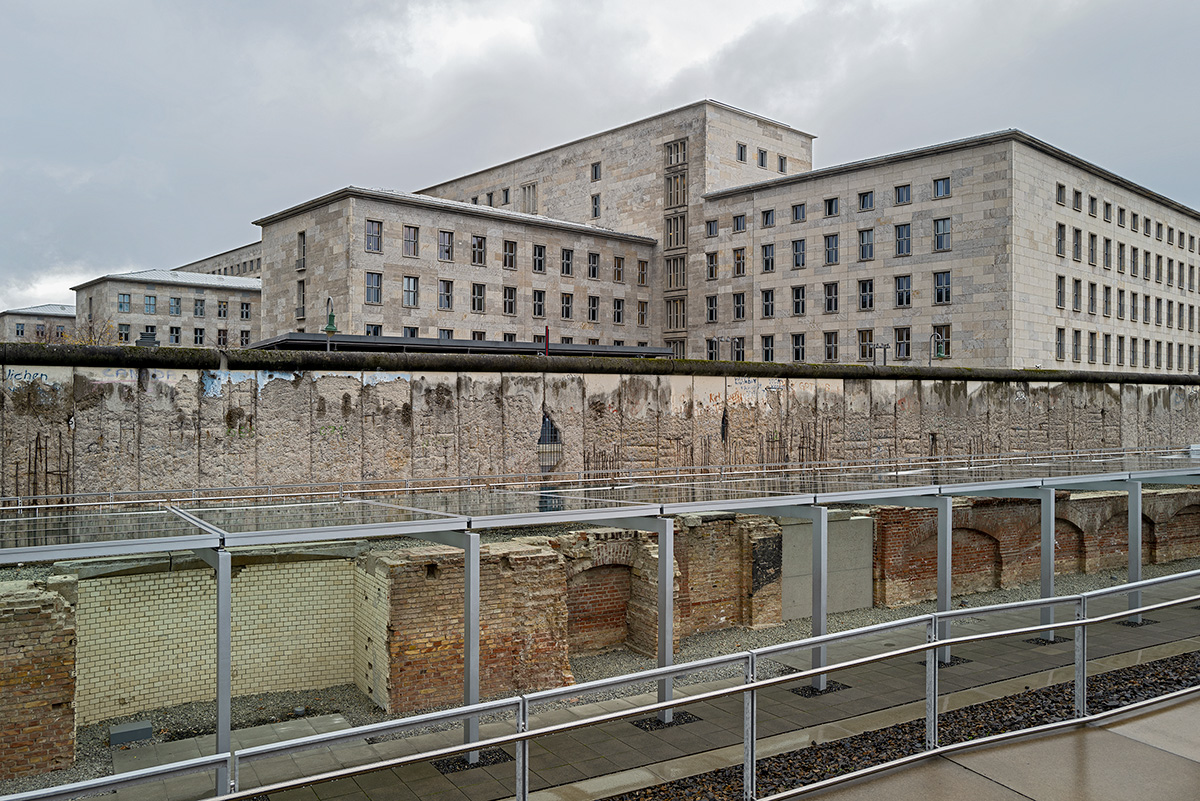
Landscapes of all sorts – urban, rural, and wild – are conveyors of history and bearers of cultural clues, evidence of our existence. The landscape of Europe is fraught with the weight of centuries of war and violence, and architecture, the constructed embodiment of civilization, religious and secular, preserves history in its presence on the landscape. Moreover, we project our knowledge of this past, however fragmentary or distorted, onto the landscapes and structures of human habitation.
Kiefer’s work, as I see it, occupies this territory – the layered complexity of landscape and memory and his paintings do so both as image and as visceral experience in the way he incorporates materials – straw, lead, gold leaf – into his thickly impasto-ed surfaces. These are the elements of alchemy and material transformation, and one surmises that Kiefer strives to transmogrify the baseness of humanity into enlightenment, but we remain imprisoned in the soil, and gaze upon the horrors writ upon the landscape and contained in the utilitarian logic of Nazi architecture. Kiefer also makes use of mythology and religion, the allegorical underpinnings of society, and indeed, this exhibition at Gagosian is entitled “Exodus.”
As a photographer, I work strictly with images. They are not 3-dimensional, there is no materiality, no impasto. Nor do I delve into the mystical as Kiefer does. But I do explore the palimpsest of history and memory, and like Kiefer I am not afraid of taking on big subjects, iconic structures, and places invested with cultural and spiritual meaning. Kiefer goes way too far for me. His grandiose symphonic expressions push over the edge, but they are undeniably powerful, and are among the great works of our time.
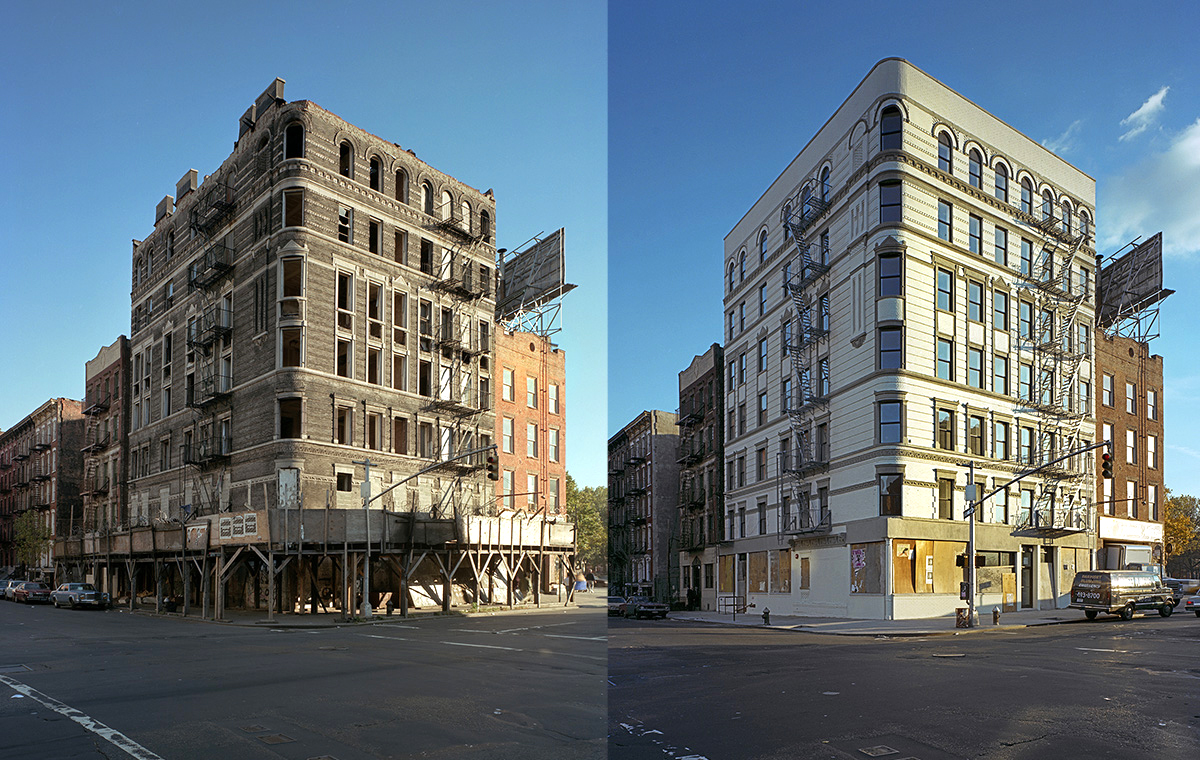
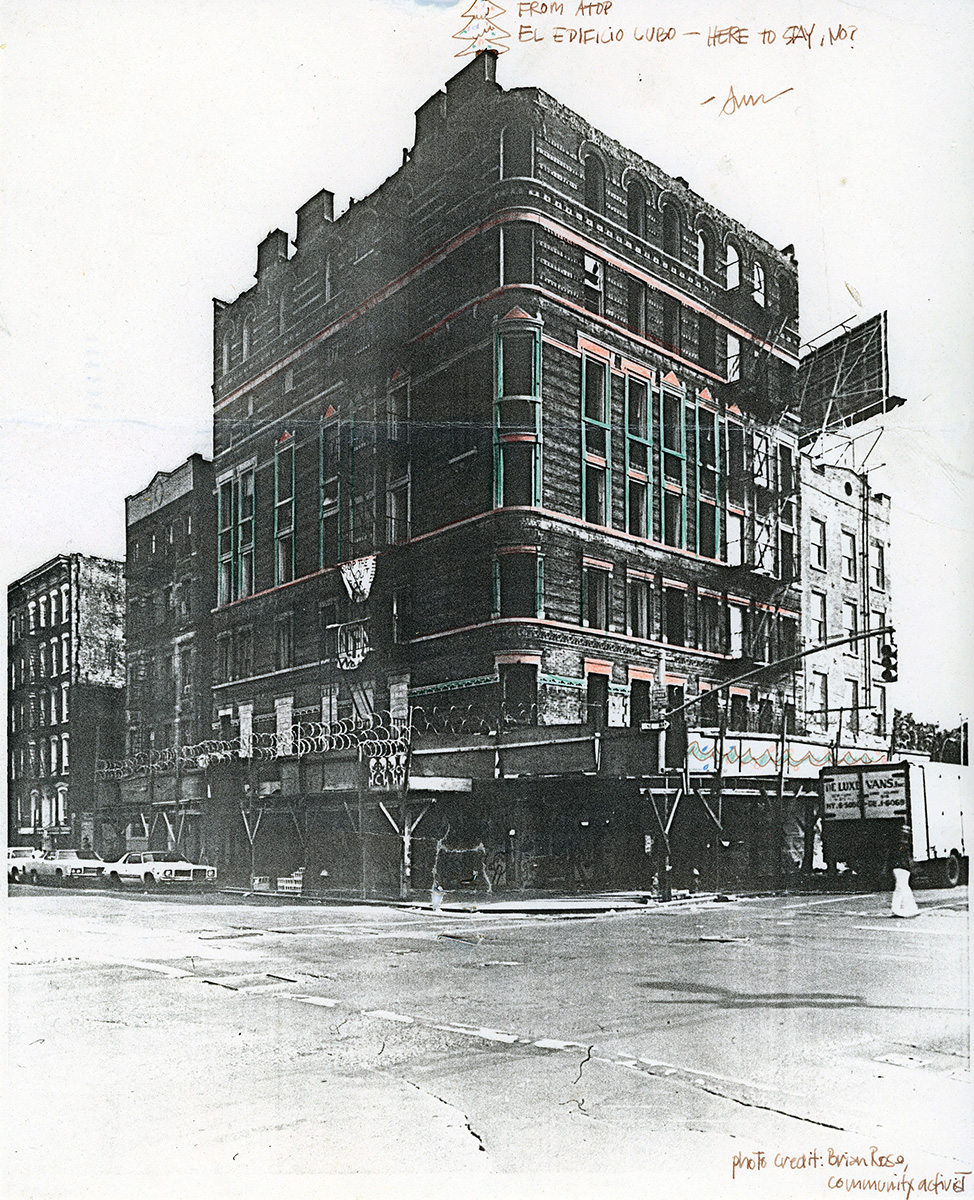
Things got so bad in the 1980s that the city began offering buildings to developers for $1. Of course, the offer came with conditions, but imagine anything in New York going for a dollar today. The Cooper Square Committee, a housing organization led by the charismatic activist Frances Goldin opposed the giveaway of the Cube Building, a crumbling square-shaped tenement with a collapsed roof at the corner of Second Avenue and East 1st Street. I was a volunteer member of the steering committee of Cooper Square, located on East 4th Street, just a few blocks away. It was 1985, a time of much turmoil on the Lower East Side. AIDS cases were rapidly exploding and discarded crack vials on the street signaled a new and disturbing trend.
We sent angry letters to politicians and held demonstrations protesting the pending sale of the Cube Building, but I was convinced we would fail without a more practical solution. Paradoxically, while derelict buildings were being sold off, the city faced a mounting crisis of homeless families, women with children, not the usual “Bowery bums” or the single individuals who lived in SRO hotels. Responding to political pressure, New York state established a capital program for projects designed to house homeless families. As soon as I heard about the state program, I seized upon the idea of using it to rehabilitate the Cube Building for homeless families. As I recall, it took some doing to convince others that going for the money might be a stronger play than carrying signs in the street.
And there was another little problem. We had no standing as an independent nonprofit to apply for the money. We did not have, in city government parlance, site control. The head of HPD (Housing Preservation and Development), Tony Gliedman, an Ed Koch appointee, was not going to give it to us, but there was a young deputy commissioner, Joe Shuldiner, who met with us, listened to our pitch, and granted us a very narrow window of a few weeks to apply to the state for funding. He may have stepped a little out of line at HPD – perhaps – but he definitely stepped up for us in a big way.
We put together a budget for the Cube Building that was entirely smoke and mirrors. It depended on a million dollars of state money, a vague amount of city participation, and several hundred thousand dollar’s worth of sweat equity. The idea was that the tenants selected for the project would perform construction tasks to round out the financing of the renovation. We knew, of course, that this was ludicrously unrealistic.
When I got involved with the Cooper Square Committee, I was well aware of its role under Frances Goldin’s leadership in stopping Robert Moses from demolishing much of the East Village to build public housing, and I knew that she was instrumental in preventing Moses from running an expressway across Lower Manhattan. So, I had read “The Power Broker,” Robert Caro’s epic portrayal of the rise and fall of Robert Moses, and learned a lot about how things work in this city. There was one paragraph that stuck with me:
Misleading and underestimating, in fact, might be the only way to get a project started. . . . Once they had authorized that small initial expenditure and you had spent it, they would not be able to avoid giving you the rest when you asked for it. . . . Once a Legislature gave you money to start a project, it would be virtually forced to give you the money to finish it.
I knew that if we could get the state to give us money to do the Cube Building, the rest of it would fall into place. “You don’t give money back once you’ve got it,” I remember saying. And so, we packaged a largely fictitious budget proposal and applied for the state money. What I did not fully understand at the time was that Frances Goldin had friends in the agency we were applying to, and our chances of success were better than I knew. That said, I do not believe she had any idea how far out on a limb our proposal actually was. Accordingly, she was calm and confident when we met with state officers in the World Trade Center to outline our proposal. I, on the other hand, was in total panic and feeling physically ill.
The meeting turned out to be a piece of cake – they never asked us to justify our numbers. They had already decided to award us a grant of $1.2 million for the rehabilitation of the Cube Building. We all shook hands with broad grins on our faces, and I realized, somewhat to my surprise, that these supposedly faceless bureaucrats who worked in a fluorescent-lit office in the World Trade Center were as excited as we were to be part of something positive, maybe even something great.
Unfortunately for me, the butterflies I had come to the meeting with had developed into a full-blown bout of food poisoning, and I fled the meeting by myself, grabbing a cab in front of the Vista Hotel, urging the driver to get me back to East 4th Street as quickly as possible. Heading uptown, I couldn’t suppress the nausea any longer, threw some money at the driver, and stumbled out on the corner of Houston and Bowery, vomiting on the street amidst a scattering of disheveled men sprawled on the pavement. The only good thing I can say about the situation is that no one noticed.
And things did fall into place. The city was forced to accept that we had secured the money to start the project, and they, grudgingly chipped in the rest of what ballooned into a $2 million outlay, due in part to the shady low-bid contractor we were forced to work with. There was, of course, no sweat equity component unless you count the untold hours we put into the proposal and the untold hours we put into supervising the construction and selecting the tenants for what was the nation’s first nonprofit coop for homeless families. Val Orselli, director of Cooper Square, and Ann Ostrander, a recent Columbia graduate on our staff, did the lion’s share of the work.
Christmas greeting from Ann Ostrander, Cooper Square staff, 1985
Two years later in 1987, at the dedication of the building held on the sidewalk on Second Avenue, I was pleased to see Joe Shuldiner, who had moved to a job with the New York City Housing Authority. He later became director of the housing authority of Los Angeles, and then Chicago. I said to him, somewhat apologetically, that I was sorry the project ended up costing the city so much more than we had initially proposed. His reply was, forget about it; you got it done; these people have a place to live. Forty-five years later, the Cube Building remains a low-income coop.
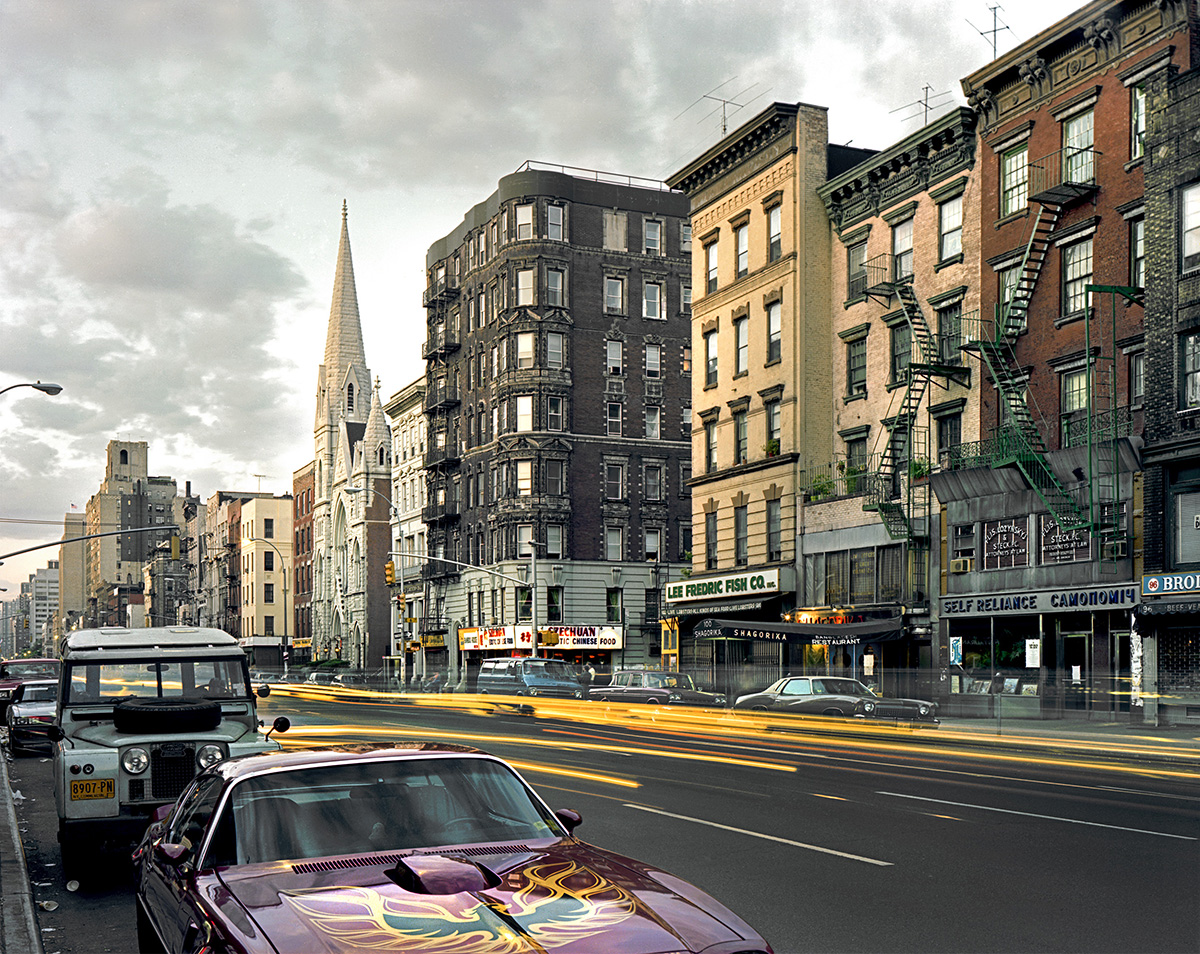
In the late 70s I lived in a tiny tenement apartment on East 4th Street between the Bowery and Second Avenue, with a toilet in the hall and a bathtub in the kitchen. While in art school at nearby Cooper Union, my bedroom doubled as a darkroom for black and white printing, and the living room walls were covered with paintings and photographs. Living in the East Village, I quickly found a community of artists and songwriters. While CBGB, the punk rock Valhalla, was just around the corner, I was hanging with musicians who favored acoustic guitars. When a group of us began recording the Fast Folk Musical Magazine, a monthly album of songs with a printed insert, the typing and paste-up were done in my apartment. The typewriter we used was an IBM Selectric, a brilliant machine with interchangeable type balls. We borrowed it from Sherwood Ross, one of our songwriting buddies, who always seemed a bit goofy to me – he had a song called “I Sliced Pastrami for the CIA and found God” – but unknown to us at the time, he was, in fact,the Sherwood Ross, a legendary journalist and civil rights hero. He served as publicist for James Meredith, who was shot while leading a march for voting rights in Mississippi.
Wikipedia: James, he’s got a gun!” Ross was quoted as saying in his eye-witness account of the shooting that was published on the front page of the Washington Star and other major newspapers. Photos of Meredith writhing in agony appeared in newspapers around the world. One such photo by the Associated Press garnered the Pulitzer Prize in 1967. These images – along with Ross’ appearance the following day on NBC’s “Today Show” calling for reinforcements – prompted Rev. Dr. Martin Luther King, Stokely Carmichael, and other civil rights leaders to rally to Mississippi to continue in Meredith’s footsteps.
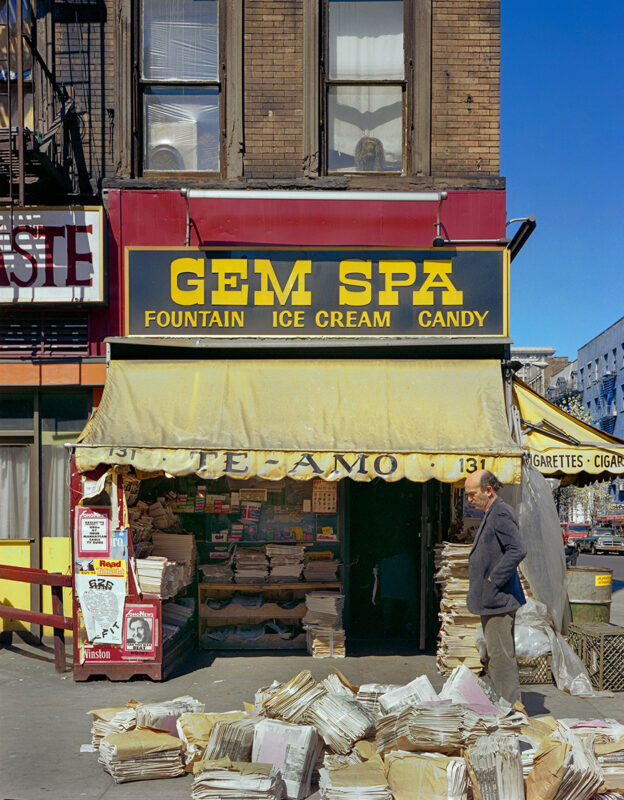
Given all the creative ventures vying for space in my cozy apartment on 4th Street, I did very little cooking, and I spent a great deal of time in nearby restaurants and cafes reading a newspaper, jotting down lyrics or writing letters, keeping a journal. It was an analog world then, of course, and to me, the center of that pre-digital world rotated around Gem Spa, a newsstand at the corner of Second Avenue and St. Mark’s Place. Gem Spa always had the late edition of the Times, and near the cash register, an array of pricey art and architecture magazines, which I furtively leafed through, hoping to avoid the gaze of the cashier who would bark, “This is not a library!” should one linger too long on an open page. Gem Spa also was known for its chocolate egg cream, an elixir frothed up in actual glasses in a ritual transubstantiation of Fox’s U-Bet syrup, milk, and seltzer. You drank it right there – inside, amidst the magazines – or outside, where your egg cream was handed to you through a hole-in-the-wall window at the front of the shop.
In 1977, when I first moved to East 4th Street, my eating-out options were somewhat limited. There were cheap Indian restaurants on 6th Street, Bamboo House for Chinese on 7th, and the B&H Dairy between 7th and St. Mark’s. Dave, who worked behind the counter at B&H made the best omelets in the world, as far as I was concerned, but he was one cantankerous old dude. One day while seated at the counter, I failed to order fast enough for Dave, and he grabbed me by both ears and growled, “I can’t hear you!” Another day, I made the unfortunate choice of ordering a Coke to go with my bowl of mushroom barley soup. Dave shamed me in front of the entire restaurant – “Who orders a Coke with soup?” No one came to my defense. They all kept their heads down to avoid the wrath of Dave, the East Village version of Seinfeld’s Soup Nazi.
My restaurant options greatly improved when Kiev opened in 1978, a round-the-clock Ukrainian diner with pierogis, kielbasa, challah bread French toast, and unlimited lousy coffee. It teamed up with nearby Veselka as twin meccas of Ukrainian soul food. Kiev was an immediate hit with the entire neighborhood, and it bustled at all hours. It was blindingly bright, with banks of fluorescent tubes casting an unflattering greenish glow on the pale denizens of the East Village night. I sat at a table next to the Ramones one night at 4 A.M. looking so much like themselves in torn jeans, leather jackets, and long shaggy hair that I couldn’t help but think they were the Ramones dressed up to look like the Ramones. One night I sat across from John Malkovich, who I greatly admired as an actor, but rather than talking about the theater, he was blathering on to a companion about a house he had visited in the Hamptons. Oh well, I thought, we’re definitely not in the Hamptons here.
Closest to me on the corner of East 5th and Second Avenue was Binibon, a cheap hole-in-the-wall cafe with a bohemian vibe and edible food. The waiters and waitresses were young aspiring actors and artists like me, and it was a great place to sip coffee and read the paper. I was in there at least several times a week. They say that everyone from William Burroughs to Jean-Michel Basquiat ate there, but I don’t remember ever seeing anyone I recognized.
One morning, I arrived at my usual 8-ish hour, and while the place was clearly open, there were unusually few patrons. Something was wrong. Something terribly wrong. It’s been so long since then that I can’t quite describe the atmosphere, but after a brief bite to eat, I knew I had to get out of there right away. Someone behind the counter said something about a murder, that someone had been stabbed in the street outside, but there were no uniformed police in evidence – no NYPD detectives in cheap suits – and no crime scene tape or chalked outline of a body. It was, so it seemed, just another routine murder on the Lower East Side. That evening I watched the CBS News, and Dan Rather, who had just taken over for the legendary anchor Walter Cronkite, to my astonishment, reported the details of what turned out to be a decidedly un-routine murder on the Lower East Side.
Jack Abbott, a convicted violent felon, was paroled from a maximum security prison in Utah with the help of author Norman Mailer. Abbott’s prison memoir “In the Belly of the Beast,” had come to Mailer’s attention, and he believed that Abbott, a victim of a traumatic upbringing, deserved a chance at redemption. Abbott’s book was published, and after he was released, he came to New York to work as a researcher for Mailer and stayed at a halfway house on East 3rd Street run by the Salvation Army. At that time, East 3rd also housed a large shelter for the homeless, and the sidewalks were littered with derelict men. Abbot, after years of prison life, was now the toast of the town, giving interviews and doing television appearances while simultaneously living amongst the dregs of society just off the Bowery.
The New York Times: At 5 A.M. on July 18, Mr. Abbott was eating in the all-night Binibon Restaurant at Second Avenue and East Fifth Street, three blocks from the halfway house. When a 22-year-old part-time waiter refused him permission to use a toilet, saying it was restricted to employees, Mr. Abbott apparently asked him to step outside. Within a minute the waiter, who had recently married and had a promising career as an actor, was dead of a single knife wound to the heart, and Mr. Abbott had fled.
I, unwittingly, had arrived at Binibon that morning just a few hours after the murder walking into a palpable maelstrom of horror. It was too late for the Times to retract their review of Abbott’s newly published book already in print for the Sunday Edition. “His prose is most penetrating, most knife-like, when anger is its occasion. How, I wonder, shall this talent serve Abbott now that he is free?” Binibon was shuttered shortly after the murder. Abbott was apprehended in Louisiana, convicted of manslaughter, and hanged himself in prison in 2002.
November 8, 1980. I stumbled out around 8 A.M. as usual and headed to Gem Spa for the paper. As I approached the newsstand, I was staggered on my feet by a screaming New York Post headline: “John Lennon Shot Dead.” The Times confirmed the murder in the less emphatic style of the Gray Lady with a headline down the page to the left above a photograph of Yoko Ono and music mogul David Geffen, distraught. The lead headline at the top of the page warned of a possible Soviet invasion of Poland. My God! Some things never change. Four decades later, I am still traumatized by that moment and the loss of one of my heroes – I had just seen John and Yoko walking through Central Park that summer.
Living in New York, one inevitably catches glimpses of celebrities – artists, actors, musicians – as a matter of course. They are neighbors, not just mythic icons of popular culture. Walking up Fifth Avenue years ago I collided rather violently with the late senator Patrick Moynihan, who had just emerged unexpectedly from a cab at the curb. Dusting ourselves off, we made brief eye contact, quickly assessing that nothing untoward had happened. It was just a random crossing of paths, literally. In New York, the nexus of accident and fate is an ever present reality, tightly woven like the grid of the streets.
My next-door neighbor, Manny, in 69 East 4th Street was getting weirder and weirder, wearing dark glasses day and night, and a steady stream of visitors came up the tenement stairs and knocked on his door, just inches from mine. Sometimes there were loud voices and heated arguments, but whenever I ran into Manny in the hall, he was friendly, relaxed and casual, if a little distant. I was suspicious of what he was doing, but I didn’t give it that much thought. One night there were, again, loud voices, followed by the sound of a struggle, furniture crashing, shouts of no! no! no! And then pop – pop – pop. Gunfire, three times. I heard footsteps fleeing down the stairs and the click of the deadbolt lock from inside my neighbor’s door. I called 911.
The police arrived a short time later, randomly buzzing apartments from the vestibule downstairs to get access to the building. After several minutes of silence, I cracked open my door and peered out. The cops were creeping forward in the narrow hallway, their guns drawn, barrels pointed in my direction. They hissed at me to get back inside. I pointed to my neighbor’s door and said “I think he’s still in there.” The door was locked from the inside, and the cops had to break it down. The EMS carried him down on a stretcher, blood pouring out of wounds in his torso. It appeared he was still alive. Weeks went by and the apartment remained empty, and Manny, well, he never came back.
My father was born and raised in Isle of Wight County, Virginia. He and my mother were married in Portsmouth, and after my sister and I were born, moved to Richmond and then Williamsburg, Virginia, just off of Jamestown Road. The distance between my father’s birthplace south of the James and our home was not far as the crow flies, but culturally it felt far – a journey, perhaps, from the old South to the new. And while my father remained close to his family in Isle of Wight, everyone understood that he had flown the coop by obtaining a master’s degree from the University of Virginia and settling in the relatively sophisticated town of Williamsburg.
When he died at 90 a few years ago, he left behind clear instructions for handling his modest estate and had told us months before his passing that he wanted to be cremated. But he left no specific wishes for what to do with his ashes. The funeral guests had all returned to their homes, and there we were in the Williamsburg Lodge with a box and one task remaining.
We decided to scatter his ashes somewhere along the James River, the river we had crossed countless times on the ferry at Jamestown, the broad waterway that symbolized so much to us as a family. But where on the James? We weren’t even sure it was legal. I started searching on Google maps, looking for a place that offered access to the water along with some privacy. On the south side of the James I found a spot not far from the ferry landing on Gray’s Creek, just across from Swann’s Point and a short distance from Smith’s Fort and the Rolfe-Warren house.
We followed a dirt road to a small sandy beach jutting out into the water. There was no one around except for a teenage couple making out in a car parked at the end of the road. With the sun going down and perhaps, a half hour of light remaining, we walked along the beach until we came upon a dead tree standing at the edge of the water with a hawk’s nest in the crook of several branches. This was the place. There were no boats or houses in sight. It looked just as it must have looked to the English settlers who had arrived there in the early 1600s.
Recently, I began exploring my family history and discovered that my ancestor, William Rose, had arrived in Jamestown before 1650 and had acquired land directly next to the property owned by John Rolfe and Pocahontas, given to them as a gift by Chief Powhatan. It was on Gray’s Creek, a short distance from where we had – without knowing any of this history – scattered my father’s ashes.
I would not be an artist were it not for the experience of seeing Weekend by Jean Luc Godard. I was a student at the University of Virginia, floundering, not sure which way to go. Afraid that my choice of majors – urban design – would lead me into a life behind a desk tinkering with zoning and environmental impact studies while the world was spiraling into the abyss. Or so it seemed to me at 19 years of age.
I enrolled in a history of cinema class and we were assigned to watch Weekend, which was showing in a campus film series. The professor told us to watch it twice. So, I went with a friend to an afternoon screening, came out dazed and bewildered, and then we talked about the film over dinner. What the hell had I just seen?!
The second time around, the film began to cohere while my sense of equilibrium was shattered, and I have never fully recovered. Weekend’s kaleidescopic amalgam of image, music, dialogue, politics, poetics, and satire changed my view of everything. I left UVA the following year with my camera and guitar, and have never looked back.
My mother used to say that we were from broken-down aristocracy, but I had no idea what that assertion was based on, and I basically did not believe her. I had zero knowledge of my family ancestry – my mother fled an abusive home at 16 years of age, and as a result, her side of the family was basically a black hole. Certainly, wherever we had come from was long ago and, to me, of no relevance. Nevertheless, I was deeply affected by growing up in Virginia, Williamsburg to be exact, and the shadow of American history from the Revolution to the Civil War haunted me – and still does. Though I made my escape to New York, I could not, ultimately, ignore the past.
During extended pandemic downtime, I began poking around various genealogy websites, and I discovered to my astonishment, that both sides of my family go all the way back to Jamestown, the first colonial outpost in the so-called new world. And they were not common laborers. They had plantations, grew tobacco, and enslaved hundreds of captive Africans. Because my ancestors were prominent individuals who left paper trails – wills and deeds – I have been able to retrace their steps, and I can see where fortunes were made and, in the end, where fortunes were lost.
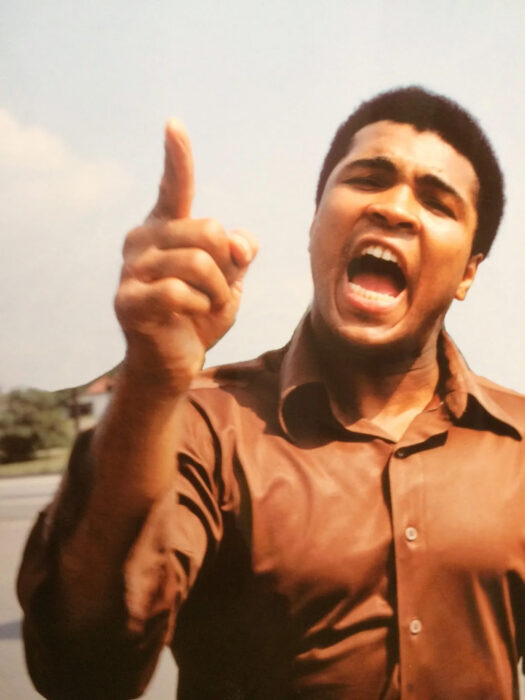
I will write in detail about these ancestors in due time, but for the moment, I want to focus on a recent discovery that is both amazing and disconcerting. Wikitree, one of the genealogy websites I use, sends out regular emails with lists of cousins and direct ancestors, usually connected to a theme. In this case, the theme was prominent African Americans. African Americans? Cousins? It turns out, surprisingly, that I am a 7th cousin once removed from Muhammad Ali (Cassius Clay) and an 8th cousin once removed from Martin Luther King, Jr.
How can that be? The answer is distressingly clear in both cases. There was a multi-racial child born as the result of a relationship (call it rape) between slave owner and enslaved. In the case of Ali, it appears to be a child born of an unknown slave and Henry Clay, 7th Speaker of the House and Secretary of State under President John Quincy Adams. The common ancestor I share with Muhammad Ali is Elizabeth Hudson, a descendant of Henry Hudson, the famous explorer. Yes, I am related to him.
Martin Luther King, Jr. and I share a common ancestor in Thomas Jones, a prominent 17th-century Virginia landowner. The black/white relationship, apparently, came several generations later in Georgia, where King was born. This is the cold hard reality of slavery. It was a system and a culture of exploitation, rape, and violence. It was human trafficking for profit.
From Encyclopedia Virginia:
The historical record speaks to the ubiquity of mixed-race sexual relationships in the era of slavery: Virginia had the largest number of mixed-race enslaved people of all the southern states, totaling approximately 44,000 in 1850. While some of these sexual relationships were long-term and some enslaved men and women navigated sexually intimate relations with their enslavers and other white people in an effort to survive and secure better treatment, historians question whether any relationships under such an unequal power dynamic can be considered consensual.
So, sometimes when you start digging, you find out things – painful things. And while I am not responsible for the actions of ancestors many generations ago, I do feel it necessary to acknowledge my connection to them and to the shared history we have yet to come to grips with fully.
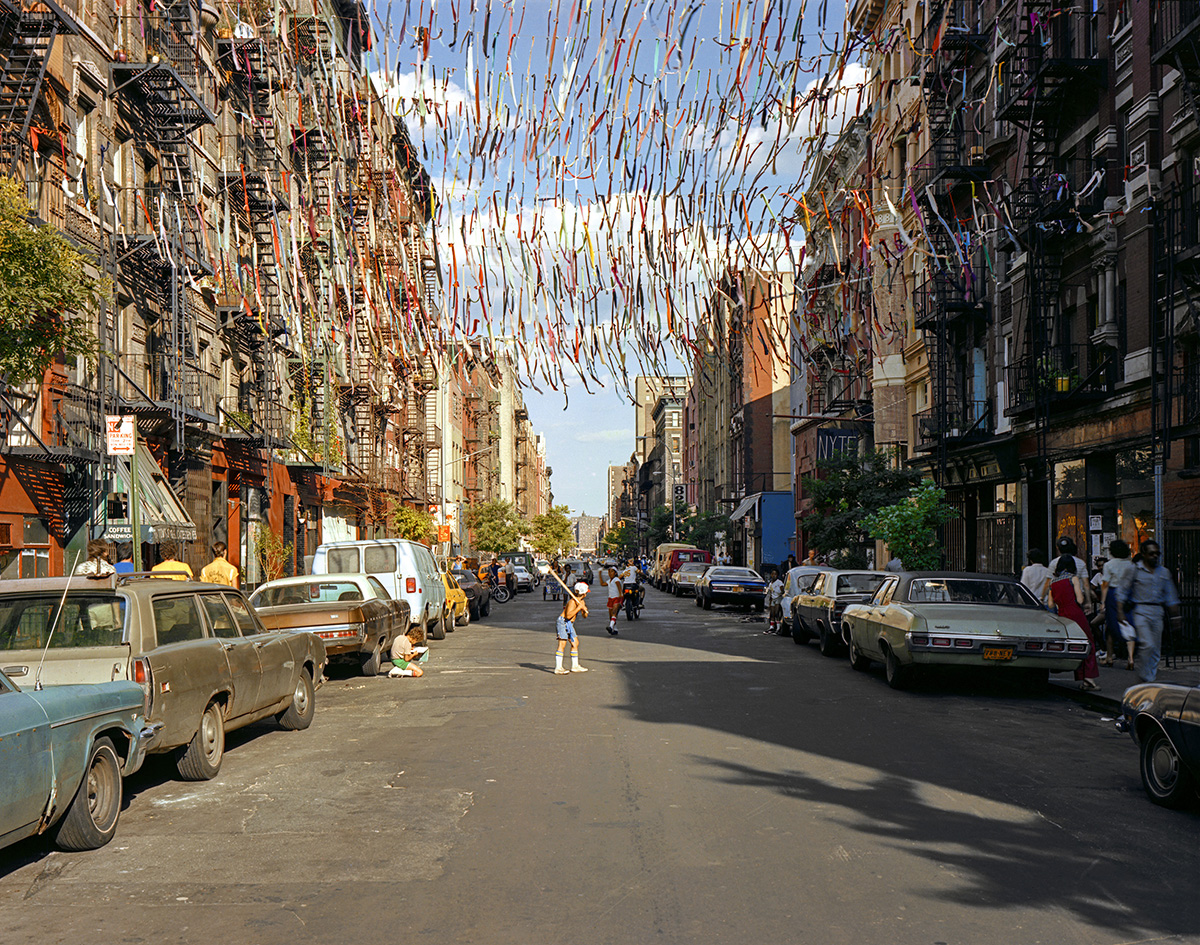
I have now completed phase one of rescanning the images from the Lower East Side project. The 1980 pictures – about 500 of them – have all been digitized at high resolution. Ed Fausty and I did these pictures over the course of a year just after graduating from Cooper Union.
Photography can seem like such a solitary and personal pursuit that it may be hard to imagine collaborating with someone else as we did back in 1980. But working with a view camera on a tripod calls for a more deliberate approach. We walked, talked, pointed, gestured, set up the tripod, peered at the ground glass beneath a dark cloth, and arrived, often quickly, at a visual consensus. We did not argue, as I recall.
When I first scanned these images back in the mid-2000s, I shuffled through the 4×5 sheets of film and picked out what I thought were the strongest. Our contact prints from back in the day were hastily made and hard to use for critical assessment. Many were missing. I initially tried making traditional analog prints from the negatives but discovered that the film had badly shifted out of balance. Scanning and color-correcting was the only way to recover the original balance, a painstaking process that sometimes required a couple of hours for a single image.
The photograph above is one of many that I somehow missed the first time around.
I wrote Cities on the Aerial Paths of Communication in 1990. It is about the fall of the Soviet Union but seems appropriate now – tragically. After the 1917 Russian revolution, artists, writers, and architects sought to build a new utopian society. This era of creative freedom was intense but short-lived, and by the 1930s, it was crushed by the brutality of Stalin. In 1928 Georgi Krutikov, an architectural student, created a series of drawings of futuristic flying cities, or “Cities on the Aerial Paths of Communication.” in the song, the utter and unredeemable failure of the Soviet Union contrasts starkly with the early visions of the “dreamers of a bright and shining world.” In recording the song, I asked violinist Lisa Gutkin to play a dissonant elegy as if alone in Red Square.
Lisa Gutkin is best known as a member of the acclaimed Klezmatics, and most recently for her musical score, performance, and music direction in the two-time Tony award-winner, Indecent.
In the late ‘90s, I was commissioned to photograph the neighborhood surrounding Mercatorplein, a public square, in Amsterdam. It was an area in the west of the city created to house ordinary working families, but over the years, a homogeneous Dutch population had given way to immigrants, many from Morocco, and much of the unique Amsterdam School architecture was in poor condition. A major renewal of the area was underway, and it was decided that a photographic survey documenting the transformation was called for. I was living in Amsterdam at the time with my wife, Renee Schoonbeek, a Dutch urban planner, and the work, more or less, fell into my lap. The result was my first book, “Mercatorplein, An Image of the World in Amsterdam.”
Mercatorplein, the public square itself, was being redesigned, and I was asked to photograph the model of a sculptural element to be placed in the new square. The sculptor was André Volten, one of the most important post-war Dutch artists, whose work was prominently displayed throughout Amsterdam and the Netherlands. I went to his studio in a rough-edged industrial area in the north of Amsterdam. His studio, where he also lived, was a whitewashed modernist rectangular box. A high hedge surrounded the back garden creating a small oasis screened off from the adjacent factories and warehouses. There we sat for about an hour sipping wine and talking about our work. The model I photographed was a short distance from Volten’s studio in a machine shop that produced the majority of his steel sculptures. The model was tabletop-size and featured a spiral fountain and a circle of chairs, cast in steel.
A year later, I was invited to the dedication of the newly rebuilt Mercatorplein, which included the piece I had photographed, now at full scale. Andre Volten and I sat next to each other on bleachers as speeches were made and children gave a musical performance. It was rainy, but the mood was festive. Sitting directly in front of us was Koningin Beatrix, the Queen of the Netherlands. At one point she turned around and warmly greeted André Volten, and he introduced me to the queen who said she was pleased to meet me in unaccented English.
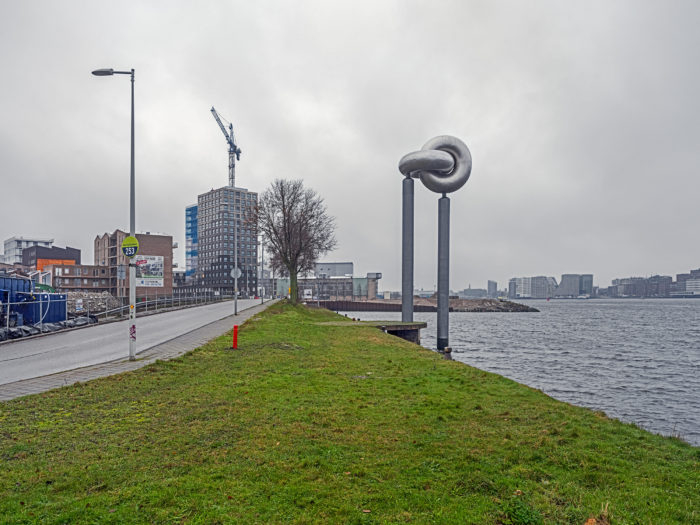
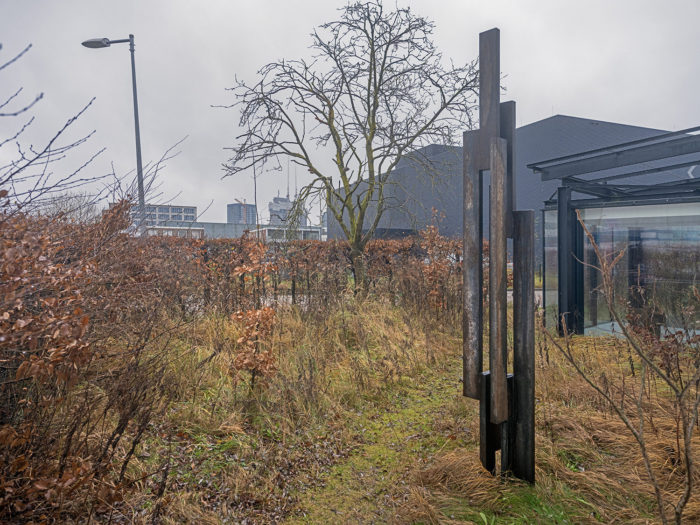
Some years later, living full time in New York, I heard that André Volten had died. And I saw that Mercatorplein had again been redesigned, and his sculptural fountain and stone chairs were removed. Where they went, I did not know. Looking for outdoor things to do during the current Covid lockdown, I suggested we take the ferry over to Amsterdam Noord (North) and look for André Volten’s studio. The ferry dock on the other side is clearly marked by a monumental Volten sculpture, two columns with interlocking steel rings on the edge of the water. We found the studio without too much trouble and discovered that it was now a dedicated Volten archive, though not open to the public in the midst of the pandemic. The grounds, sadly, were scraggly, and the hedge that shielded the garden where I sat with Volten was partially broken down. The place looked a mess.
André Volten’s studio was originally the gatehouse of a housing complex called Asterdorp, built in 1926 for “socially maladjusted families.” The idea was for them to live in a closely monitored community for a time, and then move into normal communities once it was determined that they were adequately socialized. The entire community was walled-in and the only way in or out was through the gatehouse. For a brief period at the beginning of World War II, Rotterdamers who had been bombed out of their homes were relocated in Asterdorp, and after the Nazis occupied the city, it become a temporary residence for Jews being sent to the transit camp Westerbork, or to death camps like Auschwitz. It was sometimes called “Klein Westerbork.” After the war, Asterdorp was demolished and only the gatehouse remained, empty for a number of years. André Volten took it over in 1950 and lived and worked there until his death in 2002.
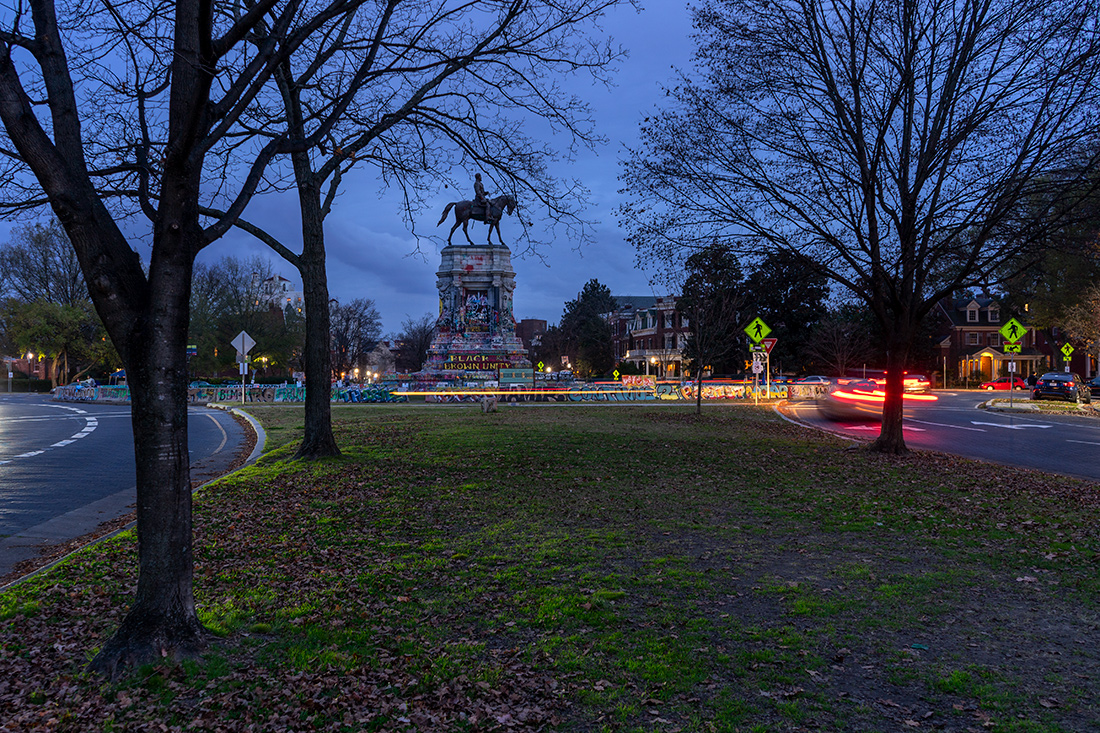
As the city of Richmond dismantles the pedestal that once supported Robert E. Lee high above Monument Avenue, the grand boulevard of the Lost Cause, the news comes that Charlottesville has made a decision about their Lee statue, presently in storage.
According to the Washington Post, “…the Charlottesville City Council voted 4-0 to hand it over to the only local bidder: the Jefferson School African American Heritage Center, a Black-led museum that proposed repurposing the metal entirely.”
The museum intends to melt down the statue and create from the bronze some kind of new artistic work. Andrea Douglas, the executive director of the center says, “It really is about taking something that had been harmful and transforming it into something that is representative of the city’s values today.”
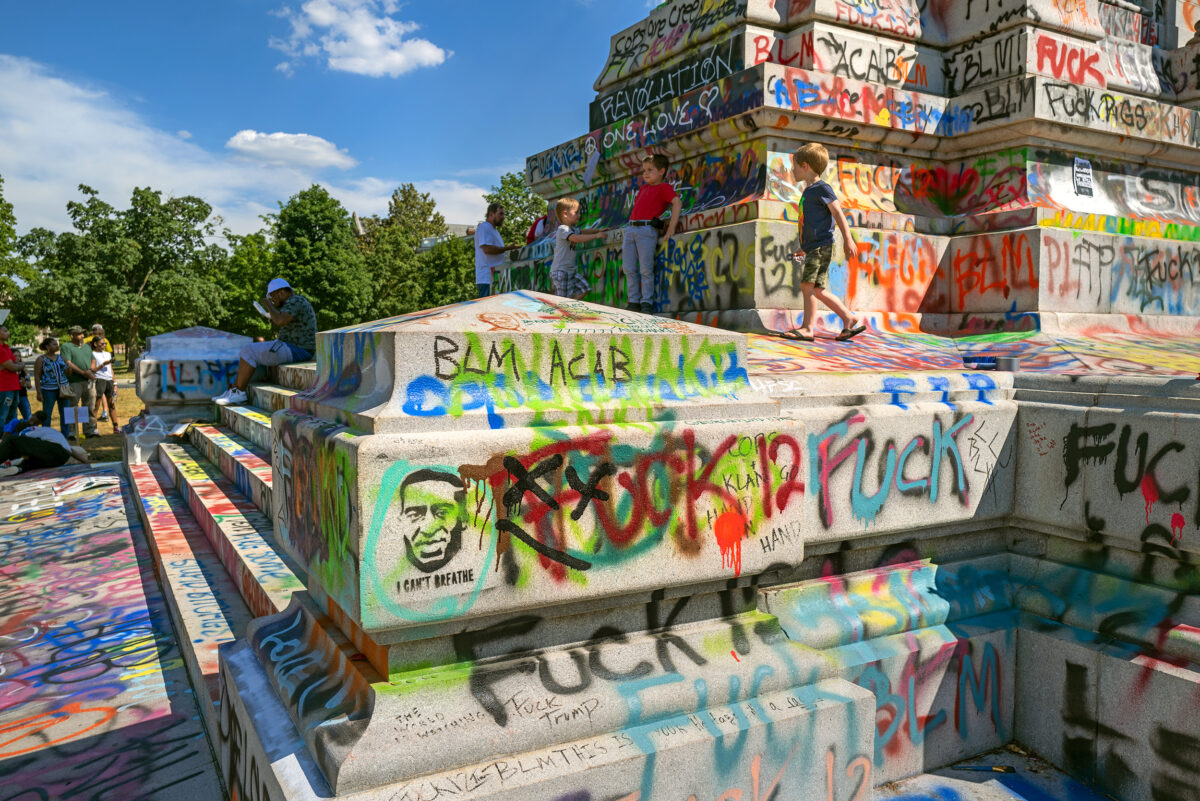
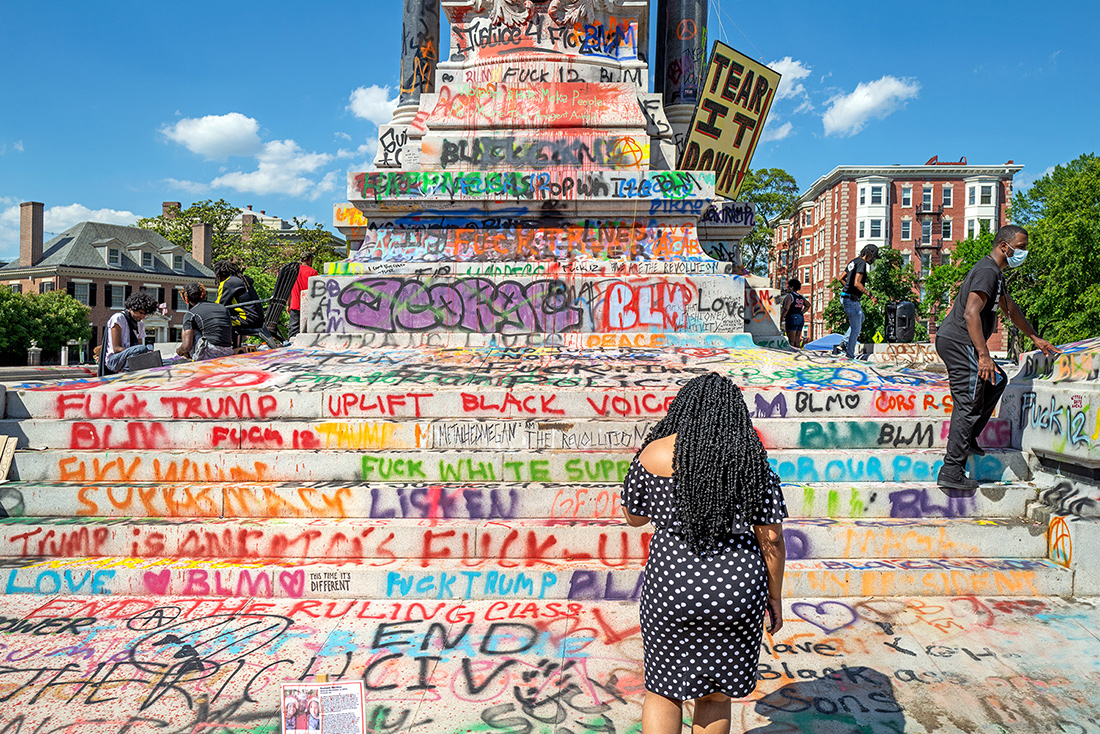
It sounds like an extension of what the protesters did when they transformed the meaning of the statues and memorials on Monument Avenue by taking possession of them and covering them with an exuberant, and often profane, kaleidoscope of graffiti. It was a transient moment in time, of course, and leaves unanswered what to do with the vanquished statues, and what to do with the public spaces they once commanded. Charlottesville is seeking a way to accomplish both tasks.
But let us consider, as this proposal goes forward, the artist who created the Robert E. Lee slated for meltdown. Henry Shrady was a largely self-taught sculptor from New York who had risen quickly in a field dominated by such luminaries as Daniel Chester French and Augustus St. Gaudens. His studio was in Westchester County and most of his statues, including Robert E. Lee, were cast at the Roman Bronze Works in Brooklyn.
Shrady’s father was a celebrated physician who had served as a consulting surgeon to Ulysses S. Grant in his last days. The Shrady statue I know best is his George Washington at Valley Forge, which stands at the approach to the Williamsburg Bridge on the Brooklyn side of the East River. It is a moody depiction of a steadfast Washington cloaked against the winter cold. His most important work is the Grant memorial in front of the Capitol in Washington, D.C. Grant sits astride his horse facing the Lincoln Memorial surrounded by lions and flanked by highly energetic battle tableaux, one of an artillery team, the other of a cavalry charge. Many smaller works by Shrady are in the collections of major museums including the National Gallery of Art in Washington.
Sculptors like Shrady rose to prominence in conjunction with the City Beautiful movement, inspired by the European Beaux-Arts, which was prominently on display in the architecture for the World’s Columbian Exposition in Chicago. The movement inspired the design of major urban projects like Benjamin Franklin Parkway in Philadelphia, Grand Army Plaza in New York, and Monument Avenue in Richmond.
Despite Robert E. Lee’s betrayal of Lincoln and the country he was sworn to defend, Lee’s nobility of character was widely assumed, even by many in the North. Shrady took the commission in Charlottesville telling his sponsor, Paul Macintyre, “I am going to make this the best thing I ever did, as I am a great admirer of Gen. Lee.” Of course, the commission came with a $30,000 fee, which is approximately $650,000 in today’s money.
For me, the greatest irony is that when the white supremacist mob stormed the Capitol building on January 6, 2021, they had to pass directly by Shrady’s Grant memorial, perhaps the most important symbol of the triumph of the Union over those who sought its destruction in order to preserve the institution of slavery.
Melting down the Charlottesville Robert E. Lee dishonors the artist who created this epic expression of national purpose in Washington, and while the intention is to transform the Lee statue into something constructive, to me it feels more like negation.
In the research I’ve been doing of my family roots, I continue to make astounding discoveries, sometimes sobering. Many of my Virginia ancestors were slaveholders, that is clear. On my father’s side of the family, one of my third great grandfathers is Arthur Crumpler. Googling his name I found another Arthur Crumpler, whose father was enslaved on a plantation owned by Benjamin Crumpler in Southampton County, Virginia, probably my 4th great grandfather. It is quite likely that he took his name from my ancestor, Arthur Crumpler.
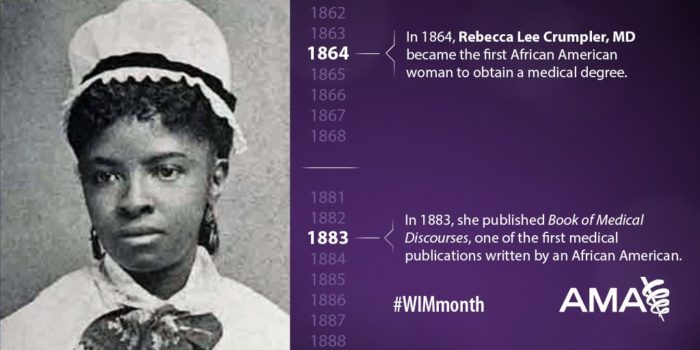
The enslaved Arthur did not slip into the oblivion of history that befell many African Americans who were moved from one plantation to another, who were separated from families, who had no last names other than their masters, and who were buried in unmarked graves, many of which have been plowed under. Arthur’s life story was preserved because he escaped slavery, traveled to Boston, and married Rebecca Lee, who was the first Black female physician in the United States.
We know this history primarily because the Boston Globe published an article in 1878 entitled “Boston’s Oldest Pupil,” a profile of Arthur Crumpler who was enrolled in an evening reading class. The article is obviously based on an interview with Arthur with many direct quotes and specific details.
The Boston Globe:
Arthur Crumpler was born a slave in Southampton County, near Jerusalem Court House, Va., two miles from the Tucker Swamp meeting house, on the estate of Robert Adams, a large Virginia land and slave holder. His father, Samuel, was a slave on the estate of Benjamin Crumpler, which adjoined the Adams estate. His mother was a part of the Adams estate, and Arthur Crumpler as well as his other brothers and sisters, following the condition of the mother, according to slave code of Virginia, became at birth also a portion of the Adams estate. Arthur grew up a boy in Southampton County on the Adams estate.
Robert Adams died when Arthur was 9 years old, and the estate was divided among the Adams children, but Arthur was not eager to be sold off and sent to another plantation. So, he challenged the eldest Adams son, with whom he had a good relationship, to a wrestling match.
We were all standing around waiting to be sold. I went up to John, and to him in a boyish, defiant way, “John, I can wrestle you down!” I was very strong when a boy. He said I couldn’t. Well, we had good tussle, and I tussled him so hard, that he would not let me be sold, but took me himself, and until the war, kept me ever near him.
Arthur moved with John Adams to Smithfield in Isle of Wight County, acquired blacksmithing skills, and when the Civil War broke out, escaped to Fort Monroe across Hampton Roads, which remained in the hands of the Union army throughout the war. He eventually made his way to Boston where he met Rebecca Davis Lee, who in the same year, 1864, became the first Black female physician in the United States. At the end of the war, she and Arthur moved to Richmond, Virginia where she worked for the Freedman’s Bureau, the federal agency tasked with helping newly emancipated Blacks make the transition from bondage to freedom. She wrote that she treated “a very large number of the indigent, and others of different classes, in a population of over 30,000 colored.” In 1869 the Crumplers returned to Boston where Rebecca Lee wrote a medical book that may well be the first medical text by an African-American author. She dedicated the book “to mothers, nurses, and all who may desire to mitigate the afflictions of the human race.”
The Globe article concludes with an account of Arthur Crumpler’s attempt to find his sister in North Carolina. He was unsuccessful, but upon his return to Boston, he discovered that one of her children had come looking for him. “They met by accident. He learned that his master had lost everything in the war, and died in poverty. The slaves on the old estate were scattered all over the country. Some prosperous and others were not.”
I have tried to confirm that the Benjamin Crumpler who owned a plantation adjacent to Robert Adams was, in fact, my 4th great grandfather – the records are compelling, though not conclusive. However, I did find an inventory of the Adams estate dated at the right time and witnessed by “Benjamin Crumpler.” Among the material items listed, there are a number of “negroes.” One of the names is a “boy Arthur $175.”