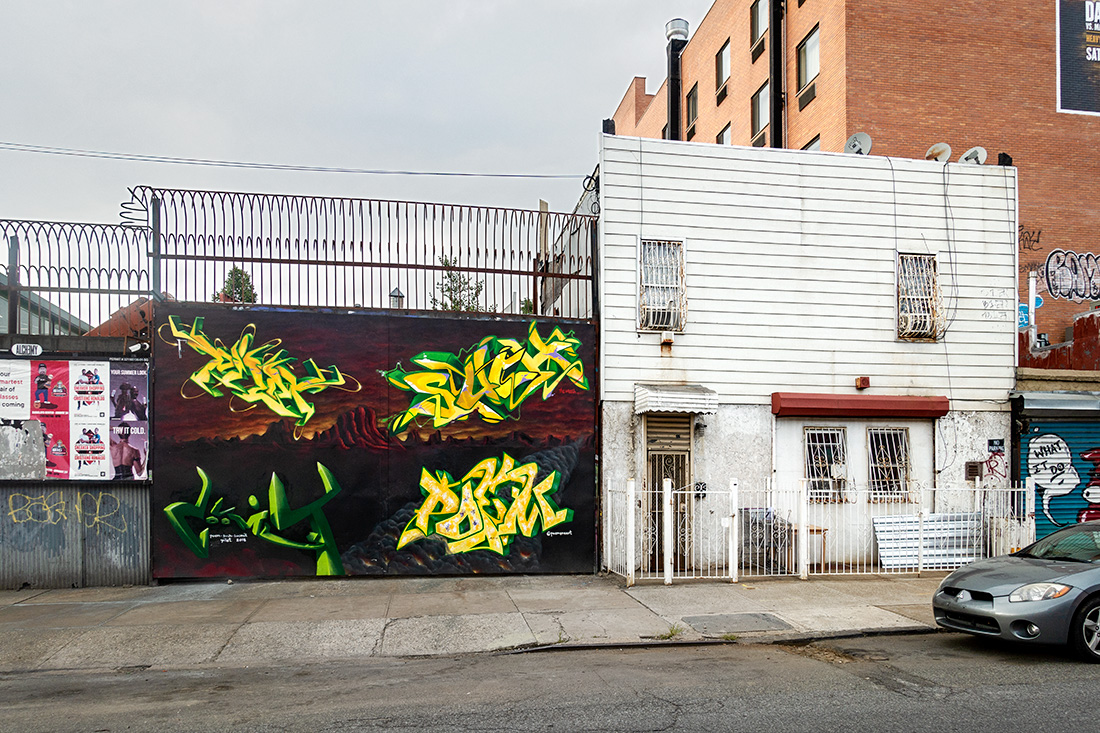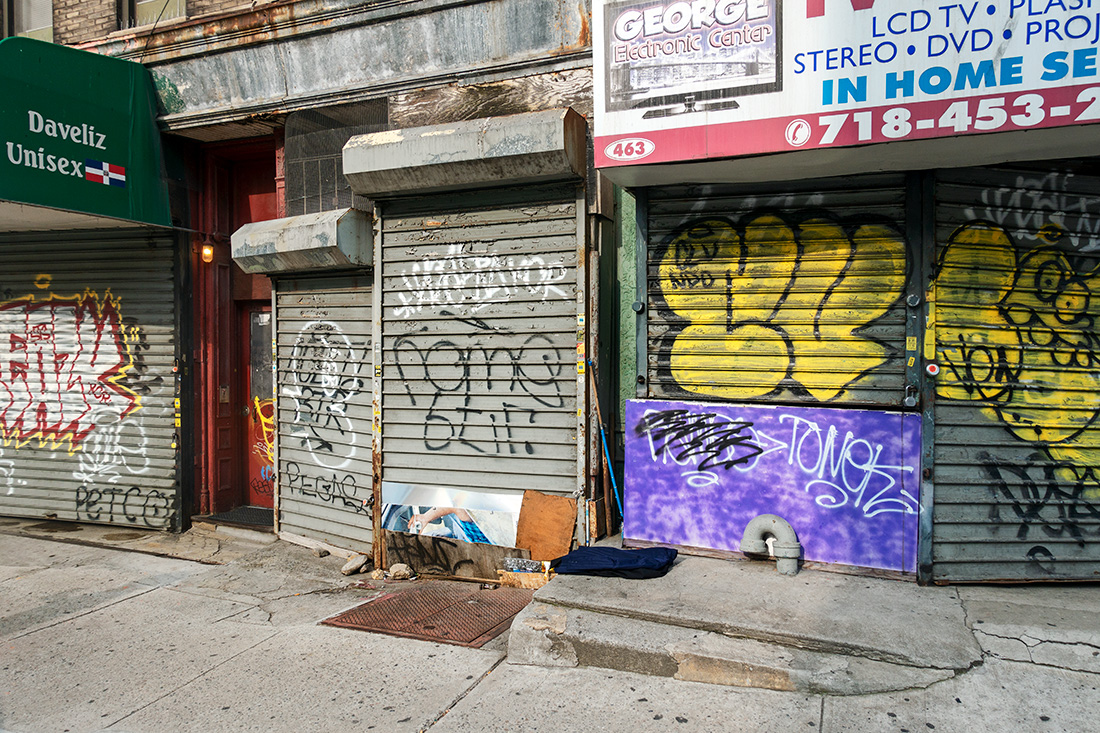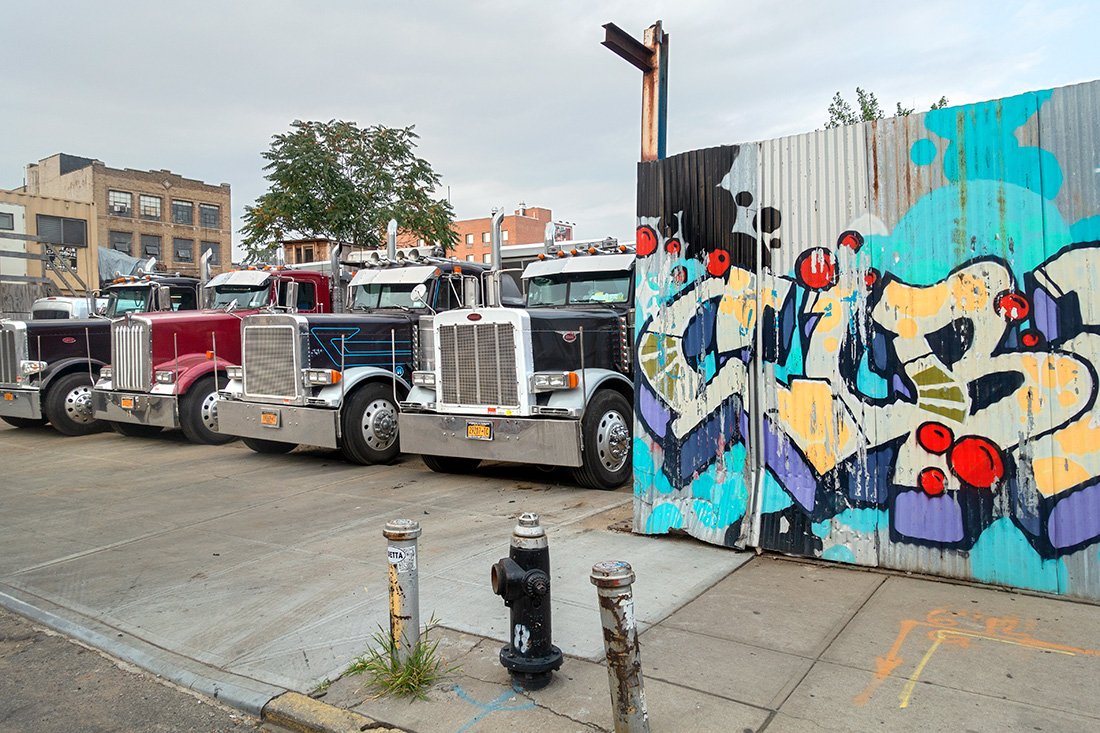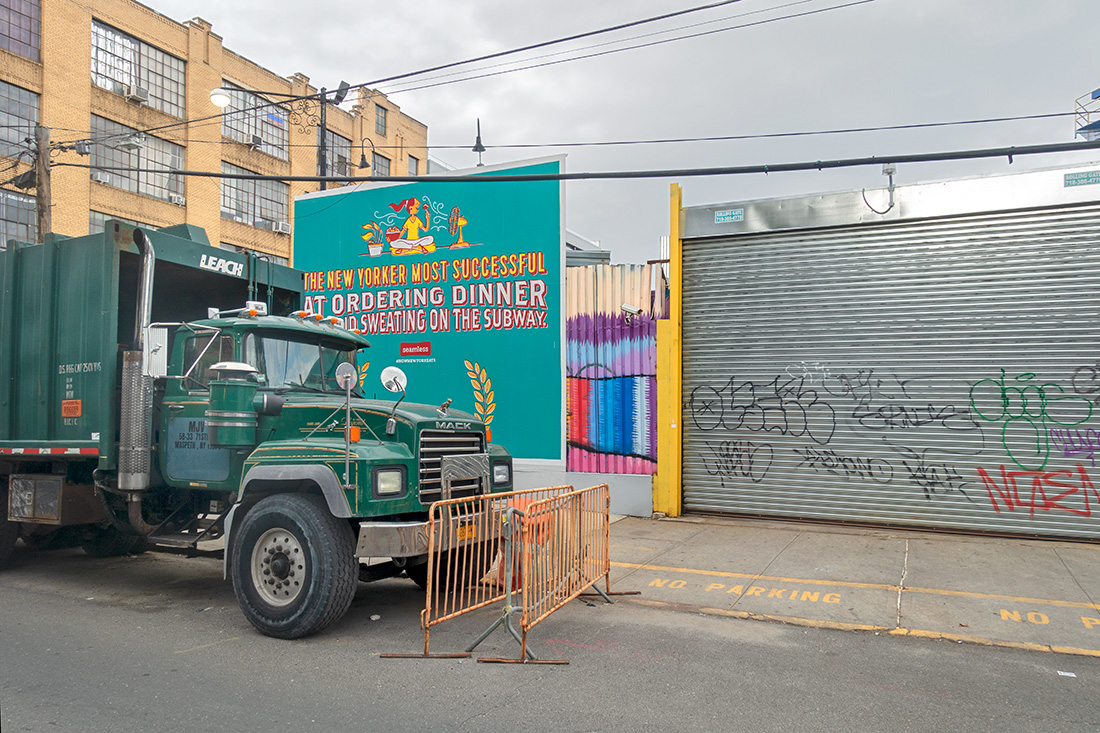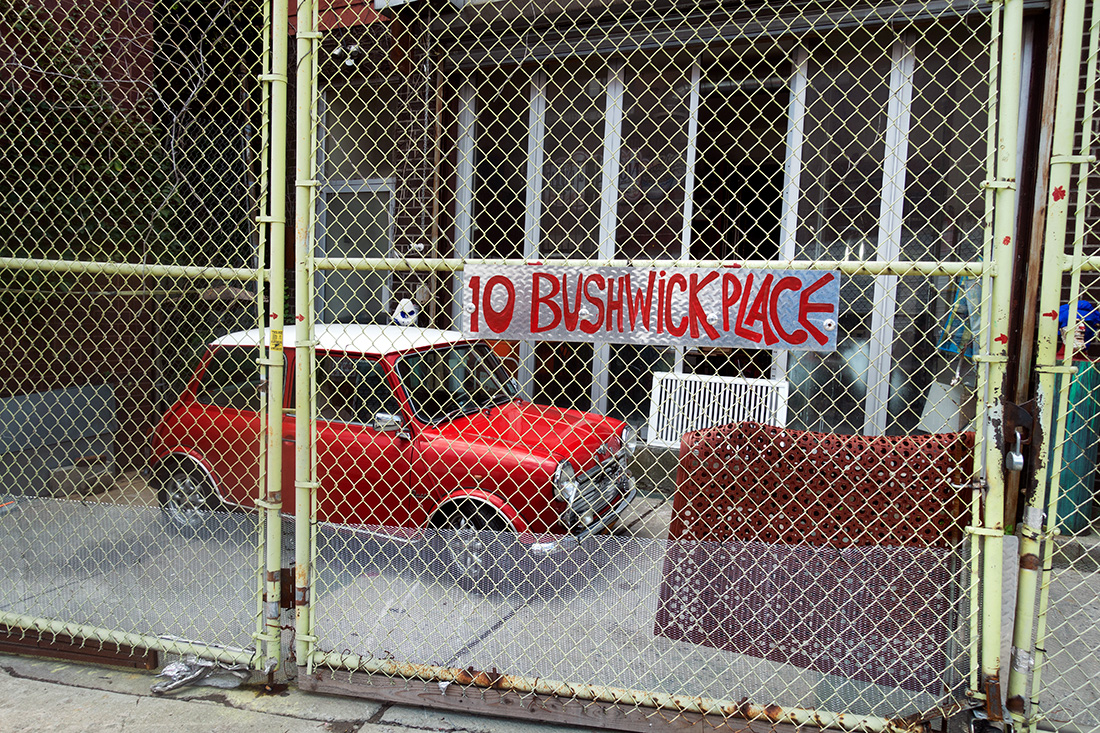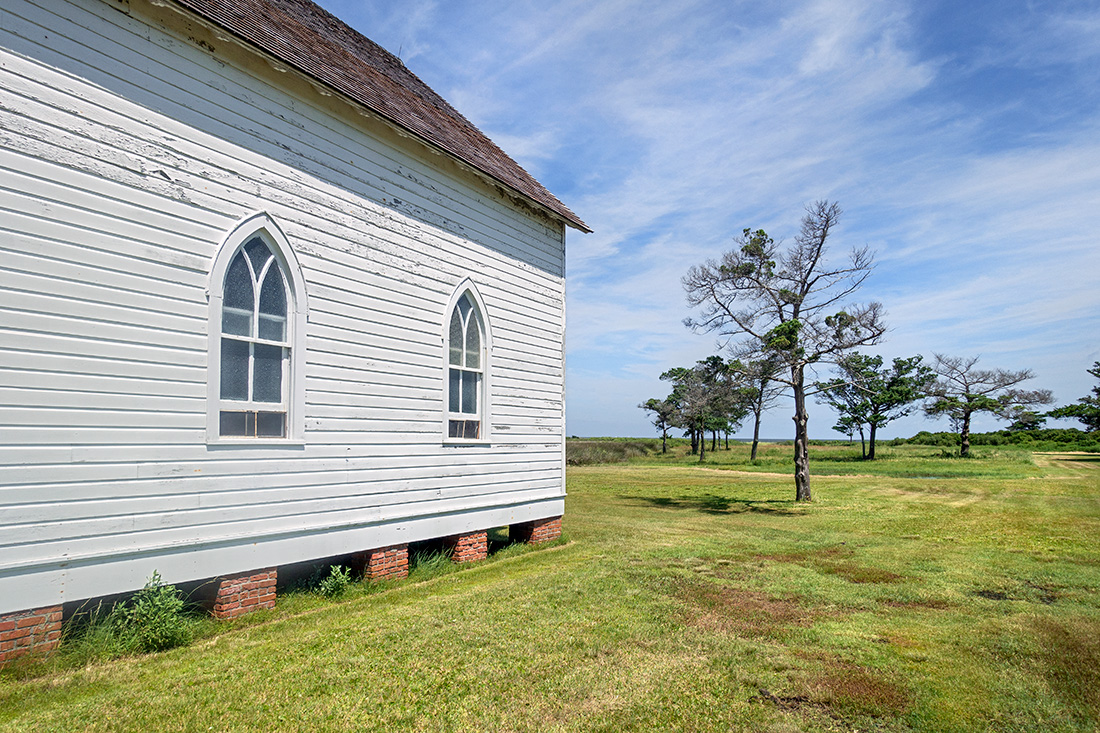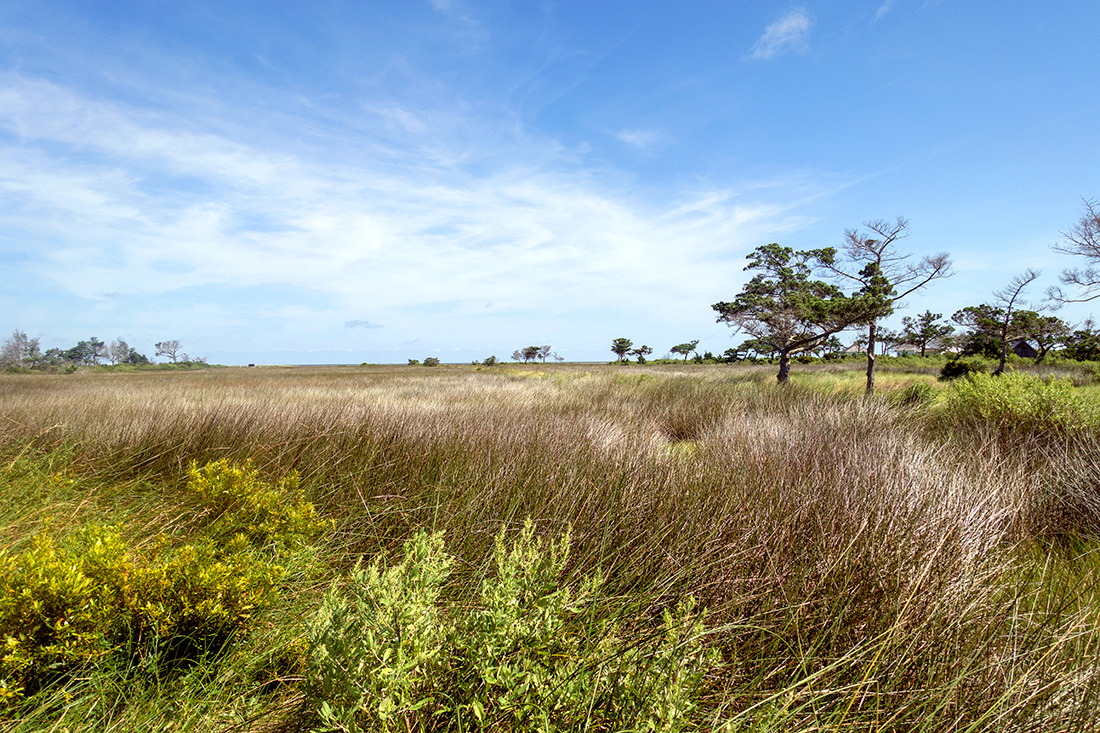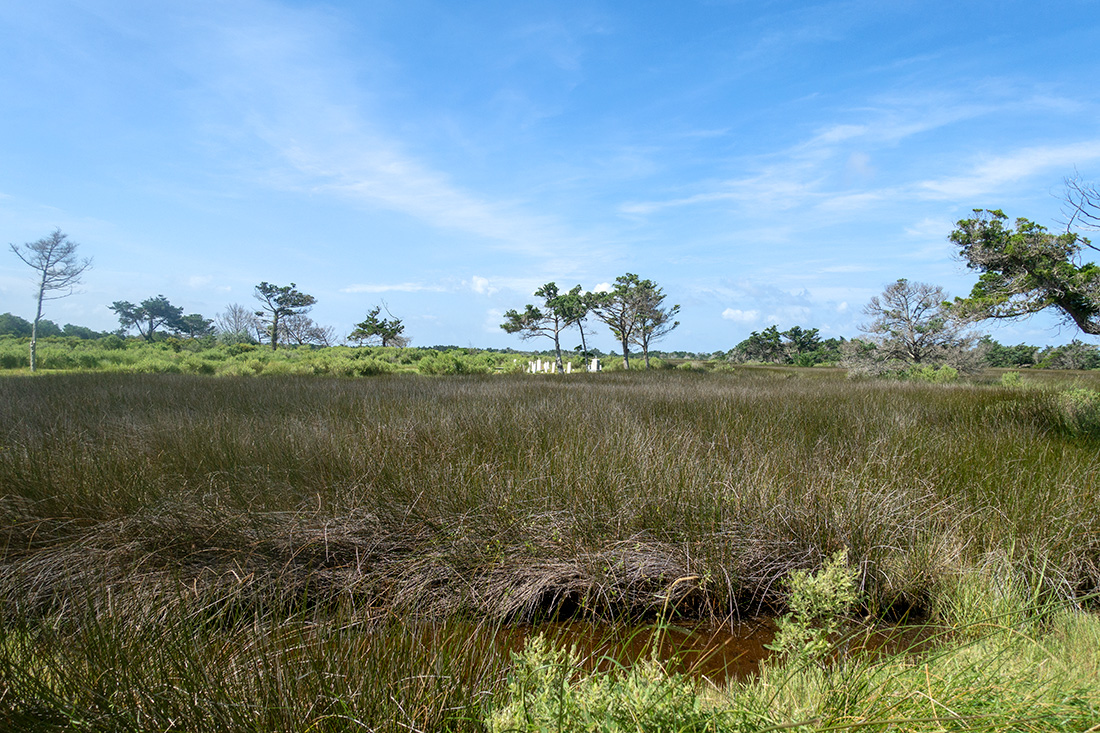
Port Chester, New York — © Brian Rose
Port Chester, New York — © Brian Rose
Two pictures made 30 seconds apart.
Port Chester, New York — © Brian Rose
Port Chester, New York — © Brian Rose
Two pictures made 30 seconds apart.
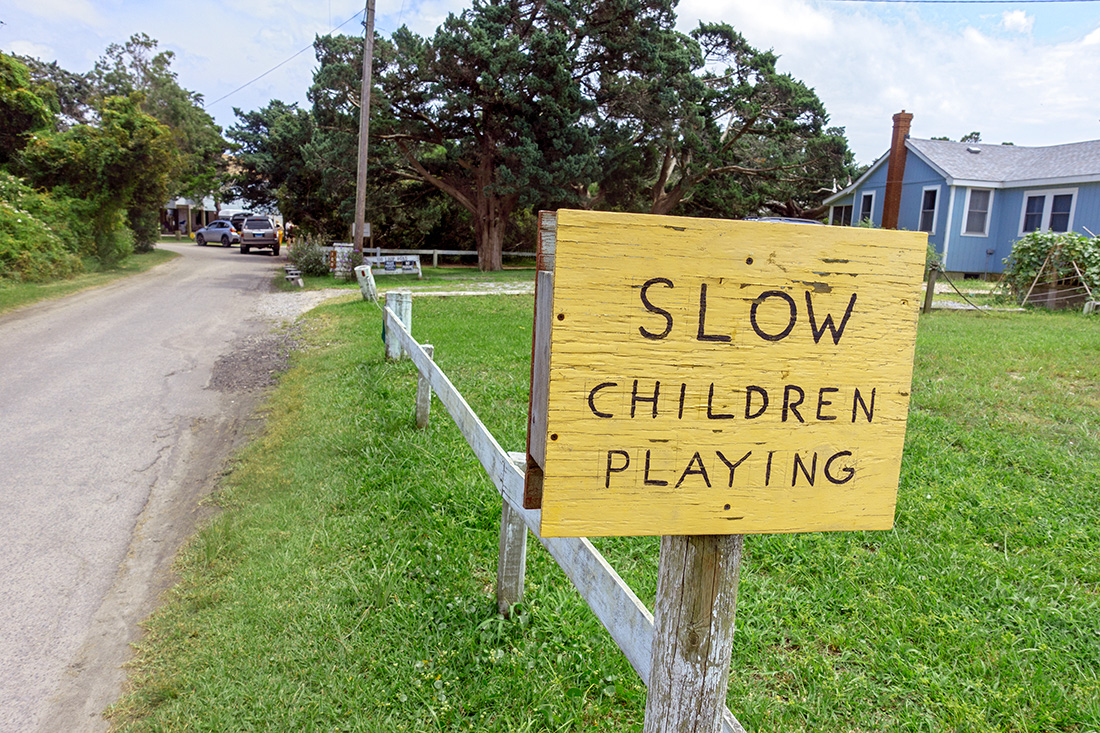
Ocracoke Island — © Brian Rose
A few loose ends from the last day or two of our vacation to Ocracoke on the Outer Banks of North Carolina. We walked to Springers Point, a nature preserve on the Pamlico Sound, and along the way we encountered the sign above. We did not see any slow children, but we kept an eye out for them.
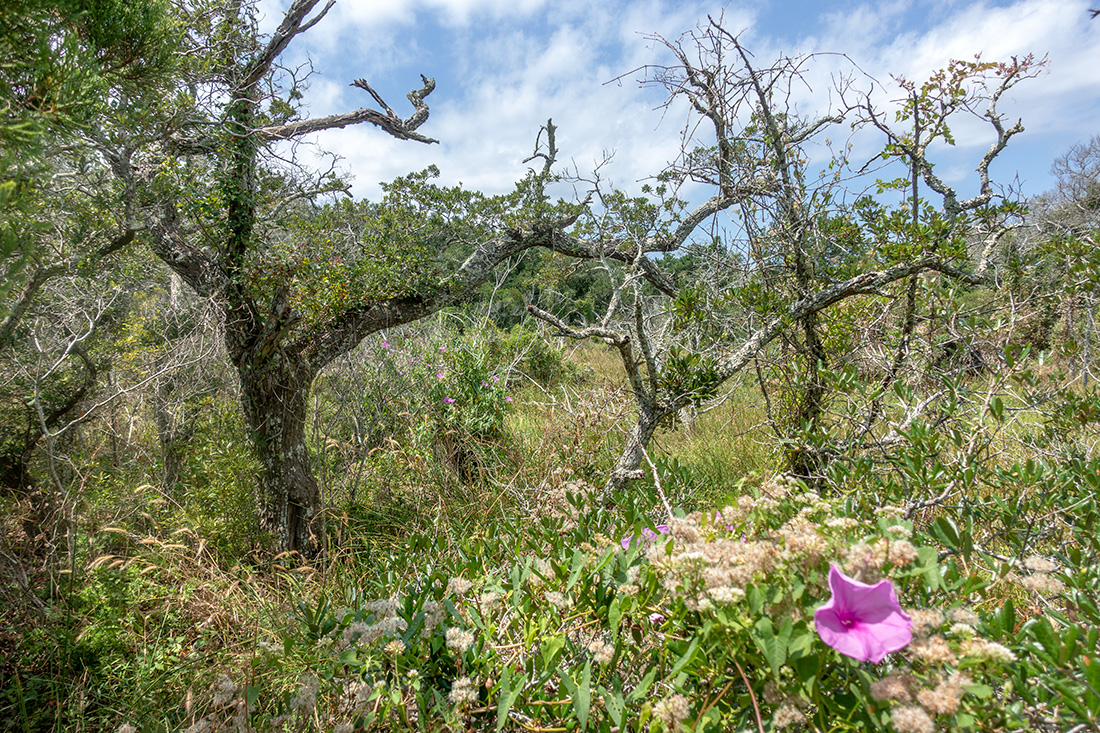
Springers Point, Ocracoke — © Brian Rose
Springers Point is the highest spot on the barrier island of Ocracoke and features a well-maintained nature trail that leads to a small beach on the sound. Someone left a cooler with bottles of water next to the trailhead — $1 each on the honor system.
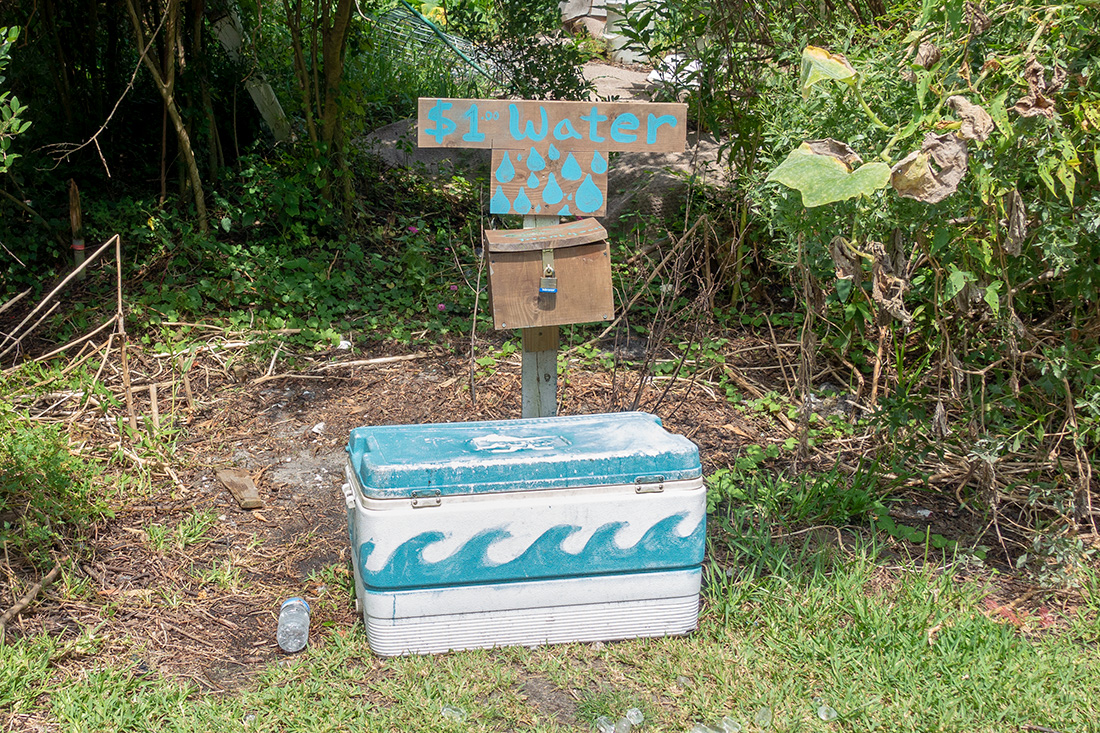
The Coastal Trust website says: “This tranquil Preserve was opened to the public on May 20, 2006 and encompasses more than 120 acres of maritime forest, tidal red cedar forest, salt marsh, wet grasslands and sound front beach. You’ll pass ancient, gnarled live oaks as you make your way along winding trails to the sandy beach overlooking the infamous Teach’s Hole.” Teach was Blackbeard, the pirate, and his hole was where he hid out from the Colonial navy. They got him eventually, and beheaded him right there on Ocracoke.
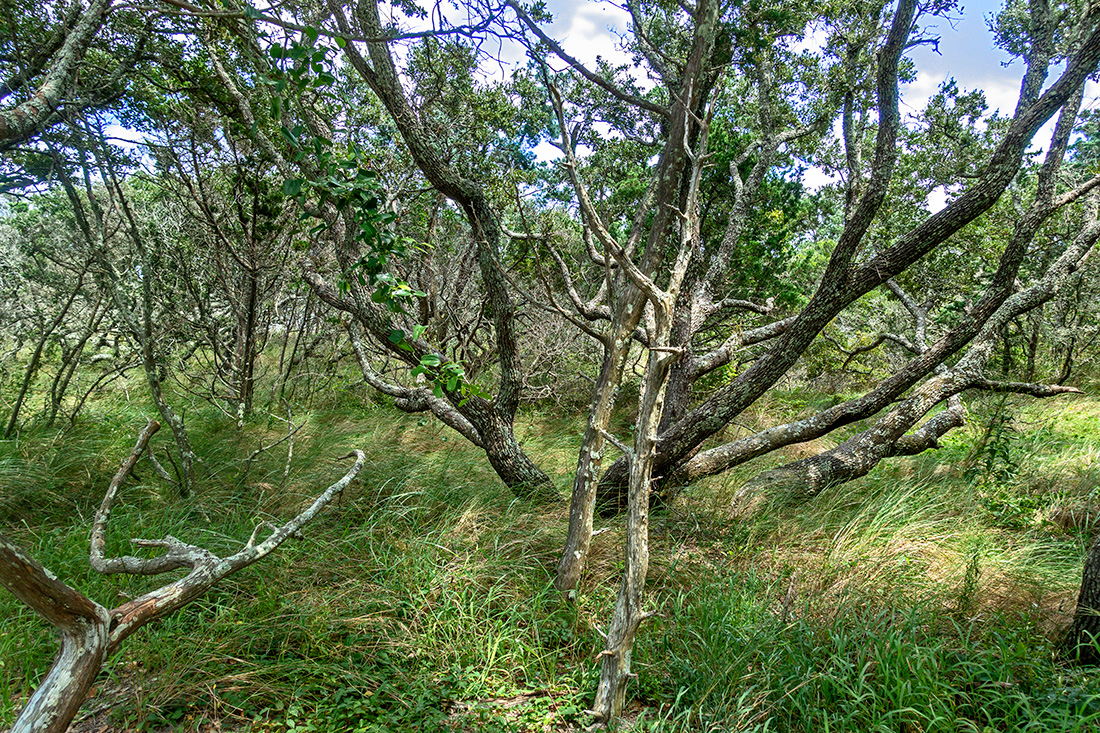
Springers Point, Ocracoke — © Brian Rose
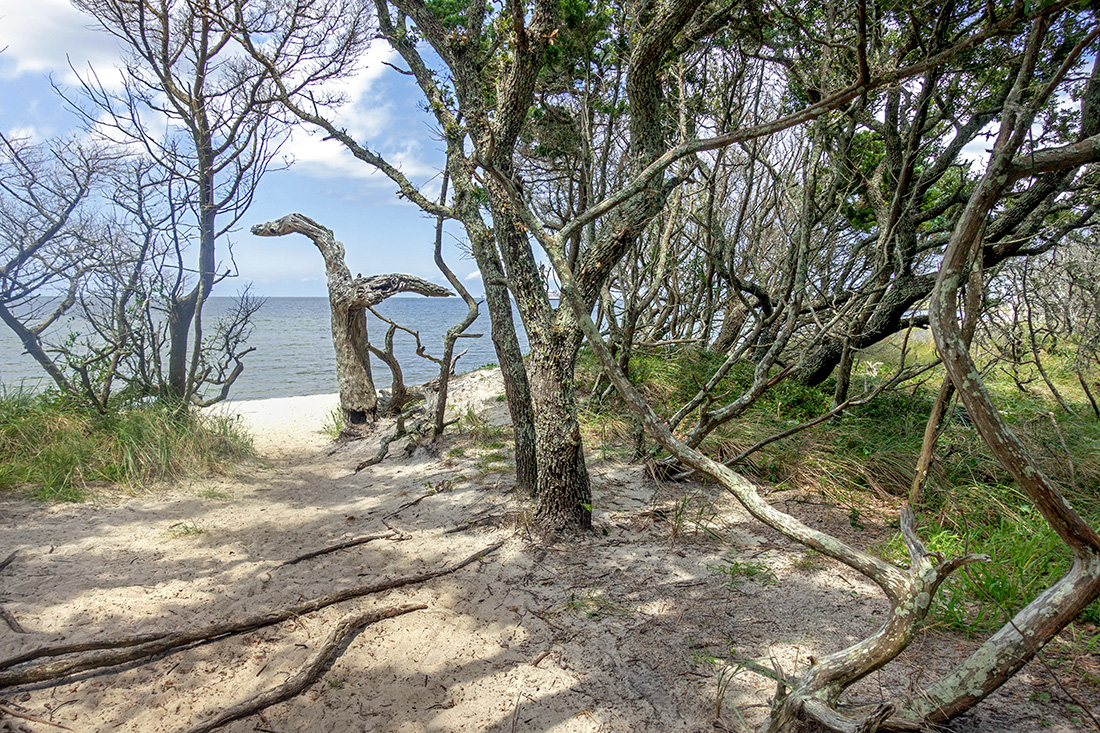
Springers Point, Ocracoke — © Brian Rose
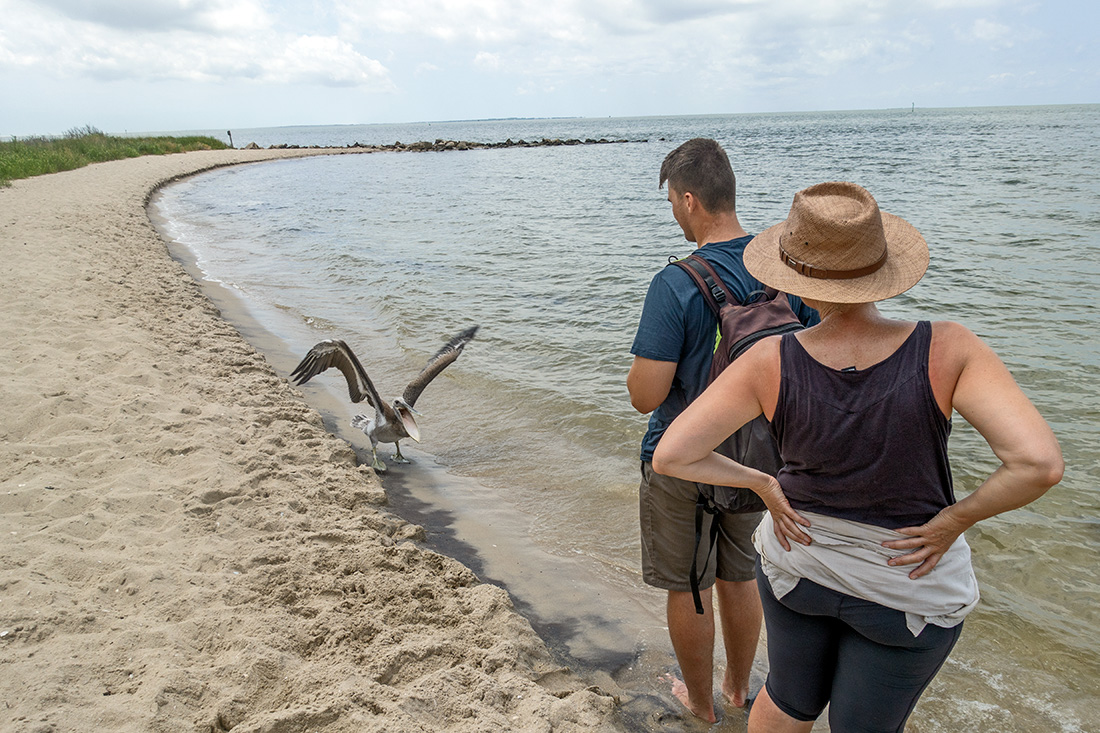
Brendan and Renee under attack — © Brian Rose
On the beach, we encountered a pelican, which came right up, and was apparently unamused by the fact that we had nothing to offer in the way of food. Being a dutiful photographer, I stepped back and documented the attack of the angry pelican. Just in case you’re concerned, Brendan and Renee survived unscathed.
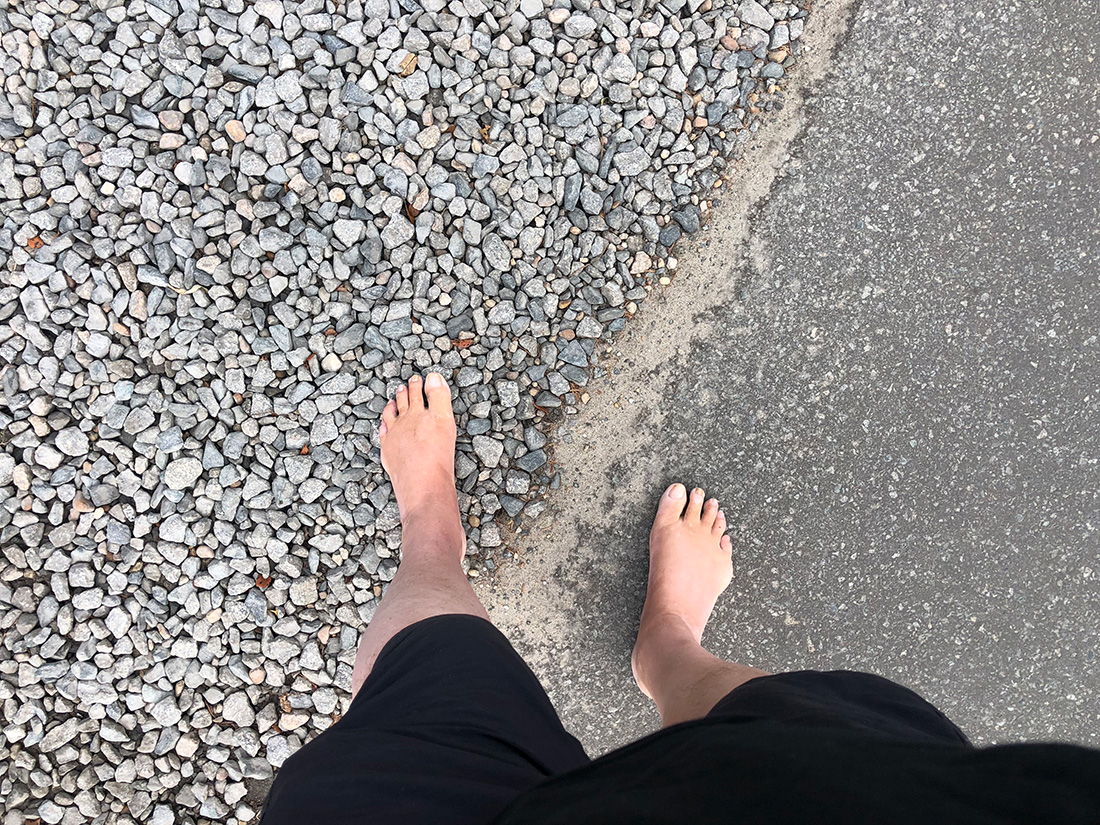
Ocracoke gravel — © Brian Rose
As someone who loves going barefoot, Ocracoke is great. You can go anywhere and do anything shoeless. But every now and then the sandy soil gives way to gravel parking lots. This stuff should be illegal.
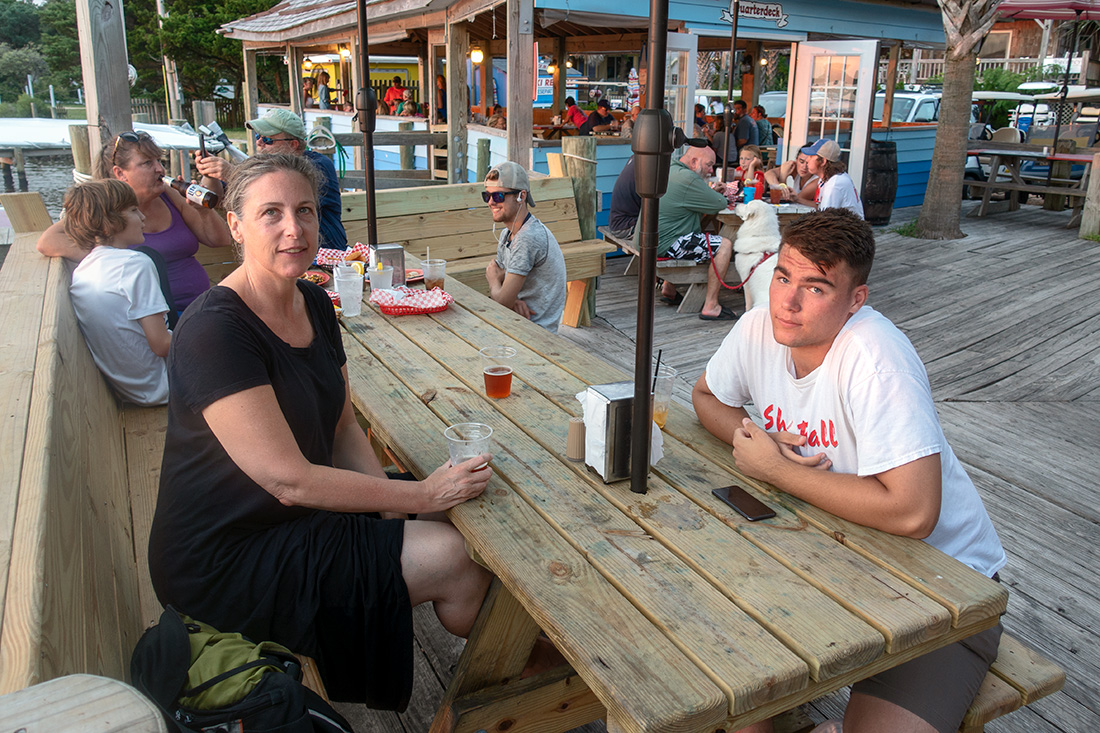
Jolly Roger Pub — © Brian Rose
There are a lot of good restaurants in Ocracoke, but we’ve come to the conclusion that the simpler the better. Sitting outside in the evening having steamed shrimp with a beer is the way to go. And the local 1718 craft beer is terrific. That didn’t exist, of course, on our previous trips to Ocracoke. And another place that did not exist, Eduardo’s, a taco truck next to the Variety Store, has the greatest seafood tacos ever. No lie.
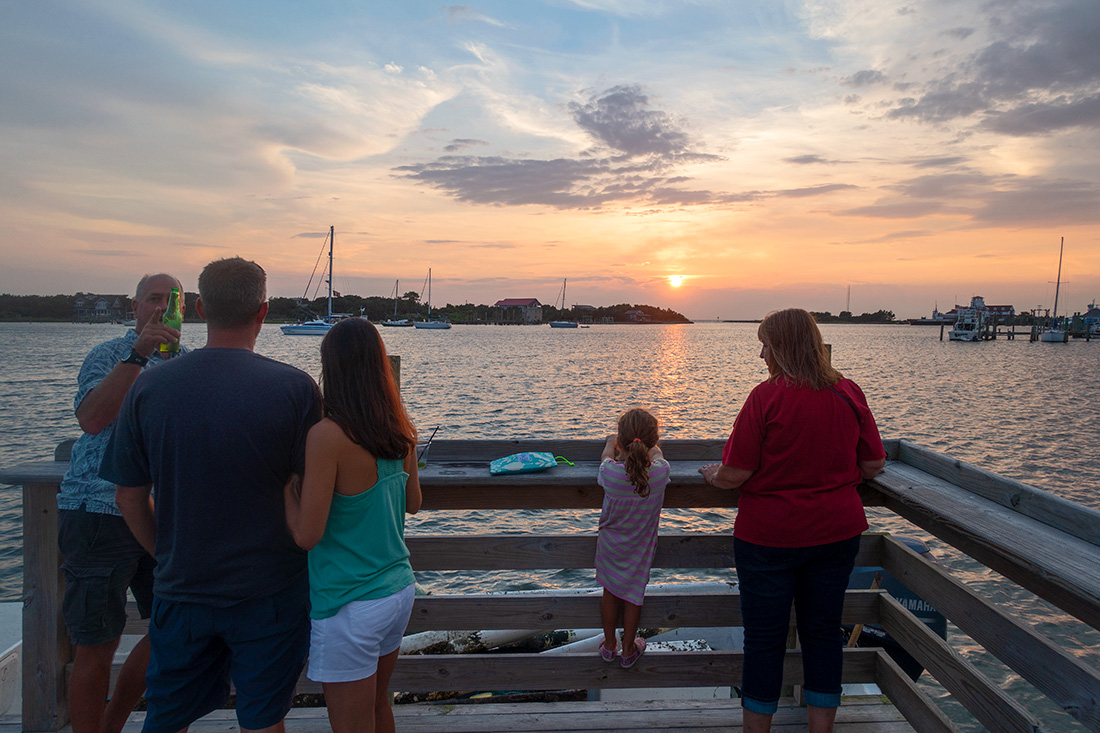
Jolly Roger dock — © Brian Rose
The best place to watch the sun go down over Silver Lake, Ocracoke’s harbor, is from the Jolly Roger dock. About 20 or 25 people gathered when I was there. We had a week of almost perfect weather — a few stray showers here and there — but mostly sunny, breezy, with almost no mosquitos or flies, which we’ve encountered in the past.
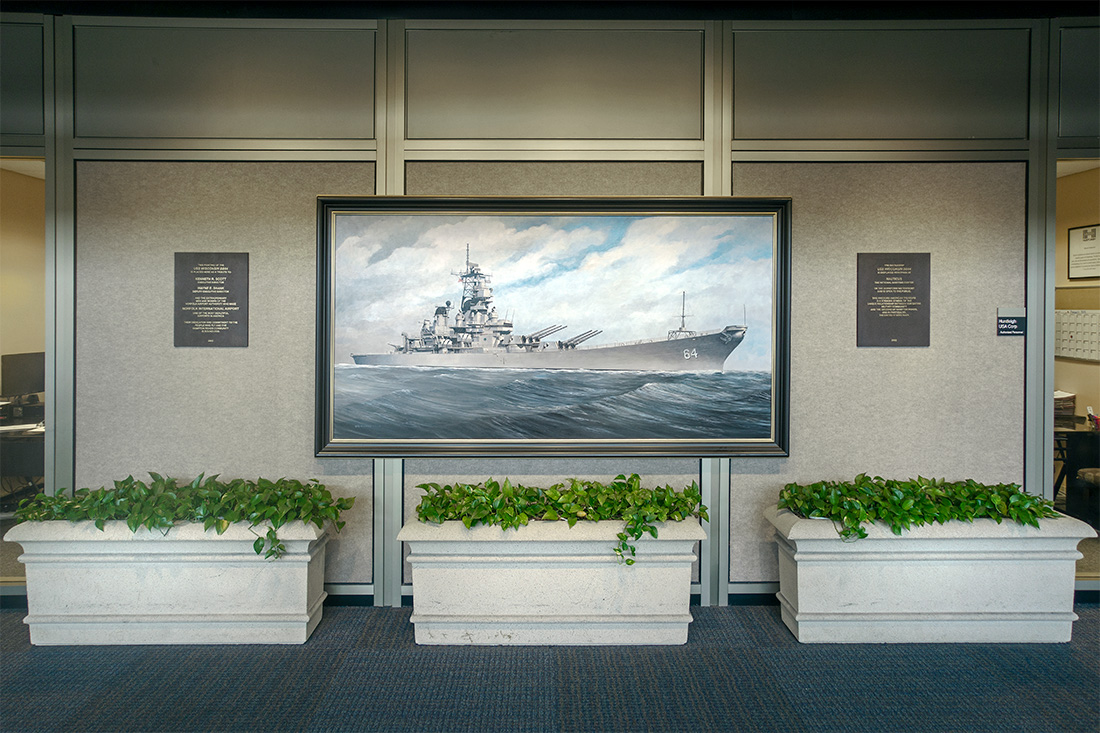
Norfolk International Airport — © Brian Rose
Leaving Ocracoke we drove north up the Outer Banks to Norfolk — about four and half hours — where we flew back to New York. In the airport there was a painting of the battleship USS Wisconsin.
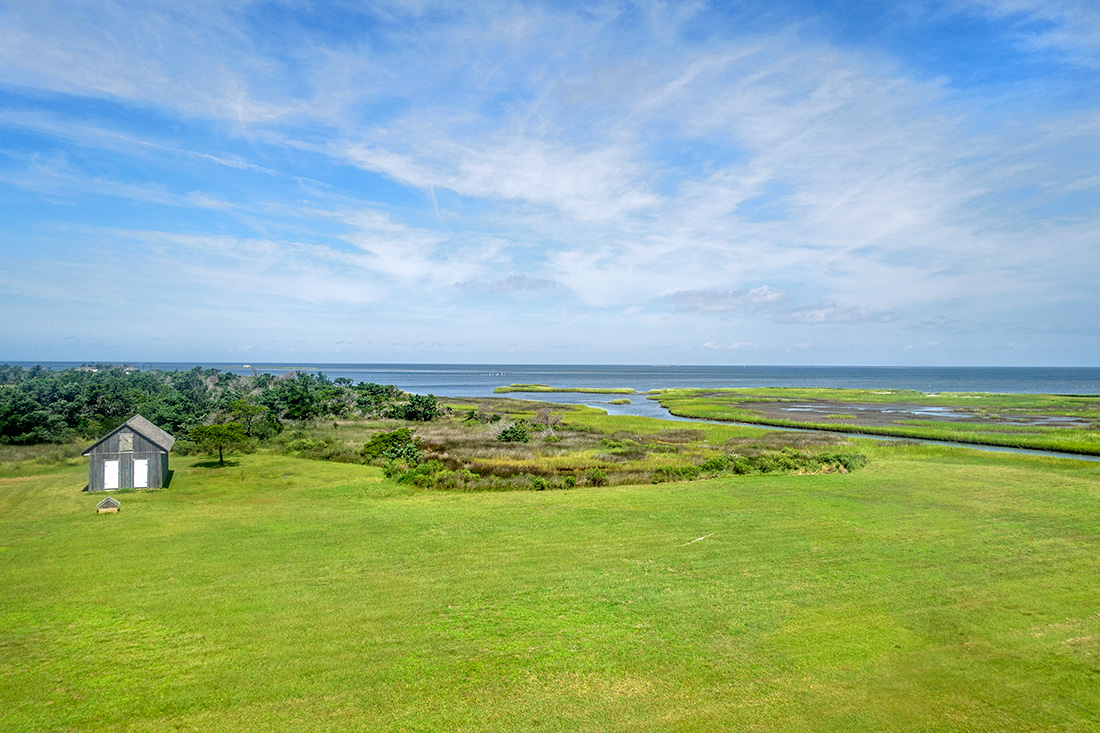 © Brian Rose
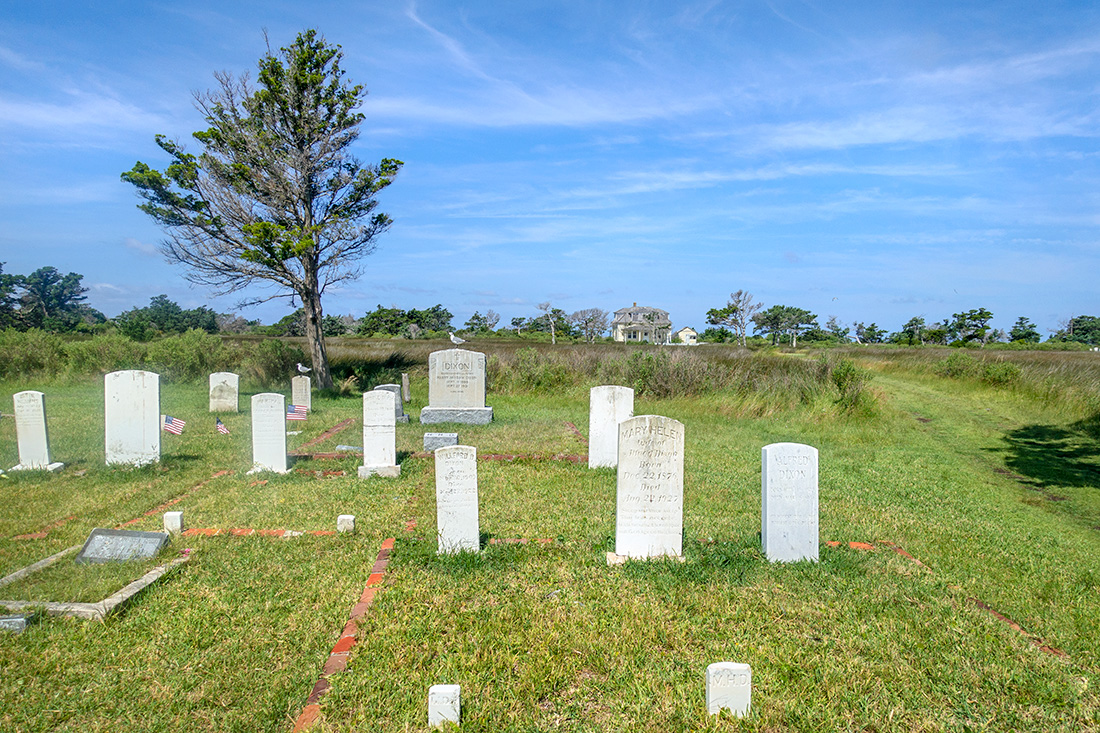
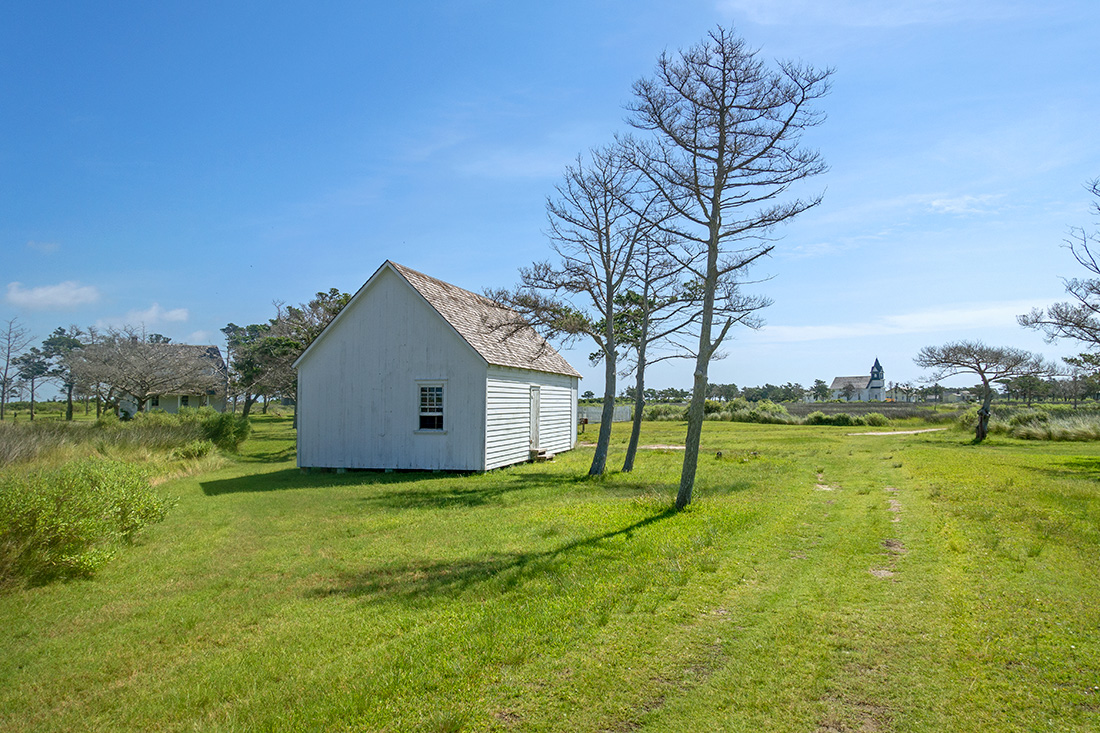
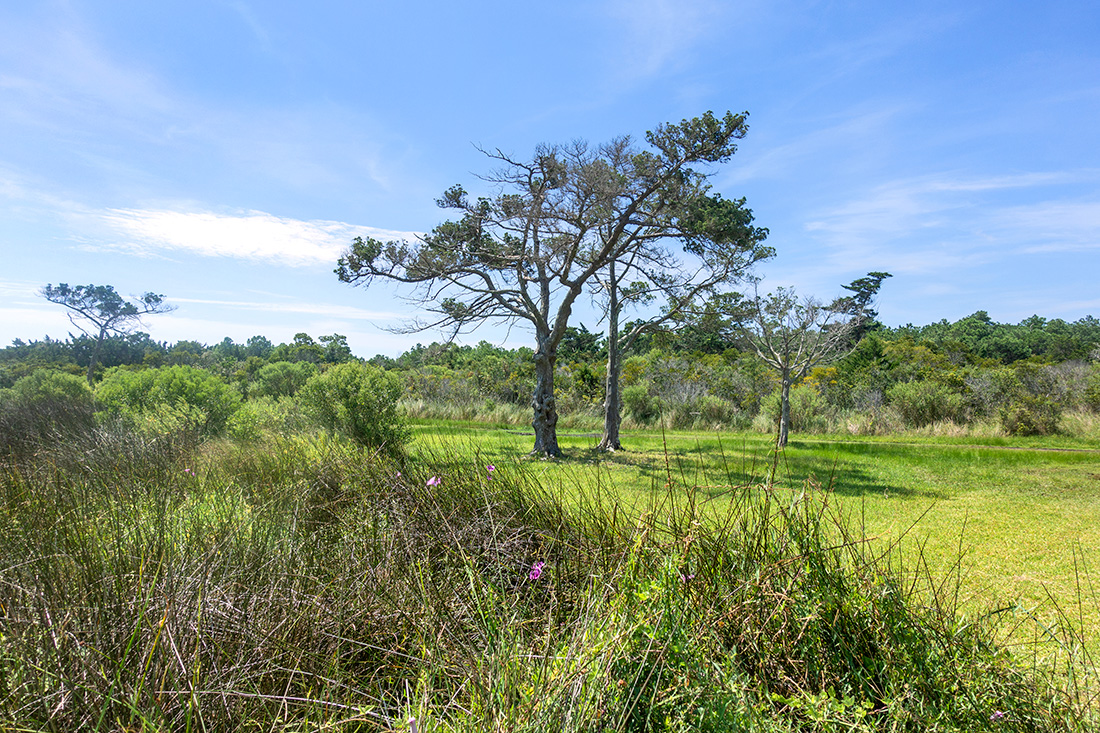
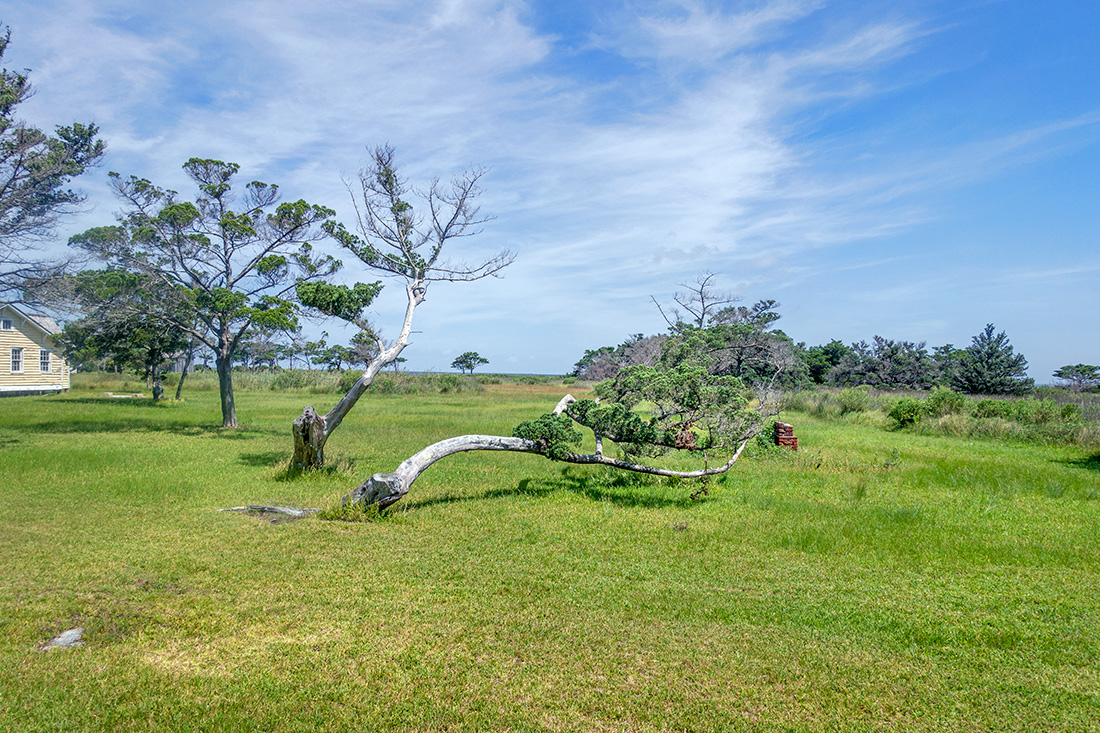
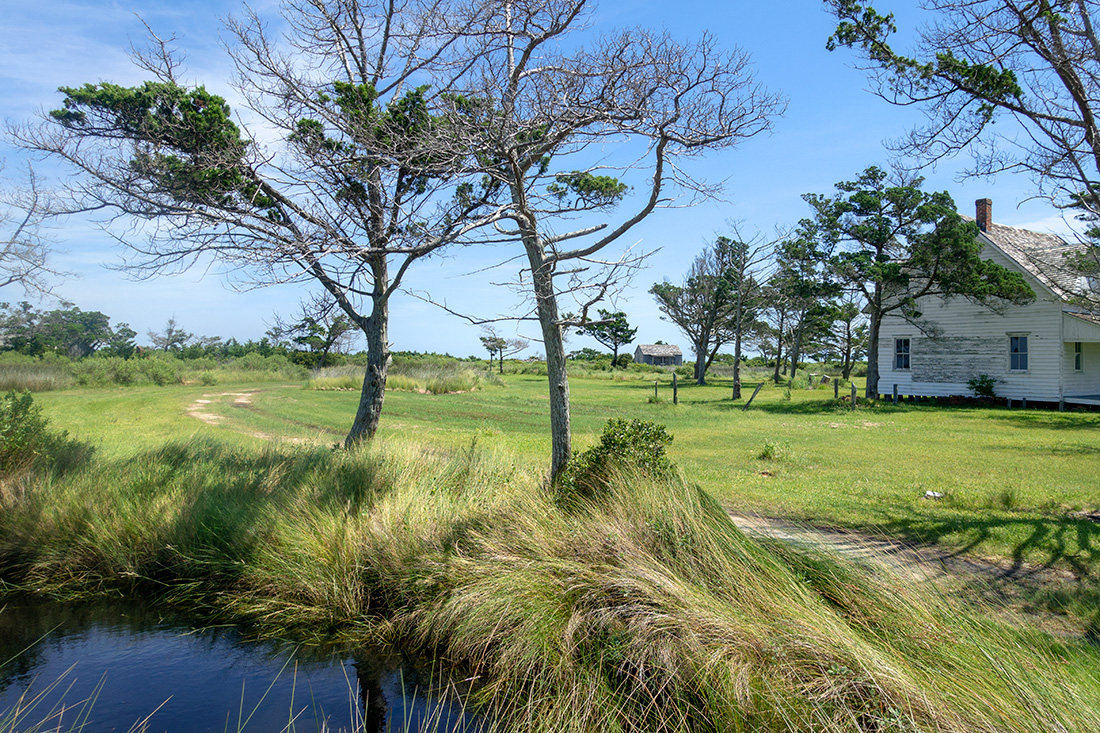
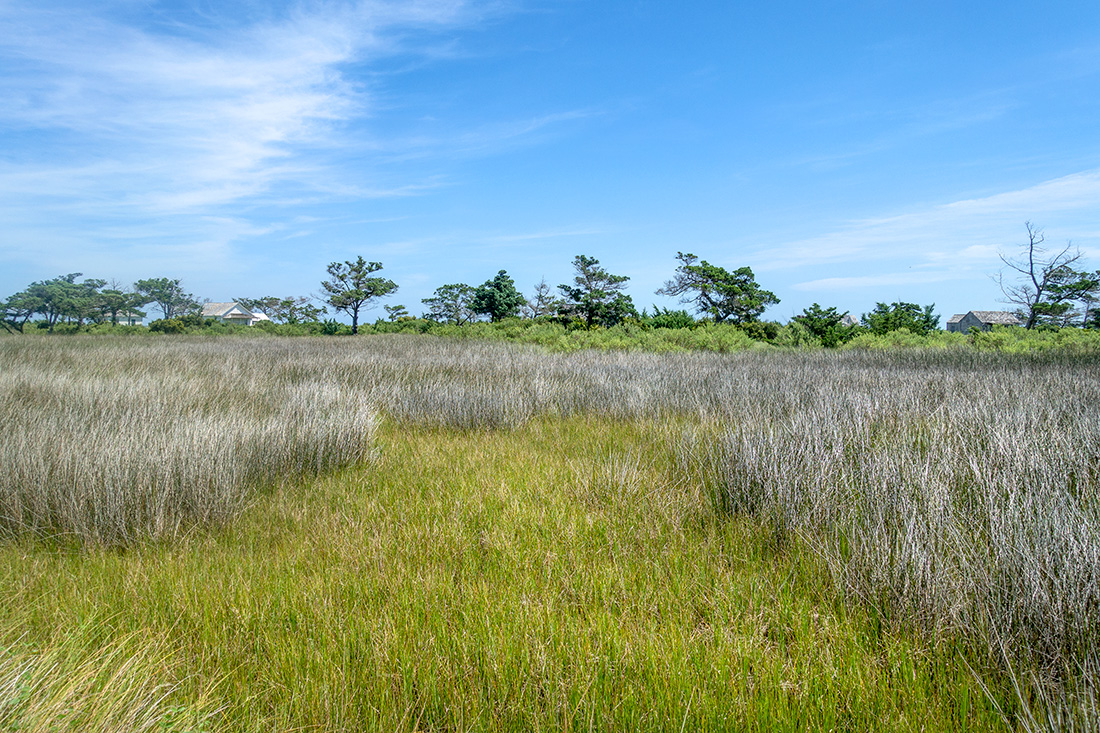
From high up in the tower of the former life-saving station. Perfect weather, about 85 degrees with a steady breeze, which made the bug spray we had brought along unnecessary. The landscape in the abandoned village was part wild, part tended, with grassy pathways and wooden bridges between the various structures. We didn’t see anyone else there besides our party of four.
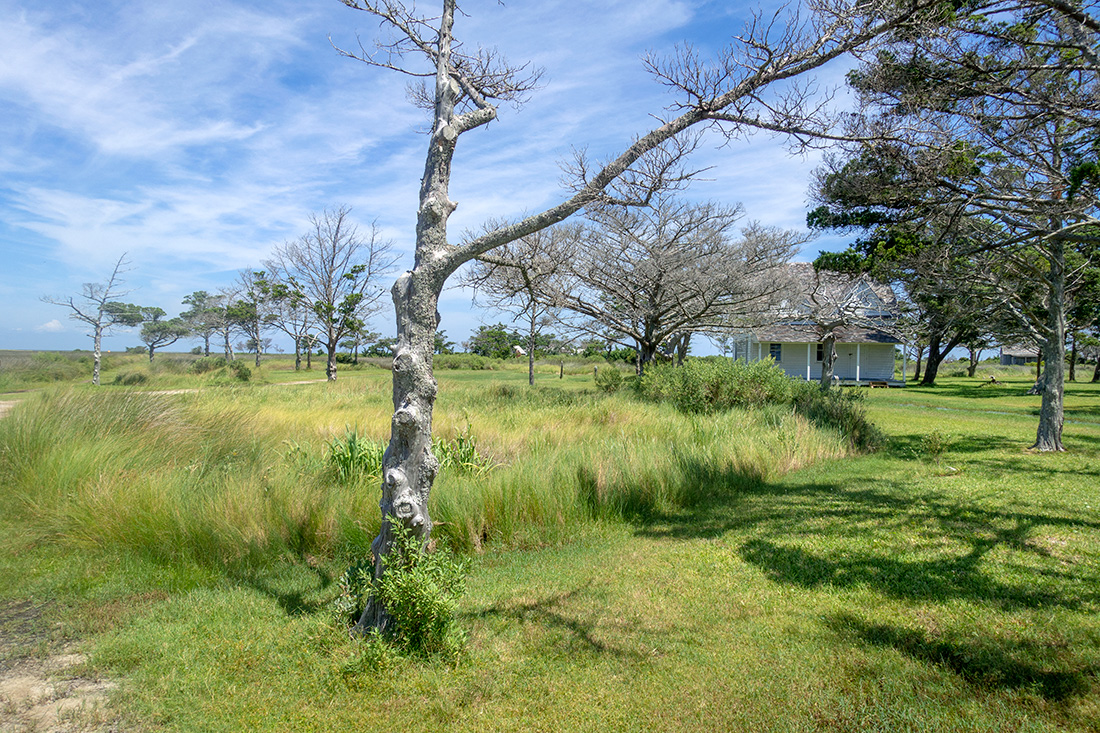
© Brian Rose
 © Brian Rose
 © Brian Rose
© Brian Rose
 © Brian Rose
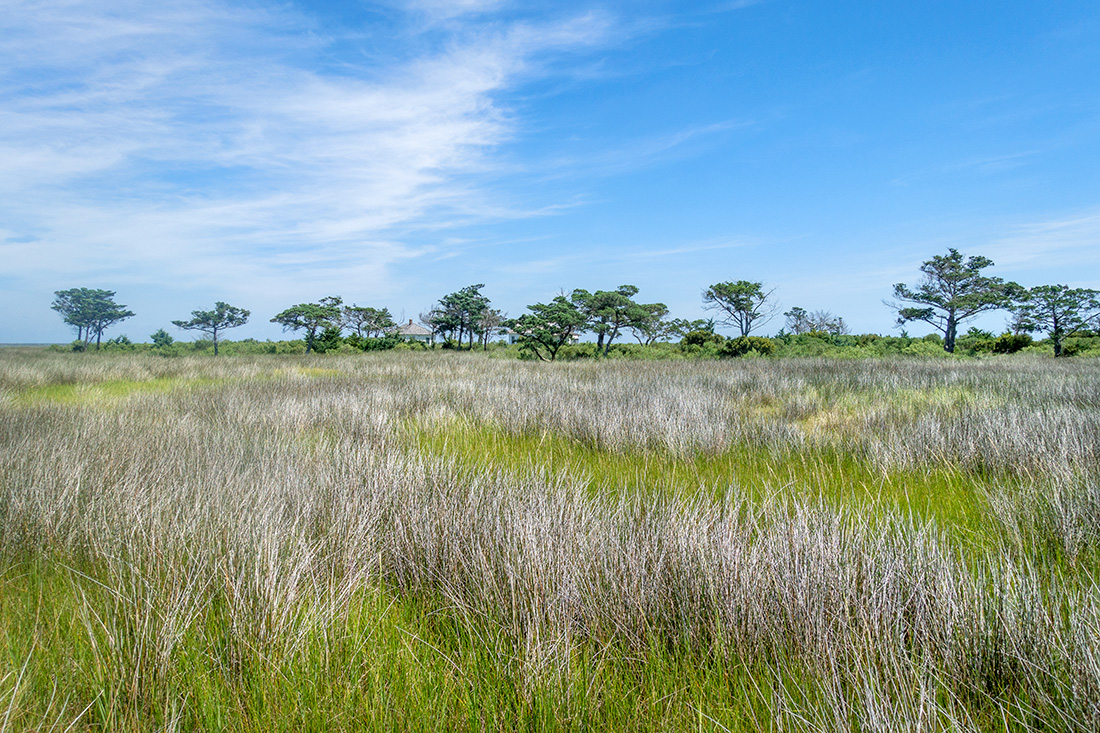
© Brian Rose
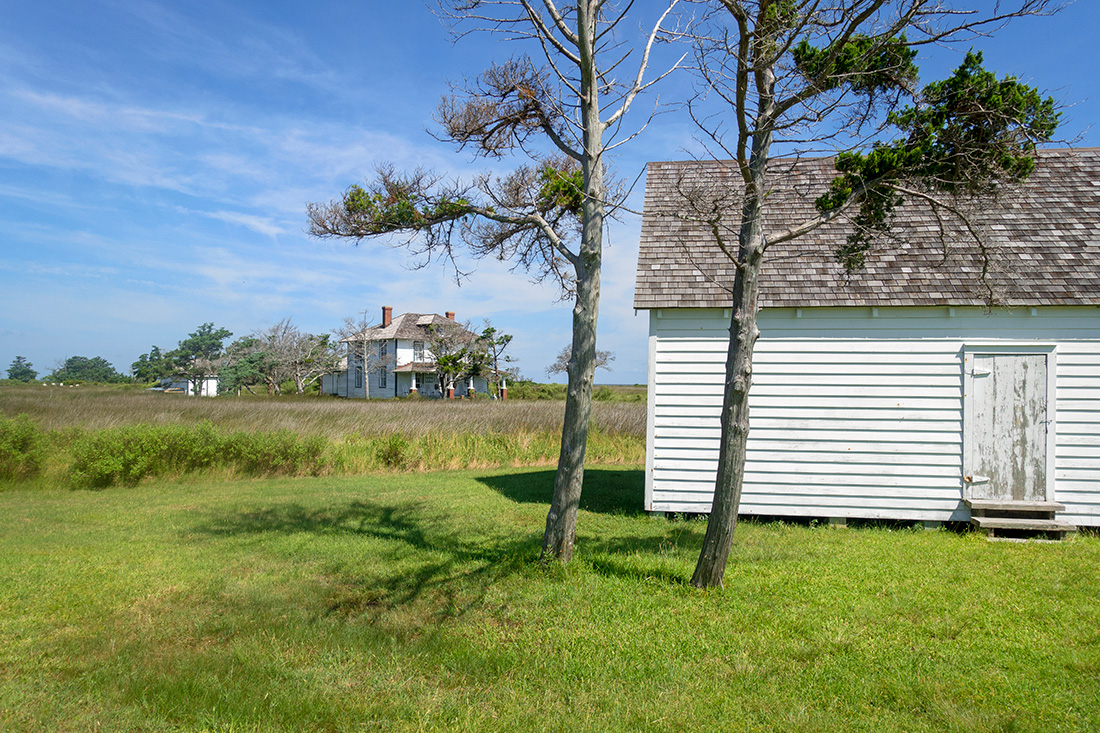
On vacation on Ocracoke Island on the Outer Banks of North Carolina. We took a boat trip across the inlet to Portsmouth island. Portsmouth was once an occupied village of 500 people, but life on a constantly shifting sandbar proved unsustainable. Today, there is a scattering of empty houses, a church, post office, and lifesaving station. The National Park Service maintains the remnants of the village.
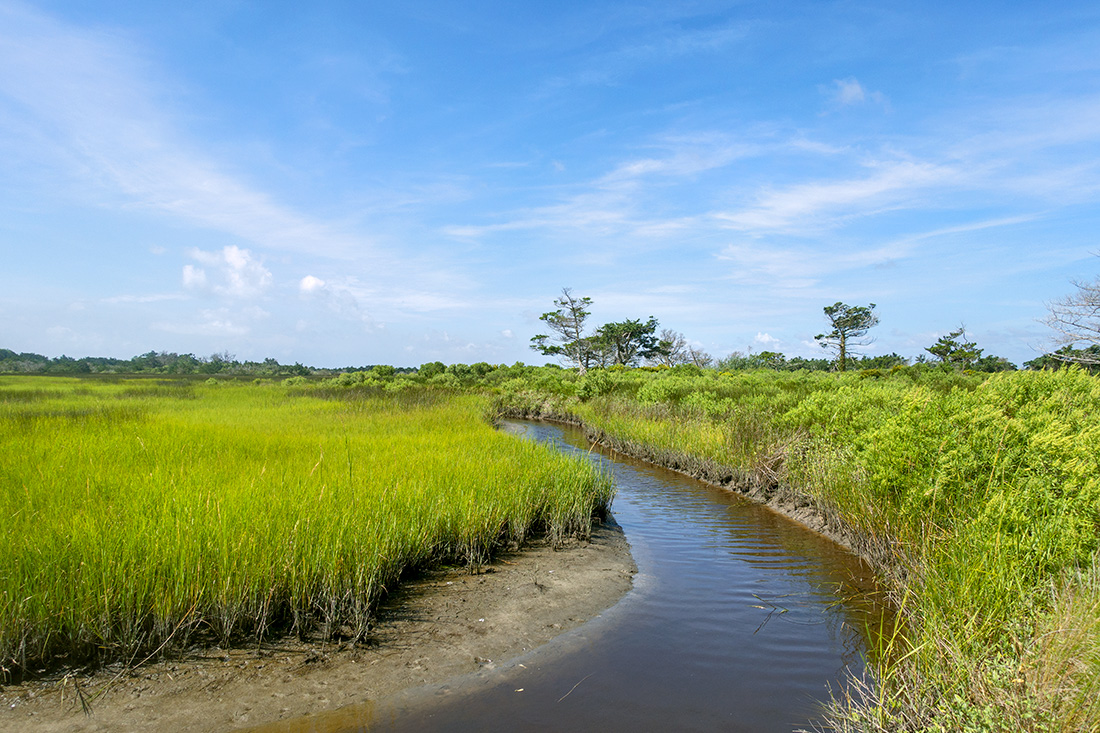
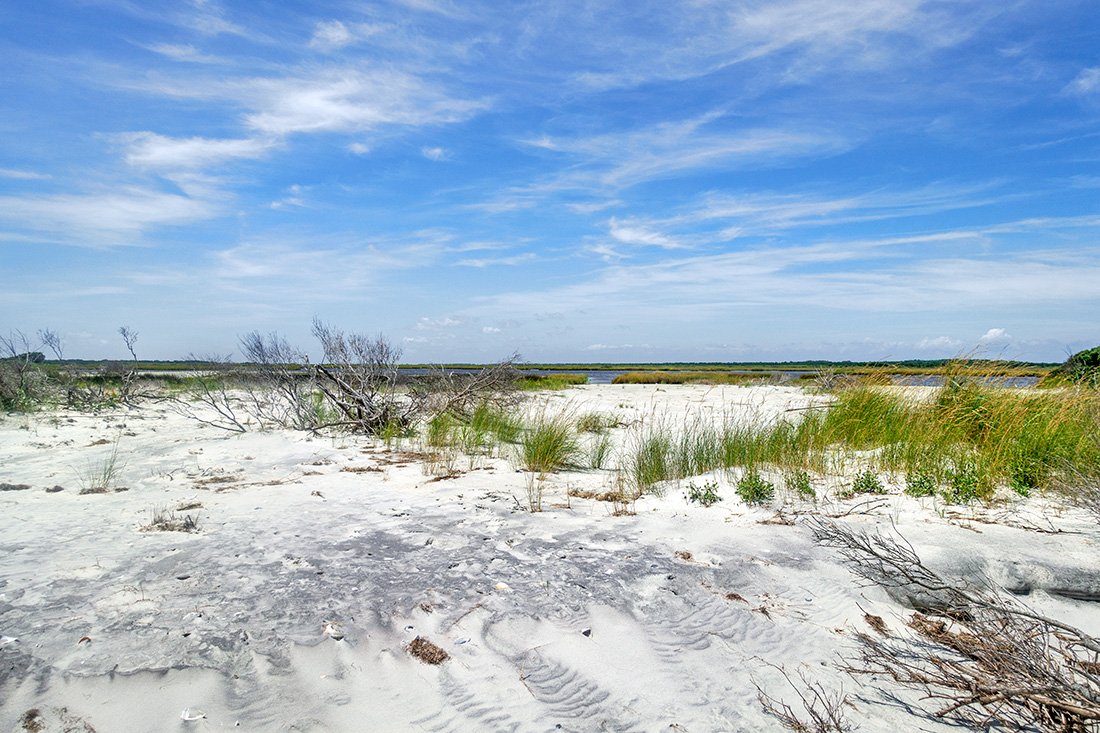
What follows is a series of images taken on Portsmouth Island, a spare landscape,
 © Brian Rose
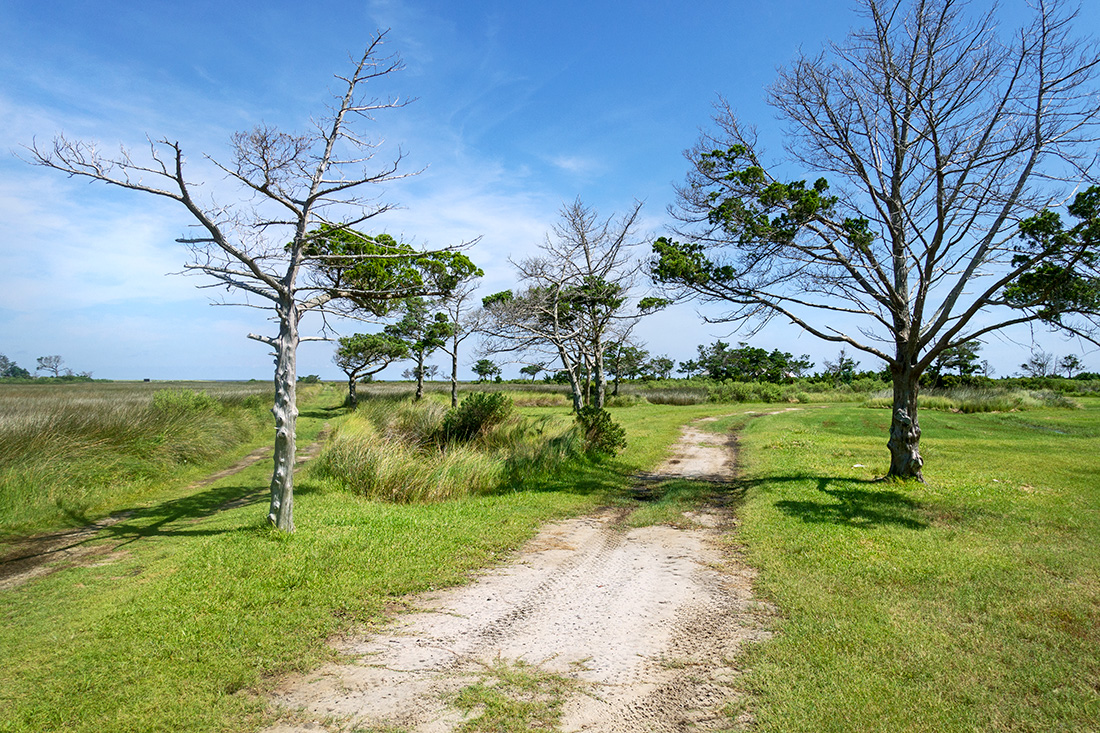 © Brian Rose
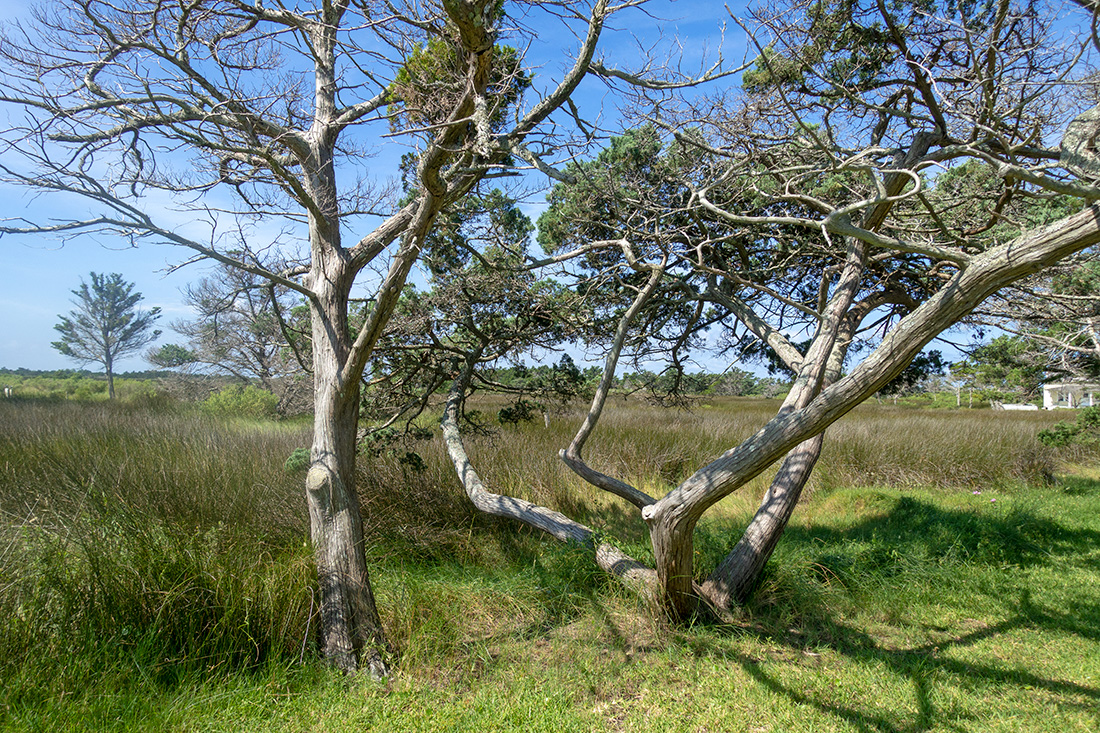 © Brian Rose
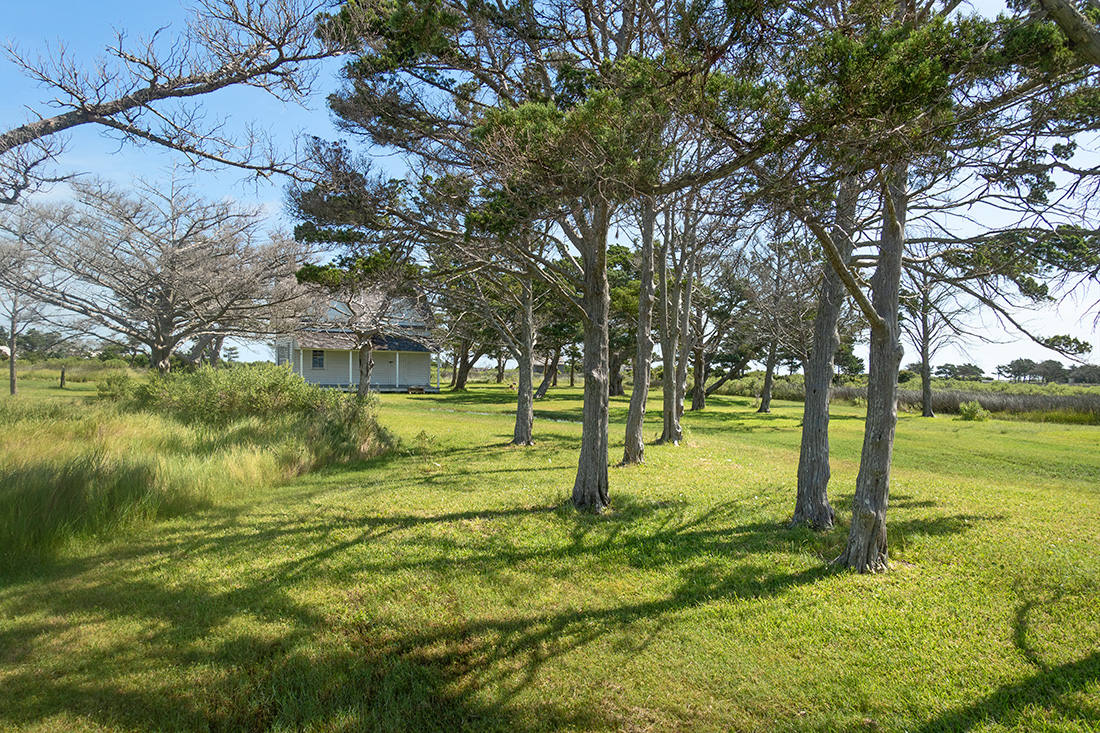 © Brian Rose
 © Brian Rose
At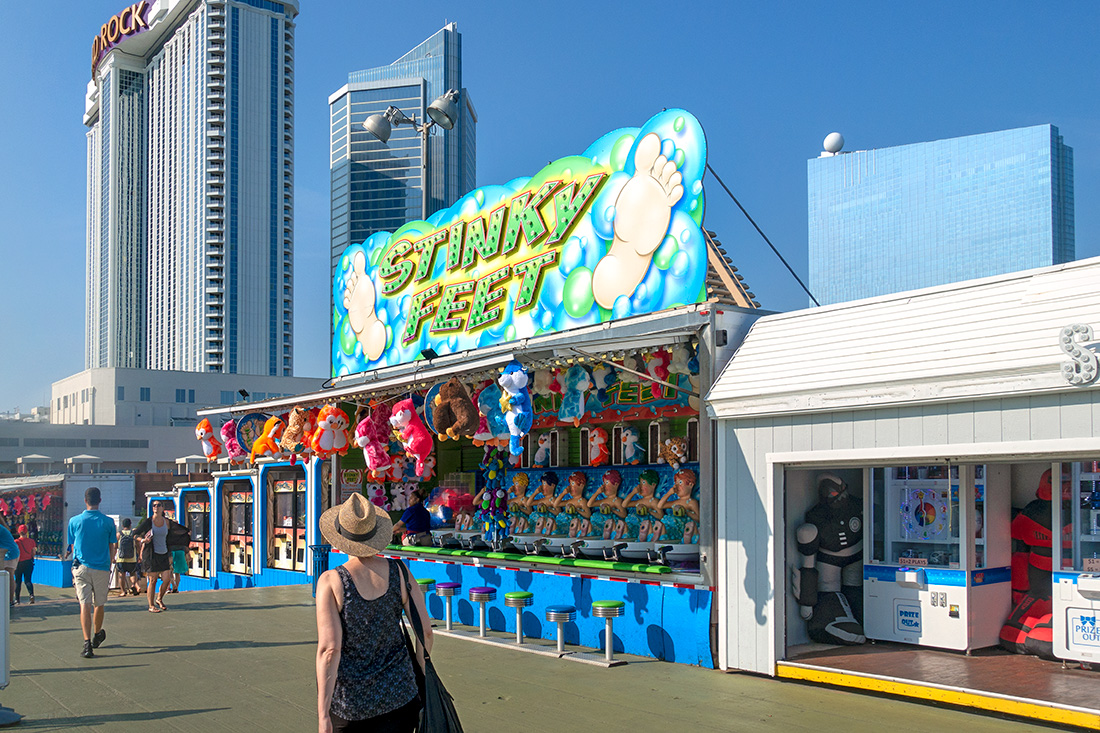
Atlantic City Steel Pier — © Brian Rose
Monday night I reached my goal, though you may have noticed it was a bit of a nail biter. Several pledges came in during the last couple of hours and I made it over. One large one came from an unknown pledger who has backed hundreds of Kickstarter projects. Another came from a friend — thanks Bill.
Anyone experienced with Kickstarter knows, however, that you have to have plan B ready if it appears you’re going to fall short. The last thing you want is to lose all the money pledged in the campaign, and at the same time, let everyone down who made a commitment to your project. So you need a friend or relative standing by with credit card in hand able and willing to make a last minute pledge just large enough to make sure your goal is reached.
Nevertheless, only 36% of Kickstarter campaigns are successfully funded. Having now completed four campaigns, the only thing I can figure is that many people far underestimate their ability to generate interest in their projects, or they set an unrealistic goal.
One thing you learn in utilizing crowd funding, is that it’s not just about raising money. Obviously, that is the critical task at hand, but what you are seeking, ultimately, is to build a community of support for your work. I’m speaking about creative projects as opposed to the many product-oriented campaigns you’ll also see on Kickstarter.
In my case, of course, there is a product — a book — and a story. In making the pictures for Atlantic City, I worked from a sense of urgency, a highly motivated response to what I saw as an existential emergency in the election of Donald Trump.
I believe we will prevail, but it will take all of us acting individually and collectively to turn things around. I still remember when I was 16, and had just gotten my first camera, that I wanted to change the world, and I believed, perhaps naively, that you could do that as a photographer.
All these years later, I understand quite well the limitations of art in the political sphere. But I also understand the power of art as a catalytic agent, whether pursued by an individual painter alone in a studio, or a photographer engaged in the social landscape.
Thank you all for your support and for your pledges. The next step is to finalize the design of the book and then put it into production. I am hoping to get it out as early as possible after the new year. I’ll be keeping you up to date along the way.
Coming down to the last couple of days of my Atlantic City Kickstarter campaign, I came to the conclusion that I’d cajoled and pestered everyone pretty much to the limit, and it was time to let this thing ride out on its own. So, rather than sit staring at the Kickstarter campaign pledge graph on my computer, I decided to make a drive down to Atlantic City to visit Levi Fox and his pop-up Trump museum.
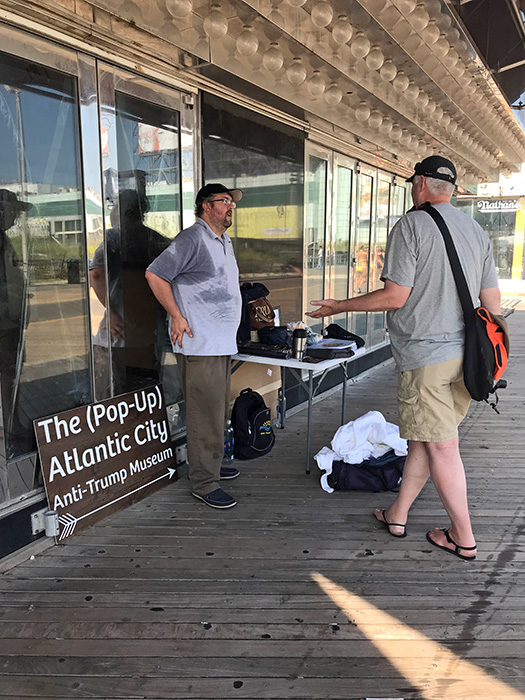
The Trump Museum, Levi Fox (left) and Brian Rose (right) — © Renee Schoonbeek
I knew about Fox from a couple of articles I’d found while researching Trump and Atlantic City, and I knew he was setting up his display in front of the now abandoned Trump Plaza on the boardwalk. It was a blisteringly hot Sunday in August, and everyone was heading to the shore. So, sitting in traffic to and from the beach actually consumed more of the day than the time I spent in Atlantic City.
I found Levi and his card table museum without any difficulty. A woman was talking to him and said that someone should take a pictures of all the former Trump casinos and say, this was Trump’s, and this one was once Trump’s. At that precise moment I stepped up and said, that’s what I’ve done, and I handed her a copy of my book dummy.

Levi Fox and Trump bobblehead doll — © Brian Rose
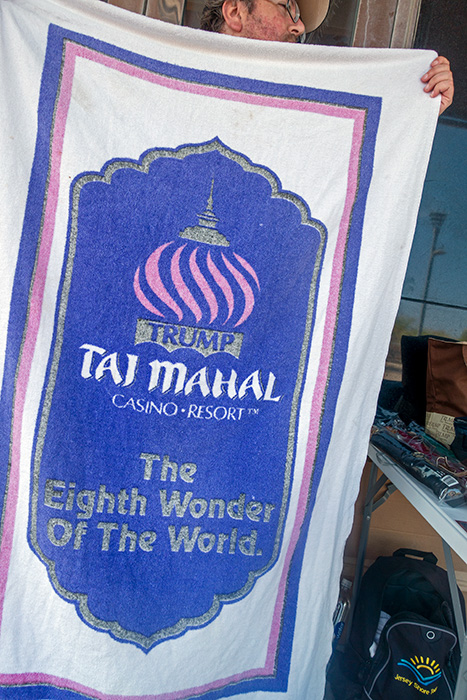
Trump Taj Mahal bath towel — © Brian Rose
I introduced myself to Levi Fox, and he showed me the artifacts and tchotchkes that comprise his Trump museum. He carefully unwrapped a Trump bobblehead doll, and unfurled a Trump Taj Mahal bath towel and a bathrobe with a golden Trump logo. Levi is both museum director and carnival barker as he calls out to passersby to step right up and see his Trump objets d’art. Bigger than anything in his collection is the museum sign itself that says “The (Pop-Up) Atlantic City Trump Museum” on one side, and “The (Pop-Up) Atlantic City Anti-Trump Museum” on the other side.
Step right up — © Brian Rose
In addition to manning his pop-up museum Levi Fox gives tours of Trumpian Atlantic City, and he teaches history and writing at the local university. Watching him at work on the boardwalk, his affably puckish demeanor spurred impromptu conversations with a wide array of people, and virtually everyone had an opinion about the recently departed king of Atlantic City. He is now, of course, king of the United States of America.
Atlantic City Kickstarter campaign page
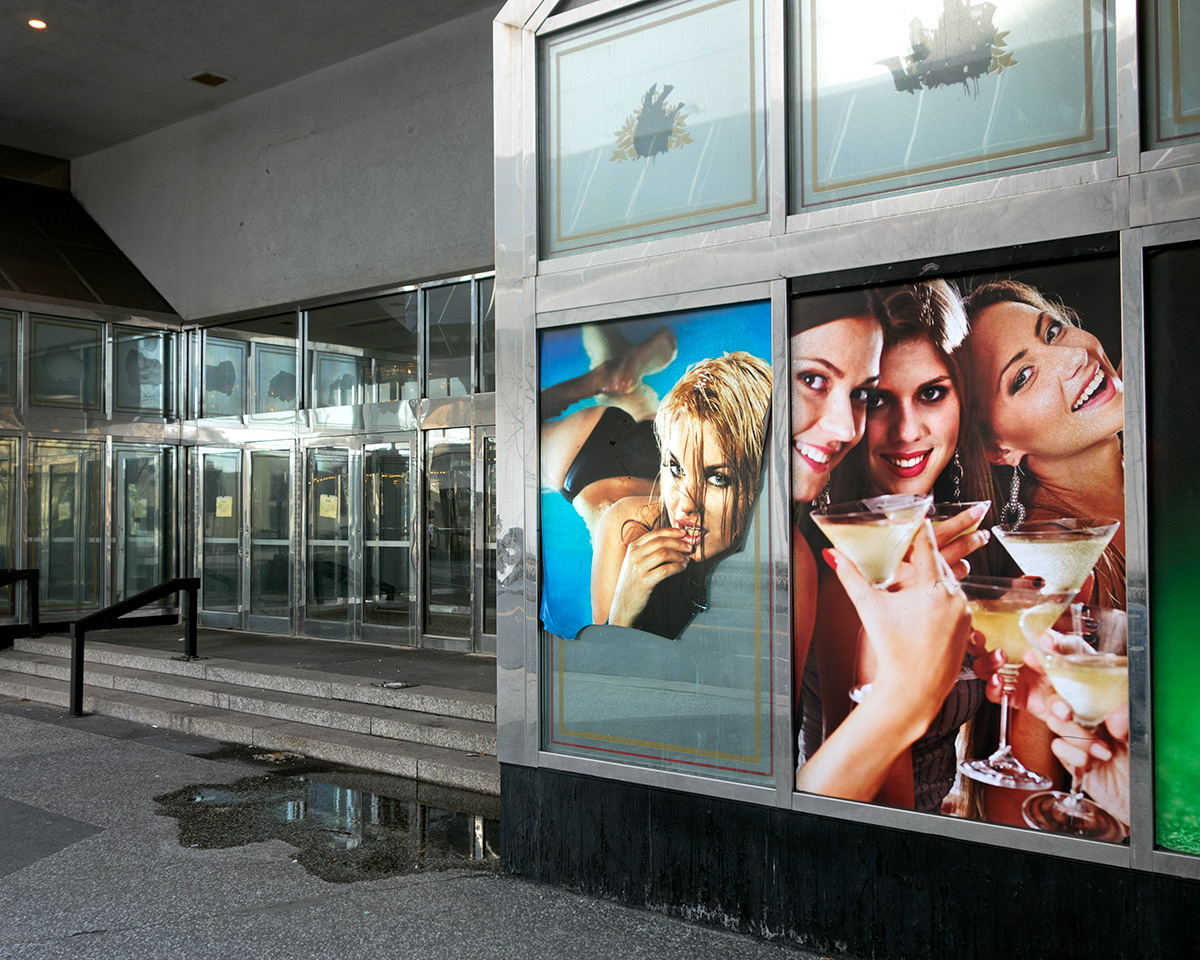
Trump Plaza, Atlantic City — © Brian Rose
Trump’s businesses in Atlantic City filed for bankruptcy five times.
#1: The Trump Taj Mahal, 1991
#2: Trump Castle, 1992
#3: Trump Plaza and Casino, 1992
#4: Trump Hotels and Casinos Resorts, 2004
#5: Trump Entertainment Resorts, 2009

Kickstarter campaign to publish Atlantic City. Pre-order here!
On the presidential campaign trail Trump boasted of his ‘success’ in Atlantic City, how he had outwitted Wall Street and leveraged his own name for riches. He would do for America what he had done for Atlantic City, he said. And so it came to be. Brian Rose has documented what remains of the city in the aftermath of the casino explosion. The images are haunting. Atlantic City may never recover. — Paul Goldberger
Last week of my Kickstarter campaign — please support!
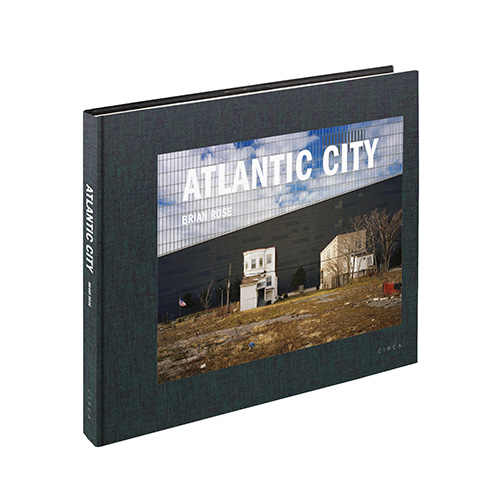

Pledge to my Kickstarter campaign!
Less than 2 weeks left!
Pro Photo Daily
Fast Company
Untapped Cities
Circa Press
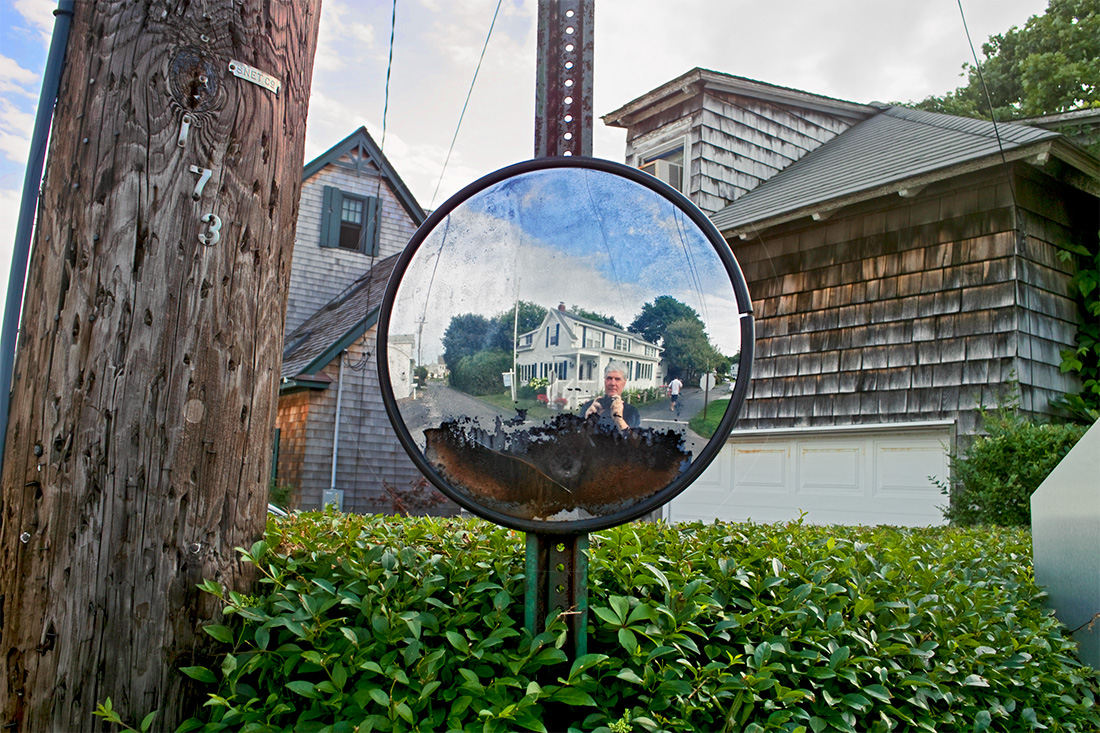
Self Portrait — © Brian Rose
Self portrait in a convex mirror
The time of day or the density of the light
Adhering to the face keeps it
Lively and intact in a recurring wave
Of arrival. The soul establishes itself.
But how far can it swim out through the eyes– John Ashberry
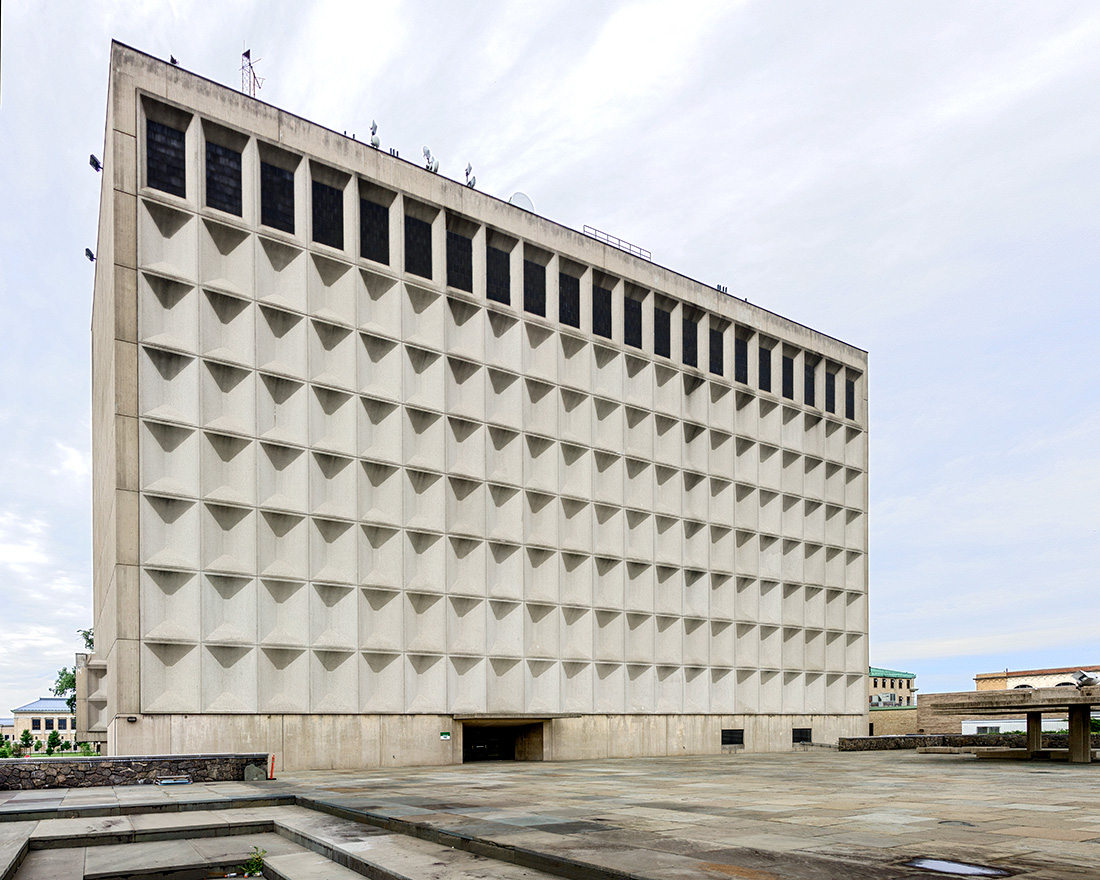
Tech II (Meister Hall), The Bronx, designed by Marcel Breuer — © Brian Rose
A little commentary on making a photograph. A few days ago, I wrote about visiting the Bronx Community College campus — originally New York University. In the ’60s the campus was transformed by Bauhaus trained architect Marcel Breuer.
This amazing view of Meister Hall was made with my pocket camera, a Sony RX100, which shoots RAW and produces 20 megapixel image files. It’s been my visual note taker, preview camera when shooting 4×5 negative, and all round backup. Pictures from this camera have even been used in my books, and most of the images in this blog were made with it.
So how does a tiny camera make a photograph with this kind of clarity and monumentality? First of all, it helps that the Sony is a brilliant camera, but you can’t just point up at a building like this and expect to make a fully realized architectural photograph. Here’s how it was done.
[table id=7 /]
Since it was not possible to get the whole rectangle of the building into the frame of the camera even using the widest focal length, I made multiple images — two verticals left and right, and one horizontal that included some of the plaza. I opened each image in Photoshop in camera raw, adjusted the exposure and color — made them low contrast — and saved them. I then roughly corrected the perspective of each of the images so that the lines were not converging. I then used photomerge, a feature in Photoshop that stitches together overlapping frames to form a single image. From there I fine tuned the perspective of the overall image, and cropped out empty areas left when the three frames were merged. Finally, I worked on the color and contrast of the image. It all took two or three hours. The stitched together image file is about 250MB.
Most of the time it isn’t necessary to do something this elaborate. None of the other pictures I took walking around the campus needed that kind of treatment. But sometimes there’s no other way.
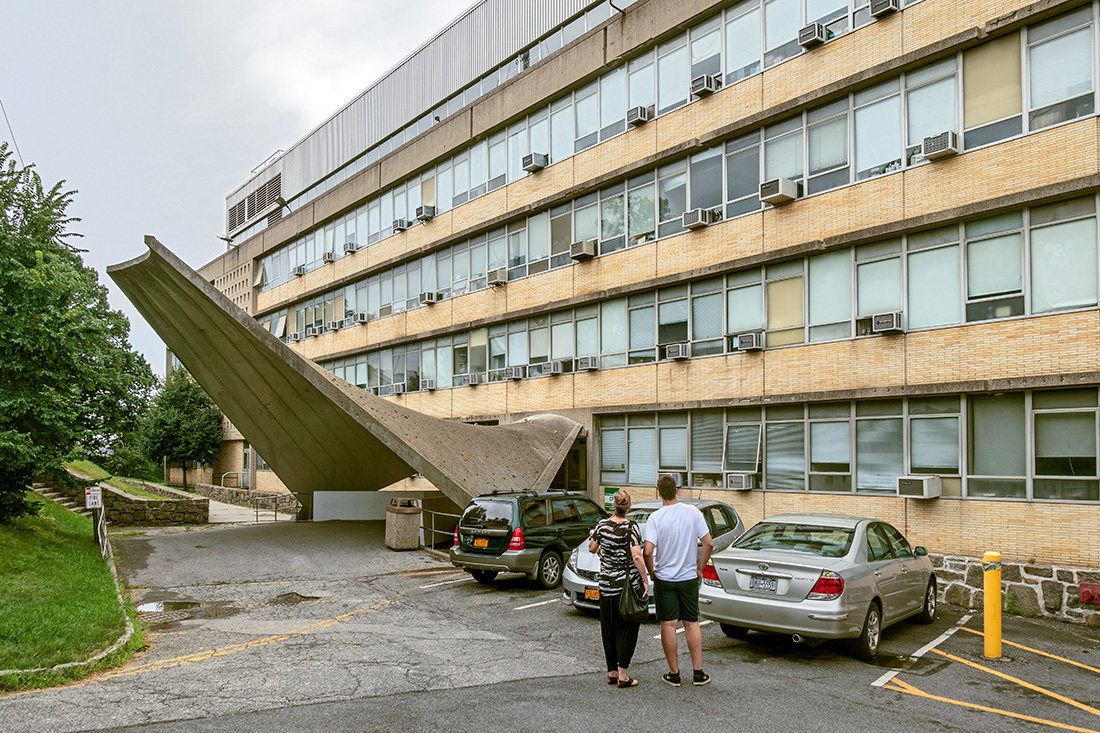
My wife and son survey building designed by Marcel Breuer — © Brian Rose
Two weeks ago I visited Bronx Community College, originally the uptown campus of New York University. The main quad is anchored by a symmetrical grouping of neoclassical buildings by Stanford White, the designer of many New York buildings from the turn of the 19th century including the now demolished Penn Station. Behind White’s Gould Library is the Hall of Fame for Great Americans, which I wrote about in a recent post.
Marcel Breuer — © Brian Rose
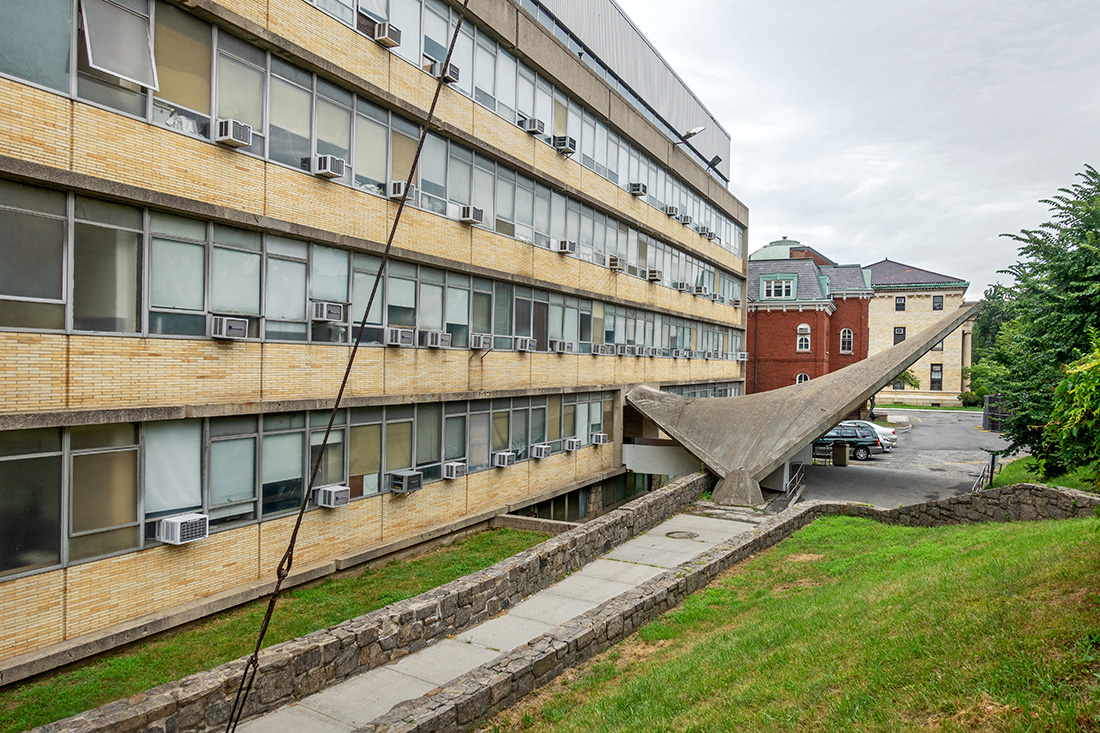
In 1956, NYU hired Marcel Breuer to create a new masterplan for their University Heights campus. Breuer, a Bauhaus trained architect, who left Nazi Germany in the 30s, worked in a style now called Brutalism. The name came from the French, beton brut, which refers to raw concrete. At NYU, he combined expressive form with utilitarian bands of bricks and glass, and throughout, there are low stone walls, not unlike those used in local farmer’s fields.
After visiting the Hall of Fame, we first encountered a classroom building with a swooping concrete entrance canopy, similar to Breuer’s UNESCO headquarters in Paris. I climbed the hill adjacent, topped with a decrepit war memorial — utterly neglected. Dozens of window air conditioners disrupted what was once a clean uninterrupted composition.
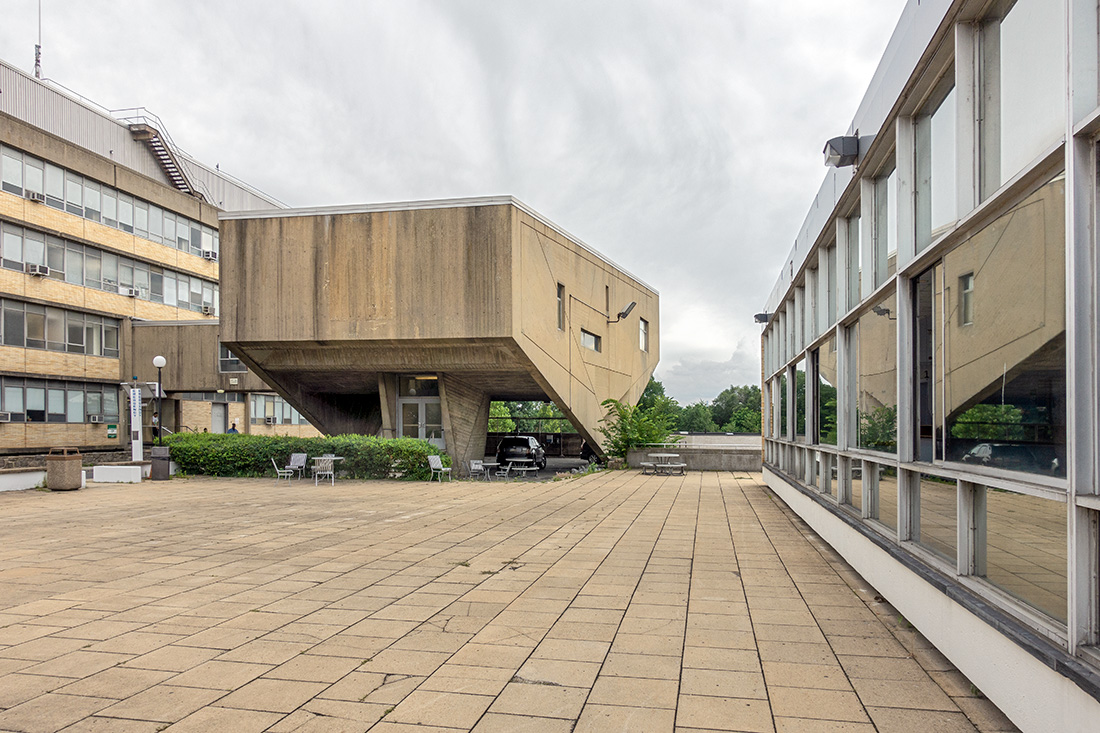
Walking past this building we arrived at terrace with a low horizontal building and freestanding trapezoidal structure known as Begrisch Hall. It contains an auditorium, which is accessible by a pedestrian bridge. The streaking in the concrete above is not intentional — the entire complex is in shamefully bad condition.
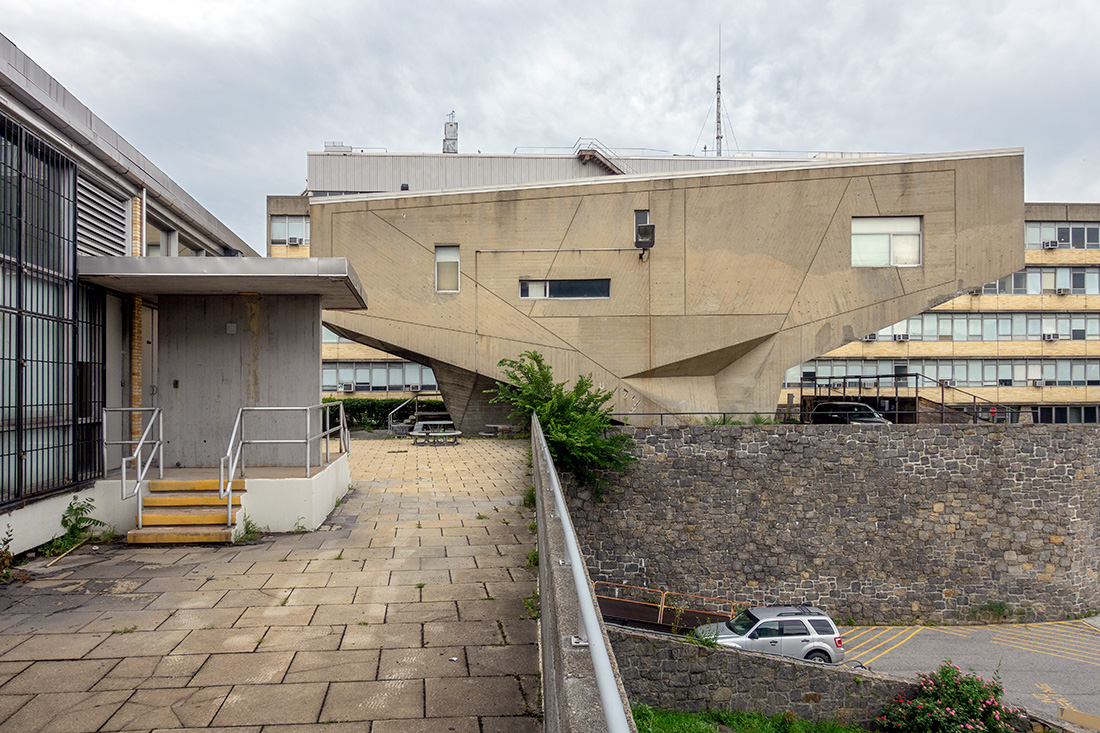
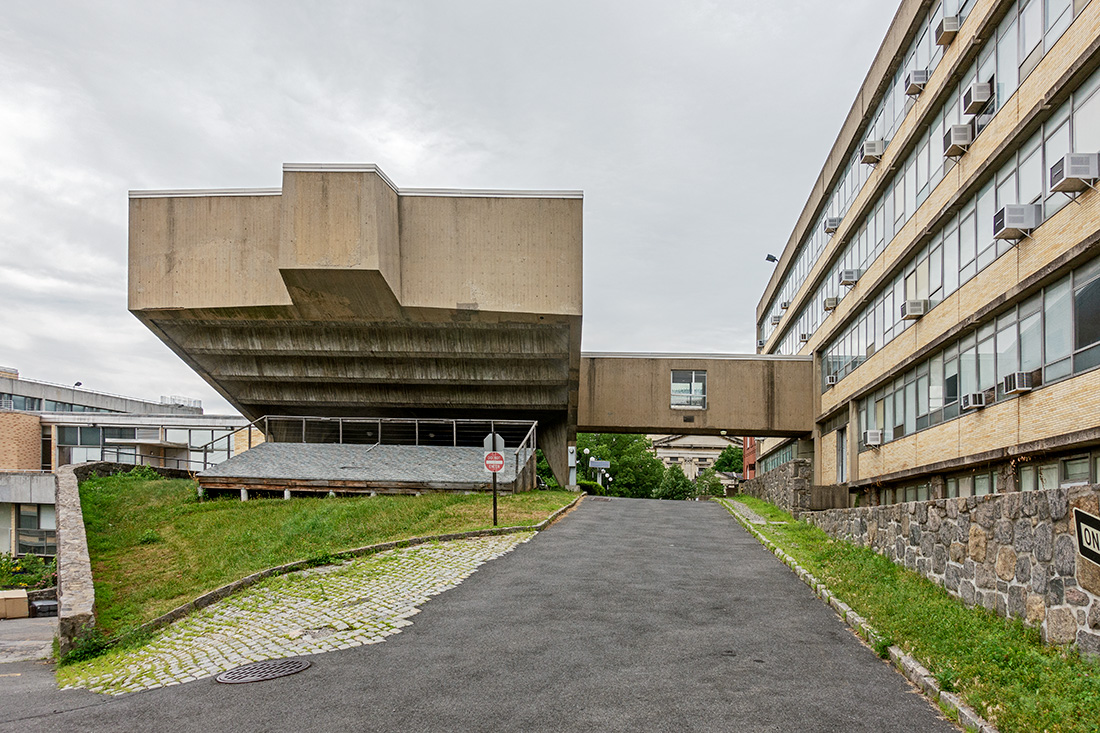
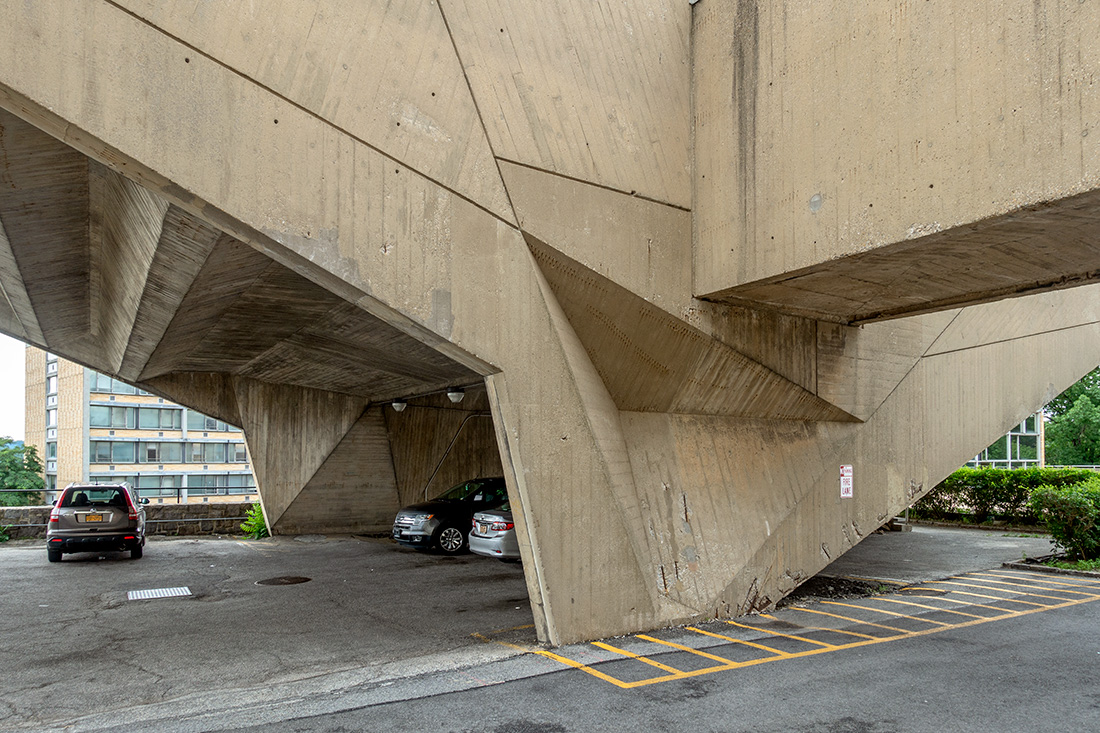
Begrisch Hall, Marcel Breuer — © Brian Rose
Begrisch Hall has been named an official city landmark, but as far as I know, not the entire ensemble of buildings. As I walked on further, I became more and more astonished and dismayed. It was like stumbling upon a lost archaeological site, crumbling, yet mostly intact. Of course, it is right here in the Bronx, perched high up over the Harlem River, chosen because of its prominent location.
Completed University Heights campus. “Now, the University will no longer be hidden under a bushel, but will be set on a hill-top and there will be not the slightest doubt as to its existence in the mind of anyone who passes University Heights.”
– University Quarterly magazine, 1894
But NYU at University Heights did not become another Columbia or Fordham University flourishing outside the center of Manhattan. Lehman College to the north, however, which also has two Breuer buildings, remains a thriving campus.
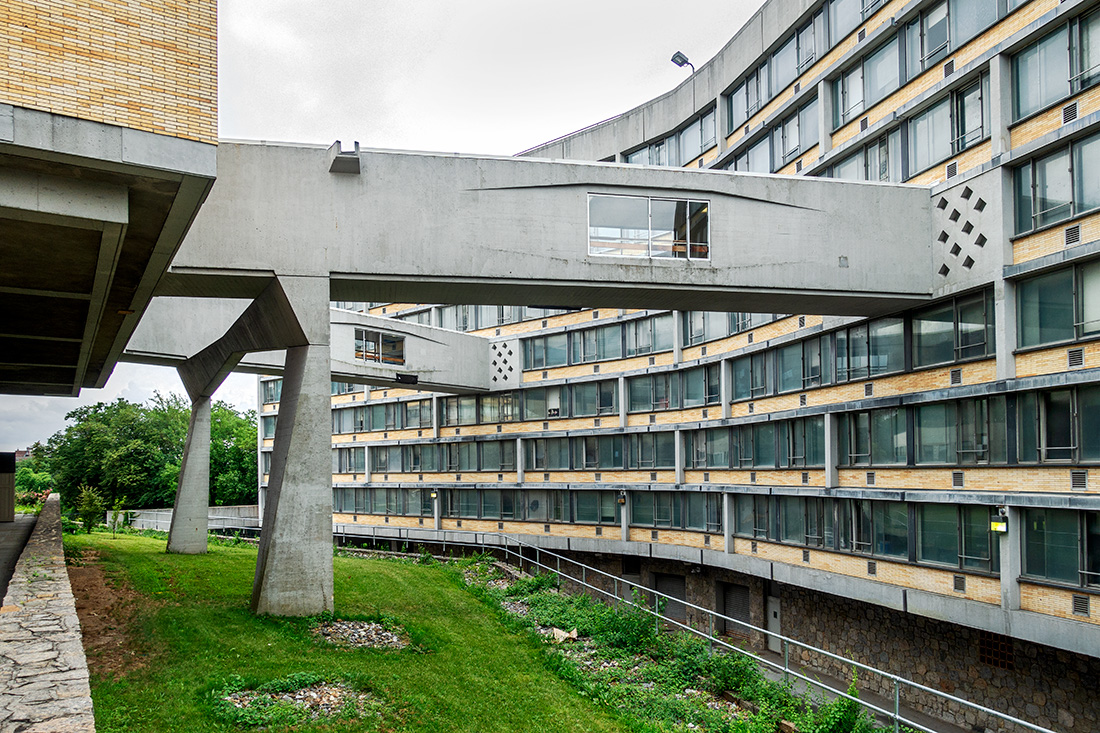
Marcel Breuer — © Brian Rose
And then around the corner, another amazing sight. Two bridges supported by concrete pillars lead to a slightly curved dormitory building, set down the slope of the hillside. No air conditioners here, but there are vents in the brick banding, and the window glass and mullions seem heavier than what was likely there originally.
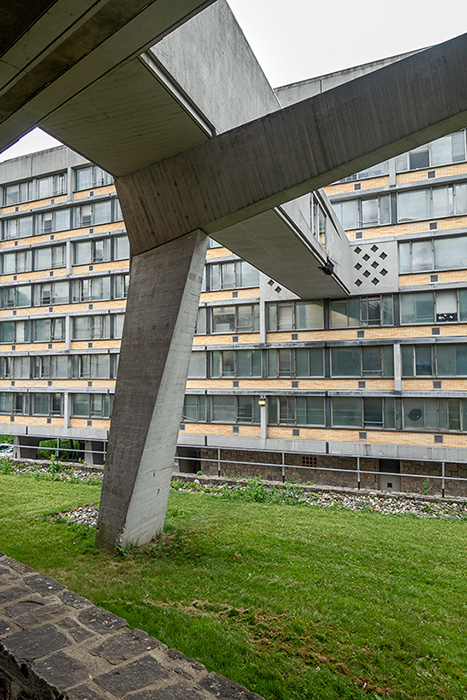
Marcel Breuer — © Brian Rose
From here we walked back to the quad and stood opposite Meister Hall, which we had passed by on our way to the Hall of Fame. All four walls of the quad have been completed with the recent addition of a library designed by Robert Stern. It attempts to bridge the gap between Stanford White’s Pantheon-inspired Gould Library and Breuer’s vigorously modern Meister Hall — and in doing so it falls somewhere, or nowhere, in between.
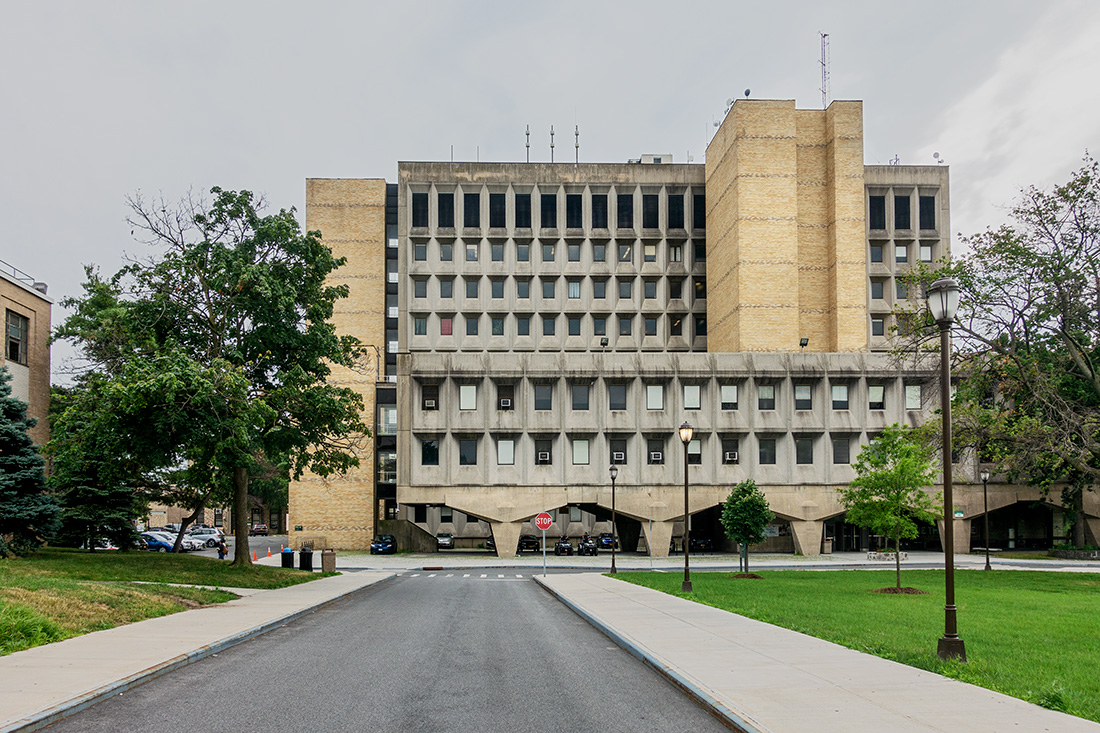
Tech II (Meister Hall), Marcel Breuer — © Brian Rose
Meister Hall was originally named Tech II, and in 1970 it was the last of the Breuer buildings to be completed on the campus. It housed the university engineering and science departments. There is a clear distinction between the elevator and stair towers with yellow brick matching the earlier campus buildings. Along the street a low structure is raised up on concrete feet with the main body of the building set a distance behind. Between the two structures was a courtyard with paving stones. It all felt very European to me — France, or perhaps, Italy.
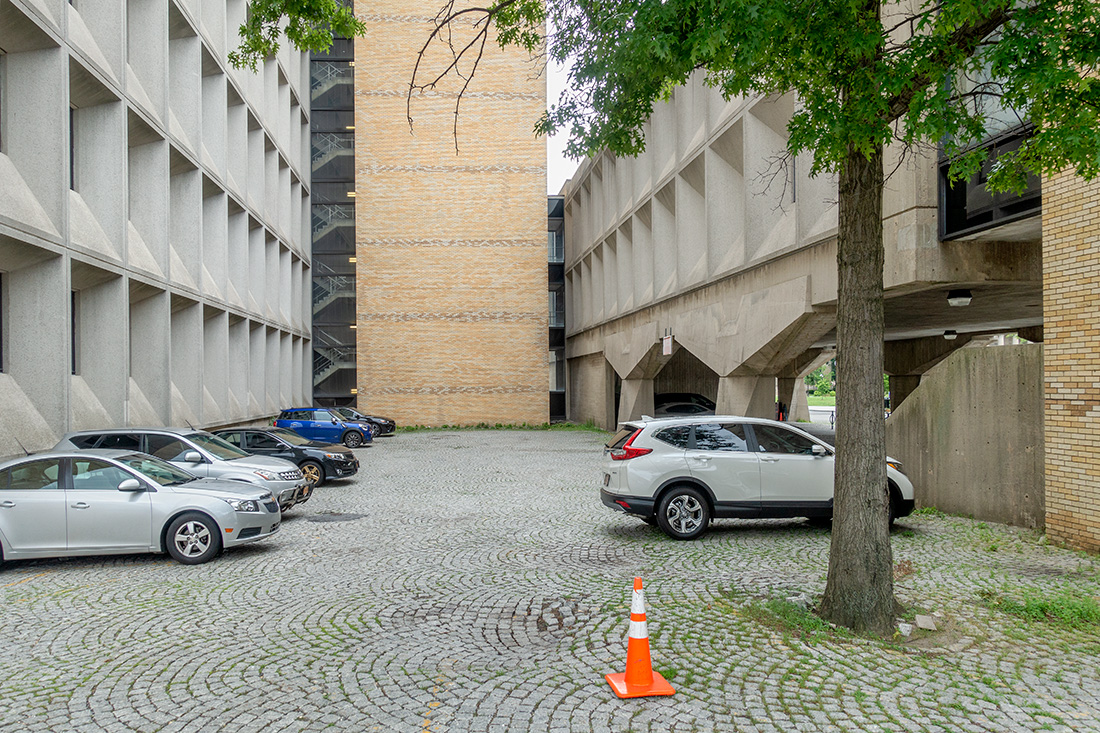
Tech II (Meister Hall), Marcel Breuer — © Brian Rose
As someone who has photographed New York extensively in all five boroughs, I know the city better than most, and its urban landscape continues to provide fresh surprises. But nothing prepared me for the visual drama of what came into view around the back of Meister Hall.
Tech II (Meister Hall), Marcel Breuer — © Brian Rose
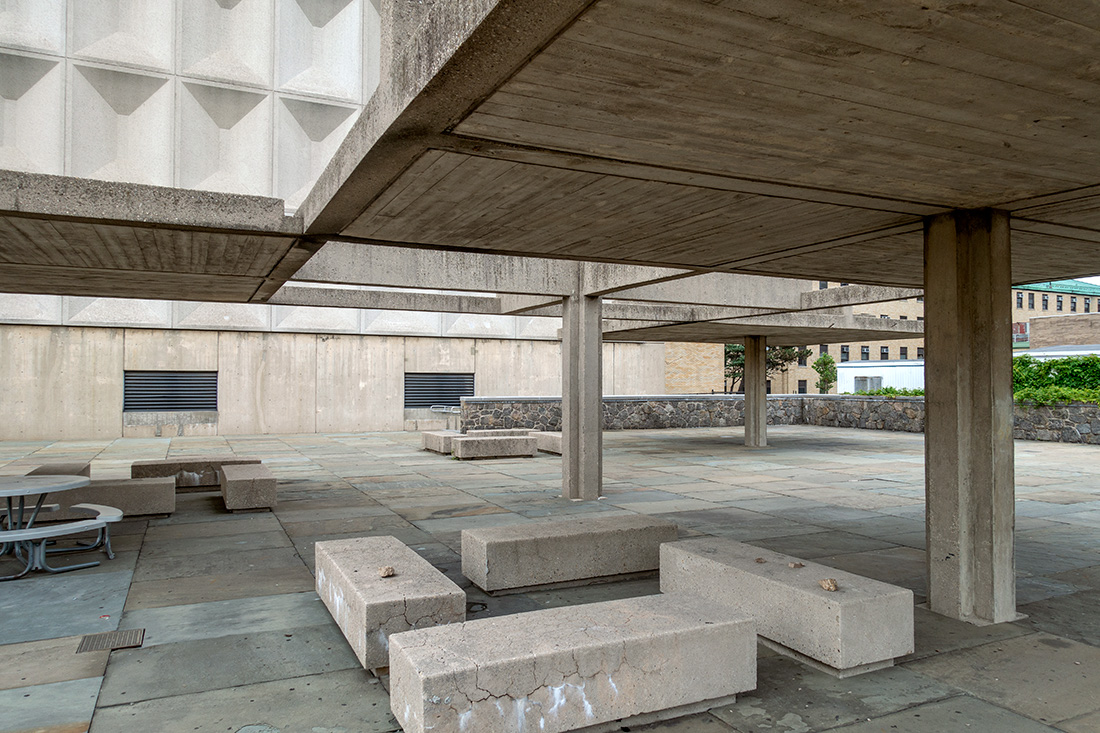
A vast wall of indented concrete panels rose up above a minimalist plaza — windowless — extreme — an uncompromising expression of space and material and nothing else — an opening in the base, the only sign that there is anything habitable behind this eyeless facade. Several interlocking pavilions stood on the plaza with cracked concrete slabs beneath them, like fallen columns.
What can I say. I teared up. Stanford White built his Pantheon echoing Thomas Jefferson on one side of the University Heights quad. Marcel Breuer erected his Parthenon, his Greek temple, on the other side — modernism and classicism melded together as pure sculpture and image.
This, I believe, may be the greatest architectural statement in all New York.
It was the summer and few students were around. There were no other visitors.
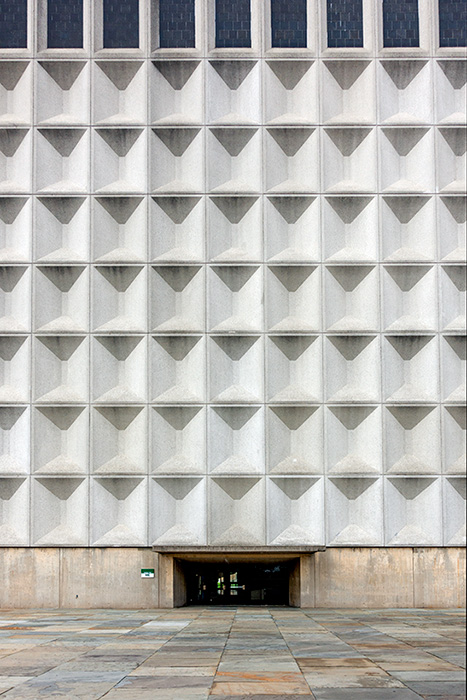
Tech II (Meister Hall), Marcel Breuer — © Brian Rose
This is getting real. We have a cover mockup and a page on the Circa Press website.
If you haven’t pledged yet, go to my Kickstarter page and support this book. Ruffle some feathers. Make some waves. Stand and be counted!
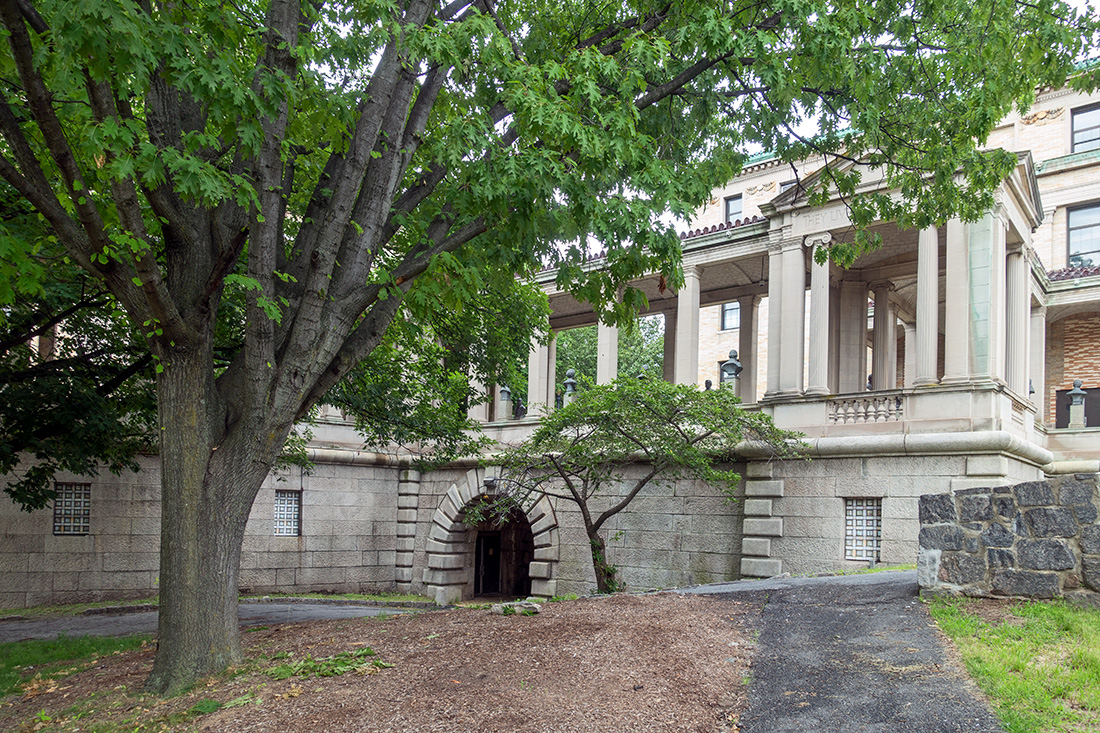 Hall of Fame for Great Americans, side view, University Heights — © Brian Rose
I‘ve seen a lot of the Bronx over the years. It’s a much maligned borough of New York that contains some of the city’s great institutions — the Bronx Zoo, the New York Botanical Garden, Fordham University, and the Yankees, no less. My son went to Bronx Science, one of the prestigious specialized high schools, which have been in the news lately because of the controversy around the entrance exam, which is the only criterion for admission. Bronx Science is an academic island of Asian and white students in a largely Latino borough. But that’s a controversy I’ll take up another time.
Last week, I visited the Bronx Community College campus for the first time. It was originally New York University before they sold the property to the state and headed downtown to Greenwich Village. They left behind a grouping of Stanford White neoclassical buildings, and a complex of structures designed by Marcel Breuer, one of the great modernist architects of the mid-20th century. Wrapping around the back of the White buildings is a colonnade containing the Hall of Fame for Great Americans, a series of busts depicting noteworthy Americans.
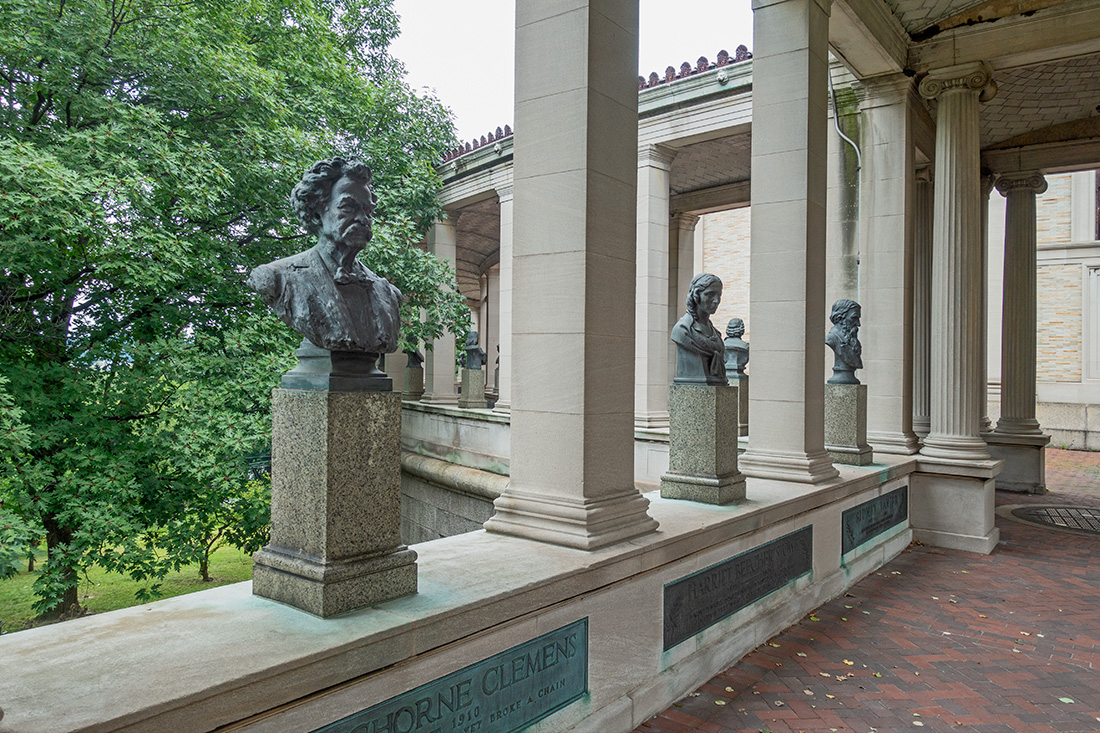
Samuel Clemens (Mark Twain), Hall of Fame for Great Americans — © Brian Rose
The Hall of Fame opened in 1900 and was the focus of much national attention. The public was invited to nominate worthy individuals, and an esteemed jury made the final selection. Some of the most important sculptors of the time, including Augustus Saint-Gardens and Daniel Chester French created the bronze busts. Additions were made over the years, but by and large, the selection represents a view of American culture from more than 100 years ago.
Henry Mitchell McCracken (NYU president), extremely passionate about history and civic duty, believed that Americans needed a place to honor great and influential figures from the past. Influenced by the Rumshalle (hall of fame) in Germany, the Chancellor pictured a pantheon where Americans could pay tribute to those who left their mark on America. MacCracken’s vision would become a reality and be dubbed the Hall of Fame for Great Americans, the first Hall of Fame ever built in the United States.
The College on a Hill: A History of New York University’s Bronx Campus Told Through its Architecture
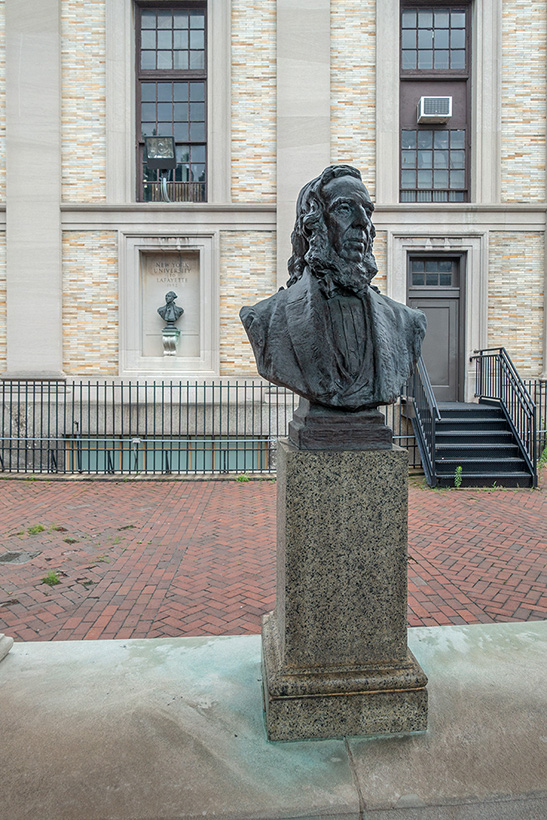
Peter Cooper, Hall of Fame for Great Americans, University Heights — © Brian Rose
Over the years, the Hall of Fame lost its centrality. The heroic classical approach to honoring achievement fell out of favor, and when NYU consolidated its operation in Manhattan, the Hall of Fame and the entire Stanford White grouping of library and classrooms buildings was neglected by the state of New York. It did not help that the Bronx in the ’70s and ’80s became an urban hellscape, and few people ventured beyond Yankee Stadium on the 4 train. While the Bronx has rebounded in the intervening years, the Hall of Fame and its accompanying buildings remains in deplorable shape.
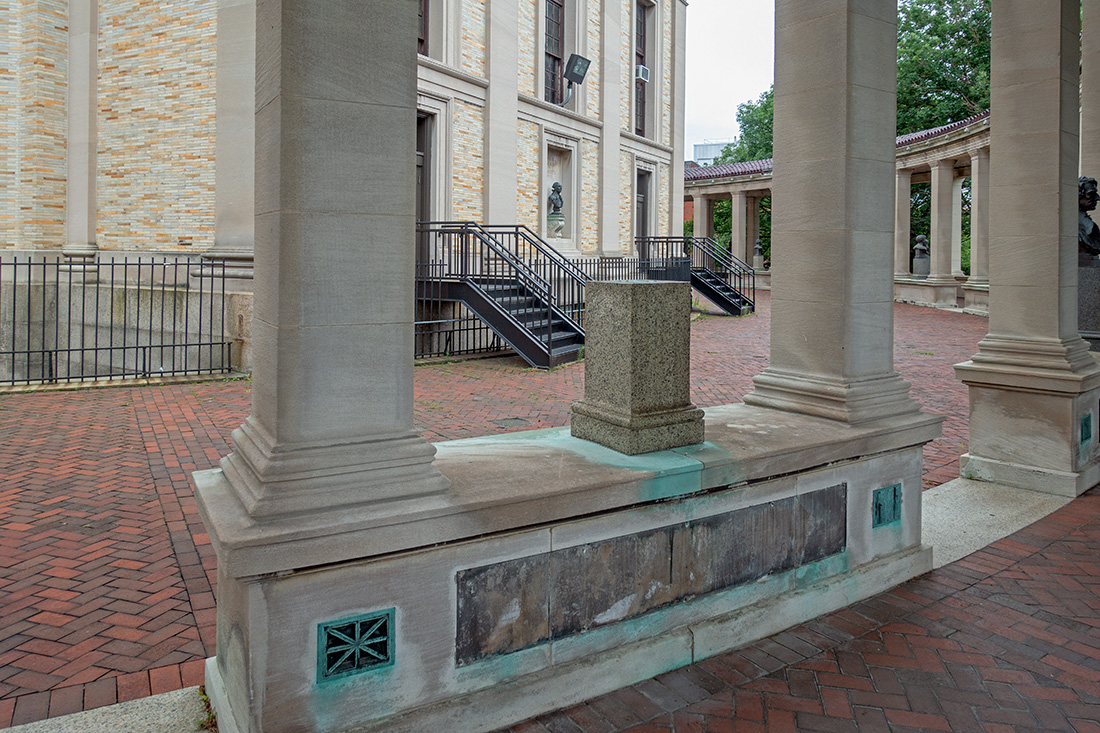
Empty pedestal, Robert E. Lee bust, Hall of Fame for Great Americans — © Brian Rose
Last year (2017), soon after the neo-Nazi violence in Charlottesville, Virginia, spurred by the planned removal of a Robert E. Lee sculpture, many communities began reassessing the presence of Confederate symbols in parks and public squares. With the blessing of local politicians and the president of the college, Governor Andrew Cuomo ordered the removal of two sculptures from the Hall of Fame: Robert E. Lee and Stonewall Jackson. A year later, the pedestals remain empty, and no signage indicates who, what, or why.
I am no apologist for Confederate generals, who were undoubtedly on the wrong side of history, and fought for the preservation of slavery. But I do not believe that removing statues, especially without providing explanation, is the answer. I have addressed this issue before in my blog. The Hall of Fame should not be viewed as a contemporary attempt at venerating American heroes. It is, as a form of cultural expression, an important historical artifact. It is also an important piece of artistic and architectural heritage. Robert E. Lee was placed next to his Union counterpart Ulysses S. Grant. They were adversaries, representing the two sides of the conflict that tore apart the nation — that in the age of Trump revanchism remains an unresolved conflict. We should be talking about what these two men represented, and how they came to be on these pedestals in the Bronx.
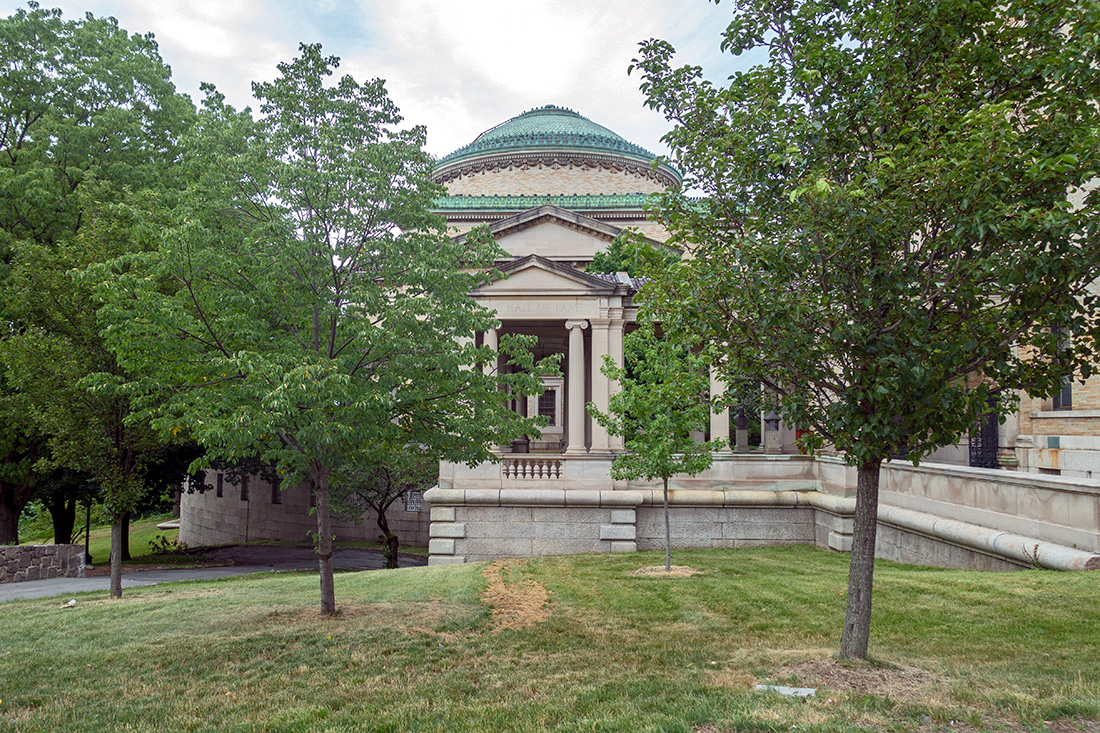
Gould Memorial Library, Stanford White architect, University Heights — © Brian Rose
If you look at the choices made, one could say that the entire Hall of Fame of Great Americans has a dubious legitimacy. There are few women, few African Americans, and many of the great figures represented had serious flaws. Andrew Jackson led a campaign of genocide against Native Americans. Washington and Jefferson owned slaves. Many of the great industrialists achieved their wealth on the backs of poor laborers working in harsh conditions. Even Stanford White, the architect of the complex was guilty of raping a teenage girl, and was then murdered years later by her husband who claimed White had ruined her. Should we blow up the whole edifice?
When I was there last week, there were no other visitors.
Next up, Marcel Breuer, and the one of the great modernist masterpieces in the world — largely unknown — in the Bronx.
SUPPORT ATLANTIC CITY ON KICKSTARTER
My photobook, Atlantic City, will also include text mostly in the form of news quotes and tweets from Donald Trump. True to form, Trump does not admit to any responsibility for Atlantic City. Made a lot of money, got out, good timing, no one gives him credit. Losers. Haters. Sad.
[table id=3 /]
SUPPORT ATLANTIC CITY ON KICKSTARTER
This is my Atlantic City Kickstarter video made with help from my son, Brendan Rose. it starts in front of the abandoned Trump Plaza next to historic Boardwalk Hall on the left.
My campaign is off to a good start. It might quiet down over the 4th of July holiday, but this is a good moment to consider patriotism as a possible reason to support this book. It strikes at the heart of Donald Trump’s fraudulent business career — and equally fraudulent presidency. Atlantic City is Donald’s Trump’s dystopian America.