Author: admin

  • New York/Flushing, Queens


    Flushing, Queens

    One of the reasons for visiting Flushing was to do a photograph for an article being written by my wife for a Dutch magazine on the sub-prime mortgage issue. She is an urban planner, currently working on the staff of Community Board 4 (Chelsea and the west side of Midtown). Most of the sub-prime-related foreclosures have been in the so-called outer Boroughs, Queens being one of the hardest hit. It’s definitely a “tale of two cities” (please forgive the cliché) with Manhattan and the more prosperous neighborhoods of Brooklyn and Queens virtually untouched by the mortgage crisis while lower income, mostly black and hispanic, neighborhoods suffer.


    Flushing, Queens

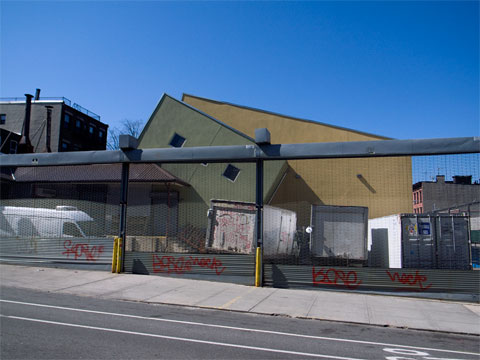
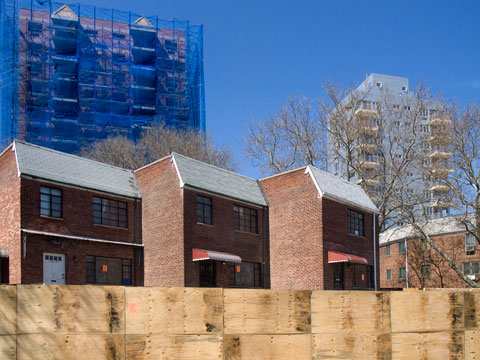
    I took the 7 train out to Main Street Flushing, which has become a largely Asian area, something that is immediately visible to all. I walked through some surrounding residential neighborhoods where two and three story row houses are making way for tall apartment blocks, often in jarring fashion. It’s clearly evidence of a hot real estate market, but whether the recent mortgage mess is slowing things down, I don’t know. In any case, I was pleased to get this somewhat enigmatic image of empty row houses surrounded by tall wooden fencing and apartment high rises under construction in the background.


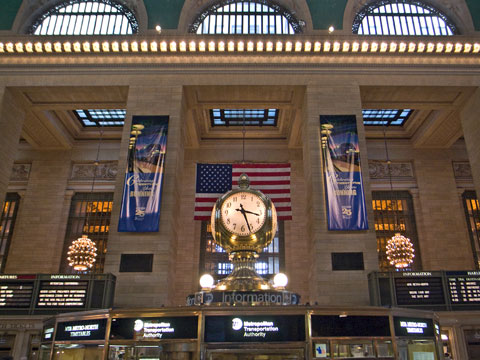
    Grand Central Terminal

    Back in Manhattan.

  • New York/Flushing, Queens


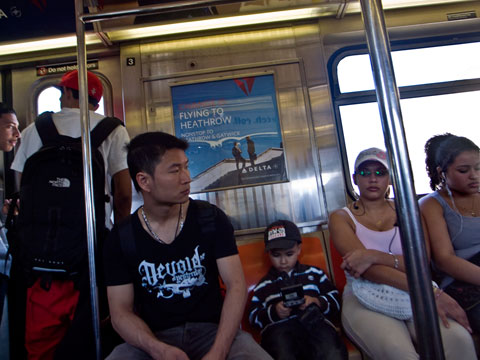
    The 7 train on the way to Flushing, Queens


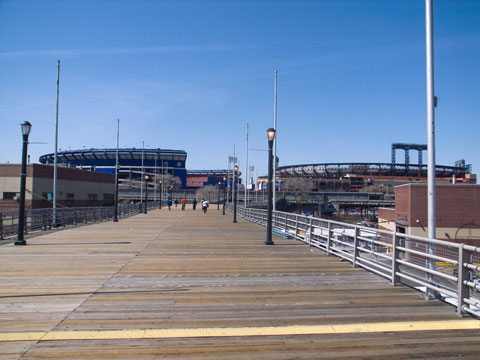
    Shea Stadium (left) and Citi Field (right)

    I took the 7 train out to Flushing to scout a location for later photography. Along the way, I stopped at Shea Stadium where a new Mets stadium, Citi Field, is under construction. For a short period of time we have two stadiums next to one another. The modern looking stadium is older, and the old timey stadium is newer. I like some of the retro ballparks in other cities that relate to the surrounding urban fabric. Here in Flushing, the immediate context includes a potholed street of auto body shops and junkyards that looks like Baghdad outside the Green Zone, neighborhoods of monotonous row houses, and to the south, Flushing Meadows Park, the former grounds of the back-to-the-future 1964/65 World’s Fair. So, given the choice, the stadium designers went with downtown Baltimore a la Camden Yards. That said, however, I think it will be a better ballpark for enjoying a game than the current Shea Stadium. Unlike Shea, it will be a dedicated baseball venue.


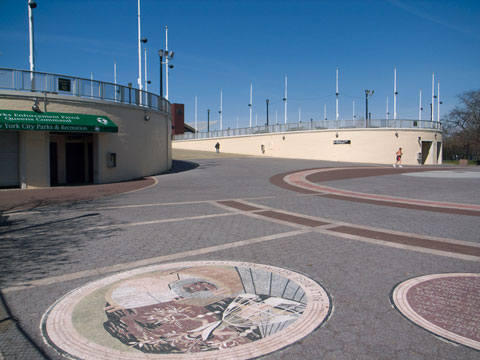
    Gotham Plaza, Flushing Meadows Park


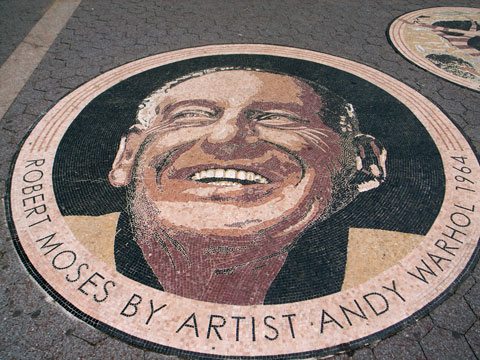
    Robert Moses by Andy Warhol

    There are a few structures leftover from the World’s Fair, the most notable being the Unisphere and the embarrassing ruins of the New York State pavilion. As one descends from the subway platform into the park you can still see some of the fair structures and mosaics that were, apparently, done in 1998. One of them is a sardonic smiling Robert Moses–based on an image by Andy Warhol. Moses, of course, was the infamous master builder of New York throughout much of the 20th century who was also responsible for the World’s Fair.

  • New York/Shorpy

    I am hooked on a photo blog called Shorpy in which members post photographs from the 19th and first part of the 20th century. Some of the images are are from FSA photographers such as Dorothea Lange, Russell Lee, and Jack Delano. There are over 200 Lewis Hine images on Shorpy, mostly of children working in factories and mines. Shorpy was Shorpy Higginbotham, a young boy photographed by Hine who was employed in a coal mine in Alabama. He’s the mascot, if you will, of the blog.


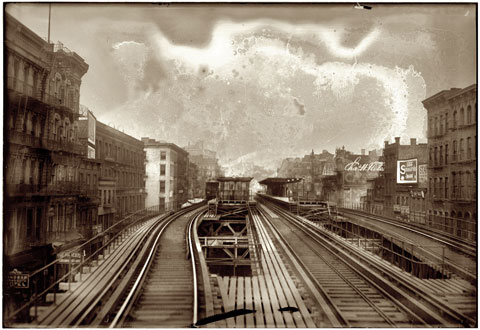
    The Bowery at Houston Street, 1910, George Grantham Bain Collection

    Here’s a recent post from Shorpy of the Bowery in 1910 just around the corner from my office/apartment on Stanton Street. The photographer, apparently, is unknown. It’s a stunning view of the scene along the Bowery just about 100 years ago. Elevated railroads ran up and down Third Avenue and the Bowery, smoke belching–the noise, undoubtedly, deafening.


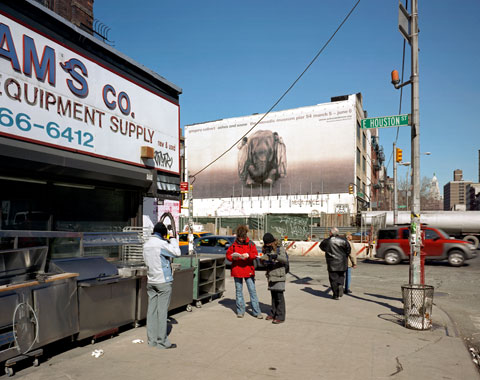
    The Bowery at Houston Street, 2006 (4×5 film)

    The photograph above was taken just to the left of the photographer’s more elevated vantage point in the historic image. Houston Street, originally a narrow street, is now a roaring river of crosstown traffic separating the neighborhoods above and below. Soho, short for south of Houston, and Noho, north of Houston, exist as named places because of their relation to this thoroughfare. The street was first widened, I believe, when subway tunnels were built underneath using cut and cover construction, which required demolishing a swath of buildings across Manhattan. The F, D, and B trains run beneath Houston. As a result, there are many blank walls along the street where buildings previously stood.

    The restaurant supply building to the left in my photograph is also in the historic photo above.


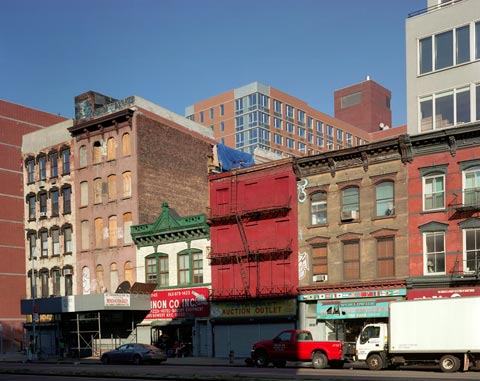
    The Bowery between Stanton and Houston, 2007 (4×5 film)

    In the picture above, made with a view camera, the two old buildings at left can be seen in the far right of the historic image. The new apartment building in the rear occupies the space taken by the next five small buildings. Although the remaining stretch of 19th and early 20th century buildings above is probably safe from immediate demolition, much of the historic Bowery is up for grabs.

  • New York/Williamsburg


    Williamsburg, Brooklyn

    Without comment.

  • New York/East Berlin 1987


    East Berlin 1987 (4×5 film)

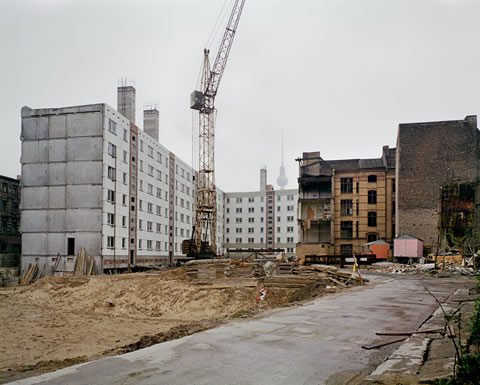
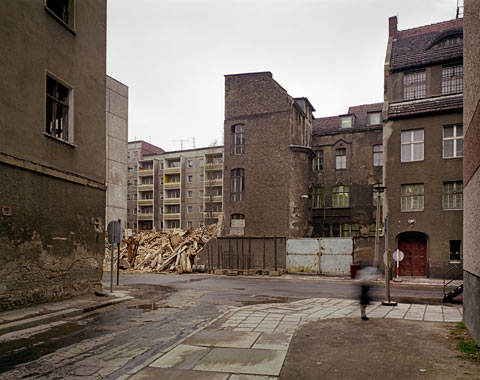
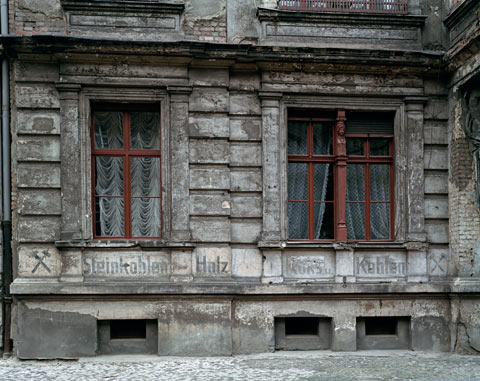
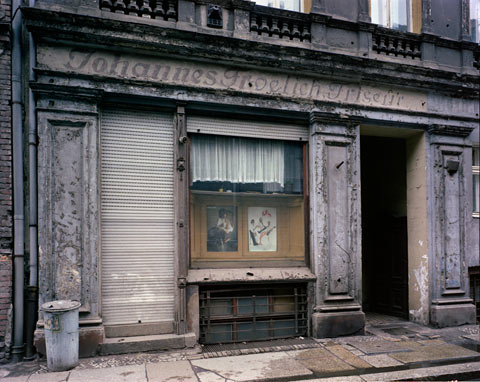
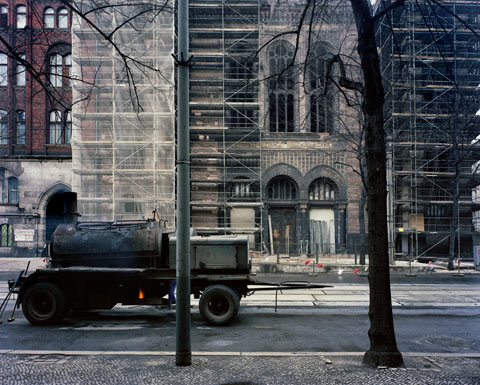
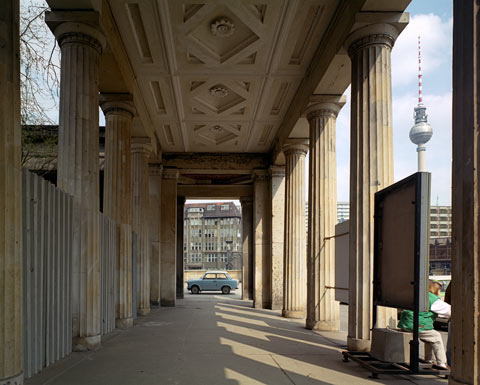
    Continuing with photographs I made on several walks through Berlin Mitte before the Wall came down. The most obvious thing one noticed when crossing the border to East Berlin was the profound devastation still visible from World War II 42 years after the fact. The DDR had taken on a number of big urban renewal projects, especially along Frankfurter Allee, which was temporarily called Stalin Allee. Much of Mitte, however, the center of the city closest to the Wall, was largely untouched.

    At the time of my photographs the East Germans were turning their attention to Mitte, and considerable demolition and rebuilding was underway. Fortunately, the fall of communism put a stop to the shoddy construction filling the gaps left by the war or by the wrecking ball.


    East Berlin 1987 (4×5 film)

    Walking around East Berlin with the view camera I felt more conspicuous than usual–I doubt that there were any view cameras in use in the DDR in those days–and I was given a wide berth by nearly everyone. One man, however, in longish hair and slightly unkempt appearance came up to me and asked what I was up to. I attempted to explain in my limited German that I was making urban landscape photographs.

    He asked whether I was interested in social/political issues as a photographer, and I denied having any particular ax to grind along those lines. He then suggested that photographing urban landscapes could, in fact, encompass all those issues, even as the images stylistically presumed to remain neutral. I felt utterly unmasked at that point, not simply in what I was doing in East Berlin, but what I was doing in general as a photographer.

  • New York/East Berlin 1987

    Two more photos made in East Berlin before the Wall came down.


    East Berlin 1987 (4×5 film)


    East Berlin 1987 (4×5 film)

  • New York/East Berlin 1987


    Neue Synagoge, Oranienburger Strasse, Berlin, 1987 (4×5 film)

    I’ve been scanning a series of pictures I made in 1987 in what was then East Berlin. This was a somewhat difficult proposition given the nature of the communist state of the DDR. Carrying a view camera across the border elicited the attention of the border agents, who nevertheless, let me through. I always said that I was interested in Schinkel architecture, which was true up to a point. In retrospect I wish I had photographed Schinkel architecture back when everything over there was frozen in a post-war decrepit condition. But I did wander the streets of Berlin Mitte avoiding, as best I could, the gaze of the Volkspolizei, as I photographed the desolated neglect of the city.


    Bodestrasse, Berlin, 1987 (4×5 film)

    I probably did three days of shooting all together. It was just too stressful for me. I figured at some point I would be detained for questioning, or worse. That almost happened when I went with my American friend Anamarie Michnevich in search of early 20th century modernist housing to photograph. What we found, entirely by accident, was the headquarters of the notorious Stasi, the East German secret police. Guards suddenly appeared and began pointing and calling out. We dashed down a subway stair just as a train entered and we zipped out of there. That was it for me. I gave up on doing more East Berlin photography.

    I will post more photographs in the coming days.

  • New York/NYT Article


    Barbed wire fence along the Austrian/Hungarian border, 1987 (4×5 film)

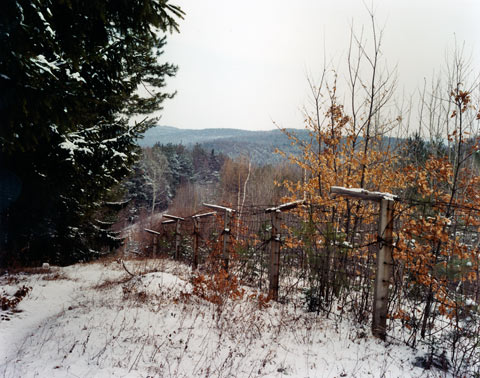
    There was an interesting article in today’s New York Times about former East Germans who attempted to escape the communist state of the German Democratic Republic (GDR) by a circuitous, and dangerous, route through Bulgaria. For those of you unfamiliar with the Iron Curtain, it was a mostly fortified border separating east and west that stretched all the way across Europe. In my Lost Border project I followed the borderline from the Baltic Sea in the north to the Adriatic in the south. That meant that I defined the Iron Curtain as running along the eastern edge of Yugoslavia where it touched Austria and Italy. Technically, Yugoslavia was not a part of the Soviet Bloc, but in practice, it was a communist country allied with the east.

    I could have included the border separating Bulgaria from Greece and Turkey as well as the line between Finland and the Soviet Union. Rather than travel hundreds of miles of Finnish forest or trek through the mountains of the Bulgarian frontier, I chose to limit my project to the continuous line dividing continental Europe.

    The reason that East Germans entertained the idea of fleeing across the Bulgarian border was that it was not fenced, or walled like it was in Germany, Czechoslovakia, and Hungary. While East Germans could not travel to the west, they could move about more or less freely in East Bloc countries. Many believed that the southern border offered a comparatively easy dash to freedom across open, though rugged, landscape. In reality, the border was heavily patrolled, and guards routinely shot to kill.

    The Times article is based on the work of researcher, Stefan Appelius, a professor of political science at Oldenburg University, who estimates that some 100 East Germans were killed attempting to escape across the Bulgarian border. The article focuses on a couple, Olaf and Barbara Hetze, who made the attempt, unsuccessfully. They survived–she was shot, and he arrested–but eventually the West German government bought their freedom in an arrangement used frequently by the German Democratic Republic to procure western currency.


    Mountainous terrain of the Austrian/Yugoslav border, 1985 (4×5 film)

    Likewise, there were many attempted escapes by East Germans along the Czech, Hungarian, and Yugoslav borders. Only the Yugoslav border was unfenced, but its mountainous terrain and attentive border guards made flight near impossible. In fact, while making one of several border trips with my camera, I read in a local paper of an escapee who had been fatally shot by a Yugoslav guard, despite reaching Austrian soil. Such incidents occurred with some regularity contributing to the always tense atmosphere along the frontier, not to mention feeding international tensions between east and west.

    The article is somewhat confusing in that it reads as if one had only the choice of escaping over the Berlin Wall or finding a way to run for it in Bulgaria. The Iron Curtain extended thousands of miles across Europe tracing a course through fields, forests, mountains, and even splitting villages. Escape was difficult everywhere, though, perhaps, easier in some places than others. I even recall hearing, or reading, about two men who escaped from East Berlin by traveling all the way to China where they were smuggled to the west by Canadian diplomats. They ended up in West Berlin only a few meters away from where they started.

  • New York/Union Square Park


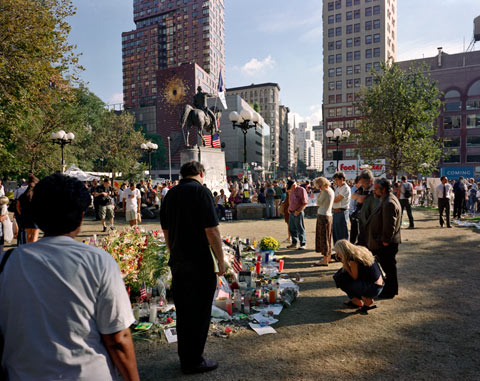
    Union Square Park, New York, September 2001

    19 hijackers, mostly from Saudi Arabia, trained or directed by Bin Laden in Afghanistan killed nearly 3,000 people at the World Trade Center on September 11, 2001.

    As a result:

    4,000 Americans now dead in Iraq. Tens of thousands of others dead. Untold number of casualties, both physical and psychological. Scores imprisoned without trial; many tortured. Vast sums of money squandered or stolen. The reputation and honor of a great nation in ruins.

    And the war goes on.

  • New York/Archive


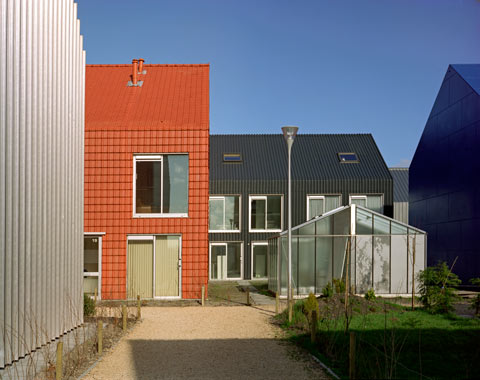
    Ypenburg, The Netherlands, (4×5 film)

    I’ve been spending a lot of time with my architectural photography archive of late. Most of the early pictures are 4×5 transparencies, the favored film format at the time. Later, I switched to negative film, which better handled mixed interior lighting, and those negs were duped on positive print film. After that, I scanned my negatives directly, and delivered digital files to my clients.

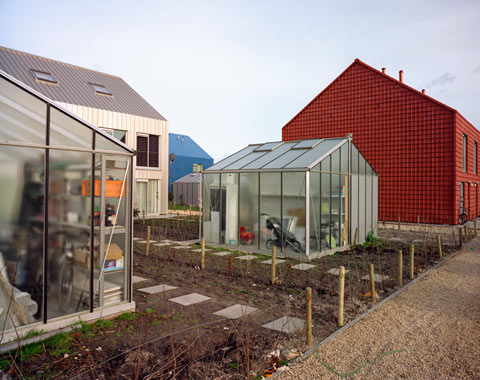
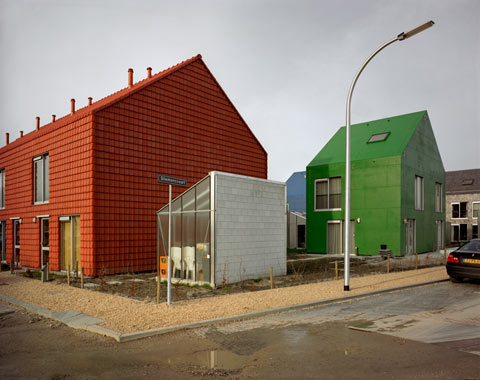
    I’ve been scanning a lot of the older stuff for portfolio and stock purposes, and I’m catching up on a few things that were never given the attention they were due. One in particular, MVRDV’s houses in Ypenburg, near the Hague, in the Netherlands. I made these pictures for my portfolio, so there wasn’t a client involved.


    Ypenburg, The Netherlands (4×5 film)

    MVRDV is one of most interesting Dutch firms, and I’ve photographed two other projects of their’s, including the Silodam where I lived for several years before moving back to New York. The houses in Ypenburg are in one of these only-in-the-Netherlands suburban developments where many different architects are asked to each design a neighborhood within a rigorous overall plan. The effect is often a patchwork of signature styles all vying for attention and never quite cohering as a harmonious quilt.


    Ypenburg, The Netherlands (4×5 film)

    Individually, the projects can be quite successful, as is this collection of multi-colored, variously clad houses. They are sort of ur houses in the sense that they riff off of western culture’s most elemental concept of house–a box with windows, a sloping roof, and little gardens around. The architects were required to limit automobile access, so the houses are laid out on a grid of paths with parking on the perimeter of the block. I’m not sure that the layout is any better than row houses on streets, but someone thought that banishing cars from the inner circulation of the development would create a more pedestrian friendly environment. Ultimately, Ypenburg, and other Dutch suburban new towns, are very car-oriented places, though much denser than typical American suburbs.

    Like most of MVRDV’s work, these houses don’t really express a particular design style so much as a conceptual solution. I can’t speak to the usability of the design–how about the transparent storage sheds?–but I enjoyed photographing these brightly colored Monopoly houses.

  • New York/Mamaroneck


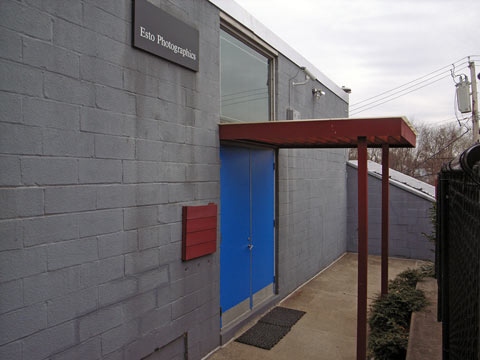
    Esto Photographics, Mamaroneck, New York

    Visited Esto today, the architectural photography agency, and legacy of the great photographer of buildings Ezra Stoller. I met with Erica Stoller, Ezra’s daughter, who runs the place, showed my work for possible inclusion in their stock portfolio, and got a tour of the facilities. (Thanks for the hospitality.)

    The building is nondescript, sits in a small parking lot just a minute from the train station. I understand it was originally a barn, but now appears more bunker-like, protecting one of the world’s important repositories of architectural photographs.

  • New York/St. Mark’s Place


    St. Mark’s Place

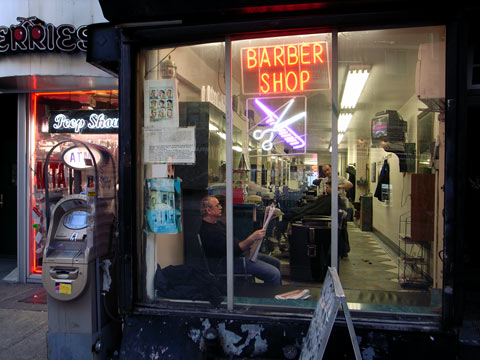
    I walked today along St. Mark’s Place between 2nd and 3rd Avenues. It’s the same semi-tawdry strip that it’s always been despite the transformation of so much of the East Village. When I first came to New York in 1977 there were few places in the neighborhood to get a haircut–one was a small shop on St. Mark’s–so I went there. It was cheap and they got the job done.

    Well, surprise! It’s still there, virtually unchanged.

  • New York/LES


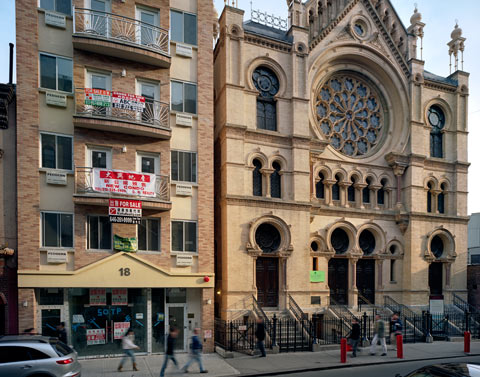
    Eldridge Street Synagogue (4×5 film)

    From a few weeks ago–I made this picture from the stoop of a tenement building. As I’ve written before, I’ve had a hard time figuring out how to photograph the synagogue so that one is aware of the surrounding visual cacophony of Chinatown. This image doesn’t exactly do that, but I like the contrast between the old synagogue and cheap new condominium with rising sun balcony railings.

    A few days back I wrote about meeting Stephen Lewis at the intersection of Fifth Avenue and 42nd Street. I just discovered his blog response:

    Last week, in his weblog post, photographer Brian Rose described our recent chance late-winter-afternoon meeting on the corner of 42nd St and 5th Ave. and our follow-up conversations some days later. Brian Rose is a superlative large-format photographer with a unique understanding not only of buildings but of the natures of the cities they comprise and of the people who create them, use them, and imbue them with meaning.

    Here is the whole thing on his blog Hak Pak Sak.


    Allen Street (4×5 film)

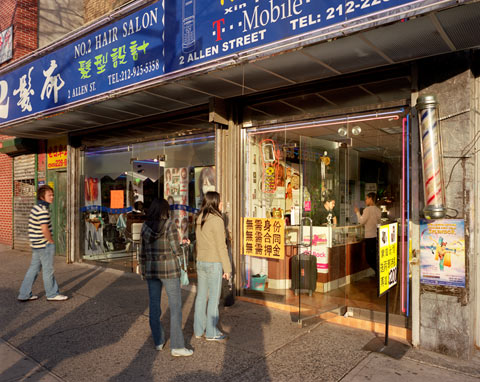
    Although the view camera is especially useful for photographing architectural subjects and landscapes, I have always tried to use it as a street camera as well. One does not, obviously, chase after action, but sets up and allows the action to move in and out of the frame.

    There’s often a stage-like quality working this way. In the image above, I was first attracted to the brilliant late day sunshine and bright colors of the phone shop. The frame pivots off the striped spinning barber pole with the two storefronts splitting the frame. Two women pause to look in to the first store, a shadow of a light pole falls over the plaid coat of one, and my shadow falls just to the right of the other. They appear to be looking at a man talking with someone behind the counter inside. Stage left, a man in striped shirt also pauses, anchoring that side of the frame. He looks toward the women–friends or strangers–I don’t know. The relationship of people and objects coalesces into a fleeting moment, both precise and random.


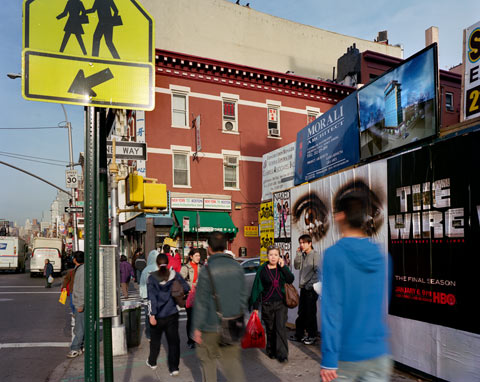
    The Bowery (4×5 film)

    I shot three sheets of film from the same camera position on a crowded stretch of the Bowery. I was struck first by the posters–The Wire and the eyes–and then by the rendering of the building that’s under construction behind the fence. I set the shot up with the yellow sign with walking figures at top left and waited for things to happen. In the first two versions I keyed off of a pair of traffic cops wearing orange vests, and for this one, two people on cell phones amid the flow of pedestrians. The blue sweatshirted man in the foreground came from over my shoulder as I clicked the shutter his head exactly filling one of the eyes of the poster. The finished image is a multiplicity of planes slicing in different directions, spacial and flat at the same time. That’s the formal rationale, but ultimately it’s about this place at this moment.

  • New York/LES


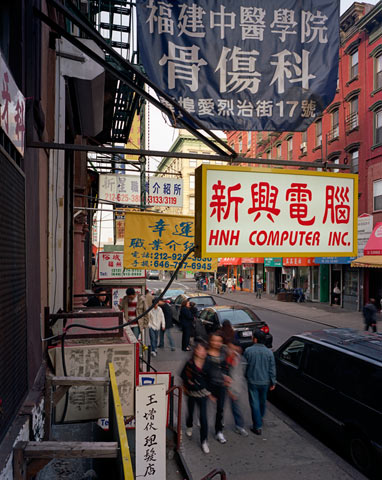
    Eldridge Street (4×5 film)

    Just getting around to scanning some earlier Lower East Side photographs including the view above of Eldridge Street in Chinatown.


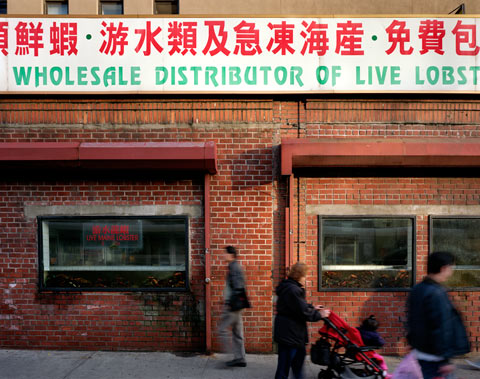
    Allen Street (4×5 film)

    No more Polaroid and other digital issues

    There are several interrelated things that are of great concern to me these days all related to changing technology. The first has to do with recent announcement that Polaroid has stopped producing 55 and 54 film along with the rest of their line of instant films. Polaroid 55 is a black and white peel apart negative/positive film, and 54 is a similar positive only film. I use these films routinely for architectural photography. Both are 4×5 sheet films.

    Polaroid 55 is particularly useful for previewing interiors–B&W being ideal for seeing light and dark areas of the image– and helpful when doing lighting. Moreover, the negative is especially useful for seeing critical focus with a loupe. The negative grain is much sharper than the resolution of the print. I use Polaroid 54 mostly in the field for checking exposure and, occasionally, for the satisfaction of seeing an immediate image. It’s a little cheaper than Polaroid 55, though both films have gotten crazy expensive.

    Now that production has stopped those of us who continue to use film are being forced by circumstances to change a tried and true method of work. A number of architectural photographers have already gone to digital cameras, and they usually bring a laptop with them to preview their work. There are several reasons I resist this route. One is that even the best 35mm digital camera (Canon EOS 1Ds Mark III) does not approach the resolution possible shooting analog and then scanning. I also don’t care for the wider 35mm frame. There are digital backs that go on medium format cameras–and even view cameras–but these are prohibitively expensive for photographers like myself. The Mark III is $8,000 for the body only. Phase One backs and the like cost tens of thousands of dollars. As it is, I just spent over $3,000 for a new dual processor Macintosh.

    I also resist digital because I find carrying a laptop on a shoot one more thing to lug, and one more level of distraction. I currently use a light-weight ArcaSwiss view camera, pre-packaged film, and normally carry three lenses. All this fits in a backback, with the tripod hanging off the side, that I can carry around by myself. Although a laptop provides a wonderfully detailed image for previewing focus and composition, it has the potential to become a rather intrusive presence in an otherwise streamlined shooting/thinking process. That, I should acknowledge, however, is not a problem for either Albert Vecerka or Paul Warchol, who I spoke with the other night at the ASMP panel. (See earlier post). Both use digital cameras as their main tool, but occasionly go back to the 4×5 when needed.

    I will have to see where things go for me. At the moment I use the same camera, same lenses, same film, same lab, and same scanner for everything–my fine art work and architectural assignments. The process has been working really well. Now, with Polaroid disappearing, I am being forced to re-evaluate. Photography has always marched in step with technological developments. There is no way that conventional color darkroom printing compares to what is possible using Photoshop, and few would want to go back. But in the camera/film area–image capture, if you will–technology is advancing faster than quality can keep up.

  • New York/Soho Photo


    Soho Photo gallery, Tribeca

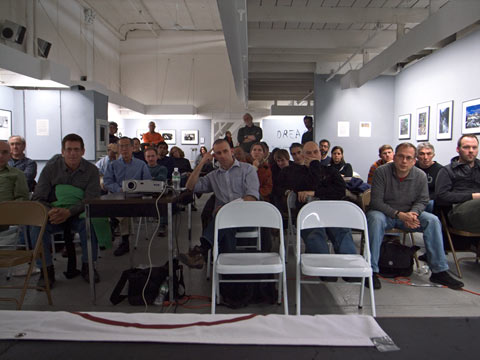
    Last night I participated in an architectural photography panel discussion sponsored by the ASMP at Soho Photo on White Street, which is actually in Tribeca. There were four panelists: Paul Warchol, Albert Vecerka, Adrian Wilson, and myself. Paul is one of the most noted and successful architectural photographers in the field, and Albert is a younger, prodigiously talented ESTO photographer who assisted for me a number of times years ago.

    Adrian Wilson, I wasn’t familiar with, but he seems to have arrived in New York from England a few years back, and has ended up working for all kinds of big clients, and claims to shoot interiors with one lens and no lights. His work has its punchy qualities, but I much prefer Paul and Albert’s photographs, which both exhibit great visual intelligence and sensitivity, even in the service of client assignments.

    We each presented our work before a crowd of about 40 people, mostly photographers. I showed a quick overview of my architectural photo career as well as a few images from my art/documentary projects. Albert walked us through the process of several photo shoots including a series of photographs of the historic motel site and adjoining museum where Martin Luther King, Jr. was assassinated.

    The event was organized by Nicolai Froelich, who has assisted me on various photo shoots, and I think the whole thing came off rather well.


    Behind my office on Stanton Street (a few days ago)

  • New York/42nd Street and 5th Avenue


    42nd Street and Fifth Avenue (4×5 film)

    My life is a constant yo-yoing between mundane assignments and obligations, and extraordinary moments and opportunities. One is tempted, at times, to complain about the drudgery of less interesting work, but as I’ve found over the years, the extraordinary moments often spring without warning from those flat interludes.

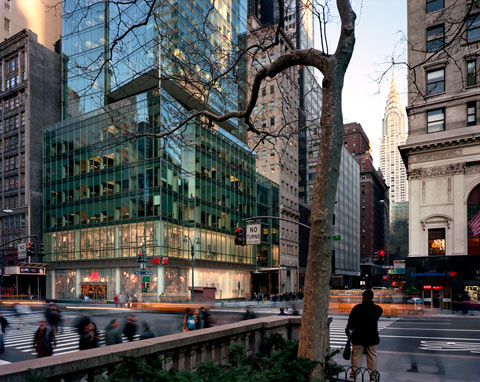
    Consider the picture above, which I think is a fine representation of 42nd Street and Fifth Avenue at very heart of Midtown. Behind me is the Public Library and in the right is Chrysler Building towering over Grand Central Terminal. My assignment was to shoot the H&M store kitty corner across the intersection attempting to locate it at this famous spot. Earlier I had done a number of closer pictures that described the storefront well, but didn’t say much about the location.

    While making one of the closer views, an elevation of the store windows while several window dressers adjusted the manniquins (a nice bit of unplanned activity), a man stopped and we chatted briefly. He had an interest in large format photography and was glad to see that I was still using a view camera. He did pictures himself, usually of architecture in Turkey and eastern Europe, and, in fact, was headed to Bulgaria the next day. I just barely caught his name as he dashed off down 42nd Street.

    I then crossed Fifth Avenue, and as the light began to fall, I discovered the view above from the elevated terrace in front of the Public Library. This was where I should have been looking from the beginning.

    Later, when I got home, I Googled the name of the person I had spoken to on the street–Steve Lewis–and discovered that he was an architectural historian, urban planner, writer, translator, Fulbright scholar, and on and on. He had lived in the Netherlands for years, as I had, and grew up on the Lower East Side, the neighborhood that has been at the center of my life in New York. I e-mailed him, and because his trip to Bulgaria was postponed, we met in a café the next day and had a most enjoyable conversation about photography, architecture, and life in the Netherlands.

    It’s a cliché to say that photography is about serendipity. Usually, it refers to catching something in the split second of an exposure. But for me, it’s about chance events much more broadly defined: like the opening of the Berlin Wall in the midst of my project photographing the Iron Curtain, or much more prosaically, an encounter in the flow of people and cars on a familiar corner while shooting an H&M clothing store.

  • Virginia Beach/Williamsburg, Virginia


    Regent University/Christian Broadcasting Network

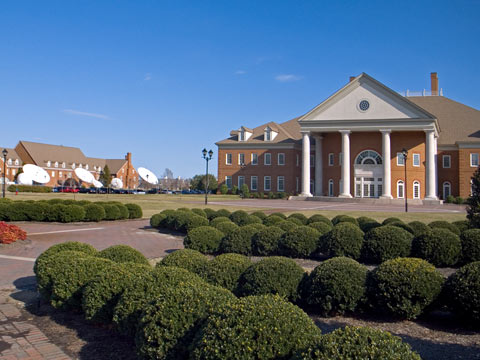
    Continuing to photograph megachurches and other contemporary religious structures. One of the most influential such institutions is Pat Robertson’s 700 Club (Christian Broadcasting Network) and Regent Unversity located in Virginia Beach. Both the broadcasting operation and school are located on a campus just off of Interstate 64. The campus is comprised of a collection of large colonial style buildings set in a well-tended, often beautiful, landscape. The buildings evoke Virginia heritage, but are grossly out of scale–classicism on steroids. I did several pictures of the communications building with a bevy of CBN satellite dishes off to one side.

    Rock Church

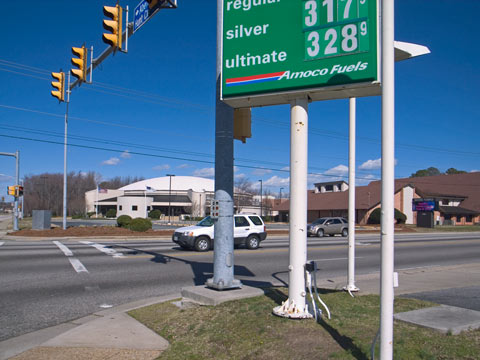
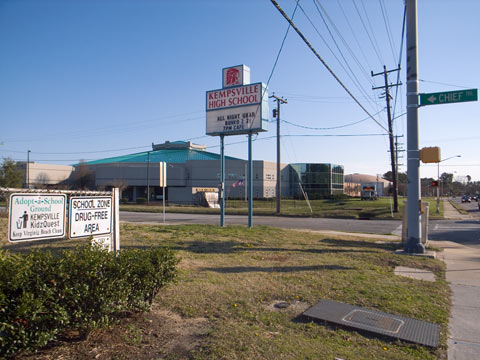
    Although the majority of megachurches are located in the new suburbs, or exurban areas of American cities, a significant number are found in older suburbs or near downtown. Rock Church is in a somewhat more mature suburban area of Virginia Beach. It’s hard to talk about Virginia Beach as a conventional city. It was originally a beach front town to the east of Norfolk, but eventually white flight and others forces of suburbanization turned it into the state’s largest city. It lacks a center, and although there are beautiful neighborhoods, much of the city can be described as sprawl.

    Rock Church is a large structure, and apparently replaces an earlier domed hall a block away. It stands directly opposite a public school and their parking lots, more or less, run together. A waterfall gushes into a small pond out front. The stars and stripes flew at half mast when I was there, I think in memory of their pastor who had recently died.

    Atlantic Shores Baptist Church

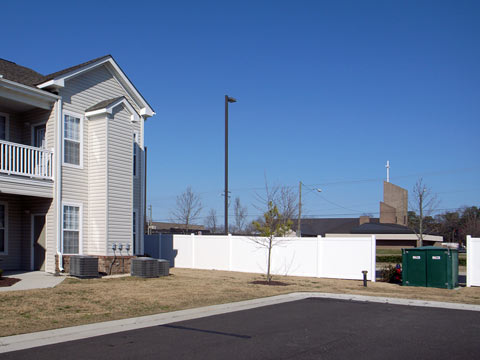
    Not far from Regent University I photographed around Atlantic Shores Baptist Church, which stands across from a shopping center and a new apartment complex. Unlike the other places I’ve visited Atlantic Shores actually displays a cross on a central tower, which makes it more immediately recognizable as a religious complex. It’s a somewhat scruffy property with temporary buildings and a broad grassy field that appears to be used for parking when needed. I did one picture looking across the field, and a couple of views from the apartment complex with the cross rising up in the distance.

    Driving around Virginia Beach I came across London Bridge Bridge Baptist Church, which features a huge conventional church front with box-like sanctuary tucked behind. I don’t have a digital photo to show, but I took several pictures with the view camera, one from the neighborhood across the street. I ended the day at Wave Church, which is in the process of constructing a decidedly unchurch like extension. This glass curtain walled building called the Wave Convention Center could easily fit into a corporate office park.
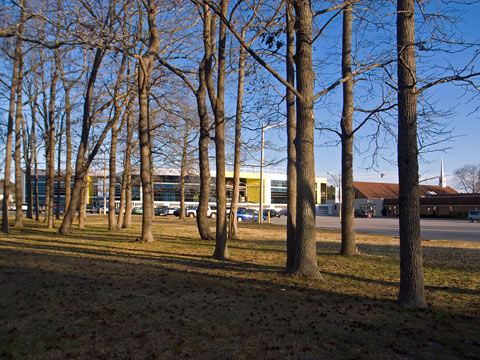

    Wave Church with Wave Convention Center under construction

    Here’s what it says on their website:

    WAVE CONVENTION CENTER

    Once completed, WCC will be a 90,000 square foot 2,500 seat auditorium, with every seat having a great view of the stage. It will feature a built-in baptismal pool, beautiful new screens for media and a stage for Worship & Creative Arts. There will be plenty of room for conferences, productions, Christmas and Easter services, Hillsong nights, etc. WCC will aslo provide plenty of alter space for people to respond to the call of the Kingdom, as people stream to Christ.

    The foyer will serve many purposes. The 1st floor will offer an express-line bookshop, coffee shop and information area. The 2nd floor will provide a destination bookshop and a coffee shop where people can stop to read, buy a coffee or snack and connect to the internet via WI-FI. The 3rd floor will provide much needed office space for our pastors and staff. As we continue to grow, we want the quality of our Pastoral Care to grow as well. The building itself will also provide 10 restrooms, including 26 men’s and 38 women’s stalls. This is a significant increase.

    But of course, it’s not about the bricks and mortar…

    Williamsburg Community Chapel

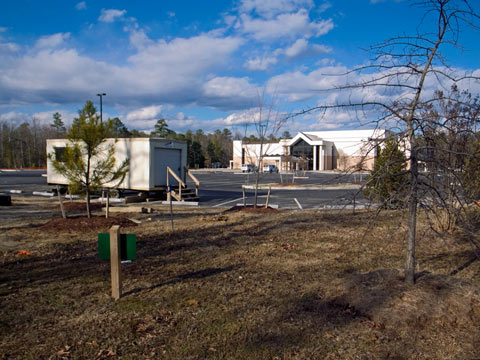
    Back in Williamsburg where I was visiting my father, I photographed the Williamsburg Community Chapel, which has just about completed a major new extension. This church sits in the woods off of route 5, a beautiful highway between Williamsburg and Richmond. The area around the church is rapidly growing, and the woods are fast disappearing. Like so many of these large churches, the parking lot is the primary feature of the landscape; empty much of the time.

    I photographed the new side of the church with entrance portico and parking lot in the foreground. Many of the houses in the neighborhood nearby were empty, but I don’t know if that’s the result of the current housing slowdown seen across the country, or just the normal turnaround time for new houses.
  • Williamsburg/Hampton, Virginia


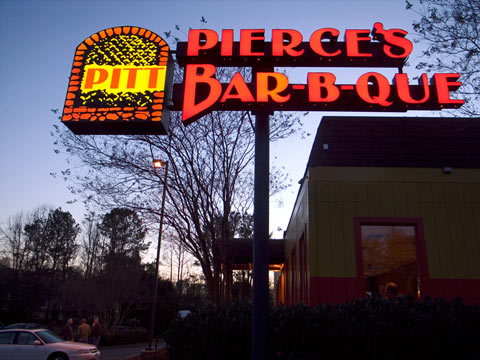
    Pierce’s Pitt Bar-B-Que, Williamsburg, Virginia

    I began my short stay in Williamsburg with a meal at Pierce’s Pitt Bar-B-Que. Pierce’s has been around forever, and specializes in melt-in-the-mouth pork sandwiches. I had this:
    JC’S SPECIAL $7.25
    This Popular “Jumbo” sandwich – 5 oz. of our famous pulled pork bar-b-que in “Doc” Pierce’s Original Bar-B-Que Sauce, layered with our homemade slaw. Comes with regular drink, french fries, and homebaked cookie.

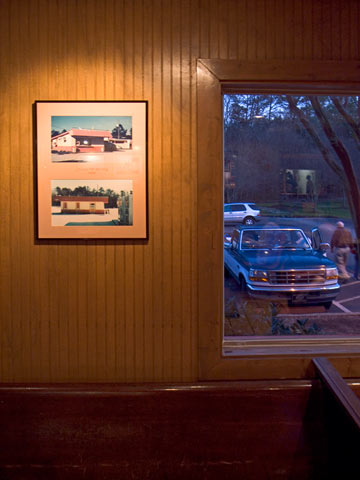
    Pierce’s is a roadside shack, but an upgraded shack. Kind of bright with lots of orange accent color, it’s not really an atmosphere for lingering. Truck drivers mingle with the local folks. There are nice pictures on the walls of earlier, even more modest, versions of the restaurant. Williamsburg has always been a schizophrenic place. You’ve got the college crowd, Colonial Williamsburg, and now, wealthy retirees. But there’s always been a rural element, both white and black, vestiges of the old south. There are people who’d never go to the colonial restoration, but go wild over the Pottery Factory, a vast emporium of cheap crockery and goo gaws for the home. Pierce’s Pitt Bar-b-que caters to both sides of town.
    Check out their website and don’t miss the scrapbook. See the famous–and infamous–politicians seeking authenticity by visiting Pierce’s.


    Pierce’s Pitt Bar-B-Que

    I had already mapped a number of megachurches (my new photo project) in the Hampton Roads area, and two were close to each other just off Mercury Boulevard. When I was a teenager Mercury Boulevard was the place to go for a movie, shopping at the mall, and concerts at the Coliseum. I even bought my first guitar on Mercury Boulevard in a shop housed in a small bungalow along the service road, obviously built long before the present ten lanes of blacktop.

    Today the street is–let’s not mince words here–a horror. It exhibits everything that is wrong in America’s obsessive car culture, but more than that, it doesn’t even function well in that context. I remember when they built Coliseum Mall with a one lane flyover funneling traffic to the parking lot. The flyover flies no more, and the mall has been demolished. It is being replaced by a new-fangled ye olde mall, just as big with the same endless parking lots, but with touches of faux main street frillery.


    Bethel Temple, Hampton, Virginia

    Bethel Temple is a domed flying saucer shaped object across from its own parking lot and a BP gas station. An empty field with a grouping of trees that once must have surrounded a house lies diagonally across. I parked in the lot of a nearby shopping center and took several shots from directly across the street and from some distance away. Like a lot of these churches it’s an assemblage of buildings revealing the growth of the church from, usually, humble beginnings.


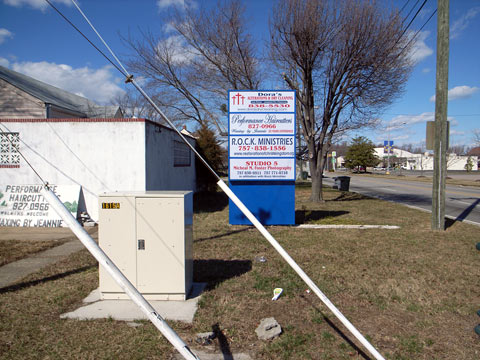
    R.O.C.K. Ministries and Bethel Temple in rear

    In sight, just up the street near Mercury Boulevard a tiny church called the R.O.C.K. (Restoration of Christ’s Kingdom) Ministries occupies a small building along with its affiliated businesses: Dora’s Drycleaning, Performance Haircutting (waxing by Jeannie), and Studio 5 (photography).


    Liberty Baptist Church

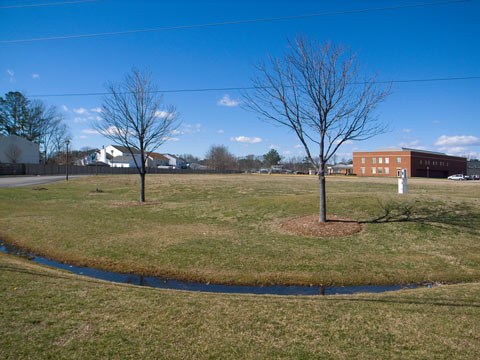
    A couple of miles away is Liberty Baptist Church, a sprawling campus with very new looking buildings. I stayed off the grounds–maybe later when I get more confident about what I’m doing I’ll walk in and and ask to take photographs. I did several photographs from the street with lots of grass in the foreground. The buildings are low slung making it hard to get a sense of the form of the structures. There’s a large port-cochere in front, which is, from what I’ve seen, common with megachurches. Basically, the place looks like a community college or hospital.


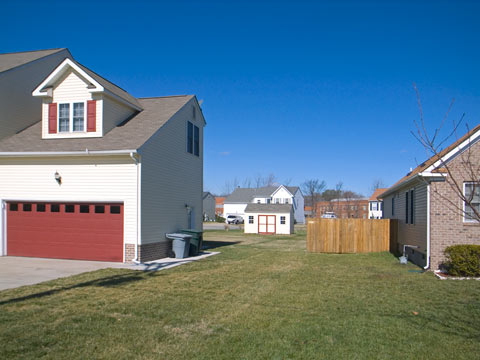
    Houses near Liberty Baptist Church

    A small neighborhood of new houses stands adjacent, directly across from the front door. I made one photograph with the houses in the foreground and the church just visible beyond the fence at rear. If you lived here, even though the church is right behind your house, you’d probably drive. It’s a long way around, and just not a walking environment.