Author: admin

  • Washington, D.C./World War II Memorial


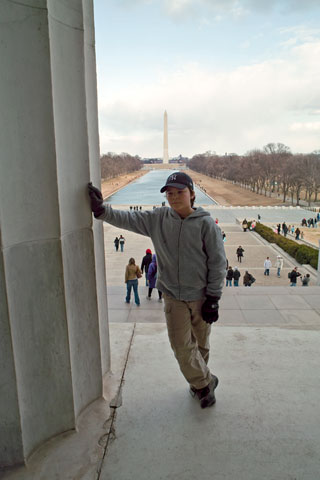
    My son at the Lincoln Memorial — © Brian Rose

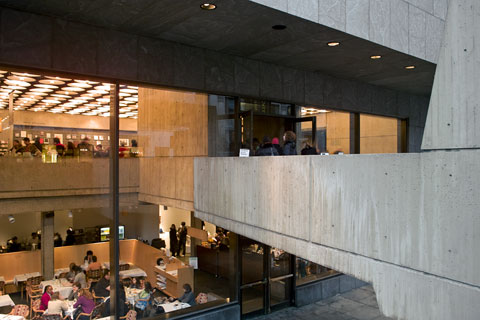
    Classicism is the dominant style of architecture in Washington, and any deviation from it is difficult to pull off–the Pei designed east wing of the National Gallery is, perhaps, the best effort. I like the sharp angles and the way it engages the triangle formed by Pennsylvania Avenue slicing across the grid.

    The classicism of the Lincoln and Jefferson memorials as well as the design of the Capitol building express the early American idealism symbolized by Greek and Roman antecedents. The cool formality of classical design was meant to offer rationality and civilization in a largely undeveloped new world. That meaning remains clear and easy to decipher even today. The problem now in building on the Mall, is that reinterpreting classicism in a modern context often leads to unintended consequences.

    I’d read the many critiques of the recently completed World War II memorial located just west of the Washington Monument, and while expecting the worst, I hoped that it would be less off putting seen in person. After all, there are plenty of less than inspiring buildings in Washington, and with few exceptions, we have learned to live with their mediocrity. (The Kennedy Center by Edward Durell Stone still rankles, however.)

    So… I finally have seen the WWII memorial.
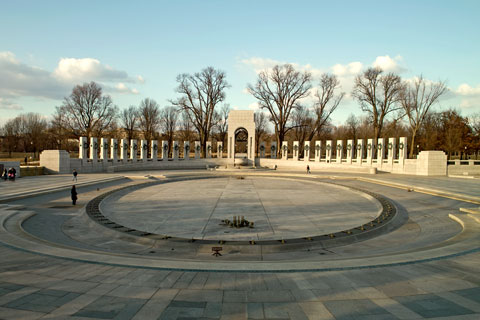

    World War II Memorial — © Brian Rose

    Empty. Cold. That was my first reaction on this blustery President’s day. The Lincoln Memorial and the Vietnam Memorial were filled with visitors–both have central focuses of attention. The Vietnam Memorial is a procession down along the wall of names and then up again on the other end. The Lincoln Memorial, of course, focuses on the seated statue inside the columned hall.

    The WWII memorial is a multitude of elements: a fountain (vast stone oval in the winter), pillars, arches, wreaths, eagles, etched quotations, bas relief friezes, wall of stars, and more. All of these elements, rather than cohering into one statement seem to be a grab bag of features meant to satisfy the project commissioners and donors.
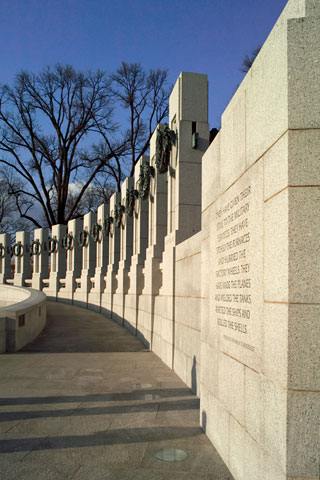

    World War II memorial — © Brian Rose

    The unfortunate echoing of Nazi and Soviet architecture is unmistakable, and those who claim not to see it are either willfully oblivious or disingenuous. The architect, Friedrich St. Florian, and the leaders of the effort to build the memorial–Bob Dole most prominently– ignored the howl of criticism directed at the design before it was built. They convinced themselves that what they were creating was dignified, heroic, and expressive of the ultimate victory achieved in the war.
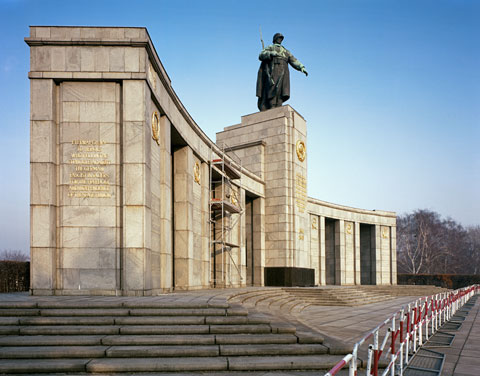

    Soviet war memorial, Berlin — © Brian Rose
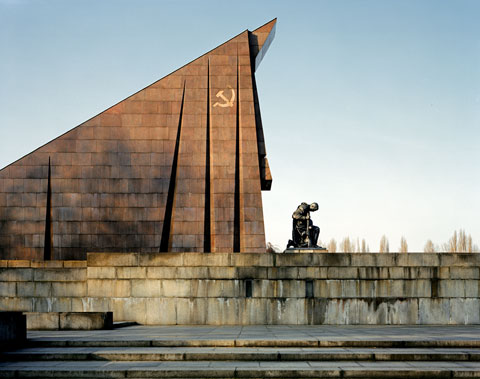

    Soviet war memorial, Treptow Park, Berlin — © Brian Rose

    For sure, there are many people who defend the memorial in those terms, who are moved in the presence of it, but they neglect the sensibilities of the rest of us who cringe at the dissonance on display–making it difficult, if not impossible, to honor, remember, and pay our respects to those who died for country in World War II, the very purpose of the memorial.

    The World War II memorial will undoubtedly persist as a jarring note on the Mall for decades to come. One can only hope that some future generation will have the courage to replace it with something more felicitous. For now, visit the beaches, the landscape, the cemeteries of Normandy where the connection to the war and to those who sacrificed their lives remains palpable to all.

  • Washington, D.C./Ben’s Chili Bowl


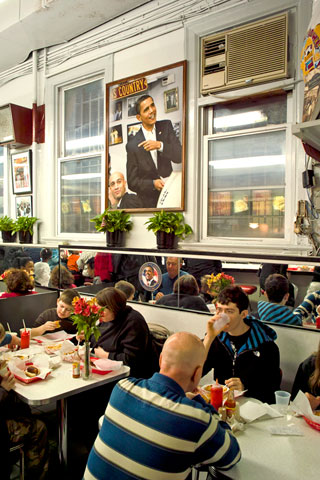
    Ben’s Chili Bowl — © Brian Rose

    After a day of taking in museums and memorials along the Mall, we decided it was time for a little DC local flavor. I’ve always argued that Washington is a more interesting city than most people think once you get beyond the marble columns and vast expanses of public lawn.

    So, up to 13th and U we headed to Ben’s Chili Bowl, about a block from the spot I wrote/sang about in my song Open All Night. “There’s news of a murder up a 14th and T/The waitress shivers with fright/As two cops tell a fish story/Open all night.” Here’s a recording of it.


    Ben’s Chili Bowl — © Brian Rose

    Ben’s is a diner specializing in cheap eats, namely half smokes slathered with chili, and other similar concoctions. It was there in the riots of 1968, and miraculously survived the rage that consumed and destroyed most of the businesses–many black-owned–that lined U Street. The area is now considerably gentrified, but still has its gritty aspects.

    Ben’s is on a roll these days especially since Barack Obama paid the joint a surprise visit on January 10th. And it was mobbed by visitors to the capitol during the inauguration festivities a few weeks ago. As we queued up in the alley next door to the restaurant, the line minder, keeping us in order in a friendly but firm sort of way, said that the place had been crazy crowded since the inauguration.

    Don’t think about your diet. Don’t think about your last meal at a Michelin starred restaurant. Don’t worry about your wallet in the midst of economic free fall–everything’s under 10 bucks. Just grab your chili dog and fries–definitely get a milkshake–and soak in the fluourescent glow of Ben’s Chili Bowl.

  • Washington, D.C./President’s Day


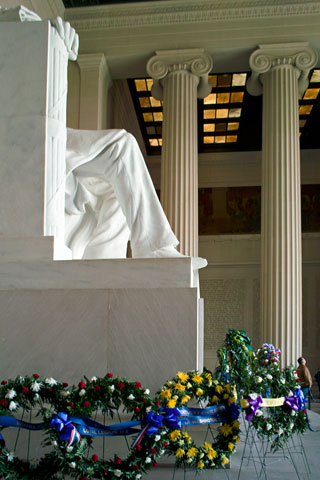
    The Lincoln Memorial — © Brian Rose


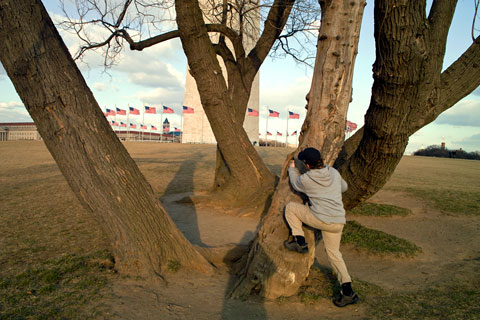
    The Washington Monument — © Brian Rose

    Without comment.

  • New York/Paul Graham


    Photograph by Paul Graham from Troubled Land

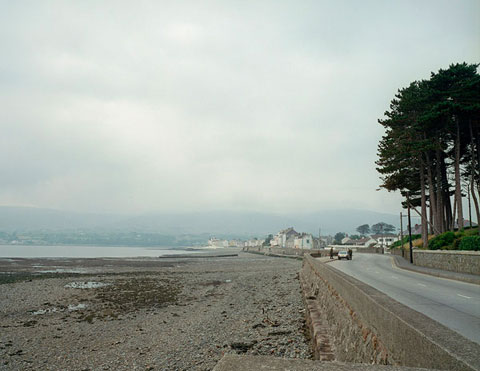
    Back when I was beginning to photograph the former Iron Curtain, I came across Paul Graham’s book
    Troubled Land, which dealt with the conflict in Northern Ireland. I was struck by the way he approached the issue as a landscape photographer, his pictures noting the small bits of evidence of the ongoing strife rather than confronting the action head on as so many photojournalists had. The picture above, for instance, shows a highway checkpoint from a distance. I felt a kinship there with the way I was looking at the landscape of the east/west border.


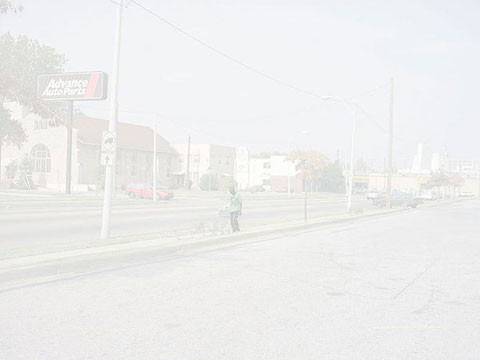
    Photograph by Paul Graham from American Night

    It’s been years since I’ve seen much of Graham’s work, although I knew that he had taken on other projects. I saw his American Night work, which I had mixed feelings about, the high key, blown out, images of figures walking or standing in neglected neighborhoods, juxtaposed with normally printed views of comfortable suburban homes. It seemed a little forced to me.
    But I’ve always appreciated Graham’s social engagement, even as his work clearly distances itself from the “concerned photographer” kind of documentary or journalistic photography. He is on the same turf as Walker Evans and Robert Adams on the big camera side of the equation, and Robert Frank and Michael Schmidt on the small camera side. Graham, of course, works in color, starting in the early 80s, and would have to be considered an early practitioner of that medium.

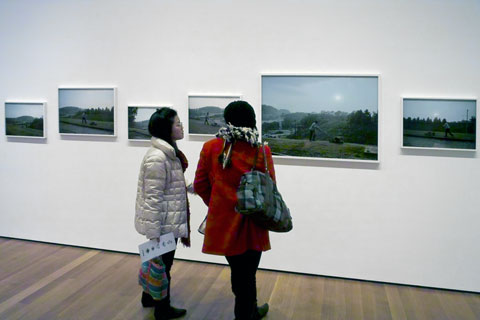
    In recent years he has been working in image multiples or series. Not in the conceptual sense of serial photography, although it is obvious that he has thought a lot about contemporary photography and current trends. So, with his newest work now showing at the Modern–A Shimmer of Possibility–Graham has moved beyond the traditional “one off” approach of most street photography, that moments are defined strictly in terms of 1/125 second slivers of time. Graham is looking at situations, or short passages of time. Not a lot of action happens in these bits of real life Graham is attentive to, but they are as much about lassitude as anything else.


    Paul Graham at the Museum of Modern Art© Brian Rose

    A man mows a lawn moving left and then right in the fading daylight. His van stands alone in the nearby parking lot–waiting. A man stands in a back alley smoking a cigarette. A woman eats a meal while seated at a bus stop. Graham records the woman and then looks down at debris on the sidewalk. These cinematic moments are like loops, a series of jump cuts, but something that would be hard to make arresting in film or video. It would all happen too fast without the considered apprehension that is the domain of still photography.


    Paul Graham at the Museum of Modern Art — © Brian Rose

    Most of the people in these photo suites are working class or underclass, often African-American. Many are seen in marginalized areas of the cityscape–alleys, parking lots, narrow sidewalks around strip malls, etc. Many are seen walking in places where more prosperous people would be driving. Many seem lost to their own thoughts as they attend to one chore or another–or are just waiting.

    A few days after I visited Graham’s exhibit at the Modern I heard him speak at the SVA theater on 23rd Street. I was a little late getting there, and was surprised to be greeted by an overflowing hall of more than 200 people. I ended up on a metal folding chair parked off to the side of the stage. But he and moderator Philip Gefter just talked anyway–only a few photographs were shown. It was satisfying, if not inspiring, to hear him defend the continuing role of photography to observe the world around us–as opposed to the “synthetic” world that is particulary in vogue in the Chelsea galleries.


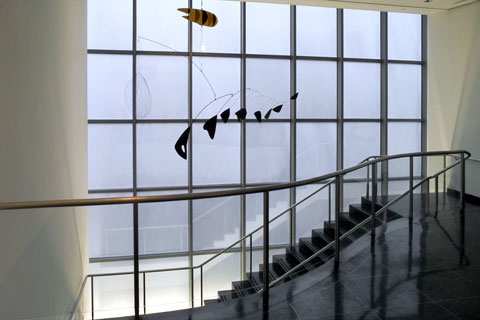
    Museum of Modern Art stairs — © Brian Rose

    I said hello at the end of the evening, and mentioned that I had a book out there called the Lost Border–a project spanning 19 years of history. He’d never heard of it, or me, which shows how far out of the mainstream I still am.

  • New York/LES


    East 6th Street — © Brian Rose (digital)


    East 6th Street — © Brian Rose (digital)

    Two pictures made 30 seconds apart.

  • New York/LES


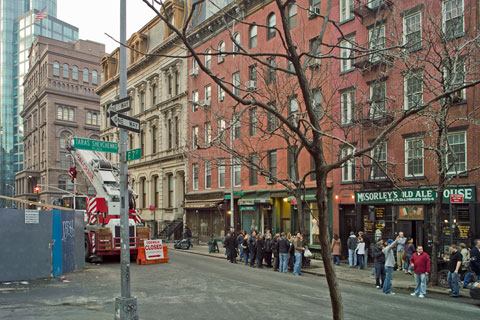
    East 7th Street, Mcsorley’s — © Brian Rose (digital camera)

    After a sub-freezing week featuring several inches of snow, today warmed up well into the 40s. I went out with the view camera near the end of the day and took one photograph as the light began to fall. I did several versions similar to the view above.
    This scene in front of McSorley’s Ale House has been repeating itself on weekends for years. McSorley’s is very old, famous bar, but ultimately just a bar. Nevertheless, out-of-towners–one presumes–line up to be admitted into the hallowed taproom.

    To the rear is the new apartment tower on Astor Place, the brownstone Cooper Union building, and the construction is related to a new Cooper building just out of sight to the left. I’ll have more on that later.

  • New York/Brooklyn


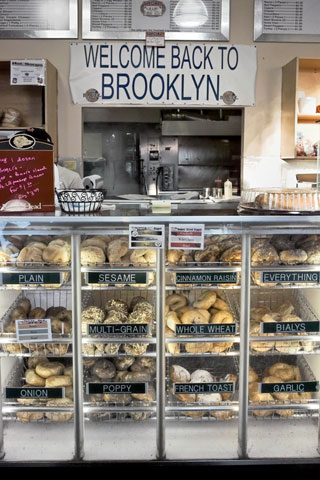
    Williamsburg, Brooklyn — © Brian Rose

    Welcome back to Brooklyn!

  • New York/Williamsburg


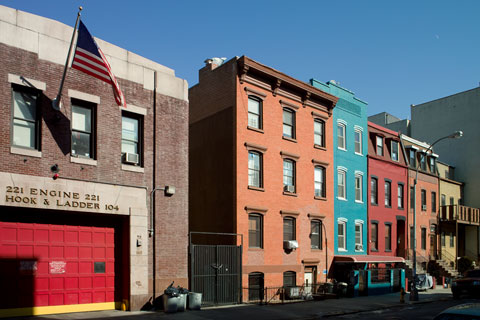
    Williamsburg, Brooklyn — © Brian Rose

    A momentary thaw in an otherwise rather cold winter.

  • New York/Red Hook


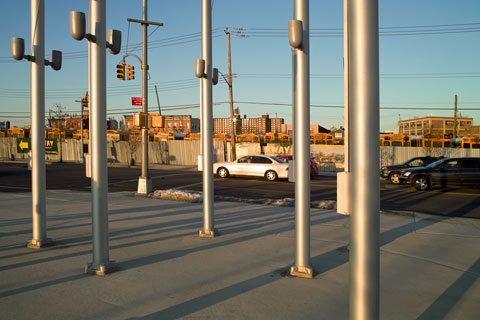
    Ikea flag poles, Redhook, Broroklyn — © Brian Rose


    Redhook, Brooklyn — © Brian Rose

    Two pictures made 30 seconds apart.

  • New York/The Bowery


    The Bowery • © Brian Rose


    The Bowery • © Brian Rose

    Two pictures made 30 seconds apart.

  • New York/Eggleston/The Whitney


    Photo by William Eggleston

    Continuing my observations (from a few posts below) on the Eggleston show at the Whitney. The exhibition closes today, and I’ll wrap things up with a few observations made while walking through the galleries.

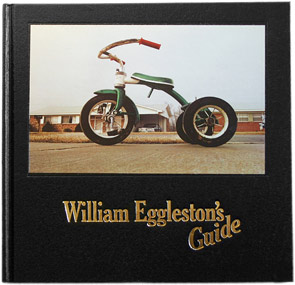
    I began shooting color in the mid to late ’70s, and Eggleston was one of the few color photographers I knew about at the time. I had missed the famous Szarkowski exhibition at the Modern in 1976, but had seen the work published elsewhere a short time later. And I bought a copy of William Eggleston’s Guide–one of the groundbreaking books in the history of photography.

    Initially, my interest in Eggleston lay more in his method and formal approach to subject. Eggleston probes with his camera, prodding here and there like a dentist. Does this hurt? What do you feel here? How about over here? He glances this way and that, up and down, sometimes level to the ground, sometimes tilted. His gaze seems all-inclusive, not hierarchical. Every scene, every object, every moment is in play.

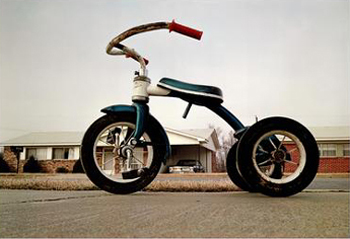
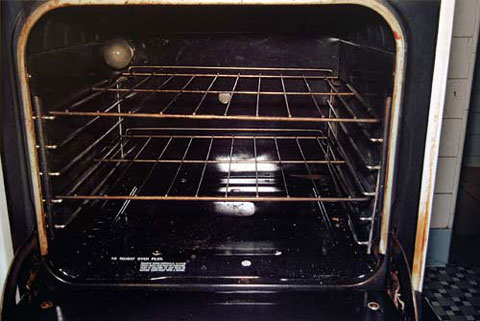
    In some ways his most famous images are outliers, least typical of his way of seeing. With such an even handed approach–democratic, as Eggleston says–the most iconic of his images shouldn’t be any more important than any others. And in fact, they are not. The tricycle on the cover of the Guide, for instance, is sometimes represented as a child’s view of the world, but it’s actually taken from a lower worm’s eye view. It’s another visual experiment like pointing the camera into an oven or refrigerator. The tricycle, rather than intentionally elevated to a monumental status, merely looms large–and strange–from Eggleston’s restlessly exploratory camera. Eggleston is not attempting grand visual statements, except perhaps incrementally. He’s slicing and dicing, taking MRI’s of America, each image a thin sliver of the body politic.


    Photo by William Eggleston


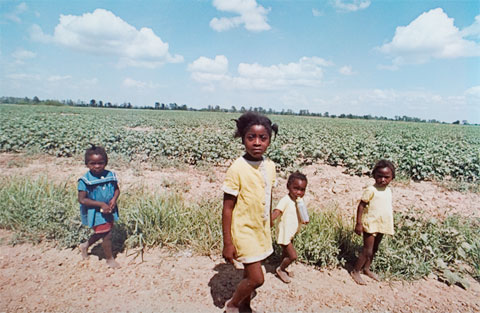
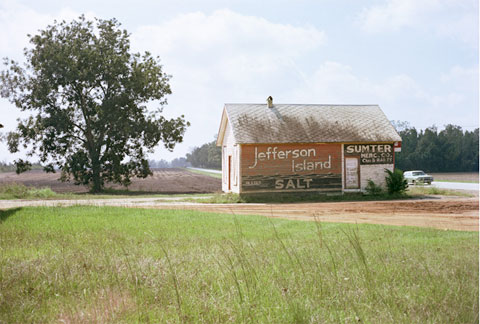
    Photo by William Eggleston from Election Eve

    Looking at the Democratic Camera at the Whitney, I find now that Eggleston’s experimentation is, perhaps, subsumed into a larger cultural and regional perspective. The south plays a larger role in Eggleston’s work than he, probably, would like to admit. His best work, as I see it, is more about atmosphere than formal composition. One of my favorite series is Election Eve, a seemingly random collection of photographs redolent of the peanut fields of Plains, George, the hometown of then president Jimmy Carter.


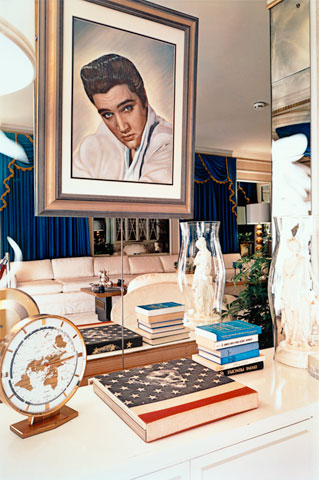
    Photo by William Eggleston from Graceland

    Eggleston also handles the garish décor of Graceland well, relishing the kitschy glam and dross of Elvis’s home without critical disdain. On a text panel accompanying the Graceland photos, Eggleston is quoted as not being interested in Elvis. I doubt that he would admit to being truly interested in anything he photographs. But in the company of Elvis–southern royalty, as it were–he is right in his element.

    It can be said that Eggleston’s style is southern gothic, a latent sense of malevolence–a boy prostrate on a garage floor, a girl in a flowered dress sprawled on the grass, men with guns, women with big hair, slackers, drifters, marginal characters–Eggleston seems to relate–floating through a landscape littered with signage, suburban clutter, odd juxtapositions. It’s been mentioned elsewhere the influence on David Lynch and other filmmakers, but he’s, perhaps, better described in the company of Tennessee Williams or Faulkner minus the narrative.

    No, Eggleston doesn’t escape his southern upbringing, despite denials, or his patrician mien. Ultimately, he is an itinerent carny, performing brilliant visual feats–recognized far and wide–but still coming off a little creepy, smelling faintly of liquor, living without the obligations that tie most of us down.

    Here’s what it comes down to me. The slight-of-hand in Eggleston’s work is manifest as an incisive gaze rendered indifferently. This dichotomy—precision vs. spontaneity—is the essence of the Eggleston achievement. As a photographer, what I take away most from Eggleston is his cold-blooded equanimity in pursuing his glorified hobby. Everything is fair game for one’s attention, however transient that attention may be. Eggleston is quoted in the exhibition: “I had this notion of what I called a democratic way of looking around.”

    What I understood immediately upon seeing Eggleston’s work back in the ‘70s was the idea of always moving. Snap, move, snap, move. It either happens or it doesn’t. There are no missed photographs, no regrets.

  • New York/Books

    While checking my web stats I noticed several visitors coming by way of Stan Bantos’s blog Reciprocity Failure. Stan, who is a talented photographer and writer about photography, recently compiled a list of his “top 30 photo books.” I am honored to see that he has included my book The Lost Border as one of them.

    Here’s the list from Reciprocity Failure with Stan Bantos’s comments:

    1) In The American West — Richard Avedon; one of portraiture’s giants at his peak.

    2) Ambiguous Ambassador- Tseng Kwong Chi; from humorous to majestic, all great photographs that happen to be self portraits.

    3) Uncommon Places- Stephen Shore; the common made uncommon in color.

    4) Madness- Claudio Edinger; beautiful images straight from hell.
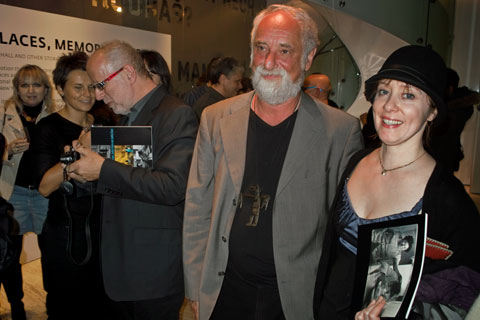
    5) Glory- Robert D’allessandro; the epitome of early seventies, wide angle, Tri-X documentary.

    6) The Killing Fields; “art” by genocide…

    7) The Inner City- Joseph Mills; street photography in dream time.

    8) American Prospects- Joel Sternfeld; Americana redefined.

    9) The Silence — Gilles Peress; genocide and poetry in Africa.

    10) Farewell To Bosnia– Gilles Peress; genocide and poetry in Europe.

    11) The Lost Border- Brian Rose; lyrical ghost imagery of bygone era.

    12) Coney Island- Bruce Gilden; mid seventies NY at its grainy, idiosyncratic best.

    13) Seydou Keita- Scalo (publ); the king of “outsider” portraiture, whether in his village in Africa or on opening night at the Gagosian in NYC on 10/23/97.

    14) Cocaine True, Cocaine Blue- Eugene Richards; beauty in the depths of the human condition.

    15) Inferno – James Nachtwey; high intensity, world wide drama crammed into 1 x 1 1/2.

    16) Rich & Poor- Jim Goldberg; an intimate look into rich v poor. Guess who comes out looking worse…

    17) Diane Arbus- Aperture (publ); the queen of portraiture.

    18) William Eggleston’s Guide- The Revolutionary Handbook.

    19) The Last Resort- Martin Parr; stories within stories, live and in color.

    20) Troubled Land- Paul Graham; tension and forboding in the land of beauty.

    21) A Green And Pleasant Land- John Davies; landscapes past, present and forever.

    22) Central Park — Bruce Davidson; wonder and discovery in the manmade microcosm.

    23) Sticks And Stones- Lee Friedlander: the swan song of swan songs.

    24) Along the Ohio- Andrew Borowiec; middle America made familiar and magical.
    25) The Black Triangle- Joseph Koudelka; a land laid waste in all its epic grandeur.
    26) The Oxford Project- Peter Feldstein; the most simple of projects, the most brilliant of presentations.

    27) Found in Brooklyn- Thomas Roma; neighborhood wonderland.

    28) The Innocents- Taryn Simon; American tragedy as real as it gets.

    29) At Dusk and By The Ground- by Boris Mihailov; two hard cover volumes of the most depressing panoramics imaginable sold in one package, haphazardly printed and toned into… true works of art.

    30) The Americans — Robert Frank; The New Testament.

  • New York/Eggleston/The Whitney


    Photo by William Eggleston

    Continuing my observations (from a few posts below) on the Eggleston show at the Whitney.

    The exhibition at the Whitney is spacious, a whole floor of the museum. In my two recent visits the large holiday season crowds seemed involved in the work, not simply drifting through. A lot of people in the museum were obviously there to see the Calder exhibition upstairs. I was not, however, happy with the dimness of the gallery lighting, which reduced the vibrancy of the prints and gave everything a yellowish cast.

    One of the reasons to go to the exhibit, as opposed to acquiring Eggleston’s books, is to see the dye transfer prints made at the beginning of his career–but the lighting muddied the experience for me. I don’t know if it was intentional–a concern about damaging the prints?

    When I was at Cooper Union studying photography with Joel Meyerowitz I became aware of dye transfer prints. As I understood it at that time, dyes transfers were being used in advertising because of the saturated color and because it was possible to locally adjust color in ways not easily accomplished in so-called c-prints. Meyerowitz came from that world, doing commercial advertising, while shooting his early 35mm street photographs.

    Shooting color slides, I was confronted with a dilemma. I could not afford dye transfers, could not make them myself, and therefore had to begin to learn how to make c-prints from internegatives. The quality of the lab-made internegs were mixed at best. And my first prints were not particularly good. Later, I gave up on slides and began shooting negatives, which translated better to prints. Getting there took some time.


    William Eggleston, photo by Maude Schuyler Clay

    In realizing how costly dye transfer prints were, I also came face to face with a sobering reality: Eggleston was rich and could afford to shoot with abandon and print whatever he wanted using an expensive medium. This fact does not diminish Eggleston’s accomplishment, but it led me to a somewhat different reading of his work.


    Walker Evans, photo by Edwin Locke

    When one looks at Eggleston’s pictures or those of Walker Evans, another photographer of patrician upbringing, some consideration must be given to the sense of privilege inherent in the eye of the photographer. Evans, of course, in some of his best known work, trained his view camera on the downtrodden of the south–objective, attentive to every visual detail–in the process ennobling his subjects, whether human or architectural. But there was a clear separation between himself and those he photographed.

    Eggleston, unlike Evans, is not much interested in humanitarian concerns as a photographer, but his seemingly casual, aloof reading of the world around him, allows the viewer to see social complexity coldly–sometimes in the harsh glare of a strobe–without the need for unnecessary compassion. (Compassion without clarity invites mawkishness.) In different ways, both Evans and Eggleston exhibit a freedom in their work unbeholden to sponsors or clients, but proffered, perhaps, with a measure of noblesse oblige.

    More to come…

  • New York/Inauguration Day


    Washington, D.C.

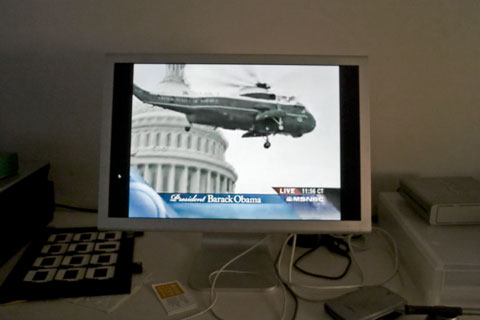
    Bush leaves D.C. –on my computer.

  • New York/Inauguration Day


    Photo by Rodger Kingston

    A repeat from over a year ago, but an appropriate one. A terrific photograph by my friend Rodger Kingston.

    Historic day.

  • New York/Eggleston/The Whitney


    The Whitney Museum (digital) © Brian Rose

    Neither the Guggenheim nor the Whitney allow photography in their galleries, which makes it difficult for me to review shows in the way I would like to. I’ve said it before, and will repeat–this does not help the museums or the artists being exhibited. It stifles free speech and hinders the discussion on blogs like this one. I do not buy the usual excuse about protecting copyright. All the images in the Eggleston exhibition, for instance, are readily available in book form, and snapshots taken in a gallery context in no way harm the rights held by the artist.

    So, it is with some reluctance that I write about the Whitney William Eggleston show, ironically called Democratic Camera.

    •••


    Photo by William Eggleston

    I’ve been meaning to write about the Eggleston show for a while now–I’ve actually been to it twice–once with my son to also take in the Calder circus and early wire figures, and a second time for a more considered look. Before addressing the exhibit specifically, I’d like to talk about how I first became familiar with Eggleston back in the ’70s when color photography was relatively new territory.

    When I began began taking pictures, like most everyone, I worked in black and white. I learned to develop and print before going to art school, which was around 1975, and always had a home darkroom. I was interested in color, had shot some slide film, and had had a few drugstore prints made. But there was little support from my professors for pursuing color in a serious way. Color was still relegated to commercial photography.

    I recall the one color class offered at the Maryland Institute (MICA) in Baltimore where I was at school. For a whole semester students seemed to do nothing but test prints and technical exercises. There was little emphasis on making photographs, so I avoided the class. At some point in 1976 or 1977 I came across Eggleston, Meyerowitz, and Shore in a magazine–just a handful of images–but a light went off in my head, and knew instantly that I would quit black and white photography and pursue color.


    Photo by William Eggleston

    In 1977 I went off to Cooper Union in New York where Joel Meyerowitz was teaching, and came into contact with other photographers who were shooting color. Although I did not see Eggleston’s famous show at the Modern, curated by John Szarkowski, I did get a copy of Eggleston’s Guide, which was based on the MoMA exhibition. Those photographs occupy the central galleries of the current Whitney Museum exhibition.

    The Guide photos were imprinted in my brain–the vernacular subject matter, the ascerbic color, the utterly unsentimental tossed off quality of the pictures–what I perceived as Eggleston’s almost disdainfully insouciant manner. It sat well with this 23 year old photographer.


    Photo by William Eggleston

    Although I was aware of the themes and places in Eggleston’s photographs, I was initially drawn to their formal qualities–how they encompassed the street photography styles of Winogrand and Friedlander–but with the added element of color seemed to rely less on the serendipitous collisions of things within the frame–and allowed for a “blander” less actively composed frame, that dared the viewer to question why? Why point the camera at this building, this street, this oven, this hound dog slurping from a puddle, this flash blinded red room, this monumental tricycle?

    More to come…

  • New York/Czech Center


    Photo by Antonin Kratochvil

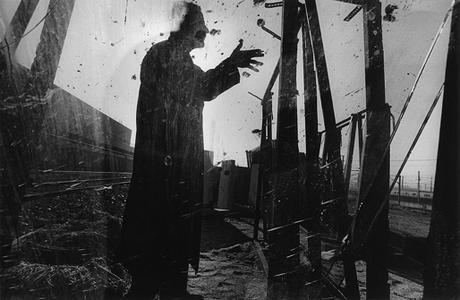
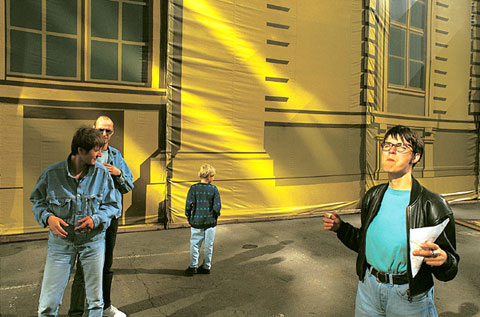
    Last night I went to the Czech Center to see my friend David Hrbek from the Czech Republic. He was leading a panel discussion–much as he does back home–with three distinguished Czech photographers: Antonin Kratochvil, Vladimír Birgus, and Jindřich Štreit. Kratochvil is the one of the three I had heard of, a photojournalist who was documented wars and the human condition all over the globe.


    Photo by Vladimir Birgus


    Photo by Jindřich Štreit

    Although Kratochvil’s photos exhibit the most panache in the strange way that gritty photojournalism can have a stylish aspect. Streit’s more prosaic documentation of village life–particularly during the pre-Velvet Revolution days–have a humanist dimension that tugs more at the heart. Birgus’s color street photography are skillfully poised compositions, sharply seen.

    One tangent of the conversation had to do with prison experiences of the photographers. Kratchovil has been arrested or detained many times in his role as a photojournalist. But Streit told the story of his arrest by the Czech government during the communist years. His photographs of farm life were deemed anti-state, and according to the website Amber Online, he was sentenced to 10 months in prison for “defamation of the republic and the Head of State, based on an interpretation of his photographs. Even his camera was confiscated as an instrument of the crime. The case is probably unique in the history of photography.”


    Left to right: Vladimir Birgus, Jindrich Streit, and Suzanne Vega
    © Brian Rose

    My friend Suzanne Vega was at the Czech Center as well. A couple of years ago, she and I had been invited by David Hrbek to take part in a film festival in the Czech Republic. Unfortunately, I didn’t get a picture of David, but he did a terrific job moderating the discussion, and it was good to see him again. It was David’s first visit to New York.


    East 68th Street/Hunter College
    © Brian Rose

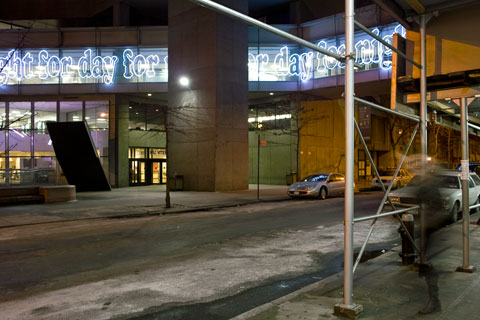
    On my way home via the 6 train at 68th Street. The sign says: Day for Night Day for Night…

  • New York/Central Park


    Central Park (digital) © Brian Rose

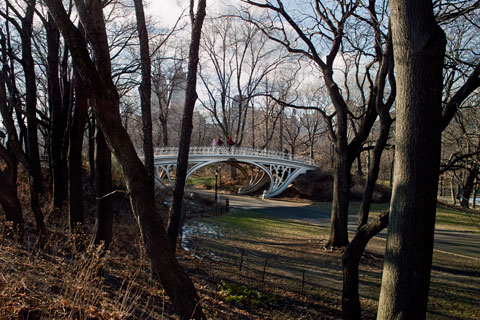
    Without comment.