Author: admin

  • New York/The High Line


    The High Line at Gansevoort Street

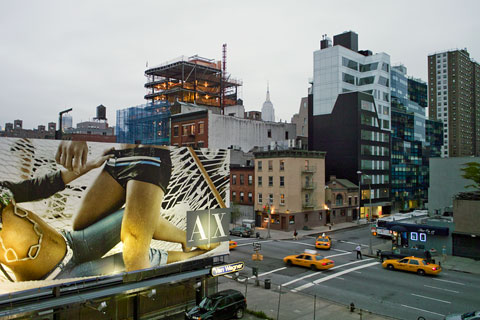
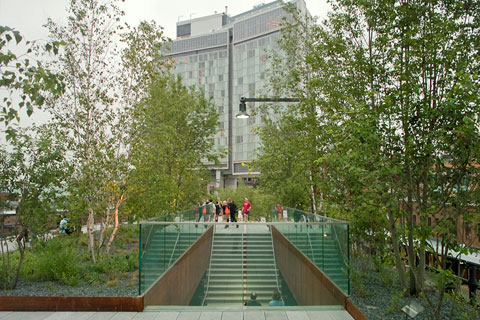
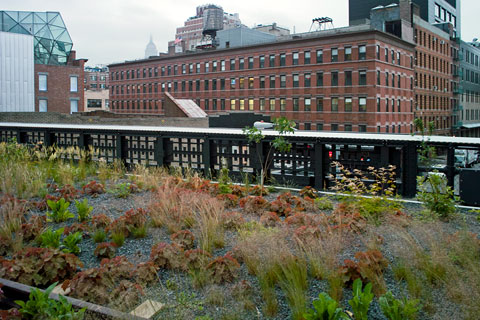
    The High Line opened to the public on Tuesday. I went up late in the day, showers threatening, but it stayed dry as dusk approached. There were hundreds of people walking the former rail viaduct, but it was not uncomfortably crowded. That could change if the weather is good this coming weekend.

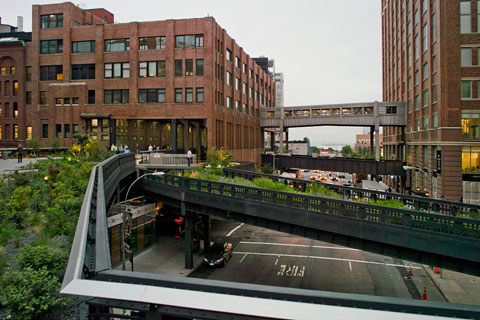
    First impression–the High Line does not disappoint. The designers (James Corner Field Operations with Diller Scofidio & Renfro) have struck a balance between preserving this vestige of New York’s industrial past and creating a new, urban dreamscape. The plantings evoke the wild opportunistic growth that emerged from the thin layer of detritus that accumulated over years of neglect–seen in Joel Sternfeld’s beautiful photographs–but they are more diverse.

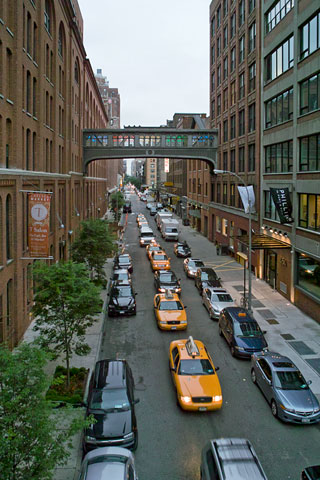
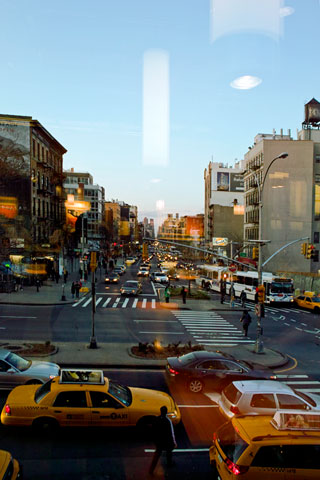
    There are two experiential aspects of the High Line–the promenade itself with its greenery, structures, and event spaces, and the view of the city seen from above street level, the traffic and pedestrians flowing beneath. The photographs I managed to take as daylight faded primarily describe the latter.


    The High Line in the meatpacking district


    The High Line where it passes through the Chelsea Market


    Traffic flowing beneath the High Line


    Tenth Avenue

    Nicolai Ouroussoff in this morning’s Times: ” It is one of the most thoughtful, sensitively designed public spaces built in New York in years.”

  • New York/Camilo José Vergara


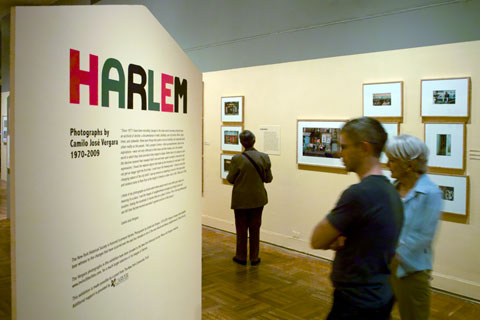
    Vergara exhibition at the New York Historical Soceity — © Brian Rose

    A few thoughts on seeing Harlem, Photographs by Camilo José Vergara 1970-2009 at the New York Historical Society:

    This is not a photography show in the traditional sense,” Vergara says during a stroll through the New-York Historical Society gallery. “I’m really interested in issues, what replaces what, what’s the thrust of things. Photographers don’t usually get at that—they want to show you one frozen image that you find amazing. For me, the more pictures the better. (Smithsonion Magazine)

    The problem is the photographs are presented as if they were stand-alones–traditional c prints matted and framed with small neatly printed text panels. Vergara’s project would be greatly enhanced by a more immersive experience.

    There was one low resolution video screen tucked off to the side in which successive images of different scenes ran in a loop. Otherwise, framed prints are stacked one above the other or in groups, the bright white mattes jumping off the warmed-toned walls and taking up too much space between images. I had to bend way over to see the lowest images.
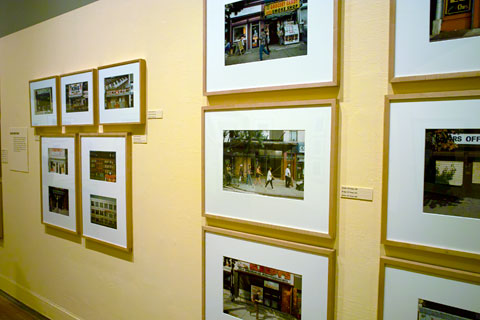

    Vergara exhibition — © Brian Rose

    I’m not suggesting that Vergara’s work should be presented as a multimedia three-ring circus. But I don’t understand the traditional look of the NYHS exhibit. Vergara’s website, which contains the Harlem project along with his similar documentations of Camden, New Jersey and Richmond, California attempts to be interactive and less gallery-like, but the website is yet another of these tedious flash based sites–tiny text, tiny clickable squares on contextless maps.
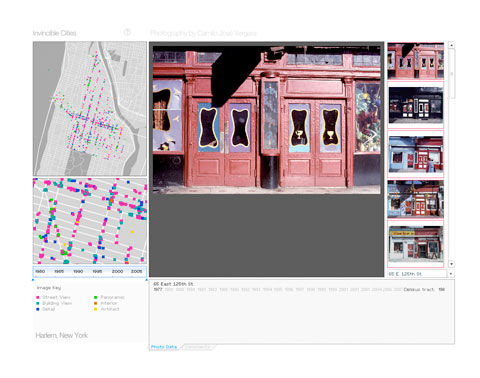

    Invicible Cities, Camilo José Vergara website
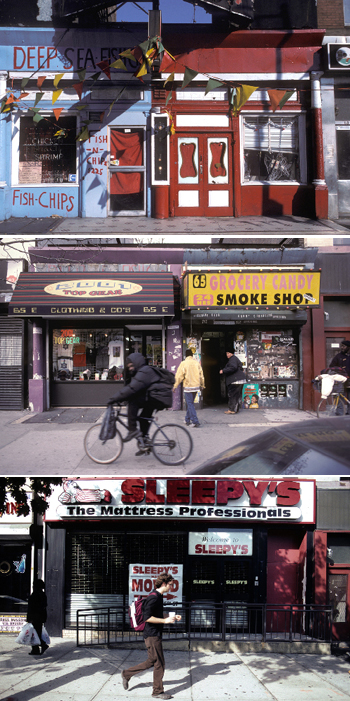

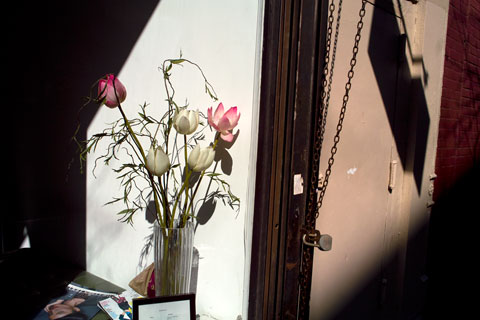
    Harlem storefront, Camilo José Vergara

    I think of my photographs as bricks which when placed next to each other give shape and meaning to a place. I see the images of neighborhoods arranged according to time and location, linking the hundreds of stories that are a place’s history. This is the way photographs can tell how Harlem evolved and what it gained and lost in the process.
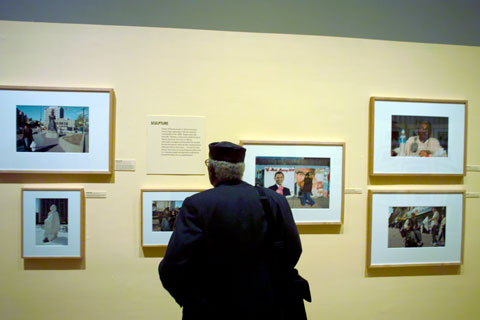

    Vergara exhibition — © Brian Rose

    Vergara admits that he comes from the street/documentary photography aesthetic (Bresson, Levitt, Evans, etc.), but he insists that his work not be regarded as art photography, rather a sort of photographic sociology or anthroplogy. What I would like to see, however—regardless of where one places Vergara’s brand of photography—is a more rigorous approach to the medium. Most of the pictures have been made with small cameras despite his interest in architecture and landscape. The graininess undercuts the intention to convey information and detail, and many of the compositions of static subjects seem unnecessarily slap dash, made on the run.
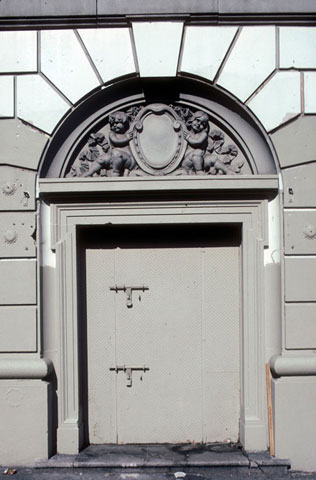

    Harlem door, Camilo José Vergara
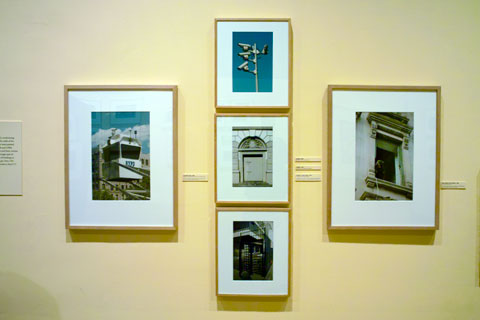

    Vergara exhibition — © Brian Rose

    The image grouping above is meant to illustrate the encroachment of security and surveillance in the public realm. In this case, Harlem. Vergara gives us a close-up view of one of NYPDs mobile observation towers, a metal door with padlocks, a menacing dog in a window, a close-up of a pole festooned with video cameras, and a high gated turnstile similar to those seen in subway stations all over the city.

    This is photography as show and tell.
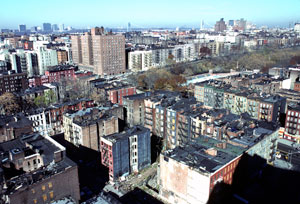


    Harlem panorama, Camilo José Vegara

    For me, the most interesting pictures are the panoramas taken over a number of years. Seeing the way in which blocks change–either losing buildings or gaining new ones–sometimes the changes are very subtle.
  • New York/Morning Musings


    Sullivan Street

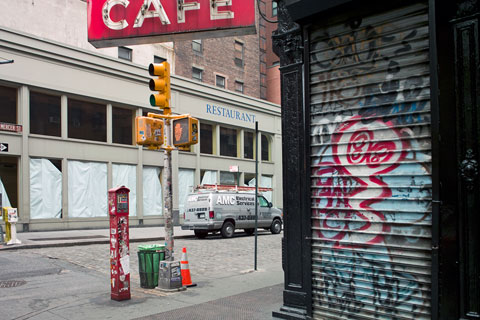
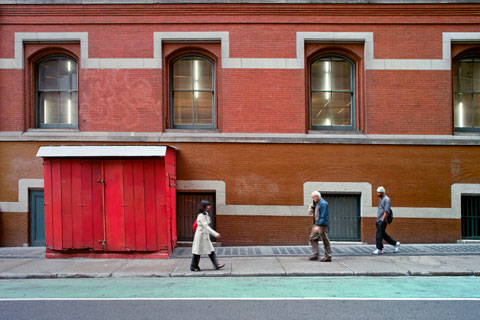
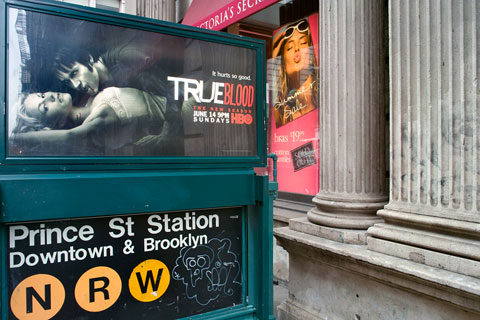
    My morning ritual during the week consists of taking my son to school on the subway, walking 25 minutes across town through Soho, reading the paper at a cafe on Prince Street near the Bowery, and hitting my desk about 9:30am.

    My practice of reading the New York Times, however, may have to end because the Times in its infinite wisdom has, in the midst of a deep recession, just raised the newsstand price of the daily paper from $1.50 to $2.00 (and the Sunday Times from $4 to $6).


    Prince Street


    Prince Street

    One used to see the Times read on the subways, but I haven’t seen one in a long time. People clutch their iPods, cell phones, and other devices–and the ubiquitous free papers are handed out at the subway entrances and lie strewn about everywhere. A surprising number of people continue to read books on the train, gripping their paperbacks in one hand while holding onto a pole with the other. But the unique New Yorker’s skill of folding the Times lengthwise making it manageable to read while standing on a swaying subway train has been lost.


    Mercer Street


    Prince Street

    I’ve seen a number of Kindles, the new electronic reader from Amazon, and I expect to see more if and when the price of the hardware comes down. The newspaper can be read on these, and maybe this and other such devices will save the Times. But I wouldn’t bet on it. The regional newspapers will die off first–they’re already beginning to. As anyone reading this or any blog knows, there are now a multitude of different sources of news and information, but I don’t see the Times, and the other big institutions acting nimbly in the face of rapid climate change. It’s not just about the business model–it’s content as well.


    Prince Street

    When I was 12 years old living in Williamsburg, Virginia, I used to come home each Sunday after church lugging a fat out-of-town newspaper–usually the Times–bought at the local drugstore. It was my portal to the world outside. For most of my life I have read the morning paper while sipping a cup of coffee. It is a simple pleasure, tactile and aromatic, one that I indulged in even during the leanest years. Until, perhaps, now.

  • New York/Broadway


    808 Broadway — © Brian Rose

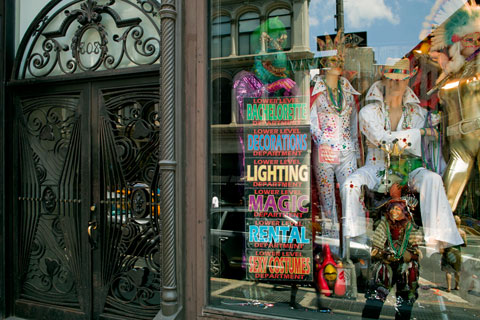
    Without comment.

  • New York/WTC imagery


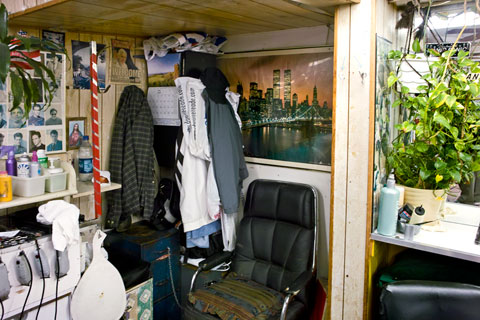
    Astor Hair Stylist, Astor Place — © Brian Rose

    It’s been more than 7 years since the World Trade Center attack, but images of the Twin Towers remain present in the city, if not ubiquitous. These are generally pictures of the towers before 9/11. Fortunately, at least for me, graphic images of the collapsing and burning buildings are rare.

  • New York/Astor Place


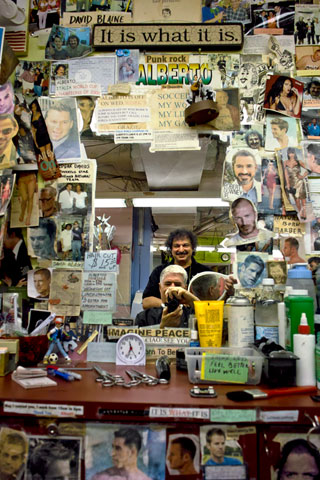
    Alberto holds the mirror — © Brian Rose

    Been going to Astor Place Hairstylist forever. Only in New York. Alberto has one of the most personalized work stations in the shop. When I go to Alberto I always point to the George Clooney picture. That’s what I want.

  • New York/Soho


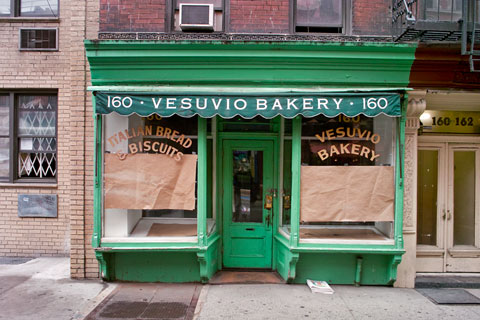
    Vesuvio Bakery, Prince Street, Soho — © Brian Rose


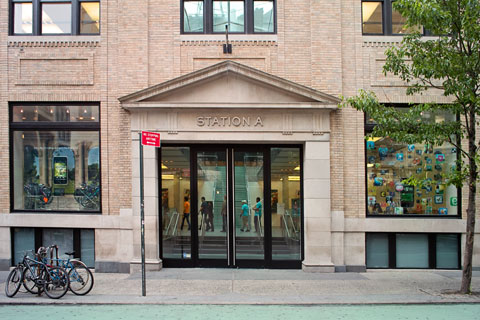
    Apple Soho, Prince Street — © Brian Rose

    Two storefronts, the classic breadmaker Vesuvio, now closed, awaiting its fate. And the Apple store, once a post office, built in the days when government buildings conveyed civic virtues. Within two blocks of each other on Prince Street.

  • New York/Williamsburg/Greenwich Village


    View from our balcony — © Brian Rose

    As I walked across lower Manhattan on my way to pick up my son from school I passed by Sonia Sotomayor’s apartment on Bedford Street a little west of Sixth Avenue. Sotomayor, of course, has been nominated by Barack Obama for the Supreme Court.


    Sonia Sotomayor’s building on Bedford Street
    © Brian Rose

    I’ve walked by here dozens of times, and attended the songwriters exchange at Jack Hardy’s apartment directly across the street dozens of times, and it turns out that the probable new Supreme Court justice has been living quietly in our midst for years. Today, as i walked by, there was a coterie of photo journalists loitering on the sidewalk in front of her building awaiting her appearance.

  • New York/Opening


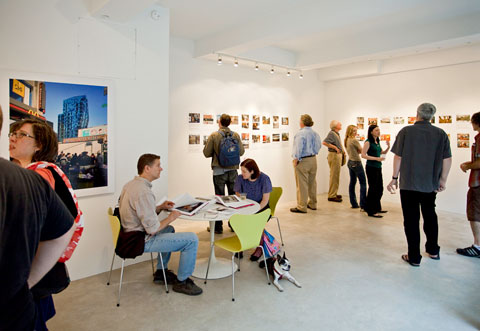
    Opening reception for Journal/Brian Rose — photo by Chris Gallagher

    A picture sent to me by Chris Gallagher of Friday’s opening. That’s his dog Murphy on the floor. That’s me, back to the camera, on the right. Art Presson in the blue shirt at center, Cervin Robinson to his right. No pictures, unfortunately, of my song performance, which came later in the evening.

    The gallery will be open the next two weekends — Fridays 5-8pm and Saturday and Sundays 4-8pm. Come by and say hello. I’ll be gallery sitting most of the time.

  • New York/Jacob Holdt

    The opening and performance at the gallery in Williamsburg went well. Scroll down for more information about the show and gallery hours. A decent crowd considering it was the beginning of the Memorial Day weekend. I performed a batch of my songs after the reception, the first time I’ve played in public in several years. I did around eight songs, some early ones from the late ’70s, and a few from recent years. I was happy to see Cervin Robinson, the architectural photographer, as well as music friends Greg Anderson and Jim Allen.


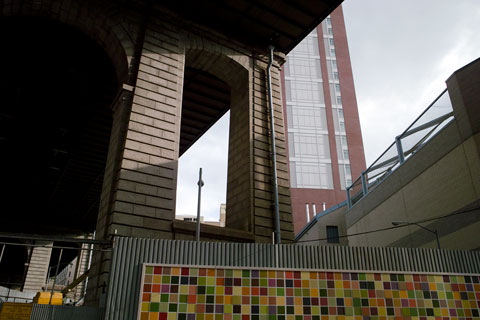
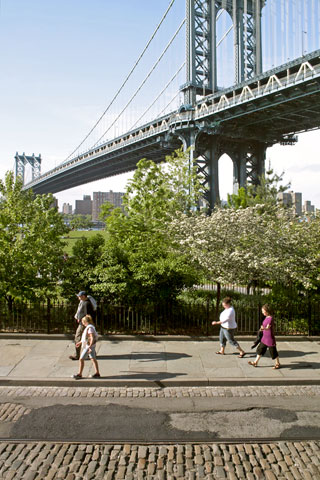
    Under the Manhattan Bridge in Dumbo, Brooklyn

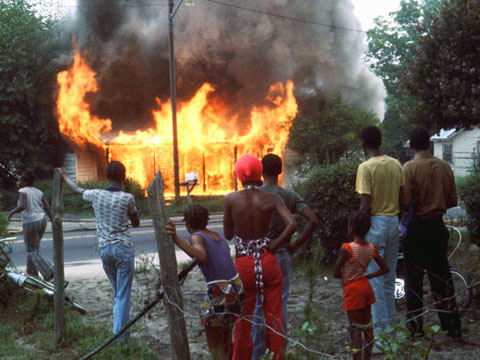
    A few additional comments from the New York Photo Festival. I think the most provocative work in the show was by Danish photographer Jacob Holdt, a sort of outsider artist, whose work has generally escaped notice in the art world. A couple of years ago his photographs made in the early 1970s while traveling around the US were published by Steidl. But his work has not been seen much on this side of the pond.


    Photo by Jacob Holdt

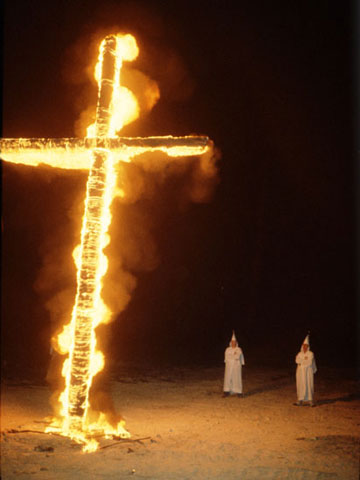
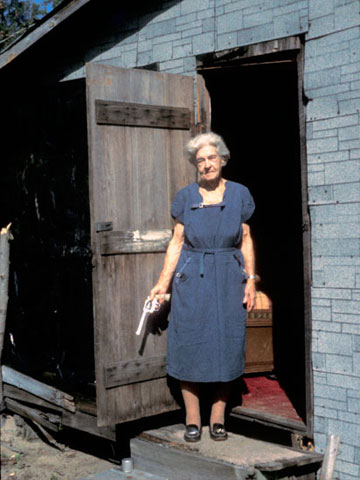
    Hitchhiking around the country, Holdt hung out with and lived with people of all walks of life, but particularly the down and out. His photographs show the squalor of urban and rural life in the ’70s, violence, guns, racism. He even befriended member of the KKK, and photographed cross burnings. Holdt presents his work as political activism, and in fact, he has given lectures and slide shows for years since making the photographs. At the festival his slides were shown on several old-fashioned carousel projectors, their fans whirring, the slides click clacking into place.


    Photo by Jacob Holdt

    There is zero art gloss to his photographic method–the images are crudely powerful. Disturbing. And although I think the attention he is now getting is legitimate, I am somewhat suspicious of the high culture assimilation of his work. By all means spend some time on his website. Where does work like this fit into the history of photography and social documentation?


    Photo by Jacob Holdt

    William Ewing, one of the curators of the festival, argues that the photo history canon of the past few decades needs to be shaken up. That older photographers like Holdt have been overlooked, and that younger photographers from all corners of the globe aren’t getting the attention they deserve. I am sympathetic to his curatorial quest, but remain uncertain where to place someone as strange and insistently didactic as Jocob Holdt. Perhaps, he is best left outside the canon. Someone to be dealt with on his own terms.


    Dumbo, Brooklyn

  • New York/Opening

    This evening is the opening of my exhibition, Journal, based on this blog. I spent most of yesterday hanging the prints–54 11x14s and one 40×50. The space, which is a storefront gallery, is beautiful, has good lighting, and looks especially nice after dark from the street. After the reception, at 8pm, I will be performing songs, old and new.

    The gallery is in Williamsburg and is easy to reach from the L train Bedford Avenue station.


    View Larger Map

  • New York/Photo Festival


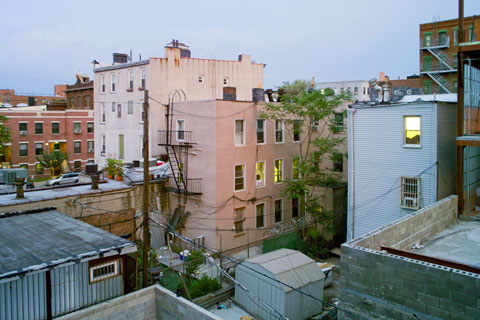
    Sleeping Soldiers by Tim Hetherington — © Brian Rose

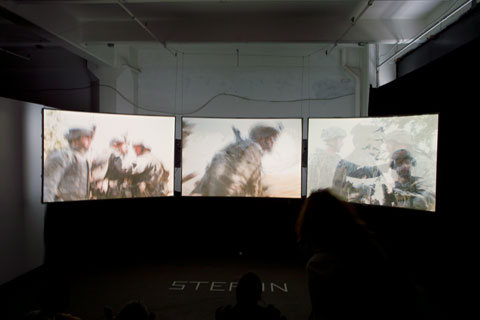
    One of the strongest pieces in the show curated by Jon Levy was a three panel video installation by Tim Hetherington showing sleeping soldiers juxtaposed against a tense and emotional exchange on the battlefield in Afghanistan. Unlike so many video pieces that seem designed primarily to test one’s patience, this montage of images, still and moving, gets to the point powerfully in a relative handful of minutes.


    Carlos Ranc in St. Ann’s Warehouse — © BrianRose

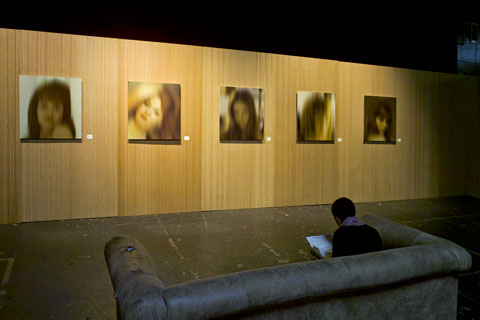
    I had limited time to see the festival, so I moved quickly through curator Jody Quon’s exhibit, which deals with female identity. The other major exhibit of the festival, which I did not see, also dealt with sexual identity, gay males. These are very familiar contemporary art themes, the kind of thing I seem hardwired to resist. But, of course, dismissing whole exhibits may not be fair to individual artists, so I try to wade through anyway. Although I don’t go for Carlos Ranc’s blurry manipulations of Playboy models, I do like Katy Grannan’s carefully posed work very much. I’ll have to write about her some time in the future.

  • New York/Photo Festival


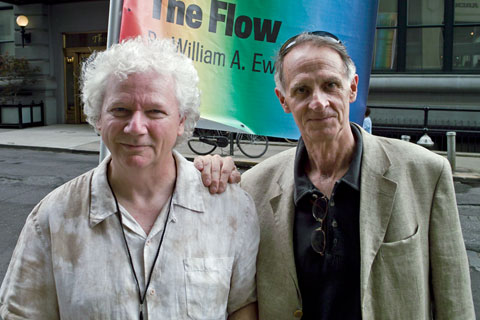
    Robert Walker and William Ewing — © Brian Rose

    Within five minutes of arriving at the New York Photo Festival I ran into Bill Ewing, one of the curators, walking down the street. I know Bill from a long time ago when he was the curator at ICP. He was the first person to show my Iron Curtain/BerlinWall photographs. A short time later I ran into Bob Walker, a Canadian photographer who for years has been densely compressed, layered, street photographs.


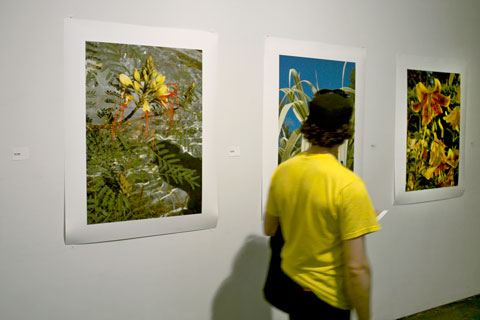
    Robert Walker photographs — © Brian Rose

    Recently, however, he has been photographing flowers and plants with the same tightly packed energy. The color hovers between naturalistic and hyper real. They are beautiful images, but without the softness or sentimentality so often associated with the subject.

  • New York/Photo Festival


    Dumbo, Brooklyn — © Brian Rose

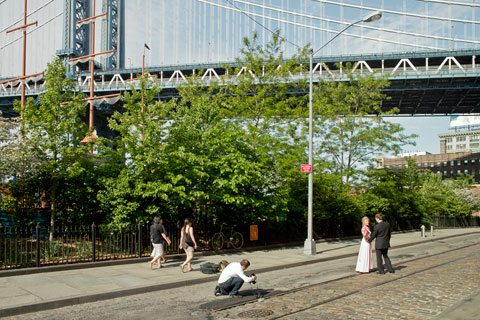
    The New York Photo Festival was held for the second year last weekend in Dumbo, the atmospheric neighborhood under the Brooklyn and Manhattan bridges in Brooklyn. My visit was fairly short because of a busy personal schedule, but I managed to see two of the main exhibits, and ran into several old friends and met a some interesting people. More on that later.

    Walking around between the venues, it seemed that there were several photo festivals taking place simultaneously. One of them inside the galleries, and the other out in the street where dozens of camera wielding, badge wearing, visitors were taking pictures of Dumbo–and each other. I was one of these.

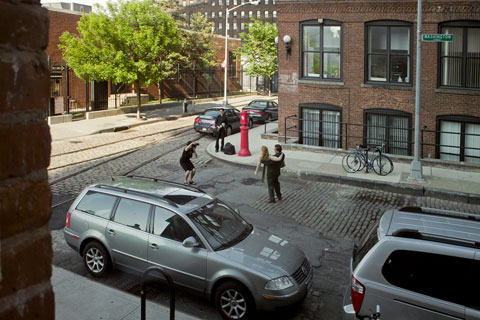
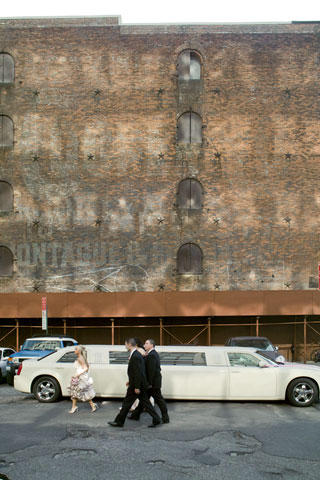
    Another smaller group of photographers were paying no attention to us, or to the exhibits. They were photographing formally dressed brides and grooms on the gritty cobblestoned streets with the bridge towers and spans soaring overhead. Incongruous as it was–tuxedos, gowns and limos interspersed with the usual raffish New York photo crowd–it lent a surreal theatricality to the scene.


    Dumbo, Brooklyn — © Brian Rose


    Dumbo, Brooklyn — © Brian Rose

  • New York/Exhibition


    The New Museum — © Brian Rose

    I’ve been busy putting together my show that opens in Williamsburg, Brooklyn next Friday, the 22nd. Scroll down for the announcement. The exhibit will–most likely–consist of 54 11×14 panels, each presenting an entry from my blog, running chronologically. These will be push pinned to the wall in two or three rows on the walls of the gallery. There will be text accompanying the photographs, as in the blog, but edited down to work better in an exhibit.

    I am also including one image from my Lower East Side project printed 40×50 inches. This print I made at Beth Schiffer Labs, which has rental work stations and printers. It is a digital C print. The smaller prints were made using Adorama’s digital printing service. Basically, you upload your files, and pick up the prints. Working this way goes quite smoothly if you have good digital files and use the color profile provided on their website.

    I have been practicing the songs I plan to sing at the opening. I’m prepared to do about a dozen, some old, some quite new. I can’t remember when I last did a full-fledged gig, but I am looking forward to this very much. Apparently, I can still play the guitar and sing! There will be an emphasis on songs about or taking place in New York and the urban landscape in general. A few of them relate to recent events–one about 9-11.

    Tomorrow I hope to get to the New York Photo Festival, and will report back.

  • New York/iPhone


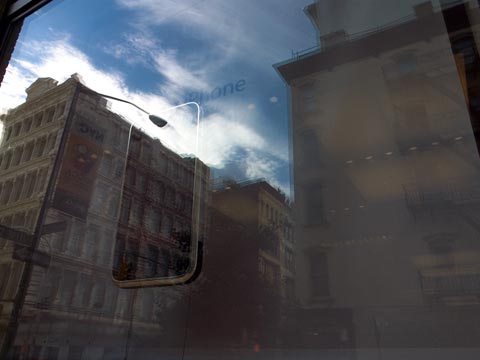
    Apple Store, Soho

    Finally succumbed to desire–and T-Mobile contract finally outlived–cashed in some American Express points for his and her iPhones.

    Life is now complete.

  • New York/Prince Street


    Prince Street — © Brian Rose

    Without comment.

  • New York/Second Avenue


    Second Avenue and Houston Street — © Brian Rose

    There are not many places in New York where you look directly up or down one of the avenues–without standing in the street, of course. When the Whole Foods mega supermarket opened a couple of years ago at the foot of Second Avenue, it was a game changing event for the neighborhood. I leave it to you to decide whether it was a boon or the utter fall of civilization on the Lower East Side.

    Whatever the case, the view up Second Avenue from the tables on the second floor is great, especially at dusk.