Author: admin

  • Berlin/Unter der Linden


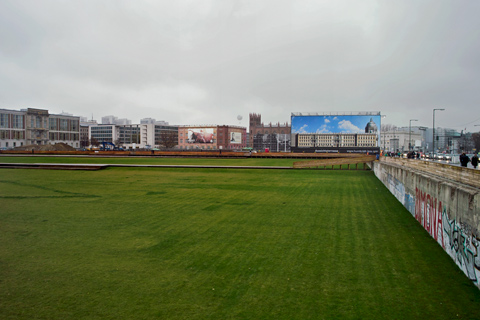
    Palace site on Unter der Linden — © Brian Rose

    Walking from Alexanderplatz, I headed down Unter den Linden, the grand boulevard of the city, passing by the now vacant site of the Palast der Republik, the former East German government and cultural building. Many hated it for its tacky architecture and what it symbolized–and the fact that it replaced the war damaged historic palace dating back to the 18th century. Many wanted it saved, however, as a piece of history on its own terms.
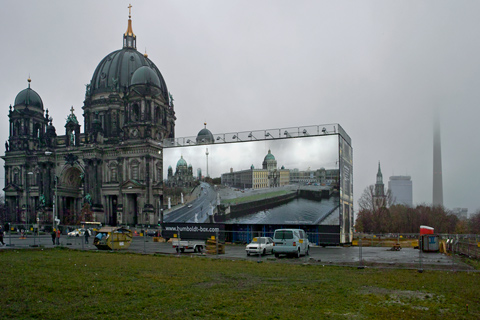

    Palace and Berliner Dom — © Brian Rose

    It was not saved, of course, and a re-creation of the original palace–at least several facades of it–will eventually be built. Meanwhile, large photo montages of the projected building are hung from the steel frame of a viewing platform.
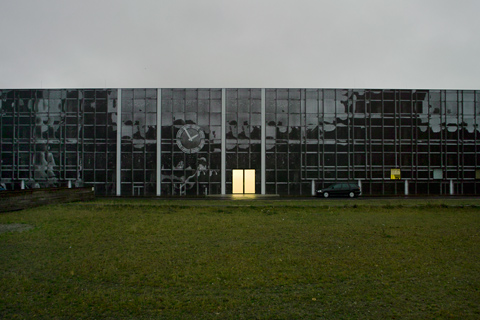

    DDR Museum — © Brian Rose

    Many such ephemeral buildings can be seen around the city, proposed structures, or hoped for construction, that await better times, printed on fabric and afixed to scaffolding. Directly next to the palace images, is another temporary structure with facades formed by a photo representation of the former Palast der Republik–in black rather than the bronze color of the original glass. It houses the DDR Museum.
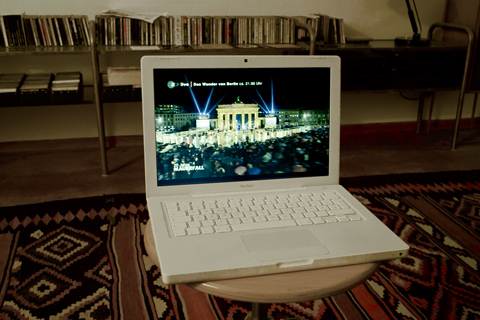

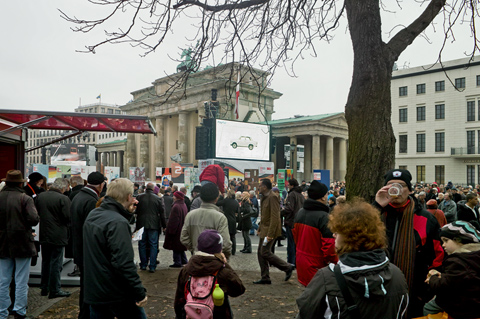
    The Brandenburg Gate on TV — © Brian Rose

    Eventually I made my way to the Brandenburg Gate where the 20th anniversary of the fall of the Berlin Wall was to take place. I took up a position next to the Holocaust Memorial in sight of one of a number of giant TV screens, and adjacent to the painted domino stones that were lined up between Potsdamer Platz and the Brandenburg Gate. Instead of showing live views of the scene around the Brandenburg Gate, or even time-killing commentary, we got to see commercials played over and over, leading one to wonder whether the fall of the Berlin Wall was worth it. OK, I exaggerate.

    It began raining harder, and the program was, apparently, well behind schedule. Finally, having been out in the street all day in the rain with my view camera, I bailed out and ended up watching the speeches and falling dominos on a laptop connected to live TV. It was a curious event. Sort of a celebration, sort of a serious reflection on the meaning of freedom, with lots of hokey elements thrown in. Ther were speeches by Sarkozy, Brown, Merkel , and Hilary Clinton, as well as a taped White House address from Obama. Some have criticized Obama for not attending the anniversary event, but having witnessed the semi-chaos of the evening, the crush of people–it would have been a security and logistical nightmare. After the speeches, a German TV game show presenter interviewed Lech Walesa and Mikhail Gorbachev, and then Bon Jovi performed We Weren’t Born to Follow.

    We weren’t born to follow
    You gotta stand up for what you believe
    Let me hear you say
    Yea, Yea, Yea, ooooohhh, Yea

    Update: As I returned home on the train from the airport, I saw a poster for Bon Jovi promoting their new book and new album featuring the song We Weren’t Born to Follow. It was then I realized how nakedly commercial the 20th anniversary event of the Mauerfall actually was.
  • Berlin/Alexanderplatz


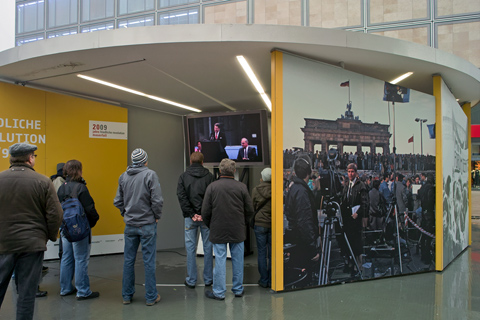
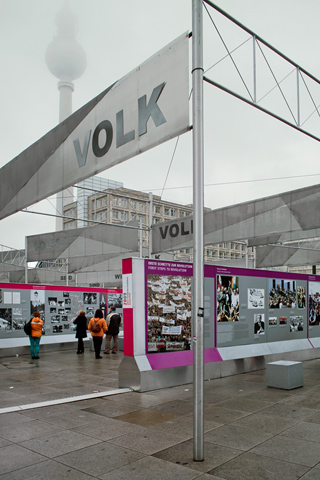
    Exhibition, Alexanderplatz — © Brian Rose

    I took the S-Bahn to Alexanderplatz to see the exhibit there about the events leading up to and surrounding the fall of the Wall. It is a large, comprehensive, exhibition that deserves some time digesting. I plan to go back for a less camera-centric visit.


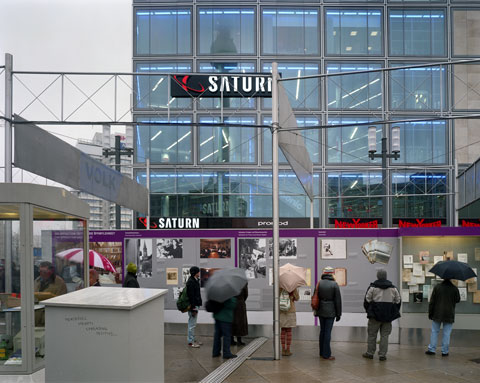
    Exhibition, Alexanderplatz — © Brian Rose

    A steady drizzle through the afternoon made it slow going for me and my view camera. Fortunately, it was not as cold as the day before. I found the exhibition at Alexanderplatz visually compelling, and it was an opportunity to bring this historic location into my project at the same time. This was one of the most important centers of Berlin before the war, and became the heart of DDR Berlin when the city was divided. In most respects it looks like it did before the Wall came down. People still meet at the clock located in the square, an artifact of the East German era, as a young photographer who I spoke to was doing.


    Exhibition pavilion, Alexanderplatz — © Brian Rose

    The exhibit includes extensive documentation on the people and events leading up to November 9, 1989. The American view tends to favor the global political game–and American military power in particular–as the ultimate factor in the demise of communism. But this exhibit focuses on the many people behind the Iron Curtain–dissidents, labor leaders, artists, musicians–who struggled at huge personal risk to undermine the system from within. The film being shown above, however, does not leave out the big stage political events like Ronald Reagan’s “tear down this wall” speech before the Brandenburg Gate.

  • Berlin/1989


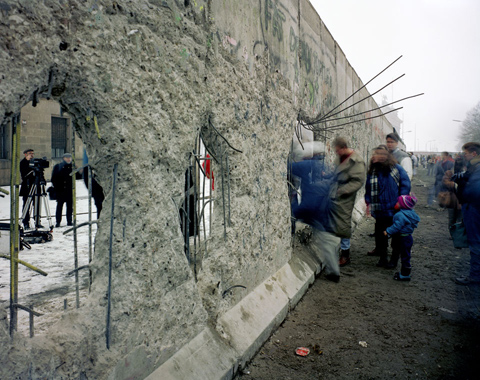
    Berlin Wall, 1989 — © Brian Rose

    20th anniversary of the opening and subsequent fall of the Berlin Wall.

  • Berlin/Berlin Wall


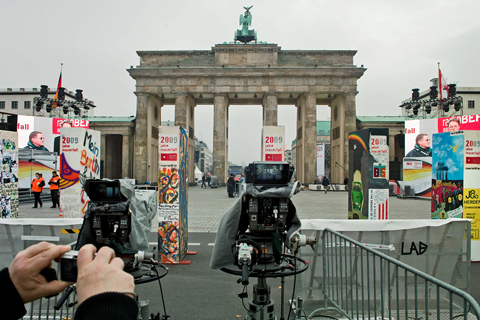
    The Brandenburg Gate, Berlin — © Brian Rose

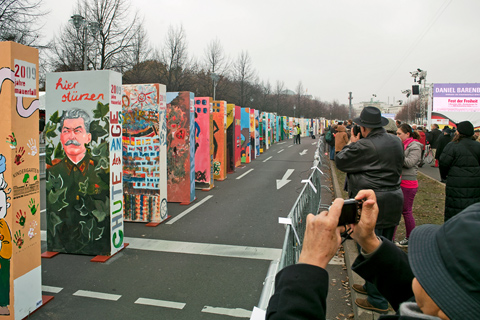
    Tomorrow will be the 20th anniversary of the fall–or opening–of the Berlin Wall. I am here in Berlin to do a last round of photographs of the subject I’ve come back to over and over since 1985. There are thousands of people milling the streets along the trace of the Wall in the center of the city, most there to see the 1000+ painted dominos that will fall symbolically tomorrow evening.

    The crush of people makes it difficult for me with my 4×5 camera, but I jumped into the crowd today with some good results, I think. Tomorrow, I don’t expect to get anywhere near the main event, and will work the periphery of the crowd.


    The Brandenburg Gate, Berlin — © Brian Rose

    The anniversary celebration is turning into a mega media event dominated by German TV, which will follow the fall of the dominos from moving cameras running along wires above the street. There will be celebrities galore, music performances, and various side events that I am just beginning to find out about. I believe Hilary Clinton is in town for a speech.

    It is also an orgy of German kitsch and commercialism. Giant screens are mounted along the route of the dominos, and during the afternoon I viewed, among other things, an extended tribute to the carmaker Audi, and a video performance of an incredibly sappy ballad “One World, One Heart,” sung by Eleni. The last time I was in Berlin was during the run up to the World Cup soccer tournament, and there was a similar “we have arrived” vibe to things. I don’t begrudge Germans the opportunity to celebrate–but in so many ways this celebration goes beyond the reunification of Germany. The fall of the Wall signaled the end of communism, and was ultimately a triumph of freedom over tyranny. You may insert cynical comment here ___.


    Stalin domino — © Brian Rose


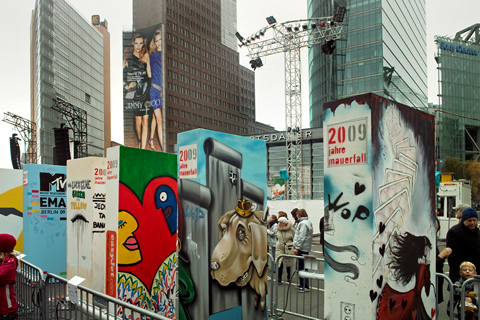
    Potsdamer Platz — © Brian Rose

    Imagine, if you can, what it’s like using a 4×5 view camera in the midst of literally thousands of hand held digital cameras. I stand out. Lots of people make comments or stop to chat–always friendly of course. I butcher some German, they butcher some English, and it’s all great fun. It could be intimidating, so many cameras, and so many serious expensive ones. But I’ve been at this game for a long time now, and I trust my instincts.
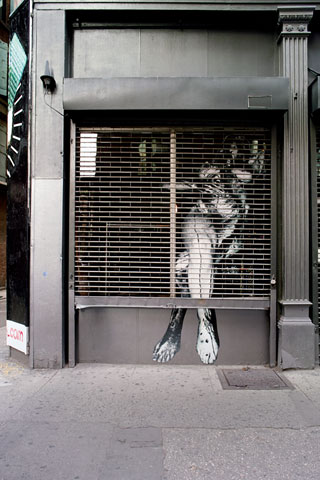

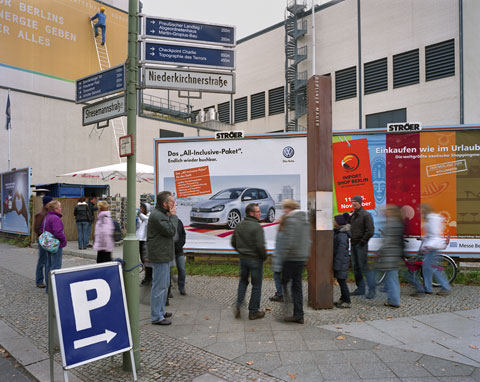
    Wall marker — © Brian Rose

    Some tourists listen to audio commentary coming from the pylon marking a point along the path of the former Wall. Until a short time ago there was little help provided if you wanted to trace the Wall’s path. Now, the 20 year old vanished Wall seems more real than ever, an integral part of the historical palimpsest that draws visitors to the city.

  • New York/LES


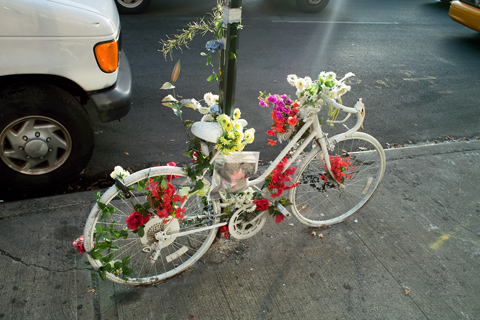
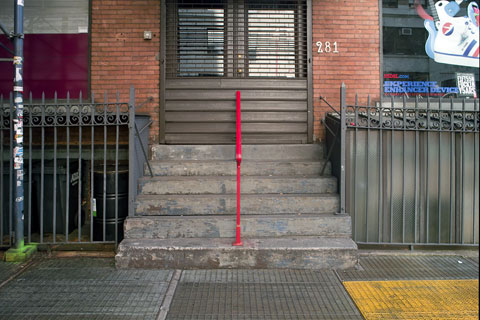
    Delancey Street near the Bowery — © Brian Rose

    Bikes have become more popular in New York, which is mostly a good thing. But these white bike memorials do give one pause.

    I’m off to Berlin tomorrow. November 9 is the 20th anniversary of the opening of the Berlin Wall. I’ll be taking pictures throughout the week, retracing my steps along the path of the former border zone. I’ll be shooting 4×5 film, but will bring my digital camera and laptop, and hope to post to my blog at least a couple of times.

  • New York/Bensonhurst


    New Utrecht High School, Bensonhurst, Brooklyn
    © Brian Rose

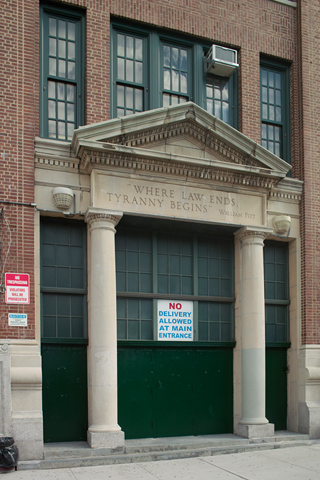
    Went back to Bensonhurst to photograph a new cafeteria wing for New Utrecht High School. The building, from the 1920s, is somewhat battered like many New York City schools. The entrance with imposing pediment and columns has blank green doors with one small barely visible handle. Above, etched in stone are the words of William Pitt: Where Law Ends, Tyranny Begins. Directly below, in case one does not get the message: No Deliveries Allowed At Main Entrance.


    New Utrecht High School — © Brian Rose

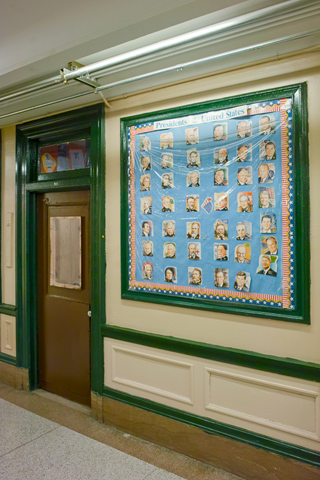
    Portraits of U.S. presidents in the main lobby of the school. American history stops at Clinton.

  • New York/Chelsea


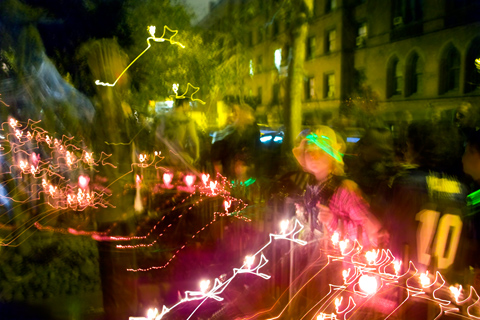
    Trick or Treating in Chelsea — © Brian Rose

    Quite the weekend and New York between Halloween and the marathon. Brendan trick or treated in Chelsea with friends for the third year in a row. He started out as a scarecrow, but ended up looking more like a farmer. The Sigma DP1, which I use for this blog, isn’t much of a low light camera, but what the hell. Go for it.

  • New York/East New York


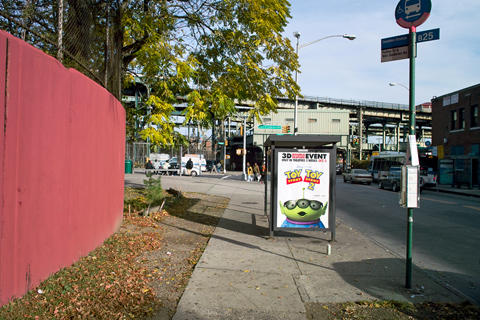
    East New York, Brooklyn — © Brian Rose


    East New York, Brooklyn — © Brian Rose

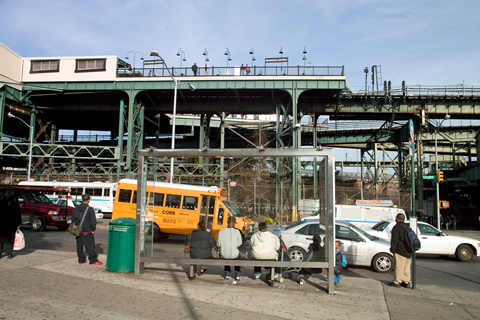
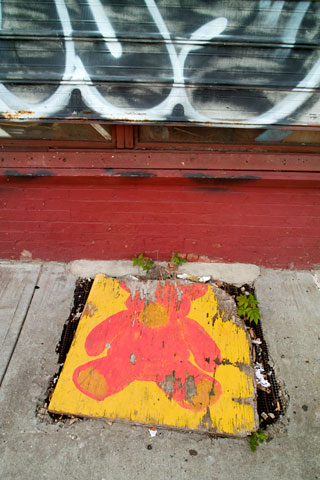
    Walking to the subway station at Broadway Junction in East New York. Stop. Toy Story poster and red wall. Walk forward. Stop. Bus shelter with seated people and figures high above.

  • New York/East New York


    East New York, Brooklyn — © Brian Rose


    East New York, Brooklyn — © Brian Rose

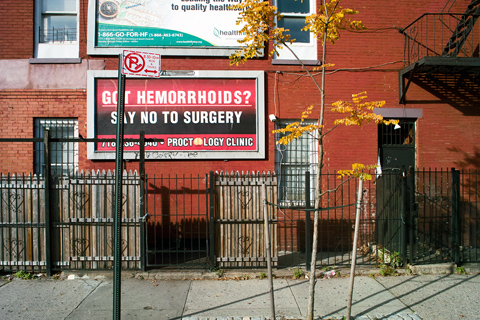
    Without comment.

  • New York/East New York


    East New York, Brooklyn — © Brian Rose

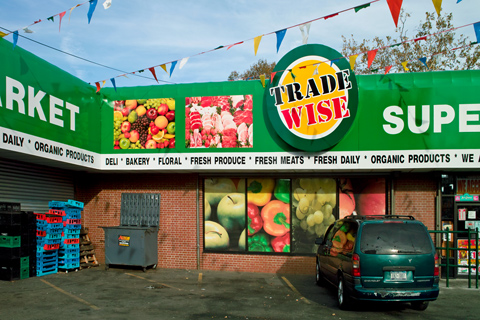
    On the job in East New York shooting a building. More to come.

  • New York/East 4th Street


    East 4th Street between Second and Third Avenues, 1980 (4×5 film)
    © Brian Rose/Ed Fausty

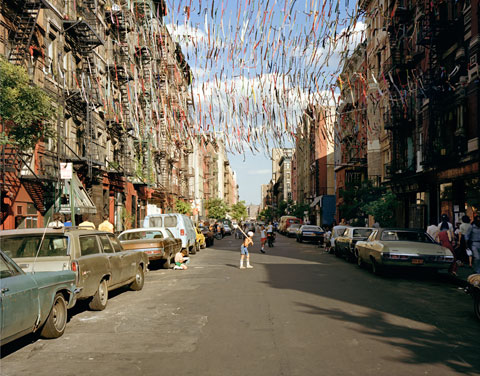
    When I first arrived in New York in the summer of 1977–the day of the blackout–I got off the train early, picked up a copy of the Village Voice, perused the classifieds for available apartments, and by noon, had scored a sublet in a rundown tenement on East 4th Street between Second and Third Avenues.

    I lived there for about 15 years before moving to Stanton Street, five blocks south, and before my back and forth life between Amsterdam and New York. Working out of that tiny apartment on 4th Street with bathtub in the kitchen and toilet in the hall, I did photographs of the Lower East Side, New York City parks, began my long-term documentation of the Iron Curtain and Berlin, and wrote many of my best songs. Suzanne Vega crashed on my couch a number of times, and one day came by to audition her new song “The Queen of the Soldier” for me. The first Fast Folk magazine inserts were pasted up in my apartment and typed out on a borrowed IBM Selectric.

    I met my wife, Renée Schoonbeek, on the block as well. She and her friend Josja van der Veer came from the Netherlands as students to do research on New York housing, and they interned with the Cooper Square Committee, a housing advocacy group that I served on the steering committe of, and briefly chaired. We met in front of Cooper Square’s office just to the left of the photograph above. Together we helped establish the Cooper Square MHA, which continues to maintain affordable housing in more than two dozen buildings in the neighborhood.

    Last night, Cooper Square celebrated its 50th anniversary and honored Frances Goldin, co-founder of the organization, literary agent, and a Lower East Side treasure. At times fiery and uncompromising, but at critical moments practical and savvy, she inspired us to fight for low income housing in the face of overwhelming odds. Although most people know her primarily as a firebrand, she led one of the most effective community planning efforts in the city, perhaps in the United States–one that scholars will study for years.

    The tenements of 4th Street were renovated one by one, shuffling residents around but displacing no one, and the many theaters and other cultural institutions have formed a cultural district called Fourth Arts Block. The historic streetscape was preserved, and the people–a glorious crazy melting pot of folks–remain here to stay. This week the Village Voice named it the Best City Block, ” a veritable People’s Republic of East 4th Street–right here in Bloomberg Town!”

  • New York/Washington, D.C.


    Washington, D.C. — © Brian Rose

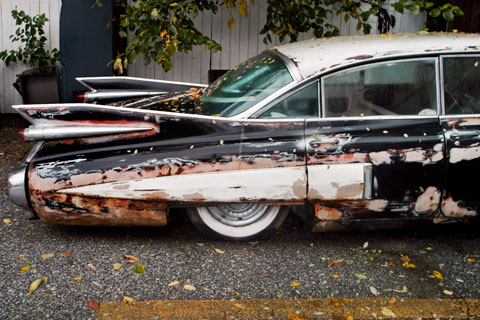
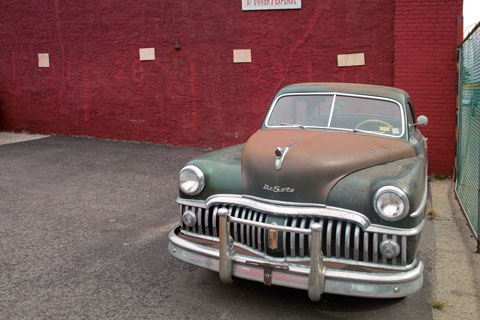
    Continuing the unintentional vintage automobile theme from below. I’ve been a bit busy lately with photo shoots and a quick trip down to Washington, D.C. Took the picture above while parking my rental car.

    Hope to report on the Robert Frank show at the Metropolitan soon. Will be traveling to Berlin in a few weeks to do more photographs for my book proposal, and I’m looking forward to being there on the 20th anniversary of the opening of the Wall.

  • New York/Greenpoint


    Greenpoint, Brooklyn — © Brian Rose

    And Jesus! Wit dat, he pulls it out of his pocket, an’ so help me, but he’s got it – he’s tellin’ duh troot – a big map of duh whole f______ place with all duh different pahts mahked out. You know – Canarsie an’ East Noo Yawk an’ Flatbush, Bensonhoist, Sout’ Brooklyn, duh Heights, Bay Ridge, Greenpernt – duh whole goddam layout, he’s got it right deh on duh map.
    “You been to any of dose places?” I says.
    “Sure,” he says. “I been to most of ’em. I was down in Red Hook just last night,” he says.
    “Jesus! Red Hook!” I says. “Whatcha do down deh?”
    “Oh,” he says, “nuttin’ much. I just walked aroun’. I went into a coupla places an’ had a drink,” he says, “but most of the time I just walked aroun’.”
    “Just walked aroun’?” I says.
    “Sure,” he says, “just lookin’ at t’ings, y’know.”

    Thomas Wolfe, Only the Dead Know Brooklyn, 1935


    Greenpoint, Brooklyn — © Brian Rose


    Greenpoint, Brooklyn — © Brian Rose


    Greenpoint, Brooklyn — © Brian Rose


    Greenpoint, Brooklyn — © Brian Rose


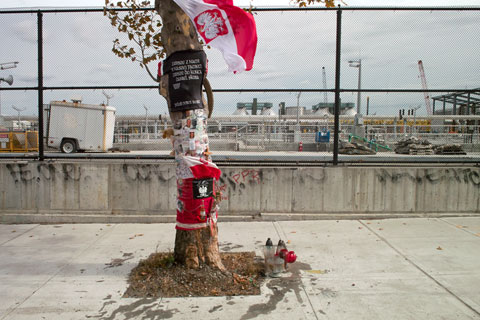
    Car accident shrine, Greenpoint, Brooklyn — © Brian Rose

  • New York/Greenpoint


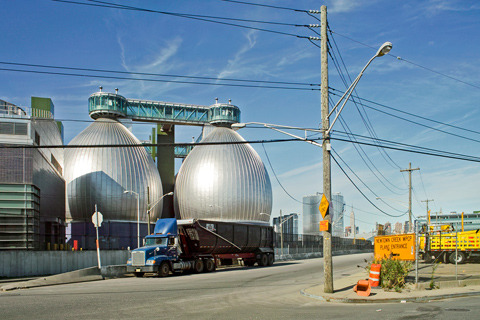
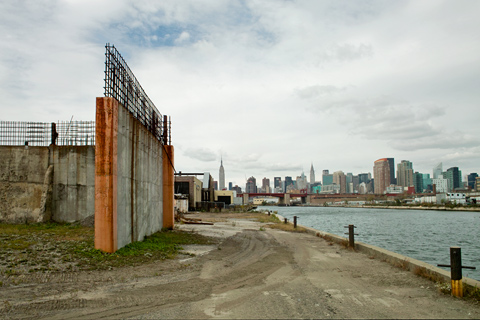
    Newtown Creek wastewater treatment plant (the eggs) — Greenpoint, Brooklyn
    Polshek Partnership Architects — © Brian Rose

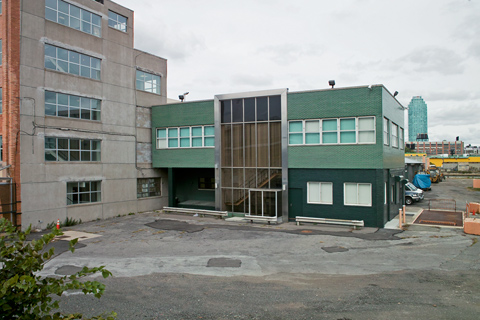
    Over the weekend I went to the Newtown Creek sewage plant to tour the famous digester eggs, iconic sludge stomachs that tower over Greenpoint and can be seen from many vantage points around the city. The tour was part of Open House New York, a yearly event, in which architectural landmarks, not usually accessible, are open to the public.


    Newtown Creek — © Brian Rose


    Adjacent to Newtown Creek wastewater treatment plant — © Brian Rose

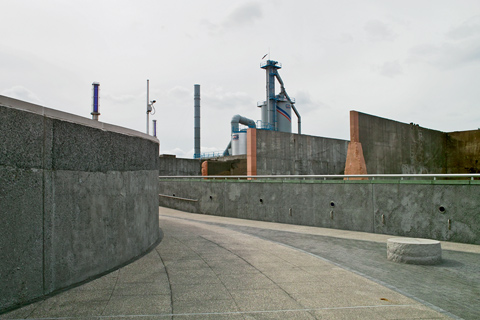
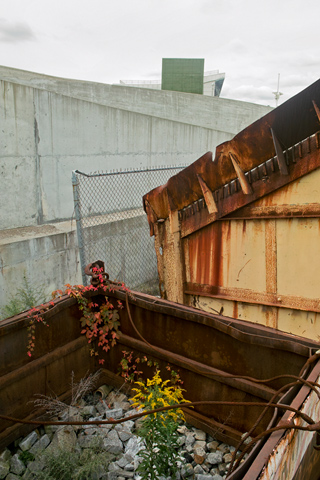
    The eggs dominate a post-apocalyptic industrial landscape, the site of the largest oil spill in US history–still lurking beneath the surface–where ancient crumbling infrastructure meets futuristic high technology.


    Newtown Creek sewage plant — © Brian Rose


    Nature walk — © Brian Rose


    Nature walk — © Brian Rose

    On Saturday I walked around with my digital camera after going up on the catwalk above the eggs. There’s a “nature walk” that takes one along Newtown Creek, a walled in pathway leads through and around the treatment plant. It’s both wonderful and alien. The light from a leaden sky pressed down.


    N. Henry Street — © Brian Rose

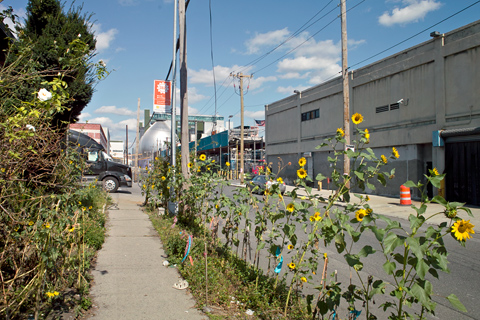
    On Sunday I returned with my view camera–brilliant sunshine this time–and walked over the bridge that crosses Newtown Creek, and went up to an immense cemetery that overlooks the area. As to be expected I was chased out as soon as I set up my tripod. Photography not allowed. Fortunately, however, I was not picked up as a suspected terrorist while framing the eggs through the oil tanks next to the creek or the fluttering sunflowers on N. Henry Street.


    Greenpoint Avenue — © Brian Rose

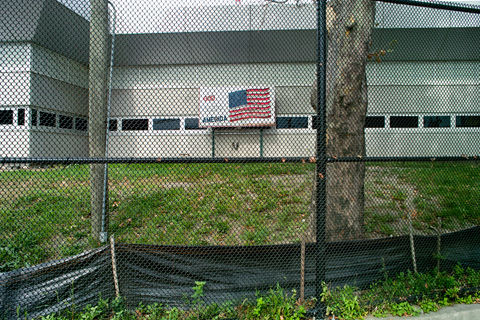
    God Bless America.

  • New York/Morning Walk


    Lafayette Street — © Brian Rose


    Lafayette Street — © Brian Rose


    Lafayette Street — © Brian Rose


    Lafayette Street — © Brian Rose

    Without comment.

  • New York/Skyline


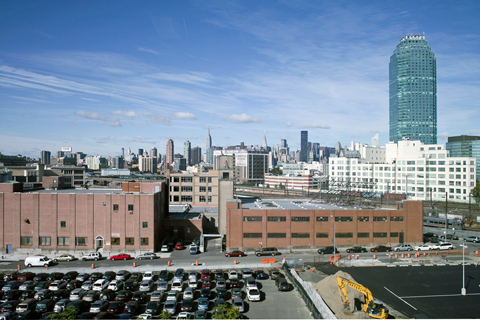
    Skyline from Long Island City — © Brian Rose

    A quick glance out the window while scouting for an upcoming architectural photo shoot.

  • New York/Primeval


    Pelham Bay Park, the Bronx, 1984 (4×5 film) — © Brian Rose

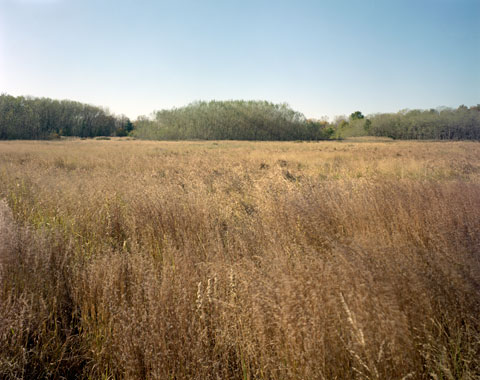
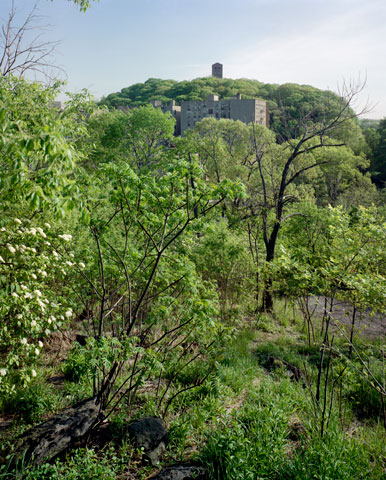
    Soon after the Lower East Side project was completed in 1981 I began photographing Central Park, partly on my own, and partly working for the newly formed Central Park Conservancy. This led to further explorations of New York City’s parks focusing primarily on the natural landscape throughout the five boroughs. There were sponsors, exhibitions–but no book–and eventually this work was left mostly unseen in my archive. I’ve always felt that these several park projects contain some of my best pure photography–images made from the raw material of the landscape–and greatly influenced how I approached the Iron Curtain landscape, a project begun in 1985.

    I recently discovered that Joel Meyerowitz has published a book–Legacy: The Preservation of Wilderness in New York City Parks–covering much of the same ground as my work from 20 years ago. Seeing it stopped me dead in my tracks, a little stunned. It’s obvious that he was unaware of my earlier work, also done in color with a view camera, so I can hardly complain. But it leaves me, nevertheless, with a feeling of loss.


    Inwood Park, Manhattan, 1984 (4×5 film) — © Brian Rose

    It’s a beautiful book, of course, as one would expect from Meyerowitz, who assiduously explored the far reaches of the city. And an exhibition opens this week at the Museum of the City of New York. So, what to do now with my work, the hundreds of negatives, years of effort?

    The answer, as best I can do for the moment, is New York primeval, a web presentation of my natural parks work. It includes almost 70 images along with documentation of how things came about, who funded it, and where it was exhibited. Rather than order the photographs geographically as in Meyerowitz’s book, I’ve made a continuous flow of images, sequenced sometimes by place, but often just by what feels right to me. I have identified the boroughs in which the photos were made.

    In the coming days I’ll link the site up to my homepage. And then move on.

  • New York/Bensonhurst


    Under the El in Bensonhurst — © Brian Rose

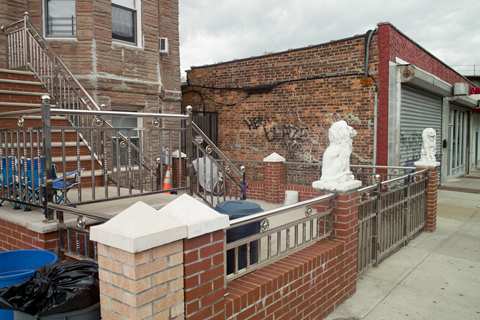
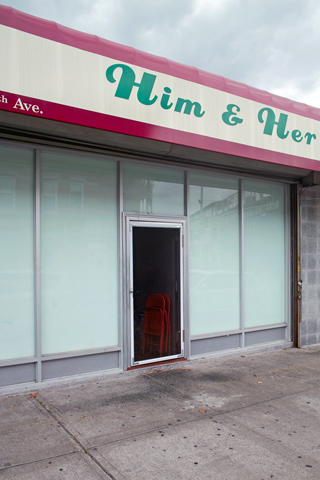
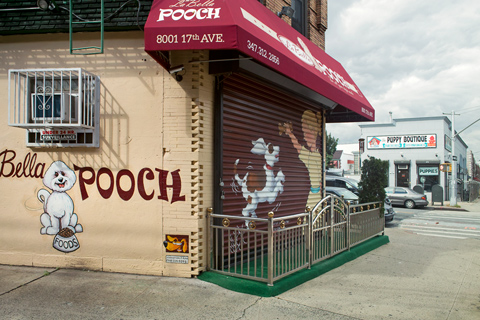
    I was in Bensonhurst, Brooklyn scouting for a client. I’m photographing a new cafeteria addition to a large public high school. The neighborhood around the subway stop is an absolutely crazy hodge podge of shops: King Henry’s entertainment kingdom, two pet stores–La Bella Pooch and the Puppy Boutique–a fresh fish store, a gunshop, the Him and Her Cafe–which serves colorful drinks to Asian people–a Columbian fast food restaurant decked out in bright orange with multiple TVs hanging from the ceiling, a car audio shop with its windows filled with dozens of trophies won for, you guessed it, car audio systems, and a photography studio, its windows filled with kitschy weddings and graduations, etc. This was all on two blocks of street under the elevated D train line, and I’m leaving stuff out.


    Bensonhurst lions — © Brian Rose


    Him and Her Cafe — © Brian Rose


    La Bella Pooch and the Puppy Boutique — © Brian Rose