Author: admin

  • New York/Downtown


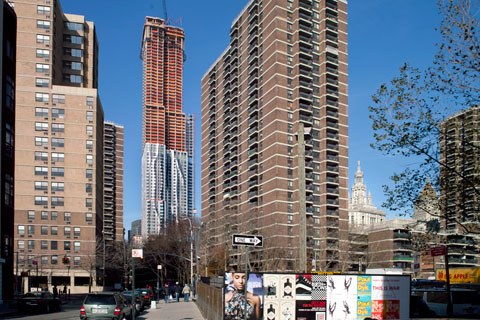
    Beekman Tower seen from Water Street — © Brian Rose

    The Lower Manhattan skyline lost a great deal of its iconic power when the Twin Towers, soaring above everything else, were destroyed in 2001. Even before that, the slender early to mid 20th century towers were robbed of their elegance by bulky monoliths closing off the gaps of sky between. No longer like a spiky seismograph, Lower Manhattan’s profile from many angles became a solid wall of glass and masonry.

    There is a building under construction, however, that will significantly alter the visual dynamic of the downtown skyline. Designed by Frank Gehry, Beekman Tower, situated near the open space of City Hall Park, has already established itself as a clear punctuation mark on the horizon. It is an exceptionally tall, relatively thin, tower. For good or ill, depending on your perspective or vantage point, it interacts visually with the filigreed spire of the Woolworth Building and the stone/wire yin and yang of the nearby Brooklyn Bridge.
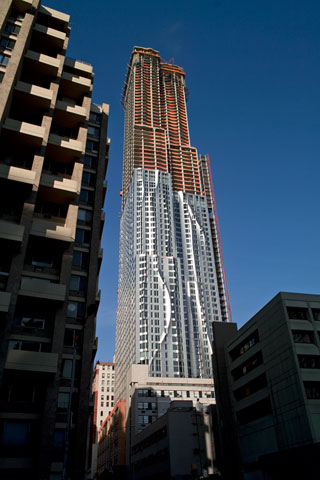

    Beekman Tower — © Brian Rose

    The skin is now about a third of the way up, undulating silvery waves, accentuating the extreme verticality of the structure. That’s something the pinstripes of the Twin Towers did–if banally. Beekman Tower will never dominate the skyline like the World Trade Center, then or in the future. But Gehry’s “No Viagra” (his words) erection downtown will be one of the few postwar skyscapers that join company with the Empire State Building and Chrysler in providing a sense of urban thrill, and unabashed New York bravado.
  • New York/Berlin


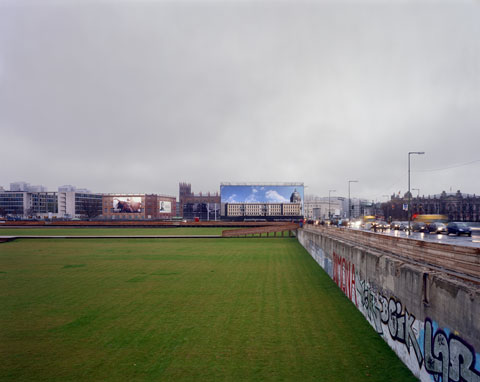
    Unter den Linden (4×5 film) — © Brian Rose

    This is a 4×5 scan of an image seen previously. The grassy field is the site of the former Palast der Republik, East German government/cultural center. And before that, it was the site of the 18th century Stadtschloss, seen printed on fabric in the rear. The idea is to rebuild the facades of the older palace.


    DDR Museum (4×5 film) — © Brian Rose

    The East German palace is gone–but not forgotten–and its glass facade has also been printed on fabric, hung on the structure of the temporary DDR Museum. There are such printed scaffold buildings all over Berlin.


    DDR mural, Leipziger Strasse (4×5 film) — © Brian Rose

    Very real is this mural in the former air ministry building, which was dates back to the early days of the German Democratic Republic. Here’s some information from Wikipedia:

    In 1950-52 an extraordinary 18 meter long mural was created at the north end along Leipziger Straße, set back behind pillars, made out of Meissen porcelain tiles. Created by the German painter and commercial artist Max Lingner together with 14 artisans, it depicts the Socialist ideal of contented East Germans facing a bright future as one big happy family. In fact the mural’s creation had been a somewhat messy affair. Commissioned by Prime Minister Otto Grotewohl, Lingner had had to revise it no fewer than five times, so that it ultimately bore little resemblance to the first draft. Originally based on family scenes, the final version had a more sinister look about it, a series of jovial set-pieces with an almost military undertone, people in marching poise and with fixed, uniform smiles on their faces. Lingner hated it (as well as Grotewohl’s interference) and refused to look at it when going past. With a degree of irony, the building became the focal point a year later of the Uprising of 1953 in East Germany.


    East Side Gallery (4×5 film) — © Brian Rose

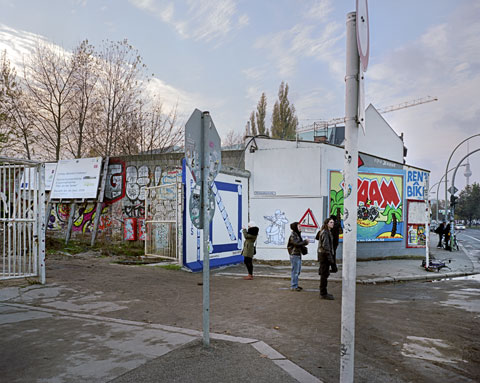
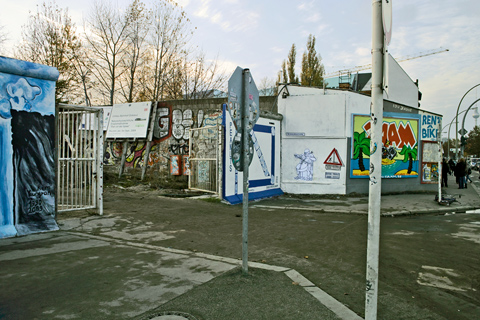
    I’ve only got a few more scans to work on from my recent trip to Berlin. The photograph above was the last piece of film I shot, and shows a bit of the remaining stretch of wall called the East Side Gallery near the Ost Bahnhof in former East Berlin. The Wall along here was painted on by various artists shortly after the Wall opened up in 1989. The image of Mstislav Rostropovich performing in front of the Wall at the center of the photograph is not one of the original paintings–but I like it.

  • New York/Berlin


    Near the Brandenburg Gate, Berlin (4×5 film) — © Brian Rose

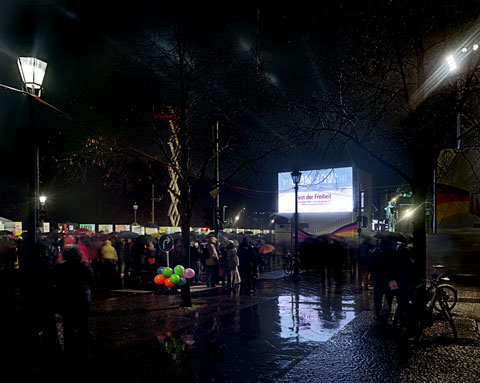
    Novevember 9, the 20th anniversary of the fall of the Wall. This was as close as I got to the ceremony at the Brandenburg Gate. I stood for an hour in a cold steady rain with my view camera, managing to take two photographs. I like the balloons. Everyone was just waiting for the dominoes to fall, which they did a couple of hours later, well behind schedule. By that time I had retreated to a warm dry place to watch on TV.

    Still more 4×5 scans to come.

  • New York/Berlin


    The Brandenburg Gate (4×5 film) — © Brian Rose


    Wilhelmstrasse (4×5 film) — © Brian Rose

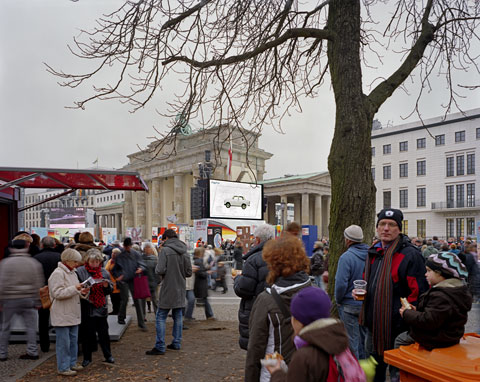
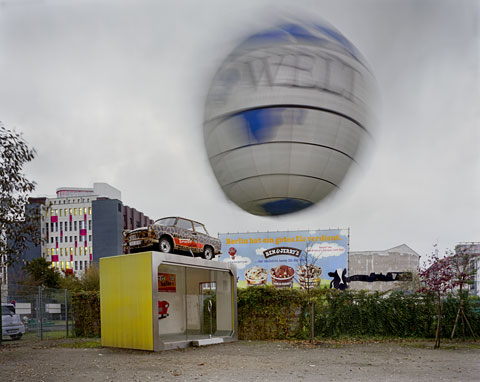
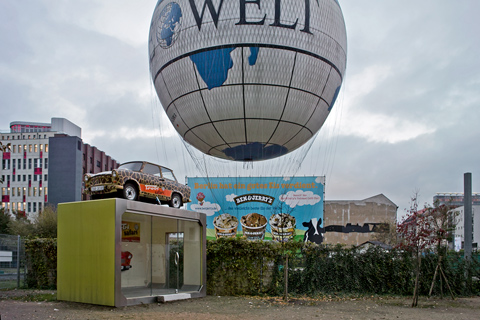
    Continuing with 4×5 film images from the week of the 50th anniversary of the fall of the Berlin Wall. Both of these were seen earlier in digital camera versions. The two pictures above key on what has become the universal symbol of the old DDR (East Germany), the Trabant. The top one is from a PayPal commercial that ran repeatedly on the big screens between Potsdamer Platz and the Brandenburg Gate, and the bottom one is from the Trabi Safari where the now vintage cars are for rent.

    Here the balloon appears slightly ominous, the world untethered, floating out of control.

  • New York/Upper East Side


    E82nd Street — © Brian Rose

    No.
    Bring them home.

  • New York/Metropolitan Museum


    Metropolitan Museum, Diana in the American Wing — © Brian Rose

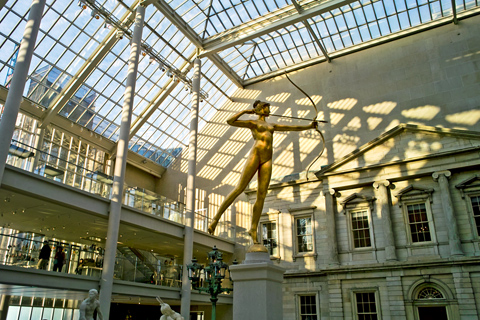
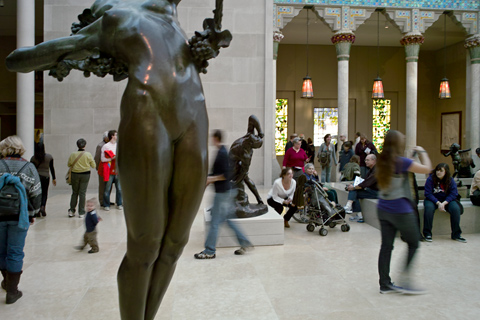
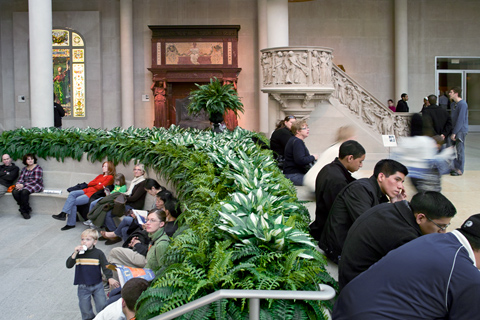
    Presided over by Diana, the former weather vane atop Madison Square Garden, by Saint-Gaudens, the renovated Engelhard Court of the Metropolitan Museum is a bustling atrium of fleshy marble and bronze unabashed in the presence of families with frolicking children and everyone snapping pictures or sagging in exhaustion among the ferns beneath a stone pulpit suffering an imaginary preacher’s admonishments.


    The Metropolitan, American Wing — © Brian Rose


    Metropolitan Museum– © Brian Rose

  • New York/The Americans


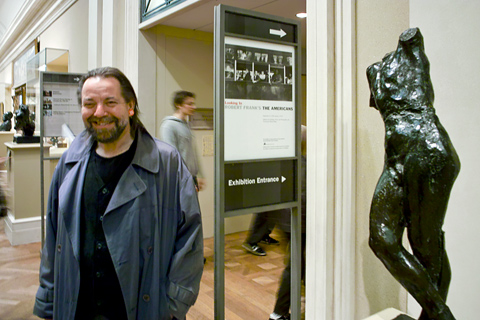
    Frank Tedesso in the Metropolitan Museum of Art — © Brian Rose

    After leaving (staggering out of) “Looking in: Robert Frank’s The Americans” at the Met, I stood for a moment by a Rodin statue pondering the exhibition–another photography exhibition where no photography was allowed. Robert Frank’s pictures were a searing burn of visual truth made at a time when voices were silenced by blacklists and guilt by association. It took courage to make art in the ’50s, perhaps, but if you were unknown or underground enough, maybe it didn’t really matter. In the end, Frank’s dark–though beautiful–vision of America surfaced, and changed forever how we saw ourselves, and how we viewed and made photographs.

    I snapped a few desultory shots of a poster directing the hordes of museum goers to the start of the exhibition. It had on it the famous photograph of a New Orleans streetcar with those unforgettable faces. And then, materializing out of the crowd, a face I knew, someone who is as fine an heir to the tumbling poetry and prose of the Beats I know, the songwriter and poet Frank Tedesso. Here’s a bit of one of his song lyrics:

    it’s raining in tibet,
    all of the holy men are getting wet
    it’s only snowing on my street,
    but my heart is melting away from me…
    There’s a madman up in the attic
    stompin’ the blues in his chains
    he sings my songs, he wears my clothes
    he answers to my name
    love me because i am crazy’
    as crazy as you are beautiful
    love me because i know forever
    runs through me and you
    and these flesh and bones
    de flesh and de bone
    is that the holy ghost on the saxophone
    sometimes a man has the need to roam
    to roam from these flesh and bones

    Go here to hear some of his songs.


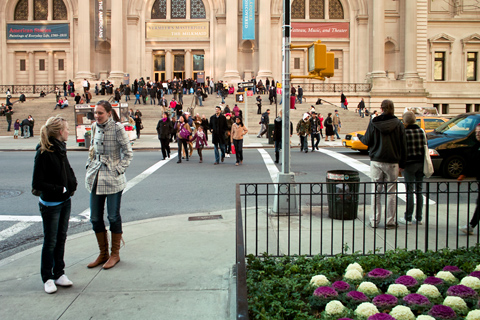
    82nd Street and Fifth Avenue — © Brian Rose

    As I wandered out of the museum, and breezed down 82nd street snapping pictures on my way to the subway, it struck me how self-conscious photography has become since the time of Robert Frank’s intuitive exploration of the country. We seem always to know where we are going and what we will find when we get there. Even serendipitous moments have a calculated predictability. Street photography has a staged quality, and staged photography has subsumed the idea of spontaneity.

  • New York/Thanksgiving


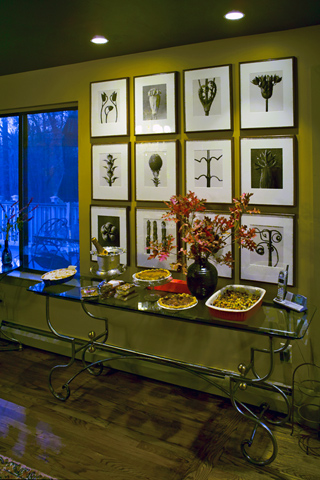
    Blossfeldt photos– © Brian Rose

    A short trip out of the city to Wilton, Connecticut. Thanksgiving pies and a grid of Karl Blossfeldt photographs.

  • New York/Berlin


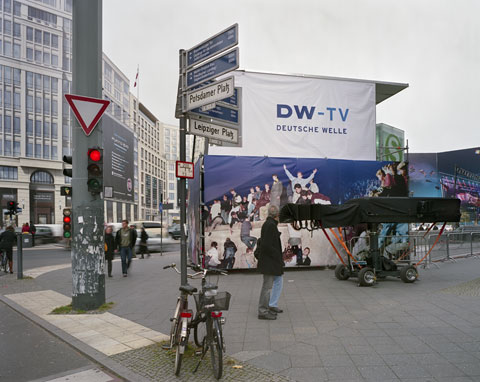
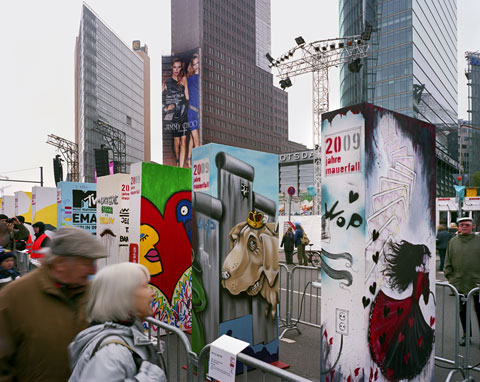
    Potsdamer Platz (4×5 film) — © Brian Rose

    Three images not shown earlier when blogging from Berlin. This one made at Potsdamer Platz, a TV boom and control booth, an image of joyous Germans climbing on the Wall in 1989, and trompe l’oeil buildings and scaffolding ads behind on adjacent Leipziger Platz.


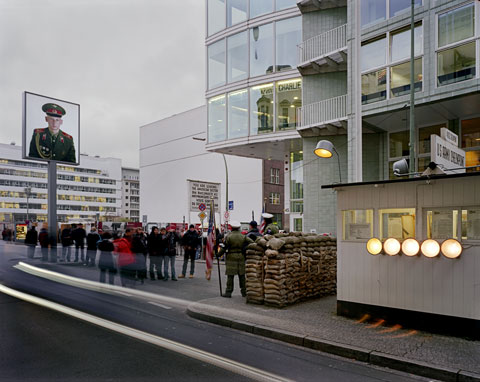
    Checkpoint Charlie (4×5 film) — © Brian Rose

    A crude reconstruction of the 1961 checkpoint shed with sandbags and lights–never there in the historical photos I’ve seen. Tourists pose with fake American soldiers who wave the flag around cavalierly. Haus am Checkpoint Charlie museum is across the street and to the right. An image of a Soviet soldier on the left is an art piece by Frank Thiel. The other side shows an American soldier.


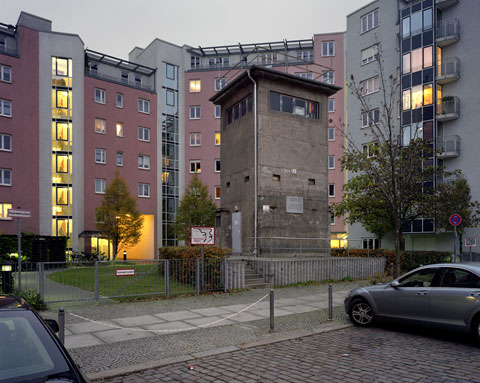
    Watchtower/memorial (4×5 film) — © Brian Rose

    Günter Litfin memorial, first victim of the newly erected Berlin Wall. A remaining guard tower surrounded by post 1989 housing.

  • New York/Berlin


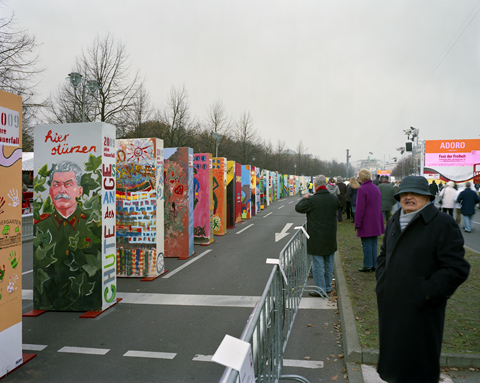
    Berlin Wall dominos, Ebertstrasse (4×5 film) — © Brian Rose

    Continuing to scan and work on my recent Berlin images.

    Similar to the digital view in an earlier post, this one features the man at right, who connects visually across the frame to the face of Stalin on the left. These cloudy sky pictures take a bit of work in Photoshop since the sky has to be lower in contrast than the rest of the image. Sometimes it can be done by selecting areas, but often I put the sky on a separate layer and flatten at the end.

  • New York/Berlin


    Potsdamer Platz (4×5 film)– © Brian Rose

    The first of the 4×5 film scanned. Compare to earlier digital snapshot below.

    The day before the dominos were toppled thousands of people walked between Potsdamer Platz and the Brandenburg Gate. I was excited to be there, but a bit put off by the commercial nature of things–including corporate logos on some of the domino stones. Freedom won in 1989, but coporatism reigns in 2009.

  • New York/Holocaust Center


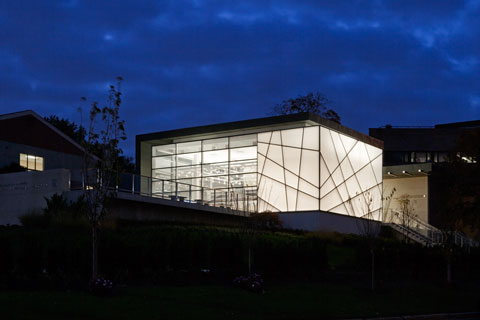
    Holocaust Resource Center & Archives, Queensborough Community College
    © Brian Rose

    Back into my architectural photography work, this is an extraordinary project I photographed shortly before my trip to Berlin. The design is by Charles Thanhauser of TEK Architects in New York. I’ll post more pictures later, and do a portfolio page for my website. Here is the website of the center.

  • Berlin/New York


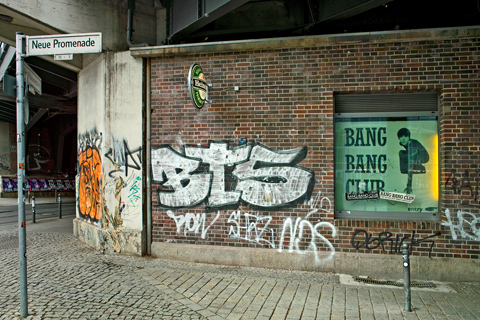
    Berlin under the S-Bahn — © Brian Rose

    Bang Bang Club or Bang Bang Club.

    I’m back in New York, and just picked up my Berlin film today.

  • Berlin/Parting Shots


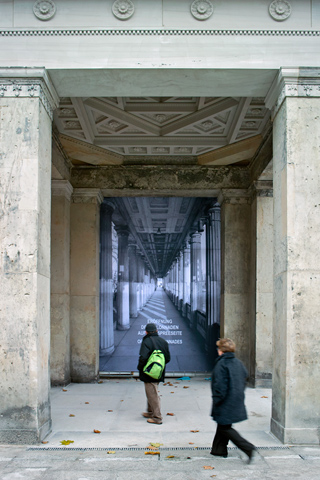
    Neues Museum Colonnade — © Brian Rose


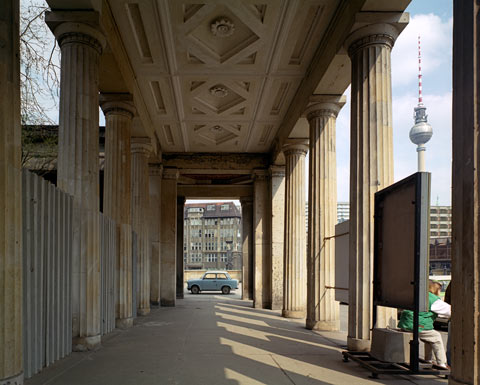
    Neues Museum colonnade, 1987 (4×5 film) — © Brian Rose

    Having run out of 4×5 film I took it easy on Friday. I hoped to see the Neues Museum, which has been restored with modern insertions by David Chipperfield, but the lines to purchase timed tickets for later in the afternoon were too long for me. Walking past the colonnade I photographed back in 1987, when this was East Berlin, I saw that the columns looked more or less as they did 22 years ago. Restoration was still taking place, and a part of the colonnade was under construction and would re-open soon. A black and white photograph set in the frame of the colonnade showed what lay behind it.

    I was pleased to see that The Lost Border was on the shelf of the nearby Walter König bookstore, and later, I found it in Bücher Bogen as well. The latter is one of the best art/architecture/photograhy bookstores anywhere. The salesman said that they had sold seven of my books–not a lot of books–but better than average for a photography book.


    Anhalter Bahnhof ruin — © Brian Rose

    Heading back to my hotel I passed the nearby ruins of the Anhalter Bahnhof, one of the stations employed in deporting Jews to concentration camps during the war years. The station facade once sat in vacant bombed out space, but new buildings and sports facilities have grown up around it, as well as in the open swath of former railroad tracks.


    Stresemannstrasse — © Brian Rose

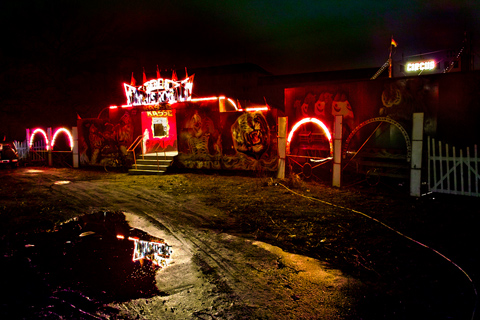
    Between the station and my hotel there are still vacant lots–it’s surprising after all the rebuilding of Berlin how much empty space remains in the center of the city. A constant through all my travels here are small tent circuses set up in one vacant spot or another. In Wim Wender’s film Himmel über Berlin (Wings of Desire), one of the angels watching over the city falls in love with a trapeze artist from just such a circus located near the former Wall.

    Next to my hotel was yet another circus standing in a muddy lot full of scruffy bushes and trees. I placed my point-and-shoot camera on the top of a gate, and used the self-timer to take the long exposure above. Music and crowd noises wafted from the tent off in the darkness.

  • Berlin/East Side Gallery


    East Side Gallery — © Brian Rose

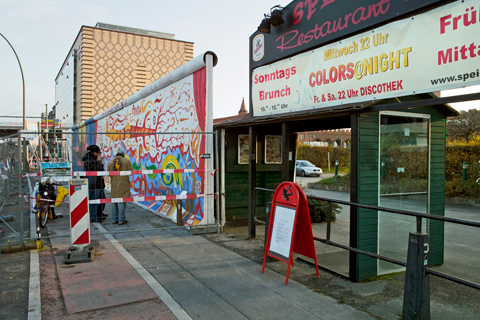
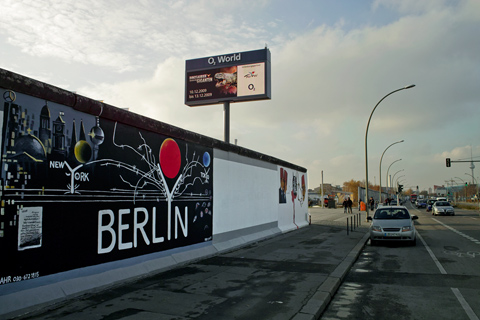
    The East Side Gallery is the longest stretch of Berlin Wall still standing–its survival due to the murals that were done on it just after the Wall was opened. Over the years the paintings deteriorated, and there was talk of removing the whole thing. Fortunately, the murals are being restored, in many cases by the original artists.

    On Thursday, the sun actually came out in Berlin, and I did a number of photographs of the East Side Gallery. Not the murals themselves–they’ve been documented adequately–but the scene in general. The mural side of the Wall faces northeast, and as a result, does not get much sunlight. A few painters were working on their segments of the Wall as seen above. There’s a gap in the Wall to the right because of a club/restaurant situated in an old building that stood in the former death strip between the inner and outer walls.


    East Side Gallery — © Brian Rose

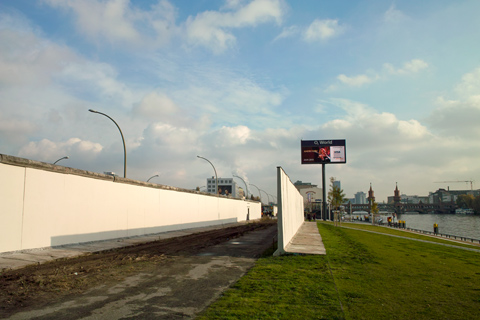
    This was a pretty desolate industrial area before the Wall came down, and now there is a huge new music hall called O2 located nearby looking like an alien space ship. A number of large video screens like the one above advertising an upcoming André Rieu concert dot the landscape. To the right are the towers of the Oberbaumbrücke, which once stood within East Berlin.


    East Side Gallery — © Brian Rose


    East Side Gallery — © Brian Rose


    East Side Gallery — © Brian Rose

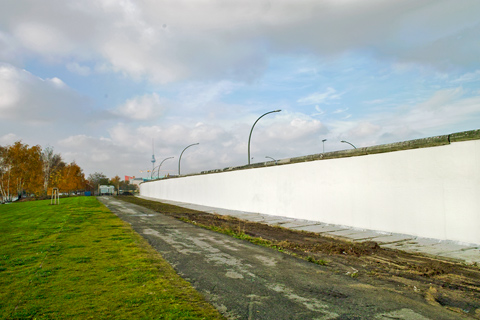
    It may seem strange to see such a clean white Berlin Wall, but this is what it looked like on the east side where people could not approach the Wall, much less paint on it. The last photograph I took–my last sheet of 4×5 film–was at the north end of the East Side Gallery across from the Ost Bahnhof where there is a messy collection of ad hoc graffiti and paintings including a depiction of Mstislav Rostropovich performing at the Berlin Wall just a few days after its opening.

  • Berlin/Topography of Terror


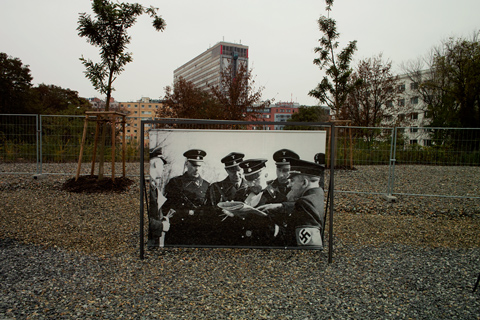
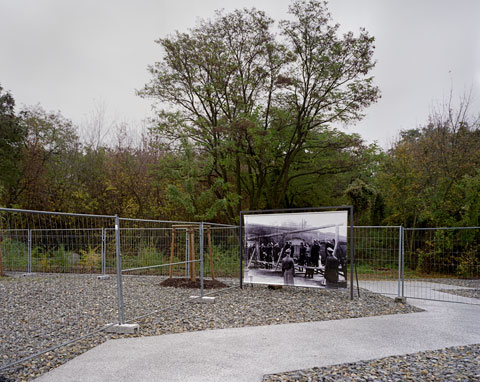
    Topography of Terror — © Brian Rose


    Topography of Terror — © Brian Rose


    Topography of Terror — © Brian Rose

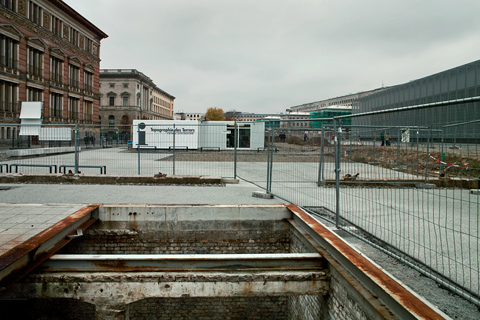
    The raw provisional quality of the Topography of Terror exhibition remains after a seemingly endless effort to construct a documentation center, and a find a proper way to present and stabilize the foundation walls of the former SS/Gestapo headquarters. The new building is almost finished, a more utilitarian structure than the earlier Peter Zumthor design, which was abandoned half-built due to lack of funding.


    Invalidenfriedhof and wall remains — © Brian Rose

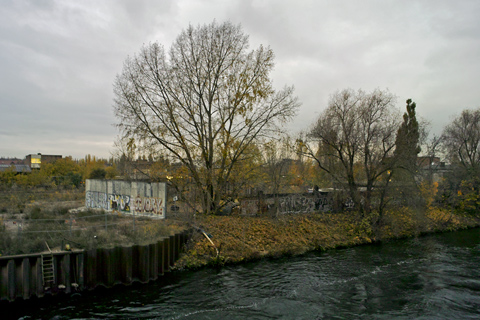
    Later in the afternoon I walked along the Spandauer Schifffahrtskanal and through the Invalidenfriedhof, a park that forms a memorial to Günter Litfin, “the first victim of shots fired at the border between East and West Berlin after the Wall went up on 13 August 1961.”


    Spandauer Schifffahrtskanal — © Brian Rose

  • Berlin/Currywurst


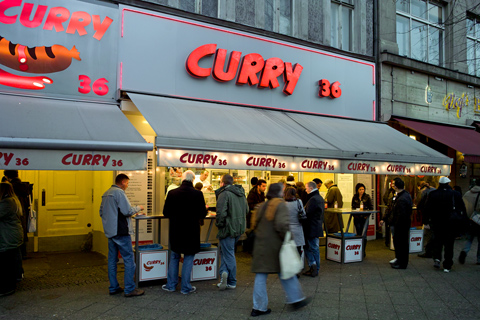
    Curry 36, Berlin — © Brian Rose

    Not much time for haute cuisine on this trip to Berlin. Mostly I’ve been picking up food on the fly. The two classic Berlin fast foods are currywurst and dönner kebab. I’ve had great dönner in the past, but this time I’ve been sampling currywurst–basically, grilled sausage drenched in ketchup and sprinkled with curry powder. Often served with fries.

    Berliners (and tourists) argue about where you can get the best currywurst, but it’s like New Yorkers arguing about the best pizza by the slice (Ray’s on Prince Street). When it good, it’s perfect. Nothing more to do to it or take away from it. It is what it is. When in Berlin, go to Curry 36.

  • Berlin/Wilhelmstrasse


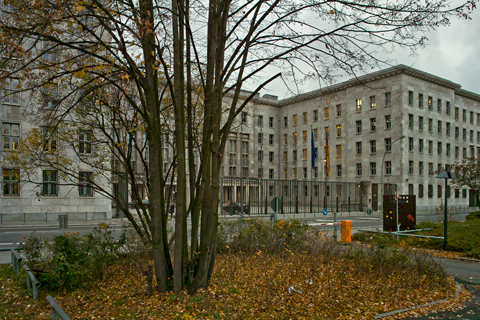
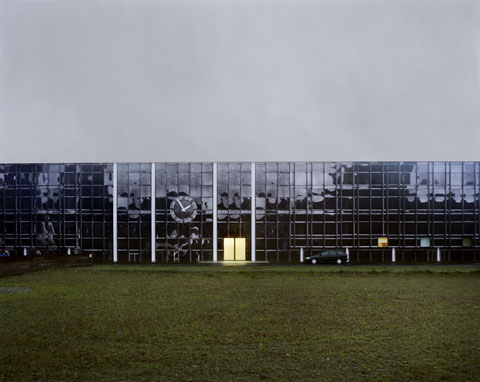
    Formerly, Nazi air force ministry, now, German finance ministry
    © Brian Rose

    I made a shorter day of it confining my photos to a two or three block area between Checkpoint Charlie and Wilhelmstrasse. Many of the Nazi era government buildings were located along this street. The Berlin Wall ran just a short distance to the left of the photograph above.


    Wilhelmstrasse, Berlin — © Brian Rose

    Directly across the street from the severe, but imposing, Air Force Ministry, one of the many still vacant lots in this heavily bombed out area is occupied by a tethered balloon ride and the Trabi Safari, where you can rent a 20 year old East German Trabant to drive around the city–and hopefully your fiberglass body doesn’t end up shattered like an egg by a much more substantial Mercedes or Audi.