Author: admin

  • New York/Amsterdam

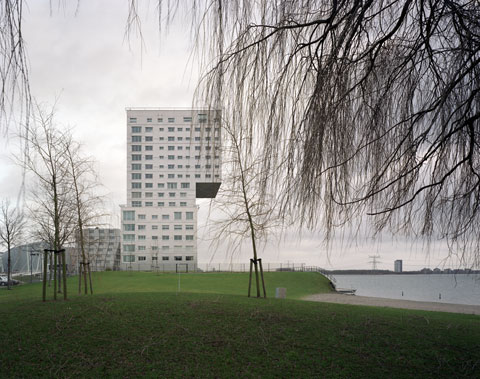
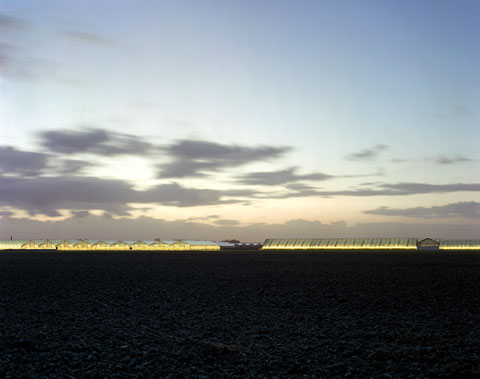
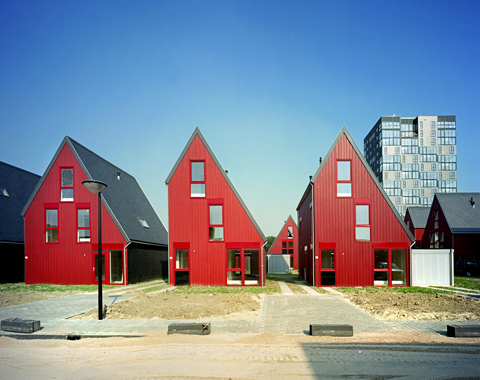
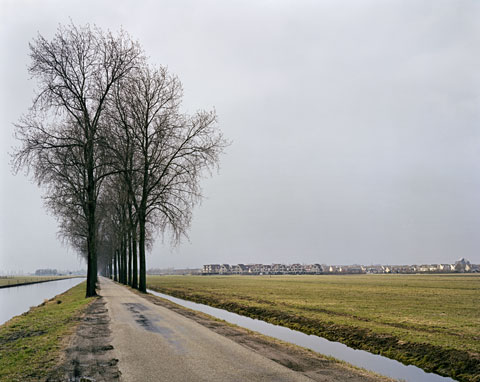
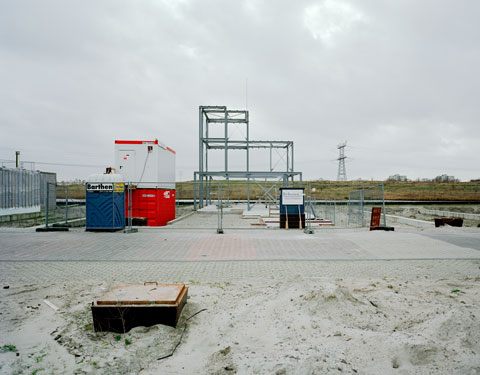
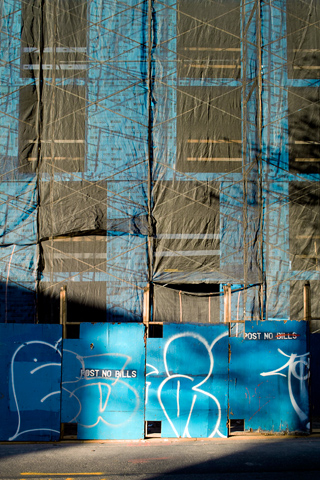
    Continuing to work on my Amsterdam on Edge portfolio. These are new scans of view camera work done while living in Amsterdam from the early 90s up to three years ago. None of these have been printed before. The greenhouse photograph was previously unprintable because of damage done to the film in the sky area. Easily fixed in Photoshop. Almere is a satellite city of Amsterdam about 30 minutes from the city center, and Amstelveen lies to the south.

    Amsterdam (4×5 film) — © Brian Rose

    Almere (4×5 film) — © Brian Rose

    Almere (4×5 film) — © Brian Rose

    Amstelveen (4×5 film) — © Brian Rose

  • New York/Cartier-Bresson at MoMA


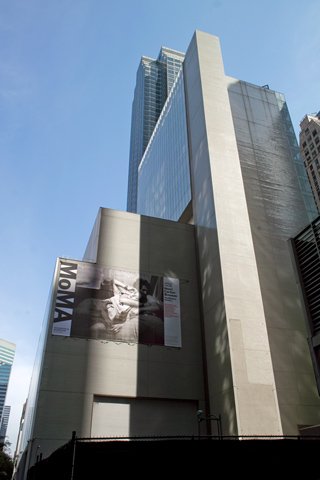
    Cartier-Bresson banner, Museum of Modern Art — © Brian Rose

    As is so often the case these days, photography is not allowed in the current Cartier-Bresson exhibition at the Museum of Modern Art. So, my pictures are peripheral to the galleries themselves–a banner outside, the gift shop, the entry and title wall to the exhibition. It would be helpful in writing about the organization and content of the show to be able to speak visually, that is, by taking pictures. Once again, visual speech denied. Nevertheless, the museum has provided a significant portion of the exhibit online here.
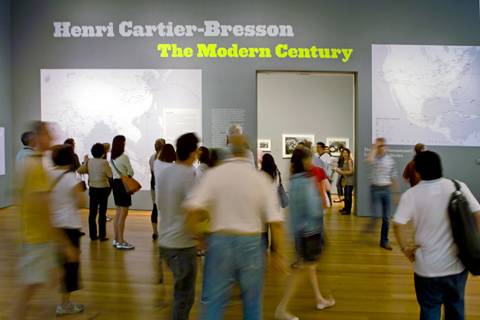

    Maps and exhibit title in MoMA — © Brian Rose
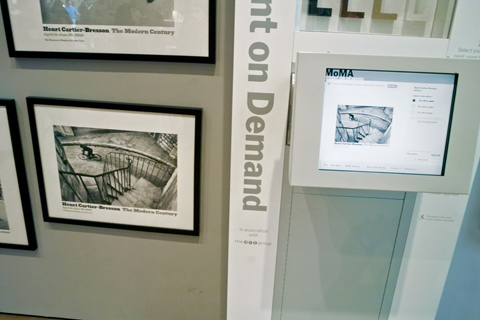

    Prints on demand, MoMA, classic Cartier-Bresson image — © Brian Rose

    The first thing one encounters entering “Henri Cartier-Bresson, The Modern Century” are several large maps that trace Cartier-Bresson’s wanderings across the globe over the decades he worked as a photojournalist. It’s not the way his work is usually presented, typically a distillation of his most iconic images, especially the “decisive moment” photographs of the 1930s when he developed his groundbreaking way of seeing. I was happy to see curator Peter Galassi take a different approach, thematic and geographical, that while hitting all the high spots of his career, also revealed how many of these photographs came from specific assignments published in the lavishly illustrated magazines of the day. It is important to understand that the “art photography” of Cartier-Bresson was made in an entirely different context from present day gallery photography. The overtly self conscious nature of much contemporary photography is nowhere to be found in Cartier-Bresson’s work.

    Seeing the range of Cartier-Bresson’s images at MoMA  spanning decades and continents I was stunned, yet again, by the epic scale of his achievement. Not only did he essentially invent 35mm street photography, and create a purely photographic way of responding to time and composition, his work touched or intersected with many of the great events of the 20th century. And his portraits of leading artists of the century, alone, would have established him as an important photographer.
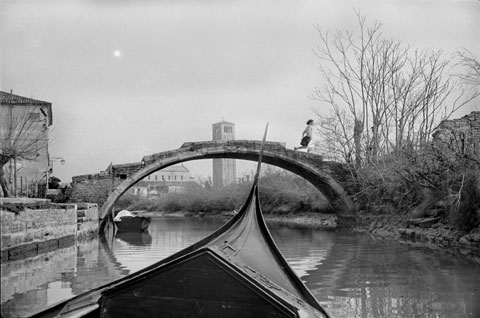

    Venice, 1953, photograph by Henri Cartier-Bresson

    Having looked at a lot of Cartier-Bresson photographs over the years, I was most interested in the many images in the exhibition that I’d never seen, especially the views of crowds, the pictures made in America, the depictions of working men and women. One photograph, new to me, taken in Venice in 1953 shows the pointed prow of a gondola juxtaposed against an arched bridge reflected in the water to form a nearly completed oval, a tower jutting vertically behind, and a girl in motion crossing the bridge. It’s a classic Cartier-Bresson image, visually modern, but a fleeting glimpse of a timeless Europe.
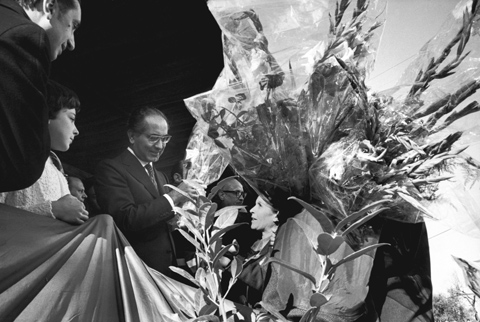

    Photography by Henri Cartier-Bresson

    Garry Winogrand?
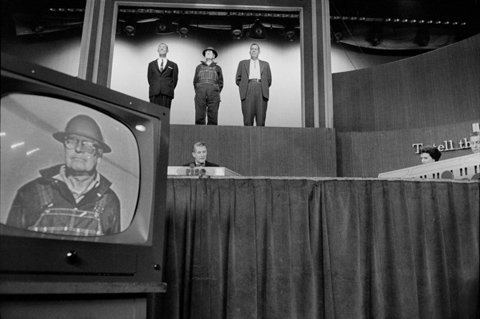

    Photograph by Henri Cartier-Bresson

    Lee Friedlander?

    In the New York Times Holland Cotter ends his mostly positive review of “The Modern Century,” curiously I think, by comparing at some length Cartier-Bresson’s American images to those of Robert Frank. Frank and other small camera photographers like Lee Friedlander and Garry Winogrand were directly influenced by Cartier-Bresson, but I think of them in relation to newer cultural movements–Frank to the Beats and the stream of consciousness style of Kerouac, Friedlander and Winogrand to pop art and the jarring political and social clashes of the 60s and 70s. Their careers overlap, true, but Cartier-Bresson was a product of an earlier European sensibility, attuned to cultural difference and identity–that combined with the peripatetic restlessness of a reporter touching down briefly, then on again to the next assignment. When Frank set off across the United States, he was not reporting from the road; the road became its own reality, leading to places unknown.
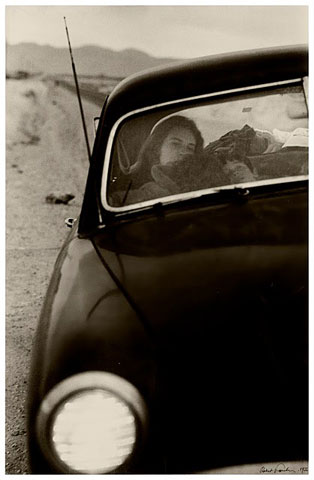

    Photograph by Robert Frank, 1955

    Frank’s “The Americans” is arguably the most influential photo book of the 20th century. Conceived as a project, based on a single body of work, it remains a profoundly insightful, disturbing, portrait of the American social landscape. But nothing Frank did, nor anything any of us do as photographers, is conceivable without Cartier-Bresson. He was the great innovator of “The Modern Century,” as the show at MoMA makes imminently clear.

    .

    ***

    .
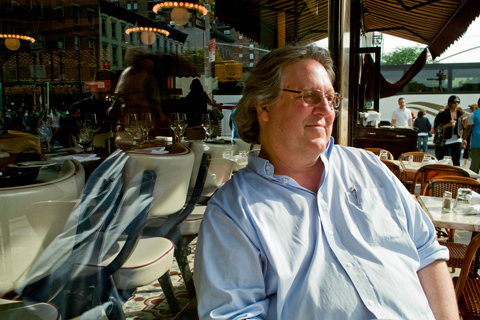

    Art Presson — © Brian Rose

    After seeing the exhibit I walked with my friends Art Presson and Eve Kessler through Times Square over to a restaurant on West 44th Street. It was a warm, pleasant evening, the streets teaming with people. My wife and son joined us at the restaurant, and after eating we headed downtown just a few minutes before Times Square was evacuated due to the discovery of a car bomb–fortunately unexploded. We were oblivious to the drama until I checked the news on the Internet later in the evening.
  • New York/Amsterdam

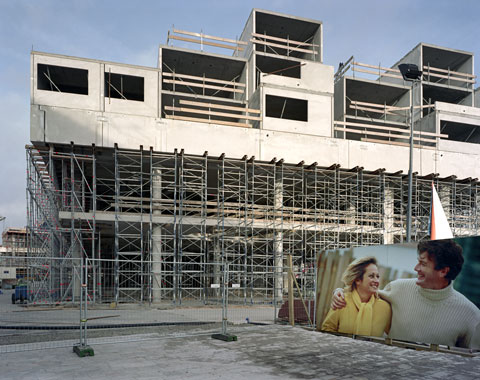
    Almere Buiten  (4×5 film) — © Brian Rose

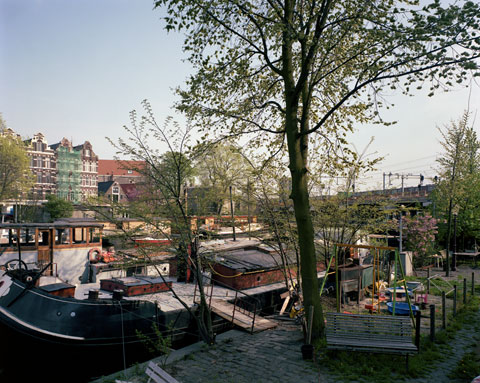
    Amsterdam (4×5 film) — © Brian Rose

    I’ve been scanning my Amsterdam on Edge negatives, pictures of the periphery of Amsterdam taken during the 15 years I lived in the Netherlands. Most of the prints I have of that work were made conventionally in the darkroom, and many were frustrating to print because of uneven processing done by the labs I used at that time in Amsterdam. There aren’t many places in New York I’d trust for c-41 processing these days either.

    I still like the look of C prints for the work I do, but I don’t do any more straight darkroom prints. I scan the negatives and work them up in Photoshop, and then print them at a rental lab, or upload them to Adorama Pix, which does a serviceable job. They use Kodak Endura, which is high quality archival paper. I am essentially using their machine to print out what i’ve already done on my computer.

    The image above was taken in Almere, a satellite city of Amsterdam. It’s one of the grand experiments of Dutch urban planning, a completely new city of over 100,000 people built on reclaimed land. It is also something of an architectural theme park where anything goes–at least it can seem that way. Almere, for all its density, has a suburban feel to it, and since its beginning in the 1960s it has been attractive to young families seeking a dream house away from the frictions of urban life. It is now a stronghold of Geert Wilders’ right wing anti-Muslim party.

    My wife grew up there, and when I moved to the Netherlands in the early 90s her parents still lived in Almere. They have since moved to Amsterdam and they have a house on the coastal island of Texel. Places like Almere just don’t have the cultural diversity of Amsterdam, and even finding a decent restaurant remains hopeless. Once the kids grew up, they moved out.

    Amstelveen  (4×5 film) — © Brian Rose

    Amsterdam (4×5 film) — © Brian Rose

    After World War II, the Netherlands engaged in a vast rebuilding that has gone on for decades. It was a new start inspired by idealism and the belief that a better society could be consciously created and cultivated. As a result, the Netherlands has become one of the most prosperous places in the world. But in recent years, a pall has hung over this prosperity. As the world became smaller, the Dutch have found themselves increasingly a multicultural society with all its accompanying problems. The incandescent confidence that suffused Dutch politics and planning in the 90s when I arrived gave way to an erosion of confidence in the great national project, the polder model, as it was called, and a confusion about Dutch identity and culture.

    That’s the context for my Amsterdam on Edge series, a project I have never adequately presented or had an opportunity to exhibit. Although I have an Amsterdam page on my website, it needs a better presentation and the inclusion of a number of new photographs–like the ones above. The Netherlands remains a conundrum for me–progressive yet deeply conservative, cosmopolitan yet overtly parochial. It is one of the best places for architecture in the world. Photographers are doing great stuff these days. I met lots of terrific people. But the cultural extremes gave me whiplash and left me stranded between countries unable to find a niche in their midst.

  • New York/Williamsburg

    Williamsburg, Brooklyn — © Brian Rose

    Without comment.

  • New York/Williamsburg

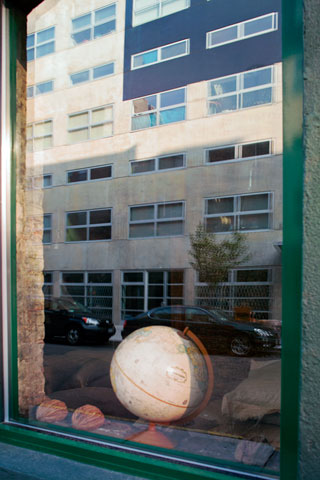
    Mast Brothers Chocoate shop window — © Brian Rose

    Heading out in the morning to take my son Brendan to school. The globe in the window of Mast Brothers Chocolate across the street from our building was glowing. That’s our building reflected in the window.

  • New York/Lower East Side

    Houston and Bowery, the President on his way to Cooper Union — © Brian Rose

    One of the most significant contributors to this recession was a financial crisis as dire as any we’ve known in generations. And that crisis was born of a failure of responsibility – from Wall Street to Washington – that brought down many of the world’s largest financial firms and nearly dragged our economy into a second Great Depression.

    It was that failure of responsibility that I spoke about when I came to New York more than two years ago – before the worst of the crisis had unfolded. I take no satisfaction in noting that my comments have largely been borne out by the events that followed. But I repeat what I said then because it is essential that we learn the lessons of this crisis, so we don’t doom ourselves to repeat it. And make no mistake, that is exactly what will happen if we allow this moment to pass – an outcome that is unacceptable to me and to the American people.

    Barack Obama

  • New York/Lower East Side

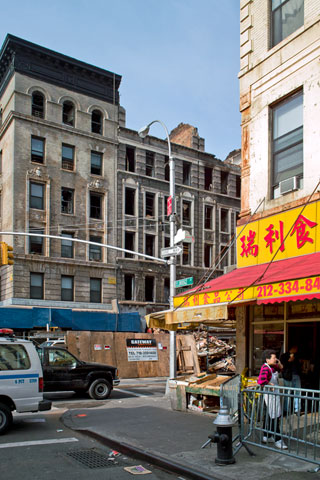
    Grand and Eldridge Streets — © Brian Rose

    Just over a week ago there was a fire in two buildings on Grand between Eldridge and Forsythe, about five blocks away from my studio on Stanton Street. It was one of the worst fire in years in New York City–seven alarms–killing one and routing two hundred from their apartments. 283 and 285 Grand have been reduced to shells, and are in the process of being demolished. The most grievous losses, of course, are human, including the loss of personal possessions, and as a cab driver told me yesterday, the likely loss of life savings–cash stored in the apartments by the Chinese immigrants who did not have access to bank accounts.

    But as one who has chronicled the visual history of the neighborhood, I feel it is necessary to note the passing of two more tenement buildings, the infamous building type that once dominated the Lower East Side, that formed the richly decorated, fire escape encrusted, walls of the cavernous streets. These buildings were from the beginning meant for the poor, and 283 and 285 Grand were still housing the poor 110 years on the night of their destruction.

    I walked down to Grand Street this morning to survey the scene, and brought my view camera with me. The photograph above, taken with my digital camera, shows the burnt out buildings at center, the top floor already removed, and a mound of debris piled in the street below. Fire helmeted inspectors sifted through the rubble. The corner building, badly damaged and now empty, will be spared, but the twin tenements will be gone in a few days.

    The photograph could have been taken in 1980 when I first began my Lower East Side project with fellow photographer Ed Fausty. At that time there were dozens of abandoned burnt-out tenements all over the neighborhood. Nights were punctuated by the whoops and honks of fire engines rushing to yet another blaze, often set intentionally by landlords hoping to squeeze a few insurance dollars out of their ruinously neglected properties. Those days are long past, but one has to wonder about this fire, which happened in a building rife with city violations, and comprised primarily of rent controlled and rent stabilized apartments.

    Here are dramatic pictures of the fire.

  • New York/Onward and Upward

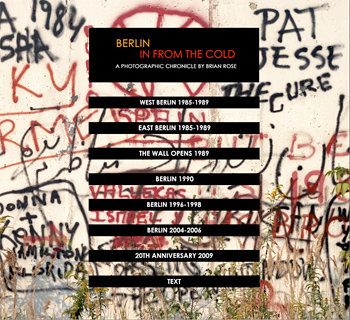
    I have now linked my Berlin project–Berlin: In From the Cold–to my main website. The project covers the Wall, it’s demise, and the gradual re-emergence  of a new city overlaid onto the often dark history of the old. Some of the photographs were originally included in the Lost Border, but most have never before been exhibited or published.

    BERLIN: IN FROM THE COLD

    The entire series is also available in printed form via Blurb, the online book service. You can page through the book below, or go directly to Blurb where the book is available for purchase. This is likely be a very limited run, so I encourage you to pick one up while you can.

    In other news, I am still pursuing an eventual exhibition of my Lower East Side photographs, waiting for the funding to come through for a project involving a number of photographers documenting the state of Iowa, and I just met with architect Michael Mills, and architectural historian Meredith Bzdak to discuss a possible book about the Louis Kahn bath house in Trenton, which is currently being restored.

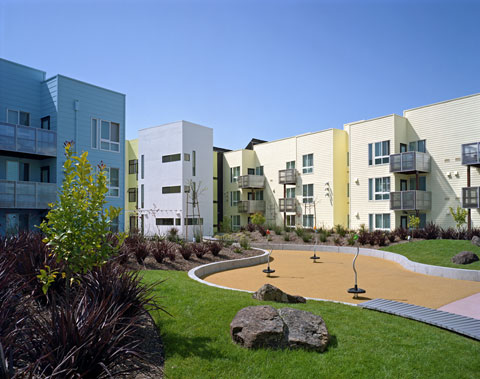
    Iron Horse at Central Station, Oakland, California, affordable housing designed by David Baker (4×5 film) — © Brian Rose

    The architectural field has been hit pretty hard by the recession, which we may or may not be recovering from. But despite the drop off in work, I am hanging in there. The projects above are what I try to keep focused on, but they do not pay the bills. It’s a difficult time to be a free lance photographer, especially one specializing in architecture. But the recent trip, photographing David Baker’s brilliant housing complexes in the San Francisco Bay Area, came at a good time and was a rejuvenating experience in many ways.

    I am also contemplating getting back into the studio to record some of my songs, new and old, which I have continued to write over the years. I am hoping to work with my friend Jack Hardy, the songwriter, who is an expert at guerilla recording–throwing a band together and hitting the studio. Stay tuned…  Which at this point in time is a pretty anachronistic expression.

  • New York/Williamsburg

    Williamsburg, Brooklyn — © Brian Rose

    Without comment.

  • New York/Greenwich Village

    Ben’s Pizza at McDougal and W3rd Street — © Brian Rose

    Back when I was hanging out in folk clubs in the late ’70s and early ’80s, I survived on two basic food groups, falafel and pizza. Ben’s was and is a small pizza joint located–in those days–equidistant between Folk City and the Speakeasy, two places where I used to perform. Both long gone. Ben’s is still there, wholly unchanged, and the pizza by the slice remains above average. When the weather is mild, the walls and doors are opened, and restaurant and street merge in a colorful, tawdry mess.

  • New York/Land’s End

    Although I was quite busy in San Francisco shooting five David Baker housing projects, and the arrival of my family for a week’s sightseeing only made things busier, I did eventually find time to see some photography at SFMOMA. There was lots to see there, but a couple of unexpected moments elsewhere seem more significant in retrospect than anything I saw in the museum.

    I was happy, however, in SFMOMA to come across the wall of Nicholas Nixon photographs of the Brown sisters, part of the museum’s 75th anniversary show. I’d seen images from the series many times, but never the whole thing together. He has photographed the foursome, which includes his wife, every year since 1975. Although the images were not made in the same setting, Nixon has maintained the order of posing, consistent distance, black and white film, and use of an 8×10 view camera. There is little artifice evident in the way he has photographed these women, yet there is something singularly compelling about the images and the faces staring so intently at the photographer, and at us.

    Nixon began this series in 1975 the same year as the exhibition New Topographics, in which his urban landscapes were shown. His portrait of the Brown sisters carried over the idea of objective landscape description to the human figure, foreshadowing the work of Thomas Ruff and Rineke Dijkstra, among others.

    The Brown Sisters by Nicholas Nixon — © Brian Rose

    Visitors to the gallery at SFMOMA kept snapping pictures of the installation, moving from the youngest to the oldest–which is what everyone does–watching the course of time act upon these resolute, independent, visages. It is a discomforting voyeurism, but we are all in this together, our own aging mirrored on the wall, in this powerful collusion between photographer and subjects.

    Parábola óptica (Optical Parable) by Manuel Alvarez Bravo

    On a rainy day we went to the Exploratorium, a cacophonous interactive science museum housed in the former Palace of Fine Arts, part of the 1915 Panama-Pacific International Exposition. Unique to this museum, science shares the spotlight with “art and human perception.” In the midst of various exhibits on visual and auditory perception I came across the photograph above by Manuel Alvarez Bravo. It is an image of an optician’s storefront reversed so that the signage is seen backwards. Next to the photograph, the museum had built a full scale mock-up of Bravo’s optician’s shop. I made my own Bravo below with my digital camera.

    The text panel adjacent to the photograph:

    Our “storefront” was inspired by a photograph taken in 1931 by Manuel Alvarez Bravo. Much of Bravo’s work explores the interplay between opposing ideas, such as the cultural differences between urban and rural Mexico. In Parábola óptica, Bravo presents an optician’s store in a way that highlights the paradoxical nature of seeing. For example, the store provides instruments designed to make seeing easier, yet the picture itself is reversed so that the store’s name is difficult to read. The store’s name, La Optica Moderna, literally translates as “the modern optician,” but it’s been said that a broader translation is “the modern viewpoint.” Perhaps interpreting Bravo’s storefront in this ambiguous way suggests the difficulty of seeing clearly in a world filled with contradictions.

    Yes, I said out loud to myself. The difficulty of seeing clearly in a world filled with contradictions. That’s what this business is all about. I wanted to share this “find” with someone else, but my son had dashed ahead to another hands-on exhibit, while my wife sat in the museum cafe reading a mystery novel.

    Camera obscura at Cliff House — © Brian Rose

    I wanted my son to see the Pacific Ocean before we returned to New York, so we drove to Cliff House at Land’s End on the western edge of San Francisco. We walked some of the trails along the rocky shoreline, as an unusually turbulent sea crashed against the rocks. I also wanted to show him the camera obscura perched almost precariously above the ocean with its 360 degree projected image inside.

    There is nothing more basic to photography than such a device, which was known to the renaissance painters and architects. Much of our awareness and understanding of two dimensional perspective is derived from images made with the use of camera obscuras. Photography only became possible with the invention of a way to fix those images on a light sensitive plate or paper surface.

    But alas, the “giant camera” was closed, the pavilion rusty and forlorn, the sky and crashing waves unseen within its dark interior.

  • New York/San Francisco

    Clarion Alley, the Mission, San Francisco — © Brian Rose

    Still sifting through my snapshots from the recent trip to San Francisco. Am hard at work on the computer finishing up the four architectural projects I photographed.

  • New York/San Francisco

    California Academy of Sciences, San Francisco — © Brian Rose

    Green roof of the science museum in Golden Gate Park designed by Renzo Piano.

  • New York/San Francisco

    More random views from San Francisco.

    The Mission — © Brian Rose

    South of Market (SOMA) — © Brian Rose

    Sam Jordan’s Barbeque, Bayview-Hunters Point — © Brian Rose

  • New York/San Francisco

    I’m back in New York after a wonderful, but busy trip to San Francisco. I Fedexed the 4×5 film ahead to my lab here, so the pictures were ready to work on when I arrived. I will be chained to my computer for several days.

    Here are a few random views made with the digital camera while traveling around the Bay Area.

    Under I280 in San Francisco — © Brian Rose

    Oakland overpass — © Brian Rose

    Alcatraz — © Brian Rose

  • San Francisco/The Mission

    David Baker house, the Mission, San Francisco — © Brian Rose

    My wife Renee and son Brendan stand in front of David Baker’s house on Shotwell Street in the Mission. On the street side, the house retains much of its original facade, but Baker’s intervention is clearly visible on the ground floor. An office entrance is to the left, the house above is accessible through the center door, and our rear apartment is reached through the wood slatted gate to the right, originally a carriage passage way. Solar panels can just be seen on the roof.

    According to Baker in Dwell magazine:

    “There were about 20 people living in this warren of windowless rooms,” recalls Baker, “along with assorted pit bulls, cats, and chickens. Whenever someone wanted to expand, they just nailed on some Sheetrock and a new roof.”

    David Baker house, rear yard — © Brian Rose

    David Baker house, rear yard — © Brian Rose

    The back courtyard is covered in a thick carpet of loose pebbles. There is a workshop behind sliding wood and plastic doors, a spiral staircase provides access to the main living space, and very tall bamboos shield one side of the yard. Hovering over it all is the word “why” apparently taken from an old sign. Reminds me of “Hell Yes” on the New Museum in New York. But I much prefer “why.”

  • San Francisco/The Mission

    Shotwell Street — © Brian Rose

    Staying in the Mission in San Francisco in an apartment in architect David Baker’s house, a Victorian converted into a sheltered oasis in this sometimes rough edged neighborhood. One block may be full of beautiful houses with lushly flowering landscapes, while another is made up of warehouses and car repair shops like the one above.

    I’ve finished the architectural projects I came to photograph, and when I’m back in New York, I’ll be chained to the computer for days working on the images. As some of you know, I’ve continued shooting 4×5 film, but scan it at high resolution, and then import it into Photoshop. I do this for my client work, which is delivered  directly as digital files, and for exhibition prints, which I make at a rental lab.

    This, however,  may be the last batch of QuckLoad 4×5 film available–the prepackaged film I’ve been using for something like 20 years. First Kodak, and now Fuji, have dropped similar versions of this film packaging. They both still make 4×5 sheet film, but–stepping back a couple decades–it has to be loaded into holders in total darkness. Carrying holders means an extra bag, more weight, and a tendency to get dust on the film while loading or unloading. We are being driven to digital, like it or not.

  • San Francisco/Oakland

    Oakland, California — © Brian Rose

    In the Bay Area one more day.