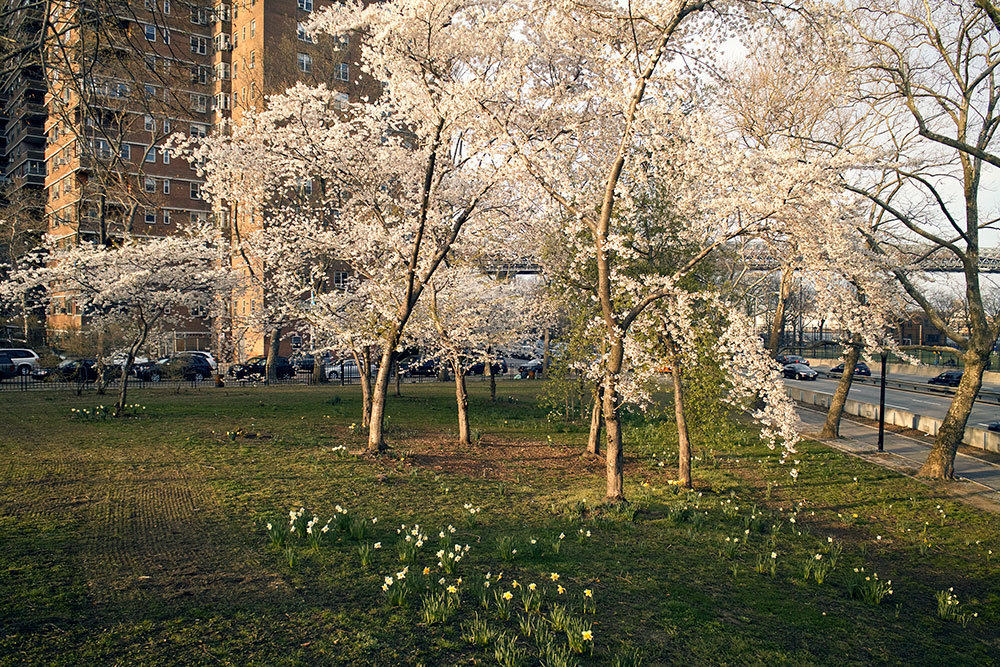
 FDR Drive, Lower East Side — © Brian Rose
Without comment.
FDR Drive, Lower East Side — © Brian Rose
Without comment.
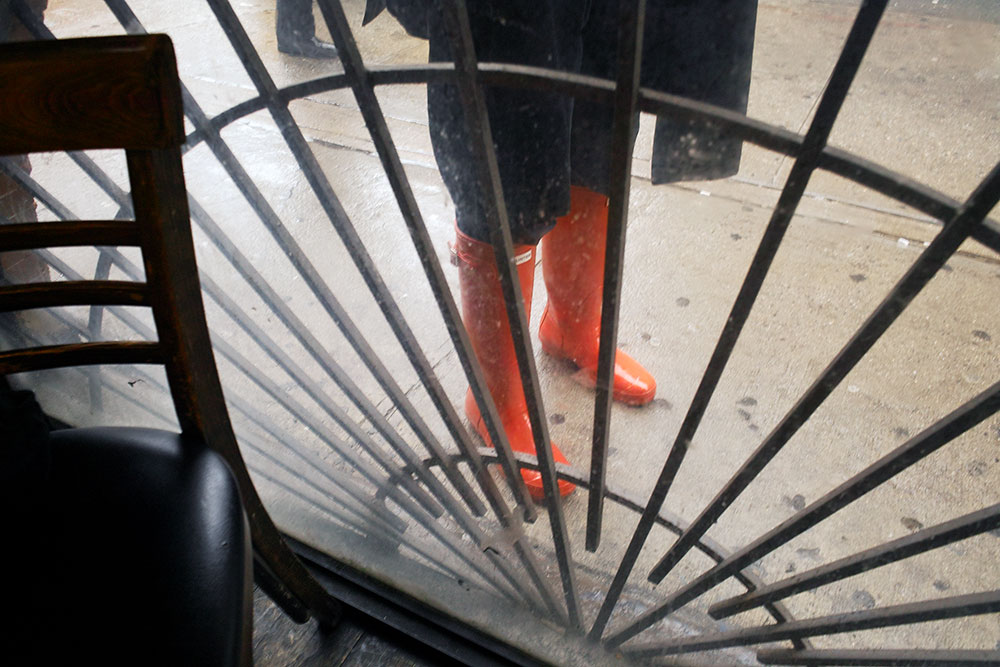 Bleecker and Bowery — © Brian Rose
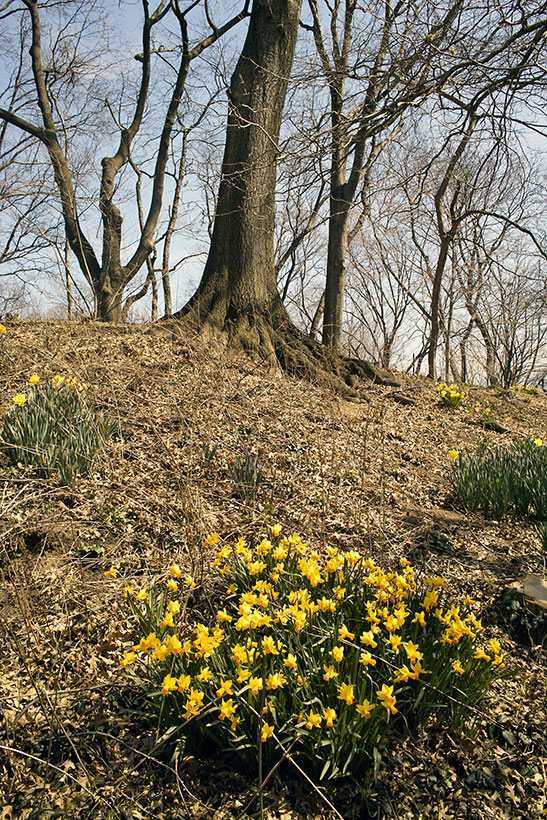
Central Park — © Brian Rose
Springtime in New York.

The Seagram Building (375 Park Avenue) — photo by Ezra Stoller
A few days ago the Times ran a story about Phyllis Lambert’s book Building Seagram, which tells the story of her role in the selection of Mies van der Rohe for the commission. The Seagram Building (now 375 Park Avenue) is regarded by many as New York’s finest skyscraper of the modern era. Lambert was the daughter of Samuel Bronfman, the head of Seagram, and her zeal for architecture and civic responsibility led her to take up the cause in New York and in her hometown of Montreal. It may sound unlikely, but there is a small connection to Time and Space on the Lower East Side in this story.
In the late 70s at Cooper Union, one of my professors was Richard Pare, who at the time was assembling a collection of architectural photographs for Seagram under the direction of Phyllis Lambert. Those photographs, acquired by Pare, from all over the world, would eventually comprise a unique part of the collection of the Canadian Center for Architecture, another Lambert initiative. Soon after graduating, I began the Lower East Side project with Edward Fausty. After a number of months of work — once we had gotten some momentum going — we contacted Pare and showed him our pictures.
I remember visiting Pare in the Seagram Building on Park Avenue in 1980 bringing a box of 11×14 prints. We eventually sold a dozen or so prints to Seagram, which helped fund the project at a critical time when our money was running low. I also remember meeting Lambert, and attending an event honoring Berenice Abbot, the great photographer of New York City. I’m not sure I appreciated her importance until then.
There were several key funding moments that made the Lower East Side project possible — a New York State CAPS grant (similar to today’s NYFA grants), an unexpected windfall of $10,000 left to me by a deceased relative, and the Seagram/Canadian Center for Architecture purchase. Without those three sources of money, it’s doubtful that the Lower East Side project would have been completed, and my career — such as it is — launched.
Thank you Phyllis Lambert — and Richard Pare.
 Dillon Gallery
My show at Dillon Gallery closes on April 9. Still a few days left to see Time and Space on the Lower East Side.
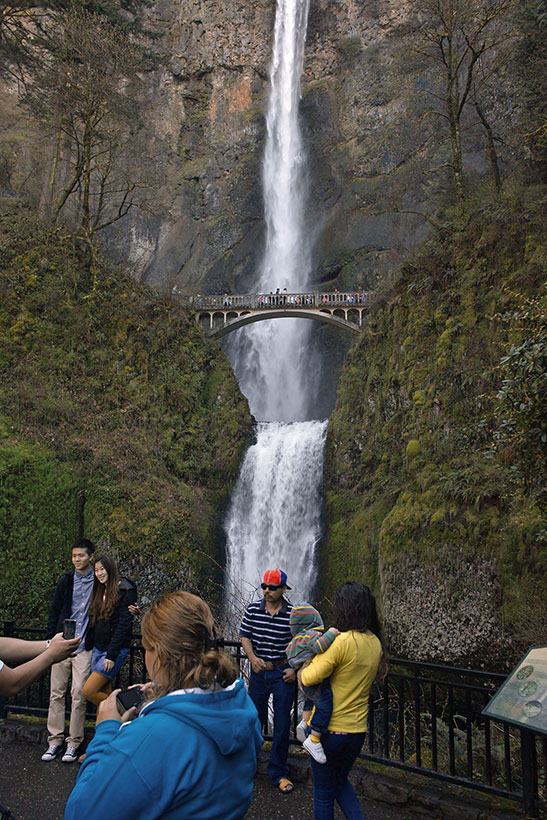
Multnomah Falls, Columbia River Gorge — © Brian Rose
I think I’ll close the trip out with a big touristy bang.
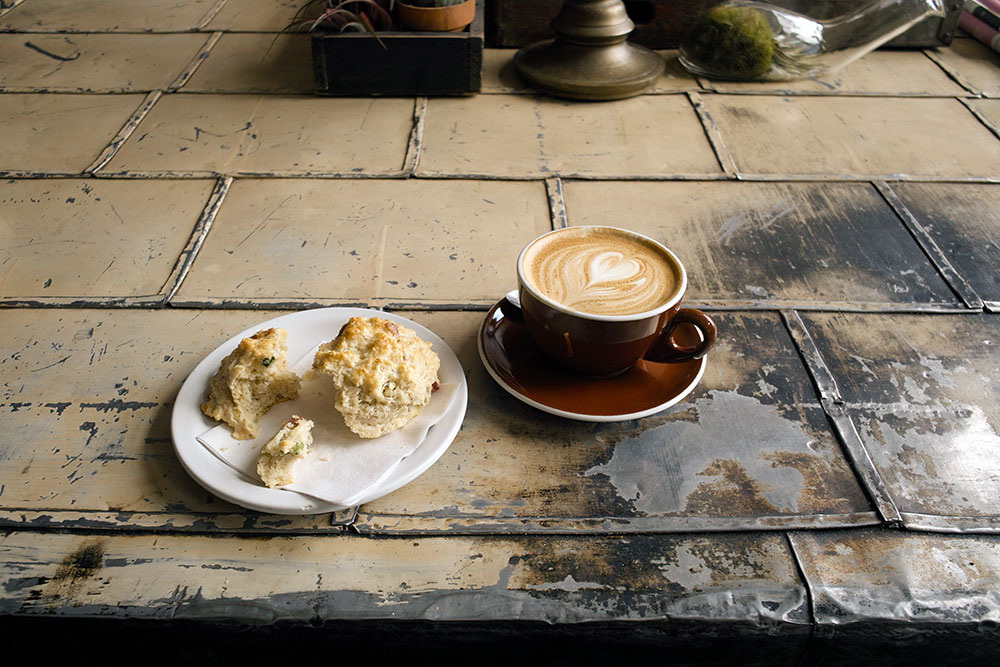 Stumptown Coffee in the Ace Hotel, Portland — © Brian Rose
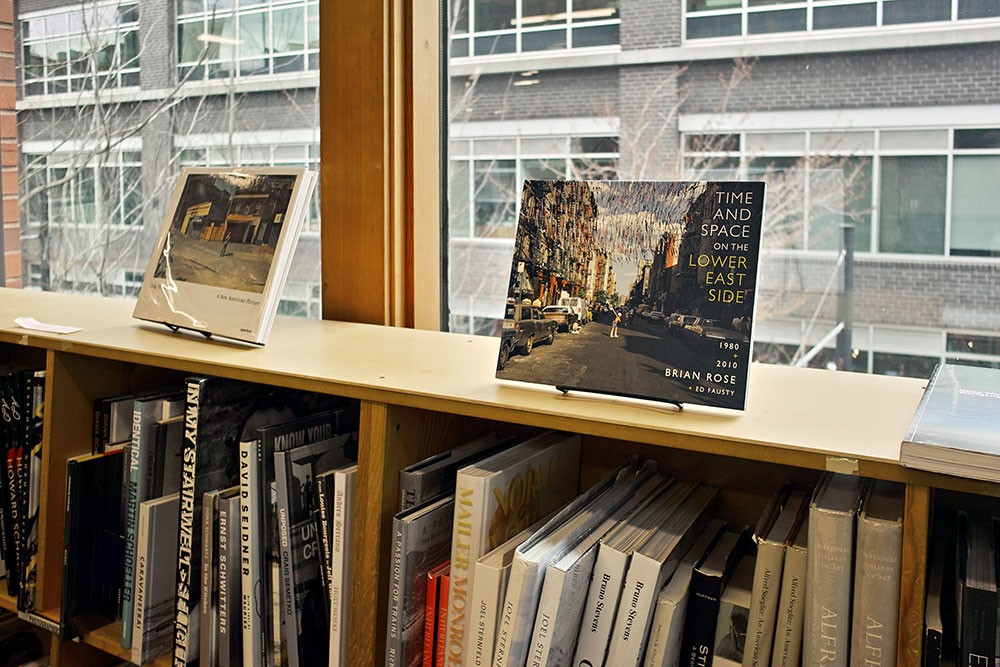 Powell’s City of Books — © Brian Rose
Went to Powell’s nearby and was happy to see my book prominently displayed in the photo section.
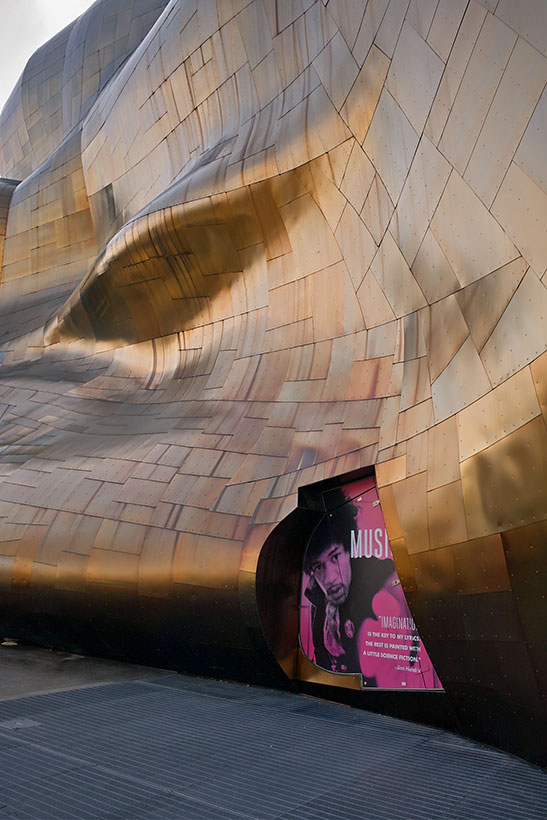
EMP in Seattle — © Brian Rose
EMP is not one of Frank Gehry’s better buildings. It tries way to hard, makes too many moves, is junky rather than elegant. Nevertheless, there are moments. Here’s Jimi Hendrix and the undulating skin of the building.
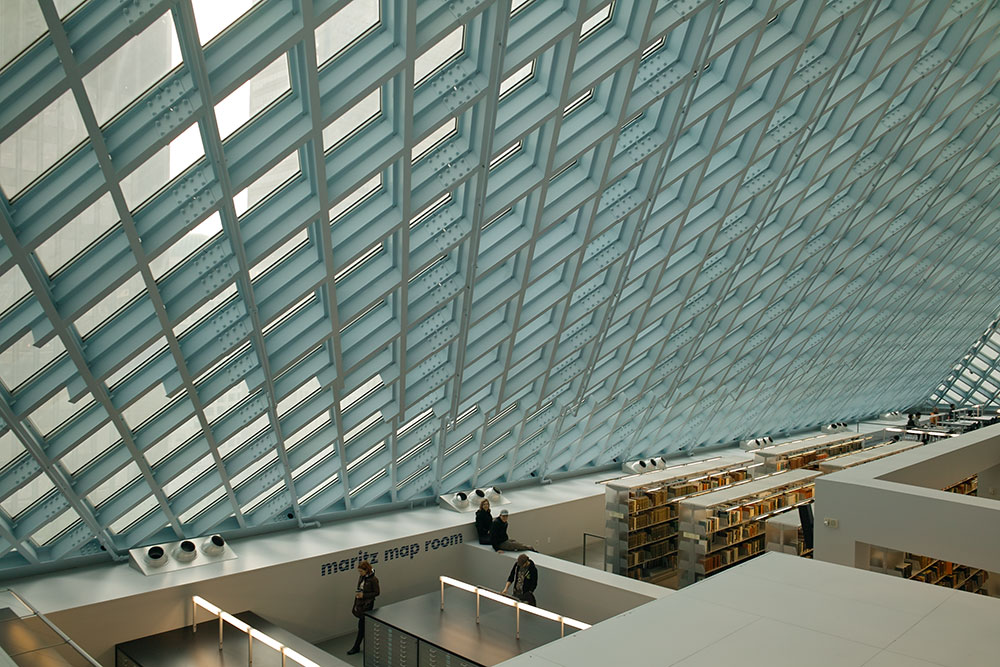
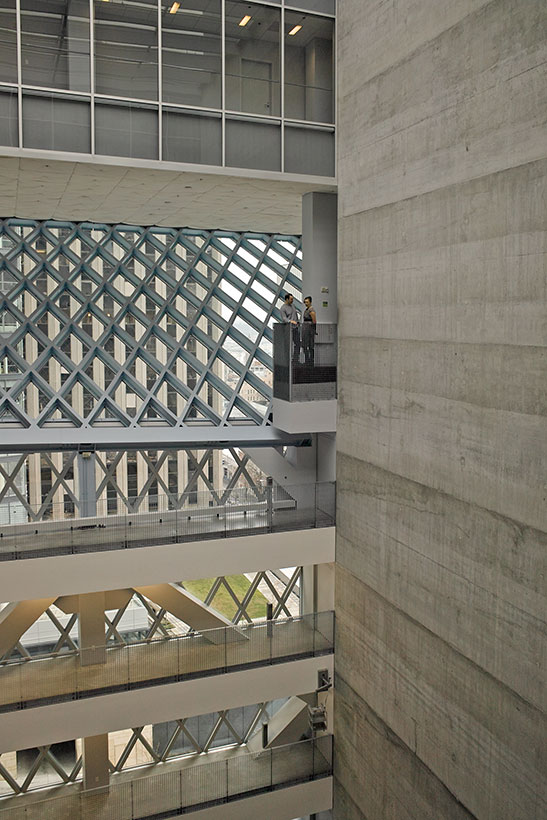
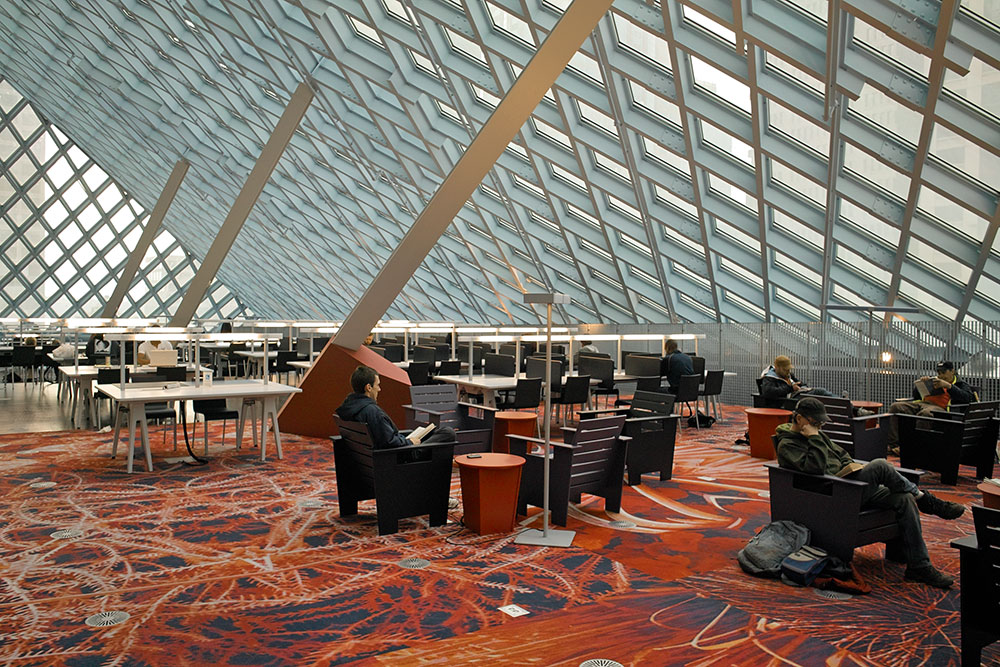
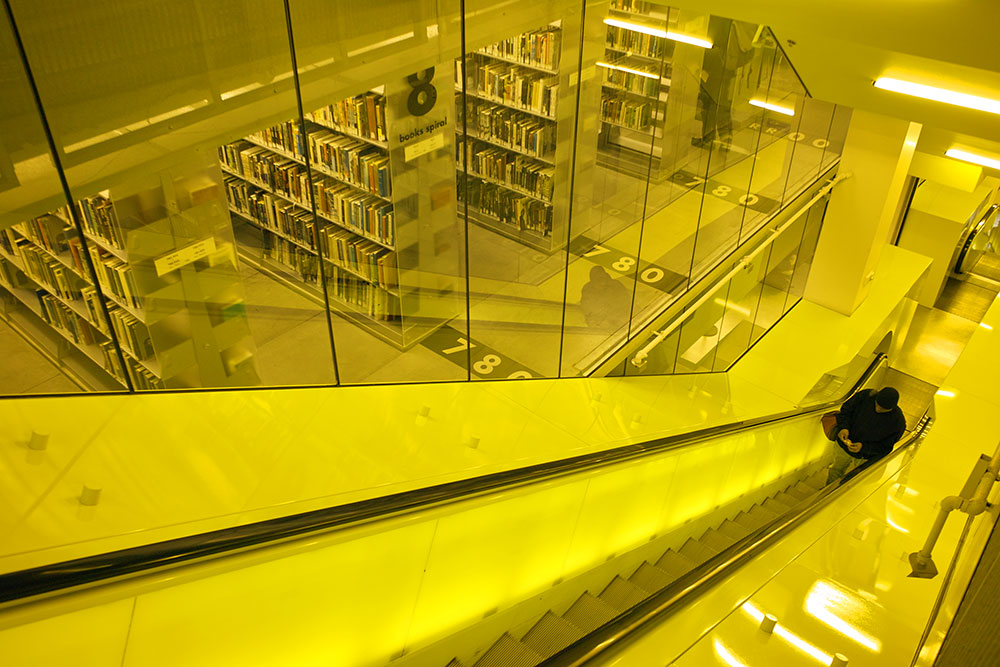
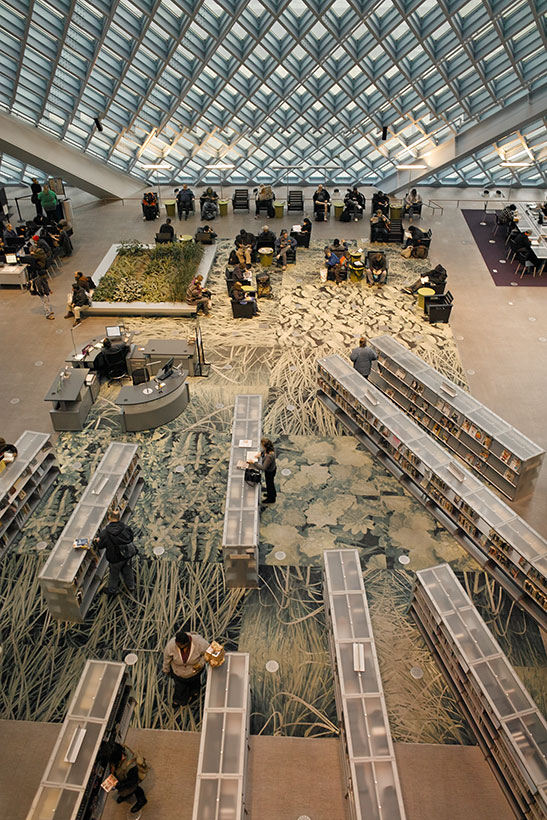
OMA’s (Rem Koolhaas) public library in Seattle, a fixture of downtown, now almost ten years old. I had seen photographs, which were impressive, but having been disappointed by some of Koolhaas’s buildings in the past, I wanted to see this one in person. The exterior is a bit jarring–wedged tightly into a difficult sloping site–like the nearby city hall. But its origami-esque planes make it a strong, if impersonal, sculptural form, next to the comparatively fussy civic building by Bohlin Cywinski Jackson. Inside, there are familiar Koolhaas concepts like the continuous ramp linking the different levels of book stacks, and the industrial metal egg crate railings and cheesy padded acoustic panels are materials he’s used elsewhere. What’s different, however, is the drama of the interior spaces–at times vertigo inducing–but tightly controlled and organized conceptually. What was great was to see this most challenging architectural environment full of people, using it comfortably, reading, lounging, working on computers. But Koolhaas’s buildings never sit cozily, nor play by the rules. Certainly not this one.
Here are some snapshots taken with my point-and-shoot.
I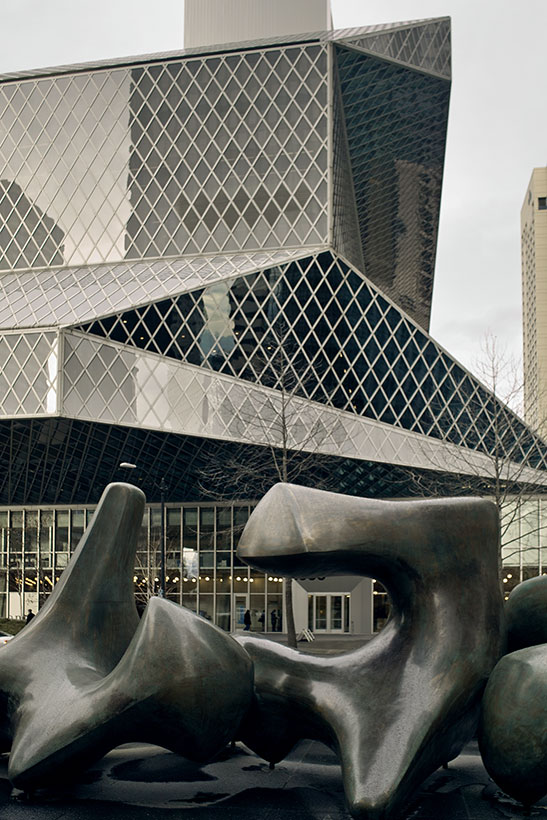
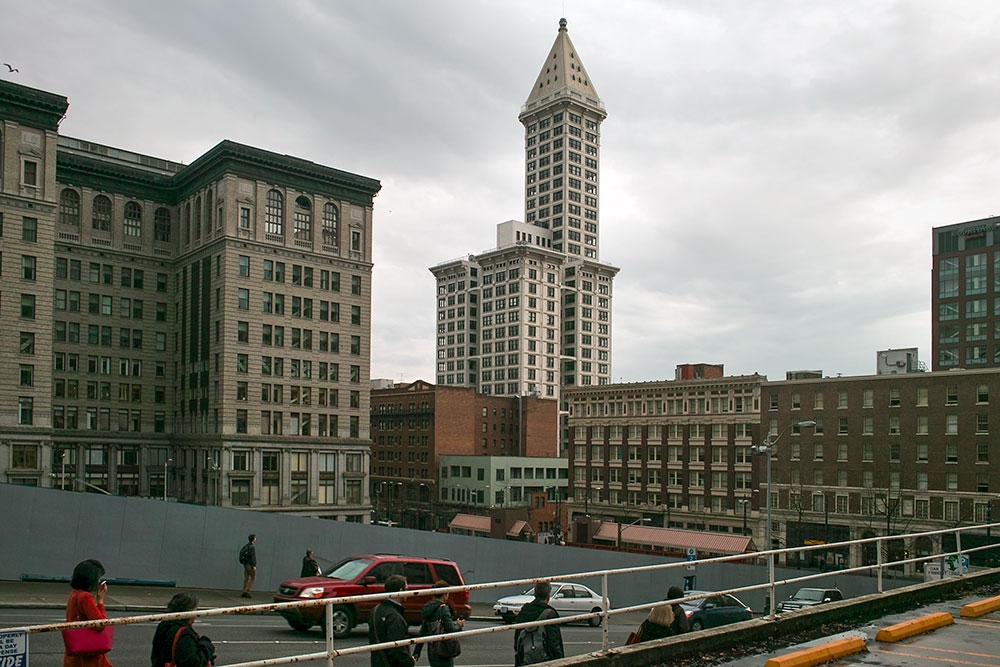 Smith Tower, Seattle — © Brian Rose
On the road. Not much time for comments. Smith Tower, once the tallest building on the West Coast. Still a gem.
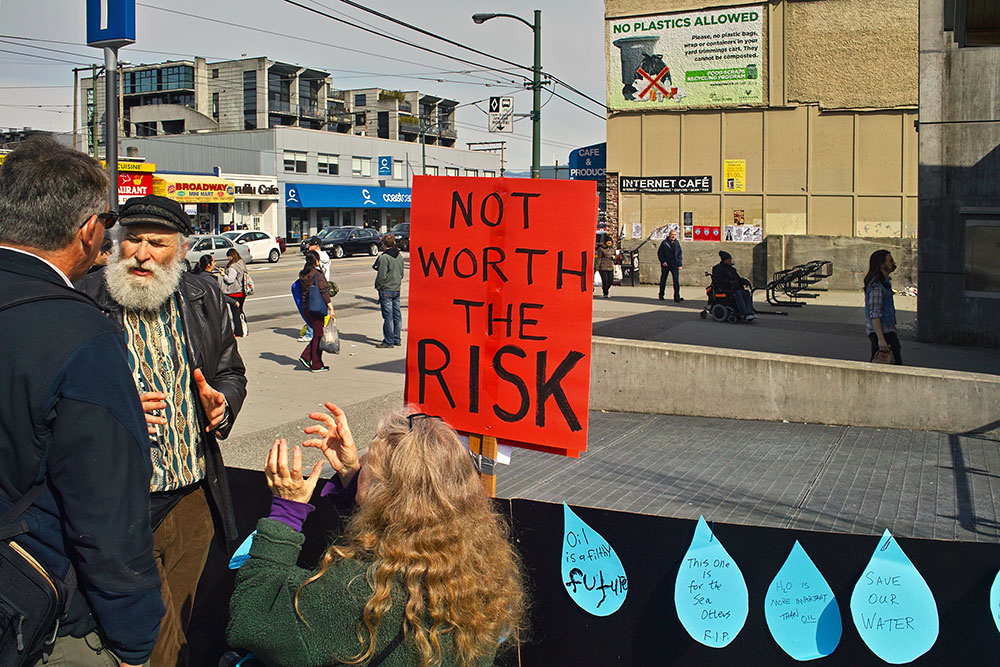
Vancouver — © Brian Rose

Vancouver — © Brian Rose
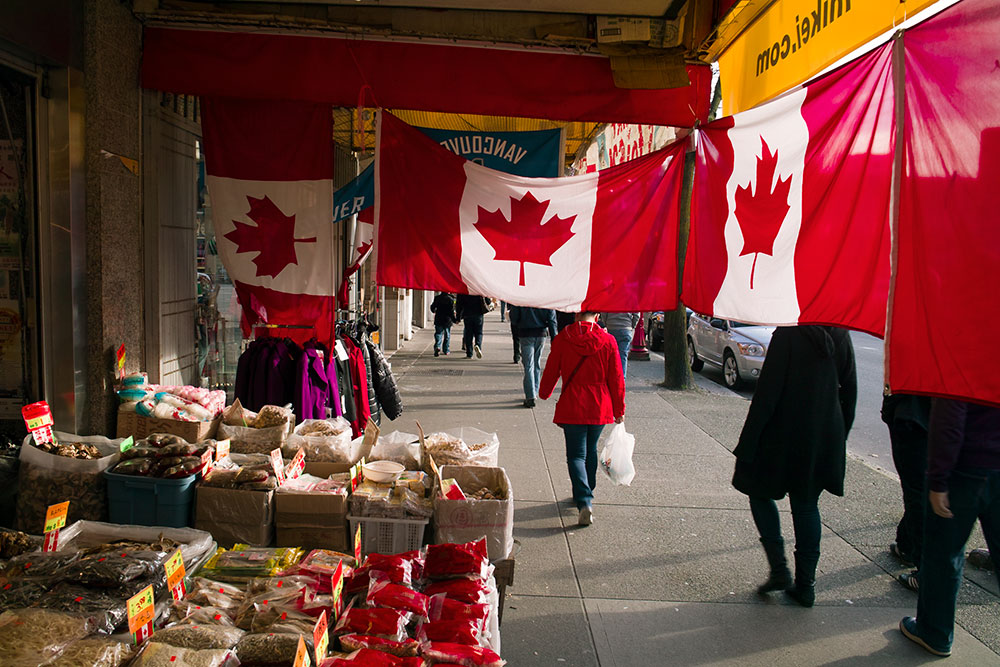
Vancouver — © Brian Rose
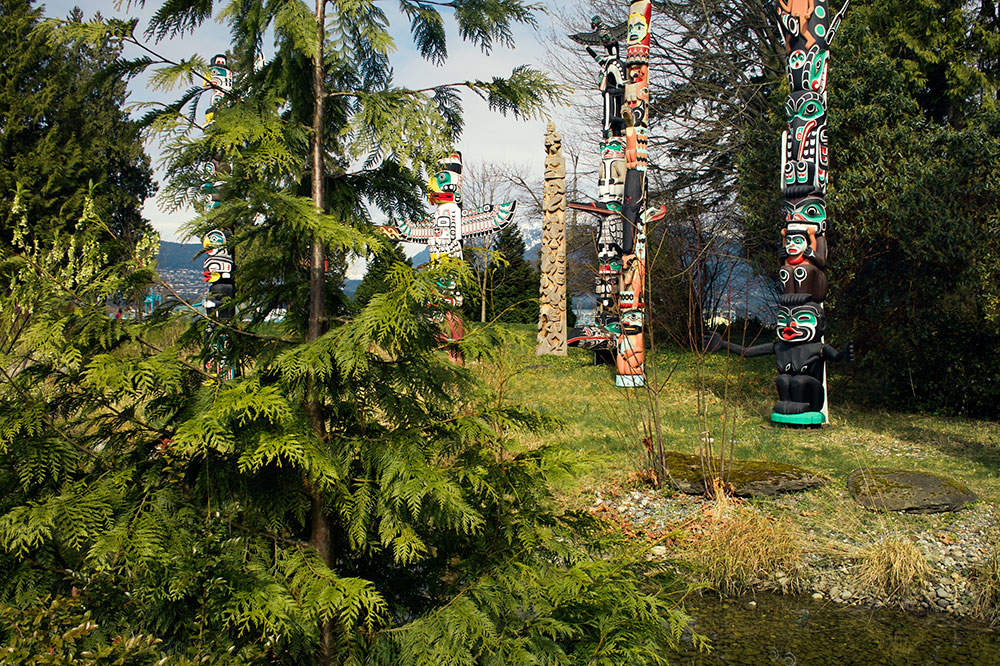 Vancouver — © Brian Rose
Without comment.
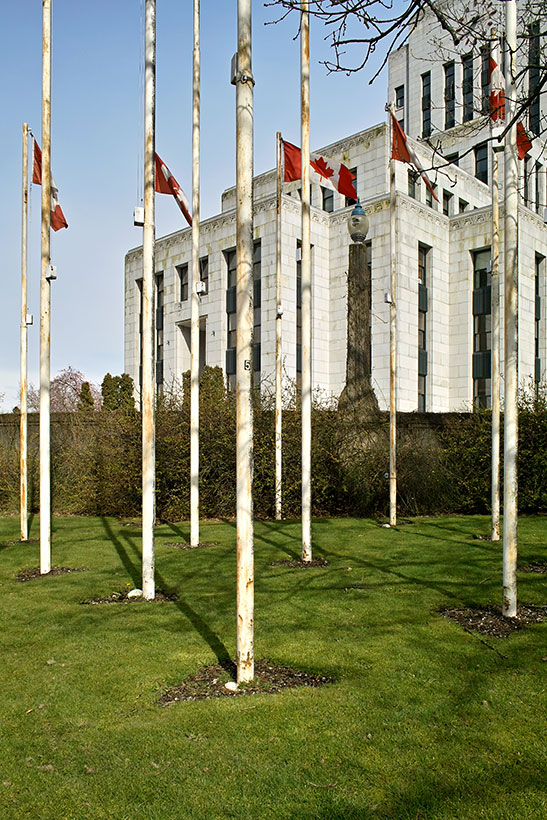
Vancouver City Hall
On the road.

A time out from my Lower East Side book and exhibition.
My photographs of the former Iron Curtain and Berlin Wall are currently featured in the journal MAS Context. To quote their website, MAS Context, a quarterly journal created by MAS Studio, addresses issues that affect the urban context. Each issue delivers a comprehensive view of a single topic through the active participation of people from different fields and different perspectives who, together, instigate the debate.
The photographs shown begin in 1985 when I first began traveling across Europe with the view camera documenting the landscape of the Iron Curtain and come forward to a few years ago when I was last in Berlin. I have continued to photograph the area where the Wall once ran through the city. Although the border zone has become less visible over the years, there are still moments of urban disjuncture, as well as historical markers, remnants of the Wall, and the presence of new architecture and monuments.
In the last picture of the series, an East German Trabant, the iconic mini car, hovers from a video screen next to the Brandenburg Gate.
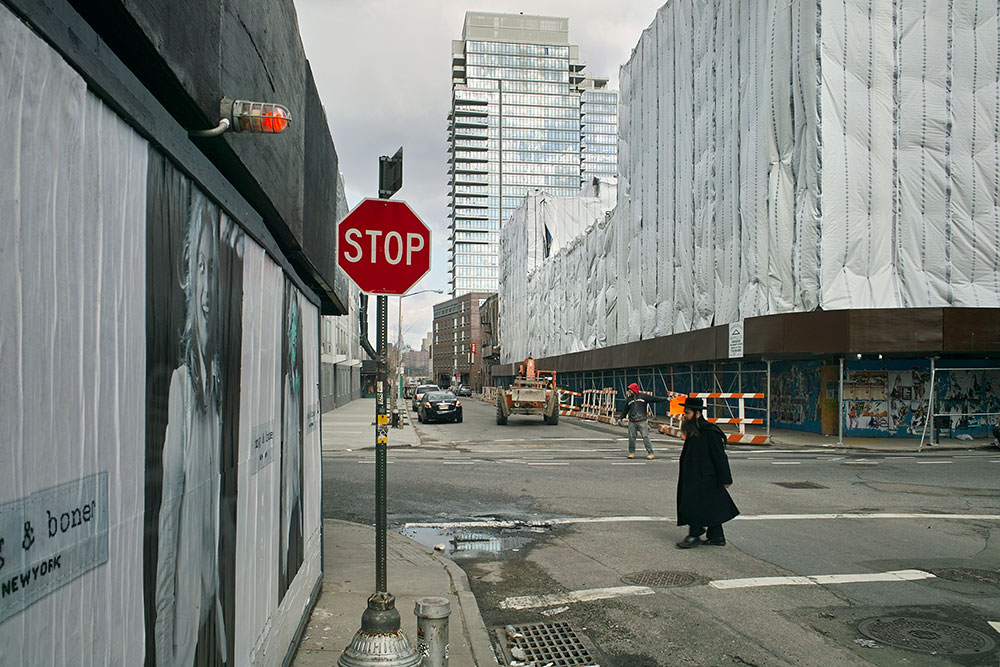
Wythe and N4th Street, Williamsburg, Brooklyn — © Brian Rose
Without comment.
Jason Eskenazi, a photographer, worked for a time as a security guard at the Metropolitan Museum. For two months in 2009 he arranged to get himself assigned to the galleries housing the exhibition based on Robert Frank’s seminal book The Americans. As he recognized photographer friends visiting the show, he began querying them about the images from the book that meant most to them. After quitting his job, he continued to reach out to photographers, some well-known, most not.
The result is a compendium of these short commentaries printed without images entitled The Americans List. It is necessary to know The Americans, or to have the book handy, while perusing this slender little volume, but most photographers have seen and assimilated Frank’s work at some level. Most have at least one image that stands out for them, and I am no exception.
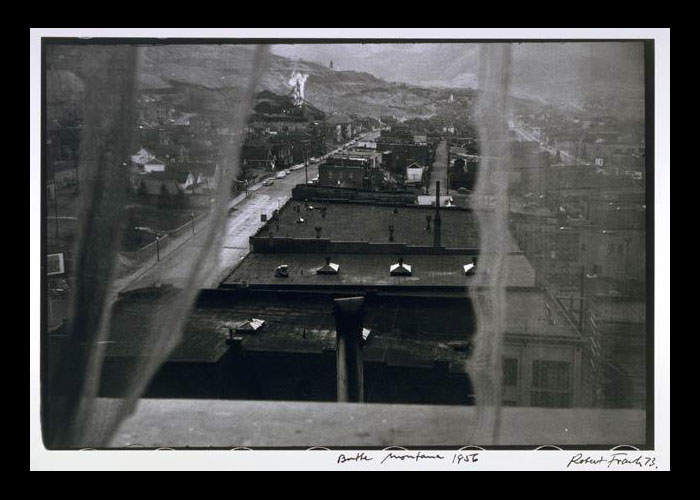
View from hotel room window, Butte, Montana, 1956 — photograph by Robert Frank
I think of Robert Frank’s The Americans as a road film that takes us sweeping across the landscape from one scene to another, a series of glimpses, anecdotes, gestures, faces, places, jump cuts, disjunctions, jarring, restive movement from one point to the next. There is no story, but thousands of possible stories.
View from hotel window, Butte, Montana:
I wake up from a dead sleep. Can’t tell what time of day, the light dull, the air thick with copper dust, the distant growl of machines. They are digging, devouring the earth, and they’d gladly eat the town alive if they could, human bodies and their thrown-up shelters and shops, inconvenient constructions, in the way of the divine right of power, of electricity speeding through wires.
I am traveling, on the run to be honest, took the car, left my wife behind. I am standing naked in the window staring through the flimsy curtains at the dark sullen town. It’s the end of the world. But I’m happy. I’m free — for the moment.
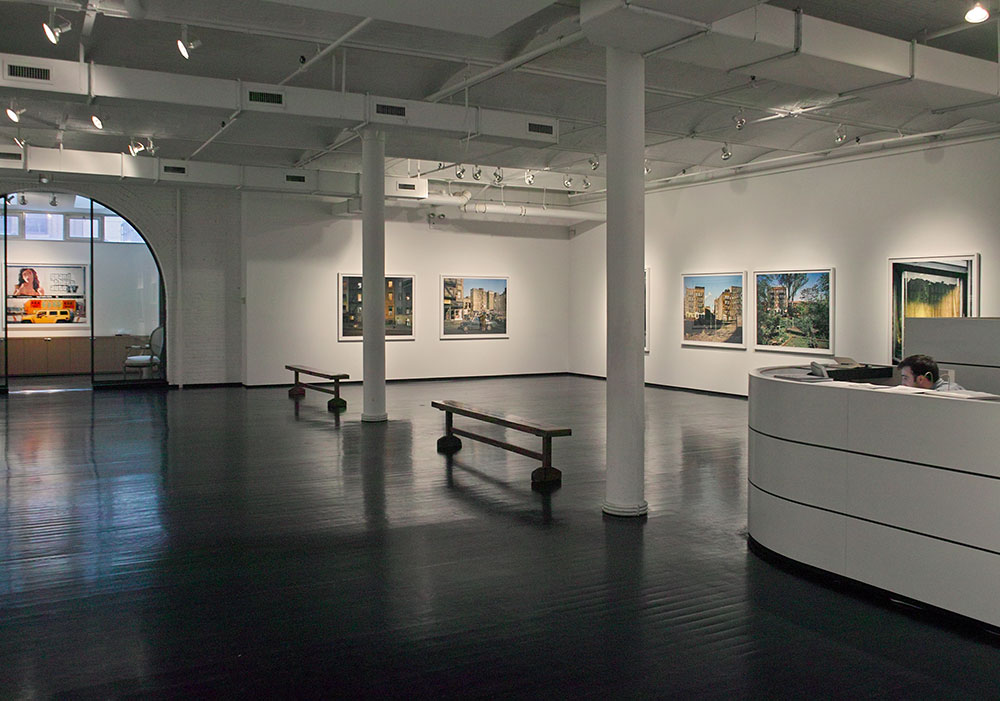
Time and Space on the Lower East Side at Dillon Gallery — © Brian Rose
It took much of the afternoon Wednesday to lay out the show and get the frames up, but I already had a pretty good idea where I wanted things to go. The opening Thursday evening was well attended, despite wintry weather, and it was great to see lots of old friends and meet new people. Ed Fausty who collaborated on the 1980 pictures was there as was Suzanne Vega, who wrote the foreword of Time and Space along with music friends, Frank Mazzetti and Norman Salant. Bill Diodato, my publisher, was there along with Warren Mason, who designed Time and Space.On the photography side, my friend and mentor, architectural photographer Cervin Robinson was there, and Mark Jenkinson, fellow Cooper Union grad, and Jan Staller, another color photographer who goes back to the late 70s and is still doing strong new work. Very pleased to see Sean Corcoran, the photography curator from the Museum of the City of New York. And it was particularly nice to have my painter friend Tim Raymond down from Buffalo.
I’m leaving out lots of people, but I’m appreciative of everyone who made this a festive occasion on an otherwise “dark and stormy night.” And thanks especially to Valerie Dillon for making it all possible.
Did anyone take pictures? I don’t have a single image from the opening.
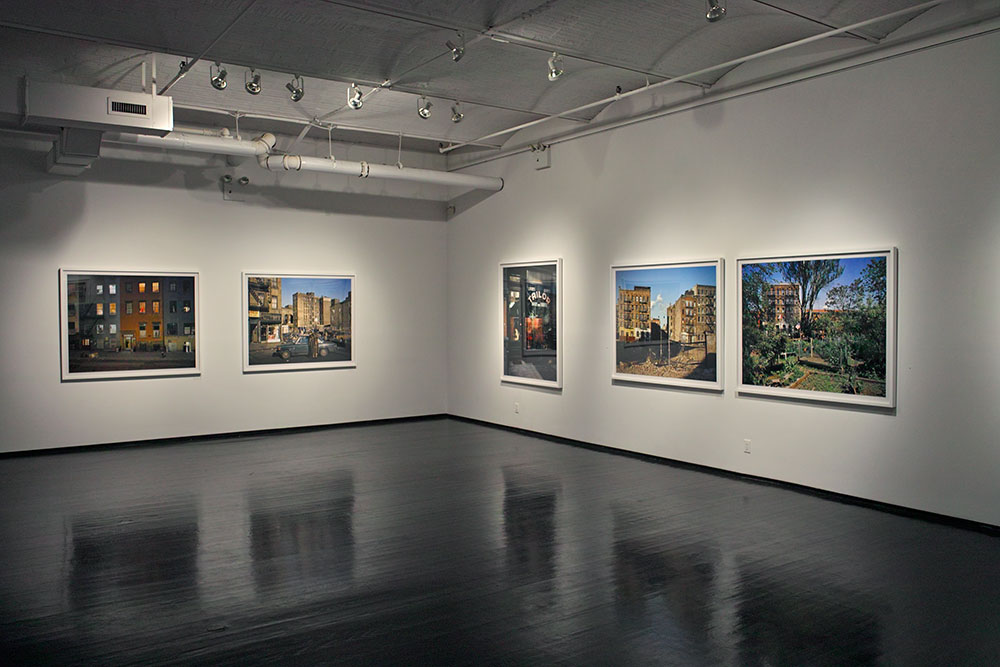
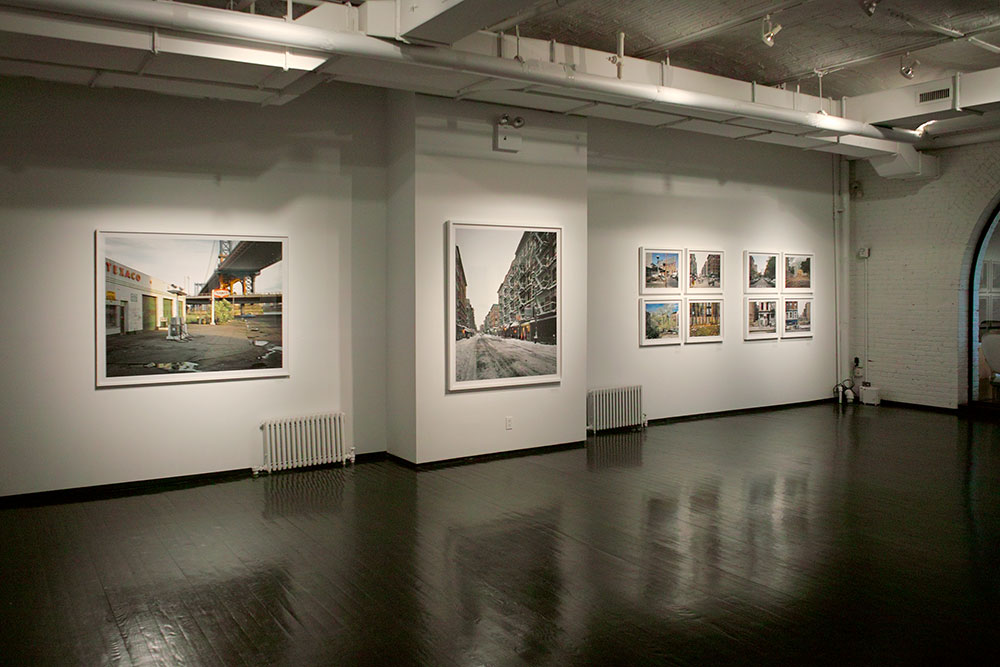
Time and Space on the Lower East Side at Dillon Gallery — © Brian Rose
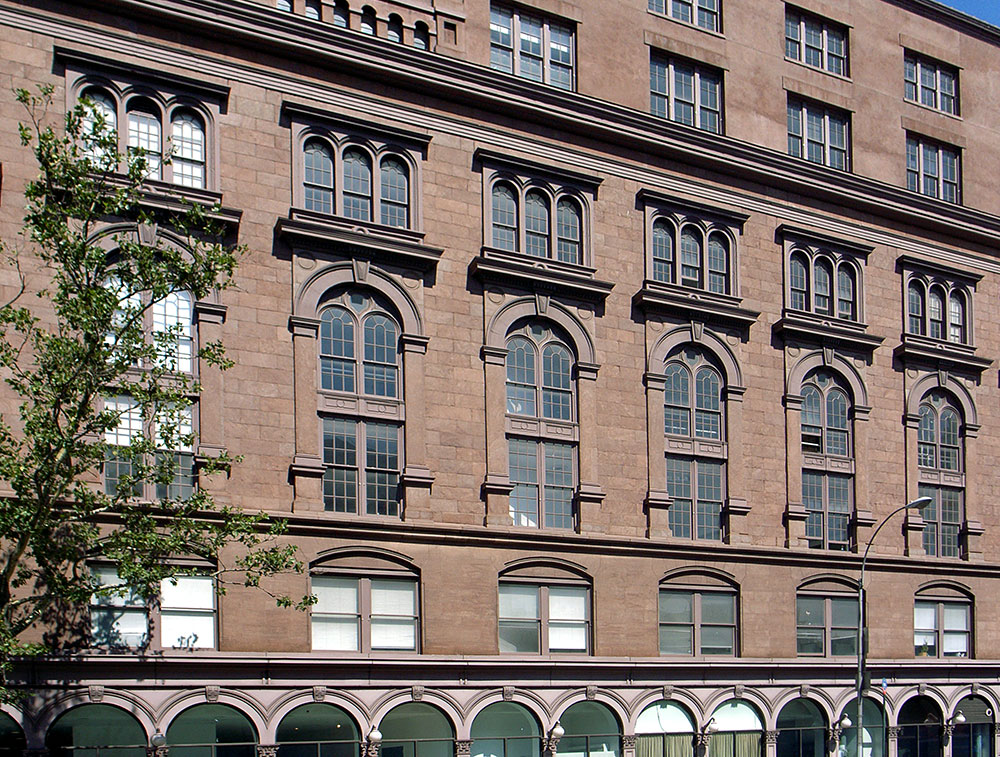
Cooper Union, Foundation Building — © Brian Rose
I have not previously weighed in on the controversy embroiling my alma mater The Cooper Union, one of the most prestigious and historic schools in America. I read the paper, I look at websites, and hear things, but I have no inside track on what is going on. What I do know is troubling, and I believe the school’s viability is in grave danger.
In a nutshell, Cooper was founded by the industrialist Peter Cooper as a school for art, architecture, and engineering that was affordable for all regardless of ability to pay. It was located, appropriately, on the edge of the teaming Lower East Side, and for decades it has been tuition free. One of the few all scholarship institutions of higher learning in the world. Many of its graduates are now leaders in their respective fields–and have a particularly important impact on New York City.
Due to hard economic times, mismanagement, and the growing cost of higher education, Cooper finds itself in financial trouble. The board of trustees is about to make a momentous decision on whether to charge tuition possibly ending the school’s unique charter as stated by Peter Cooper to be “open and free to all.”
With regard to the art school, should the board decide on charging tuition, Cooper will then have to compete head-to-head with several highly esteemed art schools in New York City, as well as many other fine schools around the country. Cooper’s strength has always been the quality of its students–astonishingly bright and talented–the best of the best chosen without regard to ability to pay. Cooper’s facilities, two architecturally outstanding buildings notwithstanding, are meagre compared to other art schools. Cooper, being a small school, has fewer course offerings than others, and its faculty, while outstanding, is equal to those who teach elsewhere, but not necessarily better.
Charging tuition will end the uniqueness of Cooper Union and place the school at a competitive disadvantage. It will no longer be the most sought after art school in the city. The best students will choose schools with more to offer for their money. The money raised from tuition on a mere 1,000 students will not ultimately solve other structural financial problems. A death spiral is possible, if not likely.
A way has to be found forward that will retain Cooper’s unique tuition free status. The principles espoused by Peter Cooper must be reestablished, and the school should embark on new fund raising efforts. Those of us who do not have much money to give, do have our work, which could be leveraged to raise money. The art alumni need to be engaged, not simply asked for pledges. While doing my Kickstarter campaign last year to fund my book, I thought about how Cooper might undertake a similar campaign, except on a much larger scale, using the work of alumni as rewards for donations. Forget phonathons and other outmoded fundraising models.
It’s not just about money–it’s about engagement. A sense of belonging and responsibility. Should the board choose for tuition, many alumni will walk away, and that will be the beginning of the end.

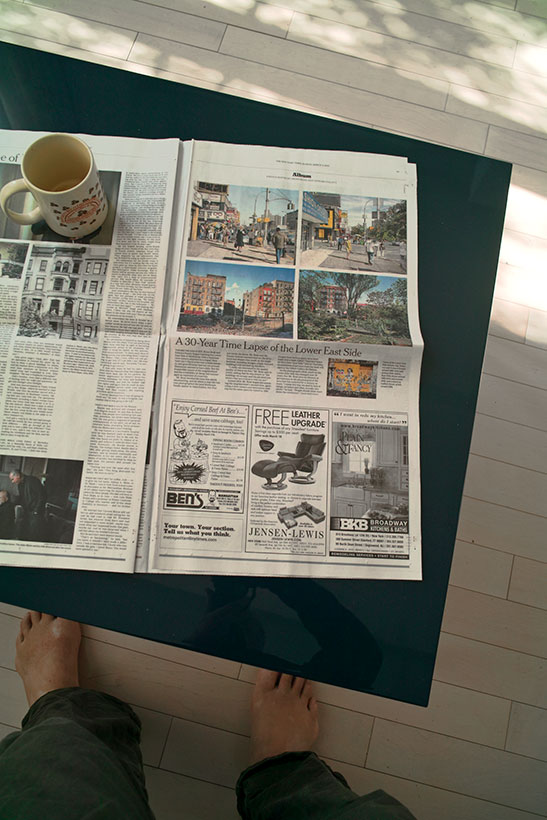
Time and Space on the Lower East Side featured in the New York Times. It will run in the print edition of the Metropolitan section of the Sunday Times and online.
Exhibition opens this Thursday:
Dillon Gallery
555 W25th Street
New York, NY 10001
March 7 – April 9
Opening Reception, Thursday 6-8pm