Author: admin

  • New York/ICP Class

    catalog_clip

    I will be teaching a class at ICP this spring called Photographing New York: The Lower East Side. Each student will photograph some aspect of the neighborhood, and the class will put together a book using Blurb, the print on demand web platform. It’s a lot of fun, for me and the students, but it’s also a pretty challenging assignment because it all happens in a relatively short period of time. For those who are not used to making photographs on a deadline, it can be quite a shock. And then a book has to be laid out and printed in time for the last class.

    Both times I’ve taught the class it has been nerve wracking, but then, exhilarating, once the finished book was in hand. It’s a little bit like I what I just did in putting together my book on the Meatpacking District. It all came together in a matter of months — photography, image sequencing, and book design. If you’re up for it, there are still spots open in the class. Just go the ICP education website and sign up. I’d love to have you.

    ICP Education


  • New York/Bowery Boogie

    boweryboogie

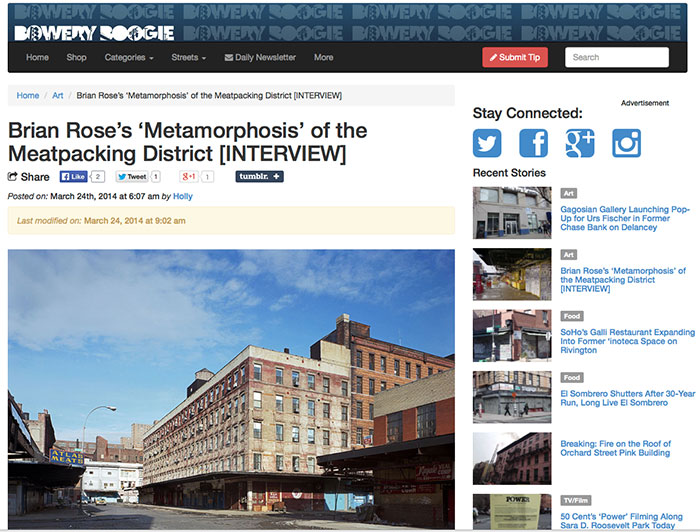
    An interview in the blog, Bowery Boogie.

    BB: What do you hope people will take away from Metamorphosis?

    BR: More than anything I hope that people will learn to see what is around them and in front of them everyday – the city hidden in plain sight.

    Read the whole thing here.


  • New York/Lower East Side

    NYT_spuraPhotograph from Time and Space on the Lower East Side in the New York Times — © Brian Rose

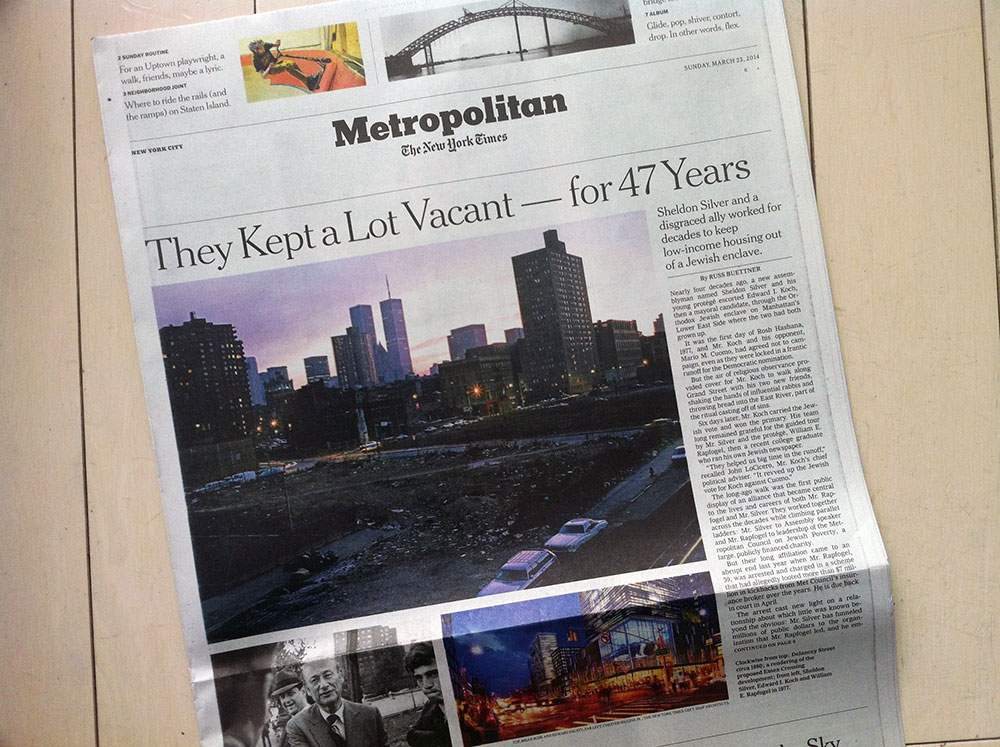
    One of the photographs from Time and Space on the Lower East Side appeared in the Sunday New York Times .

    50 years ago a number of blocks of densely occupied tenement housing along Delancey Street were razed and thousands of low income families, mostly Puerto Rican, were displaced. Robert Moses attempted to build a freeway across Lower Manhattan directly through Soho and the Lower East Side, and these blocks were the first to be cleared. The highway was stopped, but the vacant lots remained a political battleground for decades. A rebuilding plan, reached by neighborhood consensus, is finally moving forward. This article explains why it took so long.

    It’s a shocking story of corruption and racism. It centers around Sheldon Silver, the New York State representative from lower Manhattan, and one of the most powerful politicians in Albany. If there is justice in the world, it signals the end of his ignominious career.


  • New York/Spirit of Marville

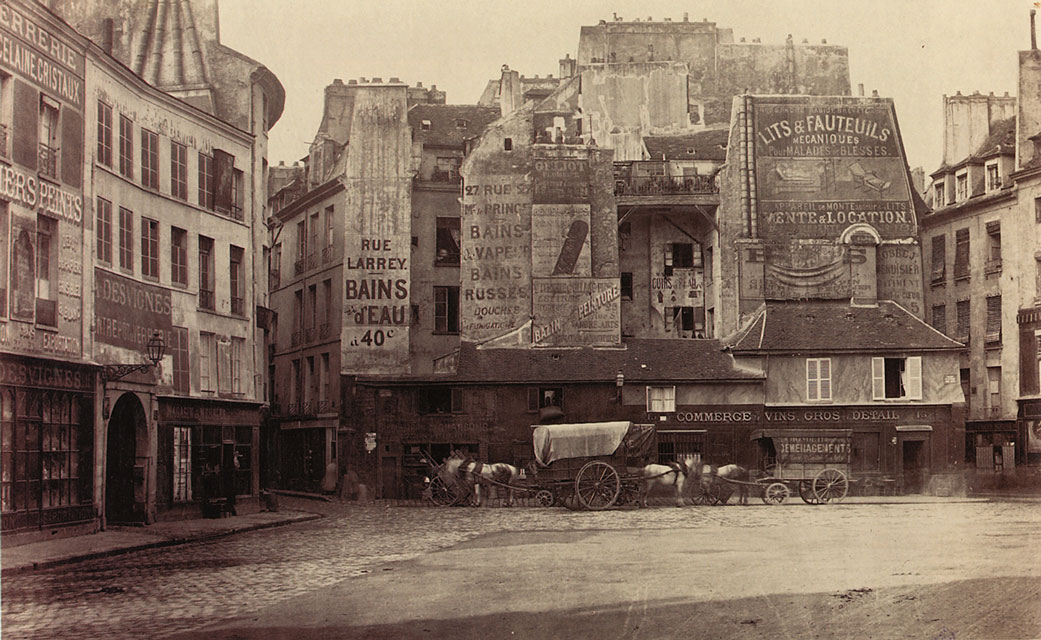
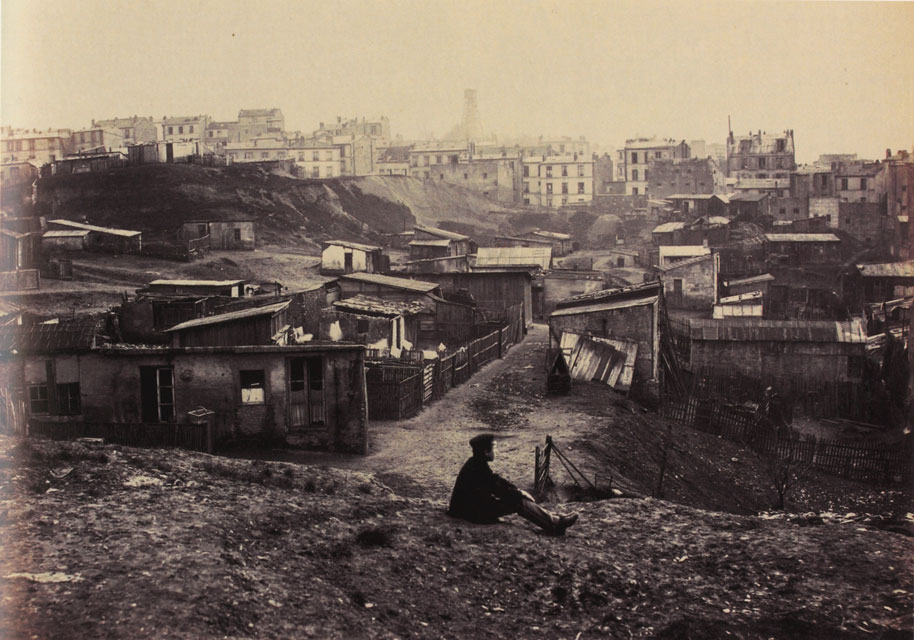
    marville_05Place Saint-André-des-Arts, c. 1865 — Charles Marville

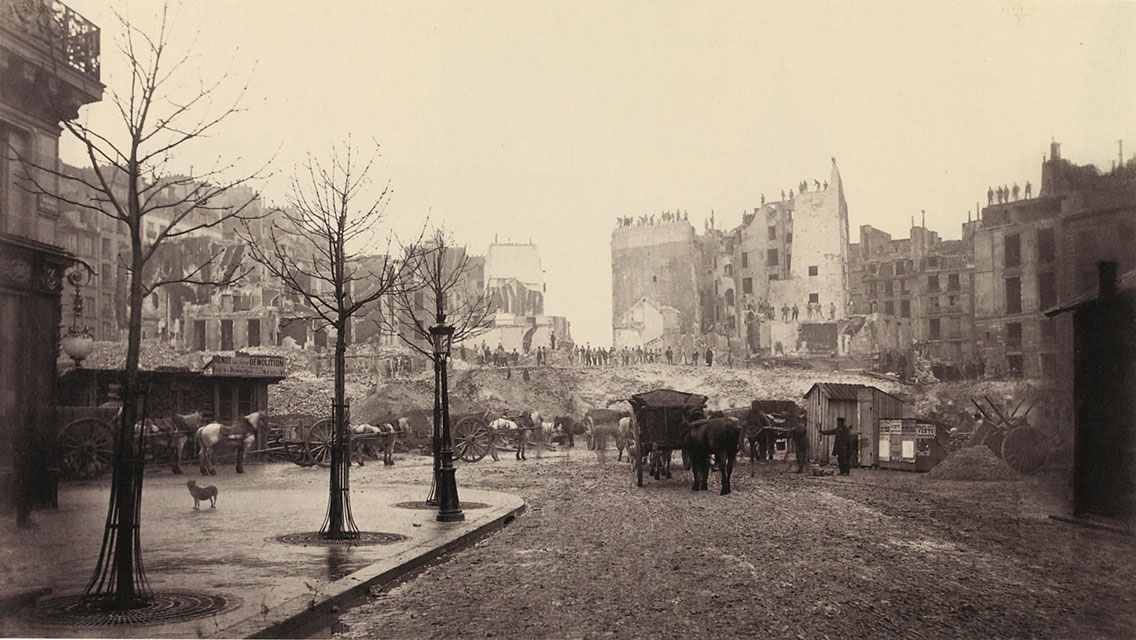
    I went to the Metropolitan Museum last weekend to see the Charles Marville show, the photographer who documented Paris during the time of urban planner Baron George-Eugène Haussmann. Haussmann, under the supervision of Napoleon III, razed large sections of the old city in order to create the grand boulevards and monumental squares and traffic circles we associate with contemporary Paris. Photography was still new — only two decades old — when Marville was commissioned to photograph the transformation of Paris. And today, 180 years since the invention of photography, the documentation of the urban environment remains an essential and vital focus of the medium.

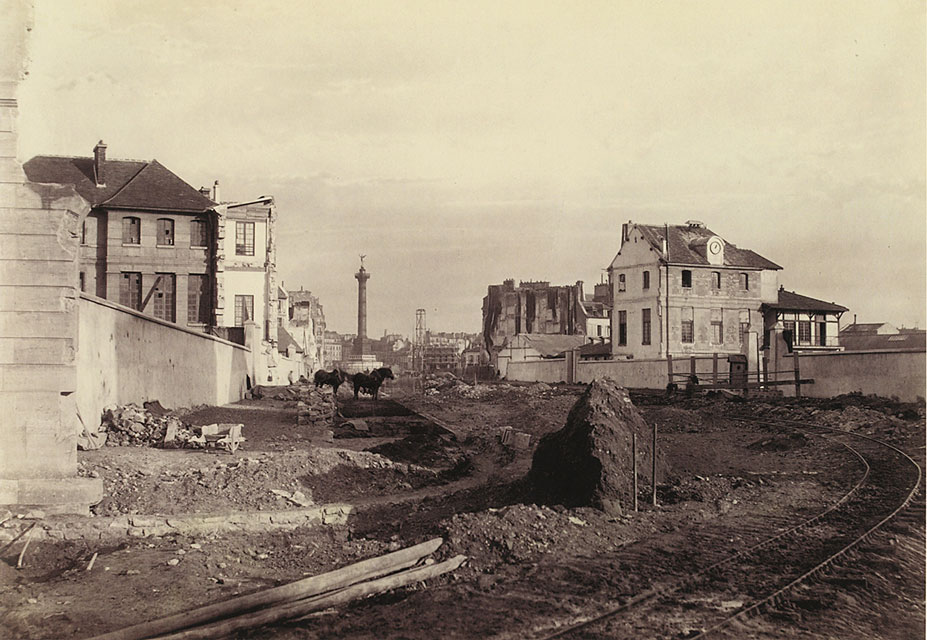
    marville_08Boulevard Henri IV (de la rue de Sully) (fourth arrondissement), c. 1877 — Charles Marville

    I was familiar with Marville prior to seeing the exhibition, but not in great depth. The inspirational touchstone for me was always Eugène Atget, who also photographed Paris with a large format camera. I have always found Atget’s work central to my understanding of what documentation could be — that even the most clear-eyed description of place can evoke emotion and mystery. Marville, however, is Atget’s immediate predecessor, and as such, progenitor to all of us who make architecture and the urban landscape our subject.

    6-charles-marville
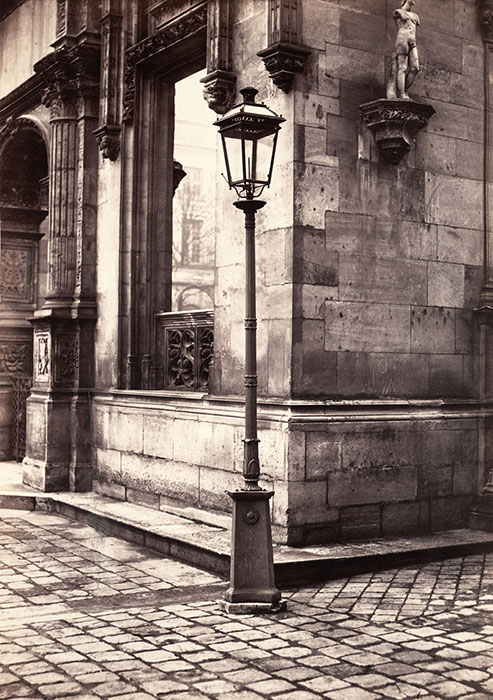
    Entrance to the École des Beaux-Arts, c. 1870 — Charles Marville

    To Marville and his contemporary audience, I can imagine that everything recorded by the camera was new and wondrous. The organized elegance of Marville’s compositions belies his training as an artist, and appears almost modern to our eyes. But Marville was not employing today’s self-conscious visual strategies. He was a pioneer discovering the medium of photography while simultaneously carrying out his commission to photograph the changing visage of Paris. It was the beginning of a long violent transfiguration initiated by Haussmann, the great destroyer and creator of the City of Lights. And indeed, some of Marville’s most architecturally precise images show the newly designed gas lamps that brought that light into the heart of the formerly dark medieval city.

    marville_09Top of the Rue Champlain, 1877-78 — Charles Marville

    Old Paris is gone (no human heart

    changes half so fast as a city’s face)…
    There used to be a poultry market here,
    and one cold morning… I saw

    a swan that had broken out of its cage,
    webbed feet clumsy on the cobblestones,
    white feathers dragging in the uneven ruts,
    and obstinately pecking at the drains…

    Paris changes . . . but in sadness like mine
    nothing stirs—new buildings, old
    neighbourhoods turn to allegory,
    and memories weigh more than stone 

    A translation of The Swan by Charles Beaudelaire

    In the New York Times, Michael Kimmelman writes about Paris: “An architecturally harmonious capital rose from the rubble, a city of spectacle, built for a new, modern economy, but homogeneous and no longer welcoming to many of the poor souls who had helped make the place run and had always been deep in its cultural lifeblood.”

    Some of the same dynamic is taking place in New York City, though without the wholesale physical destruction of Haussmann or New York’s own Robert Moses, who leveled neighborhoods to create his parks and parkways. But what has happened in Manhattan represents a dramatic shift of capital back to the center city from the periphery where it fled in the ’60s and ’70s, and Manhattan has increasingly become a safe parking place for vast sums of foreign money. No, there were no visionary utopians like Haussmann or Moses this time, but there was Michael Bloomberg, businessman extraordinaire, who took up the reins of a city reeling from the devastation of 911 and set the city on its present track.

    marville_07Drilling of the Avenue de l’Opéra — Charles Marville

    Kimmelman also writes: “I wonder, here in the early third (millennium), whether photographers are now out and about, in the spirit of Marville, documenting 57th Street, Bedford-Stuyvesant, Bushwick and East Harlem, Willets Point, Long Island City and Hell’s Kitchen. Big cities change. That’s urban life. But the best cities don’t leave the vulnerable behind.”

    At least some photographers are out and about, despite a trend these days toward staged reality and the ultimate myopia of selfies. I’m certainly out and about. And the vulnerable citizens of this ever changing metropolis ride the jammed subways day and night commuting to and from increasingly far flung quarters of a city that still attracts immigrants from around the globe. Where this all leads — all this constant motion — all this restless energy — I have no idea. But the spirit of Marville remains alive among contemporary photographers, and the visual history of these times will be preserved.


  • New York/Goal Reached — Again

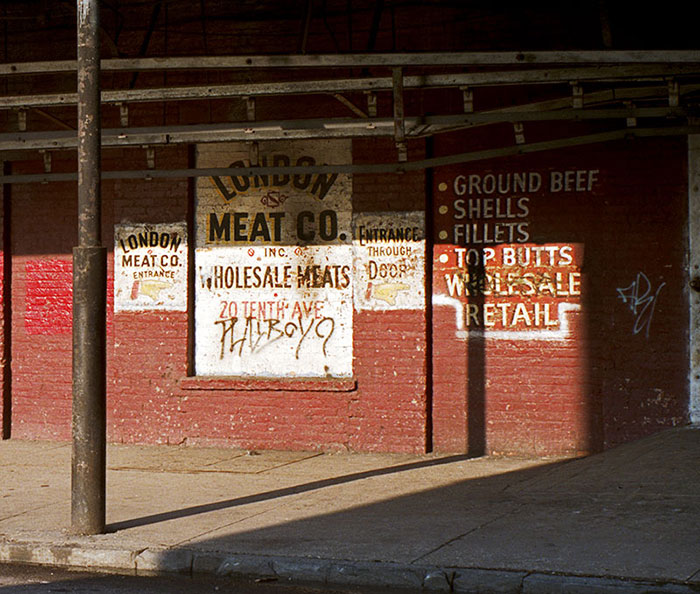
    metamorphosis_backcoverMetamorphosis: Meatpacking District 1985 + 2013, back cover image — © Brian Rose 1985

    Reached my Kickstarter goal — again. Yesterday, I announced that I had succeeded in my fundraising goal, and began receiving congratulations. But within a few minutes, a $500 backer cancelled his pledge, which I didn’t even know you could do. My moment of triumph was coldly snatched away. Do you think people do things like this on purpose? Anyway, I was not too worried that I’d make up the lost ground soon.

    So, a little muted cheer for the second time around. The balloons have already been released, the champagne uncorked and flat, and the band disbanded — except for the tuba player. Blurp Blurp.

    Thanks once more to all my supporters. Keep the momentum going. There are still 13 days to go.


  • New York/Book Proofs

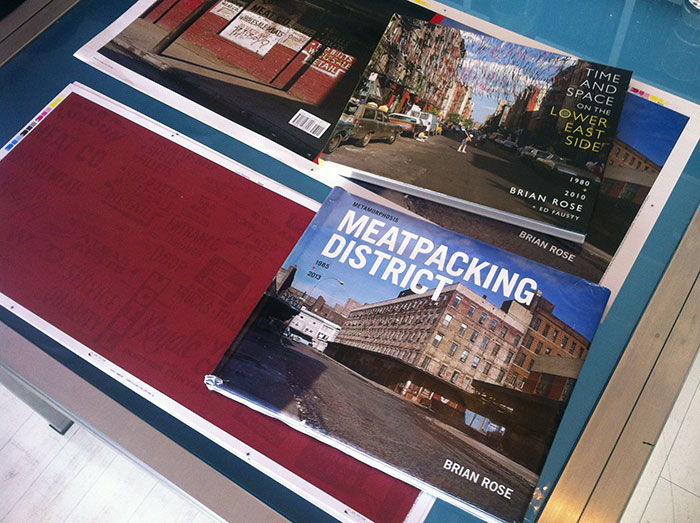
    cover_proof_smallCover mockup of Metamorphosis: Meatpacking District 1985 + 2013

    At 65% of my Kickstarter goal with almost three weeks to go!

    Metamorphosis is no longer an abstraction. Yesterday, I saw the first proofs of the cover and the inside pages. They look terrific. The book in the photo above is actually a proof print of the cover wrapped around a  blank dummy of the book. The blank let’s us see and feel the weight of the cover boards, paper, and the overall heft of the book. We placed it next to a copy of Time and Space on the Lower East Side for comparison. The red pages are the endpapers that line the inside of the front and back covers.

    It’s exciting seeing the book turn into a reality. But your support is needed now as the financial reality of taking on this project looms. Pre-order via Kickstarter and get your copy of Metamorphosis at a discounted price. It’s going to be a really cool book.


  • New York/Williamsburg

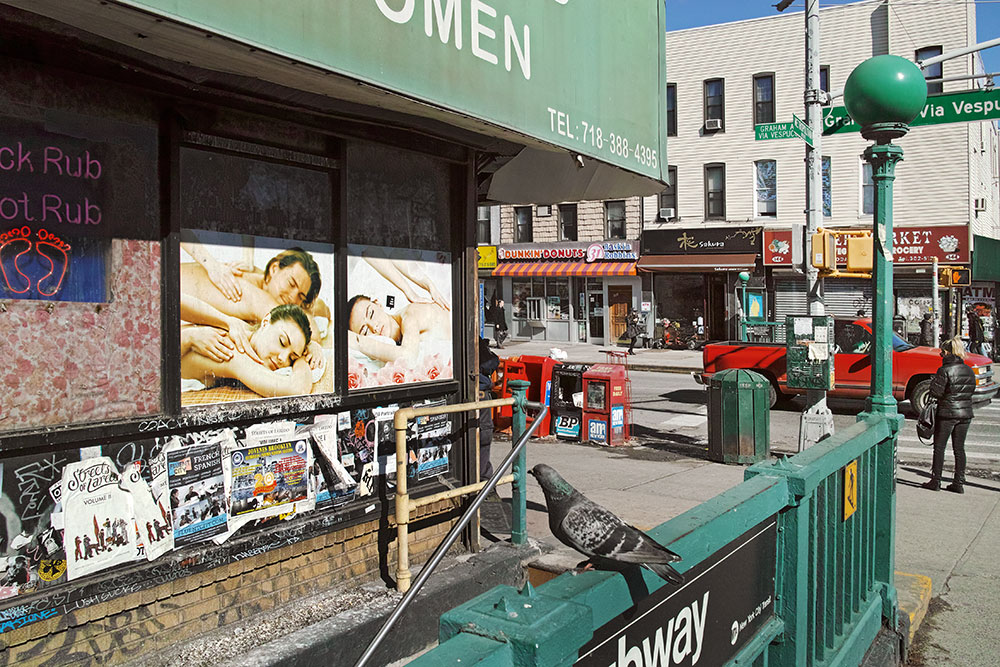
    vespucciMetropolitan and Graham Avenues, Williamsburg, Brooklyn — © Brian Rose

    A random view of a Williamsburg street corner with pigeon.

    I am now at 50% of my goal 9 days into the Kickstarter campaign to help fund the printing of Metamorphosis: Meatpacking District 1985 + 2013. Pledge $50 and pre-order a copy of the book to be released in July. Other reward levels available. The campaign runs through April 1.

    Your support is greatly appreciated.

    kickstarter_icon

  • New York/Good Start

    Off to a good start in my Kickstarter campaign. Please help make this book a success. Here’s my video pitch made on the streets of the Meatpacking District:


  • New York/Kickstarter Campaign

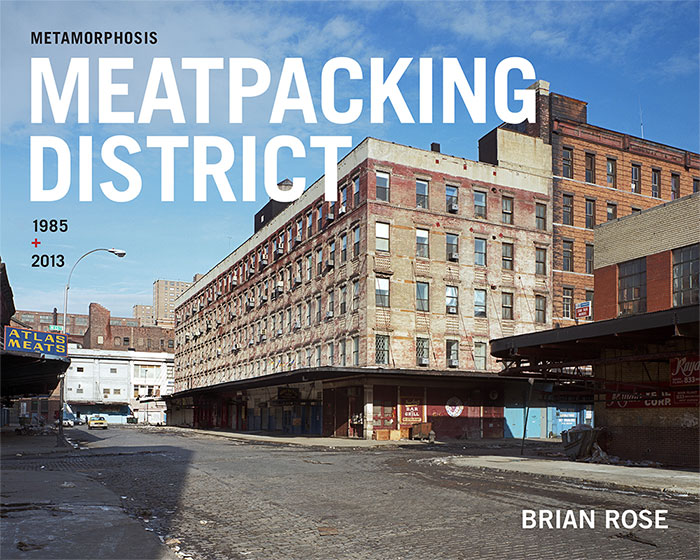
    metamorphosis-cover_700pxFinal Cover Design for Metamorphosis: Meatpacking District 1985 + 2013

    Please help make this book a reality.
    kickstarter_icon

    In the winter of 1985 I spent several days wandering the streets of the Meatpacking District with my 4×5 view camera. It was different city then. Edgier, less peopled. While the Meatpacking District bustled in the early morning hours as the city’s primary meatmarket, it slumbered, almost abandoned, during the day.

    I never printed my photographs of the Meatpacking District, and went on to other projects. But last year I retrieved the box of negatives from my archive and began scanning. I was stunned to rediscover these images, made with little artifice, unforced in their clarity. It was like looking at New York as a stage set while the actors were away taking a break.

    In the summer and fall of last year I re-photographed the Meatpacking District repeating many of the earlier images and making a number of new ones. The result is a book that shows the profound transformation of the neighborhood from abottoir to the epicenter of fashion and art.


  • New York/Bookstores Still Essential

    shopwindow
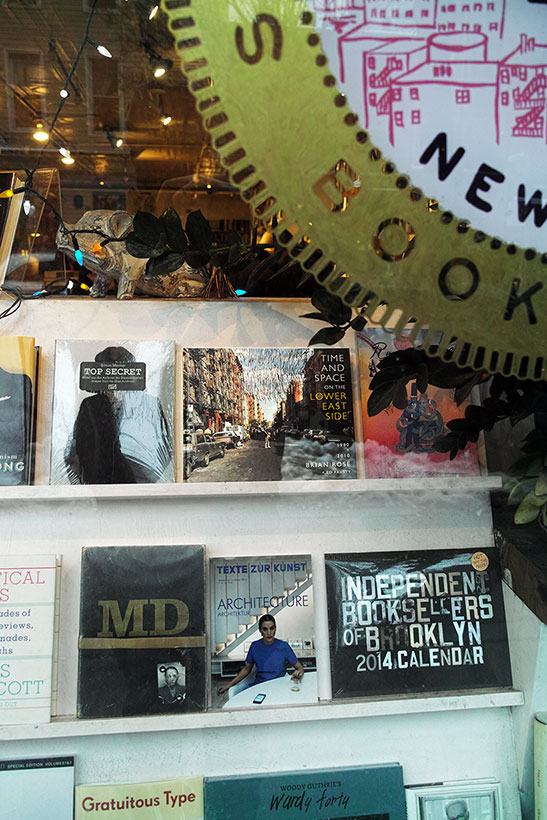
    Time and Space in the Tenement Museum shop window — © Brian Rose

    Prior to my recent book — Time and Space on the Lower East Side — I worked with established publishers in the Netherlands and here in New York. The results were mixed, both in terms of quality and distribution. I can’t complain too much in that I did not have to bring money to the table for any of them. But I never made a dime on those books either. The Lost Border, the Landscape of the Iron Curtain was available in a few bookstores, but most of the sales were on Amazon. It’s still available on Amazon, but I have acquired a number of copies and plan to offer signed books on my website sometime soon.

    By the time I got around to doing Time and Space, the publishing landscape had changed, and I knew that I would probably have to pay for the book myself — either that, or send out dummies and wait months and months for someone to respond, if ever. So, I decided to take control, put up the money (partially raised on Kickstarter), and distribute the book myself. I ended up working with Bill Diodato, a photographer with a publishing sideline called Golden Section Publishers.

    I realized from the start, that the economics of my book — in an edition of 1,000 — would not make it possible to sell via Amazon, which demands a much larger cut of the retail price than any brick and mortar store. I would lose money on every sale. So, I began seriously cultivating relationships with independent book stores. It helped that I could tell them that Amazon would not be undercutting them, and it helped that I had a book with a local New York theme. Nevertheless, I expected my online sales to equal or approach store sales.

    I’ve done pretty well online, but the reality is that 75% of my sales have been through bookstores. It depends, of course, on the kind of book you have. There are photo books that sell primarily to collectors, and you’d rarely find them in local shops. Dashwood Books on Bond Street in Noho caters particularly to the collecting crowd. As far as I know, it’s the only shop in New York that exclusively sells photo books. The other stores sell to the general public, albeit a rather sophisticated NYC public. They curate their offering carefully, and simply do not have the space to carry everything.

    Time and Space and my upcoming book Metamorphosis, Meatpacking District 1985 + 2013 were designed to stand out on display tables, which is where you have to be in stores. Once your book is on the shelf with only the spine showing, you’re dead. My assistant and I have spent days visiting the stores that carried Time and Space making sure that the book was prominently displayed. Ultimately, you want a stack of books — it’s psychologically more enticing — and you have to make sure the stores reorder before they run out. Otherwise, weeks can go by before they get  around to calling for more. No matter how good your distribution, nothing replaces these in person visits.

    We all know that bookstores are under severe pressure with ebooks replacing hard copy, and amazon.com undermining prices. Moreover, independent stores are not always as savvy as they could be. But unless you are famous, or have a big promotional budget, the primary way to reach the public is still through these stores. You know who they are in Manhattan: The Strand, St. Mark’s, McNally Jackson, Rizzoli, and the various museum shops. And ironically, Time and Space has done really well at John Varvatos, the clothing shop that occupies the former CBGB on the Bowery. Photo books can be fashion accessories.

    Despite the digitization of photography — or perhaps because of it — we are in a golden age of photography books. There are now numerous websites, blogs, and Facebook groups that review or sell photo books, and all of that virtual infrastructure helps build community and encourage sales. But without local bookstores, where one can browse, discover, pick up and feel, fewer photo books will reach the public. Simple as that.


  • New York/Color in Bottles

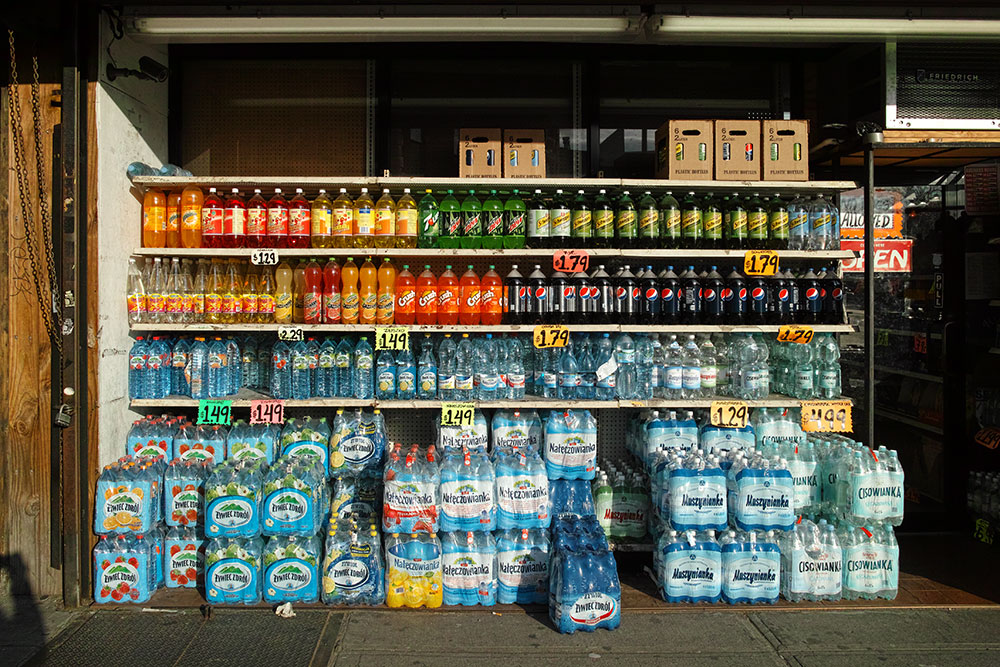
    polishbottlesManhattan Avenue, Greenpoint, Brooklyn — © Brian Rose

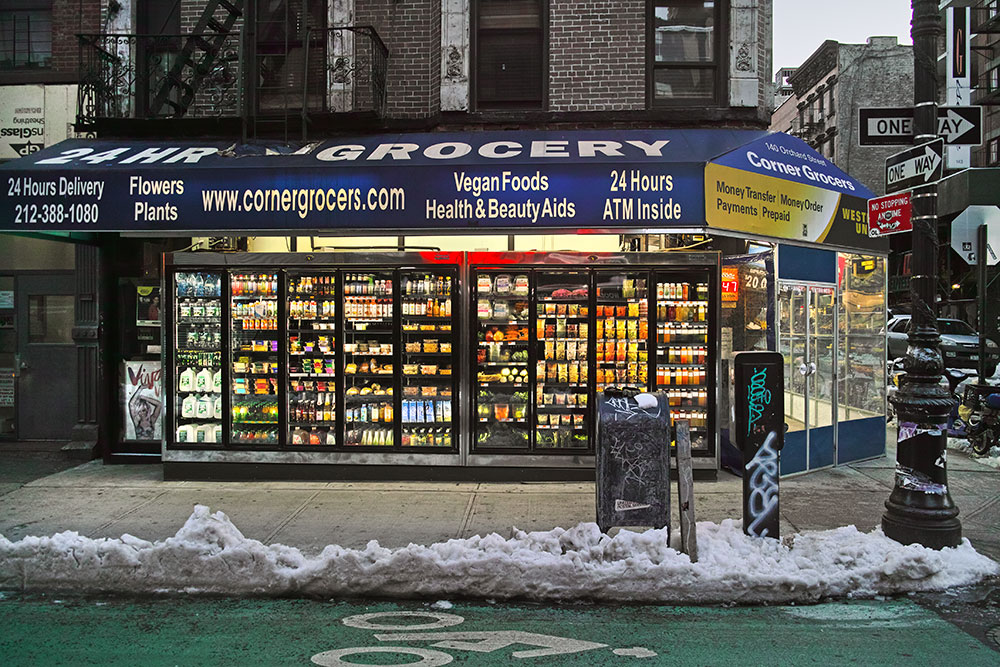
    cornercgrocerRivington and Orchard Streets, Lower East Side — © Brian Rose

    Color in bottles.


  • New York/Super Bowl Blvd.

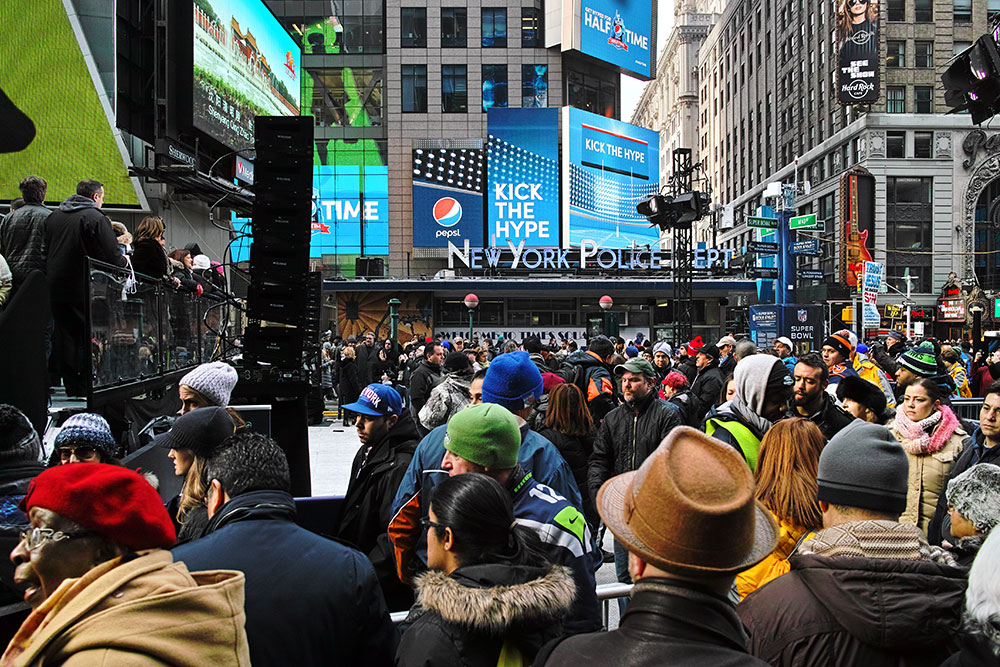
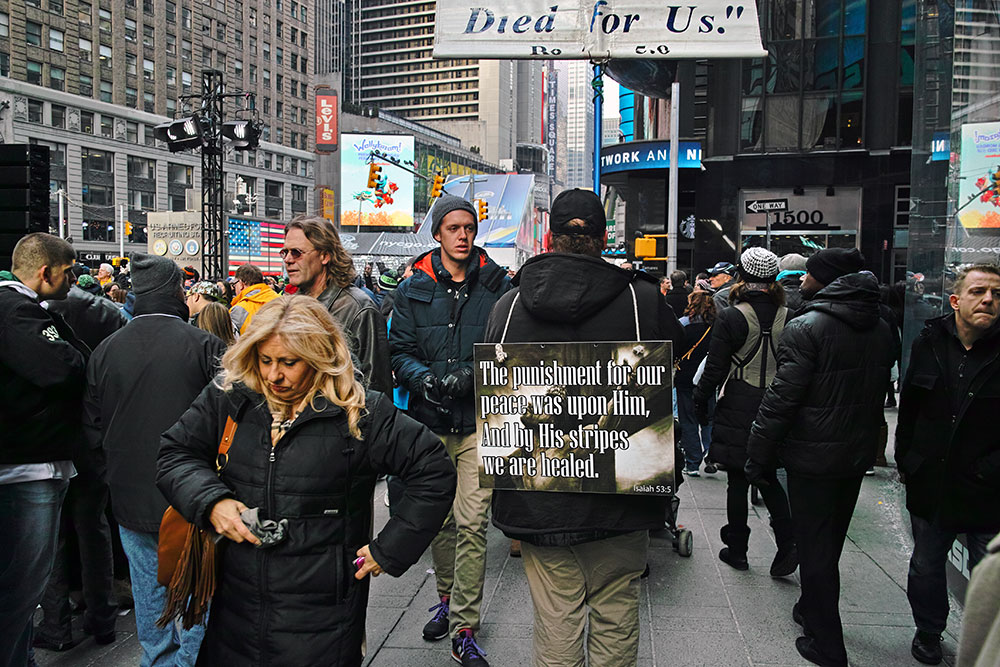
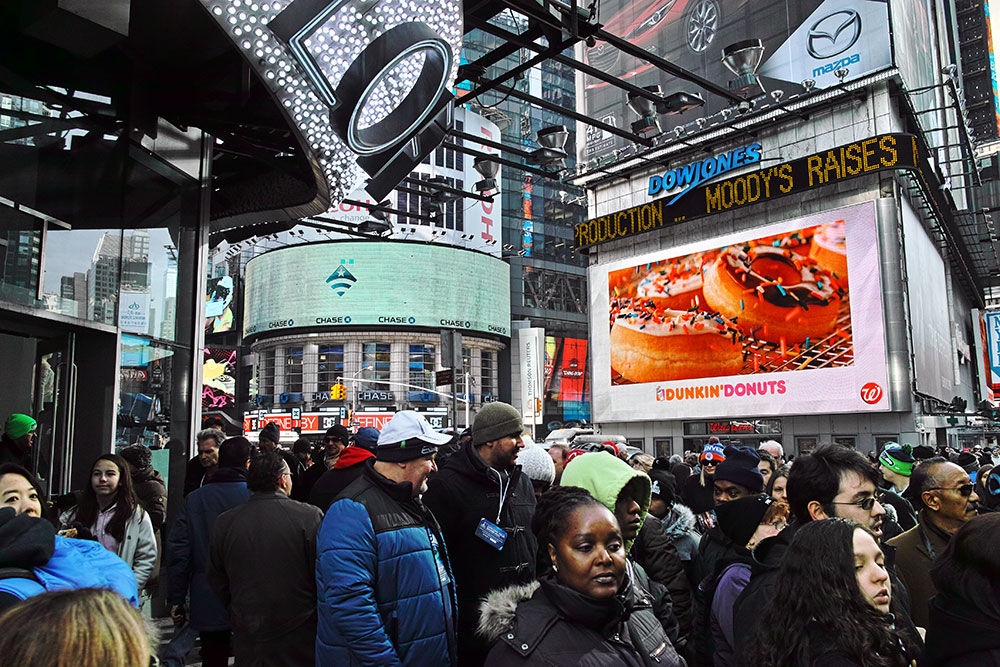
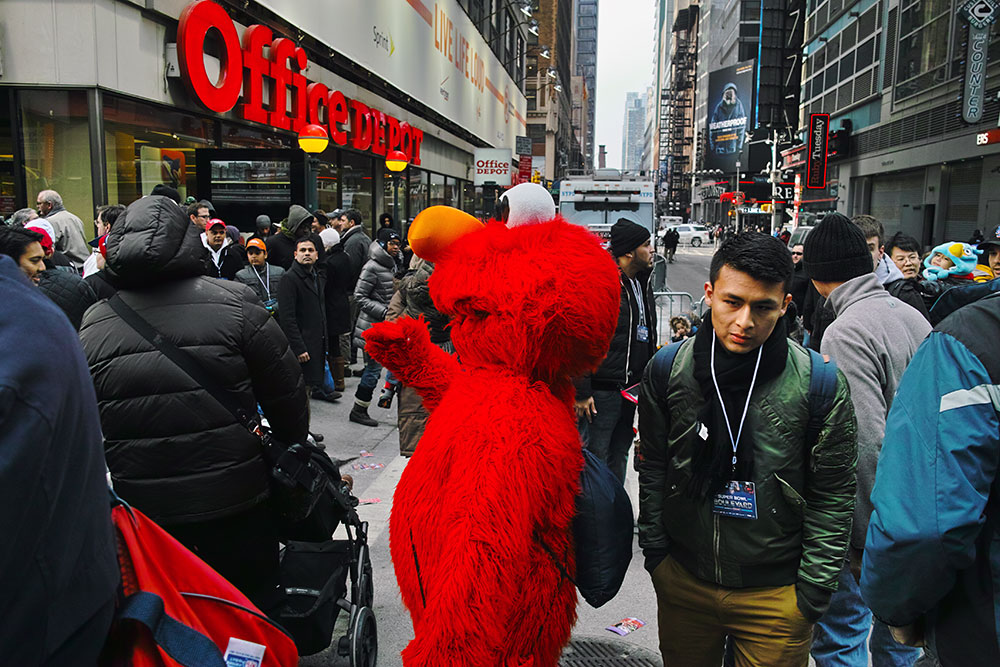
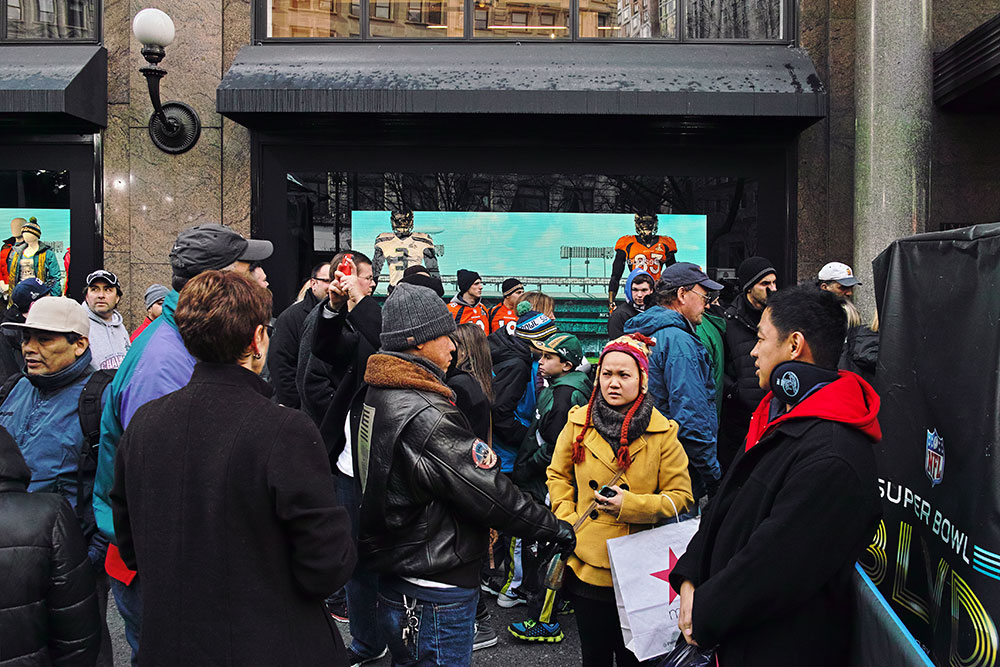
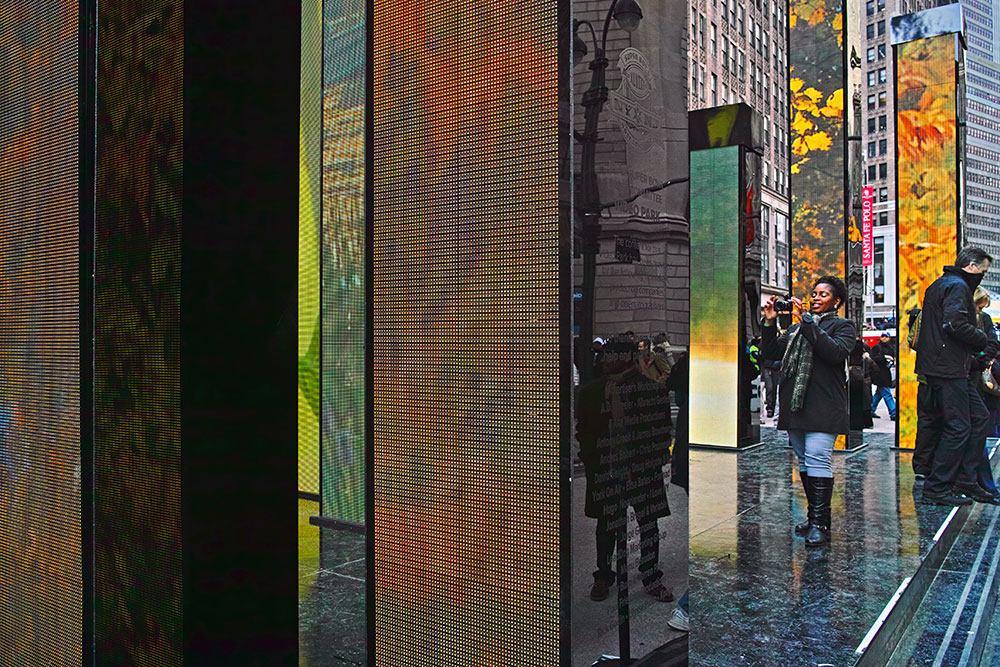
    Ok, if you’re a New Yorker I don’t need to tell you this. Don’t go to Super Bowl Boulevard — the stretch of Broadway between Times Square and Herald Square that has been turned into a writhing mass of football/commercial hysteria. You don’t need to line up for an autograph with — I couldn’t tell who it was — or line up for a slice of Papa John’s Pizza — or get your picture taken with a Disney character — or line up to see the actual Vince Lombardi Trophy — or line up to see whatever is going on in the various temporary structures set up in the street. There must be something in them to see because everyone is lining up.

    But I couldn’t resist taking a few pictures for those of you with the common sense to avoid the area at all costs. Here are six random pics.

    superbowl05

    superbowl04

    superbowl06

    superbowl03

    superbowl01

    superbowl02


  • New York/Momentous Occasion

    brendan_renee_beecher
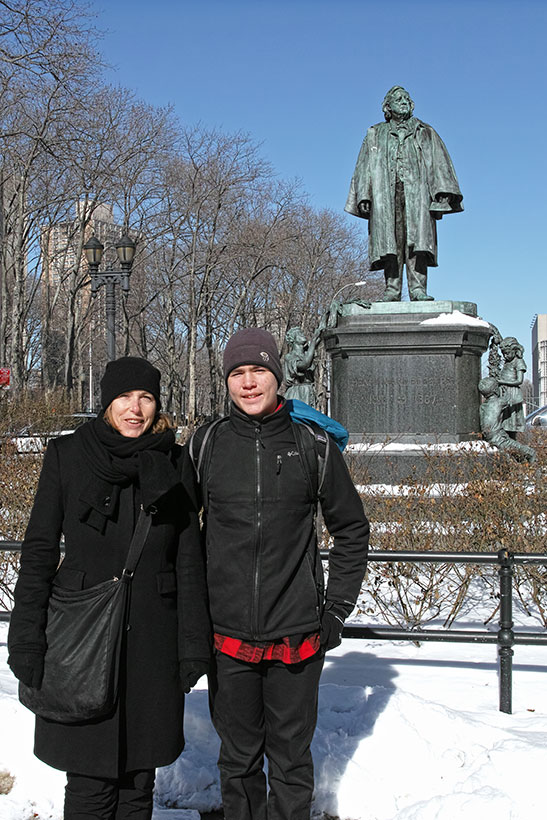
    Renee, Brendan and statue of Henry Ward Beecher — © Brian Rose

    A family snapshot — frozen grins — it was about 15 degrees Fahrenheit. But a momentous occasion. My wife Renee had just taken the oath for her U.S. citizenship in the Federal Courthouse nearby. Cameras were not allowed inside for the ceremony, so we looked for an appropriate spot outside.

    The statue in the rear is of Henry Ward Beecher, one of the most important abolitionists of the 19th Century. He was the pastor of Plymouth Church located a few blocks way in Brooklyn Heights. His sister was Harriet Beecher Stowe, the author of Uncle Tom’s Cabin, the novel about the cruelties of slavery, which was instrumental in galvanizing the abolitionist movement.

    From Wikipedia:

    In 1863, during the Civil War, President Abraham Lincoln sent Beecher on a speaking tour of Europe to build support for the Union cause. Beecher’s speeches helped turn European popular sentiment against the rebel Confederate States of America and prevent its recognition by foreign powers. At the close of the war in April 1865, Beecher was invited to speak at Fort Sumter, South Carolina, where the first shots of the war had been fired; Lincoln had again personally selected him, stating, “We had better send Beecher down to deliver the address on the occasion of raising the flag because if it had not been for Beecher there would have been no flag to raise.”

  • New York/Meatpacking District

    metamorphosis-cover_700pxMetamorphosis, Meatpacking District 1985+2013 — © Brian Rose

    As I wrote earlier, my book about the Meatpacking District is well underway. Above is the cover featuring a photograph of Washington Street from 1985. It is, in many ways, a companion to Time and Space on the Lower East Side. Metamorphosis will be the same size with similar binding and layout, though we have pushed the graphic design a little bit more on this one.

    Time and Space was a complex look at a large neighborhood with many interwoven visual and thematic threads. Metamorphosis is a tighter concept — 18 before/after views and 14 new images of this relatively compact neighborhood, all made with a 4×5 view camera. As before, I shot color film, and have scanned and color corrected the images in Photoshop.

    The whole project (aside from the pictures made in 1985) was done in a very short time frame — less than six months — giving the book an immediacy that I think is rare. There is no way something like this could be done with most established publishers, who normally need long lead times and require much collaborative deliberation. Publishers often promote this aspect of book making, and I think overvalue their role in what often should be an artist/photographer’s unmediated statement. It depends, of course, on the circumstances, and many fine photo books have been made with only modest input from the photographer.

    That’s not to say that this book was done without collaboration. I worked with Bill Diodato, photographer and publisher, and a small team of technical/design mavens. It has been a fruitful partnership.

    As with Time and Space on the Lower East Side I will need to do a Kickstarter campaign to help cover the cost of printing. The economics of doing photo books like this are difficult. The barriers to success, from production to distribution, are high. But this will be my fifth book, and I have a good deal of experience at this point, and know how to make it all work.

    Stay tuned for the next step.


  • New York/Colorful Past

    There’s been lots of discussion about whether Inside Llewyn Davis by the Coen brothers is an Oscar-worthy masterpiece or a dismal failure. Whatever the case, I’d like to briefly touch on the look of the film. The story takes place in 1961 Greenwich Village and the main character wanders the streets and cafes of the area, familiar terrain to those of us who were a part of the folk scene in New York. My participation came much later, the late ’70s and early ’80s, but even today, the look and feel of the place has changed very little.

    INSIDE-LLEWELYN-DAVISA scene from Inside Llewyn Davis, East 2nd Street

    To my eye, the neighborhood is a richly colorful landscape, in parts beautiful, in other parts tawdry. McDougal and Bleecker Streets where the folk scene was centered remains a tourist district with mediocre restaurants and cheap gift shops. But there’s also Porto Rico coffee, Caffe Dante, and Mamoun’s falafel, places that have survived decades. Even Ben’s Pizza is still there in all its fluorescent and formica glory. Caffe Dante was where I used to hang out with Suzanne Vega and Jack Hardy plotting to shake up the world with our songs. It’s still great for atmosphere, but the coffee at Third Rail a couple of blocks away is on a different level. But I digress.

    People have criticized Inside Llewyn Davis for portraying the folk scene as a ghostly shadow of its true self. Suzanne Vega called the movie “brown and sad.” The movie, indeed, is visually muted and dark. The Coen’s obviously filtered the color giving it that old color look–like an Instagram filter.

    bob-dylan-freewheelin

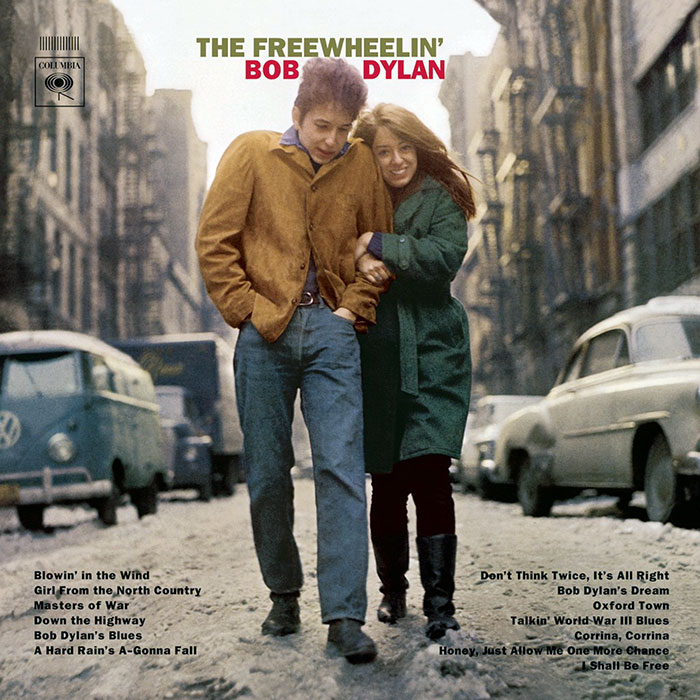
    But the past is only Instagrammed in our minds Or in prints and slides that have faded and color shifted over the years. When Dave Van Ronk–who the movie is sort of, but not really about–and Bob Dylan inhabited the neighborhood in the early ’60s the look of the place was undoubtedly as brightly hued as it is today.  My guess is that the Coens and their art director were inspired in part by the iconic photograph on the cover of The Freewheelin’ Bob Dylan where he and Suzy Rotolo walked down the center of Jones Street on a snowy thinly lit day.

    One can argue that the Coens wanted to remove their movie from the present and give it a dreamy long ago quality. But at this point, color filters are an overused device. Moody, slanting light streaming through windows, has also become a cliche supposedly evoking the past. Think of Spielberg’s Lincoln.

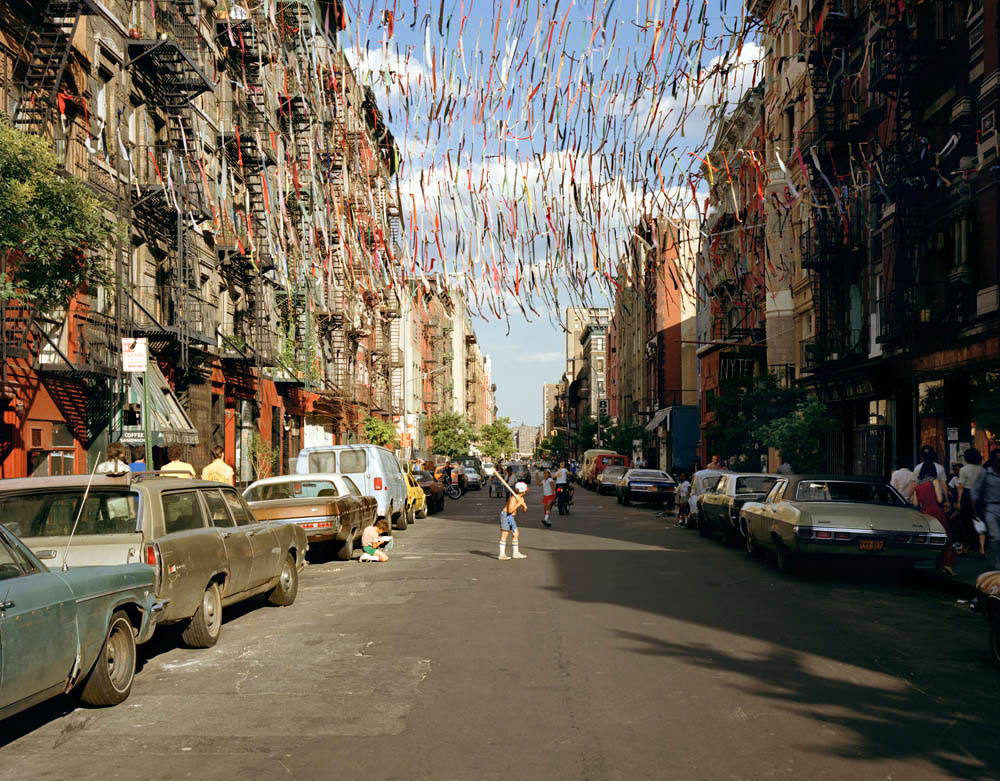
    In my book Time and Space on the Lower East I tried to make the point that the past and present are  not mutually exclusive realities. They are part of a continuum of experience. They are both here now in vivid color. And the sky on a sunny day is blue.

    e4thEast 4th Street 1980 — © Brian Rose/Ed Fausty


  • New York/Color before Color

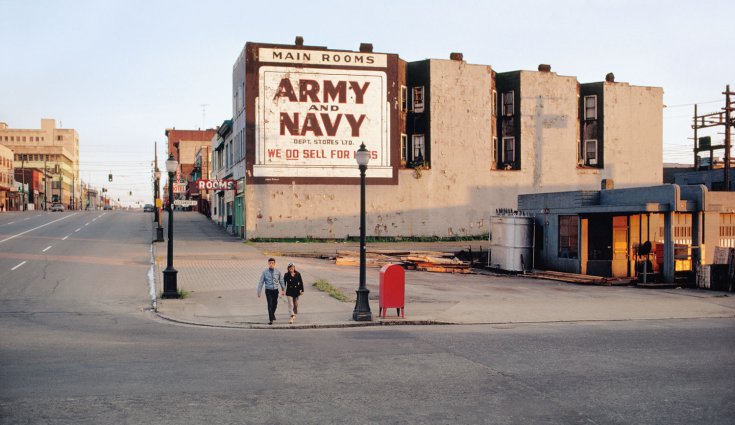
    herzog-foot-of-main-1968-time-1Foot of Main — by Fred Herzog

    A curious thing has happened in the telling of the history of color photography. In recent years, it was discovered that two photographers, Fred Herzog of Vancouver and Saul Leiter of New York, had worked in color long before the familiar names associated with the development of the medium. And their color work was not just a casual sideline to black and white. Both produced extensive bodies of work made over years of time. While I prefer Herzog’s clear topographic style to Leiter’s aqueous street photos, they both did terrific stuff. Why are we only hearing about them now?
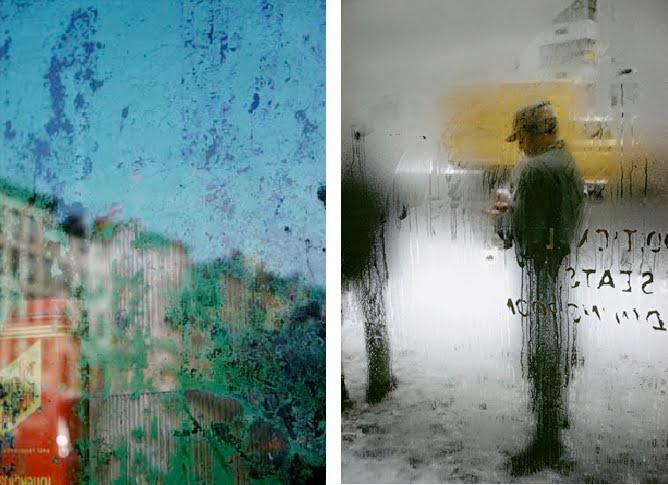
    saul-leiter-window-1957-snowTwo photographs by Saul Leiter

    When I decided to pursue color in the mid-70s, there was no Fred Herzog or Saul Leiter to be found. I was primarily aware of Stephen Shore and William Eggleston–and Joel Meyerowitz who I studied with at Cooper Union. As it turns out, Herzog and Leiter had been shooting color slides for decades, showing them to friends and colleagues, but outside of their immediate circles, they were almost unknown. Herzog was documenting Vancouver, British Columbia, a dynamic, growing city, but until relatively recent times, a provincial town far removed from the East Coast art centers. Leiter was known more for his fashion photography, and as he said, to explain his relatively low profile: “In order to build a career and to be successful, one has to be determined. One has to be ambitious. I much prefer to drink coffee, listen to music and to paint when I feel like it.”

    There are many reasons why it took so long for color to arrive to the museums and galleries, but the key thing to understand is that before the 1970s, color printing was problematic. Chromagenic prints (C-prints) were invented by Kodak and brought to the market in 1942. Well into the 70s this material was mostly associated with family snapshots, and as anyone who has looked at old color prints knows, the color faded and the paper yellowed. It was possible to have enlargements made–you could have your local photo finisher make an 8×10 print. But you had no control over the final outcome. For these reasons, early C-prints were not suitable for fine art purposes.

    Magazines like National Geographic and Life began to use color in 60s, but they worked directly from slides or large format transparency material. which were made into separations for offset printing. That was the norm for magazines right into the 1980s. When I began photographing architecture around 1982, all my clients still wanted 4×5 transparencies, luminous sheets of film handled like irreplaceable jewels. The impetus for color printing–the kind that went on the walls of galleries came from elsewhere.

    To a degree, fine art color printing was born out of the advertising industry. Photographers were shooting color transparencies and the ad agencies had dye transfer prints made, an additive process that involved making color separations and sandwiching them together–much too complicated to get into here–but a method of color printing that provided a great deal of control over the final result, often an intentionally unnatural result for ad purposes. It was a time consuming and expensive process, but worth it to the ad agencies.

    At some point, photographers realized that dye transfers were a stable archival material that could be used to make beautiful fine art prints. Joel Meyerowitz, who worked in advertising, made dyes of his early 35mm street photography, and William Eggleston’s prints shown at the Museum of Modern Art in 1976 were dye transfers. Helen Levitt’s color prints were made by Tartaro Color, the leading dye lab in the city. Most of us could not afford to make dye transfers, though I remember one of my fellow students at Cooper Union, whose father worked in the industry, had his slides printed as dye transfers. I was jealous. Eventually, with improvements to C-printing and the advent of ink jet printers, the medium of color photography rapidly expanded in the 1980s.

    Things had already begun to improve when I first started color printing in the darkroom at Cooper Union in 1977. I made 11×14 prints in drums, pouring the chemicals in and out by hand, often ending up with green chemical streaks on the paper, which meant starting over again. It was laborious work, but I managed to make about 25 prints for an exhibition in the hallway of the photography department. Since I was shooting 35mm slides–a positive film, and printing on reversal material–I had to have internegatives made from the slides. There were only a few labs in New York City that specialized in that kind of thing, but at least here it was possible. The prints I made back then look pretty bad today. In the early 80s I printed at a rental lab called My Own Color Lab, which gave individuals access to large scale processors used by commercial labs. For a number of years My Own was a Mecca for color photographers and free lance printers, and there I came into contact with people like Nan Goldin, Andreas Gursky, and Phillip Lorca DiCorcia.
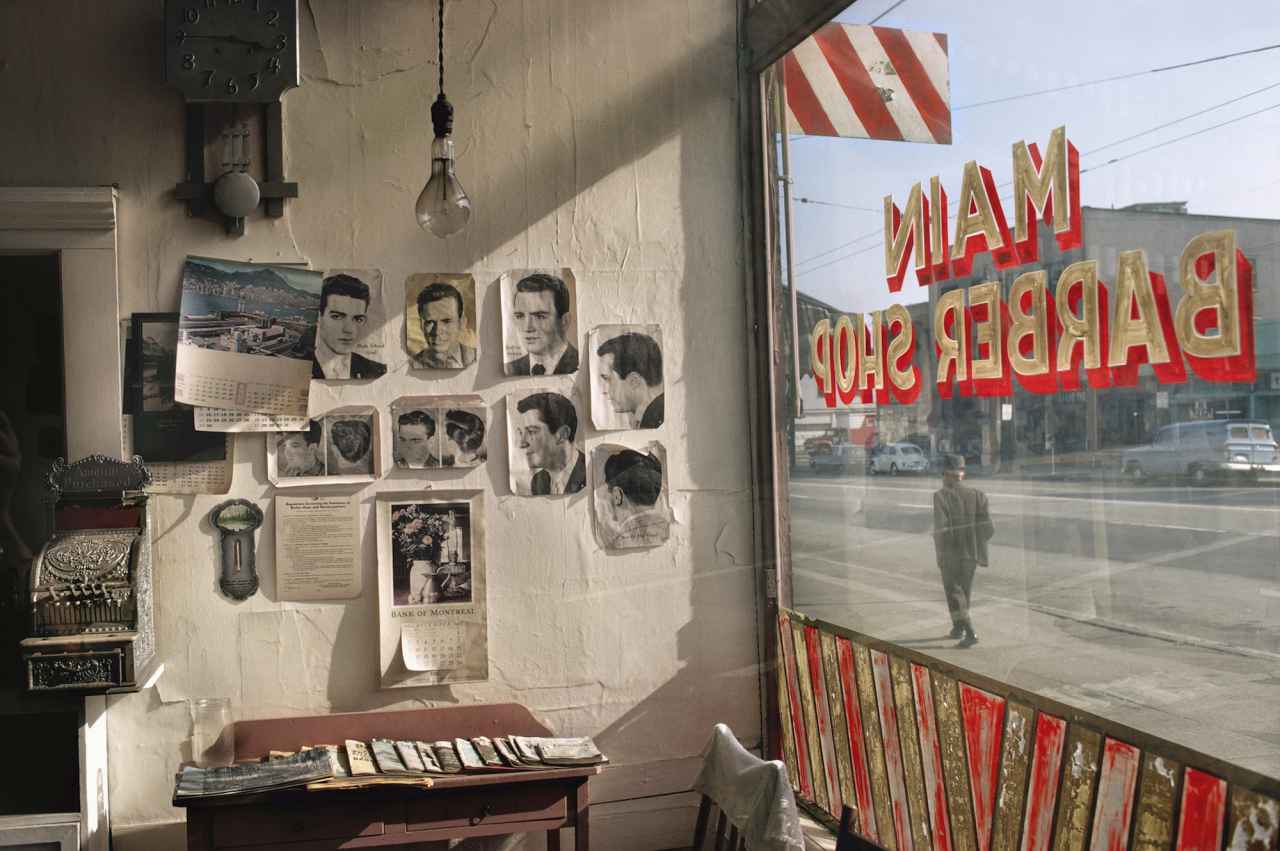
    516ef145eee9dphoto_high_8707Main Barber — by Fred Herzog

    But if you were Fred Herzog in Vancouver shooting Kodachrome in the 50s, 60s, and 70s there was really no way to make decent exhibition prints. You loaded the slides into a Kodak carrousel tray and projected them just like your neighbors showing their latest vacation snaps. The amazing thing is that Herzog kept at it for decades, all the while eschewing the pictorial cliches of the day, taking a hard look at a beautifully gritty place, a Canadian city both familiar and foreign, full of advertising signs, fin-tailed automobiles, and working class men and women. It’s a remarkable achievement, all done outside of the art world bubble, full of a freshness and sense of discovery so often lacking in the arch and self-conscious product presently displayed in our finest salons.

    So, the narrative has changed. Leiter and Herzog were first–but their photographs, 35mm Kodachromes, were mostly unseen–until after the big wave of color photography had crashed ashore establishing a pantheon of art world stars. They eventually received the attention they deserved, but very late. Saul Leiter died last year at the age of 90, and Fred Herzog is now 83.


  • New York/Greenpoint

    lou_reed_adManhattan Avenue, Greenpoint, Brooklyn (digital) — © Brian Rose

    It’s the end of the year and I’m feeling somewhat wistful. A year of accomplishments — the success of Time and Space on the Lower East Side — my show at Dillon Gallery — the completion of Metamorphosis, my Meatpacking District book to be released this coming summer .  But also a year punctuated by moments of poignancy as is inevitable with the passage of time.

    Earlier today I tested out my new camera, a Sigma DP1, a much improved refresh of the somewhat balky second generation of the camera. The former took incredible pictures in ideal light conditions — better than other point and shoots I’ve used. But it was a difficult camera to handle, even for me. Nevertheless, I’ve stuck with it because of its large image sensor size and stripped down design. The new version is better in almost every way, and now produces image files large enough to make decent size prints.

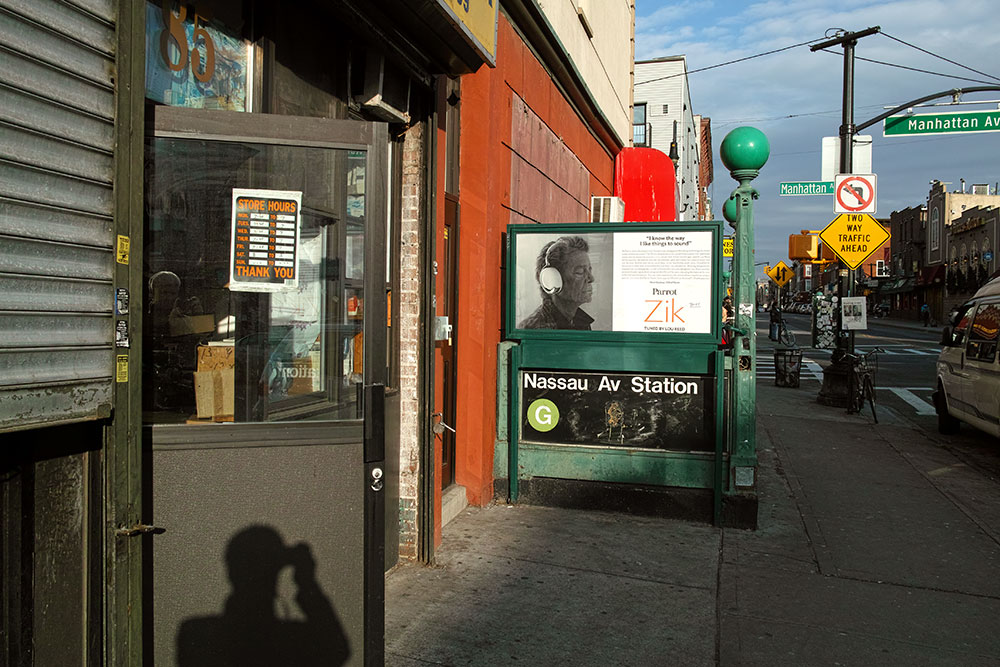
    The picture above was made in Greenpoint, Brooklyn while waiting for my family to meet me at a nearby restaurant. I came across one of the ads seen around town with Lou Reed in headphones. I’ve been unsure how I felt about them coming so soon after his death. But the image of Reed is beautiful, and when I came across one of the posters caught in a stream of low winter light, I felt a pang of sadness for the loss of one of rock and roll’s greatest figures.

    Yesterday evening I went to see “The Wolf of Wall Street,” Martin Scorsese’s latest. I’ve generally been a fan — from his rough and tumble Little Italy films to the magical “Hugo.” But I walked out of this one barely an hour into it. I’ve never been so beat down, so bored, so exhausted by a film. Bah humbug! Happy New Year!


  • New York/Time and Space

    cover_release

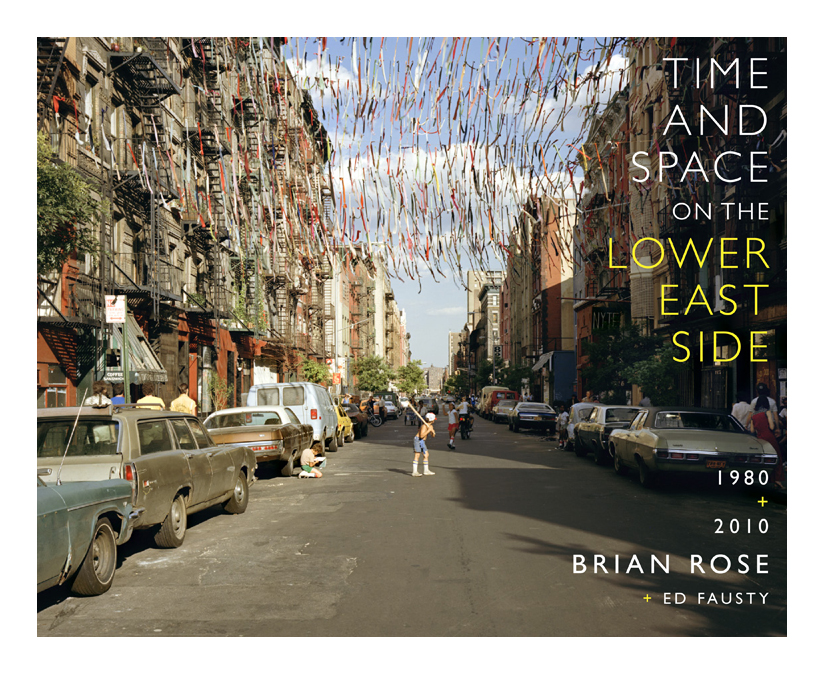
    Time and Space on the Lower East Side

    As many of you know, Cooper Union, the esteemed tuition-free art/architecture/engineering college is in the midst of an existential crisis. The Board of Trustees has proposed charging tuition to solve the school’s financial problems. Alumni, students, and other friends of Cooper are fighting the change.

    I have 100 copies of my book Time and Space on the Lower East Side left in the first (and only) edition. I am donating 50% of the sales to the Cooper Union annual fund between now and the end of the year. Just type in “Cooper” in the discount box, get the book for $60, and help this important institution at a critical time and get a copy of this collectible book.

    22 books sold. $755 raised for Cooper. Keep it up!