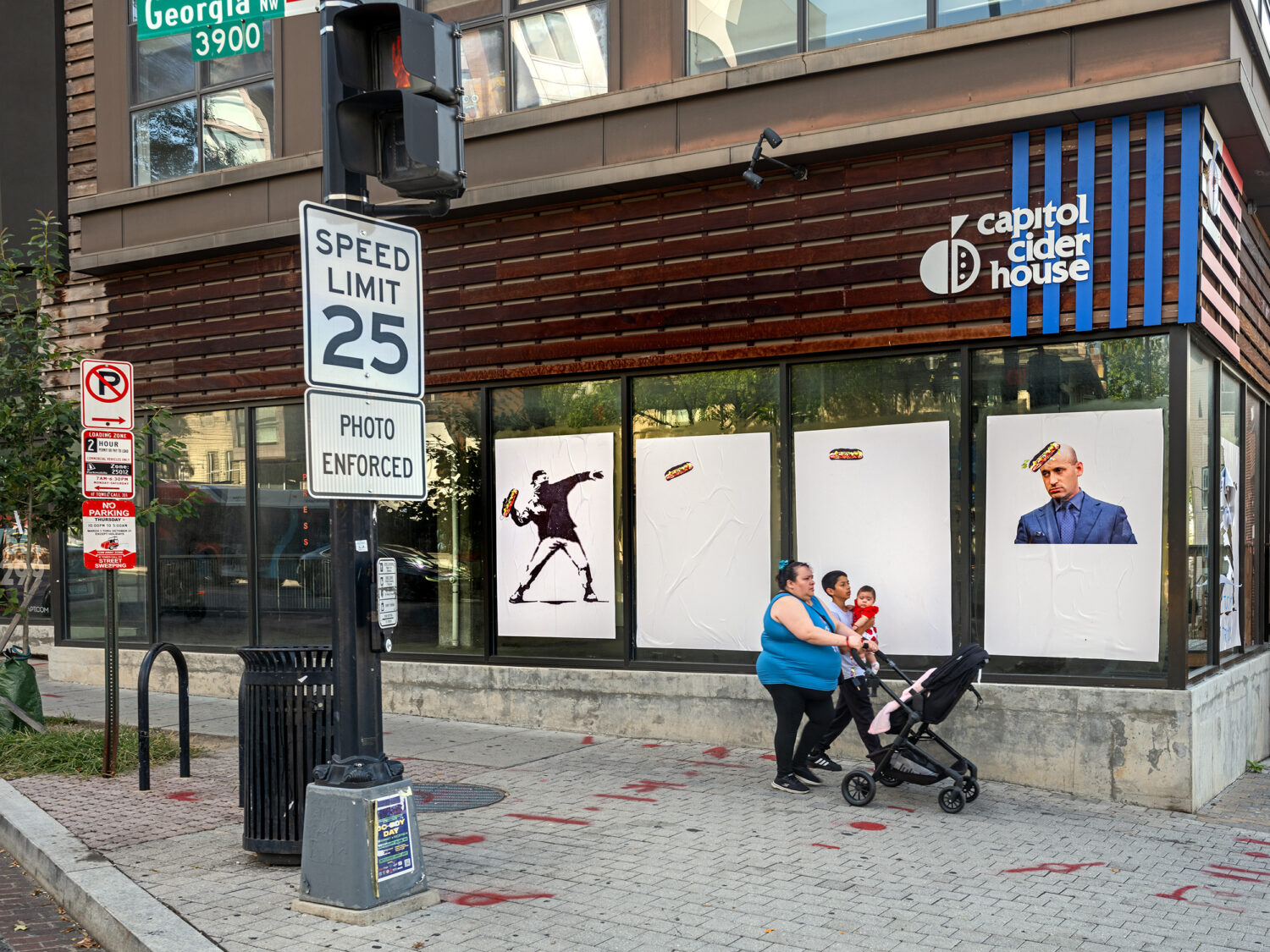
We took the Metro up Georgia Avenue at least two miles north of the White House in a busy, racially mixed neighborhood. I photographed the now iconic Banksy-inspired image of a protester throwing a sub sandwich at, in this case, Trump’s ghoulish henchman, Stephen Miller. Just a couple of weeks ago, a protester threw a Subway sandwich at a National Guardsman at 17th and U Street. He was chased and retreated to his apartment. When he offered to turn himself him, homeland security, instead, arrested him with a large contingent of heavily armed officers. Afterwards, they released a slick video of the arrest making it appear that they were apprehending a dangerous criminal. Homeland security charged him with felony assault, but the court knocked it down to a misdemeanor.
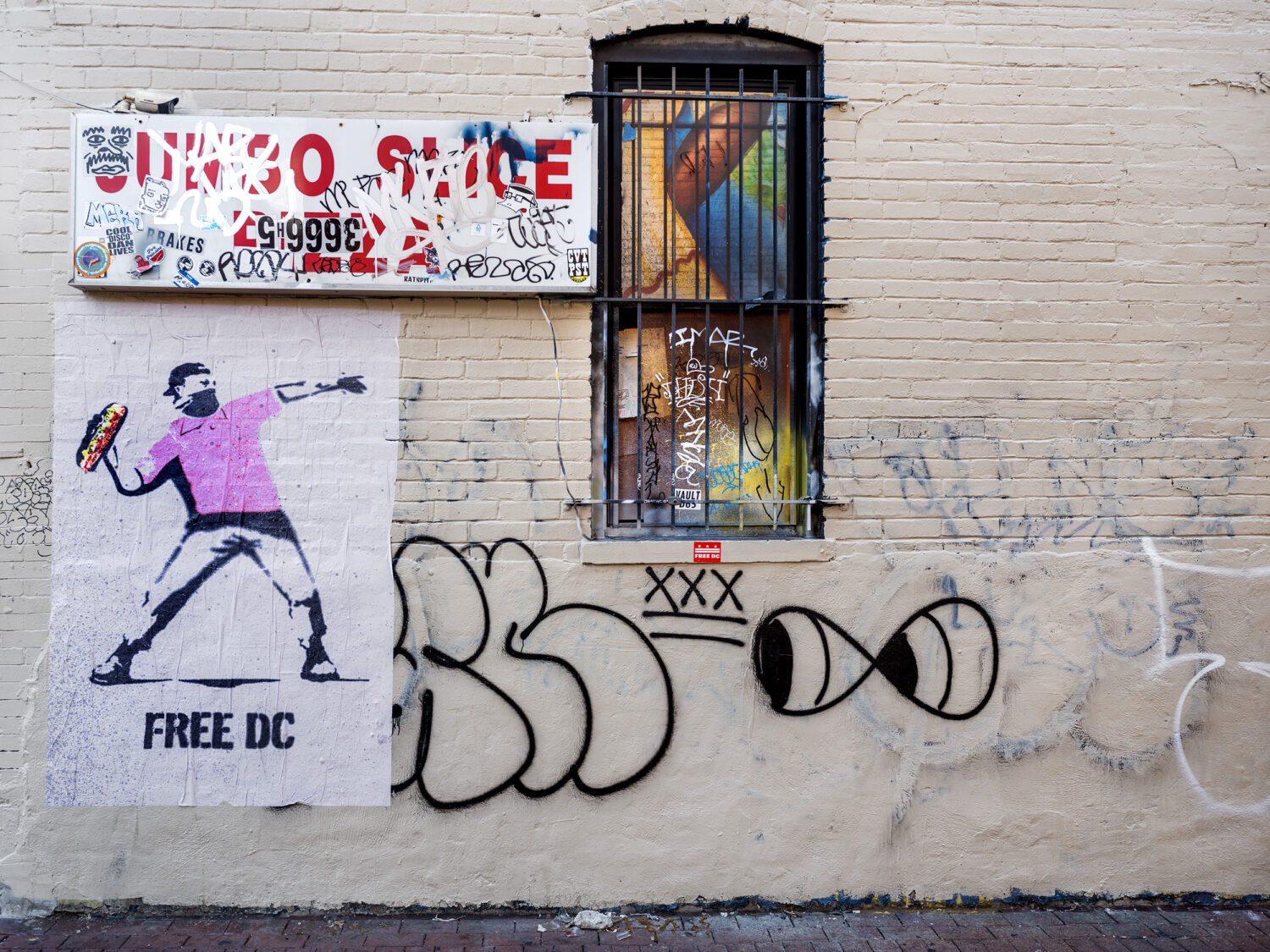
Down at 17th and U I found the original Subway store where the hoagie hurling incident occurred, but there was nothing of significance to see. However, just down the street in an alley I came across another poster of the sandwich thrower, posed like an NFL quarterback attempting an end zone toss. Beneath the image was the slogan “Free DC.”
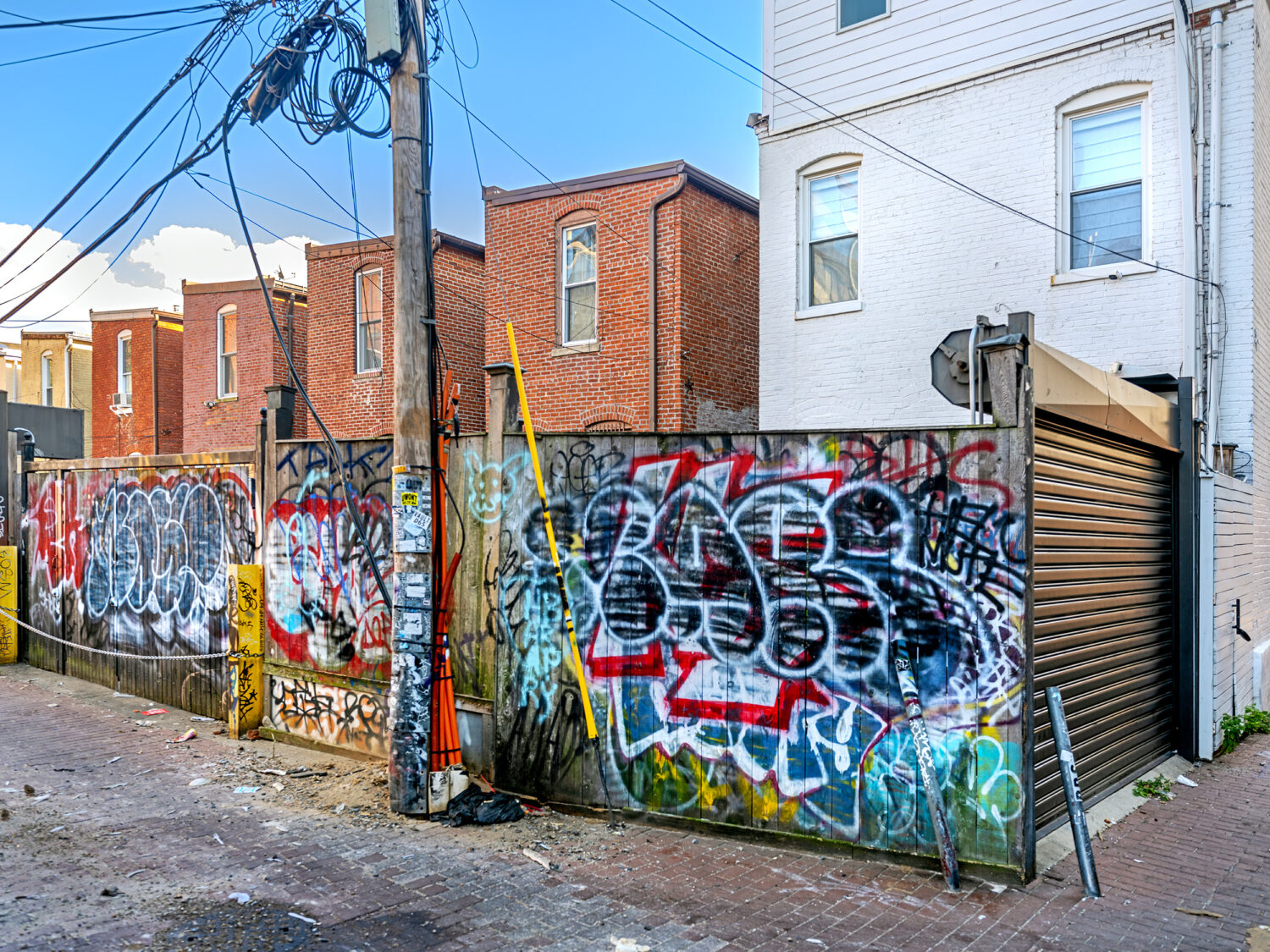
For the fever swamp right wingers, this graffiti-strewn alley could certainly serve as evidence that Washington is a crime-ridden hellscape, except that there was nothing going on and the whole neighborhood felt pretty normal in a somewhat urban gritty kind of way.
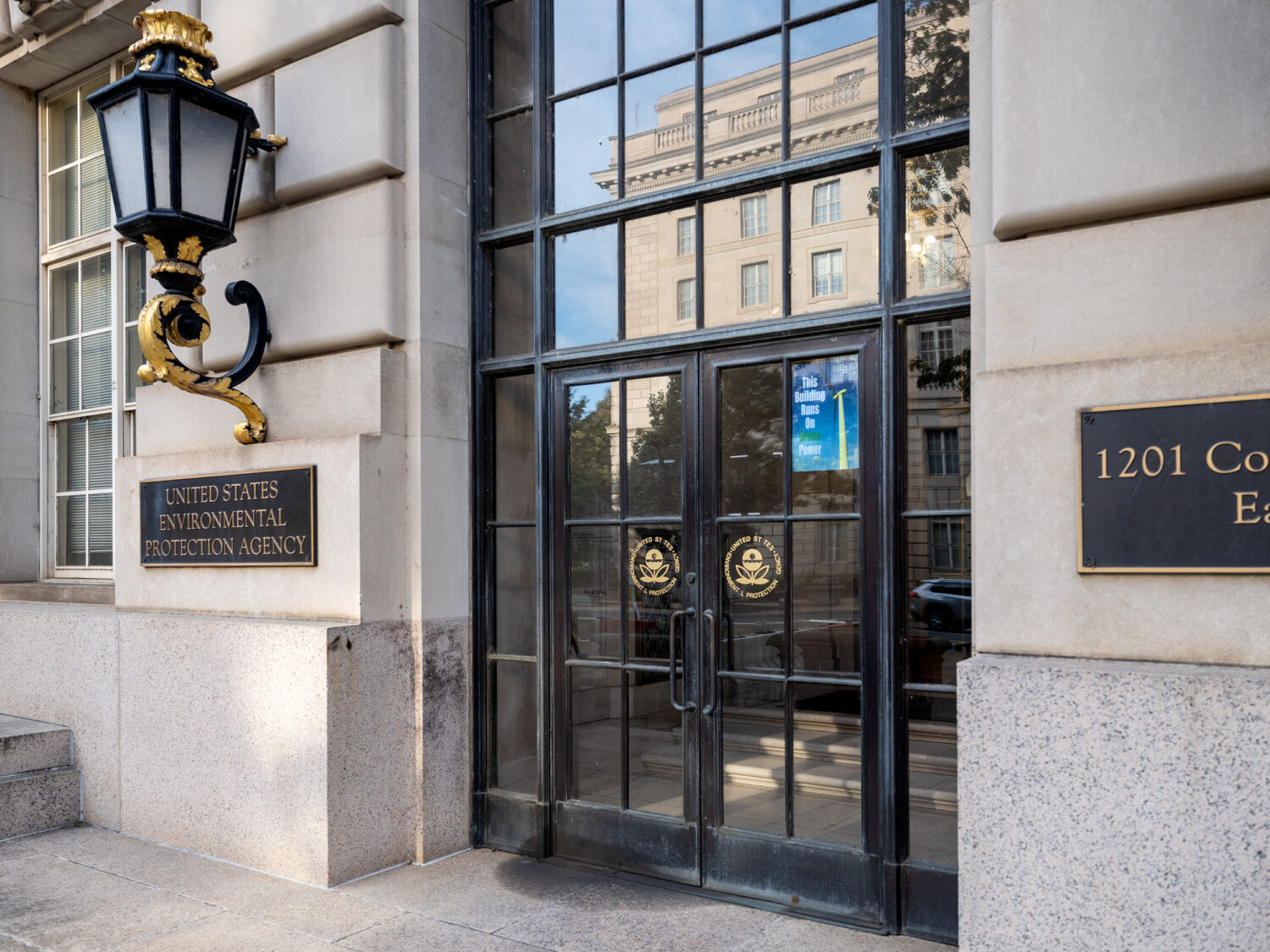
Walk by the government buildings along Constitution Avenue, we passed by the side entrance of the partly abandoned EPA building. The doors were locked, and a poster, obviously a forgotten relic of days gone by, touted the use of green energy. “This Building Runs on (windmill) Power.
As we walked up 15th Street we encountered groups of young men in blue suits and brown shoes, apparently the uniform of the new right wing conservative cadre now running things in DC. Among them, coming out of a doorway, was Nigel Farage, the British member of parliament and head of UKIP, a reactionary British political party.
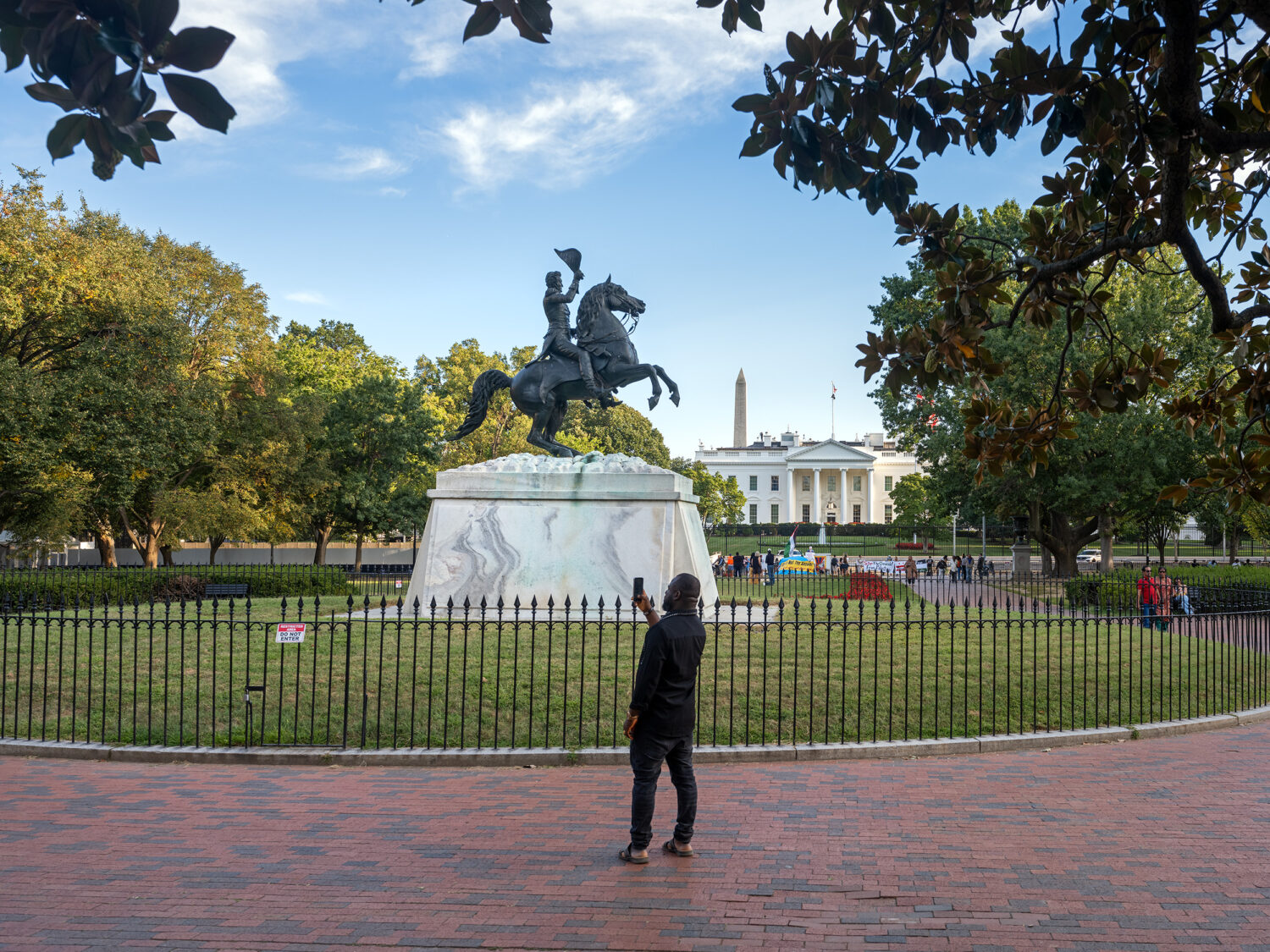
One can only approach the White House by walking through Lafayette Square as the grounds have become gradually more fenced off and fortified. The square is named for the French hero of the Revolutionary War, but the centerpiece of the park is the statue of Andrew Jackson, a highly complex figure in American history. Jackson was a war hero, a populist, and the instigator of “the trail of tears,” a genocidal expulsion of Indian tribes located in the southeast states.
Wikipedia:
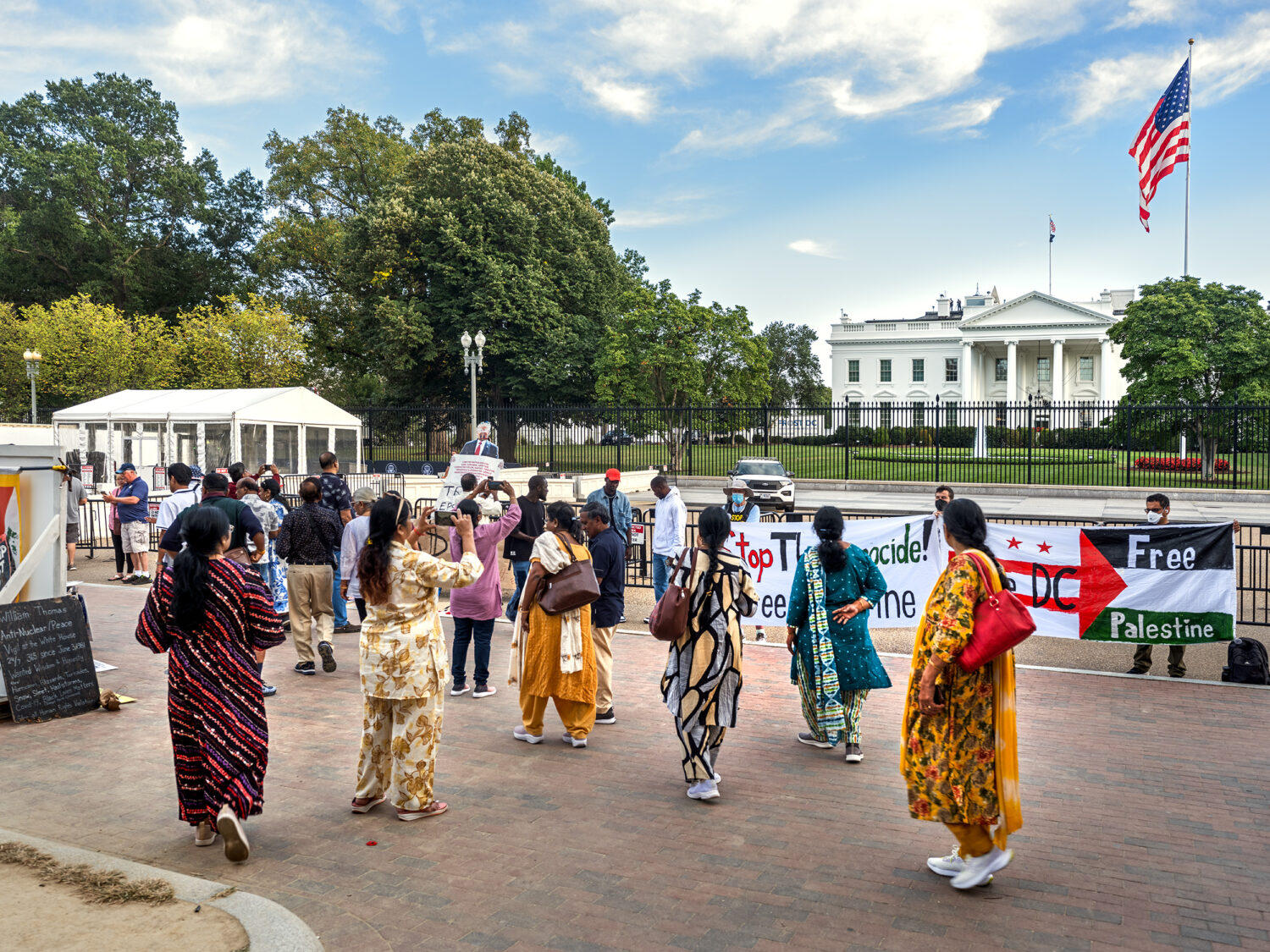
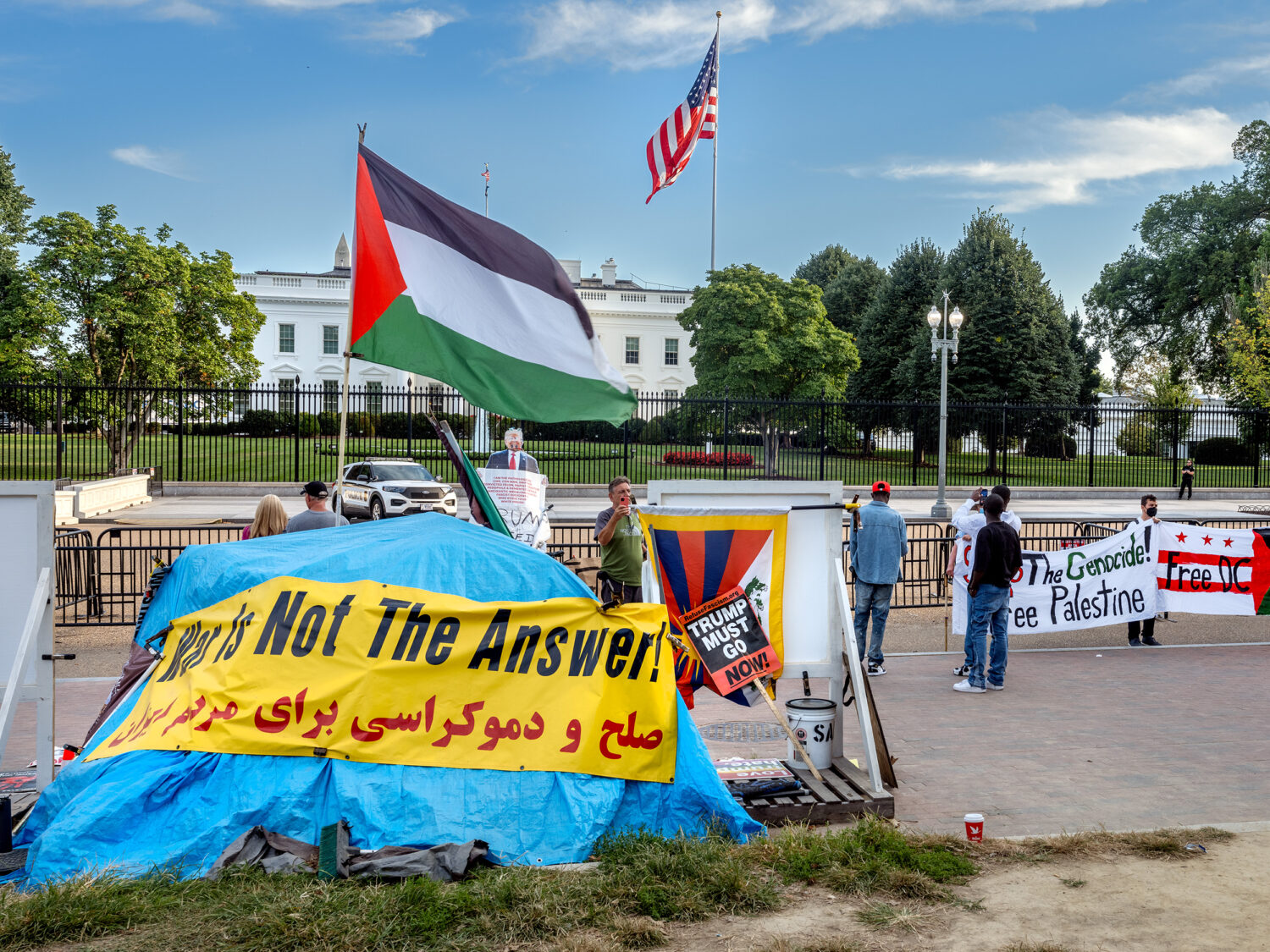
The White House Peace Vigil was an ongoing protest calling for nuclear disarmament world peace. Erected in 1981 it was possibly the longest continuous protest action in American history. Two days after I photographed the tent, Trump heard about its existence and ordered its removal. I joked with my son that it was my fault for taking the photograph.
Wikipedia:
- “On September 5, 2025, President Donald Trump, claiming to have been made aware of the vigil’s existence for the first time, ordered his staff to remove it that day. On September 7 around 6:30 a.m., federal officers forcibly removed a tent-like structure used by the vigil, though the vigil itself remained staffed and its physical presence continued uninterrupted throughout the incident. The vigil was fully reassembled shortly thereafter.”
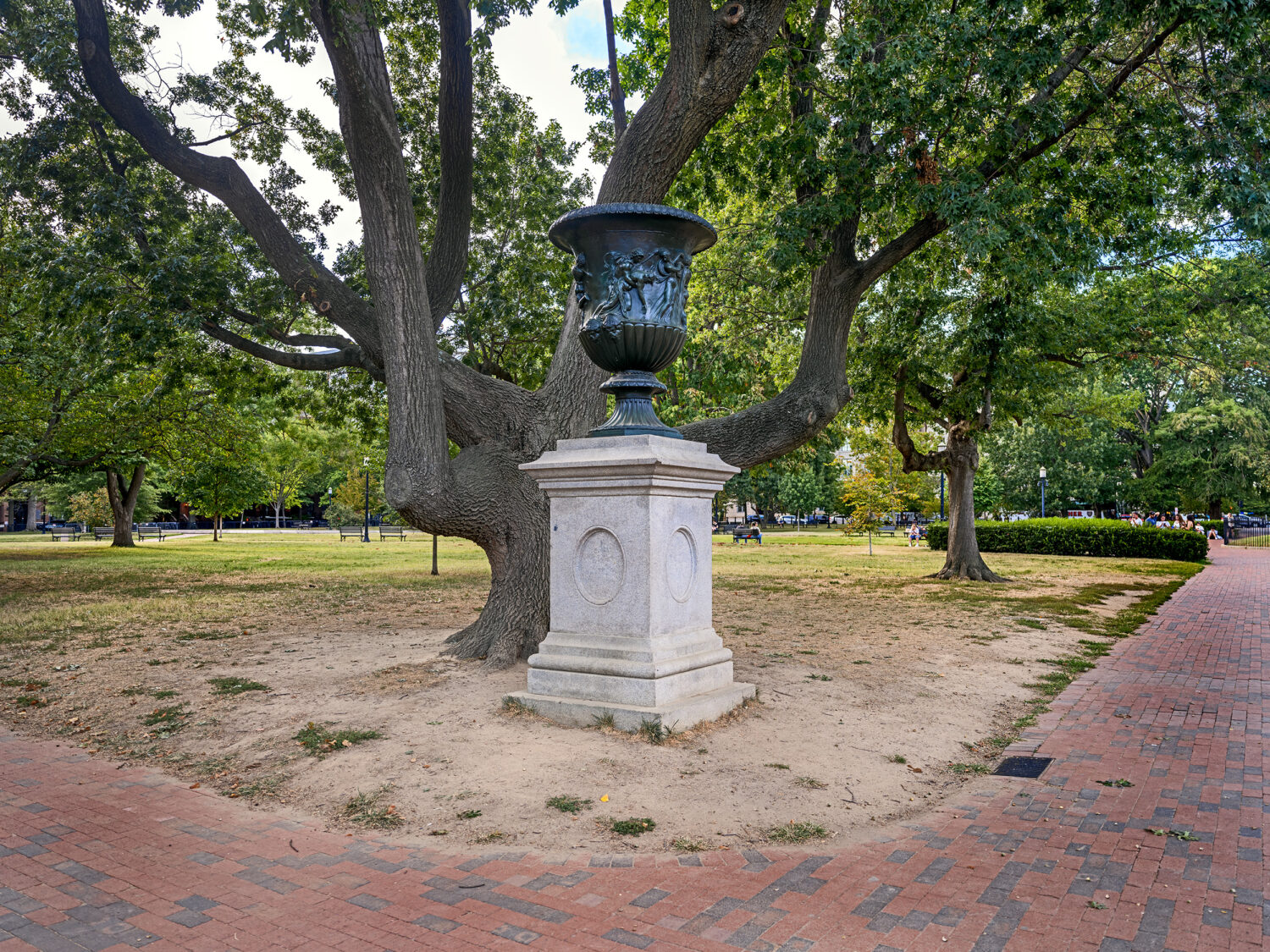
Before leaving the park, I took a picture of a decorative urn on a stone pedestal. It’s not a well-known monument, and in fact, not that much is known of its origin. The sun was setting, and Washington, rather than feeling like a city under siege, felt somnolent, only half alive. One senses that the center of power is empty at the core. While there is great danger posed by the reckless greed, vindictiveness, and mental illness of the sitting president, there is at the heart of the matter an empty suit, a rotting corpse, nothingness.