Friday, January 29, 2010
Wednesday, January 27, 2010
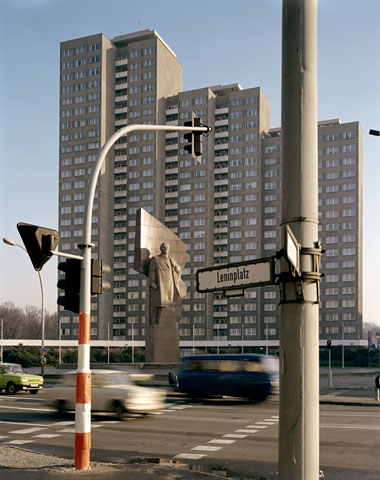
Berlin/Leninplatz

Leninplatz, Berlin, 1990-- © Brian Rose
Spiegel Online International:
In a sign of how time is healing Berlin's wounds, the city plans to dig up the giant Lenin monument it famously buried in 1991 and place it in a new museum for disgraced statues. The works will span the communist and Nazi eras and date far back into Prussian times.
Full article here.
One of the things I've noticed in my recent trips to Berlin is a greater acknowledgment that visitors come to Berlin to see and feel history, however painful much of it may be. For years, Nazi sites were mostly unidentified, hidden. Then the Wall was hastily removed, communist monuments ripped down. Now, there is a greater openness along with regrets about what was lost. There are serious attempts to present and interpret history such as the Topography of Terror as well as kitschy Trabi rentals and fake G.I.s posing for pictures at Checkpoint Charlie. I still haven't made up my mind about Peter Eisenman's Holocaust Memorial, but it is irrevocably planted--a vast field of stones--in the heart of the German capitol.
Sunday, January 24, 2010
Trenton/Kahn Bath House

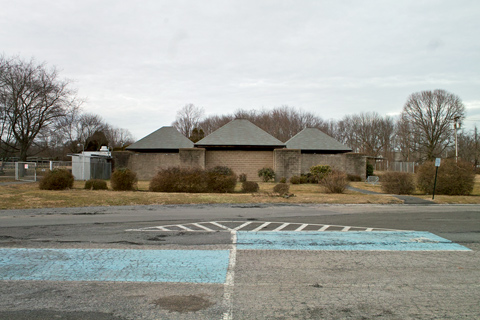
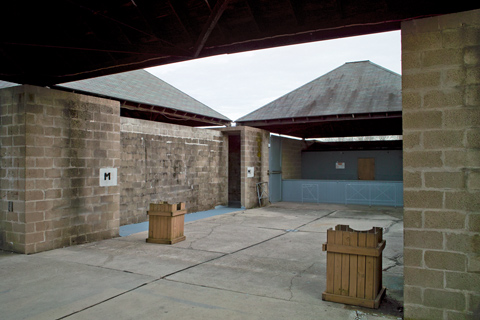
Trenton Bath House, Louis Kahn -- © Brian Rose
In the next couple of weeks I hope to photograph the Trenton Bath House, one of architect Louis Kahn's earliest works in its current almost ruined state. This modest, but sublime structure, is about to be restored, and amazingly, considering its pedigree, will be returned to its use as changing rooms and showers for a community swimming pool.

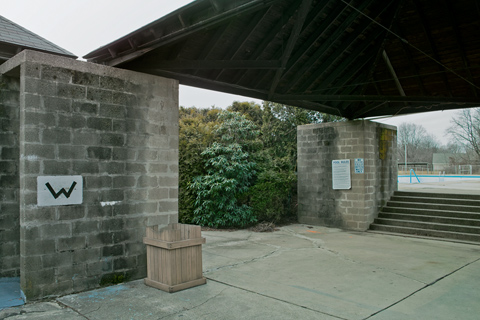
Trenton Bath House, Louis Kahn -- © Brian Rose
I took these pictures while walking through the project with Michael Mills, partner of Farewell Mills Gatsch Architects (FMG), a Princeton firm that specializes in preservation. The history of the bath house and a description of the plans for restoring the building can be found here.

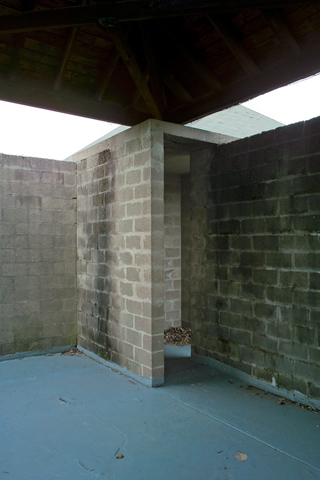
Trenton Bath House, Louis Kahn -- © Brian Rose
In an email to Michael Mills expressing what I feel is the importance of photographing the bath house before restoration takes place, I wrote this:
There is also something seductive about seeing the bath house now. Coming across it in its winter abandonment, it feels like the discovery of some ancient temple ruin. There is a solemnity about it--a poignancy--a silence full of the meaning that Kahn invested in this otherwise utilitarian recreational project. That authenticity will be partially, and inevitably lost, though the building will be reborn, and will again assume its original purpose. The restored project will express Kahn's design undisturbed by later interventions and neglect, but the present moment is unique--a historical juncture--and I think that it deserves full and considered documentation.
A few months after the fall of the Berlin Wall, I had the opportunity take a tour of Erich Mendelsohn's Einstein Tower, an icon of early 20th century architecture located just outside Berlin in Potsdam. Most of those on the tour were East Germans who had signed up before the Wall had opened. I brought my view camera along, despite the inconvenience of lugging such equipment, hoping to get at least one good photograph. After a tedious hour-long slide talk about the solar observatory, we were led to the building, sitting forlornly, but miraculous--rundown like most structures in the east--but essentially frozen in time. I managed to get a half dozen pictures of the tower including an interior complete with original Mendelsohn furniture and cabinetwork, still in use. After the reunification of Germany, the Einstein Tower was beautifully restored, but there is something about the photographs I took that day in 1990 that can't be captured in the present.
Such moments in time are worth documenting.

Trenton Bath House, Louis Kahn -- © Brian Rose

Trenton Bath House, Louis Kahn -- © Brian Rose
Saturday, January 23, 2010
Thursday, January 21, 2010
Wednesday, January 20, 2010
Tuesday, January 19, 2010
Saturday, January 16, 2010
New York/Joel Meyerowitz

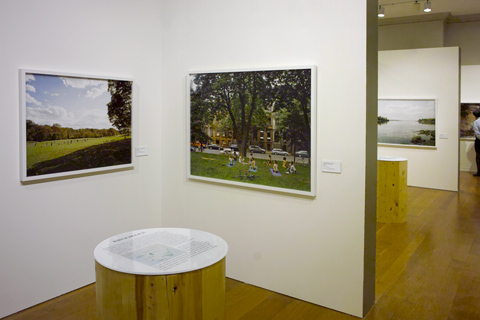
Meyerowitz exhibition at MCNY -- © Brian Rose
Writing about Joel Meyerowitz is complicated for me. While a student at MICA in Baltimore in the mid '70s, I saw his color street photography, and having just begun shooting color myself, I endeavored to go to New York and study with him at Cooper Union. My success at getting into Cooper was a critical event in my life, and the experiences I had there greatly influenced and shaped my later career.
Meyerowitz's show at the Museum of the City of New York, Legacy: The Preservation of Wilderness in New York City Parks, is particularly problematic for me to write about because I did my own survey of New York's natural park areas back in the '80s, 30 years before Meyerowitz came to the subject on his own. Go here to see that work.

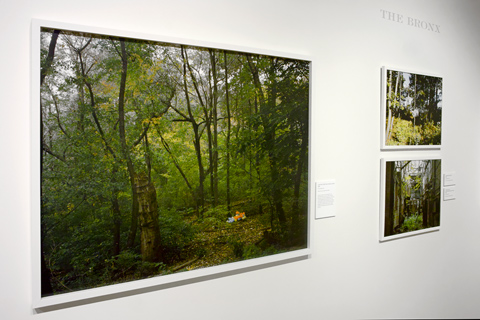
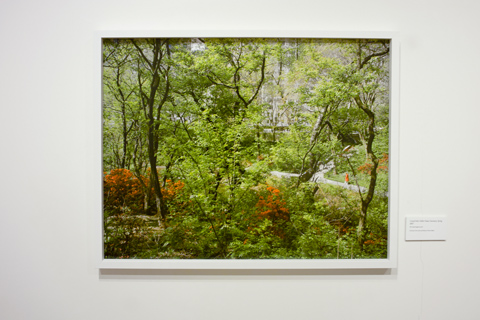
Meyerowitz exhibition at MCNY -- © Brian Rose
I really like this image, party balloons incongruously discovered in the depths of apparent wilderness, actually a fenced-off patch of Central Park.
Legacy, the exhibition, seems to me unsure about its focus and intention. It seeks to be at once a celebration of the richness of New York's surprisingly spacious natural landscape, and a showcase of Joel Meyerowitz, "master photographer." But because the images are grouped primarily by borough and park, other possible lines of continuity and inquiry are cut off. A different organization of photographs could have revealed deeper connections in content and method of working. There are any number of substantial images in the exhibit, but their cumulative power has been dispersed. What we're presented with is a user-friendly Baedeker to New York's natural parks.

Meyerowitz exhibition at MCNY -- © Brian Rose
A fantasia of red and green, an unnaturally vibrant print, in my view.
Another factor cheapening the impact of many of the images is the overly saturated color--the blindingly phosphorescent greens and reds--nothing like the beautifully modulated color of Meyerowitz's earlier analog prints. New York's parks have been digitally enhanced.

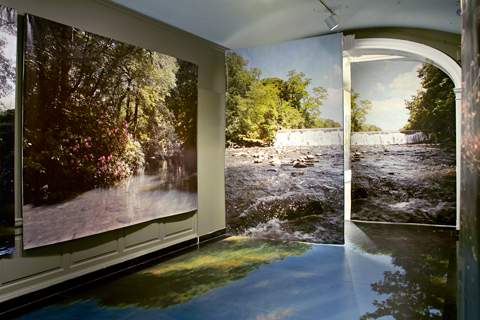
Meyerowitz exhibition at MCNY -- © Brian Rose
The opening wall-sized murals printed on loose, Tyvek paper are nothing less than cringe inducing--Meyerowitz photographs as shower curtains. Unfortunately, a few of the strongest images in the show--once you're past the Bronx River adventure ride (seen above)--are printed in this way.

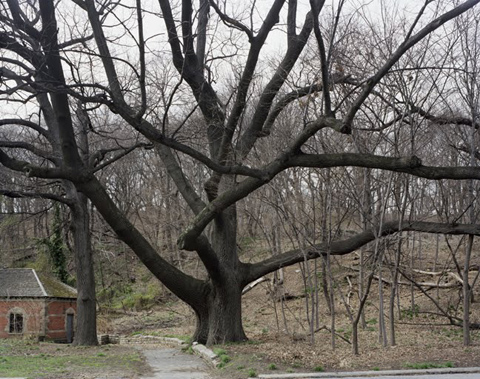
Photograph by Joel Meyerowitz
The naked armature of an immense tree in Brooklyn, thick branches almost defying gravity. An admirably straightforward image made without any need for visual contrivance.
Much of what went wrong with Legacy can be found here:
“Experiencing the print quality and longevity of HP Designjet photo printers was a key turning point in my own personal digital transformation,” said Joel Meyerowitz. “HP’s innovative printing technology has made it easy to express my work in new, creative ways and with this project, I was not only able to showcase exhibit-quality prints but also high-quality, immersive wall graphics that capture the essence of New York City’s parks.” Go here for the whole press release.
Enough said.
Friday, January 15, 2010
New York/E103rd Street

E103rd Street and Lexington Avenue -- © Brian Rose
Manhattan, "island of many hills" from the Lenape language, seems mostly flat, but there are places where you are reminded of the original name. At 103rd Street on the east side, Spanish Harlem, there is a slope of near San Francisco pitch. To the south of 96th Street it is called Carnegie Hill, which is a tony Upper Side neighborhood.

E103rd Street -- © Brian Rose
Monday, January 11, 2010
New York/Crosby Street

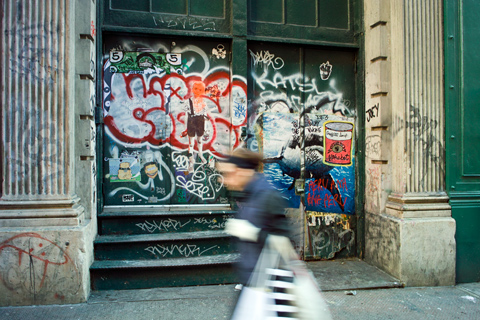
Cervin Robinson -- © Brian Rose
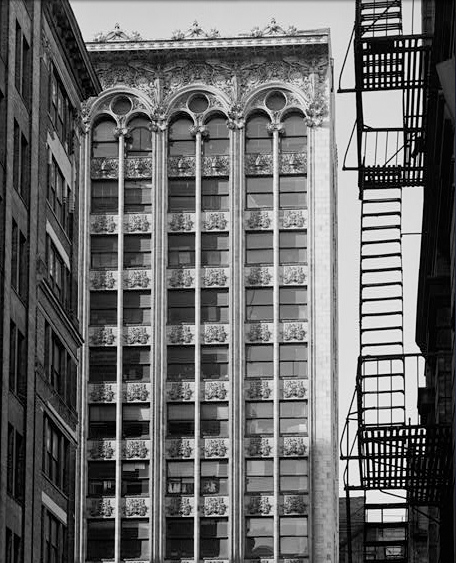
Making my usual morning walk across town I came upon Cervin Robinson at Houston and Crosby Street. He was photographing the Bayard-Condict Building, Louis Sullivan's only New York structure. Robinson has photographed this building before--and many other Sullivan buildings.
Here's a screen capture of one his photographs of the same building made many years ago.

Photograph by Cervin Robinson
I didn't linger to chat with Cervin because I could see that at that moment a shaft of low winter light was raking perfectly across the facade of the building at the top of Crosby Street.
Sunday, January 10, 2010
New York/No Photos Allowed

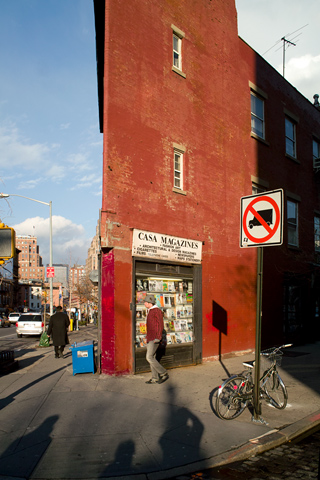
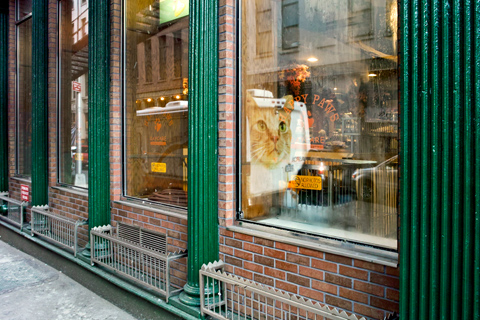
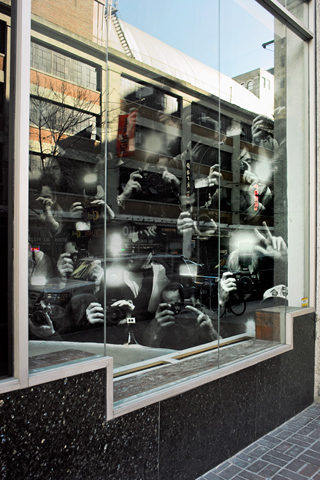
Crosby Street -- © Brian Rose
I was drawn into Crosby Street just off Houston by the ASPCA truck with a large cat face gazing slightly upward. It was parked in front of Happy Paws Daycare with a lot of happy dogs cavorting in the windows along the street.

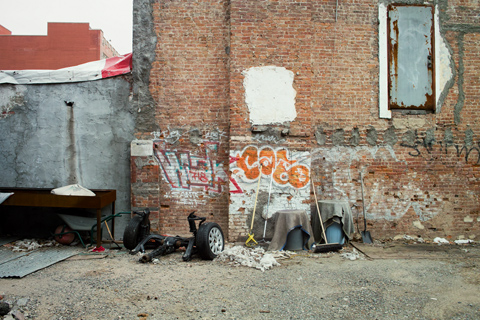
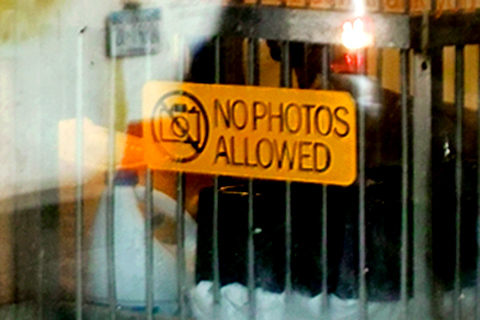
Unhappily there were signs on each plate glass window stating "No Photos Allowed." Never mind the fact that a private business can not legally prevent one from taking pictures on a public street in this city or any other in the United States. See first amendment for reference.

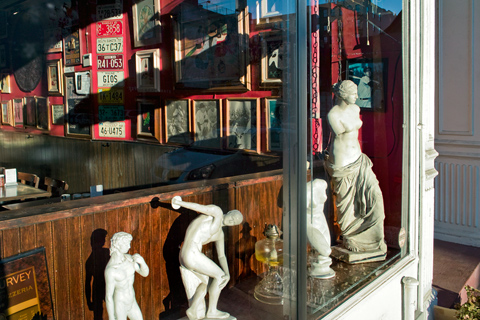
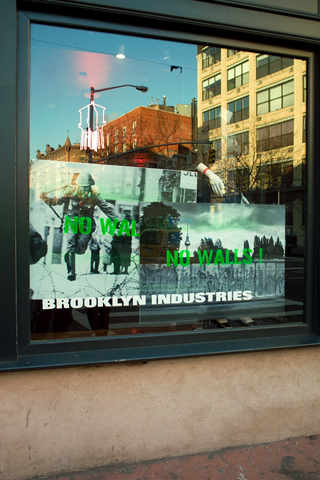
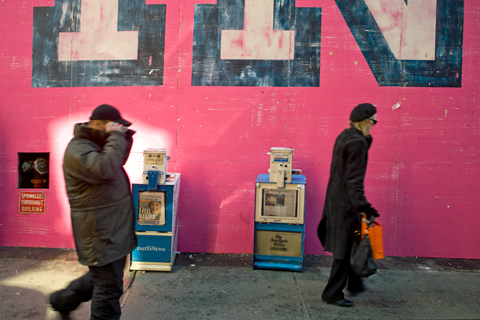
University Place -- © Brian Rose
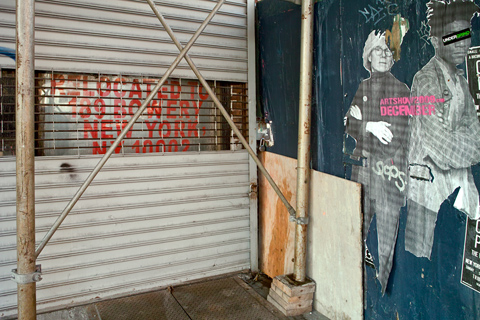
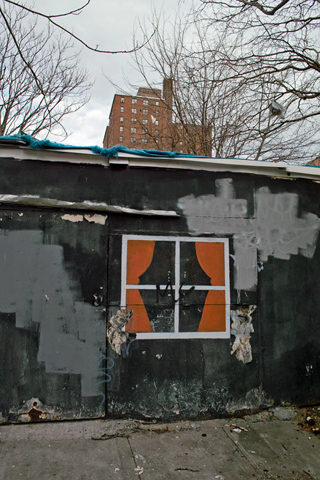
A few blocks away I found this storefront.
Friday, January 08, 2010
Monday, January 04, 2010
New York/Franklin, Virginia

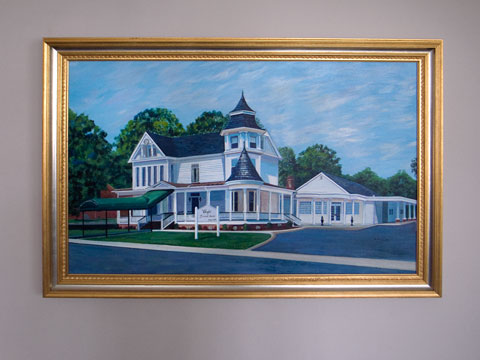
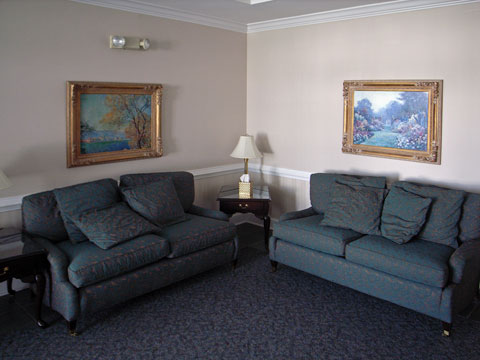
Funeral home, Franklin, Virginia -- © Brian Rose
It was not a happy circumstance that brought me across the James River to Franklin, Virginia two summers ago. A cherished aunt had passed away after a long convalescence. The mood was somber, but also relieved, as her long struggle had finally ended peacefully.
Funeral home, Franklin, Virginia -- © Brian Rose
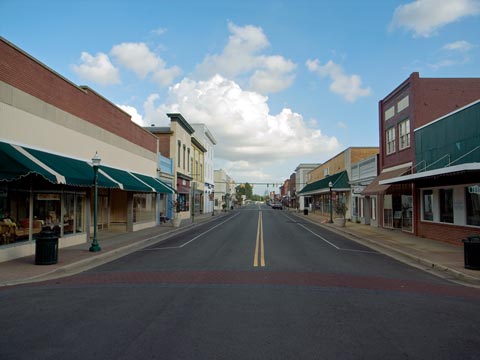
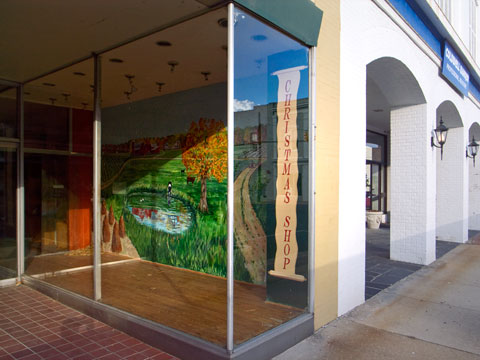
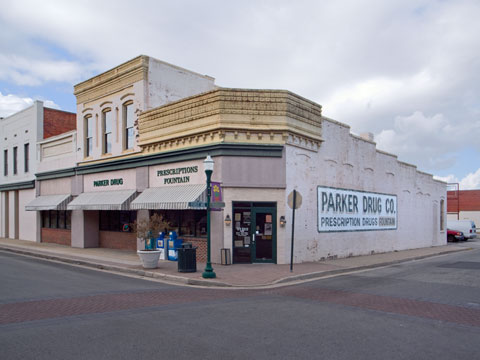
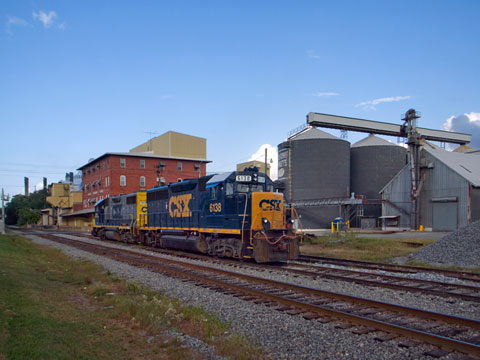
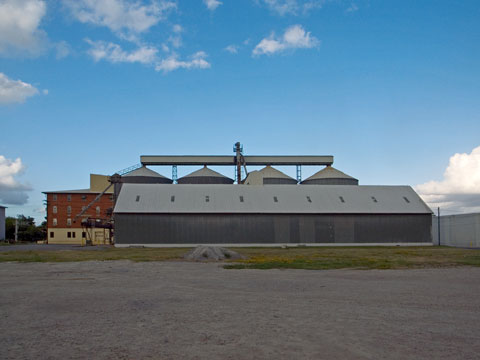
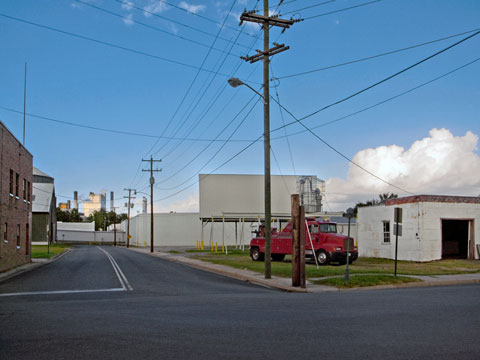
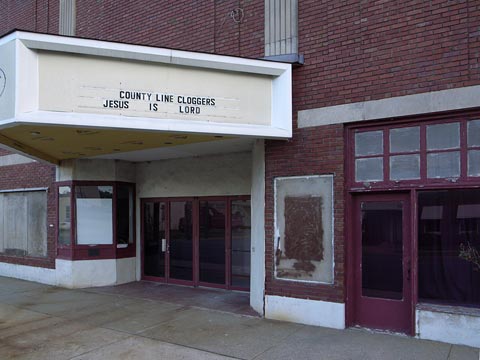
After the funeral, family members gathered at Fred’s, a comfortably informal bistro on Main Street. I slipped out during the afternoon to take photographs of downtown Franklin. I walked the empty street shooting storefronts, peanut silos, and a former theater. In the distance I could just make out the smokestacks of the International Paper Mill, formerly Union Camp, where Aunt Louise worked for much of her life.

Main Street, Franklin, Virginia -- © Brian Rose

Main Street, Franklin, Virginia -- © Brian Rose
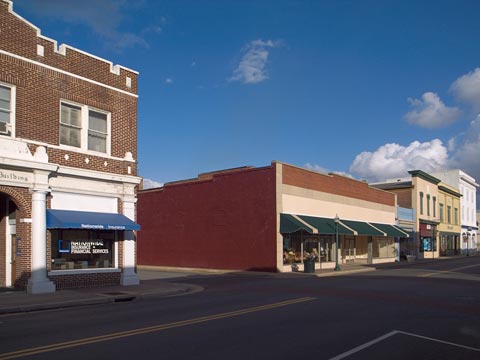
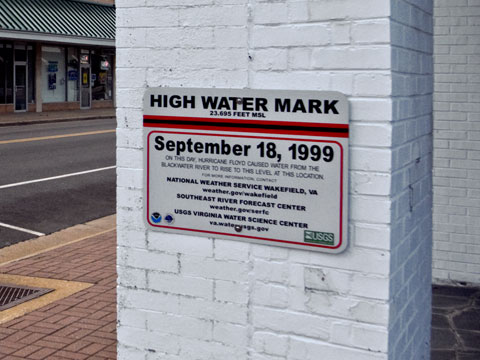
When the Camp family owned the mill, most of the wealth stayed in town, and large houses were built on the bluff above the Blackwater River. The river, Franklin’s reason for being, has also been its nemesis. In 1999 hurricane Floyd left the downtown underwater, and a storm in 2006 did further damage. Despite efforts to rejuvenate downtown—most buildings appeared in good condition--many storefronts remain empty or underutilized.

Main Street, Franklin, Virginia -- © Brian Rose

Main Street, Franklin, Virginia -- © Brian Rose

Main Street, Franklin, Virginia -- © Brian Rose
Although the Camp name is still prominent in Franklin, the fate of the mill, and by default, the economic well being of the whole area was long ago put into the hands of a global corporation. Just two months ago, International Paper decided to close the plant, putting 1,100 employees out of work, along with another 2,000 workers in related services.

Franklin, Virginia -- © Brian Rose
Peanut silos, Franklin, Virginia -- © Brian Rose
I think of Louise, her pride and self-sufficiency. As hard as it was for me to picture her toiling on an assembly line year after year, I know she retired with the satisfaction that she had earned her keep, and could afford to live comfortably, if frugally, as she got older. But what if they had closed the plant on her?
Undoubtedly, Franklin will survive—but it will be hard. Perhaps, eventually, a more diversified economy will emerge as the orbits of Hampton Roads and Richmond expand outward. But I’m not sure I want to see malls and highways overrunning small cities like Franklin, displacing the surrounding cotton and peanut fields, and carpeting over the history—with all its blood, sweat, and tears—of the Southside of the James.

Paper mill, Franklin, Virginia -- © Brian Rose
Lyon's State Theatre, Main Street, Franklin, Virginia -- © Brian Rose
NPR story on Franklin here.